← All TWiT.tv Shows (Audio)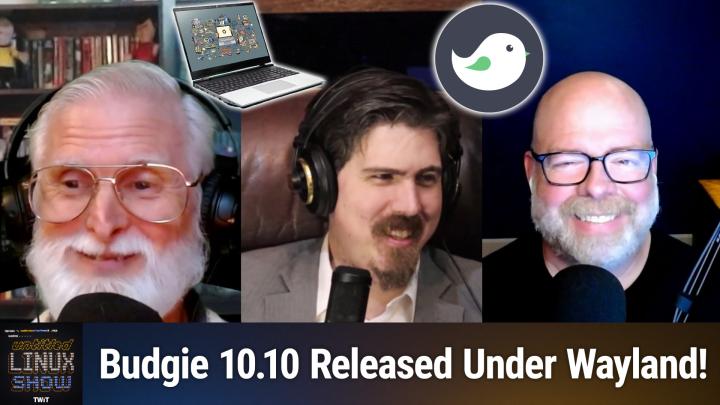
Loading summary
Transcript276 lines
- [00:01]
Ken
New Year Same extra value meals at McDonald's.
- [00:04]
Jonathan Bennett
So now get two snack wraps plus fries and a medium soft drink for just $8 for a limited time only. Prices and participation may vary. Prices may be higher in Hawaii, Alaska and California. And for delivery Hablas Espanol Spiest du.
- [00:17]
Ken
Dzoitsch come du nosq.
- [00:18]
Jeff
If you used Babbel, you would Babbel's conversation based techniques teaches you useful words and phrases to get you speaking quickly.
- [00:24]
Jonathan Bennett
About the things you actually talk about in the real world. With lessons handcrafted by over 200 language.
- [00:30]
Jeff
Experts and voiced by real native Speake speakers, Babbel is like having a private tutor in your pocket.
- [00:35]
Jonathan Bennett
Start speaking with Babbel today. Get up to 55% off your Babbel subscription right now at Babbel.com Spotify spelled.
- [00:42]
Jeff
B A B-B-E-L.com Spotify rules and restrictions.
- [00:45]
Jonathan Bennett
May apply this week we're talking about Linus Torvald's take on AI and the Linux foundation spending a lot of money on kernel stuff. Then there's some bugs that have been hiding for a very long time. Budgie 10.10 is out and embracing Wayland, and RADV finally fixes Unreal Engine 5 ray tracing. You don't want to miss it, so stay tuned. Hey, so we're in the final stretch of the 2026 audience survey, and I.
- [01:17]
Jeff
Don'T know if you know this, but every time one of you fills out the survey, it gets a couple of degrees warmer here. We could use it if you haven't filled it out. This is the moment the survey closes on January 31st. So head to Twit T because your feedback actually helps us improve every single one of our shows. Thanks so much for taking the time. Wait. Honestly, a few of you must have done it. It's getting a little warmer in here. Thank you. Survey 26 Twit TV Survey 26.
- [01:50]
Jonathan Bennett
Podcasts.
- [01:51]
Jeff
You love from people you trust.
- [01:55]
Ken
This is Twit.
- [01:59]
Jonathan Bennett
This is the Untitled Linux show, episode 230, recorded Saturday, January 10th. Get better mice. Hey folks, it is Saturday and you know what that means. It is time to get geeky with Linux. We're going to talk about the kernel, some hardware, some software, and we'll get a little bit of hardware review snuck in here and all kinds of other stuff. It's the Untitled Linux show and I'm your host, Jonathan Bennett. But I am not alone. We have the return, the triumphant return of Ken. Or were you here last week? I don't Remember?
- [02:36]
Ken
Yes, I was. And Happy New Year, Jeff.
- [02:39]
Jeff
Happy New Year, Ken. Yeah. This is my first show of the new year.
- [02:42]
Jonathan Bennett
First show of the year. There you go. So it's the triumphant return of Jeff, not of Ken.
- [02:48]
Ken
That was last week, anyway.
- [02:50]
Jonathan Bennett
Oh, my goodness.
- [02:51]
Jeff
The white beard power.
- [02:53]
Jonathan Bennett
The white beard power. Yeah, it's. Well, so if we arrange this right here. I'll put myself here and you've got the. The gradient going across. Right.
- [03:01]
Jeff
Oh, there you go. You know, the. Jonathan is. The age is going across, see?
- [03:07]
Jonathan Bennett
Yeah, yeah.
- [03:08]
Ken
Then you'd want to do it the other way.
- [03:10]
Jonathan Bennett
You mean I'm going to look like Ken when I grow up?
- [03:13]
Jeff
Yeah.
- [03:15]
Ken
All right.
- [03:16]
Jonathan Bennett
Hey, let's start out with something a little different. I've got. I've got some hardware to review. I picked up. I picked up a framework and this is my second framework to buy. It's sort of my third framework to buy, actually, because several years ago my parents asked me, like, what's a good laptop to get? Well, let's try a framework. But I picked one up recently and it actually arrived this past Saturday. I don't remember if it came before or after the show, but it was too late in the day to get it ready to use for the show. Obviously, I get the DIY version of the framework and so it takes a bit of putting together to get everything to work. But I did. I got one. I've got it set up now and so far I really like it. I got the. Let me get my orders pulled up here. I can tell you exactly what I got. It's a framework 16, the DIY edition. Of course, I went ahead and sprung for the Ryzen AI 9HX370 and the Radeon RX7007 hundreds. So team AMD all the way. We went with 64 gigs of RAM and a 1 TB hard drive and it comes with a 240 watt power adapter. Those that have watched the show for a long time know that my previous laptop, the HP Dev one, had a bit of an issue with the battery, not necessarily charging, even though it was plugged in, not fully charging. When I was doing like this show or other shows, it just didn't quite have enough oomph. But the 240 watts should be enough. I've not had that problem with this laptop so far. We'll see. And then, so obviously it's the framework and so you've got all of the modules that you can pop into it. I was telling the guys that I. One of the Things that I did when I got it was I got the RGB LED strips to go on either side of the keyboard. And I'm sure that there are some programs out there to customize what those do. I'm still figuring that out. I also need to customize the colors of the keyboard because I'm not super thrilled about the pattern that it's using right now. I would prefer something a little more boring and something that tries to be less showy, but anyway. But with the RGB strips, the most fun thing about those is when you first turn it on, it's got several different things it can do. One of them is Conway's Game of Life, and I really enjoy that. You turn it on, you've got the little Conway flyers going across and various things like that. I've always found Conway's Game of Life to be a lot of fun. Yeah, the performance has been really good so far, too. It compiles faster than my desktop does, and overall, I'm just pretty impressed with it. I got a bunch of modules, and somehow I did not get an audio module. So my headphones are right now plugged into my screen, the second screen. So it's. Oh, it's audio is going over a USB C connection into a little portable dock, over an HDMI connection into the screen, and then out of the screen into my headphones. So it's kind of a miracle it works at all.
- [06:43]
Jeff
Through the woods to grandma's house we go.
- [06:45]
Jonathan Bennett
Yeah, yeah, just about. And, you know, my desk is interesting here to look at, but so far it's been pretty good. I've not really gone portable with it yet, so I don't know how the battery is going to behave. Got some trips coming up, and so we'll see how it does, you know, on the flight and all of those things. But so far, I like it.
- [07:03]
Jeff
I think you need to run Cache EOS on it.
- [07:06]
Jonathan Bennett
It is running Fedora. Thank you very much.
- [07:12]
Jeff
I mentioned that because Jonathan's wife had mentioned that. She's like, I want to put something on there. And I said.
- [07:18]
Jonathan Bennett
She's asked me several times.
- [07:21]
Jeff
And I said, I wouldn't go with Kubuntu now. I would go with Cashios.
- [07:24]
Jonathan Bennett
She's asked me several times, do I get to build it? Can I put. It's my laptop. This is staying in my office on my desk Now. I bought you your own Framework laptop.
- [07:36]
Ken
Oh, you did?
- [07:38]
Jonathan Bennett
She's got a Framework out there. She's got a framework 13 on the kitchen island that is hers. I mean, I'll occasionally claim it and do stuff on it, but not so much now that we've got this one. It's hers out there.
- [07:50]
Jeff
Okay, well then she can load cash on that one.
- [07:54]
Jonathan Bennett
I guess she really, really wants to.
- [07:56]
Ken
Now, what are you going to do with the HP dev?
- [07:59]
Jonathan Bennett
Right now it is sitting on the chair halfway through the office, plugged in and it's just, It's a, It's a spare dev machine at the moment, so I've got a. I've actually got a meshtastic radio hanging off of it. It's running some test code on that, so it's, it's. It's got a bit of a spicy pillow situation going on too, so it'll probably get retired before too much longer. All right, shall we move into some news? Something other than my. My laptop review before or after a break?
- [08:35]
Jeff
No, I'm kidding.
- [08:37]
Jonathan Bennett
Yeah, we do need to take some breaks. Let's get a couple of stories down first. Jeff, you've got an AI story, you've got a Torvalds rant and an AI story all wrapped up in one.
- [08:47]
Jeff
Well, you know, I thought, you know, like I thought I'd start out my first story of the year because I was missed last week's show with a Linus Torvalds rant. I mean, what's better than that? So kicking it off with a bang and some fireworks, you know. Good way to start the year.
- [09:04]
Jonathan Bennett
Yeah.
- [09:04]
Jeff
So, a little background on this rant. The kernel developers have been debating how they want to handle AI generated submissions in the kernel for the past few months. This is on the Linux kernel mailing list. Linus would rather focus on the word tools instead of AI. Now on a side note, I know in the past he's commented how he's not been a huge fan of some of the AMD GPU code because they have auto generated headers which are rather large. Now, he's not blocked them or. But he's commented sometimes how the machine, you know, not AI, but just pre common AI use was generated and the code is not the most space to space efficient. It's a rather big block of header file with a lot of back and forth going on in the mailing list. Linus decided to chime in and this is what he told the Linux kernel mailing list. I'm quoting here, thinking LLMs are just another tool is to say, effectively that the kernel is immune from this. Which seems to me a silly position. No, your position is the silly one. There is zero point in talking about AI. Slope. That's just plain stupid.
- [10:23]
Jonathan Bennett
Why?
- [10:24]
Jeff
Because the AI slob people aren't going to document their patches as such. That's such an obvious truism that I don't understand why anybody even brings up AI slop. So stop this idiocy. The documentation is for good actors and pretending anything else is pointless posturing. As I said in private elsewhere, I do not want any kernel development documentation to be some AI statement. We have enough people on both sides of the sky is falling and it's going to revolutionize software engineering. I don't want some kernel development docs to take either stance. It's why I strongly want this to be that just a tool statement. And the AI slop issue is not going to be solved with documentation. And anybody who thinks it is either, who thinks it is is either naive or just wants to make a statement, neither of which is good for documentation. So that was Linus's thoughts on that. Even though he did chime in, there's still discussions ongoing, it still isn't settled yet. So when we, when we have more information on this, we will update as events warrant. But I just, I just had to start the year with Linus rant.
- [11:47]
Jonathan Bennett
Yeah, I, I have thoughts on this because I am in a project where we are getting obvious AI submissions. And yes, it's, it's a fair point that having rules is, on one hand, it's not going to stop anyone from submitting AI code. And two people are. No one is going to like label their. The AI submissions that you don't want, the ones that are a problem. Nobody's going to go out of their way to label them as, hey, look, this AI submission could be a problem. So like, I get that the reason that you have these rules is not because they prevent problems. You have the rules because in the documentation, because it gives you something to point at when you get these in. And this is actually a fairly important thing. So like you go to warn someone, hey, don't send in these huge ugly AI slop commits. Well, why. Here's the rules. Go read the rules, follow the rules. And that would get followed up by, don't send in these huge AI slop commits again or we will ban you from the project. And you kind of need some documentation to back that up. So on one hand, I agree with Torvalds that having these rules is not going to solve the problem, but I do think that having the rules is an important part of getting to a solution.
- [13:11]
Jeff
Well, I will, I will counterpoint that and say, what does it matter whether AI wrote that bad code or I as a bad programmer wrote that bad code, it would still get rejected anyway.
- [13:22]
Jonathan Bennett
Yeah, but I'm probably not going to ban you from the project for being a bad programmer, but I might ban you from the project for using AI code generation when you've been told not to. The step beyond that that really gets me is when you're like, hey, this is AI code, please don'. Do this. And someone just copies your statement into their LLM and then copies the result back and just sends you the obviously LLM results from it. It's like, no, you're. You're done. Ken.
- [13:56]
Ken
I agree with Linus here on this, that documentation in and of itself is not going to actively do anything. It's good to have a baseline to go from. But that's what the document does Station can do is set a baseline of what expectations.
- [14:20]
Jonathan Bennett
Yeah.
- [14:21]
Ken
And then it's up to people to enforce it or ignore it, depending on the circumstances.
- [14:28]
Jeff
Well, like any tool, right. It's. It's how you use it. Because I know people that are really good coders that use AI and they come up with really good code, but they understand what they're doing, they know the code, they can really look at it. So they're kind of buddy checking. And then it's been my understanding that you have more success when you get it to program smaller bits than trying to bite off too much at once. If you can kind of keep, you know, I need a function that just does this thing versus I need a program that's gonna blah, blah, blah, you know. Yeah.
- [15:07]
Jonathan Bennett
I've talked to people that have had good success with it and they've said things like that I have found success with little, little chunks of code. I've done a little bit of AI program. The other thing I've been told is you have to treat it like it's a very junior developer. Get it that simple instructions that it can follow. Yeah.
- [15:27]
Ken
Here's how you access the file system. Create a widget that will let me access the file system to open a file.
- [15:39]
Jonathan Bennett
See, that may be too complicated of instructions. That's giving it a lot of latitude.
- [15:45]
Jeff
Well, actually when you. I've had a bunch of training in some of this stuff. Not for coding specifically, but there's a lot of that. That's you. You would start out with that, Ken, but you would say, okay, you're going to use this language, you're going to do it with this method. I want to see this kind of result. Here's What I'm trying to achieve with this, I'm trying. So it's, it's. You really put a lot of the background story in when you have those AI prompts. You don't just one or two sentences. You, you generate maybe multi paragraph prompts so that it, it's kind of walled in in a way. It's almost like you're dealing with a devil where you're like. Or a genie where you're like, how can you.
- [16:24]
Ken
In other words, you sit down, write pseudocode for what you want to do.
- [16:30]
Jonathan Bennett
That is one. Yeah, that is one way to approach the AI. I've found some decent success too because I've got a couple of AIs now wired into VS code and I've done two things with it. One, I have the inline recommendations turned on to where you can start typing. It'll figure out what you're doing and you can just hit tab and it'll complete it. And VS code has that without the AI stuff. But VS code will just do like a single function at a time, you know. Oh, you must mean, you know, we see the kind of object that you're dealing with. You started typing this, okay, here's the rest of that function name. When you turn the AI on, it will also like look at the rest of the code that you're at and go, okay, you probably want to call these variable names as well. And if you start defining a function, it'll look at the rest of your code and try to say, okay, this is probably what the body of your function is going to look like. And there's been. I've seen it go two different ways. I've seen it be one, almost spooky how good it is at predicting what I'm about to do. And two, being hilariously, laughably off at predicting what I'm about to do.
- [17:36]
Jeff
Do.
- [17:37]
Jonathan Bennett
The other thing that I've used just recently was it today. Today or yesterday. I had a. I had defined about a dozen uint32 variables that was going to track state of a pro of an internal module. And I wanted a log message that would just spit out those 12 variables. Like, I'm feeling lazy. I don't want to have to type all of their names twice because you would type it once in the string and then comma, and then the variable comma, variable, comma, variable. I was like, I'm feeling lazy, I don't want to. So I just selected the whole thing. I'm like, hey, Gemini. Because that's the one that was running at the moment, add all of these variables to this logout statement. For me, it did it, but it took so long to do it. I literally could have done it by hand faster. I had to sit there for probably a minute and a half and wait for it. I was really surprised it was that slow, which was. It was just. It was weird.
- [18:34]
Ken
Maybe it's time it would have been faster for you to hit the Given an example, if you were bashed, type in the first three letters and hit the tab and have it give you all the options and then double click on the option, then middle click to put it back on the command line.
- [18:52]
Jonathan Bennett
Yeah, something like that. Something like that. Although Jeff, did you want to say anything else here before I walk into Ken's cleverly laid out Segway trap?
- [19:01]
Jeff
Oh, I was. I was just gonna say that personally. Now this is just my anecdotal evidence. Gemini is not I It hallucinates for who hallucinates on me way more than co pilot of chat GPT.
- [19:16]
Jonathan Bennett
Yeah, I I prefer so far I prefer Copilot for doing coding stuff, but I'm out of Copilot credits for the month, so I've decided to try Gemini because I had anyway Ken Middle clicking that's. Well, I don't actually use very much, but it's a. It's a thing. It'll be a thing forever.
- [19:34]
Ken
Yes, it is, and it will. And this week Bobby Borisov and Serf Rudruv wrote about GNOME developer Jordan Petridis. I'm hoping I'm saying that right. Recently submitting proposals to disable that middle click paste functionality that I just talked about earlier. And this is by default in GNOME and Mozilla Firefox. Now, what do I mean by middle click paste? Now, most PC mice have the left and right buttons with a scroll wheel in the middle that you also press or click. Now, I personally try to keep both hands on the keyboard and use keyboard hotkeys for copy and pasting between applications and terminals. It's a lot easier for me to alt tab control V to paste whatever I've highlighted in the application into a terminal, or into another application, or Control shift V to paste it into a terminal. Now, middle click paste is also known as the primary selection paste function. According to Bobby, this middle mouse paste is a fundamental long standing convention in UNIX graphical environments where selecting text automatically loads it into a special buffer that pastes with the middle button it originates. Now you're going to love this in the X window system where text selection and clipboard handling were deliberately separated according to Surav GNOME developer Jordan Petridis. Again, I apologize. Recently submitted proposals to both GNOME and Mozilla Firefox, aiming to disable middle click paste functionality by default. Now Jordan opens his GNOME G settings desktop schemas Merge request number 119 saying this is an X elevenism originally an X sitting which frequently results in unexpected behavior when people pressing the middle mouse button. It's commonly used for other actions or more often getting clicked by accident and dumping your entire clipboard while having no indication that this will happen is nothing short of a dumpster fire. That could be a security issue, couldn't it Jonathan?
- [22:04]
Jonathan Bennett
It could now. Yeah, now.
- [22:09]
Ken
Jordan ended the merge request with goodbye x11. I can understand incentives there. Rob would definitely want to echo that. Now Jordan's Fire Procs Firefox proposal states this is a little known feature and behavior that leads into user confusion when they click the middle mouse button without knowing about its functionality. Most of the time it's also clicked by accident and it's very weird to have the clipboard dumped on such occasions. The feature is also not discoverable at all and even on the free desktop wiki page the entirety of the primary selection is referred to as an easter egg. Saurav states he actually welcomes removing the middle click face functionality, while Bobby says he is one of the many Linux or Unix users who find this behavior useful and efficient to the point it has become muscle memory for Bobby. Now I do recommend reading Saurav and Barbie's articles and then ask yourself where do you stand on this proposal? Have you got any thoughts on this one?
- [23:24]
Jonathan Bennett
All right, Jeff, you go first. Nine thoughts.
- [23:27]
Jeff
I think that's the dumbest thing I've ever heard. I love the middle click. Now you don't dump your clipboard contents. You, okay, you highlight something, you hit Control C, it goes in your clipboard, then you highlight something.
- [23:43]
Ken
You don't have to hit Ctrl C.
- [23:44]
Jonathan Bennett
That's what he's saying.
- [23:46]
Jeff
No, no, follow me out here. You hit Ctrl C, it goes in your clipboard. Then you highlight something else and if you just go to the place you want to paste, if you hit the middle mouse button, it doesn't dump both the things in the clipboard, it dumps your middle mouse what you just last highlighted. So it's not like it just dumps everything, it's like a, a separate little clipboard for your machine. Because then you can later go Control V and you can have that first thing that you put in your clipboard. There I use. I know every Linux user I know or at least a lot of them use it all the time. It came up on KDE a while back and some of the people I know helping with development and stuff said, oh no, this, this is used. Do not kill this. I use it all the time.
- [24:38]
Jonathan Bennett
I will tell you the one thing I don't like about it and it's.
- [24:41]
Jeff
It.
- [24:41]
Jonathan Bennett
It's not to do with much of any of that. It's. It's just this. I don't like middle mouse click at all because it is far too easy to scroll when you're middle mouse clicking. I just.
- [24:53]
Jeff
The.
- [24:54]
Jonathan Bennett
The ergonomics of all the mice I've ever used. I don't like middle cloud middle clicking. And so I just, I'm not in the habit middle clicking for anything or.
- [25:02]
Ken
The reverse while you're trying to stro. Accidentally middle clicking.
- [25:06]
Jonathan Bennett
I've not really had that problem.
- [25:07]
Jeff
You guys need better mice. I don't have that problem. Never had that problem.
- [25:11]
Ken
Mine are. Would have been cheap, I guess I've.
- [25:14]
Jonathan Bennett
Done both cheap mice and nice mice. My problem is that I really like trackball mice. So this is on this laptop. This is my primary mouse and it's a similar one on the desktop behind me.
- [25:25]
Jeff
Oh, I hate trackballs. Yeah, I had to use them for work for on some Solaris machines for quite a while.
- [25:31]
Jonathan Bennett
And I'm a trackball aficionado. I like the, the big track balls too. I don't. I've seen some where it's little tiny ones for a thumb. A thumb track? No, no.
- [25:41]
Jeff
Oh, that's even worse. The ones on the sun machines were maybe not quite the size of a cue ball. They were, they were fairly big sized and so when you scroll you just slam them over.
- [25:53]
Ken
Just let them ones that you'll see with some of the laptop keyboards towards like a small ball in the middle of the keyboard.
- [26:02]
Jonathan Bennett
I've used those. Those are okay. But no, I really.
- [26:07]
Ken
Yeah, yeah. Versus a trackpad.
- [26:11]
Jonathan Bennett
Yes. All right, well, we are. I think we're going to cover. I'm going to mix it up just a little bit. We're going to cover some other Wayland desktop sort of news next and we'll come back for that right after this. All right. I want to talk about Budgie. Well, it's somebody's favorite desktop. I'm sure it's not the one that I use, but Budgie 10.10 is out and they've done a thing. This is their big Wayland release. So Joshua Strobel has the blog post here about it. Budgie 10.10 it is their first release to migrate from X11 to Wayland. He says the release series brings to a close just over a decade. That's a long time of Budgie 10 development. They are formally putting Budgie 10 into maintenance mode now to focus their efforts on Budgie 11. Kind of surprised that they did not make the Budgie 11 development coincide with the Wayland development. They were in there changing all that code anyways. But regardless, they've got some info here on what they had to do to Wayland. Defy, as they say, the Budgie desktop. And so for screenshots they're using Grim and Slurp. A couple of actually this is probably a place that we could pull some command line tips from. They list a lot of these sort of Wayland utilities for doing these things. Grim and Slurp. And then for screen locking and idle management there's Sway Idle GT Key Lock, Sway Lock and wlopm. All basically screen lockers. And the thing that gets me here, and I'm going to go on a mini rant about this, the Budgie screensaver, which is their fork of Gnome screensaver is now considered deprecated and he says your screen will automatically dim and lock after inactivity and manual locking is supported at any time. And I've got to say what if someone doesn't want their screen to just dim and lock black. Why are we living in a world that hates screensavers? What happened? I miss my screensavers. Bring the screensavers back. And this is not just for fun. I will actually say the OLED behind me which is my main monitor. If I go something bright full screen on that, right across the middle of the screen I can see this little tiny strip that's darker and that's because OLEDs have. It's not exactly screen burn in, but it is your pixels ever so slowly wear out and the color that they are displaying all the time changes how quickly they wear. And so you literally need something like a screensaver to prevent uneven wearing on your pixels. So there's literally a technical reason why screensavers make sense. I am looking into options. I found at least one thing that gives you a screensaver esque solution. I'm going to be trying that out over the next few days. Maybe we'll talk about that next week. As we've. We've talked about this here before. Not everything is peache keen in Wayland land. There are some big problems still that are not that have not been addressed. But anyway, wallpapers through sway BGs, the sway background XDG desktop, portals for the application integration and things like that. Anyway, Budgie 10, it's 10.10. It's out if you are a Budgie fan, but you just really wanted to run Wayland. It is an option and it looks like probably a pretty good release. And then on to Budgie 11. Be super interesting to see what sorts of things they do with that one.
- [30:11]
Jeff
I. I think, you know, earlier you said, well, I wonder why they have it on 10.10 instead of 11. I could see that 10.10 is kind of hedging the bets a bit in case they find some issues or anything like that. So when 11 comes out, it's already got the polish from 10.10.10 and it's just a smoother, shinier release.
- [30:30]
Jonathan Bennett
That.
- [30:30]
Jeff
That's my guess of why they did it like that.
- [30:35]
Jonathan Bennett
Yeah, could be.
- [30:39]
Ken
I noticed they recommend using a WL Roots based compositor. Trying to think how many different compositors are there for Wayland now?
- [30:49]
Jonathan Bennett
At least four. So you got WL roots, then you've got KDE's Hyperlin five. At least five. Then you got the whole hyper ecosystem, which is now wayland. You've got KDE's plasma gnomes. I forget what they call it, but it's not WL Roots. And then Cosmic Desktop has the Rust based, which is not wlroots either. So yeah, there's quite a few of them out there to choose from now.
- [31:16]
Ken
Now, I don't know why you'd want to do this with Budgie, but could you put Cosmic Desktop on Budgie os?
- [31:27]
Jonathan Bennett
Is Budgie an OS or is Budgie a desktop environment?
- [31:34]
Jeff
I thought Budgie was a desktop environment. This was a spin of Ubuntu.
- [31:38]
Jonathan Bennett
Yeah, well, actually, ironically, if you go to the Budgie page that we have linked, they are running Budgie on Fedora. So apparently it is supported there. You can run it wherever you want to.
- [31:57]
Jeff
But originally it was a canonical Budgie thing. Right.
- [32:01]
Ken
Hi.
- [32:01]
Jonathan Bennett
You know, I don't. I don't know the history of it. I don't know where.
- [32:07]
Jeff
Maybe they just used it.
- [32:10]
Jonathan Bennett
Budgie created by Aikidotary as the default environment for Evolve os, which became Solus.
- [32:20]
Jeff
Oh, okay.
- [32:21]
Jonathan Bennett
It's intended to be a lightweight gnome replacement.
- [32:24]
Ken
So Evolve lost its soul when it got Budgie.
- [32:29]
Jonathan Bennett
Something like that. And then there is an Ubuntu Budgie, which at least for a while was adopted by Canonical as An official flavor probably still is one of their official flavors.
- [32:41]
Jeff
That must have been where I was thinking it.
- [32:43]
Jonathan Bennett
Yeah. So there's an Ubuntu spin of it.
- [32:46]
Ken
Well, looking back through the history in their blog, it looks like it only took them a year and a half to start preparing for Wayland.
- [32:55]
Jonathan Bennett
I mean that's. To get to this point that's actually fairly quick. We need to consider all of the. How much of a rewrite it is to go from an X11 back into Wayland. Yep, yep, yep. All right, let's move on. Jeff, you've got a story here about the. Not the kernel necessarily, but that's spending money. It's about spending money.
- [33:16]
Jeff
Yeah. So the Linux foundation published their finances for 2025 and gave a lot of details on how the funds they received, you know, where they got their funds, how they got them and when they received them, where'd they turn around and spend them. So the foundation in 2025 took in roughly $311 million and the total spend was about 285 million. Now I should say when I'm telling you all this stuff, I'm just. There's a lot of rounding going on here. So if you're just adding everything up, going well, it's higher or lower than he said because, you know, 3, 3.4 million just got rounded to 3 million, you know, so on. Keep that in mind. The intake from of funds was mainly from four places. The largest was memberships and donations which made up 133 million. Then Project Services brought in 84 million. Now Project Services where an open source project, they will get the foundation to handle the basic admin, legal marketing, technical support, things like that. So the idea is that a project, the developers can work on it and worry about the actual code and not worry about all the other administrative overhead that comes with an open source project. So event sponsorships and registrations brought in 59 million and training and certifications brought in 30 million. On their report there's also an other which accounts for 6 million. So that's just kind of everything else in the bucket. They didn't go into what all that entails. But other than it's probably a lot of onesie twosie stuff. So now that we know where the money comes from we can then see. Now we can see where it goes. So for 2025 the foundation spent 182 million on project support. Now that's not including the kernel. The foundation actually supports hundreds of open source initiatives and there's a lot that they Help out training costs were around 22 million. Project infrastructure 17 million and event services 16 million. Community tooling and corporate operations were 15 million each. International operations 7 million. And finally the title of this story, 8.4 million was spent on the Linux kernel. So if you take a look at the article linked in the show notes, you can see a link to the official announcement where you can download the report that the Linux foundation put out and find. But finances are only a part of it. They go into much greater detail of what they do and their plans and the past and the future. And they give some numbers like they're supporting almost 1500 open source projects, with the largest share falling in the cloud containers and virtualization buckets which account for about 23% of the projects. Network and Edge are about 14%. AI, machine learning, data and analytics, along with cross technology projects each account for roughly 12% while web and application development represents about 10%. There's a lot of other categories which have smaller percentages. I won't go into all of them, but there is a ton of projects. If you want to see what is in each of these categories, the foundation website has a listing so you can see the projects of each one, or at least the major ones. Anyway, I look, like I said, I look through a few of the different category buckets and there are a ton of projects supported. So take a look at the article linked in the show notes for full details. And it has a link to the Linux foundation which has all the information you could ever want on what they do. They're very open and pretty. They're very transparent about where the money goes and how it works.
- [37:26]
Jonathan Bennett
Yeah, it's real fascinating to see how much information you can get out of there. Yeah, I kind of had a bit of a. I guess the way I understand it, I had a bit of a breakthrough when I discovered that for a lot of these projects, the Linux foundation, it's actually working as their fiscal host. And that's a term I know from other contexts and talking with Simon Phipps, things like that. So that, that kind of explains at least to me. I don't know if that makes sense to anybody else, but it helps me understand what the Linux foundation does for a lot of these different projects. And I think, I think they actually pay them some money to do that, which is one of the big places where the Linux foundation actually has its budget from. So yeah, pretty interesting stuff and neat to see the, where all, where all of that is going. Good for them.
- [38:13]
Jeff
And they even have a list of the companies that support them. And there is a long list of companies that are, you know, especially at the silver level. Yeah, I don't remember what, how much money that is, but it's, it's about. Every corporation you've heard of is on that list.
- [38:30]
Jonathan Bennett
Oh, yeah, I, I imagine so. They need to get some tax write offs going for the end of the year so they don't pay so much taxes.
- [38:40]
Ken
Yeah.
- [38:41]
Jonathan Bennett
Although it's, it's funny, you paying money just to get the tax write off is how was it said to me, spending a dollar to save a quarter. Something like that. Depending upon what state you're in anyway.
- [38:55]
Jeff
Yeah, but sometimes it's just the point.
- [38:57]
Jonathan Bennett
That's true.
- [38:58]
Jeff
They're not getting it. They're getting it.
- [39:02]
Jonathan Bennett
Yes, yes, indeed. All right, fun stuff, Ken, here. In just a moment I'm going to ask you about kernel bugs. Is that something you're prepared to talk about?
- [39:15]
Ken
Slightly.
- [39:15]
Jonathan Bennett
A little bit.
- [39:16]
Ken
So I know somebody who knows more about it than me.
- [39:20]
Jonathan Bennett
Well, we'll talk about it right after this.
- [39:24]
Ken
All right. And now that we're back from the break, Jonathan, I want to tell you that this week Surav Ruto wrote about a blog post by Ginny Guaniq, and I hope I pronounced that correctly, and she's a pebble bed researcher. The blog she posted demonstrates how bugs in the Linux kernel often stay hidden for years before they are discovered and fixed. Now, according to Surov, this study talks about bugs of all kinds. Not all bugs are vulnerabilities, by the way. Jenny analyzed 125,183 three bugs from 20 years of Linux kernel development history. Her findings show that the average bug takes 2.1 years to find the longest lived bug. A buffer overflow and networking code went unnoticed for 20.7 years. Ginny's research was carried out by relying on the fixes tag used in kernel development. When a commit fixes a bug, it includes a tag pointing to the commit that introduced the bug. Jenny wrote a tool that extracted these tags from the kernel's git history, going all the way back to 2005, when Linux originally moved to git. The tool finds all fixing commits, extracts the reference commit hash, pulls dates from both commits, and calculates the time frame. The data set generated includes over 125,000 records from Linux 6.19 RC3 covering bugs from April 2005 to January of this year. 119,449 of these records were unique. Fixing commits from 9159 different offer authors only 158 bugs had CVE IDs assigned to them. Jenny also identified that different parts of the kernel show significant variation in how long bugs remain hidden. GPU bugs, for instance, get caught fastest at 1.4 years, while canned bus drivers, that's that bus that you have in your car, have the longest average at 4.2 years. The research also found that incomplete fixes are common. Someone notices undefined behavior and ships a fix, but the fix does not fully address the problem. In one case, a 2024 fix for NetFilter SIP field validation was incomplete and a security researcher found a bypass a year later. Now I'm going to recommend reading Surov's article and then following the link to Jenny's blog to see how well we have done in maintaining the Linux kernel. Jonathan, were you aware of some of these fixed bug that were reported?
- [42:48]
Jonathan Bennett
I. I know that you can have things that exist in dark kernels, excuse me, dark corners of the code base. And those take a very long time for someone to find them and fix them. I know it. It's also dark corners.
- [43:05]
Ken
You're talking about something that may have originally came out but has not been looked at in the last 15 years.
- [43:11]
Jonathan Bennett
Or, or something that a very small group of people use. You know, those sorts of things. But I mean like the can bus. Most people do not have can bus drivers installed on their machine. So it sort of stands to reason this is not where a lot of security research happens. You've also got tied up with this, the fact that the kernel now has this policy that every bug is a cve. And you know, we've talked about that at length here on the show before, but that, that does sort of have the byproduct of, I think, inflating this a little bit because, you know, now.
- [43:46]
Ken
Inflating the number of bugs or definitely.
- [43:50]
Jonathan Bennett
The number of bugs, but I think also inflating the. The amount of time that something. So in this case the amount of time it takes for a vulnerability to be found because there may be bugs that people know about that are not really vulnerabilities. And so no one is really in a rush to fix it. And so you would.
- [44:11]
Ken
Or to identify it.
- [44:14]
Jonathan Bennett
Or even to identify it. Sure. So you would think like if something was known to be a vulnerability, people are going to rush out and fix it. If it's just, oh, that's kind of a bug, we ought to fix that at some point. Well, sure, that can hang around for a long time before somebody finally cares enough to fix It. And then the new kernel policy comes along where almost every bug is a vulnerability and suddenly this vulnerability is 20 years old. Well, yes, but you had to. You know, I don't know. I don't know the exact details of that one. But some of these are a little silly, that they're considered vulnerabilities. Yeah.
- [44:55]
Jeff
And it's been commented on before that there's a lot of people not happy that everything has got a CVE number to it. That's a bug.
- [45:04]
Ken
And some of the bugs may be you've got this bug where it mirrors your screen instead of putting it the way you want it. That's been going on for years that nobody really bothered fixing because it's just a matter of reversing the mirror option.
- [45:22]
Jonathan Bennett
Yeah. Some of that stuff. Or bugs. And it's like, well, if this bit of memory gets corrupted, then you can do something as kernel. But it's like. But you have to have, you know, basically kernel level positions to be able to mess with that memory. You know, there's some of these things that it's just like, yes, it's interesting, but like, it's not a vulnerability because you're not really changing your security level. Anyway. Yeah, yeah. Anyway, I have. I'm a little. I'm a little grumpy, if you hadn't noticed. I'm a little grumpy over some of that. But that's all right.
- [45:54]
Ken
What I thought was interesting was how old some of those networking bugs were.
- [46:01]
Jonathan Bennett
Well, yeah, you'd have to see. And the same thing with those. Like, you'd have to look at it. You have to look at them one by one, is this a networking protocol? And the question here. So you do have to be careful about this. The question is not, is it a network protocol that anybody uses yet? Instead, you have to ask question like, is this a networking protocol that anybody actually compiles into their kernel? Because it doesn't matter how much a protocol is used, you just have to be able to have access to it to turn it into a weaponized vulnerability. But the questions you instead have to ask are things like, can you route this over the Internet? Does anyone have it compiled into their kernel? Did we already know that this thing was insecure and therefore all of the firewalls block it by default? If you really want to do a real analysis on a vulnerability like this, those are the sorts of questions you have to ask.
- [46:57]
Ken
And. Well, I think that's why Surov in his article points out that not all bugs are vulnerable. Vulnerable abilities.
- [47:07]
Jonathan Bennett
Right. Right, right.
- [47:08]
Jeff
Well, and sometimes there's probably some that are just worked around, like say for example, and I'm just making this example up the, the Kermit protocol. Well, you know, if you're maybe it, maybe it pads something with an extra space when it shouldn't. Well, anybody that wrote software probably just went, oh yeah, it's one too many spaces. We just trim that off and away you go. So it's a bug, but nobody ever cared much about it because the software worked around it.
- [47:42]
Jonathan Bennett
Absolutely. All right, so let's move along and we've actually got, we've got some Licorice to talk about.
- [47:52]
Ken
Oh good, I'm hungry.
- [47:53]
Jonathan Bennett
Yeah, not that kind of Licorice though. So this is a Pharonix article and it is a review of the Licorice kernel. It's a head to head between licorice and Linux 618 LTS. So for those that don't know Licorice or Licorice I believe is actually how they, how they spell it and pronounce it. It is a set of kernel patches the aim of which is to make the kernel more responsive, specifically for things like audio, video work like live audio, or to be able to get, you know, your maximum frame rate with your least amount of delays for doing like gaming. So it is, it is very much about latency and those sorts of metrics. And so that keep that in mind as we, as we look through of these benchmarks. So we've got things like the level DB where interestingly, in this benchmark of databasing the Licorice kernel does a bit better depending on which test it is you're looking at, but beats the upstream kernel, which it's sort of unexpected. But then you get into things like the flexible I O tester which is going to test input and output and the Linux upstream kernel just trounces on Licorice we're talking like over twice the performance, in some cases nearly three times the raw performance on the input output. Really if you were just looking at this and you didn't understand what these numbers meant, it really makes Licorice look bad until you get to the last test of the socperf. So this is another one of the tests that run and Again, the Linux 6.18 upstream kernel looks much better than the Lycorix kernel does on the actual throughoutput that you get from the program. But there is a test here and I think this really highlights what Licorice is for. It tests the latency under load and Licorice does significantly better than the upstream kernel does. They measured three picoseconds, I believe, of latency, as opposed to 10 under the upstream kernel. And that's really a great snapshot for what Lycorix is about. It is not intended to run on your server. It's not intended to give you more DATTO throughput. It is intended that your system as an end user stays responsive even when you're doing all those things. So that you know, whether you're processing live audio or you're playing a game, it's not going to lag because you're copying a file onto a disk or, you know, whatever other thing you may be doing. So super interesting look at this. Some of the other tests are pretty much even. There are some really interesting outliers there. But yeah, I thought it was pretty interesting to look at. I know there are some distros that ship the Lycorix kernel by default. One of those. Is it. Is it Bazzite chips, Liquor X, I think.
- [51:15]
Jeff
I didn't know any ship by default. So that is, that is news to me.
- [51:20]
Ken
I don't. I know Ubuntu Studio used to use a low latency kernel. I don't think it was the actual Licorice kernel, though.
- [51:31]
Jeff
No, it was just a low latency.
- [51:34]
Jonathan Bennett
Yeah, that's a. That was a little bit different. Yeah.
- [51:36]
Jeff
Kernel.org Low latency. Low latency.
- [51:41]
Jonathan Bennett
Yeah. It may not be exactly the Lycorix kernel, it may just be some of the patches from it. But still, I know there, there is some crossover there and there's a couple of different distros that do that sort of thing. So anyway, I thought it was super interesting to take a look at. Next up we're going to talk about a desktop from space. It's out of sight. Jeff's going to talk about the Cosmic Desktop right after this.
- [52:17]
Jeff
System 76. Cosmic Desktop is, you know, it's the new hotness in Linux in the Linux world right now. And you know, POP OS 24.04 LTS came out, which is based on Ubuntu 24.04 LTS. Many other distributions have also come out with the Cosmic option. But say you're on a system, you know, your System's running Ubuntu 24.04 and you want to run Cosmic, but you can't or don't want to reinstall a different operating system to be able to try it out. Well, the default desktops, you know, given to you on Ubuntu, you Know your choices. It's got several, but Cosmic isn't one of them. So what's a person to do? Go a little off the beaten path. I say that because an Ubuntu user created a PPA repository which allows you to install Cosmic easily. Now, this is not an official Ubuntu ppa, so take it with a grain of salt and if you're the paranoid type, you might not want to use it. Bobby Borisov over at Liniacs the did test the PPA and install Cosmic on his machine and he said it works great. Odds are things are fine, but I just wanted everybody to know this isn't an official ppa, so make sure you weigh that in your choice to trust it or not. Bobby does say when you install a Cosmic desktop, this is going to put it alongside the default GNOME one. Now you can pick which which one you know, whether Gnome or Cosmic when you log into the machine. So you can try Cosmic for a while and if you decide you like Gnome better, you can switch back. That being said, he also mentions that you shouldn't remove GNOME from your Ubuntu system, even if you don't plan to use it anymore. For Ubuntu, GNOME is embedded pretty deep, so it's just best to leave it alone even if you don't use it, as there are probably a ton of supporting libraries which get used and basically you'll break your system if it's removed. Now, I'm not going to go through all the commands as they're they're in the article linked in the show notes, but it's pretty standard. You know, you add the repository and you do an update to pull in the package information. Once that's done, you just do a normal install and it's called Cosmic Dash Session. The package is about 200 megabytes, so it isn't terribly huge. I mean, I say that in where you have, you know, games now that are hundreds of gigabytes, so 200 megs is not terrible. Depending on what hardware you're running it on, it will then go through a setup. And there is one important note here. It's going to ask you if you want to use the default Gnome GDM3 Login Manager or use the Cosmic login manager. Bobby says to use the GNOME one as the comma. The Cosmic one worked great for going into Cosmic, but it had issues going into Gnome. The GNOME login manager handled both desktops perfectly, so that's why he says just use the gnome GDM3 Login Manager and you can switch back and forth without any hiccups. In the article, if you did want to use the Cosmic login manager because you're never going Gnome again. But then you change your mind, he has the commands in there that will let you reset your default login manager. And in the case you have issues with Cosmic or you don't like it for some reason, Bobby also in the article goes through the commands to remove it and purge it from your system. And it's not a long complicated thing, it's about three lines and it purges everything from your system. Take a look at the article linked in the show notes and if you're running Ubuntu 24.04 or another official flavor, give it a shot. 2020, 26 might just be a Cosmic year.
- [56:09]
Jonathan Bennett
Yeah, it might be multiple different ways. Yeah, I am very tipped. I did not do it on this laptop. I was actually very tempted to grab and try Cosmic on Fedora because they do ship it now maybe I will. Because you can install it side by side. Just log out of KDE and into Cosmic. Might be worth giving a try.
- [56:30]
Jeff
And if nobody's ever had multiple desktops loaded at once. Basically, when you log in where it says user and password, usually on the bottom left or bottom right, there's going to be a little menu. Sometimes it's drop down, sometimes it's a little button you click and it's going to list, oh, it's Gnome and Cosmic and maybe got KDE and whatever is installed. So then when you just select the one you want. So when you actually log in, it loads that desktop in.
- [56:56]
Ken
And depending on the distribution, it may even also give you the option to log into that desktop under Wayland or X11.
- [57:08]
Jeff
Yep. That can also be an option depending on the. Like you said, the distro.
- [57:13]
Jonathan Bennett
Yep. That's fewer and fewer of them doing that now, though.
- [57:17]
Jeff
Yeah, now. Now that Wayland's kind of pretty solid.
- [57:20]
Ken
And a lot of X's Ubuntu 2404 will be doing that.
- [57:26]
Jeff
It'll give you that option is doing that.
- [57:29]
Jonathan Bennett
Yeah. All right, let's see, what do we have next? I'm over here playing with screensavers, by the way. I talked about that earlier. The whole time since then I've been googling and installing stuff and fiddling around with screensavers on my machine.
- [57:46]
Jeff
My favorite was always the Star field.
- [57:48]
Jonathan Bennett
Yeah, that option is out there.
- [57:52]
Jeff
I know it's an oldie, but it was always just when you're sitting there and the screensaver's on. It's like you're flying the Millennium Falcon and the stars are just whipping by you.
- [58:00]
Jonathan Bennett
Yup, absolutely. All right, Ken, let's talk gaming. Let's Talk Gaming. And ARM64 ties back into one of our predictions for 2026, by the way.
- [58:11]
Ken
Yes, it does. And Rob will be happy to hear this. In fact, I'm sure if Rob were here, he'd be the one wanting to present this one.
- [58:18]
Jonathan Bennett
Oh, probably.
- [58:20]
Ken
But this week, Bobby Barasolf and Michael Larabel both wrote about some exciting news for all Linux enthusiasts betting on ARM 64 architecture Canonical engineers have assembled a steam snap for 64 bit ARM, complete with the FEX emulator, which enables the running of Windows or Linux x86 base games on ARM64. Linux, according to Bobby, Ubuntu has opened the public testing of this new Steam Snap build for arm. The testing aims to validate installation reliability, startup behavior, game compatibility, controller support, and overall system integration. Michael has provided screenshots in his article of the new Steam Snap running on the dell Pro Max GP10 and indicates he will try it on the Snapdragon X1 Lite. As always, you can get more information from reading Bobby and Michael's articles. And I look forward to see some of the comparisons Michael provides when he does his bench test.
- [59:38]
Jonathan Bennett
Yeah, absolutely.
- [59:41]
Jeff
You know, it's cool that we have Steam been able to run on arm, but when I saw that article, I was thinking, you know, how much Steam and Proton is now becoming kind of the universal equalizer for Linux. I mean, it, it's just containing so much stuff, it's a container for so much stuff and it can be used on so many different things and it, it's just so easy to use versus, you know, I gotta spin up this container and I gotta do whatever it's like I put it into Steam or Proton and hit Go and it just works.
- [60:20]
Ken
What's even better though is Steam's allowing most of the ability to do this to be open source so that it can be passed on to Wine.
- [60:30]
Jeff
Yep.
- [60:31]
Jonathan Bennett
Yeah. I mean a lot of it's based off of Wine. It's sort of is required to be open source. The beauty of the gpl, like, that's the. That is the big advantage of the GPL versus something like the mit. Under the MIT license, Steam could do all this stuff open source, and then one day come out with an announcement and say it's not open source anymore. The next version is going to be closed source. Whereas with gpl, they're sort of required to maintain it under open source. Definitely advantage there. But also that is to say Steam is kind of forced to do it. They're forced to be the good guys.
- [61:02]
Jeff
Well, and I think because of the.
- [61:04]
Ken
Licensing of the software they decided to use.
- [61:07]
Jeff
Yeah, well, and I think the better Wine runs and the better the, you know, all the other supporting packages we're on. The more people want a game on Steam and the more revenue it works for them. You know, they're in the business of selling games and the more they can enable everybody else to do it as well, the better.
- [61:29]
Ken
Now it begs the question, so esteem software for running all these games or is it a store or is it both.
- [61:43]
Jeff
On Windows? I would say Windows it's a store on Linux. It's both because Linux gets all the containerization and stuff that it's not really happening so much on the window. I don't know if Windows has any of the proton containers or bottles.
- [62:01]
Jonathan Bennett
I don't know if it does or not.
- [62:04]
Ken
I bet some of the Windows users wishes it did so they could play some of those older games.
- [62:10]
Jonathan Bennett
And I mean it's obviously it's a problem on Windows. That's why things like good old games exists and some of those others.
- [62:17]
Jeff
Well, we, we talked about, I don't know, a few months ago or whatever some of these old games, you really need to run them on Linux because they have different versions of their container and they've got some old style containers with old libraries that support those old games that you know, especially. And we've talked about this before on Windows there was a lot of those old games that kind of had custom libraries and kind of did some funky stuff. And it, they, they weren't as aligned to like DirectX 12 and 11 as they are today. And it.
- [62:55]
Ken
Steam on Linux is probably the only way you can play some of those Windows 98 games.
- [63:00]
Jonathan Bennett
Yeah, it is, yeah. In some cases you've also got. DOSBox will run some Windows 98 stuff.
- [63:08]
Ken
That was DOS based.
- [63:11]
Jonathan Bennett
No, see you can actually run Windows 98 in DOSBox. DOSBox is great. There's some really fun stuff you can do. You could run Windows 95 and 98 like as almost like a virtual machine in DOSBox.
- [63:23]
Ken
I wonder if you could run Dr. DOS within DOSBox.
- [63:26]
Jeff
Well, see, when Jonathan's kids are naughty, he makes them run Windows 95. You want to get on the Internet. Here you go kids. This is all you get.
- [63:37]
Jonathan Bennett
Yeah, yeah, no, I'm not that mean, not usually.
- [63:41]
Ken
That would be very, that would be a tyrant.
- [63:45]
Jeff
And I Think we've talked about this before, but the other thing too is a lot of these things. If you have a program that needs to run Wine or something like that, you can put in that program into Steam. There's a way you can say, okay, add a non Steam game and you can put it in and it'll still run under the container. So that you can take something, you'd have to go wine space, whatever space. You can just put it right in.
- [64:11]
Ken
Can you do that? Can you do that with non game applications?
- [64:16]
Jeff
Yeah, that's what I'm saying. Other programs that you would run with Wine, you can use Steam, Microsoft Works, if it will run with Wine, you can put it in.
- [64:31]
Jonathan Bennett
There's also a bunch of tooling. There's also a bunch of tooling around running different versions of Wine on Steam. And so you know, you can do the. You can run vanilla wine, you can run wine staging, you can run the proton copy of Wine. And then there's also like the glorious egg roll. This, the GE wine versions. Like there's a.
- [64:50]
Ken
And now you can do it on.
- [64:52]
Jonathan Bennett
Yeah, now you can do it on. Well, Risk five. Are we talking. Are we talking Risk five with Vex? I don't think so. I think we're just talking arm 64.
- [65:00]
Jeff
Not quite arm 64.
- [65:03]
Jonathan Bennett
Yeah. Yeah. Not quite the same thing. We're not. We're not there with RISC V yet. Maybe one of these days, but not yet.
- [65:09]
Ken
So The Raspberry PI 500 Pro or Plus can become a Steam OS machine.
- [65:18]
Jonathan Bennett
Sure. Yeah. I've not done that. I've got one sitting right over there I could do it with. But yeah, you totally could.
- [65:25]
Jeff
Sounds like Jonathan's story for next week.
- [65:27]
Jonathan Bennett
Probably not. That actually is getting used for some other things right now.
- [65:32]
Ken
That's for the next Raspberry PI 500 somebody buys.
- [65:35]
Jonathan Bennett
Yeah, there you go. There you go. Let's talk about ray tracing a little bit. Also talking about things Steam is doing to help the whole community. There is a. It just got merged. It is a big ray tracing improvement that is specific to The Unreal Engine 5, maybe a few other things. And this one is pretty interesting. So when you sort of click through and you actually find the patch itself, the merge request, you discover pretty quickly that back a while ago, he says, a long time ago. Let's see when this commit actually got merged. 2023. Okay, so that wasn't that long ago. Over a year ago though, they merged a commit to. In the original it says convert 1D ray launches to 2D and so this is all about a performance optimization for ray tracing. And this is something that was merged with the thought of everybody does it this way. And so we will sort of bake in this optimization. And then this latest pull request says the workaround in that merge request worked on direct dispatches fixing up the dispatch size to be greater than four, greater than eight threads, blah blah, blah, blah. Back then I considered particular edge case to be acceptable. After all, here's the money shot. What are the chances that someone would ever dispatch an indirect trace raise with a 1D dispatch size? Surely no one would ever do that, Especially not one of the most ubiquitous high fidelity game engines out there in their widely adopted ray tracing global illumination solution. Yeah, so Unreal Engine did this and it was causing some real problems because it hit this edge case in their optimization. So they have added their own. And the term here is swizzling logic. I love the naming convention. Some of these things have basically it's logic to manage how these different rays are handled in the ray tracing. So the merge request here, it resolves the indirect ray tracing case well, gets rid of the hacks, actually fixes things. And it provides a 4x to 8x speed up in the Unreal Engine 5's hardware lumen passes which amounts to a 30% total FPS gain in some course measurements. So that is a significant uplift. And as they say, Unreal Engine 5 is a lot of what's going on. A lot of AAA games and other games are built in UE5 these days. So your favorite game when it comes around. If you do any ray tracing. Mesa 26 appears to be where that lands and that should be out in February. So next month be a nice excuse to upgrade to Fedora 44 early. Right. Anyway, it was pretty cool to see that a really big fix came along and should elevate the ray tracing performance even more. You know, get, get the RADV performance up to where you would expect it to be.
- [69:09]
Jeff
You know, there's been a lot of good advancements in the past year with the, on the AMD GPU side, it's really made some good strides and I'm glad to see AMD's really hammering the bugs out and optimizing their drivers.
- [69:26]
Jonathan Bennett
Yeah, and a lot of it's, a lot of it's coming from Valve because Valve is using AMD stuff in their Linux machines.
- [69:34]
Ken
Though I did notice that Intel's doing some great things because Michael wrote about message 26 supporting GPU hardware replay with the Intel XE kernel driver also.
- [69:49]
Jonathan Bennett
Yeah. So I. I've seen. We didn't cover any of this, but I've seen just little snippets of some of the things. Was at CES this year, the Consumer Electronics show, and intel apparently has made a showing there. They've come out swinging, trying to really push some things. Apparently HP has a device that is a little tiny intel processor in a keyboard. So they made like a PI 500, but they did it with intel hardware. That is the kind of thing that really intrigues me. But I think I also saw a gaming handheld that was based around intel.
- [70:21]
Ken
So that pi500 clone made with intel, was it at the same price as the PI 500?
- [70:28]
Jonathan Bennett
I have no idea. Let's see. I don't even know if I could find that again. You know, I think that was something that showed up in my YouTube recommendations.
- [70:37]
Ken
Save that for Twit to cover tomorrow.
- [70:40]
Jonathan Bennett
They might. I bet you they'll be covering some CES stuff.
- [70:43]
Ken
I think. Didn't he say on last week's Twit that he'd have father Robert Balisaro come in to share his experiences at ces?
- [70:55]
Jonathan Bennett
Yeah. Cool. I did not catch that. But that seemed. That seems like the sort of thing that they would do. That'd be fun.
- [71:02]
Jeff
Intel, from what the coverage I've seen. Well, Nvidia, nobody was very happy with it. Was mostly just talking about Jensen is up there in his leather jacket talking about AI. AMD people were not happy with because most everything they covered was not actually consumer. And one of the things they've got the. Was it 9850x3D? I think that's what it is. It's the eight core x3D chip, but instead of 5.2 base clock, it's like 5.6 or something like that. Didn't even mention it in their documentation, which was basically about the only consumer thing they've got, which is. It's just a better binned X3D chip. They. They never. There was not one word about anything else consumer. So that wasn't good Intel. They really. People like you said, they came out swinging. They really are trying to put the pedal to the metal and get back into a leadership position.
- [72:03]
Jonathan Bennett
They're feeling that underdog status.
- [72:06]
Jeff
Oh, they are. They, they definitely are. And I think they're. They're getting. They're leaner, they're hungrier, and they're like, hey, we got to turn this ship around now. One of the things is they still hold pretty good in the mobile sector. They're still doing pretty good there. We'll see what the next hardware comes for like desktop and enterprise. But yeah, yeah, 12 does say there's not a B77 from Intel. Again there's a lot of rumors and background stuff saying I think it's coming, it probably just isn't ready yet. The what? What'd you say, Ken?
- [72:50]
Ken
From glancing through the comments on the posted to the article about the radv, looks like somebody's saying that some of the gaming engines like Unreal Engine haven't been written to support Wayland yet.
- [73:09]
Jonathan Bennett
That's, that's kind of.
- [73:13]
Ken
Do they need to be.
- [73:14]
Jonathan Bennett
No, no. Gaming engines are not compositors. Gaming engines run inside of compositors. And so we've got, we've got X Wayland that makes. And so I guess, I guess to some extent that's going to be the case. But a lot of those gaming engines though don't even run like natively inside of X or Wayland. They're running inside of Wine or some, some version of Wine. And Wine is working very hard on their Wayland layer and I think that's coming to the point to where it's usable. Now.
- [73:47]
Jeff
What a lot of them do is they'll run the game, the games are set to talk to like say DirectX 11 or DirectX 12 and then you have the other libraries that do the translations from DirectX. The was it. You can do like, was it DXVK which is like the DirectX to Vulcan?
- [74:06]
Ken
Or you may see even with the x86 based systems or x86 64 based systems that they'll be leveraging fix or FEX emulation on those as well.
- [74:24]
Jeff
I mean really one of the greatest boons for Linux gaming, I'll be honest, I think is DirectX because it's a stable API that we can translate off of versus I think one of the big Achilles heels in Linux is the freedom of choice is also your APIs change all the time and it's hard to write a game natively in Linux that runs everywhere.
- [74:52]
Ken
Just don't break user left.
- [74:54]
Jeff
Yeah, well that's what they say in the kernel. But a lot of other, I mean Linus, Linus Torvalds was talking to Linus Sebastian, you know, from ltt and they, they said something about, you know, yeah, the Colonel says don't break userland. But he said I wish a lot of other large libraries would also follow that same same rule and they don't. So DirectX, it's least you know what you're getting, maybe it's not the best thing. It's not. But it's stable. They don't change it. It lasts for years and years and years. And then you can write those translation libraries off of that.
- [75:35]
Jonathan Bennett
Yeah, yeah, absolutely.
- [75:37]
Jeff
Why is it spicy today? I don't know what's going on. Happy to be back, that's what it is.
- [75:43]
Jonathan Bennett
Over two weeks, you had like three weeks all bottled up in there. You had to get it out all at once. Exactly.
- [75:48]
Ken
Yes. You feel fresh.
- [75:50]
Jonathan Bennett
Well, before we feel fresh, before we get fresh, we're going to take one final break and we'll be right back. Talk about some command line tips.
- [75:57]
Ken
Your planet is now marked for death.
- [76:01]
Jonathan Bennett
Marvel Studios the Fantastic Four First Steps is now streaming on Disney plus. We will protect you as a family. Light them up, Johnny. Marvel's first family is certified fresh on Rotten Tomatoes.
- [76:12]
Ken
Back.
- [76:12]
Jonathan Bennett
That is fantastic. And critics say it's one of the best superhero movies of all time. Marvel Studios the Fantastic Four first steps now streaming on Disney Plus. Rated PG 13.
- [76:23]
Ken
What time is it, Ben?
- [76:24]
Jonathan Bennett
It's clobber time.
- [76:29]
Jeff
In Linux a lot of people argue over Vim versus Emacs, you know, Then there's the people like me who just use something, you know, just to edit a little line and use Nano, you know, because we just need a simple little editor. I don't want to take the time to fully jump into something that I don't use enough to remember all the keyboard shortcuts and all the semantics of the program. Now, Nano is a lovely little editor and I like it a lot. But the one downfall is you need to look at the menu on the bottom because it uses non standard controls. Well, this is where Fresh comes in. So. So Fresh is a command line editor, but think of it like Nano, but it supports the mouse and has a lot of the standard keyboard shortcuts, like, you know, Control C to copy, Control V to paste, Control F for find, and so on. It has a little menu at the top of the window which you can use the keyboard or the mouse to access to use functions which maybe you don't remember the keyboard shortcut to. It has a built in little file explorer to navigate directories and open files. And because it's a split pane layout and you can split and horizontal, vertical however you want to do it, the navigation to a file is really easy because it's just right on the side and you can go to it versus oh, it replaces your whole screen. You go to it, then you jump back. None of that it's easy. It does tout that it can handle files over 10 gigabytes in size. It includes line numbers which it's selectable. It doesn't have to word wrap an embedded terminal. A built in markdown preview. Now the article linked in the show notes shows how to install it for Debian and Ubuntu. But the article also has a link to the official website which has instructions for Arch NPM cargo and even has some pre built binaries for different distributions. Basically, if you got a large distribution, you know, a Debian fedora, arch, all the big ones, you should be able to load it in and install it and take a look. For me, I've got it set up and it's replacing Nano for me.
- [78:43]
Jonathan Bennett
Interesting. We'll have to give that one a. Give that one a try. It's a very fresh editor.
- [78:50]
Ken
If you want to want to. I can bring my screen up and show what it looks like real quick.
- [78:55]
Jeff
Sure.
- [78:58]
Jonathan Bennett
Oh, that is very, very Nano esque, isn't it?
- [79:01]
Jeff
Yeah. And then you can use the mouse.
- [79:03]
Ken
File at the top, edit view selection, go LSP so you can start if.
- [79:13]
Jeff
You hit like view, it'll show you stuff too. Where you can, you can turn on and off line numbers, you can show how it highlights. You can. There you can see split horizontal, split vertical. There are a ton of options. I've even edited the text so I've got a black background with green text and it's got probably five or six built in themes, but you can also customize them and make them your own. It's replacing Nano for me.
- [79:47]
Jonathan Bennett
Yeah, very cool. All right, Ken, you go and roll into your command line tip.
- [79:51]
Ken
If you want to let me go ahead and switch back to the command line, then there we go. And this week I'm going to be covering ALSA Info. It's a command line utility to gather information about the ALSA subsystem. And I'm just going to go back here and you've got a couple of commands that you can use. Like here I've demonstrated for those listening ALSA dash info, space dash dash about and it tells you who it was written and tested by. And you've also got ALSA help ALSInfo help, which gives you all the available options you can use, or you can just use it by just typing ALSA dash info. And what ALSA dash info does is it gives you that basically is running a script that visits several commands and files to collect diagnostic information about your ALSA insulation and sound related hardware. And for those of you all listening, the screen is showing that it started off mentioning dmesage, lspci, a Play, a mixer, ALSA Control, RPM and DPK or tpkg, looking at files in process A sound as well as sysclass sound and of course your local asound rc. And it's also prompted me to automatically upload alsa information to www.alsa-project.org. i can say yes or no. I'm going to go ahead and say no, and when I hit it, it runs it and tells me where the ALS information is located. Now I'm going to go ahead and highlight that and then I'm going to type less space, middle click to get that in.
- [82:13]
Jonathan Bennett
Had to get that in.
- [82:15]
Ken
Yep. And there it brings up the what's in that file. As you can see, it shows for those of y' all listening again, it starts off by telling you that the script was ran on and gives the date and time that it was ran on in UTC to make it easier for everybody to correlate on it. Then it gives you my Linux distribution DMI information, such as the manufacturer for my motherboard, the product name, version, firmware. So that's a good way to find out your firmware version if you need to. Then it goes into the ACPI device status information, which I'm just going to quickly scroll through and hopefully I don't hit the press too hard on that middle mouse to scroll. Then you've got the ACPI sound wired device status. I don't have one. Then you've got your kernel information, and as you can see that it says that my kernel release is number six Ubuntu SMP preempt, dynamic, and the date that it was compiled, I believe. And it shows that SMP is enabled, and the ALSA version that I'm running, K6.17.0 loaded ALSA modules and it's showing that I've got four modules loaded for four different cards. Two of them are the HDA intel and two of them are USB. And then it shows the sound servers. And the default, of course, is pipeware. It's installed and running and it gives the location for the binary for it. And then it also gives information for Jack or Jack 2 if you've got those installed. Looks like I have both of those installed, but neither one of them are currently running. Of course, I'd be interesting to try to run all three at the same time, but not while doing a show.
- [84:21]
Jonathan Bennett
Yeah, that's. It gets real. It gets real dicey, real Fast. It really does.
- [84:27]
Ken
And then it.
- [84:29]
Jonathan Bennett
Nope, sorry.
- [84:29]
Ken
Gives information about the sound cards that are recognized by alsa. And again, I've got four cards. Two are HD intel. One's audio generic. Actually both of them are audio generic and it gives the locations one's got. It looks like the same memory location but two different IRQs 102 versus 103. Then of course I've got two USB audio devices. One is my HD Pro webcam that y' all can see this ugly muggle through. And then the other one is for my Behringer that I'm using. It refers to it as a bur brown and then it also lists any PCI sound cards that I have installed and what system they're from. And in my case it's AMD for the Radian High Definition audio controller. And that's basically for the audio going through the HDMI port to my tv.
- [85:40]
Jonathan Bennett
Okay.
- [85:43]
Ken
And it shows the sound related mod probes that were done and the loaded sound modules. And then you've got a SYSFS card info. Basically it takes that to create a tree showing all information about the devices that you can look up. And what do you think some of this information could come in handy with pipewire app?
- [86:16]
Jonathan Bennett
I don't know. It's an interesting question.
- [86:20]
Ken
Well, it would help in identifying the devices that you want to be using. And then you could use that to say, for example, set up a script so that in my case determine which of these devices are routed for the MIC input and for the audio output to my headset. That way you're not fumbling around with some of the pipeware commands that I had doing a trial and error to test. That's all going all the way through that I'm going to go ahead and quit out. I'll let y' all play with look and see how that is on your other system. Now if you do run into problems with your ALSA configuration, you can say yes to upload it to the ALSA information and hopefully somebody@thealciproject.org can help you with troubleshooting.
- [87:22]
Jonathan Bennett
Yeah, very cool. I imagine that is a possibility if.
- [87:28]
Jeff
You'Re on Arch, it's ALSA info. Sh.
- [87:35]
Ken
It's actually a shell script.
- [87:39]
Jonathan Bennett
Yeah, sh for sure.
- [87:43]
Ken
I think all they did was in my case didn't try it, but I can. Let's probably alias if I do Cat.
- [87:56]
Jeff
I just know for me also information info didn't work. I looked and it's like oh, sh. Okay. Yep, it worked.
- [88:06]
Jonathan Bennett
Yeah, pretty cool. All right. Very neat. I've got a very, very simple command line tip that I couldn't believe we've never covered before. I found myself using this for. There's two reasons you'd use it. One is just for aesthetics, but there is actually a reason that you would use it. I was doing some troubleshooting on a program and I was looking through. I was not using grep. I was just letting it run something in a terminal, let it do all of its output spiel and then using the search function in the terminal to find a certain line of text. And I found that you do that several times and when you go to search for that text, you find it multiple times. Well, it's not very useful. You have to go to the last one and it's just kind of a pain. I thought, oh, just clear. You just clear the text, type in clear and hit Enter and it erases the text that's on there. You start with a blank terminal and then you can, if you're searching, you can search for it and find your stuff. So that is the command line tip and there is a flag that you might be interested in as well. And that is clear X. And that does not attempt to clear the scroll buffer. So you can do this yourself. You can open up a command line terminal and if you do clear X, assuming you have something in there, obviously if it's all blank, this is not going to do anything. You then get to a, you know, a clean terminal prompt. Nothing else on the screen, but you can still scroll up and your previous stuff is there. And so if all you're wanting is a clean terminal to look at, you can do it with the dash X and you still have your history you can look at. Or if you're like me and you didn't want to be able to search against all that stuff, just a clear with nothing else will also get rid of all of that search. Scroll back. So super, super useful, actually for messing with the terminal and the command line. It's also useful if you're, you know, ever so slightly ADHD or maybe more than that, and having the clutter on your screen bothers you when you're trying to do something. Like, I will get distracted by having the other text sometimes on the terminal. So it's like, let's just clear all that away so that I have a clean slate to work with. So that one is my tip for.
- [90:30]
Ken
Today, and I use that one a lot. You see me demonstrate it when I start some of my demonstrations. Though I prefer to clear out that scroll back. So it makes it easier to scroll back to the.
- [90:44]
Jonathan Bennett
Yes, absolutely. All right, that is it. That's the show for today. I'm gonna let each of the guys plug or get the last word in if on something if they want to will it. Ken, go first. You have anything for the end of.
- [90:59]
Ken
The show here I've got a link in the show notes to article from Bobby Barself where he's reminding us that Ubuntu 25.04 reaches end of life the 15th of this month. So if you are still running 2504, you may want to think about either upgrading to 25.10mm or downgrading back to 2404.
- [91:29]
Jonathan Bennett
Oof, that sounds painful. That sounds real bad.
- [91:34]
Jeff
All right, Jeff, I don't really have anything to cover, so a little bit of poetry. Roses are red, screens of death are blue. Thinking about trying Linux or maybe gnu. Have a great week everybody.
- [91:51]
Jonathan Bennett
Fun, fun. All right. Appreciate you guys both being here. If you want to find more of me, the main thing you can do is tune in to Hackaday. That is where we do floss weekly these days. And we've got some shows coming up. In fact, this Tuesday, Randall Schwartz is going to join me again as the co host and we're going to. We're going to talk with one of the guys behind the. The Elixir application system that the. It's. It's based on. Let's see, there is Elixir, the name of the language. I'm.
- [92:26]
Jeff
There's.
- [92:26]
Jonathan Bennett
There's several things together with Elixir. It's like elixir and nerves and a lot of it came out of a big telecom effort back like in the 90s and the 2000s. It was super interesting, the whole thing. So we're going to cover that again. It's going to be a lot of fun. Other than that, just want to say thank you. We appreciate everybody that's here, those that watch, those that listen, whether you get us live or on the download. And we'll be back next week for another Untitled Living show.