← All TWiT.tv Shows (Audio)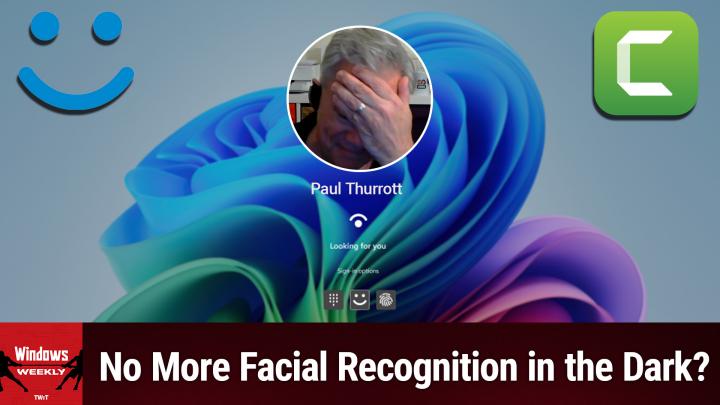
All TWiT.tv Shows (Audio)
Windows Weekly 937: Vexed by Perturbations
02:43:30
What just happened to Windows Hello!?
Loading summary
Transcript990 lines
- [00:00]
Leo Laporte
It's time for Windows Weekly. Paul Thurat's here. So is Richard Campbell. We've got. Hello, Gate. The Windows hello controversy of months. No, it's not you, it's them. We'll also talk about some big new games for Xbox. And is Richard gonna buy a new laptop? Find out next on Windows Weekly. Podcasts you love from people you trust.
- [00:25]
Paul Thurott
This is.
- [00:34]
Leo Laporte
This is Windows Weekly with Paul Thurada and Richard Campbell. Episode 937, recorded Wednesday, June 18, 2025. Vexed by perturbations, it's time. Yes, you winners and dozers. You came to the right place at the right time, probably because you downloaded it and you already knew. It's Windows Weekly time. And here, ladies and gentlemen, the stars of our show, Mr. Paul Thurat of thurrott.com. what do you mean he's frazzled? He keeps changing his settings just to see what happens.
- [01:07]
Paul Thurott
I wish that's why I was doing it. But.
- [01:11]
Leo Laporte
He is in beautiful Pennsylvania, lovely Makownjee Township. Also with us from beautiful British Columbia, Richard Campbell of Renner's Radio. Finally, home at last.
- [01:26]
Richard Campbell
Home at last in three weeks.
- [01:28]
Leo Laporte
You poor guy. You have been suffering.
- [01:30]
Richard Campbell
I had so much fun. Are you kidding? Like, it's hard to complain, but it is. Home is very.
- [01:34]
Leo Laporte
Oh, you have been having fun.
- [01:35]
Paul Thurott
Easily complain. Give me a second, Paul.
- [01:39]
Leo Laporte
Paul needs no. No challenge, no introduction to complain. Anything is game for Paul. Anyway, we're so pleased, so pleased to be gathered together on this beautiful Wednesday to talk about the latest news from Microsoft. Can I call it hello, Gate?
- [02:04]
Richard Campbell
Yeah.
- [02:05]
Paul Thurott
Yeah.
- [02:07]
Leo Laporte
Do you mind?
- [02:08]
Paul Thurott
I do not mind. I think that's pretty good.
- [02:10]
Richard Campbell
It just quit on my Surface, too, some patch ago. Well.
- [02:13]
Paul Thurott
So every Windows user, maybe every computer user can sort of relate to this thought, which is you're doing something on your computer. Windows, in my case. And something doesn't work, you know, like Windows, you know, or. To me, I. It's something. I don't know, some combination of.
- [02:29]
Leo Laporte
It's just, you know, normal.
- [02:31]
Paul Thurott
Right. Like in my case. Yeah. So I have a lot. In fact, one of the. I'm charging two computers over there. One of those is a laptop Review laptop, like Windows. Hello. Facial recognition doesn't work a lot of the time. It's just kind of the way it is. So you get used to it and you're like, okay, fine, whatever, I guess.
- [02:45]
Leo Laporte
Yeah. But don't we rely on it for things like recall?
- [02:47]
Paul Thurott
You rely on it for all kinds of things. Yeah. Which is kind of why this is a Problem. So the past, I don't know, week or two, 10 days, something like that, I've noticed like I'll be sitting in the dark like I do, watching TV as one does.
- [02:58]
Leo Laporte
Yeah.
- [02:59]
Paul Thurott
Open a little laptop and the little eye thing is like. And it's like can't find you. And then it has the audacity to give you like tips about how you might fix this problem.
- [03:08]
Richard Campbell
Like maybe you should have more clearly your fault.
- [03:10]
Paul Thurott
Yeah, maybe you should try. Try another face. Do you have another face? One time it told me it didn't see a face. Like I'm look just right in front of the screen, dude, come on. So anyway, I chalked this up to me. Right. Or Windows or some combination or the.
- [03:25]
Leo Laporte
Weekend you can't feel your face.
- [03:27]
Paul Thurott
Yeah. So it turns out no they in the latest patch Tuesday. So this would have been. Yeah, well eight days ago, I guess. One of the items that was in the list for Windows 10 and 11, I believe is a fix for a Windows hello spoofing vulnerability that allowed attackers to perform spoofing locally due to this is in quotes. Inadequate detection or handling of adversarial input. Perturbations.
- [03:59]
Leo Laporte
Oh well, there you go. Perturbations. Hello.
- [04:01]
Paul Thurott
In Windows hello.
- [04:03]
Leo Laporte
It's perpetations. That's what's happening. Perturbations.
- [04:09]
Paul Thurott
I am perturbed. I am vexed by the perturbations.
- [04:13]
Richard Campbell
You ought to be a lawyer. Worked on that, I'm pretty sure.
- [04:17]
Paul Thurott
Yeah, it's a tough one.
- [04:18]
Leo Laporte
It's a perturbation issue.
- [04:20]
Paul Thurott
So the way this worked in the past, and by in the past, I mean literally dating back to what, the beginning of Windows 10 or something? No, I mean like the way it's always worked is if you're in the dark, it has an IR camera. It's similar to the technology Apple uses for face ID that can help recognize you in the dark. But now they're just using the camera and the camera can't see in the dark even if you have, you know, light mode on. And it's. If it's dark enough in the room, it's not going to see you. So hilarious.
- [04:53]
Leo Laporte
So when it doesn't work, it just doesn't recognize you. It's not that it has a big pop up that says I'm not working now.
- [04:59]
Paul Thurott
So I think what Microsoft has done has given me as a Windows on ARM user the ability to experience the intel world where the congratulations the camera.
- [05:10]
Leo Laporte
And it's like, aren't you fortunate?
- [05:12]
Paul Thurott
Where are you? Where are you, buddy? And you're like, you're holding the thing like, I'm right here. I'm right here. Hello, I'm right here. And it's like, nope, can't see you. And I'm like, I am two feet away from the screen. Come on. So, yeah, so it's not really clear right now how serious this is. It's not. Microsoft doesn't know if it's been exploited by attackers.
- [05:34]
Richard Campbell
Right.
- [05:35]
Paul Thurott
We're going to learn more. I think so.
- [05:38]
Richard Campbell
And this might be an interim fix. It's like first let's lock it down, now let's develop some better software to deal with these. What was the phrase you used?
- [05:48]
Leo Laporte
Perturbation.
- [05:49]
Paul Thurott
Perturbation, yes. Adversarial input. Perturbation.
- [05:55]
Richard Campbell
Adversarial input.
- [05:56]
Leo Laporte
So it's a security issue.
- [05:57]
Paul Thurott
Yes, 100% now. Yeah, yeah, yeah. No, there's a security vulnerability update or you know, whatever they call a security vulnerability post or whatever about this. So. Yeah, but like, like Richard said, correct, you turn, you, you fix the problem first or you eliminate the problem.
- [06:14]
Richard Campbell
Yeah. You eliminate the breach risk first.
- [06:16]
Paul Thurott
Then you restore functionality and maybe we're lucky. Right? So, yeah, this is one of those things, you know, I, this is coming up a little bit later, but I. Today is the one year anniversary of the day that Window or Surface Laptop 7 and Surface Pro 11 were released. Right. The Snapdragon computers. And I have a nearly flawless experience with this laptop that I bought a year ago. If anything, actually the battery life is actually better now than it was a year ago. That's amazing. But the one thing, one of the things that I didn't like about it and don't think is acceptable in a computer that's this expensive is it only has the facial recognition. It doesn't have a fingerprint reader as well. I feel like spent over two grand on a laptop, but maybe it should have both, you know, picky like that. So I've gotten used to using Windows. Hello, facial recognition. I actually prefer fingerprint, frankly. I like to explicitly, you know, signal that I want to log in. But yeah, I've been using it for quite a while now and now it doesn't work. So. Yeah, that's fine.
- [07:17]
Richard Campbell
Well, I mean, so they could add to the front of that screen a nice bright light they could flick on just to get your facial recognition. Then you get all these pictures of you going, ah, yeah.
- [07:26]
Paul Thurott
And if you're stupid enough to have it in light mode when you turn this thing on, you actually get that automatically. But it still doesn't. I'm Trying to think. I don't believe it's ever worked in the dark for me since last week. I'm. Now I'm not going to remember every instance, but I certainly remember this happening multiple times where it's dark. Open it. You're like, what's going on here?
- [07:44]
Richard Campbell
My Surface Studio two longer ago, but now has recognizes my face. Not in the darkest recently, but up until recently. And then it would go, there's been an error. Enter your pin.
- [07:57]
Paul Thurott
Yeah, yeah. I like when you do the window. The finger one. It says I can't. Can't read the finger. You should try another finger. You're like, I've only put one finger in this thing. You should know that. You know, or whatever. It's like, try a different face. I'm like, yeah, you know, this is what I got. So, yeah. Anyway, we're still not 100% clear on what's going on here, so I suspect.
- [08:19]
Richard Campbell
We'Ll have an update out of sync on the discord Just came up the perfect answer, which is they'll add a piece of software that flips to an all white screen at maximum. Yeah.
- [08:27]
Leo Laporte
Turn your screen up.
- [08:28]
Paul Thurott
Yeah.
- [08:28]
Richard Campbell
Boom. That's your flash.
- [08:30]
Paul Thurott
Right. Like when you do it like a selfie and you do a fake flash or whatever.
- [08:33]
Richard Campbell
That's right.
- [08:34]
Paul Thurott
Yeah. Yeah. There you go. Maybe that's the answer. I look forward to that. I don't have like retina problems or anything, so that'll be a fun way to develop those. Yeah. I don't know. So I guess this is the controversy of the. Well, I call it the week of the week. I guess we usually have something every week. This is this week's part on this.
- [08:52]
Richard Campbell
That they've not been upfront on what they're really doing here or.
- [08:56]
Paul Thurott
Yeah. So this is not as dramatic, I hope, as the time that Microsoft got hacked and they didn't say anything for months and still, by the way, have not really said anything. It's get little vibes of that.
- [09:06]
Richard Campbell
Listen, Midnight. I'm going to give Midnight Blizzard a pass because the State Department ended up being involved like it was a nation state actor. And so government puts rules even around a company like Microsoft.
- [09:17]
Leo Laporte
Yeah, that's true.
- [09:18]
Richard Campbell
They really weren't allowed to talk about that. Yeah.
- [09:21]
Leo Laporte
Maybe the case. Yeah.
- [09:22]
Paul Thurott
Okay. Well, yeah, I. The perturbation maybe. Yeah. All they could say perturbations is. That's a clue.
- [09:30]
Leo Laporte
Yeah.
- [09:31]
Paul Thurott
Yeah. There's a pill for that, by the way. And it. I feel it happens to all computers. Nothing to be ashamed of. Yeah. I So, I mean, I didn't. I. I have in the past spent time, you know, you can go in and retrain it or do an additional, you know, view of your face to do one with glasses, one with glasses off, that kind of thing. I've done that. I didn't do it this past week, but I bet a lot of people wasted time on this trying to figure out what the heck was going on. It would have been nice if there was a little note that said, hey, by the way, this used to work. You know, I mean, they have no issue prompting me for nothing. I mean, how about prompting me about something that's important? But I don't know. Anyway, that's what's happened.
- [10:13]
Richard Campbell
Well, the fact that we have to sort of deduce what the process here is going to be is, you know, somewhat concerning.
- [10:19]
Leo Laporte
It's not just insiders.
- [10:21]
Richard Campbell
This is. No, this is in the production product.
- [10:23]
Paul Thurott
This is production.
- [10:24]
Richard Campbell
Yeah.
- [10:24]
Leo Laporte
Yikes.
- [10:25]
Paul Thurott
So actually, the other reason this is maybe controversial is that one of the big switches that's been made over the past year has been this move to Windows hello, ess, which is that more secure form of Windows hello. That we has all kinds of crazy requirements. It's part of the Copilot plus PC spec. It's. This is what's protecting recall. You have nothing to worry about. So anyway, we'll see. I don't know.
- [10:52]
Richard Campbell
And yet another reason why there'll never be a Copilot plus PC. That's a PC, just a laptop.
- [10:57]
Paul Thurott
Yeah, right.
- [10:58]
Richard Campbell
Because they need to control the input device.
- [11:00]
Paul Thurott
Yeah. Maybe they got like an all in one or something, but. Yeah, that's a good point. Yeah. Or. Or that spec evolves somehow, you know, that somehow there's some way to. I don't know how you do that. As I was saying that sentence, it's like somehow determined that there's a secure chain of whatever hardware from your camera to your USB port is impossible. It's like a. Like a credit card skimmer on a ATM machine or something. But I don't know. Anyway, we're still. This is still fog of war stuff right now, so.
- [11:27]
Richard Campbell
Very much so.
- [11:29]
Leo Laporte
Hello, gate. Can I call it hello gate? Is that okay? Why not?
- [11:33]
Richard Campbell
We like a good gate.
- [11:35]
Paul Thurott
I hope you guys have pins you like using instead. I recommend shooting in the light. You know, that's just me.
- [11:43]
Leo Laporte
But you could. So it works. Maybe turn on the light.
- [11:46]
Paul Thurott
Yeah, as long as there's light, you're okay.
- [11:48]
Leo Laporte
Okay.
- [11:49]
Richard Campbell
I mean, not for me.
- [11:50]
Leo Laporte
Just to be clear. Yeah, right.
- [11:52]
Paul Thurott
Sorry.
- [11:53]
Richard Campbell
Normally crazy oh, I've gone through the surface diagnostics now. No results.
- [11:59]
Paul Thurott
Wow. I have my own little surface diagnostic story, oddly enough. That's interesting.
- [12:05]
Leo Laporte
So. Oh, weird. So you just have another. A completely different problem, Richard.
- [12:10]
Richard Campbell
Yeah, something's.
- [12:11]
Paul Thurott
Yeah.
- [12:12]
Richard Campbell
With the Studio 2, I think it's more than a year old, and it's like, you should replace me.
- [12:16]
Leo Laporte
You didn't get the new thing.
- [12:19]
Richard Campbell
Well, and I'm not going to get one now. Right. Like, I'm. I. Because it'd be crazy to buy the old chipset. Like, I do want an ARM machine.
- [12:28]
Leo Laporte
But get the Think right. Why not get the ThinkPad?
- [12:33]
Richard Campbell
Yeah.
- [12:34]
Leo Laporte
You want to get a Windows device, Is that it?
- [12:37]
Richard Campbell
No, I actually, I'm happy to jump off, you know, now that Panos is gone, I got no loyalty to the Surface machines.
- [12:42]
Leo Laporte
Yeah.
- [12:43]
Richard Campbell
Not that I had loyalty to Panos, but.
- [12:45]
Paul Thurott
Right.
- [12:46]
Leo Laporte
It's just not as exciting.
- [12:47]
Richard Campbell
I do have a friend at Lenovo. I bet I could get a smoking deal on a stuff.
- [12:51]
Leo Laporte
Oh, there you go. You know what? Almost any. Anybody can never pay list.
- [12:55]
Paul Thurott
Exactly. Lenovo, everything is always on the discount. Yeah. Always try, you know, list price, 2600 bucks or sale price 7.99. Like, what's going on? I. Yeah, it's incredible.
- [13:09]
Leo Laporte
If, if, if, you know, we have. We have an agency that's trying to sneak in endorsements into our ads, and the line they always put is, if I had needed this product, it's what I would have bought.
- [13:22]
Richard Campbell
Right.
- [13:22]
Leo Laporte
So if I had needed a Windows machine, a Lenovo is what I would have bought.
- [13:27]
Paul Thurott
That's. After a particularly drunk evening, I lost my phone. And then I finally found it, and my wife said, where is it? And I said, it's right where I would have left it if I had left it. I don't actually remember leaving it there, but.
- [13:45]
Leo Laporte
Nobody will have it as bad as Alex Lindsay, who for some reason drove to the liquor store, picked up some liquor, and then walked home and the next day said, where the hell's my car?
- [13:56]
Paul Thurott
That's amazing. I love that.
- [14:00]
Richard Campbell
That's brilliant.
- [14:03]
Leo Laporte
He wasn't drunk. There's no excuse.
- [14:05]
Paul Thurott
You know, that's an interesting kind of uber of shame when you show up at the liquor store and you're like, yeah, they wouldn't let me drive home. I. You know, I had to walk. Wow.
- [14:15]
Leo Laporte
Wow, wow, wow, wow. Anyway, all right, well, so we're done with the gate. Is that it? Is that all you got?
- [14:20]
Paul Thurott
It's all we know so far. Yeah. It's kind of light on info. Sorry, but That's.
- [14:25]
Leo Laporte
Well, no, I'm glad you did. Was the story. What else we have for today? Is that the show?
- [14:33]
Paul Thurott
Yeah. So thank you guys for coming. I'm sorry we started a little late.
- [14:37]
Leo Laporte
What else you got?
- [14:40]
Paul Thurott
So a couple of insider builds have occurred. Some changes coming to interestingly, recall. One of the things that's in recall in the dev, I think this one is dev and beta channels, is the ability to export your recall data so you can access it later. And this, I think, is the first step toward the thing. When I talked to the guys from who did recall a year ago and was like, guys, this is cute, but it only makes sense if it works across devices. And they're like, we know, we know we can't do that yet. Baby steps. So this will at least address the situation where maybe you've moved from one computer to another. You want to have that data with you for whatever reason, so you can export it. It's encrypted. They give you a code so you can decrypt it. If you lose the code, you can't decrypt it. That's how encryption works. Magic. Yeah. But it's, you know, I think a first step. I would imagine that eventually this will be added to Windows Backup, where you could, as part of your Windows Backup, you'll be. If you want to, you' be able to export your recall data and then import it when you bring up the new computer, when you sign in with your Microsoft account, that kind of thing. But right now we're not doing the cloud. You can export it to your own thing. It's your problem. Good luck with that. I don't. I don't know. I don't know what to tell you. Also, I should also point out right now this is only in the eea, the European Economic Area, and it's probably related to the DMA and whatever requirements that Microsoft has. This is something that's going to come up one or two other times. Last weekend, remember, or last week, sorry. Microsoft discussed some of the changes they were making to Windows, mostly around Microsoft Edge and default browsers and default apps, but for the dma. And they've been pretty upfront about this. So, like, look, this is what they're requiring. This is what we're doing. I'm still holding out hope that we'll see at least some of that outside of the European Union or the ea, but not yet. And there's more. So there is, excuse me, the AI agent that nobody asked for and nobody will ever use it will help you Find settings in the Settings app. The ability to reset recall, which you could actually do with a couple of additional steps. But now it's like a one click kind of a thing they brought back. This is probably the biggest news, depending on who you are. The. You know, if you're, if you're familiar with the calendar Flyout in Windows 10, you know that there are a couple things missing from the version that's in Windows 11. The big one being interactivity where you go in and add and remove events from your calendar if it was synced up with your account. Now it's in Windows 11. Ever since it came out, it's just been a static display of a calendar. It has nothing to do. It doesn't show appointments or anything like that. They didn't fix that, but they did add back, or they are adding back the clock that used to be at the top of the calendar. So it actually looks like the version in Windows 10, but without the actual functionality.
- [17:38]
Richard Campbell
Nice.
- [17:39]
Paul Thurott
Kind of Microsoft. Hilarious. And then they're doing some improvements to Windows share, voice access, etc. So nothing dramatic. But I think the big thing there is the. Well, to Microsoft is probably the Settings AI agent. Like I said, I don't think anyone cares, but I think the recall export stuff is kind of a bigger deal. But definitely, potentially, potentially Europe. Only the other thing that happened was that sometime in the past week, Microsoft released two new builds to the Release Preview channel. Meaning these are almost certainly what we're going to see on Patch Tuesday next time. Or more quickly than that. I gotta look at the calendar. Yep, next Tuesday. Yeah, next Tuesday, which is the Tuesday of week D, which is when we get preview updates. You may recall that the May and June updates this year for Patch Tuesday were enormous. Dozens of features, etc. This one is not. And I have to say I kind of welcome a little break from that. The big one is related to that DMA thing, like I said, which is when you set a different browser as a default, it actually does everything. Not just the handful of protocols and URL types that it used to do, including I believe, PDF, which is manual today. The point behind that is that the other protocols, including some that were hidden, were the things that a lot or that forced you to use Edge when, say you clicked something in Search Highlights in the back of the Start menu or in the widget board or whatever, you know, it would load Edge. But now if you say, look, I want to use Chrome, you'll actually use Chrome everywhere, you know, like God intended. That's nice. That change is also coming to Windows 10.
- [19:22]
Leo Laporte
So isn't that why God made Electron?
- [19:26]
Paul Thurott
Well, yeah, I mean, look.
- [19:29]
Leo Laporte
Or was it the devil?
- [19:31]
Paul Thurott
Yeah, I was going to say it was Facebook. So it was the devil. So Microsoft did a good thing a long time ago that actually came up out of antitrust, by the way, which is that default apps interface. And it was a good interface, it worked. And then over time they made it harder and harder to use to the point where we got to Windows 11. And aside from the fact that it originally shipped with no way to switch your default browser, by the way, sons of it. But it also, when they added that back, they only did it part way. Right. And so it's like, you know, guys, like we get it, you want us to use Edge. Which by the way, I will discuss at the end of the show. So not big updates, but that's good. You know, like I said. So a couple of other small things. The visual preview on Window share. I mentioned the ability to edit an image that you're sharing in the. From the share sheet and how that's actually really cool. Now you can preview and image from the share sheet because, dear God, the share sheet is becoming an operating system unto itself for some reason. But that's whatever. That's what they're doing. So that's actually I believe. Let me just make sure.
- [20:35]
Richard Campbell
All the Windows need.
- [20:37]
Paul Thurott
Yeah, there's really.
- [20:37]
Leo Laporte
It's long and the short of it.
- [20:39]
Paul Thurott
If it wasn't for them screwing up Windows. Hello. This would have been the quietest week in the history of Windows.
- [20:44]
Richard Campbell
It would have been just Windows Weekly coming. That made sense. That's a strange.
- [20:48]
Paul Thurott
I know. But then we got that and that's nice. Return to form. I mean they were like, we're kind of doing the non chaotic thing. Should we screw it up? They're like, yeah, let's screw it up.
- [20:57]
Leo Laporte
That means we could talk more about Macintosh, which, you know, which I got.
- [21:01]
Paul Thurott
A lot of good feedback on last week.
- [21:03]
Richard Campbell
So got to tell you, I did ping my Lenovo friend and he sent me to the ThinkPad T14 Gen 6.
- [21:11]
Paul Thurott
Yeah. Now is this the Snapdragon or the. Whatever.
- [21:14]
Richard Campbell
Snapdragon. Snapdragon.
- [21:16]
Leo Laporte
So it's like a Carbon but with Snapdragon.
- [21:18]
Paul Thurott
Well, it's a T series, so the T series.
- [21:20]
Richard Campbell
So it's a little tankier than that. It's not.
- [21:22]
Paul Thurott
Yeah, it's like 14s, right? That's the slimmer.
- [21:26]
Richard Campbell
Do you know what else it comes with, my friend? Fingerprint reader.
- [21:30]
Paul Thurott
Yes.
- [21:30]
Richard Campbell
Hello.
- [21:31]
Leo Laporte
Doesn't work. You don't care.
- [21:32]
Richard Campbell
Yeah, that was one of the really good type in your pin. Like a peasant. You can just stick your finger on. The thing about it, I actually wish.
- [21:39]
Leo Laporte
Everything had a fingerprint reader. I'm really sad that for instance, my iPhone doesn't because Face ID doesn't is not that great.
- [21:46]
Paul Thurott
Well, Pixel 9 has a fingerprint Face ID but I wish my Mac had Face ID.
- [21:52]
Leo Laporte
Wait, they won't sell me one. It has a gigantic new one probably.
- [21:55]
Paul Thurott
Well, that's the intel one for one thing.
- [21:56]
Richard Campbell
You got a gen. You want a gen 6. Oh, oh. Let's go to the 6th generation 14 gen snap 6 Snapdragon.
- [22:04]
Leo Laporte
Oh, this is lightweight. Heavyweight performance. That won't weigh you down. Yeah, I'm just trying to get you a free one. So let's go to the T series, but let's look at the snappy one. Extra Snappy Dragons, Snappy T series Co pilot plus PC. That must be it.
- [22:24]
Richard Campbell
The one. Yeah. There's your baby. Oh.
- [22:27]
Leo Laporte
Oh, Richard.
- [22:28]
Richard Campbell
All you got to do is load it up with the maximum memory and the maximum storage and the maximum screen.
- [22:33]
Paul Thurott
I'm not. I. Given what I'm about to talk about, I can't believe I'm saying this, but you might want to look. I believe there's an AMD version of this.
- [22:39]
Leo Laporte
It's on clearance.
- [22:41]
Richard Campbell
Look at that.
- [22:41]
Paul Thurott
And the AMD version has gen 5 incredible built in GPU stuff.
- [22:46]
Leo Laporte
I. I don't see where I can customize it.
- [22:48]
Paul Thurott
It's only a gen 5. You sure? I thought that sworn. I think this one. They did all three.
- [22:52]
Richard Campbell
You're right. It's a Gen 6 Snapdragon coming soon.
- [22:56]
Leo Laporte
There's an AMD one. You might maybe want to hold out for that.
- [22:59]
Richard Campbell
For the amd?
- [23:00]
Paul Thurott
I believe they announced this as long ago as I thought last year. I mean it's been been a while. But anyway, it's a. That's a terrific laptop.
- [23:07]
Leo Laporte
You would prefer the amd, wouldn't you?
- [23:09]
Paul Thurott
I wouldn't, but I. But I could see where people might. Richard. I know.
- [23:13]
Leo Laporte
Which do you want?
- [23:15]
Richard Campbell
You know now that he's literally giving me employee pricing for this thing which is.
- [23:19]
Leo Laporte
Oh my God. Oh my God.
- [23:22]
Richard Campbell
30 off. I'm kind of like, oh boy. I think I might just have to pull the trigger on this.
- [23:25]
Leo Laporte
But these look like carbons. These don't look that.
- [23:28]
Richard Campbell
They really do, don't they? Yeah, they don't look that well. Nothing.
- [23:30]
Paul Thurott
No, they're nice. It's nice.
- [23:33]
Leo Laporte
Oh, I'm so jealous.
- [23:33]
Paul Thurott
The new carbons are like so light. They feel like engineering samples without anything inside of them.
- [23:38]
Richard Campbell
These are.
- [23:38]
Paul Thurott
These are.
- [23:39]
Leo Laporte
And everything's glued.
- [23:40]
Paul Thurott
No, but it's. I mean they're. They're incredible. But this is. This is really nice.
- [23:48]
Leo Laporte
But I don't see where I can add stuff to it. It looks like it's just.
- [23:53]
Paul Thurott
Yeah. These are pre configured for this.
- [23:54]
Leo Laporte
32 gigs of RAM terabyte drive. That's not enough for Richard.
- [23:59]
Richard Campbell
Okay, now terabytes enough on the laptop. I think that's pretty cloud in my Raspberry.
- [24:03]
Leo Laporte
Yeah, it does have unmatched CPU performance. So this is a Orion. It's not.
- [24:08]
Paul Thurott
No, that's it. The Sam. That Orion is the.
- [24:11]
Leo Laporte
The SOC or.
- [24:13]
Paul Thurott
Oh, no, it's the name of the CPU course.
- [24:15]
Leo Laporte
Oh, okay.
- [24:15]
Richard Campbell
Cpu. Snapdragon is the overall sock.
- [24:19]
Leo Laporte
So they don't do the Elite anymore? Or is.
- [24:21]
Paul Thurott
No, that's it. It's. That is. It's Ex Elite. Yep.
- [24:26]
Leo Laporte
They just call it Orion. Okay, got it. Hey, Richard, leave your power adapter behind.
- [24:30]
Paul Thurott
I wouldn't do that. I wouldn't do that.
- [24:32]
Leo Laporte
It gets it through the air?
- [24:35]
Richard Campbell
No, I think it gets through the USB C port, but yes.
- [24:38]
Leo Laporte
Okay. Close enough. Look at that. It's floating on a rock.
- [24:42]
Paul Thurott
Yeah, it's actually. It's helping that environment just by being there.
- [24:48]
Leo Laporte
Just by being there. It's a very zen moment.
- [24:50]
Paul Thurott
Yeah.
- [24:51]
Leo Laporte
It is built to defy the elements. It will take a mil spec 810H. Very nice.
- [24:59]
Richard Campbell
Very fancy.
- [25:00]
Leo Laporte
It exceeds 12 standards, 26 procedures and 200 plus quality checks. Dude, if you don't buy this, I will. That is awesome. Adreno graphics. No, see, it says up to 64 gigs. So maybe there's a way to talk them into it. No, that's what you'd want, right, Richard?
- [25:19]
Richard Campbell
No, I specced out the 64 with the terabyte and the 2880 screen. Non touch screen. Oh, I don't need fingerprints on my screen.
- [25:27]
Leo Laporte
Who needs touch? Yeah, if you got a fingerprint reader.
- [25:30]
Richard Campbell
That'S a little red nub for that. You've got a red nub. You're a nipple.
- [25:34]
Leo Laporte
You don't need it.
- [25:35]
Paul Thurott
I don't like using that any. That used to be necessary because it was very precise, but now trackpads are much better.
- [25:40]
Leo Laporte
It's a little purple tunnel just waiting.
- [25:42]
Paul Thurott
It hurts my finger to use it. Like if, you know, it's. I'm so out of shape with it or whatever.
- [25:46]
Richard Campbell
You press too hard.
- [25:47]
Paul Thurott
I got to do the little exercises for my fingertips. I don't know what that was.
- [25:56]
Richard Campbell
Going.
- [25:57]
Paul Thurott
Do we find out what red rum means?
- [25:59]
Leo Laporte
Yes, we do.
- [26:00]
Richard Campbell
Yeah, we have. Really do know.
- [26:02]
Leo Laporte
Your daughter now knows.
- [26:03]
Paul Thurott
Even I know. It's the best.
- [26:04]
Leo Laporte
That's hysterical. That's the best. When you. When you can share these great movie moments with your children. All right, well, since you have used up all your Windows stuff, we will get to Apple in just a moment. But first a word from our sponsor. No, you have, you have Surface, you have Microsoft 365, you've got AI and of course the vaunted Xbox, which is the longest segment in the show today. All coming up. Plus a brown liquor going with a classic. A real serious with a classic. Yeah, one everyone should drink sometimes.
- [26:39]
Richard Campbell
With a story, of course.
- [26:41]
Paul Thurott
I better.
- [26:42]
Leo Laporte
Can't wait. But first, I've got a story about our sponsor. This episode of Windows Weekly brought to you by US Cloud, a name you should know. We've been talking about it for a while and I was fooled when I first heard the name, I thought, oh, they're a cloud company. Well, sort of. They're the number one, number one Microsoft Unified support replacement. Oh, I'm liking this. We've been talking for a few months now, but US Cloud, the global leader in third party Microsoft support for enterprises, they support 50 of the Fortune 500. Why? Because it could save you big. Switching to US Cloud could save your business 30 to 50% over Microsoft Unified and Premier support. But wouldn't be any good if it were cheaper. But not as good. It's better. Better. Twice as fast. Average time to resolution versus Microsoft and the best engineers in the business. And now they're gonna live up to their name because US Cloud has a new offering that will save you money on the cloud. It's their Azure cost optimization services. And I have a feeling this is not something Microsoft will help you do. I mean, really, honestly, when was the last time you evaluated your Azure bill? Right. If it's been a while, you probably have some, I don't know, Azure sprawl, I guess they call it a little spend creepy going on. The good news is saving on Azure is easier than you might imagine. Thanks to US Cloud, they offer an eight week Azure engagement. It's powered by VBox. It identifies key opportunities to reduce costs across your entire Azure environment. Now, you're not on your own with this. You're going to get expert guidance, access to US cloud senior engineers. With an average average of over 16 years with Microsoft products, I mean, these are the best in the business. At the end of the eight weeks, you will have an interactive dashboard that will identify opportunities. It's not gonna. You don't have to do anything, but it'll identify, rebuild and downscale opportunities. It'll show you unused resources. I know you want to get rid of those, allowing you to reallocate those precious IT dollars towards needed resources. And how would you like the savings to continue? You could if you invested that Azure savings in US Cloud's Microsoft support. That's what a few of US Cloud's other customers have done. Eliminated, completely eliminated their unified spend. Now you're saving big time. The savings just keep on going, as they say. Just as Sam, he's the technical Operations Manager at Bead Gaming B E d, he gave us Cloud 5 stars. This is the review quote. I'm quoting direct quote. We found some things that have been running for three years which no one was checking. Three years. These VMs were, I don't know, 10 grand a month, but not a massive chunk in the grand scheme of how much we spend on Azure. But, you know, once you get to 40 or $50,000 a month, it really starts to add up. Do you think you might have some Azure VMs have been running unused for three years. Stop overpaying for Azure. Identify and eliminate Azure creep. Boost your performance, and you can do it all in just eight weeks with US Cloud. Visit uscloud.com, book a call today to find out how much your team can save. That's uscloud.com to book a call today and get faster Microsoft Support for less. USCloud.com we thank him so much for supporting Windows Weekly. I hope you've checked them out. If you haven't, this is the occasion to do it US Cloud. Alrighty. Let's just a little Apple talk.
- [30:26]
Paul Thurott
Well, I'm gonna relate it to Microsoft and Windows, though.
- [30:28]
Richard Campbell
Oh, good.
- [30:29]
Paul Thurott
Yeah. But mostly by explaining how much Windows is terrible. No, I'm just kidding. No, no, I kid. I kid.
- [30:35]
Leo Laporte
No, you kid. He kid.
- [30:37]
Paul Thurott
But there are some. There are some interesting things going on with Mac OS that aren't all new to this new version they just announced. But their embrace of glass is kind of weird. It's like we did this a long.
- [30:48]
Leo Laporte
Time ago, but Aero was a little sluggish, right? I mean, Aero was in xp. It was a little too soon. Maybe.
- [30:55]
Paul Thurott
Arrow. Vista.
- [30:56]
Richard Campbell
Vista. And it was a driver crisis.
- [30:58]
Paul Thurott
Yeah, it was a driver issue. But this is the Microsoft can't win thing, right? In other words, everyone's all upset that Microsoft can't innovate like Apple can. And you're ever gonna do this stuff. And it's like, okay, so we're gonna do this hardware accelerated graphics thing like Apple has. Like, oh, it doesn't run on my compute. Like, it's just like the Windows audience in a nutshell is just like, we're never happy.
- [31:19]
Richard Campbell
So, yeah, I mean, it's not just us. They also, the vendors weren't happy either because Microsoft pushed them to update the drivers to support this stuff for existing chipsets. And they're just like, no, I'm not doing it. Only the new ones.
- [31:31]
Paul Thurott
Yeah, right.
- [31:32]
Richard Campbell
And that's, you know, part of why the customers were so angry.
- [31:35]
Paul Thurott
Yeah. Passage of time, better drivers from intel in particular, they. I should say, better integrated graphics chipsets from intel in particular kind of help put Arrow over the edge. And then by the time it finally worked great, they got rid of it. So, you know, Microsoft Classic, you know, the Windows XP UI only lasted for one major version of the os. I mean, I know there were variants of it and of course it was in market for a long time as well, but they never. That UI did not scale. It was bitmaps. If you had a really high resolution display, you know, the icon. I don't remember the exact numbers, but I bet the icons only went up to maybe 256 pixels, whereas the ones on Apple were really scalable, et cetera, et cetera. So we fix problems. Sometimes they take a while. But the couple things I just want to point out that are interesting to me on the Mac, which we can replicate to some degree on Windows, right, are there's two major ones. Spotlight, which everyone loves, and including people on Windows, by the way, because PowerToys has ripped it off twice. Right? So there's something called PowerToys Run, which most people are familiar with. I think by default it's Alt space will bring up this interface in the middle of the screen. That's Spotlight, Right. Except for Windows, it's a launcher. It's extensible to some degree. But there's now a newer version of it called the Windows Command Palette, and that one is explicitly extensible. And they're trying to kind of build this ecosystem around it. If you're a power user, this kind of interface is probably preferable to start because it kind of does everything that Star can do and more. It does search and it does all kinds of things in Tahoe. What they're doing is integrating it with shortcuts and with some other things. And shortcuts is their automation platform. Shortcuts is actually really powerful and this is across all their. Well, across their major platforms. So it's on iOS, it's on iPad, it's on Mac OS.
- [33:27]
Richard Campbell
It does seem to be a unification push, right?
- [33:29]
Paul Thurott
Yeah, it's.
- [33:32]
Richard Campbell
Dave Cutler, one core.
- [33:34]
Paul Thurott
Yeah, it's pretty sweet. So the closest we have to that on Windows is Power Automate and there's a version of Power Automate that is included with Windows 11, by the way. I think basically no one even knows it exists. I don't know that anyone uses it for much, but if you looked at any of the keynote stuff or you were paid attention to this and you're like, I wish we could have this in Windows. To me, the two biggest things are basically on Windows. I mean, they're maybe not exactly the same, but I've only just hit the tip of the iceberg on these things as they are in Tahoe. And I have to say they're actually. They're pretty amazing. So that's something.
- [34:12]
Richard Campbell
You want a Mac here? Is that what you're doing?
- [34:15]
Paul Thurott
No, I have a Mac. I don't like Mac OS for the most part. But like, those features to me are pretty cool. You know, the Mac does a much better job with full screen, for example, like they. Although there's also inconsistencies to it, but the Mac has this notion of full screen apps. You swipe on the trackpad, which we can do on Windows. Right. Three fingers go back and forth between apps, et cetera. It's just more elegant on the Mac, it works better, et cetera. I don't know if Richard, if you've ever just talked about this kind of thing on. Net rocks per se. But one of the big things with xaml when this was introduced as part of Avalon at the time, but Windows Presentation foundation was. It's an XML based declarative language for, in this case, creating the user interface for an app, basically.
- [35:01]
Richard Campbell
Right.
- [35:01]
Paul Thurott
And it's a. It's a partial class with the C Sharp code that sits behind it and you can mix and match and you know, it's.
- [35:07]
Richard Campbell
Yeah, there's enough different ways to do things you can guarantee that nobody can.
- [35:10]
Paul Thurott
Understand your code 100%. I'm literally today struggling with data binding and WPS WPF. It's horrific. It's also incredible the few places where.
- [35:17]
Richard Campbell
ChatGPT reliably go dunno exactly.
- [35:21]
Paul Thurott
Or they'll just be like, here's the answer. You're like, yeah, that's not the answer. Like, yeah, I got. I. They're like, yeah, we tried. I'm Sorry, I don't even know why I gave you that. No, you're right.
- [35:27]
Richard Campbell
It was work. And everything will work. And you.
- [35:29]
Paul Thurott
I was buying time. I was trying to crash. I don't know what happened there, but. Sorry. Yeah, it's hard. It's hard. Right, so. But I would say WPF when it was introduced to the Windows world. Well, originally 2003 is Avalon, and then really in 2000, whatever that was, Six was so powerful. It was like technology handed down to us by aliens. Like, it was like we found it in a crash. We didn't really understand it, but we just shipped it and here you go build stuff with it. And infamously, we know Microsoft sat on it for many, many years and didn't do anything. But the thing that's happened in more recent years with things like Flutter and then with SwiftUI in the apple world is a new type of declarative programming style where you're writing in the same language that the code behind is written in. So Dart in the case of Flutter or Swift in the case of Swift ui. Right. And so this is something I've been looking at too, because I've been really, really struggling with wpf, like I said, also the Windows app SDK. Because if you thought WPF was complicated. Yeah, don't worry, it gets worse. We need this. We need this so bad. Are you aware of anything like this? Like, in other words, I prefer. I'd like C. I would like to write declarative. It's actually functional programming, by the way. It's like a declarative, functional style of describing a user interface with very little code.
- [36:52]
Richard Campbell
I mean, I would argue the most typescript. Yeah, no, it's just really low level when it comes to UX for multiple devices. Flutter seems to be the most declarative approach. If you're okay with Google and you only care About Android and iOS, I got to give respect to both the Uno guys and the Avalonia guys.
- [37:11]
Paul Thurott
Yeah. But those are basically WPF style things that are SAML based, right?
- [37:16]
Richard Campbell
Yeah, and a little narrow in scope and a little more focused, like. And, you know, and again, both solve the Android iOS problem fairly well and then struggle to go to larger formats. Although. Yeah, yeah, there are believers in all those spaces. So I've now made a lot of people angry.
- [37:30]
Paul Thurott
Yeah. In other words, you have like a WPF app, meaning a Windows desktop app, and presumably, or hopefully with say Uno or whatever, you could take that code base and with a bit of finessing, make it run on the Mac. Right. Which by the Way interesting. But I just look at the. You know, SwiftUI has got to be five, six years old now. It's something I've not looked at a lot. I'm stuck in this kind of XAML mindset thing, but when I look at what they're doing and I look at how it works, I think to myself, this handles all of the problems. State management without any crazy data binding problems. Like, it's just. It looks beautiful.
- [38:12]
Richard Campbell
Yep.
- [38:13]
Paul Thurott
So I. Yeah, I wish. I wish they put it you were.
- [38:16]
Richard Campbell
Starting from scratch and you only care about the phones. I would go flutter. But the days of Silverlight are behind us. Friend for getting to the Mac.
- [38:23]
Paul Thurott
No, I know. I only care about Windows, so I'm kind of. I'm in a real hole. There's like nothing I could use. React Native, I guess. And Richard or Leo mentioned.
- [38:30]
Leo Laporte
Yeah, typescript Native. You're gonna love it. What are you. What are you crazy?
- [38:35]
Paul Thurott
Oh, it's because I've used JavaScript before and I hate JavaScript, but I hate JavaScript.
- [38:39]
Leo Laporte
It's more functional, much nicer.
- [38:41]
Richard Campbell
Yeah. It's about making more maintainable JavaScript.
- [38:43]
Paul Thurott
Ultimately it is. Is it type safety? It's type safety, thus the name.
- [38:47]
Leo Laporte
Right.
- [38:48]
Paul Thurott
TypeScript.
- [38:48]
Leo Laporte
Exactly right. But, yeah, I don't blame you for hating JavaScript, but I think if you used a subset of JavaScript, you might be happier.
- [38:57]
Paul Thurott
Right.
- [38:57]
Leo Laporte
And this is. See, there's never a solution, though. I know that's as good as Native is there.
- [39:03]
Paul Thurott
I almost. I met a guy I've never met before, but I just know from online and stuff who works on. Net Maui, which is Microsoft's. The former exam and forums. Right.
- [39:12]
Richard Campbell
And I wanted to talk about WPF and all the other things that there is too. Right. Like fundamentally, Maui is a political consolidation within Microsoft of all of the UX platforms.
- [39:24]
Paul Thurott
It is functionally broken. I mean, I don't even. I don't know how anyone uses this product. It's very challenging. My wife woke up, I think it was Sunday morning, and said, what's wrong? And I said, what do you mean? She's like, you were must. You were yelling at someone on the phone. And I said, no, I was yelling at my computer and I was yelling at someone in Redmond who works on Maui, and I don't even know the guy.
- [39:43]
Richard Campbell
And I'm really yelling at David Art now, just to be clear. So.
- [39:46]
Paul Thurott
Yeah, well, I try not to name names here. I love the guy, it's super nice, but this thing is. It's just broken. I don't understand like what is going on with this thing anyway? So this is my world and then I look at like what's going on with SwiftUI and I'm like, oh God, we need, we need something.
- [40:04]
Richard Campbell
To me it really speaks to this is an unsolved problem that there's this many stacks. Nobody's got a good answer here.
- [40:11]
Paul Thurott
Yeah, I mean I was delighted that they brought back wpf and now I realized maybe that wasn't the greatest idea in the world and that may be.
- [40:20]
Richard Campbell
I would argue they just haven't committed to it sufficiently.
- [40:23]
Paul Thurott
No, that that's true too. But I, I feel, I know there was like a XAML Islands thing that probably still does something, but it's possible that the better approach would be like, look, if you want to modernize your app, create the front end in WinUI 3 Windows App SDK and just Microsoft should provide the way to bind it to the stuff you've already done on the backend. So we're just going to mix and match like your existing WPF backend this new WinUI 3 front end. That would have been a way better approach. Like re implementing every single control but doing it in a half assed way and not every single control. Most controls is the most Microsoft thing I've said since you can't Windows low in the dark 10 minutes ago. So it's like this is the world that we live in. It's like and I'm sure what I just described as a hard computer science problem. I'm sure there were.
- [41:10]
Richard Campbell
Yeah. But again, it's also a political battle. Like XAML Islands was originally a Net Core 3 problem and then when they wanted to go to Net 5 they actually deferred to the WinUI 3 XAML Islands implementation. But now where's the WinUI 3 roadmap? Who can navigate? I mean, I do this as a job and I'm struggling to keep track of who's fighting with whom about what here. Much like how anybody actually builds software and expects it to be able to.
- [41:37]
Paul Thurott
Use a new version the next it almost feels malicious. Like Visual Basic, we can all agree was in many ways ridiculous. Certainly as a language was ridiculous. But here's the thing. You could build a UI visually and then you would wire up each of the controls with some kind of event handler, write a little bit of code and the app did something like it worked. And in wpf what I just said is hilarious. And things as simple as I would like this control to be some system color that's defined in a resource dictionary somewhere. That is not how it works. And it's just the sheer number of lines of code you have to write to do the simplest little thing in the world makes this untenable for most people. It's just unworkable.
- [42:22]
Leo Laporte
Here's the hello World from Reaction.
- [42:25]
Paul Thurott
Okay, yeah, so it's a little wordy.
- [42:27]
Leo Laporte
But yeah, but you're creating, look what you're creating. This is a whole standalone app.
- [42:31]
Paul Thurott
Look.
- [42:32]
Leo Laporte
Let me go to iOS.
- [42:33]
Paul Thurott
So by the way, this is an.
- [42:34]
Leo Laporte
Emulator I'm going to launch.
- [42:36]
Paul Thurott
This is very much like SwiftUI.
- [42:37]
Leo Laporte
Yeah, if you look at this, you're probably comfortable with it. You know, it's. You have to do a little.
- [42:44]
Paul Thurott
But you can read it. You can actually read the. Even as a non programmer, you could read this and say, I think I know what this does.
- [42:50]
Richard Campbell
Right?
- [42:51]
Leo Laporte
You know, I mean it's simple. It says hello world.
- [42:53]
Paul Thurott
No, I know.
- [42:53]
Leo Laporte
You could say hello, you know, hello Paul. And you can. By the way, I love it that you can do this in real time, just like SwiftUI. So you can see. Oh, that's what it's going to look like. Add controls, add stuff. And this is portable across iOS, Android. I also feel like the web.
- [43:10]
Paul Thurott
Well, this is a react native too, by the way, for Windows and that's.
- [43:13]
Leo Laporte
What this is, react native. So it's everything.
- [43:15]
Paul Thurott
It would work on Windows too.
- [43:16]
Leo Laporte
It would work everywhere.
- [43:17]
Paul Thurott
Yep.
- [43:18]
Leo Laporte
But see that's. I feel like web development is safer because that's always.
- [43:25]
Richard Campbell
Everybody's got one, everybody's got one, everyone.
- [43:27]
Paul Thurott
Has it, it's going to work everywhere.
- [43:30]
Richard Campbell
Security context is trusted, your IT people hit you least with that deployment. I'm not saying.
- [43:34]
Paul Thurott
The thing is I. But I hate myself. So what I want to do is something that hurts me a lot and as often as possible, definitely software development fall. Yeah, WPF is perfect for that. It's just custom tailored for people like me.
- [43:49]
Leo Laporte
I, I kind of promised myself I'd never learn a platform specific API ever again. Just.
- [43:54]
Richard Campbell
I would also say this and it's been an ongoing. One of the things that coming out of South Africa, talking to all those young people is learning new platforms today, just not that big a deal.
- [44:02]
Paul Thurott
I know it's. That's.
- [44:03]
Richard Campbell
The training materials are better, the tools are better, like everything's better, you know, once upon a time, if you're committing to XTAC, it's because you were about to do nine to 15, 18 months of sprinting on that stack. So you can argue for a couple of weeks to choose It. But when you're going to get an MVP in less than a month, who cares? Just use something, go get it done. Debating it will take longer than building it.
- [44:26]
Paul Thurott
And this web platform, JavaScript, React, et cetera, is so well documented, so well used, that the AR you're going to use to get help with this is going to have ample resources to draw from.
- [44:39]
Richard Campbell
And now you're talking about a really interesting filter, Paul, which is that choose a language based on who's got the best model in my LLM for it.
- [44:48]
Paul Thurott
Wow.
- [44:49]
Leo Laporte
Yeah. Nowadays that's probably better to do that than anything else. Let me show you what I use to. To press my shirts. Hold on a second here.
- [44:58]
Paul Thurott
What?
- [44:58]
Leo Laporte
Well, you know, young people probably won't remember this.
- [45:02]
Paul Thurott
Okay.
- [45:02]
Leo Laporte
But in the old days, in order to learn how to program to a platform, you'd have a thing.
- [45:07]
Paul Thurott
Oh, I see. Like. Yes. Oh, yes. I owned every one of those books.
- [45:13]
Leo Laporte
You actually wrote one of them.
- [45:14]
Richard Campbell
If you.
- [45:14]
Paul Thurott
I was gonna say those books make my book look like a pamphlet together.
- [45:18]
Leo Laporte
Excellent for pressing things, by the way.
- [45:21]
Paul Thurott
So we just talked about Daniel Choose Dan Ackerman. Right. Dan. No, the man who just passed away from Apple. Jesus. Ackerman. What's his first name?
- [45:33]
Leo Laporte
I have to turn on my camera so I can talk to you. Bill Atkinson.
- [45:35]
Paul Thurott
Bill Ackerman. Sorry, Atkinson. I'm so Geezer Atkinson. So everyone knows him from Quick Draw and Round Wreck and all that kind of stuff.
- [45:42]
Leo Laporte
He's pretty much the author.
- [45:43]
Paul Thurott
I was going to say. Do you know the first thing that he was. He wrote Apple Pascal.
- [45:47]
Leo Laporte
That's right.
- [45:48]
Paul Thurott
Which is the language they used for all that stuff on the Mac.
- [45:51]
Leo Laporte
This is all in Pascal.
- [45:52]
Paul Thurott
It's all Pascal, which Delphi is also, by the way. I know that. Yes.
- [45:58]
Leo Laporte
So that's.
- [45:59]
Richard Campbell
It was all that for a long time there was. That's all that Anders Heilsberg was making. Right. Was various flavors of Pascal.
- [46:05]
Leo Laporte
Yeah.
- [46:06]
Paul Thurott
One of the work on Java, C Sharp is a new flavor of Pascal. I mean, the. I know Java, when he did the. Whatever that framework was for Java Visual, you know, J whatever, you know, Object Pascal. But for Java, basically, I mean. Yep.
- [46:24]
Richard Campbell
No, he had a very strong opinion about type systems and frameworks and so forth, which, by the way, has helped a lot of.
- [46:30]
Paul Thurott
A lot of.
- [46:30]
Richard Campbell
I bought a. I bought a house.
- [46:32]
Paul Thurott
On the back of that to bring that full circle.
- [46:36]
Leo Laporte
Not for the quality. That's just how difficult it was.
- [46:39]
Paul Thurott
But he's also the creator of. Of Typescript.
- [46:41]
Richard Campbell
Right, Right. Yes.
- [46:42]
Paul Thurott
So before he retires, I'd like to have him set his sight on a, you know, functional declarative language for building. Maybe it could be cross platform. That's fine.
- [46:55]
Richard Campbell
Something that's like out of character for him. This is a statically typed, you know, procedural kind of guy. Like, that's not how he makes things. I would. That would be wildly out of character for him.
- [47:06]
Leo Laporte
I won't say anything, but everything just gets better as it gets closer and closer to common list. But I'm just saying it's actually dynamic typing so you don't have to write all those static types out.
- [47:19]
Richard Campbell
Yes, the dynamic typing is awesome.
- [47:20]
Paul Thurott
Dynamic typing after.
- [47:21]
Richard Campbell
Write the code once and never touch it again.
- [47:24]
Paul Thurott
What's the better thing than that? It's like, how about Leo, how. I'm going to take that and raise you to 10. How about we do no typing and we'll call it JavaScript and we'll just say it could be whatever you think it could be. You want at any sign, a number to that variable that used to be a string, go to type.
- [47:39]
Leo Laporte
Well, that's the nice thing about dynamic typing, you know, it has some protections against that.
- [47:43]
Paul Thurott
Okay. Oh, boy. I mean, in. What was it the guy from brave who wrote JavaScript?
- [47:51]
Leo Laporte
Bernard Ike.
- [47:52]
Paul Thurott
Yeah. In his defense, he did write it in about 13 minutes, so it came together pretty quick.
- [47:57]
Leo Laporte
Well, that's why I think, you know, the derivatives like TypeScript are probably a good way. What is Microsoft's version?
- [48:04]
Richard Campbell
Is it.
- [48:05]
Paul Thurott
That's it. Typescript.
- [48:05]
Leo Laporte
Typescript.
- [48:06]
Richard Campbell
Typescript. Yeah.
- [48:07]
Leo Laporte
I think they're probably a good way to go. Right? It's just the parts, as they say.
- [48:11]
Richard Campbell
Good enough for the Angular team.
- [48:13]
Paul Thurott
Just the good parts.
- [48:13]
Richard Campbell
Right.
- [48:16]
Leo Laporte
I know Web frameworks aren't 100% native, but it feels to me, by the way, I don't care. With the new Apple 26S, is support for basically web apps. They're not calling it pwa, but it's very aggressive support for web apps, which.
- [48:35]
Paul Thurott
Is curious because Apple has done everything they can to prevent this from being.
- [48:39]
Leo Laporte
A thing between them and Firefox.
- [48:41]
Richard Campbell
Yeah, well, and when I talk about PWA in one of my keynotes, I always say, let's face it, PWA is an amazing set of functionality. And you use exactly one thing. You put an icon on the phone so that you can fool normal mortals into thinking that's an app. And that's all they wanted. They just want an icon.
- [48:56]
Paul Thurott
Well, and on desktop, there's some class of people who likes. They want the Spotify web app or whatever it is to run like, looking like an app, like a web browser tab. And like, yeah, we could do that, too.
- [49:06]
Leo Laporte
That's what people are using Electron for, which is kind of sad.
- [49:09]
Paul Thurott
But, well, better than that, the power.
- [49:12]
Richard Campbell
Of the icon's a big deal. I don't know if I ever told you this story, but many, many, many, many years ago, I was working with a university. We built an app using ActiveX controls in IE.
- [49:25]
Paul Thurott
Yep.
- [49:25]
Richard Campbell
And they were very happy with it. They had one professor who hated. Who thought that Microsoft had killed Netscape and so hated everything that was Microsoft. And we refused to use it. He couldn't use ie. And the answer, literally, was to put it in a web. Use Visual Basic to put it in a webview and change the icon to the Netscape icon.
- [49:44]
Paul Thurott
I was thinking about this. So with Chrome and now edge in Windows 10 and 11, right. Microsoft faces this uphill battle. One of the big successes of Chrome, like we see with OpenAI and ChatGPT in the AI space, is they're getting past the power of the defaults. Chrome is a thing. People just go like, they use Safari, they use Edge, they install this thing, and they use this other thing. This is not supposed to happen. So how do you get Edge does everything that Chrome can do, Literally everything. And I was just thinking about this. Like, change the icon, just make it look like Chrome. I bet people, they would never know. I'm not saying that's ethical, but that's why it's right at Microsoft's wheelhouse.
- [50:27]
Richard Campbell
Well, let's face it, the Edge icon's just not that far from the Chrome icon. Right now. It's a blue swirly versus a multicolored swirly. But, yeah, both just swirlies.
- [50:35]
Paul Thurott
They're both just swirlies.
- [50:37]
Richard Campbell
There, there's your. There's your title right there.
- [50:39]
Paul Thurott
So lick your finger and hit someone.
- [50:41]
Richard Campbell
In the belly button right in the air.
- [50:45]
Paul Thurott
Okay.
- [50:46]
Richard Campbell
Anyway, tell us about your Surface laptop. I know it's. I know it's nothing but happiness. Everybody.
- [50:52]
Leo Laporte
Richard is happy. Richard is slowly rejecting his Surface Studio.
- [50:56]
Paul Thurott
No, no, Richard should do the right thing for Richard. I'm not. I would not push him toward.
- [51:00]
Richard Campbell
I'm pretty sure I'm holding out for the next chipset. It's only a few months.
- [51:03]
Paul Thurott
Yeah, that could do it, too. Yeah, no, I. I just coincidentally, I. I put something aside, like, I should write about this. We must be coming up on the one year anniversary.
- [51:11]
Richard Campbell
Yeah, yeah.
- [51:12]
Paul Thurott
And I looked today. It was a year ago today. I'm like, oh, I should probably write this today.
- [51:15]
Richard Campbell
And I think I Think the debate in discord is this the worst launch of all time or the second worst launch of all time?
- [51:21]
Paul Thurott
Well, people say that because Microsoft sold this stuff based on these local AI experiences that at the time didn't amount to anything and today amount to very. One of the things that I write again in this article is like, this isn't why you care about this kind of a product, but the reason you do care about it is that some of the stuff we mentioned earlier, which is that when I open the laptop lid of these things, I'm reviewing over here that are running intel or AMD chips, the latest versions, doesn't matter. You're just spinning the roulette wheel to see what's going to happen because the reliability there is terrible. They have improved. You know, compared to what they were before. That's a low bar. I mean, compared to what you see on the Snapdragon stuff, it's not even close. So for just basic reliability, consistent performance that doesn't nosedive when you're on battery, the efficiency stuff, compatibility across the board is fantastic. My wife is using one of these computers. I didn't even tell her. I just gave her the computer and said, is your new computer. She's been using it for six weeks. She hasn't had any problems. And you know, people who don't use these are always like, oh, it doesn't run this, it doesn't do that, it doesn't blah, blah, blah. It's like, yeah, doesn't it? I mean, I don't know what talking about. So I don't. I've never had any major compatibility issues. To have zero compatibility issues. It works with everything. But I. The thing about this to me is just, it's that combination of things like big screen, which I love. Perfect keyboard, trackpad, everything's great. And uptime. You know, when I wrote my review of this thing in last July, it was like ten and a half hours average. I just looked over the past month, it's been over 12 hours. Like it's off the charts. Like, I love this thing. I love it. It the only issue I've ever had which happened right when we came back from Mexico, so about a month ago was I was typing it on one day and it wasn't typing the letter S consistently. So I'd hit S and it'd be like, nothing, nothing, nothing S. Nothing, nothing, nothing. And I'm like, oh, that's not good.
- [53:14]
Richard Campbell
So I thought maybe can't work with that.
- [53:16]
Paul Thurott
Yeah, I type S a lot. So I think this Article I checked. Yeah, there were 371 letter S's just in this one article. So I'm like, I need the letter S. Yeah, I have a warranty that goes through next year. So Microsoft would have fixed it for free, but I blew air under it. I didn't want to pop the key off because God knows me, I would.
- [53:37]
Richard Campbell
Never get it back. If you're going to get it back.
- [53:38]
Paul Thurott
On again, I looked into self repair. This thing's supposedly really repairable. I guess it is if you want something that's in the back. But to get to the keyboard, you go through the back and you have to go through all the components that are in between you and the keyboard. And there are like 21 of them. So I'm not taking out the SSD and the whatever. Like, it's all these different parts. It's crazy. So I was like, all right, maybe I'll. Maybe I'll just actually get this fixed. That kind of stinks. I wasn't expecting to do that, but they said, all right, first you got to run the Surface diagnostic utility. So you sit there for about 15 minutes. Some of it's interactive. You draw on the screen. You do whatever you do. Has nothing to do with my problem. It asked if there was anything else, and I said, yeah, when I hit the S key, it doesn't hit anything. It doesn't work. And then it's like, beep, beep, beep, like, all right, it's fine. And I was like, okay. And then I'm like, well, let's see. Yes, but it works fine. It's worked fine ever since. Like, it's. I have no idea how it fixed that. I have no idea why it didn't work sometimes, but now it's fixed. So it's.
- [54:32]
Richard Campbell
There's software in the keyboard.
- [54:35]
Paul Thurott
I don't know. I can't explain these things. But anyway, if you're looking for a MacBook Air style computer, there's a 13.8, a 15 inch version. You know, I mean, 10.5 to 12 hours of battery life. The performance is incredible. The screen's awesome. I love this thing so much. I just love it.
- [54:55]
Richard Campbell
And the main reason it's better than a MacBook Air is it doesn't run Mac OS. Is that the answer?
- [54:59]
Paul Thurott
Yeah.
- [55:00]
Richard Campbell
So it's a Mac OS that runs Windows.
- [55:02]
Paul Thurott
The Mac is thinner and lighter. It's a lot thinner. A little lighter. Technically, this has more ports. I mean, whatever that means. They both have their own little proprietary power thing, which you don't use Anyway, so nobody cares.
- [55:14]
Richard Campbell
Use USB C. Yep.
- [55:17]
Paul Thurott
But, yeah, they're comparable. I mean, I think that in the Windows world, this is probably the thing that looks from a distance, you'd be like, yeah, those are the same computer. And it's easy to kind of mock Microsoft for that. I guess there's nothing innovative about that. But that's what I want. I want something that looks like that, but it's not that. Right? Like, and every year when Apple improves, like, the reason I just discussed Tahoe is I always look at the new version. I was thinking, I never know. And then you use Mac for a little while and you're like, oh, yeah, it's the Mac. I don't like the Mac. I just don't like it. But yeah, the stuff that people like, the compatibility stuff, nonsense. The complaints about the local AI stuff, valid, but it doesn't get in the way. It just doesn't matter. You know, there's no cellular connectivity option. That's not a deal for me. I don't care about that. But the thing that really cracks me up about this the most, and this was true when I got it, and it's more true now, is I still get pushback from people who are like, well, I have this scanner I bought in 1979 and blah, blah, blah, blah, blah, whatever. And it's like, guys, there's class drivers for everything. I mean, when I first got it, I had one app and one piece of hardware that didn't work. And today I have zero. Everything works. And I use a lot of stuff. I use stuff here. I have different stuff in Mexico. I never have any problems with this thing ever. And even when there's something like a file system add in, like the Synology drive client integrates, no problem. Syncs, no problem. Works every day. No problem. And it's like, oh, it's running emulated.
- [56:52]
Richard Campbell
Yeah.
- [56:52]
Paul Thurott
How do you know?
- [56:53]
Richard Campbell
Whatever.
- [56:53]
Paul Thurott
How do you know? Yeah, nobody cares.
- [56:57]
Richard Campbell
Do the job.
- [56:57]
Paul Thurott
Yep, it's a fantastic computer and. And I should say a fantastic platform. So that thing, the three big ones for me last year were the one I bought, the one that you're thinking about buying, but the AMD version would be great too. And then the other one was the IdeaPad. I don't remember the. I think it was IdeaPad S, which was. Is also semi close to now.
- [57:20]
Richard Campbell
I think. I think I'm going to hold off the Snapdragon 2 for the laptop and I'm going to build an AMD desktop machine.
- [57:25]
Paul Thurott
Nice. There you go. I think you're Going to love that. Best of both worlds.
- [57:28]
Richard Campbell
I'll still have one. You know the intel machine.
- [57:33]
Paul Thurott
Oh I should say the one thing I would yeah the one thing where Snapdragon today does fall short is gaming. Right I mean and yeah I don't.
- [57:39]
Richard Campbell
Know why that's mostly the cheat and the cheat system problem it but it's.
- [57:43]
Paul Thurott
Also just basic emulation performance and compatibility like I I yeah it's bug has.
- [57:50]
Richard Campbell
Been a lot of these thought the software requires any cheat software to run which runs a lot of ring zero stuff which arms just like Nope.
- [57:57]
Paul Thurott
Well I know I mean start Qualcomm wants to fix those problems but I mean to me it's like guys, this is a premium laptop. This is for people getting work done. This is that stuff works great I mean across the board like all the creator software, everything. A lot of that stuff is native now too which is amazing. The Adobe stuff is native. It's all pretty amazing. So that stuff's fine. But yeah, if you're, if you play video games you yeah then don't get this.
- [58:24]
Richard Campbell
But other than that it appeals to me to have one of each. Right. I got a Gen 13 intel it was my main work machine. This thing's the old one, the old intel machine it could probably be made in AMD or maybe I'll switch them. I don't know.
- [58:35]
Paul Thurott
Right. Figure it out. Semi related to this Microsoft released a firmware update for this product and also for the Surface Pro 11 that were released at the same time. If you go back in time and look at the firmware updates they released for these machines, they're basically identical for the most part. But in April they released one for my computer that was never documented like ever. And that happens a lot with Surface. Like there'll be a firmware update and then you look to see what's in it and there's nothing on the site about it. And then maybe a week or two later they finally put something up about it. So at that time in April I looked to see what it was I installed it, you know, whatever. Maybe that was the S that guy. Maybe it killed the S key. I don't know. But no, because it was working after but it doesn't matter anyway the point is they never documented it. So I'm like did I even see that like, like you kind of thing?
- [59:28]
Richard Campbell
Yeah.
- [59:28]
Paul Thurott
In the documentation for the June update it mentions resolves an issue introduced in the April 2025 release that prevented which is still not it has never been documented. The last one on their site is from January. So Surface Pro, I don't know if there was an April one as well, but Surface Pro, according to the site, last was updated in January, firmware wise. And it's a laundry list that when they do these firmware updates, is often like a driver update for almost every component in the system, which has nothing to do with Qualcomm. Microsoft just does this. It's the way they do things. So if you do have one of these computers, you should probably install that and then maybe your S key will work. I don't know. I can't promise that.
- [60:10]
Richard Campbell
I don't know why that worked. That it did. Did. And it upsets me.
- [60:13]
Leo Laporte
My daughter has a Chromebook that the question mark key is broken and the U key is broken. And she somehow manages to. She. She cuts and pastes in those keys.
- [60:25]
Paul Thurott
Right.
- [60:26]
Leo Laporte
She won't let me get her a.
- [60:27]
Paul Thurott
New one, but that's. By the way, I used. I. I did that with this computer for a little while because you'd finally get the S to work, copy it, and then every time you need an S control V. Let me tell you something. The letter S. It's a lot of control being.
- [60:39]
Richard Campbell
Yeah, it's a lot of control being.
- [60:40]
Paul Thurott
Yeah. I'm trying to get work done, and I'm like, I have to think, like.
- [60:43]
Leo Laporte
A lot of S is. It was the largest volume in the world book encyclopedia. I remember.
- [60:48]
Paul Thurott
Okay. Yeah. It's a bad key. Like, you know, Q I could have lived with. Maybe. Yeah, that's a tough one.
- [60:55]
Leo Laporte
Just as a reminder, because if we have an ad, we'll stick it in here. You're watching. Well, we'll try to be gentle. You're watching Windows Weekly. Paul Thurat and Richard Campbell both at their respective homes in North America.
- [61:13]
Richard Campbell
Nice.
- [61:14]
Paul Thurott
Yep.
- [61:15]
Leo Laporte
I guess.
- [61:15]
Richard Campbell
I don't know.
- [61:16]
Paul Thurott
That's correct.
- [61:16]
Leo Laporte
Where do you consider home, Paul?
- [61:19]
Paul Thurott
You know, I now tell the story of Richard explaining this to me about a month ago, because I sort of think of both places as home. Yeah. And, you know, like, here is home, there is home, whatever. And Richard says, let me ask you a question. Where do you own real estate? And I was like, in Mexico.
- [61:34]
Richard Campbell
Yeah.
- [61:35]
Paul Thurott
I mean, will. He'll probably own something here soon.
- [61:38]
Leo Laporte
Oh, you think? So you're gonna. Oh, okay.
- [61:40]
Paul Thurott
Yeah, I think we're gonna have both. Well, you're trying, but. But when he said that, I was like, yeah, no, I can't really say. That's pretty much. That's a good point.
- [61:48]
Leo Laporte
Yeah.
- [61:49]
Paul Thurott
Because, you know, it's like, you could Talk about what's important to you. But it's like, where do you spend your money? Where do you spend your time? You know, like, you know, you know.
- [61:56]
Richard Campbell
They, they say, when are you moving back to city? It's like, I only real in real estate on the coast right now.
- [62:00]
Paul Thurott
Nice. Yeah.
- [62:01]
Richard Campbell
And every time I consider buying a place down in the city again, like, I have a buddy, you know, the only thing better than owning real estate in the city is having a friend who owns real, who isn't using it.
- [62:09]
Leo Laporte
Right.
- [62:10]
Paul Thurott
So nice.
- [62:11]
Richard Campbell
Why aren't you going to that apartment? Okay, I'll go to your apartment.
- [62:13]
Paul Thurott
Yeah.
- [62:14]
Leo Laporte
And yes, I know Mexico is also in North America, thank you very much. That's basically why I say there was.
- [62:22]
Paul Thurott
A map on Fox News that was like the different Mexico's. And it was not a joke. They were like Mexico, South Mexico. What? They referred to all of Latin America as Mexico. So. So it's like. Guys, it's not all Mexico.
- [62:38]
Leo Laporte
No, no.
- [62:39]
Richard Campbell
Well, and to be clear, Mexico, the actual country is very diverse.
- [62:44]
Paul Thurott
Oh.
- [62:45]
Richard Campbell
Huge array of environments and cultures and so forth.
- [62:48]
Leo Laporte
Like, and it's very affordable. I was looking at a beach house, beachfront house down in Puerto Vallarta. And I'm sorry, Puerto Escondido, which is south of Puerto Vallarta in Oaxaca. And you can get a pretty nice house for. For, yeah, a tenth of what you'd pay here.
- [63:03]
Richard Campbell
Oh, easy.
- [63:04]
Paul Thurott
I'd like to.
- [63:04]
Richard Campbell
You're talking about California, my friend. So you.
- [63:06]
Leo Laporte
Well, that's true. We paid the top price. Yeah, yeah, yeah. But see, I'll be selling my California house.
- [63:12]
Paul Thurott
I feel like if we had gone to Oaxaca as one of our first trips, we might have bought a place there. Like not in Mexico City. Like I love Mexico City, but you.
- [63:21]
Leo Laporte
Get all the cosmopolitan features because it's not very cosmopolitan.
- [63:25]
Richard Campbell
Yeah, you like yours?
- [63:26]
Paul Thurott
That's part of what I like about it. It's. It's real. Like, it feels like, like it's real. It's really real, baby.
- [63:31]
Leo Laporte
Yeah, it's real.
- [63:33]
Paul Thurott
Plus I really like, I thought the.
- [63:34]
Richard Campbell
Rural part of living on the coast, it bothered me. And it's the main feature.
- [63:38]
Leo Laporte
Yeah.
- [63:38]
Paul Thurott
Interesting. Yeah, yeah.
- [63:42]
Leo Laporte
Okay.
- [63:42]
Richard Campbell
That and gigabyte Ethernet, everything is solvable.
- [63:45]
Paul Thurott
Right, Right. Well, we have gigabit Internet in Roman Norte, so that's. That is a thing.
- [63:51]
Leo Laporte
Oh, really? That's nice.
- [63:53]
Paul Thurott
My connection there is my, my connection there's faster than it is here. And it comes in on the sticky little like little black wire that looks like nothing but.
- [64:01]
Leo Laporte
Yeah, yeah, it works.
- [64:02]
Paul Thurott
Great.
- [64:03]
Leo Laporte
That's what it is. It's a dinky little wire with glass inside. That's all it is.
- [64:07]
Richard Campbell
You know, I'm doing my new geek out talk for the fall for the festival is the undersea cable network.
- [64:13]
Paul Thurott
There you go.
- [64:14]
Leo Laporte
Oh, that'll be fun.
- [64:16]
Richard Campbell
I'm really enjoying writing it. It's been.
- [64:18]
Leo Laporte
Yeah, that will be really. That's a fascinating.
- [64:20]
Richard Campbell
It's a great topic. Traffic. Yeah, it's really fun.
- [64:22]
Leo Laporte
Oh, I wish I could go see it. Do you ever record any of these?
- [64:25]
Richard Campbell
Yep, they're on YouTube.
- [64:26]
Leo Laporte
Oh, nice. I definitely want to see it.
- [64:30]
Richard Campbell
Oh, yeah. All the energy ones, the space ones, the new nuclear power, all that stuff's on there. And that one will be up there by the end of the year.
- [64:37]
Leo Laporte
I was. I was walking, taking a walk in the neighborhood a little while ago, and I. I looked up at the wires overhead and I saw these snowshoes looking things in the wires. And I thought, what the. What the hell are those? So I took a picture of it.
- [64:56]
Paul Thurott
Yep.
- [64:57]
Leo Laporte
And I had a chat GPT and I said, what the hell is that? They said, oh, that's a fiber optic cable. That's the take up the slack. So they could put more cable in than they need and then extend it. I thought, we don't have fiber optic in this neighborhood. Except I guess we do.
- [65:12]
Paul Thurott
Yeah, or you will soon.
- [65:13]
Leo Laporte
You know, isn't that the best thing about AI though? I mean, and I thought maybe it was a little landing place for pigeons. I didn't know what it was.
- [65:20]
Paul Thurott
You thought that's what it was. You're like, maybe they could build a nest. It's nice.
- [65:24]
Leo Laporte
And then I thought, you know, what's changed in this world? I don't have to wonder. I could take a picture of it and ask.
- [65:29]
Richard Campbell
It'll just answer it for you.
- [65:31]
Paul Thurott
At the time, I described this as him inventing Google search. But when my son was like five or something, he goes, you know, someone should invent this thing where you can go and ask it any question. It will give you the answer. And I'm like, oh, Mark, you'll be delighted to know that exists.
- [65:43]
Leo Laporte
Guess what? We've got it.
- [65:45]
Paul Thurott
Yeah. Now it's even better.
- [65:47]
Leo Laporte
Yep.
- [65:48]
Richard Campbell
Hi, Zoe Saldana.
- [65:49]
Paul Thurott
Welcome to T Mobile. Here's your new iPhone 16 Pro on us. Thanks. And here's my old phone to trade in. You don't need to trade in. When you switch to T Mobile, we'll give you a new iPhone 16 Pro plus we'll help you pay off your old Phone up to 800 bucks and you still get to keep it. There's always a trade in. Not right now. @ T Mobile. I feel like I have to give you something in return for karma.
- [66:08]
Richard Campbell
That's okay.
- [66:09]
Paul Thurott
I don't really have much in my pocket. Purse. Oh, let's see. Hand sanitizer. It's lavender. I'm good. Seriously, Let me check this pocket. Oh, mints. Really, I'm fine. Oh, I have raisins. I'm a mom. Wait, wait one sec. I've got cupcakes in the car. It's our best iPhone offer ever.
- [66:25]
Richard Campbell
Switch to T Mobile. Get a new iPhone 16 Pro with Apple Intelligence on us.
- [66:29]
Paul Thurott
No trade in needed.
- [66:31]
Richard Campbell
We'll even pay off your phone up.
- [66:32]
Paul Thurott
To 800 bucks with 24 monthly bill credits. New line $100 plus a month and experience beyond Finance Agreement $999.99 and qualifying ported for well qualified plus tax and $10 connection charge. Payout via virtual prepaid card. Allow 15 days credits end in balance due if you pay off early or cancel. CT mobile.com hey, it's Ryan Reynolds here for Mint Mobile. Now I was looking for fun ways to tell you that Mint's offer of.
- [66:53]
Richard Campbell
Unlimited Premium Wireless for $15 a month is back.
- [66:57]
Paul Thurott
So I thought it would be fun if we made $15 bills, but it turns out that's very illegal. So there goes my big idea for the commercial. Give it a try@mintmobile.com Switch upfront payment of $45 for a three month plan equivalent to $15 per month required new customer offer for first three months only. Speed slow after 35 gigabytes of networks busy taxes and fees extra.
- [67:17]
Leo Laporte
See mintmobile.com all right, let's continue on with everybody's favorite topic.
- [67:23]
Paul Thurott
Microsoft 365 so this one was interesting to me because I saw headlines about it and it made it seem like it was serious and really negative. And I was like, okay, so. And as I wrote this, I originally wrote it as the Better Business Bureau has given Microsoft recommendations about how it might promote Microsoft 365 copilot but then the more I read this thing that they wrote and then I read Microsoft's response, I realized, no, it's actually worse than that. And so there's something called the National Advertising Division, which is part of the Better Business Bureau, by the way, not part of the federal government. This is an organization that belongs to it. And, and they examined the claims that Microsoft made for Microsoft 365 copilot and so when you go through them in order. It starts off pretty good, right? So one of the claims is it can generate, summarize and rewrite content in Office document files. And you're like, okay, so it's about that. It says, here's the claim Microsoft makes. They say, with no limitations on file size, length, number of files, blah, blah, blah. And they said, yeah, actually that's what it does. The product that Microsoft made substantiates this claim. Kind of contorted the way they said it. There are some limitations to Copilot, obviously, but it doesn't impact how people use the product. They were like, it's fine. So that was one of three big bullet items. And I was like, oh, this is not going to be as bad as I thought it was. And then I got to the second one. The second one is use it across apps and business channels. And so if you're familiar with Copilot for Microsoft 365, you know that you can bring up Word or Excel or PowerPoint or whatever and it's integrated into the product and you can ask your questions and you have it create content for you. And that stuff works fine. But apparently they make the same claims for what this organization calls Business Chat. I think it's just called Copilot Chat or whatever, but whatever the name of the thing is.
- [69:19]
Richard Campbell
And they're like, when you saw Business Chat, I thought teams.
- [69:22]
Paul Thurott
Yeah, yeah, right, Teams, right, yeah. Wherever you might chat with this thing outside of one of those apps. And they were like, yeah, it doesn't do that. And so it sounds like a recommendation. It says Microsoft should modify the advertising to clearly and conspicuously disclose any material limitations regulated to how Business Chat assists users. And I was like, all right, well, okay. So I guess they're saying it doesn't actually do this thing. They're recommending that Microsoft maybe be a little clearer about that. It's kind of like the Apple Intelligence stuff where they had it on their website and they had ads and people like, you know, you're advertising this thing, but it doesn't really exist. And maybe you should change that. Now there are class action lawsuits, et cetera, et cetera. But the third one was productivity and return on investment. This is important because this is aimed at the business market. Right? This is what everyone's looking for. So the numbers vary, but it's something like 67 to 75% of Copilot users claim they are more productive after some period of time of usage. That varies again by the group. And so the Benefit Business Bureau looked at the study and they were like, yeah, it doesn't say that.
- [70:33]
Richard Campbell
They were like, our recommendation that's phrased is like, doesn't mean they are more productive. They just feel more.
- [70:40]
Paul Thurott
They're like, we're not even sure how you're defining productivity. So I don't know how you got this measurement, but this study that you're citing as evidence does not show what you said. It shows.
- [70:50]
Richard Campbell
Right.
- [70:50]
Paul Thurott
So their recommendation was discontinue this advertising. So I was like, okay, so it kind of escalates, right? I'm like, all right, well, Microsoft issues a statement, says we disagree with certain elements of their conclusions. But then they just said, but we're going to do everything. They said they're actually going to make all these changes. It's like interesting. And I think it might be partly because of what happened with Apple. Like, groups are starting to go after these companies making claims for AI. And the last thing might be clear.
- [71:23]
Richard Campbell
Is I think a group of lawyers have figured out there's money to be made going after these.
- [71:27]
Paul Thurott
Plus ironically, they create AI to write their briefs and cite previous cases, et cetera. Exactly.
- [71:34]
Richard Campbell
And they definitely claim an increase in productivity.
- [71:37]
Paul Thurott
And I was going to say this lawyer will be like, and I was 80% more productive thanks to this. Even better than what Microsoft claimed. So yeah, it's in jail. But other than that, I was just kind of fascinated. They completely caved, like immediately. Like they're like, yeah, no, we're just going to do it like, okay, well.
- [71:54]
Richard Campbell
And again the other thing is that's the statement. What are they actually going to do?
- [71:57]
Paul Thurott
Yeah, well, modify. In other words, a lot of the. If you go to the Microsoft site. Right. Any Apple does the same thing. Claims, right. Pictures. It's very pretty. There's always these little asterixes or footnote numbers and you go down to the bottom and it's like one point type. And if you bring out your, you know, zoom in the page, you say it doesn't actually do this. Or we'll say something like these claims.
- [72:20]
Richard Campbell
Did not invalidate it.
- [72:21]
Paul Thurott
Yeah, it's probably that kind of a qualifier, but we'll see. I'm kind of curious now because I thought this is kind of a non story but then as I read it I was like, okay, actually these get worse as you go. And then Microsoft's like, yep, we're going to do it all like, okay, wow, okay. Just like the dma, like, yeah, whatever, whatever you want. That's fine. Arguably the biggest news of the week though is this escalating war that we always knew was coming between OpenAI and Microsoft. Right. It's a matter of time and it still doesn't.
- [72:51]
Richard Campbell
You want to restructure and we want to know how our investment is going to land on that. And by that we mean we want to maximize our investment.
- [72:57]
Paul Thurott
Yeah. So both of these companies have some leverage of some kind over the other. I will say just, we've talked about this, but just to be clear, you know, Microsoft invested in OpenAI. It has certain rights that it could prevent it from restructuring.
- [73:14]
Richard Campbell
Block the whole thing. Yeah. It could block one of the main ones. It has a say in whether they restructure or not.
- [73:19]
Paul Thurott
Right. Microsoft is apparently not happy that OpenAI just announced they're buying Windsurf for $3 billion. A product that competes with GitHub Copilot. Microsoft is like, I think we're done giving, doing all this AI infrastructure build out for you. Maybe you should go somewhere else for some of that, that kind of stuff. This is, this is fascinating to me. So one of the. This is from the Wall Street Journal. So it's not like Bob's rumor site, but based on internal documentation found that OpenAI is considering actually making a formal antitrust complaint to regulators to get it out of this deal. Right. So Microsoft has invested, I believe the total is $13 billion. They own some percentage of OpenAI. They get a percentage of revenues, 1.49%.
- [74:06]
Richard Campbell
But there was a bunch of.
- [74:08]
Leo Laporte
That's pretty cold. So they're basically turning, Turning state's evidence on.
- [74:13]
Paul Thurott
Yeah, Yep. They're a stoolie. So I listen. It's genius in a way, and it's evil genius in a way, which is what I would expect of the robots over at OpenAI. It's kind of beautiful in that sense. But I guess the deal that they brought to Microsoft for when they restructure was you will now own, I think it was 33% of the company. And they were like, like, no, I think we own 49% of the company.
- [74:41]
Leo Laporte
Yeah.
- [74:42]
Paul Thurott
You know, and they were like, well, we want to be, we want it to be 39%. They're like, we want it to be 100%. Everyone wants something. I, I just, we're just saying we own 49%. So like, this is the kind of back and forth that's going on. Right.
- [74:54]
Richard Campbell
And so this feels all like ringsmanship.
- [74:57]
Paul Thurott
Yep. Yep.
- [74:59]
Leo Laporte
This is what happens when there's a lot of money at stake.
- [75:02]
Richard Campbell
It's a lot of money. Well, and it's not the money. Microsoft's got plenty of money. It's the 400 million monthly users they have, not what are they, 30.
- [75:11]
Paul Thurott
You know, that's the thing. So this was also in the Wall Street Journal. I don't believe it's mentioned in this article. But some months ago, a year ago, whatever it was long time ago, they did a report on pickup of users on different AIs. And ChatGPT, like I said, is the chrome of this world. It's just astonishingly successful. And that crosses different boundaries. Like I mentioned this before, there are so many normal kind of mainstream, non technical users that I know who are paying for ChatGPT. It's incredible. Like it's crazy. But then there are people who, whatever you're an Apple guy, a Microsoft guy, whatever you are a developer, maybe whatever it is, which is what this Codex, well, Codex and this Windsurf acquisition, et cetera, targeting developers. It's OpenAI is like everything and then there's like everyone else and then it's. I don't remember the numbers, but it was Gemini and Anthropic and whatever else, but way down at the bottom, Microsoft Copilot. And it was nothing. It was like this sliver. And it never really grew from whatever number they hit back when they first.
- [76:11]
Richard Campbell
Launched this stuff because they've not been able to persuade the enterprise to move on to this.
- [76:15]
Paul Thurott
So this is a uniquely Microsoft problem of today. We'll talk about Xbox later. But one of the.
- [76:22]
Richard Campbell
Is it Microsoft failing in the consumer space is not novel, right? Well, that's what this really is.
- [76:28]
Paul Thurott
Oh, okay. Actually that's a good point. I wasn't going to say it that way, but. Okay, fair enough. The way I was going to phrase it was because there's this growing belief that Microsoft would never acknowledge unless they killed the product, that maybe they've hit up a limit, like an upper limit on who will subscribe to Game Pass in the Xbox space. That's right. Maybe they've already hit a limit of a similar type with Copilot. There's this stuff that's kind of free that you get in Windows and probably in Office too. But to actually get someone to pay is a big leap. And for a lot of people in our space, for whatever reason, that's where they draw the line.
- [77:08]
Richard Campbell
Look, I'm a sysadmin. I talk to a lot of sysadmins. You know, none of us want to install any of this. The only way we'll get it installed is when an ROI shows up on the CFO's desk. That means if we don't do this. We can't compete with our tribals and we fail. Right? That's why you installed any of this. It's why you bought fax machines, it's why you put up a website, it's why you got email. Like, that's why. You know what? You haven't proven Microsoft at all a real return on investment for enterprises. That's because the moment you do, all hell breaks loose. Right?
- [77:39]
Paul Thurott
I mean the Bed in Business bureau pointed out a great report that cites up to 75% productivity gains. So I don't know where you're coming from.
- [77:46]
Richard Campbell
I don't know what the concern is. But you know PCs didn't sell until VisiCalc showed up, right? Like once you, once the return is apparent, they will all switch. You have failed to produce the return.
- [77:58]
Paul Thurott
I'm not saying it's not deserved or is deserved. I actually don't know. But I. It's fascinating to me that OpenAI chat GPT has gotten such buy in from the world like they.
- [78:10]
Richard Campbell
No, because everyone's the brand. It's Xerox, right? It's clean.
- [78:13]
Paul Thurott
That's what I mean. It, there's something very successful about it that may or may not be tied to its efficacy compared to Seiko because.
- [78:21]
Richard Campbell
You'Re selling it to consumers as a known brand for a low enough price that they're doing it just in case.
- [78:25]
Paul Thurott
Case. It's fascinating. I mean it's just, it's a weird problem for Microsoft, by the way, in both Xbox and AI actually. And I've made the argument, and I guess they still will, that they can still win by losing in the sense that as long as people are using Azure, like imagine if Sony was using Azure and their service took off and Microsoft's didn't. It's like, well, we still, you know, we're making money there. It's still okay. And if OpenAI, whoever else is building AI services that run on top of Azure, Microsoft is still winning to some degree. But this is the thing, they were always a distant number two in cloud to aws. They've closed that gap. But they're still number two. Right. Much bigger than Google but also smaller, I guess than Amazon. Well, by some measure. Right. I mean there are certain ways you can look at this business where it makes maybe more money, but whatever, it's wherever it is. And it would be interesting if their push for growth for the future was AI based fails and what they have to fall back on is the thing they already did. Like if it just becomes Infrastructure, it's just Azure. And that is a potential outcome. I mean, in the same way that, you know, Apple will have Apple Intelligence on their devices, some people will use it, some people won't care. But a lot of people will use OpenAI. Probably going to be the case on Windows. It might be the case in Office or whatever. I mean, it's kind of a weird problem.
- [79:52]
Richard Campbell
Yeah, no, And Microsoft is in that usual issue space. You know, there's a downside to owning an enterprise.
- [80:00]
Paul Thurott
Right. Which is part of that Steve Ballmer, you know, interview I mentioned last week. That's where I was long that I still recommend strongly people watch. The other part of this that's interesting about their relationship is just that OpenAI always comes up with these advanced whatever they service. Like we're going to do video now. We're going to do this, we're going to have a notebook, we're going to have, you know, whatever. And then Microsoft would be like, like we're going to give it away for free. You know, they'll do some little free version of it. Right. It could be part of that.
- [80:24]
Leo Laporte
Who's doing that too, though?
- [80:25]
Paul Thurott
I mean, nobody but OpenAI will charge for it and then give it away for free.
- [80:29]
Leo Laporte
These other companies have other revenue streams. Google and Microsoft, Open AI. That's how they make a living.
- [80:34]
Richard Campbell
Well, and this is also where you get back to your whole comment about antitrust.
- [80:37]
Paul Thurott
Yep, right, exactly 100%.
- [80:40]
Richard Campbell
Although these guys are undermining our business models repeatedly because we're out, because we're beating them in the market.
- [80:44]
Paul Thurott
You can, you could make a list of all the features that OpenAI has added to ChatGPT over the past six months or year, whatever it is. And in each case, in many cases, at least in the beginning, they often only go to that very expensive now $200 a month thing. And then sometimes also the $20 a month paid thing. And then eventually they also make it free, usually. Right. I bet all the major features of this service are free with limits. At some point that happens. So they do it too. But Microsoft seems to kind of undercut that a little bit. I feel like it's a weird we're partners but we're competitors kind of situation, and we're going to try to gain a leg up on you by. And it's always random. It's like you can use OpenAI's image editing or image creation or video creation, whatever it is, but only on mobile in the Bing app that nobody wants to use. Or they'll add it to Bing Search or Copilot Search or whatever the hell it's called. Whatever, you know, like, they'll do stuff like that. And it's like, yeah, just because you're.
- [81:45]
Richard Campbell
Giving away for free doesn't mean the group isn't paying the Azure bill that they're responsible for.
- [81:50]
Paul Thurott
Yeah.
- [81:50]
Richard Campbell
So it's maybe free. On the consumer side, they're also looking for a unit to put those operating costs against.
- [81:55]
Paul Thurott
Oh, yeah, of course. But. But they can afford to do that for the reason Leo said, which is they do have these other businesses, so they can kind of save somebody in.
- [82:03]
Richard Campbell
The world large, you know, largest revenue model.
- [82:05]
Paul Thurott
Like, yeah, they should look at their, you know, whatever, their operating margins every quarter and be like, all right, how much do we have to spend on destroying OpenAI? Because this is just all coming off the top, you know, and right now they're doing great in that regard. So well.
- [82:18]
Richard Campbell
And yet OpenAI is still outgrowing them, out building them, and certainly out mind sharing them in every respect.
- [82:24]
Paul Thurott
Do you guys think if Microsoft had not invested in OpenAI to the degree that they did, not the original 1 billion, but the. The 11 that were they that one.
- [82:35]
Richard Campbell
Deal with two, then a little 10? Yeah. Yes.
- [82:37]
Paul Thurott
Okay. Would they be where they are today? Would that have happened anyway or would we not even be talking about this company?
- [82:44]
Richard Campbell
Probably not, because they had to. They needed enough money to get into the situation that created ChatGPT.
- [82:48]
Paul Thurott
So Google was never going to do it because this was going to destroy their business model.
- [82:52]
Richard Campbell
Yeah. And then the tech billionaires that set it up strangled it. They didn't. Was it supposed to succeed?
- [82:58]
Paul Thurott
Right.
- [82:58]
Richard Campbell
And you know, Kevin Scott was working, looking for workloads for Azure. He wasn't necessarily looking for an AI revolution.
- [83:04]
Leo Laporte
Look at Xai. They're back to the. Well, because they've run through a huge amount of money. They're down to their last 5 billion.
- [83:13]
Richard Campbell
And that's what happened with OpenAI too. Right. I mean, a billion was nothing. It's expensive. Yeah.
- [83:19]
Leo Laporte
And so you got to make these partnerships, you got to make these deals, because otherwise. But now it's a little.
- [83:24]
Richard Campbell
But look at the deal that Microsoft had. Hey, we're going to invest a billion in you and you're going to pay it all back to us in Azure consumption.
- [83:31]
Leo Laporte
It was a good deal. Yeah.
- [83:33]
Paul Thurott
They should have gone to China. They probably would have gotten a better deal there.
- [83:36]
Leo Laporte
I'm not really familiar how VC works and stuff. I wouldn't be surprised, though, if it's not unusual for founders to go back to their investors and say, hey, can we.
- [83:45]
Paul Thurott
I think that's very common. Yep. 100%. Yep. I think that's very common.
- [83:48]
Leo Laporte
You know, we'd like. We'd like.
- [83:50]
Paul Thurott
It's not usually done to this skill, though. That's the thing. The thing about OpenAI that's different is I think in the history of startups, or actually, no, it's the history of independent companies, they are the third biggest in history.
- [84:01]
Leo Laporte
It's amazing.
- [84:03]
Paul Thurott
They're. They're astronomically big.
- [84:04]
Richard Campbell
They've raised with a big old asterisk because it's not a proper business model they're operating under. Still.
- [84:10]
Leo Laporte
Yeah, they do make money.
- [84:12]
Paul Thurott
Yeah. Well, they have revenue.
- [84:14]
Leo Laporte
I'm sorry, they don't make money. They have revenue.
- [84:16]
Paul Thurott
A lot of them. Yeah. I was going to say they, they. They're getting money, you know. You know, however you want to term it.
- [84:22]
Richard Campbell
I mean, they don't know if they're profitable or not because we. They don't need to tell us.
- [84:25]
Leo Laporte
They don't have.
- [84:26]
Paul Thurott
Right.
- [84:26]
Richard Campbell
And how would you count it? Anyway, what we do know is they're burning through enough Azure that Microsoft's not willing to burn through more.
- [84:33]
Paul Thurott
Right, right.
- [84:34]
Leo Laporte
But that's strangling.
- [84:37]
Paul Thurott
It's been a problem for other parts of the company. There. There are parts of the company that do generate money, like Microsoft 365. There are parts of the company that are kind of on the edge. And we really need this to succeed because if it doesn't, we need to do something else with it, like Xbox and the Game Pass and streaming stuff.
- [84:51]
Richard Campbell
Stuff.
- [84:51]
Paul Thurott
And there's no doubt that the open AI infrastructure needs were hurting both of those businesses. There's no doubt.
- [84:59]
Leo Laporte
And they've. And, you know, open AI has gone to Oracle and others. I mean, they're, you know.
- [85:03]
Richard Campbell
Yeah, yeah. I don't know how much of that stuff's actually up or still just like open AI.
- [85:08]
Paul Thurott
Going to Oracle is like leaving your wife and going back to your junior high school girlfriend who, like, what are you doing? Like, I just.
- [85:15]
Leo Laporte
It's just gross sometimes, you know, Sometimes.
- [85:18]
Richard Campbell
You know, at some point you just need a. You need. You need an alternative. Like, they needed an alternative right now. That's when they jumped onto the first project that would take them.
- [85:25]
Leo Laporte
Exactly.
- [85:26]
Paul Thurott
Yep.
- [85:27]
Leo Laporte
And Oracle's a big player in this Stargate thing, so, you know, that's a, that's an opening.
- [85:33]
Richard Campbell
But Stargate is still a project. It's not actually.
- [85:35]
Paul Thurott
I was gonna say. What is it? Yeah. What does it mean? Like, they're a big, Yeah. A big player in like Space army, you know. Okay. I mean, win a war first, then we can talk, you know, I don't know. Like I, I don't know. I don't know what to make of any of this stuff. But there's no, these guys are going to clash. There's no doubt. And I feel like it's.
- [85:53]
Richard Campbell
Well, they're headed right at it. And like I said, this is a game of chicken being played here. They've got like you've just outlined like four different antitrust cases that OpenAI has against Microsoft here. Like there's a bunch.
- [86:04]
Paul Thurott
And ironically, this will be the one case where they actually save data.
- [86:08]
Leo Laporte
Are.
- [86:09]
Richard Campbell
But they're, you know, and I think, again, I think this is all brinksmanship.
- [86:12]
Paul Thurott
Yeah, I did too.
- [86:14]
Richard Campbell
Right.
- [86:14]
Paul Thurott
But it's, but the outcome is never going to be, we're fine, we love each other, everything's great. It's always going to be like these two wary.
- [86:21]
Richard Campbell
We're going to kick it down to the next time we need to stab each other to death.
- [86:25]
Paul Thurott
Yep. Yeah. It's not a healthy relationship.
- [86:27]
Richard Campbell
No, it can't be.
- [86:29]
Paul Thurott
Yeah, it's really messed up. I'm kind of fascinated by this. I haven't had time to look at this too much. But, but I strongly recommend everyone who cares about this at all goes and looks at. If you haven't seen it, it's OpenAI files.org apparently this site was started by former employees of the company that are starting to publicize the problems they see with this company. And it is rather astonishing. So on the homepage they have their four major areas of concern which are restructuring, integrity of the CEO, transparency and safety, and conflicts of interest. And if you just kind of scroll through and read the high level explanation of each of those, it's, yikes, it's actually really bad. Now that said, it's also not surprising in the slightest. I mean, if any cursory look at OpenAI or cursory understanding of what's happened to OpenAI the past two, three years, this should not be surprising to anybody.
- [87:25]
Richard Campbell
No. Founded on false means, funded in bizarre ways.
- [87:29]
Paul Thurott
Like, like, yeah, a lot of weird stuff going on here.
- [87:32]
Richard Campbell
They've been, they, it's, it's been a crazy backroom battle in knife fight since the very beginning.
- [87:38]
Paul Thurott
Right.
- [87:39]
Richard Campbell
It's literally their DNA. It's like it's a group of tech billionaires trying to stab each other. I don't know, every time one of them gets out, a new one comes in.
- [87:46]
Paul Thurott
I'm I'm exaggerating to make a point here. I don't actually know, but I feel like every single person that's left this company of any import has crapped on it as soon as they were gone.
- [87:55]
Richard Campbell
Oh yeah.
- [87:55]
Paul Thurott
And been like, like, listen, we got to do something about this company. It's really scary. Like it's, it's kind of bizarre. Like you don't see stuff like that at established tech companies.
- [88:07]
Leo Laporte
I think. You know, and I think you raised this point some time ago, Richard. Few episodes ago. There's so much money being paid to these people.
- [88:17]
Richard Campbell
Yeah, right.
- [88:17]
Leo Laporte
That the ones who are still there may well just be there because they're waiting to vest or they I would.
- [88:22]
Richard Campbell
Argue not at OpenAI.
- [88:24]
Leo Laporte
Well, I don't know. You don't see the story that Mark Zuckerberg's been going to OpenAI offering.
- [88:29]
Paul Thurott
Oh my God, bribing basically $100 million.
- [88:32]
Leo Laporte
Bonus on $100 million a year salary. $100 million a year salary.
- [88:37]
Richard Campbell
Yeah.
- [88:38]
Paul Thurott
And supposedly no one has taken it him up on this.
- [88:40]
Leo Laporte
Sam Altman says nobody we care about.
- [88:42]
Paul Thurott
But you know what? Yeah. I mean knowing it's.
- [88:44]
Richard Campbell
The thing is Mark Zuckerberg, it's like, I get it.
- [88:47]
Paul Thurott
But there might be a cult of Sam Altman thing going on too.
- [88:51]
Richard Campbell
Right?
- [88:51]
Paul Thurott
I mean there are people who if.
- [88:53]
Leo Laporte
You believe they're going to get to first, you're not gonna leave.
- [88:56]
Richard Campbell
Yeah.
- [88:57]
Leo Laporte
But all of the big shots have Miramorati Ilya.
- [89:01]
Richard Campbell
Yeah.
- [89:02]
Leo Laporte
I mean they're all, they're all gone.
- [89:03]
Paul Thurott
Now, by the way. Those are the people who have all dumped on this company. They were quotes on this site like Mira Morati. I don't feel comfortable about Sam Alton leading us to AGI.
- [89:12]
Leo Laporte
Well, these are the two that led the coup.
- [89:15]
Paul Thurott
Yeah.
- [89:16]
Richard Campbell
Well, yeah.
- [89:17]
Paul Thurott
So now they're like. Yeah, now you, you're. You're starting to see why. Like. Yeah, exactly. Exactly.
- [89:22]
Leo Laporte
So it's fascinating. It's very much a soap opera.
- [89:25]
Paul Thurott
It's incredible. This is not what you want, you know. Well, I talk sometimes, but this is so low level or high level compared to this. But like when I talk about the chaos with Windows and I'm like, you know, this is this modern legacy platform. It shouldn't be like this. But this stuff, this is like cloud infrastructure and this, this is this people going to make decisions with this stuff.
- [89:47]
Richard Campbell
Yeah.
- [89:47]
Paul Thurott
And it is scary.
- [89:49]
Leo Laporte
Yeah.
- [89:50]
Paul Thurott
For a company this chaotic to have such.
- [89:55]
Richard Campbell
Why do you think the enterprise is largest state out of this?
- [89:58]
Paul Thurott
Think about. Look, go. Absolutely. Google was protecting a business Model. But Google backed off from doing this years ago. Yes. Because. To protect their business model, but also because it was like, oh, this is actually. Even for us, this is a little scary. It's like. Yeah, but open A is like, you know, like they're just running to town with it. Like, it's, it's, it's bizarre.
- [90:18]
Richard Campbell
And leveraging the science fiction elements to help people make poor decisions around it.
- [90:25]
Paul Thurott
Yeah, I mean, of course, that's. Yeah, it's good.
- [90:27]
Leo Laporte
You want to be part of the future, don't you?
- [90:29]
Paul Thurott
Yeah. I mean, you're going to be part of the future. You're going to be food for the future. It's up to you. I mean, you know, however you want to do it, it's up to you.
- [90:36]
Richard Campbell
Wow.
- [90:37]
Paul Thurott
It's crazy. All right, two more things. So Copilot Vision is slightly different in different places, but it's basically something that lets you interact with the things you see. So on your phone, you might use it with your camera to interact to see what things are out in the world. This has become kind of a common thing. This used to be like an AR feature that you would point it at a business and it would give you all the Google Maps information about it or whatever. But on a computer, you might use it to interact with whatever you see on screen. Screen. It is now generally available in the United States only. It requires a subscriber subscription of whatever kind. So Copilot Pro, if you're a individual, or copilot for Microsoft 365, I believe on that end, if you have the Copilot app on your phone, you can use it for a limited time or limited ways on mobile without a subscription. So you might want to. To kind of give it a shot. But this is the type of thing which is sort of like Google Lens or even Nokia back in the day, before they were part of Microsoft when they started coming up with Windows Phones, had an AR app on the phone where you could kind of go sideways and look at stuff out in the world and it would be like, oh, this is whatever the name of this business is. And this is that this kind of functionality is actually pretty useful. So I'm sure it's based on something that OpenAI did.
- [92:05]
Richard Campbell
But only in the U.S. for now.
- [92:06]
Paul Thurott
But only in the US for now. Yeah, well, ga in the US for now. Yeah. I don't know if it's available in other more limited capacities elsewhere or not, but yeah, it is generally available. I did do an episode about Copilot Vision on Hands on Windows recently, I believe it's in the Copilot app because of course it is. It's in the Copilot for the web. And they work differently on both places because of course they do. Last week I mentioned dia, which is the new browser from the makers of Ark. There was not a lot of information about what it was and like how it was working since then. In fact, I think it was today or maybe last night they published a blog post on Substack about what they're doing. And actually, I have to say this is pretty interesting to me. So I think Leo had it up last week and it was like, it doesn't have the sidebar stuff. It doesn't do this and that and everything.
- [93:00]
Leo Laporte
It's very simple.
- [93:01]
Paul Thurott
Yeah, yeah, that's all by design. They're going to bring some of that stuff back. But they. From arc. Yeah, they realized that one of the problems for ARC was just the bar of entry. Like a lot of people rejected it immediately because they were like, what is this thing? It's like two. And then they would do something that was very common on a browser like Control T. And instead of getting a browser tab, they would get that command bar thing. And they were like, I don't like this right now. Power users like, you saw this and were like, oh my God, this is amazing. This is what I always wanted. So they're going to try to hit a more mainstream market with this and making this is the change the icon from Edge to Chrome and maybe would fool people. So it does a lot of that kind of stuff where it just looks like a normal browser and they're hoping that this will get you over the top. I like the term they use. So in arc, what I would have called the marquee features, that thing we just. Well, there's two things. It's the sidebar and the. Whatever the command bar was called. The overriding of Control T, they call that a novelty budget. And they were like, we exceeded our novelty budget.
- [94:05]
Leo Laporte
Oh, interesting. What a good way to think of it. Yeah, I like that.
- [94:08]
Paul Thurott
Yeah. So in this one, the novelty budget was spent on kind of power user features that don't get in your face and don't distract you from the normal ui. And so it's the ability to do those things where you ask it questions and can answer across tabs. So if you say something like, like I've opened eight tabs for laptops I should buy. Which do you recommend? Or something like that, it can interact with all the stuff you're doing there's like at based referencing of information like tabs, history, bookmarks, et cetera. But this, I have to say, like, I. I don't know what they're using for AI. Like, I don't know what this is based on, but I. I do like the kind of minimalist UI thing that they're doing. Like, it looks. This looks interesting to me. I wish it was on Windows because I can't really. I don't use the Mac enough for this to be meaningful, but I kind of want to. I'd like to look at this. But anyway, it's out there. If you want to learn more. They have a blog post about it.
- [95:05]
Leo Laporte
I'm gonna, I'm gonna. I downloaded it, I guess. I mean, I don't know if it's been updated. Let me just see.
- [95:10]
Paul Thurott
I don't think it's been updated since the original release.
- [95:12]
Leo Laporte
It's really just a front end to an AI. I don't need that because I have plenty of those. So.
- [95:19]
Paul Thurott
Yeah.
- [95:20]
Leo Laporte
To do something interesting. Right.
- [95:22]
Paul Thurott
I mean, so when R came out for me anyway, it caused a lot of kind of internal questioning about things. And, like, I came to the conclusion, like, web browsers are super important. They're the most important app we have. Not changed.
- [95:35]
Leo Laporte
So the command changes the same thing. It opens a new tab. Now, that's the difference.
- [95:39]
Paul Thurott
Yes.
- [95:40]
Leo Laporte
Yeah, yeah, but they.
- [95:42]
Paul Thurott
Yeah, but the point of it is to, like, keep it familiar for normal people, but then add this.
- [95:46]
Leo Laporte
Oh, there is an update. All right, let me get the update.
- [95:49]
Paul Thurott
Yeah, I don't think it's going to change the ui. Like, I don't think that's, you know, the point of it, but there's a point to be made that they lost people with the last thing. And maybe the right approach is to kind of rethink the complexity thing without giving up the power of it, if possible. Right, right, right. But they were just upfront about it. Like, they're like, look, we. They have a list of things. We're going to bring these things back. But we also don't want it to get in the way.
- [96:17]
Leo Laporte
Right.
- [96:17]
Paul Thurott
And. And we don't want to turn people off immediately. Like, that was the thing. Like that. That was. This was months ago. But, you know, the CEO and some of the people at the company were like, we would show this product to our friends and family, of course, and they would be like, I mean, good luck. But I can't use this thing. Like, my wife, my sister, my whoever. Like, they're like, no, like, I. This is too Much, much. And that was something they heard from a lot of people. Right.
- [96:39]
Leo Laporte
So I admit, the first time I used arc, I also was kind of baffled.
- [96:44]
Paul Thurott
This is ridiculous. Yeah. And that's a big. That's a big problem.
- [96:46]
Richard Campbell
That was a different way of thinking about browsing. And you guys, you know, reasonably struggled with it.
- [96:51]
Leo Laporte
Well, but we're the kind of hardcore geeks who are willing to spend some energy learning that.
- [96:57]
Paul Thurott
Yeah. And I did. And I. I saw the point, you know, and they also. There was a thing. They sort of argued that the Internet was the computer and that this thing was the front end to that computer, and that the point of it was, look, you're doing almost everything in the browser anyway, like, make it work well for that thing. Make it work with the apps you use, that kind of thing. But there's a lot of muscle memory with browsers. Even something as simple as Microsoft overriding Alt Tab and Windows. So it goes to Edge tabs. Or. Or there were. And actually ARC did this where Control Tab, to me should go in order of the tabs. But some people wanted to go in order of the tabs you used last so that it will, you know, you can Control Tab. Control Tab, and it will just go back and forth between those two tabs and. Okay, you know, like, this is not. You know, you can make an argument in either direction. Right. So. Yeah. Anyway, I think they veered too far in the direction of.
- [97:59]
Leo Laporte
This. They just stripped everything out. I mean.
- [98:02]
Paul Thurott
Yeah. So one of the things they were talking about, there's like little subtle things, like, all over it, apparently. Like even something like the color of the browser page that you're looking at, the web page you're looking at bleeds up into the tab or something, giving it more of a. Yeah.
- [98:16]
Leo Laporte
See that dark there? Yeah, it's kind of.
- [98:18]
Paul Thurott
Yeah, it's kind of. That's interesting.
- [98:19]
Leo Laporte
Let me go to my website and see what it does.
- [98:20]
Paul Thurott
Yeah. See what it does. Yes. If you can find one. Like a colored background. Yeah.
- [98:23]
Leo Laporte
See, the background is into the tab.
- [98:25]
Paul Thurott
Yeah. That's kind of cool. I mean.
- [98:27]
Leo Laporte
Yeah. Yeah.
- [98:29]
Paul Thurott
I'm not saying you don't switch browsers for that, but, you know, it's. But it's one of the little things. This is the whole list of whatever they did here.
- [98:36]
Leo Laporte
But they were good at making an aesthetic browser. I do not.
- [98:41]
Paul Thurott
Which, by the way, was part of the problem for a Windows user, because these guys came, They're Mac users. They use Swift UI to do this. They approach the world from that perspective, which is Fine if you're on a Mac, but when you use it on Windows, what you get is this thing that never really. It's like IA writers like this too. Like, you can tell it was designed for Mac. It's awesome on the Mac, and it's just not quite there in Windows, you know, it's not quite the same and it probably never will be. I don't know. You know, it took them six to nine months to bring out a Windows version after the first Mac version came out last time. So I hope they don't take that long this time, but.
- [99:17]
Leo Laporte
Well, I think they're doing a Swift. That's part of the problem. Right.
- [99:22]
Paul Thurott
So I've been meaning to look that up. That may not be true anymore. I know they did ARC and swiftui or Swift or whatever. It's possible they're not doing that.
- [99:30]
Richard Campbell
Yeah, I think they would have switched by now. And it's one of the reasons for the change was that they got a certain level of success.
- [99:37]
Paul Thurott
They're using the Windows app SDK, obviously.
- [99:39]
Leo Laporte
So that's built on top of Chromium. So it's written primarily in C with significant use of JavaScript, HTML and CSS for user interface and web technologies. So it sounds like it's.
- [99:53]
Paul Thurott
So this is the thing that Microsoft all browser. Well, most browser makers probably. I can't say all browsers make it, but typically the UI in a web browser is made with JavaScript and CSS and all that stuff. And Microsoft is actually moving away from that in Edge for performance reasons. Right. And so they've only provided a couple of updates, but they've replaced a bunch of the components, like that browser info box that comes down.
- [100:17]
Leo Laporte
Oh, this is interesting.
- [100:18]
Paul Thurott
And I guess it's a lot faster now. So do they.
- [100:20]
Leo Laporte
The desktop app itself is probably a blend of native code, Objective C or Swift for Mac OS and Web technologies. So they are still native. Weird.
- [100:31]
Paul Thurott
Yeah. Well, you want some of it to be native on the platform, I guess. Right. I mean, otherwise it would be too slow.
- [100:37]
Leo Laporte
Yeah.
- [100:38]
Paul Thurott
Yeah.
- [100:39]
Leo Laporte
And this is what we were talking about earlier. If you don't do native, you kind of lose a slight subtle bit of, you know, comfort.
- [100:48]
Richard Campbell
And. Yeah, I don't know if the performance really matters that much to most people. It's.
- [100:53]
Leo Laporte
It's more about how it fits.
- [100:54]
Paul Thurott
Depends what it is.
- [100:55]
Leo Laporte
Fit and finish kind of.
- [100:56]
Paul Thurott
But yeah, this was the problem with Java. Right. You know, it's like it looks like an app sort of. You know, like it does technically run everywhere, but. But, you know, wasn't Perfect.
- [101:06]
Richard Campbell
You know, the only people who care about cross platform are the developers. Customers just wanted to run on their thing.
- [101:12]
Paul Thurott
Yeah, fair enough. I don't care. Look, if something makes a developer's life easier and that may result in a better product because they're not stuck on, you know, platform specific issues, that's great.
- [101:24]
Richard Campbell
I had a great conversation with the guys building the United app because they were doing native iOS and Android and their big problem was synchronizing deployment of versions because a feature would come out on the Apple one first and Android people would lose their minds.
- [101:37]
Paul Thurott
You should tell them about Duolingo because they don't care about that. So I go back and forth between iOS and Android on Duolingo. Let me tell you something. These apps are completely different. And there was a feature I had when I was using the iPhone for a big chunk of last year. My wife's on Android and I was saying, hey, this thing? And she's like, I don't know what you're talking about. I'm like, yeah, like I showed her. She's like, yeah, I don't a have that. And she did get it. But it can't. It took like, I think seven months or something. It was a long time. Like they're not aligned at all. Like they don't even pretend they're aligned. Yeah, so that's one way to do it. You know, I don't.
- [102:11]
Richard Campbell
Can you afford two different teams doing native development? At least two, right? Three.
- [102:17]
Paul Thurott
Yeah. It's nice if you can have one team doing one code base, you know, if that makes sense.
- [102:23]
Richard Campbell
Yeah, that's the challenge.
- [102:25]
Paul Thurott
It is a challenge.
- [102:26]
Richard Campbell
All right, all right. 25 years ago, a small group of business and government leaders met in Washington, D.C. they envisioned the creation of an independent nonprofit organization with a mission to help people, businesses and government mitigate the growing threat of cyber attacks. Today, the center for Internet Security embodies that vision. For 25 years, it's worked with a global community of IT and cybersecurity experts to develop the CIS benchmarks and CIS critical security controls. These proven security best practices defend against common cyber threats and streamline compliance with industry frameworks, regulations and standards. Today, CIS provides cybersecurity services, threat intelligence and critical resources to help public and private sector organizations alike strengthen their Cyber Defense. Visit cisecurity.org today. That's the letters cisecurity.org to find out how CIS can help your organization as we create confidence in the connected world.
- [103:31]
Paul Thurott
At Ameca Insurance, we know it's more than just a House.
- [103:36]
Richard Campbell
It's your home. The place that's filled with memories.
- [103:42]
Paul Thurott
The early days of figuring out it out to the later years of still.
- [103:47]
Leo Laporte
Figuring it out.
- [103:52]
Paul Thurott
For the place you've put down roots. Trust.
- [103:54]
Leo Laporte
Amica.
- [103:55]
Paul Thurott
Home insurance. Amica. Empathy is our best policy.
- [104:01]
Richard Campbell
Okay.
- [104:02]
Paul Thurott
Ah.
- [104:02]
Leo Laporte
Okay.
- [104:03]
Paul Thurott
Yeah.
- [104:04]
Leo Laporte
All right. So I guess at this point I should just say. Hey. Hey, everybody. How you doing?
- [104:11]
Richard Campbell
Feeling pretty good.
- [104:12]
Leo Laporte
Enjoying the show?
- [104:13]
Richard Campbell
Yeah.
- [104:14]
Leo Laporte
Guess what? The Xbox segment's just around the corner. But.
- [104:17]
Richard Campbell
And it's a beast.
- [104:18]
Leo Laporte
And it's a beast. But I just want to say hi. You're watching.
- [104:23]
Paul Thurott
Hey, buddy.
- [104:23]
Leo Laporte
Hey, buddy.
- [104:24]
Paul Thurott
How you doing?
- [104:25]
Leo Laporte
You're watching. What show should I show? The thing that we've been working on in the behind the scenes.
- [104:29]
Richard Campbell
Now's the time. You got it. You got it, right?
- [104:31]
Leo Laporte
Okay. It's not the end. It's just the beginning. Okay, Just. I'm just saying it's not the end. It's a.
- [104:37]
Paul Thurott
Disconnected arms are a little weird.
- [104:39]
Richard Campbell
Yes.
- [104:40]
Leo Laporte
Well, they're gonna. They're gonna emerge. They're gonna emerge.
- [104:42]
Paul Thurott
It's like you're. It's like you've stuck your hand into a baby.
- [104:50]
Leo Laporte
That's awful.
- [104:53]
Richard Campbell
Wow.
- [104:54]
Leo Laporte
That really is all. That's it.
- [104:56]
Richard Campbell
This is what AI is about, right?
- [104:57]
Paul Thurott
What did you do this with?
- [104:59]
Leo Laporte
I didn't do it with anything. Pretty fly for assist. Guys did it. And it's got the Chat GPT logo on it, so I'm guessing you know.
- [105:10]
Richard Campbell
What tools were used.
- [105:11]
Leo Laporte
And then I used imovie to freeze frame it a few times.
- [105:15]
Richard Campbell
Sora. So there you go.
- [105:16]
Leo Laporte
Yeah.
- [105:17]
Paul Thurott
Okay.
- [105:17]
Leo Laporte
Oh, he says sora. Oh, yeah. Yeah. That's a Chat GPT. Yeah.
- [105:20]
Paul Thurott
All right, well, now turn it into like a Tyrannosaurus rex. Comes from the background, grabs Leo and like shakes him like a rag doll. You gotta go. You gotta go.
- [105:31]
Leo Laporte
Onwards to the Xbox segment, my friend.
- [105:35]
Paul Thurott
Yeah. So charitably, I can't say this has been a great year for Xbox. There are more layoffs coming. I think I've alluded to this. Or you mentioned it outright. I've heard now this has been pushed back to July because of end of year stuff, plus timing around the big show they had a week ago.
- [105:51]
Leo Laporte
That must be terrible for the employee.
- [105:54]
Richard Campbell
I haven't seen him this demoralized since 2011.
- [105:58]
Paul Thurott
Yep. So Microsoft had the big Game Xbox Game showcase. They revealed these Xbox alley. Ally. Ally. Sorry. Handheld gaming. Handhelds, we have to call them that. Triggering a bunch of speculation. There's been a lot of talk from Phil Spencer especially, and then rumors, and then Leaks, right. That give us various ideas about where things are going. And my conclusion from all this coming into last week was I think that the next generation platform, Xbox platform is going to be based on Windows. It's going to be a PC, it's going to run this lighter version of Windows with the Xbox app front end. It's going to integrate with all your stores. And for this to make sense, there's going to have to be some degree of backwards compatibility with your Xbox apps, meaning your console games rather I should say, and I don't know how that works, I don't know if there are licensing issues there. But. But here's what I do know. Previous two console gens were AMD based. They're basically PC platforms. So this might not be that difficult. And by doing this, Microsoft can offload the unprofitable part of this business to partners who maybe can be more successful with it. It can scale the platform better. The big strength of the PC obviously is you can get a low end PC and have one experience. But you, graphic card, RAM, all the stuff and awesome, you know, 4K, ray tracing, et cetera, et cetera. I've had people complain to me that, you know, consoles are a thing and PCs are a thing and never the twain shall meet. But that's not really paying attention to the way that consoles have evolved over the years. You don't release a console, do nothing to it, and then wait seven or eight years and release a new one. You know, go back to the Xbox 360 which launched with 720p video support, and then 1080i and then 1080p and Xbox One which went to the S and then to The X with 4K, sort of 4K, but improved graphics over the time. Not just cost reductions, not just nicer designs, but also improved specs. And then we move forward to Xbox Series X and S and they released two at the same time, different tiers. Right. That's very much like a PC by the way. It's a simplified form of that model. It's all in house. Microsoft still controls the platform, et cetera, et cetera.
- [108:15]
Leo Laporte
But.
- [108:15]
Paul Thurott
But things are shifting, right? You know, Sony's done similar Things with their PlayStation. They have Pro models, et cetera. So to me, Microsoft's big strength in gaming from a platform perspective is Windows. And I've experienced this. I stopped using the Xbox console. I've been playing games on PCs. It's a lot better. Not perfect. I may or may not have mentioned this, but I think I told this Story I was on phone range playing a game over here on this console or this laptop doing work on this laptop. The phone notification thing comes up on both computers over the game. By the way lowering the volume of this should never happen when you're playing a game. Right now the Xbox platform Microsoft's making for these handholds and apparently now as we'll discuss for everything would never allow that. That's the part of that platform is you don't have that stuff. It's not doing all those background things. It's. It's Windows but it's been stripped of all the ui, all the background stuff. You're just playing the game. So yesterday out of the blue Microsoft released a one minute video which should have no content whatsoever. Sarah Bond announcing a partnership with AMD for next gen Silicon over multiple years, multiple device types, but they've been partnering with AMD for years. This is really an expansion of that. It's not really new but anyway. So this to me verifies everything I just said which was mostly speculation based on information. Right. This thing is for this partnership is about next gen hardware meaning silicon that AMD and Microsoft will co engineer specifically for this new Xbox multi year. Like I said said for consoles and gaming handhelds very explicitly Microsoft making those things right or Microsoft being the platform maker. Anyway, she mentions compatibility with existing game libraries. I pointed that one out before. This is one you have to be a little bit careful with because Microsoft has the best backward compatibility story in the industry on consoles. That took a lot of work. And so. So where we are today is every game that can be brought forward from OG Xbox has been. We're done with that. The Xbox 360 titles, that was a different platform. Remember this is powerful C totally different Custom silicon. Yeah we. Microsoft has had to emulate that stuff to get it to work. But we are also at the point where every game that could come out of the 360 era has been brought forward. We're done. So what we have left is Xbox One and Xbox Series X and S. And I'm going to make the claim that I think these are the same console generation. They're both based on amd. There may be exceptions to this, but by and large if you create a game that works on Xbox One, it works on Series X and S. Most new games even to today, not all, but especially for the last several years would come out on both like it would be Xbox One X and S. This to me is part of the same thing. And as we move forward now with amd again, that's going to help that compatibility story. So if you're an Xbox person, meaning you have a console, you bought games, you may play some games on PC too, whatever. But console, the stuff that you bought, hopefully digitally, but whatever, Xbox One or newer, pretty much guaranteed to run like that's gonna work. The old stuff, it's going to be what we have today, I think to some degree. Like the Xbox 360 slash, PowerPC stuff, whatever's there is there, hopefully most of it comes forward. I don't know if there are licensing issues in there, but it's possible.
- [112:02]
Richard Campbell
Yeah. We never know how that stuff gets made.
- [112:05]
Paul Thurott
But then they talk about so compatibility with existing game libraries very explicitly Xbox, not Windows. Right, right. They also talk about multiple stores. This is something very common and just typical to the PC space. This is not a thing on consoles. Right. Consoles are walled gardens, including Xbox. That doesn't mean it couldn't change. But I think the way it changes is you make the console a PC and then you have Steam, you have Epic games, you have whatever other game libraries. There were leaked screenshots showing that being the case, like Microsoft is working on that. But it's this quote that really kind of puts it over the top. She said that Xbox was working closely with the Windows team to ensure that Windows is the number one platform for games. That's interesting. You're talking about Xbox. Why would you be making Windows the number one games platform? Because Windows is the games platform. It is the platform that will be.
- [113:03]
Richard Campbell
And it's always been the same kernel.
- [113:05]
Paul Thurott
Yeah. So this is one minute.
- [113:08]
Richard Campbell
The question mark here, Paul, is ARM versus AMD.
- [113:12]
Paul Thurott
Yes, 100%. So addressing that, there's nothing in this to suggest that the ARM is part of this. But I would also say there's nothing in this to suggest that it is not.
- [113:23]
Richard Campbell
Well, that it couldn't be in the future.
- [113:25]
Paul Thurott
That's right.
- [113:25]
Richard Campbell
Basically building a model for third party construction of devices.
- [113:28]
Paul Thurott
Part of this is timing. We've talked about this. You know, ARM just kind of isn't there in the PC space yet. But Nvidia is coming with their graphics. MediaTek. AMD is known to be working on ARM chips. You know, amd, we'll see. Qualcomm will release a second gen Elite chip and it will have better graphics. That's going to be one of the big focuses for this generation. So it may just be a matter of timing. So for right now we have third party partner Asus, we'll have others next year. We'll have Xbox probably next year doing these portable devices, which will be x64 almost certainly. But when you think about the future, where ARM makes the most sense is portable. So if these gaming handhelds are a big deal and are persistent and work well, sell well, I should say it would actually make sense given assuming, I should say, all of the platform improvements have occurred in that one of the requirements to you as a developer for targeting this new Xbox platform that's really Windows that get it into the store and get it on these devices that are really PC is it has to run an ARM too. That's an easy, that's a checkbox and a compiler thing. I mean you want to test it and all that stuff, but I mean it's not that difficult. It's not, no, you're not bridging major. This platform bridge has already occurred. Like it's not a brand new thing. Not really. So that's still a possibility to me and I think it does make most sense for portable now. You know, in the home, in the living room, whatever it is, whatever.
- [114:56]
Richard Campbell
I mean you can debate, yeah, as long as you got fixed power, you don't really care.
- [115:00]
Paul Thurott
It doesn't. Yeah. But you, but you want the compatibility, you want the performance to hit a certain heat.
- [115:05]
Richard Campbell
It's not coming from the cpu, it's coming from the gpu.
- [115:08]
Paul Thurott
Yep, yep. So the one thing we haven't seen on an RMSOC yet is discrete graphics. And I feel like this conversation will be very different a year from now. Not necessarily because of this, but Nvidia is going to enter this market. We're going to see like something's going to happen in this space. There's just no doubt about it.
- [115:24]
Richard Campbell
Yeah.
- [115:25]
Paul Thurott
So we'll see how that.
- [115:25]
Richard Campbell
There's nothing being said here that impairs is that happening.
- [115:29]
Paul Thurott
Right. But I do think it is a matter of timing. I think they've been treading water for maybe too long. It's why Phil Spencer biggest argument say.
- [115:38]
Richard Campbell
Against arms, specifically Qualcomm, is chip production. They don't have enough chips to suddenly need a. Yeah, you know, 20 million handhelds, they couldn't produce those chips.
- [115:48]
Paul Thurott
This is the other reason. Right. So this is another reason why, you know, someone might say, well, if Xbox is unsuccessful selling hardware, why on earth would Lenovo, HP or whoever the hardware makers might be want to make these things either? But it's because you got to remember Microsoft doesn't sell a lot of anything when it comes to hardware. So they're the biggest company in the world. But Lenovo is the biggest PC maker in the world. They have 20, 25% of the market. HP is number two, Dell's number three. These companies get volume discounts on components and also get first dibs on the them. And that is something that can a, help them get to market quicker and cheaper than Microsoft ever could. But also potentially because there'll be multiple companies, introduce competition, there'll be different tiers of these devices, certainly. And that will hopefully we'll see, but will lead to lower prices as well. When Microsoft comes out with an Xbox, it's like, yeah, this is kind of a, a, it's kind of us doing our thing here. It's not, you know, we can't really, there's not a lot of ways to save money unless we just want to make something that's terrible.
- [116:52]
Richard Campbell
Yeah.
- [116:53]
Paul Thurott
Whereas Lenovo could be like, oh, we can get a million of these things, like no problem. So I'm excited about this. It's tantalizing because it confirms some things, but also because it leaves so much. There's still so many open questions. So I think they just threw us a little lifeline here. Like, we know it's been quiet, there's probably going to be some bad news. But we're still forging ahead on next gen hardware and explicitly consoles and gaming handhelds. So to me this is super exciting.
- [117:26]
Richard Campbell
Yeah, no, it's all good news.
- [117:30]
Paul Thurott
Yes. Given this, this Xbox ally thing that Microsoft is doing in partnership with Asus is I think the first, first peek we have at what that will look like. Right. This is explicitly going to run PC games. It's not going to run Xbox games unless, by the way, something changes. We'll see. But for now, PC games. So Microsoft has a site on their, I think it's the Microsoft developer site where they are explaining to developers what this platform is and how it differs from PCs, how it might be better, worse and different, whatever there are. And here again you see two tiers, right. Better processor and the more expensive one, more ram. Faster RAM too, by the way, more storage, but also Thunderbolt 4 versus just USB on the other one and that kind of thing. So there's again, we're doing that tiered thing which is very PC, but they have all these APIs that I have never even heard of that are all about making Windows gaming more like a console experience. Right. Obviously controller support and all that stuff. And then not just controller, but all the accessibility interfaces and all that kind of thing. But they have, you know, game saves, offline support, cross Platform offline, you know, game save, like game continuation support, et cetera, et cetera. Like this. This is not all brand new. It didn't just appear yesterday so they could do this system. This has been around for a while, but this is, you know, why it's a little bulky and terrible now, but when I open a laptop to play Call of Duty, but maybe I played on this other laptop last time, it syncs over the cloud and I pick up where I was and I go, right, it actually does work. I think Xbox play anywhere is going to be a requirement of this. And the point of that is going to be Xbox, PC are the same. It's easy. It's just going to be. We're going to make it stupid easy. Like every game will be Xbox playing anywhere because Xbox will be a PC. Yeah. So I feel like it's coming together. I, you know, but it's Xbox so, you know, it's like, like I wish it would just kind of happen, but I think they're stuck between a rock and a rock, I guess is the way I would say it. But they're trying. Okay.
- [119:39]
Richard Campbell
Yeah. But you know, now we get back to that Blizzard acquisition and that whole this is about mobile gaming and we immediately thought phone and maybe it was. They've always had a vision of building a handheld Xbox device and they were going to need to build out popular titles in that space. And then Blizzard had a big chunk of that.
- [119:57]
Paul Thurott
Look, I, I sort of, I understand to some degree that nothing can happen instantaneously, but I do find it bizarre how much time has passed and there has been no movement at all on any Microsoft or I call it Xbox franchise, Microsoft Game Studios franchises coming to mobile, coming cross platform. You know, like what it will, it will happen over time. Like they'll probably be, you know, the new Gears has been pushed back that Brad made this point this morning. Xbox Showcase. Great. But there was no, nothing, Halo, nothing. Well geared Gears just to say, oh, it's coming. Well, there's a remaster of the first game, but the new one next year, all the big stuff is next year, which is really interesting because that's when this new thing is going to come out. And what they want for that is to actually have new games, new big games that people actually care about. But I would like to see those things. You know, you're going to remaster Gears or the original Halo like they're about to do again. That should be on iPad. That should be on a phone. You know, it should be. Why is this thing not everywhere.
- [120:59]
Richard Campbell
It's kind of rethinking user interfaces too, right?
- [121:02]
Paul Thurott
No, I know, but they've had a lot of experience with that. I mean, that's, you know, game streaming has given them the opportunity to do things like add overlays for Touch to what are essentially console games. And that stuff is actually pretty successful. Not for me, because I can't even type on a phone. I'm never going to play a game like that. But you could connect a controller to it and it would work fine. You know, it's those, Listen, my iPad probably has better graphics on my computer. I mean, it could do it. There's no doubt about it.
- [121:28]
Richard Campbell
Oh, without a doubt. And especially an M class iPad like, those are extraordinary machines that can do incredible things. You just got to get devs to actually build for the platform, which they've not been doing, which is kind of.
- [121:39]
Paul Thurott
Interesting because it's hard.
- [121:41]
Richard Campbell
You know, again, that's a totally different chipset, that's a different user interface. That's a tough play. And on a device that notoriously, you don't pay for stuff on.
- [121:54]
Paul Thurott
Yeah, I mean, the other. Right. So Microsoft can help simplify life for developers in some ways by making Xbox Windows. Right. So this is a known quantity. Everyone understands it now. It's going to work everywhere. There's a couple of requirements. You got to do controller and blah, blah, blah, whatever. But that will be easy. That might free up resources for that kind of thing. Thing. But it also gives them a marketing line for those developers who at this point might be like, I don't know if supporting Xbox makes a lot of sense. It seems like you guys aren't doing great over there, but now you can say, well, it's a PC.
- [122:26]
Richard Campbell
Yeah. Which has, again, always been true since the 360.
- [122:30]
Paul Thurott
Yeah. I mean, yeah. I mean, right, That.
- [122:32]
Richard Campbell
I don't know.360 and PS3 both went to custom silicon and both came out the other side going, that was a mistake.
- [122:37]
Paul Thurott
Yep. Right. Yeah. So interesting. I mean, I don't know anything about that end of it. Like, I don't know what it means to. What it would be like to try to develop a game on a Sony place. I have no idea. Or even.
- [122:49]
Richard Campbell
You write your game on the PC and then you test it on the platform. Right. That's the dev cycle.
- [122:53]
Paul Thurott
Yeah. And Xbox, same deal. I mean, I know the platform is essentially common. It's more of a fixed thing on the console side, but I don't, I don't know what that looks like. I've Never done it. I've never seen it. So I'm not really sure. But I have to think that this will make it.
- [123:07]
Richard Campbell
It's not that far from mobile development except a little less painful because the. Everything's faster. You know, not going out to the cloud if you don't need to, but it is that I am writing on a different machine than I'm running on.
- [123:18]
Paul Thurott
Right. But now it should be very easy. You know, if you're in Visual Studio today and you are doing a cross platform app, you can run something in an emulator. I mean, Windows would be even easier. It's like just run this app.
- [123:31]
Richard Campbell
They tend not to emulate, they tend to just push to the device.
- [123:33]
Paul Thurott
Just play it.
- [123:34]
Richard Campbell
Yeah, you just play it and everyone has one. It's just not that expensive. Right. You spent more on the PC than you did on the device anyway.
- [123:40]
Paul Thurott
Way.
- [123:40]
Richard Campbell
So you're making your changes, then you do a push, then you grab the controller and, and go for a while and then you jump back.
- [123:46]
Paul Thurott
That's a fun little process.
- [123:48]
Richard Campbell
Yeah, but it's, you know, try phone development. It's like stabbing yourself in the eye, except it takes longer and hurts more.
- [123:55]
Paul Thurott
Yep. Okay, let me blow through the rest of this so we can get to the back of the book stuff. Game pass. It's the past the middle of the month. We get a bunch of stuff. Warcraft 1, 2 and 3, remastered. Dude. Call of Duty, World War II, which actually was I really liked.
- [124:11]
Richard Campbell
Good version. Yeah, yeah.
- [124:13]
Paul Thurott
Rise of the Tomb Raider classic, that one. I don't want to say I've almost finished it, but I played it a lot and it's something that appears everywhere. Like it's one of those games. Like it's on everything. It's on the Mac. It's, you know, it's everywhere. But it's a good one. Crash Bandit, Coot four. So there's a bunch of stuff.
- [124:29]
Richard Campbell
There's a lot of Blizzard titles here, man. Like it's happening finally, slowly.
- [124:33]
Paul Thurott
Yeah.
- [124:34]
Richard Campbell
It's been more than a year, year and a half later. And here we are, a bunch of Warcrafts. Like this is good.
- [124:39]
Paul Thurott
Yeah, it's fine.
- [124:42]
Richard Campbell
Everything's fine.
- [124:43]
Paul Thurott
Yep. If you're a Minecraft fan, definitely check out the updates that were just released. There's the vibrant visuals update we talked about probably back in March.
- [124:51]
Leo Laporte
Oh, is that out now?
- [124:52]
Paul Thurott
Oh yeah. This is that big graphical update. You have to have the Bedrock Edition Xbox series X and S1. To the previous conversation. PlayStation 4 and 5, Android, iOS and PC. There's a new. They call it a drop, but I guess I would call it DLC called Chase the Sky. The big thing here, there's a bunch of new things, but the big one is there's a new. What are they calling it? It's a. Like a floating carpet flying mount, so you can fly over the world. And you know, well, you could always.
- [125:22]
Leo Laporte
Do that, but now you've got something.
- [125:23]
Paul Thurott
But now there's a formal. Yeah, there's a thing you can actually ride. So it's kind of fun. And this one's bizarre to me, but it was. This game has now been optimized for Xbox series and X and S. It's like, guys, are you kidding me? So I guess it was just Xbox One before and it just worked fine. But now. Now it's actually optimized if you have a new Xbox, newer Xbox. And this is something I just looked at too. I loaded Steam on my Mac to see because I have this big game library on there. So if I don't remove the number, but if I have like 40 games to the PC, I think I have four for the Mac. It's not good.
- [125:57]
Leo Laporte
Depressing, but it's not.
- [125:59]
Paul Thurott
Also, I guess Steam itself, the app is not native on Apple Silicon. It will be. It's in beta now.
- [126:04]
Leo Laporte
Kind of has to be, because they're phasing out.
- [126:06]
Paul Thurott
Oh, that's right. They're gonna. Yeah, that's right. Yeah, they're gonna phase. That's true. They're gonna phase out Rosetta too. So that's happening. It's not gonna improve the game compatibility thing. That's kind of a bigger issue.
- [126:18]
Leo Laporte
Yeah, that's just the front end. It's not the game.
- [126:20]
Paul Thurott
Yeah, that would. Seems to me like Apple would have to invest in this because obviously Steam. Well, Valve, which makes Steam, has their big investment in Steam Deck and Linux and they've done a lot of work to get their game library on Linux. Right.
- [126:34]
Leo Laporte
That made a lot of games available.
- [126:36]
Paul Thurott
Yeah, they did a really good job with that. So something like that would have to happen on the Mac for that to start making sense. I mean, the Mac probably, I don't really know, but I mean, I think the Apple Silicon stuff has really good graphics.
- [126:49]
Leo Laporte
They really want game developers. They're pushing, pushing, pushing.
- [126:52]
Paul Thurott
Nobody seems to.
- [126:54]
Leo Laporte
Nobody's interested. They don't.
- [126:55]
Paul Thurott
I mean, if you want a new Markdown editor, it's the way to, you know, it's the way to go. But other than that, like, I.
- [127:00]
Leo Laporte
It's great for Markdown.
- [127:01]
Paul Thurott
Yeah, it's Great for that if you. Markdown calendar. Oh, yeah. We got 38 of those, you know. Do you have Halo? No, there's no Halo.
- [127:07]
Richard Campbell
No.
- [127:08]
Paul Thurott
Yeah, not an apple. Silicon.
- [127:10]
Richard Campbell
Sorry.
- [127:10]
Leo Laporte
No.
- [127:11]
Richard Campbell
Hi, Zoe Saldana.
- [127:12]
Paul Thurott
Welcome to T Mobile. Here's your new iPhone 16 Pro on us. Thanks. And here's my old phone to trade in. You don't need to trade in. When you switch to T Mobile, we'll give you a new iPhone 16 Pro. Plus we'll help you pay off your old phone. Up to 800 bucks and you still get to keep it. There's always a trade in. Not right now. At T Mobile. I feel like I have to give you something in return for.
- [127:31]
Richard Campbell
For karma. That's okay.
- [127:32]
Paul Thurott
I don't really have much in my purse. Oh, let's see. Hand sanitizer. It's lavender. I'm good.
- [127:37]
Richard Campbell
Seriously.
- [127:38]
Paul Thurott
Let me check this pocket. Oh, mints. Really, I'm fine. Oh, I have raisins. I'm a mom. Wait, wait one sec. I've got cupcakes in the car. It's our best iPhone offer ever.
- [127:48]
Richard Campbell
Switch to T Mobile. Get a new iPhone 16 Pro with.
- [127:51]
Paul Thurott
Apple intelligence on us, no trade in needed.
- [127:54]
Richard Campbell
We'll even pay off your Phone up.
- [127:55]
Paul Thurott
To 800 bucks with 24 monthly bill credits. New line, $100 plus a month on experience beyond finance agreement. $999.99 and qualifying ported for well qualified, plus tax and $10 connection charge. Payout via virtual prepaid card. Allow 15 days credits end and balance due if you pay off early or cancel.
- [128:10]
Leo Laporte
See T mobile.com @ameca insurance.
- [128:13]
Paul Thurott
We know it's more than just a house.
- [128:17]
Leo Laporte
It's your home.
- [128:18]
Richard Campbell
The place that's filled with memories.
- [128:23]
Paul Thurott
The early days of figuring it out to the later years of still figuring it out for the place you've put down roots. Trust Amica Home insurance. Ameca. Empathy is our best policy.
- [128:42]
Leo Laporte
Okay, we're gonna pause just briefly and then get to the tips and the apps and the run as and of course, the brown liquor. But I do want to to put in a little plug for club Twit. We kind of. It feels like the membership isn't growing as much as I would really like to see it grow. We've kind of stalled at a very good number. 12,000 plus or minus members, which is fantastic. I mean, that's as big as probably anybody. But I know there are more of you who are not yet members of the club, and I don't know what I can do to encourage you to join. I'd really like to get you in. Here's the story. About four years ago, we created Club Twit because this was in the midst of COVID The advertising was dropping off and we kind of freaked out, to be honest, and said, we gotta supplement that missing revenue somehow or we're gonna have to cut back. We weren't able to do enough, as you know. We closed the studio, we had to cancel shows. We let go of some of our most beloved employees. It was a tough, tough time for us. But the club came through and we've kind of. We got it to the point now we're stable. Club revenues are about 25% of our operating budget. So that's good. I mean, without that, we'd have to cut another 25%. It's 10 bucks a month. We did raise the price. It is $120 a year. Of course, if you're a member, don't quit because you can keep your legacy price for as long as you stay a member. So that's the good News. I think 10 bucks is pretty fair. Here's what you get. Ad. Free versions of all the shows. I've always been one of those people who hates it when they charge you money and then still show you ad. That's no good. We don't do that to you. What we do is we give you some extra value. No ads, but access to the Club Twit Discord. Featuring me in a jumpsuit. No, that's just a joke. But we do a lot of events. This evening, for instance, six o' clock. Micah's gonna do his crafting corner, a really nice chill space. He does Lego. I will go in there maybe if I get a chance and do some vibe coding. There's knitting, there's painting, there's baking. 6pm Pacific tonight. I do want to mention we're going to do a chat room special for club members on June 25 with home theater geeks. Scott loves talking to the chat room and so he'll be talking to the Discord. Get in there as a club member and you can talk with him. Ask your questions. Right after Intelligent Machines. It's a week from tomorrow. That'll be really cool. That'll be really fun. We are putting together, I think, a very interesting double header on the 27th. A good friend of mine, long time, one of my best friends for years, like 40 years. Norman Maslov, has a YouTube channel called Mazzy's Music. It's all about vinyl. But we also interviewed a couple of weeks ago, a guy on Intelligent Machines who wrote a book all about the advent of digital music and MP3s. So we're going to get them together, talk about the future of music, both vinyl and digital. That'll be starting at noon on June 27, noon Pacific. And we'll go for a couple hours. That should be really interesting. Friday, June 11th or July 11th. We're not going to do it on the 4th of July. So it'll be the second Friday of July for our AI users group. More vibe coding. Last time we did a bunch of vibe coding and created a twit or we talked about creating a twit app. Several people have done it. We're going to talk about that and a lot more. I also would like to do images design. Hands On Tech has its monthly recording. Our photo time is back in July. The assignment is quirky. So we have. This is all special programming we do in the club just for you. We do make it available a month after we do it in the club so you get club access for the first month and boy, we sure would like you to come on in. Do we have a free trial? Patrick, is that true or are you just pulling my leg? I don't know. I'll tell you what, here's how you find out. Twit TV Club Twit. Go to that webpage. All the details are there. There are family plans, there are business plans. There's a yearly plan as well. It makes a huge difference to us in terms of our ability to do what we do. We need the club. Yeah. There is a 14 day free trial.
- [133:08]
Paul Thurott
Trial.
- [133:08]
Leo Laporte
Well that's cool. For new members only. If you haven't yet joined the club, you're not sure if it's worth it. Take advantage of the two week free trial. TWiT TV Club TWiT. That's awesome. Thank you Patrick for filling me in on that. I must have missed that meeting. Or I was asleep. Anyway, back to the show we go. It's time for the Back of the Book Paul Thorat kick things off for us.
- [133:37]
Paul Thurott
Yes. Where are we? Where are we?
- [133:41]
Leo Laporte
We are here. Where are you?
- [133:42]
Paul Thurott
Who am I? You know jfk. Oh yeah. So I don't know what I'm talking about. So one of the things I've been railing about for the past two years almost is Microsoft Auto enabling folder backup from OneDrive on me. And I've always hated this. It's when it happens I reverse it and then I have to go to those couple of folders and. And delete the stupid shortcuts. It Creates and delete the crap it put up in OneDrive and it's just Inheritance. But since I've been home from Mexico, I've gotten in several review laptops and I had this day where the first time it was three laptops all at the same time, just auto enabled folder backup. And so I started to like, oh, here I go. And then I've had. There were four more since then. And I was like, you know what?
- [134:28]
Richard Campbell
This is such a Paul problem.
- [134:29]
Paul Thurott
I'm going to give this. Well, I'm going to explain why maybe it isn't. So I'm like, I'm just going to live with this. I'm going to deal with it. I'm just going to like, what could go wrong? I sometimes forget, like, I know it irritates me on some level, but is there some. You know, it's syncing desktop documents and pictures to OneDrive. Is this a problem? Like one of the things I did about a year and a half ago was I moved all of my content out of those folders in OneDrive. I created a root level paul folder, created a folder structure under there, put it all in there. So. So at least it's not going to commingle with my stuff as it would for most normal people. So I already did that. And I don't want stuff syncing necessarily. But okay, but that's just whatever. And what I discovered was that actually what Microsoft is doing is wrong. Like on so many levels, it's even worse than I thought. So there's a whole discussion. This is in the article. I'm not going to go through the whole thing here. But like what, what is your desktop folder and what is its namespace name? You know, fully qualified path. There's four versions of it when it does this. Four different views, four different. It's. That's insane. But there are things like there are badly written apps. The Adobe apps do this. Call of Duty does this by the way, that write synchronization data and probably configuration data of whatever kind to your documents folder for some reason. So like when I go on this computer, I don't think this one is synced yet. Yeah, it's brand new. There's a whole list of stuff that's syncing to every single computer. And syncing actually introduces a variable that could be unreliable. So in the case of Call of Duty I mentioned this thing where I open the lid and I start playing and it sync from over there. That's in a best case scenario. A lot of times I actually get sync Errors. And it's because of this activity where it's trying to sync through OneDrive, even though it's not designed to do that. And it's like a Microsoft app. It's like, what are you doing? So there are things like. Syncing like pictures is actually kind of problematic. So I take a lot of screenshots. This is a Paul problem. But if you take a screenshot in Windows, it has whatever file name. Screenshot01, screenshot02. But if I go to another computer and I take a screenshot there, if it's syncing that folder, it looks at whatever the last screenshot is and it makes it 4, 5, 6. And then I go back to this computer and then it's 7, 8, 9. This one's in dark mode, that's one in light mode. These ones are config. Whatever the. They're all. They're just like. You know what I mean? They're just all over the place. They have nothing to do with each other. I've had to delete the screenshots from this folder three or four times. Maybe four times now. There's a bunch of other stuff, but this is actually really. This is just really bad behavior. Aside from the obvious, they should ask, and then when you say no, they should respect your choice. There are things Microsoft could do to make this elegant and make sense for everyone. And they're just layers. And I don't like it on my own level. But I also, now that I've been using it, I'm like, yeah, no, I'm not doing this. What I was doing before was, right, this is bad. And look, yeah, okay, I'm a power user maybe, but I have a very explicit configuration. I would like Windows to disrespect it. Understand that I am backing everything up. Okay? Don't worry about. About it.
- [137:46]
Richard Campbell
Yeah, it's none of your business.
- [137:47]
Paul Thurott
I came back from Build. One of the things I did. This is now. This is, you know, a month ago, right. I went to the Build website after the fact and I downloaded I don't remember the number 37 videos so I could watch the session videos, which I've been doing over time because of the way I work. I put that folder on my desktop, which then sync to every single one of my computers. And I review a lot of laptops. And so.
- [138:12]
Richard Campbell
So some number of days just got wasted.
- [138:15]
Paul Thurott
Some number. Right. It's not like they're syncing machine to machine. They're going up and down and, you know, like, whatever. So some number of days Later I was doing something on some computer, brought it up, installing apps, what I was doing and that folder appeared on my desktop and I was like, oh, like that's not good. So it's, look, don't give in to big tech. That's all I'm saying. Just don't do it. The other one. This is going to sound like it's not Windows related, but I'm going to bring it home. Prime Day is coming up in July, early July. It's going to be four days long this month tied to this. Prime Gaming, which we have talked about every month, gives away games for free. And this month they're doing it again and it's actually fairly impressive. So if you haven't done this, if you have prime, go to gaming Amazon.com Sign in. The stuff that I see here now, right in the top that you can get for free. Tomb Raider 1 through 3, remastered. I think 4 through 6 were also in there at one point. Saints Row 2, Star Wars, Rebellion. I'm not seeing a lot of this because I've already redeemed a lot of these games. What's interesting about this is we talked about, these are Windows games, right? So they could come from, depending on the game, Xbox, Microsoft store, good old games.com GOG.com Epic Games Store, store and possibly and prime too actually from Amazon. So like if I click on Tomb Raider and I say like get game and I go through this, I get a code and this one goes to good old games. So I have to sign in there and I add it to my library. But this is the benefit of the PC. This is the thing we were talking about earlier, which is why this new Xbox platform is going to be so great. Because there are companies like Epic Games that gives away a couple of games a month, I think, think which is fantastic. But Amazon gives away a lot of games, like a lot of games. If you have not done this or haven't done it recently, go do this now. It's, it's, it's impressive. And because of this Prime Day thing, they're having a big promotion. So this is absolutely worth doing. And then on the app pick side, two things real quick. Again, not going to sound like Windows, but hold on, it is. Camtasia makes two really famous products. They make more than two, but the two that everyone knows about are, are Camtasia and Snagit. Snagit is a screenshot utility that we always used to use back in the day when we were making books that were printed on paper as we used to do things. But there are free tools now and a lot of people use other things. But Camtasia is a video creation and editing suite that's especially tuned to doing things like presentations and screen captures and that kind of thing. These products are really good, but they're also kind of expensive. And so now there's a new version of Camtasia for the web called Camtasia Online, which is optimized for, you know, 1080p screen recordings on a computer. Now it's limited to five minutes, but the point of that is it's for that thing like you're trying to demonstrate something very specific. And you can just take that file, there's no watermark or anything. You can put it in your editor, you can make multiple versions, whatever. If for some reason this isn't good enough, enough, you know, Clipchamp is built into Windows that does. I think it's 30 minutes on screen recording, look that one up. Or something like OBS Studio, which is what I use for hands on Windows, but very technical and kind of difficult to use. Like this is. This is kind of a cool thing and it kind of ties into their desktop product. So if you do have the desktop version of Camtasia, they integrate together and you can do further things there. But there's a lot of editing tools and, and all kinds of capabilities there. Also on the periphery of the PC space, Adobe released a mobile or two mobile versions of their Firefly app. Firefly being their in house AI stuff for Android and iPhone. So the idea here is that you are a creator who is inspired on the go. Like you're out in the world and you're like, oh, I want to make this thing. I want to make a generative AI image or a video video. You can do it on your phone and then when you get back to your house or wherever your laptop you open up, whatever product using from Adobe could be Firefly, literally, or Photoshop or Premiere Pro, whatever it might be. And then that video or image is available in your library and you can work with it further from there. You could use it on your phone too. I mean, I know there are people or creators who do videos and edit videos and post videos and do all that stuff right from their phone. God bless you. My eyes are not good enough for that. But you could use it in that regard. But if you haven't used Firefly, you do technically need a subscription. I think you get some kind of limited use if you don't pay for whatever subscriptions, Firefly subscription, Creative Cloud, the Creative Cloud subscriptions as well. So if you just get like Photoshop subscription, you would get it as part of that too. But the quality of the images, is it good? It's fantastic. And the thing is this. You're indemnified when you use this, right? These are known to be known, not infringing on anything. And if anyone were to complain, Adobe will have your back. So if you're worried about getting sued because someone sees an image and you're like, oh, it looks a lot like my product, Adobe's gonna be like, nope, it does not. And this is all. They have an amazing library of content as well. So you can speak into it with a prompt, you can give it a starter image. There's different ways to do it, but I asked it. So the image I used at the top of the page is me describing the Windows XP wall paper. And the. At least one of those images is nicer than that photo that came in Windows xp.
- [143:47]
Leo Laporte
That's hysterical.
- [143:48]
Paul Thurott
It's beautiful. I used it later. I made a version of it with Firefly originally, and then I put it into the. I think it might have been paint, actually paint or photos, but I used it. It has styles where you can say, make it like a Renaissance watercolor or whatever. And I'm using that as my wallpaper now and all my computers. It's gorgeous. This is gorgeous.
- [144:10]
Leo Laporte
I mean, they had to do this because there's so many other companies doing this.
- [144:14]
Paul Thurott
I mean, this is their space, right? Like, they're like, we have to get this right. And look, Adobe's expensive. I do get that. But they're also trusted and used broadly in this space.
- [144:24]
Richard Campbell
One of those things where you're already spending the money. You bought Photoshop through Creative Cloud or Illustrator, whichever one you use. And now the suite's just getting better.
- [144:33]
Paul Thurott
Yeah. This is the rationale for a copilot in Microsoft 365, although they charge for that. But, yeah, if you're already. Yeah, if you're paying for this stuff, yeah, of course you want this. You know, it's amazing.
- [144:44]
Leo Laporte
I have a subscription. It's so easy to have one.
- [144:48]
Paul Thurott
I don't know how it did it, but I. When you sign into an Adobe app, like, first you go to the site, you have to sign in, it's tedious. You download it, you start installing it, it's tedious. You have to sign it again. It's two fa, blah, blah, blah. You run the app, you have to do it again. It's the most tedious thing in the world. I Installed this thing on my phone and it never asked me for my credentials. And I was, that's impossible. It's Adobe new. But I was signed in and I'm like, I don't know how I was signed in. I actually to this moment do not know. I would think it was my Android phone. Yeah, I don't, I don't know how it did it. I was like, how do you know? Usually they're so weird about it. Like I was signed into my account. So it did work. It worked fine.
- [145:26]
Leo Laporte
It's so funny. I've canceled and re signed up so many times with Adobe.
- [145:30]
Richard Campbell
Yeah.
- [145:31]
Leo Laporte
Because I just resisted.
- [145:32]
Paul Thurott
So yeah, some time ago I signed up for this. They've gotten in trouble for this all. Although it's never been rectified. You sign up for some tier of the creative club.
- [145:41]
Leo Laporte
Oh yeah, this is.
- [145:42]
Paul Thurott
So it's X number of dollars per month. And you're like, you know what, I'm not really getting the value out of this I wanted. And you go back and they're like, oh no, you can leave. You owe 800 and whatever dollars for the rest of the year that you agreed to pay. And you're like, whoa, whoa, whoa, what are you talking about? I come and go for Netflix all the time. And they're like, no, you have to pay for it. But if you, so you get through the year, once you do that, that, then you can come and go. So you have to give them that, you have to give them the year.
- [146:07]
Richard Campbell
Give that year.
- [146:08]
Paul Thurott
But once you do that, you can, you can move tears and you can, you can just cancel it, you know, it's fine.
- [146:13]
Richard Campbell
Only after they've extracted their pound of flesh.
- [146:16]
Paul Thurott
Yeah, exactly.
- [146:17]
Leo Laporte
I have so many different image generators and I've used so many. I don't, I, you know, but I'm always looking at what's new and what's different and what's better.
- [146:26]
Paul Thurott
Right, exactly. Because it's going to. And it changes over time, you know.
- [146:31]
Leo Laporte
Stolen any of the art?
- [146:32]
Paul Thurott
I should actually say too. Sorry to interrupt. When you use Adobe. Yeah. When you use Adobe they actually. The two top level choices for images are image or whatever, but then the other one is photorealistic and the, the photorealistic ones are like, yikes. Like they're actually really, really good.
- [146:49]
Leo Laporte
Yeah.
- [146:50]
Paul Thurott
Wow.
- [146:53]
Leo Laporte
You get 10. I have 10 of 10 monthly complementary generations of generative AI.
- [146:58]
Paul Thurott
Okay, there you go. So, yeah, so you can actually. Yeah, that's good. That's, that's probably enough for most people, right? It's certainly enough to figure out if you want to use it. Like it's. Yeah, it's good.
- [147:07]
Leo Laporte
Yeah. All right, Richard, you are on my friend.
- [147:13]
Richard Campbell
Another show from Build. One of many I picked up while I was there with my friend Bob Ward. So luxurious to be in person. I think we just enjoyed chilling and talking. Of course he is one of the great sequel guys. He's been in that team for forever. Twenty something and plus years, since the early days of SQL Server. And there's a new version of SQL Server that went into Preview during build. SQL Server 2025. And of course if you're wondering when the ship date is, we know the pattern for Microsoft. They're pretty consistent though. It'll ship in the what the quote unquote ignite timeframe, which would be November. But how does a pay for database still live in this day and age of lots of free data storage? All over the place and then they've just kept adding features. This is their enterprise AI version. So it's got direct support for vector data types. If you want to do rag and store it directly into your SQL database, it's ready for that. It's got the ability to do rest API calls from within stored procedures out to various different providers including OpenAI and others. So lots of power there. It's a, you know, great new version without a doubt and new icon too. That's important to you?
- [148:26]
Paul Thurott
It is. Thank you.
- [148:28]
Richard Campbell
So you know, Bob's been the credible source or talking about sequels every. He's written all the books and he's, he's the guy. So it's all, it's all good. Great to chat with him and you know, again we had the luxury of being in person so had a good time with that.
- [148:43]
Leo Laporte
I am ready for a relaxing, refreshing sherry oak aged beverage.
- [148:50]
Richard Campbell
Now we are talking about talking. We're talking the original, right? And now why am I talking about McAllen today? Because normally I got it as a gift. This was my thank you for helping to emcee the the Dev Sum conference in Stockholm last week. And I've worked with Elf and Tibby and those folks for years and years and they asked me if I would do the thing and I always say yes. They're generous to me, I'm generous to them. I did not expect to get a bottle of whiskey. I am not unhappy to receive one, least of all the 2023 release of the Sherry Oak Macallan. This is just to. Let's put it on the table because it's important. It's a 400 bottle of whiskey.
- [149:30]
Paul Thurott
Yikes.
- [149:31]
Richard Campbell
And that's a lot.
- [149:33]
Paul Thurott
Yeah.
- [149:33]
Richard Campbell
And it's awfully good. Like, I'm just going to have a sip to warm up. Macallan. Macallan is a legend. They literally call it the cognac of whiskies. They, you know, this is the Rolls Royce of whiskeys. They around. It's cultish. It's weird. It's like the definitive Speyside. When people talk about Speyside whiskeys, they're probably talking about Macallan. And for a lot of folks, it may not be your first whiskey ever, but the first time you spent too much money on a whiskey, it was probably McAllen. Now, there has been a farm in that location for millennia. When the big new distillery was being built there on beside the existing distillery, they did a bunch of archaeological extractions and found barley growing going back to the Mesolithic period. Right. Evidence of Stone Age constructions, Bronze Age constructions, Iron Age constructions. This has been a great area for growing food literally for millennia. So when they talk about Macallan starting. Starting in 1824, it's a lie. You know, that's just Alexander Reed who, who had leased the land in 1819, but there was already a barley farm there. He was leasing a working farm. There's plenty of evidence to show there was whiskey being made. The excess barley produced in that area back to the 1400s.
- [151:01]
Paul Thurott
Right.
- [151:01]
Richard Campbell
As early as whiskey has existed. The original name of the distillery was the, the Eccles Distillery, named after Esther Eccles, which is a house that was built there again in the 1400s. The actual name Macallan Estate is from 1543. And, and if you ever do the tour of the Macallan, and I absolutely recommend you do, it's one of the very best you will get a tour of the Esther Eccles building, which is largely looks the way it was when his last major renovation was done in the 1760s 60s. So this is super duper old school whiskey making kind of place. The name Macallan is a mashup of two Gaelic words, mog being fertile ground and allen being local stream. Unless you believe some of the other stories, which is related to Alan, which is the monks in Fillion who had a church on those grounds in the 1400s because it's been a working site for Millennial.
- [152:00]
Leo Laporte
Anyhow.
- [152:01]
Richard Campbell
So Alexander Reed ran it until he got too old to do so, got passed on to a few other folks. The big thing that happens with the Macallan is in 1892 and Roderick Kemp takes it over. He'd sold Talisker over on the Isle of Skye and he sort of instituted all the modern whiskey practices with coal and railway and scaling up the the distillery. This is also when they went big on sherry casking. Because what McAllen has always been known for for is being aged strictly in sherry casks. That's no longer true, but for literally 100 years they were using Sherry casks, which means big 500 liter casks. Right. The punts from, from Iones are bigger than the typical barrels that they would make and that they use with bourbon.
- [152:48]
Paul Thurott
So.
- [152:48]
Richard Campbell
And Roderick passed away in 1909, but he had been wealthy enough that he set up a trust called the Kemp Trust. And that has a huge impact on what happens in macallan Because. Because 1909 is just before World War I and you think about every distillery battles from World War I to the end of World War II, between the two wars and the Great Depression and Prohibition. But Macallan didn't have a whole lot of problem. They had enough money. So what they did was they would cut back production based on what their current, current consumption was all throughout and what the availability grain was. But they were got big into long duration aging before it was cool. They had, they literally talked about DUP doing 12 year plus agings in the 1930s. So even then you could buy a 12 year Macallan before almost anybody else had even put a age declaration on the bottle. So they, and that's before they ever use the term single malt because single malt doesn't show up until the fiddick folks think of it in the 1960s. They don't. McAllen doesn't jump on board until the 1980s. Meantime they've built out their, their site bigger and bigger and they, they have literally a couple of dozen stills. It's a big multi million liter production even in those early 60s and 70s when they largely switch over to steam. Although their stills, their spirit stills which are unusually small, were still powered by coal up until past the 2000s. So from an ownership perspective after the 1980s, 1986, Suntory bought 25% of the them. That got everybody a little anxious. And so a few years later Highland Distillers took the rest and that ultimately in 1990 gets merged into the Eden Group, which is Famous Grouse and Highland park and a few others. And the Eden Group is interesting. Like I might just have to do their story on their own at some point, but until now it's just been a sherry maker. It's not until 2004 which is when I started doing tours there, that they started doing what everybody else does, which is using American bourbon casks because they're very inexpensive and. And then they would finish in sherry casks. Now, they called that version fine oak. And you have to read the bottle very carefully to know that because it'll be in very small print on the bottom. Fine oak series, although since 2018, they now call it triple cask matured. But this one says cherry oak cask for the reason it's been only aged in sherry and that is rare. It's not a common thing because the barrels are expensive. But the Edgerton group is really smart and they made tight relationships with the sherry producers. You understand that over time, sherry production has changed. The demand for barrels was so high, you know, when Kemp was making sherry caskings, it was because they were buying sherry and casks and just reusing them. But as the demand got higher and bottles got cheaper, the casks became rarer. And so wisely, the Edgerton group made a deal with sherry producers not only to secure their own barrels, but they would actually have the barrels made and, and then casked in sherry and then they would use them to make their whiskey. They went even further than that. Today they actually make American oak casks and ship them to Yemenz to be to do three years in sherry before being brought back to make it into whiskey. Today, McAllen is in the top three, sometimes top two. It's Glen Fittick, Glenn, Livic, McAllen. Their production facilities, one of the biggest in the world, does 15 million liters a year. It is massive. 21 stainless washbacks, seven wooden swashbacks, all about 35,000 liters each. Not particularly large, but many of them. They have 12 wash stills that are the normal sort of 12,000 liter size and 24 spirit still, which are the smallest in the industry at 3900 liters. They are crazy small. And they are uniquely known for using these crazy small to the point where in the 90s there was a version of the 10 pound Scottish note printed with those stills on the back. It's a very prized note now, if you can find one. They're rare. They were distributed to the employees at the time, and I think one came up for auction for a couple of years. £100 for a 10 pound note. Macallan stuck with direct fire on their stills right up until 2010, but only for the spirit stills, not for the wash stills. Now, we all know why we don't do direct fire these days, because stuff explodes when you're making alcohol, it's dangerous. And so the normal is steam. But there's an argument that when you actually use heat on stills, you create other compounds. Now this is typical with the wash still, which have all of the dregs and so forth, the draft in them, and those get toasted because you have higher direct temperatures on that. That definitely conveys the temperature. But Macallan switched their wash stills to steam in the 1970s when everybody else did. They kept their spirit stills initially fired with coal and then they moved to natural gas. And only when they were getting really scaling up in the 2004-2010 time frame did they started gradually switching all of the stills over to steam. Which speaks to this sort of classic thing that people talk about, about older whiskeys better. But then the argument is it's produced differently. Now I also, because I repeatedly visited the Macallan distillery in the early aughts and into the tens, saw them build out the new facility which was absolutely, you know, this massive, massive facility. They started in 2014 and finished in 28. And they added huge amounts of barrel storage. Today they store over 200,000 barrels on site. There's bourbon casts in there now, but for a long time they're just a 500 liter Sherry cast, which are much larger than the traditional ones. But now they're also making American ale casks and they age them as well. What makes Macallan such a legend besides making a pretty good whiskey? They know how to market and they're, you know, they had, they got positioned in James Bond, specifically in the Daniel Craig Skyfall, where they used a macallan Fine and rare 1962 in it, which is actually a 15 year old whiskey. It just happened to have been bottled in 1977 after being distilled in 62. These are extremely rare. I don't know if Skyfall drove up the price, but the last one, it was seen in auction, they got 125,000 bucks for it. And it was a reference to the 50th anniversary of James Bond, because 1962 was the first, first James Bond movie. Dr. No they Speaking of auction, McAllen has routinely broken the record for most expensive whiskey ever sold at auction. In 2007, a bottle of the 1926 sold for 54000 bucks. Then in 2010 and we, I talked about this one before. The Lalique Perdue, which was a custom crystal bottle with 64 old year old whiskey in it, sold for $460,000 in 2019. Another 1926 sold at Sotheby's for 1.5 million pounds. That's 2 million US. And just a couple years ago, in 23, the same kind of bottle sold for 2.1 million pounds. That's almost 3 million US. But is it worth $400? And I was really debating this because it's kind of a one note whiskey. I mean, it's a very good one note whiskey. But I wonder if it's me because it's just sherry cask. And virtually every whiskey to drink today has initially been aged in bourbon because the barrels are plentiful, and then finished in sherry because the barrels are not plentiful. And is that literally changed the way we like to taste whiskey? I'm not sure. But the sherry cask is kind of special. Like I said, Macallan makes both. You can go get their triple cask series and they tend to be less expensive by quite a bit. I think the Vine Oak version of the 18 is like $300 instead of $400 because of the barrel cost differences. It's kind of a big deal. But the older versions of this. So this is the 23 release, which is, I think current. A 2013 release of this goes for $800, if you can find one. Now that seems unreasonable. Like it's basically made the same way at that point in 2013. Still agent Sherry casks. And it's not 400 for an 18 is pricey no matter what you talk about. Like Glendronach makes an 18, which is a straight sherry casking for about 200 US at 43%. It's nothing special. They probably chill filter because they say that. They don't say that. They don't. They do not use color, which is fine. You know, they don't need to. If you're going to be in a sherry, you're going to get lots of color anyway. So why buy this? Well, you shouldn't most of the time.
- [161:34]
Paul Thurott
I was wondering where that was going to go.
- [161:37]
Richard Campbell
You should have a friend who has one and try it once. So now, you know, go over to Richard's.
- [161:41]
Leo Laporte
We're all invited.
- [161:42]
Richard Campbell
Yeah. Or as a gift, which is exactly how I got it. You know what? This is really for you. Like somebody you want to buy them special and you don't know how much they actually like whiskey. Because you can't not like this if you don't know how much it costs. But the other thing that's happened to me because I've tried so many different whiskeys is like, for $400, there's a lot of other things I want to try.
- [162:08]
Leo Laporte
Yeah.
- [162:09]
Richard Campbell
So there's no reason to get this one.
- [162:11]
Leo Laporte
Now you have on the. You've linked to the 2023 release.
- [162:15]
Richard Campbell
Yes. Which is exactly what this is. This is the $400 one, if you can. Again, if you can find one. And I think of the 18s, it's one of the most read like that Glendronic 18. Good luck finding one. It's half the price if you can find one. Most places don't stock 18 year olds and when they do, they mark them up. Because if you're looking for that, it's because you're ready to spend money on a whiskey. Right. Like, and 18 is kind of my limit for regular drinking whiskeys anyway. Like when you get much older than that, it gets much more complicated. Right?
- [162:47]
Leo Laporte
Yeah.
- [162:47]
Richard Campbell
Like they drink the 12 for an. And this is a one drink whiskey. Like, for crying out loud, that's a lot of money.
- [162:53]
Leo Laporte
It's a 12 for crying.
- [162:55]
Richard Campbell
You're gonna be really happy drinking. By the way, the 12's not cheap. Right. It's still $150.
- [163:00]
Leo Laporte
Drink the 12. Look at those six years make difference.
- [163:06]
Richard Campbell
The other thing is which 12. Like actually finding a 12 sherry is not that easy. It's typically the treble cask, which again, none of these are bad. There's no bad whiskey here. Right. I'm just talking about value and proposition for somebody who's very knowledgeable whiskey, they're going to be kind of underwhelmed about the McAllen because it is super old school. The Macallan 18 Sherry is the way whiskey's been made for several hundred years. Right. Or at least over a hundred. And so contemporary whiskeys are a little more complicated than that. And people's expectations have moved. This is us, not them. They. And they are deliberately making a traditional whiskey because it is traditional. They make other whiskies. If you want to drink Macallan, it's a little more contemporary, you do it. Get their trouble cask.
- [163:52]
Leo Laporte
Yeah.
- [163:52]
Richard Campbell
But this is because you want it old school. So as a gift. Makes total sense. Do you need to keep it on your shelf? Nah, because you're gonna finish it. It's awful good.
- [164:03]
Paul Thurott
Don't make cocktails with it. But.
- [164:05]
Leo Laporte
Oh my God, no. Yeah, not at that.
- [164:09]
Richard Campbell
And. And by the way, if somebody drinks your. Your 18 and you weren't looking, you're gonna be. You're gonna be annoyed. Yeah, no, no. Two ways about that.
- [164:16]
Leo Laporte
Definitely.
- [164:17]
Richard Campbell
And we are talking about Edrington, who owns it, who also Makes famous Grouse and Cutty Sark and a bunch of other really great blends at really reasonable prices, like 20 bucks and have Macallan in them. You know, Macallan only got in the single malt game in 1980. What do you think they were doing for the previous 200 years? They were going in blends and they still do to this day.
- [164:45]
Leo Laporte
Mr. Met, who lives in New York, says there's a place in his neighborhood that has it on the menu for $127 a glass.
- [164:52]
Richard Campbell
Like for sure. Yeah.
- [164:53]
Paul Thurott
Jeez.
- [164:54]
Richard Campbell
Because.
- [164:54]
Leo Laporte
But you can go for the 25 for 920 a glass.
- [164:58]
Paul Thurott
I know.
- [164:59]
Leo Laporte
That's Pappy Van Winkle prices.
- [165:01]
Richard Campbell
Yeah.
- [165:02]
Paul Thurott
That's a laptop.
- [165:05]
Richard Campbell
No excuse.
- [165:06]
Paul Thurott
Yeah. We have one drink.
- [165:07]
Richard Campbell
One laptop to spend on a drink. Go buy the bottle.
- [165:10]
Paul Thurott
Yeah.
- [165:11]
Richard Campbell
Because you can't.
- [165:12]
Leo Laporte
That's right.
- [165:13]
Richard Campbell
Yeah.
- [165:13]
Leo Laporte
Richard campbell. He's@runisradio.com that's where you'll find that show about SQL server. But all of his great stuff. Also.net rocks. The show he does with Carl Franklin. Runasradio.com Six luxurious weeks in British Columbia.
- [165:28]
Richard Campbell
I'm so looking forward. And the summertime, too. It's just looking, you know, look out that window, friends. It's all green and lush out there and.
- [165:34]
Leo Laporte
I'm sorry. Jealous.
- [165:36]
Richard Campbell
Good time to be home for a few weeks.
- [165:37]
Leo Laporte
Beautiful.
- [165:38]
Paul Thurott
The Lord.
- [165:39]
Richard Campbell
I imagine somewhere, somewhere in the three week mark, she's going to be looking at me like, don't you have somewhere to go?
- [165:46]
Leo Laporte
Did you book something? Paul Thorat's@theat.com that's where he goes every day to file fabulous reports, become a premium member, and there's lots of extras. T H U R r o t t.com his books are@leanpub.com Not, I'm sorry to say, the Deli Super Bible, but something a little more recent. The Field guide to Windows 11 and his history of Windows through its programming frameworks. Windows everywhere. Leanpub.com It's a nice place. You set your own price. The three of us shall return next Wednesday. We do this show every Wednesday, 11am Pacific, 2pm Eastern, 1800 UTC. You can watch us live.
- [166:28]
Richard Campbell
That's weeks.
- [166:29]
Leo Laporte
What is that?
- [166:30]
Richard Campbell
This is South African.
- [166:31]
Leo Laporte
Oh, this will be fun.
- [166:33]
Richard Campbell
You haven't opened a little. Got a little leather on the lid, too. It's very cool. So I haven't finished my research on that one.
- [166:38]
Paul Thurott
Little leather on the lid.
- [166:40]
Leo Laporte
How many times have I heard that?
- [166:42]
Paul Thurott
Just said that out loud, like it made sense.
- [166:44]
Richard Campbell
Like everything's fine. Everything's fine.
- [166:48]
Leo Laporte
You can watch us live. You don't have to, but you can if you're in the club, of course, behind the velvet rope. Access is at Club 20, Twitt's Discord page. But YouTube, TikTok, Facebook, LinkedIn, X.com and Kik are also streaming us live every week. So watch us live if you want. If you do watch live, you can chat with us live. We'd love that. But after the fact, you can download a copy at our website, Twitt TV ww. When you get there, you'll see a link to the YouTube page. Great way to share clips with interested parties. A good way to spread the word about this show. Another way to spread the the word. Leave us A great review. 5 stars if you please, at your favorite podcast client. While you're there, subscribe. That way you'll get it automatically every Wednesday the minute it's available. The minute we've polished it up. Minute we put a little leather on the top.
- [167:38]
Paul Thurott
Polishing a turd. The Windows Weekly Story.
- [167:43]
Leo Laporte
Thank you Paul. Thank you Richard. Thank you all you winning and dozers. And we will be right here next week. Hope you will too for Windows Weekly.
- [167:51]
Richard Campbell
Bye Bye.
- [168:02]
Paul Thurott
Marketing is hard, but I'll tell you a little secret.
- [168:05]
Leo Laporte
It doesn't have to be. Let me point something out. You're listening to a podcast right now and it's great. You love the host. You seek it out and download it. You listen to it while driving, working.
- [168:14]
Paul Thurott
Out, cooking, even going to the bathroom.
- [168:16]
Leo Laporte
Podcasts are a pretty close companion. And this is a podcast ad. Did I get your attention? You can reach great listeners like yourself with podcast advertising from Libsyn Ads. Choose from hundreds of top podcasts offering host endorsements, or run a pre produced ad like this one across thousands of shows. To reach your target audience in their favorite podcasts with Libsyn ads, go to Libsynads.com that's L I B S Y N ads.com today.