← All TWiT.tv Shows (Audio)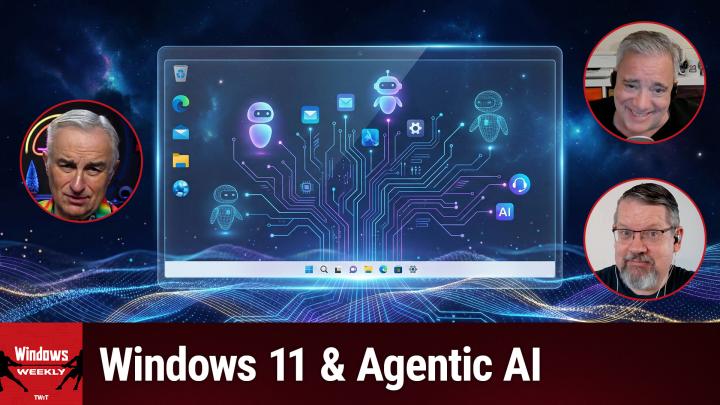
Loading summary
Transcript734 lines
- [00:00]
Leo Laporte
Today's show is brought to you by Progressive Insurance. Do you ever think about switching insurance companies to see if you could save some cash? Progressive makes it easy to see if you could save when you bundled your home and auto policies. Try it@progressive.com Progressive Casualty Insurance Company and affiliates. Potential savings will vary. Not available in all states. Resilience isn't just about bouncing back. It's about being ready. It's how you show up every single day. Because every name in your system is a person who trusts you and every.
- [00:39]
Paul Thurrott
Password is a door you're responsible for locking.
- [00:42]
Leo Laporte
And when the threat comes, and it always comes, you hold back the chaos.
- [00:49]
Paul Thurrott
Learn more@cohesity.com Resilience whether you're solving murders.
- [00:55]
Amazon Music Announcer
During breakfast, cracking cold cases on your commute, or playing amateur detective at bedtime, Amazon Music's got millions of podcast episodes waiting. Just download the Amazon Music app and start listening to your favorite true crime podcasts ad free included with Prime.
- [01:12]
Leo Laporte
It's time for Windows Weekly. Paul's in. Makunji's back in Pennsylvania. Richard is in. I'm not even trying to pronounce it. Australia, I think, is how you say it. And we're going to talk about, well, Windows 11 and Agentic AI. We've got Pavan Davaluri's talk and Paul will talk a little bit about some of the features to be looking for earnings learnings from Lenovo, HP and Dell. The PC business is doing okay and you must see what nanobanana does with this show. All that and more coming up next on Windows Weekly.
- [01:50]
Amazon Music Announcer
Podcasts you love from people you trust.
- [01:54]
Leo Laporte
This is Twit. This is Windows Weekly with Paul Thurad and Richard Campbell. Episode 960. Recorded Wednesday, November 26, 2025. Snow and Claws. It's time for Windows Weekly, the show we cover the latest from Microsoft. Hello, winners.
- [02:19]
Richard Campbell
Hello dozers.
- [02:20]
Leo Laporte
Hello, Paul.
- [02:21]
Richard Campbell
Fe.
- [02:25]
Paul Thurrott
No, I'm in. Pencil.
- [02:27]
Leo Laporte
I can't really roll that one.
- [02:29]
Richard Campbell
That's right.
- [02:30]
Leo Laporte
It's the holidays.
- [02:31]
Paul Thurrott
It's more School Kill area than. I don't know what's in.
- [02:36]
Leo Laporte
What's that nice Dutch name? Most of the rivers in the US Have Indian names, but there's still the Hudson and the Sky Kill and the. Yeah, also in. What is it? Tarabanga? Rakatanga? Coolangata?
- [02:53]
Richard Campbell
Cooling.
- [02:57]
Leo Laporte
Baby. It's New Zealand.
- [02:59]
Richard Campbell
No, no, it's Australia.
- [03:00]
Leo Laporte
Oh, it's Australia.
- [03:01]
Richard Campbell
We're in. In the Gold coast, just south of Brisbane.
- [03:04]
Leo Laporte
Is that a Maori name?
- [03:06]
Richard Campbell
No, it's an Aboriginal name.
- [03:08]
Leo Laporte
Aboriginal. That's Right now you're in New Zealand.
- [03:10]
Richard Campbell
Yeah, it's New Zealand. And it is 5 o' clock in the morning and already 30 degrees. It is.
- [03:15]
Leo Laporte
It's summertime.
- [03:17]
Richard Campbell
We rented a beautiful apartment that does not have air conditioning. Woo.
- [03:22]
Leo Laporte
That's why it was so available, so inexpensive.
- [03:26]
Richard Campbell
Yeah.
- [03:28]
Leo Laporte
Well, I'm so glad to see y'.
- [03:31]
Paul Thurrott
All.
- [03:31]
Leo Laporte
Thank you for joining the show. Happy to be seen day before American Thanksgiving. Richard's already had his.
- [03:39]
Paul Thurrott
Of course.
- [03:39]
Richard Campbell
Yeah.
- [03:41]
Leo Laporte
Paul's. That's why you're in Pennsylvania. Right. You want to be in the land of the free and the home of the brave for the big feast celebrating our subjugation of the natives and all of that. So congratulations.
- [03:54]
Paul Thurrott
Friends in Mexico wanted to do a Thanksgiving thing with us. And I'm like, I'm only going to do it if we keep down an indigenous population. So you figure that out.
- [04:02]
Leo Laporte
Good news, we've done it.
- [04:04]
Paul Thurrott
We'll talk about it.
- [04:05]
Leo Laporte
Ask Santa Anna about that one. Yeah.
- [04:08]
Paul Thurrott
So you got to adhere to the traditions. It's the whole thing.
- [04:13]
Richard Campbell
That's right. Turkey. Turkey with a side of smallpox.
- [04:18]
Leo Laporte
Have these fine blankets.
- [04:19]
Paul Thurrott
Thank you for the coin. We have a gift for you as well.
- [04:22]
Leo Laporte
Yeah. I'm sorry, I'm being radicalized by Ken Burns, the American Revolution and by Howard Zinn's the People's History of the United States. Between the two of them, I am.
- [04:34]
Richard Campbell
You're gonna hear some stories in our stories.
- [04:37]
Paul Thurrott
Yeah. Yeah.
- [04:38]
Leo Laporte
So. But we're not here to talk that. We're here to talk about the fabulous Windows 11.
- [04:44]
Paul Thurrott
Man. It is all good news, Leo. It's just straight across the board.
- [04:48]
Leo Laporte
Nothing but. So we covered this story last week. Pavel Davalui's inadvertent mistake and his silliness.
- [05:01]
Paul Thurrott
Trying to promote the one ignite session that he was taking part in.
- [05:05]
Leo Laporte
Yeah.
- [05:05]
Paul Thurrott
What a goon.
- [05:06]
Leo Laporte
What happened? Is it back again?
- [05:09]
Paul Thurrott
Well, he did the session. So since we talked last week, he had the session occurred. I haven't looked at it actually since I've been home. But Richard, as Richard knows, and anyone going to these Microsoft shows Ignite and Build especially, one of the nice things about them is they make most of the sessions and the certainly the keynotes and all that available free rewatching later. And a couple of things, though. Not every session and this particular year, at this particular show, I should say it seems to me like many more than usual sessions were not recorded at all. So there's no replay to be had. And then of the ones that I would want to watch. This is rough But I would say almost 50% of them are not downloadable. I have to stream them, so. Interesting. Yeah.
- [06:01]
Richard Campbell
I was like, is there any pattern to it?
- [06:04]
Paul Thurrott
No, not that I could detect. I mean I'm looking at very specific things. But I, you know, I kind of went. I don't know. I. I did end up downloading several. I don't remember, 8, 10ish sessions that I was able to get those.
- [06:20]
Guest or Additional Speaker
This, I mentioned this here because this particular session we're referring to, at least the last thing I looked was only stream only.
- [06:32]
Leo Laporte
What's happening to Paul's audio is that.
- [06:33]
Richard Campbell
Are you hearing? Isn't it? Yeah, yeah, yeah.
- [06:36]
Leo Laporte
You sound like you're underwater.
- [06:38]
Richard Campbell
Put a sock over the microphone.
- [06:40]
Leo Laporte
Talk to me again. It was just a. I think it.
- [06:42]
Paul Thurrott
Was just a digital artifact, this. Not quite a real computer computer.
- [06:48]
Leo Laporte
Oh, you're using the development machine now? Yeah, now that the Snap. The new Snapdragons to do out. You're gonna try the old one?
- [06:56]
Paul Thurrott
It doesn't matter. I. I've been using the lowest end Snapdragon trip there is on the road.
- [07:02]
Leo Laporte
This is an elite, you know.
- [07:04]
Paul Thurrott
Yeah, this is the fastest. Actually. This is the fastest one. You can't get this processor pretty much anywhere else.
- [07:08]
Richard Campbell
Oh, really?
- [07:09]
Paul Thurrott
I think only that Samsung laptop had it briefly and no other product ever.
- [07:16]
Leo Laporte
Offered it and then I gave it to you, so you're welcome.
- [07:20]
Paul Thurrott
Yeah, it's heating up the room nicely. So it's good this time of year. It's. It's nice. But yeah, I. The. The fan kind of kicks in sometimes and it's not always tied to me doing anything which is entertaining.
- [07:35]
Richard Campbell
There's a fan on a Snapdragon at all says something.
- [07:39]
Leo Laporte
Well, I thought that was.
- [07:40]
Paul Thurrott
Yeah, yeah. I think the thing it says is that the company that made this is no good and Qualcomm cut ties with.
- [07:45]
Leo Laporte
Them immediately and that's why I got a.
- [07:47]
Richard Campbell
Refunded all the money.
- [07:49]
Leo Laporte
Yeah, it was a free pewter.
- [07:52]
Paul Thurrott
Yeah. Anyway, it's, you know, hey, still better than that Lenovo thing that has one USB C port and it doesn't support display ports for some reason. I.
- [08:02]
Leo Laporte
That's the new thing. I saw that the new Dell XPS 16 or whatever they call it these days has just very little perfect ports as well. What's the.
- [08:11]
Paul Thurrott
Yeah, I mean, I do. It's okay, but like you have to support all the things.
- [08:16]
Leo Laporte
Then you need a dock.
- [08:17]
Paul Thurrott
Right, Right. I actually do have a dock too on this, but that's just whatever. Anyway, this is a complicated setup with too Few screens and too many other components. So it's good.
- [08:28]
Leo Laporte
Just what you need for the holidays.
- [08:32]
Paul Thurrott
Yeah, yeah. So actually, let me see. No, I just said that that session was available for download, but that's a different session. Let me just look again. No, it. Okay, it is. I'm sorry. So if you do want to watch the pavan double or session, you can, you can download it now. That wasn't true before I left Mexico, so that's good. So actually they're improving matters. I feel like this type of thing should be available for download. But there. There's another session that has two of the people that are in Devon's session which goes into these. This particular topic in more detail. It's called Agents at Work. Windows Powers the Era of Intelligent Productivity. That's worth watching.
- [09:13]
Richard Campbell
That's a title written by some marketing people.
- [09:15]
Paul Thurrott
Yeah, yeah, 100%. But what this all is is the same thing. Right. So a lot of controversy around this. But Microsoft is making Windows into an agentic as whatever the heck that means.
- [09:28]
Richard Campbell
Yeah, I don't even know there's controversy around this so much as. It's just AI rage. And they pointed at whatever they can point it at.
- [09:35]
Paul Thurrott
This is the perfect nexus of. Yes, AI rage, which we're all feeling that disappointment. It's not, you know, living up to all of its. It's like it's the 5G of technology. It's not quite living up to all the promises. Right.
- [09:49]
Richard Campbell
Yeah, promises have been outrageous. So oddly enough. Yep.
- [09:54]
Paul Thurrott
But also, like I said last week, I mean, I think in our community, if you look at the three of us, Rich and I right now, I mean, this, we're the. This is us, you know, we're this age. Like, sorry, you know, we're getting old and you know, a lot of these people in the audience are kind of, you know, change averse. And every little change, you know, we'll talk about something going on with Notepad yet again is like, you know, cause of concern.
- [10:18]
Richard Campbell
Right? Yeah. I've had the experience of exactly the opposite this past week working with a development group in Sydney where they're literally redesigning how they build software around these new tools.
- [10:31]
Paul Thurrott
Yeah, I love it.
- [10:32]
Leo Laporte
I think that's me. But I think that's a good thing.
- [10:36]
Richard Campbell
I don't agree. And they're taking the lead on that and mostly they're trying to rein those tools in. Like, it's like there's a lot of power here and it's a bit scattered and here's how we're building frameworks to get good results from it.
- [10:49]
Paul Thurrott
Yeah, One of the things I haven't looked at too much yet is, are some of the announcements that came out of Ignite that were developer related, like Windows ML being generally available, etc. There's something called AI Dev Gallery which is available in preview. If you have a. It might work just on any computer, but if you have a Copilot plus PC you can use it to interact with models that run off the mpu, et cetera. There's some interesting stuff happening. But what Richard just said, I mean one of my biggest memories, or best memories when I was still at Windows IT Pro, which at that point might have still been called Windows 2000 magazine or windows and.net magazine, whatever it was at the time was a million years ago. But during the cloud transition we did these pre con sessions at what was then called what was the guy called before. And man, I was leading the room that was doing the IT Pro stuff and it was like a funeral in there. And then Mike Odie who also wrote, you know, they get the magazine was in the dev room, which is where I wanted to be. And it was like a conga line in there. Those guys were having a great time. They're like, oh, you mean we get to rewrite our code now for this new era? Like fantastic. Like, you know this. I guess you could have a good attitude or bad attitude. So like I think here, you know, it's like the Run as Radio Windows Weekly side of things, which is more IT Pro related admin, whatever. Not, not. Not a lot of celebrating going on with this stuff. You know, a lot of dread.
- [12:23]
Richard Campbell
Yeah, it's. It's a new set of risks, it's a new set of reliability issues. Like all of these things are true, but you know, it like you wanted to be bored at your job. Come on. Like this.
- [12:33]
Paul Thurrott
Yeah, exactly. Yep. So there's. You might know. Do you know Navjot? I'm not probably not saying her name right. If. I'm so sorry if I'm mispronouncing this, but her name is Navjot Virk. She's a corporate vice president, Windows Experiences. She was in the Davalori Pavlon Pavlon Deviller session, but also in this other session I just referenced and she says something in both of them right up front, which I think Microsoft needs to lead with a lot more these days, which is these experiences are opt in, they're optional and you control whether or not you even see them. And you is meant broadly because it means it, but it also means end users. And in the case of an IT managed environment where maybe they're. They've said, all right, look, we're going to allow you to access whatever these AI tools are. You as the. They don't just come on for you. You then have to, as an individual, enable them as well. But you could choose not to, you know.
- [13:34]
Richard Campbell
Yeah, and which is, I mean, I'm glad they're doing that. It's the question every system been asked, every new tool is like, can I turn it off? But you also understand why they're so skeptical, because for the past two years, Microsoft has simply been making icons appear in places.
- [13:51]
Paul Thurrott
I haven't noticed that. No, yeah, yeah, right. So look, sometimes you learn from mistakes. I guess maybe we can chalk that up to this. But if you think about this sort of thing as a flowchart, it's like, do you want any AI stuff in Windows? And you're like, there's a branch of that flowchart where you exit and you're done. It's fine. You can just say no. Good. So to me, that's the right approach. It's there if you want it. It's there for those people.
- [14:21]
Guest or Additional Speaker
That.
- [14:21]
Richard Campbell
It also speaks to me that these tools are growing up enough that they're not just experimental, but showing up anywhere that there is an overall plan and that it can be deployed and not deployed and is part of a governance model that a system would want.
- [14:35]
Paul Thurrott
Yeah, I mean, yeah. I mean you're almost, you're speaking to like a sort of maturity occurring here, which is true, but it just feels.
- [14:44]
Richard Campbell
Like some adults in the room have shown up lately.
- [14:47]
Paul Thurrott
Yeah, yeah. Well, I, this is, you know, one of the things I've been pointing out lately is like there are people in the industry who I just knee jerk, like, can't bear. And then there are some like the guy running Microsoft AI Solomon, who I think is actually pretty great. I think having the right messenger helped. We talked about that a little bit last week with Ignite and the Keynote, and I just felt like it was just.
- [15:11]
Richard Campbell
That's the new Windows boss. I'm really kind of excited there's a new Windows boss. I can't wait to see what he does. And it's unfortunate that he's stepped on a landmine of not his own making.
- [15:22]
Paul Thurrott
I mean, look. Yeah, right. You're going to the army, you're going to war with the army. You have. I mean, there's nothing I can do about that of me. But he seems like A good guy. He's an engineer, he's a smart guy, obviously. And you know, we'll see. I, I don't get any bad vibes off of him.
- [15:36]
Guest or Additional Speaker
That's not always been the case with people running Windows, obviously. So, you know, we'll see.
- [15:43]
Paul Thurrott
But look, this, this session and the.
- [15:47]
Guest or Additional Speaker
Other one that I mentioned, which are essentially the same session, not controversial, I.
- [15:52]
Paul Thurrott
Just, I just want to throw that out there. Like the things that, aside from the.
- [15:56]
Guest or Additional Speaker
Urine control bit and all that kind of stuff, they do some good.
- [15:59]
Paul Thurrott
This language around AI that I've never.
- [16:02]
Guest or Additional Speaker
Been comfortable with is always new language around AI and it continues to be uncomfortable. But they did a pretty good job of just saying, look, look, copilot. You can just think of it as a front end. It's kind of an orchestrator of sorts.
- [16:14]
Paul Thurrott
Or apps and cloud AI services that are going to expose their functionality. Yeah, they did not use this language. This is still my language. I'm hoping that someone out there comes up with something that makes sense of this. But apps in Windows, apps on mobile. But here Windows are becoming what I call programmatic, meaning that they're going to expose their capabilities to these services, which include AI running locally or agents that are off doing things on your behalf, et cetera, so that they can be used in a more elegant fashion than like AI moving a mouse cursor around on the screen and clicking boxes and by the way, but that's going to happen. This is the interim, right? I mean, this is part of it. So it's a transition. One of the controversies in time of this past year was this copilot voice thing. And people are never going to want to talk to their computers. They made a really good case for this. And I've already made my own case as well. But typing into a text box is maybe not a natural act for most people. And I think most of us just talk better in a sense than we do.
- [17:29]
Richard Campbell
Well, half the time we're muttering while we type anyway. Right. It's the same words. Yep.
- [17:34]
Paul Thurrott
So it's easier to say more and be more descriptive when you're just talking. But the nice thing about AI or one of the things, I don't know properties of AI or aspects of AI is that it understands your intent. And so if you think about any app, like Microsoft Office Apps or whatever it might be, where, you know, menu command and you're doing these very explicit things, that's an explicit. You a have to know where to look and go and what thing to click and what it's going to do and how it works and all this stuff.
- [18:02]
Richard Campbell
If you're memorizing the navigation of word, you're in a special kind of hell.
- [18:06]
Paul Thurrott
Right? Yeah, well, I, that was. You just described half my career. So I mean, you know, the idea is like, look, I just want to do this thing, just do it. And it kind of understands your, your intent. Right.
- [18:18]
Richard Campbell
And that's the only thing worse in trying to operate the UX is trying to describe how to operate the ux.
- [18:23]
Paul Thurrott
Yeah, I mean I, that we will, you know, it's. We're going to look back on this the way the world is from today and then the past 40 years or whatever, the same way that we look back now on cars when you had to be a mechanic to understand how these things work because that was the prerequisites for using it. And, and just like it just seems so archaic. But the notion that trying to Describe.
- [18:47]
Richard Campbell
To a 25 year old programmer about coding on an 80 by 25 green screen with no mouse, he's just staring me like I got three heads. Right? That's the craziest thing he's ever heard.
- [18:57]
Paul Thurrott
Yeah. And then. But the developers of that era, when confronted by, oh, the Future is all GUIs and blah, blah, blah, they're like, oh, no way I could do everything I need on a, on a green screen. And it's like, okay, yeah, but that's. We, you know, we. It's the same cycle, just keeps repeating. But yeah, you know, right now if you want to, I use the same examples over and over again, so it doesn't really matter. But you know that once a year thing, when I do the PowerPoint present or the Excel spread chart or the once a year I do a PowerPoint presentation, or the once a year I do whatever it is, some logo thing and affinity where I have to put graphics behind letters, whatever it is, I have to like become an expert in that tool to do that thing. And I don't do that much. Like, it's like I don't, I don't have time for this. You know, that's not my job. And I think one of the things that comes out in these sessions is this notion that AI will in this case free you to do the things in your job or your life or whatever it is that is meaningful to you, not spend all this time learning a tool, you know, that maybe you're not going to use every single day or whatever. So anyway, but from, from an actual, I don't know, brass tacks perspective or like this is what's actually happening. It's just the stuff they show off. You're like, yeah, no, this looks like Windows. It's. The search box is going to do its own little orchestration based on what you're searching for. It's. Sometimes it's going to launch file search, sometimes it's going to launch a web search, sometimes it's going to launch Copilot because you can interact with that. Sometimes it's going to kick off a couple of agents that are going to go off and do your thing. And that's. Yeah, it's an operating system. I mean it seems like this is like one of the places where you would do this. The other one is Office. And of course, big part of this is integrating the Microsoft 365 copilot capabilities into Windows where that makes sense. This helping accessibility through things like writing assistance, which is an AI based capability you see in discrete apps like Word or even Notepad. But just making it available at the system level and saying this, if you are using something that has text in it, you can use this everywhere. Like, yes, that's how OSes work. Like that makes sense. Or fluid dictation, which is the key to that thing we were just talking about, which is not click the edit menu and then click this thing and then do this. It's to this thing. Understand what I'm saying? You're just using natural language voice and you don't have to. It's not a zork, you know, command that has to be exactly right or whatever it screws up. It's. We understand your intent and that's kind of it. Other than. Well, I'm sorry, I should say if you. Obviously Copilot is going to come up. Sometimes agents will appear as icons in the taskbar. So they're like apps. You can click on that thing to get a little kind of a pop up of how it's doing and where it's at. If it needs to contact you, which it will. It doesn't standard Windows notification. And then, you know, this agent needs, you know, is it okay if I do this?
- [22:02]
Richard Campbell
You might even be getting notifications you want.
- [22:06]
Paul Thurrott
Yeah, I mean I. That's never literally happened to me ever in my life. But I'm. I'm open, I'm open to experimenting possibility. I would love for that to happen.
- [22:14]
Richard Campbell
But do you think about the spring of 23 when LLMs were first raging in and slowly consuming our conversation? We talked about the perfect place for this to hub around would be Windows. That's never going to happen. The Windows team is lost.
- [22:29]
Paul Thurrott
Exactly right, exactly.
- [22:31]
Richard Campbell
Now there's a new sheriff in town. He's unified the client and the server side and he's committing to what I think is the obvious path.
- [22:40]
Paul Thurrott
Yes, and it's not. Look, you can do something like add multi touch capabilities to Windows without destroying the OS. Right? But they went down this path with Windows 8, where they changed the whole UI. They maybe bit up more than they should have. They had to scale it back over the next couple of point releases and then Windows 10. So they went too far in this direction. But when I look at this UI and I don't have this to play with, I have not used anything I just described. Basically, I'm just going off of a demo. We'll see what it's like in real life. But as far as it making sense within the context of the UI that is Windows today. Yeah, it just makes sense. It's fine.
- [23:31]
Richard Campbell
You're also talking about the reality here, which is mistakes will be made.
- [23:35]
Paul Thurrott
Oh, yeah.
- [23:36]
Richard Campbell
But starting to implement these things, starting to experiment here, isn't the mistake.
- [23:41]
Paul Thurrott
Yeah, no. This is really about keeping Windows relevant for this next era.
- [23:47]
Richard Campbell
But Operating System is going to matter at all. It's going to update its UX to take advantage of new capabilities.
- [23:53]
Paul Thurrott
Right. I mean, if you care about Windows as a platform, you should in some ways embrace this. We can, like I keep saying the same things, but we can sort of debate these little specific points. You know, you might look at whatever the thing is, like, I don't like. I don't like the way that I type. I'm messy, my hands are big, and when I type, like, I'm all over the place. I hit that copilot button a lot. Stupid window comes up and it's like. So I stop interrupting. Yeah, I can fix this. Anyone can fix it. Well, sort of. Anyone can fix it because you could just uninstall it, I guess. But then you hit the button. It's like, all right, what do you want to do with this button? And you're like, I don't want to do anything with this button is not one of the choices. So you have to use a tool of some kind. I use powertoys as a key. I think it's just called Keyboard Manager. I think it's the name of it. And I just map it to the left arrow key because that's right next to that key on most keyboards and at least on laptop keyboards. Well, I never see it again. Right. I notice it when it's not running right because every once in a while it will be like, hey, the settings will be like, what do you want to do here? And it's like, I want you to never appear again. That's what I want. You know, but that's not, I wonder what the.
- [25:03]
Leo Laporte
I mean my experience, the way I use AI and I use it all the time is I kind of want it to be segregated into a separate tool that I will then explicitly call. I don't really want it to be built into my browser. I've tried the agency browsers. I don't really want it to be a feature in Windows. I want it to be like the ChatGPT so app. Yeah, no, I, but maybe that's just old fashioned. Maybe that's going to change.
- [25:30]
Paul Thurrott
No, I actually, if anything you're probably just skipping ahead in a way, right? Like, like what you're describing is the ultimate example of like you would go to this chat bot thing and say I want to, here's some data. I would like a chart. And it's not like I'm going to Excel and saying all right, how do I use this to make a chart? You're just, you're like, I don't care how you make the damn chart, just make the chart. So you're kind of skipping over those tools. Like Microsoft is in some ways a lot of this stuff is interim, right?
- [25:58]
Richard Campbell
And so Google, you're literally describing some of the stuff that Gates said in the road ahead. Like why are we talk about applications still just work with documents, right?
- [26:06]
Paul Thurrott
Yeah, yeah, yeah.
- [26:08]
Richard Campbell
What you want to do is what you want to do.
- [26:09]
Leo Laporte
And doing that with Google Drive, like there's AI all over it. And I keep having, well, but I.
- [26:15]
Paul Thurrott
I, I think that's about addressing customers like where they are. Right. So if you're that type of person who is working in files in whatever.
- [26:22]
Leo Laporte
You don't want to leave it. I, that makes sense.
- [26:24]
Paul Thurrott
Well, or you just used to it. It's like I, I just that this is where I am. So it's okay. Like what you're saying, which I think is actually like more sophisticated and ultimately better and probably more common in the future is just you're, you're like this per, like in Star Trek, you know, you're like, I have this idea, I would like, you know, whatever it is and you know, it's, if you think about something, it could be something really simple like shopping. Like I keep using the Sonos speaker example. Like I just want to buy this speaker when it Hits a price point. If it does hit that price point, just buy it. I don't care where it's coming from. And it just comes. I mean, you'll be notified. Like, hey, we're buying the speaker. You. You asked. And here it's coming. And I guess if you're curious, you could be like, where's it coming from? And you're like, it's coming from Teemo. And you're like, damn it, I didn't want a Sono speaker. I wanted a Sonos or whatever. So we're gonna have those mistakes.
- [27:19]
Leo Laporte
But then you put in. In the next. Now what you do is you put in your. I'm sure there's somewhere you can put, like, of course. Commands, and you say, never use Teemo.
- [27:28]
Paul Thurrott
Exactly. Or always use Amazon. Maybe if that's. I have. I pay for prime or whatever it might be, it's fine.
- [27:33]
Leo Laporte
But that's. That's kind of annoying. It's like, do what I do what I want. Do what? I mean, not what I say.
- [27:39]
Richard Campbell
Yeah, but that's literally back to that point. Right?
- [27:42]
Paul Thurrott
Literally.
- [27:43]
Richard Campbell
Context.
- [27:44]
Paul Thurrott
It's understanding your intent. Yeah.
- [27:45]
Richard Campbell
And it's good. You're going to be angry with it every time it gets the context wrong.
- [27:50]
Leo Laporte
I notice even when I'm coding, I don't want it in my ide. I kind of like to use Claude code at the same time.
- [27:57]
Paul Thurrott
This is something I'm trying to.
- [27:59]
Leo Laporte
I think that's a flaw in me. I don't think.
- [28:01]
Paul Thurrott
Well, it depends. Because, look, if it works, the notion that you can have, like, this sidebar in the app, and it's like, all right, we looked at your code. Here's the fixes. And then it will actually show you in the code with green and red boxes. And this is what it says we're changing.
- [28:17]
Richard Campbell
Yeah.
- [28:18]
Paul Thurrott
You could say, okay, this is cool. I like this. You know, cursor, I'm sure. Works like this. Whatever. But. But when it's wrong all the time, which is what I experienced because I'm using the Windows app SDK because I hate myself, you know, Then you get into this circular loop of, like, it never being right, and then you get really aggravated. So the. The fact that, like, it could be over here in this other window, and I'd have to cut and paste, or however you get that, however you move it between. It was just, like an additional step I can't even deal with. Although if you said to me, if you switch to that thing and it would work, I'd be like, all right, I Will try that. But I'm trying to, I'm trying to work through that. But it depends on what you're doing. I guess it depends on how you work. I mean, develop. Like everyone has these workflow habits that are like ingrained and it's hard to break out of them. So it doesn't really matter if you're like a. Like you're an expel, an Excel wizard or like a programmer or whatever it is. Like, you know this tool, you're used to it. And it's like, here's another way of doing it. And you're like, yeah, I'm not doing that. Like, I just, I do the thing I do. And I think that's part of the.
- [29:27]
Guest or Additional Speaker
Hurdle, whatever we're trying to get over here, which is that we're all. There's a billion plus of us out there doing whatever we're doing every day or used. You know, you wake up in the IT space maybe, or in the mix.
- [29:40]
Leo Laporte
Oh, it's happening again. I. It feels like it's periodic. Like there's something. There's something that machine is doing. Are there other processes running on that machine?
- [29:49]
Paul Thurrott
No.
- [29:50]
Leo Laporte
Every once in a while that happens. It goes away about 10, 15 seconds.
- [29:54]
Richard Campbell
But it gets a little warble and then it goes muddy and then it recovers.
- [29:57]
Leo Laporte
Yeah.
- [29:59]
Paul Thurrott
No, I mean, yeah, I can't explain.
- [30:01]
Leo Laporte
It's a machine over. It feels like something's. Like your email's going, oh, let me get email now.
- [30:10]
Paul Thurrott
Literally, it's just a web browser and a couple of apps just for the show, like Notion and whatever.
- [30:17]
Leo Laporte
Well, there's also the noise, but I think that's the fan.
- [30:21]
Paul Thurrott
Pretty sure. Yeah. I don't know. I. Yeah, I do have it set on best performance because maybe turn down the performance. You think so?
- [30:30]
Leo Laporte
Yeah, you don't need performance window, browser window.
- [30:35]
Paul Thurrott
I need the performance.
- [30:37]
Leo Laporte
Ironically. It might perform better if you didn't have it on high, by the way.
- [30:41]
Paul Thurrott
That's true. I mean. And you know, my experience with the lower end chips is like these things are not running as fast as it is and they all work great. Like, I. Maybe we'll see what this does. I don't know.
- [30:51]
Leo Laporte
Let's. Anyway, okay, we'll try that and see. I apologize.
- [30:55]
Paul Thurrott
Yeah, no, I apologize. I. Yeah, I didn't.
- [30:57]
Leo Laporte
I mean, at worst case, we could reboot and restart, but I don't.
- [31:01]
Paul Thurrott
Yeah, but I started this up, right?
- [31:03]
Leo Laporte
There's not been. It's not been running all day.
- [31:05]
Paul Thurrott
It's just. No. And I feel like I'll Just. I'll swap this thing out. I just wanted.
- [31:11]
Leo Laporte
No, you know, it's fair. You wanted to use it.
- [31:14]
Paul Thurrott
Yeah.
- [31:14]
Leo Laporte
This is what you do. You're like Jerry Pornell.
- [31:18]
Paul Thurrott
I live sort of. I don't know. I don't know.
- [31:25]
Leo Laporte
Go ahead, just continue on and.
- [31:26]
Paul Thurrott
No, it's okay. Anyway, so look, I. Wherever you are in life with this stuff, if you're just an individual enthusiast, whatever, if you're an it, if you're a developer, whatever it is, I really feel like you should go look at this session. I mean, it's worth watching. It's not radical, it's not off the charts. It's not crazy. It makes sense if that makes sense. It makes sense in the context of Windows as we use it today. Like, it's not a. It's not like this. Okay? Everything's going to change. I mean, everything is probably going to change over time, but the stuff they're doing here just to me makes sense within the context of what Windows is. So it's, you know, Windows 8. I was telling my wife this the other day. I was like, you know, I have to. I had to think back to like, there was a point with Windows 8 where you're like, look, we're on a roller coaster right now. I think the handlebar is not going to work. So I'm holding on for dear life, but for right now, I'm just gonna. I don't not enjoy the ride. I'm just gonna sort of endure the ride.
- [32:29]
Richard Campbell
Yeah.
- [32:29]
Paul Thurrott
You know, like, this too shall pass.
- [32:32]
Richard Campbell
Yeah.
- [32:32]
Paul Thurrott
And. And it did. It took a while, but I, I don't get that vibe from this.
- [32:38]
Richard Campbell
Like, no, they seem way more incremental and careful. Like they, you know.
- [32:43]
Paul Thurrott
Yeah.
- [32:43]
Richard Campbell
Do you think with the highlights of me, the, the Win eight smash, it was. They kept it secret, you know, they wouldn't talk about it for the longest time. They had everything.
- [32:53]
Paul Thurrott
When they did talk about it, they talked about feedback endlessly and used none of it. And including their own internal feedback where they had gotten. They did this study at one point, like, would it make sense for us to have this thing in the first boot up experience where it showed you where all the stuff was? And they were like, yeah, this actually improved discoverability, but like 80%. And they're like, yeah, we're not doing it. And they're like, okay, so why did you do the study? Like, what do you know? Are you actually trying to improve the product here? Like, there was a. There was a weird almost. It felt malicious at the time, but it was a weirdness to it.
- [33:27]
Richard Campbell
And there was a belief that they had a new vision and all of us were still having to catch up.
- [33:33]
Paul Thurrott
Yeah, well, yeah, no, these are people who had clearly seen the future. You know, like that crazy guy in the Friday the 13th movies. Like, you're all doomed. You know, like, yeah, we get it. You're a visionary. Thank you. But, yeah, so things went a little differently. I just feel like this is more respectful of the computing situation we have today than was Windows 8 at that time. You know, here's a.
- [34:00]
Richard Campbell
Starting with these sessions themselves.
- [34:02]
Paul Thurrott
Right.
- [34:02]
Richard Campbell
Looks like, hey, here's what we're thinking.
- [34:04]
Paul Thurrott
Yeah. And look, to be clear, they. Even in this generation, they haven't always gotten this right. I mean, when Yousef Mehdi stood up on stage at that Copilot Plus PC launch and talked about Recall, I was like, oh, no. Oh, no, no, no. Not because I was worried about recall, but because just the way that he was talking about it was like, you know us, you can. You can trust us. We're gonna be good with your day. You're like, no, no, no, no.
- [34:28]
Richard Campbell
Yeah.
- [34:28]
Paul Thurrott
So it took them a long time on recall. They finally got to the point where they explain it adequately now. And of course, now they also have it's opt in, not opt out, which is huge change. So they got there and I just feel like, here we are. So it's a year and a half after that, not even, I mean, roughly. And this is clearly triggering for some people. So they're doing a good job. I think of at least explaining it doesn't mean what they're going to do is going to be great. Like Richard said, we got to, you know, we can. We will talk about the implementation and there will be problems, but some of this stuff, too, I think will. Will work. I. The central disconnect for me is that the description of this has not changed in the last year, which is just, you're going to turn this thing on, it's going to go do something on your behalf. And like I said last week, I think, not that no one has done this, but I've never actually done that. So I've never successfully fired up an agent and had to go do something on my behalf and come back and be like, I'm done. It's awesome. I've done a deep research report and whatever AI on some topic just to kind of see what it did. But I don't really. I don't know. I don't use this stuff really myself.
- [35:43]
Leo Laporte
So I don't know we use it all the time now I, we have Anthony Nielsen has created a Claude skill that he uses for research for interview subjects. I wish I'd had this when I was a, you know, a radio host.
- [35:59]
Paul Thurrott
My wife does this kind of thing too and it's incredible. Yeah, super good I think. Look, the one thing I want people you know when I complain about whatever it is like the, our community and change, diversity and all that kind of stuff. Please remember something, two things. I'm a hypocrite and the reason I feel so one of us Paul. That's all, that's what I mean. Like I, I understand that other people are going to want to use this stuff and I think it's going to work great in many cases I struggle to use it myself but that, but that doesn't mean I don't want it to happen or care that it's happening or don't see the value of it. Like I, I see things around me where people are using it. It's like nice like Leo just said or like my wife's doing or whatever it is and good. That's great. You know I am old fashioned. I don't know that I can change in this case. So maybe it's just like you know, do what I say, know what I do or it's easier to give advice than to follow it or whatever it is, however you want to phrase it.
- [37:00]
Leo Laporte
I think we're in such early days that no one knows that we just don't know what. So everybody should experiment. All the companies should experiment. OpenAI and Jony I've you saw the Sam Altman Jony I've interview earlier this week with Laureen Powell Jobs and they're talking about this thing that Johnny says.
- [37:19]
Paul Thurrott
That'S what, two years away?
- [37:21]
Leo Laporte
Yes, two years away. And I want to eat has to be something you want to eat. I'm thinking well here we go.
- [37:30]
Paul Thurrott
Okay, so 20 years ago we were licking something and now we're eating it.
- [37:33]
Leo Laporte
But, and everybody mocked him including everybody on MacBreak weekly yesterday. But I think it's great. We should all, every, every experiment should be tried because it's all unknown. This is brand new.
- [37:43]
Paul Thurrott
No, it should all be tried. I, I, I, in that case the weirdness is your AI but well maybe we do it eventually, I don't know.
- [37:50]
Leo Laporte
But like it's going to eat us.
- [37:52]
Paul Thurrott
Is it going to be a blue pill or red pill? Like so Johnny Ives was partnered with Steve Jobs for many years and so Steve Jobs is very secrecy forward. That was his Whole shtick. Right. So you would never know what Jony I've was working on that was two, three years down the road. They would just come up with new products and then it would be awesome or not or whatever. But now it's like, Jony I've is working with, I don't know, the grand clown of our industry and it's like, yeah, in two and a half years we're gonna come up with this awesome little product. Yeah, this is not the time to be talking about some device that's not coming out in the next year. Are you kidding me?
- [38:25]
Leo Laporte
The only reason I bring it up is it's like, it's encouraging. Microsoft's trying stuff, you know, we're trying agentic browsers, we're trying it at the command line. I mean, there's all kinds of ways to use it.
- [38:39]
Paul Thurrott
Yeah, I'm sorry to interrupt, but you said earlier something operating systems and web browsers and you were like, I don't know, like, I want AI in the web browser. And I have to say I think the same way. Like, I don't want it to be like in an AI mode all the.
- [38:54]
Leo Laporte
Time, but I want to choose when to use it. I want it should be more modal.
- [38:59]
Paul Thurrott
Yeah, like. Like how? Like, you know, I'll go to an article that I want to read. Maybe some like long thing like an Ars Technica something. It's like 8,000 words. Whatever. It's like, okay, so what are the stages here? Like I could put it into Instagram or Insta Paper or something like that so you have like a clean view of the story, no distractions. I'm going to read it later. Maybe read it offline. Okay, cool. Someone else might look at that thing and be like, look, I don't have time for this nonsense. I do kind of want to know what it says so I can use AI to summarize it. And maybe I get like a bullet list, you know, but maybe the future and which is so anti Reading it makes me sad, but for a lot of people it's going to be like, I don't even want a bullet list. Just tell me if I need to know about the podcast. Just. Yeah, yeah, just do it in my voice and it could be like two guys talking, you know?
- [39:49]
Leo Laporte
No, I like what you just said is tell me if I should be. Should care about.
- [39:54]
Paul Thurrott
I think for a lot of people and if the answer is no, then.
- [39:57]
Leo Laporte
I won't read it.
- [39:58]
Paul Thurrott
That you just move on. It's just noise. I get assuming you can Trust that thing to have given you good advice. Right. Which is also part of the equation, the trust factor. But so I, I, I don't know. I, I don't think AI is making a stupider just like I don't think a typewriter, a word processor and then a PC made a stupider I. We have different ways to express ourselves. Those ways evolve over time. As a lifelong reader I am sad about how I can't myself read long form things that well anymore. I don't think anyone can and I feel like a lot of that stuff's going to go away and that stinks in my opinion. But I'm also not going to halt all progress because I like to read words on a piece of paper or whatever it is. Things change. So I don't know. In some ways I vaguely like the idea of you don't have to do as much drudgery because that stuff can be handled by AI or whatever the software is and you can focus on things that are maybe more meaningful to you personally or whatever and like that sounds good. You can't.
- [41:06]
Richard Campbell
This time of being in a limited attention economy could we possibly have a tool that helps us manage the allocation of attention? That's awesome right? I mean it's there yet but it's an awesome idea.
- [41:18]
Paul Thurrott
It's like someone stabbing you in the stomach and then selling you the thing that will heal you. I guess but right. It's the, you know. But, but yes. If you. Within the context of this is the reality of our lives today. Any tool that can help with that is. Yeah. I mean I'm, I'm listening at least. I mean, let me see. I'll try it.
- [41:39]
Leo Laporte
You know hockey has, you know, I'm a big coggy fan. They have a new summarizer tool which I actually haven't used that much. I, I don't, I've, I've yet to become a fan of summaries.
- [41:54]
Paul Thurrott
Same same thing. But I, but I respect that others may want or need that.
- [41:59]
Leo Laporte
People are raving about it saying this is, this is the way I'm just going to see if I can put Pavel.
- [42:05]
Paul Thurrott
Yes. Oh yeah, put it in.
- [42:07]
Leo Laporte
I mean if it can handle a video maybe I mean there's now, you know, the capability of having your AI. Wow, look at that. No, that's not the video. That's.
- [42:22]
Paul Thurrott
Yeah.
- [42:22]
Leo Laporte
I wonder if there's a way there's a new tool that can be listening to your show and suggest questions.
- [42:29]
Paul Thurrott
So by the way so one thing that is available at least for one of those videos. Let me see if it's both. Yeah, no, it's both. Transcript is a transcript. Okay, so let me feed that in. That would.
- [42:38]
Richard Campbell
Yeah.
- [42:39]
Paul Thurrott
You know, be something you could easily.
- [42:41]
Leo Laporte
I hate watching videos and getting information from video to be so.
- [42:45]
Paul Thurrott
It's just so. Exactly.
- [42:47]
Leo Laporte
Oh, it already has. Look, the page already has an AI summary. I made a mistake. Why bother? Microsoft's done it for you.
- [42:55]
Paul Thurrott
Well, it's good to check it, right? I mean, Microsoft might not have the most accurate one, but my transcript.
- [43:02]
Leo Laporte
Okay.
- [43:02]
Paul Thurrott
You know, for me, like, I came up out of book writing, on paper, literally magazines, you know, and then you get to, like, websites, and it's like, blogs. Like, bloggers are like lesser people, you know, and then it's like, what could be lower than that? Like, I don't know, how about a YouTuber? You know? And then now we have Tick Tock. And it's. It keeps going. Right. And so I. There's. There is stuff out there that I like to watch that's.
- [43:25]
Leo Laporte
I just fed it the transcript and it's giving me key moments.
- [43:28]
Paul Thurrott
Yeah. So a lot of times, this is what you.
- [43:30]
Leo Laporte
That would save me a lot of time. Just the bullet points.
- [43:33]
Paul Thurrott
Yeah. So just accurate. Right. So there are a couple little things in here where I'm like, yeah. So one of the things they really focused on at Ignite, and then these two sessions in particular is this thing called that they're calling Frontier Firms. So Frontier Firms is a new Microsoft. Well, it's a new phrase. Microsoft's using it. I don't know if they invented it, but these are the companies who are, like, actually taking a chance on AI.
- [43:57]
Richard Campbell
Right.
- [43:58]
Paul Thurrott
They're. I imagine them in a stagecoach going out west in the 1800s. You know, it could be deadwood. It could be the. What's the people that had to eat each other in Colorado. Whatever it is. Honored party, donnered party. It's like, no, we're full. Thanks anymore. Yeah. I mean, they're living on the edge, you know, so to speak. So that was one of the terms that was part of all this new language stuff. It's not even like a technical term. It's just like kind of a marketing term, which is. Surprised.
- [44:37]
Leo Laporte
We're the Seekers.
- [44:37]
Paul Thurrott
Yeah, we're the Seekers. Yeah. It's weird that we don't have a term for this thing I keep calling Programmatic Apps. It's like apps that expose public interfaces for use to be consumed by AI or whatever. What's the word for that? And they're like, we're doing that everywhere. We don't have a word for that. I'm like, you have a word for it? Yeah, come on, get a word. Anyway, we'll have a word eventually.
- [45:00]
Leo Laporte
But there's a word for it.
- [45:02]
Paul Thurrott
Apps will just go away. I don't know.
- [45:04]
Leo Laporte
Let me take a break here. There's a word for that. It's called sponsor advertising. But we will continue. You're watching Windows Weekly with Paul Thurat and Richard Campbell. And if I don't know, should we have Paul restart John Ashley? John's filling in for Kevin King.
- [45:21]
Paul Thurrott
Yeah, yeah, probably. Paul is heavy restart. And Richard, could you rejoin the call?
- [45:25]
Leo Laporte
You also need to. You guys go away and come back again. Would you please? I beg of you, can we just.
- [45:32]
Paul Thurrott
Start this over, please?
- [45:33]
Leo Laporte
Let's just start over. Meanwhile, I am going to tell you about our sponsor. This episode of Windows Weekly is brought to you by our friends at Outsystems. It's actually kind of coinciding. We're talking about this. Outsystems is the number one AI powered low code development platform. Actually, if you think about it, that is an interesting combination, isn't it? Outsystems has been doing low code for 20 years. They are absolute experts in creating dedicated software for enterprises. Organizations all over the world are now using out systems to create custom apps, AI agents and more on the Outsystems platform. There's good reason for that. Outsystems since day one has always been all about outcomes, right? Not about ho here's this cool tool we want you to use. But no about helping teams get their job done quickly deploy apps and if that if they want AI agents and deliver results. And there are lots of success stories if you go to the Outsystems webpage. For instance, they helped a top US bank deploy an app for customers to open new accounts on any device. How did it work? 75% faster onboarding times. Customers loved it. Took a lot of the pain out, right? One of the world's largest brewers asked them to help deploy a solution to to automate tasks and clear bottlenecks that delivered a savings of 1 million development hours. They even helped a global insurer accelerate. This was an in house project accelerate development of a portal and app for their employees which delivered a 360 degree view of customers and a way for insurance agents to grow policy sales. Outsystems can do it all. It's truly a game changer for development teams. It's low code plus AI and that's what's really amazing Teams now can build custom future proof applications and AI agents at the speed of buying. But it's not some generic off the shelf sameware. It is specifically customized for you. And the beauty of using Outsystems is it's all, all the things you want ahead of time are already built in fully automated architecture of course, security integrations with tools you use, data flows, permissions. It just comes with the territory. With Outsystems it's so easy to create your own purpose built apps and agents. There really is no need to consider off the shelf software solutions ever again. I love that OutSystems number one AI powered low code development platform. Learn more at outsystems.com TWiT that's outsystems.com TWiIT we thank him so much for supporting Windows Weekly. Outsystems.com TWiIt and that little bloop means that Paul Thurat has joined the party. We're going to see if we can get him all set up. Richard Campbell, he's in Coolangata, Australia and he's not. His sinking is fantastic.
- [48:41]
Paul Thurrott
Now cooling down a devita. Cool.
- [48:44]
Leo Laporte
I got it.
- [48:44]
Richard Campbell
Every. The best.
- [48:48]
Leo Laporte
All right.
- [48:49]
Richard Campbell
All right.
- [48:50]
Leo Laporte
Well we, that was just the beginning of this show and we have much more to talk about including some new features.
- [49:02]
Paul Thurrott
Yes, let's see right after the ad.
- [49:07]
Leo Laporte
Block UIs for these new features.
- [49:12]
Paul Thurrott
Yeah, actually so we, we kind of went through this quickly but.
- [49:15]
Leo Laporte
Oh, we already did it.
- [49:16]
Paul Thurrott
Yeah. This is worth just. No, it's fine. This is just. This is why it's worth watching at least one of those two videos. They kind of spell out like what this will look like in Windows and so he did.
- [49:28]
Leo Laporte
So he does talk about. That's pretty concrete.
- [49:29]
Paul Thurrott
Then he shows it off. Yeah, it's pretty good. Yeah, I thought it was.
- [49:32]
Leo Laporte
So what do you think? Do you want this?
- [49:37]
Paul Thurrott
Here's what I think. So 20 years ago I would have been super excited about this. I do feel like I, I feel that thing that I think a lot of people feel which is like I'm getting ready for stuff to stop changing so much, you know, Like I, I do have that aspect of kind of change adversity. Like I get it, I do understand it but I also don't mind that it's occurring and I, I appreciate that other people will actually really, really like this stuff and want to use it. It's fine. I like that it's opt out, you know, opt in. Rather sorry that I'm not going to get it by default. I look, I'M gonna test it, I'm gonna try it and you never know. Like, I'm, I'm open to change. I just don't, I don't know. I've had little success, I would say, with this kind of stuff. Although just software in general. I mean, the, the, the set of apps that I use every day has changed pretty dramatically in the last couple years. But it's changed dramatically to go away from like big tech stuff too.
- [50:38]
Richard Campbell
Right.
- [50:38]
Paul Thurrott
It's not, you know, a lot of.
- [50:40]
Guest or Additional Speaker
The, what I'm doing now is not Microsoft, Google, whomever, it's notion, Proton, you know, markdown.
- [50:51]
Leo Laporte
Oh, we didn't fix it. In fact, I think we might have made it work.
- [50:55]
Richard Campbell
Well, it'll be fixed now. Sorry.
- [51:00]
Leo Laporte
How will it be fixed?
- [51:02]
Richard Campbell
It just cycles out again.
- [51:04]
Leo Laporte
Yeah, it gets better. It gets worse and things get better.
- [51:07]
Paul Thurrott
Yeah, Yeah.
- [51:08]
Richard Campbell
I don't know. All right.
- [51:10]
Paul Thurrott
It's like that lump on your back sometimes it's okay.
- [51:13]
Richard Campbell
Yeah.
- [51:14]
Leo Laporte
It could just be sometimes a lump.
- [51:15]
Paul Thurrott
Just ignore it, you know, it'll be fine. Walk it off.
- [51:18]
Richard Campbell
Yeah. But, yeah, and this whole opt in model from a system in perspective is I don't have to roll this out to everyone all at once. I can stage it. And time when we do things and it's probably not going to be the it that wants to roll it in the first place. The workers are going to want it.
- [51:36]
Paul Thurrott
And so, yeah, I mean, some way.
- [51:37]
Richard Campbell
You get a head start, right. You get to try things and sort of evaluate how you're going to work it into the existing workflows.
- [51:44]
Paul Thurrott
Right? Yeah, we will see. I'm looking for some real specific examples.
- [51:51]
Richard Campbell
But also these happy noises about all the security and privacy and forth. It's like, okay, you said that. Now we're going to have to see if you're right.
- [51:59]
Paul Thurrott
That's right. Yep. Right now it's just a lot of talk, but yeah, you know, we shall see.
- [52:07]
Richard Campbell
Mistakes will be made. That's. That is the truth.
- [52:10]
Paul Thurrott
Yeah, that's the thing. Like, you know, like complaining about this now and sort of saying nobody wants this. It's like, yeah, okay, I, that's not true. But let's, let's let them make the mistake. Maybe they'll get some stuff right. You know, we'll see.
- [52:28]
Leo Laporte
Yeah.
- [52:28]
Richard Campbell
And at the same time, it's like, it's not that nobody wants this, it's just nobody's actually tried this, so how could they want anything? How can you even hate this when you haven't even tasted it? Like, you know, nothing.
- [52:37]
Paul Thurrott
Yeah, yeah. Exactly.
- [52:39]
Richard Campbell
Just know the name of it. And now you're angry.
- [52:42]
Paul Thurrott
Yeah. Look, Microsoft hasn't helped themselves by doing what they've done to Windows over the past several years.
- [52:49]
Richard Campbell
Well, then people have a point. And, and the, and the other argument here of the would you just fix the stuff in Windows? Legit, Right. And I would. You know, one of the things I would. I wish pavan had spent some time on, it's like, hey, I've unifies the groups together and we're going to go down this list of complaints. We're going to knock a few of the biggest ones out as quickly as we can.
- [53:07]
Paul Thurrott
Right. The problem is. Well, the problem. There are so many problems. But one of the problems is that a lot of the mistakes, a lot of the problems in Windows are of Microsoft's own making. Right. These are not situations that occurred to Microsoft. These are things Microsoft has done to us. And they have to kind of step back from this. You know, one of the things that Dave Plummer brought up was this, like, I want a power user switch and I just want to not have all this junk that's trying to force feed me whatever and teach me how to do stuff. Like, I get it. I'm an expert. I'm like, yeah, I hear you. But I asked Chris Cappacello when he was the CMO of Microsoft if Microsoft would just please let me pay 20 bucks a year or add it to my Microsoft 365 subscription where I essentially get what the plumber's asking for, which is just turn all this junk off. You know, and it's like, oh, we're never going to do that. Like, why? It's like, well, that's like admitting that what we're doing now in Windows is terrible. I'm like, what you're doing in Windows now is terrible. Like just like, you know, it's just like, give me an out. You know, I sort of accept on some level I might have to pay for that. A lot of the insertification in Windows is tied to. No one is buying this thing anymore. It comes with new PCs, but you don't ever buy an upgrade now. So this is the, this kind of revenue path is gone. And I get it. Microsoft's, you know, they're a company, they're trying to make money. I get it. I respect that. It's fine. I will pay you to not have this junk. But still not an option. So I don't know.
- [54:44]
Richard Campbell
Now it makes for a secondary market where you've some clever person figures out all the tools you need to turn off all this stuff so you can make a bespoke configuration that doesn't annoy you.
- [54:55]
Paul Thurrott
That's right. And that's. Yeah, yeah, yeah.
- [54:59]
Richard Campbell
Hanging out with that guy real soon now.
- [55:01]
Paul Thurrott
I spent a lot of time on this stuff. It's not good, it's not healthy, but I. But I wish I didn't have to. I mean, I wish this wasn't the way the world was, but it is. And what are you going to do? I mean, yeah, look, we've been dealing with this forever. I mean, someone asked me last week about PC makers and crapware and why do they do it? Like, you know, it's like we're like 40 years into this and it's. They do it for the same reason they've always done it, that margins are incredibly small and they have to try. And you think about the weirdness of Windows, whether you're Microsoft or a PC maker, you're selling someone a product as a PC maker, that's hardware, but the operating system is made by Microsoft. Technically, you're on the hook for support, but you don't have a thing with this person. Person. They bought a computer, so of course they're putting stuff in the computer where it's like, oh, we sell an antivirus service, we sell a, you know, personal identification monitor, whatever it is that. All the crap that these PC makers put on there. We have our own AI agent now. That's exactly what everyone wanted. Another one of those from you. You know, you proven maker of really good software. And then from Microsoft's perspective, same thing. It's like, we don't have to handle the support because they got it with the PC that's on hp, Lenovo, Dell, whoever. But we also do want that relationship with the customer and we'd like to upsell too. And. And this is the nature of our business. So sorry, everybody, but, you know, that's. But that was. The PC maker crapper is maybe the original form of certification on this platform. I mean, we've been dealing with this from day one, you know, so here we are. Anyway, so. All right, so moving past that, finally. We did get one major set of bills this past week, by the way. Oh, speaking. Which, by the way, yesterday was weekday Tuesday. And what happened yesterday? Nothing. Right. So it's probably because it's the holiday week, I guess. I don't know.
- [57:04]
Richard Campbell
Or is the night week? Right? Like. Yep.
- [57:06]
Paul Thurrott
I mean, we should have gotten the. You know, and we will, like in the next couple. We will, because we're. What Two weeks away from, or less than two weeks away from Patch Tuesday in December. We know that's going to be a pretty big one actually. But we did get Devon beta builds, right. And so these things right now are the same build. It's 25H2 and it's some of the stuff, or at least one of the things I mentioned earlier, which was that fluid dictation and voice typing. So if you have a PC with an MPU meaning a copilot plus PC, I guess we can't say things normally anymore.
- [57:46]
Richard Campbell
Apparently that's still a thing, you know, a year later.
- [57:49]
Paul Thurrott
So this is not so much about. Well, it is about intent, but in a different direction. So in other words, this is for voice typing and this is what your phone does when you just type or when you use your voice to type. It's the same thing, Right. You might say something that's incorrect within the context of the sentence you're saying it in and rather than just quote you verbatim, it will correct it for you. Right. So this is things like grammar, punctuation, filler words, etc. So if you say a lot in the middle of a sentence like a lot of people do, it's not going to leave that in because that's going to look terrible. So that's good. That's a good use of AI. That's a really good use. There was a feature that Microsoft talked about at Ignite called Point in Time Restore. Been around for a long time. This has come up a few times. You might think of this as a sort of modern version of the system restore capability. It was part of the NT based versions of Windows for so many years. And it's still in there today, by the way. It's just disabled by default, but you can actually turn it on and use it if you want. But the idea here is that there, and this was something Pavan did say explicitly, and I don't remember if it was Richard or Leo, said he should come out and be like, we're improving the platform too, 100%. He did mention this part of it. He talked about how they were modernizing Windows recovery. All right. And so we've seen things like Quick Machine Restore, Quick Restore, Quick Machine Restart, qmi. Yeah, and some of the other things that have been happening to Windows 11 over the past year. So this is Point in Time Restore for Windows is the same in the same league or whatever.
- [59:26]
Richard Campbell
We also had the fast recovery bug where USB mice and keyboard did not work.
- [59:30]
Paul Thurrott
Yes. Yeah, that was. Well, it's the yin and the yang of Windows, you know, like, yeah, they make mistakes. And then just some smaller updates that are kind of across apps. But two of the more notable ones in the Microsoft Store, I literally just looked at this. I was curious that this wasn't a feature. But if you look at the list of apps that are installed on your PC from the Store app, which is where you would go to like download updates, etc. There's a menu over the side. One of the options that is not there today is uninstall. Right? Yeah. Because if you think like, if you're like me and you go to the Windows Store and you're like, all right, I'm just, I'm mental. I think like this I'm going to go, I actually launched the wrong app there. I'm going to go into the Microsoft Store, go to downloads, be like, I'm going to check for updates. The nature of the Store today is that a lot of the apps, or some of the apps anyway that are in there are not actually centrally managed by the Store. This is an option Microsoft gives developers. You can kind of handle this yourself. And so it will not actually install the update, but it will list it there and let you manually install an update.
- [60:33]
Richard Campbell
Right, right.
- [60:34]
Paul Thurrott
So when I see apps that do that, I wonder to myself, well, why am I getting this through the store? So I'm like, click, get rid of this thing and I'll go get it from the web like a normal person. And that option is not there today, but it's coming, so that's a good place for that. I've certainly looked for it. And because Microsoft knows everyone loves when they update Notepad, they're updating that app with MK especially. Yes, yeah, exactly. For tables. And these are like text based tables. So whatever.
- [61:07]
Richard Campbell
That's slowly becoming word.
- [61:10]
Paul Thurrott
Yeah. Or WordPad. Right. Which is kind of the thing. But it's never going to be like real rich text. This is like lightly formatted, meaning like markdown style formatting, which is what I use for all my writing right now. Anyway. So to me this is great, but whatever. And then the AI powered writing functions, which is like write, rewrite, summarize, but. But also all the little sub menus like rewrite this as a poem, rewrite this as something shorter or whatever, those things are all going to respond quicker. And also that's an example of kind of a hybrid AI thing because those types of functions are starting to be available if you have a Copilot plus PC in that SLM format where it Will work offline.
- [61:57]
Guest or Additional Speaker
Right.
- [61:57]
Paul Thurrott
It doesn't have the cloud, et cetera, which, you know, I know there are privacy concerns and other reasons why someone might want like an SLM versus like cloud based LLM. But honestly, the offline thing is the big one. Right? Like, I mean, for most people, just the fact that you have to be online for this to work is actually kind of crazy. Yeah, but that's, you know.
- [62:17]
Richard Campbell
Yeah, creating a cloud dependency in Notepad will make people angry, let's be clear.
- [62:22]
Paul Thurrott
Yeah, yeah, that's true. And I was just, I was just writing about this. But like the.
- [62:29]
Guest or Additional Speaker
Let me think.
- [62:30]
Paul Thurrott
With the exception of one feature which has nothing to do with AI, you can actually turn off all of the new stuff that's in Notepad. Right. You can't revert it to the old Win32 style app frame. Exactly. Even though that app is actually hiding in Windows, you can't turn off tabs, but you can go into settings and say, look, every single time I run this app, do not bring anything back. Do not do the session state thing. Also, when I open a new document, open in a new window, not in a new tab. So if you like the old behavior where every text file was its own window, you can still do that. So I don't know, there's a lot of complaining. But the big one, I should say in the dev and beta, the biggest one perhaps was that this full screen experience thing for Windows has escalated in a very strange way. People had figured out how to get it basically on any PC. And so a couple weeks back or a month back, whatever it was, I put it on that Legion go to that I have in Mexico that I just reviewed because it's coming to it not, you know, naturally. And then the next week they're like, we're just gonna release it for all the gaming handhelds. Like everyone's gonna get it. And you're like, okay, so I went through nothing, but now you can just add it to any. If you're in the. If you have a PC in the DEVR beta channel and once you get this update, you'll be able to put it on any PC. So I don't know why most people would want that. But I suppose while you're. If you think about it as a gaming thing, it's a gaming thing. But like a lot of, I don't know, I can't speak for everyone, but I feel like a lot of people who game on a PC use the PC for other things. Right. And so you can go in and out of game mode. It's actually better if you reboot into game mode and you know, it's even a little more efficient. But if you want to just go in and out of it, you could make an argument. This should just be automatic. Like Windows 10 had something called game mode, which you couldn't really configure other than to check that it was on. And you might look at this full screen mode as kind of the game mode 2.0 or whatever you want to call it. And maybe this, you know, you run a game, it should just go into game mode. Right.
- [64:42]
Richard Campbell
But an FSE is also only one of your screens. Right. Like it doesn't take all of the screens.
- [64:47]
Guest or Additional Speaker
Screens.
- [64:50]
Paul Thurrott
One of your screens. You mean like if you have a multi screen setup.
- [64:54]
Richard Campbell
Yeah. You think about why do I still have a PC? It's because I have more than one screen on it.
- [64:58]
Paul Thurrott
Okay, fair enough.
- [64:59]
Richard Campbell
I do that to my laptop too. But I'm a nut, right? Like, you know.
- [65:02]
Paul Thurrott
Yeah.
- [65:03]
Richard Campbell
The point is that FSC should take over a screen, so I still have another screen for other activities.
- [65:07]
Paul Thurrott
It does do that, I find. Look, I haven't done this too much, but I. Gaming exclusively on the PC. One of the things I have noticed is that, you know, you're running it unless you're running it in a window. But most people are going to run a game full screen, right? So you've got whatever game full screen on whatever screen. And then over here you might have a web browser or whatever it is. And you could do other things, but the truth is going back and forth between those is actually pretty terrible. Like there's a real context shift to the game. When you're over here clicking in Edge or Chrome or whatever, the game is no longer to the game. It's like it's hidden. Like it's not happening anymore. And that can cause some problems as well. I think you can solve that just by running it in a window. But what kind of a parasite would do that? I don't know. I suppose someone might, but I wouldn't. But yeah, the dream is I have this computer. It's awesome. I should be able to run Notion or web browser, whatever it is, and then have the game full screen over here. And I should just be able to switch between them elegantly and not worry about it.
- [66:12]
Richard Campbell
But it's no, I need a separate screen for all my sheet tools. Like a Disney.
- [66:16]
Paul Thurrott
Nice.
- [66:17]
Richard Campbell
See what they're doing?
- [66:19]
Paul Thurrott
Yeah, yeah. So I. The other thing about the full screen experience is it's optimized For a controller. And I feel like on a gaming rig like a lot of those guys are just doing keyboard mouse. They're not using a controller. That's like, you know, like I want to have like a Ferrari engine.
- [66:36]
Richard Campbell
It's, that's normal PC master race behavior. Right.
- [66:39]
Paul Thurrott
But I think so the, the analog.
- [66:42]
Richard Campbell
Joystick is simply a better way for some games.
- [66:44]
Guest or Additional Speaker
Games.
- [66:44]
Richard Campbell
Right. Like you, you drive better, fly better. Like a lot of things are better with that. So. Yeah, yep.
- [66:51]
Paul Thurrott
Yeah. I, I, I'm just used to playing on an Xbox controller, so that's what I do. But I, I sort of recognize this isn't maybe the norm for much of the audience. I don't know. But anyway I, this was sort of like this almost esoteric thing and now it's like gonna just be like a mainstream feature of Windows which I think is kind of cool because over time they can improve it. And it, I've already seen like frame rate improvements just by using it. Like it actually does do something. Like it's good. So we'll see. That's, it's kind of a, that's kind of a nice change.
- [67:26]
Leo Laporte
Did Windows ever have a. So that's what they call a lean back experience, right? Well there's ever have a lean back experience.
- [67:34]
Paul Thurrott
Yeah, the last one was Media center, right?
- [67:36]
Leo Laporte
That's right.
- [67:37]
Paul Thurrott
Yeah. They used to call that the 10 foot experience because you had a remote. You know, it was more than just full screen though.
- [67:43]
Leo Laporte
It had big buttons and everything.
- [67:45]
Paul Thurrott
Yeah, it was. You would have an IR blaster so you could use a remote control. And the problem with that experience was it was still Windows. So dialogues pop up, you know, so.
- [67:55]
Richard Campbell
Often you get a modal dialog that you have to click.
- [67:57]
Paul Thurrott
Ok, well there's a whole little like the people who are like enthusiasts of this product and there were a bunch of them would buy these little like Bluetooth keyboards had like an integrated trackball on it or whatever.
- [68:09]
Leo Laporte
You see them on coffee tables.
- [68:11]
Paul Thurrott
Yeah. So like. Oh, oh, hold on. I got to deal with the, you know, the, you know like we would like contort ourselves to make it work in this world.
- [68:18]
Leo Laporte
Well, the only reason I ask is I wonder if this is a preface to some sort of lean back experience. But I guess it's really just for gaming, right?
- [68:24]
Paul Thurrott
It's just for gaming. Yeah. Which I think today is the. I don't know if it's a ten foot experience, but it's maybe a two foot experience or whatever it is depending on your setup.
- [68:31]
Leo Laporte
In other words, don't lean too Far back.
- [68:33]
Paul Thurrott
I mean, if it's a big enough screen, you can go as far back as you want.
- [68:36]
Leo Laporte
But I have a 55 inch screen and that's what I game on. And it's fantastic.
- [68:40]
Richard Campbell
But don't, you know, and you don't want to be too close to that. You got to have.
- [68:43]
Leo Laporte
Yeah.
- [68:44]
Paul Thurrott
Oh, no.
- [68:44]
Leo Laporte
You need at least arms, like. But don't most games have full screen? I mean.
- [68:49]
Paul Thurrott
Yeah.
- [68:49]
Leo Laporte
Oh, yeah.
- [68:49]
Paul Thurrott
Yes.
- [68:50]
Leo Laporte
So what is this for? This is for a full screen experience of Notepad.
- [68:54]
Paul Thurrott
No, no, no, no. I mean, although you could do that. No, it's not for that. It's for the game. It should be full screen. So. And the game and everything around the game. So if you use the Xbox app as like the launcher, it's sort of like the Xbox dashboard on a console. It's where you launch all your games from, including the games you might get from Steam or Epic or wherever else. There's the game bar, you know, you press that center lit button on the controller and you get the widgets and all that. You can see the frame rate or record the screen or do whatever, you know, interact with your buddies on the social thing or whatever. Like whatever the features are there and then you press out and you're back in the game. Like it's all supposed to be full screen. It's really just for games. But if, you know, keyboard shortcuts, you can run other apps and those things also run full screen, which is kind of goofy, but at least. But it's a PC, you still get them. Like if you want to go to File Explorer and do something like share a file, you can do that. It works. Does it work great with a controller? I don't know that it works at all with a controller, but it probably works to some degree. But you know, they're trying to. They're thinking through that stuff that didn't work on Media Center. It's like, okay, so how could we do this in a way that makes sense? Honestly, it's a big improvement.
- [70:06]
Richard Campbell
So Ms. Joe. I miss Joe Belfiori, mind you.
- [70:10]
Paul Thurrott
Yeah, yeah. He's retired.
- [70:12]
Richard Campbell
Yeah, it happens.
- [70:13]
Paul Thurrott
Small town girl looking for.
- [70:15]
Leo Laporte
Doesn't seem that old. He's retired.
- [70:17]
Paul Thurrott
Yeah. He was one of those people. Well, he was. He's almost kind of ageless. Dude, it's because he had a ball haircut. He's one of those kids. Yeah, yeah. He's like, he's one of those guys. He just looks young.
- [70:27]
Leo Laporte
Beatles haircut.
- [70:28]
Paul Thurrott
Yeah, yeah, yeah. No, good God, love him. I mean.
- [70:31]
Leo Laporte
Oh, he was great.
- [70:32]
Paul Thurrott
Yeah.
- [70:33]
Richard Campbell
Yep.
- [70:35]
Paul Thurrott
So anyway, different era, but yeah, the, the focus is literally just on gaming.
- [70:40]
Guest or Additional Speaker
And I think full screen experience makes most sense of using the controller. I think that's part, that's a big chunk of the point. And I, you know, again, if you're using keyboard mouse, maybe you'll just do it for the. It still works, right? So I guess you would just do it for the. Get rid of the background processes, more ramp and et cetera. Like it would solve that problem.
- [71:04]
Leo Laporte
You don't have one of those screensavers that turns, turns everything like Christmasy or anything like that to you? Is that what's going on?
- [71:13]
Richard Campbell
Flying toasters.
- [71:14]
Leo Laporte
Flying toasters in the background?
- [71:16]
Paul Thurrott
No, that's not part of it.
- [71:19]
Richard Campbell
Every Snapdragon comes with flying toasters.
- [71:21]
Paul Thurrott
I don't know what you're talking about. This one comes with a fan and a heater. It's like a space heater.
- [71:26]
Leo Laporte
I don't know, I think it's just getting busy and there's nothing much we can do.
- [71:30]
Richard Campbell
Yeah, but it's so weirdly cyclic, isn't it?
- [71:32]
Leo Laporte
It's, it's. I mean, it's periodic. Right. I, I should time it, but it's.
- [71:36]
Richard Campbell
Not a consistent period every 20 minutes, is it?
- [71:42]
Paul Thurrott
I'm sorry.
- [71:43]
Leo Laporte
Well, I'm gonna take a break now and, and watch. Watch for a communication from your producer and see if he tells you to do anything because I don't know what to do.
- [71:52]
Paul Thurrott
Okay.
- [71:53]
Leo Laporte
Meanwhile, I've got somebody outside with a ditch witch and you can, I don't know if you can hear it when I'm talking. Maybe you can't. Anyway, I'm going to attempt to do a commercial. We're just plagued with issues today. Our show today, brought to you by and it's not their fault. Cash Fly. Cash Fly. It's nice at least to know that your content delivery network never has issues. For 20 years, CashFly has held a track record for high performance, ultra reliable content delivery. They serve over 5,000 companies in over 80 countries. And I know this because, yes, we're one of them. From practically the beginning of twit.
- [72:35]
Richard Campbell
We.
- [72:35]
Leo Laporte
We thought, I thought when we first started. Oh yeah, you just put a podcast, easy. You put it on a website, people download it. Till I found out that you can't really download petabytes of content from a website. You need a content delivery network. That's when Matt Levine at Cashfly, who's one of the founders still there, came to me and said, leo, let us help. And man, we love You Cashfly. We've been using them must be almost 20 years now. We love their lag, free video loading, the hyper fast downloads, the friction free site interactions. We're not alone. Adobe uses them. Microsoft, lg, the NFL and many more rely on Cash Fly. Cash Fly has re the other thing I love about Cash Flow. First of all, I love the support. There's never a problem they can't solve. We've never ever had to, you know, say oh, we're going to be down for a day or even an hour because our CDN's down. They're just ultra reliable. I just, it's amazing. But they're also innovators and I really like this. For instance, they do something called the storage optimization system. We are early beta testers on this. Stored all our content, not on our servers normally that's how a CDN works. And then when the content gets updated, it, it, it loads it. You then you get a cache miss. So the user's waiting and the user sits there and said oh yeah, Cash Flow's got to load it from another no Cash Fly. We use their storage optimization system which means we store our content directly on Cash Flow. So there's never a cache miss, there's never any buffering. There's guaranteed quality of service. They also do image optimization. If you got a website or anything with images, this will speed up load times and reduce storage spend because they automatically optimize every image for every size screen and only serve the image that's appropriate for your user. They offer less than 1 second ultra low latency video for more than a million concurrent users. That's mind blowing and consistent QOE over streaming. They also have things like a web application firewall which is fantastic. Protects your assets from online threats. They have a video on demand cache which keeps your content on the edge for faster delivery. And Cashfly is all over the world. So when I say on the edge, it's closer to your users no matter where they are. And you get that dedicated account management 24. 7 support. You get a robust global network which lets you penetrate hard to reach markets. Because Cash Fly is everywhere. I just, I can go on and on. As you can see.
- [75:15]
Paul Thurrott
I love them.
- [75:16]
Leo Laporte
Cash Fly delivers rich media content up to 158% faster than other major CDNs and allows you to shield your site content in their cloud, ensuring a 100% cash hit ratio. Cash Fly, just ask our, our web engineer, our cto Patrick Delahanty. He says Cash Flies like gaining an extension to the team which is Important, because Patrick's is a team of one. When your entire business model depends on delivering massive content, you can't afford to go it alone. And you can always count on personalized help anytime, from a tenured expert who gets it engineered. Engineer 24 7. Patrick loves cashfly. You will too. Learn how you can get your first month free@cashfly.com Twitter. That's C-C-H-E-F-L-Y.com TWIT. Thank you, Cash Fly. Now let's try it again. First, I'm going to put Paul in the middle because Paul belongs in the middle. Paul. It's like a Paul sandwich. And then we'll just see how it goes as we move on to talk about earnings learnings.
- [76:32]
Paul Thurrott
Sorry. Indeed.
- [76:34]
Leo Laporte
Indeed.
- [76:36]
Paul Thurrott
Yeah. Because my life is a living hell and this will never end. Lenovo, HP and Dell have all now announced their earnings. Two of those companies have big cloud infrastructure, AI things going on that kind of color this a little bit. So I'm just going to. I'm going to skip right over a lot of it, but I'll just focus on the PC maker stuff. So Lenovo, biggest PC maker in the world, actually extended their lead in this quarter. Their PC business is up 12% year over year to $15.1 billion. They're doing pretty good. They basically own about 26% of the market. HP is doing pretty good. 14.6 billion in revenues. That might be the whole business, actually. Well, they're mostly. They make PCs and they make printers. Printers are circling the drain. Thank God.
- [77:34]
Richard Campbell
Well, it have been for decades, right?
- [77:36]
Paul Thurrott
Yeah. So that one's like every quarter.
- [77:38]
Richard Campbell
Blame themselves for that. They did that.
- [77:41]
Paul Thurrott
Yep, yep. And. And they also did the thing where they, you know, limited their printers to only using HP Inc. And we can talk about that, but. Okay. They're actually going to cut another 4 to 6,000 jobs over the next two to three years. And they said those words everyone wants to hear in an earnings call, which is, we're going to replace them with AI. Okay, good luck with that. And then Dell is doing great as a business, but it's because of their cloud infrastructure AI stuff. So their PC business was up 3%. And so this is all bubble.
- [78:18]
Richard Campbell
This is all AI bubble growth. This is. We're building a lot of data centers, we've got a lot of orders for gear, whether we have.
- [78:24]
Paul Thurrott
Yeah, yeah, it's floating. All ships, basically, except for HP ship, because they split that company up. The infrastructure part of it is a different company. So that's Just kind of how that goes down. But yeah, from a revenue perspective, Lenovo, I put it wrong in the notes, I guess, but. But Lenovo, hp, Dell, they're all within striking distance of each other revenue wise. Their businesses break up a little bit differently. Dell is very heavily consumer or, sorry, a commercial focused HP is more evenly mixed, I think. I don't remember Lenovo, but they're probably more.
- [78:55]
Richard Campbell
Is that just the printers or really their machine sales are more.
- [79:00]
Paul Thurrott
Just piece. I'm just PC specifically.
- [79:02]
Richard Campbell
Okay.
- [79:02]
Paul Thurrott
Yeah, yeah, that's interesting. Yeah, yeah. Dell is like, I don't remember the exact numbers, it's in the article, but it's. I bet 80 to 90% of their PC revenues are commercial PCs, not consumer PCs. But you know, they just rebranded to be terrible. So I don't know why no consumer would ever look at Dell and be like fun. Hey.
- [79:26]
Richard Campbell
And then the crazy part is how much fun Lenovo seems to be having with their machines. Like they just build. Really crazy.
- [79:32]
Paul Thurrott
Yeah, this is the. I. I appreciate companies doing this. HP used to be really big on this. They're not as big anymore with the experimentation stuff, but they still. Okay, just. Sorry, my notion thing just scrolled and now will not re. Scroll. Here we go. Wow, that's acting very strange. Anywho. Yeah, but Dell, rather Lenovo now seems to be like big and just. We're going to try new stuff and see how it goes. And I like it. I like what they're doing. This thing is notion is not working good. Let me try this again. I don't know what's going on here. Usually don't have problems with notion, but yep, you know, it's a new day, I guess.
- [80:13]
Richard Campbell
Yeah, it's just one of those kinds of days. Welcome back to Pennsylvania. Random things don't work.
- [80:17]
Paul Thurrott
Yep. All right, well, I'll just look this up manually like a. Like a peasant. So I don't know, yesterday, I think the day before, whatever it was, two days ago, Microsoft released a new slm. Like a local small machine model.
- [80:34]
Richard Campbell
Small language model.
- [80:35]
Paul Thurrott
Yeah, small language model. This one is a little different though. Right. And so a bunch of keywords in here. But you know, it's agentic. It's an agentic small language model, but it's for computer use. And this is that interim thing where the mouse cursor moves around and buttons get clicked. It knows that like understand the screen, what you could do there, etc. Like if you've done any of the early agencic browser stuff, you've done something probably where either in the browser itself or maybe in like a window inside the browser, which I think is. How is it Microsoft that does it that way or one of the companies does it that way? It like, you know, little mouse cursive. It's like the computer is using the mouse, it's using the computer, whatever. It's kind of crazy. So they call this a computer use model. So it's a. It's agentic. I see this as an interim step. I don't think this is the endgame. But the idea is this thing has been trained specifically to use your mouse and keyboard and complete tasks on your behalf.
- [81:34]
Guest or Additional Speaker
We're never going to stop using these tools. And Microsoft has recommendations about how it can be used. Recommendations keeping it secure, by the way, because this thing is still kind of experimental. Do not give it your credit card number and let it go off. And do not do that. But you know, sandbox.
- [81:50]
Richard Campbell
However, even if I did, would it know what to do with it?
- [81:53]
Paul Thurrott
I. Yeah, I don't know. I'm just fascinated that we're starting to kind of do this thing. So if you don't have a Copilot plus PC, you can go to the Microsoft Foundry, you can go to Hugging Face. You know, there's all these different ways to interact with local models. It will use the CPU GPU if that's what you have. But if you do have a Copilot plus PC, it can use the MPU and you can access that through those other ways too. But also AI toolkit in which is now part of Visual Studio code.
- [82:20]
Richard Campbell
Mm.
- [82:20]
Paul Thurrott
Which is kind of the way I've done a lot of stuff. Although I am looking at that AI dev gallery that I mentioned. That's kind of a little friendlier way to do it. ChatGPT. Those jerks. I've always done like kind of Mac first, you know, mobile first in some cases. But they did in this past week come out with a new Codex Max coding model that is specifically designed for Windows. Right. In other words, it's the. And it's actually, I should say it's the first of their. I don't think it's the first their models, but it's their. The first of their agentic coding models trained to operate in Windows. And I. Yeah, I believe that the distinction there is that it will better understand the types of tools that people using Windows would be using.
- [83:15]
Richard Campbell
Yeah, I'm. You're presuming consistency. That doesn't exist.
- [83:19]
Paul Thurrott
I know, I know, I know. But yeah, it's again, lots of new Terms here, compaction, but it's a. So Codex. We. We know about Codex. This is Codex Max. It's. I believe you have to have. Yeah, you have to have a paying subscription for now, you know, but the way OpenAI works eventually will come to everybody with limits. But for now you have to have like a plus pro business. Whatever will be API access at some point, et cetera, et cetera. But yeah, this was trained to operate in Windows, so it's, you know, this is another one of those things where we're kind of interacting with the computer. I don't think this thing is moving the mouse cursor around, but the idea is that it will understands the file system, understands the document types we have in Windows, et cetera, can run commands, et cetera, et cetera.
- [84:08]
Richard Campbell
So I think, if I remember correctly, Codex is the original code name for GitHub Copilot. Okay, that's interesting to see this name come back around again. It gives me the heebie jeebies.
- [84:21]
Paul Thurrott
Was Codex, or I should say was the original version of GitHub Copilot exclusively? It must be, right? Chachi pt based.
- [84:29]
Richard Campbell
Yeah, it was originally on GPT3 would be. Yeah, yeah, yeah, right. That's what they're. They're ahead of Chat GPT because they use the original models of three, which were not that good. Like they were really struggling. That's when OpenAI was maturing. The second order training model that led to ChatGPT. But the GitHub guys had a good vision, which is, hey, if we narrow the scope here, if we just focus on programming languages, maybe we'll have fewer problems. And they did, they really did. But it's a crazy long time ago, Paul. That's like, like three years ago.
- [85:01]
Paul Thurrott
Two years ago.
- [85:02]
Leo Laporte
Yeah, three years ago.
- [85:03]
Paul Thurrott
Yeah, three years ago. I know. Who can remember that far back?
- [85:06]
Richard Campbell
I know.
- [85:09]
Paul Thurrott
Yeah.
- [85:09]
Richard Campbell
People keep telling me about my haircut. I'm like, well, isn't that like a three weeks ago? I'm like, no, no, it was last week that I was in New Zealand, actually.
- [85:15]
Leo Laporte
It's just, it's hard to believe, isn't it? Time last time 18, 000 miles later.
- [85:20]
Paul Thurrott
Yeah.
- [85:22]
Richard Campbell
I've been down here a month. Like we're flying back to crazy.
- [85:26]
Leo Laporte
No, it's been, oh, don't come home, Stay there.
- [85:30]
Richard Campbell
Next show will be in Lithuania, I promise.
- [85:32]
Leo Laporte
I just, I just. I'm just jealous. I wish I were there. I love.
- [85:38]
Richard Campbell
I'm getting a taste of an extra summertime. It's like zero degrees back home.
- [85:41]
Leo Laporte
Yeah, I wonder you know, this would be a good way to be a snowbird. Go to Australia in the winter.
- [85:46]
Richard Campbell
Just live summer to summer.
- [85:48]
Leo Laporte
Yeah, that's. Wasn't that the movie Endless Summer. They just followed the summer and surfed non stop, right? Non stop. All right, I'm sorry, I lost track. Where are we?
- [86:01]
Richard Campbell
What are we doing here? Which I've been playing with. It's astonishing.
- [86:06]
Leo Laporte
It's unbelievable.
- [86:09]
Paul Thurrott
Unbelievable. Good. I only mention it because I feel like there's some people are still like, oh, Google's losing it. And it's like, you might want to start paying attention to this one. Like banana. Banana Pro stuff. Stuff is like, yikes. Like, it's yikes. And I guess I misunderstood this. I. When they first came out with this, I thought it was specifically about taking a still image and making a video out of it, but it's actually also just. Just image generation, general image generation. It's. It's rather incredible. In fact, the big. The only big complaint I've seen about it is it might be a little too realistic. It's like, yeah, this thing's working really good.
- [86:47]
Leo Laporte
And it's. Gemini 3 is also really, really good.
- [86:49]
Paul Thurrott
Yeah, exactly.
- [86:50]
Leo Laporte
I mean, Google has been sandbagging us, I think.
- [86:54]
Paul Thurrott
Right.
- [86:55]
Richard Campbell
I think they really poured some energy into it. I would argue the biggest thing they did right with Gemini 3 is actually hired some PR people to properly promote it. They have been botching the snot out of that, but this time they had the influencers involved. Like, they did all the things to make it show in its best light. It helps that it also is pretty darn good.
- [87:14]
Paul Thurrott
It's really good. Yeah. And that's the thing. Like, I. Yeah, the narratives thus far has been like, they've been face rigging it since Microsoft came out with Copilot, but it's like, well, yeah, I don't know. They invented a lot of the stuff, remember?
- [87:27]
Richard Campbell
You know, but even in that Sydney Bard days when you actually took away the drama and counted the errors and mistakes and both of them were having problems. It's just that I think Microsoft handled the PR well and we were ignoring them and Google wasn't and we caught every one of them.
- [87:45]
Paul Thurrott
That's right.
- [87:45]
Richard Campbell
And to me, this is like, it's tough to strip away. You've got to the power of the polish matters here and. And it's because they were actually measuring the quality of these things. Not that easy.
- [87:57]
Paul Thurrott
I don't remember if I said this last week, but when people.
- [88:02]
Leo Laporte
Sorry, I made a Lord of the Rings map out of this show.
- [88:07]
Richard Campbell
Okay.
- [88:07]
Leo Laporte
With Nano Banana Pro.
- [88:09]
Paul Thurrott
Oh boy. This is the type of thing it's really good at.
- [88:12]
Leo Laporte
It's really good at infographics, which this is not a good example of, but.
- [88:16]
Paul Thurrott
No, but it's.
- [88:17]
Leo Laporte
Look at that. I just pasted the notion.
- [88:22]
Paul Thurrott
Pauline Baines is rolling in a grave right now. But you know.
- [88:27]
Leo Laporte
And look at that. Run his radio. Christmas gifts. Get ready, kids. This is exciting. Oh, don't look it down in the corner. Although this is it talking about itself. Google's lead. This is really. And here's like the results you just did in Hardware Islands.
- [88:48]
Richard Campbell
And it did.
- [88:49]
Leo Laporte
That in like 20 seconds.
- [88:51]
Paul Thurrott
I know, that's crazy.
- [88:53]
Leo Laporte
Darren says one of the things he likes to do with it is use Claude code to get an assessment of the code and then feed the assessment into Nano Banana Pro to do an infographic. And he says, it's amazing.
- [89:06]
Paul Thurrott
I love it.
- [89:06]
Leo Laporte
It's amazing. I'm, I'm enjoying the, the AI life, I gotta tell you.
- [89:13]
Paul Thurrott
Yeah, Google said, nice little comeback here, by the way.
- [89:17]
Leo Laporte
So is Anthropic. They released four or five this, you.
- [89:20]
Paul Thurrott
Know, a few years later.
- [89:21]
Leo Laporte
We're in a race right now.
- [89:22]
Paul Thurrott
That's the thing. Thank goodness there's no version of this where one week we're like, yep, we have a winner. It's like, we have a winner now. Like, give it a week. Like, it's going to be exciting.
- [89:32]
Richard Campbell
It reminds me of like 2011 browser wars, right with IE9 and those versions of Chrome and just the emergence of JavaScript. It's full force and starting to do render engines. Like just every release you were awed how much better it got and how much better it got. And now we're in this. These guys are starting to figure out what we're actually using it for and making sure that does that better.
- [89:58]
Paul Thurrott
It does that good. Yeah, exactly. It's just worth looking at if you haven't seen like, I just feel like some people out there, like, I've had a little AI fatigue. I'm sure this is great. Like, I don't think a little, I don't think the other thing is like Google has done an amazing job of getting this stuff. And by this stuff I mean whatever their AI thing is at the time into every one of their products and services as quickly as possible. It's incredible. And even like a third party partner like Adobe which is using now lets you use in addition to their Firefly models, third party models already has Nano Banana Pro and Gemini 3 available. So if you're paying Adobe A lot of money every month. You can use it there too. So it's, it's kind of. It's in Google Photos, it's in Notepad Notebook lm. It's everywhere. It's like everywhere. It's unbelievable. So, yeah, it's pretty cool. And then I usually just use Microsoft Designer. In fact, I don't think about it that much. But this is obviously the copilot based image generation stuff, which has gotten better over time too. But I was doing some of this. The graphic Leomand is a great example, actually. Just that kind of look and feel like that infographic look. That's the first time I've been like, I got to figure out a way how I could use this. I really like, I just like the style, you know, Like I have map. We have a, that Eternal Spring book I have with my wife. We have maps of, you know, Mexico City that are based on Google Maps. And like, they're okay, you know, But I was like, oh, we could make a Tolkien map out of this. Like that would be kind of fun, you know, or whatever. Like, I'd like to. I'm gonna, I'm starting.
- [91:31]
Leo Laporte
Yeah, you can. I mean, it's. I mean, but it's almost. I almost feel like I'm not creative enough to use it.
- [91:39]
Paul Thurrott
Right.
- [91:39]
Leo Laporte
It's like, oh, I'm just doing more Tolkien maps. There's so many things here.
- [91:44]
Paul Thurrott
I don't know why you need anything other than a Tolkien map, but that's okay.
- [91:49]
Leo Laporte
That's true.
- [91:50]
Guest or Additional Speaker
To me.
- [91:51]
Paul Thurrott
I like it.
- [91:52]
Leo Laporte
It's pretty amazing.
- [91:53]
Paul Thurrott
This is not related to AI, but I just didn't know where to put this. I just wanted to mention this. It's not really directly in our sphere, but Google the other day announced that they're extending Quick Share, which is the capability in Android and I guess on Chrome OS as well, to support Airdrop on Apple devices, which is humongous. Right? And so they have. Microsoft has their nearby sharing functionality works with PCs. If you have a phone that works this way with Phone Link, you can do sort of some sharing between the phone. Like you can copy files back and forth. That works too. But this ability to basically share directly to another device. So Google added Windows support at some point. They added Windows and ARM support at some point. Obviously it works with Chromebooks, but now it works with Airdrop, which means it works with every single Apple device in the world. You have to have a pixel. Right now it's kind of slowly rolling up, but it's coming to Android and I'LL just be that guy. Because I'm like a. This is awesome. We need this. This happened, by the way, because the EU forced Apple to open up and use a standard WI fi or WI.
- [92:59]
Leo Laporte
Fi standard direct their own stuff.
- [93:03]
Paul Thurrott
So now. Oh, interoperability. Isn't that nice. It doesn't impact iPhone at all. Like, it's. There's no reverse engineering, there's no nothing, no hack, no anything to install just works like, like. Yep. And I don't know why anyone would complain about that. But now I'm like, could you do this with airplay too, please? Like, please. Like, the Google stuff is garbage. And I would give anything to have airplay compatibility, like natively in Android. Like, that would be amazing. But anyway, this is a nice first step. It's not really a complaint, but yeah, so that's happening. I guess it's cool.
- [93:45]
Leo Laporte
That's really good news. Yeah, yeah, yeah, yeah.
- [93:47]
Paul Thurrott
It's neat. When it first was announced, a lot of people like, oh, what are they? Are there. You know, Google's like reverse engineering.
- [93:54]
Leo Laporte
It's like, no, no, it's a standard like that.
- [93:58]
Paul Thurrott
Yeah.
- [93:59]
Leo Laporte
And of course, Apple went kicking and screaming to the standard.
- [94:02]
Richard Campbell
Sure.
- [94:02]
Paul Thurrott
Yeah. Oh, they didn't just embrace it immediately and see the values for all their. They're usually better about that stuff.
- [94:09]
Leo Laporte
And there's some question whether they will do anything to break this, but I don't see how they can.
- [94:14]
Paul Thurrott
Terrible. And why. Yeah, exactly.
- [94:15]
Leo Laporte
And why? Well, because they don't want people to go to Android. That's why.
- [94:20]
Paul Thurrott
Sure. But that's not really what this is. Right. There's a reality of the world where a bunch of people use Android, bunch of people use Apple stuff, and the Apple answer is always like, we'll just get another Apple device, it'll be fine. Yeah, that's cute.
- [94:34]
Richard Campbell
But I got to tell you, with this trip and renting a few different cars and so forth, every time we try and make Android Auto work at another rental car, it is in hell. Like, it's worked like one in three times. You know what's worked every single time? The iPhone just click, click, booms. Yeah, it's going to work the first time or it's never going to work one or the other.
- [94:56]
Paul Thurrott
Right. But even, I mean.
- [94:58]
Richard Campbell
Yeah, but this. Yeah. I think the three vehicles airplays worked on all of them. And Android Auto's worked once.
- [95:05]
Paul Thurrott
Right.
- [95:07]
Richard Campbell
It's. It's the first time I felt like I want an iPhone.
- [95:10]
Paul Thurrott
Yeah.
- [95:11]
Richard Campbell
Just.
- [95:11]
Paul Thurrott
But you know, I. For me, it's.
- [95:14]
Leo Laporte
Does your wife have an iPhone? How Is it that you're able to.
- [95:17]
Richard Campbell
My son in law, he's traveling with us with the baby.
- [95:20]
Leo Laporte
Aren't you glad?
- [95:21]
Richard Campbell
But it's the thing. It's like I have two different pixels and an S28 and can't get any of them.
- [95:26]
Leo Laporte
That's amazing.
- [95:27]
Richard Campbell
Particular car. So out comes the iPhone and bing. All right, we're done.
- [95:32]
Paul Thurrott
Yeah. Wow. There's something to be said for. It just works, you know.
- [95:36]
Richard Campbell
Well, and it's the. This is the power of the walled garden. Right. It's exactly one way. The vendors can't mess it up.
- [95:43]
Leo Laporte
So as long as you can get people to cooperate and when you have the scale that Apple has, you can.
- [95:49]
Paul Thurrott
I mean, Android sort of works. I don't know.
- [95:52]
Richard Campbell
Something.
- [95:53]
Paul Thurrott
Why you have to have such high standards. I. I don't know. They mean well.
- [96:02]
Richard Campbell
Okay, okay.
- [96:04]
Leo Laporte
They're trying.
- [96:06]
Paul Thurrott
They're so cute. Look, it's like. I'm just glad it's not Microsoft floundering like this. You know, Normally it'd be Microsoft doing the Windows Phone thing. That would be terrible.
- [96:15]
Richard Campbell
Yeah.
- [96:15]
Paul Thurrott
And then, you know. Yeah. Now it's.
- [96:20]
Leo Laporte
All right.
- [96:20]
Paul Thurrott
Android.
- [96:21]
Richard Campbell
Are we taking a break? Oh, Xbox.
- [96:23]
Leo Laporte
I'm sorry. I was wondering what you were. You were pausing. I could tell. I should have known. I felt the. I felt the.
- [96:28]
Richard Campbell
You felt the gravity.
- [96:29]
Leo Laporte
Slow down the gravity. It was like. Leo, Leo, you want to do something? I do. I want to say you're watching Windows Weekly with the wonderful Paul Thurat and the lovely Richard Campbell. And we are so glad you're here.
- [96:45]
Amazon Music Announcer
Ever notice how ads always pop up at the worst moments? When the killer's identity is about to be revealed during that perfect meditation flow on Amazon Music, we believe in keeping you in the moment. That's why we've got millions of ad free podcast episodes. So you can stay completely immersed in every single story, every reveal, every breath. Download the Amazon music app and start listening to your favorite podcasts. Ad free included with Prime. It's 5:23pm One of your kids is asking for a snack. Another is building a fort out of your clean laundry. And you're staring at a half empty fridge and thinking, what are we even going to eat tonight? Or you could just hello. Fresh it with over 80 recipes to choose from every week, including kid friendly ones. Even for picky eaters, you'll get fresh ingredients and easy, step by step recipes delivered right to your door. No last minute grocery runs. No. What do we even have? Fridge staring. And the best part, you're in total control. Skip a Week. Pause anytime. Pick what works for you. It's dinner on your terms. The kids can even help you cook. Yeah, it's gonna be messy, but somehow they tend to eat the vegetables they made themselves. Try Hellofresh today and get 50% off the first box with free shipping. Go to HelloFresh CA and use promo code Dinner50. That's HelloFresh CA promo code Dinner50. HelloFresh CA HelloFresh, Canada's number one meal kit delivery service.
- [98:21]
Paul Thurrott
Hey, audiobook lovers. This week on the podcast I'm sitting.
- [98:24]
Richard Campbell
Down with musician, producer and walking encyclopedia Questlove.
- [98:29]
Paul Thurrott
We're talking about Mark Ronson's memoir, Night.
- [98:32]
Richard Campbell
How to be a DJ in 90s New York City.
- [98:35]
Paul Thurrott
All right, like we talked about before, Mark Ronson found sanctuary in the DJ booth. What's a tool or piece of equipment in the studio or on stage that gives you the most control? So I have two microphones on stage. We have the microphone that you hear as the audience. Then we have a second microphone in which we communicate with other. Each. Each other.
- [98:54]
Richard Campbell
I feel like that second microphone kind of saved all of our friendships. No, no band likes each other after 20 years or 25 years.
- [99:02]
Paul Thurrott
Like the Beatles broke up in seven.
- [99:05]
Richard Campbell
And a half years and we're going on 35.
- [99:09]
Paul Thurrott
Listen to earsay the Audible and iheart.
- [99:11]
Richard Campbell
Audiobook club on the iheartradio app or.
- [99:14]
Paul Thurrott
Wherever you get your podcast.
- [99:24]
Leo Laporte
Now it's time for the Xbox.
- [99:26]
Guest or Additional Speaker
Sick.
- [99:27]
Richard Campbell
We've all been waiting.
- [99:29]
Paul Thurrott
Indeed. I gotta trying to find the live chat again. I just clicked in Discord and I'm like, where? It's in here somewhere. That might be it. There we go. Okay. God, there's something just not working on this monitor. So Discord is rolling.
- [99:47]
Leo Laporte
You should send that develop machine machine back to me.
- [99:51]
Paul Thurrott
This is something going on here. I. It's not weird. So Discord, I might have an infinite scroll, meaning you can go back as far as it goes back. And if it does, it's never going to stop scrolling. It just keeps going. It's like going back. I'll let that.
- [100:06]
Richard Campbell
Yeah, I. I do like that thousands episode mug in your backdrop there.
- [100:10]
Paul Thurrott
And I thank you for sending that.
- [100:13]
Richard Campbell
Couldn't have done it without you, man.
- [100:15]
Paul Thurrott
I mean, you could have actually, but I appreciate that you didn't. Yeah. So there's. It's up there now. Yeah. So Xbox. Yes. There's some stuff going on and most of it's pretty good. Today, Microsoft announced that Xbox cloud gaming, which no longer is a beta after literally six years, by the way. Gaming usage of this Service is up 45% year over year. I mean, that's not that hard. Remember, it used to be exclusive to Xbox Game Pass Ultimate. Now some version of it is available in all the Xbox Game Pass tier, so people are actually using it. Right. So, you know, 45% of a very small number is probably still a very small number, but it is available worldwide, etc. If you are paying for Xbox Game Pass ultimate, my apologies. Good luck with that. But you can now get up to 1440p streaming quality on some games. I think it's like, like 40ish games. They're going to improve that over time, obviously.
- [101:16]
Richard Campbell
I assume that this is a bandwidth and latency constraint problem. Right? Like, I know.
- [101:20]
Paul Thurrott
I don't.
- [101:21]
Richard Campbell
It ain't up to you per se. It's like, what pipe have you got going in your house that we have any chance to haul that much data to you?
- [101:28]
Paul Thurrott
Yeah. I mean, even in this place, which is not a big place, we have like three Wi Fi nodes, like ERO6E or whatever. And when I play online, I still connect to a wire, you know, just. Just to help with latency. I mean, what are you gonna do? But I mean, that's just basic reality. So your mileage may vary. You might have a better.
- [101:50]
Richard Campbell
Oh, by the way, I did refit the farm with ubiquity before I left.
- [101:53]
Paul Thurrott
Oh, nice. Okay.
- [101:54]
Leo Laporte
That was a. That's a gift. Very nice of you.
- [101:58]
Paul Thurrott
Well, he visits, so he's like, you know, actually, I kind of.
- [102:01]
Richard Campbell
It's a benefit for me too.
- [102:03]
Leo Laporte
I want some bandwidth. Do you mind? Do they have good, good Internet?
- [102:07]
Richard Campbell
Yeah, they've got fiber into the.
- [102:08]
Leo Laporte
Into the farm, but they should have ubiquity. How many now access points did you put it?
- [102:14]
Richard Campbell
I put it. Just put in a pair. It's not that big of a place, but okay. The real plan is to. Is I'm going to pull out a microwave relay and fire it down to the milk shed.
- [102:21]
Leo Laporte
I was going to say the milking barn needs its own.
- [102:23]
Richard Campbell
That's.
- [102:24]
Paul Thurrott
Well, what it needs is a live cam, so.
- [102:26]
Leo Laporte
And once you get the connectivity, the.
- [102:29]
Paul Thurrott
Camera will fall, the camera will kill, suck it all down. It's like, I love that idea.
- [102:36]
Richard Campbell
It's very funny to see my cousins talking Iot things about instrumenting cows. And I'm like, finally speaking my language. Something I can relate to.
- [102:45]
Paul Thurrott
We have a policy for some of the cows. You're like, nice. Here we go, here we go. And then we got this one already. Oh, and then tied to the 1440p deal is they're going to support per game resolution configuration by the user. So you can kind of tailor each game. And 1080p is pretty much what you, you know, like just auto up to 1080p, but you could set it to 1080p or 720p or if you have ultimate 1040p which is like max, max quality for now. So yeah, okay. I don't know. The games I play, this is never going to be acceptable. I don't know. And then in addition to the full screen experience stuff which debuted on the ROG X Xbox ally gaming handhelds, they're doing only on those devices for now. But I think this will spread across all PC is the ability to have game profiles as well. So per game profile. So not just the resolution, but just an actual profile for like this is not for streaming games, this is for all games. So you might say something like the game profile is, I want this thing to always run at 60 frames per second at the exclusion of everything else. So you could just say that, you could configure that and it would kill your battery life. It would do all the other stuff it has to do, kill everything else in the background, whatever it is, to make sure this thing runs as well as it can and possibly gets to that target that you've set. So yeah, that seems like a pretty good idea. I like that kind of thing. And then a couple of these are kind of a little on the outside, but this one's at least Microsoft in keeping with their ongoing kind of technology preservation efforts. There's always like a Scott Hanselman angle to these things, like the Commodore 64 stuff and everything.
- [104:41]
Richard Campbell
He's all in on that new 64. Like he's in it. I love it. I know, I know.
- [104:45]
Paul Thurrott
On the board, like, yeah, he's going to be like writing like software for this thing and you know, sell it. It's amazing.
- [104:51]
Richard Campbell
When I get him on stage, inevitably that's what he pulls out. He. But he's gonna run around with that mini Altair everywhere lately to ignite. Right.
- [104:58]
Paul Thurrott
I love, I love how laser focused he is on the past, like this kind of stuff. Because I actually, I care about this stuff too. I think it's.
- [105:03]
Richard Campbell
Well, he's. I don't know if you've seen that new keynote of his where he talks about these were the promises where were made, like where are they? Yeah, it's really profound. I love the way he talks about that. It's great.
- [105:13]
Paul Thurrott
Yeah.
- [105:14]
Richard Campbell
So meantime, the Zorks.
- [105:16]
Paul Thurrott
Yes, you can kind of follow the progression on this. If you're, if you're familiar with the history of our industry, you know that like Colossal came at Cave Adventure. Adventure essentially was a PDP10 game. This is the, you know, there's a parser and you type text and if you get it right, it does things. If you get it wrong, it's easy. Written by a Gru. Whatever. So the guys that made Zork there were three. Four of them were obviously inspired by this. The original ver. I didn't know this, but the original version of Zork was actually released on the PDP is 10. PDP 10 as well, you know, because it was of that era, like the mid to late 70s, because its predecessor.
- [105:49]
Leo Laporte
Colossal Cave, was a PDP game. So they.
- [105:51]
Paul Thurrott
Right, right.
- [105:53]
Leo Laporte
That's where the market was.
- [105:54]
Paul Thurrott
I didn't know that at the time. Like, I never knew that until now. To me, the thing about Zork that's interesting is these were some of the first big games that ever came out on like what we called microcomputers at the time or personal computers, meaning the Commodore 64, the Ataris, the Apples, the IBM PC when that arrived, et cetera. These were, you know, text based games. Right. Obviously huge successes. I mean, by the time the third one landed, they were selling like millions of these things. Yeah, they were, you know, in my life, like I have very specific memories of things like the Sierra Quest games that were graphical games, but were essentially this type of game, but just with the graphic kind of thing happening. But there was also like interim games. Like one I remember was called. I think it was Palantir, but it was like a Zork type game, but it was just be like still images. Right. So as you went from place to place, it might throw up an image of the area or something that I thought was kind of cool. But these were just text.
- [106:50]
Richard Campbell
Yeah. And all two word commands.
- [106:53]
Paul Thurrott
Yeah.
- [106:53]
Leo Laporte
Go west.
- [106:54]
Paul Thurrott
Yeah.
- [106:55]
Leo Laporte
Take lantern.
- [106:56]
Richard Campbell
So verb noun, verb noun. Yeah.
- [106:58]
Paul Thurrott
And they were available on everything. Everything that was available at the time. And they. And they had other. There wasn't just Zork, obviously. They had a bunch of successful games. Infocom did, but they were bought by what company? In 1986, Activision. And Activision has retained the ownership of this company every since then. So Microsoft owns it now. So there was a guy who was a. Yeah, so this guy was like kind of. I don't think he was on the Infocom like, team, but at some point this guy Actually put the source code to all of the Infocon games up on GitHub. And there were questions about the licensing. It was like, wasn't really clear if this was okay. But Activision never pull them down. You can, that's. It's still all there. And I think these are like the Z Machine, like the Zilog, you know, Z80 based computers that were kind of big in Europe but not really in the United States. I think that's the version that is available. But now that Microsoft owns it, they're like, well, there are no questions now. And they put it, I think it's an MIT license. They're like, yep, it's all legal, don't worry about it. So it's all good. And they have instructions if you want to run the original code. There's these emulators that do all this stuff and, and you can, you can just run the game. It's fine. You can still buy them by the way, if you want to buy Zork, I think the Zork anthology, which is these three games and a couple of others is possibly $5 like on gog.com if you want to buy them, you know, and get, you know, images.
- [108:31]
Leo Laporte
And it's actually an interesting story here because I'm going to bet this is the first game made with a game engine. So in other words, they wrote this. Mark Blank wrote this, you know, when he was at MIT and as you said, wrote it for pdp. So they had to get it to run on a Z80 instead of rewriting the adventure they had. The adventure was separate in a text file and they just made what they called the Z machine.
- [109:00]
Paul Thurrott
Oh, I'm sorry, excuse me. So the Z machine is not a Zialogue based thing.
- [109:05]
Leo Laporte
It's.
- [109:06]
Paul Thurrott
It's their little interpreter.
- [109:08]
Leo Laporte
It's a virtual machine. So in a way it's the first game engine.
- [109:11]
Paul Thurrott
Oh, I gotcha. Okay.
- [109:12]
Leo Laporte
And then. But what's cool about that is all of. So I think all of the adventures from Infocom, you can get the Infocom data files, but you, all you have to do is create a Z Machine.
- [109:24]
Paul Thurrott
For whatever platform, which there are many. And the Microsoft Post talks about one of those things where you can just use it. Okay. Oh, I see. So in other words, it was the same game running on a Commodore 64 or an Apple or whatever. Exactly.
- [109:39]
Leo Laporte
The text was exactly the same because.
- [109:41]
Paul Thurrott
Yeah, they just needed to write the.
- [109:43]
Leo Laporte
Wrote a Z machine for it.
- [109:44]
Paul Thurrott
The Z machine, yeah.
- [109:45]
Leo Laporte
In fact there is a whole interactive fiction culture now of stuff Written for the interpreter.
- [109:52]
Paul Thurrott
Right, of course, yeah.
- [109:55]
Leo Laporte
So it's really, it's very interesting.
- [109:57]
Richard Campbell
Do we, do we throw an LLM into this? Does it make the game better?
- [110:02]
Leo Laporte
You can. In fact, I know people do use LLMs to play muds or text adventures.
- [110:07]
Paul Thurrott
Microsoft has promised they have no plans to improve these games.
- [110:10]
Leo Laporte
They shouldn't.
- [110:11]
Paul Thurrott
No, no, this is preservation. Yeah. Like, I like that they're doing that. Okay, that's. That makes it even more historic.
- [110:18]
Leo Laporte
Yeah. It's a work of art, really.
- [110:20]
Richard Campbell
Yeah, yeah, yeah, it is. You're right. It is just preserving art and.
- [110:24]
Paul Thurrott
Yeah. And the best graphics are the ones that are inside your head. 1981 or whatever year this was.
- [110:32]
Leo Laporte
I play. Oh, man. I played. So I played the original Colossal Cave that this was based on a friend. It was on CompuServe and originally just called Adventure.
- [110:45]
Paul Thurrott
Yeah, right.
- [110:46]
Leo Laporte
And. And then There was the 51 point adventure and then there was the Colossal, but it was on CompuServe and the CompuServe was paid by the minute, so I couldn't play it it as much as I wanted to. But I had a friend who worked at Atari who gave me the Atari account which had unlimited.
- [111:02]
Paul Thurrott
Yikes. Oh, that's amazing.
- [111:03]
Leo Laporte
I spent many hours drawing maps, doing the whole thing.
- [111:08]
Paul Thurrott
Oh, exactly. I used to do this with video games all the time. I have a. I still have hand drawn maps from.
- [111:14]
Richard Campbell
Yeah.
- [111:15]
Leo Laporte
Do you still have them?
- [111:15]
Paul Thurrott
Wow. Yeah. Oh, yeah. Yep.
- [111:18]
Leo Laporte
Now you can feed it to. To a nanopana and you can make.
- [111:21]
Paul Thurrott
A really good infographic out of it. Yeah, exactly. Huh. I might actually do that.
- [111:27]
Leo Laporte
That's a great idea.
- [111:29]
Paul Thurrott
Interesting. Interesting. Okay, and then. Excuse me a little further. Outside of Microsoft, Google and Nvidia have partnered to bring GeForce Now FastPass to Chrome, new Chromebook and Chromebook plus buyers. So remember, Google had Stadia and then they didn't. So, you know. Well, we're not going to see too much in the way of like native games that run on a Chromebook. Obviously you can have Android games and then I suppose there could be some world of web kind of something games, but game streaming is kind of the bigger deal and so you'll get a year of this service. So GeForce now is obviously. Well, maybe not obviously, but it's Nvidia's game streaming service. There are different tiers and this is one where you get pretty good quality and you get in pretty quick. And it's, it's not a hunt, it's not like unlimited, but it's, you know, 10 hours of ad free gaming with priority access to the queue every month for one year. So. And up to five hours rolling over if you don't use them. So that's kind of nice. Yeah, it's good. So there you go.
- [112:42]
Richard Campbell
All right.
- [112:43]
Leo Laporte
Very nice, gentlemen.
- [112:46]
Paul Thurrott
Oh, I never did the. What? I meant to have another epic. It's all right. I have too many picks.
- [112:52]
Leo Laporte
You've got time, because I'm going to tell everybody why they should join Club Twit right now. Okay? So please be my guest. If you want to add an app pick, go right ahead. Meanwhile, folks, it's that time of year, the most wonderful time of year, when you want to give generously from your heart to the people who make the biggest difference. Sure, there's the Girl Scout ringing the bell at the grocery store for the Salvation army, or I'm confusing cookies. And anyway, there's a Santa Claus on the corner who's got a, you know, a kettle. And all of those are important. But I would hope that you would also consider supporting this fine institution that we call twit, our club. We call it a. First of all, it's not tax deductible. So I want to make that very clear because we are not a nonprofit. But when you support us, you encourage more programming. You encourage us to continue the programming we're doing. And it's really important to us. 25% of our operating costs come from the club. And as you know, 20, 26 plays out. I suspect that number is going to go up. It's going to have to. And that means you need to join, if you will. We're making it easy. We've got a great coupon on the site through Christmas Day for 10% off the annual plan. That's a big savings, more than a month off. There's also a two week free trial so you can get an idea of what it's like. 10 bucks a month gets you ad free versions of all the shows. You get your own feed for every show. You get access to the Club Twit Discord, which is a really great place to hang out. I spent a lot of time in the club, Twitter Discord even not during shows because these are great people in here, the kind of people you kind of want to hang out in with. And not just talking about the shows, but all the things geeks talk about. A lot of AI stuff. We have an AI user group once a month on the first Friday of every month. I love the ads Joe Esposito makes for us. He doesn't do this with AI. By the way, he does it with Photoshop. He's a Photoshop wizard. You could talk about all sorts of geeky stuff.
- [115:14]
Paul Thurrott
Stuff.
- [115:15]
Leo Laporte
We also do special content in the club. Let's see, we got six events scheduled. The AI user group is this. Oh, we're gonna do it Thursday. Okay, so it's this Thursday, a week from Thanksgiving. Week from tomorrow, December 4th. We also have Stacy's book club photo time with Chris Marquardt, the home theater Geeks Recordings, Micah's crafting corner, many other events. We'll probably do another DND soon. That was a lot of fun with Helm, hammer bland and Mr. Paul Thurat. Come on, go into the Club Twit. TV Club Twit. If you like what you hear on twit and you want to hear more and you want to support what we're doing, we'd love to have you in the club Twit, TV Club Twit. And thanks in advance.
- [116:07]
Amazon Music Announcer
Whether you're into unsolved mysteries, solved mysteries, or creating your own mysteries, Amazon music's got millions of podcast episodes waiting. Just download the Amazon music app and start listening to your favorite podcasts. Ad free included with Prime.
- [116:23]
Paul Thurrott
Oh, hey.
- [116:23]
Leo Laporte
Welcome to gift wrapping.
- [116:24]
Paul Thurrott
Whoa.
- [116:25]
Leo Laporte
Soy saldana.
- [116:26]
Amazon Music Announcer
Hey, can you wrap these please?
- [116:27]
Leo Laporte
Wow, iPhone 17s.
- [116:29]
Paul Thurrott
You splurged at T Mobile.
- [116:30]
Amazon Music Announcer
You can get four iPhone 17s on them. The new center stage front camera is amazing for group selfies. It's the perfect gift for everyone.
- [116:38]
Leo Laporte
Worst. I only got my mom a robe.
- [116:39]
Amazon Music Announcer
Well, it's better than socks.
- [116:41]
Leo Laporte
So I have to trade in my old phone, right?
- [116:43]
Amazon Music Announcer
No, AT T mobile. There's no trade ins needed when you switch. Keep your old phone or give it as a gift.
- [116:48]
Leo Laporte
Incredible.
- [116:49]
Amazon Music Announcer
In fact, wrap up my old phone too for my aunt Rosa. Forget that. Aunt Liz will be jealous.
- [116:54]
Leo Laporte
Sounds like my family drama.
- [116:55]
Amazon Music Announcer
Oh, I got it. I'll give it to my abuela. I'll take reindeer paper with.
- [116:58]
Paul Thurrott
Hey, where are you going?
- [117:00]
Richard Campbell
T mobile. The holidays are better. AT t mobile get four iPhone 6 17s on us. No trade in needed when you switch.
- [117:05]
Paul Thurrott
Plus four lines for just 25 bucks a line. And now T mobile is available in u S cellular stores with 24 monthly.
- [117:11]
Leo Laporte
Bill credits and four eligible board inside.
- [117:13]
Paul Thurrott
Essentials for well qualified customers. Photo Pay + taxes, fees and 35 device connection charge credits and imbalance due if you pay off earlier.
- [117:18]
Leo Laporte
Cancel contact US Finance Agreement 256 gigabytes. $830 required.
- [117:21]
Amazon Music Announcer
Visit T mobile.com It's 5:23pm one of your kids is asking for a snack. Another is building a fort out of your clean laundry. And you're staring at a half empty fridge and thinking, what are we even gonna eat tonight? Or you could just hellofresh it with over 80 recipes to choose from every week, including kid friendly ones. Even for picky eaters, you'll get fresh ingredients and easy step by step recipes delivered right to your door. No last minute grocery runs. No. What do we even have? Fridge staring. And the best part, you're in total control. Skip a week, pause anytime, pick what works for you. It's dinner on your terms. The kids can even help you cook. Yeah, it's gonna be messy, but somehow they tend to eat the vegetables they made themselves. Try hellofresh today and get 50% off the first box with free shipping. Go to HelloFresh CA and use promo code Dinner50. That's HelloFresh CA promo code Dinner50. HelloFresh CA HelloFresh, Canada's number one meal kit delivery service.
- [118:23]
Leo Laporte
Now we return to the programming already in progress. Let us get Mr. Paul Thorad in here. We've got whiskey coming up. Paul's going to start with the tip of the week.
- [118:39]
Paul Thurrott
Yeah, this was my chance to use the nano banana image generation thing. But the, the real point of this was just that I like this.
- [118:48]
Leo Laporte
What is this demonstrating here?
- [118:51]
Paul Thurrott
The graphic or the, the graphic. Yeah. It's just a teacher. It's an expert. It's an expert wrapped students.
- [119:00]
Leo Laporte
You know what's amazing though? It wasn't so long ago that you would ask for something and the maps would be this, these are actual maps. You know, the maps are real and they work and the text works and the, there's five fingers on every hand. I mean it's just, we've come so long, so far so fast. It's amazing.
- [119:17]
Paul Thurrott
It's rather crazy. Yeah, so I, I've been trying, you know, in my own little field. I guess I'm sort of an expert in certain things. But it occurred to me that, you know, I still need help myself. Right. Like where do you go for help? It's, it's interesting that, you know, back in the day we had people like, you know, Julia Childs or Rick Steves, like if you're into European travel. But as you step into technology, like our world has changed a lot. Like in our industry the experts are always like the guys writing books, you know, or they were writing in magazines and everything. And the truth is like I, I wrote for what was originally called Windows NT magazine and one of the big Problems back then wasn't finding experts, it was finding experts who could also communicate really effectively. Right. Like, that's a. That's actually a, like a real skill, you know, and finding someone who can do, like, just is a genius at something, but then can communicate it to normal people is like, like, very rare. And I had the privilege or the damnation to work with people like Mark Manasseh, who was kind of a triple threat in that way. Great writer, great speaker, content, you know, genius, like, expert. Just amazing. But it's like, like, like, who are these people? Like, who are people? Like, I, like, I look up to and trust, you know, that kind of thing. And I'm trying to figure out things like smartphone, you know, videos and like all the different formats and how that stuff works and all this. You know, I'm. These days, I'm not. There's no book, you know, like, you have to go. It's the YouTube. It's, you know, it's going to be online and.
- [120:55]
Leo Laporte
But the beauty of that is, despite the fact there's a lot of bad information.
- [120:58]
Paul Thurrott
Oh, there's a lot of bad.
- [120:59]
Leo Laporte
There's an infinite. But there's so much. And there's nothing you can't find out. By the way, Anthony asked Nano Banana to fix your lighting, and I think it's done quite a nice job.
- [121:09]
Paul Thurrott
It's actually really nice.
- [121:10]
Leo Laporte
I know. Look at that. You look a little sad, but other than that.
- [121:14]
Paul Thurrott
Good. That's good.
- [121:16]
Leo Laporte
That's impressive. Isn't it?
- [121:17]
Paul Thurrott
Actually a light thing that's. We're doing a little good.
- [121:22]
Leo Laporte
It's so real. You believe it?
- [121:24]
Paul Thurrott
I could turn down the lights, I guess. I don't know. No, that's nice.
- [121:28]
Leo Laporte
It's got a hair light. It's really. No, seriously, look at the outlier.
- [121:34]
Paul Thurrott
Hair under lighting is what I need. Like.
- [121:36]
Leo Laporte
Yeah, that's what.
- [121:37]
Paul Thurrott
Yeah, that's.
- [121:37]
Leo Laporte
That's it. And yeah, there's a little reflection in the bite poster.
- [121:40]
Richard Campbell
In your.
- [121:41]
Paul Thurrott
In your head, like. Yep. Yeah, I'm doing all AI now. It's funny. I was like, I. So I just. I randomly pulled out a couple of guys that I thought were really great. Like, if you want to know anything about, like, like wearables and stuff like that, there's a site, there's a YouTube channel and a blog. Actually a DC Rainmaker. This guy's like, unbelievable. And he was so good at this stuff. He goes to all the Apple events now and everything. Like, he's just. He probably wears like five or six different trackers all the Time. But, but he has the kind of medical equipment stuff where you can see what's accurate and what isn't. And if that's the type of stuff you care about, that's actually really good. I also found a really good guy for just iPhone photography and also iPhone, I guess video recording. He's a professional photographer, but he invented a clamp that's basically like an iPhone. Well, it's a clamp for an iPhone to use on a tripod or whatever. Tyler Stallman is this guy's name and the Stallman clamp is the thing he made. Like there's a lot of, you know, it's like, like finding like if you're a, if you're a homeowner, for example, like, you know, you gotta find guys you can trust who are like carpenters, electricians, plumbers. Like you need this stuff, right? Like if there's an emergency on Christmas Eve or whatever, which we have experienced, not only are you gonna pay through your nose, but you're going to want the guy who shows up to actually know what he's doing. And like, it's like, like it's, it's key like finding these kind of people. So, so it's interesting to me that even in like technology, because I can't, you know, you can't know everything. I mean, there are just certain topics, like I'm like, I don't. I need help, you know. And so it seems to me a lot of this stuff is occurring on video these days, you know, but not on TikTok, because that's where the idiots go. You know, you're better than that.
- [123:31]
Leo Laporte
I thought this is where the idiots go. Okay, good to know.
- [123:34]
Paul Thurrott
Yeah, well, they're here too, but I've.
- [123:36]
Leo Laporte
Been going to the wrong place all along.
- [123:38]
Paul Thurrott
We're all idiots. It's okay. And apropos of, well, not apropos of nothing, but Xbox is having a Black Friday sale. I've been, I've just started going through this, but if you haven't, there are games like borderlands for 20% off, the new Doom game is 50% off, etc. It's worth looking at this. I got to go look at Steam and Epic. I'm sure these other companies are also having Black Friday type sales. So just something to know about real quick. And then a couple of like AI browser type things. So Microsoft, as you probably know, is doing Copilot Mode at Microsoft Edge. Even if you don't use Edge, but using Windows 11, it's worth launching Edge. It will tell you that it's updated, right. And you can step through the little wizard thing. All these are all new AI features. Right now you can sign up for two kind of experimental features in Edge that require copilot mode. One is called Journeys and one is called Actions. And, and the reason you would do this is not so much because maybe you're going to switch to Edge. Like that's not really it. Although I don't know, maybe you are going to switch to Edge, I don't know. But Microsoft is rolling these kinds of features out in Windows and in the browser and they tend to hit the browser first. So Actions is literally the agent based capability where this thing will do tasks on your behalf. Right. In this case using websites, you know, order me this using my credit card or look for this thing on sale, the type of thing we've been talking about. So it's working worth looking at for that reason because this is coming to Windows and then the Journeys feature is essentially like the memory type feature but it's tied to just not just remembering everything you ever chatted about, but you might do these research searches or queries I guess or whatever they are prompts where you wanted to do deep research and it will remember that as well. So if there's more information or another source of information or whatever, you could actually, actually add it to previous research through Journeys. So this is, these are, I look at these things and I think these are kind of core co pilot features, meaning they're actually kind of core AI and in one case agenc features. This is kind of a good way to experiment with this stuff right before it gets into Windows.
- [125:52]
Richard Campbell
So it's worth the ultimate destination here is Windows, right?
- [125:56]
Paul Thurrott
Of course. But yeah, I mean it's here because not everyone uses Windows. So I suppose at some point we'll see this, you know, be on the Mac. It will be what probably on mobile or whatever. So you can access it through Edge that way too, you know, I guess. But you know, but whatever it's, it's kind of a low impact way to, to do it. And I should say you actually have to sign up to get into the thing now. It's like a preview but once you do you'll be alerted. Then you can just turn it on and then you can use it. So I did this, this, I don't know a week or two ago, but I just noticed I'm in everywhere so I can start using it and I'll probably write about it.
- [126:30]
Richard Campbell
Well, they always, they Edge gets very upset with you if you're not logged in at something because it's like we want to synchronize between your different browsers. I know you, you keep presenting this as something helping me. It's really helping you.
- [126:42]
Paul Thurrott
Yeah, it's the Hydra model. Where do we have our fingers in this?
- [126:47]
Richard Campbell
In everything.
- [126:48]
Paul Thurrott
Yeah, exactly. And then this semi related, this comet is the Perplexity web browser. I think the initial version, I don't. Was it Windows only or was it Windows n Mac? I don't remember but it's at least on Windows. It is on Windows is now available on Android as well. So if you're an Android user and have a Perplexity customer or whatever, that browser is available that I have not looked at yet either. But I am curious about it.
- [127:18]
Richard Campbell
Cool.
- [127:20]
Paul Thurrott
Sorry, real quick not to. Yeah, we have a lot of time. I just saw the. NET team has just announced they're doing an agentic Modernization Day on December 9th. This is going to be a free one day virtual event. If you're interested in. If you're a. NET programmer and you're curious about how's NET going to embrace these agency patterns, et cetera, et cetera. This is the, I guess the launch of that. So you can see what's going on there.
- [127:51]
Richard Campbell
This is what Visual Studio 2026 is all about as well. We've been hit with a lot, but I think everybody's still trying to get their feet out of themselves right now. So what does all this mean?
- [128:00]
Paul Thurrott
Yep.
- [128:01]
Leo Laporte
Okay, Richard, I think you're up, my friend.
- [128:06]
Richard Campbell
Yeah. And it's. It's that time of year. I think it's five or six years in a row now that I've done a Christmas gifts for system in shows. And if you're going to do that, you should invite both a Snow and a clause. So yeah, so Rick Claus and Joey Snow, both from Microsoft and they've shifted around teams and things and they also make their own podcast called Patch and Switch which I occasionally crash and harass them on very high, you know, system infocused. And we've gotten really competitive over the past few years about these GIFs. Like we literally make a new, new, you know, onenote doc as soon as we finish the show to start building our list for next year. So it's literally just a round robin, each of us presenting a gift, trying to make the others laugh. Ended up being six each. So 18 presents. Some of them are very inexpensive, some of them are not. Some of them are like you should, you know, should upgrade to this or this is a silly Thing for your desk. I think one of the ones I went with was the. The dumpster fire pen holder. Right. Because this stuff that people can relate to, it's like. And you know, people are frustrated trying to get gifts for systems. And so this is just an easy way to. To add that, to bring that in. We've done it year after year. This was another banger. If you go to the website, all of the links to all of the products are there. And so practical. Not practical, expensive, inexpensive, but stuff that the administrator in your life will love.
- [129:36]
Leo Laporte
Love it. I always enjoy this episode.
- [129:38]
Richard Campbell
It's a lot of fun. It's the keeper.
- [129:40]
Leo Laporte
Now I'm ready for some scare. Yes.
- [129:44]
Richard Campbell
I promised something Australian, and this one hit me in the face because I got it at a rum distillery, which is confusing. I'm up here near Brisbane in the right at the border between Queensland and in New South Wales. There's two states in Australia. The problem is this time of year, and I've never had to experience this before. New South Wales is on daylight savings time and Queensland is not. And so literally, I can walk two blocks and the time on my phone changes. It's madness right now. But I had an opportunity to spend some time with Troy and Charlotte Hunt. That's Troy Hunt of have I Been Poen fame, who lives up here, Surfers Paradise. And we. And he invited us to lunch at the Husk distillery, which is this rum distillery in the northern part of New South Wales. And they make a whiskey there. And so I started digging into the story a little bit, and we have to kind of. Rum turns out to be really important in Australia. It's kind of been an essential part of Australia since the very beginning. So famously, I think most people know that the English colonized Australia using convicts. In 1788, England's First Fleet arrives in a place that. That time they called Eora. Today we call it Sydney, with 11 ships full of convicts. The soldiers to supervise them initially, the marines that were eventually replaced by the army. Two years worth of food because they needed to colonize and we'd have to grow things so forth. And four years worth of rumors. And because it was a convict colony, they didn't really bring much in the way of currency of any kind. And so for a number of years, that whole area operates on barter. And the barter product of choice is rum. Now, they're also not making rum, so they're importing the rum from India, from the English colonies that are in India at that time. And so this entity gets Formed largely run by the name Navy, called the New South Wales Corp. Or as we generally refer to the Rum Corp. And they're bringing in that rum and managing it. And there's pressure between the army side, the navy side, about how to get it. Becomes relatively corrupt because this is. You're literally in control of currency. Rum is. Is the main thing there. So there was a soldier by the captain, John MacArthur, who is largely managing the rum business and has folks that he's working with on the navy side to go get to bring in certain runs, controlling distribution and so essentially has control of Australia's economy and then one would argue, does a fairly good job of it. Right. Although it does reach up a point that is the only time that Australia has ever had a coup, a military coup, and it was over a guy you may have heard of. It was William Bly, as in Mutiny on the Bounty. Will the same guy, Mr. Christian.
- [132:42]
Paul Thurrott
Yeah.
- [132:42]
Richard Campbell
@ some point you got to think maybe it's you. In 1806, William Bly. And again, he's a navy man, he's a captain at that time. Becomes the fourth governor of New South Wales. Now, New South Wales was the only state it was much bigger on the east than it is today. There's about 7,000 colonists. And they're struggling, of course, as any colony does. There's food shortages, the trade, things like stuff hasn't happened the way they were told it was going to happen. The army folks that they brought down under a guy by the name of Major George Johnson, they basically been told like, look, you're going to the New World. There's. You're close to the Southeast Asian trade route. So that's all the spice trade stuff. Like you're going to be rich men, but you're moving to a colony where they're just trying to make food. Right. You're not there yet. And so they're all a bit frustrated. And in comes this new governor and he's trying to run it like a naval operation. He's quite upset at the love. What's going on with rum. So he's trying to take control of it. He's restricting what ships can enter the harbor, he wants to charge taxes, all that sort of thing. And so eventually this escalates to the point where MacArthur, who is actually a private citizen because he got into trouble in the Navy, he's been fined for some of his activities, but he refuses to pay the fine and he refuses to go to court because the judge involved owes him money because of course, he's the rum guy. This finally escalates to Bly himself. Bly goes to the senior army guy, this Major Johnson, and Johnson's response is to appoint himself lieutenant governor and arrest Bly the governor, and wants him to go back to England basically in disgrace. And Bly refuses and stays under house arrest for an entire year and then finally boards a ship obsessively to go back to England, but doesn't. Instead he sails down to what's known as Van Diemen's Land, which we talked about on a previous show. That's actually Tasmania, which is run by a different guy, a guy named David Collins, who's a lieutenant governor down there. Collins doesn't want to help him because apparently nobody likes Bly actually. And so he ends up stuck in Tasmania for another year, stays in Hobart. By 1810 there's a new governor arrives, a guy named Lachlan McQuarrie. So Bly, in theory, his four years have gone by and this is the new guy. And so this is when Bligh goes back to Sydney and he finds out that both MacArthur and Johnson had already left for England the year before to plead their case back to the Crown as well. So then he sails for England. It doesn't go well for MacArthur and Johnson, I'll play MacArthur at that point was a civilian. So he does. He is ordered to be tried for treason, but in Sydney, on the other side of the world. And he manages to negotiate that down to I will go back to Sydney, but I won't face a trial, but it'll never be in public affairs again, like not be elected or anything so forth. So he goes home in 1870 and lives comfortably. Johnson is a soldier and is court martialed for his actions in the coup, but then also returns to Sydney in 1813 just as a settler. So interesting that these folks ultimately did go back to the colonies, right? They did have land grants and things, so it was a big deal. And Bly doesn't go back. He is, he is largely exonerated, like not entirely. And is eventually becomes vice admiral, dies in 1870. So there's the crazy. How big was rum in Australia? So I mentioned Lachlan Macquarie, which, you know, has towns and roads and things named after him. In 1811, Macquarie knows that they need a hospital for the convict and he has no money. So he makes a deal with three men, guy named Alexander Riley and Garden Blacksell and Darcy Wentworth, who was actually a doctor, to give them a short term monopoly over rum trade in Sydney. Up to 45,000 gallons of rum. In exchange for building a hospital. Ultimately, this is known as the Rum Hospital. By the way, that building still stands. It gets finished in 1816, so it takes about five years to build. Operates as a hospital until 18, 1848. Today, the south wing of that hospital is the mint because it was built on rum because they had no currency. So now the currency is made in the building. And the north wing of that building is the parliament house for the state of New South Wales. So as much as it was built on rum, it's a big important building, sort of wrapping up the rum side of the story up in this area. This, the Queensland is where most sugar cane is grown here. It's one of the crops that grows extremely well in this subtropical environment. Right. We're at about 31 degrees south. And so sugarcane has grown extensively here. And this area was not initially known as Brisbane. It was known as Morton Bay, which is still called Morton Bay. And it's where we get Moreton Bay bugs and so forth. There's islands and so forth in the area. And it was a secondary colony. It was built as a. As a place for sort of the worst of the worst of the convicts. So they moved them up here. But within a couple years, it was sufficient. It operated quite well. And by 1848, the Congress are gone. It's now a Brisbane town. It becomes a free settlement. More people move in. And ultimately, by 1859, the colony of Queensland becomes its own state, separates from New South Wales. And today, by. By 1863, they're growing sugarcane up. Today it's like 95% of sugar. Crane. 95% of what sugarcane grown in Australia is grown in Queensland, and the rest is like in northern New South Wales, just over here, where I am, very close by. Now, when you grow sugarcane is to arguably to make sugar. So you have to process it. And one of the byproducts of that extraction is molasses. And typically that's what you make rum from. Most rum is derived from molasses. But that equipment is fairly big and expensive. And in 1869, there's a. There's been now a few small sugar cane operations around Morton Bay. So there's this ship called the SS Walrus. It's a converted sailing ship, and they have a sugar mill on board, but they also have a still. And so they actually were licensed to do this for a few years. And it would travel around Morton Bay from sugar cane plantation, sugar mine plantation, in the harvest season, and they would process the sugar and make the molasses into rumors now by 1872 there are other distilleries being built on land and so they lose their license and they keep doing it anyway because it's very profitable. That eventually goes south as they're trying to flee from the authorities, they're trying to stop that. And the ship is ultimately salvaged in 1876 and eventually is dismantled in 1884. And that still is removed from the ship and becomes part of the Belay Been Lai distillery, which is still operational today and arguably is the oldest running distillery in Australia. Now clearly there were other operations before that because it was part of the reason that the SS Walrus was shut down. But Beeline today is still in business, which is pretty cool. It's not the most best known rum distillery, but it's still out there. In fact, there's 90 different rum distilleries in Australia. But we were going to tell about story about the husk distilleries, the one that I actually got to. And they call themselves a farm to bottle operation because this is Paul and Mandy messenger who own a sugar plantation. So they were already making sugar and they have cattle and so forth in an area called Tumblegum near Mount Warning in this is northern New South Wales. This is one of the few places not in Queensland that grow sugar. Mount Warning, by the way, is an old shield volcano. So this is very volcanic soil. It is awesome for growing. And it's only about 80km south of Beenleigh where the original rum distillery is. So this is, you know, you're close enough to the equator here that they, the sunlight doesn't vary very much. You know, the sun is up here at about 4:30 in the morning, which is why they don't have daylight savings time here because for what, like it doesn't do anything. So wintertime's about 10 hours of daylight, summertime is about 14 hours of daylight. The winters tend to be dry and they're relatively warm. It never freezes here really. And quite humid summers as we're starting to get into now, where it's pretty hot. Paul messenger fell in love what's known as rum agricole, which is the French name for rum. And that is rum made from the sugar cane juice which you would normally use to make sugar rather than molasses. Now, now that's not the agricola is not the only thing they do with sugar cane juice. This is cassacca, the Brazilian alcohol is maybe sugarcane juice. This is what you make a caprina from. But he wanted to make agricol, which is this Kind of specialized lighter rum. Instead of going from the dark stuff that comes from molasses, using the sugar cane juice. He made his first batches in 2012 using a column still and he had a small Spanish spot still as well and put it up in barrels to age and then realized, hey, I'm still years away from making good rum here. So he starts making a gin and kind of knocks it out of the park using local botanicals. And then he did a gin he calls the ink gin, which has got that. It's that purple gin. There's a few of them around there that changes color depending whether you put water in it or, or tonic and so forth. He made deals for aging his rum with Penfolds. He got Penfolds wine barrels, which they would. Then these are 300 liter casks that have been used for five or six years to mature wine. They're. They're European oak and they scrape them and char them and then use them to make their rum. And they got. So they've done so well on the rum side that they started cultivating other kind of sugar cane. Most sugar cane is grown to make sugar. And so you sort of, you use the species that make the most sugar and the blast is a byproduct to make rum from. Because they were making rum first, they actually have been switching up their species to a different cultivar called Bedilla, which makes a sort of murky sugar. Like you don't like it for sugar, but boy, it makes good rum. And while they're in. So a few years into this business, Paul and Mandy travel to Scotland and end up striking up a relationship with the Cardew Distillery. These are one. This is one of Diageo's distilleries. Really heavily involved in Johnnie Walker. They connect with the master distiller there, a guy named William Buzz Hutchinson, and, you know, get a, get a taste for what whiskey's about, even though they're clearly in the rum business and set up for that. But coincidentally, the following year in 2017, Cyclone Debbie, which is what they call hurricanes down here, and they do spin the other way because coriolis effect hits this area very heavily. Their farm is under 4 meters, 12ft of water. So the original distillery is destroyed. A lot of the structures and so forth, it takes them years to recover. But in the while that's going on, they'd been working with Cardu, so they order a 4 size still, the first Forsyth still in Australia. 6000 liter. This is from Rothes in, in Scotland. It's, you know, Meant for making whiskey, but it'll perfectly well to make rum. Pot stilled rum is a thing. And almost all agricole or cassacia is made pot still style rather than column still wise. And so that year, while they were still recovering and you know, the sugarcane harvest was messed up and so forth, they decided to make a whiskey using this pot still. Now they don't use barley, but they have relationships with the local breweries, specifically one called the stone and wood. And so stone and wood made a wart for them that they then distilled into whiskey. And that's what we got to taste while we were there. Distillery was all rebuilt in 2019. They built a much larger one. They have the bigger stills now. They built out in the next year a thousand barrel aging structure, a rack house and a great, great restaurant and viewing area. It's used for weddings and so forth. It's very, very beautiful. They've been through other storms and things since in 2022. So this edition, they call this sidetrack for a reason. Because they're not a whiskey maker, they're a rum maker. This is a sidetrack is a distraction. And they've done it every year since 2018, where just before the regular harvest of sugar cane, they get a run of wort and they make a couple of thousand bottles of whiskey as this sidetrack. So distilled in this copper pot still, the 4 size still. Then they put it into used rum barrels for five years. And so there's only been a couple of editions of it. And I got to taste the 2023 edition. That's about 85 Australian dollars, only 2,000 bottles of it. It's numbered and it t, it is very rummy. The fun part is I was also able to taste a 20 year old rum of husks that is aged in the beer barrels from stone and wood. And so you literally taste a rum that was aged like the beer and a whiskey that was aged in the rum. And I could tell the difference between them. It's very much a difference between a sugar cane made product and a cereal made product. But the woody flavors are in common and they're delicious. Hard to find. They said there's only 2,000 bottles. You probably have to come to Queensland or come to the hospitality to get it again. At 85 Australian, it is the craftiest of craft whiskeys. Only made once a year, limited release. And by the way, their rums are phenomenal. And you should, if you are a rum person and I am not. I mean, I Respect a good daiquiri. But, you know, when you. These. These guys also make very small batches of craft rum from sugarcane, from that, from that farm. They are literally farm to bottle in that operation right there. You're not going to find that in very many places. They can't make millions of liters. They make tens of thousands of liters. And it's a fantastic product. It was a great experience.
- [146:48]
Leo Laporte
Now I want some rum.
- [146:50]
Richard Campbell
Yeah, I'm with you. You know, it was very an agricole. Rum appeals to me far more than this sort of traditional Moloss. It's totally different feel to it. So, yes, I had a. I had an aged rum tasting while I was there.
- [147:03]
Leo Laporte
And people do drink rum like they drink whiskey. You can get. Drink straight.
- [147:07]
Richard Campbell
Yeah, yeah, absolutely. Sipping rums, without a doubt. And Rory, the. The bartender there took good care of me and I promised him I would send him a link when we put this up on this on the site about talking about.
- [147:18]
Leo Laporte
It used to be a rum bar in Sarah Francisco that had hundreds of rooms. I don't know if it's still around down by the.
- [147:24]
Richard Campbell
There are lots of folks out there that take. They take their rum very, very seriously.
- [147:31]
Leo Laporte
When are you guys gonna be together? Pretty soon, right?
- [147:35]
Richard Campbell
Yeah, two weeks. I'm gonna come back from Lithuania on the 6th of December and stopping in Philly for a special event on the 10th, which is also the day we're going to shoot Windows Weekly. So I'm going to have a few days. I'm just going to grab a car, drive to Lower McCunjee and harass the Thorazer a few days.
- [147:55]
Leo Laporte
Oh, you're going to do it. Not in Mexico? I thought you were going to do it in PV or somewhere. Oh, you're going to do it in Makunji?
- [147:59]
Richard Campbell
Yeah, we're going to do Mexico and not January. That's another thing.
- [148:02]
Leo Laporte
So I think we're going to do our holiday show, just the three of us. When you're there, we don't have an agenda for it. You don't have to prepare notes. It's just going to be sitting around telling stories, sipping whiskey, telling stories. How about that? So think of some good stories. Some good tales.
- [148:24]
Paul Thurrott
Think of some good stories from the front.
- [148:26]
Leo Laporte
Wow, you guys are good storytellers. So I'll tell you the story about the lumberjack competitions going on outside my window right here. Man, oh, man, oh, man. Ladies and gentlemen, this concludes this, this interesting edition of Windows Weekly. Paul Thurrott is at therot.com t h u r r o t t.com Become a Premium member. There's lots of stuff behind the pay wall, but there's lots of stuff in front of it too. His books@leanpub.com including the Field Guide to Windows 11 and Windows Everywhere. Richard Campbell is@runnersradio.com that's where you'll find that show as well as Dotnet Rocks. And of course, don't forget the holiday show with gifts for sysadmins. This week at runnersradio.com we do this show every Wednesday about 11am Pacific, 2pm Eastern, 1900 UTC. You can join us live in the club Twit Discord, but also on YouTube, Twitch, X.com, facebook, LinkedIn and Kik. You don't have to be a member to watch us live. You just have to be patient. And we then do edit out all of the glitches, we hope. I don't know if we're gonna get them all out for this show, but we edit out most of the glitches anyway and post it on the website, Twitter, TV, WW. There's a YouTube channel dedicated to the video of Windows Weekly and you could subscribe to the audio or video on your favorite podcast client. Do leave us a good review if you would, a five star review so.
- [150:03]
Paul Thurrott
That the rest of the world can.
- [150:05]
Leo Laporte
Discover this fabulous program. Paul, have a great Thanksgiving. As. As the. As the cooking begun.
- [150:13]
Paul Thurrott
Oh yes, this is a hub of activity.
- [150:15]
Leo Laporte
Oh, how fun.
- [150:17]
Paul Thurrott
As I called it, a hubbub of activity. Which doesn't really mean anything, but yeah, it's been.
- [150:22]
Leo Laporte
Hubbub works. Yeah. I would just. My thought is get a, you know, nice glass of eggnog and rum and stand there sipping it, watching.
- [150:32]
Paul Thurrott
I mostly just stand by the side and just. Just criticize.
- [150:35]
Leo Laporte
Yeah, exactly. That doesn't look like whipped potatoes.
- [150:39]
Paul Thurrott
That's not the only pie you're gonna make, is it?
- [150:41]
Leo Laporte
Is that the only pie we're having? How big is the Turk?
- [150:47]
Paul Thurrott
£26. And then. But we have another one just for us because we should. We go to my sister's people.
- [150:53]
Guest or Additional Speaker
Right.
- [150:54]
Paul Thurrott
And we do. We. Yeah, I am.
- [150:57]
Richard Campbell
You need a big oven like that just takes up a lot of room. Yeah.
- [150:59]
Paul Thurrott
Yeah. It's a big, big. It's a big bird. Yep.
- [151:02]
Leo Laporte
I'm making a little one, just a ten pounder because there's only going to be four of us.
- [151:04]
Paul Thurrott
Yeah. I don't know. The other one must be. Yeah. 15 or less. 12. I don't know.
- [151:10]
Leo Laporte
And of course, Richard, there's no Thanksgiving for you, but you could go surfing this afternoon if you want.
- [151:15]
Paul Thurrott
You dare celebrate this holiday, you bastard.
- [151:19]
Leo Laporte
We have.
- [151:19]
Richard Campbell
We. We occasionally have Americans come up for Canadian Thanksgiving just because, you know, sometimes we pop down, too, and get everyone that way.
- [151:28]
Leo Laporte
So, so good. You did it twice.
- [151:30]
Richard Campbell
Yeah.
- [151:31]
Leo Laporte
Richard Campbell, Paul Thurat, thank you for being here. All you winners and dozers, thank you for being here. Have a wonderful. If you're in the US Have a wonderful Thanksgiving. And we'll be back in December for the next Windows Weekly. We'll see you then.
- [151:46]
Paul Thurrott
Bye.
- [151:46]
Richard Campbell
Bye.