← Always Be Testing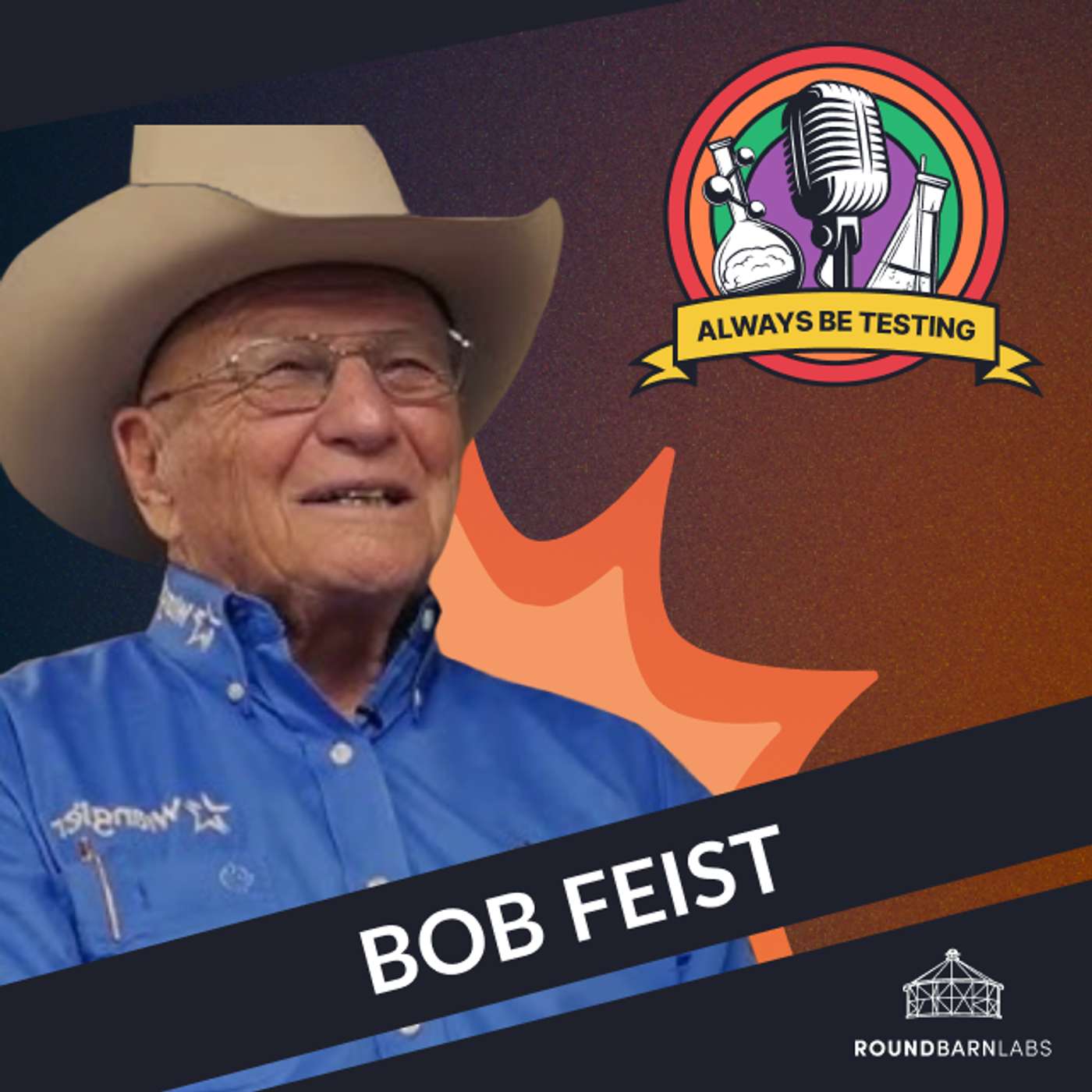
Always Be Testing
#105 Why Losing the Cowboy Code Is Hurting Modern Business Ethics with Bob Feist
00:51:41
Loading summary
Transcript123 lines
- [00:00]
A
Foreign. Welcome to another episode of the Always Be Testing podcast. I'm your host, Ty degrange, and I'm here today with none other than Bob Feist. Bob, how you doing?
- [00:16]
B
Wow, Great, Ty, thanks for having me. This is quite a pleasure.
- [00:20]
A
Absolutely, absolutely. All the way from California, Bob is a true cowboy in every sense of the word. A member of the Cowboy hall of Fame, Arena Rodeo hall of Fame, hands down, one of the best rodeo announcers of all time. He was recently honored as a Ken Stemler PRCA Pioneer Award winner. Bob started the Roper sports news in 1968. It was the first newspaper to ever cover the sport of team roping. So as a result, a lot of folks refer to him as the godfather of team roping. His event, the Bob Feist Invitational, the BFI, as it's called, is the largest and richest one day open team roping event in the world. And it's entering its 49th year. Pretty amazing if you ask me. Country music legends and artists George Strait and Cody Johnson have emulated Bob's vision for team roping and have launched similar events. I believe you're going to be at Cody's event this week.
- [01:24]
B
Yeah, this week called a Kojo. There you go. There you go.
- [01:28]
A
And then for those of you that understand and follow sports and golf and like a little event that happens in the spring every year called the Masters, every year in Oklahoma in April, there's a little something called the Bob Feist Invitational and it's considered the Masters of team roping. So if you're into team roping, you should definitely. You already are there, you're checking it out and you're aware of it. So Bob is obviously very accomplished entrepreneur, a cowboy. True and true. Certainly a close family friend and mentor when I need inspiration. He is definitely my first phone call to get some perspective on things, which is always appreciated. He's been an inspiration for my business, Round Barn Labs. We've talked a little bit more about the cowboy code of lately and how it's kind of inspired what we are aiming to do and what we're doing. And so who better to be on the show than Bob and to talk a little bit about the cowboy code. For those of you who don't know what the cowboy code is, it's an unwritten set of rules, ethical guidelines and values that just shape behavior of cowboys in the American West. It's been featured in books, movies, as many of you have probably are aware. One of my personal favorites recent read is Lonesome Dove. Highly recommend it if you haven't read the book. Pretty good. Lastly here, bringing down the home stretch of my long winded intro. I often talk about the trust gap and how in business and in marketing, there's a lot of reasons why, through scandals and a variety of other reasons, people don't trust business like they used to, people don't trust business leaders like they used to, people don't trust marketing like they used to. And we talk a lot about how affiliate done the right way can kind of bridge the gap there. Certainly the cowboy code and kind of the ethical way of life and doing the right thing is something that we've appreciated and adopted and kind of used as inspiration. But again, no better person to talk to about this than Bob as a very successful, longtime entrepreneur and someone that lives and breathes the cowboy code. So without further ado.
- [03:34]
B
Wow, man. Did somebody. Did I write that for you? That's pretty good.
- [03:38]
A
I think so. I think so.
- [03:40]
B
Pretty nice. I didn't. I had to recall some of that stuff there. Yeah, very good. Thank you.
- [03:46]
A
That was all you. You did that.
- [03:47]
B
I don't know. Very honored. Of course, the Cowboy hall of Fame in Oklahoma City was very special treat. And that was a few years back. And then as you mentioned, the Ken Stemler Award, which is the Professional Rodeo Cowboys association award, and that's the Pioneer Award, which is kind of for entrepreneurial of new things, which brought the sport of team roping, which we'll discuss a little later on. For those of you that don't know what team roping is, but into rodeo. Rodeo had five events originally and then it added the girls barrel racing and then team roping came along and that made it seven. So the. That was part of it there. And it was pretty good. And now we have a new event called Breakaway Roping, which includes ladies as well.
- [04:33]
A
That's getting popular, huh?
- [04:34]
B
Eight events. Yeah. Yeah. But all those fall along your cowboy code. And it's exciting for me to talk to you about that because there's so many of us, when we go somewhere to buy something and somebody comes on as a car salesman approach, you automatically turn it off. And no disrespect to any of you car salesmen out there, but there is some pressure you don't want. You've done your research, you know the product and you just want to follow through with it. So I think that's something we can discuss today.
- [05:05]
A
Yeah, absolutely. And I think there's just so many good ones in there, from be tough but fair to writing for the brand. I had a great Conversation with the partner stack folks out in New York talking about how the heck it applies to what we do in marketing. And I think Bob will have some great wisdom in terms of what it means to him. And what are some of those principles that matter? First one we got here is live each day with courage. And Bob really emulates that. What's the. What are some thoughts you have on that one?
- [05:39]
B
Well, you have to be strong. And I think in our earlier days, I'm an old guy, so you got to deal with this. But there was the draft in the military and that gave a lot of people courage. And as sad as it was, war gave a lot of courage to a lot of people. They came back and some of our forefathers in the business world were good soldiers, good sailors, Air Force pilots. People like that are the Coast Guard and the Marines. They had courage and they went on whatever they did with courage and foresight to carry through the mission and to either sell their product or if they worked for someone, they used a code and that's what it was. It's no different than the Ten Commandments. I mean, it's basically it's your commandments in your product and your work and what you do today. Yeah, the Cowboy code refers to the cowboy and cowboys as American as they get. There's no other country that has cowboys that per se. Some of them have tried to follow suit. But yeah, the old cowboy way, and you mentioned ride for the brand kind of was that way when you hired on with someone or a ranch, whoever your patron or your boss was, you did things the way he liked him and that was it. The same thing with your employees today, if you have employees that they do things the way you want them, they're writing for the brand and your principles and your way of doing things, it was seen, brought to the light of everybody through Yellowstone, four or five years with that came on even to the branding of the Chess. But that's a little above and beyond. I don't want to get burned. So in my earlier days, writing for the brand with maybe you dropped a cigarette on you or something, that it's just to have the principles to follow through with whatever you're supporting or selling. Yep.
- [07:41]
A
And we talked a lot. A little bit of like the Amazon principle of like disagreeing, commit. There's. And there's so many examples of this playing out in everyday business in the right ways. The Amazon leadership principles are kind of. There's sort of a variant of the Cowboy Code, the branding principles that Apple or someone Else in technology might adopt or there are some similarities there. Some of the businesses that have done a good job with their core values and actually kind of lived them as opposed to just slapping them up on the wall and hoping people follow. I think that we see a lot of examples of it out there today in the world. Do you?
- [08:20]
B
Yes, I think more so today. And I think affiliate marketing is one of the main ties of that. If, like in our product, if you like a certain product, but it relates to something else, that's fine. It's a marriage and carry through with that product and tie the two together. I think that's all real good. And again, have the courage to stand behind your product and go on with it. Yeah, you go down the line on those. Take pride in your work, which was. Is a prime example of how you start things and go.
- [08:58]
A
I know you talked a little bit about your kind of experience going from California to Oklahoma and how that kind of related to your exposure to the cowboy code.
- [09:10]
B
It was. It really was. I. I was raised in Santa Rosa, California, actually. That's where you were raised too as well, in Sonoma county, north of San Francisco, about 70 miles. And. And it was a rural community at that time. A lot of farming. There was prunes and walnuts and cattle and sheep and many things. And of course it's since growing like everywhere else has. But the California way was fine. But I. I was exposed to a lot of different people and automobile business, sales, insurance, things like that. And it was a sales principal thing that came across a lot. But when I went to school in Oklahoma State, I think one of the biggest things I learned back there was the people were different and different by I mean in a good sense, a very good sense. And there was a saying that if they told you the sun was shining, you didn't have to look out the window. It was. And it didn't take long for that to click in me that when somebody said something, if they say that was a nice car you're driving, they meant it. They were sincere. They weren't just patting you on the back or stroking you a little bit. They were very sincere about it. And that was a real good lesson, I think for me.
- [10:28]
A
Yeah. No, that's amazing. And I think there's sincerity and word is bond. And that kind of theme comes through. And in cowboy code and thinking through how do you want to consider bringing that into your work or your business practice? I think it's just a smart. It's a nice way of thinking before you kind of Got into the world of team roping. What was kind of what were you doing before that and what was kind of the prelude to Roper sports news?
- [10:56]
B
Well, I was always in agriculture in high school as an FFA and was a speaker for the 11 Western states and was very lucky to get chosen by that and was mentored by a lady by the name of Alice Lowry, who was from the University of California at Davis. And she took us around on tour and we went to Fort Collins, Colorado and different places and spoke. And I got to realize that there's so much more into life and. And it was kind of a God given talent, I think. I did announce some horse shows and things around home there, but I also was involved in riding and showing horses. And then I had an uncle that was a roper, and I decided to try some roping at that time and my skills. And of course, being young, you wanted to ride something that bucked. So I got into riding, bucking horses and bulls. And I wasn't very good at it, but they're not very good at all. So I went to college. I didn't actually go on the rodeo team. I did ride bulls there a little bit. But to have a horse and to do stuff back there was quite expensive to do it out of state. So there was about eight of us from Santa Rosa that were all going to college at Oklahoma State. And we were all in Ag, but Cliff Bath was probably the first one and Gary Noonan that decided that we were in a fraternity, Alpha Gamma Row, and we worked in the kitchen a lot to help pay our house bills. But when there was a barbecue, California kind of new hospitality, and as they do here in Texas with barbecues or people coming to your house. And the same in Oklahoma everywhere. But we had a little knack for the restaurant business because my family had been in it. It had grocery stores and then my cousin had a restaurant and my uncle. So we knew a little bit about fruit presentation. Well, Cliff came up with the idea, him and Gary Newton, that you can raise the best head of lettuce or the best beef in the world, but if it's not prepared and served right, it was a total waste of that animal from the start. Total waste of the seed of that plant that you planted is if somebody ruined it on the stove and presented it to eat, it was not good anymore. So Clif says we ought to get in hotel and restaurant management and we could make sure that the agriculture products get carried to the table. Right. And get presented to people. Right. So it kind of stuck with us. And they had a good hotel and restaurant school there at Oklahoma State. There was only four at the time. There was Cornell and Oklahoma State, then Michigan and and then also a city of San Francisco. College had hotel and restaurant school. So we switched over to that and it tied in really well with agriculture and knowing ag the way we did it was a very good sell.
- [14:07]
A
That's amazing.
- [14:08]
B
I got into that and then I went in the army with an army officer and the infantry. I went in as an enlisted man, went to ocs, became an army officer there also. I got. They looked at my resume and said, oh, you about the food service. Well, we want you to run the kitchen at the Officers Club and at the company that I was in there in the OCS in Fort Benning, Georgia. So I got right back in the food chain again. And then when I got out, I had been working for a private company in Oklahoma City, a private luncheon club at the Hightower Building. And I was going to go back there, but my uncle in Santa Rosa had a restaurant that they needed somebody to fill in as a bartender for a week or two. And I thought, well, I'll do that, then I'll go back to Oklahoma. Well, next thing I knew I was the assistant manager at the restaurant. And then I stayed on and I was indoors and I just wasn't happy that much. And I wanted to get back around ag culture and around rodeos. So I looked into the event. I knew I was going to be too old to ride bulls soon. And that time I was in my mid-20s and so I got into roping and Bill Jacobs and I, we started team roping a lot and got into it more and more and found out what it took to be a team roper. And you want me to go on with this story? I can tell our roper sports has started.
- [15:37]
A
I love it. Let's go.
- [15:39]
B
Bob Tolman, who's a very well known commentator, announcer, many years announcer of the year and everything. But at that time he wasn't an announcer, he was a team roper as well. So him along with Ron Hoganstead and some other of us, we went up to Elko, Nevada to a roping that was supposed to be there. And we got up there and it was canceled and they didn't have it. So we had travel all the way. And travel in those days with horses was not the that easy of a trip from middle of California. So I asked those guys, how do you guys know what these events are? And stuff? And they said, well, it's word of mouth or they send out postcards or get on the phone and call your buddy and say, hey, they're going to have this. So I said, well, you ought to have a newsletter or a magazine or something. And they said, well, you're so smart, why don't you start one? So Tolman and I were talking about it and we were there on the hood of a pickup and yeah, we could have this. And at that time I knew Jack Parnell real well and he was the California Cattleman's magazine. Plus he was a auctioneer and a performer too. He sang at certain nightclubs in Sacramento and that. So I asked Jack about it and he said, yeah, you ought to start a magazine. Well, right away I'm thinking a magazine, man, A magazine costs money, but a newspaper doesn't cost that much. So I put together a plan and it was a four page paper. And this was a hundred dollar bet that I wouldn't ever do this newspaper. So I did it. And it was page one, page two, page three, page four. That was it. It was a one page publication in 1968 and I was broke and I started it by borrowing $300 from my mother. I didn't want to tell my dad because he would say, oh, you know, it's another idea. But it worked and it was needed in the industry. And from that went on amazing. More and more.
- [17:43]
A
And yeah, it's a good lesson for everyone out there in entrepreneur land in business. And I think it's, it's just an awesome to hear how something so legendary, such longevity, such success, you know, how it got started. It's great for people to understand that. I got to go back to what you were sharing about bringing the food out and the presentation. It's such a cool thought because think of all the work and effort and money and time went into getting it there. It kind of reminds me of in our world when we do all this work behind the scenes for a client, how you present that, how you talk about it, how you talk about business results and performance and KPIs, those things, they need to be presented and discussed in a way. And so I, I feel a connection to just that. That story that you shared, that was really cool.
- [18:34]
B
Yeah, if you have a product out there, which I had with that four page paper, try and sell it. I mean I was told so many times that'll never work. Yeah, that isn't gonna fly. And that, well, how come other publications do? So I checked on them and I challenge any of you check on Your competition, because your competition is probably your best school that you have. Why are they successful and how can you. What would you like to be better than they are? So make your product a little better and and proceed with that. Although I never pursued again. Magazines. When color print came out that was a big thing. People were going color. And I had a theory in those days that keep from going color and go in a full page magazine is that the Wall Street Journal was always black and white. And I thought it's what it says is what people like. That's why they buy the Wall Street Journal in those days. And then I came up with another. This is kind of a backyard cowboy theory. But Cowboy code number five is a $1 bill and $100 bill are printed on the same color of paper. It's what they say is what you like. Well, that's the same thing with your product. If you have a product that you're proud of its own color, make it stand out to be something very special.
- [19:59]
A
It's the story that can kind of bring it out. It doesn't necessarily have to be the.
- [20:03]
B
We what it's built on 30 years before we ever went color.
- [20:07]
A
Yeah.
- [20:07]
B
And because it was what they wanted to read, not what it said.
- [20:13]
A
Yeah.
- [20:14]
B
Not how it looked. Yeah. So don't sugarcoat something.
- [20:18]
A
When with Roper Sports News was there a moment where you were like oh wow, this is actually kind of taking off and the customers are responding to it. Was there some signals that you got early on? What was that like?
- [20:30]
B
It was. It was down the line four or five years and it finally. My dad finally adapted to it too. He says you're providing a service which we were I. And for those that have commercial products, nothing, nothing against them. But at first I wouldn't take commercial ads. In other words a major cigarette company or a beer company or anything. We wouldn't take a full page ad from them. If they wanted to take a half page or a three quarter page, I would say that's okay. But I won't sell you a full page ad because I didn't want a turn the page publication. I didn't want to look in there and here's an ad on cigarettes that it's a full page. I'm not interested in cigarettes. So you turn the page. But if it was a half page, there's story attached there. I would convince them that you're going to get more exposure out of a half page. And I know you'd say, well you had a chance to sell a full page that's money, right? Yeah, it was money, but I wanted the reader to see that ad. So rather than just flip the page, a half page ad, you would be reading a story up here and the ad is still there. All right, Somebody comes to the door, the phone rings. Not cell phones in those days, but landline phone. Or you went to the door and that page set open on your table. That ad, a product was still exposed and your product was still exposed to somebody that was reading that story. Because I wanted to come back to that story. So those were little ideas that some of you nuts, you won't sell a full page ad to us. No half page or a three quarter page.
- [22:08]
A
Yeah, you created something out of nothing and you did it right. And some of those principles, I think are still showing up now in marketing and in our world where we, we deal with, okay, how do we get exposure on entrepreneur.com or rolling stone or GQ or Sports Illustrated? And those principles still matter. There's, there's that challenge between balancing the editorial and the commercial. This just came up recently on the podcast and, and you see so many examples in influencers now where on Instagram someone's selling something, but it's sort of made to look like it's user generated content or it is genuine suggestions. So I think you bring up a really interesting concept in marketing that we deal with every day. So it's kind of a cool lesson to think about. Was there a moment where you kind of had a sliding door moment in your career where kind of a pivotal point that you could think back to?
- [23:00]
B
Well, I think when I finally got employees and I was very fortunate, my first employee was Stephanie Anderson and she was just out of Cal Poly and was looking for a job and she was working at a feed store there, but she had shown horse, she knew horses and she roped a little bit. And so I brought in her as an employee to help. And we didn't have computers in those days. It was all handwritten or typed and things like that. And I think when I finally went to employees and I can remember my dad saying, and he always used to hate my comeback on this, he said, well, you could do that yourself and save money. And I says, dad, one thing I learned in the military, and I'll never forget this, is you never saw a general driving his own Jeep. And it wasn't that the general didn't know how to drive. He knew how to drive, but he was supposed to be thinking about what he's going to do when he gets to where that driver's taking him. And that's what you have to realize as an owner. And if you have employees, yes, you could do that and save a nickel. But you can hire somebody and go out and make a dime.
- [24:11]
A
There you go.
- [24:12]
B
There you go.
- [24:13]
A
No, that's brilliant. I mean it's such a good example because we always, any business owner leader, even in house companies, they're trying to figure out how do they balance, do I jump in and get involved in this? Do I stay in kind of the structure that's been created as a leader to get the most value for the organization and do the right thing? So I love that lesson. That's a really good one. When things get hard throughout your career, obviously everyone has their ups and downs. As an entrepreneur, someone who started something from nothing, how do you keep going?
- [24:48]
B
Well that's a good point because there is some times in politics or in the world situation or in weather, you just have to go on with it and go and realize that I was a pilot for 45 years. There's, there's some things when you look out at some weather or clouds and that the good lord created that. That's a one of a kind, that's something brand new. Nobody's going to tell you in the reference book that oh well that means this or that. No, that is something that wasn't here yesterday, wasn't ever here. It's today and it's happening. You have to get that. I think weather is probably one of the prime examples of any business person that things are going to come up and there's no formula how to handle it. You have to kind of create that and handle it because it's a one time deal.
- [25:39]
A
I love it. We were talking about this with the team in the last few days just in general of like when, when you step in shit, if you have a problem, if there's an issue, something bad luck comes your way. It's not often that like you know what happens that matters. It's sort of how you, how you react to it, how you think about it, how you process it, how you take the next step, how do you learn and react? I think that's just a great, great example of that. I love it. What would you say is there advice you would give to your 35 year old self?
- [26:10]
B
1 I think thing is that my dad always used to say the future is for those that plan and provide for it. And he would and I hated that because he had just keep mentioning the future is for those that plan and provide for it you put $10 away and it's going to make you a nickel someday. And he was absolutely right. And you have to look to the future and what future, and do one goal at a time. I'll never forget reading an article once about someone that was very successful and they said probably one of the best starts of your day can be making your bed. And I thought, what? You know, and then I got thinking about the army. When we got up in the army, you better make that bed. Then they'd come in and flip a quarter on the bed. It better bounce. And it is a good start of all your days. When you get up, finish what you started. And that's part of the cowboy code too. If you start something, finish it. If you get up in the morning, start your day off with making that bed and you are ready for the future. The future being tonight when you come home, your bed is there. You turn it down, he's going to start all over again tomorrow. But if you start with that bed made, you've already accomplished what, one task of the day? One thing. Yeah. And get that in a routine. Then you go in, you brush your teeth, you shave, you do whatever. Some people comb the hair, I don't. But you get ready for the day and you accomplish things, but try and do every one of them a little better the next day.
- [27:41]
A
Yeah.
- [27:42]
B
And it just kind of tends to.
- [27:44]
A
Get in your principle atomic habits. With Bob Vice and that building that momentum and making that 1% improvement the next day to the next, it becomes compounding, which I think is just an awesome way of thinking about life and a smart way to be. I love it. I love it. Is there some other career or job or something that maybe you honeymooned or thought about doing or thought maybe you could have done?
- [28:09]
B
Oh, I forever wanted. Everybody always is stunned with Hollywood, but I always kind of wanted to be an actor. I thought that I, I probably should have gone more for that. I did go to radio and television school and college. I'll have to say this about Oklahoma State. I never graduated there. I spent a lot of time there. I said I was going to get Social Security as a student out of there but never graduate. I had an advisor that was. She was the old school mom with a three piece suit and the lace up shoes and everything. I'll never forget her calling me into her office and says, I, she wouldn't look me in the eye when she said this before. She used to say, you need to settle down, you need to get a plan, you need to pay Attention to your grades and graduate this time. She said, I've never said this to anybody as she looked aside, but there's some people that just succeed in life regardless if they have an education or not or a degree. And so I had been offered a job as a senior in Oklahoma City, and I was very fortunate that year. I took that job. And I found out later that I was higher paid than any of the graduating seniors. So I felt pretty bad about nice seeing the dumb guy that didn't graduate.
- [29:32]
A
He proved him wrong.
- [29:33]
B
I proved him wrong.
- [29:34]
A
Oh, my God. Oh, my God. I love it. We talked a little bit about, like, finishing what you start doing, what has to be done. Are there other cowboy code principles that really jump out at you or. There are some that you kind of think of resonate with you more than others.
- [29:50]
B
As a commentator, you talk less and say more.
- [29:54]
A
I thought about that one.
- [29:55]
B
When I.
- [29:58]
A
Conflict with your job description.
- [30:00]
B
Yeah, it does kind of post. But they always say, never let the truth get in the way of a good story. That's Bob Tolman's theory. So, yeah, sometimes we oversell whatever product we have and things that we're doing. You can oversell yourself, you can oversell anything. Life is like fishing. I mean, and you put something out there, but let them look at the bait, let them look at the product, and then do they want it or do they not? And that's, I think, a whole lot of it. But that's great.
- [30:31]
A
Yeah, that's really good. This, it's maybe a good segue because I've observed you, you've brought up things on this podcast and this conversation that show that you're a good marketer. You kind of had to be to be successful in Roper Sports News and the BFI and all that you've done. And on this show, we talk a lot about learnings and experiments in marketing, your career life. Was there a marketing or business lesson in. In your business experience that kind of hopped out, you know, jumped out at you and you were like, oh, wow, that was maybe surprising or interesting that you want to share?
- [31:09]
B
Well, I think of the things that I thought of that. And sometimes you get a. You might dream about something, or you might be waking up in the morning, you think, is there some kind of product out there could be improved? Like, has anybody come up with a good pepper shaker? No. Yeah. But I remember I was a paper boy at one time and on a bicycle going around the paper route, throwing papers. And of course, when it rained, they finally, they wrapped them in A plastic solution. And it wasn't a paper bag. We didn't have those in a plastic bag. But I thought years ago maybe they ought to have a dispenser because my uncle had a grocery store and whenever it started to rain we'd have to run out and bring the paper racks inside because your local paper and the San Francisco papers and were all in a paper rack outside but they were exposed to the rain. So you brought them in the store. They could have a container that they would be inside. All of a sudden somebody comes out with that, you know.
- [32:10]
A
Yeah.
- [32:10]
B
That. That. I'm not old. Yeah, I am.
- [32:14]
A
But you've seen a few things.
- [32:15]
B
Yeah. Thing if you think of something or even driving to work, there ought to be a better way. A there is a better way. Trust me. Everything we utilize today, from the computers to the cell phones, everything, there's a better way coming out tomorrow. And you could be behind that better way and get around the product that is tied with that and affiliated with it is the term you like to use and create it and, and do it. It's. There's little simple things like that. And it's not all about the money going back to the cowboy way. It's the satisfaction of the fulfillment of getting. I didn't get rich on what I did but it filled a void and it made a void or filled that void and made difference on other people's lives. In the team roping world. It's an event of rodeo. It's a everyday ranching event. For those of you that wonder what what did he Starter cell. It's for one person ropes the front end of the animal around the horns. Normally that's the way it was in the old West. And then the guy comes in, ropes the heels. The reason for this is that they if they drive a sick cow or a calf all the way to a barn, it's probably going to do it more harm. It's going to get more fever in it. It's going to be worse. If you can doctor it right on the spot, if you can rope it and, and the guys get off and then they put and do the medicine to that calf. They come back the next day, it's fine. Some of the old ranches you had to drive them a mile, two miles, do a corral or do a shoot and that just didn't work. So that's where that all came about. But in modern day rodeo when these contestants are going to the rodeo they're driving brand new trucks, they're driving pulling Brand new trailers. They're buying horses, horses that used to be 100, $200. Now it's not unusual to see 100 200,000 horses. Now they're driving 100,000 plus pickups. They're driving pulling trailers. They're over 100,000. And that was the reason I chose team rope. There's a lot of product orientated to this sport and that will help the rodeo industry. The ropes they use wear out the equipment. If you ever watch on a rodeo and you see a horse has these like leggings on and the, these other boots down over the hoods, those are all protective things. The animals that they rope have particular wraps around their horns to protect the animal. The same way in the bucking stock today the shoots have to be padded and everything has to be done in a way to protect the animal. These bucking animals today, some are again a half a million dollars and they love it. I know some buck and bulls that you go out in the pasture and you could put a two year old kid on their back and wouldn't hurt them a bit. Yeah, they get to the rodeo, they love it that they have put somebody down on the ground.
- [35:16]
A
It's just, it's amazing. A couple of things that come to mind there. One is that I think Bob was an early adopter of influencer marketing or affiliate marketing. With all these product that are relatable and relevant and helpful in the world of team roping. We, I mean that was a big part of what you did. The other thing that jumps out at me is that bull that's £2,000 plus, that could hurt somebody. We got to go through a mutual friend to see the PBR here in Austin. And you go down and you see their personalities and they're like, one of them's like, yeah, that guy's a diva. He loves the showmanship and the limelight and he's ready to perform. Or, or hey, your, your five year old could go up and touch him, pet him and it's fine. It's, it's a really cool deal to think about those animals.
- [36:06]
B
And there's some of them that trust me, they know somehow from all our years of announcing, you get a world champion on one of them bulls backed or horses and they buck them off. There was a horse named Classic Velvet that caught in Rosser Owen of California. And this horse was a show horse, but he kept bucking people off. So they were going to destroy the horse cause and no, let me take him, put him in the rodeo and they did he became such a superstar when he had buck somebody off? He would go around the fence, nobody catch him, and he would just look at the crowd and prance.
- [36:41]
A
Victory lap.
- [36:42]
B
Look what I did. And if they rode him, he was embarrassed. And this horse, I swear, was a person. He would go to that exit gate as fast as he could. And he was. He was just embarrassed.
- [36:55]
A
That's amazing. A real competitor. Yeah, they're real competitors. You don't think about. For folks that are not familiar, was there an animal on the cow side or a horse that you recall that that just kind of sticks with you and for their character or for companionship or riding?
- [37:13]
B
Oh, I. I think Classic Bill was definitely one that sticks out in my mind. And. And of course, Red Rock was the bull that Lane Frost finally conquered him. Red Rock was that way. He was a pet. He would follow John Ground. He owned him and follow him around like a dog in the field. And loved his ears scratched and stuff where they put him in the bucket. He just said, bring him on, you know, I want somebody to try. And it's no different than. Than a kid jumping on his dad or uncle's back and trying to book him off in the living room. And. And I know a lot of you people out there aren't familiar with the rodeo industry, but the strap does not go down around the testicles of an animal. A lot of lady horses have been very great champions. And it. It's a tickle spot. It's the flank, and this is our flank. And if you go up and grab somebody out of the arms and go, it. It makes them squirm around and jump and that's it. If it's too tight, they will stop. They won't do anything. It's just the indicator that they're trying to kick that free as they go out. And you watch when that whistle blows, that deal, they stop. That's it. Yeah, that strap's still on there. So that's the deal. You know the game.
- [38:23]
A
It's good to know.
- [38:24]
B
And they're taking well care. You saw that.
- [38:26]
A
Oh, my gosh. Yeah. They're like pro athletes. They're getting. Yeah. Massaged and cared for.
- [38:33]
B
Yeah.
- [38:34]
A
Is someone starting something today? You know, you've obviously launched multiple business successfully. If someone's starting a business today, what are like three things that you just think are they need to really get right and think about?
- [38:46]
B
Well, I think believe in your product, for one. Definitely believe in. If you don't get a new product. If you had any kind of thoughts about your product, get rid of it, get another one or go to work for somebody that has what you dream about and do them a good job. There's no embarrassment in that. And be part of the team again. Ride for the brand. And if there's a better brand out there than what you have then go help them sell it and and be rewarded. And on the same token reward your employees. If you have a good product and they're doing that product justice. Reward them and let them be part of it and part of the team. But. And let them ride for the brand.
- [39:31]
A
That's awesome. I love that. Good advice. Is there a piece of tech that technology that you wish you had when you were starting some of these businesses out?
- [39:39]
B
Oh yeah. I think probably one of the. I'll never forget I took typing in college and to this day I think about that that instructor standing behind me. You're going to have to type so many words per minute to pass this course. And I did. It was one of my highest passes in there. And it no more than playing a video game for those out there today or something. But once you get muscle memory and you get it going it's fine. And to this day I go to some very successful people that I know and meet around the world and they're hunt, pecking a race. I used to say that was the old deal. But they don't know how to type and that's okay. But I think everyone needs to learn how to type for sure. I see some kids using a cell phone today. Faster with two thumbs. Not typing but thumbs and they do better than any typewriter couldn't keep up with them. I think the equipment that we have today from social media to computers again. When we started Roper Sports there was no computer. I remember bringing a computer expert in and when we went to computer and trying to transition again. I had just one employee at the time but transition her over to computer was pretty strict. It was hard and then. And to see where we are today. It's amazing with the tools you have and the tools are going to get better everything become absolutely. And you have to look at that future of what tools are available for you to sell your product better and to do a better job with and maybe you should look into that. And some companies are big enough that you can go out and have somebody researching that. Yep. And then on the other hand maybe you're a one person show and if you are that's okay but look at a better way of presenting your product or affiliating it. With the other market.
- [41:36]
A
Yep. I've always been impressed by Bob. You've always thought about and been adopting and comfortable jumping into tools, new products, trying things out to better yourself, better your business. I think that's something that you have, like, there's a lifelong learning piece, but it's like, hey, I'm not afraid to jump in and try something. Where a lot of people, my dad was one of them, where he was just like, I'm not doing that. And I think it holds people back sometimes, especially if you're in business, if you're in marketing, marketing in particular, that's almost the lion's share of what we do. We have to find that next wave. We have to find ways to adapt to technology and to what's happening in the market when things are happening as fast as they are.
- [42:19]
B
I think you're absolutely right. And what you brought about, your dad was a lot of older people. One of the things that probably kill more people than not or shorten their life is they get lonesome, especially if they lose a loved one or. And they're no more. There's no better way to stay contacted than with social media today. And not that it's a product, but you can help older people follow technology at least and be a little techie. I. I don't. I might Admit it, I'm 85 years old, but if I didn't do the tech stuff that I do it, I'd be lost in this world today. I mean, even in commentary, we have to look up stats and quotes and you have to get with it. Yeah, but. And even to follow the medical world today.
- [43:10]
A
Yeah.
- [43:12]
B
You have to be about half technical, hardest. So if you have parents out there or loved ones, get them into just a minute part of emailing or something to stay in contact with their friends and their loved ones. It's so cool and so easy to do.
- [43:28]
A
Absolutely.
- [43:28]
B
Spend time every day with the grandkids or something. It's awesome.
- [43:32]
A
Absolutely. 85 going on 35, Bob. Just an amazing, successful life and collaboration with so many great people, and you've built an amazing legacy that is honored and is definitely embodied in the cowboy code of the west. And couldn't be more proud to have you on the show.
- [43:52]
B
Well, thank you. It's been a pleasure being here. I did have some mentors along the way, of course. Clem Expadden, he was a senator in Oklahoma, and I first met him, I was a big bellhop. Wearing a bellhop. Cost him with a little round. He's done it all and he checked in the hotel and he would come to announce the college rodeo. So the other hotel staff says, we're going to tell him you're a cowboy. No, don't, don't. I don't want him to see me in this outfit. But Clem was a great mentor and just. He believed in the Lord. He believed in the cowboy code and the cowboy way of being truthful and honest. And he was very good. And one of my uncles. I called him my uncle. He was a cousin, Uncle Joe. He would always had great ideas of doing things and promoting things and product. And I learned a lot from him, too. But. But stay within your means. I always got that. I. I've talked to you about affording to be poor. Yep. And it's a little thing that a lot of people try and be rich and they can't afford to be rich. But stay within your means, afford to be poor. If you want to go somewhere in a torn T shirt and drive an old car, all those are paid for year ahead.
- [45:09]
A
There you go.
- [45:09]
B
The guy trying to be.
- [45:10]
A
Yeah. And it's crazy. Especially now with social media. I feel like it's easy for people to push and try to keep up with the Joneses and try to spend ungodly sums on experiences or concerts or clothing or whatever. And obviously things have gotten expensive nowadays. But it's like you can have a lot less and be a lot more comfortable and happier if you're. Like you said, I can afford to be where I'm at or poor, as you said. It's just a great reminder.
- [45:40]
B
One of my great friends was Tex Earnhardt. It was no bull Tex in Arizona. He had four or five car dealerships, but Tex would drive around an old pickup and an old car was a Tex. Why do you do that? He says, hey, not everybody I know can afford a brand new car. He said, they see I drive this and I'm Tech Turnhardt, but I'm. I'm driving it. So they say it's okay for me to have a used car. I sell more used cars. I do new. But he said, I just want to relate to my customer. That's it. Yeah. Try and be something they can't afford or. Yeah, can't do.
- [46:20]
A
That's good.
- [46:20]
B
Don't price your product out of the market.
- [46:23]
A
That's another good one. Very smart, Very smart. We've gone through some pretty good core principles of the cowboy code. I think we've gotten some amazing business lessons today for everybody. Any other cowboy code stories that kind of jump out at you. I think we've covered them all. Be tough but fair. Maybe was one that didn't come up.
- [46:47]
B
Which one?
- [46:47]
A
Be tough but fair. Did we cover that one?
- [46:50]
B
Yeah, I think kind of. We did, yeah. I do have to be. Does this really fit your customer? And if it doesn't, be honest with them. Be fair in all truthfulness. I just don't think our product is for you. Yeah, but I have one that I know and maybe it's a competitor of yours. But don't be afraid to pass that on and I'll guarantee you it'll come back and treat you right. I love that you say my products are for you, but here's one that is and that'll get to those people. And those people are going to come back and send someone to you.
- [47:25]
A
There you go. There you go. Yeah, you're doing good by somebody, you're taking care of them and being thoughtful. It's like it's going to come back around and that's the heart of what you're doing. It's not about chasing a dollar, it's about giving back.
- [47:37]
B
I think we all have to learn a lesson that it took me a long time to learn it. Your competitors, if they're in this business, are helping your industry. They're promoting the industry. They're making rather selling cell phones, computers, cars, whatever. They're helping the industry. So let them promote the industry. If you're selling that product, it's good for you. If you have a better way of promoting it, do so. You might sell more product, but don't make your competitor your enemy is what I'm saying. Learn from them.
- [48:12]
A
Love that. And you've embodied this in so many ways and you just hit it there. You nailed it. But that abundance mindset that maybe gets spoken of too much versus a scarcity mindset of oh, it's mine or I have to scrap together or zero sum. It's like, no, we have so much opportunity here as an industry, as a collective. And I think you nailed it. With that thought of thinking about competitors in a more collaborative way, that's amazing.
- [48:39]
B
I think if I would have tried to take my publication and compete with the other ones, there's no way I ever would have been successful. I kept it within its means and with the means I wanted to do. I'll never forget Chuck King was with Western Horseman. It's a very world renowned publication. Been around for over 100 years. He told me, he said, do your thing with yours and make it the best of what it Is it rather be this piece of paper or a hundred page magazine? Make it be the best and you'll be successful and just stay within your own means.
- [49:18]
A
Beautiful.
- [49:19]
B
And it was great.
- [49:21]
A
There you go.
- [49:21]
B
It worked. There you go.
- [49:23]
A
You nailed it. The legend Bob Feist. I couldn't be more thrilled to have him on the pod and just spend time with him here in Austin, Texas.
- [49:32]
B
It's a pleasure being, you know. And you, you're kind of, I guess you would be a tic. Texas improved California. They used to call me an. Oh, I see. An Oklahoma improved California. That's what mixed fat called me all the time.
- [49:46]
A
Always improving.
- [49:47]
B
Called me a pruning.
- [49:48]
A
Always. He always called you what?
- [49:50]
B
A pruning.
- [49:50]
A
A pruning.
- [49:51]
B
We picked prunes in the area that we were around in Sonoma County. Had a lot of prunes and.
- [49:55]
A
And before the wine came. For those of you trying to follow along and then.
- [49:59]
B
But they, yeah, we were cold prune pickers and that was it. So, yeah, there you go.
- [50:05]
A
For those that want to learn more about you, Bob, and kind of catch up or maybe get in touch, what's the best way for them to reach you?
- [50:12]
B
Well, the Bob Feist Invitational is, is always online. I have sold that company or business and they've done a great job with it. Peterson and Omen and especially Cammie Peterson, they work. They do the Cody Johnson Kojo Open as well.
- [50:31]
A
That's amazing.
- [50:31]
B
And they're promoters in that business and do a phenomenal job. They're about to celebrate the 50th anniversary of the Bob Price Invitational in about two years, I think it is. So.
- [50:42]
A
And mark your calendar.
- [50:44]
B
They do phenomenal there, but they want to get a hold of me. It's. It's bobfeiss bfi mail.com and you can find out what's going on right there. So it's.
- [50:56]
A
There you go. Text Homing pigeon.
- [50:58]
B
Email F E I S T. You say it the wrong way. It's not F I, F e. Thank.
- [51:03]
A
You so much, Bob. It's been a pleasure.
- [51:05]
B
Ty, it was a pleasure. I worked for his grandfather 100 years ago and his grandmother. I went up there to do horse stuff and his grandmother made me pull weeds in the garden and I was mad.
- [51:19]
A
For those of you want more stories of that, like email.
- [51:22]
B
Bob, it's a pleasure being able to talk to you, tie into you folks.
- [51:27]
A
Thanks, everybody. Appreciate it.