← Always Be Testing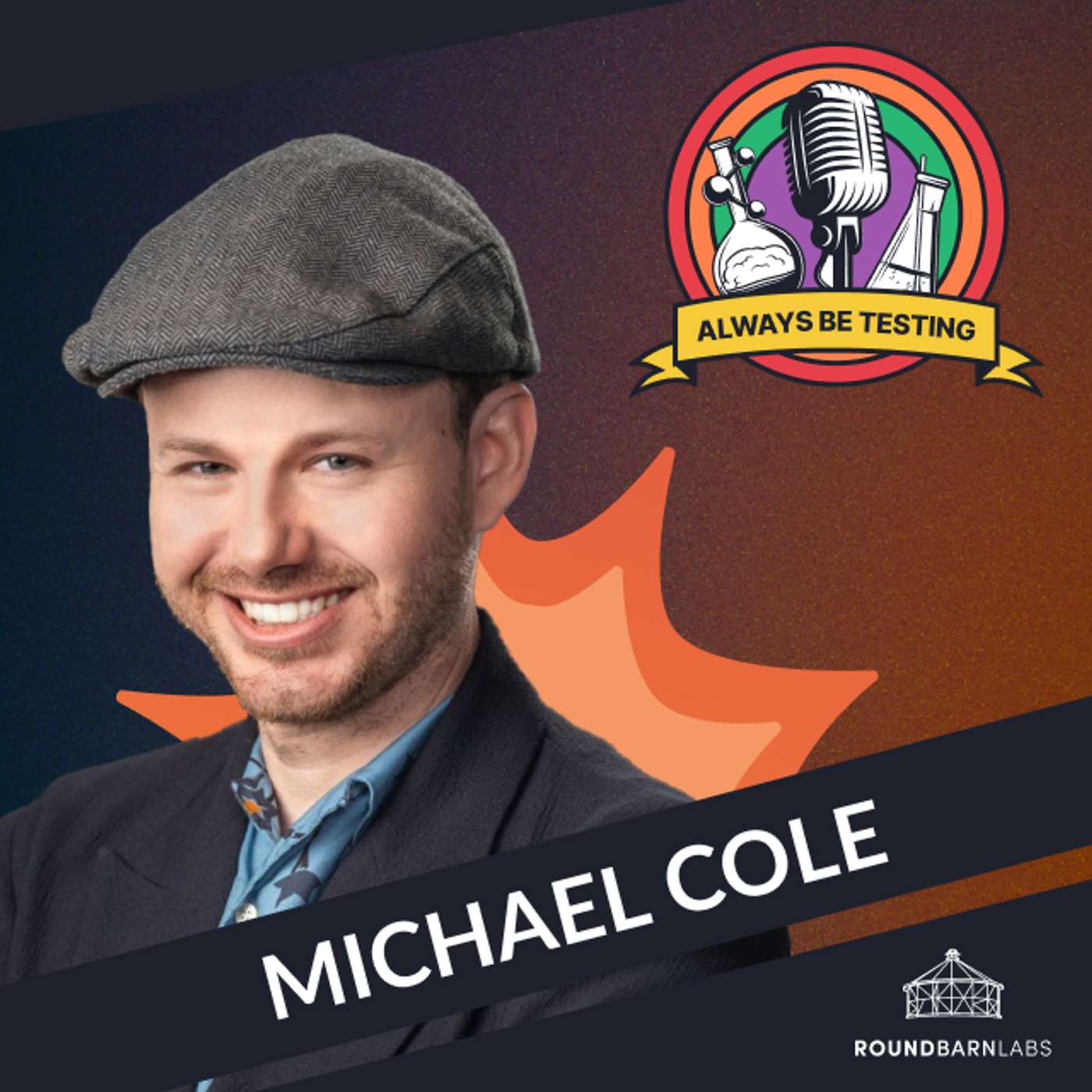
Always Be Testing
#106 Why 70% of Brands Are Undervaluing Affiliate Marketing | Michael Cole - SVP of Marketing at Everflow
00:31:17
Loading summary
Transcript43 lines
- [00:00]
A
Foreign.
- [00:07]
B
Welcome to another episode of the Always Be Testing podcast. I'm your host, Ty degrange, and I'm really excited to talk to Michael Cole today. Michael, how you doing, man?
- [00:16]
A
I'm doing great. Thanks for having me.
- [00:17]
B
Good to see you, man. How's everything going? How's your. I can't believe we're in October. We're coming down the home stretch of holiday. What's happening? Where are we? It's October already.
- [00:29]
A
I know, it's wild. This is. Every year is weird and we just forget about all of the weird parts of it. But it's especially right now. It feels like everything is up and down and left and right and there's tons of opportunities, but there's tons of stuff where you're like, we'll see how next year goes. But as I always say, like, when you're on the performance marketing side, you're good during the good times and you're even better during the bad times. So we're in the right place to be if. If things get uncertain.
- [01:00]
B
Yeah, I certainly hope so. And I think we're fortunate. For those of you who don't know, Michael is just a great affiliate mind. He's a senior vice president at Everflow, a great, great affiliate person to talk to. He's on the Measurements Council with me on the pma, and he's been part of some really good conversations. I think you're going to be in for a treat to hear his thoughts on the industry, on AI, on what's coming. So this will be a good one.
- [01:29]
A
Yeah, I'm excited.
- [01:30]
B
I think what you said was super interesting, just to kind of spin the yarn a little bit on the macro thing. There's a lot happening right now. And not to prognosticate on things we don't necessarily know, but it is interesting to see kind of the best in times, worst in times scenarios. And what are you observing? High level. Just in terms of. You see a lot of brands and ecosystems and performance and we get to look at a lot of data, you in particular. So I'm curious to just get your perspective, kind of riffing on what we were talking about a bit.
- [02:00]
A
Yeah. I think most of its status quo and for specifically affiliate marketing and brands, a lot of companies are taking much longer to sort of make decisions, but they're still making decisions because at the end of the day, like, you have to keep growing and you have to keep finding channels and there's a lot of money still, like, flowing through the market. These companies have the money to Invest. They're taking it slower, but they're still moving forward and everything else. So right now I think it's things are fine. And I mean I think it's safe to say like regardless of everything else, that we will almost certainly have a bubble pop within the next year on the AI side. Just because the entire economy is being propped up by so much money flowing into these AI companies that basically it's pulling all the money for everywhere else into AI companies and AI technologies we'll be talking about a little bit later. It's incredible. And actually makes money on say the dot com bubble. So things will be fine. But I have a feeling that there will be a big correction in between just because that naturally is going to happen when you have this much money flowing versus the growth and money being generated.
- [03:11]
B
Yeah, I have a feeling you and I are going to continue to have a lot of good conversations on this topic as we may share a lot of similar interests and learnings and research and trying to understand and make sense of all this stuff, which is what we try to do as part of our day jobs, but also sometimes as not part of our day jobs. Everflow's in a really cool spot in the industry. I think you're sitting in an interesting position maybe for those who are are familiar and are not familiar with Everflow. Tell us a little bit about one of the leading affiliate platforms and a little bit more about Everflow.
- [03:46]
A
Yeah, so Everflow is a partner marketing platform and affiliate is definitely like the key segment that is the best place to start on Everflow. And a couple things to keep in mind is one, we truly are like a platform so you can always add us on top of anything you're already doing with affiliate marketing and leverage our like tracking and analytics. And two big differences are one, you, this is your own platform so you can go direct with all your partners, which means that there's a ton of inventory and opportunities with like these super affiliates and publishers that just is not accessible through a traditional affiliate program. But once you have that relationship, it's such a good opportunity to keep scaling it so that going direct to partners with like better margins and better opportunities for alternative promotion, I think that's a big piece. And then the other piece that we always say is like, if you're in these types of affiliate programs, you should always be considering Everflow as part of your tech stack is basically anything with a complicated event flow and events in our case are basically any sort of customer action that's involved in their journey towards like Purchasing or after. So easiest way to understand is like say you're like insurance company or finance company. Those are two great segments. They benefit from a more complicated event structure. Hey, did someone start a lead? Like did you receive a lead, was a lead completed and was the lead approved and did something happen after that? So there's four steps there and we're really good at having that real time data there. The granular way to look at all those events and to understand the relationship between them. And I think that that's where we immediately add value. And the other thing with this thing that adds a ton of value is just there is a huge untapped opportunity of looking at what happens from affiliate traffic after they become a customer. Because there are many types of affiliates, especially like content influencer that are driving like loyal customers. And when you look at the data a month later you see a lot of repeat purchases, subscriptions, upsells, etc. This is usually data that is not getting credited to affiliate and it really undervalues the channel. So our ability to track all that and have full attribution is a huge advantage.
- [06:03]
B
Yeah, I've heard good things just around the technology, the capabilities, the flexibility. So it's good for people to be aware that are not. I think there's some really compelling use cases to consider there. I often say affiliate's the most misunderstood performance marketing lever. It's the most underrated. What do you think people get wrong about affiliate marketing?
- [06:26]
A
Yeah, so. And some of these things are self inflicted. But I think the biggest problem with affiliate marketing is just we've all accepted hey it makes a lot of revenue and it's a really good return on ad spend channel. And so almost every large brand has like a scaled affiliate program because it makes money and it makes money at a very like you're only spending 10% of what you make. That's an incredible channel. The problem is that like that's where it stopped and it really undervalues the sort of like true value that affiliates are delivering. Because if you're just looking at a single moment of time of a purchase or lead, there's a lot more that is being influenced by these publishers. So I think this first part is that hey, it makes a lot of money. So let's just stop there. Cause a ton of issues and ends up with affiliate. Like every large brand has an affiliate program. But most large brands have two affiliate managers to four affiliate managers. And that might be, they might be paying out $100 million. They still have two to four people like no other division making that much revenue would be so understaffed. So I think that's why it's really undervalued. And there's an easy way to fix this, which is just like instead of just focusing on how your affiliates drive the seller lead, looking at everything before it, because when. So I'm the head of marketing, I look a lot at sort of like, how do we get brand awareness, how do we drive messaging and strategy, et cetera. Affiliates actually have a lot of influence on that because one major set of affiliates is all of the publishers, the content websites, Another one is all the influencers. And then you can have all of your referral partners and ambassadors. All of these are driving new people who may not even know your brand are in discovery mode. They then get to your brand new and you can sort of see the activity in terms of like, did they go to your pricing page, did they check out your newsletter, did they sign up for this membership thing, did they do that? These are all indicators that are right away of this person is interested. And when someone gets to a brand for the first time and they're not ready to buy, it might be months before they purchase. But you can tell that these affiliates are getting people in the door. And top of funnel is a very highly valued channel within a company. And so be able to show this to your boss of how much you're influencing that is important. And then after they purchase, getting to see everything that happens afterwards is really important too. Because if someone goes to a publisher website and they consume a lot of content, they get really excited about say like these red winged boots and then they came, they purchased, they tell their friends about it. That person's fundamentally different than I just wanted boots and I searched boots and I saw an ad for red wings and I bought the shoes in that situation. They're both the same in that moment. But if you look a month down the line, two months down the line, the person who actually is like affiliate with the brand and loves it, they're doing repeat purchases, they're coming back again, they're doing all these other activities. So these were all influenced by affiliate. But usually affiliate is not getting any credit for it. So it leads to this undervaluing and not equipping the affiliate management team with all the sort of tools they could do to keep growing it.
- [09:33]
B
Yeah, I think you nail such a far too common challenge in our industry and I think some really good reminders in there of like how to better evaluate the goodness and the value that's coming through this lever and measuring it properly. Something we talk about regularly on the PMA Council and something that's really foundational to both of our work. So I couldn't be more appreciative of that call out. And I think the more you and I can kind of share that information, which we, we are regularly with multiple stakeholders, it really is, it's good for everyone. And we're not necessarily in a place where we say we want it to take more credit than it is. I mean, there's so many other performance marketing channels that have traps and default snafus where if you set that default, you're going to be in big trouble. If you're not measuring it properly, you're going to, you're going to have things that are out of whack or have attribution and incrementality issues over counting and duplication and obviously we want to avoid that. But it's something that's really awesome to hear you say and echo some important things for people to know about.
- [10:43]
A
Yeah, I think it's also important is that so much of attribution, there's always an arbitrary part to it because at the end of the day a true customer is often driven by like 28 points of influence. If you're choosing who gets credit there, like you're sort of just determining who deserves it in that situation. And the answer is like everyone had some influence. And what I really like about thinking about attribution with specifically affiliate and influencer and stuff like that, instead of thinking about like perfectly who delivered this customer, because it's all of them, you want to say like, who do I want to get credit for delivering this customer so they can scale their promotions and do more. And that's such an easier answer, which is like those publications and influencers, I don't care if they came through a paid ad later on, if they're driving a ton of users, they're engaging on my website and I can prove it. I want to make sure that they're getting as much payouts as possible. So they keep driving these new users.
- [11:36]
B
To me, yeah, that's the amazing thing. And I love when it's such a. It's a relationship based and long term thinking channel or lever or system of channels. And it's like when you can think long term, when you can pay out long term, when you can reward that level of sustainable growth, I think that's where a lot of the magic happens. So I love that point that you made. You kind of touched on this a Little bit more, but for Everflow for particular. But also just in terms of how you view ideal partner marketing. We talked a little bit about the non traditional partners and we preach it and talk about it a lot and I don't think people understand the levels there always as much as they should. But how do you think about non traditional partners and thinking outside the box for brands?
- [12:27]
A
Yeah, I think this goes back to what you're talking about with like lack of resources is one very important thing to understand about affiliate marketing as a whole. It's just it takes dedicated resources internally or through an agency to make it work because you, it just doesn't matter how big your brand is. If you create an affiliate program and you never accept any affiliate that wants to work with you, which sadly happens, it will not work. It turns out affiliates can't actually drive revenue if they're not approved. So the first thing is you like a, you need to have resources to make affiliate marketing work and you need to make sure that it's competitive payout, that it's structured the right way. Ideally, you know the affiliates that are like the starting affiliates that start seeing success as every agency has those relationships. So I always say with affiliate marketing it's best to go the agency route to start because they can always prove it out for you and they have the relationships. And once you have an active affiliate and you're paying them a lot of money, even if the agency is no longer involved, that affiliate's still going to want to promote you if they're making a lot of money and it's a good fit. So either way, I think affiliate marketing starts with having the resources internally and then you have all of these non traditional ones that are often even trickier to make work like influencers. We have lots of customers that make influencers work. But again that's dedicated team resources. They're always reaching out to influencers. They're making sure the creatives are right, they're making sure they're equipped with like having product and offering works great if you do it, but these are all things that you are dedicating as a strategy. So I think to take a step back, your starting place should always be either affiliates depending on the type of product and how the more consumer friendly it is, the better affiliates work as a starting place. The alternative route is referral partners or ambassadors. And that's how everflow internally. So much of our growth comes from that. And that's a very easy playbook of like who's your happiest customers, how Do I onboard them into a performance basis with you where you can track their activities, you can ask them for referrals or you can ask them to invite friends to purchase. It's also like very high conversion rate because there's a lot of trust there and so it's a very easy performance thing. So affiliate or referral ambassador are your best starting places. And then you have sort of like all these other non traditional ones like Influencer, there's a lot of like interesting tech plays, etc. But they take even more work in testing. So you really want to set the groundwork first.
- [14:59]
B
Yeah, I love that. And you had me at testing. I think we take a lot of pride in that as well and love to help think it through. How do people think about brand to brand? How do you think about refer a friend, how to think about influencer, how to think about audio, how you think about the variety of opportunities on newsletters like Substack Communities and communities in general. There's so many micro communities out there. Reddit, I think like that's the thing that people start to. Their eyes start to open up when you realize how vast affiliate is. It's, it's, it's a word that has been not fully understood or fully appreciated. And I think it's kind of, I, I essentially just try to lean into it to realize like what it is and what it. And not be worried about what it is. And it's, that's something that you've, you've called out really well. So I think you, you touch on some really good, good points there. And the trust piece you brought up is huge. I mean that's just, that's such a foundational thing that people don't realize that how much me and my team hits on that trust gap that we're in and how we need those third parties to really tout brands. So the brands that are coming to you all and saying, hey, I need, I need help and validation to distribute those third parties are great mechanisms to build that trust. And I just, I couldn't agree more with that. I'm glad you brought the trust piece up because I think it's such a foundational part of why affiliate makes so much sense.
- [16:30]
A
It definitely is. And I think this kind of naturally leads into the other part of this is the same thing that builds trust internally of like being seen on all these publications and communities and having influencers talking to you. That all drives new people that are aware. It adds narrative on top of it of like why the product's Exciting or why the company's exciting. And, and it adds that trust of like, oh these are people I like. They're mentioning this, like let me take it seriously. So I think that this is all like a key lever towards how customers have always been driven when you can't just spend money at it through ads. But I think it also leads directly into the other really interesting thing is by building all those things you're also building your sort of like future proof strategy of like how you're going to lean into the LLM discovery. So ChatGPT and Gemini, they come straight into that point because the way when you ask a question of ChatGPT, like say like what is the best affiliate software? The way it answers that is that it does a bunch of citations and citations are basically all these long tail affiliates and publishers. It pulls from 10 of them. It says okay, let me look at all these 10 and now let me predict what the answer will be. And, and so each time it's checking a bunch of citations which are almost all affiliate publishers to then answer the question. And what's cool about that is it means that affiliate is not only reaching sort of like people directly, it's now influencing how you're seen by all of these people in discovery mode, in learning mode, how your products talked about, et cetera. And I think it's just like really fascinating how like you, you're still going to need that trust piece. And I think a lot of people are going to go from like ChatGPT to be like oh, red wings look really interesting but what does it look like? What are they going to do Then they're going to go look at a review on a affiliate publisher and then from there they're going to okay, I'm ready to buy. So most like a lot of the discovery traffic will disappear from these publishers but I think the conversion rate will go up a lot because people are going to be like half bought in from ChatGPT before they even reach there. And I think these all fit into sort of the, where this, the market's going. And I think it's really exciting that the same thing that is good marketing and good affiliate partnerships is going to be the new buzzy thing for how to grow a company.
- [18:51]
B
It's real. We've seen a really exciting wave of reputable brands coming to affiliate for the first time, essentially seeking AI LLM Geo optimization because it is where a lot of the optimization can be had. We've been honestly pleasantly surprised. There's obviously a lot of going back to your tale of two cities call out. There's this fear that with Stripe and Shopify integrations, you're kind of bypassing or skipping ahead. But I think your thesis is, your estimate is pretty reasonable because we're literally seeing very detailed technical reviews of, of search, of affiliate, of LLMs, of AI and then getting insights for people that need help. Because there's a lot of people kind of waving the flag saying, hey, I need help figuring this stuff out. I think there's a fear, there's a lot of fake or BS or hype, people trying to say they can do it. But when we look at the actual data that's really validated by folks that are living and breathing these LLMs, these algorithms, these AI research papers, the data's coming back to suggest to your point that affiliate is very foundational to that, which is super exciting to you and I. And it really echoes what you're saying. I think the technical combination with having the affiliate partner marketing knowledge with that influencer marketing knowledge there is just proving to be very valuable. So it feels like an exciting. I don't know if it's a third act for affiliate, but it definitely feels that way.
- [20:27]
A
Yeah. I think one other thing that will be really interesting to explore is that there's two parts to it. So you ask, like, what's the best affiliate software? If you're not mentioning the citations, you're not going to be part of that answer. So it's really important that you're on all of these publishers. But the other part of it is that ChatGPT answers the question based on what it's seeing in those citations. So if you have eight different affiliate publishers that are saying like, oh, like Everflow is like they only do affiliate, like they only do influencer marketing. Like say if they all talk about influencer marketing, ChatGPT is going to be like, here are some of the solutions out here and Everflow, like, they may not be a good fit because they only do influencer marketing. So if all the publications are talking about you wrong or they don't really understand your value or they're saying like, hey, like some customers, they have a lot of complaints from customers, et cetera, that's going to show up in how ChatGPT answers it. So I think there's really interest that there's both. Like, you need visibility by being on all these citations on all these affiliate publishers, but you also need the affiliate publishers to be talking about your product when the right way in a positive sentiment because those are all going to influence how every single person asking ChatGPT hears about your product. So I think that there's a ton of fascinating things here. And the great thing is that again, it brings affiliate to the table and it goes back to this conversation that we started with, which is affiliate does so much more than just drive a ton of revenue, which is great, but that limits the industry if you don't also make Your CMO and VPs of marketing say, like, this is a key strategy for our future.
- [22:05]
B
Yeah, I love that. I think there's the future. Proofing and looking ahead and being strategic and being able to kind of speak to those senior leaders is obviously paramount. I think that's something where I think in the past that's where for a variety of reasons affiliate was not necessarily in the most ideal position. I think there's been a level not to just wave the banner too much of it all and pat ourselves on the back, but I think there's been a maturity in a data and what you said, the lack of credit has been. There hasn't been enough credit accounted for in the measurement piece. There's been gaps in other measurement pieces which kind of led to that. So long story short, like, now's a really good time I think for affiliate to come from a position of strength and actually have a seat at the table as you've alluded to. So I think it's an exciting time for you and I and for our industry. I'd be remiss having talked measurement with you a lot and having some great conversations. I think we kind of touched on some of the themes of it. But what are some of the things that folks do get wrong on measurement that maybe we haven't talked about or maybe some things measurement wise that you may counsel people to think about in their day to day?
- [23:24]
A
Yeah, I think in measurement more on like especially the attribution side, it's just the more you can attribute true revenue, the more you can scale affiliates because you can pay them. Like to take a step back, the more you pay affiliates, the more they'll scale. So if you could pay your affiliates three times as much, you will be getting way more traffic and way more customers. But obviously you can't pay your affiliates three times as much if they're sending you all junk leads. So the better you can make sure that a, that you know exactly how much true revenue you're getting not only today, but down the line. If they're driving subscriptions, if they're driving repeat customers, that's a lot more revenue. That allows you to pay them upfront a higher rate or to pay them on these later stages. In addition to the upfront, all of these additional payout points allow you to pay the affiliate more if you're actually generating that revenue. So I think that's point one. I think the other thing with affiliate is just the more you can tell them what's not good helps a lot. Like we did a case study on like home equity financing company and part of the thing that they really used all the event tracking for is that they would tell like hey, here are your five placements that are driving really good leads that are all getting approved for these home equity loans. And then here is another 20 placements where they're all getting rejected and here's the reason they're getting rejected. And this allows the affiliates to stop spending time and effort and often money like promoting you through a bunch of things that are not generating revenue.
- [24:54]
B
I love that, I love where you're going with this. And I think giving there's so many things along the spectrum that you can have in a feedback loop between brand and publisher. And I think you just brought up something that's not often talked about enough probably around giving them the negative so they can accentuate the positive. Giving them the right boundaries, giving them the right payouts. I talk about this a lot as I just love where you're going with it. It's some of the most magic conversations I've had in my career have been where you can get a publisher, a good partner to kind of really they will give you so much to work with. They're willing and able to tell you like, hey, if I were to have the following, if we were to get this, then I can get to your brand a much better outcome. As you know, I often think about them as the currency of the ecosystem. So I just, I love that framework of thinking through ways to work with them to get a better, better output for everyone. Brilliant. Coming down the home stretch. Michael, you've been beyond gracious with your time. What's the software? They may not ever flow focused, but one that you just love or can't live without that you want to share with the audience.
- [26:08]
A
Yeah. The one I've been pitching everyone is called promptwatch.com that's where I learned about a lot of citation stuff. And the reason I love Prompt Watch is because there's a seven day free trial and it takes like 30 seconds to set up. So basically every marketer should be doing this. You just put in, you just sign up for your free trial, you put in your URL, it's going to just automatically pull all the information. Recommend 10 prompts that show up there and you can see Every single response ChatGPT and Gemini are giving to those prompts. You can see what they were cited, like what citations were used to generate them and how much visibility you have versus competition. So it's extremely useful to understand exactly what I'm talking about, about how affiliate leads into AI discovery.
- [26:56]
B
Love it. That is an epic call out and a brilliant, brilliant one. We'll definitely want to talk more about that because we're, we're going full steam ahead on that and giving people a lot of that insight as well. I don't think we're, we're utilizing them, but I love the way that one's positioned. Is there a consumer product anywhere? Coming up on holiday, everyone's going to be doing their holiday shopping. Maybe not as crazy as we've gone in previous years. Feel like wallets are a little tighter. What's the gift or what's the product that you, you're R.A. about or you're using or you're recommending for people?
- [27:31]
A
I mean, I would recommend the iPad as A pretty boring answer is that it's pretty ridiculous that I think I've had my iPad for like 10 years and it's still completely usable and practical. Like when you think about how many years it lasts, it beats out basically any electronics.
- [27:48]
B
It's so funny. I have to have a really weird confession. I don't have an iPad that I use right now and yeah, I definitely have used one in the past and absolutely loved it. It's been a long time. I think I was an early adopter of the first gen, which sounds weird. Wife loves hers. So. Yeah. Do you use the pencil feature or any. Do you use it for.
- [28:14]
A
I just use it for reading and for everything.
- [28:17]
B
Books.
- [28:18]
A
It's just, it's easy when I'm on bed and lazy or on a couch to have the iPad. So I don't use a laptop usually at home.
- [28:24]
B
Yeah, that's kind of a nice, nice differentiator too. What's something that people might not know about you?
- [28:31]
A
Yeah. So I grew up in Yosemite national park and my parents were some of the early video game designers. So they made one of the first like graphical adventure games for this company called Sierra Online, which the reason they were there was like the company was founded by this husband wife that just wanted to live in Yosemite. So they set up a video game company there. And that video game company was like partial owner slash publisher for both Blizzard and Valve, two of the largest game companies in the world now. And yeah, it was a weird childhood growing up in a video game.
- [29:03]
B
Wow, that's amazing. Do you. Do you automatically love video games and just draw yourself? Are you interested?
- [29:10]
A
But I am not a programmer because I saw what the early days of video games look like when you had a bunch of bosses who had never played a video game. Trying to manage a bunch of programmers and Dilbert bosses is not what I wanted, so I did not go into programming.
- [29:25]
B
That's amazing. Dilbert boss. That's amazing. That's so cool. Any book recommendations that you want to share or anything that you've found recently that you love?
- [29:37]
A
I'll do a podcast recommendation as that's the main way that I consume. For anyone who has not listened to it, like, 99% invisible is one of the greatest podcasts of all time. It's about designing architecture, which sounds boring, but every single week they drop something that just blows your mind and like, it's such a good, spirited show and you understand the world so differently afterwards.
- [30:00]
B
Epic call. I. I was mildly obsessed. I would. I was a regular listener and when I switched over to not using my old reader, I just, I got away from it. But you, you just brought it back, so I might have to. I might. You're the first person that's reminded me about it. I've kind of forgotten about it, but I might have to jump back in. Good call. I have to second, I highly recommend.
- [30:22]
A
Checking out their series on the power broker. It's incredible.
- [30:27]
B
Okay, that's amazing. That's an amazing, amazing way to go. Appreciate you being so generous with your time, Michael. You drop some great knowledge on measurement, on AI, on what you're working on with Everflow, doing some really cool things and always enjoy our conversations and measurement in general and in the industry and the pma. Where can folks find you if they want to connect and learn more?
- [30:51]
A
Yeah, you can always go learn more about the platform@everflow IO. And you can connect with me by going to LinkedIn and looking at Michael Cole plus everflow because my name is too generic otherwise. Always happy to connect and answer any questions.
- [31:04]
B
Amazing. Thanks, Michael. Appreciate you, man.
- [31:08]
A
I.