← Always Be Testing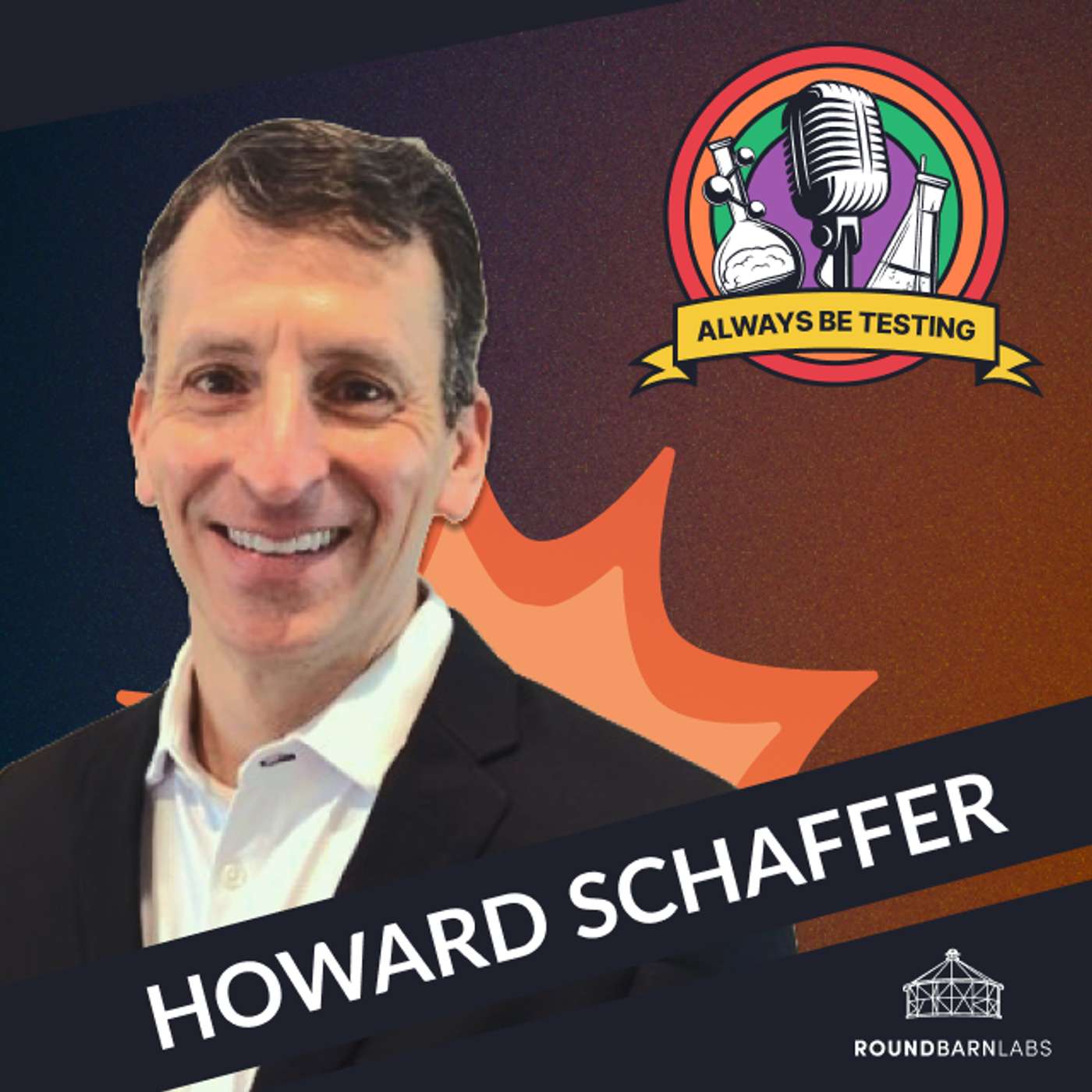
Loading summary
Transcript60 lines
- [00:06]
A
We are here live in Austin, Texas with Howard Schaefer. I'm so happy to be here, Howard. How are you, man?
- [00:12]
B
I'm doing great, Ty. Good to see you again.
- [00:14]
A
It's great to be here. It's great to see you live in person.
- [00:17]
B
Yeah. It's only been a week or so.
- [00:19]
A
I know. We had an amazing event at the Soho House in Austin.
- [00:23]
B
I didn't feel I was definitely not as cool as most of the people at the Soho House, but a lot of really smart people.
- [00:29]
A
There was a cool factor there. But sometimes not trying to be cool is cool, right?
- [00:35]
B
Yeah.
- [00:37]
A
So happy to be here. Welcome to another episode of the Always Be Testing podcast. As always, I'm your host, Ty degrange and I'm thrilled to talk to Howard Schaefer today. He is an amazing marketing leader. Leader in performance marketing, comes from the affiliate world. He's currently the founder and CEO of HOS Performance. Did I get that right?
- [00:56]
B
Yeah, yeah. It's actually helping others succeed. And then crazy enough, my initials Howard Oscar Schaeffer. So it just kind of tied all together, I guess it also shows the creativity.
- [01:07]
A
So I love that. I love that you got the quant and the creative as well. That's amazing. That's amazing. What are you excited about when it comes to hos?
- [01:17]
B
Yeah, really just helping others succeed. Really trying to show the 25 years of experience helping, whether it's CMOs, VP of marketing, really try to find opportunities to win. Love it is what I've noticed is people aren't always using data. You know, we talk a lot about data and testing as a team and just people aren't always looking at the right data. So really helping them understand what data to look at, how to get to that data, and really showcasing how you can continue to go and win even though they think they're winning.
- [01:49]
A
Yeah, I think people will appreciate Howard has had not only a lengthy veteran 25 year career and then some, but being a CMO at multiple great companies, a VP of marketing at multiple great companies, involved in multiple exits, I think you bring a very interesting, very valuable, very powerful perspective for marketing leaders. It sounds like.
- [02:14]
B
Yeah, it's funny how important when you think about exits and getting to that stage, everything you have to do kind of beforehand and you know, when you and I meet, we always tend to talk about data, but data's so important. Is what I've realized being at so many different companies is how messy most of the data structure is and how important it is really as a leader, when you're going into a new company and actually stopping reviewing the reporting, how things are tracked, how things are reported on and making sure you've got the proper kind of infrastructure to report on it and actually a roadmap to improve it and a roadmap to create new reports.
- [02:59]
A
Amazing. Are there some things that within that of kind of the data, you know, cleanup organization that you've landed on that kind of have come up a lot recently, especially with all the fast changes and improving tools and AI related things in the arsenal?
- [03:19]
B
Yeah. I mean I think one thing you have to always remember is it's never going to be perfect. Right. You know, and I think making sure you understand from a refer standpoint and what I mean by that is whether it's paid marketing, organic email, you know, organic social, etc, that when you're actually building campaigns that you're actually building the parameters in a proper way and really setting up just the backend to be able to break out the data appropriately.
- [03:48]
A
Yeah, I love that and I think it is, we see it far too often. It's shocking how in almost every case there's a need for data cleanup, data fidelity improvements with most of the engagements we find and we obviously want to help people with that. It sounds like you're seeing a lot of that as well.
- [04:08]
B
Yeah. I mean every company, you know, that I've been to over the last six years, there has really been a data architecture issue, you know, and as a marketer that is key to your success, right?
- [04:19]
A
Yeah.
- [04:19]
B
Especially being performance based.
- [04:21]
A
Yep.
- [04:22]
B
You need that data to be able to analyze campaigns. Right. Whether it's paid marketing on down. And I think the part that I always challenge whether it's a, you know, CMO VP of marketing is really partnering with your head of product in making sure that the data lake and the data structure is being handled properly. Because there's far too many senior marketers that are kind of like scared to get involved. But you know, I always kind of go back to like start the report in a spreadsheet and show people what you want to, you know, what you want to report on and really just kind of go back to old school basics and then with that be able to kind of build out the types of reports you need and from there, you know, the product and engineering people can help you build out the data structure and architecture and what you need, you know, and it kind of all falls back onto, you know, the UTM parameters that you're putting into your campaigns from, you know, paid marketing, organic and making sure that the referring Understanding what the refer is.
- [05:24]
A
Yeah, I think that's such a. It's a basic building block but something that can get lost at times. And are you seeing more efforts around, you know, server to server and like how do you think about that, that as a possible help?
- [05:37]
B
I mean, we're actually the last company I was at, we were doing it both ways. We were using a software called rudderstack and rudderstack was basically just the API connections between our data lake and all the other tools. Whether it's a third party tool or an internal tool, we have found that to be the most successful and most consistent. Obviously there is work to set it up right. Very different than using Google Analytics where if it's set up properly within your cms, then in theory the marketing people can be able to do that. The challenge there is that data isn't always perfect. So I really, truly, to your point, go back to long term from a visionary standpoint. I'd always want to build it out on the back end.
- [06:25]
A
That's amazing. Let's run through a fun scenario. So you get dropped in as a newly minted CMO or head of growth. You go through your checklist of diagnostics agnostics. Okay, how healthy is this part of the org in marketing? How healthy is this part of the org? What does that checklist look like?
- [06:44]
B
That's like a really long podcast in itself. I mean, I think you really have to go through, so to say, and I'll call it a department for lack of a better word, but I kind of always start with paid marketing and making sure you've got the basics set up there from a paid marketing standpoint. And then really looking at opportunities within SEO and organic and now AI. And then along with that, obviously that ties heavily into content and where content plays in. I know you've had some great podcasts on content as well and how important content is. I always look at email as well too. Email is such an important part of the business because it's such a low cost. Not only are you making sure you're capturing the email, but are you communicating with them in a way that's not spammy? It's really easy to get a big list, but to me, I go back to not only open rates because open rates are misleading, but click rates. Click rates are so important. You know, I'm a big believer in just all the companies I've been at is, you know, educating your consumers on the topic that you know best. And I think if you can educate consumers, you're way More likely to get that engagement and get that sale down the road.
- [07:53]
A
Yeah, I love that. That's really interesting. And I. It seems like you've got a, a rigor and a discipline and a pace to kind of like follow through on these things to make sure that, hey, like, we are really building towards improving. What are some ways that you hold you and teams accountable in a way that's clearly worked for you?
- [08:14]
B
Yeah. You know, I always tell people to like, start with data, find the problem. Right. Or the opportunity depending. And then with the data, you're going to be able to find insights into how you can either improve something or, or take something that's working and throw fire, you know, throw fuel on the fire.
- [08:31]
A
Yeah.
- [08:32]
B
I just think it's really important that a lot of people will come into their job on a day in, day out basis and not start their day with looking at the performance of yesterday, the last week, the last month.
- [08:43]
A
Yeah.
- [08:44]
B
And using that to understand like, where do I need to go. Right. And what's working and what's not working.
- [08:49]
A
Yep.
- [08:50]
B
And really. And then the other one that I also remind people of is look at your competitors. Look at your competitors to see what they're doing right and what they're doing wrong. There's plenty of tools out there from an SEO perspective. And, you know, you should make sure you're getting your competitors emails, you should see what their ads look like, what does their creative look like. You know, not only understanding what's working for them, but also just pricing as well too. It's so important, you know, my roles that I've had in the last couple of years, you know, pricing has played such an important route and you've really got to look at competition from a pricing perspective as well too, because a lot of times your product, there's a lot of competition out there. You might be overpriced or you may not have the same features in the product. So making sure you're doing a competitive analysis from the top down.
- [09:38]
A
Yeah, it's funny, similar, great leader marketer in Austin sat in this very. Your very chair and had a very similar conversation around your marketing could be 10 out of 10. But if you're not thinking through those other macro levers that are going to drive people to act and vis a vis the competitive set, which is real and the alternatives out there, even beyond the competitive side, it's so important. It's a really good call out. You kind of talked a lot about data. We've talked a lot about it. Obviously, when you get into situations where there's ambiguity or you're blind to. You have blind spots in data, either partially or fully. How do you kind of navigate that as a marketing leader? How do you kind of coach other marketing leaders to handle that?
- [10:23]
B
Yeah, I mean, I kind of fall back onto what's right for your brand.
- [10:27]
A
Yeah.
- [10:27]
B
You know, what does your gut tell you as well? You know, and then the other part, too, is, like, ask your customers. Generally, every company I've worked at, there is a good 10 to 20% of your customers that are loyalists. And really, you should have close relationships with your loyalists. You know, I do. My teams in the past have done a lot of surveying. I'm a big believer in getting data through surveying. So even if you're blind there, then go ask your customers and get data from them about it. So I'm a big survey guy.
- [10:58]
A
Love that. Yeah. The qualitative, I think, is just so valuable, and I think you nailed that. What's the spicy take you got going on in terms of the marketing world or things that maybe you disagree with the conventional.
- [11:12]
B
Wow, that's a great question. I mean, SEO is not dead. I think it's just changing. I would probably say that's probably the biggest one right now. And I think, you know, content is still king. I think the part that you've got to be really careful about is can't just have AI write your content and then just put it up. There's got to be. There's got to be purpose behind it. And I truly believe, you know, coming out of the wellness space, coming out of the fitness space, that you really need to have authoritative people writing your content. Because when you read the content, you want to know who the author is. Right. You know, if you think about some of the best authors out there, that's generally what people are reading and wanting to learn about. You know, it's the same thing on the podcasting side.
- [11:52]
A
Side. Yep.
- [11:52]
B
So, you know, I. I truly believe it's really important to. To not have AI write your content and really have an authoritative voice. Does that authoritative voice use AI to help write it and write the topics, et cetera? Absolutely. But at the end of the day, you should really be using authoritative people to write your content.
- [12:10]
A
Yeah, it kind of matches so many things that have come up. And my. My sentiment is that, you know, the AI piece is something that's, you know, the next wave. It's. It's taken over. It's an important part of our optimization. It. A lot of the consumers are moving towards, but I think in some ways, ironically perhaps, it's almost creating even more importance and value in the human element. And I think that if you can balance that really well, easier said than done, like trust, authenticity, brand, talking to customers, making sure that's included. I think that's something that's really interesting. Are you kind of seeing that? How do you see that play out?
- [12:49]
B
Yeah, I mean, I think as both your employees and customers are using AI, I think the importance of consistently using it and as your kind of LLM learns your brand, it will actually get a whole lot smarter about the brand and what you're producing. The teams today that are working and using the AI a lot in the last couple companies I've been at it, really been around the creative side and obviously the content side. And now you're really seeing it from a task oriented side as well too. We were just talking about looking at competition. You can get alerts and that's one of the things that I've challenged the teams on is really like use AI, have it give you alerts when something has changed. So whether that's a price change or an offer change or a product change, having it review, love that from competitors and having IT list out promos for you as well too. So really kind of engaging and using AI to do a lot of the kind of daily tasks that you were using. So I'm seeing more and more of that within teams, which I think is just really, really important. And I think as people have success with AI, they're going to just continue to use it more and more. Hopefully everyone is using it at least 20% of their day and I think that will just continue to grow.
- [14:12]
A
Yeah, I agree with that sentiment. I think hearing you talk about it also reminds me of, I feel fortunate that we've been able to have careers that didn't involve AI. And I think we come into it with knowing a lot of the areas that need functional help. And you're referencing some really good best practices around monitoring competitors and just being on top of what's happening. And I think it's so exciting to have the, the tooling and the advantage of AI now to make those feedback loops faster. I mean, I was using it today aggressively before this conversation for preparation for a client conversation that I think is, you know, you can go so deep and you can get things so quickly and you obviously have to validate that.
- [14:56]
B
But yeah, I mean, you know, especially on the kind of conversion rate side of things that you want to do. You know, I've seen it be Unsuccessful in a lot of ways.
- [15:05]
A
Yeah.
- [15:06]
B
You know, on the CRM side, where you're actually trying to convert a lead into something, right? Into a booking, into a sale or something, and when there's sort of this kind of Q and A between the customer and the AI, you know, that the LLM is actually failing because it doesn't have all the necessary content to be able to answer the question that the customer is asking, you know, and you're seeing, hey, let me go get help for you. I think as a consumer, we're going to be patient with it, but it does show these that, you know, each brand still has a lot of work. One of the roles that I think is actually truly important at the company side is actually who owns the content to be able to kind of build your LLM. Right. Does that fit on the marketing side? Does it fit on the product side? Is that a new role within companies as well too? Because, you know, especially for brands that have, you know, legal requirements, like in the wellness space, you've got to be really, really careful to make sure that the AI is not hallucinating and answering consumer questions and have it be wrong. Yeah. So I think it's just you've got to be really, really careful, be thoughtful. I do think it starts from the top down on a lot of this. And I think as companies start to reimagine teams and leaders and who is going to kind of play the key role in that? I think companies should have actually a specific role of who owns content and brand within the LLM, because I think as you build that out, whether it's for a CRM, externally talking to customers on the web, AI chat or internally using it, you know, you've got to make sure that it's answering the question perfectly.
- [16:46]
A
That's a really good call out. I think we're seeing more and more, I'm sure, dedicated folks on that, on that job. It's a really good call out. Speaking of that evolution of AI and obviously we've had some great experiences and conversation on the affiliate world and for reference, just want to double down. Howard's come from some really impressive brands. Restore Wellness Camp, Gladiator, Aceable and a Place Sif Davis, you've got a wealth of knowledge on this stuff, so really important to call that out as we see the AI wave hitting coming and being a part of a lot of what we're doing. What's your thought on the. Well, they've got Shopify, they've got Stripe, the integrations are there, affiliates are really doomed versus wow. Affiliates are actually really have a bigger seat at the table. It seems like there's kind of two very distinct pockets of very, very different. What's your thought?
- [17:38]
B
I think it's just really evolved. I think you've had some really great discussions with some other leaders in the space. I do. I think the days of sort of say the coupon world is kind of continuing to move from there and you know, I think there's always a place for deals because if, you know, if you're looking for something, it's fun and entertaining. I do think really the future still tends to be content and really doing reviews and compares. I think that will not go away. And then obviously influencers is really where it's at. You know, I've been using influencers for the past few years with multiple companies, you know, and it's really figuring out from an influencer standpoint, you know, do you go big, do you go small, do you go local, do you go national? That part is really hard to figure out. How much do you spend? How much of it is performance based? Can you find the right. I think, you know, one of the biggest opportunities in this performance based side is also really doubling down and finding the right influencers for your brand and doing kind of both a pay for performance but also paying on the, you know, upfront as well too because then you're getting those assets, you're getting that creative. Potentially you're boosting those posts as well too. So I think it's really finding partnerships and I know that's something, you know, in your world, Ty, where there's just lots of opportunities of finding these influencers to partner with clients and utilizing them and really kind of building up an influencer for a specific brand.
- [19:07]
A
Yeah, I love that. It's, you know, we've talked about it a lot and there's this magic in kind of matchmaking and doing it the right way, doing it with authenticity and value and a realness to it that, you know, the audience kind of picks up on. I think they can, they can sniff out things that are not or a little bit more contrived. And so there's a real method to the madness in terms of that. We've launched some technology to help. There's a lot of man hours that goes into it as you know, and so we love the challenge. And I think your call out around boosting is fantastic because it kind of brings together the best of content generation, the value of affiliate, the value of paid marketing. I think you've really Highlighted something important there.
- [19:49]
B
The other thing too, just from a budgetary standpoint, right. If from, you know, if you're spending money on creative, right to go have people build creative for you. Why not have influencers build the creative posted organically? Then you boost. It's kind of like, you know, you get three for the price of one and a weird 100.
- [20:09]
A
100. I absolutely love that and love that you're. You're seeing that value as well. We're huge fans of that approach. Just coming down the home stretch here. Howard, appreciate you coming in. We kind of did a speed round today, but I think it's worked great and enjoyed it a ton. What's something people don't know about you?
- [20:27]
B
You know, I'm a plant based eater, so I don't eat meat, so a lot of people don't know that. So I stopped drinking four years ago as well too. So most of the folks that know me out in the affiliate space probably know me as someone that had a good time. Yeah. So, you know, really have kind of turned the, turn the, turn the dial and really focused on my health and wellness and it's kind of what my goals are now is really about improving my, you know, my mind, my body and really focus on my health.
- [20:56]
A
Amazing. Well, it shows. You're, you're looking good, you're looking fit. You're not the only one who's been on the show and actually said very similar. I've got some good friends who are kind of going through a similar journey where they're like, hey, had a great time. I'm done with it. I'm moving on and being super healthy and it pays dividends. So good on you.
- [21:14]
B
Yeah, yeah, I've enjoyed it. It's a great journey.
- [21:16]
A
Amazing. Howard, it's been amazing to come on. So happy to have you and just appreciate all your insights as always.
- [21:23]
B
Awesome. Thanks, Ty. Looking forward to hearing it and seeing you soon.
- [21:26]
A
Absolutely. Take care.
- [21:28]
B
See ya.