← Always Be Testing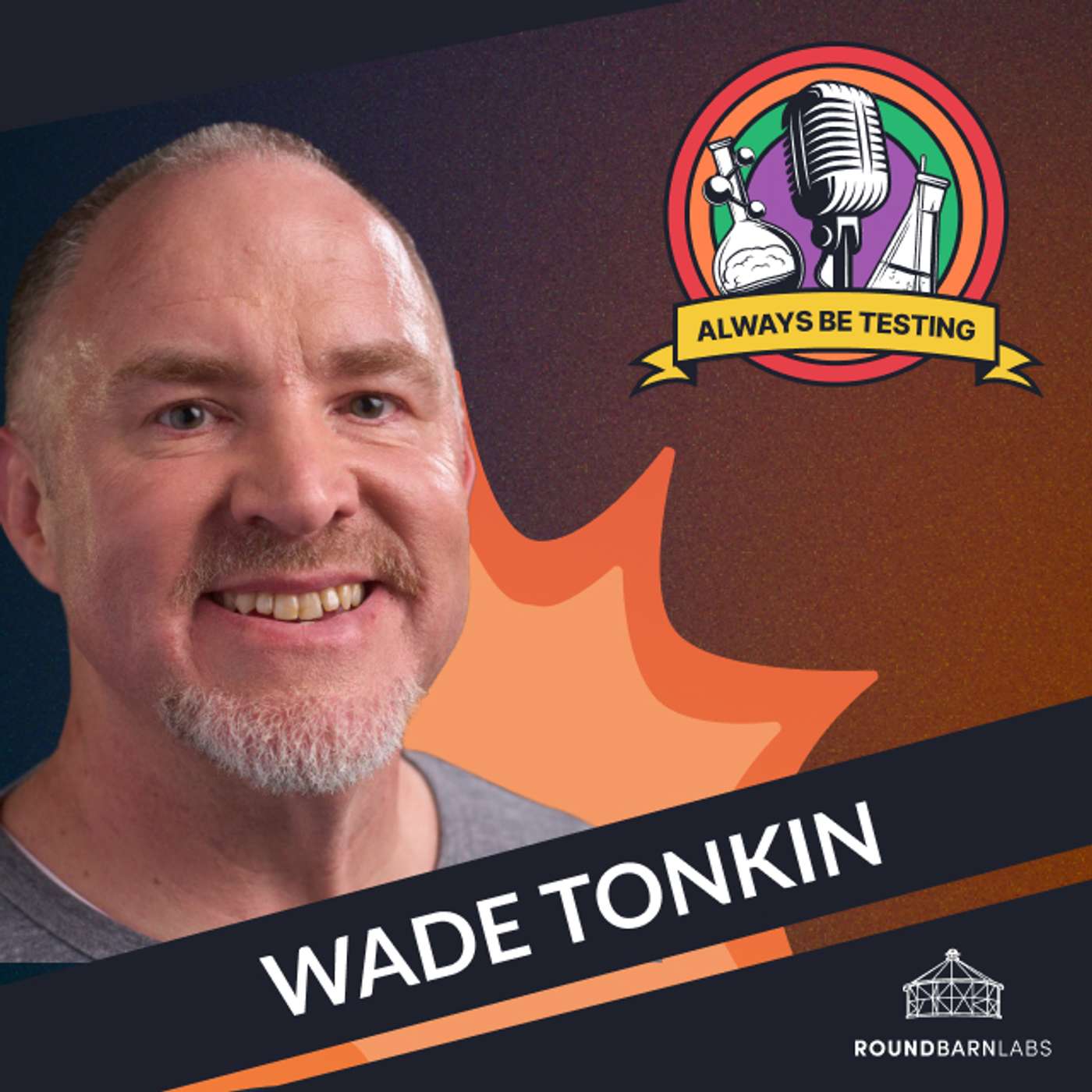
Always Be Testing
#116 Scaling from $175M to $5B: Enterprise Affiliate Lessons from Fanatics | Wade Tonkin
00:41:34
Loading summary
Transcript62 lines
- [00:06]
A
Hello, hello, hello. Welcome to another episode of the Always Be Testing podcast. I'm your host, Ty degrange, and I'm really excited to talk to Wade Tonka today. Wade, how are you?
- [00:17]
B
Fantastic, man. I can't complain. I got a Super bowl win this week, so I'm on cloud nine, man.
- [00:22]
A
It doesn't get any better than that. Congratulations.
- [00:25]
B
It's feeling good and it's about time we finally did this. I know you've been chasing me for probably the better part of a year, so it's good to sit down and one of the. One of the affiliate marketing podcasts I haven't done yet, so it's cool.
- [00:35]
A
Yeah, this is the one to be on, so for you to miss it, it would be a miss, and we don't want to do that. So there's a lot of great people in the industry and as we were just saying, it's changing so quickly and that's what makes it fun to talk about this stuff, right?
- [00:52]
B
Absolutely.
- [00:52]
A
Awesome. So for those of you don't know, Wade leads the Fanatics affiliate program. It's kind of an insanely large and global exciting program with a lot going on. So it's going to be a good one. There's a lot to. There's a lot to talk about.
- [01:07]
B
What?
- [01:08]
A
You've seen this growth happen with Fanatics and with the program, and you've obviously had a lot of great experiences in your career with that growth. I mean, you guys basically went from what, mid 100 million to over 5 billion, is that right? In 14 years?
- [01:24]
B
Yeah, I think the year, the year that I joined the company, we did about 173 million in sales. And the first year that I was running affiliate, I think we had like three or four brands we were running, running programs for, and I think we did like 6.7 million. And then this, the last couple years, we did that on like Black Friday for Fanatics. And so it's, it's a whole different, whole different ball game now. But it's been. Been a crazy run. It's been a lot of fun to watch and it's been fun to, to be a part of the big crazy engine that is a Michael Rubin run company. And especially the last three or four years, there's really been kind of a rocket strap to what we're doing and lots of new kind of twists coming into things, new businesses being sprung up, helping people get those off the ground or helping people get plugged into the tech platform and to be able to leverage kind of the scale that we've been able to achieve here has been really cool and love it. Lots of change to leadership, which to me has been super, super cool.
- [02:30]
A
To be a part of that growth is so fascinating. Obviously there's all sorts of things happening that's causing it, but what are some of the levers that you think are notable or interesting to share and talk about a little bit, even as it goes beyond affiliate?
- [02:44]
B
Yeah, I think one of the really cool things we've been working on over the course of the past six or seven years is that we've always, from leadership here, we've always had kind of this, this tension that everybody feels around coupons and cash back and loyalty and like, how do we, how do we look at that? How do we measure that, the incrementality of that and like, how much do we want to be involved in that? How big of a piece of a program do we want that to be? And I think six or seven years ago we started really taking a hard look at that and deciding that we wanted to kind of pivot what we were doing and try to become a lot more kind of content driven. We've always had a strong foundation in the content affiliate space. I think before anybody was calling anybody influencers or creators. I've been here 15 years plus now, and we've been working with content creators the whole time. We just knew that people that were talking about their teams or talking about their sport on social media had these communities of fans that were engaged. And so we've been working with those types of partners the whole time. And I think we were kind of ahead of the game with that. I think we were ahead of the game on media, on big partners. We've been working with big newspaper groups going back since before I got here. And the first year that I was here, the center, the New York Giants won the super bowl. And one of the first tasks I had was, hey, make sure that these guys get their creative live if they win. And I thought we were all good to go. I came in the next morning and my VP was like, hey, man, what's going on with, with media partner X? I'm not going to, not going to call them out, but they're, they're a big new, a big daily in New York. We'll say. And he's like, I'm not seeing anything from these guys. And so I was like, yeah, we'll figure this out. We'll get to the bottom of it. And so I called my contact. I'm like, yeah, man, I'm not seeing any traffic. What's going on? You get anything? Did you get things live? And he's like, well, we had some issues and I just figured I'd get.
- [04:42]
A
It in the morning.
- [04:43]
B
I was like, okay, in the last email I had with you, I told you you could call me on my mobile until like 3 o' clock in the morning if you needed to. What happened? He's like, well, I left somebody else to do it and I went out and got some drinks because I'm a Giants fan. And so I was pretty stoked. And I was like, hope those drinks are good, bro, because that cost you guys about 20 grand in commissions. And he's like, seriously? I'm like, yeah, it's kind of a thing. And so like with us, when we have like a championship event like that, there's this massive demand in the first 10, 12 hours after a game goes final. And it's super critical that partners get on top of that and capitalize on that fan passion. And the fact that those fans, they might have had an extra drink or two, they might be a little fired up when they're loading up that shopping cart. And so you want to cash in on that. It showed me kind of what the value of those type of partners can be. And we've seen a lot of fun wins over the course of the years working with media partners. When the Cubs won their World Series, their first World series in like 160 years, I think we worked with Chicago Tribune and we actually got, I think it was like a half page print ad from the Chicago Tribune that was a straight affiliate deal, which was amazing and it actually drove really good revenue as a part of their bigger display and social and email push. When Washington Capitals won their Stanley cup, we worked with Washington Post and got a full page print ad that was an affiliate ad and it was really cool. And seeing that was actually, I think something along the lines of 50% of the revenue was attributed to that print ad, which blew my mind. I mean, it was really cool to see that that kind of traditional print audience was so engaged and that they really showed that there was still value in what was going on there. And the cool thing is that gave us kind of social proof to where we could go to other publishers and say, hey, if it's, if it's worked for Chicago Tribune and it's worked for Washington Post, it probably would work pretty well for you too. So it should at least be a part of how you think about your monetization game. It's like, yeah, Absolutely. If you can go out and sell ads, by all means, sell ads. But just understand that there's also this piece of incremental revenue that's sitting here that maybe you should think about cashing in on.
- [06:56]
A
One of my favorite examples that you're giving, it's just there's so many interesting out of the box. And whether it's traditional media or tv, audio, newspaper, there's just so many levers to pull within what we call affiliate. And a lot of people don't realize that. So it's just awesome to hear that example be brought to life in your experience.
- [07:17]
B
Yeah. The really exciting thing, that one really exciting thing I wanted to point out too is that just kind of you talk about the evolution of the industry, where back 2010, when we started doing this, when you were trying to track down a media partnership, you were usually going in through a sales guy that was used to doing an IO and kind of cash on the barrel head. If you want this thing, you have to sign this insert order. And they were super skeptical about this whole affiliate marketing model. And it's like, so I'm only going to get paid if we sell stuff. Yeah, that's kind of the deal. And now you come around in like every one of the big publishing houses has a performance department. They've got a team that handles that, and they've usually got somebody that's at least a director, if not a vp, that is over that. And so it's very cool to see that now when you are looking to do a deal like that, you've actually got somebody coming in who usually has some experience in the business that has responsibility for that portfolio. And so you're not having to sell the whole concept anymore. Now it's just a matter of doing the negotiation and working them through kind of what you're actually expecting them to do and when, because that can be kind of challenging for some of these guys to too. And when the Toronto Raptors won their NBA championship, I was on a call with a big Toronto paper and there was the first performance deal they'd ever done. And I was talking with the VP and my ad sales guy that I got in the door with. I told him it's like, hey, when this game goes final, he's like, it's going to be like 11, probably 11:30 at night. I'm like, yep. He was like, when this game goes final, you guys are going to want to push this content. He's like, well, we don't have anybody working then. And I'm like you're going to have somebody working then and his VP is like, yep, we're going to have somebody working then. It's going to be you. So you know you're going to make this happen. But sometimes it takes people having to kind of come out of the traditional box that they've been operating in, but it's worth it. And we've shown time and time again we've got the playbook for making it work. So people trust us and get after it the way that we advise them to. They can do really well with it.
- [09:22]
A
Yeah, no, it's an awesome thing. And capitalizing on that enthusiast ecosystem is super cool. Having been in the game for quite a while, I think what getting back to 99, I believe you've seen a lot. You've had some beliefs. Is there something that's kind of changed for you, belief wise in terms of stance that you had previously that you've decided is not the case anymore?
- [09:44]
B
Honestly, there's kind of a constant evolution and it's funny because you see the rise and fall and rise again of couponing. You saw the reselling knots and everybody shoot up and then come back down to earth when you started to see the big toolbar players like honeycomb into the mix. Now you're seeing honey getting big and then honey getting not big or honey getting almost non existent in a lot of cases. And so I think kind of the evolution of tools like that and kind of how people look at things and we could always kind of map the rise and fall of the coupon space to how the economy was. And if you're looking kind of recessional, times were tight, people would be looking to coupon sites. And it got to the point where whether you were pro couponing or anti couponing, you kind of had to be there because people were expecting it. And then. But that also leads to some, some, some tricky customer behavior because if you, if you train people up to be coupon dependent, then they're not going to do anything until you have the coupon out there. And I think we got a little crazy with that during, During COVID I think, I think a lot of people did. I think people had to. During the pandemic, people were looking to kind of drive demand however they could to keep the doors open. And I think we got a little happy with that and then we kind of came around and now we're kind of in the process of migrating ourselves back off that and trying to be less promotional most of the time. And I think that's led to us looking at how do we look at coupon sites, how do we look at coupon plugins? And it's like, are they particularly valuable? And we've done a lot of work on our site kind of trying to like tweak the site behavior to where people aren't going to be looking around or they shouldn't be looking around as much anymore, thinking that there's a way that they're going to find a promo somewhere else that's going to be better than what's on the site. And it's. We kind of got a little, I think we got pretty blunt with it to where you get to the site and you've got like an interstitial pop up and you've got a ribbon across the top of the page and then you've got on every product that's eligible, you might have, on the product detail page you might have hey coupon eligible this, with this coupon. And so I think we've, we've really tried to train people off thinking that it made, even, even made sense to look at, you know, your retail world.
- [11:56]
A
Yep.
- [11:56]
B
And so we've kind of been constantly rethinking how we need to engage with sites like that or if we even do and whether we want to focus on kind of pushing that stuff out through the content in the media publishers when there's something to talk about. So yeah, I think it's. That's been a never ending one for us. And I think the other one that's been interesting is how we look at loyalty because I think we've got our own loyalty program and we're pretty heavily invested in getting people into that because I think it's a really pretty damn cool, really kind of aggressive and fun loyalty program across all the fanatics properties. And so it's like how heavily do we want to invest in your traditional loyalty sites? Do we want people to be thinking about our rewards or do we want people to be thinking about their rewards? And how do we want to think about how they work with toolbars and things like that. And it used to be very, just rabidly anti toolbar. And I think now I've come to a point where I'm a lot more case by case with that. And we want to look at kind of the behavior of the toolbar itself and kind of what kind of a partner that particular affiliate is because I think there has to be some trust when you're working with those kind of tools. And we've seen with Honey in the last few weeks. How when they decide they want to operate outside the realm of what's cool and if they want to obscure to people in the industry how their product actually works, at that point it's broken. And I don't think it comes back. And, and we've tried to be. I mean, the one thing that Joe and I have really tried to do in our program is be pretty upfront about what we expect and how we want to do business. And we figure if we're no bullshit and put it out there cleanly what we're looking for people to do if they decide they want to work with us that way, awesome. Let's do it all day, every day. But the minute that somebody steps out of line, we just try to deal with it quickly and brutally. And because we're keeping it fair, I mean, we want it to be fair for the people that are playing by the rules and we want to keep it fair for us.
- [14:03]
A
Yeah, it's a beautiful thing. And I think that clarity and that decisiveness and assertiveness when things aren't the right way is sort of how you have to operate a very high quality large program. And there's a testament to you all for that. I think it brought up a bunch of ideas. As you were sharing that with, one of the thoughts came to mind was there's a hypothesis that in a reality where you get large enough as a consumer brand like a fanatics, I think the calculus does change a little bit when it comes to like some of those. In things like a loyalty program, you have to think about it very differently. Right. It just changes the game. And I think you're obviously already heavily focused with the right types of broad content influencers and things like that. So that just seems to resonate with me. I'm not surprised that you're looking at, hey, how do we retain and support these customers where they are literally?
- [14:59]
B
Yeah. And I think there's still some value to the loyalty players because they do have massive audiences and they do have a ton of data that they're sitting on top of. And I think you just have to be smarter about how you work with them. And that's where as we think about the ones that we want to partner with, we really want it to be about, okay, let's dive into your audience. And it's like, are there people that don't work with us that you can promote us to?
- [15:23]
A
Yes, love that.
- [15:24]
B
Can we dive into your data for lapsed for new. I mean, what can we do to really kind of Find good value in what's in your audience. And not just reacquire and reacquire and reacquire and reacquire. But it's like, what can we do to get incremental value out of what you're doing? And how willing are you to work with us? And there's some that are definitely better than others. There's a lot that just want to sit back and collect money. But Capital one's been really good with us in terms of being willing to sit down and say, hey, guys, what are you looking to do? What's the value for you? This is where we think we can find it. Let's try it. And then testing, going through that stuff. Let's run a campaign, see how it worked. If it works well, hey, cool, let's step this up. Let's maybe try some other brands. Let's try. Let's take a look at different audiences that we might be able to hit. Maybe we want to do conquesting. Maybe. I mean, and that's, I think, where those, those, those brands can be really interesting because they do have so much data. They do have such a big file that they can work to. But I don't think that you can just be kind of have them on autopilot and just sit there with it with a high payout rate. Especially if you're competing with your own loyalty program and just keep paying money.
- [16:41]
A
Yeah, I love almost treating each partnership as its own media buying, performance, marketing, conversation. And that's the vibe I'm getting for how you look at it.
- [16:50]
B
Yeah. And it's really a matter of what kind of a partner do they want to be, do they want to be engaged? Do they understand that they have to really be bringing something to the table? And we've always told coupon sites, cashback sites that like, look, if you want to get a high payout, deliver high value. I mean, do things that are incremental, do things that are aggressive, do things that are proactive. I mean, if you're a coupon site and you want to make, and you want to make content affiliate money, then do content, affiliate things. Send emails, send push notifications, and then make sure that I can tell what you're doing. Because if you're just sending everything to the same link and you're trying to keep things deliberately muddy to where we can't tell what actually works, then you're not a good partner. But if every time we want to try something new, you're willing to go and put it out there, and say, hey, we can prove that this is delivering value and we can verify that, then cool. We can do stuff and we can pay you more. But if not, if all you're doing is playing that last second attribution game, if we pay you at all, it's going to be pretty minimally. And then we might even restrict that based on. Is it new to file? Is it not new to file? Is it. How much time did you. Did you interact in the actual transaction? We had, we had done some things. When time came to cut honey out of the programs after their recent issues, we had already de emphasized them pretty heavily within just the attribution settings with an impact. We'd already decided that if they're not the only ones that are involved in the transaction, I'm talking the only ones, we're talking no other partners, no other channels. They were the only touch. That's when they got paid. And so that sometimes you have to be willing to kind of take a stand on that. And sometimes when you turn that stuff off, you see that in the end it really didn't hurt you. And we saw big reallocation with the money or with the transactions that were associated. It just spreads out. I mean, it just goes out to other partners, it goes out to other channels. There was a really minimalist actual lift that was involved there that could be directly attributed to them.
- [19:01]
A
Yeah, I love that the attribution incrementality stuff is super interesting and you know, diving into it with the Measurements Council, the PMA and having chats with great folks like yourself. Is there, is there some things that you would counsel on the topic of. Of measurement that maybe some people are missing? I've got my opinions and thoughts and all that, but I'd love to hear your perspective on it.
- [19:27]
B
I think that something that we're really looking to do more of is to work with our kind of overall kind of analytics team and take a more holistic view of it. Because it can be tricky if all that you look at is your affiliate platform metrics. Some platforms are better than others and depending on the way that you have them set up or with our setup with impact, we're tracking all the channel touches. So we have a pretty good view of how this stuff is playing out. But work with your site analytics team and don't be afraid to have that or to have that incrementality discussion because I think one of the things that's really helped us out here in being here as long as I have and being trusted to run this many programs for this long at this company was that we're willing to cut off a partner if we see that what they're doing isn't delivering value. And that's come up quite a few times. And when you're willing to make a stand and walk away from a substantial amount of apparent revenue, I will say apparently attributed revenue because it doesn't feel right, or when you look into the numbers, it's just not looking right. If you're willing to step away from that, you'll get a lot of trust from your C levels to run things the way that you want to. If you are somebody that just sits there and drives raw numbers and doesn't look into what's there at all, and you don't look into what the channel interactions are and what you're actually paying. Because we had done some research a few years back where we broke things down by our big categories of partners. When we were looking at, this is probably four or five years ago when we first, maybe even longer when we first did this. But we looked at like coupon sites and we were seeing that they were only. If you looked at like first click, last click, same session, it was the metric we were looking at at the time. They were like 13, 14% as a group, and they would vary plus or minus two points when you went from partner to partner. So not super clean traffic. And when we looked at the Cash Flex sites, those were between like 30 and 50. So there's, there's more people.
- [21:45]
A
What does that mean exactly? What percentage? How are you?
- [21:48]
B
Yeah, so essentially, so like with the example of the coupon, so only like 13% of people started on a coupon site, went to a transaction and were the only touch.
- [21:58]
A
Ah, yes. Yeah.
- [22:00]
B
And then so the rest of it meant that you were paying for touches with other channels on 87% of their traffic. So when you work the numbers out, you realize that, hey, if I'm paying these guys more than like 1 to 3%, I'm probably actually losing money on that transaction. And so does that really make that much sense? And then when we took a look at other channels, you looked at like cash back. And cash back was a little different story. Cashback was more like 30 to 50%. So a little bit better argument could be made there. And what you see now is that since a lot of these guys have gone kind of app based, when people are starting their search on their app, they're saying, hey, where can I get cash back back on this jersey that I want to buy? And so there's actually a discovery element there, which there's some upper funnel value too. That's cool. But they were more balanced in terms of they played with a few other channels maybe, but not nearly as many as the coupon sites were. And then when we looked at your content guys, your social media creators, things like that, we saw some really cool things happening around championship events where if we got like a Super bowl and one of our content partners put a link up there saying, hey, get your Seahawks super bowl champ stuff at fanatics. It was like 95% straight over converted and so almost one to one. That was pretty awesome. And so then we kind of went back and we adjusted our compensation model roughly based on what we were seeing there. And we still, I mean, it's something we're doing. We're actually taking another pass back at that, working with our analytics team and trying to devise a lot deeper scoring system that really dives into pretty much all the metrics we can get our hands on from both impact and from our own backend. To be able to have something that takes in all the data that we have, all the channel touches, time spent on site, it's ridiculous the amount of data that's there. But trying to distill a good scoring system that can then really inform how we look at how do we, how are we paying partners, Are we underpaying them, are we overpaying them? And then let's, let's go in and take a look at how we can make adjustments and kind of use that to leverage the behavior that we want to see and save the money on what we don't want to see.
- [24:23]
A
I love it. For 2025, what's your was there a learning that jumps out at you that you want to share?
- [24:30]
B
I would say we definitely had a lot of, we saw a lot of goodness out of the buy now pay laters. I think we learned some interesting stuff on those guys because there was some movement in that space over the course of the year to where when interest rates were up, things got really tough. They were a massive growth driver for us for three out of the last four years. Then we're talking, I think the first year was like 14, 1500%. It was massive. And then they're averaging 300, 400% year over year growth. And when we looked at their traffic, it was actually really the discovery level that was going on with those guys was massive because people are once again starting in their apps or starting on their web portal and saying, hey, I need to buy this expensive item, but I can't afford it straight out. So how do I finance this? But I don't want to have a credit card. And this also, we found this kind of generational thing to where my kids, one generation up, don't like credit cards. And so they're trying to find creative ways that they can buy these bigger ticket items. And so they were working with the buy now, pay later sites, but when credit tightened up, so did their business. And so we were seeing this massive downtrend with these guys. It was consistent across the board. So we reached out and was like, hey, what the hell's going on? And they're like, yeah, when credit tightens up, we can't approve as many people. And we can't approve as many people. Not as many people can shop. And we're like, okay, got it. Since the interest rates have been declining, we've been seeing that space pick back up again. I think the one other thing is you've got to retain curiosity to the point of almost private detective level curiosity because there's been so much aggregation and assimilation within the affiliate space that what a lot of partners say they're doing isn't necessarily what they're really doing. And they might have acquired somebody who does something different. And so we've seen this with a bunch of partners that were pretty reliable, clean partners, like on the sub network side. And then all of a sudden we start seeing weird, weird stuff going on. And we're like, this isn't your usual thing. What's going on? And they're like, oh yeah, we bought this company and so we started using this. We're like, well, we didn't, we didn't work with them and we didn't work with them intentionally. And so now we're working with them and we don't want to be working with them. So how do we make this stop? So, I mean, the need for transparency doesn't go away. And this is a fight we've been having internally because we've seen some things like on the display side of the business where they work with networks that are, that can get crazy because the black box factor is high. And we're like, you're working with these guys. We see a bunch of weird stuff going on there. And they're like, we're like, who's doing it? We don't know.
- [27:24]
A
Just what you want to hear.
- [27:25]
B
Valuable question to be asking. Because in our world on the affiliate side, if we're working with a sub network and we want to know who the hell these People are. And it's like we demand transparency and it's like if we're working with SCIM Links or Sovereign or whatever, and we're pretty hardcore on this to where it's like, guys, this is. If you're going to work with any of our brands, this is the level of transparency that we want and this is the level that we require. We need to see, we need to see reporting, we need to see referring URLs, we need to see, have a login, we need to get who's sending that traffic every week, setting a report. We need to have positive control of this because otherwise what happens is that when you've built out this whole compensation model based on these different types of partners having very, very sharply defined compensation levels and then people just make end runs around it by going in through non transparent third parties. And that's just not a thing that works with us. And so we've.
- [28:23]
A
Amen.
- [28:24]
B
I think I probably kicked more sub network alleged influencer networks in the past three or four months than I expected that I would because just the level of transparency wasn't there. And it was clear that people were making decisions based on the bottom and not based on trust and not based on what our requirements were. And I'm perfectly fine. It's like if people have a network or platform that they want to work on and originally we were very, we were kind of anti SCIM links, anti big links, sovereign. We just, we wanted direct relationships. And then we saw that a lot of these big media partners that we work with are dependent on those type of aggregators. Because if you are a big newspaper chain or a big media house, you and you've got 25 publications and 25 teams of writers and editors, you don't want to train all Those guys on seven different affiliate networks or 15 different affiliate networks or whatever. And so you use tools like skimlinks or Big Link or whatever to do the work. And so when we saw that that wasn't really an option to turn those guys off, we're like, okay, but if we're going to work with you, this is who we want to work with. We want to work with content creators, we want to work with social media people, we want to work with media sites. If we see any coupon traffic, any cashback traffic, any search traffic, any toolbar stuff, we need to deal with it. And sadly that stuff is still going on and the bigger platforms are pretty good about it. But the one thing I would definitely tell people to do, this is something that we're kind of in the process of now is we're evaluating a few different compliance monitoring partners because it's not enough just to watch paid search anymore. You have to watch toolbar behavior, you have to watch your FTC compliance. The ftc, I don't think federal compliance is as big of a deal anymore in the US because the Trump administration is pretty anti FTC compliance. But state wise, I think a lot of states now are starting to put laws into play. But you have to be really, I think looking holistically at what that compliance picture looks like. And there's some really good vendors out now that are doing awesome work catching a lot of different stuff. And it's really fun when you have them competing for business because you kind of pit them against each other and see what they're all turning up. And even in our program, which I think is pretty clean, they're always going to find stuff. Some stuff still slides through, but you need to have good tools to be able to catch that.
- [30:49]
A
Yeah, I love that. Well said. The conversation around sub networks came up on the PMA recently and I think there's a world where from my perspective that the referring URL transparency piece I think needs to become standard standard. And I know that's only one part of that process, but I'm with you on a real strong need for that.
- [31:11]
B
It's still pretty shockingly bad in a lot of cases. I mean, and it's something that we're really starting to press people on. It's like it's not acceptable for half your traffic to not have that. And you just, you've got to up your game because if you're not going to up your game, we're just not going to be able to give you the money anymore and you're going to need to make some tough choices.
- [31:29]
A
Yeah, I love it. I couldn't agree more. I've got my juicy predictions coming. I keep predicting the future with some friends like yourself. What do you think's coming in 2026 in an area that's very hard to predict?
- [31:44]
B
Oh man, we're super heavily invested on the kind of creator influencer side of things. I think that that world is finally coming around to performance. And it's funny like we were talking about cycles in the business and it's. I look back to 17 years ago when I was running the program for Blog World and getting bloggers over to do affiliate was everybody, they wanted sponsored posts and they wanted to get paid up front for everything. And then we had to come in and sell them that hey, this performance thing is, should be at least a part of what you're doing. And then I think we won that fight and people integrated it as a piece of what they were doing. And now I think with creators it's getting to be the same way. But I think that the one good thing is that there's a lot of really good tech coming around now to help those help brands be more friendly and to help the creators more effectively integrate what they do into a performance model. So there's definitely some cool players out there and the big brands are doing some cool innovation that some small brands are doing some really cool innovation. And it's funny how the smaller guys can do the cooler stuff because they're kind of more adaptable and quicker, but those guys end up driving the bigger ones into putting better tech out there. So we're making a big bet on the influencer creator affiliate model. And I'm hearing from agency partners and from other people that we talk to that a lot of the bigger creators are starting to come around and it's just, it's just kind of a case by case thing to where you got, you got to prove yourself. It's like if you want somebody to make a bet, you gotta be willing to prove it. And in the end if the bet plays off, you get more. And so I think that's going to be big. And then I think that there's still media to me is still really interesting and I think there's some really cool players that are doing fun things around like TV being able to get performance stuff into TV and not just like your TV scientifics and stuff like that, but to get really in the moment shopping opportunities. And we've got some fun ones there that we're working with that I think are going to change the game. And we've got some fun things that we're working on in conjunction with our league partnerships to make shopping for very cool things and very cool moments easy.
- [34:08]
A
I love that. That's really cool. Obviously with the name of the pod being always be testing experiments come up. What's one that you just love to share that's shareable and interesting learning?
- [34:19]
B
Yeah. The trick is I can't get super specific on testing stuff like this, but I would definitely say you've got to be willing to play around with your compensation models with different type of partners and leveraging different types of behavior because I think it's really easy to sit back and just say hey, these guys are cashback guys. I'm going to treat them this way and that's fine. I mean, you're going to get some results. But I think in a lot of cases you miss out. And so it's like ask, hey, if we lean in, what can we get? Not all of them are winners for sure. I mean we definitely, I think in the last year we started to put a little bit more. Traditionally, we haven't done a lot of like kind of upfront spend or tenancy type stuff. It just hasn't been our style. And it's been, I figure the business is affiliate marketing. Why am I, why? By paying upfront for things, it doesn't seem like it's part of the deal, but sometimes to unlock bigger opportunities, you need to do that. But we've been really hesitant because, I mean, it's amazing how many people, how many times you get pitched to say, oh yeah, give us $100,000 and what am I going to get back for that? And then people can't give you a good answer. Or it's less than a one to one, or it's less than a three to one. And we're working in affiliate man. We're used to like 8 to 1, 9 to 1, 10 to 1. It's like, why am I doing less than 1 to 1? If I spend $100,000, you better give me a mil and a half. I mean, you better give me a million. So challenge people kind of push out. It's very easy to get tunnel vision. It's very easy to think that what you know is what you know. Yeah.
- [35:54]
A
Goes back to the curiosity you talked about.
- [35:57]
B
Yeah. And I think one of the things that I'm really excited about this year is that our leadership has challenged us to embrace AI. And with some very specific challenges, it's like, hey, I want you to become AI agent builders. And so I want you to look at your day to day and figure out what are things that you can build an agent to deal with. And in the affiliate world, and we're just starting to dive into this, but in the affiliate world that's something that I'm starting to totally geek out on. Because when you think about things that are repetitive and drudgerous, or how can I better access data, or how can I better manipulate data to help me make decisions, working with AI I think opens up some massive opportunities. And when you think about drudgerous tasks, it's like approving affiliates. Well, I still do a lot of affiliate approvals. I like watching the front door, I like seeing what's coming in. And so I still do a lot of that, but it's like, how much of that can we automate and how do we mitigate risk factors while we're doing that? Because we're kind of an interesting business in that when you're talking about approving affiliates, we have a whole different set of risk factors because we've got our brand that we're protecting, We've got league brands we're protecting, we've got team brands we're protecting, we've got vendor brands we're protecting. So I can't approve somebody who's violating a trademark for somebody else. So I can't just look at my impact tools and say, hey, I want to automate this approval process based on two or three little metrics. I've got to have something that's way deeper than that. And so I'm very excited to dive into that. Or how do you handle the tens of thousands of transaction inquiries you get after every peak season from certain big cashback sites that we all know and love? How do we deal with that? Can that be automated? Well, yeah. I mean, I think that stuff could all beat me. So our whole team has been challenged. Like, everybody go out and find two or three things that you can build an agent to handle for you. And to me, in the affiliate world, that's exciting because theoretically, that means that it should free my team members up to do the relationship work. And the relationship work, to me, is really the part of the business that I love, and the part of the business that I see really opens us up to some cool opportunities and some cool growth. And if we're not spending time handling applications or handling reversals or trying to dig into the data to find the opportunities, if we build tools that surface the opportunities, hey, the Seahawks won the Super Bowl. Who are the affiliates that have done the most sales for the Seahawks this year? Get me a list. Push it up. Let's get a communication out to them. Or how do I keep my creative fresh? I think all that there's massive opportunity with all that stuff with artificial intelligence. And so I think this year is going to be a really fun year for that.
- [38:50]
A
I love that. What a great way to wrap up some epic learnings and just thoughts and just all the stuff that's going on right now. I think it hits on some really good counsel, Wade. So it's appreciated just coming down the home stretch. Want to get some personal stuff going. So what's something you bought that you just can't live without? You rave about oh, man.
- [39:10]
B
The thing I'm most excited right now is plane tickets to go to Germany and visit my son who's in the Air force over there. So we're. We're still. Wow. So I love traveling. I love traveling and it'll be fun to get over there and see my kid and see some parts of the world that I haven't before. But new pass, I guess new passport would be. Would be the one that I can't leave without.
- [39:29]
A
It's a. It's a very valuable thing. I love that.
- [39:32]
B
And the affiliate industry has been really good for opening up travel opportunities. So it's definitely been a good one for me.
- [39:38]
A
Me. Is there a trip that comes to mind that you're just like, oh, that was one of the best I've been on.
- [39:42]
B
Oh, Everest base camp in 2021 was pretty epic. Last year I hiked a pretty good piece of the West Highland way in Scotland. And that was mind blowing. I mean, just, I like going to places like that where I can unplug and not really think too much about emails and applications and all that stuff. So I like getting out and doing some, like, hiking, backpacking stuff and kind of checking out for a little bit.
- [40:08]
A
I love that. That's absolutely amazing. Absolutely amazing. That's a good one. Yeah. There's always a new adventure to be had. What's something people don't know about you?
- [40:19]
B
I am a certified bourbon steward, so I'm a massive, massive whiskey fan. I do a little bit of bartending for a local distillery on the side, and so pretty passionate about whiskey. I got a big wall of whiskey in my office.
- [40:34]
A
Wow.
- [40:35]
B
A lot of bourbon, a lot of rye, a lot of scotch that I brought back from travels in Scotland. I've been to Scotland three times in the last three years, so I kind of fell in love with that country for that piece of the uk. But yeah, just passionate about travel, passionate about bourbon.
- [40:52]
A
That's amazing. Well, when you come down to Austin, we'll definitely get some sampling going, test your sommelier skills.
- [41:00]
B
Still, Austin is one of my favorites. So I've actually got a really nice bottle that I picked up when I was down there for IPX last year, so. Fun tour.
- [41:08]
A
Beautiful. We'll hope to see you down here again. We'll be in full force. And it's always a pleasure chatting with you, Wade. It's always a good time and always informative and we always have a good time talking to you and more to come.
- [41:19]
B
Thanks for having me, man. I appreciate it.
- [41:21]
A
Always. Thank you. S.
- [41:25]
B
You.