← Always Be Testing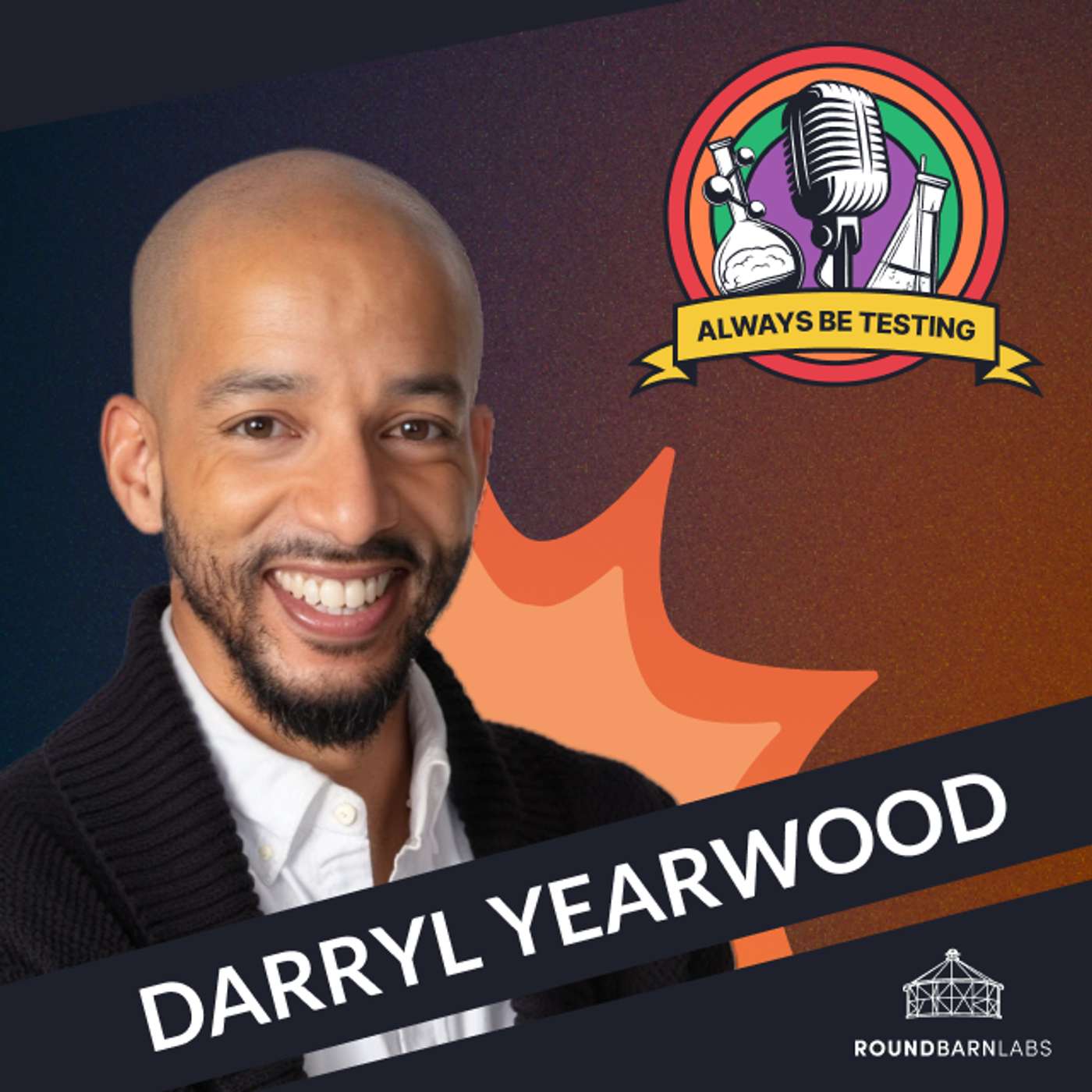
Always Be Testing
#128: Why Partner Quality Beats Partner Count | Darryl Yearwood & Tye DeGrange
00:38:42
Loading summary
Transcript61 lines
- [00:00]
A
Foreign. Hello. Welcome to another episode of the Always Be Testing podcast. I'm your host Ty DeGrange and I'm really excited to talk to Darrell Yearwood today. Darrel, how are you, sir? Good to see you.
- [00:17]
B
Good to see you as well, Ty. I'm doing fantastic. How about yourself?
- [00:20]
A
I am doing great. Heat is on in Austin. I got to do a little fourth of July break with the family on the west coast, but we are, we're back to work and we're back to the heat is on.
- [00:32]
B
I'm in Toronto, Canada, so it has been hotter than our June July months typically are. This heat wave has been kicking me in the butt particularly decided to brush my dog yesterday outside and just brushing my dog had me dripping in sweat. So yeah, trying to stay in a
- [00:49]
A
nice air conditioned house AC is a beautiful thing. Yeah, that's amazing. Well, you are in for a treat. Always be testing fans. Darrel has a wealth of knowledge and experience and I think you're going to be. It's going to be a fun one. Darrel's leading partnerships at Apollo. Apollo is an amazing SaaS business, very well known for those in the, in the BD and the Outbound and the enrichment game and the data game. So I think it's going to be a good one. Darrel, give us the goods on what sort of brought you into this ecosystem that we call affiliate partner marketing. It's a very different space. What was the hook that brought you into it and kept you here?
- [01:35]
B
Yeah, it's a very good question. I had started in tech working at LinkedIn and then I'd heard about being in Toronto, heard about a startup in Toronto that was working in partnerships specifically. So kind of poked my nose around, was curious. I was looking at a change in roles at the time, wanted to move into more of like a CSM type role and that company ended up being partner stack that I had moved over to. So started with PartnerStack as a CSM, which was my full kind of fire hose of learning everything about partnerships really, really quickly. If you're not familiar with PartnerStack, it's a PRM where companies can go to launch their partnership program. So whether you're doing an affiliate agency, tech partner, reseller, partner, it kind of can do it all. So started with partnerstack for my first kind of like dipping my toe into partnerships. And the hook what really kind of like hooked me and started to reel me in was midway through my tenure there, I moved over to the partner side of partnersax. I went from working with the vendors who are looking to launch and create their programs, to working with the partners that are looking for those brands to partner with. My previous manager there, Ashley, she had started off the partner partner success department and I was her first hire, came over there to work with her and we were just getting to know partners, getting to know the partners, getting to understand their businesses, how they like to partner with brands, and then from there trying to connect them with more brands within PartnerStack's network. And it was just through that of meeting with partners, understanding their businesses, understanding how they like to or how they're trying to drive revenue for brands, that's what really hooked me. And then I had an opportunity to work with a really large partner publisher, Forbes, and that was again another fire hose moment where I had to learn fast how large publishers like to work, how they like to try to grow and scale really rapidly. And yeah, it was a quick hook after that.
- [03:47]
A
That's awesome. I feel like the CSM side of it and being able to be in those service based roles is such an amazing way to get to know the business. And in networks like Partner Stack, it's such a great way to learn. And similarly on the publisher side, they're the currency of the ecosystem and so I feel like really understanding their business at a detailed level is so helpful because then you can be, you can apply that when you're on the network side or the brand side, which is, which is what you've been able to do, which is very impressive. When you hear affiliate, when you hear partner marketing, what is sort of the myth or misconception that you still run into with the SaaS world or with marketing leadership or in general.
- [04:40]
B
So it, it was common when I worked at Partner Stack as a CSM working with brands, it's really that people think that it's a channel you could just kind of turn on overnight and let it run itself. It's not a money printing machine. You need to have somebody if you really want it to do well and to really grow and scale it and get the value out of it. Like you need somebody in seat or to be working with like an agency that can actually manage the program for you. It's not a plug and play and I'm going to check on it once a week or once a month. Like you need to be in the trenches and doing the thing. That's really the biggest misconception. It's like you need to be able to know that you're working with the right partners, know that you're Giving them the right incentives. Not all partners want to be paid by commission. Not all partners want to get special resources or co branding. Like there's different ways you can add value for partners. That might be monetary, maybe non monetary, but to think that it's going to be a plug and play revenue generator. I've seen too like, unfortunately seeing too many programs enter that way and quickly shut down that way because they're like, oh, this requires way more work than I thought it would. Let's just pull the plug now.
- [05:55]
A
Absolutely. And I think you've gotten to see a good slice of so many data points in your experiences. Affiliate has come a long way. It's been around for, we're talking probably plus or minus 30 years, which is shocking. Digital hasn't necessarily been around that long. Similarly, consumer is kind of where it all sort of came out of to some extent. B2B is relatively new. For those that are newer to B2B, what is like a healthy program look like from your perspective as it relates to B2B SaaS and how that's maybe slightly different. What does healthy mean to you when you kind of look at partner mix or some of the other elements of a program? Yeah.
- [06:43]
B
My answer to that would be what you kind of hit it. There was like the partner mix. It's like not relying on just one type of partner because at any given day, if something shifts for that type of partner, that could be your whole program that tanks overnight. So having diversification in the types of partners that you're working with, that's something that we try to do at Apollo. My manager, an incredible manager that I work with, Dafra, it's something that she's really instilled in me as we look at the program. I've been with Apollo two and a half years. Dafra joined last August and I've been working with her. And it's just been incredible with what we've been able to do as far as like working with different types of partners. Because she really brought in this mindset of like diversification and testing.
- [07:33]
A
Love that.
- [07:33]
B
Which is like, yeah, which hits on always be testing. But Dafra is a tester, she is a scientist. And it's something that really helps us to grow the program and maintain the health of the program and protect the program. Because it happened to us. We had a very strong partner that closed up overnight and like without warning. And that had we not been diversified at that point, it would have been a major hit to our numbers. And our numbers dipped slightly, but have been pretty Much consistent for the most part because we have. We were as soon as we found out they're shutting and it wasn't going to be turned back on anytime soon, we went to our diversified network of partners and just started to invest in other, in those partners that we're already working with. So just helps protect you. Google's always changing their algorithm. Partners that are creating like articles and whatnot can get impacted overnight. So it's however you are looking to build out the program. We try to keep in mind that diversify have channels for different types of partners.
- [08:45]
A
Yeah, absolutely. Having those relationships flowing and warmed up and nurturing and valued and driving something of value for you is so critical because then you can shift a little bit if one or two are to fall off or to decline or to stop or something is some change happens there. I think now more than ever we're sort of inviting, involved in change and on so many levels. Right. And I think that being able to just be sort of able to be agile enough to be willing to ebb and flow and work with those changes that are inevitable is really, really a positive. So I think that's such a critical one. If you're to look at a hypothetical program and be dropped in on a SAS program and kind of assess like what, what's what, what are some like 1, 2, 3 things that you would kind of ask for or maybe consider auditing and what are some things that come to mind for you that gets your wheels turning about, like how to improve a program or assess a program.
- [09:52]
B
So going back, kind of like tapping into the last question a bit like partner mix is going to be a big one. Just really looking at the partners.
- [09:58]
A
Yes.
- [09:59]
B
Do you know the partners? Do I know the partners? If I'm the one that's assessing understanding who these partners are, how they're driving traffic for you, how they're generating revenue for you or how they intend to. That would be my first step. Analyzing them, Analyzing the, I guess the TAM for the types of partners you could potentially reach out to that are looking for your product or looking to promote your product. Incentive structure is going to be a big one. So what's the commission structure that's already in place today? Is it something that allows for flexibility? Because not all partners want to be, like I said it before, but not all partners want to be paid the same. You have publishers that want to be paid earlier in the journey. But if you're only doing a rev share, you're put like it doesn't align for how that partner is looking to get paid out on what they're able to produce for you. So flexibility in an incentive structure would be really, really helps and can go a long way. Not everyone is able to do the flexibility. I understand that when, especially if you're like a startup or a younger company that's like building this out from the get go, you maybe need to get some proof points in. So having like one offer that you go to market with, totally understandable. But once you have a bit of a proof of concept, like getting that incentive structure and trying to introduce a couple of different variations of that incentive structure to, to make yourself relevant or to help the economics work for different types of partners, and then measurement is just how you really measuring it. We being affiliate, we look at things with the affiliate lens, but then there's other partners that we've realized that you can't judge them the exact same way as I would judge a typical affiliate. So measurement would be the other part. How are you actually measuring success for those partners in that program?
- [11:54]
A
Yeah, this is brilliant. I had such an amazing conversation on the Last of SAS class episode with Nancy and Guy. Yeah. One of our big themes around it was like, okay, how do you go from 7 to 25? That's like that elusive big, sizable percentage of what partner, partner marketing can be if you do it the right way. And it really gave me, it was such a great framework because it got my wheels turning. And so working on an article now to go to throw in some of the greatest hits from that episode, but like, go even deeper on, like, okay, how would you do that? And I'm excited to share that with you and get your perspective on it. But I think you touched on some really key foundational things that were brought up there that I want to go deeper on. And so I really like your framing for that. Those are very powerful ones. And foundation, it gets my wheels turning around, around strategy, around commissioning, around commissioning strategies by different partner types and different partners. Because as you said, everyone does it. Everyone's going to expect different flavors of it, if you will. Obviously, the testing is the passion for many of us in growth and performance marketing and certainly in partner marketing and certainly this podcast. What's an experiment that maybe you can draw from or maybe a learning that maybe surprised you or was notable that you can speak to some of the themes that you took away from it and what you learned from it?
- [13:27]
B
Fortunate for the types of partners that we've been working with. I'll try to give you maybe two quick examples. One, from the Partnership side and one from the affiliate side. So partnership side. What I had mentioned about moving from CSM into the partner success role when I was at Partner Stack, the experiment really was the department that we were in. So my manager Ashley had created the department on her own intuition that partners need to have a CSM type role helping them and helping them be successful as partners. They're a very important piece to this whole ecosystem. Yet we're not catering to them or we're not really servicing them. So she went and ran that and then she wasn't the first person that mentored me when I came over to Partners back and I just really wanted to work with her again. Loved what she was doing and being able to join with her and help build out that department from just the two of us to it grew I think to like five or six at the time. But it was when it was just the two of us it was just we were scrappy and just in the trenches and just trying to figure out who's in the network that we can. That's driving good strong results for different brands. How can we start to work with them? How can we kind of be their point of contact and help them scale their businesses? And that is how we uncovered Forbes was in the Marketplace or in PartnerStack's network. We weren't working with them at all at that point. So just being able to work with that brand there was such a wild learning because once they, they move fast, they're a big publisher and once they have a goal it is like if you can keep up with them and help drive the results they perform like it's not. It's. Yeah. So it was like a fire hose as fire hose of a learning experiment as I think I could have ever gone through. But it was an experiment where we grew it from a zero to like a multiple seven figure revenue like generating zero to multiple seven figures in revenue for the partner themselves. So it was insane. What we were able to do that would be my partnerships experiment. But the affiliate one was like a retargeting partner which we. When I first started talking to this partner there was a bit of pushback we got from the ops team on not wanting to deploy any of their tracking on the site. So that was like a big hurdle. A lot of the times what I find with affiliate is just trying to learning how to navigate internally on the business impact that certain things are going to have. And people do need to protect the website, they need to protect certain things to ensure that the company is going to be around next year, next month and that we're not going to. Whatever I'm trying to push forward isn't going to negatively impact the company. So there was took a bit of time for us to finally get this partner launched. Didn't know what kind of results we were going to really get from it. It was the very first retargeting partner we were going to work with and by like month two of them being live they quickly shot up to being like one of our top 10. Ended up being our highest performing partner in terms of revenue generated. Again they are retargeting traffic that's coming to the site. So we get a lot of traffic. Partners are sending us traffic. So there's. You expect numbers to be pretty solid but they performed exceptionally well. It's unfortunate that's the part that I said that ended up shuttering kind of like overnight. So it's unfortunate that that is kind of what happened. But for the most part that that experiment and has been such a. It was such a fun experience to go through and such a great partner to work with and we tried to teach. I had mentioned after came on and she's my, I always, I refer to her as my little scientist but like she, she had said something once that really stuck with me and it's just that affiliate should be treated as a sandbox. It's not a one time, 100% clap for that because it's, it's so often people just think oh it's affiliate. You just do referral links. That's it. And it's. Anytime there's a problem, a business problem that comes across in a meeting, daffer will always be the first one to raise their hand for it. And that's what I love and it's allowed us and like me to really just look at partner opportunities or any opportunity differently with the optimism that yeah, there's a way we could do this. Like when there's a will there's a way we can absolutely try to figure out a way to make this work and make an affiliate can contribute to this. And this is what has made it so exciting right now is being able to contribute to different business initiatives from the affiliate side. We did a brand push recently where we were able to work with certain partners to do newsletters rollout. We did a masterclass that we rolled out. We're doing TV and audio. There's just stuff that we haven't typically seen in like a standard link based program. So yeah, it's just been like it's Fun. It's a fun time just to be able to experiment. Like you said, things are always changing, especially with like everything going on with all of the AI, everything. So things are always changing, but just a fun time to experiment and just to lean into it, really.
- [19:00]
A
Yeah. I think it's such a good reminder of leveraging it for what it is. That sandbox and that testing environment and you're going to have some tried and true. You're going to have varying degrees of more speculative, more. More solid, more slower moving, if you will, and so many different flavors. There's. I love that you're referencing like the power of what can be connected TV and audio. And that's. There's just, there's. It's. It's exciting and I, I think it just doesn't get old kind of understanding and educating that for people that are still anchored in older ways of thinking about affiliate or putting affiliate in a box. It's. I've heard it phrased as like partnerships light. I've heard it phrased as like an omnichannel lever in itself. All things really true. And so I love that she and your team and you are thinking about it in the terms of testing. Obviously for me, that's really lovely to see on multiple levels.
- [20:07]
B
The testing piece has been. Is like just being willing to learn to lean in and test and not just expect that there's going to be some slow tests, some tests that aren't going to convert overnight, they're not going to be run as quickly. Like newsletters, for instance, is something that we've been doing and it doesn't move as quickly as affiliate. People that are judged on affiliate metrics would hope that it would. I would hope, like, hoping to see like conversions overnight or like we sent out a newsletter. I want to see those conversions. So it's learning. Taking a step back, learning from that experience and saying, okay, maybe we need to look at this with a different lens. Take off the affiliate lens and look at this differently from like a brand perspective and the fact that we're growing our audience a little bit more and the more that we get in front of that audience, the more likely they would then be able to or the chances are they will more likely convert. But I can't just hit them once and expect an instant conversion. So it's testing, learning. It's been a big learning for us really is like going in and being humble, being willing to kind of like always have a learning hat on. I learned something every single day, which is cool about affiliate like there's always something you could pick up and do differently.
- [21:17]
A
I think that's what's drawn me to it. Like I think there's in performance marketing in general and it's gotten almost too much as we transition our topic into AI. The lovely wave that we're describing and alluding to. Right. You touched on. It's the fact that digital has changed so much. Performance marketing has changed so much so quickly. Shockingly how fast it has changed. But I think affiliate because it. You're involved in search, email, levels of programmatic in some ways, content, publications, performance, pr creator, you mentioned tv, audio, substacks, newsletters. It's. It touches a lot of different things. Whereas you know, no knock on meta, but that is like one ecosystem. And yes, there's all different flavors and ways to get the inputs in and out. And yes, it's valuable for a number of brands. And similarly Google or LinkedIn, you do need some level of that. For many businesses, not all. It's just great to see that this can be so efficient, this can be so diverse, this can be so de risked, if you will, outside of those and bring those costs down. But it is interesting. There's always something to learn in many multitudes of life, but in this world in particular. So probably a good segue to get into the fun of AI and all that we're seeing. I know Apollo is. If anyone's at the center of it, I know you guys are. We're seeing a ton, we're building a ton, we're trying a ton in the world of know AI search, you know, less click, some zero click activity. Where do you see? How do you think, how does your team think about affiliates and partners evolving now? And also like looking ahead, is there anything that you guys are thinking about top of mind or as it relates to the partners and how they impact the program and AI search.
- [23:12]
B
Yeah, let me know if I'm like hitting.
- [23:14]
A
Sure.
- [23:15]
B
Hitting the answer here. Because for I'm fortunate the team that I sit on, I sit in growth and we have somebody in SEO, we have somebody in aeo, we have paid search and paid social, all under the same team with affiliate, all under the same team. So I learn a ton from my colleagues. They are experts in their fields and it is awesome getting the chance to work with them. Like I'm honored to be able to work with them where we're seeing like affiliate and this new AI. The AI world kind of like Converge is. There's a number of partners out there, a lot of partners out there. That can help you out with citations when it comes to the LLMs. My AEO teammate Kalechi, he runs AEO for us. He is growing our AO presence. It's been fun being able to collaborate with him on getting more citations and working with partners that are going to help us with creating more articles or even getting into certain listicles so that we are one controlling a bit of the narrative around Apollo. What Apollo is, what Apollo can do. But then also it's helping him get the right keywords that he needs in these articles around these listicles and getting mentions and listicles that are going to help with the citations in the LLMs. So it's kind of a. It's a funny point to be at where it's. I think there's like there was fear around AI and what it could do for what it could do to the industry and for affiliates. But I think leaning into it now more than ever and really just getting on it's so early right now. It is and it changes. By the time this goes live, it'll. Things will have changed again. But it's just getting on it like just not being afraid of it and just stepping into it and learning just learn about it as much as you can. Play with it, break it like yeah, I think that's the best thing you could do and how it's been like evolving for my role is just every day, I mean it and just trying to figure out play with it. Like it's just having fun with it I think is the best part.
- [25:29]
A
Totally. Yeah. No, it's a, it's a. If you're given the space to play as you said, it sounds silly or obvious but it is a. It's really valuable to do that and be. To be given the opportunity to take it upon yourself to take the initiative and take some action and do it. Try play. But then also is your. Is your team employer manager enabling that And I think it kind of comes from the top down and also comes bottom up. I saw, I saw someone talking about that concept today. I really like that theory and we're. It sounds like that's resonating with you and you get that. I think we're, we're doing a lot with deploying a number of tools, giving people access to those, giving some. Some standards and some regular education. We have kind of like our office hours regularly for our side that that's really resonating. And the other thing is I talked about this in my last write up on our site where and in the newsletter the geo, you're getting like almost half of the partners that we're working with are having some level of impact in, in prompts and in GEO and AI AI citations. So I love that you have all this sitting on the growth team. You have access to some really amazing individuals that can have an impact. But then similarly in the affiliate space you have access to all these really interesting partners that can make an impact. So combining those can be very powerful. I feel very fortunate that we're seeing this excitement and this convergence and all of this stuff is happening right now and we get to be part of it.
- [27:04]
B
Yeah, I think you hit it there, which is when you have an org that is empowering you to test and use AI and get comfortable with it. And that is if my CEO wasn't telling us like, and giving us the opportunity to use these tools and say like, hey, use them. They're here. If you want to test something, if you see an AI tool that you want to use, come forward with it. We can help you out. Like it, it just allows us, it gives us the breathing room and then the freedom to lean in and start testing and using these say I know, I love that you're doing it with your team as well. I think it's yeah, having a lot of controls in place. You need to have some controls in place so you don't end up having these wild budgets or break anything. Too bad. But like it's, yeah, but very fortunate to be in this seat right now with the team that I have and also with the, the opportunity of just being able to leverage the AI tools. Like it's, if I didn't have that, it would be a tougher uphill climb to really get, get a hold of the new age that it is right now. Like affiliate's changing and it's going to keep changing the next year, this time next year it's going to be a different landscape, but I think it's going to be exciting. I think still super optimistic for affiliate.
- [28:22]
A
Yeah, no, I agree as well. Yeah, I agree as well. More, more, more exciting things to come. I, I, I have to say just observing you and like, look, seeing your career progression kind of going off script a little. Are there things that you want to share? Like what do you think has, what characteristics should people consider that have worked for you, that you've enabled you to kind of progress so successfully and, and, and efficiently in your career? I feel like a lot of people would be curious to learn more about that and learn from your experience and would love to know like, what do you think it was that enabled you to progress so well in your career?
- [29:04]
B
Appreciate what you said. That was really nice of you. It's really, I think, curiosity. I was fortunate to have a couple of mentors in my life that when prior to tech I was working in finance, I was working in automotive finance. Worked for a bank where I was going. This was pre Covid where I had a huge territory here in Ontario and I was driving to franchise car dealerships and meeting with the finance managers and trying to get them to send more business to my bank instead of the big banks that were eating up all of the deals a dealership does. So very different world, moving over to tech. But I wanted to move into tech and one of my mentors just really sat with me and helped me brainstorm what exactly I really want to do, where I wanted to work and what my plan was to get to that role that I wanted and made me sit and think about it. But it's what I needed to do was just put myself in situations that were a bit uncomfortable for me. Like going into. I was going to meetups and talks where certain people were talking. Then I was like, it would give me an opportunity to maybe network a little bit better. When did Toastmasters? Where Toastmasters? I did that for about a year. I'm just learning to just jump up and speak in front of people and just get myself uncomfortable.
- [30:20]
A
Yeah.
- [30:21]
B
So that was a really, really big learning. And then. Thank you. The getting into LinkedIn it was. I went to a tech talk where somebody from LinkedIn was talking. I did my LinkedIn creeping and crawling and realized we had some mutual connections. So I went and I listened to him speak and it was a great conversation, a great session that he ran. But I got to talk to him afterwards and just through talking, network connected a little bit. And he was someone that helped me get into Dan Van Dam. If you're listening, shout out to Dan Van Dam. So that was like, it's really get yourself uncomfortable. The things that get you like a little bit nervous, lean into them. Those are the things that push you. Especially in a world like affiliate, where it's like things change all the time. Your initiatives might change all the time and it's going to put you in some uncomfortable situations where you need to learn something that you didn't know yesterday. But always just like lean in and test and just. Yeah, I don't know if that really answered the question, but it's like, no, it's great. Be curious.
- [31:25]
A
Yeah, I won't give you too many won't laud you the whole conversation. I just think that, yeah, there's certain mindsets that enable certain people to like, progress really well. And I think you're, you're hitting on some of those and it's good to kind of give those tidbits to folks and you've touched on some really good points. So I really appreciate that. Coming down the home stretch, we're going to do a little rapid fire, mix it up a little. Give us an underrated partner in our ecosystem. Partner that might need a little, little more love than they typically get. Partner type doesn't have to be the exact publisher. It could just be like a flavor of partner.
- [32:05]
B
Flavor of partner. Okay, so newsletters is something that we've been testing. There's a partner. I could share their name. Beehive is their name. They do programmatic newsletters. Super cool. Well, very, very, very, very highly recommend looking at them and seeing what you could do because it's, yeah, it's been fun working with that team.
- [32:24]
A
I love that. I think I might have, I think Apollo might have sponsored the RBL Flywheel newsletter at some point for. So yes, you guys have dabbled. You guys have dabbled. Might be an affiliate.
- [32:42]
B
I can't see who the publishers are that we end up going with because they keep that tucked away a bit. But yeah, if it were for one, I love it.
- [32:52]
A
Yeah, not a bad, not a bad fit perhaps. You know, I love that and I think there's, I'm a believer there. I think there's, there's a lot of flavors like that that I think don't necessarily get enough attention. And I think it's, it's fun to find that next diamond in the rough or undervalued stock of partner marketing, which is kind of fun. You know, speaking to your finance background, is there, is there a metric that you're kind of like, eh, I would, I could maybe deprioritize that in a dashboard over some of the other metrics that are a little bit more, more important. It doesn't have to be specific to Apollo. Could be, could be more, could be anything else.
- [33:32]
B
And again, let me know if this answers the question or not. But it's more like one thing when I came on that we, that was something that was focused on a lot was the partner account like, oh, we have like a program that has X amount of partners. Partner account to me is not a bit like I could have 10,000 partners and if none of them are sending me Nothing, I have 10,000 partners that are sending me nothing, I'm driving zero revenue. So partner count to me is not a metric. It's like it's a vanity metric. If anything, you need to be able to focus on quality partners. So like quantity always sounds great, but if they're not doing anything or if they are active one month and they've completely gone dormant the next and the next year, it's doesn't like, doesn't mean much. Quality over quantity.
- [34:24]
A
Yeah, I couldn't agree more. It's so true. And yeah, we see it far too often where it's kind of over index. The quality can be a vanity metric which you touched on so well. Is there outside of the Always Be Testing podcast, of course. Is there a POD or a resource or a book? It doesn't have to be work related that you just like absolutely have to suggest for the audience to check out.
- [34:50]
B
Yeah, there's. So I had a partner, I was introduced to this YouTuber through a partner conversation. I was saying that I wanted to learn more about AI. They highly recommended this person's podcast and it's been super helpful for me to learn more about Claude and everything. Greg Eisenberg is the gentleman's name. Love his stuff. Yeah, just he does a great job at just kind of explaining things and his guests generally do a great job at explaining things and making it kind of like simple to understand. So you're not feeling overwhelmed with this new AI age. So yeah, check out Greg Augsburg. That's where I've learned a lot of things related to Claude.
- [35:33]
A
Amazing. Anything else you're personally or professionally excited about for the rest of the year? That's something to consider coming up professionally
- [35:42]
B
right now, excited with and like we're going our fiscal runs until the end of February so we are in like planning phase for the back half of our year right now and just excited like it's again, I have great colleagues that I get to work with and collaborate with which just is fun. We're testing tv, we're testing audio, we're testing clo. So it's just been testing, testing, testing a lot of things which has been a great learning experience. Man, it's been such a, it's been a blessing for me in my career.
- [36:15]
A
I love that.
- [36:16]
B
Pushing me into the uncomfortable waters. So it's been fun. Personally, I've got a four year old that's turning four, a three year old turning four in August, so the beginning of August. So I'm super excited for that.
- [36:29]
A
Congrats.
- [36:30]
B
Take him out for a baseball Day.
- [36:33]
A
Oh, cool. Yeah. You're going to go to a game. Are you going to play? What's the plan?
- [36:39]
B
And go to the Jays game, being in Toronto. They're actually playing on his birthday, so it'll be nice. And they have this thing called the Junior J's. It's a Sunday, so it's August 2nd is his birthday. And if you're a Junior J, you sign your kids up to be a Junior J after the game, they get to go onto the field and run the bases. So he doesn't know about it yet. Hopefully he does it. My buddy's done it and said his kids pumped the brakes and didn't want to do.
- [37:07]
A
Doesn't get any better than that. I would have given my left arm to do that as a kid. So that's amazing. I love that. It'll be fun.
- [37:14]
B
I hope.
- [37:15]
A
I hope if you guys can make it, make another run like you did last year, that would be cool.
- [37:20]
B
Yeah. Not doing too great, right?
- [37:23]
A
Maybe not. Maybe not. Maybe not.
- [37:26]
B
We'll see.
- [37:28]
A
Season's not got time. Dog days of summer.
- [37:31]
B
We got time.
- [37:32]
A
What's something folks maybe don't know about you in the audience that you want to share with people?
- [37:36]
B
Yeah, I guess. Yeah. I could mention I'm a dad, but got two little kids keep me super busy. Those are my. That's my, like, that's my North Star, man. It's. I'm a family dude. It's. My extra time is always towards the kids. I punch out right around this time of the day, get to go do daycare, pickup, and spend time with the kids. It has been the biggest reward in my life. Like it's been.
- [38:03]
A
Yeah.
- [38:04]
B
So that's me. Sappy, sappy dad.
- [38:07]
A
It doesn't get any better. I. I'd have to concur. We'll let you go get the kiddos. Daryl, you've been the man. You talk testing. We talked about all the great things to look at in a program, all your great experiences. What's. What's kind of led you to this. So it's been. Been grateful to talk to you as always and have an amazing rest of your day. Appreciate you coming on.
- [38:28]
B
Me too, Ty. It's been a pleasure. Thank you.
- [38:29]
A
Thanks, Daryl. Bye.