← Always Be Testing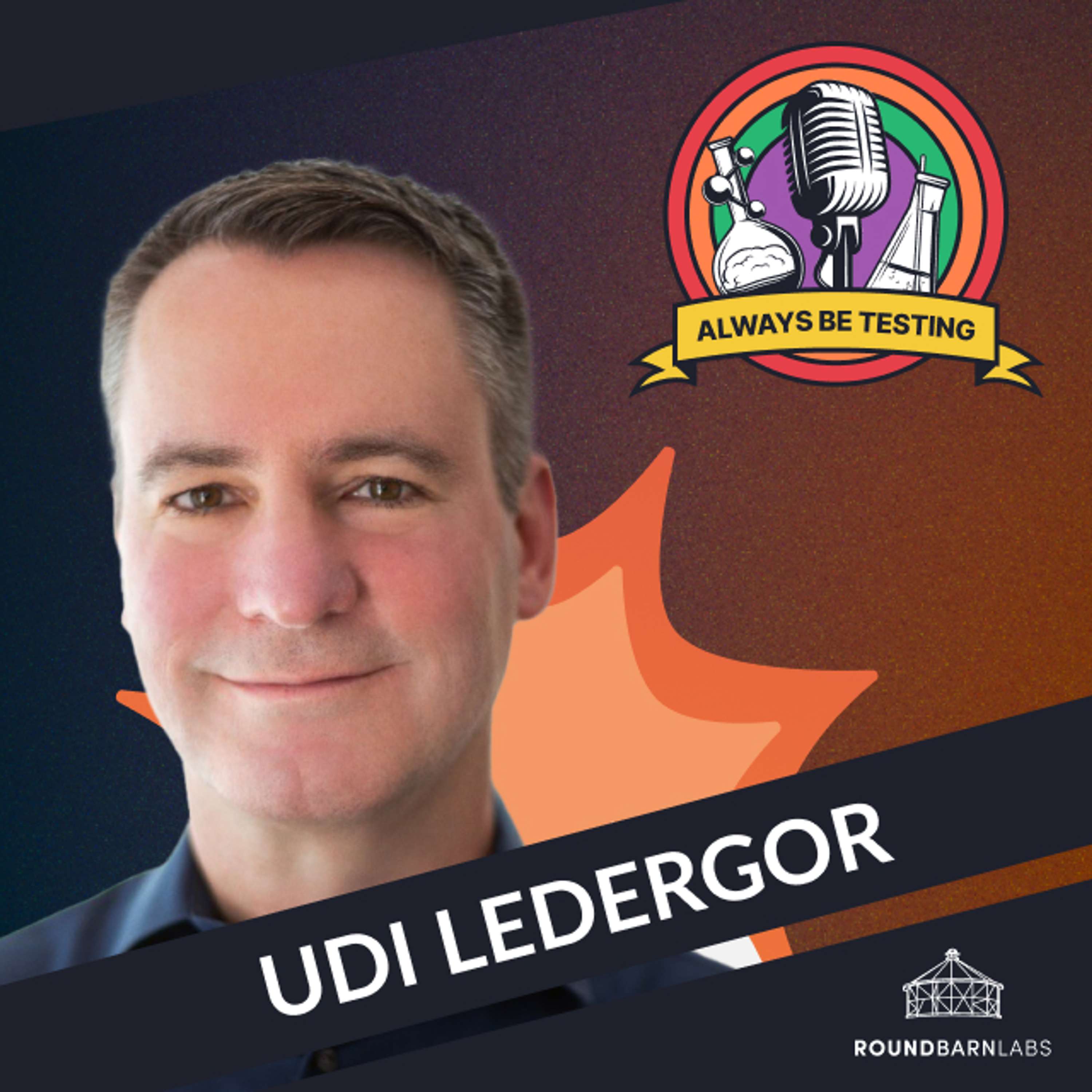
Always Be Testing
#66 Building Gong’s GTM Strategy and the Future of B2B SaaS Marketing | Udi Ledergor, Chief Evangelist and former CMO, Gong
00:39:19
Loading summary
Transcript65 lines
- [00:00]
Ty Degrange
Foreign welcome to another edition of the Always Be Testing podcast with your host, Ty degrange. Get a guided tour of the world of growth, performance, marketing, customer acquisition, paid media and affiliate marketing. We talk with industry experts and discuss experiments and their learnings and growth markets, marketing and life. Time to nerd out. Check your biases at the door and have some fun talking about data driven growth and lessons learned.
- [00:36]
Heidi Grange
Hello, hello, hello. Welcome to another episode of the Always Be Testing podcast. I'm your host, Heidi Grange and I'm thrilled to have Udi Ledergore today. Udi, how are you?
- [00:47]
Udi Ledergore
I'm doing great today. Thanks for having me, Ty.
- [00:50]
Heidi Grange
Absolutely. Udi is a B2B SaaS marketing master. He's going to dive into his experience with GONG and all things marketing and all things B2B and growth and I think it's going to be an awesome conversation, so should be a good one. Buckle up udi, maybe give us a little for those that don't know gong. I have a huge respect for GONG and the growth that you guys have achieved. Can you give us a little bit of background on maybe your GONG journey and kind of what it is for those that are not familiar?
- [01:22]
Udi Ledergore
So more than eight years ago, person called Amit Bendov, whom I worked with twice at previous companies, called me for a coffee meeting and wanted to show me his idea for a product that would capture all customer conversations and use them to show salespeople what they could be doing to close more deals and coach them on their selling skills. And I told him, I mean this looks like a really cool idea, but is the technology even available to make this happen? And he said, well, we're going to try. And six months later he called me, said, you remember the crazy idea I told you about six months ago when we built the product, we rolled it out to 12 beta customers and 11 of them turned into paying customers within three months. So I think we have early product market fit and I could use some help marketing this thing. Are you available to come help? I said, yes, I'm available to come help. And so I joined GONG as employee number 13 and marketer number one. It was just a bunch of really nerdy engineers. Very, very smart people. Scary smart people. And there I was starting to do marketing and fast forward. I had the pleasure and privilege of building a 60 person marketing team over the six and a half years that I acted as chief Marketing Officer and led gong's category creation of revenue intelligence and a whole bunch of fun stuff that we did over the years and from employee number 13. I think we recently crossed 1300 employees, so that's a nice 100x growth in employees. And from those, 11, customers were pretty close to 5000 last time I checked. So things are going pretty well. And last year I transitioned from my role as Chief Marketing Officer to my current role as Chief Evangelist of gong, which we can talk about later as well.
- [02:58]
Heidi Grange
That's amazing. And I kind of have an idea, but what does a Chief Evangelist do?
- [03:03]
Udi Ledergore
So as Chief Evangelist, I kind of get to pick my own adventure, which is really awesome. I still report to Amit, who I've worked with and for longer than anyone else in my career, so we kind of get each other and understand currently my focus areas. I'm doing a lot of speaking opportunities, as you might have guessed from a Chief evangelist. So I think today being the last day of the quarter that we're recording this, this is my 26th speaking opportunity this quarter. So that's a run rate of over 100 a year, if you're doing the math. I also take a lot of executive meetings with our prospects and customers, usually the larger ones, to make sure that they're using the in depth features that we want them to use to increase adoption of the product and of course help us with retention. I'm also productizing some of my experience on how to use GONG by creating sort of walkthrough flows and videos that other marketers can see while they're using the product. So I'm doing a whole bunch of cool things, working with influencers on webinars, doing podcasts like this, speaking at industry conferences, getting the good word of GONG out there as best as I can.
- [04:07]
Heidi Grange
Beautiful. You had me at using influencers, obviously for Round Barn Labs and our team. We're so heavily invested in that and love seeing the B2B SaaS growth, the technology growth through these third party, you know, authentic voices. And like, not only are you a critical evangelist and trusted voice in a community of the B2B SaaS world, it sounds like you're tapping into that a little bit with the work that you're doing. Absolutely.
- [04:35]
Udi Ledergore
You can never get too much love and advocacy for your brand and product. And there's fortunate to have so many great fans of gong, whether they're practitioners, leading sales and rev ops and SDR teams, or speakers, trainers, consultants that are all happy to be part of our ecosystem. So we're tapping into whoever we can, wherever we can, and we love seeing the love around what we've created and getting them involved.
- [05:02]
Heidi Grange
Amazing. Maybe let's step back and think about. So for me, Gong, in my perspective, has been kind of a poster child for effective successful B2B SaaS growth. The category creation you talked about, what are some of those key steps that you took to build out this category from scratch? How did you kind of ensure that it really landed with your core audience?
- [05:28]
Udi Ledergore
I could talk about a lot of different things. I think three highlights that I would mention is number one, you can't do this without a great product. Marketing and great go to market can push mediocre product only so far. But without a truly strong backbone of an amazing product that creates raving fans that folks love talking about and love using every day, no amount of marketing is going to make it work in the long term. You can do one big splash. You can fool them once, but you can't fool all of them all the time. And so first I have to give credit to our product team for building something truly amazing. The second thing I'd say is from the early days we knew that we had to cut through the noise and do things differently. So every milestone we thought, what are everyone else doing that we could do differently? So from our visual identity to our tone of voice to our brand colors to the mascot to our event experiences, everything we wanted to do, we looked at what everyone else is doing and where possible, we walk the other direction. So as they say, when they zig, you zag.
- [06:31]
Ty Degrange
The Always Be Testing podcast is sponsored by Round Barn Labs. RBL is the growth agency. They are a leader in efficient customer acquisition and pound for pound, the most experienced team in affiliate marketing. For the last nine years they've worked with brands like Oculus, Amazon, Grammarly, ebay, Atlassian, Scotch Quarter, Live Nation, Hatch, Puma, Hoppin, Stubbub, Recess, PacSun, SunBasket and more. They've generated over 100 million in media spend over 250 million in traffic generated, 500 million in revenue generated. They go beyond the data to give you the why and their revenue generating recommendations to grow and create a paid marketing flywheel for your brand. So if you're a consumer E Com brand looking to go from 8 to 9 figure revenue per year, or an enterprise brand looking for a higher quality of data, rigor and growth, Check them out@roundbarn labs.com.
- [07:37]
Heidi Grange
UDI I love your point you made about when others zig, you sag, What a great way to think about standing out in a crowded market.
- [07:45]
Udi Ledergore
So that was the second thing. And the third thing that we did is we realized that at any given moment there are Few companies who are in market to immediately buy. I think that's a very common marketing error where marketers focus too much on the 5 or so percent of their market that's currently in the zone for buying something. And instead we created a content strategy that catered to the 95% who are not currently in market. And we did that with our Gong Lab series which became very, very popular and still is with I think over half a million email subscribers, a quarter of a million LinkedIn followers. And they follow Gong and subscribe to Gong to read these data backed sales tips that we send out very regularly. And that created this groundswell of sales professionals who wanted to know more about what's working and not working. And when they realized that we're using our technology to protect produce those insights that got them interested in the product. And so sometimes folks were reading our content for two years before they were ready to buy a product, but by then they were already raving fans. I think that was the third differentiator.
- [08:49]
Heidi Grange
That I would do you think just to elaborate on that last point because that's really fascinating. Do you think that 95% just wasn't having good data driven knowledgeable resources kind of shared with them from other sources? Like what was it that kind of unlocked that third piece for you?
- [09:06]
Udi Ledergore
Yes. So if you kind of travel back in time to 2016 today, it looks odd, but back then sales team were operating in the dark ages. They were making gut based decisions and hunches and learning secondhand from reps report on what happened on a customer conversation, whether or not they have happy ears, telling them the deal is going to close or not. And that's all that sales managers had to rely on. And every layer added their biases and lost more information. Here's a quick example for you Ty. If you and I are having a one hour sales conversation, we're going to exchange about 6,000 words, probably more because I speak faster than the average person. But let's say we exchange 6,000 words, a sales rep who goes and summarizes that call in their CRM are going to put in about 30 words. And so you've already lost 99% of the information before the sales manager even takes a look at what happened there. And the sales manager, the sales rep is probably going to buy, write something like they loved our product, they loved me, they said they're going to buy, we're going to talk, let's just close this quarter. But there's none of the nuance of what actually happened. I've yet to meet the rep who wrote, I was zoned out today, I failed to show value. The customer did not get it. Nobody's going to write that, but. And then it's all lost. And so sales professionals were craving more data backed reasoning and insights on what's happening on their sales team, what's happening in their markets, so that they could reduce a lot of those errors, get more information, have it more accurate and reduce all the labor that comes with putting that information into CRM and other systems. And that's what GONG Lab provided and it's also what our product provides on steroids. So once people saw the type of insights that we were pulling for GONG Labs, you know, we pulled things like, turns out that salespeople who occasionally drop an F bomb or use other colorful vocabulary have 8% higher win rates. And we explain how to use this on sales calls as a mirroring technique. And you can't get that by listening to just a random sample of calls. You've got to scan thousands if not millions of calls, see what kind of language they're using, what kind of outcomes they're getting and then crunch the numbers to see what's working. So that's the type of insights we could pull out of GONG Labs. And now you can your imagination run wild and what every team can do to understand what their best reps are doing so that others can do that and increase the entire team's win rates.
- [11:28]
Heidi Grange
That's amazing. I love that you, you obviously built this out. You know, CMO for so many years, so much success was there kind of a marketing mix on top of those big three levers, tried and true tested stuff that kind of worked to kind of get into the nerdy performance marketing mix question with what you're willing to share.
- [11:49]
Udi Ledergore
Of course, no secrets here. I'm hoping everyone does better marketing. So I think the one channel that worked disproportionately well for us was organic social and organic email. And here's why. Because we were educating buyers on something that you cannot squeeze into a four by six ad that's going to quickly scroll in your social feed. You can't educate someone on a problem that they don't fully understand that they have on entire category of solutions that they should be considering and on differentiating your solution as the best one in the category. You can't do that in an ad that someone's going to scroll by. And so I found that longer form organic content, the type of which we could get across in emails and in our social media that worked really, really, really well. And if you write content that truly adds value, people are going to spend time reading it, they're going to get excited about sharing it, not only internally with their teams, but also on their social channels because it makes them look smarter and cooler and up to date and that builds your audience because every time they share it and tag people, they're going to follow you, they're going to subscribe to the emails and that's how we grew our following today, when our category is much more mature than it was eight years ago. Definitely not like reached every single company yet, which is why we're in business. But now that it's much more mature, we do have a strong paid ads strategy that also works because people now understand the category, they've heard of Gong, we've built a brand and now we can gain some effectiveness with paid advertising. But I, I think a lot of early stage companies are hoping that they're going to be able to do all of that, educate the market about the problem and the solution and the differentiation with a little paid ad that's going to run on their social feed and then they're disappointed when it doesn't work and they run out of money. So I knew pretty early on that that's not going to work and it's, I'm going to need more space and to do that effectively I'm going to have to write stuff that people really want to read about and do it organically.
- [13:43]
Heidi Grange
Yeah, 100%. You have to have, I think, a pretty reasonable maturity level on the product market, fit scale and a lot of that authentic content, authentic validation reviews, peer review stuff that can really allow that paid marketing to thrive and operate and work in some capacity. So I think that's spot on. Obviously near and dear to the pod. The concept of experimentation with our name being always be testing. How did you think about experimentation as you kind of went through the life cycle of a fast growing startup and cmo and how do you kind of view experimentation? What did you see work?
- [14:24]
Udi Ledergore
So experimentation was a big part of the team culture that I created and I took a few views on this. Number one, like most teams that should be experimenting for the traditional reason, any channel that's working today is going to run out at some point. It's very rare that your channels take you for many years without adaptation and changes in effectiveness and efficiency and productivity. So we knew that we're going to have to experiment for when our current channels run out and we're going to need new ones. So that's one approach. The second thing is, based on what I told you earlier, we wanted to always stand out and do things differently. And to do that, you need to experiment. And as soon as our CFO and CRO and others saw that that approach is very effective and it's gaining us disproportional brand awareness for a company our size, people thought we were way bigger than we were in the early days. They agreed that we should do more experimentation. So we got to do a bunch of crazy stuff. And the third thing I'll mention is that to make it easier to manage a budget for experiments, some of which only surface throughout the year, that I could not have anticipated during budgeting season, I always allocated 5 to 10% of my program's budget for a line item literally called marketing experiments. Internally, my team knew it as udi's crazy ideas. But the version we sent to the CFO said marketing experiments. And we made sure to allocate enough budget so that if come June, we could always find budget, even if we didn't know back in November what it's going to be going for. Maybe a media company called me and said, hey, we just had an advertiser back out. We've got this really good deal, but you've got to decide today. I don't have time to go through the whole budgeting cycle if I hadn't set aside some money for it. But because I had, it was a much faster approval process and we could get a lot of really cool things done and respond in real time.
- [16:12]
Heidi Grange
I love that udi and there's so much, so many guests on this pod. And I think it's just become such a resonating, important call out to really have that, you know, secured set aside. There's so much value in that. I think. I think a lot of brands can sometimes get stuck. They're not necessarily taking enough of those experiment experimental moves. They're not taking as many of those bigger, bigger swings. It sounds really obvious, but it's amazing how often it's not getting done well done. With B2B marketing, how do you balance kind of creative storytelling with the very doctor nature of having to be quite efficient? I'm curious to learn about maybe that and how you maybe use data to kind of unlock that a bit.
- [16:52]
Udi Ledergore
Yeah. So I can share a couple of things. First, I like to think that marketing is creativity in service of capitalism. When you think about it, it's really what we're doing. We're hiring really creative, smart, hardworking people and asking them to solve really hard problems so that they can help us push more product, make everyone wealthier, from our shareholders to employees, and of course make our customers successful. And there is a way to tie our creative efforts with the data driven results. I'll give you one quick example. So when I advise other companies or mentor earlier stage marketers who come and say, hey, I love your content strategy, but I can't seem to get it to fly in my company because I tell them I want to invest in creating all this great content. It's going to take so much work and we're going to put it out there and then nobody understands how we're going to see ROI on it. How are we going to know that it's working? How are we going to attribute this to opportunities? And I have a two part answer to that. First part is I did not obsess and I still do not obsess about measuring every single thing we do. There are limitations to technology and mediums that if we let them get in the way of doing the right thing, that we have a very strong gut feeling based on previous experience and we can explain why something should work. We should go ahead and do it, even if measurement is going to be difficult or impossible. And we've had several successes with doing that, with ignoring. I'll give you a tiny example. Let's say you're sending out an event invite. What do most of them look like? They look like obviously automated robotic event invite by email. And they've got a button click here RSVP and then takes you to this long form. You're gonna fill out the form and then you're signed up. Now why would we do that? When your mom invites you over for a Friday night dinner, does she send you a form to fill out to RSVP?
- [18:37]
Heidi Grange
No.
- [18:39]
Udi Ledergore
She'll text you or WhatsApp you, or maybe email you if that's your family culture, and say, hey, are you coming over to dinner? And you'll respond, yes. Right?
- [18:46]
Heidi Grange
Yeah.
- [18:46]
Udi Ledergore
So why have we made that so difficult and cumbersome for attending our events? So when we had that realization, we did an experiment and we said, okay, what if we sent out an email? Not an automated email, not a designed email, a plain text email from Danny on my team. He was managing events at the time. It said something like this, hey, Ty, you attended our events last year and we wanted you to be the first to know about our upcoming event in November. Just reply yes to this email and I'll count you in. Do everything else for you are you in. And when we send out that first batch, we had 700 people respond yes, because it was so easy. They didn't have to click a link, they didn't have to open a browser, they didn't have to read more content that they weren't interested in. They didn't have to fill out a long form, they just responded yes. And we got our first 700 RSVPs before we even set up the website for the event. There was no website at that point. We hadn't announced speakers, we hadn't announced anything. We literally said this is the date, it's going to be another great event. Count you in. Yes or no? They said yes. So that's where we chose something that we chose to circumvent how easy it is to measure clicks and opens on emails and forms and completes and all that stuff because we become captive of that measurement technology instead of doing the right thing of communicating like human beings. So that's one thought and I'll give you another one to respond to. How do I know my content is working? So yeah, if you're going to just create content and post it out there without any follow up plan or out without taking your buyers to the next step, you're probably never going to know the roi. But what if you do something like we do? So every time we publish an article on LinkedIn, it's a open to all article. You can't gate articles on LinkedIn. Thank God for that. So we, we optimize for reach and we put an article first on LinkedIn. Now if you read through the article at a couple of points, usually in the middle, and again at the end we will put a call to action with the link to a gated piece of premium content on our website that we know is going to interest you. If you got this far into this article, let's say you're reading an article about 12 tips for better sales calls over Zoom. So at the middle of the article we know that you're really interested in sales tips for sales calls over Zoom. We're going to offer you click here to download 35 tips for your next Zoom call. And of course you're going to click on that. And then we take you to a landing page that literally has two lines of text because we know how you got there, we know the context. You didn't just randomly land there. So I'm not selling anything. And I just said put your email here and get instant access to the PDF. And then we see 80% conversion rates on those landing pages because people came in the zone with full context after reading and getting value from our public domain article. Now they want to download this PDF. And so my content team always had KPIs for how many downloads of the premium content we want to see for every public domain article you publish on LinkedIn, because those are going to become MQLs and we have a whole funnel from there that we know how they're going to convert into actual opportunities. So you can take that creativity and put out super valuable content, but then pretty accurately measure how that's helping your pipeline and helping your entire outbound motion. Because every SDR and AE want to get on the phone and say, hey Ty, I noticed you downloaded our cheat sheet about Zoom calls yesterday. I wanted to see if it was helpful and if I can answer any questions. That's a much nicer call for everyone involved than saying, hey Ty, you must be busy. I know you're not expecting my call. I'm just an sdr. I'm calling you out of the blue. That's not a fun conversation for anyone.
- [22:06]
Heidi Grange
Nailed it. I love that. And I think you kind of answered the human centric nature. There's something you've brought about with Gong's entire content strategy and ethos where it was very human. You've just talked about two great examples of that, so I don't think you necessarily need to provide more, but I just want to call if you want to share more thoughts on how you created that culture. I think it's really, again, easier said than done. Really resonated for a community of people. Really worked amazingly well.
- [22:36]
Udi Ledergore
Yeah, I'll just say one quick thing, which I know some marketers struggle with because either their CEO isn't playing along or they don't have much of an extroverted personality. But we were very intentional from day one of making sure that our audience is not listening to and speaking with a corporate logo or a box, but they were speaking with human beings. And so we always made sure that our articles and content were put out by human beings, whether it's written content or video or podcasts. So we created many celebrities within the industry from Chris Orlov, who was my first hire, created content for the first three years and worked to create the Gong Labs articles. And then Devin Reed, who replaced him, and for the next three years, Roads to Stardom, continuing Chris's work and getting us a lot more into video. So he became an absolute celebrity in the industry. Yesterday I was walking to a business dinner and someone stopped me on the street and said, hey, you're Udi Ledger Gore. I know you're from LinkedIn. We create human faces that people recognize and they want to be in touch with these human beings. So if you hire a generic content marketer who is a good writer but does not have deep domain knowledge, has never walked in the shoes of your audience. They're never going to be able to create something that's deeply relatable to your audience. But when Chris and Devin were both salespeople before I gave them their first marketing job, when they write a blog post that says something like this, it was the last day of the quarter. I was 150k short on quota. I had no idea what I'm going to do. Then I had a crazy idea last Hail Mary and here's what I did, and here's what happened. People are glued to their screen to find out what they did, because that's very relatable. And they've walked in their shoes, and you can't make that shit up. You can't get a writer who in the morning is writing about cybersecurity and later about healthcare to now write about sales in a convincing way. It just never works. So hiring a real human being who's not afraid to put themselves out there and has walked in the shoes of your target audience, that's kind of the recipe for success with very personable, approachable human contact.
- [24:34]
Heidi Grange
That's amazing. That's just such. There's been so many awesome insights on this conversation already. I have to go back to the phone call you got to being from the CEO and founder that originated this all. May I be so bold as to ask, like, what do you think prompted that? And obviously you had a relationship, but I'd love to know more about what kind of made that click for you, for you both.
- [24:55]
Udi Ledergore
Why do you think he called me? Is that the question?
- [24:57]
Heidi Grange
Yeah.
- [24:58]
Udi Ledergore
So Amit and I had worked together twice before. The last time, we worked closely for four years at a company called Panaya, which ended up getting sold for a few hundreds of millions to Infosys, an Indian IT giant. And Amit and I worked really, really well there because we kind of complete each other in several ways. I think the biggest one is that he would come in every morning after his long commute with his big cup of coffee and said, udi, I had an idea. Like, he didn't even put his bag down. He walks into my office, cup of coffee and backpack. Udi, I had a crazy idea. At this point, I'm rolling my Eyes up. Yes. Tell me about your crazy idea. And then he'll shoot a couple of ideas and some of them are completely crazy. And I'll like, nod. That's very interesting. Let me see what we can do that. And sometimes, very often, he came with one that was actually really good, and I could see how it's both helpful and, with effort, doable. And I said, okay, I'm going to do that and maybe I'll offer some amendments. But then he knew that I would take that and execute it and create the spreadsheet and create the project and get the people on it and coordinate everyone internally and externally to make it happen. So he's the dreamer with his head up in the clouds half the day, and I'm the executioner here on the ground, just taking those ideas, plucking them out of the cloud and making them an operational reality. And we loved working that way because early in my career, I needed his inspiration for many of those ideas. Later on, I learned to generate them myself. And he loved knowing that I was there to take a crazy idea and a week later it was reality because I just, I made it happen. And I think that was probably why he called me and wanted to do that over again, because as a CEO of a very young startup, he had so many things on his head. He could not, could not go and execute the marketing strategy himself. He had plenty of ideas, but he called me to come and execute and it's been working out pretty well.
- [26:50]
Heidi Grange
That's amazing. I really am glad you touched on that. And I think those complimentary founder stories are just a thing of beauty when you have that. It resonates with me a lot because our, my COO and I have a similar dynamic where I have a lot of ideas. Not all of them are great. There's a few that are quite good. So we really rely on each other on a number of ways and compliment each other. It certainly sounds like a great collaboration. So I love to hear that. I also get pick up the impressive nature of your storytelling ability as a marketer, as a marketing leader, as someone who's trying to category, create and succeed in that in a. An amazing way. So you're not just a, you know, this dry operator, not, you know what I mean, you can kind of bring the things to life. How did your background maybe play into that? I know you had some interesting, you know, music backgrounds and other things that you've done in your career, in life, but what do you think? Kind of has those experiences have perhaps helped that.
- [27:46]
Udi Ledergore
So I'VE always been fascinated with performing arts. I've dabbled in music and in magic and in stage lighting and in sound, and I still play music. I did puppetry. I did everything you can imagine. Not very well on any of those things, but I just really enjoyed them. And I still enjoy. I go to a show at least once a week, sometimes more. Live show, so cool music or theater or opera or ballet or anything. And as you can see behind me, I've got Kermit the Frog and a bunch of other Muppets because I think Jim Henson was a genius and really someone who inspired me as a child.
- [28:19]
Heidi Grange
Agree.
- [28:19]
Udi Ledergore
I still look up to the magic that he was able to create. Taking a sock puppet and making us believe it had a soul. How crazy is that? Yeah, I just love that world. And I think it really engages people and to see people still trying to engage an audience with giving these, you know, cold tables and facts and figures. And you see a lot of times Product led CEOs or engineer types that think that just because the product is objectively better or interesting, that people are going to lean in and engage with the story. But that's usually not enough. You need an actual story that hook that people can see themselves a protagonist of and they want to be part of that story. And I was giving earlier the examples of some of the sales content. When you're writing about an adventure story on the last day of the quarter, of course every salesperson is going to lean in because they're now rooting for the character and they want them to win and they want them to keep quota. You can't just say, oh, we capture these insights and then we give you this dashboard. That's not fun, that's not engaging, that's not interesting. And so that's the type of marketing I tried to create. From everything from our content marketing to our event experiences and speaker choices, to our website, our marketing materials, to how case studies were written. Like, I always challenged our videographers to not make it look like another case studies. Like, we experimented with doing one customer story that looked like a film noir. It was literally filmed in black and white and add these dramatic music and. And it was really, really successful because nobody'd seen a customer story like that before. Anyone can pull up three bullet points with ROI numbers, but it's just boring. We've all seen it.
- [29:53]
Heidi Grange
You know, it's so funny because I years and years ago, I think Andrew Chen's talked about this a little bit through his thought leadership and through Reforge and how video games are kind of on the cutting edge of messaging, marketing, user experience, certain other categories and consumer kind of picks it up and then it eventually gets into B2B. I think I feel like those cycles are kind of faster now. And I think B2B is kind of caught up in so many ways. And you're an example of leading that kind of revolution, for lack of a better term, where you're kind of testing those boundaries more. And I'm seeing examples now where people are doing some really like branded, consumery, human fun story led things in B2B. And I think it's really fascinating. I think it's not something I hear tons of people talk about, but I think Gong did it, you did it. And I think others are popping up now to do it. Like for Matt Perplexity, it's really popping up more so now when I observe that the B2B landscape, for sure, it's.
- [30:57]
Udi Ledergore
Just the growing understanding that we're all human beings, even if we wear a badge and have a B2B title, it's still UDI buying from Thai. It's not, you know, Gong buying from IBM. It's. It's a person buying from a person. And the more you, you speak to that person in a very human eye level way, the more likely they are to engage and eventually do business with you.
- [31:18]
Heidi Grange
Yeah, and I love that cutting through the noise, that simplicity that you referenced. It's great. Maybe as we kind of come down the home stretch here, I've got a couple more professional topics and then some, some finish up with some personal so folks can get to know you. With a fast growing company like Gong, you know, feedback is crucial. It's widely documented. How do you foster that environment of candid conversation and feedback without, you know, kind of stifling folks and how did you kind of capture that?
- [31:45]
Udi Ledergore
So I think I've got a bit of a cheat code. By being originally from Israel, we're known as being very direct to the point of being blunt. And that's the personality that I brought with me. And I was known for that. I am known for that on my team. But I always made sure that people felt that they could speak to me very directly and bluntly. I think for some it was harder than others. But I definitely remember cases where Russell, who was on my team, as soon as we got off some group zoom call, he picked up the phone, called me and said, udi, can I give you some feedback? Yeah. And he called me out on things that I said or did that he didn't think landed well. And I love that he felt comfortable doing that because I know it's not as popular as it should be. And anyone who's read Kim Scott's Radical Candor, there's a lot of great ideas for operationalizing this type of culture where you give immediate feedback. You don't wait for that quarterly or annual review, which I think is nonsense like who remembers by then what happens and the facts are murky and, and you can't really address the issue unless you deal with it when it happens. And why wouldn't you? Why wouldn't you? Like if someone's doing something either it's a one time thing, but even more importantly, if it's continuously doing something that you think should be changed, why would you wait nine months for their annual review to talk about it? Just give them feedback right now, solve it. So that's very much my approach and our approach at gong, again with qualifications like praise someone in public if you have to shame them, do it in private and just be respectful of everyone at all times. There's always a way in a respectful way. But that's the type of culture that I did my best to create on the team. I think for some people it worked really well. For others it's probably not the best.
- [33:19]
Heidi Grange
Place, which is also okay, 100% love that. Looking to the future. We talked about this a little bit in some of the examples we touched on, but what trends or technologies do you think are kind of like shaping B2B marketing and growth over the next few years? How do you want to position that for Gong as the evangelist? And where do you, how do you think your team in GONG is preparing for that?
- [33:39]
Udi Ledergore
So there are a few things that are happening right now in marketing. One, everyone's in sick. Sick and tired of the spray and pray approach of sending too many emails, too many phone calls, untargeted, unresearched. And there's a host of new technologies in both sales and marketing. GONG is also prime player in that space of using AI to do research and generate really pinpointed personalized emails and call scripts, which can reduce the number of calls and emails that we make and therefore reduce the number of calls and emails that our buyers receive. And all that leads to a better customer experience. So I think that's one trend that's definitely happening. And if you're still spamming 5,000 of the same email trying to see if someone bites that you're going to be out of business pretty soon. People are not responding. They're just getting annoyed. That's number one. Number two, I think just the broader uses of AI for every professional are being explored right now. Some of them are already being abused. I think the pendulum is going to shift back a little bit. What's happening right now with marketers using AI to generate too much bad content reminds me of what happened 15 years ago when marketers discovered they could offshore their content writing and someone on the other side of the world for 50 bucks would write a blog post and they thought they were really smart for doing so. Nobody ever wanted to read their content and nobody wants to read your AI generated content as well. So if you, if you don't have a strong point of view and you don't know how to write something engaging, ChatGPT is not going to solve it for you. It will help you avoid grammar and spelling mistakes for sure, but that does not create engaging content. So that, that's something that, as I said, I think now is being abused as part of the experimentation, which is a natural process. But I think we're going to go back to good companies are going to continue writing human led great content and use AI as a co pilot, as it's currently being known, or another way to get through a lot of the grunt work like checking for spelling and grammar and maybe doing localization and maybe repurposing for different lengths and formats. So that's another trend that I think we're going to see.
- [35:38]
Heidi Grange
Yeah.
- [35:39]
Udi Ledergore
And the third one I think goes to marketing measurement. So in the last 18 months or so, there's been a lot of pressure on marketers as well as most other functions to become more productive and efficient and infamous. Do more with less. And I think that's creating a renaissance of new marketing approach, measurement approaches and tools that some of them are going to actually stick and make it easier for us to understand ROI on what we're doing. Not just the performance stuff, which we already have a decent grip on, but all the brand awareness stuff that we talked about that a lot of it goes unmeasured today. And as soon as we can measure it, we'll be able to make much better use of our resources.
- [36:13]
Heidi Grange
I love that. Yeah, that's AI is a augmenter, not a replacement. Right. And couldn't have said it better. Let's kind of wrap it up here. Wrap it down to the final wire of personal software you love. That's not gong. Give us an example of something you use and love that you want to share to the audience.
- [36:32]
Udi Ledergore
Oh, gosh. Software that I love that is not gong. I use duolingo every day. Nice 1,066 day streak of Spanish, which I've got little to show for, but I enjoy keeping it up.
- [36:45]
Heidi Grange
Good job on the streak. That's amazing.
- [36:47]
Udi Ledergore
Yeah, that's a fun one. And I think they did a really good job.
- [36:50]
Heidi Grange
They've done a great job with that.
- [36:51]
Udi Ledergore
Creating an experience that reminds you without being too intrusive and annoying. Because I've turned off pretty much every notification on my phone except that one. And it's helpful. They do it in a fun way that makes you want to come back for more.
- [37:02]
Heidi Grange
I love that. And then on the personal front, anything you've purchased, maybe under 200, that's just you rave about. You want to share with the audience.
- [37:10]
Udi Ledergore
Well, my. Probably my Hercules costume for today since it's Halloween. So stay tuned for that.
- [37:18]
Heidi Grange
I can't wait to see it. Got to post it.
- [37:20]
Udi Ledergore
What else have I recently bought for less than 200? Oh, gosh, I'm drawing a blank now.
- [37:24]
Heidi Grange
Anything in the home? Any amazing cool stuff behind you in your suite? Maybe a book.
- [37:30]
Udi Ledergore
Books. Oh, r bunch of great books recently. I just finished one that music lovers will enjoy. It's called Symphony of Secrets. It's a pretty long novel about kind of a. I won't give too much away, but it's an adventure mystery in the music world of modern day musician. Kind of doing some detective work to understand some music that were written in the early 19th or 20th century. Sorry. And a lot of secrets unfold. And it's really interesting. So awesome.
- [37:59]
Heidi Grange
What a cool, unique suggestion. I love how different that is. Well done. What's something maybe the audience doesn't know about you, Udi?
- [38:06]
Udi Ledergore
A pretty open book. Here's a fun fact. I hold more passports from countries I've never visited than from countries I have. I don't know anyone else who can claim that.
- [38:18]
Heidi Grange
That's impressive as well. I love that fun fact. Udi. This has been absolutely amazing. Is one of my favorites. You just absolutely nailed it. You've achieved so much and I'm just grateful to have connected with you and gone deeper on learning about your journey with Gong and all the cool stuff you're doing now. Evangelizing. So I like to evangelize myself. You're evangelizing here? We'll evangelize more later.
- [38:39]
Udi Ledergore
Well, thanks so much for having me, Ty. And then thank you everyone who made it this far with listening to us.
- [38:43]
Heidi Grange
I know tip of the cap to them if they did. And for folks that want to connect with UDI and learn more. What's the best place to connect with you?
- [38:50]
Udi Ledergore
I am on LinkedIn. There's only one UDI letter Gore there, I swear so I should be pretty easy to find. And if you are AI curious, please go to Gong IO and get your personalized demos to see how we could help your sales team.
- [39:02]
Heidi Grange
I might need your I might sign up and I will see you in San Francisco soon. Hopefully. Fingers crossed.
- [39:07]
Udi Ledergore
See you soon.
- [39:07]
Heidi Grange
Thanks udi.