← Always Be Testing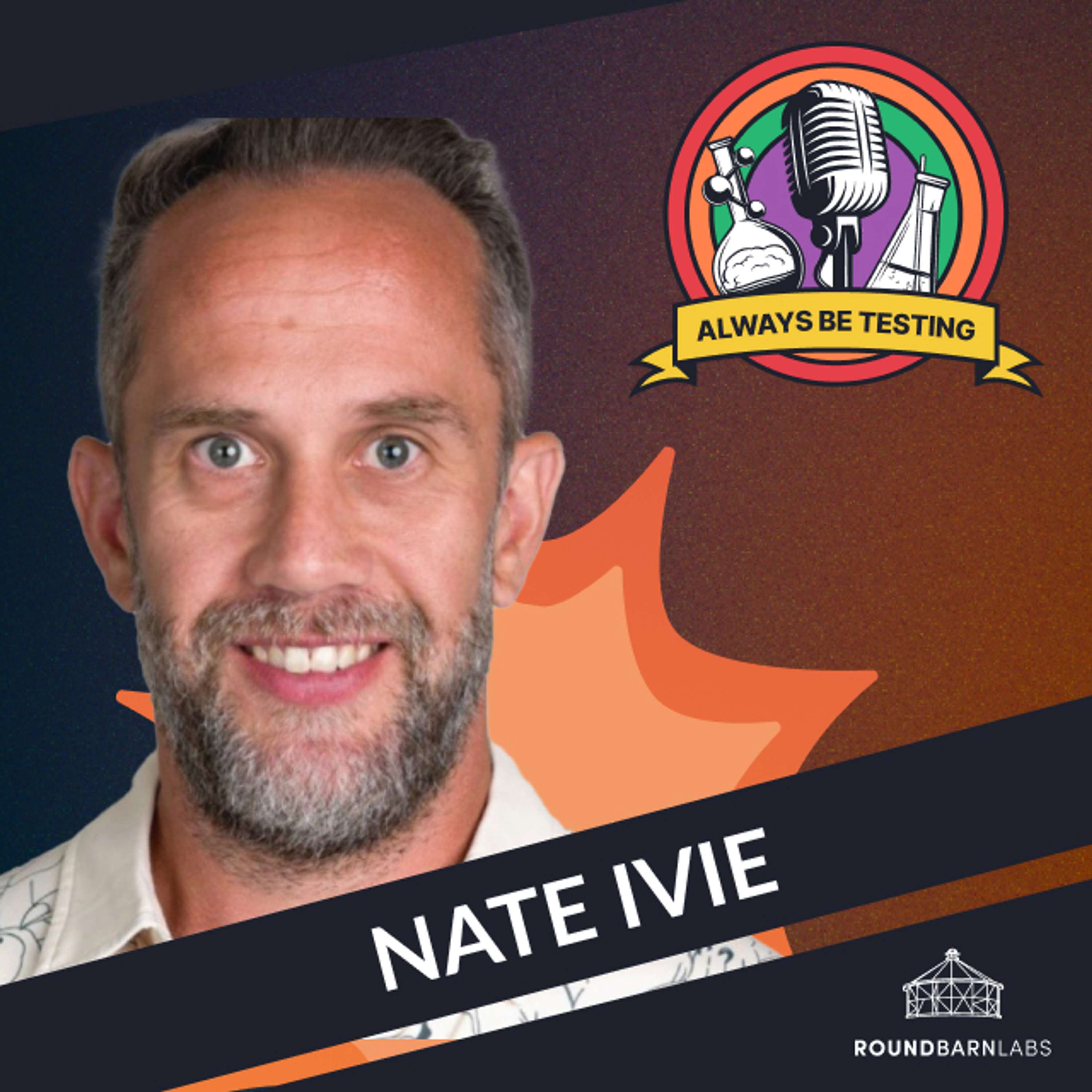
Always Be Testing
#70 Understanding Partner Promotional Methods and Data Points | Nate Ivie, RVP Sales, Impact
00:46:14
Loading summary
Transcript100 lines
- [00:00]
A
Foreign. Hello. Welcome to another episode of Always Be Testing podcast. I'm your host, Ty degrange, and I'm really excited to talk to Nate Ivey today. Nate, how's it going?
- [00:16]
B
Hey, Ty. I'm doing well. How about yourself?
- [00:18]
A
I am doing well. We are no longer snowy frozen temperatures in Austin, Texas. It's like a nice foggy, rainy cold, which is much better. How are you doing in the PNW?
- [00:32]
B
Yeah, I played golf on Sunday and it was 26 degrees when we started, so it is cold. It's cold.
- [00:40]
A
That is. That is no joke. Do you often do that?
- [00:44]
B
No, absolutely not. Absolutely not. I just started to try to get into golf last six, eight months and I just got to club, so I wanted to just get out.
- [00:52]
A
You got to recommend somehow. Good deal. Those of you don't know. Nate is a veteran of the affiliate industry. Great guy, knows the space very well. Formally tuned now leading sales for Impact. So just excited to chat and have an open conversation about the industry. He's seen a lot and I think it'll be a fun one for everybody, so should be good.
- [01:12]
B
Yeah, I'm excited following the pod, so I'm excited to be a part of it now.
- [01:16]
A
Heck yeah, man. Appreciate it. Appreciate you coming on. You've seen a ton of brands in partner marketing. You've seen them do all sorts of things from various angles in terms of performance and setup. And what are some of the things that you see brands do that do perform particularly well and kind of separates the best brands in partner marketing from those that don't quite measure up?
- [01:39]
B
Yeah, I mean, I would say the first thing it's pretty simple, but I feel like a lot of times folks don't take into consideration necessarily or put it on the top of their list at least is just making sure that partner types are diversified. Like over relying on any like, specific type of partner, whether it's. It's influencer or content or coupon or whatever it might be, is just not going to be good for your program. So making sure that you're spread across all the different partner types is really important. And again, it sounds super simple, but. But you, I mean, you wouldn't be. But other people might be surprised with if you look at a program and just see how top heavy, bottom heavy those programs might be. So that's really like the first thing that I always think about is just like the best programs I've seen have partners all over the place. They even have like partner types you've never even heard of before and they get really creative about it. Another thing that I think separates really good programs or really good affiliate marketers is being open to new opportunities. Like, obviously there's. You want to expand, but like, just really any new opportunity, at least open to the concept of it or idea of it. And one of the things that kind of like, goes with that is it's kind of like the control that people want to have of their. Of their voice and of. Of how people are describing their brand or their service. Like, people nowadays are wanting to hear information from, like, more real people, more creators, influencers. And those people have their. Their way that they speak about things. They have their audience that expects them to speak about things in a certain way. So being open to, like, relinquishing control or at least giving more control to the creator or whoever the partner is to allow them to really speak in their tone to their audience, I think is really important. And a lot of the times that's what brands, usually larger brands, but even smaller brands, like, it gets in their way of having opportunities in front of them.
- [03:42]
A
I love that because it's. It just is something that. It came up today. We were talking to a prospective client and it was. I kind of called that out a little. A little bit of like, describing how important that is. And I think you. I don't hear. I mean, maybe. I think for some pockets of our audience, it sounds like, okay, I got it. I've seen that. I know that's important, but I think that's a really good call. Out of things that the best brands kind of balance that, like feeding the partners with enough and then letting them, giving them, like, all the good guides of, like, how they could represent, but then really letting that voice kind of shine through. I don't think enough people talk about that.
- [04:24]
B
Yeah, absolutely. Like, they've developed their audience. They know what they're doing. They know why their audience likes what they're putting out there. So really putting your trust in those partners is important. And again, it's going to get in your way if you're looking to expand into new types of partners. And it could really hinder your growth if you can't access those types of partnerships.
- [04:42]
A
Yeah. And I think it's like such a trend we're seeing with, like. I love that you just say real people. I think it's like an almost a clear way of, like, people are always like, oh, authenticity, authenticity. And it's like the new buzzword.
- [04:55]
B
And.
- [04:55]
A
And I think that, like, just like real people is like almost a cleaner, simpler way of saying like the authentic nomenclature that everyone's chasing. It's kind of a cool, just clean way of describing that.
- [05:08]
B
Yeah, I try to be anti buzzword as much as I can.
- [05:12]
A
I mean, I think that's preferred if you can be. I definitely don't always achieve that goal, but I love that it's like keep it to the straight shooter and to keep it clean and easy. That's awesome. Yeah. So kind of relinquishing that control. Are there other things that are coming to mind in terms of where you see brands really differentiating and kind of leading?
- [05:33]
B
Yeah, the only other one that kind of came up recently, like in conversations internally was like, you really need to have a deep understanding of who your partners are. You don't just need to know like what channel or partner type they are or their name. Like some people just know the name of their partner and they're just driving traffic. That's it. But like you have to have a deep understanding with how they're going to promote you, how they're driving their own traffic and things like that. I think that's super important. Like one example, the example we were talking about internally was the, you know, Google came down with the hammer on the site reputation abuse. And it's pretty obvious some of the partners that got hit the hardest, like if you knew what type of traffic they were driving and they were taking advantage of Google and the way they were, like, you should know that, you shouldn't. There's risks there that Google could come down with that hammer because it's right now. But you need to understand that it's not going to probably be there forever, especially in Google's talking about the authenticity they want from these sites that are, that are kind of taking advantage of the SEO type opportunities. So if you knew that like maybe your program wouldn't have fallen off a cliff as quickly, as quickly as some programs did because they relied on some of those partners so much.
- [06:43]
A
Yeah, I think that's another one that it doesn't get enough. I think it takes additional work, additional cycles to kind of like really understand all the data points that a partner is giving you to understand what their promotional method is and the various types of promotional methods. Oftentimes it's multiple ways they're growing their audience and so to really be aware of that is really critical. And I think not enough people are, you know, digging into that. Obviously there's, there's only so much resource any team has. Sometimes they're, they're not equipped, but you kind of have to know in particular your top partners for sure.
- [07:20]
B
Yeah, I think usually, not usually, but a lot of the times people are just worried about from the site to your site, not how they get to the site in general. Right. Nobody's worried about how they're actually growing their audience. Maybe if it's like, oh, they're growing a newsletter or it's their Facebook page or something like that, that's a different piece of their traffic. But when it comes to an actual site traffic, a lot of times people don't even worry about, hey, how are you generating your traffic? I need to know that for X, Y and Z reasons.
- [07:49]
A
Absolutely. There's so many thinking about how it's interacting with other messaging, other ads, where is it in the touch points, how much is it really bringing value to the brand? All of those things kind of come up when you start talking about those things. And I think you kind of have to know that that's amazing. I know you've, you've got some, you've seen a lot obviously for all kinds of different situations. You know, setting up, making sure you've got a good foundation for an affiliate program, for an influencer marketing program. Are there certain things that you look at or you have experienced from a, you know, technical tracking perspective or just kind of the setup, building, building a program from the ground up that you want to share and talk about that are kind of top of mind for you?
- [08:36]
B
Yeah, I mean I've, I've had the opportunity to work kind of like the tracking space for 12, 13, 14 years now. And you know, some of the, the things that people usually struggle with is, is they go in not fully prepared, meaning like they don't know all the data that they want to track, where the data's going, what third party tools they need to integrate with. And then three, six, nine months down the road when they want to get access to the data that they know they need, but they haven't figured out internally where, where, where it comes from or how to, how to sync things up. They have to pretty much set everything up again. They have to go through like, almost like onboarding again because they didn't plan ahead for, for those opportunities. I think that's, that happens way more often than it should. And whether that's just data or whether that's, you know, I need to eventually integrate with CRM or another third party tool or an internal tool that I've got, I think that probably comes up more than the data stuff of just like forgetting to think about like the width of Your tech stack and what you need to integrate with or work with eventually. I think those are always big things. Another one is just sometimes people don't dig in enough to the platform itself to know what tools they have in their tool belt. There's been plenty of times where someone builds something on top of a platform because they think it's a great idea and they don't even ask a CSM or a salesperson or whoever, a customer support person, like if a platform has that capability. And I would, I, you know, again, going with like what makes what goes into good programs, like understanding the bounds of a platform and how you can use that to your benefit. That is also another piece that's, that's really important that people struggle with sometimes.
- [10:18]
A
Yeah, that's kind of. That just, you know, doing the homework is easier said than done. But there's a lot that, that needs to be understood and documented around. Like how are you kind of setting up from the start so that if you are going to unwind or if you are going to try to extract XYZ data from said source, like how do you do that? Are you getting. You can't build for a tree house and expect a mansion nine months down the road, right?
- [10:46]
B
Yeah, that's a good analogy. You also mentioned just like documenting things like having documentation set up, whether it's Confluence or Google Docs or whatever. Like having that set up and continue to add to the documentation. Like it's one of those like what if someone gets hit by a bus and they've got all the tribal knowledge and you're kind of screwed and got to start from scratch if you haven't had that stuff documented. So that's another piece. I think it's really important whether it's the technical setup or operational setup, whatever it might be. Like having that documented somewhere is, is another important piece.
- [11:22]
A
That's awesome. Yeah, we've. We've gotten pretty over the years emphasizing the value and importance of that as we've gotten smarter about standard operating procedures and training and everything. It's just, it's so, it's so critical and just. It is surprising sometimes to see when somewhat understandably. But, but you kind of have to have that written somewhere just to guide. As you said, somebody moves on, somebody's not there anymore. You gotta have some way of accessing basic setup to kind of understand where you're at. What do you think the biggest pitfall is in partner marketing from your view?
- [11:59]
B
I get asked this a lot. I always have two go to's my first is I call it flipping on or turning on affiliate. Like it's a light switch. Like it's Google or Facebook. Like you can just like crank volume if you just put money into it. You can't do that with, with partner marketing. Affiliate marketing it takes relationships to work and relationships take time. And it's not, it's not the same as just pouring budget in into like a programmatic channel. So I think that's, that's the biggest one people. It's almost like people think it's easy and people just go okay, I'll just turn on a bunch of cashback coupon partners and call it, call it my affiliate program. Like that's, it's not going to work. Just like kind of you know, flipping on affiliate. And then the other one is this happens like all the time is just people don't get how important it is to consistently be recruiting new partners. Like if you recruit new partners when your KPIs are getting low or the volume's not as high as you want or whatever, you're not catching up until months later. Like you have to be consistently recruiting new partners, finding new types of partners, asking for referral like whatever it is. Like you need to be like on a, at minimum weekly basis, if not daily basis like recruiting partners. And it's such a simple concept, but it's just proof is in the pudding if you're, if you're recruiting partners all the time. Like something happens with, with Google and you lose some partners, yet you've got some in the mix already. And again it takes time because it's all relationship based. And so you get in touch with somebody today like you might not be live with them till August. So yeah, those are kind of my two go tos.
- [13:42]
A
I love that. I've always, it's always be testing but it's really always be recruiting for, for Nate's view. You gotta be. And it's, it's. I think I was thinking about this similar topic the other day for affiliate marketing. You know, not only is it this like multi channel machine, but it's also almost a sales machine in that way you're thinking about it. It's like you, you, you almost have to think in those terms. I remember fortunate enough to work on StubHub years ago, fortunate enough to work on ebay years ago when they were really cranking and it was just so cool to be on programs. Look at the crazy amount of partners you could go after. And I'm sure you've seen it in so many Things I just remember my eyes lighting up around that and being able to showcase who you brought in or who you plan to bring in to get people excited from the brand of what you're capable of and what the program could deliver has always been something that I've always kind of been drawn to about this, you know, channel. And so it's cool to hear you validate that and really agree with that point.
- [14:51]
B
Yeah, I mean it's really cool. And when people get creative, like that's one of the things with, with affiliate marketing. You can get creative with like Google, Facebook, whatever. Like you can get creative with your creatives but like not with like how you're structuring the partnership, what's being promoted. Like it's cool to be able to, to do something different to find a new partner type. Yeah, that, that can really take advantage of, of your brand in like a really special way. I think that's, that's really cool. Part of the industry of, of you know, affiliate marketers job and if you, you don't know the bounds of what you can do if you're not finding more partners and testing the balance.
- [15:29]
A
No, exactly. You know, you've, you're not necessarily held to the algorithm of Google or Meta. You're not necessarily held to those creative literal boxes in some cases. And in, in this case you can, you have some restraints, but you can also get a lot more thoughtful about, you know, what you want to create out of nothing. And that's a really good point. And then it's good for people to know that going in because then it kind of gives people something to shoot for, gives people more flexibility and they may start simple but there's always more to do. To your point earlier about recruiting and I think there's more things to expand on, on the, the presentation and the way deals are structured too, which I think is really cool. Which is, I think isn't always talked about either. Partner types, what is there some that you think are underutilized or maybe need mentioning?
- [16:17]
B
What comes to mind is kind of on the creative side that we just, just kind of talked about is. And it's not necessarily a partner type, it's just how to approach partnerships. But I'm thinking I always like just personally more partnerships that feel more like embedded relationships where people are not, they don't feel like they're getting sold to necessarily. It's part of like a really natural flow of whatever the user is doing. Like one that always sticks to me is in the financial services industry, in the insurance Part of it particularly they have what's called embedded insurance. Like, it's literally called embedded insurance where the user acquisition, like action is within a user, like a natural user journey. And I always give this example. I thought it was really cool back in the day we closed this really big renters insurance company and I, you know, a couple years later, a couple months later I should say, I went through, I was renting a house and I went through the rental agreement and within, in embedded, within the agreement was a form to sign up for renters insurance from this, this big renters insurance company. And it's just, I knew what it was but like, if my wife were to go through, through that, she would have no idea that that was like an affiliate offering that she was being like sold to. That's always an example I give of like, it's a very natural experience. It doesn't feel like you're being sold to a couple other ones that like, stick out to me. I always love. I'm a big sports guy, so I'm always on espn and anytime I go to espn I go to like, you know, Mariners page. I'm a Seattle, Seattle guy. I'll go to the Mariners page. And I look at their schedule. It's. They got a partnership with Vivid Seats and it's like tickets as low as $6 or whatever it might be. That doesn't feel like ESPN is really trying to push ticket sales through Vivid seats on, on the user. It's a natural.
- [18:11]
A
They know you're a fan.
- [18:13]
B
Yeah.
- [18:14]
A
Give you what you want.
- [18:15]
B
Yeah. So that's great. And another one that I worked on relatively recently was Instacart and their like creator affiliate program that they had where users or creators they worked with were chefs and food bloggers and different like food type influencers and they would share recipes for whatever they're cooking. And you click on the link for the recipe and it goes straight to instacart with all 15 ingredients in your, in your shopping cart, like ready to buy. Like, that does not feel like they're selling you. It feels very natural. And so all those, it's not like, I wouldn't call it, it's not a partner type, but it's just a way to approach partnerships where it's very natural. And all those are not like traditional ways of approaching a partnership. It's not just a, a listicle or it's not a review. You know, it's much different than an embedded way of approaching it. So that's, that's, that's my Favorite. I think that's my favorite partner type. How about that? Maybe it's not under, it's probably underutilized too, but that's like my favorite type of partnership.
- [19:21]
A
It's a, it's like a partner method or it's, it's a, it's a great way to, it's a great way to think about the, the channel and it's a way to say, hey, how do we, how do we reduce the friction? How do we increase the trust? How do we get to the, you know, it's a real situation or an authentic situation to bring in some buzzwords, some real words. But, but in all seriousness, like, it's such a good point and I don't think that gets enough thought as well. We, we love that and if we can create, we can recreate that as much as possible. I think you absolutely nailed it. I think more people, that's a really legit insight that more people need to be talking about. Nate, that's awesome.
- [20:02]
B
Yeah. There's another example I just thought of that bugs me in general. I get why it's done, but it bugs me in general from just like my perspective on partnerships is there's a lot of these companies doing like post purchase offers, right. Where you buy something from fanatics and then after you buy it there's a pop up that comes up and says, hey, you got a, here's $10 off Hulu or something like that. Yeah, I remember I had a conversation with, with a salesperson from one of those, those I don't call it networks or platforms that does the post, the post purchase population of an offer. And I'm like, why don't you guys like, like personalize the offer more? It's, it's, it's always like a very generic offer. Like if it's, if it's fanatics, for example, and they bought, someone bought Seattle Mariners gear, why aren't you populating with, with a, hey, get some Mariner season tickets or something along those lines or like fly to Seattle if they, you know, they probably have the data to say this person's in Florida buying this. Maybe you can fly to Seattle for a trip and do something through whoever. Yep, they're doing it because there's more, they're seeing more revenue coming from like Hulu or I know Apple Music is a big one that people always do, but it just kind of bugs me just in general. Like I would love it to be more like truly contextual and like natural when it comes to something.
- [21:20]
A
Yeah, that's A. That's a really good call. It's funny. I. It's kind of similar to like in the legacy cable days, you would get these, like, things would be run. Run of media or large reach. And I recall getting. You would get commercials for like fast food chains that weren't available in your area kind of thing. It was. It's almost that similar analogy of like incongruent. Like, okay, you're not. You're literally wasting. Spend, you know, spend. But I get why you did it. It's not, it's not helpful for the user. And it's so funny because there's a spectrum, right, of like, if you give people like a super high relevancy, it's like it almost doesn't even become an ad. It almost becomes like, oh, this is almost a recommendation. Like, I need this and it's a great deal. And you know, you don't have to always just hit them with a, you know, bye, bye, bye and something that's annoying. So it's cool to think of it that way.
- [22:13]
B
A lot of times I feel like people don't think about like the branding and customer experience perspective from the publisher's side of things. Like, you know, the example that I gave is fanatics. Like the. The user probably feels better about like a legitimate contextual offer as opposed to some offering in the state they're not in. I used to get before, before Chick Fil A showed up in, in Seattle. Like, I would be like, don't show me these Chick Fil? A ads on tv. I don't have. I don't. There's not one up here.
- [22:43]
A
Exactly.
- [22:45]
B
So, yeah, I feel like people don't think about like the other side of it as well. Like it's what's. What's in the best interest of the publisher. Not necessarily only. Right.
- [22:55]
A
Yeah, no, it's a good point. It kind of impacts a lot of, you know, stakeholders in the ecosystem, not just the brand itself. What were some favorite experiments or learnings in your career that you want to tout Share?
- [23:09]
B
I remember one specific experiment because I like wrote a white paper on it back when I was working pretty heavily in mobile apps and app attribution. We figured out that essentially redirect speeds were affecting conversion rates negatively. And so there were some technical pieces that we worked with as a platform, like if you were going to hide a referral going through the chain of linking, like that would slow things down. Other technical aspects to it, like, we just slow from click to getting to the app store down. And so we proved that out that like hey, conversion rates do drop if you have more clicks in the stream essentially from click to the app store. And so that was cool just to prove that out. And then both the platform made some specific technical integration updates to allow for quicker redirect speeds. But then we also had some clients start working with like their web dev teams more instead of, you know, they're moving outside of the app ecosystem into their, the web dev teams and making sure that like page load speeds, like it has nothing to do with a platform or a tracking link necessarily, but like the page load speeds, like an affiliate marketer is usually not the one talking about page load speeds. Right. That's usually somebody else. And so like we had like actual affiliate marketers like talking about that with web dev teams and that that improved conversion rates by the, the speed of, of getting to just the, the landing page quicker. So that was cool going through that, that whole process and being able to make changes both like at the platform level as well as like with clients and how they're dealing with campaigns and things like that.
- [24:55]
A
That's awesome.
- [24:56]
B
So yeah, that was like a cool one that I remember specifically dealing with.
- [25:00]
A
That's so cool. Yeah. And I kind of think that I've heard other like people who are not necessarily affiliate related, who are like very, very strong, very technical, like very savvy marketing leaders that have been like CMOs and like I've heard them say that affiliate marketers can sometimes be some of the best marketing leaders and best people that think about growth, like growth in the right ways. And I think you kind of touched on an example there where that's exactly what a good growth leader or you know, very good internal or even external individuals thinking about. Because you know, you think about the principles of affiliate, you've got a, you got all these partners that have a ton of skin in the game. They're obviously beyond savvy because they can build their, they're looking, they're definitely thinking about how fast something's loading. There's definitely thinking about how fast good things are converting so you to be smart enough to think to what's best for them, what's best for the user, what's best for everybody in the ecosystem. And you were able to find an example that did that, that solved for that and then brought teams together internally to make it better is pretty cool. I think there's a lot, I think there's a lot they don't think people realize. If you're doing it at a really high level and are doing a good job on the affiliate stuff. It can be a really good I think primer for a lot of the other parts of the business and ecosystem.
- [26:20]
B
Yeah, I mean I think it helps like how many different types of partners that affiliate marketers touch. Like helps them think more creatively and as like a growth expert as opposed to a meta expert or a Google Ads expert. Like it, it just, we're exposed to so many more ways of thinking and so it gets us thinking more creatively with not not only on creatively how campaigns work with, with partners, but how to manage your, your growth stack and how to like increase page load and things like that.
- [26:49]
A
Exactly. Like you, you might send people to a whole nother experience. You might pay these subset of partners something completely different. You're not going to change the way you pay Facebook. You might change the bid or you might change something. But your auction is. You're kind of at the mercy of a lot of their system where we've got a lot more room to play I think is what I'll call it.
- [27:10]
B
Yeah, if you, if you've got the ability to pay Facebook or Google in a different way than everyone else, then you're in a whole different stratosphere of marketer than the rest of us are.
- [27:21]
A
Yeah, we're not talking credit card versus invoicing easy either. We're talking like real changes. What, what inspires you to continue to improve the industry which you I think already are and have.
- [27:31]
B
Oh man. Inspire. Like the industry is just, it's a really special place. Like the people in the industry are great. It's, I think it's unique because people like live in this industry. You know, you and I have been like living in this industry and so that in general just like wants me to make it a better place. Also I just again I like the fact that affiliate marketing, partner marketing is so like contextual and it's not just like throwing banners out there. It's not some enterprise SaaS industry where like you don't really know what in your world understands what it is like everyone interacts with affiliate marketing in their day to day. They might not realize it's affiliate marketing. Like I just saw a, an SNL like digital short like I think this last weekend they were goofing about how I won't say the publication but a large publication, like a news publication sending them emails about like the hot new recipes of this, of the, of the winter and stuff like that. That's obviously like content commerce driven and they obviously have no idea that it's like affiliate marketing, content commerce. So that's just cool in general that everyone interacts with it and it's contextual. And so that's just a reason why I want it to be thriving and improving. And on the idea that people don't necessarily know that they're interacting with it still gets misunderstood. Whether it's a CMO or whether it's these creators getting pissed off about Honey recently. Like something like Honey is so like consumer facing that you don't realize what else is, is out there. And so it's like situations getting a lot of negative press. But I think it's, it's being overblown purely because it's such a consumer facing like brand that's out there. Like no one is going to go and post a YouTube video about how these retargeting platforms are stealing sales because they're essentially doing something very similar where they're playing the attribution game. But no one's gonna care for talking about some retargeting platform. But Honey, everyone knows who Honey is, you know, so it's a whole different thing and they don't have any idea that other platforms are doing the exact same thing effectively.
- [29:46]
A
What do you think meta does when you set select default attribution.
- [29:50]
B
Exactly. But that is so, you know, that is so great.
- [29:56]
A
Yeah. I'm not optimistic on their chances on that and I think it's. It's more of an attribution challenge and a education challenge than it is someone physically trying to steal from another provider. It's like kind of silly. Like your, your analogy is really spot on. It's well elegantly phrased.
- [30:15]
B
I'm all about elegance.
- [30:16]
A
Just find the finer things in life by Nate. I love it. What do you think's coming to performance marketing to partner marketing that, that you kind of want to share with the audience?
- [30:28]
B
I feel like people have been beating this drum for a while, but I, I feel really strongly that creators and influencers are going to. It's moved this way. I think it's just going to continue to move this way towards more commission based approaches. Not just throwing 10k at somebody to put something on their reel. I do think that the hybrid model of you got to pay the creator to create the content up front. Like it costs money and time and everything like that. I get that it's more involved than a lot of other stuff out there as far as the affiliate space goes. So I think just seeing more performance based, whether it's actually a rep share or hitting certain goals and you'll get spiffed out on certain goals that you're hitting as far as sales go or something like that. I just think it's going to get more and more focused on performance while. While reach and everything like that is still important and that still should be taken into consideration. I just think it's going to go further and further down the incentivizing conversions and sales rabbit hole as opposed to just the flat fees that are still I think probably predominantly what's out there right now. The creator, influencer side of things.
- [31:44]
A
Yeah, that's a spice, semi spicy one I'm going to say. I think, I think it. I like the direction. I think the brands and performance marketers of us would like to see it get a little bit more performance based over time. I do think that's probably accurate though because I think as we get. Not to get too pie in the sky here but I think like as we get more sophisticated with our systems and tracking and what's working and the data we've observed and what these partners are doing, I think you might be onto something there. I wonder if there's a flip side. Where do some. Are some able to continue to you know, charge those flat fees? You know like to your kind of alluded to your point. Is it more of a hybrid than it was? I don't know. It's interesting.
- [32:28]
B
Yeah. I mean you're still going to have the, you know, the Kim Kardashians of the world. They're like give me a million bucks and I'll post about your product like you're not. I don't think you're going to like there. It's interesting some of those like there might be a way to position you know a revenue share model by not calling it affiliate or not calling it commission. You know you might be able to as more strategic than they're used to.
- [32:52]
A
Yeah, yeah.
- [32:53]
B
I feel like the you know the smaller or mid size like I just, I feel like they're going to get just savvier about their businesses and understanding that they're running a business that are not just an influencer, it's an actual business. So I think the savvier they get on the business side of things the more they'll understand where goals revolving around sales and incentivization in that way. I think that's. That's where it really tipped to more of a. Yeah. Rev share commission based model.
- [33:28]
A
Yeah. And I think that, I think that I've heard, I've seen examples where they're actually starting to be more entrepreneurial and performance based and they're thinking about, okay, how do I get some type of basic guaranteed money. But there's a little bit of an upside for both parties on it, which I think is more in line with performance marketing, more in line with affiliate marketing. Are you kind of starting to see more of that?
- [33:55]
B
Yeah, it gets them start thinking about how they're going to approach the campaign or whatever the content they're putting out there is different because I feel like a lot of this stuff early on was just like make sure you say the brand name and that's it. Not like how are you actually like influencing a sale? Which I know can be disingenuous, but like there's still ways to approach it like consciously about balancing enough on trying to sell it and influence people as well as maintaining not being a sleazy influencer.
- [34:29]
A
Yeah, yeah, exactly. And it can come off disingenuous sometimes. And I think that's something we're, we're talking about and seeing a lot of in the data. Like there's a lot of opportunity kind of going back to what you said about it's in the natural flow of the user, it's contextual, it feels natural. Like that's exactly what kind of all striving for in a lot of these interactions. And I think if you nailed it, if, if the, the best ones are the ones that like they have a genuine interest in the product they use and it helped them or the more invested they are, even the better or there's some. And then there, there's some incentive alignment in terms of I got value, I want to share this with my audience that, that I care about. I'm not just getting a flat fee to say whatever I'm, I'm getting, you know, some, there's some skin in the game, there's some alignment of incentives which I think is the magic of what we were trying to do. Right. So what you alluded to earlier.
- [35:22]
B
Yeah, I mean you probably, you'd probably see them start going like deeper into partnerships instead of just like cranking out a ton. Like how many different brand deals can I get going? Let's find four brands that really fit and I can really influence sales on like go deeper instead of wider, I think is because then you start, you start really having it fit well with, with your audience and you tailor tailoring kind of how you're approaching your page to like this core group of brands while maintaining integrity with your audience.
- [35:57]
A
That's awesome. Yeah, no, well said. All right, coming down the home stretch, we got a little quick round. Learn about Nate, some book recommendations, drop some knowledge on us.
- [36:09]
B
So admittedly I'm not the biggest book guy so I had to really think back and depths of my brain for this one. But I do remember for like more like the professional side. I really enjoyed the book Atomic Habits. I think it's James Clear, good one. That's great for, for work stuff. Like I, I, you know my kid, my oldest kid is, is in first grade and so there's start, they're starting to start talk about like hey, you have to do like small things every day to get better at something. Like Atomic Habits is really about like what those small changes and small habits you can make think to really grow who you are. Then on like the you know, non work or non professional side, I enjoyed this book called the Hustle. It's a Seattle local Seattle based book. It's, it's a true story about these two friends in Seattle area. And I want to say like the eight seventies or eighties, there was a, an African American community and a white upper class private school community that they combined these, you know, I think it was like six and six players, basketball players onto one team. And they wanted to see how these inner city kids would interact with these, these rich white kids essentially like as a social experiment. And it was just really cool. They interviewed the people like years later, like current day, how it affected their lives. They showed where these people ended up. It was just a really cool story. I'm a big basketball guy, so like the basketball kept me entertained.
- [37:40]
A
Now I'm really curious how did it all kind of come together, what happened? I love where this is going.
- [37:47]
B
Yeah, I mean there were some really successful people. I think one of them ended up being like a judge. There was one guy ended up in jail, but it was, there was a lot of different, like the routes people took were very different. I think two of them wound up playing college basketball. Yeah, it was very interesting having those two totally different worlds collide and how it affected them in the time that it was happening and then lives went on. It was interesting.
- [38:14]
A
That's so cool. We've talked a lot about sports books come up for me, I'm a big sports fan too. Formerly a participant and appreciator and all that. And it's just a team game and business is a team game. And I think that you don't necessarily have to be a sports fanatic. But some of these sports books are honestly some of the best business books I'VE ever read. They're on the our little RBL reading list and we like to talk about suggestions. So that's a really cool one I could see. I think sports is just also such a cool, amazing unifier of people from different backgrounds. I've seen it, lived it firsthand, where, you know, somebody who is down and out doesn't have much at all or has a lot of challenging things in their lives. They can, they can really thrive or connect with individuals that are in completely different situations, both on the fan side and the player side. So it's all the cheesy, uplifting stuff, but it's fun. Rock on. Let's jump into the since we're talking sports, let's talk PNW sports. What do you got? What's your memory of choice?
- [39:23]
B
Memory of choice? There's too many memories. People always ask me about the Sonics because the Sonics aren't here anymore. Biggest bummer ever. I just realized it's been like 20 years since they left. It's crazy it's been that long. But I was at like a fun fact. I was at the last Sonics playoff game. Home, home playoff game. They ever.
- [39:47]
A
Wow.
- [39:47]
B
I think I was like 2005. So that, that was. I remember it vividly. I was in college still. And yeah, that was that, you know, that's a fun memory. I, I, my parents had season tickets to Mariner, so I got to go to Home Run Derby when it was at Safo Field, opening day at Safe Company and stuff like that. So that's, that's really, that's cool. I saw no hitter in the Kingdome at one point.
- [40:15]
A
Wow.
- [40:16]
B
Mariners.
- [40:17]
A
Randy Johnson or somebody else.
- [40:19]
B
It was, it was the other team. It wasn't the Mariners. I'm forgetting who it was at this point. Yeah, it was not, it was not a fun day for Mariners, but it was cool to see a no hitter in general.
- [40:27]
A
Yeah. Witnessing one is definitely cool. For sure. That's amazing. What's something that maybe people in the audience don't know about you people don't know about me?
- [40:36]
B
I always go easy one. I'm a twin. I am a fraternal twin and we are in completely different worlds. I'm in, you know, this affiliate partner marketing world. He is a director and producer in the musical theater world. So awesome. We, we have totally different lives, but I love that I get exposed to that. That world. Like I would never naturally be going to all these random musical theater shows.
- [41:03]
A
That's so cool.
- [41:04]
B
Yeah. So that's really fun. Every Time I'm in New York, I try to go to one of his shows or a show that he suggests.
- [41:09]
A
Amazing.
- [41:10]
B
And I absolutely would never do that if it wasn't for having a twin brother in that space.
- [41:15]
A
That's cool. Is he out there in New York? On the east coast right now?
- [41:19]
B
The musical theater industry is very different than our industry, where he has his day job. He's an artistic director at a theater in Seattle. But then they let you, like, take time off to go do, like, he'll go direct a show or produce a show somewhere in New York or Austin or somewhere like that. So he'll take off, like a month and just go to another show and just be able to come back to his regular job, which is. Which is cool. So he's. Right now he's in. He's in Seattle area, but he's all over the place a couple times a year. New York, obviously, a lot. Yeah. Yeah.
- [41:57]
A
That's cool, man. Anything you've bought recently that you want to rave about, man?
- [42:02]
B
And holidays just happened. I'm not the biggest, like, buy stuff guy, but I did get one of those walking pads for Christmas, and I've actually used it a lot since. Since the beginning of the year. It's usually, like, in the morning when I don't have any meetings or calls. I'll be doing busy work and be on the treadmill, walk in. I'm not the biggest fan of people. People can, like, see me swaying around when I. If I'm, like, in a meeting. And so I did that once. I was like, I'm on a walking pad. But I just felt weird the whole time, so I don't. I'm not gonna do that anymore, but nice. I've gotten a lot of use out of that. I did not think I would.
- [42:42]
A
I bet that's awesome. I'm sure it's good for fitness and health and blood circulation and all that good stuff.
- [42:47]
B
Yeah. Yeah.
- [42:48]
A
You got any good dad hacks or pro tips for a fellow dad in the audience? And the audience.
- [42:53]
B
I don't know. It's not like a hack, but it's like, let people know how much it can suck or just be, like, draining. Not just suck. It's great to be a dad. I love being a dad. But, like, don't. Don't hide that your kids can be jerks. Like, don't hide that it's. That it's, like, totally emotionally draining or physically draining. Like, people like to know that other people, like, are having a hard time, like, keeping their head above water. It bugs people try to act like my kids are perfect or I have no problems at home or, you know, I actually found out recently that there's a lot of those, like, home based influencers, whether they're, you know, parent influencers or they're like cooking influencers or whatever, they have two different homes and they have their home where they, where they do influencer marketing at, where everything looks perfect. And then they have their home where their families at. And it's, it was like an article that I read that people are, yeah, we have two homes because no one keeps their home like that on a regular basis, you know, and it's like madness. Like, I have three kids and it's absolute madness. And I'm not trying to act like it's perfect. And people appreciate when they realize that everyone's the same and no one's like, better than anyone else. So it's not like a hack, things easier, but like, it just lets you feel more at ease about being a dad, being a parent.
- [44:12]
A
Yeah, it's better than a hack. It's like such a good reminder to keep it just be, you know, being real. Going back to what you said, that realness factor is important. And you know, you sharing that with people, that the challenges and the honest struggle you're going through or, or someone is going through, it, like, it's, it obviously helps because then it's like you're not dumping on people. You're just giving them the honest truth and then they can kind of see like, oh, yeah, I, I, we're all kind of struggling with different stuff and different ways, and we all kind of get through it together. And I think it kind of brings people together when you kind of, kind of share that stuff. So that's a, that's a good call.
- [44:54]
B
Yeah. I would, I would say my wife is not the biggest fan. When I'm like airing dirty laundry, like, oh, yeah, like, he was such a jerk. Don't tell him about, don't tell him about him being a nasty kid. But it's good to be, to be real, real person, you know, so.
- [45:13]
A
For sure. Yeah. No, I think it, it kind of, it's, it's not all sunshine and rainbows, and it's good to remind us of that and just have real, real conversations.
- [45:23]
B
That are, store clouds appear on a regular basis.
- [45:26]
A
They do, they do. Nate, this was awesome, man. I really appreciate you. You're, you're such an awesome person and just knowledge of the space. I think you brought some really, I think, surprisingly positive and good. Just informational reminders for people in affiliate marketing and grateful for you to join and look forward to seeing you in Vegas next week.
- [45:47]
B
Yeah. Had a great time. Excited I got the invite and yeah, excited for Vegas and seeing all our affiliate people next week. It's gonna be great.
- [45:55]
A
Absolutely. Little class reunion, if you will.
- [45:58]
B
Exactly. Yeah. Love it.
- [46:00]
A
Rock on, man. Have a great rest of your day.
- [46:02]
B
Awesome. Thanks, Ty.