← Always Be Testing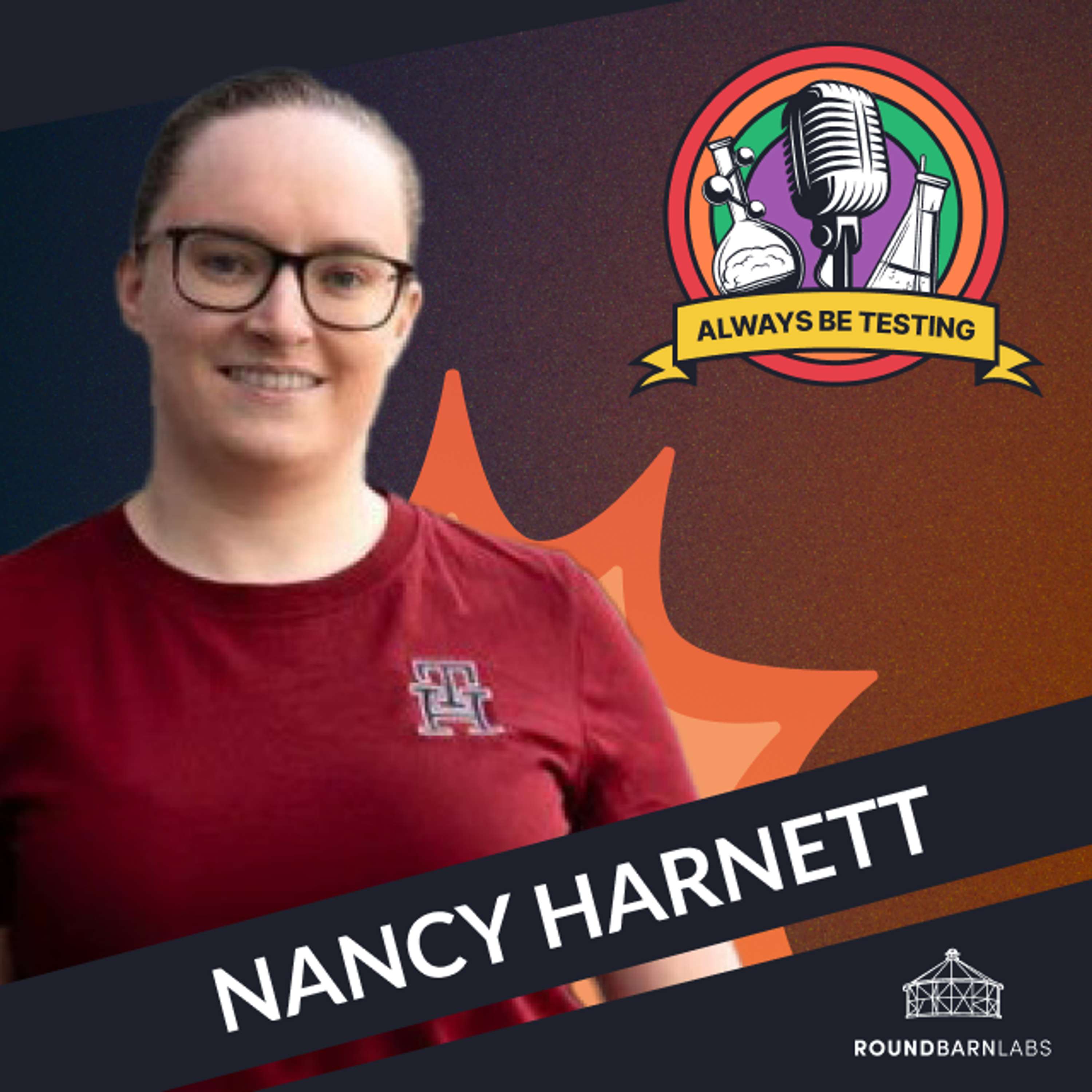
Always Be Testing
#78 Designing Sustainable Affiliate Partnerships | Nancy Harnett, Head of Affiliate Marketing at HubSpot
00:45:18
Loading summary
Transcript69 lines
- [00:00]
Nancy Harnett
Foreign.
- [00:06]
Ty Degrange
Hello. Welcome to another episode of the Always Be Testing podcast. I'm your host, Ty degrange and I'm really excited to have Nancy Harnett on. Nancy, how are you?
- [00:16]
Nancy Harnett
I'm not too bad. Thanks for having me.
- [00:18]
Ty Degrange
Ty, thanks for joining me. It's been fun getting to know you and chatting and preparing for the pod and I think it's going to be a good one. For those that don't know, Nancy runs the affiliate marketing world and program of HubSP. Kind of a big deal in B2B SaaS and software.
- [00:35]
Nancy Harnett
Yeah, HubSpot is a fairly big one. For anyone that doesn't know it. It normally doesn't need an introduction, but HubSpot is the AI customer platform that makes running your business all that little bit easier. And I head up affiliate marketing at HubSpot alongside an amazing bunch of affiliate marketers. So it's, it's amazing to be here sharing our story and to share any insights that I possibly can with you.
- [00:59]
Ty Degrange
I love it. Couldn't get any better than that. Maybe to kick us off, you know, you kind of, obviously it's, there's a lot going on with a program of that size and scale and team. Maybe talk a little bit about what it took from your perspective, you know, high level to get the HubSpot partner marketing program. It's kind of where it is now.
- [01:20]
Nancy Harnett
Yeah, it's taken quite a bit. So for context, I joined HubSpot about three years ago. I originally joined to manage our one to one partner relationships. So I didn't come in to kind of run the world. I just came in to kind of look after those one to ones and those larger partners. The program had been around for a couple of years before that, but it was at lower levels. It was kind of finding its feet in the industry and kind of finding where it could possibly go. When I came in and we started focusing on that one to one relationship model, we saw the growth starting to happen. We saw that prioritizing relationships and turning to this partner first relationship based focus really was the kind of catalyst that kind of took off that growth pattern that we have. From there we were able to kind of build out the program, build out the team. And what we saw was when we were building out the team, we wanted to prioritize what our partners needed and ultimately what they would need to become successful within our program. If we weren't to prioritize that, it would have meant probably half of where we are today. So we built the team based on function rather than based on regional or you know, any other type of just one to one partner relationship management. So we have individuals on the team that are there for partner management and there to kind of help you grow to that successful point. But we also have an optimization expert and an analyst basically within the same role. So they'll take a look at your data, they'll go through everything and they'll come back to you with the suggestions to help you move that needle. And then we also have someone who's focused on enablement, just figuring out exactly what they need and when they need it. And we're also happy to do kind of custom enablement materials as well based on the different partners that we have. So really, really successful. We also have back end support, we've got development support, we've got support across the entire organization to ensure success for us all. Because ultimately that's what we're looking for. You know, if you win, we win. And that's how we've built relationships to date.
- [03:32]
Ty Degrange
I love that there's, there's so much good stuff in there. How when the one on one kind of approach was added. Can you speak a little bit about like how what it was like before and kind of like what you mean by that approach? You kind of talked about it pretty well, but I just, I'm kind of curious to learn more about that.
- [03:49]
Nancy Harnett
Yeah, sounds good. So before I joined there were two individuals on the program who kind of became overrun with all the partnerships that they had. And it was very difficult to prioritize which partnerships required what and to give that kind of white glove treatment, if you want to call it that. So when I came in, I kind of looked at the list of partners that we had, saw who we could get quick wins out of and who we could get the most leverage out of really, really quickly and kind of approach them to work with them over calls, figure out what they need from us, what makes them tick, is it more money, is it more enablement? And we were able to kind of find that middle ground between the two areas. Then from there we kind of split out the program into two sides. So we have the individuals who do want that one to one management who want that white glove treatment. And we do have other individuals who just want email support. They want one to many, they don't want to be on calls every month, they just want to do their own thing and come to us when there's a problem. So more than happy to do that. So it's essentially moved from a managed to semi managed and self managed model now in today's world with us. But that has allowed us to scale the different partners within the program while also focusing on what they need. So it's really changed how we work and it's allowed us to prioritize partnerships, it's allowed us to prioritize the different aspects within that single relationship and know our partners one to one, even if they're on that self managed platform, we're able to kind of keep the notes and figure out what they need and so on, so forth.
- [05:29]
Ty Degrange
Killer answer. I love this. And it's, I think it's so interesting because in affiliate marketing everyone says, oh, it's an, it's a relationship business, it's a relationship business. But I think it's. There's a few, there's a. People don't understand that spectrum. People don't understand the lengths at which the best of the best, like yourself and your team, do for partners and think about partners and how they interact with them. Now it reminds me back to my ancient history days at ebay when ebay was like kind of like this pinnacle of management and investing and they'd have like a, a partner day, which they still have. It's not rocket science. Multiple brands have done great jobs with this, like inviting their partners in person. But I think like the takeaway from my thought on this is like you're really customizing their need, you're really seeking out solutions for their needs. Specifically. You're not just saying here's our program, take it or leave it, here you go. You're saying we're going to kind of cater this to you.
- [06:27]
Nancy Harnett
Yeah, 100%. And it's something I say all the time is you have to think of your affiliate program, your partner program, whatever program it is like an extension of your sales team. They cannot be successful. Think about it. Your sales team can't sell if they don't know what they're selling. They can't, if they're not enabled correctly, they're not going to make the sale, get over that line. So it's the same for our partners. If we're just opening up an affiliate program and hoping for a set and forget it type of a scenario where you just think people are going to join, they're going to start selling, it's going to be great. It's not going to work that way. It might initially when you have the excitement around the program, but over time it's not going to grow, it's not going to scale. So you have to prioritize those partnerships. That means showing up at industry events. That means being there for your partner in more ways than one. For some of our partners, they don't like emails. So we work with them on like WhatsApp, some of them. WhatsApp me, you know, it's whatever way works best for them and that's how you get the most success out of it. If you're not putting your partner first, you're just not gonna, you're just not gonna win, are you?
- [07:34]
Ty Degrange
Yeah, I think it's brilliant. And I think thinking them, the concept of like treating them as employees, extension of the team, almost as like volunteers, they, they don't necessarily have to promote a brand. Brand one, they can decide they're going to promote the competitor or another brand. And I think it's like, I think it's such an important piece that gets, there's lip service mentioned about it. Obviously those that are pretty close to our industry and well experienced in it and know it kind of understand it at this level. But I think it's such an important reminder to, to really think of it in these terms that you kind of the, the partner is only as successful as the being teed up by the brand. And it is truly a partnership and a collaboration and a two way street. To your point.
- [08:23]
Nancy Harnett
Yeah, absolutely. Once your brand invests, then you're good to go.
- [08:27]
Ty Degrange
Yeah. And I think it's kind of like almost analogous to investing in marketing in the first place or investing in hr. It's like these things are obviously not easy or free or available to everyone to have that white club level service. But knowing what the North Star is, I think is really cool that you're referencing. It's like, how do you calculate these bets? How do you measure them? How do you kind of invest at the appropriate time to say, hey, we're going to go all in on this? And it sounded like the ROI was there in spades, which you described previously. You implemented this approach of more of a one on one methodology and it essentially doubled from what, from what you've shared, which is kind of validating.
- [09:12]
Nancy Harnett
Yeah, it definitely is. I mean one of the things that we take pride at of here at HubSpot is we fail and we fail fast. We're always testing, we're always experimenting. And again with us working on that one to one basis, we're able to tailor everything and customize it to that specific partner. We're able to take a couple of dollars and just put it into this test, run it for a month or two, see if it works. If it doesn't, then that's fair. But ultimately, the way that me and my team work is if we're leaving an opportunity on the table, it means that there is something that could be a potential big needle mover there for us that has just been wasted and we don't want that. So we fail. We fail fast. We move on. If it's successful, we try and emulate it across other partnerships or we try and emulate it across the program. And ultimately we, we can better relationships that way, but we can also better the experience that the partners have within the program if it's a program level experiment that we're working through. And that's why I think it's so important for brands to be okay with our ROI is going to be this, and that's great. But we also need some budget to test and to try new things. Because if we're just doing the same thing every day, we're going to come out with the same results. But we want to make sure that we're growing, we want to make sure that we're testing, we want to make sure that we're experimenting and getting that change and getting that potential mover that can help us do even more within the program and with partners.
- [10:45]
Ty Degrange
That's amazing. I think that's another thing that sounds like it's a big separator from really best in class programs. It's something that you've seen be key. Is there a test or a type of test or experiment that you maybe want to share? You don't have to give us all the details or the data and anything proprietary. But I'm just thinking about to help the audience understand the level at which you go to, to think about experimentation and how important it is. And, you know, we don't need to know all of it. But is, is there a test in particular that maybe comes to mind that you thought, man, that was really interesting. That was really something I didn't think was maybe going to go as well or as good as it did. And just curious to hear if you have one that comes to mind from your experience.
- [11:27]
Nancy Harnett
Yeah, there's a couple that come to mind. But I think my favorite one that we've done is obviously with HubSpot being HubSpot, we do have a large freemium model. So it's really, really good freemium model, but it just means that sometimes it can take a little bit longer for you to get your cash. So what we did was we actually reached out to some of our partners that were on the revenue Share aspect and said, what more could we do to potentially ease that gap between the freemium and the sign up or the sale? How can we help in that? So a lot of them came back and said bonuses would be great and you know, flat fees would be great, whatever. They came back with a different feedback. For us that was only a short term gain. We're here for long term impact and long term relationships. So me just giving you a bonus was not going to do anything. It might take this thing off now, but. But it's not going to take a sting off in a long term relationship. So you're just going to come back to me looking for another bonus next month and I can't keep doing that. So essentially what we did was we looked at different models that we could essentially implement that would still mean that the ROI would remain positive on the program, but the partner would also be winning. Because again, we look at this like a win win situation. If I'm winning, you're losing. It's not a good partnership and it doesn't make sense for us to continue. So we need to make sure it's balanced. What we did, we looked at those models, we implemented a few on a testing basis. We saw what worked best and then we were able to take that there and roll it out to the rest of the program. And some of them didn't work and that was completely fine. And I'd spoken to various other people in the same industry as me, they'd come up with these different ideas and they worked really well for them, but it didn't work for HubSpot and that's completely fine. But ultimately what we did come to was a great way to match our self managed partners and us and bring them together so that everyone was now winning again. And they're still getting that revenue share, but they're also getting something in the interim while we're waiting for that to come down the funnel. So that's a really cool experiment that we did run and I think one of our most successful.
- [13:37]
Ty Degrange
I love that. So again, not to give away too much intel, but like not quite the flat fee bonus, not quite a flat fee, not quite a bonus, but giving them something leading up to first action or kind of like covering them a little bit during the freemium period. Is that the gist of it?
- [13:56]
Nancy Harnett
Yeah, essentially. So rewarding them for a different action. It didn't have to be the sale, it can be something in between. And I think that was a great win. We're seeing kind of a big shift in the last year to these flat fee payments 100 and completely understand it, especially with the Google updates. And they were trying to figure out a way to, to kind of fill that gap revenue wise for themselves. But ultimately I don't think that they're working for partners. I think if anything they kind of build a small bit of distrust between partnerships and relationships because you've got me investing in your flat fee. Your flat fee is returning for me then performance wise and I'm struggling then to justify that in that investment again. So it kind of adds a little bit of complexity to the relationship. Keeping on that performance basis really is the way to go for us and that's how we win with our partnerships.
- [14:50]
Ty Degrange
Yeah. And I love the outside the box thinking of, really feel this philosophy deeply and we talk about a lot internally on our team about there's a lot of actions that a partner can drive. Let's think outside just the North Star metric. Let's think about some of those ancillary supporting metrics. When a partner does a lot of the lifting to get someone to your site, it's not necessarily always in their control what that consumer chooses to do at that point. And so thinking about how do we attribute, how do we look at the overall data. But I like where your head's at with that of like how do we kind of give them something to kind of keep them engaged until that payoff period. And I, and I really think your call out of incentive alignment and long term thinking is really, oh man, it hits home for me. I just feel very passionate about long term thinking. Working with the right people for long term it's, it's not easy to do but I think it's a, it's a very stellar call out for affiliate managers and people that want to be best in class and thinking about affiliate marketing.
- [15:54]
Nancy Harnett
Yeah, definitely long term is, is the only way to work really. If you're looking at short term you're like kind of expecting for someone to leave or some or a brand to drop you. And I think I've seen that with some of our partners with various different brands that they're working with where investment comes in spades now and then they pull back and it's kind of for us. We want to ensure that you see the longevity, you see that we're here to work with you and to build that relationship and we want to ensure that that continues over time and not us having to pull back because we've invested all this money. It's not worked and now we've got to pull back. We'd rather start small, work slow and build up. And that's ultimately how we've made success in the program from an ROI standpoint.
- [16:41]
Ty Degrange
Not to go too far down the HubSpot pitch, but would you say that the HubSpot culture supports that and like, and if so, kind of like how that seems like they're long term thinking, you know, believers and to some extent as much as they can be in their business. And I'm just curious how that plays into being able to think long term in your affiliate program.
- [17:02]
Nancy Harnett
Yeah, I think we're very lucky that we are working for a company that believes in what we're doing. Plus they trust in the people that they've hired to do it. I mean, my management are very, very open to new ideas. They're open to the tenacity that my team are able to come to the table with to figure out new ways to grow the program. And having worked for brands or worked with brands who haven't had that understanding between leadership and the down funnel is very, very difficult to kind of bridge that gap. But ultimately, us being able to kind of come together with our leadership team and figure out what that might look like has been a huge win for us, the brand as a whole, the company as a whole. You know, we prioritize our customer and that's ultimately where we start our program from is, you know, we're looking at our customer, how can we work backwards from there? And then for us at our level in the program, we prioritize our partner to ensure that our customers are being prioritized. So building up that experience, working with partners to better their experience for our potential customers, they're the big things that we focus on and that ultimately the company want to ensure works with our partnerships.
- [18:18]
Ty Degrange
I love that. The question of what, what do best in class programs do differently? And we've hit on so many amazing examples already. But you bring up this concept of, you know, addressing the customer thinking pro customer thinking in a customer centric way is there are things in particular around, like the user flow or just around thinking about the customer specifically. That is kind of part of this, you know, how to separate yourself from the pack as a, as a real top affiliate program.
- [18:49]
Nancy Harnett
So we look at where our customer fits in across the entire funnel stage of a partnership with us. So from recruitment, we look at our customer and we work outwards. So where do our customers hang out? What are they looking for? How can we bring them value? And from there we build up the different partners that we work with within those different niches that we're looking to target and we bring them only the top quality. We're not looking to work with spammy websites or have our logo on the wrong website. We're looking for the correct places that our customers are going to prioritize from there. When we bring up partner on board, we're looking to make sure that the messaging is correct, that they're getting everything they need in the one spot and that anything that comes through to our website is one fluid motion. So we use co branded landing pages so that people know that there's a connection between this website or this content and, and HubSpot that they are working with us to ensure the best quality product for you. And ultimately, you know, there's a lot of places that are standard for SaaS to be working on and we want to make sure that if our customers are coming through from those standard areas or from areas outside of those standard, that our customer is being prioritized, that they're finding that value and that the value is the way to the, to the HubSpot ecosystem. Essentially.
- [20:11]
Ty Degrange
Unbelievable. Yeah, there's a lot of, there's a lot of good stuff in there for folks to think about and you know, not to like repeat or belabor too much, but I think that there's just such an interesting education opportunity where a lot of these principles are known and talked about. But the level at which they are executed, the level at which the details are laid out is I think a really exciting opportunity for all parts of the ecosystem and particularly the brand to make sure that they're getting the most out of it. A lot of them say they want to have long term, A lot of them say they understand affiliates different, but I think kind of supporting them and saying like, okay, how do we get you from A to B? It's not an easy process, not an easy, you know, thing, but, but here are some ways to do that that you get to kind of choose and kind of select from. You know, not every brand is going to be able to invest at the level of HUDs. HubSpot, that's just a given. That's kind of a thing that you all have built out and earned and now you kind of have that ability to really play at the highest of levels. But I find it really fascinating when you can show people what's possible like this conversation and be like this is, this is could be your brand if you actually invest in this appropriately. And it's obviously not going to happen for every business. Not everyone's a multibillion dollar, amazing SaaS tool. It's growth levers of HubSpot. Not everyone is, you know, invested in it and understands it, you know, somewhat top to bottom, as you alluded to. So some really powerful learnings on this and I appreciate you sharing them.
- [21:48]
Nancy Harnett
Yeah, absolutely. And like I said, I've worked with many different brands that are not at the level that HubSpot is at. And I think for them it's about prioritizing what you need to get done and what you can get done within your, your time frame and within your scope. Don't aim for the HubSpot level initially because you're not going to reach it. We have a team of, I think there's seven of us or eight of us internally now with a full development team. We've got support staff, we've got everything. You can't expect the world if you've only got one headcount working on the program. And I think it's managing those expectations, having slow starts, figuring out what your priority is, aligning it back to the company goals and then go out and find from there and build it up slowly. And I think that's the only way you can do it because otherwise you will fail. You will fail.
- [22:36]
Ty Degrange
Yeah. If a brand and kind of going down a rabbit hole brand comes to you and is like, all right, we're a sizable brand or let's say we're maybe B2B SaaS or E Comm, you can select whichever you prefer and we're going to go live. What do you think about in terms of timeline? Just. I know it's kind of a tricky question, but you know, if they're investing properly, they're kind of checking the boxes of most, you know, the best practices. I'll say. And I'm just curious to know your perspective on thinking about expectations and what you kind of would advise someone just coming to you separately off of. I'm curious about those timeline expectations. Obviously those are always things that kind of come up for folks.
- [23:19]
Nancy Harnett
Yeah, I think I've gotten these messages before and I've worked with these friends before who think that they can get it live within a month and amazing if you can, if you can get everything right within a month. But ultimately to get your program from idea to implemented to ready to kind of see more of the world, you're looking at about a year to do everything. So from the idea phase, you're trying to get business buy in, you're trying to get stakeholders, you're trying to get Investment from the company, that can take maybe three to six months, depending on how long your internal workings work. From there, you're looking at building out and picking a platform, implementing that platform, making sure its attribution model is correct and works for your business, getting all the marketing enablement in play, getting creative or video. If you want to invest in that, you're looking at a headcount to run this program. Because Set and Forget doesn't work, although some companies think it does. You're looking at legal. You need to get your terms and conditions in play. You need to get separate contracts in play. If you're not managing it through a platform, you need to make sure your tracking's in place. There's so many things that you need to get ready that it can take the six to 12 months to be fully ready to go live. So that's usually what I say is that if you're looking to spin up a program, you have to give it the time to actually fully form and to figure out any nuances that you might come across within the different areas. Ultimately, when you're looking at HubSpot's program, you're looking at what do we do? How can, how can I emulate that? Working out your commission structures, working out your, your different, what partners you want to go after. Yeah, it's a lot. And you're looking at about 12 months before you're ready to kind of, maybe you'll start welcoming partners, you know, before that. But when you're looking at really getting to work and actually having them push for you, you are looking at about a year.
- [25:16]
Ty Degrange
Yeah, I think that's an important reminder for folks and it's an exciting. Within that lens, there's a lot that can be done. There's a lot of like progress to be made to show. But I think it's such an important call out. I don't think people always realize it is a little bit of a different animal. It can be your best performing channel, can be your most efficient channel. It can be a meaningful diversification lever. It can make up, you know, 10, 20 more percentage of your revenue out of the marketing mix. But all of those things have to be dialed in. I love your attribution call out and your tech, your platform call out. Speaking of that, a little bit of a turn when you think about tech stack, when you think about platform, what are some of the things that you're implementing that you can share with us or just turn using just a HubSpot and understanding more about maybe recommendations around that yeah, I'd love to hear your perspective on current platform and platforms in general.
- [26:13]
Nancy Harnett
So currently at HubSpot we work solely off of Impact. So Impact is what we use for tracking for payments for any contracting and it works really well for us. What we've done then is we've set up a custom API between impact and HubSpot. So we actually use HubSpot as our PRM or our CRM, whatever you want to call it. And that is where the day to day management comes in. So we have everything built out for everything from recruiting new partners to onboarding existing and maintaining and managing the remaining that have been onboarded already and are ready to start rocking within the program. So we use HubSpot in that sense. Outside of that we have quite a few different pieces of tech to ensure compliance. So you've got ad tech or adplice, I should say. Adplice is everything to do with fraud for us and compliance. We also have Breezy for the recruitment and to find new partners that might be a good fit for our program. We also utilize an agency, so we're working with an agency to kind of supercharge that recruitment at the moment so that my team can focus on optimizing and really growing the net new or the net existing partners that we have, I should say. And then outside of that, you know, other pieces of tech that I've worked with are the likes of PartnerStack and we've worked with now drawing a blank. We use a lot of AI tools. AI has become like a whole new thing for us and we're kind of bringing a whole new meaning to it by affiliate intelligence, if you want to call it that. So we're now using AI, we use Claude, we use Gemini, we use ChatGPT, we use them all to enhance that experience that we have for partners and to better that experience for our customers working with us via the different channels. So essentially we're able to do tasks an awful lot quicker, we're able to support our partners at a higher level again and to get more done in less time, which is the whole premise of tech and AI, essentially. Yeah, so that's kind of the high level. I'm drawing a blank on other tech right now.
- [28:28]
Ty Degrange
But I mean that's a lot, that's a lot to chew on. It's a really impressive suite of things and tools to think about and I think it gives people a lot to consider and research and be aware of. I think you did a great job laying that out. And yeah, I think there's Certainly another episode could be dedicated just to the tech stack itself. So well done. In terms of pitfalls or things to avoid, are there anything that you think folks get tripped up on? I think we covered some of the, conversely, the positives of the best practices. But are there things that you think people should be thinking about when they want to kind of avoid those, those mistakes and learn from the mistakes of others a little bit?
- [29:12]
Nancy Harnett
Yeah, I think in any program, no matter what like stage they're at, I think compliance is, is a really big one, ensuring that everything that you have, that fraud is being watched. Ultimately you have amazing people in this industry and partners that we work with are fantastic. But you do have bad apples. That does not mean that your orchard is rotten. It just means that there's one or two people that are out there to game the system. And ultimately having different tools, having different ways to identify what that might look like is important for you and for your business. If you have a partner who's driving in traffic and it's not converting or all the emails look very similar. So they're all Gmail or Outlook or whatever. They're all coming from relatively similar IPs or similar locations. There might be a red flag there. And what I always say to people that I work with is if it feels wrong and if it doesn't, like sit well with you, there is likely something to be looked into there and it's important to prioritize that. It's important to make sure that you are looking into that and it's important to make sure that your team is aware of what to look out for going forward outside of that, on the partner side, like I said, it's the flat fee side of things. I do think that we're going to see maybe a shift away from that to more value based in the next year. But essentially for me, long term partnerships make more and are better gains than the short term impact. So yeah, they're kind of the areas that I would say are pitfalls at the moment within the industry.
- [30:52]
Ty Degrange
Yeah, no, I love that. I appreciate where we're going with that. I think it also kind of just expands on the good things to focus on and the good things to think about. And I think we covered some of those in the beginning as well. So there's a lot there for people to chew on. We think about the partners and I kind of think about them as kind of the lifeblood of the ecosystem. They're really doing the lifting for a lot of the ecosystem. It's who's Driving the transaction to some extent. Right. Or bringing people to, to the world. Hubspots of the world. What are some maybe that you think are underappreciated or maybe unsung heroes or of the partner world? There's a lot of different partner types and I think some get kind of the hot. They're on the hot list and everyone's trying to, you know, grapple for them and pay them top commission and thought fees and whatnot. But what are some that you think are are notable that you want to discuss that are worth talking about in podcast?
- [31:48]
Nancy Harnett
I think one of the things that we've started looking at is kind of collaborations. So you're looking at internal partner programs. Again we have that benefit at HubSpot because we've got many of them. But our tech partners, our app partners, our HubSpot for Startups partners, can we come together with Those and share HubSpot further? So these all have networks themselves, they all have different audiences. Whether that's through content, whether that's through email, through their own product, whatever it might be, utilizing those partners are. It's huge at the moment and it's kind of that step outside of the typical that you would see. We found great success in working with our different internal partnership teams and even our solutions partner program. Some of those individuals may have content that they want to monetize and so it's not always on a one to one basis where they're working with these individuals. We're able to come in and support that partner and really help them get to that next stage with their business. So that's what's exciting for us, is helping other partners within our company to do more with HubSpot and to kind of keep HubSpot at the center of everything that they're doing. But outside of that, you know, other things that don't typically work for us but are working for other brands, you know, you've got card linked offers, they're doing quite well at the moment. You've got banking, apps, et cetera, et cetera. There are different areas that are now springing up across affiliate and it's not just your typical the old saying that used to be there, which was it was just someone behind a link. It was kind of this dark coded figure down an alleyway that's no longer there. These are tangible partnerships, these are people behind the link. And essentially you're looking at not just individuals anymore, you're looking at large organizations. And that's what's most exciting about the entire industry right now. Is just how big it's gotten even in the last number of years. It's huge.
- [33:49]
Ty Degrange
Yeah. The maturity, the professionalism, the investment, the technology. I think the coolest thing is there's such a entrepreneurial spirit and a small business aspect to it where you're kind of investing and placing bets on entrepreneurs and small businesses. And that's such a big part of the ecosystem and such a positive part of the ecosystem too generally. And I think that, yeah, you're spot on about, I think where you know, it's going and kind of there's so much more than kind of typical. Here are the three to five partner types. You know, it's, it's almost, I think that's partially what draws, you know, myself and many others into the ecosystem. There's a lot of creative license that can be taken. Right. And you, it is multi channel. You've got, you know, full on integration partners for the B2B SaaS World. You have traditional brand to brand partnerships that can, can essentially be managed or reported on and paid out via affiliate ecosystem. So there's just so much and then creator is a whole other world that we haven't even gotten into. So. Well said. There's a lot there and I think a webinar breakdown is coming soon for the future. But we've done it before on the newsletter. You laid out some really good ones here and appreciate that.
- [35:14]
Nancy Harnett
Yeah, absolutely. More than happy to share and I'm glad that there's been some value as well.
- [35:19]
Ty Degrange
No doubt. And more to come. And I think you obviously have a lot of things firing on all cylinders. No system or team or affiliate program is perfect. Are there particular challenges or things that you're willing and able to share that kind of speak to some of the things you're looking to accomplish this year?
- [35:38]
Nancy Harnett
Yeah, I think the stage that our program is at, we're at a very mature state is what I would call it. So we've kind of tapped out all of the traditional areas that we could potentially grow our program via. So now we're having to create new opportunities. We're having to go out and work with different types of partners than what we're typically used to. And we're having to create those areas of green space for ourselves to essentially continue the program growth that we've achieved over the last number of years. And for those like for that a lot of people would say that's daunting. It's something that will require quite a bit. But again, like I said, we fail, we fail fast. For us it's exciting, it's something new for us to try. It's different outside of our day to day and it's ensuring that we're still contributing as much as we do to the HubSpot as a company. So I think that would be the biggest thing for us is maturity. We have identified a good few areas of green space for ourselves and we are definitely going to go out and, and tackle those over the next few, few months. But that's kind of the biggest thing, I would say.
- [36:48]
Ty Degrange
That's amazing. Yeah, there's something unique right when you, when you have a, a mature program, there's, it presents a new set of challenges where you've talked to like a pretty sizable percentage of available affiliates in the market and available tested, available, tested a lot of things, seen a lot of things. So think of almost like a mindset way of thinking that you have to kind of come with. And I, I, I think some of the aspects I have always loved personally when either it's a new program that makes it even more, you know, scratching of the itch of like the hunter mindset of like what else is out there that we should be looking at. You're almost putting that like sales hat slash conquest marketing hat mindset on or, you know, it's an interesting thing, you know, psychology. I don't know how to describe it, but I've always enjoyed and appreciated that. And it's a fun challenge to kind of wrap your arms around, especially when you have so many partners already in the ecosystem. And so I think it's fun. And also looking at existing, there's a lot that can be done. The partner that you've been collaborating with for maybe years and maybe you've tried everything, but there's always something else. The always be testing is not just the title of the pod. And thinking about what's next is important in marketing. And I think even I'll end with just, I've talked about this recently, but stuff's always coming out around just the cycles that we, we deal with, right? The cycles of creative, of landing page, of brand, of aesthetic, of data. It's like these things come in cycles. Some of these things are never going away. They're, they're principles that we, you know, kind of continue to work on. But it is very important, I think, to think about what wave are we in in a particular tactic, a particular campaign type, a particular partner type and be just aware of what that is. Are you early on that curve, are you mature on that curve, are you late? And I Think it's a, you're kind of calling that out as well. And I think it's an important thing to think about. When you think about your recruitment strategy, your creative, your how you activate and how you optimize. I think those are, those are important things to note. Is it obviously it's impactful to the consumer who's engaging and then is it really hitting as it should? Is it performing as well as it should? So great call outs.
- [39:05]
Nancy Harnett
It's something that we're excited for. We're excited for the future of affiliate. We're excited for the way that the industry is changing and it's developing. And I think if anything the industry is just going to gain more respect. As I said, you know, it's long change from where it was to where it is now. And I think that's going to be the most exciting thing for, for everyone in the industry.
- [39:26]
Ty Degrange
Yeah, I love it. Nancy, let's go down the home stretch with some fun questions. You've been very generous with your time, so let's do this. You got any good book or resource recommendations to share?
- [39:40]
Nancy Harnett
One book that I love and it kind of centers at the. It centers. Everything I Do is Nudge by Richard Taylor. So it's a behavioral economics book and it basically shows why people buy what they buy, why they do what they do and why different triggers pull and push against consumers. So we're able to essentially take some of those learnings from that book and apply behavioral economics to the way that we work not only with our partners, but the way that we work with our customers. And essentially if you read it, you'll understand that everything that we do and everything that we are as a species use behavioral economics, especially if you're living in the capitalist societies that we are.
- [40:24]
Ty Degrange
That's amazing. I love that. That's a definite, definite must read, I think for our industry. Might have to get your Amazon link in there too.
- [40:34]
Nancy Harnett
Yeah, yeah, exactly. Get Google Gemini to give you a quick synopsis. There you go.
- [40:40]
Ty Degrange
There you go. That's the beauty of the world we live in now. Information at our fingertips. Really catered. Well, quickly, is there any more, any fun guilty pleasure in fiction that you have to share as well? Since we're going down the book rabbit hole, I figured I'd stay there.
- [40:57]
Nancy Harnett
I think there's different things like atomic habits. I think everyone has read atomic habits. Other areas. I'm just a Harry Potter kind of a person.
- [41:06]
Ty Degrange
Love it.
- [41:07]
Nancy Harnett
I enjoy other business books like Making of a Manager and you know, Invisible Women etcetera. Etc. There are certain books that are out there that are kind of built to really hone in on different consumers. So I just love it.
- [41:22]
Ty Degrange
That's beautiful. I love that. Very cool. Is there a software non HubSpot that you kind of rave about love to use into?
- [41:30]
Nancy Harnett
Yeah, I think I mentioned quite a few of them for recruitment it's brazy IO for compliance. We use adplace for just my day to day and running how I run AI so everything AI now has taken over my life and I was explaining this the other day to my own mother and she's now using AI on her phone to do bits and pieces. So I think it's changing how we work and it's for the better. It's to improve efficiency and not to remove jobs which is I think the misunderstanding there. So yeah, Claude, Gemini, ChatGPT and a few other models that I'm looking at at the moment.
- [42:12]
Ty Degrange
Yeah, I love it. I'm a, I'm a huge fan. The level at which I've adopted it, the percentage taken over my, my search use case is, is. Is quite astounding and I think it's been a net positive I think. Yeah it's been exciting and I think our team has done some fun stuff. We hit a. With a full on contest and kind of paid out winners for their greatest ideas. Had some amazing submissions on our team and so it's been fun to like see the team level up their usage across the board and come up with really, really creative and even very technical examples and we're just getting started with that so more, more to come there. I'm glad to hear it's, it's positive for you as well.
- [42:54]
Nancy Harnett
Yeah, I love the idea of the contest. I think I'm gonna steal that one.
- [42:58]
Ty Degrange
Yeah, it's great like use it and know and it's amazing to see what people come up with to help each other help the org. There's a lot there. It's fun. We had fun with it. Yeah. And just Nancy, maybe final wrapping up. Is there something that maybe the audience doesn't know about you that you want to share?
- [43:16]
Nancy Harnett
Yeah, it's a great question. Huge supporter of Arsenal Women's the soccer club in the uk. So I travel to the UK to see them quite often. Outside of that I'm a big animal lover. I think we spoke about this briefly beforehand but anything with four legs I'm more than happy to. To deal with a dogs, cats, horses, etc. And I have a motorbike and most people don't know about my motorbike, but I have one, and I enjoy getting out now as well.
- [43:46]
Ty Degrange
That's awesome. I'm picturing you, like, zipping through the country roads of Ireland and, like, you know, full throttle, like, going fast. Is that. Is that accurate?
- [43:56]
Nancy Harnett
Semi accur. Yeah, semi accurate.
- [44:00]
Ty Degrange
All right. I'll take semi accurate as a win.
- [44:03]
Nancy Harnett
Yeah, exactly. You know, can't spill all the beans, but, yeah, semi accurate. We'll go with that.
- [44:09]
Ty Degrange
Fair. Okay. As long as you're being safe. Your helmet. You got the gear? We're good.
- [44:14]
Nancy Harnett
Fully suited and booted.
- [44:15]
Ty Degrange
I don't know if I can trust myself on one of those things. As you shared earlier, I'm trying to beef up my return to my horse roots a little bit, and we talked about that a little bit. So it's fun to hear that you have a love of the horse. Horse as well, and to be able to ride and appreciate them as beautiful, great animals that they are. Is cool. So definitely cool to hear that you have that shared passion.
- [44:38]
Nancy Harnett
Absolutely. Yeah. I love horses. I love. They're just such emotional animals, similar to dogs. But absolutely anything with an animal, I'm there.
- [44:48]
Ty Degrange
The connection and then knowing what you're thinking and all that is just. Is a cool thing to do and experience.
- [44:54]
Nancy Harnett
So, yeah, absolutely.
- [44:55]
Ty Degrange
Awesome. Nancy, you've been amazing. This has been a rad conversation. I'm just grateful that you spent the time with us. And, yeah, I hope you have a great rest of your day. And thanks, everybody, for tuning in.
- [45:05]
Nancy Harnett
Thanks for having me.
- [45:06]
Ty Degrange
Thanks, Nancy.
- [45:06]
Nancy Harnett
Bye.