← Always Be Testing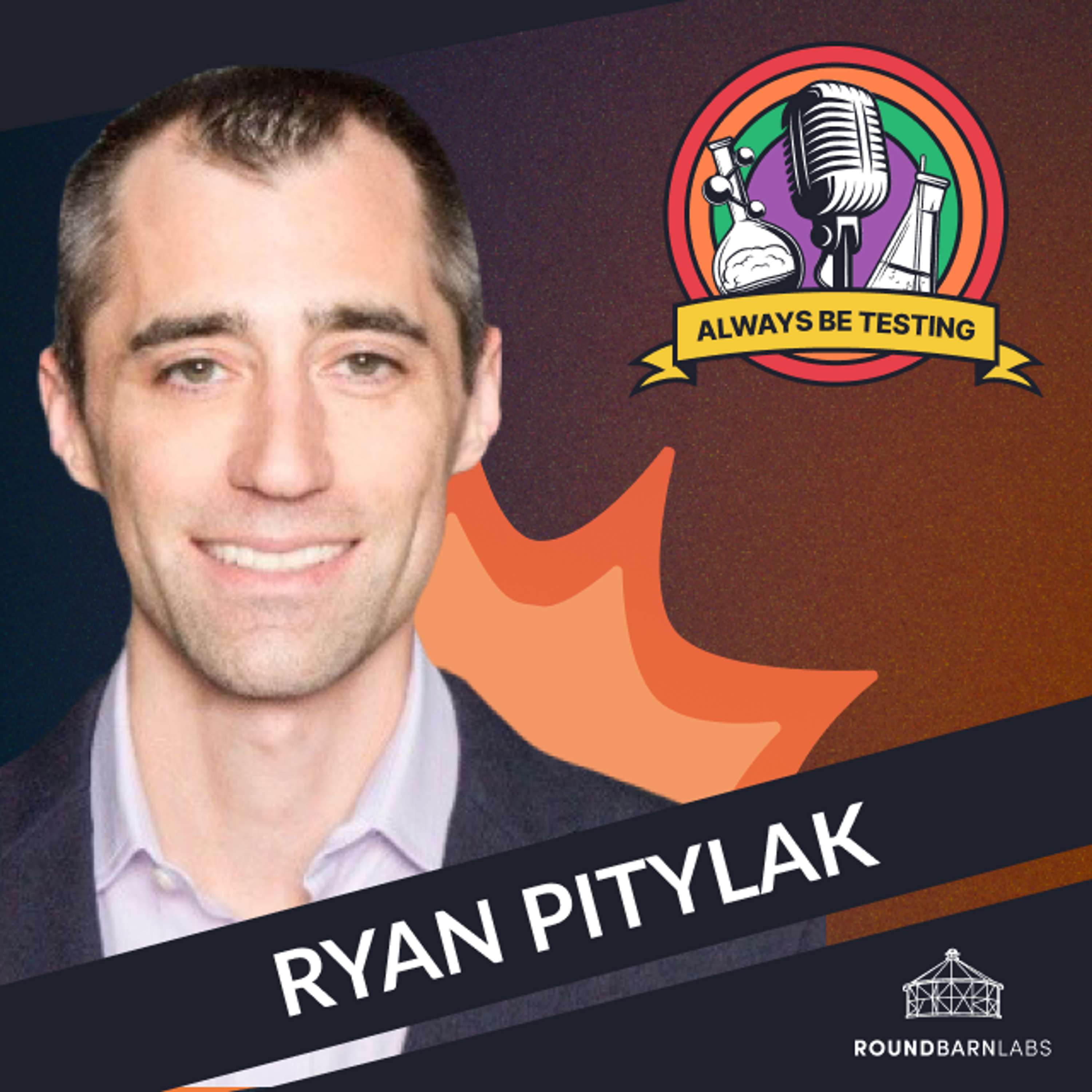
Always Be Testing
#79 A Holistic Approach to Full-Funnel Marketing | Ryan Pitylak, Executive Vice President of Growth at NinjaTrader
00:51:09
Loading summary
Transcript135 lines
- [00:00]
Ryan Pitolak
Foreign.
- [00:07]
Ty Degrange
Welcome, everyone to another episode of the Always Be Testing podcast. I'm your host, Ty degrange, and I'm really excited to have Ryan with us today. Ryan Pitolak. How you doing?
- [00:16]
Ryan Pitolak
I'm great. How are you doing, Ty?
- [00:17]
Ty Degrange
It's good to see you.
- [00:18]
Ryan Pitolak
Yeah, you too.
- [00:19]
Ty Degrange
In person. We do a few of these remotely. Here we are in Austin, Texas, and Ryan and I go quite a ways back to his days as an agency leader. He's been a really, I'd say, prolific growth and performance marketing leader in your career, so.
- [00:34]
Ryan Pitolak
Well, thank you. Yeah. It's crazy how long we've known each other. I think back to those expressionary days and greeting cards and stationery.
- [00:44]
Ty Degrange
The world of stationery.
- [00:46]
Ryan Pitolak
Checks in the mail.
- [00:47]
Ty Degrange
Checks in the mail. Yep. Brings back memories.
- [00:49]
Ryan Pitolak
It does, doesn't it?
- [00:50]
Ty Degrange
Yeah, absolutely. Yeah.
- [00:52]
Ryan Pitolak
It was a long time ago.
- [00:52]
Ty Degrange
Spent some time at CJU with our friends down there.
- [00:56]
Ryan Pitolak
Yeah, it's beautiful there in Santa Barbara, isn't that?
- [00:58]
Ty Degrange
Absolutely, absolutely. So you're now VP of Growth at NinjaTrader. That's amazing. Maybe just give us a little bit about that high level role and kind of what you're working on.
- [01:11]
Ryan Pitolak
Yeah, definitely. So for context, ninjatrader is a retail futures brokerage and software company. So we provide a trading platform for retail traders to execute their futures trades on. And if you're unfamiliar with the futures instrument, it's a, it's effectively a derivative instrument similar to maybe an option, it's leveraged. It's a great way for somebody who doesn't have a lot of capital to enter the capital markets in a leveraged way. And in my role, it's really an exciting role. So I've been a trader for about 15 years myself. Personally, I've been through it all. I mean, it's a challenging journey. And the nice thing about it is there is a pathway to learning how to trade and to do it effectively. So in my role running Growth, we're building a bunch of education and tools to help traders become better.
- [02:06]
Ty Degrange
That's awesome.
- [02:07]
Ryan Pitolak
Yeah. If you're aspiring to be a good futures trader, we're going to be the place where you go to learn and get the practice that you need to hone your craft so trade effectively in the live markets.
- [02:18]
Ty Degrange
And just out of curiosity, kind of off the cuff here, is there certain things that you kind of look for? It's like, how seasoned are these traders? How new are they to the world of futures trading?
- [02:29]
Ryan Pitolak
Yeah, well, so we certainly get traders of all type. I mean, you know, there's certainly people that are new to trading in general. Typically people come to us and they've had some trading experience already, usually stock or options experience, and they're trying to find the instrument that suits them. The, you know, meeting people where they are is what's important. And so, you know, being able to provide resources that work both for if it's your first day or if you've been at it for 10 years, that's something that we're going to do.
- [03:02]
Ty Degrange
Awesome.
- [03:02]
Ryan Pitolak
Very cool.
- [03:03]
Ty Degrange
No, it's super interesting. I'm definitely not in the futures arena and I don't think I would consider myself a trader per se, but I think that world is fascinating. I enjoy keeping up with it and I think we have some folks in the audience that probably find it interesting as well. I think there's maybe a little similarity between some of the performance marketing world and some of the trading world.
- [03:23]
Ryan Pitolak
A lot of numbers, a lot of data, a lot of analysis.
- [03:25]
Ty Degrange
Yep, you've seen a lot in the world of performance marketing, to say the least, running an agency, leading growth and performance marketing for significantly sized brands. What are some of the changes that you've seen in the last couple of years? Obviously it changes quite quickly, so super curious to hear your perspective on that.
- [03:43]
Ryan Pitolak
I am. I remain plugged into the performance media buying world as a result of some companies that I advise. And the biggest change I would say that I've seen persist and accelerate over the last few years is the predominance of AI to drive performance outcomes. The reality is like when everything was going on with ChatGPT and everybody was getting so excited about it, you know, the. Some of the biggest use cases of AI in the digital world were actually with the major advertisers, Google and Meta and their bidding algorithms were such that, you know, you typically would give it some targets and it's going to set your bids and it's going to try to find the right people to show the ads to. And frankly now, now more so than ever, you're giving it components of a potential ad and it's deciding which combination of components of the ad should be shown to that particular person based on what they know about them. And so that all of a sudden becomes like the standard. And I think about like for Meta, even if I go back, man, probably only about five years ago at that time you were still doing a lot of audience selection and curation. And you know, Meta has this comment that they say, they say that creative is the new audience targeting and you know, that's largely True. I mean, generally speaking, you keep the targeting really broad and you have a really good solid ad. And then that ad will resonate with people who are in your target and therefore Meta will know to show it to more people like that, Google created a new product over the last few years called Performance Max and more recently a new product called Demand Gen. But if I kind of hone in on Performance Max, what is that product? I mean, it's effectively you saying to Google, here are some guardrails of the type of people that I want to find. Here are my ads, here's my budget and my target of what I want to get a customer at and go find them for me. And so that's really handing over like a lot of reins. And so I think as a result you need fewer people. The last trend I'll hit on is in the AI vein when it comes to like search engine optimization. You know, typically you would look for people who are coming from and searching in Google and then coming directly over to you, or maybe they're going to bing. Now these AI platforms like ChatGPT have become so prevalent that actually like the search, the referral volume from them can be quite high. So making sure that you're showing up as a, as a cited source and those is another way of leaning into AI in today's world.
- [06:29]
Ty Degrange
Love that. It's so spot on. We're witnessing it, we're living through it. I just shared, I've shared with my team a number of things around the AI movement. It's, I think it's top of mind for a lot of marketers if you're remotely paying attention. Those are some great insights. I mean, I just observed personally, like I posted about today, 100% of my search used to be Google, right? And at one point it was like 80%. Now it feels like it's 20%. I'm using AI model interfaces almost. Almost completely.
- [06:58]
Ryan Pitolak
Yeah. I mean, just the other day I came across the ChatGPT browser extension, which I'm sure it's been there forever, but I just came across it and I was like, oh, wow, this can take over as my search. And then I thought, do I want that to become my search? Do I want ChatGPT to be the only thing I'm getting my information? Do I want it, you know, so well packaged by the algorithm? And I'm not quite sure I'm there yet, so. But I agree, I typically will back up all my searches with ChatGPT so it can at least be like coalesc. But I'll probably give that up over time.
- [07:28]
Ty Degrange
Yeah, it's interesting. I'm finding Perplexity's use case of being able to select the model, the use case. If you want to do deep research, you can. If you wanted to go into something else, you can. But spot on insights. Kind of some interesting things to think about of the world of performance marketing. You've got a lot of different channels and levers. What's an area that you're particularly bullish on?
- [07:50]
Ryan Pitolak
Well, I mean, there's a lot that I could talk about here. I think if I was going to narrow it down to one thing. I have always been such a big proponent of the power of influencers. And, you know, we've gone through different phases of the kind of relative importance of these influencers. And I think back to, you know, for context, which is how Ty and I met. I was running along with a great business partner, an agency called Unique Influence and Expressionary, and was one of our clients, among obviously many others. And that agency was acquired into a holding company called mdc. And inside of MDC there were a lot of different creative agencies. And one in particular was 72 and Sunny, a very prolific and powerful creative agency was really, it was really awesome to be able to work with a team of that caliber. And they had started this influencer initiative called Sunday. And so I got on board and helped them. And even going all the way back to then, this is in probably 2018, I was just this gigantic proponent of it. But it was a little early then. And today I see the power that an advertiser can realize as a result of somebody authentically talking about their experience with a product. You know, for that to work, you need to give the influencer really free rein about what they say about you. You know, you want to give them some guidelines like, hey, touch upon these things. This is what we kind of care about you hitting on. But like, we want you to be authentic. We want you to tell your story of using it. And you know, what were some of the good things and maybe what were some of the bad things? Because that actually creates authenticity. I think people are afraid of sharing the bad things, but it comes across as fake if you don't. And so, yeah, and so this kind of influencer is the. The foundation of it. But then the question is, like, what's the intersection? So for me, this intersection between influencer marketing and affiliate marketing is very interesting because, you know, now not only like in a traditional affiliate model, you would have all of these like websites that were Your partners and these people probably are showing up in a really great position on Google. And then, you know, you want to make sure that you're showing up when somebody gets to the webpage. Great. Like that version of affiliate marketing is still like the bulk of what it is, but there's this other version around Influencer which is really neat. And so that's one application around affiliate, you know, the other application is, you know, just around like, you know, branded content. So you know, somebody on Meta puts together a post, shares it and then you, the brand come and promote that post coming from them as like a co branded ad. And that's extremely powerful. So now it's actually coming from their account. And you know, it furthermore increases that authenticity.
- [11:02]
Ty Degrange
I love it. And for the record, Ryan was not paid to, you know, give his take. That is basically very much ingrained in our thesis and our beliefs. We came at these somewhat very, you know, independently. Ryan's definitely one of the great performance marketing minds in Austin and beyond. And it's just cool to hear you say that candidly because that's where we're seeing a lot of the data flowing. I mean, as far back as like 2018, 2019, we talked about the RFLY wheel, which we, you know, deemed the hey, let's get great influencer content. Let's white list that into the ads. Let's get your landing pages dialed in and create a bit of a flywheel that way. And we're seeing it just play out. It's like the level of people talking about Influencer creator, the level of people seeking that in that coveted authenticity you reference, the need to balance the positive and the negative I think is just so spot on. And we're seeing it in spades. And a lot of clients, and I know you're living through it right now with your current brand you're working on. So it just feels, it feels a lot of validation and.
- [12:14]
Ryan Pitolak
Oh, good.
- [12:15]
Ty Degrange
Feels like it's hard to feel like it's hard to get right too. Like everyone, it's kind of like, yeah, I'm sure it's similar to like running meta, a 10 out of 10 quality, running an affiliate program that's actually doing its, doing its job. It's easier said than done to kind of nail that authenticity you nailed.
- [12:31]
Ryan Pitolak
Yeah, well, definitely, I mean, because people are motivated to drive sales and so as a result they, you know, they may want to say things that are just perfectly on point. But you know, again, that's the people that I think are more successful, those influencers that are more successful, they realize that they should just say what they really think.
- [12:49]
Ty Degrange
100%. The Marquis Brownlee is one of my great examples. I feel like he's referenced often for obvious reasons. He, I believe he's notably kind of reviewed Apple products, I believe perhaps Tesla, I think the Ridge Wallet. And he's like, he is just phenomenally informative and he's also very candid about things that are not right with the product. So spot on. What did growth and performance marketers get wrong?
- [13:16]
Ryan Pitolak
This list is much longer to keep it tight.
- [13:20]
Ty Degrange
Found your sweet spot?
- [13:22]
Ryan Pitolak
Yeah, yeah. I mean I've just been doing this for so long and it's like almost every single campaign I see. But at a high level, I think one of the mistakes that growth marketers tend to make is they are successful in their core channels. So, you know, typically for a performance marketer that's going to be Google meta, TikTok, maybe to some degree search engine optimization, if you can get your organic search together. You know, I don't know if I said affiliate, but you know, those are the key channels. And outside of that you start to run into like, okay, where do I go next? And so the next most obvious place maybe is you. And so you're like, okay, maybe I can drive some performance out of YouTube. And actually maybe you do start to drive some performance out of YouTube because what you realize is, oh, I can actually show some ads to people who are actually, you know, we're@google.com searching for what I care about. And so when they go back to YouTube, I can show them an ad. Okay, well that's pretty tightly targeted. And then you start to think, well, maybe I could go like even more upper funnel. Maybe I could do display marketing generally. Maybe I could do programmatic. Maybe I could do connect connected tv. I mean, geez, maybe optimistically I could actually do real tv, linear tv. And so you try to apply those same performance marketing tactics to these upper funnel channels. You make creative that would work on meta, but that's not the type of creative that's going to work. When you're watching a television program, you use the measurement techniques that you used, which is mostly click based attribution to know that somebody clicked on your ad and you think, well, I can't measure clicks, so I'm going to use these view throughs or actually in connected tv, I'm going to use the IP address of the person who watched the ad in their home. And if that IP had a conversion on a desk, on a laptop or a phone, Then I'm going to attribute that back to, or count credit for back to that ad that maybe they saw on tv. But like, this person may have already been in market, they may have already been to your site. You know, there's so many details associated with this that make it hard. So, so that's one mistake I see. Trying to go there without actually having the robust ability to do measurement and do it with like a robust partner. The short version of that is like this is what the bigger agencies are there for. You know, I lived in big agency land for a little while and you know, there are things that they get right and there are things that, you know, you're better off just doing on your own. But certainly where they get it right is as you start to go upper funnel. Putting that together.
- [16:01]
Ty Degrange
Yep.
- [16:01]
Ryan Pitolak
Okay. I want to add one more thing which is.
- [16:03]
Ty Degrange
Yep.
- [16:03]
Ryan Pitolak
You know, in the always be testing kind of framework. The. And we'll talk about that obviously a little bit as we go along. But something that I see a lot of advertisers focus on is it's like if it was the first thing you would focus on, it would be the advertising. What is the creative, what is the message? Where am I showing the ad all of that? And they, they focus so much on that. They, they put all this energy into that. And you think, okay, well, I'm sending all this traffic or all these people traffic, Right. You're sending all these people to this landing page. And this landing page says certain things. There's value propositions on it. So there's called action buttons. There's what's showing up above the fold. Is there a video there? How does this language and value props compare to a competitor? I always like to do that and get a sense for am I saying the right things? Much like you might think in your head. At the end of the day, what really matters is the quality of your product or service. It's the price at which you're charging for it. It's how well it is actually competitively positioned against the other thing that somebody is looking for. So, you know, too often I think people spend, you know, too much energy focusing on the advertising. And a lot of the times if something isn't working, that's usually not the piece that's broken. The piece that's broken is like, let's go all the way down to the product or service, your brand, things like that.
- [17:25]
Ty Degrange
Yep, spot on. I love that there's a, there's kind of a need to be customer centric and product focused. To kind of make sure that you've got that piece dialed in. I love the thought of the marketing is not always the thing that's not working in that case or can't and.
- [17:43]
Ryan Pitolak
Also can't fix that problem. You know, it's like, I think too often people look at the marketer and they're like, why isn't the advertising working? And you're like, you know, it's not the advertising.
- [17:53]
Ty Degrange
Yeah.
- [17:53]
Ryan Pitolak
And I, and I figured this out. I mean I've worked on over 100 brands. So like from gigantic brands all the way down to small little startups. So like it's, it's, it's been the gamut. And what I learned after that experience was, oh, it actually really wasn't so much me and like how good of a job I could do or we as an agency could do advertising. It was really them and like their problem.
- [18:16]
Ty Degrange
Yeah. And I think it's a natural human tendency. It's like, you know, you're taking ownership, you're doing the great job, you're trying to do. You think you have all this mandate to kind of like, you know, control the situation. And I'm sure there's a logical fallacy or a psychological principle around that, but.
- [18:30]
Ryan Pitolak
It'S like being a more holistic marketer.
- [18:32]
Ty Degrange
Yeah, yeah. Thinking more full funnel thinking, more product centric thinking, like your consumer. And I think your other point was so spot on. Applying principles of a stage you're not in, applying principles of a channel you're not working in to another initiative and campaign is such an interesting concept because it happens so often where it's like, I'm going to apply super doctor small budget thinking to XYZ when you can't really think that way. It's a really smart point. You've helped businesses of all shapes and sizes like you talked about. Are there a few learnings that kind of bubble up that you just kind of recall and go, yep, that's an amazing aha moment. Or learning from an experiment or a campaign or an experience you've had.
- [19:15]
Ryan Pitolak
Yeah, yeah. I mean, I think I went into the agency experience, you know, I was running a performance digital agency. And then when we got acquired into mdc, it was a much bigger, broader full service advertising agency in the context of a much larger collection of creative agencies. And I really did get an appreciation for things like upper funnel advertising done well. You know, like I saw the power of just straight linear TV and sorry if I'm using a technical term, linear TV is effectively just like the normal TV you buy. Like if you think going back 20 years ago, that's what linear TV is, you can contrast that to some other acronyms I'm not gonna give you at any rate. So the point is that like I looked at the, the performance of these channels, it's like, oh my gosh, like they're doing great. But you know, the measurement of it is very tricky. So you have to get a media mix model together and you have to do this effectively. What you're doing is you're exposing the advertising to different geographies and holding it back from other geographies. And then you look at the lift in that geography versus the ones you've held it out on. It's not that complicated, but you need to think about the saturation of the market and there's a lot that goes into it. That was maybe one thing that I've learned over time. Two is that in marketing or in advertising there are different channels end up costing different amounts of money to get a customer. And of course there's this concept of an incremental cost of getting a customer. And so if you just think about channels in the context of maybe above or below your average, then you start to see the power of certain channels. Affiliate is a great example, probably unfairly so. Affiliates generally tend to get paid less from a customer acquisition cost perspective than what I'll pay to get a customer from Google. And there's probably a bunch of factors related to that, but at the end of the day what that does is it creates a subsidy. So this is below your average and it's a cost to get that customer that's below. And this effectively subsidizes the more expensive channels like maybe non branded services, search and Google, where you know, somebody's right on the mark for what you want. But it's super competitive. You know, you're in an auction and you're competing against these other people and you know, if you back off of those bids, if you're not competitive, then you're just not going to really show up and you're just going to lose all that volume if you try and drive all them. You have to. So it's this concept of like, you know, the importance of affiliates and the second or the last, the third, is that, you know, people ask me a lot about search engine optimization, about showing up organically in search and you know, I really try to put it in perspective because to show up organically in search, to be one of the top places in the search results, it actually ends up Being very expensive, you know, the amount of money that you need to spend to build up your site. Domain authority is what it's called to get like really high quality links into you. But it's not like, oh, these are links that I'm going around and like, like procuring. No, it's like the links that you're getting as a result of being a brand and that happens over time and that really is like a function of how big of like an overall company and brand you are. And so once you've built this gigantic authority, then yeah, like search engine optimization becomes something that you can actually pursue. And again, that's another like gigantic subsidy channel because usually the cost of those conversions is effectively zero. I mean you have some maintenance costs to make it work and some, some initial investment cost to build it up. But people under underestimate just how much work and actually how much cost there is to get to that point.
- [23:01]
Ty Degrange
Yeah, I couldn't agree more. It's the quote unquote organic channel. But it's certainly all of them costs money and time and resource and you hit the nail on the head. It's also a long slow burn sometimes. So what are you most excited about right now?
- [23:15]
Ryan Pitolak
Yeah, well, in the world of performance marketing or just in general, I think.
- [23:19]
Ty Degrange
Maybe it relates to kind of the, of excitement around what you're building, you know, with Ninja Trader. Ninja Trader, Yeah.
- [23:26]
Ryan Pitolak
Yeah. You know, it's interesting. So what I have, you know, I've had a lot of different like cycles in my life in terms of career. And what I've realized over time is that I have to do something that has meaning for me. And so for me at the moment, meaning is trying to help these people, these traders who are on that journey that, that I've been on for so long and giving them kind of like a leg up. I've actually, I've always been motivated by helping people meet their financial goals. I think it probably goes back to like, you know, my upbringing and I was making money for myself from a very young age, was taught to be entrepreneurial for my father from a very young age. And I saw how entrepreneurship changed my life financially. And that's just a path. And so that's why the work at Zenbusiness, you know, that other company that I helped found, and that's why that business was so compelling to me because we were able to help entrepreneurs fulfill their dreams. And it's really typically like, yes, part of it is like getting control of your life and all those other things. But at the end of the day, it's usually about financial freedom, you know, people trying to make their lives better. And that really is usually the same thing with trading. You know, people are looking for a way to improve their life financially. And so for me, like, I find a lot of meaning in helping people pursue that.
- [25:00]
Ty Degrange
That's amazing. I love that. I didn't realize it was. I mean, it kind of. You get some of that when we speak and you hear about, you know, some of the varying interests and achievements you've had. But it makes a lot of sense. There's a lot of freedom through that. And that's awesome to hear. That's really cool. I think there's a lot more to talk about there because I feel like there's. I feel similarly in some of the conversations I have around Affiliate Influencer. You're kind of. You're kind of teeing up these small businesses or solopreneurs a lot of times, and there's some similarities to that world in what you're saying.
- [25:34]
Ryan Pitolak
Well, I mean, that's a very good point. I mean, it is kind of amazing how much some of these influencers can make. I mean, it's like it's a real business, it's not a small business. And yeah, it's pretty neat. I like that the whole creator economy actually took off. I mean, I used to say this, like, this is like I said back in like 2015, 2018ish timeframe. I used to just. I said, like, the power of influencers is amazing. The creator economy is just going to change everything. But, you know, it took a while for it to get here, and now it is YouTube. And these people that are on there talking about their experiences, I mean, it is such an important thing in the world of trading. It's exceptionally important. You know, you typically will go on to YouTube to try to learn how to trade. That's where you go. And so now there's all these influencers who are out there telling their story about, like, how you should trade and, you know, as a result, like, find out about our brand. But, you know, this isn't just impact for the business that I'm in today. It's impactful for really all businesses.
- [26:43]
Ty Degrange
Yeah, you nailed it. You saw it coming. And I think to an extent, you know, I did too. And it's cool to see it play out that way. I mean, the levels of people outside of marketing that are writing about it, talking about it, emphasizing having to. We're kind of living through this movement. So I think it's really important that you're underscoring it. And it's cool that you kind of saw some of the writing on the wall.
- [27:04]
Ryan Pitolak
Certainly it's hard to miss it now.
- [27:06]
Ty Degrange
Yeah, it's here now. We sound smart, maybe now, but. So all good businesses have their challenges. What would you say? Maybe some of the big things you're trying to tackle this year?
- [27:19]
Ryan Pitolak
Operationally, what I have learned, I have worked in companies that are like just me, one person. I've worked in companies that are 20 people, 300 people, 500 people. I guess there were 10,000 people at MDC. You know, there is always. There are always more projects that you want to work on than you have resources. That is 100% the case in any company I've ever been in, any size. And I've talked with people that have worked at gigantic companies. And it's the same problem. Somebody one time said that really what strategy is like. If you just think because, you know, I went to business school and we sat through these strategy classes and you're going through all this analysis. And somebody kind of simplified it for me one time and they said strategy is really the prioritization of your scarce resources. And most specifically, it is what you are going to say no to. And so in my world today, I have way more ideas than I have resources for. And that will always be the case. I'm fortunate in that, you know, I have a lot of resources just to work on my projects. So that's great. And the company's really behind the work that we're doing. It's meaningful work.
- [28:38]
Ty Degrange
That's awesome.
- [28:39]
Ryan Pitolak
But you know, at the end of the day, it's like, yes, so much gets left on the cutting room floor. But again, that's the point. You know, it is figuring out what you're going to say no to.
- [28:52]
Ty Degrange
It's the ma. I love that call out. We talk about it a little bit. Probably not enough. And I think, I love. It's ruthless prioritization saying no. It's spot on. In the spirit of the always be testing pod, we talked about a little bit, but just some of your favorite, maybe greatest hits of your experiments you've had in your career. There's been quite a few.
- [29:16]
Ryan Pitolak
Yeah. Yeah, definitely. Okay, so I've got a couple and I've been through many different ways of doing. I'm going to focus largely on conversion optimization testing. So think like landing page testing.
- [29:28]
Ty Degrange
Yep.
- [29:29]
Ryan Pitolak
There is a lot that can go into the actual, like testing of your creative. I guess before I go down the landing Page testing. Let's just touch on. Let me riff on creative testing for a moment. So if you're an advertiser on Meta in particular, or TikTok, you need to create an extreme number of ads if people completely underestimate the volume, you know, if you're spending, let's call it even, if you're spending like a quarter million dollars a month, I mean, you should create at least like a hundred ads a month. A month.
- [30:08]
Ty Degrange
Yep.
- [30:10]
Ryan Pitolak
And so, you know, a typical brand might create like three to five. And so it's like, it's just a totally different volume because you just don't know what's going to work as a result of just people's interests. So that. So that's one thing I'll say. You have to really kind of enable the algorithm to, you know, the, the meta algorithm to work by giving it the fire. You know, the fuel for the fire is that volume. And so that's that. As far as landing page testing, I remember I went through a period of running these tests and think about it, you have a landing page, and on the landing page you have these different elements that you could change. So let's pick an element. Let's talk about the, you know, H1 header tag. It's the most prevalent text that you have on the page. And, you know, let's run a test where we test six different variations of that header. A very simple and obvious test, right? And what we would find is that, and I'm going back to my days, as in business here, we would find that there would always be a winning combination. It would always beat the control. There'd be something that would be an outlier, and then we would go and we would implement it and that would become the new baseline. And we wouldn't see any results. It would be literally the same conversion rate as it was before. And so I realized that when you orchestrate a test like that where you have six or seven variations, although statistical significance should win out and you should know that this actually is truly a winner, there's something about it where it doesn't actually work and just probably through like randomness, which isn't supposed to happen with statistical significance, but it does seem to happen. A variation would win. And we did this for like months and months and kept banking all these wins. We're like, we're just crushing it. And everything was the same. And eventually we had to say, like, okay, this is not working. Like, you know, what we have to do is we take one idea, we test it against Another idea, a B test. We see if A is different than B. There's a couple of ways to identify whether or not A is better than B. So in your conversion optimization tool, when you're looking at the conversion rate of that landing page and the control versus the experiment, what you're looking for is you're looking for the experiment's conversion rate on a given day to be better than the control. And you want to see that plotted every single day that the experiment runs. And ideally, you see a gap between those two lines. What you don't want to see, and this happens a lot, is you don't want to see an experiment that out of the gate crushes it. But then over time, it slowly starts to drift down. And I'm not talking about an average. That's the other thing. You can't do this with averages. You have to look at literally every single day's conversion rate. That's what matters. You can't look at the cumulative conversion rate. You don't even really get these out of the conversion tools. Like they actually usually give you a cumulative number. Because what the cumulative number will hide is if you have a really big kind of weird outlier in the beginning, things will slowly merge together over time. But day two through 14 could be terrible. And it takes forever to see that actually they're about the same. But if you look at it every single day, you realize, oh, actually this one is persistently doing better. And that's a, a really good sign.
- [33:54]
Ty Degrange
In normalizing those numbers. Smart.
- [33:57]
Ryan Pitolak
Yeah. And then the other thing is like, so you need to run a lot of people through an experiment. You know, you need probably like in terms of conversion outcomes, like actual events, to really feel confident. You need probably fifty or a hundred. Hundred's better. Fifty is like the absolute minimum actual conversions to occur. And even if you're a high volume site, what you don't want to do is run an experiment for like two days and you're like, oh, great, I got 100 conversions. It was a winner. Let's go on to the next test. Like, typically what I found is you have to let tests run for about two weeks. And so it's so that you can see those lines remain spread apart in terms of the conversion rates between the control and the experiment. When you get to an end of an experiment like that, like, not only have you obviously gotten the statistical significance, but you have like several other very important factors in play. And I have found that when I then go implement those experiments to become the baseline, that then the actual conversion rate lift persists.
- [34:57]
Ty Degrange
Love that. It's amazing how many people are not testing enough or sometimes even worse, they're setting these things up incorrectly and they're getting false positives or other things. So.
- [35:07]
Ryan Pitolak
And it's hard because, like, I've always usually had conversion testing resources and you know, becomes like, there's actually engineering teams behind this because they have to actually design the landing pages and everything like that.
- [35:20]
Ty Degrange
Absolutely.
- [35:21]
Ryan Pitolak
But you, like, you end up assuming the benefit of that change in your business model. You're like, oh, hey, I just got a 15% conversion rate improvement. Next month's gonna be 15% better. And then it's not. And then that's a problem, you know, so it's like, it's important to get it right.
- [35:38]
Ty Degrange
Yeah, no, it's a really powerful reminder, like the framework and thinking about setting things up the right way. And I love that thinking and seeing that gap over time. What's the sliding door moment in your career?
- [35:51]
Ryan Pitolak
I'll say two and one was when I was approached to join the founding team at SendBusiness. The CEO there, Ross Berdorf, someone I knew back from Homeaway, invited me to start that business with him. Among I was one of five founders and that was an amazing experience. Really changed my life. You know, we raised over $250 million for that business and got it up to a $1.7 billion valuation. That's amazing. Yeah. And I ran a really, really big part of the business and, and a lot of different types of teams. So that was really neat.
- [36:31]
Ty Degrange
That's awesome.
- [36:32]
Ryan Pitolak
That created an opportunity. So after leaving and having some downtime and I was trying to figure out what I wanted to do. It was in that time where I started to get a lot of opportunities that were passing through kind of my door. People that would either ask me to run their early stage startups, like, like kind of be the CEO of them or a variety of other established companies. And you know, I was patient during that process. And one of the things I was trying to identify is I was trying to, I was actually, I was, I was, I was trading full time at that point. And what I actually realized is, although I love trading, I really like business, I like people, I like relationships, I like working on projects. Trading's very like alone and, and you buy yourself in front of the screen and yes, you can do it socially with other traders, but maximally you're talking to people on the phone like an hour a day. It's not like all day. And so anyways, I was there, and I was looking at these companies and I was like, oh, maybe there's this business over here that I like and this other business. And what if I wrangled the finances together to buy them both and merged them together? And I realized, geez, I don't know anything about the business of trading. But it was at that time when I decided this is my passion. Like, I need to do something in this industry. And so it's a kind of a lesson around, like, pursuing your passion and, you know, living your, like, truth a little bit. And so, you know, I found this in kind of with. With Ninja Trader when Ninja Trader invited me on, I was really excited about the role that was available for me there. And it's been a perfect fit. And so that's, I think, a little bit it's like patience and, you know, just trying to really be true to what you care about. I think the other thing that's important about this is, you know, passion takes you very far. Passion, you know, makes it so that work does not feel like work. Like, I don't feel like it's work when I'm working. You know, I like the problems I'm solving. I enjoy the, like, result that I'm trying to get for these traders to. Yeah. And so, like, when some problem comes up or some hurdle, like, I'm not like, beaten down by it. I'm just like, okay, this is the thing that I need to get over to get to the goal. And the goal is something I really care about at a pretty fundamental level.
- [39:00]
Ty Degrange
Love that. Wow. Yeah. That just gives you a lot to chew on and think about. I love that. Yeah. The patience, the passion, and then just like, it kind of makes it not feel as much like work, which is pretty sustainable.
- [39:15]
Ryan Pitolak
Yeah.
- [39:15]
Ty Degrange
Coming down the home stretch, you've dropped some amazing knowledge. Just jumping into some fun, personal stuff. Is there something you want to share that maybe people don't know about you? I know we kind of talked a lot about the training piece, but anything part of that that you kind of want to drop that maybe we missed?
- [39:29]
Ryan Pitolak
Oh, sure. I mean, you know, I have a beautiful family at home, beautiful wife, two little kids, both boys, seven and nine and seven years. Yeah, that's. It's a fun part of my life. And they definitely changed as a result of being a father. You know, someone was asking me, I think they have like, a little kiddo at home, like a couple month old, and I said, like, there's these chapters in life. There's this chapter where you become an Adult and you get married. And so there's this, like, single adulting life, and then this married adulting life, and then there's this other chapter, which is parenting, and it's totally different than the first one. Like, you. Your priorities change, your time changes, and now it's. I just hang out with my kids all weekend and my wife and like, yeah, there's friends around, but, like, it's like friends with kids, and, you know, so it's totally changed. And it's interesting how that brought me back to this, like, need for meaning. It's so interesting how they're interconnected, because once I kind of got out of thinking about myself, thinking about the family, thinking about my kids, their future, it does create some perspective that I have found in myself where I'm thinking about people in general, and then, as a result, have become very motivated by trying to just help people in their lives.
- [40:49]
Ty Degrange
That's awesome. Very cool. Yeah. I think that stepping outside the self is a really interesting thought, and I think kids and family certainly do that in a good way. So that's amazing. Is there something you've bought recently where you're like, all right, this is just kind of a rave thing. I need to share how awesome it is.
- [41:09]
Ryan Pitolak
Yeah. And I know you said under 200, so I was like, yeah, you know.
- [41:13]
Ty Degrange
Throw out the price.
- [41:14]
Ryan Pitolak
So I looked up. I looked on ebay, and you can buy this item used. Got it for $199.
- [41:21]
Ty Degrange
Got it. Wow. Impressive.
- [41:23]
Ryan Pitolak
Yeah, yeah, yeah. So I just recently got the remarkable Paper Pro.
- [41:27]
Ty Degrange
Okay.
- [41:27]
Ryan Pitolak
And so this is a. You know, it's effectively a way to take notes, but a digital version.
- [41:32]
Ty Degrange
I looked at this.
- [41:33]
Ryan Pitolak
Oh, it's. I. I'm awesome.
- [41:35]
Ty Degrange
I love note taking. And I'm like a. I'm like, got my little moleskin I'm obsessed with.
- [41:40]
Ryan Pitolak
And then it, like. But then it's not with you. Now this is with me. When I go to, like, some other place and I have my computer, it's still with me.
- [41:48]
Ty Degrange
I've been on the fence for a while now. You're. You're getting me closer.
- [41:51]
Ryan Pitolak
Yeah. Yeah. But it. It was not $200, but it was good.
- [41:55]
Ty Degrange
That's amazing. What kind of got you into the trading world in the first place?
- [42:00]
Ryan Pitolak
Yeah, I had a buddy. So when I was at home away back in the day, Geez, we're going back to, like, like, man 06 or something like that. Maybe it was 05 or 4. I mean, it was a while ago, you know, I think it was 06, and I met a buddy of mine there who introduced me into trading. He'd been training for a long time, one of my closest friends. And you know, he and I talk every day on the phone and we had for years. And so he kind of showed me the ropes and I was very fortunate to learn from him. I think that, you know, ultimately trading is something that you have to learn from somebody else. Like, left to your own devices, you're probably not going to do a very good job. You know, you need to really figure out who you want to learn from. And so Trey and I were kind of always on this quest to solve this problem together. My buddy.
- [42:48]
Ty Degrange
That's awesome.
- [42:49]
Ryan Pitolak
Yeah. So that's kind of how I got into it and then it just persisted. Trading is like in some ways the ultimate challenge. I don't know that I've ever done anything as difficult. And the market is completely unpredictable, especially now. Especially now. So it becomes pretty much one of the hardest problems to solve in probably the most competitive environment in the world. And something about solving that challenge is just, it's forever interesting. And what I love about it is they talk about trading. It's not that you're conquering the market. It doesn't actually happen that way. It's really that you conquer yourself. It's really a self development process that you go through to retrain the way that you perceive the world and information. And through that so much discovery and development happens. And so that's also like this part of it that keeps me there and motivated.
- [43:47]
Ty Degrange
Wow. I think that's going to make the highlights of the pod. That's a mind blowing, insightful thought and I've heard that. But the way you articulated that was just like, okay, I now, now my interest is even further piqued by this. But it is definitely a self exercise. Yeah, I think you just hit. Yeah, we're in Austin. I've been here five years.
- [44:10]
Ryan Pitolak
You've been here for 23, a long time. Yeah.
- [44:14]
Ty Degrange
How would you describe the community? For tech, for investing, for growth?
- [44:18]
Ryan Pitolak
Well, there's money here, you know, there's money here. If you're looking for investor capital, you know, we're sitting in the halls of a capital factory. It's a great way to get your business off the ground through this organization. I'm a big fan of what they do here. The, you know, reality is it is a much more accessible community compared to maybe like the east or west coast where, you know, I've spent a lot of time on both. Yeah. But things are more like life size Here, and so you can build relationships. It's very easy to get to the top people here. As a growth marketer, there are many more consumer companies than there were back when I first got here. And so I think with Austin's prolific growth, both in the startup scene, but then also just as a community, it has created an environment where, like, more smart people, people are coming into the city, they're starting interesting companies, and now all of a sudden, as a result, there's a bunch of different places where you could potentially work. So I think it's a great place to come to, you know, pursue your growth marketing career.
- [45:28]
Ty Degrange
I love it. It's a covers so much. And I. I would say, you know, I don't have as large of a sample as you, obviously being in Austin, but my observation's been super aligned. And there's like a little bit of that. I don't know if it's the combination of factors, maybe a little bit of a Southern hospitality where it's like there's a little bit of openness. I think the openness in the community and that willingness to help is really. It reminds me of San Francisco, which was in the kind of like that golden. What I felt like were golden years for me personally, professionally, and late aughts, early tens, whatever it is, of the 2010-2015, 2017 range. So.
- [46:09]
Ryan Pitolak
Yeah. How would you contrast it to San Francisco?
- [46:12]
Ty Degrange
Yeah, I mean, I spent a lot of time. I was in San Francisco for 10 years, and it definitely feels like I'm still. I think there's a lot of that excitement and energy and positivity that was really a lot of positive things clicking at once. So people investing, people building, people starting things here. It felt very similar to me of what it felt like to be in San francisco from. From 07 to 2017.
- [46:39]
Ryan Pitolak
Got it.
- [46:39]
Ty Degrange
And yeah, I think it's certainly a different culture, different area, obviously, but there's some really positive characteristics that I'm seeing kind of correlate.
- [46:49]
Ryan Pitolak
Yeah.
- [46:49]
Ty Degrange
From my view, people were very like, go sit down at whatever coffee shop. And people were very open to meeting and talking and sharing and giving you insights and transparency.
- [47:00]
Ryan Pitolak
And I. Yeah.
- [47:02]
Ty Degrange
And their time. And I feel like that's the case here too. So it sounds like there's alignment there. Favorite trip. Got any good ones you want to drop on us?
- [47:11]
Ryan Pitolak
You know, I thought about this question a little bit and, you know, obviously there's a bunch of great trips that I go on with my family now, and we try to go to different places to go Skiing, it's like my not so hidden objective to get my kids really interested in skiing so that same I can go. Yeah, yeah. As a Northerner, it's like, I want to be able to go myself. It's also a gift to give them when they're kids, you know, to be able to learn that.
- [47:38]
Ty Degrange
Oh, 100. So hard to learn when they're older.
- [47:41]
Ryan Pitolak
Right? That's harder. That's right. Yeah. I see it. Especially down here. I see it because, you know, people in Texas, it's harder to get to the mountain. And so if your family didn't prioritize it, then, you know, you don't learn the skills, and then it's very hard to pick it up later.
- [47:56]
Ty Degrange
Yeah. Yep.
- [47:57]
Ryan Pitolak
The two trips that I'll just say, like, I'll just, you know, one, about 20 years ago, I went to Moscow, and that was crazy. That was cool. But really interesting to see. It's like, you know, opposite world, you know, it's just so different. And then Beijing was also very neat. Went there as a result of the MBA program. And that was pretty eye opening. I mean, I had never seen so many people in one space. And just. Just, you know, these different cultures and the way that they live and just how different they actually are from how we live day to day, it's just very interesting and eye opening and, you know, it gives you some perspective on, you know, maybe our way of doing things isn't right and there are aspects of how other people live their lives that may be better. I'm thinking, like, specifically when I say that, I'm thinking of, like, Japanese culture. Like, that's what's coming to mind when I comment. Yeah, there's a lot of obsessed with sadness and like, you know, finding the beauty and everything around and, you know. So anyways, the point is you only gain that perspective as you go to different places.
- [49:06]
Ty Degrange
I love that. Those are awesome examples. Great, great, great thought. I'm picturing that Japanese terminology. It kind of ties back to what you shared earlier about finding that passion. I forget the Japanese word for it, but it's this graph of, like, doing something you love, doing something that's useful and ishika or something like that. A. It's a great, beautiful word. And it just kind of captures what.
- [49:26]
Ryan Pitolak
You know, exactly what you're talking about.
- [49:27]
Ty Degrange
Love that.
- [49:28]
Ryan Pitolak
Yeah. It's like the finding the flow in your life and also work.
- [49:33]
Ty Degrange
Yep.
- [49:33]
Ryan Pitolak
Yeah.
- [49:34]
Ty Degrange
I think it was in the. Was it in the Blue Zones? Netflix documentary where it talks about people living a long time. I don't know. This has been beyond amazing. Would be silly not to ask a great trading book or book resource that you might recommend for people to think about.
- [49:48]
Ryan Pitolak
Yeah, in the trading world, I have read a lot, but the one, it's kind of an obvious one, is Mark Douglas's Trading in the Zone. It's a book that I read every year. It's quite a testament. And yeah, there's something about the truth of trading that's in those pages that you definitely should not start with some book on technical analysis or charting or something like that. Those come later. You have to get a handle on the psychology bits first.
- [50:22]
Ty Degrange
Nailed it. Ryan. This has been absolutely killer. One of my favorite episodes. One of my favorite in person episodes.
- [50:28]
Ryan Pitolak
Yeah. Well, you know, we've known each other for a long time, so this is really nice for me too.
- [50:33]
Ty Degrange
Awesome.
- [50:33]
Ryan Pitolak
Really excited to, you know, see what you've been doing at the agency. It's awesome.
- [50:37]
Ty Degrange
Thanks, man. Appreciate it. And for folks that want to catch up with you and learn more and connect, what's the best way?
- [50:43]
Ryan Pitolak
Yeah, you can just look me up on LinkedIn. Cool. You know, that's typically the best way. I will say that I'm not the best at keeping up with all of my social accounts, but you know, I busy man can be connected to there. Yeah.
- [50:54]
Ty Degrange
Beautiful. Thanks, everybody. Have a good day.
- [50:57]
Ryan Pitolak
Thank you.