← Always Be Testing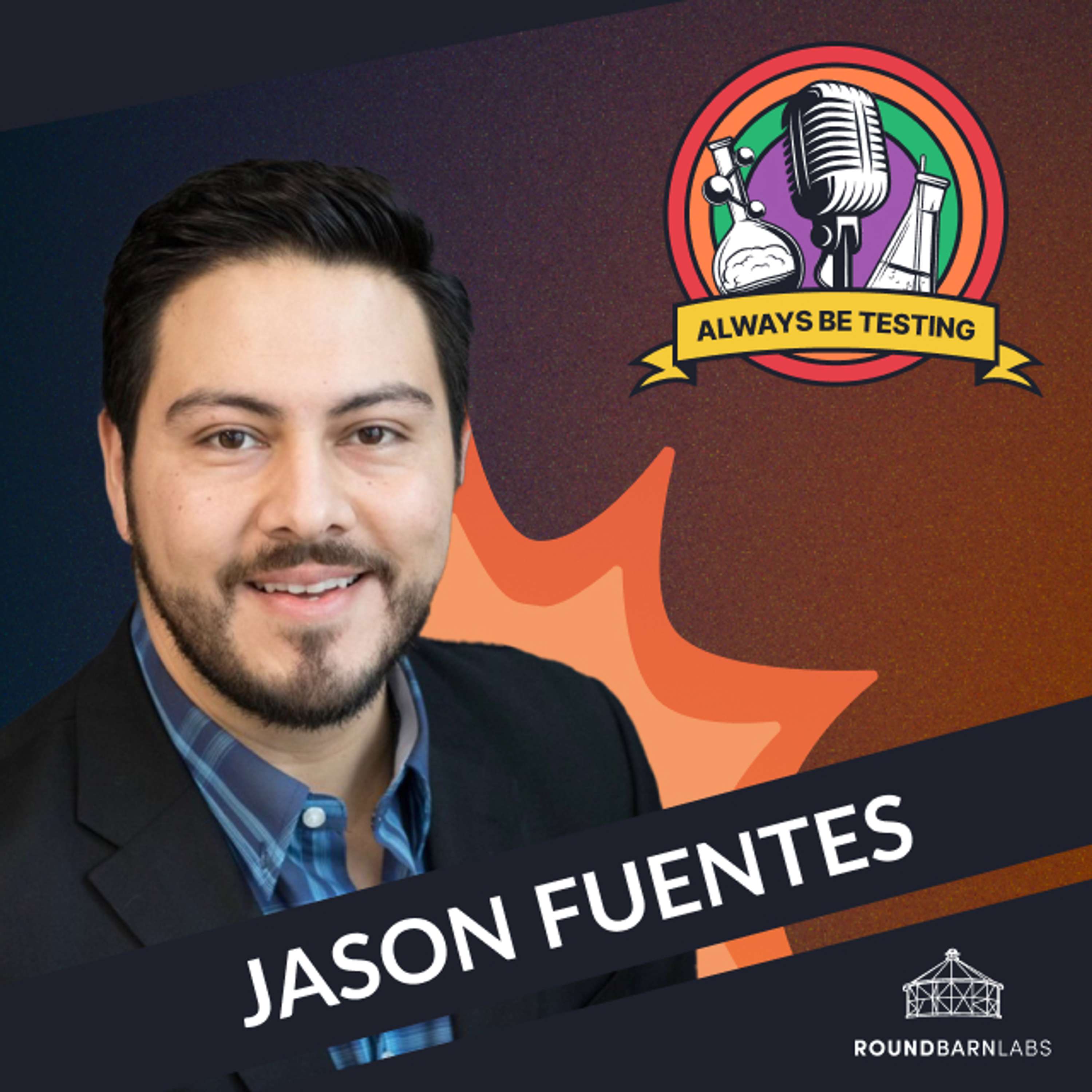
Always Be Testing
#81 Building a Partner-Centric Loyalty Platform | Jason Fuentes, VP Business Development, Wildfire Systems, Inc
00:39:28
Loading summary
Transcript79 lines
- [00:00]
Jason Fuentes
Foreign.
- [00:07]
Ty Degrange
Hello, ladies and gentlemen. Welcome to another episode of the Always Be Testing podcast. I'm your host, Ty degrange, and I'm really excited to talk to Jason Fuentes today. Jason, how you doing?
- [00:18]
Jason Fuentes
I'm doing great. Beautiful sunny day in Austin, Texas. Thank God the freeze has passed us, so I can't complain.
- [00:26]
Ty Degrange
We're back. I went and grabbed a quick bite and I was walking down Congress appreciating the sunshine, and people are kind of out. It almost feels spring even though we're still in winter.
- [00:38]
Jason Fuentes
Yeah, I think I'm almost ready to jump in the pool. I mean, I was out yesterday, sitting out in the back, 78 degrees. Started getting a little bit, feeling the heat.
- [00:48]
Ty Degrange
I love it. It's coming to be that time. So for those that don't know Jason, he is a illustrious member of our Austin affiliate marketing community. We get together periodically and a veteran of the affiliate space. I'll let him kind of give more of the background, but maybe for those that don't know you, maybe jump in with a little bit of a little wildfire action. Tell me about what they do for sure.
- [01:13]
Jason Fuentes
Veteran of the affiliate space. I mean, no joke. When I think back to first job, it was affiliate, right? Not knowing it, I was just happy to have a job. But it was. It was affiliate manually scrubbing lead lists. This was doing lead generation through these online. I forget what it was called, but these online schools back in the day, University of Phoenix, it was 2000, 2005. Ish. Right. University of Phoenix, if, if I still remember correctly, was the industry's largest advertiser at the time. And so we built these portals and. And we would distribute them and collect leads and manually scrub them, hand over a file through Excel and UOP would come back and say, yeah, these are good. We'll pay for these now for these, and go some back and forth and it's like, do it again, do it again.
- [02:06]
Ty Degrange
They were so huge. I mean, I feel like every role I had in the 2000s, University of Phoenix, was involved somehow because they were spending so much.
- [02:14]
Jason Fuentes
Totally. It was so much money. And it's like, it is what it is. But it's funny starting there, going through this progression of really ad tech for me back in the Bay Area and watching Ad Tech, 1.0, 2.0. I don't know what point zero we're at now. 4.0, maybe 5.0, but it's been a good progression. And so doing that and being involved in ad networks and programmatic and social and mobile and CPMs and CPVs and CPAs and CPLs and CP, CP. Who knows what else exists at this point. Spent some time digital media production, podcasts and producing social media channels and all sorts of really fun stuff. Fast forward to today. Here I am back in the middle of again, right back into affiliate, back to where it all started. Slightly different format though nowadays. And so Wildfire for the folks who are not familiar with what we do, ultimately we white label a loyalty and rewards platform for businesses, mainly financial institutions, for white label a loyalty reward solution for digital businesses to help them increase revenue, user engagement and loyalty. And a lot of that comes through in the form of creating more value for their users in the form of shopping companions. Shopping companion a lot of people may recognize as like a capital one. Shopping. Right, that's an idea or an example of a shopping companion. And so we build these shopping companions that offer cash back, rewards, coupons, discounts and more recently including capabilities to highlight product upsells, remind members of program benefits, all encapsulated and put together into this really user friendly.
- [04:09]
Ty Degrange
I just want to interject, I think it's fascinating that you're talking about kind of tapping into loyalty with welfare. And I think that's something that people don't always realize the importance of. They're often focused on that acquisition side. They don't always think about that. How do you keep them coming back? How do you keep that healthiness and retention and engagement? And then without that you can't really have effective monetization. So I just think it's a great call out of what you're kind of sharing of all the pieces of the marketing puzzle that Wildfire kind of touches.
- [04:39]
Jason Fuentes
Yeah, 100% right. And I think affiliate is such a big part of it and such a friendly part of it, natural part of it as well. Because I think one of the things that we do the best, and this is wildfire as a company, Wildfire in the tools that we build and Wildfire in kind of the way that we think about our next product. One, it's user first, making it simple, easy, literally making it stupid for them not to see it, engage with it, benefit from it, really from a experience perspective, is building these experiences that organically fit in a user's journey. When we talk about rewards and loyalty in our world, it really encompasses the concept of cash back. You're going to go buy something and if you engage through this mechanism, there's a little reward for you over here, compliments of a white label partner on our side that could be Financial institutions like Citi, Acorns, rbc, even non financial institutions, including Microsoft. But for example purposes, we'll talk about Citi. And so the program that we built out for them is, well, it's all encompassing. It's called City Shop, but from an extension standpoint, for example, City user can install this extension called the City Shop extension. And this shopping companion is intended to add value to the user's organic user behavior. And what that means is this isn't a tool that says, hey, go buy this thing. Hey, go buy this other thing. Hey, there's a deal over here, right? Oh, and go look at the price on this that you have to go get it. That's not what a shopping companion is supposed to do. At least in our world, right? In our world we understand that users are going to buy stuff, right? And for example, for me, I'm a regular@chewy.com I have three dogs all over £70.
- [06:57]
Ty Degrange
What kind of dogs?
- [06:59]
Jason Fuentes
They're all mutts. Yeah, they're all mutts. I think the, the only common denominator is like some sort of like German shepherd mix in them. And across the three, right, there's like less than this one. This is, there's a German shepherd pity, right? And she's much more on the pity side. But you can see if I tell you shepherd, you're like, okay, yeah, I see it. And then there's the one in the middle that's like a cross between the two. You look at him and he's like, that's like a German shepherd pity. Like, bingo. And then the youngest one is on the German shepherd side. And so you see her and she's like, okay, that looks like a shepherd. But like shepherds aren't that color. So big dogs, right? £70 each. And so it leads to a lot of shopping trips that chewy.com, right? And so there are many places where I could go buy dog food. I can jump on the Internet and search for deals here, deals there, right? Who's got this food? Who's got that food? What's closer? Who's going to get here faster? And the cool part about these shopping companions, these extensions, City Shop is the tool itself is not routing me this way, this way, this way, this way. It's not a bazaar. It's like, go deals, deals, deals everywhere. Rather, it's taking my cues on how I search for what I'm going to buy next. And if it has something relevant, it brings it up to me. We call it a little SERP injection Search engine results plugin where in the organic search results of whatever I'm shopping for. If a participating merchant is in line or comes up within the organic search query, there's a little call out that says city Shop has a reward for you here. And it'll say like cash back. It's like shop here at this merchant, click right here to go there and you get 3% cash back or whatever it may be. And so example, right of us inserting ourselves into the organic journey of this consumer. When I go to, if I were to go directly to chewy.com for example, because that's the behavior that I'm organically doing, it'll alert me and say, hey, I have a reward for you here. Tap here and earn $4.05 on this next order of dog food or whatever it may be. And so by not focusing on trying to predict my ad tech 1.0 and ad tech 2.0 days was just trying to predict what this user is going to buy and try to get an ad in front of them. To help influence this decision, we take a much more user centric approach that's like, okay, well go buy the things you want to go buy. Go buy it where you want to go buy it. Go to the merchant where you have an existing relationship with and if we have a reward for you, yeah, we'll let you know. If we have a coupon for you, we'll let you know.
- [10:07]
Ty Degrange
I like the framework. It's like you're the goal here is kind of the augmenting the experience of someone that's already journeying along their path to purchase. And it's not as much like, you know, forcing a hand or being as instructive. And it kind of reminds me of some thinking lately that's bubbled up around all of these big time privacy measures that have, that have been rolled out over the last, you know, five plus years. And some of them kick the can down the road, who knows the cost of them? Don't want to get too down this rabbit hole. But it feels like I've heard a lot of very smart people that are deep in this space like us. Obviously we have a self interest, but I think Net Net, it's like a lot of the personalization, a lot of the helpfulness, a lot of the tracking isn't necessarily nefarious. Certainly there's fraud exists in every business and digital is no exception to that. But I've heard some really interesting things kind of echoing your thought there of like this is a net. Net Net Kind of gent, you know, gently guiding the user, giving them resources, giving them information, personalizing for them. So I just kind of echo that, that sentiment. Obviously you got to kind of manage your, your own attribution and your own systems and be thoughtful about privacy and checking boxes on following laws and whatnot. But, man, I think it's a good call out that this is a guide. That's the goal of it, at least.
- [11:29]
Jason Fuentes
Yeah, doing the whole predictive analytics stuff with advertising is fun. It's really fun. And I think AI will change a lot of how that's done. But as you noted over the last few years, it takes data to power all that. It takes data to run all those models and to run those algorithms to predict X, Y and Z. And, and there's a lot of data out there. How much should you have access to? And what I really like about our site is just like, well, we don't need it. We don't need. We actually have a. Like, we're allergic to pii. We don't want it, we don't need it. We're not a data company. We're not a data company. We're not here to take user behavior from this instance, model it and try to replicate it over here to get two more purchases off of this one purchase and go from there. Been there, done that. It was fun, as I said. And so I think in our world, yeah, in our world, we are very data driven, don't get me wrong. But we utilize it in a way that puts it in the control of our partner, of our publisher versus us. So take for example, we can go back to Chewy as an example. Theoretically, I buy dog food. Great. Right. Data comes through that says Jason buys dog food. He bought two bags of dog food. 24 pounds each or 22 pounds each. I think dog food's one of those things that keeps like it's shrinkflation or what's the, what's the, what's the concept where, like the, the package keeps getting smaller, but the price stays the same.
- [13:08]
Ty Degrange
Dog food, one of those eggs, chip, chip, chips, everything. It's too much.
- [13:13]
Jason Fuentes
Yeah. And so, you know, in our perspective, we see that in through the affiliate Rails. This is all public data, Right. From an affiliate standpoint, here's the transaction, here's the transaction details. Here's what we need for an attribution perspective. We pass that through and we leave it up to the partner to decide what they want to do with that data. We don't have the customer, we don't know the customer. We don't want to know the customer. Right. Our business is to connect the customer to the thing that they want to buy and, and create a connection between the affiliate, the merchant, ourselves, the platform, the user and the partner. Success, right? User did a transaction, success.
- [13:56]
Ty Degrange
That's amazing.
- [13:57]
Jason Fuentes
Yeah. And so, you know, success, Mission accomplished, user's happy, everybody involved is happy. But is there value in understanding details around that transaction? Yes. Right. SKU gets passed through, let's assume. And it's Stella and Chewy's. Right. Okay. Well there's data around that. Right. And the average cost is xyz. In a perfect world, and this is some of the forward thinking stuff that we're helping arm our partners with, our publishers with is in a perfect world, that data comes through, it gets ingested again on the partner side, not on our side. And that is data that can be used to help influence and personalize the experience the next time around.
- [14:46]
Ty Degrange
Love that. The personalization piece is just what's lacking for so many and it's so critical.
- [14:52]
Jason Fuentes
I completely agree. Right. Like in many cases, open up your bank's app, right. And you're there to manage your finances. Right. Money coming in, money coming out. What does the portfolio look like? You're thinking about past purchases, next purchases, and you scroll down. Sometimes you have to scroll way down. But within there, there's offers, right. There's get 10% cash back for buying this thing or shopping here. Great. I mean, I think the next iteration of what these programs will do is actually take the data that's happening from a user's banking or I'm sorry, a user's shopping history to personalize that experience, preferably on a one to one basis. Right. I don't think there's any, there's nothing odd. As a consumer, if I make these transactions, the bank already knows they process them. Right. Like it says right there in my statement, you spent X amount of money at this retailer. Great. There's nothing odd about being able to jump into my offer section and be like, oh, there's a reward for me to go back right from, from that merchant. Awesome. And oddly enough, we're not there yet.
- [16:09]
Ty Degrange
It's clear you're building out something that's working. And I think the big takeaway for me is this notion of being very centric to the user, centric to the partner. It's what's made Amazon successful, it's what Apple's successful, it's what's made Wildfire successful. It's what the successes that we've had at rbl, it's like really critical and I think it's kind of taken over the ecosystem. It's just what everyone needs to be thinking about. And I commend you and your successes for doing it and thinking about building and structuring things in that way.
- [16:39]
Jason Fuentes
Yeah, agreed. Completely agree. Right. The model on our side, I mean, honestly, it's. We're only successful if our partners are successful. Like the way that the economics work. Right, right. It's. We get paid when they get paid and that starts at the. At the user. Right. So if the user's having a positive experience with the program, that's great for the customer of the. Of the publisher. If it's. If that experience was positive for the user of the publisher, it's great for us. And then you add in the merchant, the merchant got a sale. Awesome.
- [17:15]
Ty Degrange
Yep.
- [17:16]
Jason Fuentes
Right. So you've got four parties involved and to make all of them happy simultaneously. Yeah, it's difficult. It's powerful if you can do it. And fortunately, I think we cracked the code on that.
- [17:31]
Ty Degrange
Well done. And for folks that don't know, Jason, what do you do at Wildfire?
- [17:35]
Jason Fuentes
I oversee business development and strategic partnerships, which ultimately is engaging with prospective publishers, prospective partners, many of which happen to be financial institutions. Whether it's a mobile first bank, a traditional bank, or a blend of the two which we see nowadays. I engage with those pretty regularly to ultimately educate them on the platform. And if they're interested in a solution like this, working with them to calibrate. There's the right setup. Because it's not a one size fits all approach for us. We really have to pay attention. It starts at the user. Right. It starts at the customer customer profile of Bank A, not the same customer profile as Bank B. And so from that perspective, we have to think of creating experiences, going back to something I said earlier, that are natural and organic to the user. Is this a Mobile first customer? Is it a Mobile first publisher? Mobile first bank. Okay, great. Then let's focus on that experience so that we're not creating experiences that are routing a user to a Surface or a Surface that they're not engaging with, which we've seen happen. But ultimately it starts at the user.
- [19:01]
Ty Degrange
That's great with dealing with that audience in finance a little bit. Are you finding that you're meeting with them? Is it primarily remotely? Are you getting together in person? Tell me a bit about just how that looks for you.
- [19:12]
Jason Fuentes
That's a great question. And I think honestly, the. The answer is probably different today than it was pre Covid. Wildfire is a remote, fully remote company. San Diego foundings. But ultimately we're a Covid era company. And so everyone we've got, I don't know how many states we cover and we're not huge, but we're pretty well dispersed throughout the country. And I think as such, I mean, globally. Right. Everyone was going through the same circumstances and so we had to conduct business virtually. Right. Or not conduct business at all. And so I'm thinking even pre Covid, because I was dealing with financial institutions pre Covid. I would say that was. It was, you know, to tell you the truth, virtual. Right. Most of the conversations, a lot of the work is getting done virtual. Yeah. I think where, where it gets into in person is really around the sales cycle. Selling into a bank. You take a, you know, any of your top five banks, three year, four year sales cycle, two years if you're really good at it. And it's just we need the solution. We need this now and now in. In many cases for larger organizations as well. 2027. Right. But typically, I think we were able to bridge a lot of the virtual and in person by successfully navigating and utilizing conferences.
- [20:47]
Ty Degrange
Yeah, exactly. It's a huge piece. I mean, such a huge part of our industry. Right. It's an important piece. So I love that. And we were just.
- [20:55]
Jason Fuentes
Important piece and a fun piece. Yeah.
- [20:57]
Ty Degrange
You gotta bring the human nature out of the relationship and partnership game and huge piece of it all. Just pulling it back a little bit on the thinking through the role.
- [21:07]
Jason Fuentes
Right.
- [21:08]
Ty Degrange
And the POD is so focused on experimentation and those learnings. And I know you think in those terms and you have kind of a product mind which is really interesting. What are some of those campaigns or just experiments that you've run that you think are fascinating, that you want to share with the audience?
- [21:25]
Jason Fuentes
Totally. There's a few. And I think almost like everything that we do falls into partially into that bucket because we're a startup and we're innovative and we're constantly trying new things. I got an idea. Great. Let's talk about it. And we get around and talk about it a little bit deeper. And it's like, you know what? I think that has legs. Right. Let's model it out and see if the model looks good. And if the model looks good, it's like, okay, let's put some engineering resources around this thing and see if we got a beta or a customer that can take a beta on this thing. And so that's a lot of how we Operate. And it's allowed us as an organization to move fast, stay lean and not make the wrong decision in terms of putting all our assets into this product without having any feedback on, well, what is the market asking? What are the users saying? What is the market asking? What are our partners saying? So very close ear to the ground on our partners, their users, the industry. Still a little bit of gut instinct, right. Because we have to stay ahead of the curve. That's part of winning in the game, is staying ahead of the curve. And so it's kind of the mindset of how we operate. And so a couple of these successful use cases and ideas that have ultimately turned into not just products, but wildly successful products. So recently we announced what we call the Wildfire Commerce Network. And to the audience, I think the easiest way to help understand what the Wildfire Commerce Network is, it functions similar to a retail media network. And so we have these relationships with financial institutions and non financial institutions, but they're close relationships, they're ingrained relationships. As I mentioned earlier, we win when the partner wins. And so we're constantly working with our partners directly to help them drive more transactions, increase loyalty, increase engagement. This three pronged approach will speak to another approach product that we just released that speaks to like trials and things that are going well. But from the Wildfire Commerce Network perspective, we operate real estate, let's just call it the bank's app for easy purposes, but we operate real estate within the bank's app. That real estate happens to be very brand safe. There is a user mindset from a consumer standpoint where they're engaged in their everyday finances while in this app. So it's interesting real estate and what we found out and are finding out, it's pretty lucrative real estate. And so the concept of the Wildfire Commerce Network was bring in a brand, bring in a merchant, bring in an experience front and center into the app to help highlight the opportunity of, well, branding opportunity to earn another reward, opportunity to earn increased cash back. However it may be, it's really the concept of bringing a specific brand or brands forward into this type of experience to help create an additional touch point between the user, the banking app and the merchant.
- [24:53]
Ty Degrange
Love it.
- [24:53]
Jason Fuentes
And we really only started doing this a few months ago, like honestly. But it has skyrocketed. Right. And it takes the concept of the retail media network, but almost kind of like an ad network approach of it. Because we're not just City Shop, we're not just acorns, we're not just rbc.
- [25:14]
Ty Degrange
Yeah, you Have a lot of inventory.
- [25:16]
Jason Fuentes
We have a lot of inventory with a very like minded consumer. Yes, they do span the spectrum in terms of like age. Right. Some are younger, some are older household income. Right. You get your debit card audience, typically less household income, credit card audience, you're going to see a little bit more. And so it allows us to create this retail media esque delivery mechanism but across the network. And so that's been a very successful concept for us.
- [25:50]
Ty Degrange
That's amazing. Do you have plans to kind of go out and acquire more inventory and is there kind of like a vision for the long term with, with this, with, with wildfire?
- [25:59]
Jason Fuentes
100%. That's my job.
- [26:00]
Ty Degrange
There you go.
- [26:01]
Jason Fuentes
That, that is my job is to bring in, hunting it down, bring in more partners, bring in more publishers. Right. To add more, more of that inventory. And, and, and as we look into. Love it, right. The, the 60 day vision, the 90 day vision. So we're not talking about too far out because we have to, we have to have a pretty good view on what's our next step. Right. How are we building this thing out but not ignoring the two year vision. But as we look into that near. Right. That near term vision is taking this approach, taking this type of user experience and making it seamless across all the touch points that we operate. Right. Extensions. Extensions and shopping portals and tiles, you know, within this, within this email. Right. Because email ultimately happens to be probably the most important tool for us in terms of driving awareness of the program.
- [27:02]
Ty Degrange
Just stepping back and thinking in our ecosystem. One thing we love you and I and everyone in it. The best part about affiliate is not a channel. It's a so many inventory sources, it's a channel of channels. You have access to everything. And just via this conversation you're talking about the serpent search engine results page, checking out in app high quality, well branded personalized offers in. In app for financial institutions. Talking about email. I love the breadth of what you're providing. There's a lot of inventory here that I think not to like tout wikfire too much but it's a really interesting learning example for people that are not as familiar with the affiliate industry to see the level of tech and product and user experience that you guys have put into this that you're thinking about and like how many, how many touch points that is is quite compelling.
- [27:53]
Jason Fuentes
Yeah, I agree. Right. And when you look at, when you boil down a touch point, right. It's just another engagement. But you take an app of a financial services provider who's let's, let's take like your mortgage provider, you check in with them once a month. Literally it's when the bill's due. Right? Your mortgage is due. It's like pay the bill. Yeah. Awesome. Good to hear from you again. Right. Take my money. Like, see you next month. And so when you take into, consider that real estate, that touch point which is literally once every 30 days, and we come into the equation, we can increase that significantly. So it's not just, hey, you owe me money. Right. Like, thanks. There's other ways, not just through cashback. Right. I think cashback is kind of the easiest way to understand the power of the toolset and the distribution, but it's really just real estate. And so whether it's through an extension, whether it's through a portal, whether it's through this email communication, we work with these partners to create additional touch points of value. It's really about just creating more value for that consumer. Nowadays some of the other stuff that we're getting into is like we're creating value for the consumer not just through the things that we power, but more so working with these partners closely to interlace other benefits that that financial institution might have for the user. And if those benefits make sense to surface through our tool set through our ui, even though we're not the provider of those services. Right. But it benefits the user and it benefits the publisher. So in the end, if those two win, I'm going to win one way or another, as is the other services provider. So it's like utilizing the complete infrastructure to add value to the user experience.
- [29:46]
Ty Degrange
I love that. Complete thinking about the partner is really a great call out there. You're really being partner centric and thoughtful about how it fits together. When we think about all this inventory and all the options you have, you're obviously serving the financial institution or the fintech partner very well here. And when you think about the other side of that marketplace where the brand, the chewies of the world are kind of interacting, you know, what are some things that the best in class brands do to really nail the interaction with Wildfire that really nail the partnership approach that you see work best in action?
- [30:22]
Jason Fuentes
Yeah, I think there's a couple of different variables that come in, but I think the discovery process in the very beginning is very important. And like I mentioned earlier, the audience and customer base of partner A versus partner B, they're different. And so we have to boil down into understanding what that truly means because that's going to impact the types of tools that we Build and provide. It's going to impact the messaging, it's going to impact the imaging, it impacts the whole thing. Right. And so when you've got, say millennial audience, right, you're looking for a, you're going to use a different tone, right. Versus a different generation. So step one is like, let's figure this all out first. And that largely is the partners share. Like, we don't know. We're not magicians. We don't know who your customer is. But help us understand. And so from there we can start building or we can start understanding a profile and putting together a strategy that ultimately is going to address the bigger picture. Right? And when we get into the bigger picture, there's a solution that we called benefits and loyalty amplifier. We call it BLAM for short. And what BLAM is intended to do is it's a user centric approach to creating the stickiest type of relationship that you can create between a customer and that financial institution. What that means is we're in there offering cash back and coupons and, and discounts. Great, you can count on Wildfire to do that. But that financial institution, institution might also have ancillary benefits to being a customer. For example, let's say that partner offers a card linked offers, for example, and there's a card linked offer for the Italian restaurant in the neighborhood. We don't power card linked offers. We don't engage with those types of merchants. We're fully online solution. But does that mean we should ignore it? We can, but we don't because that benefit is valuable to the user or taken into consideration. Some credit cards, for example, have benefits tied to your rental car and like paying for covering the liability or whatever it may be. But you have to use that car. Right. Otherwise you got to pay Hertz or whomever it may be. Right. That extra 40 bucks or however much they want. But had you known that that was part of the benefit of this card, you probably would have used it. You know, it's just one kind of box to check. And so with blam, what we're doing is working with a partner to help understand what are all the benefits that you provide to the customer. All of them. And it's like it's all these, it's all these, including these 20 benefits that get listed in the, you know that pamphlet when you, when you get a new credit card.
- [33:27]
Ty Degrange
Yeah.
- [33:27]
Jason Fuentes
Right. And you open it up and it's like, it's, you know, it unfolds and it's like no one reads that thing. Right. It's smallest text, right. You're going to turn it inside out. These are all your benefits. I'm like, okay, well, nobody knows that. It's like, well, let's surface them all through the ui.
- [33:42]
Ty Degrange
Yeah. And I think maybe one thing we can do is kind of drop some visuals on some folks in the, you know, the audience at some point and give you, give them some background on ways they can kind of see that value and play with it. I think that's just spot on. You kind of touched on this a little bit coming down the home stretch here as we kind of come into a bit of the rapid fire and wrap up. I love, I love this partner centric approach. So many touch points in the ecosystem. We talked about a little bit of predictive analytics and how brands can engage, how your finance partners and your inventory can engage. How are you using predictive analytics in the day to day? How are you kind of thinking about it in terms of strategy of structuring these deals and such?
- [34:21]
Jason Fuentes
It's a really good question and a really powerful question amongst a lot of industries and a lot of companies. But when we look at our core, right, the answer is like, not so much because we don't have to. It's like our approach is not necessarily about predicting what the user is going to buy next. It's really around inserting ourselves into the organic journey of that user and with the power of the partner brand, call it City Shop, again, inserting ourselves into there and being like, hey, I got a reward for you. Just tap here and you get this reward for us for buying the thing that you were already going to buy. Ultimately, at the end of the day, I can't speak for our engineering team and kind of like what they're doing on the back end, but on the front end, right. As the one who is enabling these publishers with the tool set and all the levers that they can pull, the experience that we deliver is really much more of a tool than it is a push. We're not pushing the user to go buy this or that. It's much more. Let's react to what the user is telling us. Right. We'll pull from there and just make it a rewarding experience for the customer.
- [35:39]
Ty Degrange
I love that and I love that. That's kind of brings it almost full circle back to what you really emphasized at the beginning is that you're there to aid that customer journey. You're not forcing their hand in any way. And there's just a lot of data personalization and great things that you're using to support that, so well done and spot on. Coming down the home stretch to our semi. Quick fire round to get to know Jason a little bit. What's something people might not know about you?
- [36:04]
Jason Fuentes
Yeah, very little people would know this about me unless they were in the high school music scene back in the day. I grew up playing a lot of instruments, doing a lot of music, which was awesome. I think that those experiences benefit me a lot down the line. But the claim to fame in all that music and the talent was. What year was this? Sort of in year 2000. So in the year 2000, I was the second best tuba player in the state of Texas.
- [36:40]
Ty Degrange
Wow. That's huge. That's amazing. That's like epic talent trivia. We have, like, an affiliate talent show. Jason's going to be on stage rocking the tuba. My favorite fun fact of the day.
- [36:56]
Jason Fuentes
I haven't touched it since probably 2001, but fact, fact, you can look it up, I'm sure on the Internet somewhere. Second player in the state of Texas, 2000.
- [37:08]
Ty Degrange
Well done. Mic drop. Favorite vacation of all time or one of your favorites of all time? Favorite trip? Vacation story.
- [37:15]
Jason Fuentes
Yeah, there's three that come to mind. And so places. Talk about places.
- [37:21]
Ty Degrange
Yeah. Yeah.
- [37:22]
Jason Fuentes
Two of these I keep going to. I love them so much. It's Costa Rica and New Orleans. Costa Rica is. It depends what type of vacationer you are. I'm the type of vacationer that wants to go pull up a chair right on the beach. I'm gonna sit there.
- [37:41]
Ty Degrange
I'm on board with this.
- [37:42]
Jason Fuentes
Yeah. And I don't wanna be bothered. Right?
- [37:44]
Ty Degrange
Yeah. On board with this plan.
- [37:46]
Jason Fuentes
Yeah. When I get too hot, this is.
- [37:48]
Ty Degrange
My agenda as well.
- [37:49]
Jason Fuentes
I'm gonna walk into the ocean for.
- [37:50]
Ty Degrange
Those curious, cool off.
- [37:52]
Jason Fuentes
Right. And look back and do one of these for another bucket of beers. Right. That's. That's my vacation.
- [37:59]
Ty Degrange
Sounds good.
- [38:00]
Jason Fuentes
And the, and the, the beaches and the resorts that I've experienced in Costa Rica, I just keep going back to, like, it's. It's perfect.
- [38:08]
Ty Degrange
I really want to go to. You're. You're making me want to go to Costa Rica. I've heard it from a lot of people. I've never been. So that's a. That's a solid, solid choice.
- [38:17]
Jason Fuentes
Yeah. It's a good spot. And there's a lot of ways to do Costa Rica. I mean, I've had. I know family members that have gone and they were like, never going back. They did it differently. They did it differently. There's a lot of bugs, right? You could go in the rainforest.
- [38:30]
Ty Degrange
For people in the audience who want to get the proper Costa Rica trip, hit up Jason. We'll give you the info how to do it right. Jason, it's been a pleasure, man. You dropped some great knowledge, shared your experience, a lot of good learnings. It's been awesome to talk to you. I know we'll get together at some point here in Texas and catch up, but really appreciated it, man.
- [38:50]
Jason Fuentes
You got it. This is awesome. Thank you for having me, and I will for sure see you at the next conference.
- [38:55]
Ty Degrange
Yeah, no doubt. And last thing, just for folks that want to learn more about Jason, where can they learn more about you?
- [39:01]
Jason Fuentes
LinkedIn. I don't do social media. I haven't participated in social media in probably like four or five years. I have other hobbies. Yeah, I got other hobbies, but need to find me LinkedIn.
- [39:10]
Ty Degrange
It's better that way.
- [39:11]
Jason Fuentes
Hell, yeah. It really is.
- [39:12]
Ty Degrange
Ask him about tubas in Costa Rica. Jason, you're the man. Always a pleasure.
- [39:16]
Jason Fuentes
See you.