← Always Be Testing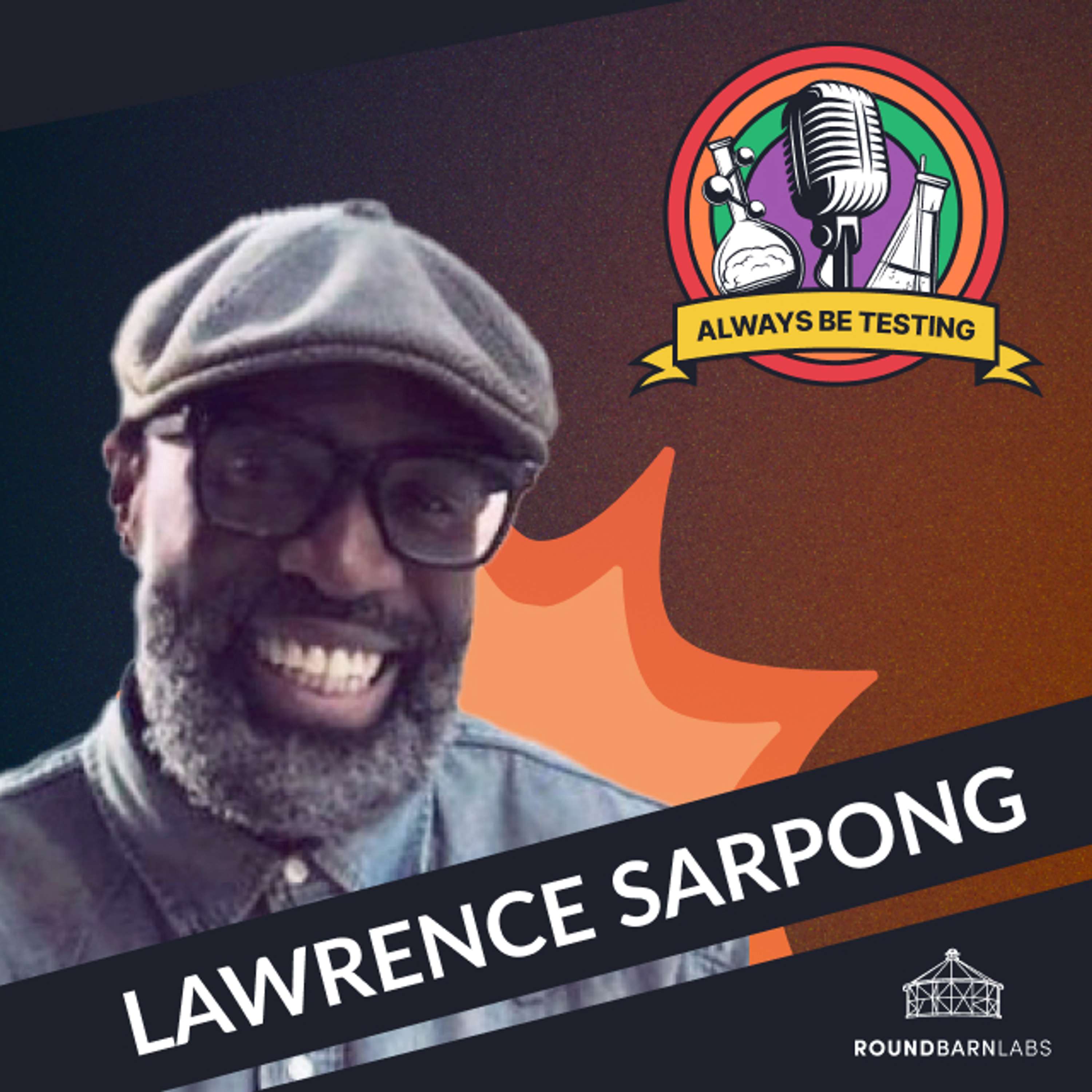
Always Be Testing
#82 Building Long-Term Value in Fintech Affiliate Marketing | Lawrence Sarpong, Affiliate Marketing Lead, Truist
00:33:14
Loading summary
Transcript58 lines
- [00:07]
Lawrence Sarpong
Hello, Hello, Hello.
- [00:08]
Ty Degrange
Welcome to another episode of the Always Be Testing podcast. I'm your host, Ty degrange. I'm really excited to talk to Lawrence Sarpong today. Lawrence, how you doing?
- [00:17]
Lawrence Sarpong
I am doing well. It's good to connect with you, my friend.
- [00:20]
Ty Degrange
Absolutely, absolutely. It's. We've known each other for a long time and it's always a good chat. So it's going to be a fun one.
- [00:27]
Lawrence Sarpong
Absolutely. Now that I think about it, I think I met you at my first CJU when I first got into affiliate back in 2009. Not to date myself, but it's been a while. So yeah, it's good to connect. Definitely.
- [00:42]
Ty Degrange
Absolutely. You've seen a lot of good stuff. We've seen a lot of good stuff and so plenty of knowledge to share today. Lawrence is a champion of affiliate marketing. He's been around the game for a long time and certainly had some great experiences in fintech with Truist, now with SoFi, with LendingTree. So talk about a great perspective from that vertical.
- [01:04]
Lawrence Sarpong
Yeah, I'll try to give my unadulterated professional opinions on the topics at hand.
- [01:09]
Ty Degrange
I love it. Let's do it. So when you think about fintech, when you think about banking, obviously it's a little bit of a different animal in terms of operating affiliate marketing. What are some of the ways at which you think about that vertical differently than maybe more other areas of affiliate marketing?
- [01:27]
Lawrence Sarpong
I think just at the bare bones of it, you have to look at fintech marketing, its customers interested in financial technology products like mobile banking, robo advisors, crypto exchanges, where specifically, whereas affiliate marketing at large can encompass literally anything from clothing to electronics to travel services, you name it. And I, you know, when I talk to people, I say that affiliate marketing is literally just everything. In general, you can affiliate marketing, you can affiliate market, anything. But to answer your question, again, fintech and banking is very specific. They're very specific people with very specific needs. And nine times out of 10 they're doing the research ahead of time just for best rates, best APRs and things of that nature. So I think that's the main difference. It's that it's an intangible tool that we all definitely need, whether it's education or a specific product.
- [02:23]
Ty Degrange
Yeah, for sure. And I would imagine that you're talking about not always, but oftentimes maybe skews a little more on the education side of things. If you're, especially if you're talking about a decision like a bank or something financial. Is that, is that what you often.
- [02:39]
Lawrence Sarpong
See, I would say yes, a lot of times, yes, definitely. The education is there and people are looking to understand more. But then again, sometimes you may be, let's say, let's just say a membership reward site or something like that. And you may see something like, oh, if I change my bank account, I can get $400. If I do X amount of deposits in 30 days, no problem, I'll go ahead and do that, get the 400 and go back to my main bank. But what I have noticed is that with respect to that, in most cases, some people, I mean, changing banks, there's a lot of work involved, right. And I think that most people like myself actually, because I've been in the industry for a while, they'll have two, three, four bank accounts and they'll use them for different purposes. You know, I may use a SoFi savings account because I know they've got one of the best APYs, or I may use another bank account because I know they've got ATMs all over the place like your Chase or your Citibanks or whatever. And it could just be regional as well. So, you know, when I, I'm from Chicago, but I've lived in New York, I've lived in Arkansas, lived a couple of different places. I still have my main Citibank account from I don't know, 15, 20 years ago. But then when I worked for SoFi, I definitely opened up a SoFi account because I learned more about the APYS and how all their tools come together. And now I also have a Truist account because, well, I work for Truist. But there are also additional benefits as well, such as being an employer truist. I get certain discounts on things like if I want to refinance my mortgage or take out a loan or, or anything like that. So there are a lot of different reasons why people play around within the banking space. I don't want to really say they game it, but just to have access to other options, you know?
- [04:22]
Ty Degrange
Yeah, no, I, I totally, I follow a somewhat similar pattern where like you want that great apy, you might use something for your brokerage different from your banking, different from your business, different from your savings. So it's rare that it's all wrapped up into one. When you think about, you know what, maybe stepping back and think you've been, you've seen a lot and a lot of different types of brands, even beyond fintech, what are some of the best practices? What are some of the things that brands do that you think others do not that kind of separate them?
- [04:55]
Lawrence Sarpong
I would say that brands, they the best brands. I'll say what they'll do is they'll, they'll solve a problem. In most cases it might be a problem that you don't even know that you have, you've got. And again, I'm going to talk specifically to banking. You could have a bank account and it's absolutely doing nothing for you. On the saving side, you might as well just be putting your money under a mattress for, you know, just for that instance. So, yeah, that's one thing. As far as different strategies, specifically with fintech marketing, you know, I think the key thing that they do and they do well is, is educate the consumers about new financial products and technologies. They highlight the benefits of these and like I said, address potential concerns as it comes to. I don't. I think everyone's Social Security and personal information is out there on the dark web somewhere. So the companies that do their best to tell, to show, not just tell, but to show them that their information is secure and still private, I think those are the ones that really capture the key audience attention, if you will.
- [06:08]
Ty Degrange
Yeah, I like. That's interesting. That's very interesting. And when you're kind of thinking about obviously mature program you're running, you've had a lot of successes with programs that you've, you know, inherited or built from scratch or maybe come across for the first time. When you kind of first come across a program, was there anything maybe set up related in particular on the technical side or the tracking side or just the foundational setup that you want to kind of counsel people to be aware of or to think about just to make sure that program is set up for success as much as possible.
- [06:42]
Lawrence Sarpong
You know, especially when I worked for. When I was on the agency side working for Havas Media, which was my first agency role, one of my job. Well, actually my main job there was to stand up affiliate programs for new potential bank clients. I mean, bank clients, I'm sorry, agency clients. So what I would do is just pretty much do like a punch list of the positives and negatives of each individual network. For instance, you know, I'd lay it out and I'd have impact. CJ RAKUTEN APP Share A Sale and I'd say, you know, okay, if you want an account management team behind you, this one, this one and this one, these are great for that. If you want great tracking and tools with compliance built in, well, you might want to go the impact route because they just Blow it out of the water. But I think to answer your question, I would do essentially an affiliate marketing 101 and just let them know all the different things to look for as far as tracking and compliance tools and things of that nature and how to utilize like sub links especially, especially you know, in the fintech world where you have privacy concerns and you don't want to port over people's informations and things like that. The Alphabet boards are always watching SEC the rest of them and you know, you have to admit near to GDPR restrictions. So again it would just be a tops down and just letting the company or the client that I work with know the things that they don't know or, and don't know to ask, you know what I mean? So I think education is at the very top level of it because, and I'll take it back a little bit, not to go on a tangent, but when I first got into the industry, affiliate marketing was like, and I don't mean to offend any redheads out there, but it was the redheaded stepchild in the back of the room. You know, we barely got two or three minutes to talk about what affiliate market, what our channel was specifically doing in comparison to search or display or anything else. But as I've evolved within the industry and as time has gone on, I think I really knew that affiliate marketing hit the mainstream again when I got into an agency role and they were looking specifically for affiliate marketing and to bring it to their customers. Yeah. So it's, it's been, it's been a wild ride. Yeah.
- [09:02]
Ty Degrange
I think we've both seen just so much evolution, change, maturity in, in the quote unquote channel and, and, and what affiliate marketing is and has become. And I love that education piece like you breaking it down for clients in a way that's, you know, hey, objective, you know, you're giving them the good, the bad and the ugly. Allowing them to make a good decision is just a philosophy we often take. And I think it's exciting that it's also a good call out of like how much has changed since the early days where it was almost an afterthought?
- [09:35]
Lawrence Sarpong
Absolutely.
- [09:36]
Ty Degrange
Is there one thing speaking of that, is there like a pitfall that you caution folks on or is there some things that you try to avoid that maybe you know that others are not avoiding in the world of affiliate marketing or partner marketing or the areas to just be mindful of?
- [09:52]
Lawrence Sarpong
Yeah, I would say the biggest pitfall is not knowing who your partner is, not really doing the research behind them. You know, affiliate marketing, it's, it's a symbiotic relationship. There's something in it for both parties. And not knowing who your partner is, not knowing what their goals are, how, how they go to market, what's their audience size, what type of traffic do they drive, and on top of that, does their audience interact? I know some people that are new to the industry and essentially they're just looking for clicks and conversions. But what you want to build, I think is lifetime value for these customers. Cause essentially at the end of the day, you want them to be your extended arm of your marketing service. And I'm not talking about the merchant or publisher, I'm talking about the consumers that come, come in. You want them to have a great experience, you want them to tell people about your product and service and really, like I said, be the evangelist for you. So that's one thing you also have to know. You know, I think it's very. When you first start working with partner and then continuously, I think you have to constantly speak to them about your KPIs, because sometimes they could be moving targets, right? You could have a certain set of KPIs 1/4, but then, you know, as the macro environments change and leadership changes and just the, just the environment of the world changes, those KPIs could change as well. So you definitely want to stay abreast of that. And that kind of leads into. My second pitfall is just communication. I think that some people look at affiliate as just a set it and forget it type of thing. It's just going to keep on going. No, definitely not. You definitely have to keep the lines of communication going again with the partners that you're working with and also with the network that you're working with with as well. I remember very early on my career when I was working for, I think I was working for Sam's Club, managing that affiliate program. And it was to date myself here, the Google Affiliate Network was the platform that we were on taking it back. So the point of the story is, you know, I think when we were with them, within a year, I want to say we may have had four or five different account managers just managing our account and you know, again, just the constant communication and letting them know exactly what's going on, what your KPIs are, what you're trying to achieve, who your target audience is and things of that nature. Communication, communication is very, very, very important. And I know we all get into sometimes you may not have any updates when you have these Weekly or bi weekly meetings. But it's still good to have those calls and just if you don't have anything, just ask whoever you're speaking with. Hey, what's new? Is there anything that I should know? And I'm talking again from a merchant to a network or a merchant to a publisher or vice versa. What do you know that I don't know? Fill me in on things because again, things move so quickly here. So yeah, definitely communication and knowing your partner.
- [12:51]
Ty Degrange
Yeah, no, it's interesting, I think like empathizing with their situation, understanding what they're doing, getting, getting the download of all of the, you know, as you said, those KPIs can change rather quickly. So getting ahead of that, giving the client or the, or the merchant an opportunity to get ahead of it, an opportunity to communicate with you, those updates. Sometimes there's things that are being unsaid, which is totally understandable in any, you know, communication working arrangement. So enabling that and working through that is super positive and I think you're spot on. Like we're oftentimes only as good as our inputs.
- [13:27]
Lawrence Sarpong
Right.
- [13:27]
Ty Degrange
So if you can get right inputs, gonna get a lot better output. That's so fascinating. Like knowing the partners, it kind of reminds me of the biggest pitfall. I think it's, it's a, it's an easy one for people to fall into I think sometimes because when people treat it maybe more like a Google or a meta, there's a little less, they could, they get granular in a different way. And I think that in affiliate marketing, the partners and the publishers and the content sites and the various affiliates are really a huge part of the ecosystem and they kind of drive the ecosystem. Knowing, you know, knowing their referral, referring URLs and various promotional methods, I think you've, you hit that really well and I think that's a big call out, big call out. When you look at Truist's program and obviously, you know, we're not going to like look under the hood and talk in detail and share all your secrets. But I'm curious about partner types and maybe broadly for Fintech, less maybe for Truist. When you think about partner types, what are some that you, you kind of look to. Obviously you named a few earlier. How do you kind of think about segmenting? What are maybe some that are like, maybe some of the unsung heroes of the partner types that you've seen in terms of fintech since you've had such great experience there.
- [14:39]
Lawrence Sarpong
Oh man. Some of the unsung Heroes, I would say, you know, actually I'm leaning a lot more towards, I don't want to say influencer per se because it's such a broad term. But I want to say like educational vloggers, right. And people that not only talk about a product but you can tell that they're authentic in it. Like they're actual users of the product. They believe in it. You know, I'll go to SoFi. They, they do a really good job with your rich bff. I mean she's just a wealth of knowledge and she gives it to you in a way that you know that she's not just doing it for the revenue that she may get from it. It's actually, you can actually see the improvements in her life from using the products. So I think that, yeah, again I don't want to use the term influencer. I'll just use educators if you will. But yeah, I also don't want to get on the, you know, the grant cardone of the world. I don't feel, and I hate to say this, I don't feel a lot of authenticity from that guy. He's just a 10x billionaire. But on the flip side of that, like I said, I can really gravitate towards a you're rich BFF or you know, anybody that's, that is authentic. I think that's the, that's the phrase that pays there. Authentic influencing educators.
- [16:08]
Ty Degrange
Yeah, yeah, no, I love that. And we've seen that play out for some really good examples and I think honestly in the last few years that's just come up for us. So such a big way. Authenticity and trust is kind of, it's words that people throw around a lot. But like the fact that you're bringing it up, the fact that we see it come up a lot in terms of how we evaluate and match big partners is really, really clutch. And I think it's, it is something that can sometimes lack like it's easy to go out and find either high priced or not authentic. Maybe they're authentic for a different audience or a different way. And I think that that's an important.
- [16:46]
Lawrence Sarpong
Call out some of the people that I look to, not necessarily within the fintech space, but I find again influencers that kind of match my lifestyle. Right. I love to travel, so I watch people like Passport Heavy. He's really good on travel. He goes all the places that I want to go to. I will listen to podcasts like BiggerPockets because I'm a real estate investor. And again, these are people that I think speak authentically to their experiences and help you avoid the mistakes that they may have made. So it's not a matter of reinventing the wheel again. It's more educational than anything. And again, you could see yourselves, you could see yourself within them, or you could see yourself in an aspirational type of way of wanting to be where they are. So those are some of the ones that I gravitate towards just in my daily life.
- [17:38]
Ty Degrange
I love that. And it's good to hear it kind of. Yeah. It brings to life kind of that example of matchmaking for you, of like, hey, these are. These people have some authority. These people have some credibility. And, you know, that's what you're striving for in the case of your rich BFF and others like them. It's a great example. Were there experiments or learnings that really kind of bubble up for you as you, as you recall, back on your career of. In affiliate marketing? Is there any that can maybe come to mind that are worthy of. Of chatting, obviously, in the spirit of the. Of the namesake of the podcast?
- [18:11]
Lawrence Sarpong
Yeah. Yeah. So this is a pandemic story. I was, I was working for an agency at the time, and one of my clients was a. I don't want to say names, but they were an auto parts store. And if you remember, during the pandemic. Right. Everyone's. A couple of things happened. Number one, we're all locked in. No one can get anywhere. Number two, there's a supply issue, so if you wanted to buy a new car, you probably couldn't. And then number three, I think that was the onset of buy online, pick up at the curb. So I did a test with said auto parts store, and it was one of those things where, okay, we're going to test an offline online to offline test, essentially, so people could purchase whatever they wanted to do online. And again, we're talking about auto parts here. People were, I think, doing more of the repairs and fixes of their own cars. YouTube is a hell of a tool. And they were, you know, finding out how to fix things on the road. So they get the. They figure out the parts or whatever and then order it online. Anyhow, long story short, I developed a test with the part with the client at the time. And I said, hey, I want to test this QR code. And whenever people do an order online, they'll actually have to print up their order sheet. The people at the store, they'll essentially hand it to them. They'll pick the parts, they will scan that Code and that's how we attribute it back to the affiliate channel. And that worked like gangbusters. I want to say that. Oh man, my budget might have been 60, 70,000amonth, but I think on average we were doing between 150 to $250,000 per month just straight from affiliates. So you know, the first month I was like, hey, this is a. I spoke to my boss agency. I was like, hey, this is gonna ruffle some others here because we're gonna blow our budget out. He was like, no, don't worry about it. It's coming to the agency so we're gonna be okay. So he found money for my other channels and siphoned it into affiliate. And I tell you, when I say we just killed it during that entire. I think I want to say it was a year we just kept rolling it over and over and over again. And I will say now this partner that I worked with, I didn't realize it at the time, but they were trading. I mean their, their stock price might have been upwards of 300, 400. No, I think it was upwards of the high hundreds to low thousands. And I didn't realize it at the time but man, if I knew then what I knew now, I would have bought some of that stock during just skyrocketed.
- [20:50]
Ty Degrange
I love it. I love it. Not investment advice. That's one of my favorite favorite ones we've had on the pod. And just, just to be in the details. Did folks actually print out and bring into store?
- [21:01]
Lawrence Sarpong
Yeah, absolutely, absolutely. So you know, I think that where it took off really was like on a slick deals and a deal news where you slickdales as you know is user reviews. So everyone we did it, put their information in there, make sure you print it out and take it to the store, blah blah, blah. And that fleet deal news, they just kept repeating the offer over and over again because it just works so well. So yeah, shout out to those guys.
- [21:26]
Ty Degrange
I love that and I love the online to offline. We've had some really kind of interesting experiences there and we've worked with some clients on it. But that's one of my favorite examples I've heard in a while and appreciate you sharing that. Are there some macro trends that you are starting to see kind of happening in the affiliate space, in the partner marketing space that are worthy to share and you kind of want to have bring up and have people keep an eye on?
- [21:55]
Lawrence Sarpong
I don't really know if this is a macro trend trade but I will say this, Ty, I want to say that again, just going back to the social influencers, I think that people are discovering that, you know, literally you can affiliate marketing anything, right? You go on your. I remember the early days when Pinterest didn't have affiliate links or anything like that. And before the tiktoks and the social medias of the world, you know, you would see a product online and then be like, oh, man, I wish I knew where that was. But now I think the fact that you can literally just tag an affiliate link into anything, and I'm seeing it everywhere, especially, you know, as I go through TikTok and YouTube and all these other social channels, Instagram as well, threads. It's just instant. If I see like a guy showing off his house and he has a fancy lamp, you know, I could just hit that and it'll just bring it up and I'll click it and he'll make some money from it. But now I've got this lamp that I love and it's going to fit right in my corner there. So, again, I don't know if I answered your question, but I think that that's one thing that, that captivates me. I can't tell you how many times during the day my wife will send me some nonsense she saw, and then, you know, she'll be like, we have to have it. And then, you know, next thing I know, I got 30Amazon boxes when I get home.
- [23:18]
Ty Degrange
So, yeah, yeah, I don't think you're alone there. And I think you're right, though. I think we enjoy kind of looking out ahead and occasionally trying to see what's coming. And, you know, sometimes we get some things right, sometimes we get some things wrong. But what I'm hearing is like, the social shopping piece is. Is finally. It's finally becoming more real. You know, TikTok shops, you know, Instagram reels is obviously huge. There's a lot there, and you nailed it. It's becoming a noticeable, more frictionless user experience where it wasn't. It wasn't five years ago. It was talked about a lot five years ago, but now it's actually kind of happening.
- [23:54]
Lawrence Sarpong
So listen, anyone can be an affiliate marketer nowadays, especially with all the tools that are out there and everything. It doesn't take much. And again, for the people that do it right, you know, you could totally live the best digital nomad life of your dreams if you do it right. I think that there's an opportunity for everyone. And one thing not to go on a tangent, one thing that I love about Affiliate marketing. I went to school for four years. Well, actually three and a half graduated early. But I went to school for healthcare marketing. And I knew absolutely nothing about affiliate marketing. I just happened to stumble upon it. And I think that we hear these stories from people day after day of how they discovered affiliate marketing and how much it's changed their life. It's, you know, it's. It's literally a game changer. And, you know, it's something that's here for everyone. You know, you don't have to have the best education in the world, but you can definitely make a ton of money if you do it right.
- [24:47]
Ty Degrange
Yeah, no, I love it. It kind of rewards, you know, action and creativity and, you know, if you're promoting a business and adding value, there's value to be had. And so it's the ultimate test. And I've talked about this a lot with folks as well as how there's a lot of reasons why, you know, we enjoy it and like what we do, but nothing to take away from meta, nothing to take away from Google. They're not going anywhere. And yes, they're also part of the ecosystem, but to be able to pay out individuals or small businesses or mom and pops or people have passion and interest and educate, it's like, that's super exciting. Talk about kind of democratizing performance marketing. It's a really cool. I like where you're going with.
- [25:32]
Lawrence Sarpong
Agreed, 100%.
- [25:33]
Ty Degrange
Amazing. Should we get in some quick fire round conversations coming down the home stretch?
- [25:39]
Lawrence Sarpong
Let's do it.
- [25:40]
Ty Degrange
I love it. Yeah. You got any good book recommendations?
- [25:43]
Lawrence Sarpong
Yes, actually, let me tell you. So a family member I married into the family, actually, Irving Weathersby, he wrote a book is called An Open Contempt. I think he was on ABC News not too long ago. But essentially what the book is about, it's nonfiction. It's about confronting white supremacy in art and public spaces. So I think he started writing this book like way before COVID and everything. Right. But what's interesting is during the course of him writing the book, this is when a lot of monuments started getting taken down and things like that. And listen, I'm not going to get into politics or anything like that at all, but the premise of the book is the. All these Confederate statues and things that were taken down during the time. Now, mind you, he's from New Orleans, so he grew up in that environment. But I think the premise of the book is that he's got a tagline. It's that losers don't get trophies. Essentially, that's what it was, and it was just an interesting take on it. So that's. That's. That's one book that I'm reading. And if, you know, if you're into it, I'd definitely say pick it up. And then I've actually gotten into, oh, dude, I should have been a history major, to be honest with you. And then another book that I just read is called Earthseed, and it's. I can't remember the author of the book, and it killed me, but essentially the book is about. It actually starts off in 2024, 2025. It's an African American woman. She is the writer of the book. She also wrote Kindred Dawn. Oh, and her name escapes you right now. It'll come to me. And I hope you could put this in afterwards. But essentially, that book, Earthy, it's about the fall of humanity, essentially. It's taken from in la, where the rich people, you know, they. They're living very well. They're living off the fact. But everyone else, 98% of the other population, they're just doing bad. They're living in slums. They live in gated communities, but they're trying to stop other people from coming into the community. And I think that one of the things that. One of the things that drives people to the community, again, these are people that are homeless. But there's a drug, it's called Pyro. And this drug, it just. It's like crack 3.0, essentially. And people light things on fire and it just stimulates all their nerves and it gives them a high to the next content. So they're the people, the main characters in the story. They're running from these savages that are setting everything on fire and pillaging and things like this. And, yeah, it's just an interesting book, man. I gave a terrible summation of it, but that's what it is.
- [28:27]
Ty Degrange
It sounds like it's going to be a movie on Netflix soon.
- [28:30]
Lawrence Sarpong
Oh, I wish. I wish it was, you know, one of her other books, Kindred. That one is a movie. I think it's on Amazon. And I'm so mad that. Hold on, let me see here. Now. I've got to look it up while I still have you. Let me bring it up here. And I can't believe I'm forgetting her name because it's such a good book.
- [28:48]
Ty Degrange
What is Octavia Butler.
- [28:50]
Lawrence Sarpong
That's it. Yes, Octavia Butler. Octavia.
- [28:52]
Ty Degrange
All right.
- [28:53]
Lawrence Sarpong
Yes, thank you.
- [28:54]
Ty Degrange
Got it. No worries. No, I love it. Great recommendations. That's super interesting. I love it. I love it. How about Tripp, you know, you. You've traveled a bit. You've been. Got some cool travel coming up. Other. Do you have like a top top one or three that you kind of want to share with the group?
- [29:14]
Lawrence Sarpong
Yeah, my top places that I can go over and over and over again. I love Cape Town, South Africa. I love it. I mean, it's the most western part of Africa. If you could. If you could mash up, let's say Honolulu, Louisiana, and Miami and put them all together in one. That's Cape Town. That's Cape Town.
- [29:35]
Ty Degrange
Wow.
- [29:35]
Lawrence Sarpong
It's awesome.
- [29:36]
Ty Degrange
The best thing about. That's a. Never heard that before. That's amazing.
- [29:40]
Lawrence Sarpong
The best thing about Cape Town is it's in the Southern hemisphere. So, you know, when it's winter here, that's when you go down there. I spent a couple of New Year's Eves and Christmases down there, and it's. It's. It's amazing. People are beautiful, they're friendly. The US Dollar is really strong, so that's one. Another one is Marrakech, Morocco. Absolutely, Absolutely love Marrakesh. I love it. Those two. Now, coincidentally, though, I'm going on vacation this week. As I was telling you, I'm going to Istanbul, which I've been several times before. I love it. Food, the culture, the people. And then I'm also going to Dubai and Qatar as well, all in one trip. So it's going to be like two or three days in each place. So. Yeah, I'm looking forward to that.
- [30:26]
Ty Degrange
Living the dream, Lawrence. Living the dream. I have not been to either of those places. I have heard, honestly, that just totally validates some of the things I've heard about those three killer. Pretty cool. Pretty cool spots. That's amazing, man. This is. Anything I don't know, man, that's like really interesting stuff. And just love hearing your adventures and some great learnings you've had. Is there anything you want to share, like drop on the audience that maybe they. That maybe they don't know about you? That. That maybe some people don't know about Lawrence?
- [30:58]
Lawrence Sarpong
Yeah. This is going to be hard to believe, but I am the quintessential introverted extrovert or extroverted introvert, one of the two. I'm extremely shy, to be honest with you, but once I. I'm extremely shy, but I can strike a conversation with anyone. I don't know what it is about me, but I think that once, you know, we start talking and we find commonalities, I Find it's just, that's just one of those things where you've got a friend for life essentially. And I think that is actually what gravitates me and why I've been in affiliate marketing so long. Again, I've known you about, I don't know, 17, 18 years. Yeah. I still have a lot of the same people that I first met when I first got in the industry. I could call them up today and be like, hey, what's up? I'm in your town, let's have a drink. And nine times out of ten it's gonna happen, you know, so that's, that's, that's. And that's something about me that a lot of people don't know.
- [31:58]
Ty Degrange
That's amazing. That's a, that's a phenomenal wrap up. It's a phenomenal thing to end on. And like, I couldn't agree more. I think that's just another great aspect of our space. There's just a lot of good human characters and I would, I would certainly categorize myself maybe similar flavor of that introvert, extrovert combo. So I totally get it and it's amazing, man. This has been awesome. It's been a pleasure. So glad we chatted and got to do the pod. And where can folks find you that want to learn more and connect with you?
- [32:29]
Lawrence Sarpong
Well, I'm definitely on LinkedIn and Lawrence Sarpong. Obviously you can find me on Instagram. I usually document my trips on there. My IG handle is Globetrippin. That's G L O B E T R I P P N. So that's that.
- [32:47]
Ty Degrange
Amazing. Well, I cannot wait to hear about your next journey in Istanbul and Dubai and Qatar and lots more to talk about when you get back.
- [32:57]
Lawrence Sarpong
Look forward to it. Thank you, Ty. This has been a pleasure. Look forward to the next time, my friend. I'll see you soon.
- [33:01]
Ty Degrange
Yes, sir. Thank you.