← Always Be Testing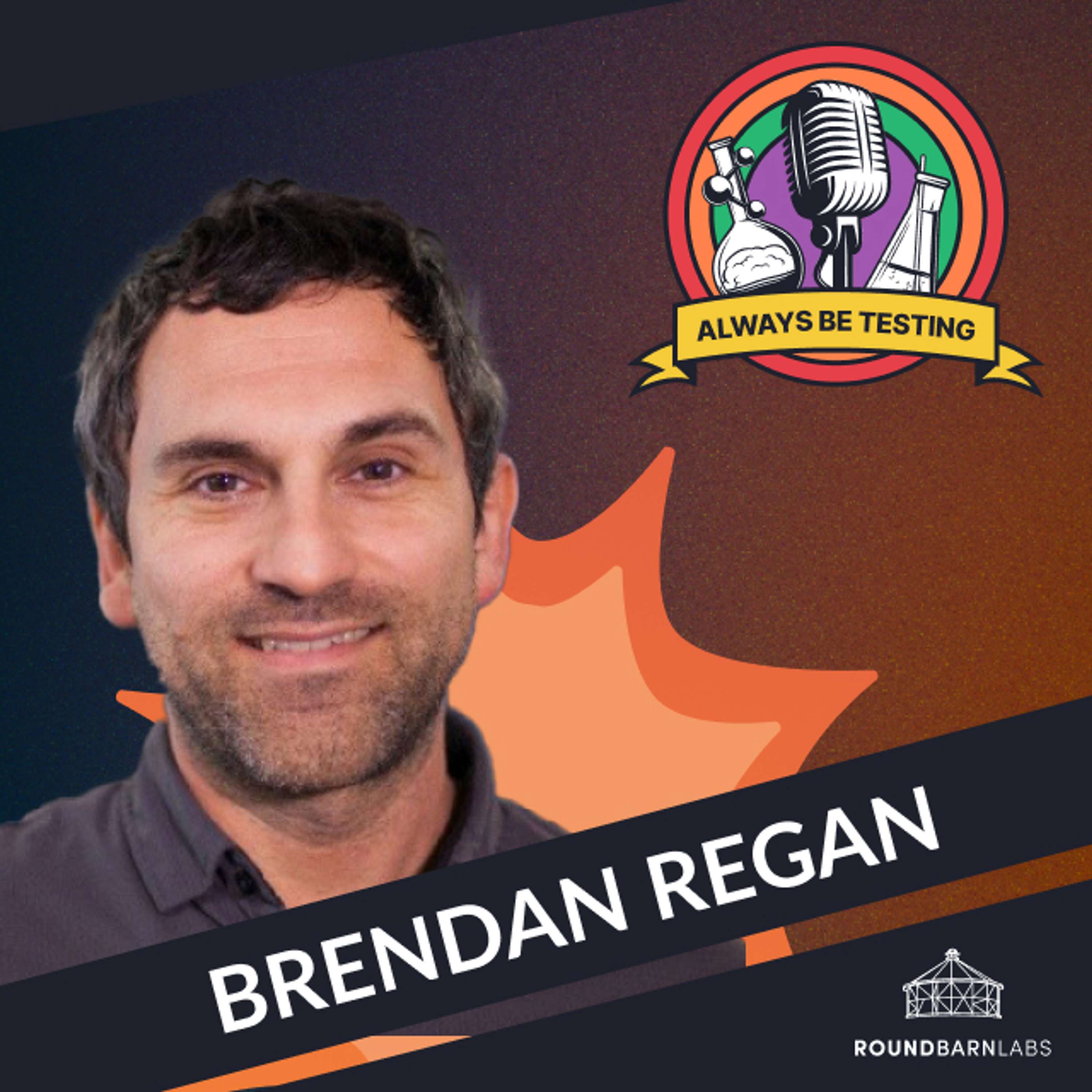
Always Be Testing
#85 Scaling B2B SaaS Growth: Insights from a Smartsheet Expert | Brendan Regan, Senior Director, Lifecycle Marketing at Smartsheet
00:37:19
Loading summary
Transcript70 lines
- [00:00]
A
Foreign. Welcome to another episode of the Always Be Testing podcast. I'm your host, Ty degrange. I'm really excited to talk to Brandon Reagan today. Brandon, how you doing man?
- [00:17]
B
Doing great, Ty. It's good to see you. And we've known each other a while. We've always said we should do something. So I'm glad we're. We're doing a thing today. I'm excited.
- [00:26]
A
We're doing a thing today. I love it. Hailing from the pnw.
- [00:30]
B
That's right, upper left, upper left.
- [00:32]
A
I love it. Rock and roll. It's going to be fun. So Brendan is awesome. He knows growth, he knows marketing. He's the senior director of lifestyle marketing, Life Cycle Marketing at Smartsheet. It's going to be some good stuff, a lot of good learnings and keep your dials where they are. So maybe just give us a little bit of background on what you are focused on at smartsheet.
- [00:56]
B
Sure. I look after a team that is called the Lifecycle marketing team. We sit within a broader demand generation function and then that goes up to an even broader go to market organization. So we focus a lot on nurturing prospects and customers multi channel to try to get them to various growth outcomes along their customer journey. We are focused on PLG in certain segments and more PLs in other segments. So I'm really interested in how to be good at both or how to think about that in a hybrid way. And Smartsheet is a great testing ground because of the scale of the customer base but also that we sell very high end enterprise and we sell very low end monthly on a credit card SaaS and so it's great to be able to work all sizes and shapes.
- [01:51]
A
Yeah, that being able to do both well is very fascinating. That's a really good call out. When you think about kind of addressing acquisition, retention and monetization, how do you kind of tackle that?
- [02:03]
B
Well, the nice thing is that digital has a part in all of them and that's my background so I have a lot of fun there. I tend to think about things in kind of a layer cake or almost a pyramid where what you apply and how much human touch you apply versus how much digital programming you run really can vary based on the known value of a customer or the potential value of a customer in the future. So I think about, I hate to use the phrase low end but like less mature customer base that's spending less on your product can live if it needs to in an exclusively digital universe surrounded by automated programs and things happening Inside the product. As they move up in their sophistication and their value, they might get assigned a customer success rep or maybe it's a pooled cs. Maybe they have an AE on their account as they grow. Right now you're adding in human LED motions, but still keeping the digital layer running, making sure those work together.
- [03:06]
A
That's interesting. Yeah. I like how you're thinking about things in combinations and try to gather compounding and try to complement one another as opposed to in silos. You can tell that's kind of how your brain's working on these things, which is exciting.
- [03:21]
B
And that was through experimentation. I think when I came to smartsheet, the assumption was you're going to run digital on no touch customers and certainly did a lot of work there. But what experimentation showed us was these same programs that were designed for a quote unquote, no touch audience still worked and compounded when sales reps got in the conversation or when a CS rep was assigned. So that was a huge light bulb for me in my career of it's not in a silo. There is this layered possibility and we did see compounding gains. So once you realize that, then you can start sort of fine tuning for those different segments. And that's for me, when it started to get really fun.
- [04:11]
A
That's awesome. What are some of those macro growth levers that you've tested over the years?
- [04:16]
B
I think about it in terms of different motions. Like in SaaS, we're a SaaS product, we have, we have a freemium model. So free to paid. Whether that's a freemium user or a trial evaluation, that's an obvious growth lever. That's very popular in SaaS. We've played a lot in trying to drive subscription level upgrades. Like you're on the silver plan and we want to move you to the gold plan. And here's why. Then you have what you might call like seat expansion. Like you bought 10 seats of this subscription level. Let's sell you five more, maybe in an automated fashion. Then there's services attach. As the company grew, we had more and more services to try and attach. That's an interesting space. We've worked in cross sell and upsell. We've worked in onboarding and we've done a little bit in win back. So it's been a lot. I mean, it's been a lot of things we've tried and based on testing, you kind of decide where to double down, where to prioritize and so forth.
- [05:17]
A
That makes sense. There's a lot There's a lot there with existing and with a great base of customers and different use cases. So it makes sense that you can kind of track them to different relevant revenue expansion opportunities and growth levers, which is, which is huge. And think about the engagement opportunity that good growth leaders focus on and retention. There's a lot of that that you've outlined there which I think is very valuable. Kind of taking the expansion concept and taking it further. What are some ways you've thought about the idea of expansion of that existing user and how do you think about it?
- [05:57]
B
Yeah, it's been a fairly long journey. When I first joined as kind of life cycle marketer number one, I would think about oh, we've introduced this new subscription level and if I could just move everybody on the silver plan to the gold plan, that would be amazing. Did a lot of testing early on with that and learned a lot in terms of that's actually fairly hard to do from a marketing program and a marketing campaign perspective. That's one I think is best left to true product, true plg where it's like the product needs to actually move you through that journey to needing a higher subscription level in many cases or you do need to talk to a human. So it's not a pure digital play or it can be, but it's not without downsides. Like a lot of marketers, we played around with promotions and incentives. Clearly you can make things happen there. But wasn't a huge area of focus. Once we kind of went in and did some testing and ascertained after that we did get some really good traction on the seat expansion because we found the flywheel there which is you prepay for a certain number of seats. And then digital and customer success in some cases are really encouraging the customer of like you have to get those licenses signed out and used very quickly because that's a huge part of onboarding and retention and growth. Then we could track when someone was at or almost at their license allocation limit. Like we know you bought 10, you just assigned your ninth. We know that in the data stream so we can start triggering messaging around. Hey, you can add more right in the app, just go through checkout. You can add however many more or have an automated outreach from an AE about like hey, let's talk about license growth. Let's talk strategically about it. So a lot of traction there of just like get them allocated, get people to request them. If they don't have them consume those licenses, know when they've hit that limit and then spin into the the Expansion piece. So that was fun to sort of build that. And then people don't always think of onboarding when they think about expansion. But I would argue very strongly from my experience, onboarding is expansion. Like very clearly saw that in testing and in data that doing onboarding well directly, I wouldn't even say correlates like in the data I saw through experimentation causes expansion over time, faster expansion over time. So that was another big sort of light bulb for me. And then most recently we have, over time we've added more sort of premium products that are add ons to the subscription. And that's been really fun to build that motion out as well. In terms of you have a core product subscription with a certain number of members on it, great, we got to retain that. But as you grow in sophistication, there are add ons that you can cross sell to that. And using product data and behavioral data to sort of trigger those motions has been very fruitful and a lot of fun to try and test around in that area.
- [09:12]
A
That last one's super interesting. I'm sure the performance marketers of the world are salivating at the thought of the data and thinking about lookalikes and different heuristics that you've listed. You thought about, there's a lot in there and it's been a lot of years of data and experiments to get to that.
- [09:30]
B
Yeah, the data piece is interesting because we've looked at and leveraged a lot of different kinds of data and you should try all of them. You can try all of them, but you don't have to do all of it all at once. We really started simple with what I think of as affinity marketing. Like if you do X, you're probably interested in Y and you don't need a bunch of data to do that. You can talk to salespeople to understand that stuff. You can talk to CS to understand some of those patterns or just take some of. It's very logical if you look at, here's a basic use case and as that use case matures and gets more sophisticated, we have in fact built an add on product that does that at greater scale or in greater sophistication. So there's some, sometimes some really easy heuristic rules of thumb. And salespeople are the best to get those from. Like, hey, when you sell this, what's that conversation like? Salespeople are so great at simplifying. They're just like, oh, if the person has done this five times, I go in and sell, I go in and Pitch this next thing, it's like, oh, that's pretty easy. That doesn't take much data. You can start really simple and then yeah, you can get really sophisticated with product qualified account signal behavioral data sets, machine learning propensity models, like it's all in play. But I would encourage folks to start simple and get in there and play around rather than wait for some perfect data set to be created for you by someone who doesn't necessarily understand campaigns. Right.
- [11:00]
A
Can you say a little bit more about propensity models for folks that are.
- [11:04]
B
Maybe not as familiar in our sense? The propensity models that we have in play are machine learning based data models developed by an in house business intelligence team or data science team and they look at a huge set of factors, behavioral factors, and they'll go train on a year's worth of data of your customers. Then there's a waiting exercise of like, okay, there's 50 factors in this model. Here's stack ranked. What are the most influential that lead to closing a deal of this ancillary product? So you can certainly plug those in to your warehouse and then you pull lists off of them or you can plug them into your, to your tech stack and they're very interesting. But again, a big learning as I've, as I've explored a lot of them is I sometimes feel like I can shortcut those where it's like I don't need 50 factors. Again, I went and talked to sales and there's really three factors that get deals closed, that really push customers over that line. So start with those and then over time get more sophisticated, bring in the machine learning propensity scores and so forth.
- [12:14]
A
Makes me think of the, I want to say it's a, attributed to Jeff Bezos on the whole qualitative quantitative combination and when there's a bit of a draw or an inconclusive, then you're kind of following a little bit more of the qualitative or the voice of the customer. I'm curious about that in particular in the context of sales being such a great lever and part of the game and one that draws insights out as well in their conversations with your client, your customers. Can you talk a little bit more about how that plays out for you guys and your learnings?
- [12:50]
B
Yeah, I kind of think of it like if you're just getting started, if you're seeking that low hanging fruit, then the qualitative is probably a good place to start because like I mentioned earlier, people in sales are so good at just boiling things down and saying like everything that's in the brochure kind of doesn't matter. Like if you care about this and this keeps you up at night, then you're going to want to spend money to close that gap and you need this product or whatever. So it's great to start with that qualitative stuff. And sales teams are very tribal knowledge where it's like you can very quickly detect where there is a consensus. Versus is this just a very vocal sample size of one rep that I'm talking to here or is this truly something that sort of has spread across a sales floor and everybody's running that play? It's pretty easy to ascertain that. So I love running with that stuff first. And you can usually vet it out pretty quickly at totally different scale to see if, if it's right, quote unquote, then then you sort of will start to flatten your, your growth will start to plateau after a while of doing that. Perfect time to bring in the machine learning, the deeper models, more data to help you go find what maybe is not quite the lowest hanging fruit. And maybe these are opportunities or customers that aren't quite as mature, they aren't quite as ready to buy. Quote unquote. Perfect time to hit them with some marketing. Right? Build the awareness, build the interest.
- [14:19]
A
Going back to what you talked about earlier, it's a lot of things that are kind of working in concert together, which logically makes a lot of sense but isn't always done particularly well in practice. So it's great to hear that there's a rigor and a data and a process in your collaboration, in your not being in a silo. So that's very interesting to me and I think that's just another feather in the cap of what you all have achieved and what you've learned through this process.
- [14:50]
B
And in fairness, I will not say that it never is messy, right? It's like it's not easy work, especially when you take a seed of an idea or you take an idea from a pretty small sample set of stakeholders like salespeople, then you go scale it 10x100x1000x. The results can be very, very different. And so there is risk there. So a lot of the work is really mitigating the risk of hyper scaling something that has never been done before. And again, data is. Data is your friend there, both qualitative and quant.
- [15:27]
A
Yeah, well said. Where do you stand on the hot topic of incrementality? What's kind of worked for you there?
- [15:34]
B
A B testing is really good for incrementality. So we are heavy practitioners of that. I'm always looking at ways for better, cleaner, more global control groups. Like every campaign can have a control group. That's great. But trying to make a cleaner, more global control group is kind of a grail that I chase. The other thing we had talked about was for whatever business reasons, from time to time we run a lot of these always on automated marketing programs. And occasionally you have to make them go dark. Maybe it's a big product change or maybe it's a big branding change. Like there's always these operational times of like, oh yeah, we gotta like pull that down, change something and then light it back up. And historically there's always been this pressure of like minimal downtime. Like, no, let's put it dark for four hours and then light it back up. In recent years, I've really been embracing the like, no, let's leave it off for a week, a nice clean week hopefully and watch the data. Like you want to see a U shape on your sparklines. And that is pretty easy way to visualize incrementality. And maybe not as clean as a scientific experiment, but visually it's very compelling to just like, see, here's where we turned it off, the line went down. Here's where we turned it back on, lines back up. Incrementality.
- [17:00]
A
Yeah, I think there's some simplicity in that. And it's a topic that doesn't always get simplicity. It reminds me of the adage like you're not necessarily understanding something particularly well. You might kind of talk around it, not maybe think or speak about it simply. So I kind of commend you for applying some, some level of simplicity to.
- [17:21]
B
A complex topic that probably came from many years of over complicating it and it not landing. So you do learn over time. Like, yeah, we are performance marketers are a smart bunch, very technical, very data savvy. And there is that trap to fall into, of course, of sort of overcomplicating or being overly scientific in how you're explaining something like incrementality. So yeah, the winners are the people who can keep it simple.
- [17:50]
A
I love it. What are some of the challenges you faced in experimentation? How did you overcome those?
- [17:56]
B
Yeah, one I kind of alluded to, which is we have these really scaled always on programs. Think about like an onboarding program for new paid customers, new seats. Even convincing a company to have a holdout group can be a contentious conversation. Like, why would you purposely ghost some of our customers? It's like, yeah, it's not what you want to do, but incrementality, knowing and understanding incrementality is that important that sometimes it's the right move. Being in sync with the product is really important when you're running marketing experiments, especially if the marketing experiment needs to sort of have a longer duration, which for us it often has to, where like a 30 day trial is part of an experiment and then they have to mature out maybe up to like 75 days to really understand the full sales cycle. Did product change something somewhere in the middle of that experiment? Quite, quite likely. Was it something big enough that it could have like messed up the data? Sometimes. So I think that one's, that one's always a challenge. Another one that kind of I've run into on kind of the product organization side is sort of almost a philosophical difference about a B testing versus using a feature flag and throttling traffic into a new feature is not an A B test. But sometimes those two get kind of conflated and you kind of have to talk around why you would do one over the other in certain circumstances. I think a common one for all kinds of marketers that do tests is picking the right KPIs, not having too many KPIs, making sure the stakeholders are aligned to those KPIs. Because in my career the worst case scenario for an experiment is one where your senior executives will not abide by the results. That's the absolute worst scenario. Like you've run an experiment, you get the results and then the, you know, the stakeholders can't abide by the results. So you have to set that up in advance, really cleanly. And in a lot of our tests, because it's sas, you get, you can see upgrades, expansion, you can see downgrades, you can see cancels. Very rare. You get an experiment where everything's like, oh, everything's green across the whole scorecard of this test. Almost unheard of. In any scenario there's going to be a mix and so interpreting the ups and the downs to a net result and a net conclusion and then being able to socialize that can be quite complex and challenging.
- [20:26]
A
Yeah, no, that's so insightful. It's great to hear some of those areas that you've been able to overcome over the years and kind of come out stronger as a result. PLG growth obviously gets thrown around a lot. It's obviously a big part of what you see in day in, day out. How do you kind of think about defining terms there and just making sense of that terminology for the audience a little bit.
- [20:52]
B
I think the longer I'm around the industry and learning about plg, the more I realize it's defined really differently at different companies. And I think that's okay. Some of the better definitions that I've heard and adhere to are around that idea that someone could go through an entire customer life cycle or journey all the way from purchase to onboarding to growth without human intervention. You really want your product, but also your other channels that coexist with the product. You want to be able to manage that whole customer life cycle in a, in a, in a way that no, no human ever touches it. And a lot of that is around we think about like, oh yeah, your, your sign of experience should be smooth and your, your purchase experience should be smooth. Like table stakes. Yes. I think a lot more of it these days is around can you grow in your sophistication once you've purchased? Can you discover new forms of value inside that product or can you make your use of that product more sophisticated again without a human assigned to your account? So it's all about data and usage data. And what are you prompting the user to try next? And when and why and how are you guiding them on this journey of discovering new things, learning how they work, applying them to your own use so that your, your use cases are getting more sophisticated and complex over time and you're realizing more value by using. Using that product because then you're getting, then you're getting stickier and stickier.
- [22:35]
A
Yeah, you kind of alluded to earlier, but is there a. Do you think there's more kind of magic in kind of combining the best of PLG and pls or being more focused on the other? It's sort of a philosophical question maybe sounding, but I'm curious to know what you. Where you land there. If you had your perhaps druthers in terms of where you'd want to spend it seems like you get to play in both, which is very interesting.
- [22:58]
B
Yeah, I think it depends, you know, if I was building a company from the ground up, it would. In hindsight, it's always great to think like, oh, build a company from the ground up that's really ready to be either. Someone said in a meeting earlier today, actually, like, you really can't do pls if you don't have your PLG isn't really functional. I'm not, I'm still mulling that. I'm not sure if I 100% agree with it, but I think it's a. It's an interesting thought. And a lot of companies I hear about or talk to started down one path or the other and are either started PLG and then are trying to like how do we add pls or they started pls, how do we add plg? And I think that's very. It's doable. It can be pretty hard, I think to go pls to PLG because there's so much sales compensation stuff and financials that have to be sort of figured out in that world. I think it's easier to start PLG and then add pls. But as a company gets large enough or complex enough in terms of the product suite. Yeah, having both is great. If product companies talk about first we have a product and then we sell a platform. Think about like HubSpot or something like that. You come to a company for a product, as you grow and mature, you're really leveraging sort of a suite or a platform of capabilities. And that's. Once you're, once you're selling a platform, then that's the perfect time to be able to do both.
- [24:27]
A
That's super interesting. I think it's definitely one to mull over. There's a lot, there's a lot in there and I think you. Yeah. Hit the in and on the head. It can be pretty. Yeah. There's pros and cons of both. Kind of fascinating to think about PLG being required perhaps before you go pls, that's never heard it phrased that way, but it's interesting.
- [24:47]
B
I think at least from a data perspective it makes sense. Right, because if you build plg, you're going to have a certain tech stack, you're going to have a certain data schema set up, you're going to have a certain data hygiene around product usage and flows and funnels to make PLG truly work. Those are like requisites. All of that data is still super useful data. And having that schema and having that rigor around product data, you're going to need that to be successful in PLs. So I don't know if you need to start with that foundation, but I think it does help.
- [25:23]
A
Yeah, that's very cool. Very interesting. More nerdy data mentality Related topics. What is your thought on. Mmm. Is there. Is there thoughts to test utilizing that? Is that even something that think would be usable based on kind of the business model and what you guys have learned so far?
- [25:42]
B
Yeah, I mean full disclosure, it's not an area that I'm super deep in. It's not an area I'm responsible for. But we are using mmm. Most of it is focused on the acquisition side and I think we're finding some value in it as that tool to look at, to look at data and think about where do we apply dollars or where do we move dollars to acquire to land that customer. I don't think we're, we're there or I haven't really seen huge MMM impact on kind of the expansion, growth side of things. But all this stuff is going to just mature at a really, really rapid pace in the coming years. So whether it's called MMM a few years from now or not, there's going to be something that's going to be super powerful, that using it will be table stakes. So we all have to just buckle up, hang on, keep our heads up and those things are going to come.
- [26:37]
A
Yeah, my eyes kind of light up thinking about where like MMM and other technologies, methodologies of essentially understanding the value of your marketing investments is going to be going and how far it's gone just in the last couple years. And so it's one that we're spending a lot of time on. It's when we're talking to a ton of consultants, experts, providers, clients and very interested in and obviously the POD testing, the topics we've talked about over the years, it certainly would, would make sense that we'd be interested there. But the idea of where it will be five years from now is kind of wild to think about.
- [27:15]
B
I hope we're not a few years fast forward and it's still this or conversation like are you into MMM or attribution modeling or incrementality. I really hope and expect we're going to be in an and world and I look forward to that because I. Because I think there's debate, there's debate and it's like, do we really need to debate the merits of these as if they're mutually exclusive and you have to pick one.
- [27:42]
A
Yeah, I like that a lot. And I. One of the thoughts in conversing with one of the MM providers was like saying mmm kind of is like this prelude to like more detailed test, like specific types of testing. And I think that they work together as opposed to an OR piece which I believe you're on the right track of. I think that's a better way to think about them and particularly long term. You've kind of alluded to some of the experiments and learnings that are obviously the spirit of the pod. But what are your favorite learnings from the smartsheet marketing tests?
- [28:16]
B
Well, the one That I alluded to earlier kind of this, this headline I've used a lot, which is onboarding is expansion. That was one of the biggest tests in my tenure and it was really a very long, a long test with a long kind of watching cohorts mature and finding through that. The correlation to expansion when you do good onboarding is stronger than the correlation to retention, which makes sense. Onboarding is at the beginning of a customer life cycle for us. It's a bit of an arbitrary like 30 to 40 day time span. Take that out to an annual subscription renewal. Yeah, of course the correlation gets pretty weak and it gets really noisy because so many other things are happening post onboarding. But what we did see was post onboarding in this case license expansion. Like the lines diverged and never crossed. Where it's like those who had one experience that was suboptimal, they did grow. Like there was net growth there. Those who had the winning test onboarding experience, there was net growth there that was more and faster and sustained over a one year time frame.
- [29:32]
A
Yeah, that's really powerful.
- [29:35]
B
Another big one for me was kind of again alluded to earlier but starting to test on these cross sells of like, well, the sales team said it's really simple. It's just if you do this five times, you're a really good prospect for this upsell and we just, let's try it. So really seeing that play out of like, yeah, wow. We don't need to build a data science propensity model yet. Like we can get serious traction here on the heuristic because that doesn't always work in testing. Like that can really backfire on you in experimentation, but sometimes it gives you a great start out of the gate. And that's what it did for us. And that was really fun.
- [30:16]
A
That's awesome. What do you think B2B SaaS companies get wrong about growth?
- [30:20]
B
Well, I don't know if it's specific to B2B SaaS, but staying in your silo, not keeping informed of everything that's happening and changing throughout the company can certainly cause issues, I think, especially on the product side. And again, I don't think it's unique to B2B SaaS. But I do see throughout my career the sort of drawbacks of copycat marketing. It's like, oh, our indirect competitors going with this go to market or they install the sales bot on this page and whatever it is, like, okay, test it, but don't just assume, don't assume that their ICP is your icp. Don't assume that the demographics are the same. There's a million reasons why that won't necessarily work. Yeah. And then the other big one that I had jotted down was not taking the investments in the tech stack seriously enough. I think that one is specifically very important. In B2B SaaS. I was a person for a lot of years. I was like, I'm not a Martech person. I don't need to be super involved in thinking about that stuff. I'm just running campaigns. But the deeper I got, the longer I stayed. I realized, oh no, I need to care very, very deeply about what's in the tech stack and how the integrations are, what state they're in. There's just so much important stuff happening there. If you want to really surround the customer on these channels in real time with really relevant communications, it's super important.
- [31:52]
A
I love that. That's huge. This is awesome. The learnings here have been massive, Brendan, and just always a pleasure and I think there's going to be some great conversation and thought coming out of this. Just kind of taking it down the home stretch with some of the more personal get to know you stuff. What do folks not know about you?
- [32:12]
B
Well, outside of my marketing day job, I'm a musician. So write songs, play guitar, sing. I've made a couple albums over the years and it's a. Not my day job absolutely, but pretty big passion of mine. My fun fact since I'm from Seattle, is that one of the recording projects I did was in a recording studio where an obscure Seattle band named Pearl Jam recorded the album called 10. So that was really fun. Sort of awesome. Hallowed ground. Seeing pictures of them on the wall and just being in the same space where they did that work. If you're a music geek like I am, it was a hugely enjoyable experience.
- [33:03]
A
That's amazing. I love it. It doesn't get any better than that. What do you got for book recommendations?
- [33:08]
B
Well, for people out there that have children. One we just finished reading with the family is called the Eyes and the Impossible by Dave Eggers. We. We read it aloud to our 4 and 9 year old. They loved it. And as soon as we were done reading it as a family, I just furtively took the book by myself and reread it and it just really wow. You don't have to be. It's not children's literature. It was just really, really good writing that children can enjoy. So that was fun.
- [33:44]
A
Amazing. We've got a four year old, so that's couldn't be more Timely. I appreciate the suggestion. I'm definitely gonna check that one out. Sounds amazing. Love that. You got any TV guilty pleasures?
- [33:56]
B
Yeah.
- [33:57]
A
For.
- [33:57]
B
I'm not guilty for reality, I would.
- [34:01]
A
Say, or just pleasures.
- [34:02]
B
Just generally for reality TV, I think you cannot beat RuPaul's Drag Race. Been following that for several, many seasons, and I'm always vastly entertained. I mean, these are some of the most talented performers you'll ever see. Might not be your thing, but it's very, very entertaining to me.
- [34:24]
A
That's awesome. I love that. Very cool. It sounds like we might have some overlapping interest in the 80s genre of movie.
- [34:32]
B
Oh, yeah. Again, I'm not guilty. Always love a sort of a corny 80s movie.
- [34:42]
A
Me too.
- [34:42]
B
I don't know how many times I've seen Footloose, but, like, every time it's on some channel, I'm just. Sit down. I'm like, I'm probably gonna watch it again.
- [34:49]
A
So. Good.
- [34:50]
B
And all these, like, Cold War, 80 great 80s movies. Red Dawn, Iron Eagle, they're all fairly terrible, but for some reason, I. I find them entertaining.
- [35:02]
A
I love it. Yeah. Kind of just the right mix of cheesy and positive and funny, and there's some. Yeah. Little nostalgia. I'm a. I'm a big fan myself.
- [35:11]
B
Yeah, it has all the. All the fixings for us.
- [35:13]
A
There you go. Brandon, this has been awesome, man. It's always good to chat with you. Can't wait to get this out to people. They're gonna get a kick out of it, and just. There's just a lot of good stuff in here that you've. You've achieved and you've. You're able to share and grateful that you got to talk through it, through it all today. For folks that want to just learn more about you, where can they find you?
- [35:37]
B
Professionally, I'm on LinkedIn. Like everybody else. Musically, I'm on Bandcamp and the streaming platforms of your choice, and I think I'll keep doing both, so you can follow me on both avenues. But it's been really fun to. All the things I've talked about today, I feel like have been years and years of battling and testing and getting scarred from time to time. So I really appreciate being able to say all these things as if they came easy, but they didn't. But I'm just. Hopefully, I can help people kind of shortcut and fast track some of these. Some of these things, because otherwise, you're forging a path is great, but not everybody needs to go hacking through the jungle every time, Right.
- [36:22]
A
Yeah. Well, said my friend. And yeah, the bandcap link we'll have to surely include because I definitely want to check out some of your music. The fact that you have created some cool stuff as well on the personal side and music such a it's funny thing. It's come up a lot on this pod and a lot of appreciators, a lot of creators. On occasion you're got some cool stuff to share so you'll have to listen to it and give it a listen.
- [36:47]
B
Yeah, I'm never surprised when there's some crossover between marketers and musicians. They're both kind of art and science so it makes perfect sense to me.
- [36:56]
A
There you go. Well, great way to end it. Brennan, you're the man. So fun to talk to you and have a great rest of your day and week.
- [37:03]
B
All right. We'll do it in person next time.
- [37:05]
A
Thank yeah, sounds good.
- [37:07]
B
Cheers.