← Always Be Testing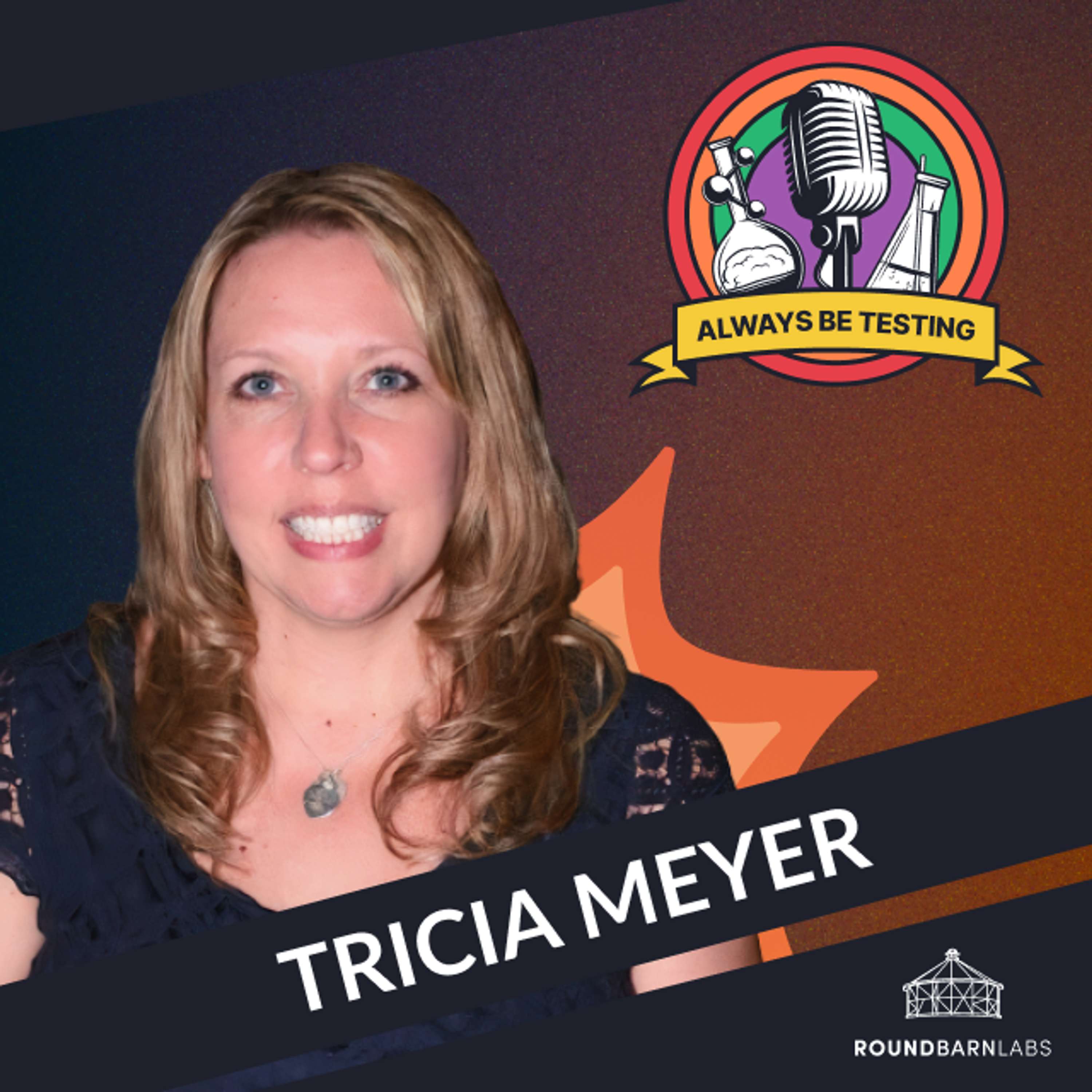
Always Be Testing
#90 Affiliate Marketing: New Technologies & Shifting Trends | Tricia Meyer - Executive Director, Performance Marketing Association
00:22:26
Loading summary
Transcript46 lines
- [00:00]
Ty DeGrange
Foreign. Welcome to another episode of the Always Be Testing podcast. I'm your host Ty DeGrange and I'm really excited to have Trisha Meyer on today. Tricia, how are you?
- [00:16]
Trisha Meyer
Good. Thank you so much for having me back.
- [00:19]
Ty DeGrange
It's you are return guest in elite company. Not many have made it back. I appreciate that you just recently had a great trip.
- [00:28]
Trisha Meyer
I did. Took a Disney cruise with my adult daughter and her fiance. So a little family time and a little no phone time, little no Internet time. So that was the best part of it.
- [00:38]
Ty DeGrange
Well done. Much, much needed and kudos to you. Hope you're back and refreshed. And as, as you know, you've got some cool info to drop on the affiliate marketing community. So let's, let's get into it, shall we?
- [00:52]
Trisha Meyer
Absolutely. Yeah. This is kind of like Christmas, my birthday, like everything like all rolled up into one for me. This is like the most exciting week of the year at this point.
- [01:02]
Ty DeGrange
It's a lot going on and you know, I think people are coming off conferences, coming off some breaks, we're coming into summer. Some good data to share on affiliate. In the world of affiliate marketing, what's happening? For those of you who don't know, I'm honored to serve on the measurements council with Tricia as part of the pma. Tricia is council and head of the PMA for a number of years, right?
- [01:22]
Trisha Meyer
Yeah, I think nine at this point.
- [01:23]
Ty DeGrange
That's amazing. And she is excited to share the results of a survey, industry wide survey that what the last one that was done was three years ago.
- [01:31]
Trisha Meyer
Right. We did one three years ago and one three years before that. So this is our third study.
- [01:35]
Ty DeGrange
For those of you interested in data, interested in the performance of the industry, interested in how things are going, this is a really exciting episode. There's going to be a lot of good information put out here, but also through the pma, through Tricia's site and posts and a lot of other PMA and active affiliate marketing folks. So should be a good one to stay tuned into. And I'll let Tricia jump in but maybe like hit us with a little bit of your goal with the survey. I know obviously there's a lot of discussion and planning to figure out what the goal of it was. Maybe just give people the framework of that first and we can kind of go from there.
- [02:10]
Trisha Meyer
Sure thing. You know, there are a lot of studies that are done in affiliate marketing, but most of those are siloed. So they're one company that's doing a study of their own data or commissioning a study. And so what we're looking is looking across the entire United states, looking at eight different networks, 53 publishers, over 20,000 brands, all of this data being brought together, and then with London Research, which is who we use to do all of the analysis, keep the confidentiality, all of that, having professionals who not only understand our industry, but understand data analysis, having them pull it all together. So we're establishing some baseline numbers where we can talk about how big is affiliate marketing in the United States, how much are we contributing to overall E commerce in the United States, which is also kind of huge. How are we growing comparatively year over year and from study to study, what kind of verticals, everything like that. So we're kind of establishing these baselines so that overall we can show people the true value of affiliate marketing, but also kind of where we've come from the last three years and where we think we might be headed and then allow you to decide where you're best putting your dollars, where you're best putting your efforts.
- [03:14]
Ty DeGrange
Love it. Yeah, I think that. I think it's timely. There's been so much interest and excitement and growth and things happening. Generally speaking, a lot has changed in three years. Some. Some things have changed a lot, some less so. So I think it's timely to. To check in and see where we're at in terms of the methodology and, and how you spoke to it a little bit. Can you just touch on the methodology a little bit for. For the data nerds out there at a high level? Sure.
- [03:40]
Trisha Meyer
So we're one of the studies where we're getting actual data from the network. So this over 20,000 brands worth of data is actually coming directly from the network. So they are sharing ad spend, they're sharing ad revenue aggregate numbers with us. So those numbers are true numbers, they're not estimations. Then we're going out to the publishers and we're taking a look at where the rest of the revenue in the industry is that we're not able to capture through those eight networks that are participating. So we're taking then both sides of that, the actual numbers from the networks, doing some analysis with that, and then also taking the publisher numbers where they're telling us what percentage of their revenue comes from different sources, and then able to kind of aggregate all of that to come up with this big number.
- [04:20]
Ty DeGrange
That we're giving in some cases where the publishers kind of filling in the blanks in that case, just to try to flush that out a little bit.
- [04:27]
Trisha Meyer
Yeah, we asked the publishers, you know, kind of some general questions to make sure we have a good sample size to begin with. Because I, I come from a political science background initially, so the actual like statistical significance is huge for me. So making sure that the publishers that we're surveying, we're covering every different type of publisher, cashback sites, loyalty influencers, all the different types of, but then all the different sizes too, because we want the really big companies, the companies with 10, $100 million or more in revenue, but there aren't as many of those comparatively in the industry. Like that's maybe 5 to 10% of the industry that are those big companies. The other 85, 90% of the industry are small and medium sized businesses. So we want to make sure that we're getting enough of those as well. So that was where we did a lot of work with London research, trying to make sure that the sample was broad enough and kind of understanding what the weight of that sample should be.
- [05:17]
Ty DeGrange
That's great. No, I appreciate that. Well, this is great. And thanks for teeing up with the context. I'd love to just have you hit us with the kind of executive summary of what, what were, what were the key takeaways and we can kind of drill down into each of them.
- [05:29]
Trisha Meyer
Sure. So our first study we were around 6 billion in ad spend. Then we jumped up to around 9 billion. This time we were at 13.63 billion in ad spend a year. And that's huge for us. That is a 14.42% compound annual growth rate since the last study. And if you're trying to put that into perspective, our last study that we did, coming like through Covid, where online shopping increased a lot, we were a little over 13% compound annual growth rate at that point, which we thought might have topped out, we thought all these companies all of a sudden came online, people are all online shopping. We're not going to continue to see this growth. And we saw more growth. And even compared to overall E commerce in the United States, we almost doubled the compound annual growth rate of E commerce in the United States. So affiliate marketing is actually growing faster. And we now contribute as affiliate marketers. We contribute about 10% of the overall E commerce. So that's a pretty big number. That's $113 billion through affiliate marketing that's distributed to E commerce.
- [06:37]
Ty DeGrange
Wow, that's massive. It's definitely validating for us working in this space and all the, you know, effort is starting to show up and you know, realized and we're not just pushing a Boulder up the hill for no reason.
- [06:51]
Trisha Meyer
Exactly. And kind of, you know, further breaking things down. One of we saw some different interesting trends. One is that affiliate marketing is not just all retail. You think about affiliate marketing, you're like, oh, that's probably, you know, the department stores and health and beauty and all those kinds of things. But we really saw growth in a lot of other places. We're seeing growth in the financial sector and the telecom sector. So we're seeing that other types of industries are finding out a way to utilize affiliate marketing as much if not better than what all of the retailers have traditionally been doing it.
- [07:25]
Ty DeGrange
That's amazing. That's amazing. I'd love to see the different here different verticals that you're seeing. Were there any, any vertical type things that were surprising to you or anything that you, you thought was notable?
- [07:36]
Trisha Meyer
I think seeing, I mean obviously travel jumped a lot. So in terms of like return on ad spend, travel became top. And I think given that we were looking at this three year period where we were taking into account kind of the revenge travel of the pandemic people that had saved up money during that time, I don't think that was out of the ordinary. We'll see what happens. That'll be something for us to keep our eye on next time. But whether that traffic grow as, stays as high as it was. But seeing the financial and the telecom sectors, because that's a little bit harder. You don't see as much of the one to one correlation. It's not like, you know, I decide that I want to buy some lip gloss and I read a review and I click on the review and I buy it and they know that that lip Gloss cost $12 and they paid me, you know, they paid the publisher a dollar. When you're talking about finance and telecom, it's a lot different because they're having, you know, they might be spending a hundred dollars to get somebody to sign up for a credit card or a bank account or a mobile service or something like that. And having to also weigh like the long range, how long did that person stay a customer? How much did they make off of them? So the fact that they're investing in affiliate and giving us a chance and that we're seeing it growing means that we must be doing something right.
- [08:43]
Ty DeGrange
Yeah, it reminds me and we see so many tech examples on, you know, consumer and also in B2B and you know, I think it kind of reminds me of a lot of the conversations we've had around like measurement getting better and better over Time and kind of some of those better measurement tools getting to more marketers and more standardized. And I think that's a good thing as people now have more willingness to spend and invest where they should. Rightfully it works most cases. So that's, that's fantastic to see the growth in those verticals and make sense from my perspective.
- [09:16]
Trisha Meyer
So then on the publisher side, we kind of take a look on the opposite side of it. We did still see that cash back and coupons or cashback sites and coupon sites put together are still kind of the king, which makes sense because there is a lot of affiliate marketing and cash back and coupon and that's what customers want. We're in a time of, you know, a little financial upheaval. Not huge right now, but you know, enough where people are looking for bargains, they are looking for loyalty programs and things like that. So it's not surprising that we saw a rise or that we saw those stay high. But we did see coupon sites in general dip percentage wise. And that's something that I'm really anxious to hear what everybody else thinks about, that the coupon sites themselves, the people that are working with them. I think a little bit of the shift was just to new technologies. For example, we didn't have card linked offers when we did the study three years ago. And we're hearing a lot about card linked offers in this last nine to 12 months in particular. So are there people that are now going through their credit card and getting their 10% or whatever instead of going to a coupon site and getting 10% off? So there is some shift where it's now shifting from coupon site to technology partner because we're moving it from that. And then also buy now, pay later, there was the increase there. And so you've also got, you have to take into consideration that some people are going the buy now, pay later route instead of going to the coupon sites. So we did see that little bit of shift there. But it is also showing that we continue to find new ways to incorporate affiliate marketing into where everybody is shopping. And so the fact that we're seeing the tech partners are rising, that we're seeing the buy now, pay later and the car linked offers and finding ways to do this, tracking ways to work in those different sectors. I think it just shows that we continue to be an industry that is always going to stay kind of a step ahead of everything.
- [11:05]
Ty DeGrange
No, I love that. It's a great theme. And I'm curious when you talk about partners, if you step back and think about where we were three years ago and the last time the survey was done. Would you say in the data is it safe to say that like you know, card linked offers, buy now paid layer, influencer content were basically the winners out of it? I know there's like in terms of growth rate or is that safe or accurate?
- [11:29]
Trisha Meyer
Yeah. And I think that is mentioning the growth rate is really important because in the study that we've done, we're showing these percentages and it's the percentage of the whole by that category. So when we say, you know, coupons drop from 16% to 10%, that doesn't mean that coupon spend dropped from 16% to 10%. It just means compared to everything else. So when you think about it, if everything else is growing, something has to drop. And in this case, you know, it's coupons.
- [11:58]
Ty DeGrange
Yeah, for sure. It's not to put words in your mouth or soon conclusions of the study, but is it sort of a better way to look at it is like market share within the affiliate marketing space?
- [12:09]
Trisha Meyer
Absolutely, yeah. It's kind of like the, that's the market share that the publishers have. So you know, when we're looking at it, we're saying something has to go somewhere, but it doesn't mean that anybody's losing money or making less money than they did before. It means the pie is getting bigger and the things are shifting around in the pie as well. So you could be making as much or more than you made three years ago as a publisher, but have actually a smaller piece of the overall pie. And that's because we are seeing these other things. I mean the last study we did was the first time we even broke out influencer and, and creator and social. Those were just lumped in content the first time we did this six years ago. So we're learning to refine. Part of it is refining just by having data and having people look at the data and say, oh wait, why didn't anybody mention pets? What is pets? And we say, oh, we didn't even think to break that out. Next time we'll break out pets. The other thing that happens is we didn't break out buy now, pay later last time because we didn't know it was big enough. We didn't even have card linked offers three years ago.
- [13:06]
Ty DeGrange
So.
- [13:07]
Trisha Meyer
So some of the changes that we're seeing and that the report does reflect some of it is just that we're learning to become more granular in areas where we're seeing some of the trending but it's also just because there's new innovation within the industry and we're trying to capture that new innovation as well.
- [13:21]
Ty DeGrange
Yeah, I love the. Capturing a new innovation is such a great theme and it's come up a lot when in our conversations around, you know, the Google changes within industry changes with what's coming with AI and I think it's such an amazing reminder of the value of the space without getting too far down the rabbit hole. Affiliate industry tends to innovate and tends to figure it out. By its nature it's certainly not a static industry. So tip the cap to those innovators that are trying to figure things out and make it work.
- [13:52]
Trisha Meyer
And we also, we did something completely new this time and that was that we wanted to bring in some publisher sentiment. So we asked a series of six very different questions of the publishers that were giving us their data to kind of round out those overall numbers. And we were looking at just the broad spectrum. How worried are you about the Google changes? How optimistic are you about the industry? How worried are you about tracking just some of these high level things that we as the PMA can then kind of drill down into over the next year between now and the next study? And it was really interesting that the vast majority are very worried about the Google changes and whether that's algorithmic changes, it's AI overviews, all these different things Google's doing. The vast majority of affiliates are worried, but then when we ask them about their optimism about the industry going forward, they're all optimistic about the future of the industry and about their part in the industry. So everybody is worried, but it's not like, oh, we're so worried and we're worried about Google and we're worried we're all going to go to business. It's, we're really worried about Google but we're going to find a way. And we asked, you know, how, how much are you going to change the things that you're doing? And about the majority said that they were going to be looking at doing different things. So if you before we're doing only content, you might also now be adding in, you know, some ad spend to direct to your content. So you're not just relying on Google anymore as the publisher, you're also directing some ad money so that you're getting people to, to that content in other ways. So I think everybody, you know, is kind of looking at where they are and where they might be able to get traffic that they're not currently. And so they're looking now at socials and they're looking at can I get people from TikTok to come read my blog post? Somehow, how do I make that happen? So worried about these things, but optimistic that we're going to find ways to, to get through it all.
- [15:35]
Ty DeGrange
Yeah, no, that's a great, that's a great call out. That's amazing. What other things? Anything that kind of jumped out at you or other big points that, that you want to touch on.
- [15:44]
Trisha Meyer
The one other thing that was kind of big and that was a little worrisome to me. But in talking to people as these results have come out, the return on ad spend fell a little bit and it was an average of 12 to 1 in our last two studies and this time it fell to 11 to 1. So it's not a huge change. But you know, I, on the publisher side don't see it as much. So in talking to the agencies and all of you asking where this ad spend is going and what's happening, a lot of the take on that is that because we are looking more at the beginning of the journey, the top of the funnel, we are paying a little bit more maybe for that traffic. We see coupons going down which tend to be the lowest percentage. So you might be getting a little less return on your ad spend, but you're hitting people in a different part of the funnel than before. So it might be more valuable traffic that you're paying a little bit more for. It might be more long term traffic or more new to file customers or things like that. So it's not necessarily a bad thing that that has changed a little bit. It just kind of reflects how we're spending money. It reflects the new hybrid approaches, especially with the rise of influencer creators. So we're seeing a little bit more hybrid, so maybe a little more upfront as well on some of that. So we'll see. I'm interested to hear, as this conversation goes on of everybody who's downloading the report, reading it and then kind of applying it to what they do on a daily basis and coming back and telling us, okay, this makes sense or doesn't make sense.
- [17:03]
Ty DeGrange
Yeah, in a perfect world, maybe in one day, maybe six years from now, we'll have, you know, incrementality score or LTV or you know, percent new customer like you alluded to. Right. Those are very powerful, powerful measures and for a lot of brands they're more important than some of the other metrics that we're talking about. I think you nailed it. When you alluded to why that probably is the case and why that might be coming down. You get brands that say it's their most efficient channel on multiple occasions, even up until recently. Very much so. And I think it's also a reflection of just costs have gone through the roof on so many things, you know, particularly in that, you know, return to revenge travel, as you called it. That return to work, the return to spend was big too, on platforms. And I think that that really brought up cost and investment. I think it's pulled back a little bit post that in 2023 range. And I think we're in a little bit more of a normal spend level, if you want to call it normal. But I think it's really spot on. Those costs have gotten really high and I've actually been a little surprised maybe up until a recent, like early 2025, that a lot of the thought fee placements were. Nothing was going down. There was not a lot of opportunity to vastly negotiate or get discounted rates, whereas in the past it was a little bit easier to do that. I think it's getting a little bit better now, softening a little. I think there's a little bit of advertiser fatigue. But in the last two weeks, it just seems like you alluded to it, a lot of the fears of macro stuff has calmed down and the consumer is a little bit better with it in the last 48 hours. So it's, it seems to be a very fast moving target. But, man, it's not cheap to get me quality media these days.
- [18:51]
Trisha Meyer
Hopefully everyone will still agree that affiliate marketing is the way to go.
- [18:55]
Ty DeGrange
Yeah. And I think like what you alluded to at the very beginning, the, the, the compound annual growth rate, the total investment growth, it's just another huge validator for something that, you know, you and I have legitimately said and observed and been a part of, fortunately. And it's really a powerful lever that I think people are catching on to more and more and it's been continuing to be legitimized and invested in. So that's exciting and that's kind of what we're aiming for. And our objective is with the whole thing.
- [19:25]
Trisha Meyer
Absolutely, yeah. And I think the more that we can have the industry get together to work on studies like this, the more broad cooperation that we get, the better it is for the industry in general because we need this kind of information, we need this data to know if we as individual companies are doing the right thing. But we also need to see the industry as a whole and to make sure that we're pushing it in the right direction.
- [19:47]
Ty DeGrange
Yeah, I couldn't agree more. And for individuals or teams or businesses that are not contributing, I would definitely encourage it. I think it's an exciting value add that we all want to see and measure these results that just understand our space more intelligently and more clearly and it helps everyone in the ecosystem. So commendable what the PMA is doing. Commendable what Trisha is doing. Honored to be part of, you know, one of the many councils you have working on cool things and educating the community. So I really encourage people to be involved in the PMA and these studies too.
- [20:19]
Trisha Meyer
Absolutely. Because when you want the questions answered, to bring the questions to us and we help get them answered. So it's people like you, Ty, that helped come up with these questions that were the ones that said this is what would be helpful for me to know about the industry. So the more that you're participating, the more you're going to get the answers that you want as well.
- [20:34]
Ty DeGrange
Awesome. I love it. And I think, yeah, just to, just to reiterate my perspective and love to hear yours like the take, the takeaways are pretty exciting. I mean there's, there's great new partners that are growing and more representation than they were in the last, you know, the last three year study. There's really fantastic growth that's outpacing E commerce growth. It's, I think it's just, I think it bodes well for everything we're doing and a lot more work to do to have the full, the full story and the full partner type and just commendable and exciting for, for all the stuff that you're doing that we're a part of.
- [21:04]
Trisha Meyer
Thank you. I appreciate you helping spread the word about it.
- [21:07]
Ty DeGrange
You bet. Here we are recording today. I think we're trying to get this out in a week for all those listening now. Hi. When it, when, where can we access the data, give the audience a little bit of direction on where they can go to get the information and read the study and share it with everyone that thinks it would be helpful.
- [21:24]
Trisha Meyer
So you can come to the PMA website, which is thepma.org if you just come to the website we will have it up in our menu system banners. If you sign up for the newsletter, like pretty much anything you touch on the website, you're going to end up getting routed into the results. At this point we're not charging for it so it is free for anybody, members and non members to download. So you come to the site, put in your email address and get the copy. I think it's like 20, 25 pages long or something like that, chock full of graphs and data and analysis. And so we would love to have you download it and then let us know what you think about it. Let us know what you agree with, what you don't agree with, and what you'd like to see us doing in the future as well.
- [22:00]
Ty DeGrange
Beautiful. There you have it, folks. Get the study, go to the PMA site, download it and share away. Tell us what you think. Thanks, Tricia. So awesome to have you on. Second time. You're in very special company and always a pleasure.
- [22:13]
Trisha Meyer
Thank you so much. You.