← Always Be Testing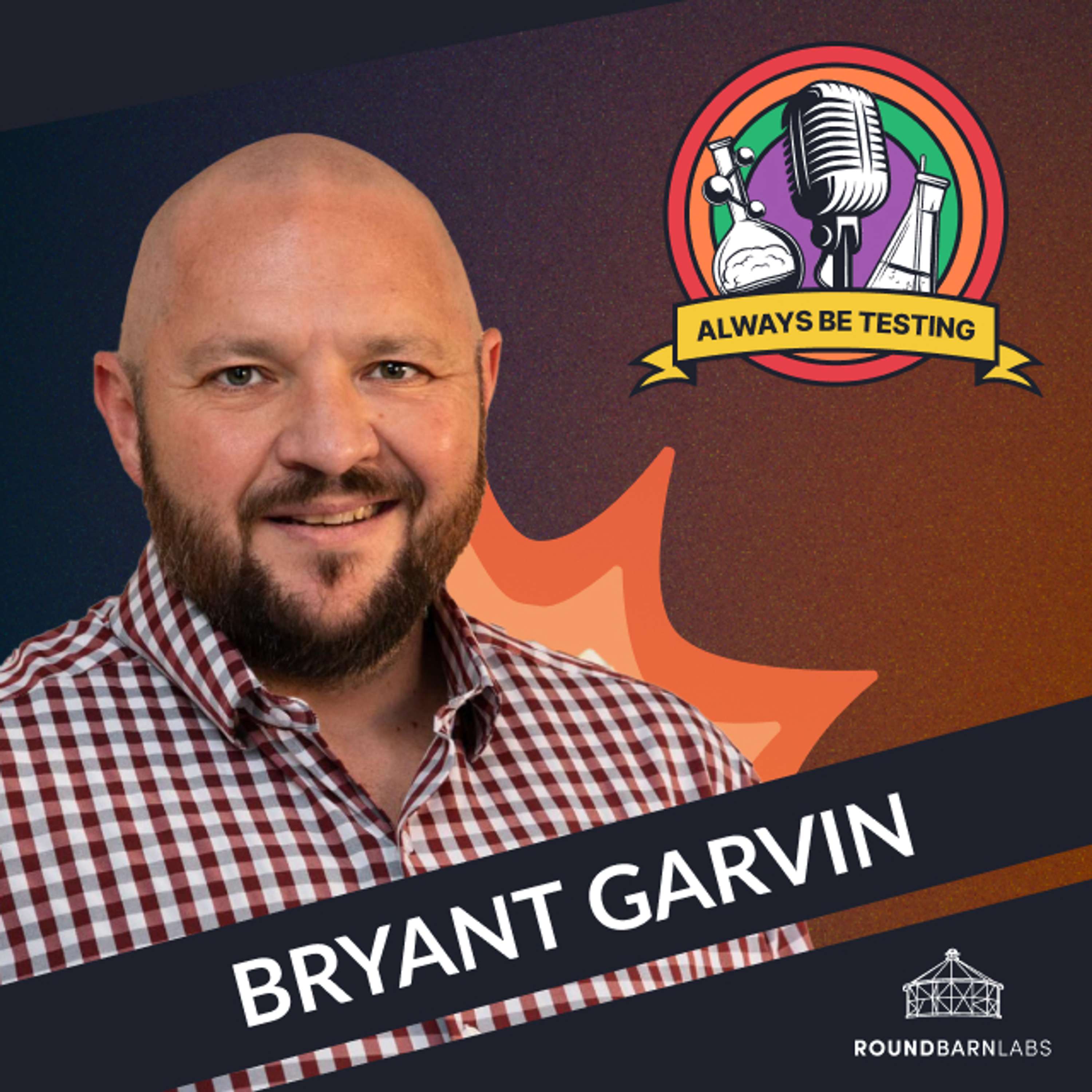
Always Be Testing
#93 The Future of E-commerce Marketing? It’s a blend of AI, attribution—and human connection | Bryant Garvin
00:34:47
Loading summary
Transcript80 lines
- [00:00]
Bryant Garvin
Foreign.
- [00:08]
Ty Degrange
Welcome to another episode of the Always Be Testing podcast. I'm your host, Ty degrange. I'm really excited to talk to Bryant Garvin today. Bg, how are you?
- [00:17]
Bryant Garvin
I'm doing great, man. I'm excited. It's a. I always love talking with you.
- [00:21]
Ty Degrange
We've had some very good conversations over the years. Yeah, we have known you, gosh, probably about 20 years now. Almost.
- [00:28]
Bryant Garvin
It was 2007.
- [00:31]
Ty Degrange
Okay. Not quite, but close.
- [00:33]
Bryant Garvin
Yeah. I could add, right?
- [00:34]
Ty Degrange
That's right.
- [00:35]
Bryant Garvin
Almost 20 years.
- [00:36]
Ty Degrange
Yeah.
- [00:36]
Bryant Garvin
That's crazy.
- [00:37]
Ty Degrange
Quite a collection of talented people at that company.
- [00:40]
Bryant Garvin
Yeah. We're getting old. 20 years.
- [00:42]
Ty Degrange
We are.
- [00:43]
Bryant Garvin
We are in digital age. We're dinosaurs.
- [00:46]
Ty Degrange
Yes, we are. Which is why you're on the pod. You have a lot of knowledge to drop.
- [00:52]
Bryant Garvin
I hope everybody likes it.
- [00:54]
Ty Degrange
They're going to love it. Quick public service announcement for those headed.
- [00:57]
Unknown
To affiliate Summit East. Thinking about going maybe checking out Creator Economy Live, one of the most well established affiliate shows in the world and the longest running. Exciting to be able to have some codes for RBL and always be testing listeners for it. So if you want to go, we want to save some money, use RBL20 at checkout. There's going to be some links in the show notes. It'll get you 20% off your tickets which will save you some money. And then if you're heading out to Creator Economy live, enter code RBL15 to save as as well there. Just wanted to let you know, we'll see you out there and back to the show. Enjoy and talk to you soon.
- [01:39]
Ty Degrange
Yeah, Brian is amazing. He's had a phenomenal career. Companies like Groove Life, Dupurplace, Hotels, seen a lot. And you might have some news to drop on us today. So I'll give the mic to Brian and give us a little taste of what you got going on. You can drop the news. You've heard it here first.
- [01:59]
Bryant Garvin
You're actually the first to hear about it. So I just started very first day at triple well as operator in residence. And so what that means is I'm going to be working really closely with the product engineering team, the marketing team, customer service support to really help build and engineer a product that is designed for actual marketers, e commerce operators, stuff like that, and working really closely with the community at large as well as individual brands that we already work with at well. So I'm really excited about that. One of the fun things that I'm going to get to do here is Triple well today already works with over 35,000 stores and has over 55 billion with a B dollars in GMP annually going through it. That's a lot of data that I'll be able to work with the team on taking, doing meta and macro analysis and being able to spit that data out and actually give back to the community in a lot of ways. So I'm really excited about that as well.
- [03:07]
Ty Degrange
Yeah, I think they found the right guy. You've seen in so many different stages and businesses and you've consulted. You are a wealth of knowledge. When I was earlier in my career, even at your. When we met first quite a long time ago and you've built upon that even further. And so I think it's super exciting and as someone, we've had some really amazing conversations on this pod around attribution, around multi touch, around measurement. And so for you to come on, it's almost like too good to be true. We were talking about it and then you kind of message to give me a text like hey, I have some updates. So it's cool that you get to announce it here on the podcast.
- [03:48]
Bryant Garvin
Yeah, it'll be really fun.
- [03:50]
Ty Degrange
And on top of that, we are, we are sort of caught up and so I think this is going to drop like a week from now for those of you following along at home. So we'll be able to, it'll be timely. We're not live live, but we can, we can get it out quickly, which is great.
- [04:05]
Bryant Garvin
That's awesome, man. And it is funny, honestly, like if you look back on my career, attribution, I used to say attribution is a four letter word. And in a lot of ways I still do sometimes because of just how marketers and the industry overall uses attribution is they expect it to be absolute truths. And so for me to come to a company that was kind of built off of dashboards and attribution and having that mta, it's kind of like a full circle in a lot of ways. And what I love though is that everything that we're building at Triple well isn't just about attribution or just about dashboards, but actually bundling all of the data for brands and then being able to build agents and AI on top of that. Like all these tools that everybody are using all over the place and just chatgpt or whatever. Claude, you can have all of that built right into Triple one. To be at the forefront of that and be able to actually access all that data is really exciting. And then to have attribution and other stuff built into it on top of it, it's even better. So.
- [05:11]
Ty Degrange
No, absolutely, absolutely. What was it about Triple Whale that made it kind of a no brainer? What was the thing that kind of made it work for you and line up perfectly for you?
- [05:22]
Bryant Garvin
Well, a little bit of a funny personal story with us. So Max, who's one of the co founders of Triple well, Max was. I've only ran one mastermind ever, right. Like I've done a lot of consulting, I've done stuff like that. But when I was at Purple, I ran a Mastermind for about 9 months. Max was actually one of the students in the Mastermind and he and I have been talking and he kind of got the idea for Triple well from the dashboards and stuff like that and building that out and just to come full circle, I've been at Oslo growing them for the last two and a half years and I was looking at Triple well and so I started talking to him and just to see the amount of data because in my head I had Triple well as this. It's a dashboard and attribution company. That's all it is. Right. And to see how everything's built out and come full fledged, like full picture in a lot of ways and to be able to layer in all of the AI on top of everything, it's really freaking cool to be able to hop into MOBI and ask a question like, hey, can you plan out like what my prime day should look like this year based off the last day sales numbers, based off of being four days, Like Triple actually even built out an agent already that can literally do that and even tell you which hours you should be advertising, when you should start sending emails, all these different pieces, right? They have that built off of your actual data. That's really freaking impactful. It's not just some generic, hey, here's an idea for Prime Day. Hey, this is a huge freaking opportunity based off of what you've already done in the past or what's happening right now.
- [07:00]
Ty Degrange
Yeah, that's amazing. I think what's opening up right now with AI is affecting us all and it's exciting. And to sit on that much data and to be able to give people, empower people to make better decisions is huge for people following along at home. My recall is that AAA was very much entering the space as a multi touch attribution player. Give us a little bit of insight into maybe what they've done recently, what they've rolled out as far as incrementality, what do they offer the market and who they Trying to kind of cater to.
- [07:34]
Bryant Garvin
Yeah, really triple what it's becoming. And what we're building here is I call it the operating center for dtc. It's not like it's an operating system. It's not a dashboard or an analytics or a multi touch attribution. It's really that operating system where you've got all of your data, whether that be Shopify, whether it be Amazon, whether that be Google Meta, any of these platforms that you've got your advertising klaviyo emails, right, like all your flows and all of that stuff built in there. And then we're also building out MMM models and incrementality as well, which is really cool because we'll be able to take all of that data that we've already got built in, right? And then be able to build out incrementality models and MMM models as well based on what you're actually doing, what's actually been performing, pulling all of that stuff in and then be able to eventually layer in AI on top of it. Like that's what I think is really cool, is that this isn't like everybody's so afraid of AI taking jobs or replacing people. But really where I believe the most impact's going to be had, especially for marketers in general, is it's going to amplify and accelerate what we already do. Like the ability to go ask a question and say, hey, what was my sales data yesterday versus the previous week on this product like? And be able to just type that in and have it go pull out that information in a minute and while you're doing something else and have spit out, Whereas how much Excel work would you have had to have done or something like that? And so to be able to get that data, be able to analyze it, be able to see those things really quickly is pretty impactful. One of the things that I rolled out Oslo was we ended up having to pause advertising in April. Why? Because of tariffs. Our product is already a premium product, but our cost of goods is also very premium. We're using cutting edge stuff, right? So we don't have the normal 80, 90% margins that a lot of electronics companies do. And so when we paused that, we have this perfect little scenario of pausing everything in the US and then we started turning it back on and we were able to see the impact of pausing advertising and what that did on ourselves, how, how quickly they slowed down, how like how the long tail was of the advertising as it came through. Right. Because it didn't pause overnight. We had stuff out there. We have press, we have this other stuff, but it did start to go down and then the impact of how quickly we could ramp it back up. Right. Like even just turning on brand search, we were able to see and measure that brand search actually had an incremental lift in there. And being able to just go into Moby and say, hey, can you go do this analysis, give it the specific dates, give it the parameters and have it go out there and do all of that was pretty freaking impactful.
- [10:28]
Ty Degrange
Yeah, that's amazing. And it's. You don't often get that opportunity, call it that, but it is real and it's awesome to see that it was, in fact working. I've seen a number of studies recently, I've shared across our team. We've seen it in holdout testing, we've seen a number of tests done with clients and then hearing about them tangentially with industry experts in our field. And we see that not in all cases, but a lot of cases, there's very clear value being driven by the marketing channel or the campaign, which is really obviously exciting for us to see as marketers. And the whole point of all this.
- [11:04]
Bryant Garvin
Absolutely. And the biggest thing I think with what you just said is it's not always easy to see just from the numbers directly. You've got to look at things besides just the numbers in the dashboard to actually be able to measure this impact of things. You've got to be willing to pause, reflect, do holdouts, take a look at things in a much more macro level basis. Right. That's one of the things you and I have talked a lot about over the years is I hate just digging it, like marketers that are all about the numbers in the dashboards because they're missing, first off, the human on the other side of the screen, every single one of those numbers matches up to a human being. Human beings are nothing if not erratic. And every single one behaves differently. Right. So like, you've got to humanize what you're doing. You've actually got to get back to the core of marketing. But you also, if that's all you look at now, with all of the iOS stuff, all of everything else, you're looking at one day click, seven day click. Like you're expected to track a whole entire journey within seven days. And I don't know about you, type, but when was the last time you saw an ad and bought something? The very same day, very rare. It doesn't matter what the price is. Like, it's like very few Impulse buys. It's not one of those things that happens. It doesn't matter how much money you make even. Right. Like it takes time. You see ads and it's the consistency. Or you're in the middle of something, you see the ad and you'll go back and search for it later. Or you're trying to fall asleep on the weekend and somebody has their freaking base going next door and you realize, oh, right now would have been great to have those Oslo sleep buds. Right. So those are the things that. That's what marketing is. And so being able to do those tests and pull back from just looking at the data and dashboard and recognizing that there's this bigger impact to what happens in the world. And your marketing's part of that story.
- [12:56]
Ty Degrange
No, it's funny. And it's amazing how many people take the dashboards far too. Just too far and too much at gospel and at truth. And you have to think beyond that in terms of validating through other sources, making sure things are instrumented correctly in the first place, actually talking to customers post, purchase or pre. Or having groups that you're actually speaking with. There's a lot in there to think about. And I think it's something to really call out to marketers that. That don't often do that.
- [13:27]
Bryant Garvin
Yeah. 100% marketing marketers we should be marketing. Which if we go back to the fundamentals of what marketing is, it's learning how to influence people, right?
- [13:38]
Ty Degrange
Absolutely.
- [13:39]
Bryant Garvin
It's not about numbers, it's not about algorithms.
- [13:43]
Ty Degrange
Yeah.
- [13:43]
Bryant Garvin
It's about influencing people, telling the stories, hitting on the pain points, offering the solutions that bring them down the journey and get them to eventually purchase.
- [13:53]
Ty Degrange
Exactly, exactly. I love it. So you're getting dropped in as a head of marketing at an E comm company. What's something that you like to kind of roll your sleeves up and do get to work on first?
- [14:08]
Bryant Garvin
So when I'm first getting into a company, the very first thing that I look at is how the customers are interacting with the product, the reviews on the product and all of those different pieces. Because product is the foundation for everything else. It doesn't matter what you're selling. If the product is really good and is really solving pain points for customers, that's going to be the foundation for everything else you do. It's going to be the foundation for the content, the videos, the advertising, all of those different pieces that's going to be the foundation for getting customer referrals. Like all of those different pieces. Product is the first key and so really Getting in and understanding the product, understanding what truly makes it different from everything else that is out there. Because there's very rarely a product that exists in the world that there has never been something else that you're competing with. Right. Most products are solving a problem that there's already been something that's tried to solve that problem. So how do you solve that problem better than everything else out there? How do you solve it differently? And how can you actually tell that story? How can you leverage your customers to tell those stories? So really digging into the product is the first thing that I dig into. Because again, that's the foundation for everything else.
- [15:26]
Ty Degrange
Yeah, I couldn't agree more. So much you can draw from for CMOs, for VP of Marketing, for head of marketing. Everyone makes mistakes in all aspects. But what's something that a lot of them make a mistake on and that you want to caution people about?
- [15:41]
Bryant Garvin
I think the thing that I would say is to believe that the best way to build this company or this product, coming in fresh without truly understanding the history of how it's gotten to where it is, just coming in and wanting to scrap everything or change everything, I think really sets you and the company up for failure. And that's the biggest mistake I've seen time and time again is when somebody comes in and they're just like, well, I know what to do. And we're going to completely pivot direction. We're going to completely do this or do that or not do this anymore. Right. And I think that first off, anytime you do complete shifts, unless the company is literally on fire.
- [16:22]
Ty Degrange
Right.
- [16:23]
Bryant Garvin
Dumpster fire.
- [16:23]
Ty Degrange
Yeah.
- [16:24]
Bryant Garvin
Like, if something's growing and scaling and going well, why do you need to completely 180 it? If that makes sense, why? And I think that's the biggest mistake. Most new people coming into a brand new.
- [16:36]
Ty Degrange
That's a fascinating one. I mean, I would imagine there's probably a pretty heavy bias for putting a stamp on something, validating that you are the new leader, therefore, this is what we're going to do differently. But I think you make a great point where to reach our goals, to grow more effectively, to initiate change long term. Unless something, like you said, is materially broken. There is a case to be made sometimes to not make a change right away.
- [17:05]
Bryant Garvin
Yeah. Because the other thing that you do is even if it's just not about performance, it impacts the morale of the people that you work with as well. Right. If you're a new CMO coming in and you come in or have this attitude that, oh, that Was okay, but everything could be better, right? Like that can be taken the wrong way by the team. And so you can end up alienating the very people that you actually want to build relationships and bridges with to help you grow the company and the brand.
- [17:35]
Ty Degrange
Totally. With Groove Life, with Oslo, with Purple, with Choice. Like, there's been some really amazing learnings. Obviously the namesake of the pod. What are some of your favorites that you want to share with the audience around? Things that have really worked or maybe were surprising or tests or experiments for campaigns that really hit it out of the park from your perspective.
- [17:56]
Bryant Garvin
One of the things that honestly was the most surprising for me when I was at Purple was the ability to actually drive sales by adding a value to it instead of discounting. Because discounting is the normal thing, right? Like 20 bucks off, 20% off whatever it is. And to be able to have additional products that you sell that may not be your core products but are adjacent to can make a big impact, right? That when we first launched Purple, we weren't doing any discounts. We weren't doing any of those things. The only promo I had available was to give a seat cushion. What does a seat cushion have to do with a mattress? Really? Nothing, except it's made from the same materials. But what it also did is it cross sold into another additional category that we could help with. And so it increased sales of that product as well. Another thing a lot of people do is when they launch a new product like so Purple. We did Kickstarter to start. Then we did Kickstarter for our Purple pillow. Then we did Kickstarter for our purple pet bed. All of these different things, right? At Groove Life, we kickstarted the Groove, the Groove ring itself. Then we ended up doing a groove watch band. Then we did a wall, a belt, and then we did a wallet, right? And one of the things that a lot of people forget is you're launching this new product. Why do you only sell that new product? Always have bundles there for the products that you already have, give them a good value. Because somebody coming there to learn about the Groove Belt, as an example, may not have ever really learned about the groove ring, but if you bundle stuff in there, they get a good value on it. And all of a sudden now you've cross sold and potentially made additional revenue, but also more loyalty because you've got them sold in on things.
- [19:45]
Ty Degrange
Really positive impact on ltv, I would imagine.
- [19:49]
Bryant Garvin
Yeah, a hundred percent.
- [19:50]
Ty Degrange
That's amazing. What's your favorite channel in E Comm right now?
- [19:54]
Bryant Garvin
My favorite it has been for a really long time is YouTube. Like, YouTube is my favorite. And the reason why, first off, it's the most underutilized. I think it's one of the most impactful impressions that exists on the Internet today. There is no other channel that exists that you can literally target people who have searched for specific keywords in the last 30 days and then serve them an ad. Google is the only place you can do that. And YouTube is the only media channel that you can do that because it's owned by Google. You can't do it with Facebook. You can't do it, you know what I mean, with any of these other platforms. So you can literally say snoring partner, can't sleep, whatever, Right?
- [20:40]
Ty Degrange
Yeah.
- [20:40]
Bryant Garvin
And literally people that are searching for those things, pull them in this audience pool and then serve them a YouTube ad later that day, next day, whatever, over the next 30 days of your product, which literally offers a solution to it, but it doesn't just like hammering them. Right. Like a lot of meta ads, it also has the opportunity to engage emotionally and emotion is what pushes people to purchase. We always decide we want to purchase something emotionally before we justify it. You've already decided you want to buy that thing. You are going to buy that thing before you ever go look and compare it to other products, compare to reviews or do other stuff like that. You already know you want it. You're just trying to justify your validation for wanting that thing.
- [21:28]
Ty Degrange
Yeah.
- [21:28]
Bryant Garvin
And YouTube has that impact there. And CPMs are dirt cheap still comparative to every other platform that exists out there. Billions of hours are watched every freaking day.
- [21:39]
Ty Degrange
Yeah. You and I hit the nail on the head on this one. I think you've been calling it for literally years. And then we, in our little predictions, we were like, okay, this is the channel of 2025. We're seeing value in it with paid with influencer. It's just, it's. There's so many reasons why it makes sense. So it's. It's funny that we're both in agreement on that one. What's something in the. In the world of measurement you kind of touched on a little bit going back to the triple whale announcement, which is super exciting. In the world of measurement, what have you seen that you kind of want to caution people on? And how do you kind of maybe simplify it for the world that's trying to wrap their head around the complexities of incrementality? Mmm. Attribution and measurement?
- [22:23]
Bryant Garvin
So the biggest thing that I've been saying for years is you should always take your data directionally. Never take them as absolutes. Always use the data that you're getting out of the platforms, out of your mta, out of your incrementality studies, whatever you're doing directionally. If you run an incrementality study that shows that YouTube has a measurable lift on your revenue, but it also has a lift on your search, your brand search, non brand search, click through rates, all of these other things, right? If you see that it you run a bunch of YouTube and you see a lift in your Amazon cells even, right. Use that data directionally. Don't sit there and assign an absolute value to it. Because that's one of the things that I think we have the hardest time with is we're trying to find, assign absolute values to everything that we do and not recognizing that everything we do pays off. Today we're so focused on the quick wins and the money churn that we get lost in building the brand, building the revenue stream. Long term, when you're always trying to grab that dollar today or tomorrow or even in the next seven days or 30 days, you lose sight of the opportunity to build something significantly larger. If you're not investing in that top of funnel, if you're not really building something that may take a little bit longer to get to that purchase, you're missing the whole point of doing what you're doing.
- [23:53]
Ty Degrange
Yeah, I'm doing a conversation talk in New York on a similar topic of how that that brand building is just insanely valuable. There's just so many people that are not necessarily in market yet. You have to kind of look ahead to that group that, that could be eventually and to, to warm them up and be prepared to purchase at some point in the future. So I love that call out. It's such an important piece that I think a lot of direct response, you know, minded performance marketers and leaders and finance people have not necessarily gotten. A lot of them have gotten on board. They've seen the case studies, they've invested in it, they've seen it work. It can be a tricky one, especially when people are in cost saving mode or in reaction mode.
- [24:39]
Bryant Garvin
Yeah, 100%. Because it's not just the marketers, right. It's the other executives, it's finance, it's board of directors, it's investors that are always going to be pushing back. When you can't show directly attributed sales to say, YouTube as an example. How do you prove why you keep investing there? Right? Because that's the thing is they want the proof and that's where you've got to sell. You've got to be a storyteller that is able to sell the leadership on why we should keep doing this. Right. Help walk them through their own personal journeys. Right? Because that when you can make it personal, that's when it all of a sudden it's like, oh, okay, this makes sense.
- [25:22]
Ty Degrange
Yeah, no, absolutely. I think tying it to the emotion and the person and making sure that that voice is being heard is a huge, huge part of this. I love that we talked a little bit about AI, especially as it relates to the power of triple whale. What you guys are looking to build, what are you seeing and how are you seeing AI applied in marketing the first place.
- [25:44]
Bryant Garvin
Everybody started using AI in market with creative, like all these new AI creatives, you've got the BO3 and all this stuff with the new videos where it's very lifelike these days. And I think there's going to be a lot of marketers that jump really far that direction. I think there's going to be some correction the other way because I think people are going to like start wanting that authenticity back end thing. I think that that's one of those places that. And what's funny is like I don't think authenticity ever goes out of style. But I think the more the world moves towards digital AI, these different things, actual human interactions or what feels like true human interactions is going to be much more impactful. Actual brand founders and brand builders that are actually talking to consumers instead of just using AI generated ads or videos or stuff like that, I think is going to be impactful. But where I think the really big potential for AI is is to not just jump into VEO and say, hey, this is what I'd like you to build me, right? Or not just try and build out your chat GPT with all your data or Claude to like your brand voice and all of that stuff, but to have it all built into one place like triple wall right now where you can take all of your emails so you've got all your brand voice, you see all of your ads, you know which ones are working, which aren't, what the hooks are like. Be able to take and look in with using AI vision and actually look at the videos, look what the hooks are, look at the, not the response rate but the hold rate. Like how long do they actually sit there and watch the video, right? Where do they fall off all of those different things to compare all of that and be able to then go back and do more with it. To be able to see what's actually driving performance today versus last week. So to be able to look at your actual data and have it spit out things to you that are very personable to your brand. This isn't an E Commerce thing. This isn't a headphone thing. This isn't whatever. It's looking at your business and being able to use your business, your number, your brand. Because that's the thing. It's got all your brand stuff in there, right? So it can actually look at your brand, look at your brand website, look at your tone of voice and help create potential stuff already built in there instead of having to go train it. Right. Because you have to go train all these individual things to try and do it. You've got it all built in one place. That's where the power is going to come in and really going to make a difference for brands and agencies.
- [28:20]
Ty Degrange
I love it. Yeah. And what you said earlier to me, it came up for me earlier in the conversation when we were talking about AI and I could not agree more with you. I think the value of what humans can do, the output and impact we have is going to be exponential as opposed to having it be a fear thing or a takeaway thing. And then on top of that, the value of human interaction, the value of human authenticity is going to go up. A huge bet we're placing is around trust and authenticity. It's everything we do is centered around that. It's why we do affiliate and influencer and partner marketing. When you think about authentic trust and trying to build that with a variety of brands in the past and what you're going to currently work on, how do you think about that? You touched on it earlier, but I'd love to hear your perspective on creating those that authenticity.
- [29:10]
Bryant Garvin
There's a couple of things. The first one is I think a lot of brands try and get premium, go really premium, but they lose the humanity. Right? Like most people don't talk the way premium brands market, let's just be honest, right? And so I think talking and coming across as an actual human being, someone that isn't speaking down to someone like that's a big part of it. I think as brands owning your mistakes and being transparent, saying, hey, we messed up, hey we promised this, but we didn't deliver. Those types of things I think come a really long way. And that goes back to the authentic trust part of things, right? Like when every. Nobody likes to make mistakes, everybody knows we make them. Right? The people that are willing to own up to their Mistakes and flat out just say, hey, I effed up, or hey, we messed up. Right? Those are the people that you're like, okay. They're willing to own it. And then if they come back with and say, this is what we're trying to do to make sure it doesn't happen again, or this is what we're trying to do to make it right, like, that shows that they're invested in the relationship as well. And I think that's really important.
- [30:29]
Ty Degrange
Heck, yeah. No, it's amazing. I think that the being honest and kind of showing the good, bad, and the ugly in a way that's normal, human and being clear, I think is huge. I think there's a kindness that comes across and a genuineness. It's hard to kind of fake it. And then. So I like where you're going with that. It definitely resonates. Bg, this has been amazing. We're coming down the home stretch, doing some quick fire. What's something that people might not know about you?
- [30:57]
Bryant Garvin
I wanted to be a paleontologist when I was a kid. What? Yeah, I wanted to be a paleontologist. I actually, when I. I came from. I grew up in a trailer park. I'm. I'm a redneck from Arizona. And I remember in, like, fourth graders learning that paleontologists didn't make a lot of money. And so I started calling it a paleontologist because I wanted to be paid more money. But I loved dinosaurs. I'm kind of sad I didn't wear it today, now that you asked the question. But I have this neon rainbow dinosaur shirt that just has different dinosaurs all over it. And every time I wear it, everybody compliments me on it. They're like, that is the coolest shirt.
- [31:45]
Ty Degrange
And it.
- [31:46]
Bryant Garvin
And I'm like, I'm just wearing it because I like it. I'm like, thank you. I like it. That's why I'm wearing it. So it's fun.
- [31:52]
Ty Degrange
Oh, my God. That's amazing. The lure of digital marketing pulled you away somehow.
- [31:58]
Bryant Garvin
Yeah, well, it was the lure of making money originally, and that's what got me into sales, and then the sales got me into the digital marketing, and it's. It's been fun. Like, it's not normal for me to actually be able to know how to converse with people. Growing up. Like, I would have definitely been diagnosed on the spectrum if my mom would have allowed me to be diagnosed. I actually had to learn how to communicate with people. Right. Like, when. If I first. If you and I first met, I would have Been like, hey, wait, what does that say on your jacket? Because it would have got you to ask. Answer the question. You ask a question about somebody, they immediately want to respond. It gets them interested. Everybody loves to talk about themselves, and that would lead to another question. But literally, I used to have a script in my head on how to interact with people.
- [32:49]
Ty Degrange
Oh, my gosh.
- [32:50]
Bryant Garvin
So that's what I did in sales. I got good at that. And then I just happened to do sales in the marketing space, right. Started at Lycos back in the day. And so this has been about learning how to interact with humans, what drives humans, like, all of that. Like, that's why I keep going back to that human part of things. Things. That's the most important part of the equation.
- [33:11]
Ty Degrange
It absolutely is. It absolutely is. And speaking of that, what's. You have a pro dad tip for a fellow dad?
- [33:19]
Bryant Garvin
I think the biggest pro dad tip I can give is in the moments when you recognize that you may be overreacted, get down to their level, apologize, and let them know that you make mistakes. And let them know, like, and when they make mistakes, they let them know that you're not upset at them, that you love them, that everybody makes mistakes, and it's okay. We're going to try and do better. Like, focus on the mistake, not on them. Because that's the one thing that I have really changed over the years, trying to make sure that my kids understand. Their actions may not have been the best, but they are.
- [34:00]
Ty Degrange
That is. I. I'm gonna. I had a couple more questions, but it would be silly because that was the mic drop moment. You nailed it. I love that. It's inspiring for parents and dads and folks out there, and I think it's a really good reminder. And B.G. nailed it, man. Congratulations on the new role for the audience. You've heard it first. He's going to triple whale, which is super exciting. Can't wait for DTC Twitter to light up again with debates and fun topics.
- [34:28]
Bryant Garvin
It'll be a lot of fun.
- [34:29]
Ty Degrange
Always a pleasure, man. Can't wait to see you again in person.
- [34:32]
Bryant Garvin
Thank you, Ty. We'll have to get together soon, man.
- [34:34]
Ty Degrange
Let's do it. Take care.