← Always Be Testing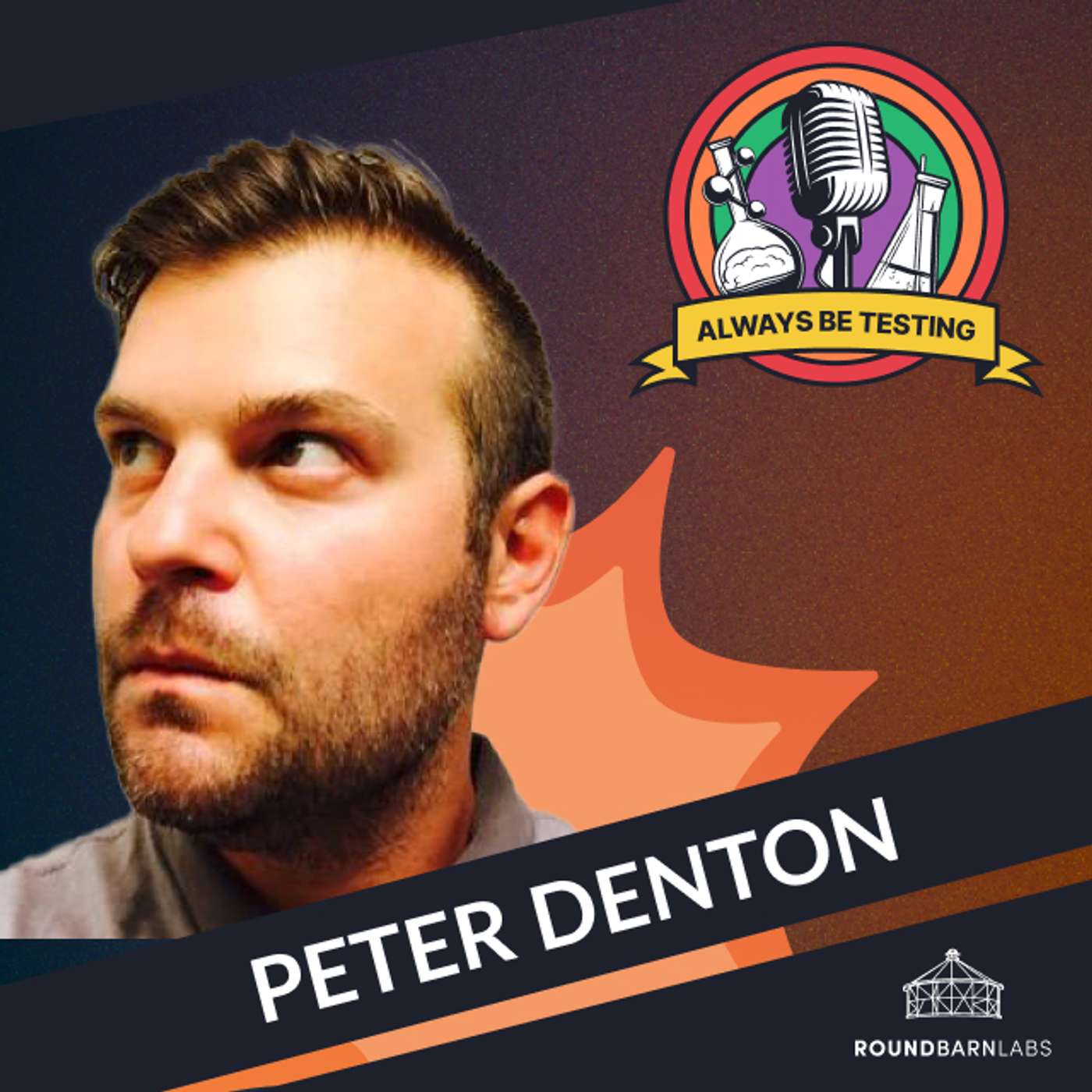
Always Be Testing
#99 Product-Market Fit, Protocols, and the Future of Growth with Peter Denton
00:41:46
Loading summary
Transcript47 lines
- [00:00]
A
Foreign.
- [00:06]
B
Welcome to another episode of the Always B Testing podcast. I'm your host, Ty degrange and I'm really excited to see Peter Denton. Peter, how are you doing?
- [00:14]
A
I'm doing fantastic and thank you so much for having me.
- [00:17]
B
Amazing. How are things in the Pacific Northwest?
- [00:20]
A
Things are always good in the Pacific Northwest. A little bit of sun, a little bit of rain and a lot of work in between.
- [00:26]
B
I love it. I love it. Peter is, I would say, an encyclopedic knowledge on the marketing front on product and startups, heading growth and marketing at various companies and startups, particular Pioneer Square Labs and now heading up growth at xntp. So he's got a lot of good things to share and I think you're in for a treat. Peter, give us a little background on like what sparked your interest in getting into creative entrepreneurship, technology, product management.
- [00:58]
A
Yeah, I was fortunate enough to, and this is going to age me, but start attending the University of Washington really in the dot com boom. So you came to a school in which you had a lot of the people that went on to be real pioneers of the Internet who were professors at uw. So Dan. Well, Lauren Naziani, like these people were really foundational pillars of the Internet and were professors there. So when I showed up at School in 1998, this was really the ascent of the dot com boom and there were so many companies hiring people. I think I was on campus for probably six months. I was working at Morgan Stanley. I had wanted to be a financial major, finance major and dropped out and joined a startup with a bunch of really cutting edge people and killer team from Microsoft that had left Microsoft and were building some of the first WYSIWYG tools, dynamic websites, builders, things that really went on to become Net and just high, high pedigree aptitude people from Microsoft. So it was more of being in the right place at the right time and just seeing the sheer momentum of the Internet and getting to work closely with just people who were building the next generation of tools, which defined a lot of the future of how Web2 worked as well. So that's just being able to work with passionate people who are doing big things in a place in which a city completely transformed itself into being really the tech hub of a lot of the Internet. That experience really shaped how I wanted to work and the types of places that I wanted to work. And 25 years working in startups and small ideation labs is really based on being able to work with those small teams back then and just seeing the power of like what you can do when you have a big vision in the right place.
- [02:48]
B
That's amazing. It's a good segue into the Pioneer Square Labs experience. I obviously we connected through that in Seattle, which was awesome. And I have a near and dear, you know, kind of, kind of similar vibe to the Round Barn Labs name. So I like that. And your model was fascinating to me. I loved being part of the Seattle growth community, learning from a lot of the great learnings and folks that are running through there for you. Was there some pivotal moments that you want to share in terms of the validation marketing concepts that you've, you've talked about and love to hear a little bit about some of the best of experiences that you want to share with the audience on Pioneer Square Labs.
- [03:27]
A
And I'll kind of like take a step back. Before, you know, psl, I had worked at a startup called Stellar, sort of like short for Storyteller, and we had built a really fantastic product that Apple had featured a lot. It was basically sort of like Instagram stories before Instagram had built it. And just a really exceptional team. I worked for a guy, Richard McAnuff, who ran Excel at Microsoft. Also just Mark Lukowski was a cto. He was one of the big dev managers of Windows and just a really great team. And we had talked about sort of like different directions of taking the product as all startups do, you get to a couple million users and then you start thinking about like, do you want to go this direction or do you want to go that direction? And at one point sort of took our customer list and fed it into Facebook Ads Manager and just started advertising different directions. And it was really this light bulb moment of where you were using these demand gen platforms not for acquisition, but to actually access your audience and gain insight in a different way. So that was like a real light bulb moment of which customer interviews, which I still profoundly believe in, are one thing, but then sort of like advertising things to your existing customers and getting that type of feedback across that scale of customers in real time was really profound to me. And joining psl, we really just saw the opportunity, if you want to know if a market wants something before you build it, because you can't build everything for everyone. And so we really saw that we could de risk so much of the startup process by just learning before we even wrote a line of code. So if we wanted to build an account reconciliation product for CFOs, we would advertise that before we started building anything. And we would build a landing page and we would really verify, like it can be built. And it was never about sort of like wasting anybody's time. But once we had a good thesis on what we wanted to build, then we went to demand gen platforms. And so there was companies, for example, Boundless, which is probably going to become the world's first immigration brand. It's a fantastic company. Xiao is an incredible leader who came from Amazon, who had launched Amazon Go and Boundless. We were curious of like, immigration is such an intensive process with a lot of risk. Right. So typically people default to spending tens of thousands of dollars with immigration attorneys because there's so much at stake. If you screw it up once, it's really a big deal. So the question was sort of like, will people trust an online technology product to handle their immigration process? And so we ran several experiments across AdWords of which people were already looking for immigration help and just saw like immediately there was massive signal there. Right. So it also goes beyond that because it's not just, hey, does the market want a product? Yes or no. It was also, you know, what, what type of price do they want to pay? What are the features? They want to include it. So when we would build out these matrix of tests, we could actually learn so many things in real time that I just thought was an incredible competitive advantage over going to market and then learning all those things. So when you really have a strong thesis and a framework for the questions, it's like any science. It's all in the preparation of the tests. But once you know what you want to test and you have strong preparation, then you can go out into these channels. And so for AdWords, it was fantastic because it was like people were already looking for it. So then it was just a matter of understanding what they really wanted, what they were willing to pay, and validating they were the target customer.
- [07:11]
B
I love that it sounds like if I'm understanding, it was kind of like that was the foundational experience that you brought to Pioneer Squirrel Labs that allowed you to kind of de risk and validate. Is that true?
- [07:23]
A
Yeah. And I think it's both from a product perspective and marketing perspective. So just messaging. So there were so many learnings about how you communicate, the types of messages to build trust and understanding the emotional journey of the customer. All of these things were sort of in advance of launching that typically take you six months or a year as you're bringing a product to market to really like understand those things and then also features of the product. So it was this real blend of like de risking on the marketing front, more on the messaging and the emotion and the brand and then de risking on the product front of like what are the features that people want? For example, we saw very clearly that they would want a lawyer to review what the software had produced. So it was like you get all the benefit of using software, all the cost savings, but then you still get this like assurance as part of the overall product experience package that a lawyer would review. The other thing I'll say that is like really magical here that I think people really underestimate is the team emotion and energy when they know that people want something. Most of startups are like convincing the team that people will want something. If you can show really conclusive evidence that people are just waiting for you to build something and ship it and that they want to, that they want that product, then there's way more energy, there's way more cohesiveness, there's way more of that really, really strong ambition to deliver a great product knowing that people want it. So it was all of those things like the, that's where I'd say like the ROI of that stuff. It's not every time but a lot of times it's like 100x because you get all of this byproduct that compels you to build something great.
- [09:10]
B
That's amazing. Yeah, it's like the pull rather than the push. It's much more compelling. A little. I don't want to jump around too much but if you take that methodology today, a little different story with some of the restrictions on what we can do as marketers. I'm guessing you have an answer for that and I know I'm excited to hear your perspective on it. How much has it changed versus how much in those earlier days? Do you have the levers to do that de risking and that validation?
- [09:42]
A
Yeah, I mean it's changed a lot, right? One from the demand gen platforms themselves are sort of much more aware of this type of behavior. I think there was probably PSL and 100 other actually atomic, the company behind hims and several things. They were very good at this, you know, segment js. They, you know, they had sort of run demand gen platforms to see if people wanted that tool. There was a lot of people doing this. That game has probably changed. The other thing that has just changed is sort of what people talk about a lot is like the algorithms, right. So like inventory in those ad slots was much more cost prohibitive, much more difficult. So there were times when it was probably more like attention arbitrage than anything. And being able to get in front of those customers systematically as channels have consolidated. And there's just, it's much more expensive, it's just much more difficult. This is where I think where we've probably changed our game a little bit is customer insight versus customer response. So we spend a lot more time of feeding information into models about building the customer profile to really deep, more deeply understand the customer. So that every time that we say something, we're doing it from a place of a model, analyzing millions of pieces of information and then producing a framework for how you communicate. So it's, it's just much more, it was a lot easier back then in a way. It's always probably shifting from response back to research. So I'd say with us now we're spending a lot more time in the research phase in understanding how we can shoot arrows and less cast nets and using technology in that way, like AI to do a lot more of the research. So that when we shoot an arrow, it's much more accurate in where we know the customer is and what we're saying and then a lot more like fine tuning around how we measure that response and that customer journey.
- [11:46]
B
So, yeah, I love it. And obviously that's kind of leading to you to. Now we can jump to different experiences here, but XMTP sounds beyond fascinating. Can you give folks out there a little bit of how and what is it and a bit how you're approaching it there?
- [12:03]
A
Yeah, first of all, XMTP we're really building what we think of as a future vision of what protocols can be in the world. So XMTP specifically is a messaging product that is quantum resistant, as secure as it possibly gets, built as an open protocol so that anybody can come along and use that. And what we believe in there is that protocols can actually be great businesses when they solve really hard problems. So rather than the old model, which was sort of a collective of people coming together and governing technology like smtp which powered Gmail and a lot of email, but that protocol itself is sort of beholden to the participants and can be pushed in one direction or the other. So there's really no control of that outcome. But it's all open source and it's all public. Fred Wilson, who's on our board, has a really clear vision of protocols can be great businesses in which you solve really hard problems like quantum level secure messaging, privacy preserving, and, and do it in a way that the cost is on par or even less than what you might pay to build your own messaging service. But the idea that any developer in the world can come along, use XMTP to basically at no cost increase, deliver messaging that's better than anything that they could build, it's more secure, it's a better end user experience. And it has added benefits of being a modern protocol in which moving digital money around is easier, preventing spam. So it's really like a modern take on building a protocol and doing in a way that it can be a business. And for us, we just really saw the opportunity around messaging as being a need from a security perspective for moving money around. It's the largest use case on the Internet. And so we saw that as an opportunity to build a protocol around that and by doing so solve a really huge pain point for a lot of developers that creates a huge risk for consumers. You really don't want your messaging where you're moving money to be insecure. And then we see that with the largest companies in crypto right now, so Coinbase is our customer. You see these companies that really, really invest a lot of time and energy in keeping users safe, seeing the value of this protocol and then starting to use it. So that's really what we've been focused on.
- [14:23]
B
I love it. That's a uber exciting opportunity. And the messaging use case is just wild. I mean, you have viral growth loop opportunity, you have network effect, you have AI involved, you have blockchain involved. I guess going from Web two to what is considered perhaps for some, Web three, how do you think about growth loops for that as someone that lives and breathes growth?
- [14:49]
A
Yeah, there's some. One of the coolest experiences that I had, the beginning of working at XMTP was understanding that blockchains were open ledgers. And so when you actually have open ledgers, meaning a blockchain is a list of entries based on a wallet address of transactions. Right. You can actually preemptively diagnose network effects and how you build those network effects different from Web2. So Web2, probably the most famous example is Facebook's 10 friends, right? So you build a product like Facebook, you find what is the greatest retention driver. In their case, they figured out that if you had 10 friends, you stayed in the product much longer. And then you go out and you architect growth programs that above everything try and get somebody 10 friends and they will stay in the product forever. With blockchains, early on we really saw that we could look at different things. Like Ethereum is a blockchain and we could see all of the participants of Ethereum and then we could see all of the people that they're transacting with or all the different services. So when we were building out these early network effects, we would really look at who's already participant in the network and the subnetworks. So if you look at a lot of the things that NFX has done around Moore's Law, in which they really show how subnetworks drive overall network growth, we took a lot of that and we did analysis across Ethereum and we actually built maps of these subnetworks and then we would be able to go out and look at the products that they're already using and we would work with those products to bring messaging into it and then onboard those users to messaging, knowing they're already connected and transacting with other people. So it was like a really cool experience about sort of the future of how blockchain will impact marketers. A lot of people sort of tend to find that a very abrupt, this idea of an open ledger and the openness of seeing who's transacting with what. Once you get over that and you just see that, it's really like a shared data set of which the consumer actually benefits because that publicness actually leads to more transparency, which leads to more security. But it's more again in sort of this research phase and how you think about what products am I building, who am I building this for, what's my go to market? You do a lot of that up front and then it forces you to be really disciplined in the product that you build. Go out and really succinctly test those things, see if those products or people want that product and if not, go back to the drawing board. So it's been sort of a total flipping the world upside down, but in a way that I think it's a really powerful model and it just forces a lot more discipline. Again as a startup then you're like spending really quality time in the research phase versus sort of like building a product and hoping that the world uses it.
- [17:36]
B
Absolutely. In terms of the core customer segments and obviously developer focus. But is it primarily there? Can you share a little bit more about the flavors of developer that you're looking at for xmtp?
- [17:53]
A
Yeah, it's awesome. I think this really also ties into aligning incentives, which has been probably one of my favorite things about XMTP is that being able to align those incentives all the way from the biggest players in the world down to like a one to two person developer team. For us, at the end of the day, we need people with distribution to want to add messaging to their products so that it drives retention. Right. Messaging again, largest use case on the Internet. More people use messaging every day than social combined. Right. When you have things like group chat, they're totally invisible, but they really drive a lot of the behavior in our world today. And so we have to build sort of an institutional level enterprise grade product that Coinbase can come along and trust us to deliver on that promise. So your first and foremost delivering enterprise grade product to them. Right. But the nature of XMTP is sort of an open and permissionless protocol in which to developers can come along and build apps on top of. So we're seeing these incredible explosions. So Coinbase's product that they shipped with XMTB is called Base app and Base app is really the next generation of what group chats will be. And it's where humans and agents can live side by side. Humans can be participating in their group chats and agents can be doing superpower things on the side. So like say that we're in a group chat and I want to pay everybody $5, I just say agent, pay everyone $5 and it goes off and it does it because we're connected to digital money natively, which is much different than like WhatsApp or Telegram. So you have these open and composable environments and the reason that I bring that up is so like you have Coinbase at the top that is really looking for messaging as a core driver of engagement and retention. And then you have these developers in the middle that are building these really powerful banking agents, prediction markets, travel concierge, like all of these things that you can bring into this composable environment in which users can just add the agent to the group chat and then it's participating and doing these really magical things that you honestly can't do in any other environment. That brings it all the way down to the protocol level developer, like an XMTP who's providing the service with like the highest level of security and protection around privacy that you can get. So you have this really nice alignment of which Coinbase can enable messaging. Agent developers, mini app developers can come and build experience for users that make that experience more powerful, drive more retention, engagement and and they can build businesses on here. So we have many of these agents, they're driving these transactions and getting fees. They're actually building startups that as it scales, they're creating revenue of which it's not taxed. Right.
- [20:58]
B
For the average Joe that's a little bit more involved in tons of messaging throughout Our day, Whether you're on WhatsApp or text message or signal, when do you think this type of technology is going to kind of hit them or impact them? Obviously you're saying hey devs, we've got this quantum proof solution that's the best of the best involving AI blockchain. When do you think that's going to hit the average Joe that isn't tech savvy.
- [21:26]
A
We're probably at the proliferation of digital currency USDC in the next couple years. So you see most institutions moving to something like a USDC because it's just much more efficient system of moving money and in that time that will cascade down where you'll see probably the early adopters, we're already seeing some of this stuff on like college campuses where people, college kids are like want super secure group chats that can have disappearing messages and can send money around and like the early adopters are already getting it and the cost is just lower. So like using USDC versus fiat, it's just going to be 3 to 5% lower because there's none of that middleman and there's not all that transaction overage. So I think you see in the next couple years all the early adopters, we have people who are coming along who are building consumer grade products like we're even Convos is a part of our holding company and they're building more of this like fun, really cool version of signal that college kids are already starting to get and see like oh this is really cool. And then I think the cat's going to be out of the bag and we have a couple other partners that are building stuff that are more large but have that consumer appeal. I think once people. So think of that as the next couple years. Once people see just those incentives align and how it's in everyone's best interest and you don't have app stores in the middle and you don't have like these real sort of like frictional monopolies. It's really hard to grow an app these days. If you build a. I look at these agents as the next frontier. It's just going to be more of the economics of it, of where people are building really powerful agents that are getting a lot of distribution, that are generating a lot of transactions, that are generating a lot of revenue one or two dollars at a time and unlocking these use cases that just weren't there before then I think it's just a matter of it's just going to attract more teams and more apps that want that benefit and the reason I say is because at the end of the day it's messaging. So everybody in the world uses messaging all day. And so I think it's probably two to five years in which people are going to hang out.
- [23:45]
B
That's part of being on the frontier, which you've been doing, which is exciting. Yeah. Not to get too far down our path. I think there's some interesting, I see some of the agent use cases and things and not to say that everything is affiliate related or partner marketing related, but I think there's some interesting similarities to kind of unleashing with appropriate incentives and structure and guidance of like if you can do the following, you're kind of rewarded, you're part of a technology connection, you're part of a community. It's a little bit of a leap logically, but I think there's an interesting connection to those two things and I think those worlds are going to be converging maybe sooner than we think we'll see.
- [24:28]
A
I think about affiliate marketing a lot. Like in the beginning of the Internet a lot of people built huge affiliate businesses because nobody knew how to do lead gen and people really figured out how to get consumers to engage with content and generate leads for a lot of the companies that just didn't know about it. And it became sort of the bridge where these companies just saw the potential and they saw, hey, we can generate a hundred leads a week through affiliate models and we're sitting here at four or five leads a week through something else. Right. I see the same thing. Like especially with agents that are very hard to build a great product experience with. Right. So like agent that can say anything and respond any way and facilitate a lot of transactions. It looks simple, it's like messaging looks simple but to do it really well, it's really hard. And so I think you're going to see these early pioneers like there's, there's something on base app called Bankerbot and it just does all this stuff that's really hard. It makes it look really easy and it's also fun. So like it has a real rabid community and people just use it like all day every day. These people are going to show sort of like the future of that and make it look easy and then it's going to bring in those larger companies that want to tap into these early markets that they're seeing and that I think will like create a lot of the tipping around a lot of these new foundational technologies.
- [25:57]
B
That's awesome. You've had all interesting roles around Marketing, leadership, user experience, in particular. In your role now and what you've seen, how do you counsel people on aligning functions and making sure the product is set up for success, making sure growth teams are set up success, making sure leadership and other stakeholders are dialed in and set up for success. What's been your observation there?
- [26:22]
A
Yeah, I think it's. We spent a lot of time thinking about this and I've spent my entire life in startups and a lot of that used to be, hey, set the goals and then sort of like voraciously work towards the goals. And you had a lot of specialists, but a lot of generalists who were just really good at putting out every fire, making sure that everything got done. Now I think we're, we're. For us, it's editing down to the most. What are the two to three things that matter most? And how do we build a culture of managers who are better at delegating work to agents and AI and being able to understand earlier and often if we're actually moving the needle versus having a thousand different things that we hope in the end of the quarter move the needle. So I think we're trying to do less is more, in which we're trying to simplify our goals down to one or two things. It's easy when you're in sort of a messaging base, like a metered service type of business, because at the end of the day you want messaging volume to go up. So we have the benefit of really, you can distill these things down to one or two things, but then just being that every single person who's executing ownership of a task is doing it according to those goals and delegating as much as possible and reporting as soon as possible if what we're doing really matters. And sometimes it's like stopping doing work and creating a culture of empowered people who will just say, like, this feels really good to do all this work. Like, we, we were doing like a lot of social media work and we were sharing out like all these posts and somebody came along and said, look, this stuff feels really good, we like people like it, but it's not moving the needle. And we're investing all this time and we can just see like it's not impacting it. And we won this deal over here and this had zero impact on that deal, so let's just stop doing this. And it's one of those things where it just feels hard because you're like, but I've done this for 20 years. This is exactly how we've done it and it does feel good and you want to do it, but it's not productive. And so I think when you build that culture of managers and you empower people to really just be sort of like really accountable to goals, that's where you see the magic and even where senior leadership is being challenged with, I really want to do something, but I'm not going to do it because this person's telling me it doesn't matter.
- [28:53]
B
Yeah, no, it's super interesting. One of the things you've talked about and we've talked about being able to unlock growth via APIs, and that's not something that everybody leads with or talks about, but how do you think about them into the growth mix and maybe some of the things you've tried or been able to pull off in the past that think people might find interesting and how to maybe think about them as a methodology of growth and enabling product.
- [29:21]
A
I love information, right? Being able to leverage APIs and just get more information faster is what I saw as one of the biggest gaps in good marketing teams. And maybe not so good when you get into these really great, high functioning growth teams. They're so good at just getting all of the information faster, more efficiently than anyone else. For example, one of my favorite things that we would do was using Google's search API to scrape LinkedIn at scale, right? And so when we were building products at PSL back when you could do that. Yeah, it was incredible, right? So we could. And it wasn't to like get somebody's contact information or do anything immoral or illegal. It was building a better understanding of a market map. So if we said, look, we're building a product that product managers at these types of SaaS companies will want, it's like, well, how many of those people are there? Like, what is the TAM of that market and how many. What is the revenue of those companies in that market? So we would build these real complex queries through Google's search product and by the search product, it was when you could build a personalized search engine. So we would scope it to LinkedIn and then we would just run all of these queries, right? And we would build an entire market map of people and companies and then we would enrich all that data so that we could see like all of the people, like what is that diversity of customer and then what is the revenue in those companies? Then we just had such a better understanding of who we're actually selling to. A lot of times it led you to believe that the market is too small or all of these assumptions about there's 10,000 people who do this and there may be 1500. So using APIs to get information faster was incredibly powerful at making decisions. Much better, especially at BSL when you're investing money and time. And it doesn't mean that somebody can't push back and say, well, if you look at A, B and C, it was just information as part of the decision making process that was based on facts in the same way that we did this across all these demand gen platforms. But ultimately I would say even today people don't do it enough.
- [31:49]
B
Yeah, it's almost like a cheat code. I hate to use the term, but why not empower yourself with more regularly updated information at the simplest level? Right?
- [31:57]
A
Yeah. And it requires an ego check. So it's much easier to make a DAC that says product managers at mid sized software companies. It's much harder to say there's only 3,000 of these people in the entire world of which there's only 300 companies. Right. It brings a level of academic pragmatism to the process which a lot of times people don't want.
- [32:24]
B
Yeah, for sure, for sure. Yeah. That could be a whole other conversation. When you think about experimentation and the spectrum of speed and feedback loop and kind of the concept of fail fast, what does that kind of mean for you, particularly now in your new role after all you've learned and seen? I'm just wondering how do you balance those things when you look at experimentation and how important it is?
- [32:54]
A
It's a really good question. And I think that my own thinking is evolving here too. Right. As a marketer, I always think about attention and attention is highly scarce. And I think it was 10 years ago when I was doing a lot of stuff at psl, it was much less scarce. Right. You sort of had a never ending ability to like. It's not never ending, but you could repeatedly get in front of people and you could use a lot of demand gen to do this stuff and you could sort of persistently get information along the journey. Nowadays it's like putting an early concept in front of somebody. You have to make sure that you're on the right path and you've done, you've built something that is actually interesting to them or you run the risk of just creating more noise. And I think this is the biggest problem that I see from a lot of young people who've sort of prescribed to this. What we'd call, what we called at PSL was product market pull is they Want to sort of like just cast a bunch of nets and have the machine tell them go build this startup. Which now it's very hard to do that in a way of like getting the right kind of data back because you don't really control the algorithmic distribution. And a lot of there's a lot of compounding problems that can happen there of which you can get false signal. We spend a lot of our time trying to create options that are sort of best foot forward MVP versions and then systematically getting feedback across customer interviews, putting sometimes putting it out on social as like an experimental thing. Like Shane will share something. Who's our CEO will sort of like share an experimental version of something in a fun way to like let something run wild. And so I think where I'm evolving is again, more of this research phase of creating really, really good options so that the feedback you're getting is very good. And knowing that like, I just don't have multiple opportunities to impact somebody because there's so many people who are putting such high quality, polished versions of products out as V1s. So in the world it's kind of shifting like that. Like, I think if you look at Airbnb, like look at how much they're investing in design and experience, a lot of these really good companies are going back to really, really deep investment in design because they have to differentiate somehow because building the core products and services is so easy. So how do you retain a customer? You need to win that mind share. So as much as like 10 years ago, I would say, like, that's a total waste of time. It's all pragmatism. It's all a model and it's all about getting information about what people want as quickly as possible. I'm probably a little bit reverting.
- [35:37]
B
Tell us more about the reverting for you. That's a really fascinating thought. It's almost like things are back to the future just a little bit.
- [35:46]
A
Yeah, I think it's just returning to that old adage of you only get one chance to make a great first impression. When attention is that scarce, I may not have a second opportunity to get in front of that customer in a compelling way. I think you're seeing this in a lot of the breakout viral videos around startup launches, of which they're launching commercials that feel like they're built by a Fortune 500 brand. There's an incredible amount of work going in up front to the thinking and design of these products. And so they're setting a bar. Right. And I think like the market sort of sets the bar of which consumers respond. So sometimes we're in periods of high noise and you can do a lot of sampling and testing. Other times we're in periods of high design of which that's the things that stand out and those are the things that control the zeitgeist. So my personal bet would be we're returning a little bit to that high design phase of which brands and all companies are really trying to think about how they stand out and that's going to set the bar of which consumers respond because they'll subconsciously. No, this doesn't feel the same as the things I'm responding to. And they won't respond.
- [36:54]
B
Yeah, no, it's fascinating. I think that's a really good way of thinking about it. Coming down the home stretch, this has been chock full of amazing information. Peter, to learn a little bit more about you, what's something that people might not know about you?
- [37:07]
A
I think that what people don't know about me is I sort of feel like hacker. Like. Well, I'll give you the boring answer. I think I've been somewhat successful in my career by just trying to think. I don't want to say think differently, that sounds terrible, but like think about every single sort of product or thing that exists out on the Internet. What's a way that I can use that they're just not expecting and sort of be a hacker about how I get information faster, whether that's directly from a customer or how I get information from a demand gen platform or how I can get information from an API. So I sort of like pride myself in that and just try and just constantly experiment with the tools themselves to think about how you can find a little arbitrage or niche opportunity that you can exploit. I don't, I think of myself more than that than I think about myself as a marketer. I think about myself as a product manager. My background is really like art. Like I'm deeply, I'm a, I'm a musician, I'm an artist. And so it's really about like just trying to be creative and apply the tools. And it used to be harder because building the tech to do the, to do the hacks was more difficult. And so I would sort of like, like walk around in a dark room trying to assemble tools and not know what I was doing. Now everything's so easy, right? You can ask Claude to build you a chrome extension that scrapes LinkedIn and it's like literally done in 10, 10 seconds. So I Think just my background as a creative, it's really helped me have some success. And I think for most people, like just taking that mindset nowadays more than anything is just such an opportunity because people are so creative. Now that the tools are unlocked and unblocked, they can have that same success.
- [39:05]
B
That's amazing. That's so cool. What's your instrument?
- [39:09]
A
I play a lot of guitar. I play a lot of piano.
- [39:11]
B
It's awesome.
- [39:12]
A
Yeah, I love the piano. I wish that I could really, really. I'm hoping there's a point in my life and I can really spend 10 years and take it to the next level of piano.
- [39:23]
B
Wow, that's very cool. Any inspiration on piano or influences that capture your attention or you're inspired by.
- [39:32]
A
Yeah, I saw who's the Silence of the Lambs actor? I'm blanking on his name.
- [39:37]
B
Anthony Hopkins.
- [39:39]
A
Anthony Hopkins. So I randomly saw this thing one time where Anthony Hopkins was playing Rhapsody in Blue, which is this huge George Gershwin very popular piano piece. And it's really intense and it's this progressive build and he was just absolutely crushing it. I was like, just him in a room playing this. And I thought that probably took him years, years upon years to get to the point of being able to play that and that. I love classical piano music and all that stuff, but actually seeing somebody who's probably so busy and doing so many things and really intensely taking the time to learn that, to be able to sit down and play, that was a reminder to me of like investing in those long term things that are really slow and hard but ultimately lead to being able to do something that very few people can do is like a great way to spend time.
- [40:40]
B
I mean that's a mic drop story in reference. I love that. That's really cool, man. Good to know that about you and what an awesome conversation. Excited about all things you're doing and it's amazing to catch up. Where can folks find you that want to just learn more and connect and chat with you?
- [40:58]
A
Yeah, I think first of all, thank you so much for having me. It's always great to reconnect and spend time. We've known each other for a long time now and always appreciate our conversations. If you want to check out xmtp xmtp.org and I'm reachable through there. I'm just Peter m. Denton on LinkedIn. Always happy to connect with people. And then if people want to learn more about some of the stuff that we did on the product market poll, we have that site, productmarketpoll.com where you can read about our playbooks and some of the experiments and just kind of give you a primer of how to think about it.
- [41:29]
B
Amazing. Very cool, Peter. Thank you so much. And I'll talk to you soon.
- [41:33]
A
Thanks again. See you.