← Always Be Testing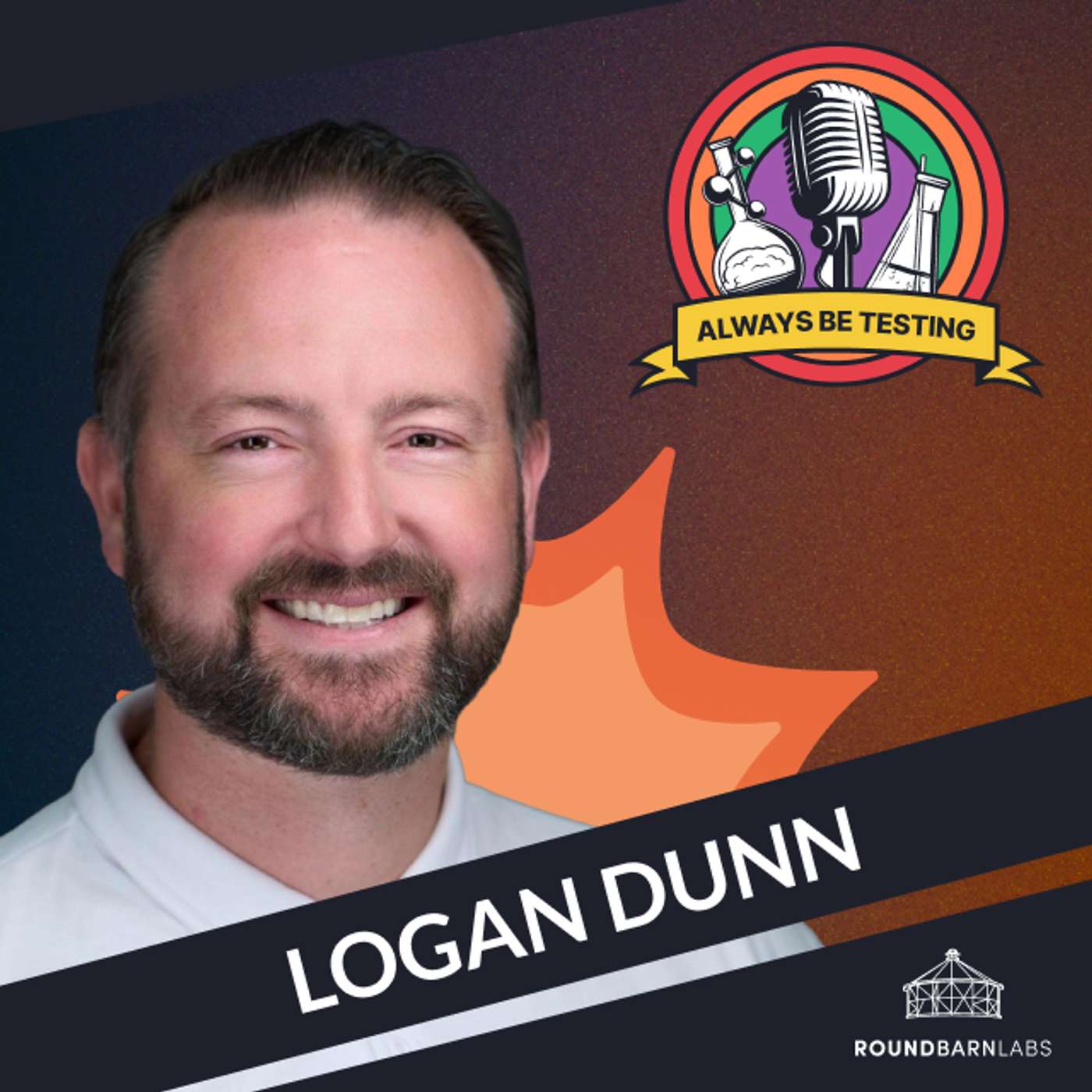
Always Be Testing
#125: Less Traffic, More Sales: Wyze's Counterintuitive Paid Media Playbook | Logan Dunn
00:40:56
Loading summary
Transcript77 lines
- [00:00]
A
Foreign.
- [00:07]
B
Hello. Welcome to another episode of the Always Be Testing podcast. I'm your host, Ty degrange, and I'm really excited to talk to Logan Dunn today. Logan, how's it going, man? Doing good.
- [00:17]
A
I'm glad to be here with you, Ty.
- [00:18]
B
I'm happy to talk to you. We've had such great conversations. Logan is leading all things marketing at Wise, one of the most innovative companies in the smart camera game, and he can tell you all about it. So we've got a lot of learnings to share and a lot of good things to discuss.
- [00:35]
A
Excited to be here?
- [00:36]
B
Absolutely, absolutely. Maybe kicking it off. Logan, what. What's something that the audience may not know about you?
- [00:42]
A
I mean, we've talked about this in the past, but I have six children. It makes being an executive in our company and just managing life and marketing for a company that's growing fast. Challenge. There's that. And then, I don't know. I grew up in the mountains in the up over by Yellowstone kind of. So I grew up doing all the fun things, skiing, snowboarding, hiking, adventuring. And now I live in rural Texas. Very different.
- [01:15]
B
It kind of feels similar to myself. I did not grow up in Yellowstone, but grew up on a. A ranch. A lot of things to do and activities. And I'm also in Central Texas, so there you go. The Yellowstone thing is super cool. I've been there once and I absolutely was blown away and obsessed. Whereabouts in Yellowstone were you?
- [01:37]
A
Well, we were southeast Idaho. We're about an hour and 15 minutes outside of Yellowstone. We just would go up and they hit Montana going through West Yellowstone, really close. Or you could go equally. You could go over to Jackson Hole and cross into the south entrance. So I grew up skiing Jackson Hole and the other side of Jackson Hole, Grand Targhee. I'd go like two or three times a week. It was definitely adventure. Did scout camps up there. I didn't realize what I had. Like, our scout camp was literally at the base of the Tetons, and I just took it for granted. And now I'm like missing the mountains dramatically.
- [02:10]
B
You know, it's one of the things we miss most having grown up in the. The geographic diversity of Northern California and spending some time in. In Seattle, Washington. I, It's. I don't miss a lot, obviously, aside from family and friends. But the one thing I do miss in being able to hop in the car and be at the mountains in a couple hours and real, real serious mountains that are nice.
- [02:35]
A
I didn't realize we had so much in common. Because in my office, I'm at my like work office, but my home office, I have the three mountain ranges where I've lived. So I lived in Northern California, so I have the Sierra Nevadas. I have like Half Dome in a picture. And then I've got the Cascades because I lived up in Seattle as well. And then I've got the Tetons because I grew up around the Tetons. So those are the three ranges where I've lived. And I love it.
- [02:58]
B
I'm getting like goosebumps right now. We have a photo of Mount Pluto in our kitchen where we used to go as a family. It was a. It's a cool. It's just like the North Star mountain. It's like 8,000 up in Sierra, near the Sierra Nevadas in Tahoe. So that's amazing. I love that.
- [03:16]
A
Yeah.
- [03:16]
B
And double the kids we do. I commend you for that ability to juggle a lot of things. We may have to share some notes on optimizing time and how you keep it all together. How do you keep it all together?
- [03:30]
A
I mean, the truth is you survive. I was told once by another marketing professional worked at Amazon, he was like, when you have six young kids, just survive, stay sane, get through. Like this too shall pass. But it's also like, it's a riot. It's great. I mean the way to do it is just get up early and step late. And I mean, trying to balance myself. Like I went and got up early. Kids are on school summer break, right. And so I got up early, hit the gym before coming to the office, work in the office. And then I come home and it's like another job until about nine o'clock at night. And then I get like a slow break before. Let's repeat and, and start over.
- [04:15]
B
The routines and structures, it sounds cliche but are so important. And I, I've gotten a lot better especially since having our second of three where it was like, okay, I have to get up soup before them get a workout in. So then you're kind of sane for the rest of the day.
- [04:31]
A
Yeah, exactly. Like I used to think waking up at like 6:30 was early and yeah, it doesn't feel like that.
- [04:41]
B
Feels like sleeping into me too. Yeah, that was not the case for me before either. So wise running, marketing, running the DTC side of it. It's such a fascinating business. You've taken it so far. I think it'd be interesting for the audience to understand at a high level where you've taken it. Kudos to you and then sort of what is that next directional growth look like for you? Leading out marketing for Wise? I'm super curious about that and would love for people to learn a little bit about all the levers you pull, which are quite extensive.
- [05:15]
A
Yeah. So I've been at Wise for coming on seven years and so Wise is only almost eight years old. So I joined Wise when It was about 18 months old. So seeing a lot of changes in how we do marketing. In fact, I joined Wise as a director of product marketing and I led all of our product marketing for non camera products and I went from there into leading our subscription growth. So I did subscription growth for a year, helped us get like we started our SaaS subscription for our cameras and I did that for, yeah, about a year to get us to our first 1 million in monthly recurring revenue, which is a big milestone for us. And I was there working alongside with our head of subscriptions who's still here at Wise and is doing a great job. And then I went from there to lead E commerce and I come from kind of a background in E commerce. So we still have a cmo, Dave Crosby, he's one of the co founders, so he leads the branding marketing efforts. And then I am over our direct to consumer efforts. And so I've been in this direct to consumer position now for about four and a half years. It'll be five in the fall. I've been through five Q4s, which is like, that's like game time for Wise. So it's aggressive lifetimes. Yeah, that's right. Yeah. But as far as it goes, like taking Wise next for the marketing perspective, Wise is we've got a new president and coo. She's been at the company now for about a year, she's ex Amazon and we're really focusing a little bit back to our roots. I find that it's easy, especially in a startup environment which I feel like we still operate in. It's easy to kind of divert and get into a just hustle mode and trying to do whatever you can do to grab, share, spend. Here, try this, do that. Always be testing. Right. But then there's a time where you've got to pull back a little and you've got to recenter and refocus because you've tried a lot of things, you spread a lot of ways and now you're kind of like, okay, so what's really working? What's our foundation? What's our core? So right now I'm actually working on a strategic repositioning for not just not a site redesign. It's more of like a. Where does wise.com belong in the broader Wise now. So we're distributing in Walmart now, Home Depot, Costco, Best Buy, of course, Amazon. Right. So we're a much bigger brand now. And so what does our direct to consumer really do for our customers and what does each retail channel and location do? And. And going back to that route of making sure we have a clearly defined strategy. That's what I'm working on right now because I think that we're not really stopping some of the other things that are really working for us, but I think this is going to give us the focus and help propel us at a faster pace in the direction we really want to go. Yeah, it kind of laser focuses us. So that's really what I'm working on right now.
- [08:09]
B
I love that. Appreciate that context. Can you give a little maybe blurb for the audience? Just around like it's a pretty competitive space. You've got some big names. I think there are certain unique characteristics. You talked about getting back to your roots at Wise. Like is there, is there certain things that you think Wise has done that has allowed you to punch through, maybe punch above your weight and how, maybe without giving away the secret sauce, like, how are you thinking about that? Because it's just a noisy competitive world.
- [08:41]
A
Oh, yeah. I mean, I think that the competitive advantage that we've had. We disrupted the space eight years ago when we started the closest home security camera is about $200. And we launched the $20 security camera. And now people don't expect to pay more than sub $50, I should say, for a home security camera. And of course we've expanded into other product lines and all of this. But I think the thing that allows us to punch above our weight is kind of continual startup mentality. We launch more products than our competitors, period. We are faster moving than our competitors in many ways. And we have to be because we don't have the budgets. We're up against brands that have hundreds of millions of dollar ad budget. And while we're still doing pretty well on our marketing spend, we can never beat them on our marketing spend. So we have to beat it in our marketing methods and products are just a surefire win. And then also something that our head of growth always says and as well as our CMO is don't be boring. And our cmo, Dave Crosby, he's done a great job of helping not be boring. Being able to pivot fast, being creative, having A really strong brand tone and then also really trying to focus on things that are mattering for our customers. Like we're seeing how much more customers are focusing on security and privacy. Apple's really positioned strong there but from our standpoint we've developed like our own special encryption method that allows our cameras to be more secure than the average. You can't even go out there into this space and find someone that hasn't had security breaches. And so trying to find like how do we set ourselves apart on this front and become really strong in the security and trust space as well. So it's just trying to figure out where are we positioning different. Yeah. And speed is one and then some of the other core foundational pieces is
- [10:49]
B
another cost, speed, breadth of product and privacy.
- [10:53]
A
I love.
- [10:53]
B
I mean those are the things that come up for me which sound really compelling.
- [10:56]
A
Yeah. And cost continues to be one, but it's not, it used to be our unique value proposition, it's not anymore. So we're having to bring in other, other value propositions like really find out what did the customers really want. Cost is for sure there. But we've got other players in the market now like TP Link, they've come in at really low cost and others and there's a ton of direct to us Chinese brands that have come in and American consumers seem, there's a huge contingent of them that seem totally fine just giving their personal information to a company. They've never heard of the servers, who knows where. But I think in general people are starting to get a little bit more aware of that and we kind of see that like as in any market, right. People start to get more like they're accepting anything that's new and shiny and then they start to be like, oh wait, actually let's think about this in our choices, you know. And so I think that we're hitting that phase and so we're going to see these US based companies accelerate a little more.
- [11:56]
B
It reminds me of like the wave not to derail, but reminds me of like the wave of 23andMe where it was like, oh yeah, just give them your DNA. And then it was like, oh wait, maybe, maybe not. I'm not. That's a, it's a hot button topic. I know, but super, it's super interesting to hear that evolution. I'm really excited to see, you know, what's next for you guys. You've managed a lot. Obviously within marketing, it said subscriptions, there's now deep, you know, D2C is the focus. It would be interesting to understand like from what you can share. Like you talked about Walmart, you talked about Amazon, you talked about all of these channels and you obviously are thinking about the D2C side. Is there something worth exploring around? How do you kind of balance that as an organization? In particular, knowing you want that distribution, you want those third parties. How might you describe how Wise balances that and how you guys balance the value of going DTC with more margin but the distribution opportunity with the Walmart and Amazons of the world? How do you guys think about that for retailers that are going to be trying to struggle through that too?
- [13:06]
A
Yeah, I mean for us it's consumer first. If you get too focused on your own, I guess, your own profit, your own growth, I mean that'll work for a little while, but unless you go consumer first, you're not going to see lasting growth. And that's what we are noticing and seeing. And we're trying to go consumer first. And so getting out into these different retail locations, of course it's a growth strategy for Wise, but each one has to have a specific like role in what it caters to and gives to the consumer. Like I talked about, we're rewriting where wise.com sits in the Wise story for our customers, where we're focusing on different tenants for wise.net affect how we interact with our retail partners. If customers want to buy from retail. We're trying to encourage and allow customers to buy from retail.
- [13:59]
B
Very Amazon level customer obsession. Which I respect.
- [14:02]
A
Yeah. Which all of our founders are Amazon alum and I do think that we have that focus at the core. One of our core values is be friends with our users. And that's very hard because you have, we have over 12 million users and it's like there's a lot of different wants and needs in there. And so we're trying to do the best we can. But like staying customer obsessed has really helped us to decide because if customers want a product same day, then they should go to retail if they wanted a day or two. Amazon's a great strategy. If they want solution and a bigger system with lower costs, they can come to wisetime. Also working on our marcom strategy out into the like not just communicating direct to our customers about us, but also about our retail partners and being good partners with our retailers. It's really thinking holistically about it and with the end consumer in mind. Like what does each thing do in its role? And that's true on our marketing spend too. We've actually Ditched most of our marketing metrics that are in the platforms themselves. We use those just as like maybe leading indicators. Right.
- [15:15]
B
Like I love this direction. Yes.
- [15:17]
A
Yeah. Compare. Compare how ads are doing against each other. That's great.
- [15:21]
B
Right?
- [15:22]
A
To see what's actually performing. But when it comes to what's actually performing for Wise, we are really just doing our own incrementality tests completely. One thing we've done is we've broken out a growth org into not just it used to be inside of direct to consumer and so we've now broken that out. We have a head of Growth in and he's been at Wise for a long time too and he's done a great job of stopping just being about wise.com with our ad strategy and starting to say, nope, we've got to be about the broader business. So now we're tracking media spend versus all the channels and looking at the incrementality as we spend and just looking at raw units. Like what's happening with our units in our strategy. And again, that's focusing on retail. So now we can, we can move our budgets around a little more freely. Pull from Amazon or Walmart or whatever to, to benefit Amazon or Walmart. Right. We're not pulling from them to. Because they're not doing well. We're pulling to put the money in the best place for Wise and for consumers and ultimately for the channels as well.
- [16:28]
B
Love that. Are you. It seems like if I'm rehearing you correctly, obviously the incrementality is a huge question that you're attacking and measuring without reliance on platform, which is music to my ears. But are you headed down a path of marketing mix modeling? And I'm just curious about that.
- [16:48]
A
I think we're headed down a path we're not. Again, this is really hard because when you get into like the MMM modeling, you're relying on these other tools and what they do and they, you know, whether it's North Beam or other tools. Right. There's, there's different advantages and disadvantages and it's based on their model and how they handle it and all of that stuff. So we are headed in that direction. And right now we're kind of trying to say how can we do this as much ourselves by looking at our mix and then looking at just raw unit numbers, like where are we driving what campaigns when we spend here, here and here are pushing up numbers there, there and there for these channels. And so we're kind of saying here, where's our holistic marketing spend and Then what do our units look like for our campaigns? And when our campaigns happen we try and look not just narrowly like on direct to consumer, which is the old way for us, but rather how does this campaign affect Amazon, Walmart, others as well. And that's actually a huge learning we've had about like TikTok as well. Like if you look at like TikTok shop is growing really well for us but it's also like we, we actually don't see it as just its own channel, we see it as a way of using it as a marketing vehicle for all the channels and we see that in our data. We see, we see like, if you look at like cost per view, TikTok's pretty cheap. But if you, if you look at like marketing costs per sale, it's, it's pretty expensive. And so you have to look more broadly in order to know if investing in TikTok is actually really good for us or not.
- [18:24]
B
Yeah, I love it. It feels like flavors of. And I'm hearing more and more, not to knock any of the third party tools, but I'm hearing more and more of a lot of brands are owning and building some version of that internally and it's, you know, you've got tech that's improving, you've got open source models that have improved. If you have subject matter experts around, data analyses, data science, incrementality that obviously.
- [18:50]
A
Yeah, we have our whole, we have a data science team and that's been super helpful for us.
- [18:54]
B
Yeah, yeah, it's a beautiful thing.
- [18:57]
A
And like you said like not knocking like these third party softwares like the Triple well and the Blot it and Northbeam and others like, I mean they're good but I don't think they're the be all end all for mmm.
- [19:12]
B
Right.
- [19:13]
A
Yeah, they're an input source to help you, guide you in that direction and to help you make better choices. But I don't, I think you have to be looking also your own data and, and multiple data sources to see.
- [19:26]
B
Yeah, I think once you cross over certain thresholds and certain sizes of spend and channels and complexity, it's like there's a world where those become really, really valuable to sort of level up. But you guys are.
- [19:40]
A
Yeah. Because it gets noisy.
- [19:42]
B
Yes.
- [19:42]
A
Well, I don't know if we're beyond it or. I think that maybe in some ways we are, but in some ways we're, we're a little premature for that as well. I think the main point here is the more you spend and the more campaigns you have and the more channels you have and the more everything, the more complex everything gets. And at that point you need more data to look at. And I would say any marketer who's I guess starting to see scale at their org will learn this. But you cannot just rely on a single source. And so you're really trying to just take a bunch of different sources and make sense of it. And you have to realize the limitations and strengths of each data source and go. But ultimately, and this is what we've learned is ultimately we have to say how much money is going out the door and how many units are coming in from where and kind of mapping those to our campaigns. And again that's just a source. And then we have to have other sources to kind of guide us along the way to help us interpret and tell you know what's true.
- [20:44]
B
Yeah, I love that. And not to go too deep or open up too much of like your internal workings, but is there worlds where you can look at non spend factors like promotion or seasonality or convert conversion aspects or product aspects that are compelling that might drive some of those revenue numbers in multi channel.
- [21:05]
A
It's sort of a. Oh yeah, 100%. I mean we put those in, we have regular weekly business reviews and those are all factors that will affect it. And different channels have different seasonalities. Home Depot is really big in the Father's Day space and Labor Day, Memorial Day, there's just really strong times for it. Walmart's really big in the back to school time, although maybe not as big for our category. Amazon of course has invented Prime Day and now everyone kind of follows. And so we definitely throw in those promotional strategies and we see of course as we have promos going, see our marketing spend have much lower CAC just because we're also piling on our promotional dollars now to it. And so customers are getting a better deal and so they're easier to reach and we have to consider all that or you end up just burning a hole in your pocket from doubling down on your marketing costs. Promo and, and, and spend.
- [22:03]
B
So yeah, I love that it's a, it's definitely principles of, of proper. Mmm. Even though you're not maybe full on, it's. There's a lot going into that from a data science and measurement perspective. One of the things you've talked a lot about and we've had the pleasure to collaborate on is just creative optimization. Right. You've thought deeply, you've seen a lot in this game. You talked a little bit about how that's One of the benefits of the platform for folks maybe less up to speed or maybe have some testing or creative optimization background. How do you think about setting that up well and properly?
- [22:39]
A
Yeah, I mean there's two sides to creative optimization. One is you have to have a good like idea generation and pipeline, like your overall campaigns and like you have to have someone that's got a really good creative mind. Like that really is helpful. Like if you can get like Dave Crosby himself has like 4.3 million YouTube subscribers and on his own channel. And yeah, we're number three in marketing
- [23:08]
B
but we're not quite there yet.
- [23:11]
A
But he's like, he's got a sense of like what's going to hit and what's not. And there's a, there's a real power to that because it gives you like a directional what should we create, when should we react, what are good ideas, what are not. But that's only directional. Like no one can predict what's going to be viral and what's not. Like and anyone who thinks that they can is just means that they've struck gold a couple times and been lucky. It's just directional. So then what you have to do is you have to just test and especially with AI that's been huge for us is just cranking out the ads. So we throw absurd numbers now of ads into the platforms like for a single campaign, for a single product for a couple week, two to three week campaign. We'll put a hundred ads now in a hundred pieces of creative because we can just create them so fast and we do it all ourselves just with AI tools. We're not using like a, we're not even using like a third party ad AI tool per se. We're actually just using just our own, just the big models, the big AI models and just creating a ton of ads and we see only a handful of them stick and we base them off of some of our again creative direction from the start. And then they're different per platform too. But at the end, like I said, a handful stick will only see out of those hundred, maybe two or three will actually carry the campaign. But unless we've got that, it won't. Look, you'll always settle on two or three because the Meta and Google, they are going to optimize your ads but you've got to give them a big enough bench. I think of it like my kids play high school sports and you've got your different sizes of high schools right, you've got your 1A up to your 6A and the reason you don't just have a 1A competing with a 6A is because the 6A school has like the high school might have 1500 kids to pull the same 22 player football team or whatever it is. Yeah. And they can just, they just, you have so many things that they just rise to the surface these best players and so their overall becomes just so much stronger. And it's the same in our ad creative. It's like if you only give them A1A input for AD creative you're going to get, you're still going to have your top three just like you would in sports. But if you give them a six A level of creatives you're still going to have your top three but they're going to be a better top three overall and they're going to perform better. And so again so it's that direction and then it's that testing and you have to like have those two kind of combined together. And that's what we've moved into this, this marketing a growth org because now it's serving the entire company rather than just serving just D2C.
- [26:03]
B
I love that it's a very Texas analogy with our high school sports and football.
- [26:08]
A
I am never sports to say the least. That's right. Sports is just such a Texas thing. We had the mountains like we talked about at the beginning. That's what I grew up with and that's what people wanted. But here in Texas, sports is what they do.
- [26:23]
B
Yeah. Yeah for sure. It's, it's beaten into everyone. Can't even get a ticket to the, the local high school here. But that's another story for another time. That's fascinating when, when you, when you port those a hundred in you kind of touched on it and kind of answered I think the, the exact summary. But if, if you don't mind what kind of evolved in the thinking. So like you ported the 100. Like your volume went up. You got the direction which I love. Got the 6Amentality you talked about. Did like is there, is there, can you speak to maybe how much it got better? Because I think it's interesting to note without giving the details of the data of like this was the roi, this was the CPA or whatever the ctr. I'm curious like how much better is it for a brand to think about. You need to have this much volume. Obviously it's very different for each brand. Each spend, each campaign, each auction, each competitive category. Yeah, I really think that's a big call out of like, wow, you actually will benefit this much if there's something there. Be curious to learn about it.
- [27:26]
A
No, no. Yeah, I can give some generalities and one thing is it's you have a good buddy who runs an Amazon marketing agency and he does a lot with consumer products, like food products, other things. And it's very, very different market. I think that that category, the market that you're in is going to perform differently. It's going to have different strategies and your strategy is kind of based on the white space for what your competitors are or aren't doing. And so what I say might not apply to every category, but I definitely think they should try. It takes a lot of work, but it's not really hard to go and to do it. It's just about the volume and really getting that out there and regular refreshing. A lot of times what people want is ads. Ads are becoming like a set it and forget it type strategy. And even though they know that they're not set it and forget it, what's happening is they're forgetting it still for too long. They might be coming back and refreshing monthly and that's probably too long, especially in today's ultra competitive ad space. Now as far as direction goes on, what have we seen? So it was really interesting for us. Let's just take Meta for example. We actually saw less traffic come in for the same amount of spend. But what we saw was about 10x conversion. Like literally 10x like and it was because we were hyper targeting our ads. Hyper targeting to specific products, not just like the brand. So we're like this ads, these hundred ads are just for this one WYZE camera product and not like the broader Wyze, like this specific use case camera. And then we are the algorithm more
- [29:06]
B
options, more students in the 6A analogy.
- [29:09]
A
Yeah, that's right. But also we're feeding them like again, if you go back to that 6A analogy, like we're, we're feeding it like for a single thing. So like if you take a hundred ads but it's for your bigger brand, like that's not enough. But if you take a hundred ads for one specific product, that's now your mix that you're looking at. And so that's crazy.
- [29:30]
B
The 10x is absolutely crazy. What type of ad volume were you feeding it prior to that, if you don't mind me asking?
- [29:37]
A
Not very much. Yeah, like, I mean we were feeding it monthly refreshes of like a handful of creatives across all the campaigns. Just looking at stuff that had really High frequency, like customers have been seeing it a ton. It's like, okay, this one's time to refresh. And so we changed from. And that's, this is actually one of the problems with going agency side in my opinion is a lot of times the agencies have so many clients that that's kind of all that they can touch with it. So if you do go agency side, you need to make sure that your agency is giving you like maybe dedicated people or dedicated amount of hours per week or something because you need that dedicated to your account. And so big thing is we brought it in house and we, and then we just, we went to just a ton of creative on these single products. And it's not just the creative, it's like the testing. It's that, it's just that you have a broader pool to do all that stuff. And to put it all. Absolutely. And it's the targeting. Right. We have this hundred ads for this one product on these narrow targeted audiences which is why our traffic declined and our spend stayed high based on our traffic. But in the end what we ended up seeing was just really, really good conversions. We found people who are really ready.
- [30:59]
B
I love that it's so fascinating. This, it kind of goes in ways and I think there's, this is where we like the third party partner angle because it's just, it's a lot of work and a lot of cat herding. So we can find that we can take it off the plate. Not to spin it into our messaging, but obviously you know better than anyone the brand, the brand of consumer messaging has to be part of the mix. It's the meta, Google, Amazon, et cetera. How obviously our thesis and we've talked a little bit about this around, you know, the trust isn't what it used to be. People are not trusting brands as much in today's business environment over the last, you know, 50 years of changing sentiment and changing culture and everything and there's this explosion of kind of the third parties of saying like, hey, this is why Wise is great and like having the realness factor and the authenticity which is often overused. I guess I'm curious, you know, where are you seeing wins there? Where are you seeing that working or not working and is there a future there for Wise around Like yes, we have to have a world class wise to consumer messaging. Yes, we've leaned into some wins there and value props. But I'm curious where those third parties play into Wise's. Why is this strategy from a marketing and acquisition perspective?
- [32:23]
A
Yeah, definitely. I mean, and you have to know your category. So for the consumer electronics category, these electronics kind of review sites are really, really big. And it's probably going to be very similar in supplements, pharmaceuticals, stuff like that. Right? But each category is going to be different. If it's a really broad consumable, like a protein bar, you're probably going to be better off focusing on the micro influencers in the, you know, Instagrams and TikToks and stuff. And that's where your strategy should be focused. So you have to look at like, what is your strategy? And I think everyone needs to be doing the micro influencer work for sure. But we also had to have a big strategy on close relationships with these media review partners. We had a time where we lost their trust. We had a security incident. Like I said, everyone has seen stuff like that. And so what we, instead of just kind of folding and saying we give up, throw our hands in the air, we doubled down, changed the way we did security, remodeled it. And then we went back to them and said, hey, like, look at this, check this out, look what we've done. We put in all this money, energy and investment into creating a solid, secure product. And we found that their interests are to, I mean, they make their money by protecting the consumer, they make their money by giving good recommendations. And so for them, it's like we had to show them that we were worthy of the consumer trust. And then we did. We've done a lot of PR campaigns and things around this to really work with this side of the, I guess like the external audiences that are vetting our product. So that was really important to us. But that again is kind of a category specific thing. And then we spend quite a bit of Money mostly on TikTok more than Instagram for us on sample programs, influencers. We built an entire discord that's just for creators and we manage a discord for creators that allows us to create relationships to do incentives for these creators. And this is managed by, we have a separate social commerce team and that social commerce team, like that's what they do. So huge. Like you, you in today's world you have to have these voices. And I think anyone who's seeing success right now knows this and is and is kind of doing that. But so if you're not, then you're probably behind and. But there's no better time to start today than today, right?
- [34:55]
B
Yeah. We obviously know how much we love helping support on that world and advising, educating, recruiting, finding the creators, finding the review sites. But it Is fascinating for the affiliate
- [35:07]
A
standp by the way like there's different kinds of affiliates, right? And that's been our focus for the affiliate is these bigger creators and then these micro influencer creators. You know some people it might not be that approach. It might be some of these. You might have a lot of margin you might be able to go into like the Rakutens and others. The quality of clicks that you're going to get there is totally different and that's a different play and it might be great for your category but for us this is the play that we saw from the affiliate side.
- [35:34]
B
But I love it's logical thinking around because XYZ was successful for XYZ brand we're not necessarily going to follow. We're going to measure what is successful for wise. We're going to look at each one in its own merit and we're going to come in with a very thoughtful approach which sounds very obvious but I'm shocked because we see so many reps in movies of this where brands going with a lot of preconceived notions. Yes some of those are valid, some of those are real. But I think having a very open semi open mind around these partners and seeing where the data is coming in and then investing appropriately sounds like where I've seen you operate and what you're sharing with the audience which I think
- [36:18]
A
is very valuable has to be it's for your category. Like some things like we heard that from other people. They're like oh man, you gotta try this, it's gonna be so good. And it didn't work for us and but we tried it. Like I said that was actually our learnings on the affiliate space like affiliate is incredibly important for us but not for us specifically again for our category and our strategy and our margins and our business and the way it works. It didn't work very well for us to go into the Rakutens, the honeys, the capital one shopping, the credit card offers and that works great for some people and it's fantastic and it's for them I think about the airline industry, right. And like for them it's going to be a very different dynamic on grabbing customers and just getting that next sale is so important for us it's about building long term relationships and getting subscribers which happens on the back end. So we end up spending way more money on the front end and maybe as we get like bigger and bigger and we have more money to spend we'll. We'll put money back into there. But it didn't work for us. So we shifted our money to different kinds of affiliate strategies like these micro influencer samples playing really only with the bigger players, creating our own Discord network for these influencers. And that's what worked for us. So 100% you have to be testing because if you just do what everyone says you'll be like what? Why didn't this work? And it's because your business is your own. It's a little bit different than everyone else's.
- [37:44]
B
Amen. Brilliant, Logan. Just amazing. Like learnings, thoughtfulness, thinking around testing. Always appreciate our our chats just kind of coming down the home stretch of a few good things to get folks knowing you more like we kicked off with but is there anything from like a learning or resource or AI or book recommendation that is just maybe top of mind? It doesn't have to be even work related, but is there a book or resource that you're like man, I want to share this with the audience.
- [38:15]
A
Yeah, I saw this question. I have a couple thoughts. I think everyone should be investing in learning time when it comes to the AI tools. If you think that using AI just to write, copy and create and do market research is what you should, you're behind. You really need to get into and there's free things on YouTube. But there's also like Coursera has some really easy, cheap courses about learning the fundamentals of AI and more than fundamentals. Like you got to really get into like using AI for bi, using AI for research and you've got to really dig into the different topics. You got to learn how to create agents that work with agents and creating tools and thinking of AI as like replacing things that humans actually do rather than just being like a nice little assistant on the side. So I think that that's incredibly important thing as far as books go. One of the books that just has stuck out to me, I read it since I've been here at Wise. I read it a few years ago, but it's and it's an older book, it was published in 2013 but it's called Trust Me, I'm Confessions of a Media Manipulator. And that book just opened my eyes to kind of the importance of following where the money goes and understanding that when it comes to how the media works and how to get earned media. And it's a fun read. Super fun read. The author is. He is very cheeky and irreverent.
- [39:42]
B
Love it.
- [39:42]
A
Yeah. So it's a good one to read.
- [39:44]
B
I will be adding that to my list today that sounds too good.
- [39:48]
A
And it's a short read too, by the way. It's only like a couple hundred pages.
- [39:51]
B
I love that. Brilliant, brilliant dream trip or vacay. And we talked a little bit about mountains or any anything that you suggest or recall. That was awesome.
- [40:01]
A
I will say my wife and I recently went to Menorca, Spain, one of the Balearic Islands off the coast. That was a dreamtrip. We already did it. And our next dreamtrip is the Philippines. I've heard the Philippines is just amazing. It's safe to go there right now. We've had friends that have gone there and said that's where we're headed.
- [40:20]
B
That's fantastic. Fantastic. Where can folks reach you if they want to ask questions or connect and learn more?
- [40:28]
A
Yeah, just LinkedIn. LinkedIn's the easiest thing. I check it. I probably don't check it daily. It's not my job. Right. I'm not in software sales, but I'll check it pretty regularly and get back to people.
- [40:39]
B
Amazing. Logan, awesome to see you and can't wait for more, man. Have an amazing rest of your week. Thank you for joining.
- [40:45]
A
Yeah, thanks.