
Podcast
AMDG: A Jesuit Podcast
Hosted by Jesuit Conference · EN
Jesuits and friends come together to look at the world through Ignatian eyes, always striving to live Ad Maiorem Dei Gloriam -- For the Greater Glory of God. Hosted by Mike Jordan Laskey and Eric Clayton. Learn more at jesuits.org. A production of the Jesuit Conference of Canada and the United States.
39episodes
Episodes
Newest firstAll episodes

When Cultural Literacy Becomes a Corporal Work of Mercy
1w ago00:46:16Tap to summarizeThink about your favorite movie. What is it? Get it in your head. Now think about what happens when you’re at a party or out at a bar and you encounter someone else who loves that movie. You start talking about it, right? You’re so excited to meet another fan, to find something you have in common: this shared story. To those listening in on your conversation, it probably sounds like you’re speaking in code, lost in jargon that is hyper specific to characters and places and plots that seem worlds away from daily life. There’s a certain joy in finding your people like this; it builds instant community. But what it also does it create insiders and outsiders; those who know the story, and those who don’t. And listen—at a micro level, it doesn’t really matter. You might chat about that favorite movie for a while but then the conversation moves on, other people cycle in and out. All is well. Except, what if this happens at a macro level? What if there are folks who never get a chance to cycle into the conversation, who are forever on the outside—and who are made to feel dumb and insignificant as a result? That’s what we’re talking about it—and it’s why this conversation is able to begin in speculative fiction and end in our Gospel call to visit those who are in prison. It’s what gets today’s guest, Dr. Sonya Cronin, out of bed in the morning. Dr. Cronin is a wonderful conversationalist. She teaches classes in the Department of Religion at Florida State University, ranging from Hebrew Scripture to science fiction. She’s also the program leader for FSU’s international programs. But where this connection between storytelling and justice really comes alive is in her work as executive director of the Carrier Pigeon Post, a nonprofit created to restore hope to incarcerated and formerly incarcerated individuals through stories and education. They do this primarily by publishing and distributing a free newspaper that’s full of stories, meant to encourage cultural competency and cultural literacy through narrative-inspired imagination. If you want to learn more about Carrier Pigeon Post—and I promise you, you will—visit carrierpigeonpost.org.
Transcribe →
The Autobiography of St. Ignatius Loyola | #2: Pamplona and Loyola
2w ago00:35:31Tap to summarizeA cannonball wound ends Ignatius’ pursuit of worldly glory and confines him to a long recovery at Loyola. Reading the lives of Christ and the saints, he begins to notice how different desires affect his spirit — and sets his heart on a radically new life. About the Series We are bringing you the entire text of “The Autobiography of St. Ignatius Loyola” in podcast form. Over 12 episodes, join our pilgrimage guides Fr. Jack Bentz, SJ, and Cameron Bellm as we make our way through this spiritual classic. The series premiered on Wednesday, July 29, 2026, with episode 2 dropping Friday, July 31 — the Feast of St. Ignatius Loyola. These first two episodes and the remaining 10 episodes (dropping on subsequent Fridays) will all appear here on the AMDG podcast feed. The series is edited by Frank Tuson, who also composed all the music you hear on the podcast. The podcast uses a translation of the “Autobiography” by Fr. Parmananda Divarkar, SJ. The text is read by Fr. George Drance, SJ. Produced by Mike Jordan Laskey. "The Autobiography of Saint Ignatius Loyola Podcast," a special -edition series of AMDG, is a production of the Jesuit Media Lab, which is a project of the Jesuit Conference of Canada and the United States. www.jesuits.org/ www.beajesuit.org/ twitter.com/jesuitnews facebook.com/Jesuits instagram.com/wearethejesuits youtube.com/societyofjesus www.jesuitmedialab.org/
Transcribe →The Autobiography of St. Ignatius Loyola | #1: Introduction
2w ago00:38:22Tap to summarizeHere at AMDG, we are bringing you the entire text of “The Autobiography of St. Ignatius Loyola” in podcast form. Over 12 episodes, join our pilgrimage guides Fr. Jack Bentz, SJ, and Cameron Bellm as we make our way through this spiritual classic. Today, the series premiere, features two introductions to the text written by St. Ignatius' Jesuit contemporaries: Jerome Nadal explains how Ignatius’ companions persuaded him to recount the ways God had guided him from the beginning of his conversion. Luís Gonçalves da Câmara then describes the long, interrupted process by which Ignatius dictated the story and he committed it to writing. Episode 2 will drop Friday, July 31 — the Feast of St. Ignatius Loyola. These first two episodes and the remaining 10 episodes (dropping on subsequent Fridays) will all appear here on the AMDG podcast feed. The series is edited by Frank Tuson, who also composed all the music you hear on the podcast. The podcast uses a translation of the “Autobiography” by Fr. Parmananda Divarkar, SJ. The text is read by Fr. George Drance, SJ. Produced by Mike Jordan Laskey. "The Autobiography of Saint Ignatius Loyola Podcast," a special-edition series of AMDG, is a production of the Jesuit Media Lab, which is a project of the Jesuit Conference of Canada and the United States. www.jesuits.org/ www.beajesuit.org/ twitter.com/jesuitnews facebook.com/Jesuits instagram.com/wearethejesuits youtube.com/societyofjesus www.jesuitmedialab.org/
Transcribe →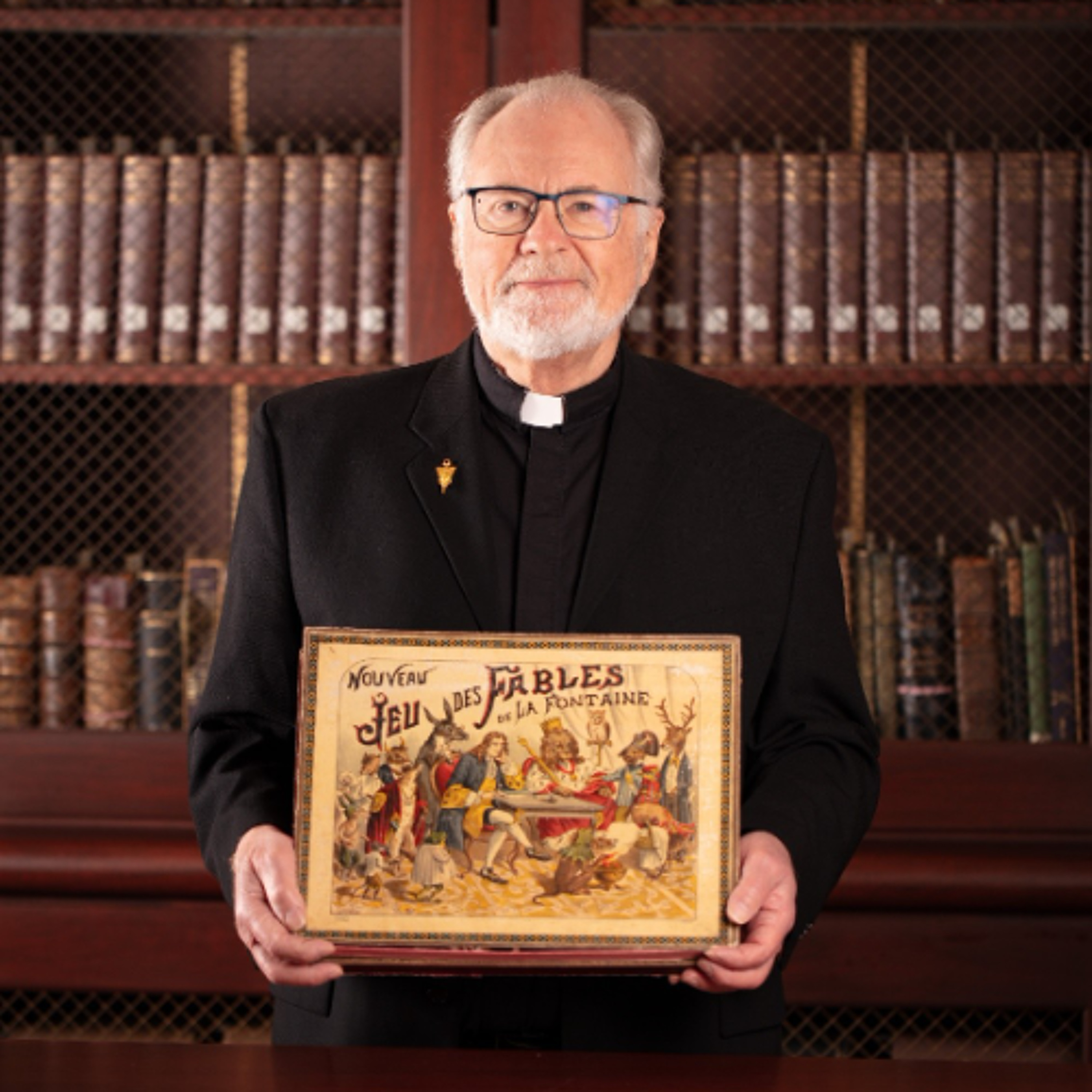
Aesop, Jesus and How Fables Form the Spiritual Life
3w ago00:47:48Tap to summarizeToday’s guest is a fable hunter. Fr. Greg Carlson has traveled the world, rummaging through old book stores, flea markets and the like to track down ancient manuscripts, forgotten illustrations and everything in between all for the love of fables. He’s done this for decades, even waging battles at online auctions, to amass a preeminent collection of fables that has become the Carlson Fable Collection at Creighton University. What was once a personal hobby evolved into an academic career. But Aesop isn’t the only wisdom figure with whom Fr. Carlson is well acquainted. Fr. Carlson is a Jesuit priest, and so for him, finding God in fables comes as second nature. He sees Jesus as a master storyteller — and one whom we may better understand after having developed a deeper appreciation for the wonder of fables. As you’ll soon hear, Fr. Carlson defines a fable as a “past-tense short narrative inviting a hearer or reader to perceive something about living life.” That’s not so far off from the sorts of parables Jesus told. In fact, developing our own ability to perceive life more intimately, more deeply, more intentionally — this is a great spiritual gift. And so, we're excited to share today’s conversation. Fr. Greg Carlson is a wonderful storyteller and teacher, and if you’d like to hear more from him, you can visit JesuitMediaLab.org where he’s written a reflection to further illuminate some of the points he makes on this episode. You can also get in touch with him and learn more about the collection and a booklet that he has published on this very topic. The collection is viewable online at both https://creightonarchives.omeka.net/s/carlson-fables-collection/page/home and https://www.creighton.edu/aesop
Transcribe →
Jesuits Standing With Ukraine for the Long Haul
4w ago00:43:29Tap to summarizeOn July 1, 2026, Russia bombarded the Ukrainian capital of Kyiv, killing at least 30 people and injuring more than 90 more. More weapons were used in the attack than in any other barrage of the city since Russia launched its full-scale invasion of Ukraine in 2022. It was just another reminder that while this war has faded from the headlines, it continues to ravage families and communities. It is the deadliest war in Europe since World War II. The Jesuit network in Europe has been responding to the needs of displaced Ukrainians and the receiving countries taking in refugees since the full-scale invasion began. Our guest today is Fr. Alberto Ares, a Spanish Jesuit based in Brussels who has served as the director of the Jesuit Refugee Service in Europe since 2021. JRS Europe coordinates work in more than twenty countries with over 8,000 professionals and volunteers. Each year these teams accompany more than 200,000 refugees and migrants, in work that combines political advocacy with European institutions and direct accompaniment on the ground. Fr. Ares is a scholar-practitioner who has worked with migrant communities around the world for decades, so host Mike Jordan Laskey asked him about what he has learned leading JRS Europe during the war and how the Jesuit community has been putting their faith into action alongside some of the most vulnerable people in the world. It was a difficult conversation but deeply moving and inspiring. And it was an important reminder to not forget about this humanitarian crisis even when so much of the world seems to have moved on. Fr. Alberto Ares, SJ: https://jrseurope.org/en/news/alberto-ares-new-regional-director-at-jrs-europe/ JRS Europe: https://jrseurope.org/en/home/ AMDG is a production of the Jesuit Media Lab, which is a project of the Jesuit Conference of Canada and the United States. www.jesuits.org/ www.beajesuit.org/ twitter.com/jesuitnews facebook.com/Jesuits instagram.com/wearethejesuits youtube.com/societyofjesus www.jesuitmedialab.org/
Transcribe →
Becoming Catholic Through Media Ecology with Dr. Chase Mitchell
Jul 800:39:01Tap to summarizeToday’s guest, Dr. Chase Mitchell, is an associate professor of media and communications at East Tennessee State University, where he teaches courses in multimedia production and media theory. He’s also a recent convert to Catholicism, having entered the Church this past Divine Mercy Sunday. Host Eric Clayton has been talking with Chase for a few months now about the role Ignatian spirituality and media ecology played in his own discernment to become a Catholic. It’s a fascinating story—and one he’s written about, both for Jesuits.org and the Jesuit Media Lab. On media and its effects on our society, Chase writes: “In an age of total mediation, [that is, our lived experience is fully affected by media] the task is no longer simply to analyze environments but to discern within them — to recognize where Christ is present, where the spirits are at work and where one is being called to respond. Media ecology, in this light, becomes not only a theory of communication, but a pedagogy of attention ordered toward love.” We knew a conversation with Chase on the pod would be a valuable one—and we weren’t wrong. If you’re interested in reading more of Chase’s work, check out the links below. On Chase’s journey to Catholicism: https://www.jesuits.org/stories/39-years-364-days-and-gods-merciful-grace-a-spiritual-autobiography/ On Ignatian spirituality and media ecology: https://jesuitmedialab.org/from-environment-to-encounter-toward-an-ignatian-media-ecology/
Transcribe →
Behind the Scenes with CNN's Vatican Correspondent
Jul 100:36:55Tap to summarizeToday, we’re continuing a mini two-episode series on the pontificate of Pope Leo XIV. Last week, host Mike Jordan Laskey spoke with the theologian Anna Rowlands, who was involved in the launch of the Holy Father’s new encyclical Magnifica humanitas. Today, Mike’s guest is Christopher Lamb, a long-time and extremely talented Vatican correspondent who currently works for CNN. Chris recently traveled with the Pope and the Vatican press corps to Spain, where Pope Leo held some huge public events, visited the famous La Sagrada Familia church, and met with migrants on the Canary Islands. Mike asked Chris what stood out about the trip and what it revealed to him about Pope Leo’s approach to his pontificate. They also talked about the encyclical and what he’s thought about its reception. Chris is also the author of a new book called “American Hope: What Pope Leo XIV means for the church and world.” Mike caught up with Chris while Chris was in London doing some events around the book, so if you hear some background noise here and there, that’s because the very full life of an international journalist and author doesn’t always include access to pristine, isolated recording conditions. But you’ll be able to hear everything he has to say just fine. And we think you’ll find it a fascinating look behind the scenes of the work of a journalist covering the Vatican. Christopher Lamb: https://www.christopherlambmedia.com/ Chris' new book, "American Hope": https://bookshop.org/p/books/american-hope-what-pope-leo-xiv-means-for-the-church-and-world-christopher-lamb/add13c5382df6666?ean=9781035440573
Transcribe →
Pope Leo's AI Encyclical is Not (Just) About AI
Jun 2400:49:15Tap to summarizeAs you probably heard, Pope Leo XIV released his first encyclical letter in May. Titled Magnifica humanitas, the document is a 42,000-word reflection on what it means to be human in our technology-obsessed age of generative artificial intelligence. The Pope officially released the document during a press conference at the Vatican, which the Holy Father himself attended — an unusual move for pontiffs. Sitting at one end of the dais was Christopher Olah, one of the founders of Anthropic, one of the largest AI companies in the world. His presence made a lot of headlines, too. Right next to Olah was a theologian named Anna Rowlands, and she’s our guest today. Professor Rowlands is the St Hilda Professor of Catholic Social Thought & Practice at Durham University in the United Kingdom. At the press conference, she delivered a stirring 10-minute address on how the encyclical offers the church and the world valuable insights into protecting human dignity and the common good in these uncertain times. Professor Rowlands is no stranger to the Vatican. In fact, she was involved in one of these press conference panels for the release of Pope Francis’ encyclical Fratelli tutti, and she has been involved in leading the Synod on Synodality process since 2023. Host Mike Jordan Laskey asked her about the press conference itself and how she decided on what she wanted to say in her address. They also talked about how the encyclical has been received and the material in the letter she finds most compelling. Mike also asked her to respond to one of his favorite critiques of the encyclical and of what generative AI is doing to our brains and souls. It was a wide-ranging conversation and we’re sure you’ll see why we think Professor Rowlands is one of the deepest and most brilliant thinkers you could ever hope to meet. Professor Anna Rowlands: https://www.durham.ac.uk/staff/anna-rowlands/ Her full speech at the encyclical launch: https://www.youtube.com/watch?v=Dqapjl7m7V8 The encyclical critique discussed: https://hedgehogreview.com/web-features/thr/posts/should-the-lion-lie-down-with-the-electric-lamb AMDG is a production of the Jesuit Media Lab, which is a project of the Jesuit Conference of Canada and the United States. www.jesuits.org/ www.beajesuit.org/ twitter.com/jesuitnews facebook.com/Jesuits instagram.com/wearethejesuits youtube.com/societyofjesus www.jesuitmedialab.org/
Transcribe →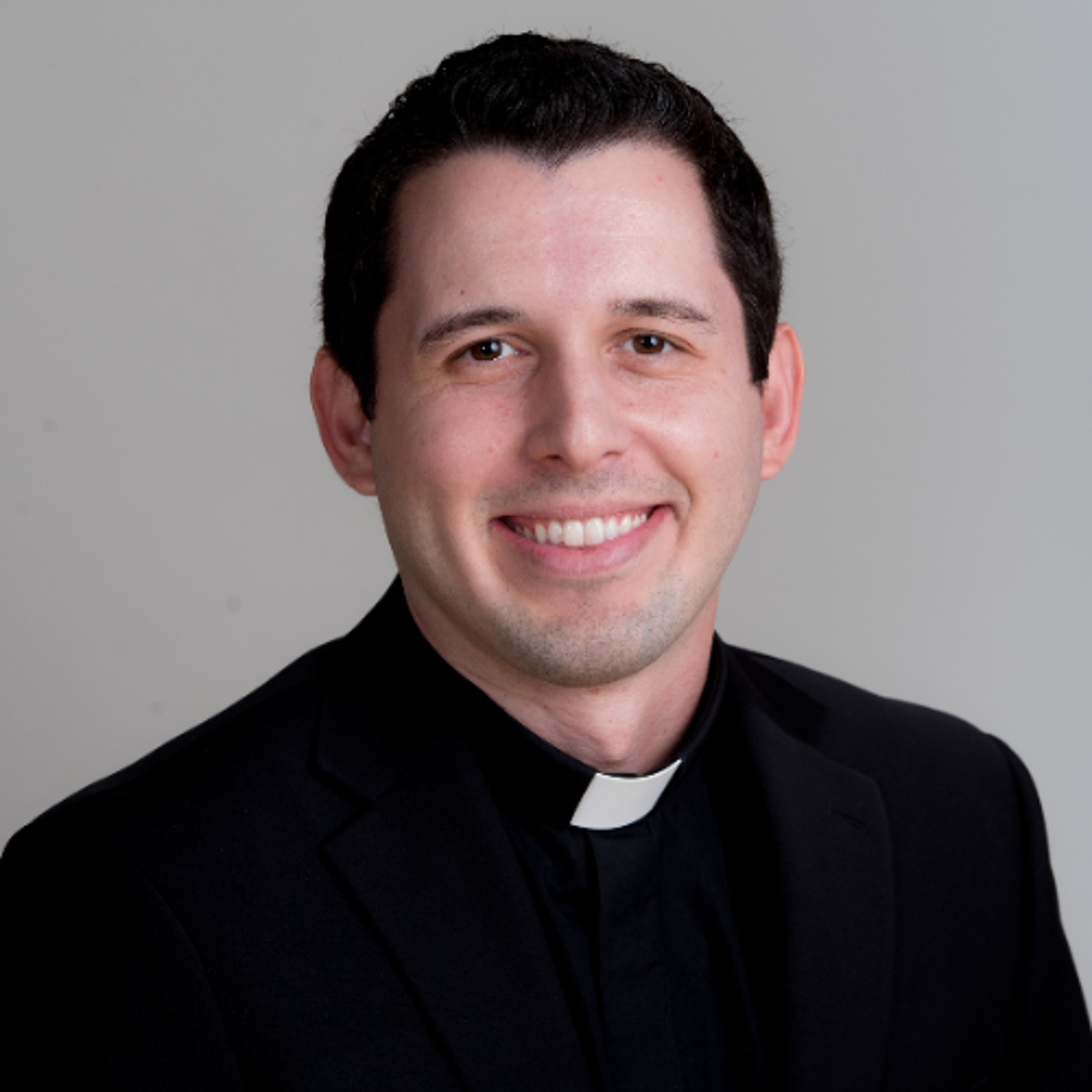
The Jesuit "Full Stop:" Understanding Tertianship with Fr. Andrew Laguna, SJ
Jun 1700:36:55Tap to summarizeIf you know anything about Jesuit formation, you probably know that it takes a long time: two years for novitiate, three years for first studies, three more of regency, and then two or more years of theology studies and then—if a Jesuit has discern the priesthood—ordination. On average, a Jesuit is looking at ten to twelve years before becoming a priest! So, formation takes a long time. But then, once you’re a priest, you’re all set, right? Wrong! There’s another stage of Jesuit formation called tertianship. This is a stage of renewal and recommitment, a period of time that happens years after ordination when a Jesuit returns to some of the foundational documents and experiences of Jesuit life. The Jesuit makes the Spiritual Exercises again, prays with the Constitutions and more. Tertianship takes a Jesuit out of their usual routines, often for an extended period of time, and prepares them for final vows. Tertianship has always been a little mysterious, for host Eric Clayton, at least. That’s why he was so excited to talk to his friend, Fr. Andrew Laguna, who just returned from his tertianship in Salamanca, Spain. And that’s the conversation you’re about to hear today. Andrew breaks down what tertianship is, why it’s important, what graces he experienced while there and, ultimately, why it matters for all of us, whether we’re Jesuits or not. Whether you’re interested in Jesuit life or formation or just want to hear from a wise Jesuit priest eager to share about how God is at work in his own vocation, you won’t want to miss this conversation.
Transcribe →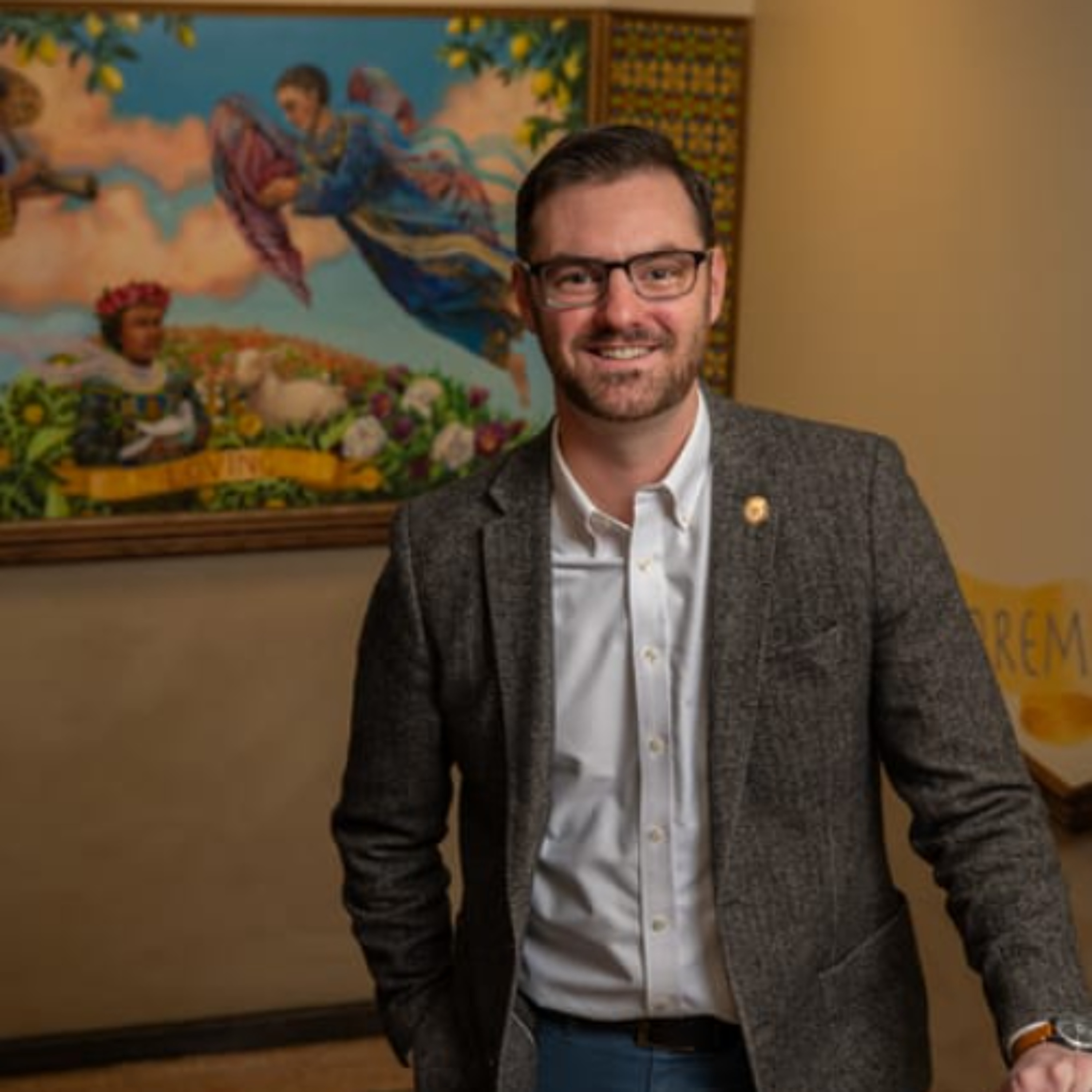
One Man, One Mission, Three Jesuit Schools: Mark Dushel on Ignatian Mission in Baltimore
Jun 1000:32:09Tap to summarizeThe cultivation of mission and identity is pivotal to any mission-driven organization. It gets to not only the why of the work, but also the larger context, the history and the people. A shared mission can sustain work across time zones and languages and varied socio-political contexts. Understanding the mission of an organization — how it’s been interpreted and applied and lived out of — is crucial to that organization’s continued success. It’s more than a common language; it’s a shared lifeblood. Jesuit institutions take mission and identity work seriously. You see offices for mission and Jesuit colleges and universities; you meet mission officers in Jesuit apostolates the world over. These are the folks who help you not only remember Latin words like cura personalis; these are the folks who help you understand how to live it out in your particular context based on your particular skills. Mark Dushel stands in the long, storied legacy of Ignatian collaborators entrusted with passing on our Jesuit mission and charism. But Mark has been given a unique role through which to do so. He is the newly minted director of Ignatian Mission and Faith Formation for three different yet interrelated schools in Baltimore, MD: Cristo Rey Jesuit High School, St. Ignatius Loyola Academy and The Loyola School. These schools — all founded by Jesuit priest, Fr. Bill Watters, over the course of several decades — allow children from as early as two years old all the way through high school to pursue a tuition-free Jesuit education. The mission is critical and has been bearing fruit for generations. Mark, for his part, comes to this work well-prepared. He has a Master’s in theology and ministry from Boston College — where he first encountered the Jesuits — and served in campus ministry at St. Joseph’s Preparatory School in Philadelphia and later at Loyola University Maryland. He began his work as director for mission in 2025. There’s a lot we can learn from Mark’s work, from his collaboration across schools to his efforts to introduce the Ignatian charism to children as young as two to the accompaniment his mission-centered role means for the families of his students. That’s why today's host Eric was excited to talk with Mark — and why we know you will enjoy this conversation. Read more about Mark's work here: https://loyolaschoolbaltimore.org/mark-dushel-is-serving-three-jesuit-schools-in-baltimore/
Transcribe →