← American History Hotline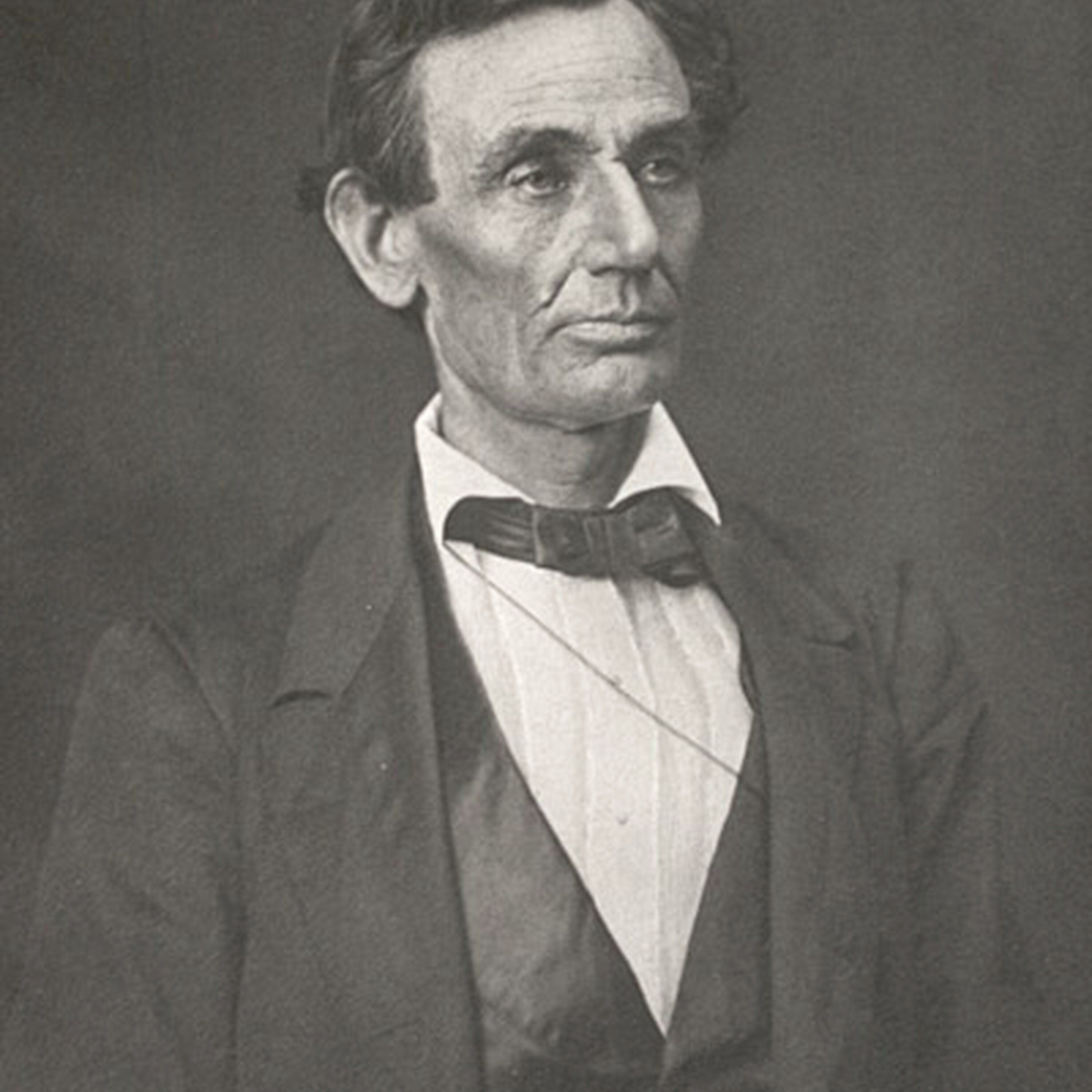
American History Hotline
Abraham Lincoln Before the Presidency: What He Learned as a Lawmaker
00:24:22
Loading summary
Transcript57 lines
- [00:00]
Chris DeRose
Lincoln was really the only young, upwardly mobile politician who still voted against those pro slavery resolutions which easily passed the Illinois House. And so for an ambitious politician like Lincoln, Congress was the only way to move up.
- [00:19]
Bob Crawford
You've reached American History Hotline. You ask the questions, we get the answers. Leave a message. Hey there, American History Hotliners. Bob Crawford here. Thrilled to be joining you again for another episode of American History Hotline, the show where you ask the questions. Send those questions, whatever they are, about American history, to AmericanHistoryHotlinEmail.com that's AmericanHistoryHotlinEmail.com okay, today's question is about of side of Abraham Lincoln that most of us probably aren't too familiar with. Here to help me answer this question is Chris DeRose, author of the book Congressman Lincoln. Chris, welcome to American History Hotline.
- [01:07]
Chris DeRose
I'm honored.
- [01:08]
Bob Crawford
Okay, Chris, here's the question we were hoping you could answer. It's from Janelle in Boise. I want to know more about Lincoln before he was president. What was he like as a lawmaker? Chris, you wrote a book about Lincoln's life as a congressman. What was he like?
- [01:24]
Chris DeRose
Abraham Lincoln is one of the most written about figures in the history of the world. And if you go to Ford's Theater, you'll see a pile from the floor to the ceiling of hundreds, maybe even thousands of books about the life of Abraham Lincoln. And it's far from a complete list. But what I learned is that there had been no authoritative book written about Abraham Lincoln's time as a member of Congress, which, when you think about it, Abraham Lincoln held three political offices in his life. He was a member of the Illinois General Assembly, House of Representatives, and he was a congressman for one term from Illinois, and then he was President of the United States. And when Lincoln raises his right hand, takes the oath of office as president in the tumultuous month of March, 1861, all that he knows about the federal government, all that he's experienced is this one term as a member of Congress 12 years earlier. So that set me on the path to wanting to learn everything I could about Lincoln as a member of Congress, about his personal and professional development during these years and what that could tell us about his presidency.
- [02:37]
Bob Crawford
Okay, so why Congress? He served in the, in the legislature of Illinois. But then he runs for Congress. Why that office?
- [02:47]
Chris DeRose
Abraham Lincoln at this stage of his life is a member of the Whig Party. Illinois is dominated by the Democratic Party. So Lincoln's opportunities to run for governor or statewide office are really limited. And the only chance for promotion in the state of Illinois for a Whig is to run for Congress. And so Lincoln was politically ambitious. He had things he believed. I think we look upon ambition as a negative thing in politicians and it can be, and it certainly can lead to people doing things that are contrary to their principles and contrary to the reasons that they ran for office. But if you're ambitious and you stick to your principles, it's not necessarily a bad thing. It's really hard to get to Congress if you're not ambitious. Right. Or even to become. To go from a modest log cabin on the frontier to becoming a well respected lawyer, you know, with, with many, many arguments in front of the Illinois Supreme Court. And so Lincoln was an ambitious person. And I don't mean that as a pejorative.
- [03:53]
Bob Crawford
Can I interrupt you briefly, Chris? Because I'm thinking about this. Like Illinois, you're telling us it's this, this heavily Democratic state. And we associate pre Civil War Democratic party is pro slavery.
- [04:07]
Chris DeRose
Correct.
- [04:08]
Bob Crawford
Whig party is, is still pro slavery, many of them. But as we get into the 1840s and 1850s, the Whig party is a little more. Skews, more anti slavery. Illinois as a state came out of the Ohio territory, which means that it's a free state. But here you tell us. So Illinois is a free state, but it's dominated by Democrats. Just square that for me quickly if you can.
- [04:37]
Chris DeRose
Sure. Well, the Liberator, which was one of the most prominent anti slavery newspapers in.
- [04:42]
Bob Crawford
The antebellum, William Lloyd Garrison.
- [04:44]
Chris DeRose
Yes. Said that Illinois is for all intents and purposes a slave state. So we think about Illinois today, and I grew up outside Chicago. We think about Illinois today as a northern state. We think about Chicago. We think about, you know, Illinois having midwestern and northern values and culturally being dominated by that part of the state. But it wasn't always the case. So Illinois was settled from the south to the North. So many of the new residents of Illinois, like Abraham Lincoln, had come from Kentucky. And so even though it was, as you say, a free state and for those legal reasons you mentioned could never become a slave state, there were ways around it. People would sign, people who couldn't read a contract would sign an X on a document and sign up for a lifetime of involuntary servitude or poorly paid employment contract, which was the equivalent of slavery. So for all intents and purposes, Illinois was considered a slave state by many. And in fact, Abraham Lincoln will distinguish himself as a member of the Illinois legislature, but by voting against pro slavery resolutions that were easily passed by the Illinois General assembly, in fact, the only people who voted no on those were people whose career was coming to an end. They were getting ready to retire. They didn't care if they lost. Lincoln was really the only young, upwardly mobile politician who still voted against those pro slavery resolutions which easily passed the Illinois House. And so for an ambitious politician like Lincoln, Congress was the only way to move up.
- [06:21]
Bob Crawford
And so in Congress, right, like you said at the outset, our imagination, when it comes to Abraham Lincoln, it goes to the presidency. The man with the beard and the stovepipe hat and the man on the penny, if you will. But yet here he is in the rough and tumble of Congress. In pre Civil War, the Congress was probably rougher than it is today, with actual violence taking place on the floor of the House. So what did Abraham Lincoln bring with him to Congress? What did he learn while he was in Congress?
- [07:02]
Chris DeRose
Sure. So he brought his opposition to the Mexican War, which was drawing to a close, the military.
- [07:11]
Bob Crawford
So this is 1847 to 1849.
- [07:14]
Chris DeRose
Correct. And so the war was decisive. In fact, Mexico won't win a single battle of the war. Lincoln thought that the causes belli for the war was manufactured by President Polk. And so one thing you saw in American history is when we talk about territorial acquisition, it immediately triggers that issue of slavery and where the balance of power is going to sit in the Congress once this new territory is acquired. And in fact, Mexico is defeated so decisively that there's no real legitimate government for us to enter into a treaty with, which is a barrier to coming up with a barrier to concluding a peace. And so you see, the American army is occupying Mexico and Lincoln gives a very well received speech called the Spot Resolution speech criticizing the causes belli for the war. And when he talks about the spot resolution, you know, whatever, the inciting incident for the Mexican American war, at least in the popular imagination, because there were others, but at least the inciting incident in popular imagination for the Mexican American War is the killing of American soldiers by Mexican troops. And what James K. Polk said, American blood has been shed on American soil and the resolution to go to war just sails through the Congress. And Lincoln talks about the spot where the killing actually happened. And was that actually America or was it Mexico? Where did the people who lived there pay taxes? Where did they think they lived? Where did they serve on juries? Where did they vote? Was this really America or was it Mexico? And was this manufactured to stir up popular opinion in favor of a war that the President wanted? And so actually in history, the spot resolution Speech, like Lincoln's career in Congress generally has been misreported in most of history as being insignificant and something that people did not take notice of. But what I found in doing this research is that no less a figure than Stephen Douglas foundation felt the need to respond to Lincoln's spot Resolution speech months later in the Senate. And it was interesting, Bob. You know, there's a gentleman from North Carolina, former Congressman David Outlaw. You and I have both gone through his incredibly detailed.
- [09:48]
Bob Crawford
That's right, Bertie County. Bertie County, North Carolina.
- [09:53]
Chris DeRose
Yeah. And he hated being in Congress. He didn't really seem to like the people in Congress or D.C. and he'd write these incredibly long letters to his wife almost every night. And as I was getting through this collection, which had never, as far as I could tell, had never been used before or never been cited in any serious work, I'm like, I am going to get a totally unique eyewitness report of the spot Resolution speech. And I could hardly control myself flipping through those letters to get to that date. And then I realized that Mr. Outlaw went to the Senate to watch his buddy give a speech that day and he missed the spot Resolution speech. And I was, ain't it the way, Ain't it the way? But what I realized was it's actually very significant. He wrote a. Lincoln of Illinois gave a speech in the House that day. And I was like, wow. So even a guy who went over to the Senate to watch a different speech that day took notice of Abraham Lincoln's words in the House. And so contrary to the popular narrative, Abraham Lincoln was a significant and well respected member of the House of Representatives. And his words carried weight and they made an impact. And so it makes a lot more sense. Right. It's much easier to square with this president who becomes the most significant figure in American history. Perhaps that he wasn't just a lightweight Congressman who turned into this incredible president 12 years later. He had the hallmarks of greatness in him already.
- [11:24]
Bob Crawford
So we think of a one term or a first term Congressman as a backbencher.
- [11:30]
Chris DeRose
We do now. There's a couple reasons for that. So Washington D.C. was very difficult to get to in those days. It was not a fun place to live. Right. It's still mostly a malarial swamp and it was a very seasonal town when Congress was out of session, people didn't really hang around and there was no texting or calling or zooming home with your wife and your kids. And so. And Congress didn't pay all that well. So it was a financial sacrifice. And so for that reason, most members of Congress only served a couple terms. So you had the chance to make a much greater impact earlier on in your career as a member of Congress.
- [12:13]
Bob Crawford
So we think of Lincoln as the great emancipator. What was his stance on slavery when he was in the Congress as a lawmaker?
- [12:24]
Chris DeRose
I'm so glad you asked me this question because I think it's becoming de rigueur to talk about Lincoln as an emancipator of convenience or an emancipator who came to the view later in life. And it's simply not true. Abraham Lincoln voted against slavery for decades and risked his political career to do so at many intervals. So we talked about the Illinois resolutions. Illinois, for all intents and purposes, a slave state. Abraham Lincoln is the only upwardly. Abraham Lincoln is the only upwardly mobile member of the Illinois General assembly to vote against these resolutions. When he gets to Congress, he votes dozens of times for the Wilmot Proviso or for the principles behind the Wilmot Proviso.
- [13:12]
Bob Crawford
Oh, Chris, explain for us what was the Wilmot Proviso?
- [13:16]
Chris DeRose
So America at this point is poised to acquire significant new territory. Little known member of Congress who wasn't even necessarily anti slavery, introduced an amendment to say no slavery in the new territory acquired from Mexico. And so we might. America might be growing, but slavery shouldn't be expanding with it. So Abraham Lincoln voted to keep slavery out of the Oregon Territory. He also voted for the Wilmot Proviso every time he had hit the floor. Anytime there was a chance to vote to limit slavery to where it then existed, Abraham Lincoln voted for it. Abraham Lincoln lived in a boarding house in Washington D.C. with the most prominent abolitionists of the era, including Joshua Giddings, whose name is largely lost to history today. But in that. In that antebellum era after John Quincy Adams really becomes one of the foremost, perhaps the foremost abolitionist in America, he and Lincoln are hostile.
- [14:18]
Bob Crawford
Is this Mrs. Spriggs boarding house are you talking about?
- [14:22]
Chris DeRose
It is Mrs. Spriggs boarding house, the Abolition boarding house. And Lincoln had a. There was a free black man who was worked as a waiter in Mrs. Spriggs boarding house who was kidnapped. And I thought, what an impression that must have had on Lincoln. He was kidnapped and sold into slavery in the South. So this guy that Lincoln interacted with every day, kidnapped and sold as a slave. So Lincoln is really seeing and experiencing slavery in a way that he really hadn't for a lot of his life prior to this, but he is voting consistently against slavery. And he's not just a vote against it. He actually introduces a bill to emancipate the slaves in the District of Columbia, where Congress functions like a state legislature and has jurisdiction over day to day domestic issues in a way that it doesn't in the states. I'll give you another example, the Pacheco slave case. So if you look at legislation in this area, in American history, most legislation was introduced in order to compensate someone who believed the federal government owed them money. And so that was before the Court of Claims. Right now you just go file with the Court of Claims. If the federal government hires you to build a post office and then doesn't pay the bill, you go to the Court of Claims. Back then, the belief was under the Constitution, only Congress could appropriate money. And so therefore no independent court could tell Congress to go ahead and spend money on something. And so in Florida during the Seminole War, there is a slave named Pacheco and he speaks multiple different languages. And the army tells Mr. Pacheco's purported owner, hey, we need to borrow him. We need him as a guide and as a translator. Well, actually, as it turns out, an enslaved person isn't going to want to do any favors to the U.S. army. And so he manages to escape while in the custody of the U.S. army. And so his owner petitions his congressman to introduce legislation to compensate him for the slave that he lost. And so it actually becomes a proxy vote on how you feel about slavery. And Abraham Lincoln consistently voted to deny Pacheco's purported owner compensation, saying that you can't have a property interest in a human being.
- [16:43]
Progressive Insurance Announcer
Brought to you by Progressive Insurance. Do you ever think about switching insurance companies to see if you could save some cash? Progressive makes it easy. Just drop in some details about yourself and see if you're eligible to save money. When you bundle your home and auto policies, the process only takes minutes and it could mean hundreds more in your pocket. Visit progressive.com after this episode to see if you could save Progressive Casualty Insurance Company and affiliates. Potential savings will vary. Not available in all states.
- [17:12]
Toyota Announcer
Dear Winter Toyota can't get enough of you because Toyota's got 25 vehicles with available all wheel drive drive and four wheel drive. And that's more than any other auto brand. From the versatile RAV4 to the svelte crown, the sleek Camry all wheel drive, the Corolla hybrid all wheel drive, the rugged Tacoma, the tenacious Tundra, and the spacious grand Highlander with all wheel drive to keep you and yours safe. Hey, you bring the action. We'll bring the traction Toyota let's go places based on manufacturers websites as October.
- [17:41]
Questlove
2025 hello, hello all my people. What's up? It's Questlove. Recently I had the opportunity to sit down with the one and only ASAP Rocky. He reflects on his journey from Harlem roots to global icon status and discovering the hip hop origin of his name.
- [17:57]
ASAP Rocky
The ledge was on the tv. Rakim had the bucket hat Kangol joint on. Pops is like, that's Rakim. That's who you named after. I just was like damn, that got swag.
- [18:08]
Questlove
But listen to the Questlove show on the iHeartRadio app, Apple Podcasts or wherever you get your podcast.
- [18:17]
Azure Standard Announcer
If you like Knowing why you buy what you buy. Azure Standard Makes sense. Azure Standard centers organic groceries and home products around clarity, values and long term thinking. It's the place to shop for people that want confidence in every choice. Azure Standard supports a more mindful relationship with food without rush or pressure. Explore the purpose and products behind Azure Standard at Azure Standard. Start your new shopping journey today@azurestandard.com that's a Z U R E standard.com why one term Chris?
- [18:50]
Bob Crawford
Why did, why did Lincoln not. Did he, did he lose? Like, I don't know the history on this. Like did he lose or did he decide not to run for a second term?
- [19:00]
Chris DeRose
So how Lincoln enters the Congress and why he leaves it are closely tied together. So you remember we talked about how this was the only path forward for a Whig politician in the state of Illinois. And so once this spot became open, once this congressional seat became open, it was a battle between Lincoln and two of his peers for this seat. They went to a convention in Pekin, Illinois, with delegates from throughout the district to determine who would run as the Whig candidate. And Lincoln lost. Lincoln finished in third place. So a guy named John Hardin gets selected as the Whig nominee, but Lincoln wisely introduces a resolution to cap him at one term. So they say we're going to have John Hardin will serve one term. And then Edward Baker, who was the second, had the second most votes, would serve a term after him. And people seem to think that was very fair. And also when you added up Lincoln's and Baker's totals, they had a majority of the room. So they agree that they're all going to take turns. And so Hardin serves a term in Congress, Baker serves a term in Congress. But Lincoln knew that by doing so he would be next up and this precedent would be set that everyone serves a term. So part of it is that one term precedent that Lincoln himself introduced. But also Lincoln's opposition to the Mexican American war may well have doomed his chances even against the Democrat, even in this solidly Whig district, because the war was so popular in Illinois. In fact, Illinois probably produced more volunteers for the Mexican American war per capita than any other state. And so for Lincoln to be so outspoken against the war against President Polk in a Democratic state, in a pro war state, there probably was no path for him to return to Congress, even if that one term cap, that one term tradition that he himself helped introduce were to go by the wayside.
- [21:04]
Bob Crawford
You may have just answered my next question. Because Lincoln runs for the Senate in a few more, a couple years after he leaves Congress, he runs for the Senate and he loses. And my question was going to be, why do you think he won the House seat but lost the Senate seat? You just answered the question, didn't you?
- [21:23]
Chris DeRose
Well, actually, so Illinois is going to begin to transition away from the Democrats because of the Kansas Nebraska Act. So wait, wait, wait, wait, wait, what's that? So in 1820, Congress passed to President James Monroe, signed the Missouri Compromise, which delineated a line above which slavery could not exist and below which slavery was guaranteed. And it was a compromise to divide up the Louisiana purchases. We organized this new territory. Are these territories going to be free? Are they going to be slave? So there's a line drawn between north and south with the exception of Missouri, to determine where we're going to have slave territory, that compromise that held the country together for over 30 years. Then comes President Franklin Pierce. And President Pierce, while he comes from New Hampshire, has the attitudes towards slavery of any other southern politician. And Franklin Pierce throws all his muscle as president into something called the Kansas Nebraska act, which says we're going to abandon the Missouri Compromise, which has held this country together for so many decades. And we're going to let territories decide for themselves whether to be free or slave. In keeping with Stephen Douglas's policy of popular sovereignty, if we can't decide whether these territories are going to be free or slave, let's let the people there decide for themselves. And so the repeal of the Kansas Nebraska act, in the words of Lincoln, who sat out of politics for almost a decade, aroused him as no other issue had before. And so Lincoln starts getting involved with the new Republican party. You start to see the parties break down along sectional lines, regional lines, along this issue of slavery over the Kansas Nebraska Act. So you have Northern Whigs voting with Northern Democrats and Southern Whigs voting with Southern Democrats on these issues. And in Kansas they make a joke out of popular sovereignty. This pro slavery faction steals one election after another through the most brazen methods of shipping people in from other states and using violence or just completely making up vote tallies with more votes for slavery politicians and slavery questions than existed in the jurisdiction. So Abraham Lincoln runs for the Senate. In those days legislatures picked senators. And so first Lincoln runs for Senate. And he would have won except for a handful of holdout Democrats who said there's no way we can ever vote for a non Democrat. And so Lincoln had to yield to a guy named Lyman Trumbull who was an anti Kansas Democrat, so shared his views on the subject. But to combine his support with those handful of members who were refusing to cross over. So Lincoln sacrifices a Senate seat that should have been his in order to make sure that a pro slavery Democrat wasn't sent to the Senate instead. Instead then he runs against Stephen Douglas. And famously, although the legislature is still picking the winner, Lincoln and Douglas will campaign through throughout the state together engage in these debates and try to support legislators who are pledged to voting for them for, for the Senate. And so it's that that change in sentiment in Illinois. But of course Lincoln will be unsuccessful again against Stephen Douglas. But as a result of those debates with Stephen Douglas, which will attract national attention, will make Lincoln an overnight star. And so he's the best known two time Senate loser in the country. And he develops a reputation as an eloquent and powerful advocate against the pro slavery faction in America.
- [25:15]
Bob Crawford
Well, Chris, right, thank God he lost that Senate race. Thank you so much Chris. Really always love calling on you and we're grateful that you give us the time.
- [25:28]
Chris DeRose
Bob, it's a pleasure. Anytime.
- [25:34]
Bob Crawford
You've been listening to American History Hotline, a production of iHeart podcasts and Scratch track productions, the show's executive producer is James Morrison. Our executive producers from iHeartrading are Jordan Runtal and Jason English. Original music composed by me, Bob Crawford. Please keep in touch. Our email is americanhistoryhotlinemail.com if you like the show, please tell your friends and leave us a review in Apple Podcasts. I'm your host, Bob Crawford. Feel free to hit me up on social media to ask a history question or to let me know what you think of the show. You can find me at bobcrawford Bass. Thanks so much for listening. See you next week.
- [26:28]
Toyota Announcer
Dear Winter, Toyota can't get enough of you because Toyota's got 25 vehicles with available all wheel drive and four wheel drive. And that's more than any other auto brand from the versatile RAV4 to the svelte crown, the sleek Camry all wheel drive, the Corolla hybrid all wheel drive, the rugged Tacoma, the tenacious Tundra and the spacious Grand Highlander with all wheel drive to keep you and yours safe. Hey, you bring the action, we'll bring the traction. Toyota, let's go places Based on manufacturers websites as 10-10-25 hello, hello all my people.
- [27:00]
Questlove
What's up? It's Questlove. Recently I had the opportunity to sit down with the one and only ASAP Rocky. He reflects on his journey from Harlem roots to global icon status and discovering the hip hop origin of his name.
- [27:13]
ASAP Rocky
The ledge was on the tv. Rakim had the bucket hat Kangol joint on. Pops was like, that's Rakim. That's who you named after. I just was like damn, that got swag.
- [27:24]
Questlove
But listen to the Questlove show on the iHeartRadio app, Apple Podcasts or wherever you get your podcast.
- [27:33]
Mind Games Podcast Host
What if mind control is real?
- [27:35]
Progressive Insurance Announcer
If you could control the behavior of.
- [27:36]
Chris DeRose
Anybody around you, what kind of life would you have?
- [27:38]
Mind Games Podcast Host
Can you hypnotically persuade someone to buy a car?
- [27:41]
ASAP Rocky
When you look at your car, you're going to become overwhelmed with such good feelings.
- [27:45]
Mind Games Podcast Host
Can you hypnotize someone into sleeping with you?
- [27:48]
Bob Crawford
I gave her some suggestions to be sexually aroused.
- [27:51]
Mind Games Podcast Host
Can you get someone to join your cult?
- [27:53]
Chris DeRose
NLP was used on me to access.
- [27:55]
Mind Games Podcast Host
My subconscious mind games. A new podcast, Exploring nlp, AKA Neuro Linguistic Programming. Is it a self help miracle, a shady hypnosis scam, or both? Listen to Mind Games on the iHeartRadio app, Apple Podcasts or wherever you get your podcasts.
- [28:13]
John Paulk
I'm John Paulk. For years I was the poster boy of the conversion therapy movement, the ex gay who married an ex lesbian and traveled the world telling my story of how I changed my sexuality from gay to straight. You might have heard my story, but you've never heard the real story.
- [28:32]
Chris DeRose
John has never been anything but gay, but he really tried hard not to be.
- [28:37]
John Paulk
Listen to Atonement the John Paulk story on the iHeartRadio app, Apple Podcasts or wherever you get your podcast.