← American History Hotline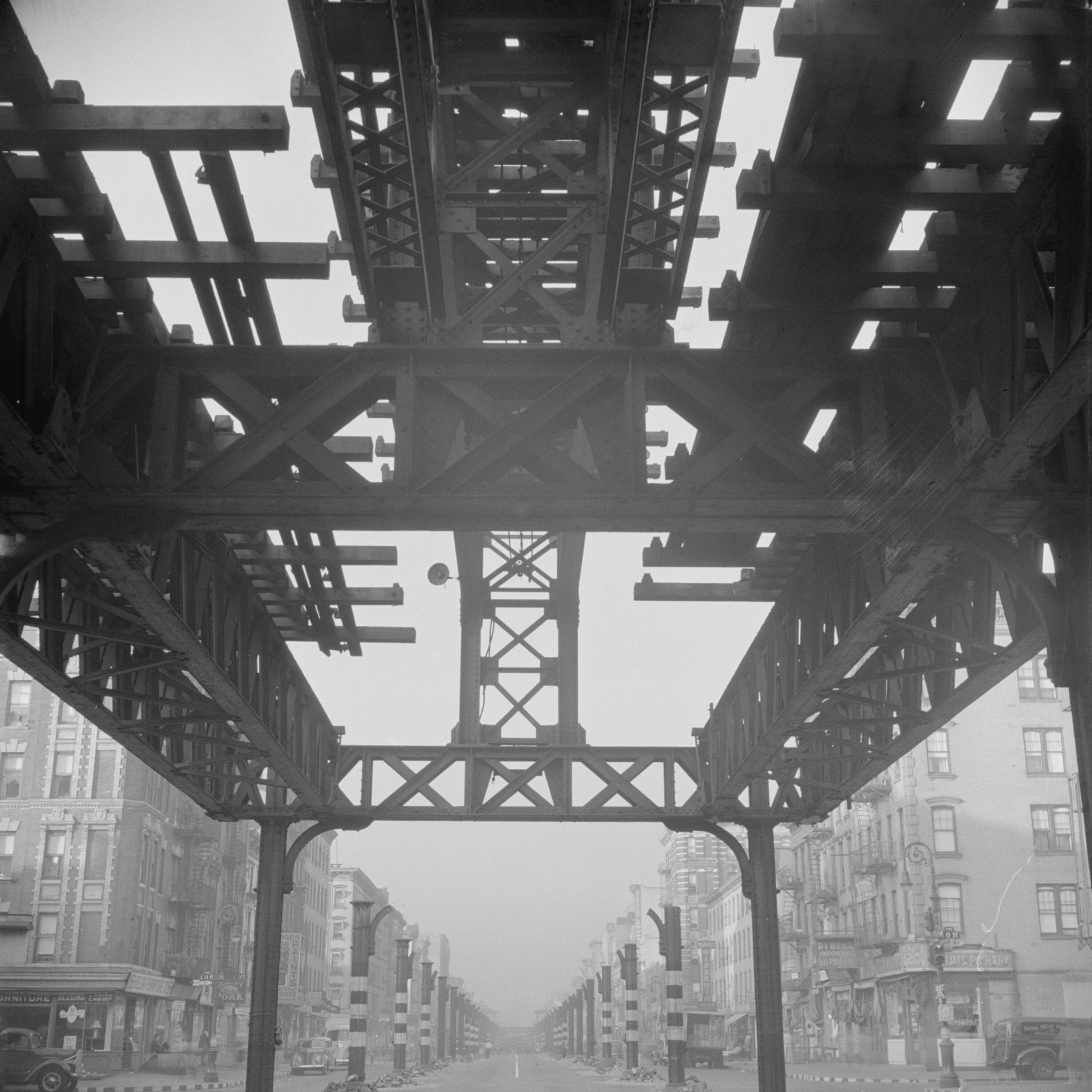
American History Hotline
America Loves Trains. Why Can’t We Build Them Anymore? Inside NYC’s Second Avenue Subway
00:34:35
Loading summary
Transcript87 lines
- [00:00]
Joe Stanford
People like to think that the car is the way to travel around freely. But there is nothing more confining than being stuck in traffic. It makes you feel like a prisoner and it can make you feel helpless.
- [00:10]
Bob Crawford
Spoken like a man who lives in Boston.
- [00:14]
Joe Stanford
Amen.
- [00:19]
Bob Crawford
You've reached American History Hotline. You ask the questions, we get the answers. Leave a message.
- [00:27]
Kyle (AI assistant)
Hi, Kyle, could you draw up a quick document with the basic business plan? Just one page as a Google Doc and send me the link. Thanks.
- [00:34]
Hey, just finished drawing up that quick one page business plan for you. Here's the link.
- [00:39]
Evan Ratliff
But there was no link. There was no business plan. I hadn't programmed Kyle to be able to do that yet. I'm Evan Ratliff here with a story of entrepreneurship in the AI age. Listen as I attempt to build a real startup run by fake people. Check out the second season of my podcast Shell Game on the iHeartRadio app or wherever you get your podcasts.
- [00:59]
Bob Crawford
Hey there, American History Hotliners. Bob Crawford here. Thrilled to be joining you again for another episode of American History Hotline. It's the show where you ask the questions and keep sending us your questions about American history. You know where to send them. American History hotlinemail.com that's americanhistoryhotlinemail.com Today's question is about one of my favorite subjects of all time, trains. Here to help me answer this question today is Dan McNicol, author of the book Second Avenue Building the Most Famous Thing Never Built in New York City. Dan, thank you for joining me today.
- [01:47]
Dan McNicol
Hey, Bob, thank you for having me on your show.
- [01:49]
Bob Crawford
It's a pleasure. And we're also joined by Joe Stanford, editor of Dan's book, and a former United States Department of Transportation analyst. Joe, welcome to you as well.
- [02:02]
Joe Stanford
Thank you so much, Bob. It's great to be here.
- [02:05]
Bob Crawford
I think this may be our first American History hotline with two guests. I'm not sure producer James will correct me on that if I'm wrong, but it's really, it's a pleasure having you guys here. Okay, guys, here's the question we were hoping that you could help us answer. It's from Paulie in Houston. He writes, why is it so hard to build new rail lines in the US Especially since we have such a rich history of going hog wild with trains when they first came out. How did America's love for building trains get derailed?
- [02:42]
Dan McNicol
That's a beautifully put question.
- [02:45]
Bob Crawford
Yeah, Dan, we're going to get to the Second Avenue subway specifically in a moment, but I want to start with the big picture, how does America compare to other countries when it comes to railroad connectivity and new miles of track each year?
- [03:04]
Dan McNicol
That's an excellent question. The beginning is we fell in love with rail. We outdid ourselves. We were in the canal era and then moved quickly to rail. Rail killed the canal era and it was prolific. There was rails butting up everywhere. By the late 1800s, we were a magnificent force in rail worldwide. We are still the leaders in the world when it comes to freight. Our freight lines are superior. China rivals that. But rail lines in the United States are not as bad as passenger rail lines are. We're in a horrific state when it comes to passenger rail service. And I think from a retail perspective, people see rail because when they're on Amtrak, they think this is passenger rail and it's slow, it takes forever, it might not even be available to you. But when it comes to freight, what people don't understand is freight's moving beautifully along freight lines. But even those freight lines that are magnificent are dedicated lines from the 1800s, most probably we, we are still not building a lot of new rail lines. So we are low when it comes to the world in adding new rail lines, even freight. Joe, you're, you, you're in that world. Joe knows a great deal about systems. MIT engineer. You have anything to add?
- [04:37]
Joe Stanford
I think, I think the, you know, it'd be hard to have this discussion without bringing up, without, you know, giving a shout out to the role of the, you know, the interstate highway system in this and you know, the, the turn, the very sharp turn we took in the 20th century towards, towards cars and, and you know, in a lot of this is, you know, some of this is a zero sum game where, you know, people are going to move by car or by rail, one or the other. And in some cases it's not, but I think we made a lot of choices that locked in and it's sort of, there is a bit, from a systems perspective, there is a bit of a vicious cycle. You know, once you start building in one direction, it builds momentum and it, it builds the infrastructure and it builds the users and the users drive more infrastructure and you end up with this amazing highway infrastructure and this really poor rail infrastructure.
- [05:32]
Bob Crawford
Yeah, Joe, sticking with that. You know, Dan pointed out how China has been, you know, the world leader in, in, in, in man in passenger trains. Right. I have a statistic here in front of me. 45, 000 miles of high speed rail in China by 2035 and yet in the United States we are on track to possibly build a 213 mile track Vegas by 2035. I mean, you know, do you think with electric vehicles and, and like you say, the, the freedom of the automobile, this is just, it's never going to happen for us in the passenger side.
- [06:17]
Joe Stanford
Well, one thing it's actually, I like that you use the word freedom because one of the things I always used to like to talk about when I was at DOT is people like to think that the car is the way to travel around freely. But there is nothing more confining than being stuck in traffic. It makes you feel like a prisoner and it can make you feel helpless.
- [06:37]
Bob Crawford
Spoken like a man who lives in Boston.
- [06:40]
Joe Stanford
Amen. But on the flip side, there are times when a rail system works and you know, when the train's coming and it's going to come on time and it's clean and, and it's cheap and you have a good payment system, you step on, you step off at the other end, you don't have to worry about parking. Like that feels like freedom. So I don't know if I answered your question. I think I honed in on the word freedom and sort of riffed on that. But Bob, you know what?
- [07:08]
Dan McNicol
I worked on the high speed rail project in Sacramento. I was based in Sacramento for a year plus and I went there hoping that this was going to be as magnificent as I thought it would be. And it was just heartbreaking. Ten years, 1% of the track built, billions of dollars spent, nothing accomplished. And it's a shame because all the flights between LA and San Francisco could be greatly eliminated. It's one of the heaviest, if not the heaviest intra state route between LA and San Francisco burning so much fuel they decided to go through the western side of the state, excuse me, the eastern side of the state. And they went through all these towns. They should have gone down the five, they should have gone down right along the interstate and built that system quickly. I was married to a woman born in China. I spent 10 years in China, back and forth traveling and I watched them from 2004 to 2013 just explode onto the scene with high speed rail. A trip from Hangzhou to Shanghai to Beijing was a 21 hour trip when I first started going there and then when I left it was a five hour trip with trains leaving every 20 minutes and the cost was the equivalent of 20 bucks. If we could do something half that good, you'd see this magnificent shift I think towards rail.
- [08:36]
Bob Crawford
So why so? I mean it doesn't sound like a Money problem. It sounds like a planning problem.
- [08:43]
Dan McNicol
No, it's a political problem. People are committed to their cars, they want their cars. Politicians don't lead, they follow. And they're just supporting this whole we don't even know what we want. You know, famously Henry Ford saying, people don't know if you ask them, they would want a faster horse. But this is a great example of we're in our echo chamber and we're not aware of what the world is doing and we are being terribly left behind.
- [09:11]
Bob Crawford
Let's, let's get into the second Avenue subway. This feels like a great case study for why it's hard to build new rail lines in America. Dan, can you start off by telling me the history of this line?
- [09:28]
Dan McNicol
The history is a great one, Bob. It starts with the Second and Third Avenue elevated lines. It's the 1800s, late 1800s, 1870s, and the squalor in lower Manhattan was epic. People were trapped below 14th Street. They built in very little time, a, a 18 months, a rail line, elevated rail line. That was the second Avenue line. It was just right behind the third Avenue that built first from end to end of the island. So lower Manhattan up to the Harlem River. And it accelerated the growth of New York City, Manhattan specifically up the island. And all of the populations dispersed along that line. And it became the backbone of New York City transit before they went underground in 1904 with the subways. These elevated lines, they were ugly, they were loud, they dumped fuel grease, noise would humming by people's second floor windows. But they were incredibly efficient. And people could then all of a sudden live way up island and go into work and back and be home. That was, it was mind numbing for them. But the subway system was a whole nother animal that took root along those, that original line, the, the north south line of Second Avenue and Third Avenue. The subway, the new subway in 1904 went along the west side of the island. Second Avenue is on the east side of the island. So you had a subway servicing the west side. It was the fastest, most impressive transit system in the world. The subway line. It ran so quickly, much faster than the elevated lines. So then this love for making everything a subway came about and they were starting to take down the elevated and replace them with subway lines.
- [11:24]
Bob Crawford
Joe, what are the challenges with building a subway line?
- [11:30]
Joe Stanford
Oh boy. I think you could, we could probably write a whole series on that. I mean, of course, one of the big things. And Dan can probably speak better to this with his deep history knowledge of New York history. But you know, one thing is there's the cut and cover approach, which is how most of the subways in New York were built, where you just sort of. It's open heart surgery. You cut open the street and you just build a line. You cut it, you cover it back over. That becomes much more difficult. That's easier to do when the city is growing, you know, back in the early 1900s. To do that now is really, really brutal and disruptive. And of course, that's the cheaper, faster way of doing it. Going. What they did in second Avenue is going in the second Avenue subway. You know, going into these deep bore tunnels. It's much less disruptive to the community. But of course, it's a, it's a bigger project, and that's where you get into the billions of dollars instead of the hundreds of millions.
- [12:25]
Dan McNicol
Ed London had the first underground system in the 1860s, and they went deep. And then the Americans, this engineer named Parsons, who designed the first subway in New York, wanted to keep it super accessible for a commercial purpose. These were private companies building these subway lines. They didn't want to lose passengers because they had to walk down a long way. This was before elevators were prolific. So he wanted to keep it one flight of stairs down. That meant you got to rip up the street and build the subway right there at street level. Relocate all the utilities, hold up the old buildings, and hope that while you're dynamiting, things don't fall apart. Half of the system in 1904 was under, underground, deep underground. The other half was cut and covered. That, that painful stuff.
- [13:13]
Bob Crawford
How long did it take to build.
- [13:15]
Dan McNicol
The second Avenue subway? Well, they've built three stations. This, this is the mega project that we're covering in our book. The mega project was to answer the. The call to build the Second Avenue subway. They ripped down that elevated in 1940, 42, those two years they were dismantling the whole thing. Massive effort. The steel went to the war effort. Supposedly, they never replaced.
- [13:42]
Bob Crawford
Why do you say supposedly?
- [13:44]
Dan McNicol
Well, there's, there's some question about do they really need to tear down the second Avenue subway for the war effort, or was it kind of a patriotic call to do something that real estate developers really wanted, which was get rid of that elevated because it's loud. We don't need it anymore. The Lexington line's running fine. But what ends up happening in 1940, that shift that Joe was talking to about cars, the automobile just took over. And right when they were about to do the Second Avenue subway in the 1920s, it just kept getting abandoned. The effort, the great stock market crash, the Great depression, World War II, Korea, the Korean War put a lot of pressure on steel. So this kept getting canceled, postponed and punted. So for almost 100 years, the Second Avenue subway was always promised, but it was never built. And that's the tagline in our book, building New York City's most famous thing. Never built.
- [14:44]
Bob Crawford
Well, so like the, the D.C. metro, producer James messaged me here, like the D.C. metro where he lives in D.C. it's really deep. Right. You descend, really. So talk about building a system that goes that deep.
- [15:00]
Dan McNicol
Yeah. The Dupont Circle stop and the couple other spots along the Red Line there are famously deep. Those subway lines are not ripping up streets. When you go deep, you avoid a lot of that disruption that you have when you do cut and cover and you dig a shallow tunnel. So going deep is, I think, ideal for New York. These three stations that were built in our book that we talk about, those three stations are deep rock tunnel stations, with the exception of one that was built, it's the 96th street station. In the 1970s, they got started on the subway project. They built blocks and blocks, tens of blocks of subway in Harlem. And then when they ran out of money, famously, the city went bust. In the 1970s, they buried the tunnels still intact, still able to handle traffic and trains, but they never had trains in them. Those tunnels are being uncovered now and made into subways. So they were cutting cover back then, they're going to be cutting cover now to save money. But the other tunnels, the other stations, 72nd and 86th street stations, are deep rock tunnels and they're deep below the earth. So when they're building this, they're using a tunnel boring machine. They're not disrupting the above ground city life so much. That's the ideal way to go. If you look at anything in our book, it is the future, we hope of New York subway system. The system is fantastic. It's one of the most robust systems in the world. 472 stations, 600 plus miles of track. But it's not been expanded since World War II, not since the 1940s. And that is a crime because every city in the world on the New York level, of world class, think Moscow, Tokyo, Paris, all of them have been expanding their system. But New York has actually been shrinking until now. And that's why we're so excited about this book, is it brings light to the first expansion of the wealthiest city in the world's subway system. Way overdue.
- [17:12]
Kyle (AI assistant)
Hi, Kyle. Could you draw up a quick document with the basic business plan. Just one page as a Google Doc and send me the link. Thanks.
- [17:19]
Hey, just finished drawing up that quick one page business plan for you. Here's the link.
- [17:24]
Evan Ratliff
But there was no link. There was no business plan. It's not his fault. I hadn't programmed Kyle to be able to do that yet. My name is Evan Ratliff. I decided to create Kyle, my AI co founder, after hearing a lot of stuff like this from oh OpenAI CEO Sam Altman. There's this betting pool for the first year that there's a one person billion dollar company which would have been like unimaginable without AI. And now will happen. I got to thinking, could I be that one person? I'd made AI agents before for my award winning podcast Shell Game. This season on Shell Game, I'm trying to build a real company with a real product run by fake people. Oh, hey Evan, good to have you join us.
- [18:01]
Dan McNicol
I found some really interesting data on adoption rates for AI agents and small to medium businesses.
- [18:08]
Evan Ratliff
Listen to Shell game on the iHeartRadio app or wherever you get your podcasts.
- [18:15]
Ed Helms
Hey everyone, it's Ed helms.
- [18:17]
Dan McNicol
And I'm Kal Penn and we are the hosts of Earsay, the Audible and iHeart Audiobook Club.
- [18:24]
Ed Helms
This week on the podcast, I am talking to film and TV critic, radio and podcast host and Harry Potter super fan Rhianna Dillon to discuss Audible's full cast adaptation of Harry Potter and the Sorcerer's Stone. What moments in this audiobook capture the feeling of the magical world best for you or just stood out the most?
- [18:48]
Rhianna Dillon
I always loved reading about the Quidditch matches and I think the audio really gets it because it just plunges you right into the stands. You have the crowd sounds like all around you is surround sound, especially if you're listening in headphones.
- [19:04]
Ed Helms
Listen to Earsay, the Audible and iHeart Audio Book Club on the iHeartradio app or wherever you get your podcasts.
- [19:21]
Bob Crawford
This is American History Hotline. I'm your host, Bob Crawford. Today my guests are Dan McNicol, author of the book Second Avenue Building the Most Famous Thing Never Built in New York City, and Joe Stanford, editor of Dan's book and a former U.S. department of Transportation analyst. We're talking about rail in America. Why is it so hard to build? And what's the solution? Remember to send us your burning questions about American history. We'll get you the answers, I promise. Send those questions to americanhistoryhotlinemail.com that's americanhistoryhotlinemail.Com now back to the show. Dan, can you give me a range of what it costs to build a mile of subway in somewhere like Paris or Tokyo versus what it costs to build in New York or D.C. wow, that hurts.
- [20:18]
Dan McNicol
That's a hard question to field only because they answer, you know, the New York subway system is. Is in this most expensive city. So New York's. I'm just going to say this up front is it's almost impossible to build. So that's one of the things we point out in the book. It's a miracle that they did it. We wanted to put as a tagline that this was the most expensive subway in the world, because according to the New York Times and many academics, it is the most expensive subway line ever built. These three stations, this two miles of subway line. So roughly $2 billion a mile. And if you go to Paris, they're able to build these for Joe, what is it, a couple hundred million dollars a mile?
- [21:03]
Joe Stanford
I don't know the exact numbers, but I was listening to an expert talk about this a few days ago, and they said New York is unambiguously the most expensive place in the world. It was like, the United States is the most expensive, and New York is unambiguously the most expensive place within the United States. And there's, you know, there's a lot of study and a lot of ink has been spilled on why that is maybe not enough. I don't think. Maybe the right people aren't reading the right papers, and, you know, the analysis isn't getting the profile that. That it needs. But it is. It's starting to become a burning question. Why is there this unbelievable gap between the United States and all these other countries? It's not just that we have higher wages or more expensive real estate. It cuts across everything.
- [21:52]
Dan McNicol
And I think, Bob, it's because people don't understand. We are not building. The mta, the organization that runs the subway system, they would love nothing more than to build this robust and beautiful system, but they're handicapped by this culture that we were talking about earlier, that we don't build subways, we don't dig tunnels enough. We don't. We're not good at this. We're clumsy and it's expensive. And there's lots and lots of reasons, but I think the two core reasons are we don't do it, and we're not good at it. And two, we are very good at it when we do it, but we're not good at doing it. Cheaply. And these companies, these, these agencies, these owners of these systems, they need to keep building to get that culture of we can do anything, we can build quickly, we can make it more efficient. Just watch phase two, which is three more stations that we feature in the end of our book. This book's about phase one of the Second Avenue subway. Phase two is going to be a more efficient project. It's going to do things that the first project broke the ground for and will help set them up for more success. But success begets success. Success is addictive. If we keep building, we'll get these numbers down. But we're stuck in this cycle right now where it's so rare, unfortunately, to build and it's expensive when you don't know what you're up against.
- [23:19]
Joe Stanford
And if I may tag team on what Dan just said, when you get into this discussion about why it costs so much to build, especially transit projects in the United States, you always hear about permitting and procedural rules. And sometimes you hear that, you know, there's not enough personnel, and I've heard this referred to as the three Ps, you know, there's not enough expert personnel to manage the projects. But what Dan just brought up is something I feel like is missing from this conversation, which is this, and it's something I studied in grad school is, is this whole learning by doing when you build like a man, like when you're manufacturing something, the costs go down the more you do it. And it's the same with manufacturing as it is with, you know, building a subway. There's all these little learnings that are so hard to quantify. You know, people learn how to solve a little problem and they pass it on and no one really keeps track of that, but you just get better and better at it. And there's an amazing example of this in our book because Bill Goodrich, the co author, was, was a, had pretty high up position as an engineer in the Big Dig in Boston. And he took learnings directly from that that solved huge problems when he was building the Second Avenue subway. And then in addition to that, there's this whole issue of this kind of ecosystem when you're manufacturing things. It's not just about, I'm going to build a factory and start building widgets. It's about the whole ecosystem, the supply chain and all the expertise that goes into that manufacturing. And it's the same thing again with building a subway. If you only do it once every 10 years and it happens in one city and then maybe it happens in Another city on the other side of the country. Ten years later, you just don't have that expertise in that ecosystem ready to go.
- [25:05]
Bob Crawford
Sounds like what you're saying to me. What I'm hearing is institutional knowledge.
- [25:10]
Joe Stanford
Exactly.
- [25:11]
Bob Crawford
Is what I'm hearing. And that's a culture, right?
- [25:14]
Dan McNicol
It is, yeah.
- [25:15]
Bob Crawford
So you mentioned the politicians earlier. The politicians follow the people. The people want the automobile. The politicians follow the people. But I'm here in North Carolina. It makes sense to connect Charlotte to Greensboro, Greensboro to Burlington, Burlington to Hillsborough to Durham to Raleigh, up to D.C. that just makes sense. That's been proposed. You know, we do have some passenger rail, but it's not very, I don't think, popular at this point. But let's talk about the politicians. Talk about the ones that are for it and the ones that are against it. What are the arguments that they give?
- [26:01]
Dan McNicol
Wow, that's a. That's a good question. I'll say this. Congresswoman Maloney, in our book, she was. Hold on.
- [26:11]
Bob Crawford
I'm sorry to interrupt you. Okay. First, before you say that, is this a partisan issue?
- [26:19]
Dan McNicol
Yes.
- [26:20]
Evan Ratliff
Okay.
- [26:22]
Dan McNicol
Yeah, it is. I think if you divide the country up between red and blue, blue is for subways, red is not.
- [26:28]
Bob Crawford
You know, blue is associated with population centers.
- [26:34]
Dan McNicol
Correct. And. And red is rural, red is highway. People are depending. I live out in the rural area now in Western Mass, we're dependent on our pickup trucks and our cars, and we could not live in a mass transit world because there is none or very, very little. So I think it's based on what people see and what they need. And that advocacy is very focused on cities. So you're going to get a more blue support group for trains. And that's a shame. That's a goddamn shame. Because what really happens is when you build a really robust subway system, let's say Boston, you know, it's an antique system. I proposed in a, you know, think of anything you want to think of Big Idea article that they were promoting at the Boston Globe. I promoted building a new subway system underneath this antique subway system, a deep rock tunnel subway system. And I think it's ludicrous that we're not doing that in Boston, because if you get people out of their cars and into the subways and you're a road person, you're going to have a lot more room, the roads are going to be much more efficient, and we're not going to see gridlock. I go into Boston now and I can't make but one appointment. If I want to do it in.
- [27:53]
Joe Stanford
Person, and that's actually if I can jump in there, Dan. That's actually something we've talked about a lot in our, in our book team, but also it's something that came up a lot when I was at the Department of Transportation and I was in communications there too. And I was always trying to get people to talk about it's not cars versus buses or cars versus trains. And my argument was always, or a lot of people were on board with this, that when you're driving and you're stuck in traffic, your best friend is the guy who's on the subway. Because if he gets out of that subway and he gets in a car, and if all his friends get out of the subway and get in cars, your traffic jam just got 10 times worse. Yeah, and, and I think so. There is in a way, I, I, I feel like, I don't know how to articulate, but I feel like there's a bipartisan message there that like, we can all work together and make like this can all, this whole system can work much better if we have more people riding subways and people driving cars when they need to, you know, and, and, and, and it just needs to be, needs to be balanced and kind of find that sweet spot.
- [29:00]
Bob Crawford
So is it a matter of selling the red state politicians on the idea that this is good for you too, or does there need to be more public private partnership in these things? And I hate to add another question on top of it, but are regulations in the way?
- [29:22]
Dan McNicol
Yes, and terribly so. Starting with the second part of your question. Regulations are strangleholding. You know, these, some of these regulations were set up so we would protect the environment, and that's, that's noble. But when the regulations are used to stop projects, which is more the case now, then you have a real, real problem because the, the rules on the books actually are working against progress when it comes to lowering greenhouse emissions. You know, if you get, look at the significance and the efficiency of a train, my God, it's a wonder we're still building any highways anywhere. But the challenge is education. Yes, but it's complicated because you need to start building efficiently. You can't keep getting headlines that you're the most expensive project in the world and get people behind you. The Big Dig had that tagline for a long time. And I wrote a bestselling book about the Big Dig. And it was, I was super excited about it. I worked on it, I believed in it. And when I finally got the book together, it let people at least make their own judgment. The project had been hammered about waste, fraud and abuse. But you know what? It was a remarkable project, a highway project that wrapped a transit project inside of it, and it was brilliantly done. But that was a politician. His name was Fred Salvucci. He was a professor of Joe's at mit. And Fred and I became close, and I learned a great deal about how he worked, Michael Dukakis, his boss at the time, the governor, and how significant that zeitgeist moment was when Tip o', Neill, Ted Kennedy, Joe Moakley, this congressman from the area that they built, the Big Dig in all were in power and got this over the line. So that was really a freak and not a standard. If we had standards where people would say, okay, this is efficient, we can build it pretty quickly, the rules are fair. They're going to do what they need to do early on, like not rip people out of their homes and bulldoze the property, but make it a justified, justifiable effort. You're going to see a lot more support, but it's got to be done quickly. And these projects are going too long and people just get fatigued and they start turning against the projects.
- [31:39]
Bob Crawford
They sound like generational projects.
- [31:41]
Dan McNicol
They are. That's a great way to put it.
- [31:43]
Joe Stanford
Yeah.
- [31:44]
Bob Crawford
Joe, so where do you see this headed rail in America? I mean, where do you see. See us in 10 years with this? Is it. Can. Is it. Is it even possible to predict?
- [31:55]
Joe Stanford
I. It's. I think that's a very tough question. But I think one theme that I think can sort of help visualize the future is this idea that it's. And I came up with this last night. As I think about it, it's never a good time to build and improve your. Your infrastructure, but it's always the right time. And that's kind of the story of the Second Avenue subway. It was never. It was. Everyone knew it needed to be done going back to 1929. We have a map in our book that shows Second Avenue subway on it. It's going to be built in 1929. Then the great Depression came. So, okay, it wasn't a good time. Then when the Great Depression was sort of tapering off, they said, well, now we're going to build it to sort of revitalize New York. Then World War II kicked in. Then in the 50s, it was like, well, we have all this money and Dan, you can correct me if I mess up any of this history, but they ended up diverting all that money towards maintenance in the 50s. And then in the 60s it came up. And finally they had this amazing dramatic groundbreaking in 1974. 72. 72. Thanks, Dan. And then. And then the city goes bankrupt or almost bankrupt and. And then you can just see how like it's never a good time. And I'm sure when they did the Big Dig, I mean, I remember when they did the Big Dig, it was just everyone's favorite thing to complain about.
- [33:19]
Bob Crawford
Yeah, it seems like if you're a politician, it would be low hanging fruit to. To have something to rail against when people. Because everybody's worried about money. And belts are always tight. Guys, this has been incredible. But before I let you guys go, Dan, we have another question that we thought might be a good one to pose to you. We don't need to get. We'll just do real brief here. We had a listener who asked why we drive on the right side of the road in America when they drive on the left side in other places. Do you have any ideas on this?
- [33:52]
Dan McNicol
Yes, I. I wrote a book on the interstate system, oddly enough. And then I wrote a book about the subway system. Go figure. But early on it was fascinating. It was a road called the National Road. It was our first interstate highway. And it brought people that were clinging to the coast. It brought them inland. And so what 40 is this?
- [34:13]
Bob Crawford
Would this be 40 or which one? What?
- [34:16]
Dan McNicol
Yeah, U.S. route 40 was part of that. As it turned out later, it became 40 in 1926. But it was the National Road. And that road was more famous as the National Road than it was of any numbered highway. And that national road, George Washington wanted this thing. He said, we're going to get conquered by the Spanish and the British if we don't build a smooth way out to the west. So he builds this. He lays out this road, literally surveys it. It gets built later, after George is gone, but it's now wagons. These 18 wheelers of the day were conestoga wagons. And these wagons were really freight haulers. They were not luxurious. I don't even know if they even had spots for drivers all the time. But what they did have was what they called a lazy board. And they would pull it out and it was on the left side of the wagon. And they would keep themselves on the left side of the wagon, keep the wagon to the right of the road so they could see each other as they were approaching one another. So two wagons would not really fit very well on a road like this. So they had to squeak by each other. And those lazy boards that let the people pushing these wagons and driving. The teams rest a bit were on this left side of the wagon and that's where the steering wheel is now. It's based a lot on the simplicity of this early, early road, the national road and those wagons, the Conestoga wagons and the La Z boards.
- [35:45]
Bob Crawford
Amazing. Really great guys. Thank you both for joining me today. I've been Speaking with Dan McNicol, author of the book Second Avenue Subway Building, the Most Famous Thing Never Built in New York City, and Joe Stanford, editor of Dan's book and a former U.S. department of Transportation analyst. Thanks to you both for joining us on American History Hotline.
- [36:10]
Dan McNicol
Thank you, Bob.
- [36:11]
Joe Stanford
Thank you, Bob.
- [36:16]
Bob Crawford
You've been listening to American History Hotline, a production of iHeart podcasts and Scratch Track Productions. The show's executive producer is James Morrison. Our executive producers from iHeart are Jordan Runtal and Jason English. Original music composed by me, Bob Crawford. Please keep in touch. Our email is americanhistoryhotlinemail.com if you like the show, please tell your friends and leave us a review in Apple Podcasts. I'm your host Bob Crawford. Feel free to hit me up on social media media to ask a history question or to let me know what you think of the show. You can find me at bobcrawford Bass. Thanks so much for listening. See you next week.
- [37:11]
Ed Helms
Hey everyone, it's Ed Helms and I'm.
- [37:14]
Dan McNicol
Kal Penn and we are the hosts of Irsay, the Audible and I Heart Audiobook Club.
- [37:20]
Ed Helms
This week on the podcast I am talking to film and TV critic, radio and podcast host and Harry Potter super fan Rihanna Dillon to discuss Audible's full cast adaptation of Harry Potter and the Sorcerer's Stone. What moments in this audiobook capture the feeling of the magical world best for you or or just stood out the most?
- [37:44]
Rhianna Dillon
I always, always loved reading about the Quidditch matches and and I think the audio really gets it because it just plunges you right into the stands. You have the crowd sounds like all around you. It is surround sound, especially if you're listening in headphones.
- [38:00]
Ed Helms
Listen to Earsay, the Audible and iHeart Audio Book Club on the iHeartradio app or wherever you get your podcast.
- [38:13]
Kyle (AI assistant)
Hi Kyle, could you draw up a quick document with the basic business plan? Just one page as a Google Doc and send me the link. Thanks.
- [38:19]
Hey, just finished drawing up that quick one page business plan for you. Here's the link.
- [38:24]
Evan Ratliff
But there was no link. There was no business plan. I hadn't programmed Kyle to be able to do that yet. I'm Evan Ratliff here with a story of entrepreneurship in the AI age. Listen as I attempt to build a real startup run by fake people.
- [38:37]
Kyle (AI assistant)
Check out the second season of my.
- [38:39]
Evan Ratliff
Podcast Shell Game on the iHeartRadio app or wherever you get your podcasts.