← American History Hotline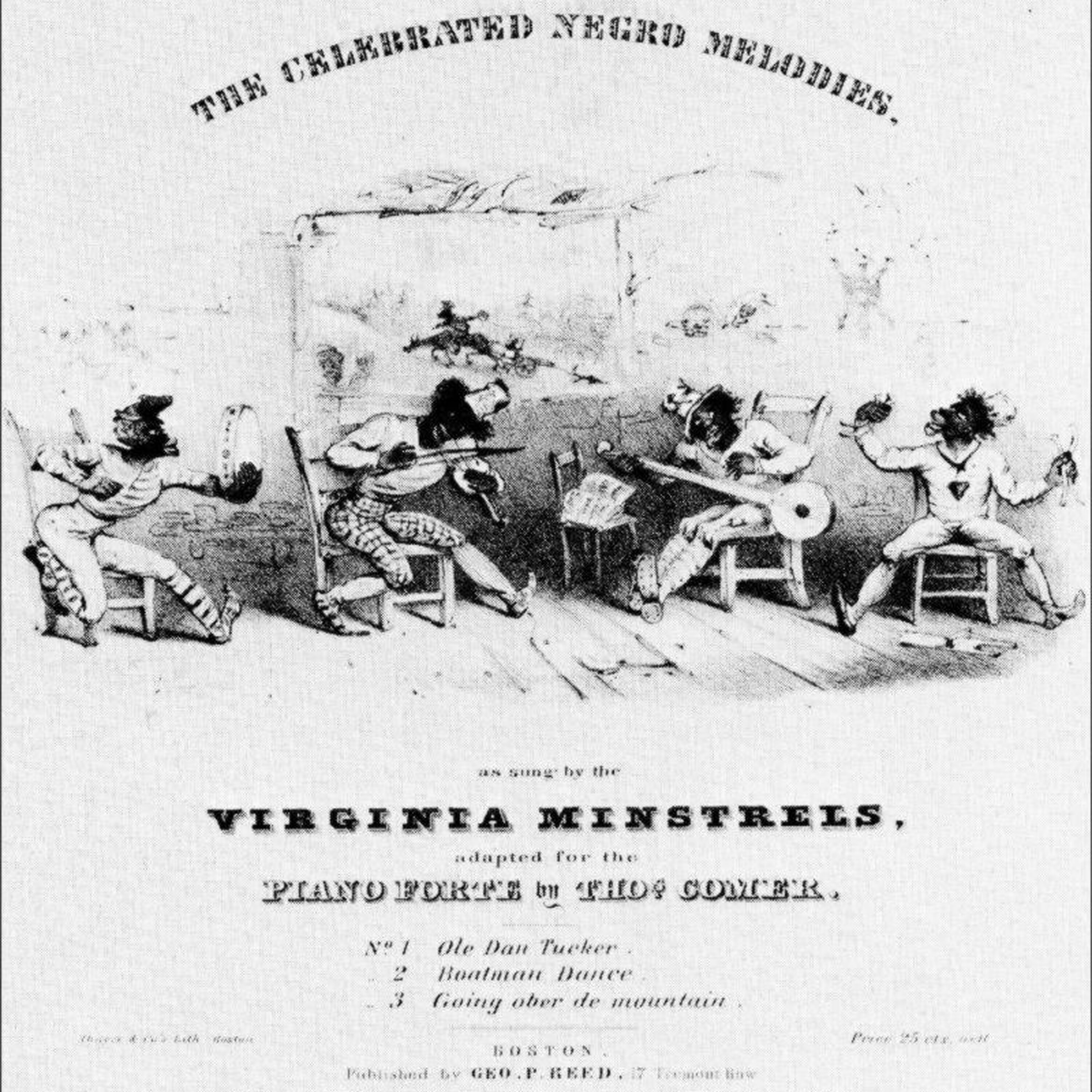
Loading summary
Transcript103 lines
- [00:00]
Tyrone Howard
Some of the same people who say that was an ugly part of our history. We should not have to talk about that are some of the same people who say we should remember the Civil War. So I always ask, why is it that we want to remember the Civil War, but we want to forget slavery? And I think you cannot talk about the history of this country and only pick and choose the parts that you want to tell. Part of what you have to do. If you want to understand history in its totality, you have to talk about the good, the bad and the ugly.
- [00:31]
Bob Crawford
You've reached American History Hotline. You ask the questions, we get the answers. Leave a message.
- [00:40]
Josh Clark
Hi there, this is Josh Clark from the Stuff youf Should Know podcast. If you've been thinking, man alive, I could go for some good true crime podcast episodes, then have we got good news for you. Stuff youf Should Know just released a playlist of 12 of our best true crime episodes of all time. There's a shootout in broad daylight, people using axes in really terrible ways. Disappearances, legendary heists, the whole nine yards. So check out the Stuff youf Should Know true crime Playlist on the iHeartRadio app, Apple Podcasts or wherever you get your podcasts.
- [01:12]
Maggie Freeling
The murder of an 18 year old girl in Graves County, Kentucky went unsolved for years until a local housewife, a journalist and a handful of girls came forward with a story.
- [01:26]
Tyrone Howard
America, y' all better wake the hell up.
- [01:28]
Bob Crawford
Bad things happens to good people in small towns.
- [01:38]
Maggie Freeling
Listen to Graves county on the iHeartRadio app, Apple Podcasts or wherever you get your podcasts. And to binge the entire season ad free, subscribe to Lava for Good plus on Apple Podcasts.
- [01:52]
Chris Pine
People called them murderers. Ten years later, they were gods. Today, no one knows their names. A group of maverick surgeons who took on the medical establishment who risked everything to invent open heart surgery. Welcome to the wild west of American medicine. I'm Chris Pine and this is Cardiac Cowboys. If you like medical dramas, if you like heart pounding thrillers, you will love Cardiac Cowboys. Listen on the iHeartRadio app or wherever.
- [02:20]
IVF Disrupted Narrator
You listen to podcasts sponsored by Jasper AI Built for marketers, introducing IVF disrupted the Kindbody Story, a podcast about a company that promised to revolutionize fertility care. It grew like a tech startup. While Kindbody did help women start families, it also left behind a stream of disillusioned and angry patients.
- [02:44]
Bob Crawford
You think you're finally like in the right hands. You're just not.
- [02:48]
IVF Disrupted Narrator
Listen to IVF Disrupted the the Kind Body Story on the iHeartRadio app, Apple Podcasts or wherever you get your podcasts.
- [02:55]
Jonathan Goldstein
I'm Jonathan Goldstein and on the new season of Heavyweight. And so I pointed the gun at him and said, this isn't a joke. A man who robbed a bank when he was 14 years old and a centenarian rediscovers a love lost 80 years ago.
- [03:11]
Tyrone Howard
How can a 101 year old woman.
- [03:15]
Maggie Freeling
Fall in love again?
- [03:18]
Jonathan Goldstein
Listen to heavyweight on the iHeartRadio Apple Podcasts or wherever you get your podcasts.
- [03:27]
Bob Crawford
Hey there, American History Hotliners. Your host, Bob Crawford here. Happy to be joining you again for another episode of American History Hotline. Remember, send us your questions to AmericanHistoryHotlinEmail.com that's AmericanHistoryHotlinEmail.com okay. Now to today's question. It's about minstrel shows and blackface. Here to help me answer this question today is Tyrone Howard. He's a professor in the School of Education and Information Studies at ucla. Tyrone, thanks for joining me.
- [04:06]
Tyrone Howard
Thank you for having me on today, Bob.
- [04:08]
Bob Crawford
Okay, Tyrone, here's the question we were hoping you could help us answer. It's from Lawrence in Tacoma, Washington. He writes, I hear a lot of people on TV and social media asking what the big deal is about a white person painting their face black. To me, this is just viscerally feels wrong. But I don't actually know the history of blackface in America. Why is it so bad? Now, Tyrone, we've got a little bit of time to dig into this question, so let's get back to the origins of blackface. Where does this first come from?
- [04:47]
Tyrone Howard
Sure. So this is where we've got to be students of history to understand where blackface comes from and why it's deeply, deeply racist. Because the history of blackface goes back to the 1800s in this country. And it was really sort of rooted in this theatrical practice where white performers use this makeup and had these exaggerated features to essentially mock and dehumanize black people. And part of this is also rooted in the fact that when you go Back to the 1800s, of course, the United States is still for the most part of that century, rooted in slavery, which is about dehumanization, which is about sort of seeing black people as inferior. Therefore, the imagery of black people is one that is rooted in their intellectual inferiority, being lazy, being sort of uneducated. And so these portrayals essentially reinforce black inferiority because what they did was they oftentimes had damaging stereotypes that were seen as ways to mock and laugh and make fun of black People that their grammar wasn't proper, they couldn't think critically, Their communication skills were lacking. And so, basically, it was a way to send this larger message to society that these people are not our equals. These people are not serious in terms of being thinkers and doers and people who could solve problems. And so they're deeply troubling because it takes us to a time, and in this country where we mocked and we ridiculed and we dehumanized and we devalued black people. And it was all through the context of entertainment to make other white people laugh at how subhuman or how unequal black people were. And in the country that claims to be centered around equality and claims to be centered around justice, these deeply, deeply racist portrayals of black people have done harm for many, many centuries in this country. And any efforts to try to somehow explain away blackface is anything but racist fall woefully short, in my opinion.
- [07:05]
Bob Crawford
People know Jim Crow as an era of American history marked by segregation and racial violence. But the origin of this caricature, Jim Crow, it comes from the minstrel shows. Who or what was Jim Crow?
- [07:24]
Tyrone Howard
No, this is another good question that I think that warrants our investigation, because we do associate Jim Crow laws tied to what happened in the 18, I mean, the 1900s, with regard to segregated facilities, segregated schools, segregated housing. But again, Jim Crow is a. Is a character that was created by someone named Thomas Daddy Rice, who was, again, a minstrel performer who used blackface to characterize black people in the 1820s, 30s, and 40s. And so this name became popular because it was, again, it was a derogatory sort of depiction of black people that operated under the name Jim Crow. And so Jim Crow was seen as this stereotypical black person. And what you have to understand on this, Bob, is that, you know, part of the minstrel show was to offer these really just grossly sort of pronounced facial features to reinforce these stereotypes that black people were more animalistic. They weren't really human. And again, what's important to know about these. These depictions, and Jim Crow in particular, is that anytime you see a people as less than, then you are more okay with them being treated as less than. So when you think about the context and the time and the historical place we were in the 1830s, this country was. Was up to its ears in slavery. The economic foundation of this country was built on slavery. And so when you think about the brutal, inhumane treatment that black people experience, one can say, how can we be okay with the treatment of any group of people in that way. But if you depict and you characterize and you put out an image of these people as less than, then you feel okay with their treatment because you see them as not being your equal. So Jim Crow is a big part of this sort of menstrual history that depicted black people as being less than.
- [09:20]
Bob Crawford
Okay. So you mentioned Tom. Tom Rice. Was it being the character of Jim Crow? Okay, so you just shocked me a little bit because you said 18, 20s, 30s, and 40s. I didn't realize minstrel shows went back that far. So, first of all, you've talked about the characteristics of the minstrel show and the demeaning behavior of these actors and performers. So maybe how did they interact with enslaved people? How did they observe? Because some of them. I've read before that some of the melodies were actually came from enslaved people. So how did they observe enslaved people? And maybe in answering that question, I'm giving you a lot here, I apologize, but define minstrel at the same time.
- [10:22]
Tyrone Howard
So minstrel is, again, a way in which you think about any group of people. But in this particular case, we're talking about black people who are seen only through this entertainment lens. And I raise that because part of what I think is important for the audience to understand is that historically, when you think about racial depictions of black people, they were oftentimes sort of put forth as folks who were only worthy of being entertainers to white audiences. Meaning that when whites wanted to be able to hear singing, when whites wanted to hear dancing, you bring out black folk and you'd have them perform for you in ways that kind of sort of brought them joy, brought the audience, white folks joy. And so there was. There was singing and there was dancing. And part of the complexity of this, Bob, is we have to understand that singing and dancing has always been part of the black experience. Not just here in the United States, but even in other parts of the world where black people are, be it the Caribbean, be it in South America, being in Central America, be it in Africa. So that is part of the culture. But anytime someone's culture is mocked and sort of deemed as derogatory or seen as a way just to entertain. Only what it doesn't take into account is that those songs and those dancing oftentimes are rooted in a rich culture around resistance, a rich culture around recognizing ancestors, a rich culture around expression of different ways of being. And so there's a rich, complex history and culture that's totally not understood when it comes to what minstrel shows represent. So it's important to note that as we do our history and as we understand minstrel shows and Jim Crow, that any way that decontextualizes it from the primary purpose of what it set out to do, which was to dehumanize and to reinforce force, this ideal or this notion of black inferiority, anything less than that is incomplete.
- [12:28]
Bob Crawford
Sounds like what you're telling me here is, is that that singing and dancing was, like you said, it's a. It was a rich part of the. Of the black experience, the black culture. And that by white people mocking it. Right. For entertainment, demeaned everything. Right. Like you. First of all, you've demeaned these people by bringing them here and enslaving them. And they have. And yet they can still experience joy and express their faith through song and dance. And then you demean that, too.
- [13:03]
Tyrone Howard
Absolutely. Absolutely. And that's. That's the. That's the. That's the. To me, the. The really sad and unfortunate. And one of the tragedies of this is that, you know, when we talk about black people in the United States, the horrific nature of what slavery did was it just dehumanized people. It sort of ripped away their culture, their religions, their beliefs, their structures. And so the resilience of black people is that we will still sort of recreate our own traditions, our own customs, even in the context of inhumane conditions such as slavery. And so if you try to take those behaviors, those rituals, those customs, and that gives you some semblance of hope in the face of such brutal oppression, and then even that's taken to your point, Bob, and that's mocked and that's ridiculed. Essentially, you're trying to take away all elements of those characteristics that help people to be whole and human.
- [13:58]
Bob Crawford
So we talked about the popularity of these shows. So we have a basic understanding that is south south slavery, south racism, north abolitionist. That's not in the 19th century. That's not completely true, is it?
- [14:17]
Tyrone Howard
No, because I think we tend to characterize the country in the 1800s as slavery is in the south only. But we know that while there were states in the north that did not sort of, you know, operate based on slavery, hence how the Civil War came to be. One of the reasons why the Civil War came to be. But let's be clear. This is about attitudes and beliefs about black people. And some of those attitudes and beliefs about black people were just as stringent in the north, where slavery did not exist, as they were in the south, where slavery did exist. So I think we have to push back on this notion that there was this really progressive way of thinking and being that was in the north about how folks viewed black people, that that wasn't the case in the South. This was about the ways in which black inferiority was a staple in the first couple of centuries of this country that I think we're still seeing the remnants of folks trying to get out of today.
- [15:13]
Bob Crawford
Something that I've learned, and correct me on this if I'm. If I'm off base, but even a lot of the people who worked for anti. Who were anti slavery in the north, the whites who were anti slavery, they weren't for equality.
- [15:28]
Tyrone Howard
Yeah, this is a good point, and that's very true, because part of what you have to recognize that there were lots of northerners, and to be fair, they were probably southerners, too, who saw the. The brutal nature of slavery and said, that's wrong, and saw the ways in which families were separated and the ways in which people were exploited for their labor and not compensated for their labor. They felt they. That just is not a just and humane thing to do. And so that is one set of beliefs. However, many of those same people who thought that was wrong felt like, yes, these people, black people, should not be subjected to this. However, that doesn't mean that they're my equal, because again, sort of baked into the fabric of this country from 1619, when some of the first enslaved Africans were bought here, is that these people are unequal to us. When I say unequal to us, I mean unequal to white people. So I can feel two things can be true at the same time. I can feel like this is wrong. This should not happen, this institution called slavery. But at the same time, I don't think these people are equal to me either. I just don't think they should be subjected to this kind of harm. And that type of thinking did exist in the north and to a. To a. To a degree as well in the south as well.
- [16:43]
Bob Crawford
So where were these shows more popular?
- [16:45]
Tyrone Howard
The.
- [16:45]
Bob Crawford
The menstrual show. So you would have a. A white. A white man like Tom Rice who put on blackface, and he performed songs that were at least derivative of. Of songs that enslaved. Enslaved people would sing. So I had read before that in New York City, for example, like, they. People.
- [17:03]
Tyrone Howard
Yeah, people.
- [17:04]
Bob Crawford
Like people would be falling out of there. Like, they pack in to see these shows. White people. And it would be like watching the Beatles in 1964. I mean, people. I read accounts of people going crazy for minstrel shows. So where were There any in the south, and where were they most popular?
- [17:24]
Tyrone Howard
Yeah. So this is what we have to be mindful of, that when you think about minstrel shows, these were oftentimes put on for some of the elites at the time. These were put on for folks who had means. And just like folks might say, today, I want to go see a concert of one of my favorite entertainers to hear them sing the songs that I really enjoy. That's how minstrel shows were seen back in the 1830s and 40s. Right. You had individuals who felt like, we're going to go see this show that's, that's comedic, but also rooted in, again, this, this, this sense that we're going to laugh at what these people are. We want to see whites sort of mimic and sort of and really try to portray the inferiority of black people. And we don't really sort of critique the fact that there were people who were, like you said earlier, so called progressive for the times in terms of thinking that slavery was wrong, that there was no place for slavery, but who would still participate in the watching and pay money to see these shows that were deeply, deeply racist. And so part of what we have to come to grips with is that even in this moment that we have to push people to think that just because you say you don't believe that the mistreatment of a group of people is okay, but if you still in some way shape or form engage in the participation or the support of any kinds of representation of black inferiority or the inferiority of any group of people, that the two don't coexist together. So at the time we saw large theaters would put on these shows of white actors. You know, it would be featuring songs and dances and oftentimes have different kind of comedic routines associated with them. And so I think it's important to note that this is not something that was done only in, say, poor rural communities at the time, large cities like New York and Washington D.C. and Boston. You saw minstrel shows taking place. And that's why I think we have to talk about the complexity of this not just being something that happened in the south, but it happened throughout the north as well.
- [19:40]
Bob Crawford
Were minstrel shows in essence a form of propaganda for chattel slavery?
- [19:46]
Tyrone Howard
Absolutely. I mean, part of what we have to understand is that slavery, while it was the economic foundation of this country in its formation, it also had to be framed in a way that told everyday people, this is okay. The mistreatment of this, of these people is acceptable because they're not like us, they're inferior to us. They are not just intellectually inferior. And I always find the whole depiction of enslaved Africans, especially the notion of them being lazy, is an interesting one because we. They're depict. They were depicted at the time of being lazy, yet they were the ones providing intense labor in the building of this country. So they, these were folks who work 12, 13, 14 hour days, seven days a week, 12 months out of the year for no compensation. So how can we say that they're lazy on the one hand, but yet they are working tirelessly, harder than any other group of people at the time. So I think in order for that sort of institution to thrive, you had to be able to tell people that not only these people intellectually inferior, not only these people lazy, but also, and this is the important part as well, these people also can be violent. And that's why they have to be controlled. That's why they have to be surveilled. That's why they have to be watched. That's why they have to be enslaved, because these people will harm you if we don't control them. So the more you put out those messages, the more you put out these images, the more you put out these depictions, it seeped into the minds of people, everyday people, everyday white people who felt like these folks are to be watched, controlled, surveilled, because they're intellectually not equal to us, but also they can be violent as well. And here's where you think about something like W.D. griffin. The birth of a Nation. The Birth of a Nation, which came out in the 1900s and was shown at the White House by Woodrow Wilson, was a cinematic success because it also reinforced this idea, though not through the minstrel sort of format, but it sort of reinforced this idea of black violence, of black brutality, of black intellectual inferiority, that if you don't watch these people, if you don't enslave these people, black men, big sort of oversized black men will come and try to sort of do physical harm to our children, and they will try to rape our women. And so all these images, as much as we may not take them seriously, they really sent a powerful, deeply embedded message that these people are not to be trusted, these people are not to be liked, these people are a threat, and therefore we have to meet them either with control by way of enslavement. And Even after the 13th Amendment ended in 1865, then it was okay. Jim Crow laws that continue to keep these folks separate and apart, and then even you see racial violence by way of lynchings and the kkk because they were still seen through the lens of what these minstrel shows depicted black folks as being less than violent, lazy, not to be trusted. All I know is what I've been told and that to half truth is a whole lie.
- [23:09]
Maggie Freeling
For almost a decade, the murder of an 18 year old girl from a small town in Graves County, Kentucky went unsolved until a local homemaker, a journalist and a handful of girls came forward with a story.
- [23:24]
Tyrone Howard
I'm telling you, we know Quincy killed her.
- [23:27]
Maggie Freeling
We know a story that law enforcement used to convict six people and that got the citizen investigator on national tv.
- [23:36]
Bob Crawford
Through sheer persistence and nerve, this Kentucky.
- [23:39]
Tyrone Howard
Housewife helped give justice to Jessica Curran.
- [23:43]
Maggie Freeling
My name is Maggie Freeling. I'm a Pulitzer Prize winning journalist producer and I wouldn't be here if the truth were that easy to find.
- [23:53]
Jonathan Goldstein
I did not know her and I did not kill her or rape or.
- [23:56]
Tyrone Howard
Burn or any of that other stuff.
- [23:57]
Bob Crawford
That y' all said.
- [23:58]
Tyrone Howard
They literally made me say that I took a match and struck and threw it on her. They made me say that I poured gas on her.
- [24:06]
Maggie Freeling
From Lava for good. This is Graves County, a show about just how far our legal system will go in order to find someone to blame.
- [24:17]
Tyrone Howard
America, y' all better wake the hell up.
- [24:19]
Bob Crawford
Bad things happens to good people in small towns.
- [24:26]
Maggie Freeling
Listen to Graves county in the Bone Valley feed on the iHeartRadio app, Apple Podcasts, or wherever you get your podcasts. And to binge the entire season ad free, subscribe to Lava For Good plus on Apple Podcasts.
- [24:47]
Josh Clark
Hi there, this is Josh Clark from the Stuff youf Should Know podcast. If you've been thinking, man alive, I could go for some good true crime podcast episodes, then have we got good news for you. Stuff youf Should Know just released a playlist of 12 of our best true crime episodes of all time. There's a shootout in broad daylight. People using axes in really terrible ways. Disappearances, legendary heists, the whole nine yards. So check out the Stuff youf Should Know true crime Playlist on the iHeartRadio app, Apple Podcasts, or wherever you get your podcasts.
- [25:18]
Chris Pine
People called them murderers. Ten years later, they were gods. Today, no one knows their names. A group of maverick surgeons who took on the medical establishment who risked everything to invent open heart surgery. Welcome to the wild west of American medicine. Listen, I'm Chris Pine and this is Cardiac Cowboys. If you like medical dramas, if you like heart pounding thrillers, you will love Cardiac Cowboys. Listen on the iHeartRadio app or wherever.
- [25:45]
IVF Disrupted Narrator
You listen to podcasts sponsored by Jasper AI built for marketers.
- [25:51]
Bob Crawford
I started trying to get pregnant about four years ago.
- [25:54]
Maggie Freeling
Now we're getting a little bit older, and it just kind of felt like.
- [25:57]
Tyrone Howard
The window could be closing.
- [26:00]
IVF Disrupted Narrator
Bloomberg and iHeart podcasts present IVF the Kindbody Story, a podcast about a company that promised to revolutionize fertility care. Introducing Kindbody, a new generation of women's health and fertility care. Backed by millions in venture capital and private equity, it grew like a tech startup. While Kindbody did help women start families, it also left behind a stream of disillusioned and angry patients.
- [26:30]
Bob Crawford
You think you're finally, like, with the right people in the right hands, and then to find out again that you're just not.
- [26:36]
Tyrone Howard
Don't be fooled by what all the bright and shiny.
- [26:41]
IVF Disrupted Narrator
Listen to IVF the Kind Body Story starting September 19th on the iHeartRadio app, Apple Podcasts, or wherever you get your podcasts.
- [26:51]
Jonathan Goldstein
I'm Jonathan Goldstein, and on the new season of Heavyweight, I help a centenarian mend a broken heart.
- [26:58]
Maggie Freeling
How can a 101-year-old woman fall in love again?
- [27:04]
Jonathan Goldstein
And I help a man atone for an armed robbery he committed at 14 years old. And so I pointed the gun at.
- [27:13]
Tyrone Howard
Him and said, this isn't a joke.
- [27:15]
Jonathan Goldstein
And he got down.
- [27:16]
Tyrone Howard
And I remember feeling kind of a.
- [27:17]
Jonathan Goldstein
Surge of like, okay, this is power. Plus, my old friend Gregor and his brother tried to solve my problems through hypnotism.
- [27:25]
Tyrone Howard
We could give you a whole brand.
- [27:26]
Bob Crawford
New thing where you're, like, super charming.
- [27:28]
Tyrone Howard
All the time, being more able to look people in the eye, not always hide behind a microphone.
- [27:34]
Jonathan Goldstein
Listen to heavyweight on the iHeartRadio app, Apple Podcasts, or wherever you get your podcasts.
- [27:51]
Bob Crawford
This is American History Hotline. I'm your host, Bob Crawford. Do you have a question about American history? If so, record yourself using the voice memo app on your phone and email it to American History hotlinemail.com that's americanhistoryhotlinemail.com okay, back to the show. I'm talking with Tyrone Howard, professor in the School of Education and Information Studies at ucla. We're talking about the history of minstrel shows and blackface in America. Can we talk about the mammy stereotype? Is it part of the conversation about blackface?
- [28:31]
Tyrone Howard
Well, yes and no, and let me tell you what I mean by that. So again, the mammy stereotype is one that is where racism and sexism come together. And racism and sexism come together because it depicts black women. Now, let me be clear, because there's a gender sort of analysis to this that's important. Minstrel shows by and large depicted black men as being inferiority, as being inferior intellectually and the like, all the things we've been talking about. But the Mammy stereotype is one that depicted black women who were typically enslaved, who were domestics, who had the responsibility of nursing for children. But it was this depiction of this large, dark skinned, overweight black woman who had, you know, these really. And this is the complexity of the, of the, of the character, like these motherly characteristics, but at the same time was not seen as being on the same level as white women, if that makes sense. Right. So they could cook, they could clean, they could take care of children, they could sort of help to manage the house. But they were also seen as being uneducated. They were also seen as being sort of not intellectually gifted, if you will. And so while not in the same sort of sort of vein as the minstrel show, but there were some shows that were put on, now we're talking probably 20th centuries that depicted black women in these really sort of disproportionate sort of ways in terms of their physical features and body types that again, we're not really rooted in trying to help black women be seen as equals, but to depict. But to depict them in ways that was deeply troublesome. Now, as, as with any stereotype, I want to be clear here, Bob. With any stereotype, what we know is that there's always a kernel of truth in certain stereotypes. But the problem with the stereotype is when we take that small kernel truth and we use it to describe an entire group of people. And that's why the minstrel souls and even the mammy stereotypes are harmful. Because then when people who have limited interaction with any group of. See the stereotype of what might be the depiction of one or a small number of people and say that's how they all are, that's how we start to really, really begin to sort of buy into harmful, racist, sexist stereotypes about the people. And we don't get to know who folks are on an individual level. And to understand the variability across groups and within groups.
- [31:03]
Bob Crawford
There were these Mammy dolls and they were very popular. Just to button this part of the conversation up. I mean, the Mammy caricature cared for the wealthy white person's child from a very tender age. And there were relationships between these children and the domestic enslaved person who took care of them. So kind of build, build on that. Like, like, were there, were there bonds of kinship formed that Broke as these chat children grew older and. And saw the world, you know, in a different way or. Or did. Were these bonds real?
- [31:53]
Tyrone Howard
Yeah. So this is. This is a really good point. I'm glad you're asking this because, yes, they were real for many of these black women. Because think about it from this standpoint. In many of the homes that you had, wealthy white people, most of whom were slave owners, black women were responsible for caretaking, responsibility for the children for some of them from the time of birth. So they would nurse these children. They would play a primary role in the raising of these children. They were oftentimes seen as the emotional support, support for these children. And these white children would grow up seeing this woman in their household as being a really caring, loving and important figure in their lives. Right. And so you cannot have that much of an impact on young people because there's so much research on human development and child development that says that early attachment matters, because when young children have an early attachment to someone, the bond typically strengthens over time because you come to see this person as a reliable and loving and consistent figure in my overall well being. So lots of black women, and that's the part that oftentimes is not talked about, is the ways in which these black women who played these roles had to play the caregiving role for white children in addition to doing this for their own children as well. There's a phenomenal book by Melissa Harris Perry called Sister Citizenshame Stereotyping Black Women in America, where she talks about, you know, mammys were oftentimes placed in this unenviable situation of not being able to be the protectors and defenders of their own children because they had to make sure they looked out for the white children that they had helped to raise as well. And what's really fascinating to me on this, Bob, is that you had these black women who played these motherly roles in the lives of white children. And these white children, especially those who were the sons of slave owners, they ultimately grew up to take on the role of the overseers or the owners of the plantation, but yet they still maintain this brutal system of slavery and kept black women and men, and some cases black children who they grew up with in this horrific system. So how do you have someone who cared for you, who nursed you, who nurtured you, who loved you like you were one of their own, and you grow up to become a grown adult, but yet you still allow that system that sees those individuals as being second, third class, not even citizens, just people and you don't call into question sort of why that system is harmful. Now to be fair, there were some protections and some provisions that some whites gave to those women who play that vital role in their lives. But by and large they had individual protections or their families had protections, but it did not take away from the entire system or the institution that they were caught up in that was called slavery.
- [35:02]
Bob Crawford
If we can, let's talk about minstrel shows and their connection to American music. The 1619 Project did an amazing podcast episode of the on this that, that I personally highly recommend. So in, in your own research and, and thought about this, how did the music of African Americans and enslaved Americans get wrapped up in minstrel shows and make it make its way into the music we hear today even?
- [35:34]
Tyrone Howard
Yeah. So look, music has been a, has been at the core of so much of the black experience here in the United States. And when you listen to for example, old Negro spirituals, these, these, these, these Negro spirituals were rooted in worship, they were rooted in a spirituality, they were rooted in hope and the possibility of better times. So they had meaning and they gave people hope and they gave people purpose and they gave people a sense that one day a coming. And so when you take this sort of misrepresentation of black music and you begin to sort of strip away the core elements of what made it unique and what helped it to sustain a people, then all of a sudden you kind of have this really bastardized sort of representation of the music that comes nowhere close to what its intentions were when it was initially created and how important it was to people's survival, if you will. And so I think anytime you have people who are outside of a culture, who come and try to take elements of a culture and try to somehow package it and sort of, sort of, sort of portray it in a certain way, you're going to get something that's very different from the original product. And that's why you saw in these minstrel shows a really just, just, just, just, just unfair, unauthentic and really just off base accounting of black music which ultimately stood the test of time. And I think that when you see some of the historical, some of the folks who study the history of black music, they begin to help us to understand the roots of why black music in these United States was important. How it's been adapted, how it's been enhanced, how it's been built upon, or how it's been sort of torn apart and really made out to be something that it's not. And so I think it's important to recognize just the foundational roots that music has had, and not just black culture, but I think black culture and black music in particular has had an impact on mainstream culture across the board when it comes to music. And it's important to understand those origins because history would tell us that oftentimes minstrel shows tried to make mockery out of that music, which is now in current form, billion dollar industry in this country and even worldwide when you think about it.
- [38:01]
Bob Crawford
So like music, film, Right. You talked about Birth of the Nation, like, how did these racist tropes from the minstrel shows make their way? Because it wasn't. I mean, the minstrel shows, vaudeville, the beginning of film, they were. It's all connected here, right? It's all they. One bleeds into the next. So talk about how those racist tropes made their way into. Into film.
- [38:26]
Tyrone Howard
Yeah, because, you know, part of what was so powerful at the time is that, you know, this country, we've always used different mediums to tell stories about whatever is going on at the time. I mean, newspapers, for example, talked about the news of the day. You know, entertainment was a way to kind of send messages about certain issues of certain people. And film became a powerful medium to do that. And so film was a way that you could put out a product and you could begin to really share that film with millions of people across the country. And so, yes, there was a through line between vaudeville, between the minstrel shows, between, you know, the Birth of a Nation, which was, like I said earlier, it was an epic film at the time. I think it was 1915 that it was. It was made because part of what people struggled with at the time, and really, to some degree, even today, the less we know about people, the more we tend to make up. And that's what ignorance is. That's what prejudice is when we judge before knowing. And to be clear, not all whites of the day owned black people, right? Not most whites enslaved black people. You know, it was only those whites who had means who owned black people during slavery. But what's important to note is that we were a country in the 1800s, up until 1865 that was largely separate and unequal. We know this, right? So many whites had very little interaction with black people because they didn't live in the same community, they didn't live in the same neighborhood, they didn't frequent the same, you know, stores, they didn't frequent the same schools because we were separate and equal. Equal. A separate and unequal, I should say. But what happens is that when people don't have access to authentic people of any background, you begin to, like, have that void filled by different accounts that people share with you or by mass media of the time. So film, like I said, becomes a powerful medium to tell the world, to tell the country this is how they are. And when I say that they. This is black people, they're seen, as I mentioned earlier, as unintelligent. They're seen as sexually aggressive toward white women. All the harmful stereotypes that we know really sort of lead to the ways in which black perceived. And this was shown all across the country. I mean, this was shown in large cities such as Chicago, Denver, Pittsburgh, Detroit, Minneapolis. And you start to think about how it seeps into the conscious and subconscious of white people at the time to say that black people are to be feared. It says that the KKK is a good thing because they were the ones who come to the rescue to save white people from these violent blacks. This is white supremacy at its finest. And when you have it sanctioned at the highest levels of government, when you have the president at the time who does a private screening of it at the White House with members of his cabinet, with family members, it sends a powerful message that basically endorses this message, that endorses this imagery, that endorses this notion of black inferiority. So. And you have to understand that Even today, in 2025, you still have people who subscribe to some of these tenets of black inferiority. And it has its roots in all the things we've been talking about. When I talk about Birth of a Nation being released in 1915, that was only 110 years ago. This wasn't something that was. That was released, you know, 300 years ago. You know, my. My grandmother. My grandmother, who I have lots of memories with, she was born in 1915. So when you begin to understand that these are events that did not happen, you know, hundreds and thousands of years ago, the ways in which you kind of shape a people's thinking is you consistently put out messages in different mediums that begin to become of the popular thinking of the time. And people believe it if they have nothing to really contest it and to challenge it to not be true.
- [42:32]
Bob Crawford
And I just want to make a note. Melissa Harris Perry. I've had the pleasure of interviewing her in the past, and we'll put a link to her book in the bio here. Great. When did blackface minstrel shows fall out of popularity? Like the idea of entertainer painting their face black and perform. When did that kind of just become unpopular. We know it pops up now and again still.
- [42:58]
Tyrone Howard
Right? Yeah, I was just going to say that. I was going to say. Say that It's. It's not. How do I frame this? We still see today in. In 2025 and 20. 2020, you know, in the 2000s, blackface popping up and. And sadly, it pops up on college campuses where young people, in efforts to be funny, to do some of the same things that was done, you know, in the 1830s, to try to get a laugh or to try to somehow sort of give a comedic skit, will do blackface. So while not as wildly popular as it was 200 years ago, it still does occur, sadly. But I think what began to happen as we moved into the early 1900s, I think you saw more massive resistance from black folk and some white folk who said, this is not okay, who said, this is unacceptable. Why do we depict black people in ways that are not reflective of who they are now? I have to say, Bob, while, you know, you still had shows that came out in the, like, the 1930s and 40s, the Amos and Andy shows that really were in some ways a derivative of what you saw with blackface because it depicted black people in ways that some found comedic, but others found deeply troubling. I think this is where you had social organizations of the day, different groups like the naacp, groups like the urban League, who said that this is not acceptable. So when you get to the 1930s, 40s, and really, it's the Harlem renaissance that's really pivotal here, because the Harlem renaissance in the 1920s and 30s, you have lots of black artists, lots of black filmmakers, lots of black authors who begin to offer a counter story to how black people have been depicted when it comes to minstrel shows. And so I think it's important to note that you had resistance in the form of different portrayals. I think you saw more blacks who had access to education before than before, more blacks who had access to college. And I think as you started to see some of the walls of discrimination and racism coming down, not all of them, but some of them, I think you began to see the pushback that made minstrel shows less and less commonplace and to the point now, when we see them, what we hope to see is a strong repudiation of any depiction of that era, of our country's history.
- [45:31]
Bob Crawford
For a lot of folks out there, this is a hard conversation to have. It's uncomfortable, right? For a lot of people, it's uncomfortable. For a lot of white people, it's uncomfortable. So given where we are right now. Smithsonian under attack. The current president doesn't want to display all this slavery and how far we've come and all this kind of stuff. Taking the. Taking down of pictures of enslaved people who were whipped and beaten from historic sites. Right. Some will say, man, we don't have slavery anymore. We've come a long way. We had a black president like, you know, can we just all be equal and normal? And do we have to highlight this? Do we have to talk about this? Do we have to remember this ugly part of our history? What do you say to that?
- [46:33]
Tyrone Howard
Yeah, I hear that a lot, Bob, and it troubles me. And let me tell you why it troubles me. Because some of the same people who say that was an ugly part of our history, we should not have to talk about that are some of the same people who say we should remember the Civil War because that's a part of our history, because people died in the Civil War. To this day, it is the deadliest war in our country's history. And we have remembrances around the Civil War and what it was about, people who fought for what they believed in. And people will say we should never forget their statues erected around folks who fought for the Confederacy because they felt like they were standing for something that was principled. So I always ask, why is it that we want to remember the Civil War, but we want to forget slavery? And I think you cannot talk about the history of this country and only pick and choose the parts that you want to tell. Part of what you have to do if you want to understand history and its totality, you have to talk about the good, the bad and the ugly. And that means that if you understand the good, bad, and the ugly, you can lift up the good. You can talk about the promise and potential of what we are as a nation to try to become that perfect nation state. But at the same time, you have to understand the ugly parts of history, because if you don't, then that means you are bound to repeat it. And so I know it's uncomfortable for some people. I know it's not sort of convenient to hear. And I always tell this to folks who say this to me in my classes. If it's uncomfortable for you to talk about slavery, how do you think it felt for people to live through it? And so part of what we have to do in this country to get to a better place, we have to be empathetic. We have to try to put ourselves into the shoes of people who've gone through some Horrific circumstances though. We will never ever be able to, you know, experience that firsthand, thankfully. But just try to be empathetic. What would it feel like to be able to, to, to live at a time where you work 12 hours a day back breaking work? No. No compensation. Being physically assaulted and beaten if you didn't do things to the satisfaction of the overseer or the slave owner. What would it feel like if you were taken away from your parents for no other reason because you were being sold? I think we have to talk about it because it's part of American history. Whether we like it or not, it is part of our history. And we can't talk about, you know, the, the good parts of the country's history, but leave out the bad parts. Because part of what we should be talking about is that even what we see today in 2025 has its remnants from what happened in slavery. We had. Slavery existed in this country for 247 years, 1619-1865. You think about it that way. Way, right. We've had more years of slavery almost as we've had of being an independent nation when you think about it. Right. So part of the issue becomes when you think about the economic wealth gap that existed, that exists in this country, roots that are tied to slavery, you think about redlining and, and certain black folks not being able to buy homes and, and wealthy to do heirs. It has its roots in slavery. When you think about issues such as sort of health in inequalities and access to high quality medical care, much of that has its roots in slavery. In the aftermath of Jim Crow, I could go on and on and on, right?
- [49:51]
Bob Crawford
Yeah, the, the GI Bill and urban renewal always.
- [49:56]
Tyrone Howard
There you go, there you go. GI Bill is a great example because this was something you had men who fought for this country, for it to be the country that it is, who couldn't get the same benefits that, that their white compatriots got for being in fighting in wars as well. So I think part of why we cannot forget about it is because it happened. And not that we have to stay rooted in the past, but because it still has sort of ramifications in the current moment. And until we find ways to address and redress those past wrongdoings, we'll continue to see a significant set of disparities that play out in current day society.
- [50:33]
Bob Crawford
Tyrone Howard, this has been, it's been great. Thank you so much for joining us today. We hope we can call on you again sometime.
- [50:40]
Tyrone Howard
Thank you for having me.
- [50:46]
Bob Crawford
You've been listening to American History Hotline, a production of iHeart podcasts and Scratch Track Productions. The show's executive producer is James Morrison. Our executive producers from iHeartra are Jordan Runtal and Jason English. Original music composed by me, Bob Crawford. Please keep in touch. Our email is americanhistoryhotlinemail.com if you like the show, please tell your friends and leave us a review in Apple Podcasts. I'm your host, Bob Crawford. Feel free to hit me up on social media to ask a history question or to let me know what you think of the show. You can find me at bobcrawford Bass. Thanks so much for listening. See you next week.
- [51:39]
Josh Clark
Hi there, this is Josh Clark from the Stuff youf Should Know podcast. If you've been thinking, man alive, I could go for some good true crime podcast episodes, then have we got good news for you. Stuff you should know. Just just released a playlist of 12 of our best true crime episodes of all time. There's a shootout in broad daylight, people using axes in really terrible ways. Disappearances, legendary heists, the whole nine yards. So check out the Stuff you Should know true crime Playlist on the iHeartRadio app, Apple Podcasts or wherever you get your podcasts.
- [52:12]
Maggie Freeling
The murder of an 18 year old girl in Graves County, Kentucky was went unsolved for years until a local housewife, a journalist and a handful of girls came forward with a story.
- [52:25]
Tyrone Howard
America, y' all better wake the hell up.
- [52:27]
Bob Crawford
Bad things happens to good people in small towns.
- [52:37]
Maggie Freeling
Listen to Graves county on the iHeartRadio app Apple podcasts or watch wherever you get your podcasts and to binge the entire season ad free subscribe to Lava for Good plus on Apple Podcasts.
- [52:51]
Chris Pine
People called them murderers. Ten years later they were gods. Today, no one knows their names. A group of maverick surgeons who took on the medical establishment who risked everything to invent open heart surgery. Welcome to the Wild west of American Medicine. I'm Chris Pine and this is Cardiac Cowboys. If you like medical dramas, if you like heart pounding thrillers, you will love Cardiac Cowboys. Listen on the iHeartRadio app or wherever.
- [53:19]
IVF Disrupted Narrator
You listen to podcasts sponsored by Jasper AI Built for marketers, Introducing IVF disrupted the Kind Body Story, a podcast about a company that promised to revolutionize fertility care. It grew like a textbook startup. While Kindbody did help women start families, it also left behind a stream of disillusioned and angry patients.
- [53:43]
Bob Crawford
You think you're finally like in the right hands. You're just not.
- [53:47]
IVF Disrupted Narrator
Listen to IVF Disrupted the Kind Body Story on the iHeartRadio app, Apple Podcasts, or wherever you get your podcasts.
- [53:54]
Jonathan Goldstein
I'm Jonathan Goldstein, and on the new season of Heavyweight. And so I pointed the gun at.
- [54:00]
Tyrone Howard
Him and said, this isn't a joke.
- [54:02]
Jonathan Goldstein
A man who robbed a bank when he was 14 years old and a centenarian rediscovers a love lost 80 years ago.
- [54:11]
Tyrone Howard
How can 101-year-old woman fall in love again?
- [54:17]
Jonathan Goldstein
Listen to heavyweight on the iHeartRadio app, Apple Podcasts, or wherever you get your podcasts.