← American History Hotline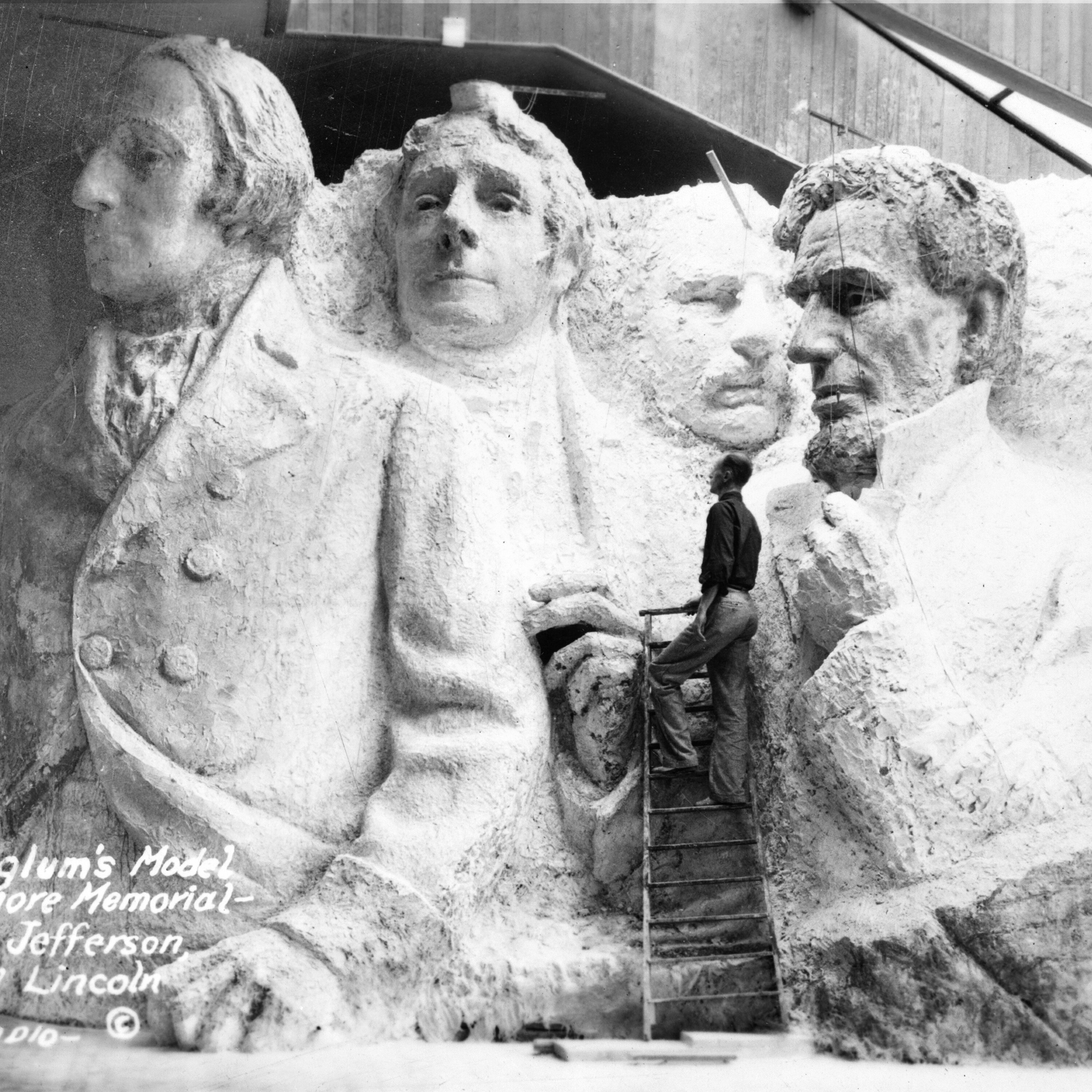
American History Hotline
Can We Add a Fifth Face to Mount Rushmore? The History and Future of the Monument
00:38:00
Loading summary
Transcript81 lines
- [00:00]
Matthew Davis
If there was going to be a fifth face, there would have to be a total recalibration of the mountain itself. Either that face would have to take over an existing face or it would have to be smaller than the other faces. And so I don't think there is any that would not fly. That would not fly. No, definitely. Definitely not. But you never know.
- [00:27]
Bob Crawford
You've reached American History Hotline. You ask the questions, we get the answers. Leave a message Honestly, Honestly, Honestly, no one wants to think about hiv, but there are things that everyone can do.
- [00:40]
Matthew Davis
To help prevent it.
- [00:41]
Bob Crawford
Things like prep. PREP stands for Pre Exposure Prophylaxis, and it means routinely taking prescription medicine before you're exposed to HIV to help reduce your chances of getting it. Prep can be about 99% effective when taken as prescribed. It doesn't protect against other STIs, though, so be sure to use condoms and other healthy sex practices. Ask a healthcare provider about all your prevention Options and visit findoutaboutprep.com to learn more.
- [01:04]
Commercial Announcer
Sponsored by Gilead 10 athletes will face the toughest job interview in fitness that will push past physical and mental breaking points. You are the fittest of the fit. Only one of you will leave here with an IFIT contract worth $250,000. This is where mindset comes in. Someone will be eliminated. Pressure is coming down.
- [01:31]
Trainer Games on Prime Video January 8th watch the trailer on trainergames.com did you know? Microsoft has officially ended Support for Windows 10? Upgrade to Windows 11 with an LG Gram laptop voted PCMag's Reader's Choice Top Laptop Brand for 2025. Thin and ultra lightweight, the LG Gram keeps you productive anywhere and Windows 11 gives you access to free security updates and ongoing feature upgrades. Visit LGUSA.com iHeart for great seasonal savings on LG Gram laptops with Windows 11 PC Mag Reader's Choice Used with permission. All rights reserved.
- [02:05]
Season two of Unrivaled Basketball is here and the talent is unreal. Paige Beckers, Nafiza Collier, Kelsey Plumb, Brianna Stewart and more are back to redefine the game. Unrivaled basketball season two, sponsored by Samsung Galaxy, tips off January 5 on TNT, TruTV and HBO.
- [02:20]
Max support for the show comes from Public, the investing platform for those who take it seriously. On Public, you can build a multi asset portfolio of stocks, bonds, options, crypto and now generated assets which allow you to turn any idea into an investable index with AI. It all starts with your prompt. From renewable energy companies with high free cash flow to semiconductor suppliers growing revenue over 20% year over year. You can literally type any prompt and put the AI to work. It screens thousands of stocks, builds a one of a kind index and lets you back test it against the S&P 500. Then you can invest in a few clicks. Generated assets are like EFTs with infinite possibilities, completely customizable and based on your thesis, not someone else's. Go to public.com podcast and earn an uncapped 1% bonus when you transfer your portfolio. That's public.com podcast paid for by Public Investing Brokerage Services by Open to the Public Investing Inc. Member FINRA SIPC Advisory Services by Public Advisors, llc SEC Registered Advisor Generated Assets is an interactive analysis tool. Output is for informational purposes only and is not investment recommendation or advice. Complete disclosures available at public.com disclosures hey.
- [03:31]
Bob Crawford
There, American History Hotliners. Bob Crawford here. Thrilled to be joining you again for another episode of American History Hotline. It's the show where you ask the questions. And the best way to get us a question is to record a video or a voice memo on your phone and email it to AmericanHistoryHotlinEmail.com that address again is AmericanHistoryHotlinEmail.com okay, today's question is about a mountain. Which mountain and why? Well, I'll tell you in a second. First, let me introduce you to my guest, Matthew Davis, author of A Biography of a the Making and Meaning of Mount Rushmore. Welcome, Matthew.
- [04:18]
Matthew Davis
Thank you, Bob. It's so great to be here. It's a real pleasure to be speaking with you and to your audience for sending in questions. It's great. Thanks for having me.
- [04:26]
Bob Crawford
Well, it's our pleasure. Okay, Matt, I think my introduction gave away which mountain. We're going to talk about Mount Rushmore. Here's the question we got from the listener. It's from Shannon in Sebring, Florida. She asks, how did we end up with George Washington, Thomas Jefferson, Abe Lincoln, and Teddy Roosevelt on Mount Rushmore? I mean, it kind of makes sense, but that feels like a weird mix. Also, why is it all the way out in South Dakota? Now, Matt, I know you're ready to dive in to answer this question, but let's start at the very beginning.
- [05:04]
Matthew Davis
Sure.
- [05:04]
Bob Crawford
How did the whole idea of Mount Rushmore come about?
- [05:08]
Matthew Davis
You know, your listener's question cuts at the heart of what makes Mount Rushmore so interesting, and it's folded into how Mount Rushmore came about because, you know, because it's so big, because it's so monumental. I think most Americans and most people assume that it was a project from the federal government from the start, but it was not. The idea of Mount Rushmore came from a state historian, a South Dakota state historian named Doane Robinson, who was kind of a Renaissance man. He was interested in the kind of alfalfa that farmers grew, the bridges that were built over the Missouri River. He was interested in the design of the state flag. Into the 1920s, early 1920s, Doane Robinson was very concerned and interested in South Dakota's economy. That's because following World War I, the commodities prices in South Dakota tanked, and the economy was in a depression. It sort of presaged our nation's great depression that would happen about a decade later. And so what Doane Robinson wanted to do was to steer South Dakota's economy away from relying on agriculture and commodities and diversify it into tourism. So he had this idea to build sculptures into the Black Hills of South Dakota, which is in the western half of the state, to attract the burgeoning number of car tourists that were then driving around that area, usually from the Black Hills to Yellowstone National Park. And he wanted to build sculptures in the Black Hills that were representative of the American West. So figures and characters that represented that history, People like the Lakota leader Red Cloud, or Lewis and Clark, or George Armstrong Custer. And so his idea was to build those sculptures in there to attract those tourists and grow the tourism economy, grow the economy of western South Dakota. And what happened was, when Doane Robinson hired Gunson Borglum, the sculptor of Mount Rushmore, to do this project, the project changed from one of figures of the American west, into this much more political memorial that we see today. And it was Borglum who was the one that decided on the four presidents. And we can get into why he decided on those in a bit.
- [07:17]
Bob Crawford
So what was the relationship like? So it sounds like a kind of a conflicting vision. And Doane Robinson.
- [07:25]
Matthew Davis
That's right.
- [07:26]
Bob Crawford
And Gutzon Borglum. And so Robinson has this idea for economic reasons. Right. He's trying to spur an economic rebirth in the region. He brings in Borglum and talk about the relationship between those two men and how their conflicting visions kind of gave us what we have today.
- [07:48]
Matthew Davis
Yeah. So, you know, Borglum was a very talented artist who was a very respected artist, one of the few sculptors at that time that actually was able to carve mountains into space.
- [08:00]
Bob Crawford
Matthew, if I can interrupt you. Give us the year. Give us the decade. We're in here.
- [08:06]
Matthew Davis
Yeah, sure. We're in the 1920s. So Doane Robinson asked Borglum to sculpt Mount Rushmore in 1924. And at that time, Borglum was actually working on the Confederate memorial at Stone Mountain in Atlanta, Georgia, which we can perhaps get into a little bit later. But the relationship between the two men, at least initially, was one of great deference. I think Doane Robinson was very impressed, not just by the work of Gunston Borglum, but by the personality of Gunston Borglum. And he let Borglum kind of take on this project in the way that he wanted to. It never truly lost its economic focus. That was always a concern. But in the political furnace of Borglum's mind, it really changed one of economics into one of politics. And so the two men, even though they may have had sort of different ideas of how the memorial might function, it was really Borglum's project once Doane Robinson handed it off to him. And Doane Robinson, in many ways, though he's important to the origin story, kind of moves to the side a little bit in favor of just the sheer personality and will of Gunsen Borglum.
- [09:19]
Bob Crawford
Where does the money come from?
- [09:20]
Matthew Davis
That's a great question. And this is why the memorial was federally funded and is part of our national park system today. I mean, initially, when the project started, there was a real hope that both local businessmen and Borglum always claimed he could raise a ton of money from the coast, from the east coast in particular. There was a desire to have it be privately funded, but that over the course of several years, proved not to be a reliable source of funds. And so a very important part, a very important moment happens in the summer of 1927 when the President at the time, Calvin Coolidge, was vacationing in the Black Hills. The White House was under renovation. Coolidge was an avid fisherman. He was advised to go to the Black Hills to go catch some trout. And so he was summering in the Black Hills. And Borglum and Robinson and the South Dakota Senator, Peter Norbeck, who was critical to the development of Mount Rushmore, knew this was their chance to strike. And so they asked Coolidge to give a dedication to Mount Rushmore in August 1927 that marks the beginning of construction of Mount Rushmore. And Coolidge did. And at that speech, at that dedication, he announced federal support for Mount Rushmore. And so before he left office, he. He signed a bill that allowed for matching funds of up to US$250,000. And that was the beginning of the federal government's involvement in Mount Rushmore and funding of Mount Rushmore. At the end of the day, the memorial cost just under a million dollars. And the federal government paid for the vast majority of that funding.
- [11:01]
Bob Crawford
So, two thoughts here. One is, the government has made back its money plus only invest.
- [11:07]
Matthew Davis
You can say that. The second thought.
- [11:11]
Bob Crawford
My recollection of. And I've read only, like one biography of Calvin Coolidge. I'm going to be. I'm going to admit that I've only read one. I read the Amity Shales book. And he was not the kind of guy you think that would want to part with federal funds. I mean, he was probably our most fiscally conservative president. He was Reagan's, you know, hero when he was president, right? Like, Coolidge would meet with his budget director or whatever that position was called at the time, monthly, right. And they would look at like, where can we cut? Where can we cut? I think I recall there was a natural disaster up in Vermont, where Coolidge was from, and he didn't want to part with federal funds to take care of that. So why did Coolidge support federally funding Mount Rushmore?
- [12:05]
Matthew Davis
You hit the nail on the head, Bob. Because Coolidge was one of our most fiscally conservative presidents. And so it is kind of mind boggling that he would commit this kind of level of support. And I think the reason why he did, and this really honestly shifted the tenor of Mount Rushmore is when Borglum first had the idea, he had the idea of creating an homage to American empire into American exceptionalism. And when Coolidge gave this dedication and committed the money to Mount Rushmore, to constructing Mount Rushmore, he bathed the mountain and the project in the light of patriotism. And so for him, it was a way to be patriotic for this mountain, to represent these feelings of patriotism that he wanted to imbue on this project. And that has never left Mount Rushmore because of Coolidge's speech that afternoon and because of the money he devoted to Mount Rushmore. Ever since that moment, Mount Rushmore has become sort of this monument, this memorial to patriotism. And that's largely because of Coolidge's doing. And of course, that is something that continues to this day. And we all as Americans, sort of have our different thoughts and opinions about patriotism, what it means, where it should be expressed, all of that. But for Coolidge, that's why he decided to fund the memorial as he thought that it was a great project to endeavor on in 1927.
- [13:36]
Bob Crawford
I've been there. The band that I play in, we had a couple days off in that area several years ago now, and we all went. Rarely do we all go somewhere together on a day off the last thing you want to do on a day off on the road with a bunch of people you see every day and you're in tight quarters with is spend more time with them. But we did do this. We all went to Mount Rushmore. And it's breathtaking. It is absolutely breathtaking. Which leads into my next question and Shannon's question. Why Roosevelt, Jefferson, Washington, Lincoln? Why those particular presidents?
- [14:18]
Matthew Davis
Yeah, well, so this goes back to what Borglum's initial idea for the memorial was. As I mentioned, he was from the start interested in building a big memorial to American empire in particular, and he wanted to represent that idea through the faces of these four presidents. And for him, and still to this day, George Washington represents the birth of the United States. Thomas Jefferson represents the expansion of the United States through the Louisiana Purchase. Abraham Lincoln represents the preservation of the United States through the Civil War. And Theodore Roosevelt represents sort of the development and unity of the United States, predominantly through his opening of the Panama Canal. And, you know, in 1925, those were the ideas that Borglum had, and they still, to this day, carry on. And there was never really any serious discussion about including more people on Mount Rushmore. Many folks suggested different people during the time of construction. There was some efforts to try to get Coolidge on the mountain, to get Woodrow Wilson on the mountain. There was a really strong effort, actually, to get Susan B. Anthony on Mount Rushmore. But Borglum had in his mind who he wanted and why he wanted them, and he never really deviated from that thought, from that path.
- [15:43]
Bob Crawford
Matthew. So when we started speaking, you talked about Doane Robinson's original vision, and it was like Lewis and Clark and certain Native American leaders and Custer. What was it? Just Borglum just kind of took the ball and ran, you know. And if that was the case, was Robinson okay with this? Was Robinson okay with taking a step back and letting Borglum kind of take the ball?
- [16:06]
Matthew Davis
Yeah, you know, yes, the answer is Robinson was okay with Borglum taking the ball and running with it. But the reasons why Borglum wanted to change it from more Western figures into a much more national kind of memorial really were tied to what he was doing at the time he was hired to make Mount Rushmore, which was, you know, he was the original sculptor of Stone Mountain, the Confederate memorial down outside of Atlanta, Georgia. And, you know, Borglum was doing that memorial, and when he got asked to do Mount Rushmore, he, in his mind, had an idea of unifying those two memorials, so sort of doing an homage to the Confederacy in an homage to the United States and having them represent a North and a South and unifying the United States in a way, the 1920s, that to us might seem mind boggling today. But. So he was very intentional in wanting to represent the American political system through Mount Rushmore. Borglum was convinced that his memorial, and he might be right, his memorial would come to represent similar ideas like the pyramids or the Parthenon, these sort of representations of civilization. And for him, American democracy was the apotheosis of Western civilization. And he wanted to build an homage in South Dakota to that system. And initially before he got fired from Stone Mountain, which we can get into later on potentially, but initially he wanted to link it to Stone Mountain.
- [17:35]
Bob Crawford
Okay, so here we are. When you put in perspective, we're in the 1920s, we're about 60 some years out from the Civil War. That's not far right. That's, that's where we are from World War II. A little more now, but we still feel the echoes of the. We're actually coming out of, in my opinion, the, the world that World War II made was with us until about 2015.
- [18:03]
Matthew Davis
Yeah.
- [18:03]
Bob Crawford
And now that world is changing to something else. We'll, we'll find out what it is. The world the Civil War made, or the nation the Civil War made. It's still very resonant. There are still Civil War veterans living when this project is being undertaken. So talk about. You already did, but talk about Stone Mountain. Talk about Borgum getting fired.
- [18:27]
Matthew Davis
Yeah. So Stone Mountain was really of the moment in terms of, at that time, there were a number of Confederate memorials and monuments that were being erected throughout the American South. And, you know, Borglum was hired to do Stone Mountain in the summer of 1915. And in November of 1915, the Ku Klux Klan was reborn atop Stone Mountain. And from that moment, the Klan had a very heavy hand in the operations and funding of Stone Mountain. And so Borglum had a very close relationship with the Ku Klux Klan. I don't think I've never seen any documentation that he donned a robe or was officially a member of, but certainly he was very friendly with its leadership. He introduced its leadership to national politicians. And Borglum held many of the beliefs that the Klan held. He was anti immigrant, he was anti Semitic, and he was someone who sort of was a champion of what the south might call the Lost Cause narrative. And so Borglum was someone who believed that what the Confederacy was fighting for, states rights, freedom, was something to be memorialized on Stone Mountain. The problems came when, as they often do, came with money. There was a coin that was being released by the federal government that was going to raise money for the project at Stone Mountain, and that the Ku Klux Klan wanted Borglum to tamp down his vision of Stone Mountain so that more of the money could actually go to the clan. And Borglum did not want to do that. He wanted to sort of produce what his original vision was. And they had a big dispute over this. And the Stone Mountain Memorial association fired Borglum. And Borglum, in a fit of pique, destroyed the models, the maquettes that he had used to create Stone Mountain. And the Stone Mountain Memorial association sort of felt that was a felony, sort of a crime to destroy these models that they thought thought were their property. And so they sent the police after Borglum. And there's this great scene in February of 1925 where Borglum's in this getaway car racing through the woods of Georgia while these police cars are chasing him before they can get to the border of South Carolina. And Borglum eventually gets to South Carolina, gets to North Carolina, and he's a fugitive from justice from Georgia, but he sort of takes refuge in North Carolina. He's friends with the governor there, and so the governor's not going to sent him back to Georgia. And So this is February 19th.
- [21:07]
Bob Crawford
Where is he in North Carolina?
- [21:09]
Matthew Davis
I forget where he is in North Carolina. That's a good question. I can figure that out and send.
- [21:15]
Bob Crawford
You there, just because I'm sitting in North Carolina right now.
- [21:18]
Matthew Davis
Oh, are you really? I forget the town that he's in. But what to me is so fascinating about this is literally six months later, in October 1925, Borglum's on top of Mount Rushmore, dedicating Mount Rushmore for the first time after all of that, that just happened at Stone Mountain. And so, you know, it's really, to me, there's a real precursor to Mount Rushmore. In Stone Mountain, he learned so many techniques that would come to play in the construction of Mount Rushmore. He learned so much about how to engage with local populations, how to engage with the federal government. And he took in his politics as well, which is also important. He took all of that with him to Mount Rushmore when he was a fugitive from Georgia.
- [22:07]
Podcast Host
What's up? It's big long from it's up, that podcast. On this episode, we're unpacking the difference between toxic love and a real bond. How so many of us were taught to survive love instead of experiencing it. A lot of men think being solid means being silent.
- [22:23]
Bob Crawford
I'm Good.
- [22:24]
Podcast Host
I got it. That's the script we memorize before we even know ourselves. Because somewhere along the line expression got labeled weakness. So now we perform composure while we're falling apart. You'll share your body, but not a conversation. And that's not intimacy. But what if being a man really means you care enough to communicate? Real love isn't loud. It's consistent. It's the small things, the small check ins, the shared accountability, the honesty that feels awkward but keeps everyone safe. Stop confusing numbness with dependability. We gotta break the cycle and break the pattern. This special episode of this Up There podcast with long brought to you by Healthy Sexual from Gilead sciences on the iHeartRadio app or wherever you get your podcast.
- [23:13]
Commercial Announcer
Okay, only 10 more presents to wrap. You're almost at the finish line. But first. There the last one. Enjoy a Coca Cola for a pause that refreshes. Hi, I'm Cindy Crawford and I'm the founder of Meaningful Beauty. Well, I don't know about you, but like, I never liked being told oh wow, you look so good your age. Like, why even bother saying that? Why don't you just say you look great at any age? Every age. That's what Meaningful Beauty is all about. We create products that make you feel confident in your skin at the age you are now. Meaningful Beauty. Beautiful skin at every age. Learn more@meaningful beauty.com.
- [24:18]
Podcast Host
Hey, I'm Frank and I have Hidradenitis Superativa HS before starting Cosentyx, I I was so uncomfortable with my symptoms, like not being able to sleep on white sheets or wear white clothes.
- [24:31]
Matthew Davis
Now I can appreciate the little things.
- [24:35]
Commercial Announcer
Cosentix Secukinumab is prescribed for adults with moderate to severe hidradenitis suppurativa. Don't use if allergic to Cosentyx. Get checked for TB before starting. Increased risk of infections and lowered ability to fight them may occur like TB or other serious bacterial, fungal or viral infections. Some were fatal. Tell your doctor if you have an infection or symptoms like fevers, sweats, chills, muscle aches or cough. Had a vaccine or plan to or if IBD symptoms develop or worsen serious allergic reactions and severe eczema like skin reactions may occur. Learn more at 1-844-cosentyx or cosentix.com you're stronger than HS.
- [25:14]
Podcast Host
Ask your dermatologist about Cosentics.
- [25:17]
Commercial Announcer
10 athletes will face the toughest job interview in fitness that will push past physical and mental breaking points. You are the fittest of the fit. Only one of you will leave here with an IFIT contract worth $250,000. This is where mindset comes in. Someone will be eliminated. Pressure is coming down.
- [25:43]
Trainer Games on Prime Video January 8th. Watch the trailer on trainergames.com.
- [25:52]
Bob Crawford
This is American History Hotline. I'm your host, Bob Crawford. Today my guest is Matthew Davis, author of a biography of a mountain, the Making and Meaning of Mount Rushmore. We're talking about big stone heads, not Easter Island. Mount Rushmore, remember? Send us your burning questions about American history. Record yourself using the voice memo app on your phone and email it to AmericanHistoryHotlinemail.com that's AmericanHistoryHotlinemail.com now back to the show. Matt, you're talking about what Borglum learns working on the Stone Mountain monument, which I've seen as well. I can't bring it up very clearly in my mind at this moment, but there are torsos there. It's like there are some full body characters. Right, Right. But here we have Mount Rushmore. The heads. Why just the heads?
- [26:51]
Matthew Davis
Yeah. Well, and just to emphasize, Borglum's construction work he did at Stone Mountain was blown off the mountains. Nothing you see there is his.
- [27:01]
Bob Crawford
Nothing we see is his.
- [27:03]
Matthew Davis
Nothing we see now is his. But at Rushmore, the initial vision was to have torsos, was to have sort of these four presidents faces, but then their lapel jackets and some other parts of their chest. But they just ran out of money, and there was not enough time to do the kind of torso work that Borglum wanted to do. It took enough effort just to get their portraits on the mountain. So that's what you see today. And in fact, if you look closely when you're there, if you can see in sort of some of the photographs of Mount Rushmore, you'll see George Washington, who was the first person to be carved on the mountain. You'll see the outlines of his lapels, the outlines of his jacket, his torso. And that was the initial idea, but as I said, they just ran out of time and ran out of money to do that.
- [27:56]
Bob Crawford
Borglum is constructing Mount Rushmore. How do you do that? How do you build a monument in a mountain?
- [28:06]
Matthew Davis
With a great deal of faith, quite honestly. I mean, if you think about it, in the 1920s, when the memorial. I mean, the memorial's mostly constructed the 1920s and 30s, and there are so many things that are different about that time period and massive public works projects that are different from our time today. I mean, there was no environmental survey done at the time. There was not the technology to laser scan things in and figure out how much carvable rock you're going to see when you start blowing the mountain up. There was none of that. So Borglum had to really do an act of faith. And he learned at Stone Mountain how to utilize dynamite. And so he utilized dynamite at Mount Rushmore and began to blow off different sections of the mountain more and more and more. And he would use smaller and smaller caps as he got closer and closer to what he felt was carvable granite. And so, you know, he didn't know what he was going to find. But eventually what he did find was granite that could be carved. And so he created a model in a maquette of Mount Rushmore that he wanted to then transcribe onto the mountain itself. And he used a system of designing a system of a process that was used during ancient times, and it's called the pointing system. And so his model, his maquette of what would become Mount Rushmore was about six feet tall. And that was because every inch on that model represented a foot on the mountain. So the faces are 60ft. And so he started with George Washington's nose, and he began to sort of orchestrate the mountain based on these measurements. There were workers at Mount Rushmore called pointers, and their job was to literally look through these tools they would use that looked like protractors and compasses from the maquette and transfer that to the mountain itself. And, you know, I make it sound like there was direct relationships, and that's not totally the case. I mean, there was a lot of trial and error. Thomas Jefferson, for example, was supposed to go, if you're facing the sculpture was supposed to go to the left of George Washington. That did not end up happening. They blew off too much of the rock. It was unstable. And so they had to shift Jefferson to the right of George Washington. So there was a lot of trial and error. And the closer and closer that they got to the carvable granite, that's when different kinds of tools were utilized. Where you can. You take jackhammers and bumpers and, you know, there was this thing called honeycombing, where they would, you know, put up different holes in the mountain and then blow off small caps of dynamite and just have that be so they can really get at the granite and carve. And the people who worked Mount Rushmore were a motley crew of usually young men from the Black Hills. Some were unemployed miners, some were ranchers who needed to make extra money during the Great Depression. And depending on what job you did at Rushmore, you needed to have a strong stomach, because oftentimes you'd be dangling hundreds of feet above the ground in these chairs, holding heavy equipment, trying to get at Thomas Jefferson's nose or Abraham Lincoln's beard. And it was not for the faint of heart. In fact, some of the oral histories that I read and listened to in the course of this project were totally fascinating, because what you heard was that there were some workers that went to Mount Rushmore who had done serious work in some of the mines in the area, doing stuff underground that you and I can only think about. And they could do that, but they could not dangle from these chairs above the ground. And so they said, this is not for me, and they would walk away. And so it took a real sort of dedicated workforce and a real vision that Borglum had to complete this. And I always just think about, Bob, you're a musician, I'm a writer. Oftentimes, when you're doing something creative, so much of what you're doing just involves being comfortable with not knowing where it's going to go. Right. You're engaging in something. You have to have faith that it's going to work out in the end. And Borglum needed to have that because he had no idea what he was going to find when he started working on this mountain. And ultimately it became what it has become, which is one of the greatest works of political art in this country and indeed, across the world.
- [32:45]
Bob Crawford
So everybody's got a boss who was leaning over Borglum, putting the pressure on. Was there anyone, or did he have free rein to take as long as he needed to or spend as much as he wanted or.
- [33:01]
Matthew Davis
That's such a great question. The answer is that answer changed over the course of Rushmore's construction. Borglum, though he was extremely talented, was very difficult to work with and work for. And there were periods throughout his construction where he was. His boss was the National Park Service, the Department of the Interior. And whenever they were more directly involved, Borglum bristled. So, for example, there's some writings I found where they're recommending Borglum focus on different areas of the sculpture, to sort of hone those before moving on to other things. And that's when Borglum loses his mind. And he's just like, who are you to tell me, I can't do this? And he fights to have total control of the memorial, which at some point, he does get. He gets total control over the hiring, the firing, the money, all of this stuff. But then, you know, at a certain point later on, then the Federal government takes back control. And so it really ebbed and flowed. But honestly, throughout this entire process, Borglum was really his own boss. And it's a mode and method of monument building that you just do not see today. I mean, today, regardless. And I think that's a good thing, because I'm not sure one person should have that much control over one gigantic artwork or monument or memorial. I think being able to have a committee, being able to have different voices, being able to sort of make it a shared project, I think ultimately is best in terms of the final outcome. But in Borglum's case, it was his design, it was his project, it was his baby. He was in charge. He was mostly the person that was responsible for all of its successes and all of its faults and flaws. And that's something we just do not see a lot of today. And so he was kind of his own boss.
- [35:06]
Bob Crawford
When was it completed?
- [35:08]
Matthew Davis
So it was completed in 1941. And what's interesting about this is continuously throughout the project's development and construction, Borglum wanted more money. And he wanted more money towards the end of the project so he could build what he called his hall of Records, which he envisioned as this gigantic museum or cavern in the mountain that would both hold much smaller busts of Americans who could not fit on the mountain, who represented American history. But also he literally wanted to have the original documents of the Constitution, the Declaration of Independence, in this hall of Records. So he was always clamoring for more money to build that. And in March 19th or February 1941, Borglum's on his way to D.C. to try to get more money for that. And he sees a doctor in Chicago about a prostate problem he's having. They perform surgery, and Borglum dies shortly thereafter from complications to that surgery in March 1941. And so at that point, the United States already is really devoting a lot of its resources to what's coming in Europe. Though they've not entered the war, they know what's around the corner. Fdr, who was the president at the time, had told Borglum that no more money was going to be devoted to Mount Rushmore. All their resources had to be spent towards national security. And so when Gunsen Borglum dies, his son Lincoln Borglum, finishes the construction of Mount Rushmore. And they work until they run out of money on October 31, 1941, and the construction of Mount Rushmore ends. And five weeks later, Pearl harbor happens and the United States enters World War II. And Rushmore becomes this much greater symbol of American democracy. And liberty throughout the war, and especially in the beginning stages of the Cold War, when it's juxtaposed with the Cold War battles, I guess you would say, that we're having with the Soviet Union. So it ends its construction. It's really. I think so much of this time period of American history represents so much about Mount Rushmore, from its beginning stages in terms of how it came to be, to its construction during the Great Depression to its finishing right before World War II.
- [37:34]
Bob Crawford
How hard will it be to add another head to Mount Rushmore? As I've read July 4th, I was reading an article about this. The Push the Movement to add another of America's consequential presidents.
- [37:56]
Matthew Davis
Yeah. That is very much in the news these days. I mean, there was legislation introduced this year, in 2025, that would include President Trump on Mount Rushmore, and that legislation has not been passed. I think most geologists that you speak to will tell you that there is no space on Mount Rushmore for a fifth face. If. If there was going to be a fifth face, there would have to be a total recalibration of the mountain itself. Either that face would have to take over an existing face, or it'd have to be smaller than the other faces. And so I don't think there is any.
- [38:37]
Bob Crawford
That would not fly.
- [38:39]
Matthew Davis
That would not fly. No, definitely. Definitely not. So I don't think there's any real possibility for there to be a fifth face. But you never know. Who knows what will happen in the years ahead? President Trump, who's obviously president right now, he has shown a real interest in Mount Rushmore. He's obviously been willing to destroy the east Wing of the White House. So who knows what will happen, you know, come in the years ahead? But. But most people you speak to say that. That adding a face on the scale of what exists today is just not possible.
- [39:21]
Bob Crawford
Well, Matthew, you need to get ready, because when that happens, people will be calling you to comment about us.
- [39:27]
Matthew Davis
Exactly.
- [39:28]
Bob Crawford
For us.
- [39:28]
Matthew Davis
Exactly.
- [39:29]
Bob Crawford
So I want to close here by talking about the Crazy Horse Memorial.
- [39:34]
Matthew Davis
Sure.
- [39:34]
Bob Crawford
Because it's significant. Right. It's. It is. It lives in tandem with. And tell me about the importance to how that memorial came about and its importance to Mount Rushmore.
- [39:52]
Matthew Davis
Yeah. You know, it's interesting. When I first started this project several years ago, in my mind, and I think in many people's minds, Crazy Horse serves as a counterpoint to Mount Rushmore. I mean, here you have these four presidents in the mountain and, you know, on sacred Lakota land. And then here you have, you know, Crazy horse, that's just 15 miles away, as the crow flies, that represents sort of the Native story of the Black Hills and the sort of more, you know, Native perspective on the Black Hills. That's how I thought about it. And I think the more I learned about Crazy Horse in particular, the less convinced I was of that narrative. And the idea of the origin story of Crazy Horse is a little bit disputed, but basically, there was one family, one man, much like Borglum, was the driving force of Mount Rushmore. There was one man who was sort of the driving force of Crazy Horse. And I always mispronounce his name. I think it's Korzak Zielkowski is the way to pronounce it. But please, listeners, if I completely butcher that, don't hold me to account. But basically, he and his family were the driving force behind it. And there's a lot of people in the Black Hills, a lot of Native Americans in the Black Hills, that see Crazy Horse through the same problematic lens that they see Mount Rushmore. And that's for a few reasons. I mean, number one, Crazy Horse, of course, was a great Lakota military leader, a great Lakota leader who was killed by the United States, who, throughout his lifetime refused to have his picture taken by anybody. And so people are like, do you really think Crazy Horse would want his portrait on a mountain, since he was not really one to want his photograph taken when he was alive? So there's that element to it. There's the other element that, you know, many people believe that the Black Hills are sacred land and that it should not be carved, regardless of who you're carving, into the mountain. And the third element is that, you know, this has changed a bit in the past couple years as the leadership at Crazy Horses changed. But there was a lot of concern that this one family who is not Native American, was really benefiting financially from this affiliation with Crazy Horse in terms of the money that was being put there, the fact they had a trademark on the name. There's a lot of, you know, wondering why they. What are their motivations, I guess was the larger question. And Crazy Horse does do a good job of framing the Native history of the area, and they do donate money to causes that are important to Native Americans. But my big takeaway from sort of spending time in the Black Hills was that Crazy Horse is problematic, just like Mount Rushmore is problematic, but for different reasons. And I think, just as I believe Mount Rushmore should be able to embrace its historical complexity and the emotional complexity behind the Black Hills and the memorial itself. I feel like Crazy Horse should do the same.
- [43:02]
Bob Crawford
When is it expected to be completed?
- [43:04]
Matthew Davis
That's the million dollar question, Bob. No one really knows.
- [43:09]
Bob Crawford
Well, maybe you'll be called upon to comment on that as well.
- [43:13]
Matthew Davis
That would be great. That would be great.
- [43:16]
Bob Crawford
I've been talking to Matthew Davis, author of a biography of a mountain, the Making and Meaning of Mount Rushmore. Go out and get it today. You'll love it. Also, check out his first book, which I have a great curiosity. I'm very excited to read that book. Matthew, thanks so much for joining us on American History Hotline.
- [43:37]
Matthew Davis
Bob, thanks so much for having me. This has been so much fun. Thank you.
- [43:43]
Bob Crawford
You've been listening to American History Hotline, a production of iHeart podcasts and Scratch Track Productions. The show's executive producer is James Morrison. Our executive producers from iHeart are Jordan Runtal and Jason English. Original music composed by me, Bob Crawford. Please keep in touch. Our email is americanhistoryhotlinemail.com if you like the show, please tell your friends and leave us a review in Apple Podcasts. I'm your host Bob Crawford. Feel free to hit me up on social media to ask a history question or to let me know what you think of the show. You can find me at bobcrawford Bass thanks so much for listening. See you next week.
- [44:36]
Commercial Announcer
If a Lenovo gaming computer is on your holiday list, don't shop around. Just go directly to the source Lenovo.com it's your last chance to score exclusive deals on the gaming PCs you want, like the Lenovo Legion Tower 5 Gen 10 gaming desktop and Lenovo Lock Gaming Laptop. So avoid all that shopping chaos and price comparing and just go directly to the source lenovo.com where PCs are up to 34 off. That's lenovo.com. This time of year. Most of us are checking off our holiday gift lists, but identity thieves have lists too, and your personal information might be on them. Protect your identity with Lifelock Lifelock monitors millions of data points every second and alerts you to threats you could miss if your identity is stolen. Lifelock will fix it, guaranteed, or your money back. Make this season about joy, not identity theft. With Lifelock, save up to 40% your first year@lifelock.com iheart terms apply.
- [45:37]
10 athletes will face the toughest job interview in fitness that will push past physical and mental breaking points. You are the fittest of the fit. Only one of you will leave here with an IFIT contract worth $250,000. This is where mindset comes in, someone will be eliminated. Pressure is coming down.
- [46:02]
Trainer Games on Prime Video January 8th Watch the trailer on trainer games.com did you know? Microsoft has officially ended Support for Windows 10? Upgrade to Windows 11 with an LG Gram laptop Voted PC Mags Reader's Choice Top laptop brand for 2025. Thin and ultra lightweight, the LG Gram keeps you productive anywhere, and Windows 11 gives you access to free security updates and ongoing feature upgrades. Visit lgusa.com iheart for great seasonal savings on LG Gram laptops with Windows 11. PCMag reader's choice used with permission. All rights reserved.
- [46:37]
Season 2 of unrivaled basketball is here, and the talent is unreal. The best women's players on the planet are running it back with with even bigger moments and bigger stakes. Don't miss as Paige Becker, Snafeeza Collier, Kelsey Plumb, Brianna Stewart and more take the court and redefine the game. This isn't your regular season. This is unrivaled, where the pace is faster, the energy is higher and every athlete shines. Unrivaled basketball season two, sponsored by Samsung Galaxy, tips off January 5 on TNT, TruTV and HBO Max.