← American History Hotline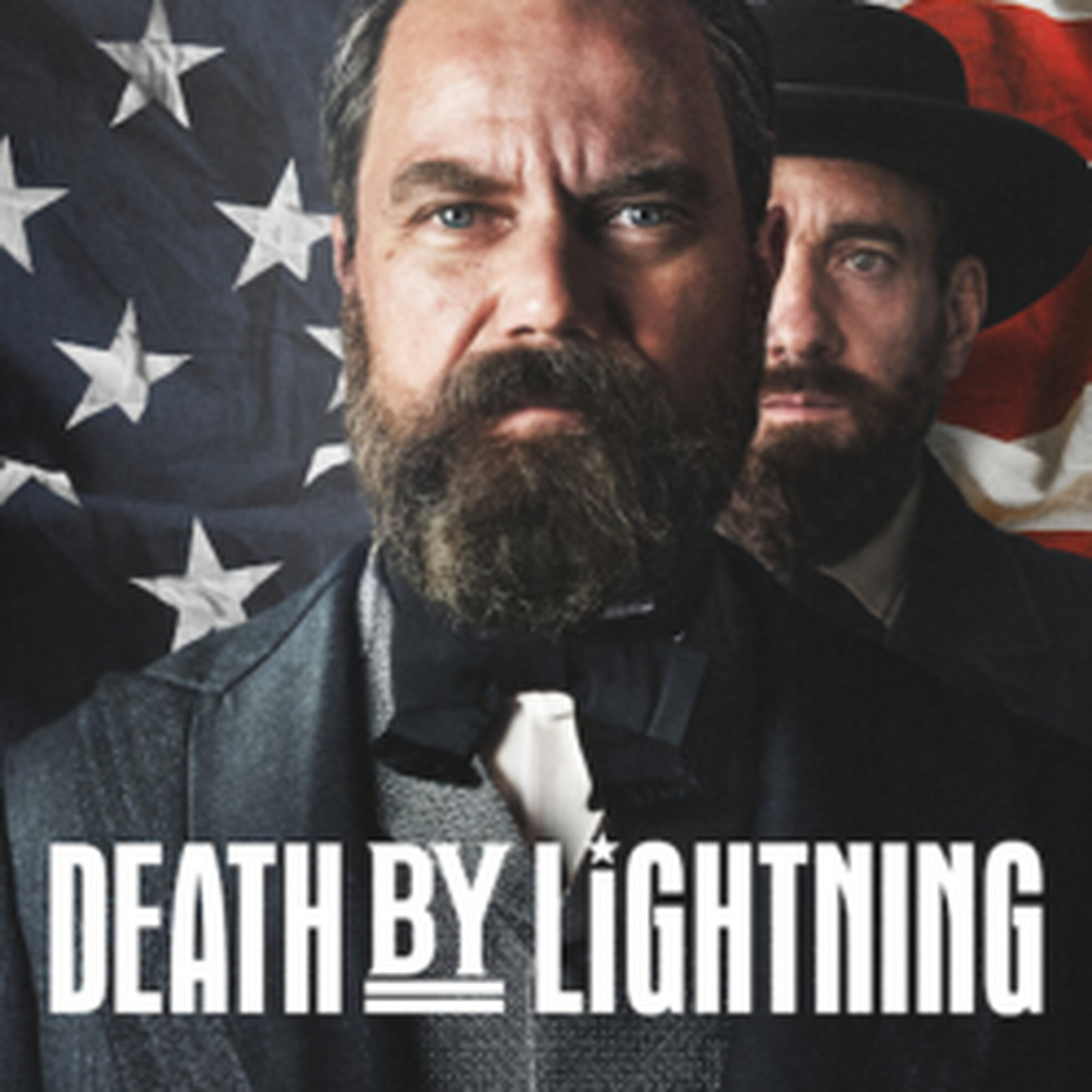
American History Hotline
Death by Lightning: What Netflix Got Right (and Wrong) About a Presidential Assassination
00:55:04
Loading summary
Transcript174 lines
- [00:00]
Alexis Koh
The medicine has gotten better. But as you know, you know, in the early in the founding era, I always say the worst thing that could happen to you is someone would call a doctor. It could also be George Washington who would be like, oh yeah, let me take your terrible ideas and amplify them. You want to bleed me, which is a bad idea, Bleed me seven more times because I love to go hard.
- [00:24]
Bob Crawford
You've reached American History Hotline. You ask the questions, we get the answers. Leave a message.
- [00:33]
Sophie Cunningham
Yes.
- [00:35]
Alexis Koh
It'S me again.
- [00:39]
Commercial/Advertisement Voice
And we prepped.
- [00:47]
Alexis Koh
It's the time for empowerment.
- [00:51]
Commercial/Advertisement Voice
And I've got a message for you gotta think about sexual health no matter what. Better with who. Yeah.
- [01:06]
Alexis Koh
Yeah.
- [01:07]
Commercial/Advertisement Voice
To all you lovers out there, ain't no judgment. This is your cue. Guess who. Guess who's back.
- [01:18]
Alexis Koh
It's time to talk about pre special.
- [01:21]
Commercial/Advertisement Voice
Prophylaxis, a part of HIV prevention.
- [01:26]
Alexis Koh
Oh.
- [01:28]
Commercial/Advertisement Voice
Talk to a healthcare provider and visit carefortheculture.com to learn more. So let me get this straight. Your company has data here, there and everywhere, but your AI can't use the data because it's here, there and everywhere? Seems like something's missing. Every business has unique data. IBM helps your AI access your data wherever it lives. To change how you do business, let's create smarter business. IBM.
- [02:02]
Sophie Cunningham
This is Sophie Cunningham from Show Me Something. Do you know the symptoms of moderate to severe obstructive sleep apnea, or OSA in adults with obesity? They may be happening to you without you knowing. If anyone has ever said you snored loudly or if you spend your days fighting off excessive tiredness, irritability and concentration issues, it may be due to osa. OSA is a serious condition where your airway partially or completely collapses during sleep, which may cause breathing interruptions and oxygen deprivation. Learn more at don'tsleep on OSA.com this information is provided by Lilly, A medicine company.
- [02:41]
Commercial/Advertisement Voice
What do you do when things get tough? You don't give up. You stand your ground. If you've been diagnosed with metastatic prostate cancer and have tried hormone therapy, ask your doctor about Pluvicto, Lutetium Lu177 Vipivatide Tetrexitan. Pluvicto is not chemotherapy. It's a different treatment that targets PSMA positive cells. Pluvicto can be used before chemotherapy for some people. Pluvicto is a prescription treatment used to treat adults with prostate specific membrane antigen positive metastatic castration resistant prostate cancer or PSMA positive MCRPC who have already been treated with hormone therapy. And are considered appropriate to delay chemotherapy. Pluvicto involves contact with radioactivity, which may increase the risk for cancer and cause fetal harm. Drink plenty of fluids, urinate often, use contraception and talk to your doctor about ways to reduce the risk of exposing others to radiation. During and after treatment, Bluvicto can cause low levels of blood cell counts, kidney problems and infertility. Tell your doctor if you have weakness, pale skin, shortness of breath, bleeding or bruising, more easily, an infection, or changes in urination. Side effects include decreased blood cell counts, tiredness, dry mouth, nausea, appetite loss, joint or back pain and constipation. Ask your doctor about Pluvicto because every day without cancer progression is a victory. Visit pluvicto.com to Lear Oral health goes beyond just aesthetics. It's deeply connected to your general health and well being. That's why preventing oral health problems before they start is so important. When you use the Colgate Total Active Prevention System, you're not just helping to prevent oral health problems like cavities and gingivitis, you're laying the groundwork for overall wellness. Colgate Total's three product routine includes a reformulated toothpaste, an innovative toothbrush, and a refreshing antibacterial mouthwash that all support a healthy mouth. In fact, the three products were designed to work together to be 15 times more effective at reducing bacteria buildup in six weeks starting from week one compared to a non antibacterial fluoride toothpaste and flat trimmed toothbrush. Take control of your oral health and get the Colgate Total Active Prevention System today so you can be dentist ready. Visit shop.colgate.com Total.
- [04:50]
Bob Crawford
Hey there American History Hotliners. Bob Crawford here. Thrilled to be joining you again for another episode of American History Hotline. It's the show where you send us the questions and the best way to get us a question is record it on a voice memo or maybe a video and send it to us@AmericanHistoryHotlinEmail.com that's AmericanHistoryHotlinEmail.com okay, today's question is about history on TV. Here to help me answer the question is Alexis Koh, our old friend New York Times best selling presidential historian. She's got a book coming out soon, not yet, but soon. Titled Young A Biography of John F. Kennedy, 1917-1957. You can look her up and just order all of her books or any of her books and you'll be very, very happy. Alexis welcome back to American History Hotline.
- [05:51]
Alexis Koh
Thank you. I'm so Excited to be here.
- [05:54]
Bob Crawford
Well, we need you today. We really need your expertise for this one. Here's the question we're hoping that you can help us answer. It comes from BJ in Texas. He says, I just watched Death by Lightning on Netflix. I really loved it, but I kept wondering if that's what really happened. Can you do a fact check? So, Alexis, to start, let's provide a little background for our listeners who haven't seen this show. It's a Netflix limited series about the assassination of James A. Garfield based on the amazing Candice Millard book Destiny of the Republic. Can you give me an overview of the series and then we can start tearing it apart?
- [06:41]
Alexis Koh
Yes. And I should say that I was so excited about this series that I've become this accidental evangelizer for it in which I have nothing to do with it, but I've written extensively about it, been on NPR about it. Now I'm here with you and I couldn't be happier about it because you have two presidents who are relatively unknown in our collective memory. You have James A. Garfield, and then you have his successor, Chester E. Arthur. And they are coming about. There's sort of a surprise win. This is post reconstruction. We've got the sort of machine that is happening in Washington. People don't go to conventions, by the way. As an aside, it's untoward. It's frowned upon to even be advocating for yourself to be president, let alone going to a convention. FDR will be the first one to do it and he'll fly there and it's a really big deal. So Garfield goes. He thinks he's stumping for someone else and he gives us an incredible speech that is says, and I think we would view it as incredible today too. He goes up there. He's a well known person. Garfield has, you know, he's a. He's a bit of a hero from the Civil War, not the hero of the Civil War. He served in Congress. He's a classics professor. He's not showy. People were less showy then. I think a lot of our best leaders would not be elected today. He goes and he stumps and he gives this speech. And everyone is electrified because he says, this is not up to Tammany Hall. This is not up to the political machine. This is up to the people. This is their president. The president serves the people and we've got to remember that it won't be decided here. And that gives people this license to vote with their heart and their conscience and their ideas about what America should Be. And that I think can be appreciated at any time. But was a breakthrough then, it would be a breakthrough now. And that is what the. But of course, there's a plot twist which is that Guiteau, this man who fancies himself a real supporter, real booster of James A. Garfield and gets him elected, when in reality he's just a person who was a fan who was, you know, felt. I think we could really understand him now as sort of through the lens of what we call the male loneliness epidemic, but also obviously some mental illness as well. And so he gets it in his mind that Garfield, he needs to avenge his own sort of belittling. He didn't get a job. The exact thing that Garfield said he was going to stop doing, which is the spoil system, which is handing jobs out. Guiteau is upset about. Guiteau retaliates. Garfield dies in this brutal way over many months. And then Chester Auror is a. Ascended to the presidency and surprises everyone. And so this is the entirety of the four very crammed episodes.
- [09:41]
Bob Crawford
Right. And so my. This is 1880, is. Is the convention, the Republican Convention of 1880. So we are, we are past the Civil War, but it's, it is still palpable. Right. Right. Where the nation is, is trying to bind itself back together after this unprecedented rupture. And the man that Garfield is speaking is stumping for is Senator John Sherman.
- [10:09]
Alexis Koh
Who we don't really remember today. And that's a great.
- [10:11]
Bob Crawford
No, but he's the brother of William Tecumseh.
- [10:14]
Alexis Koh
Yes.
- [10:14]
Bob Crawford
And if you read that period, he's one of these names that, like, this is the beauty of historical discovery is that, you know, most people know who Sherman, William Tecumseh Sherman was, but people don't know about John Sherman, but he was a very powerful politician. He serves at one point as Secretary of the Treasury. He serves as Secretary of the State. He very well could have been president except for the context of this moment, which was, like you said, you giving power back to the people. Right. It's like. And so Garfield, he gives a speech to give power back to the people. And here, here are my two. Two frames of reference for this. Watching this, right? So here I am like you. I got some historical knowledge. I've read the book. I'm watching episode one. They're setting it up. My two frames of reference that I'm carrying with me watching this are of course, Destiny of the Republic, which I read when it first came out. So it's not fresh, right? Yeah, it's been probably 60 years, five or six years, maybe longer. And Sarah Val's assassination vacation where she covers Guiteau. And so these are my two frames of reference. So let's break down kind of talk about episode one for a minute.
- [11:49]
Alexis Koh
Yes.
- [11:51]
Bob Crawford
Garfield doesn't want to go to the convention. He feels like he has to go. His wife. And this is like watching the television adaptation. His wife's like, essentially says, look, just don't become president.
- [12:06]
Alexis Koh
Go.
- [12:06]
Bob Crawford
I don't want you to go. We got a lot going on here. But look, just go. Come back and, you know, don't say anything that's going to make you president. What were your thoughts?
- [12:17]
Alexis Koh
Well, so it's interesting we should back up and say that when I. My standards for nonfiction couldn't be higher. I'm the American history columnist at the New York Times, and I think anyone who's read one of my reviews knows that they're not. I go pretty hard, right? But when we are looking at a creative adaptation, I really respect other people's mediums, whether it's music, it's television, it's movies. And so I'm willing to come to it with an open mind. Right? And I think that what this series does and the reason it. You know, I was excited about it because these are presidents that no matter how well known I get, I just have a hard time getting people interested in them or even being allowed to talk about them. But then you get to this opening scene, and there's a scene before the convention, and that's where they really got me, right? Because there is. This really happened. There was a warehouse. And things get misplaced all the time in the archives, particularly if they're not to do with, like, Abraham Lincoln, for example. And so this jar falls out of a box and it starts spinning, and these. These workmen pick it up and they look at it and they go, oh, my goodness, there's a brain in there. So even if you don't know anything about what's happening, like, of course I was like, oh, it's the brain. It's the scene. They find the brain. But if you don't know about it, you're so exc. And I think that's what's really effective about this series is even if you sort of take issue with something, if it's not quite as it was or supposed to be, you're excited that it's very clear something is happening and kind of everyone can get it. And if you've never seen it, if you don't know anything about the story, you're just like, what is happening with this brain situation? And so I think it's. That's sort of this wonderful moment. But then we do get to these moments, like with Lucretia, and she is Garfield's wife, and she doesn't say that in real life, but she has to sort of introduce the audience to what's going on. And from that moment, I'm really excited because I have to admit, I'm suspending disbelief. But this is also like an amazing cast. Usually the cast is a little bit funny. Sometimes it's like seeing a bad production of a Shakespeare play during the summer. You know, you're not quite convinced that everyone knows what they're saying. But this was, I think, from the moment the convention. You step in the convention hall, there's stuff that's not quite right. But I don't care. I'm just so excited about this moment. It really captures, okay, what are we going to do? Because not only are we at this point in history, but we're at this crisis point in the Republican Party, right? We're at this crisis point in which they need to figure out who their leadership is. And that's something we can also really relate to.
- [14:56]
Bob Crawford
What did you think of the depiction of the wigwam? And that is like the convention hall where this convention took place, also where Lincoln's 1860 convention takes place. It's in Chicago. When you're watching shows like this, like, I'm thinking of the John Adams miniseries on hbo. And so you see these. These, like, interpretations of these. Of these places, like urban history. Right. Like the. The place where these things happened. What. What was your thought when you saw the depiction of the. Visually, the. The wigwam?
- [15:29]
Alexis Koh
Well, it's interesting because we don't really have buildings. You know, you don't see these kinds of buildings as much anymore. And when you do, you're just not as impressed. But there were these buildings that were. That were across the United States that were, like, made of glass or they were really dramatic for the time period. We're less. We're sort of a nerd to impressive architecture at this point. But things took incredible effort and time and plans. The scale was sort of unheard of. So you have this convention hall, and there are tons of people in there. Of course, there aren't a lot of women. They're going to be on the upper. You know, if they're allowed in. And all you have this excitement. And I do. I was really sort of thrilled for that moment. And I loved seeing everyone packed in there, there. You know, I was at that point a little bit distracted, like, oh, I don't know if that would have happened. That person's not there.
- [16:16]
Bob Crawford
Well, like just pick one out.
- [16:19]
Alexis Koh
Well, I mean, for example, you know, you have Blaine, who is also up.
- [16:23]
Bob Crawford
For James G. Blaine from the state of Maine. There's a couple songs and rhymes about Blaine out there.
- [16:29]
Alexis Koh
Yes, yes. And I feel like he's a little bit better known, but still is not, let's say, a household name from this period. And you have him like, really. They're also stumping for himself, being really in the thick of things. I really loved that. What was not true for me is Chester Arthur, who will become Garfield's vice president. And he is sort of the, he's second to this guy named Roscoe Conklin.
- [16:54]
Bob Crawford
Who'S the dastardly Roscoe conqueror, who's like.
- [16:58]
Alexis Koh
A very fun character, particularly in New York, but he is not the devil incarnate. But as far as party politics, kind.
- [17:07]
Bob Crawford
Of, he's an operator.
- [17:08]
Alexis Koh
Yeah, I mean, he's the operator not only on a local level in New York, which does control, you know, it's always been a capitalist city, but. And so of course it's going to have its claws in D.C. but you have him really, it was a little bit more artful, a little bit more remove removed, but you have him there, you know, in every, almost every scene really, as if he is like a chief of staff. And you have G, you know, you have also. So you have Conklin and then you have Chester Arthur.
- [17:42]
Bob Crawford
Well, before we get to Arthur, by the way, and for people who are listening, you can't see this, but my good friend David Childers, who, some of you know, he's a great musician, he, he paints the figures and he does the war reenactments with the things. And years ago he, every year he sends me a few. And years ago I'm holding this to the camera. There is Chester A. Arthur right there. He is. I, I, he only sent me Taft and Arthur. So anyway, so that's a really interesting, I don't know, I'm hopefully he's not trying to send me some kind of a message, but I don't think he is. But we're going to get to Arthur in a minute because he's a big, we really need to break because most of the, when I read on social media or people have reached out to me and I had people texting me was, did he really? Blah, blah, blah, you know, so we'll get to that in a second, because that seemed to be the biggest one for everybody. And by the way, Nick Offerman did a. I think he did a great job as Chester Arthur, and he's an old friend to me and James because he was our Andrew Jackson in our Founding son John Quincy Adams, the series. So, like, really awesome. Great actor. And we know he loves history, and so it was really great to see him in that role. And he did a great job. Okay. Conkling. He is definitely, you know, who. Whoever wrote this, and I'm sorry, I don't have the. The screenplay writer's name at my disposal, but whoever adapted this for the screen, you know, you got to have a bad guy, and Conkling is the bad guy.
- [19:20]
Alexis Koh
He's such a good bad guy.
- [19:21]
Bob Crawford
He's a great bad guy. And, you know, when I read. When I've read this period of history, he is kind of the. You kind of do sense. He's a. He's a little slimy.
- [19:32]
Alexis Koh
Oh, yes. I mean, you do not want your fate in his hands. You don't want anything in his hands.
- [19:38]
Bob Crawford
So talk about him, who he was for a second.
- [19:41]
Alexis Koh
Yeah. And.
- [19:42]
Bob Crawford
And then how he's depicted. And is there any distance between.
- [19:47]
Alexis Koh
So he is. He runs this place called Tammany hall, which is a political machine out of New York that runs everything. And basically, if you want a job, if you want a service, if you want in any way to benefit from the government, you have to go through this guy. And it's not like a nice request. It's not what we see with, like, Lincoln and all these other movies where you have office seekers coming. This is a really normal, really frustrating part of an early president's job is sort of like, who am I going to give job to? How much time do I have to give these people? But with. With Roscoe Conklin, you have to go in, you have to know someone who knows someone, and then you have to come in with some cash that is just very well known.
- [20:32]
Bob Crawford
You need pay to play.
- [20:34]
Alexis Koh
You need to pay to play.
- [20:36]
Bob Crawford
I've never heard of this. And it's like, it's happening, like, right now.
- [20:39]
Alexis Koh
No, not at all. No. No shock of recognitions here. And so then you have this guy who has, you know, a lot of trusted deputies around, and one of them is Chester Arthur, who we're not talking about yet, but he does install him in the Port Authority. And so if you imagine. Let's take a step back. What does the Port Authority have to do? Well, at a time when shipping is pretty Important. That's where all the goods and services are coming in and out. That's a lot of money. If you're looking for some kickback, kickbacks, like, that's really, really good. It's a sweet position. And so he is known as someone who can kind of buy everything, but you don't know what to do about him. Right. He's in this way a little bit Trumpian, where you're just not sure where the power ends and what will eventually bring him down. You know, it's got to be something somewhere, sometime. Everyone's run ends, but you don't know. And so he does seem kind of impervious to the laws of the land and all the different sort of basics that appeal and apply to everyone.
- [21:42]
Bob Crawford
EL we should note that the role of Roscoe Conkling is played by the actor Shea Wiggum. He did a great job, a great job.
- [21:53]
Alexis Koh
The whole cast was so good. I mean, it was just unbelievable. Everyone was great. And there was, I should say, also sort of a darkly funny tone to it that I thought worked really, really well.
- [22:04]
Bob Crawford
Yeah. You know, like, how do you feel about sometimes I don't like this. And meaning 95% of time, even though I'm a musician, I don't like, like modern music in period films. I don't like it. I don't like. I do not dig it. I do not dig it. It turns me off. I wasn't as offended in this for some. Maybe I'm getting old and I'm just, you know, getting accepting of some things. But they do a lot of that. Like, they, they are trying to. And I give them. I understand why, because here you're telling a story about 19th century politics. And by the way, if you want to read some crazy 19th century politics, read New York State, New York City politics of the 19th century, with the Tammany hall and the Albany Regency and the Bucktails and the Locofocos and the Barn Burners. I mean, they've got the best nicknames. And it's some crazy, crazy politics. And this is what the stew that Roscoe Conkling and Chester Arthur kind of come out of.
- [23:11]
Alexis Koh
And there's the visual, too. And I agree with you. And it's hard, I know that, that, you know, if they had said something like, dude, I would have a problem. But they certainly, with language, it was not the parlance of the time, but there I felt like what they were doing was made to make it more readily understood by people who were watching. And, you know, my feeling always as a historian in the way I get good with all of this is I basically say, well, it's not the end game. You know, what we hope is people who didn't know about Garfield and Arthur, which is. I think a lot of people are going to, hopefully, in my mind, view this as a jumping off point.
- [23:47]
Bob Crawford
Right, exactly.
- [23:48]
Alexis Koh
And then they're going to go elsewhere. I think also, though, what I. And what I try to do is think, well, okay, yes, some of that was a little bit silly. It wasn't quite Marie Antoinette, you know, where it was kind of a. I don't know, almost the Ramones or something like.
- [24:05]
Bob Crawford
Right, right.
- [24:06]
Alexis Koh
It wasn't quite that bad. But what I did really appreciate is they stayed true to the things that were important to me. This was not my biggest issue. I'll tell you what my biggest issue is in a second. But the thing that I did love was the hair during this time, like, everyone was her suit. They all had these incredible. And Chester Arthur, in particular had like, the best mutton chops and just facial hair, weird beards. Like, it's almost like. Like a beard, like a chin would leave the coalition. Beard. Every. All sorts of things were going down at that time. And their dress was sometimes very. What we would call. What they would call dandified. Right.
- [24:46]
Bob Crawford
Conkling's a dandy. For sure.
- [24:47]
Alexis Koh
For sure. And actually, Chester Arthur had something like 75 pairs of pants and four shirts. And that's a fact that really, I turn in my head about, I don't know, every few months.
- [24:57]
Bob Crawford
And that. That rivals Martin Van Buren, who. Who also was really into the way he dressed and. And was a dandy.
- [25:04]
Alexis Koh
And also had great mutton chops.
- [25:06]
Bob Crawford
And had big mutton.
- [25:07]
Alexis Koh
Yes. And was in New York, sort of part of this machine. So you have all this. So I didn't mind that as much. I liked. I. I figured, okay, I get the general vibe. I'm going to forgive it. I will say that sometimes I felt like, oh, my goodness, this is just a lot packed in. My problem was not how they spoke, but sometimes. And I'm still on the fence about this. And I know Candice Millard, who. Who is the author and the historian. We spoke, and she's not. She liked it. So I have to, like, accept it's her baby. So she. You know, we feel when you write nonfiction, it's not like you. You didn't invent these people. So while you feel really protective over them, you also realize, like, they don't belong to you. They belong to everyone, which is how it is. With a book. They're kind of like children, you know, they just go off to school. School a little bit earlier. You see them on socials. You hope that they're making good decisions. I think you've heard me say this before, but, like, you don't. You don't know. You can't have. You have no control. And so I think that is something that I feel. The thing for me was, if you noticed, Garfield's wife was incredibly prescient. And she seemed to sort of know what was going on at all times, had the best things to say. That's because her words. She was like five different characters in one. She was five women in a train.
- [26:20]
Bob Crawford
Oh, composite.
- [26:21]
Alexis Koh
Yes. And she. I don't want to say erased, but absorbed. One of my favorite because it's so random and weird characters. A woman named Julia Sands. Do you know who.
- [26:34]
Bob Crawford
Okay, who was that? I don't remember her from the book. I'm not remembering.
- [26:37]
Alexis Koh
I wish. So I will plug your book, which is coming out in March, and you are coming to New York.
- [26:44]
Bob Crawford
Yes.
- [26:44]
Alexis Koh
And we are doing an event together, and we will not have time to go do this, but I hope at some other point that I can take you to a cemetery in Brooklyn and we can go visit Julia Sandsgrave and a bunch of other people who are buried there. I really love. I love a, you know, cemetery in general. You name a city, I'm like, Memphis. Oh, Elmwood. Let's go there. There's all. I'm just in love with all of them. But Julia Stands was so. So Arthur ascends to the presidency, and everyone's like, oh, no. Conklin is basically president now, but it. But Arthur, who's a widower, he gets this letter from a woman named Julia Sands who lives in Brooklyn, who's in her early 30s, and she's what they called an invalid. So she is unhealthy. She lives with her parents. She's not going to get married. She's not. Has no connection to politics, and she just. No connection to him. She just writes this random letter to the White House and says, everyone is expecting you to be the most corrupt president we've ever had. What if you were the best? What if you just did the opposite, just putting it out there, like, what if. What if you just aspired to be as good as the office in which you were elected? And he does, and they strike up the weirdest correspondence. And he goes to see her at one point in Brooklyn, and her parents are like, why is the president here? This is Weird. I know it's not an affair, but I'm not comfortable with this. And they have the. And it. And he really credits it as being a major influence. And so you have just this random person who reaches him and they cut her out. They cut her out and they put her words in Lucretia's mouth.
- [28:19]
Bob Crawford
One of the things I do remember from Destiny of the Republic is that Garfield had a three year old daughter who died.
- [28:27]
Alexis Koh
Yes.
- [28:27]
Bob Crawford
And that affected him deeply as it, you know, we think about this time period and how many children would die, how common that was, was. And we need to remember that it wasn't just like, well, we're going to make 10, 10 babies. No, I would live. We're, we're okay with that. No, it wasn't, it was not okay. It was not any more okay than it would not.
- [28:50]
Alexis Koh
It would cross the board. People always. Yeah, you had a wife, your wife died, then you got another one. That's fine. It's like, no, you had to. But you still really miss, like it. It's a numbers game. You just simply can't exist on a farm without a significant other. Which is when someone decides not to marry. Like George Washington's the subject of my last book. George Washington's mother didn't marry in order to give her kids as much as she possibly could. And it put her in a terrible position in which she was fighting in a court that wasn't going to recognize her as a human being who had the right to be there. All sorts of things. But yes. So you have the, you have a sadness for sure.
- [29:31]
Bob Crawford
Right. And a compassion. And to me, watching the, watching the series like, I was like, you know, they really build up Garfield's capacity for compassion.
- [29:44]
Alexis Koh
Yeah.
- [29:45]
Bob Crawford
And to me, I attribute that coming from that experience in part from his child's death.
- [29:53]
Sophie Cunningham
This is Sophie Cunningham from Show Me Something. Do you know the symptoms of moderate to severe obstructive sleep apnea or OSA in adults with obesity? They may be happening to you without you knowing if anyone has ever said you snored loudly. Or if you spend your days fighting off excessive tiredness, irritability and concentration issues, it may be due to osa. OSA is a serious condition where your airway partially or completely collapses during sleep, which may cause breathing interruptions and oxygen deprivation. Learn more at don'tsleep on OSA.com this information is provided by Lilly, a medicine company.
- [30:35]
Commercial/Advertisement Voice
So you're telling me that the AI that's meant to make everyone's job easier to manage just adds more to manage on top of the thousands of apps the IT department already manages. Funny how that works. Any business can add AI. IBM helps you scale and manage AI to change how you do business. Let's create Smile to Business IBM. This is Matt Rogers from Las Culturistas with Matt Rogers and Bowen Yang. This is Bowen Yang from Las Culturistas with Matt Rogers and Bowen Yang. Hey Bowen, it's gift season.
- [31:11]
Alexis Koh
Ugh.
- [31:11]
Commercial/Advertisement Voice
Stressing me out. Why are all the people I love so hard to shop for like me? Exactly, honey. I'm easy. But you're right, holiday gifting is stressful and all the gift guides out there are boring and uninspired. Wait, what about the guide we made in partnership with Marshalls where premium gifts mean incredible value? It's Giving Gifts, a series of guides filled with premium gifts at great value for everyone on your list. Yeah, cause if I see one more for the dad who likes golf list, I'm out.
- [31:38]
Bob Crawford
Right?
- [31:38]
Commercial/Advertisement Voice
How about something for the people who actually surprise you with categories like Best gifts for the mom whose idea of a sensible walking shoe is a stiletto.
- [31:46]
Alexis Koh
Psst.
- [31:46]
Commercial/Advertisement Voice
She wants a pair of stilettos. Or Best gifts for me that were so thoughtful I really shouldn't have dying to see what those are. And you won't believe their prices. Just wait till you see what else is in there. It's basically a one stop shop for everyone. You know, I started bookmarking half the list for myself. Honestly, this is the guy for the 2025 holiday gifting season. Check out the guide on marshalls.com it's giving gifts gift the good stuff at Marshalls.
- [32:11]
Sophie Cunningham
Season two of unrivaled basketball is here and the talent is unreal. The best women's players on the planet are are running it back with even bigger moments and bigger stakes. Don't miss as Paige Beckers, Nafiza Collier, Kelsey Plumb, Brianna Stewart and more take the court and redefine the game. This isn't your regular season. This is unrivaled, where the pace is faster, the energy is higher, and every athlete shines. Unrivaled basketball season two, sponsored by Samsung Galaxy Tips off January 5th on TNT, TruTV and HBO Max.
- [32:41]
Commercial/Advertisement Voice
Want to buy your way? Of course you do. That's why CarMax offers an experience designed just for you. Want to start online, then visit the lot, then go back online? Sure. Want to talk to a real person or chat online? Either works. Want to take your time and compare all the makes and models? No problem. Then make up some time by Filling out the paperwork at home and schedule express pickup or home delivery. Done. When it comes to how you buy, CarMax puts you in the driver's seat. Want to drive CarMax? Delivery restrictions apply. See CarMax.com for details.
- [33:16]
Bob Crawford
This is American History Hotline. I'm your host, Bob Crawford. Today my guest is Alexis Koh, a New York Times best selling presidential historian. She's got a book coming out soon entitled Young A Biography of John F. Kennedy, JFK 1917-1957. Also check out her biography about George Washington, you Never Forget yout First. And check out her substack. Follow her on her substack. She does a lot of great content. She's working 24 hours a day so you can learn and know more about American history. Today we're talking about Garfield. Not the lasagna loving Monday hating cat, the President, James Garfield. Remember to send us your burning questions about American history. Email american history hotlinemail.com that's americanhistoryhotlinemail.com now back to the show. Okay, so the character that I received the most text messages and noticed on social media, the most people commenting on was Chester Arthur, portrayed by the actor Nick Offerman. And the scene in particular you talk about trying to draw comparisons to today. Well, who among us hasn't been with a friend in the back of a New York City club when your friend is vomiting after a night of partying? Right. So this we see. We noticed that Chester Arthur has an alcohol problem. And he. Here he is one night, I guess during the campaign or after the when he becomes vice president. And here he is in the back of a restaurant or bar in New York City and he's throwing up. And he's met by. He crosses paths with Charles Guiteau, the man who will assassinate his boss. Did you have problems with any of this?
- [35:27]
Alexis Koh
So much. This was hard for me. This was hard for me. So yes, a lot of it is true. Would Chester Arthur be in a New York City restaurant, bar? Yes. Would he be indulging and possibly yes. Everyone was gross. Everyone is still gross. These are things I was at Old Town Bar last weekend. Someone was throwing out up outside this. This is still a very common scene in a New York. You're going to see a breakup, you're going to see someone throwing up. This is why it's the greatest city in the world.
- [36:02]
Bob Crawford
All the scenes of humanity are being played out before you're very.
- [36:05]
Alexis Koh
There's nowhere to hide. There's nowhere to hide. And so you have. So that's all plausible. Right. But this was one of the issues that I had. There are a lot of interactions, and I'll get to Guiteau, but there are a lot of interactions that are happening between Chester A. Arthur and James A. Garfield that never happened. And in general, we know if you know anything about the presidency, it's an. Everyone knows that the vice president, as John Adams once called, is the most insignificant role. There have been exceptions, just like there have been exceptions to bad First Sons. You know, we have a Beau Biden, we have a Quincy. We don't have a lot of others. I'm running out. I just ran out. And so you have these acts, axiomatic things that are true of the presidency that are true of every hour, which is that the vice presidency is just not around. But in particular, James A. Garfield was not excited to have someone like Chester A. Arthur, you know, covered in suit, if you will, to use sort of an image of the time. He's a compromise. He is probably his hundredth choice, if that. And so there's very little interaction. But you constantly see it in this series. You constantly see Garfield looking at Arthur and being like, you're gonna be better. Right? Or like, you can do this.
- [37:32]
Bob Crawford
There's a good man in there. I know there's a good man in there.
- [37:35]
Alexis Koh
Didn't happen. And what also didn't happen is this continual sort of meet, almost meet cutes between Guiteau and Arthur. And one of them happens. You know, there's a scene outside in which Guiteau kind of gets his butt kicked. There's another one in which, you know, they meet at the club. So. No, those were really frustrating moments for me.
- [37:59]
Bob Crawford
Can we just establish the Guiteau and Garfield, did they ever cross, like, physically cross each other's path before he assassinated. He assassinates him, as far as we know. Physically?
- [38:11]
Alexis Koh
Like, Yes. I mean, I think so because Guiteau was such a. Like, what would they. In Clueless, they would have called him like a Stage five clinger. Like, he was just always around and trying to get an audience. And so it is believed that he did. But in no way was he a welcomed entity. And, you know, had someone seen him again on the street after such a meeting, they would have crossed the street.
- [38:40]
Bob Crawford
Right, right. It's. It's a sad. You know, I've. In the book, he was more of a sad. He's a sad character and he's. I don't. I can't remember the actor's name. I've seen. He's in a lot of things. He was in success.
- [38:55]
Alexis Koh
He was Mr. Darcy. Bob.
- [38:58]
Bob Crawford
Yeah, yeah, he's really great. He's really. He's a really great actor. He did a great job. He was perfect for. So to just button up Arthur here. Arthur does make a turn.
- [39:10]
Alexis Koh
Yes.
- [39:11]
Bob Crawford
So he talk about that.
- [39:14]
Alexis Koh
Well, it's funny because you think that it's all about, you know, Garfield makes the term. You think that it's all about Garfield not having what he called presidential fever. Because we see so many people, we're like, who would, I always think, who would want to be president? But, you know, he didn't sell his soul to get the job. He might have been great at it had he not been assassinated. So that is the closest thing to, let's say, the promise of the New Deal level reform in federal governance that we have from James C. Garfield. He's going to change the whole system. It's not going to be a spoil system, meaning you're not going to just get to pay for play. It's not going to be the dais at the inauguration in 2025. And instead what we have here is Garfield has this moment, but then you have Arthur really taking that baton. And so a plea for conscience from, I think America becomes a mandate. And the question is, today, I keep thinking about with this series, do we recognize the difference between, like, moral conviction and the machine that devours it? Right. Because so many people see as being kind of swindled. And it's like, I think there is a fine line between hearing this rhetoric and particularly when someone seems really genuine in it and, you know, seeing the forces behind it that are going to ruin it for you. Even if you really believe it's the best thing, it's still not going to happen. It's the other half the country's nightmare.
- [40:49]
Bob Crawford
Yeah. I saw a good friend of mine a couple weeks ago in New York City and he's a journalist and he's covered Trump for decades, like back to the Apprentice days and before that. And he said to me, the thing that Trump knew from the start, that no one else ever kind of realized was really how weak politicians are, how weak of people they are, how much of a pushover they are. And also that everybody has price.
- [41:19]
Alexis Koh
Yes.
- [41:20]
Bob Crawford
And that is very. The context for this series of the time. This is why it's been so powerful and people have connected with it because. And I believe that you could pull many episodes and as you. This is why we do what we do, because you can pull many episodes from history and history doesn't repeat. Maybe it doesn't really rhyme exactly. But, but, but people don't change. And so you do see these characters that kind of are, are born reincarnated again and again and again and are reborn and reborn. And I think personally, that's what I found so powerful about this.
- [42:00]
Alexis Koh
Oh, absolutely.
- [42:01]
Bob Crawford
Is the moment. Yeah, is the moment.
- [42:03]
Alexis Koh
It's that moment. And I think that's true across the board. I think whenever I go to D.C. when I testified before Congress in the spring and I was. It's so much worse up close, is the real terrible part. There's just no, they're there. They're not really serious people, but they're in charge of the most serious parts of our lives. I think that's also true for historians, though. I mean, you name it. Proximity to power can be innervating to you as a person. And so sometimes I'll have, I'll be really excited about a historian who's coming up and I'll see them kind of take a job where, you know, they're forgiving, I don't know, slavery or you will see them do whatever it takes to, to maintain ties to certain organizations that, you know, are fundamentally deeply racist. And then. Which is not to say that that one doesn't take risks in general and that working across aisle, sometimes it's really necessary. So certain things, you know, when I saw Mom, Donnie in Trump's office, there was nothing shocking about that entire interaction. Or, you know, when I am in D.C. and I am at my bipartisan think tank, I'm going to walk right over and do an interview with the, the Reagan foundation, because that's good for history and because we can find points of connection. So there is, there's, it's difficult because then we also have the Cold War right. In which people who was, who were so vulnerable to McCarthy, sometimes it was because they were really getting in the backs of cars and trying to have real conversations that would save hundreds of thousands of lives. Yeah. And so there is. Sometimes you look at things, you're like, oh, I don't know if that is. You're not the moral, up standing still citizen that I thought you were and representative. And sometimes it's for good and, but very often it's not. And so I think that's what you saw so much as you saw really the oily people that are now, they look different. They're men and women, but, you know, they're not that different. You, you see how, how bendable, how pliable they are. And it does word.
- [44:12]
Bob Crawford
That's the right Word.
- [44:13]
Alexis Koh
Yeah, yeah.
- [44:14]
Bob Crawford
Malleable and pliable.
- [44:16]
Alexis Koh
Yeah.
- [44:17]
Bob Crawford
So we go on all day about this aspect of it, but let's move on because there's another main character we need to spend time on and that's Charles Guiteau. The real villain. Right? He's the real villain because he is the guy who murders the President.
- [44:33]
Alexis Koh
He is a villain. But don't you also feel. And maybe this is because I'm from California, you know, Reagan, there was a point in time when he had a sort of war on mental illness and mental health. And, you know, he released so many people who were struggling with mental illnesses onto the streets. And then you have a lot of violence that ensued. And this has all been documented and, you know, figured out that this, you know, A leads to B kind of thing. And so it's difficult because you see him and he is a. He's funny. Right. He's dandified the way they all are. He talks in a funny manner. He's so desperate to matter. He is trying to ride this moment, but he's unexceptional. He just thinks he is. Right.
- [45:22]
Bob Crawford
Yeah. It's like he has the big. As a person, he seems like he has big dreams and big aspirations, but he doesn't know how to put in the work to make them really happy.
- [45:32]
Alexis Koh
Unfortunately, as you know, the most important part of being successful is, you know, you have to have a good idea, you have to have a lot of elements, but you have to make your own luck.
- [45:44]
Bob Crawford
Right, right.
- [45:45]
Alexis Koh
The most important part of luck is you have to make it through sustained efforts which often feel like they're going to kill you. So when you said, you know, before she's working 24 hours a day, it's like sometimes it feels like that, you know, I don't really. The concept of a weekend is not if. If I need to be there to put out a fire. And that fire is someone saying they. They're going to run for a third term or whatever it is. I'm there. That's what I'm doing. Whereas other people are sort of like, I don't know why I'm not the most successful historian in America right now. And so you do have to do that in good toe. What we see is someone who has these delusions of grandeur that. That is in some ways so American. Right. Again, I'm from California. What do you do in California? Declare yourself to be something and then you are. That's the entirety of the Gold rush. We're all rich. No, we're not. There's no one making any money. But you have this. There's nothing more American than saying, I'm going to do this. And we would call it manifesting. It's sort of. There's this. There's this line, right, that you cross and that's when we see what happens because he's. You see him basically losing ground the way you see anyone when they're becoming more and more desperate. I forget there was an Andy. There was like a there. There are always these movies about hustlers who are running out of time, they're running some sort of business, something happens and then, you know, they're just out of luck. They get.
- [47:08]
Bob Crawford
Eventually the moment of reckoning comes.
- [47:10]
Alexis Koh
Yeah, they run out of money, they run out of time, they lose a finger, whatever it is that's going to happen in this. And that's what you see happening with him. But it's that he's reached. He's gone on decades. He's convinced his sister that he will be something. She's defended him against her husband and their family. And you just see him running out of options and everyone sees him. So you see a desperate man mix, you know, blended with some mental illness that's gone untreated and would have been misunderstood anyway at the time, but it's so recognizable.
- [47:44]
Bob Crawford
He's. And. Right. And what, what is, what was the 2024 election partially about? It was about the man. The man, you know, what is happening to, to white men? Like, what is the experience of white men? And yes, and the, this, this masculinity wave and, and the, the defining. The role. A group of men trying to redefine who, who they are and the, the.
- [48:12]
Alexis Koh
Manosphere, but by checking out of society. This is sort of the interesting thing is so often this has been the case in, in American history in which a group of disillusioned men, because men have dominated politics for most of. Of American history as we approach 250, it's just a reality. You have these disillusioned men who have checked out, but then they, but then they find a way in. Right? They start a competing coalition, they do something like that. But what you have now is, is someone more like Giteau, which is you have people who have checked out of civic service and they have, they have checked out of spaces in which they could meet women, in which they could cultivate friendships in which they could through real effort because they're sort of hiding behind screens and it's easier to feel as if, well, I don't belong Rather than trying doing the hard work of belonging. And it's not. The thing is it would be very easy. But then they're encouraged to sort of, you know, by these influencers. And in some ways we have a commander in chief who is our greatest influencer, there's no doubt. Yeah. And so you have, and so you have these people who become easily disillusioned. You have that in Giteau so clearly. And he sees, he wants to jump on this train, Right. Of civil service, service reform. But then in his mind, he is, to be fair, a rich man, Right? So a rich man like, let's say John F. Kennedy's dad. When Kennedy was in school, when he was in college, his dad wrote a pamphlet. Well, he paid someone, Arthur Kroc, to write a pamphlet for fdr. And then he's like, okay, fdr, where's my job for having gotten you elected? And FDR is like, okay, how do I get this guy to be happy? I give him ambassadorship. That's what you usually do. But the difference is that, you know, half ambassadors are legitimate diplomats. They deserve to be there. They're very good at it. And the other half are like, they paid to play and gut right.
- [50:03]
Bob Crawford
The founder of Home Depot.
- [50:04]
Alexis Koh
Exactly. And Guiteau, though, you know, and sometimes it's that you paid and sometimes that you really were just that influential. Like you have a, I guess in the White House now a version is Laura Loomer, right. A conspiracy theorist, confusing character in general. But we have Guiteau, who hasn't done any of these things. He's not rich. His pamphlet that he wrote was fine. It wasn't influential. He was just a guy who was excited about a candidate, which is like the rest of us. It'd be like, you know, you wore, you ordered an Obama shirt and then Obama, where? Why are, where's my job? Why aren't I an advisor? And so Guiteau obviously doesn't get anywhere. And then he thinks, oh, I elected a fraud. So Garfield isn't who he said he was, but I believe Chester A. Arthur is for some reason. And this is where you really see, because I believe in Arthur and I know things that I can tell you from Arthur's youth that portend that he will be better. But for the most part, if you're betting on a horse here, it's not Arthur. And so you do have this where you see Guiteau in this way come apart in its sad. And it's, and that's the thing, it's a sad. It's a sad moment the way so many of these moments have been sad. It's like if you look at the assassination of Abraham Lincoln, we have a similar situation in some ways. You. You have John F. Kennedy, you have these men who really are so desperate to be involved and for grandeur and for greatness, and they just can't be because. And because of themselves.
- [51:41]
Bob Crawford
The tragedy, there's a lot of tragedy in the James Garfield story itself, but the tragedy is that he shot, but he doesn't have to die.
- [51:51]
Alexis Koh
Oh, this is the worst.
- [51:52]
Bob Crawford
So and so this is what I remember from the book. I just want to set up here, like what I.
- [51:56]
Alexis Koh
The.
- [51:57]
Bob Crawford
The. You know, you read a book and, you know, time goes by, and if you don't reread it, you. You lose part. You can't, you know, you. You just don't remember parts of it.
- [52:06]
Alexis Koh
It.
- [52:06]
Bob Crawford
But what I've never forgotten is I think the book maybe, maybe opens with this. It's the 1876 World's Fair or exposition in Philadelphia. And Joseph Lister. So Alexander Graham Bell has a table or whatever set up. He's like, at the front of the convention hall. He's featured way in the back is Joseph Lister, if I'm getting the name correctly. And he's telling people, hey, there's bacteria, and we need to, like, clean things and, you know, disinfect things. And that becomes, like, of course, in a great book, foreshadowing. Because then Garfield is shot and part of the. He dies by infection. He doesn't die from the bullet. Is that right?
- [52:53]
Alexis Koh
Yes. And we should know this. The thing was, that was so terrible to watch as a person who is. This was already a debate that was going on in the medical community from the Civil War because you had so many limbs cut off that did not need to be, in part because of infection. You have a woman named Dr. Mary Walker, who was the first woman to be a doctor. And actually she had her pension taken away after the Civil War because, of course, sexism. But she is known for trying to stop. Stop this. And so these debates have been going on. Doctors have been aware of infections and bacteria and dirt and all these things for a while, but there's still a lot of people who are resisting medicine has gotten better. But as you know, in the early in the founding era, I always say the worst thing that could happen to you is someone would call a doctor. It could also be George Washington who would be like, oh, yeah, let me take your terrible ideas and amplify them. You want to bleed Me, which is a bad idea. Bleed me seven more times because I love to go hard. And so you have this guiteau. So Guiteau shoots Garfield in a train station. Very dramatic. But he doesn't need to die. They don't know this at the time. There are a few ways this goes awry, right? One of the ways is that they could have just left. The bullet would have been fine. Sometimes this happens, but it goes against all logical thinking, even for me. I'd be like, I don't know, maybe we should get in there.
- [54:24]
Bob Crawford
Hey, Andrew Jackson, didn't he live with a bullet?
- [54:28]
Alexis Koh
It's just a better idea in a lot of ways. But they also then at the same time are aware sometimes you have to get in there. So young hickory. James K. Polk didn't live with a bullet, but he lived with many other diseases. And at one point, they had to get in to remove a gallbladder stone. And they did that by, you know, really dramatically ripping open his. His part. You know, his. His private parts. And it was. It's pretty gruesome. I wasn't prepared to talk. Tell that story.
- [54:57]
Bob Crawford
But are they also in a jar in some Smithsonian.
- [55:02]
Alexis Koh
Another. Another day. But it's a good one, too. But so it's just. And he had a terrible, you know, recuperation as well. And there are lots of moments in which people are not going to make it, perhaps. And it's totally a necessary. Necessary. And so we have Garfield, who maybe could have made it if he'd been left alone or someone had just washed his hands.
- [55:20]
Bob Crawford
Right.
- [55:21]
Alexis Koh
And instead you have a physician who is of the old school. You have a team of them. And once in a while you have someone who comes in and says, like, I don't think this is a great idea.
- [55:31]
Bob Crawford
Nope, you're fired.
- [55:33]
Alexis Koh
Nope. The man who is in charge thinks, you know, dirt is seasoning or something. And so you have this. You're watching it and you're thinking, this man is being. And it's not like, oh, a day, two days. We're talking about four months. It's torture.
- [55:50]
Bob Crawford
Let's end on. On a. On a. More.
- [55:53]
Alexis Koh
Not torture.
- [55:55]
Bob Crawford
No. Yeah. Yes. Let's end on not. Let's. Let's not end on torture. Let's end on what this series is doing for the cause of history and American history in general. It seems to me it's kind of sparked a little bit of life because you have this coming out at the same time as. As Ken Burns Revolutionary American Revolution docu series. And so it's it's kind of, it's history's having a moment. You think producers are going to begin to look for, I don't know, let's do an eight part series about young jfk or hey, let's do a series about John Quincy. I mean, you think like this could spawn a couple, a couple more of these?
- [56:36]
Alexis Koh
I hope so. It would be nice if it wasn't the same people over and over and over again. You know, I, I've been in all the CNN presidential docu series and I feel like they just rotate through and we have a lot more. Why are we doing the same six people? I think what, what this gets right that I'm not sure the rest of them do actually, for all the issues that I've already said, I would, I would actually take this and maybe I know too much, I'm too close. I would take this series over Ken Burns Revolution because I think it, it conflates and sort of flattens the distinction between the revolutionary ideals and the war itself, which happens a lot. So we're kind of going back in time in some ways. So it's not really progress, whereas I feel like this is really progress. And it works because it doesn't romanticize the era. I mean, it does because it's just fun in this way that you have great actors and it's like a fun vibe and people are a little bit ridiculous, but it shows the grotesque and noble in equal measure in the way that life does. You know, you see people, you watch tv, you see, oh, that's a terrible figure. That's a good one. And it's coming at you all at once. So it holds onto this. Like Garfield's got this ethical spine the whole time, even when he's, you know, in an angle of repose. But he's not a saint. We never think he's a saint. We just think he's a good guy who is not solving crimes and, you know, everything. So. And again, he didn't accomplish what we hoped and dreamed for him, but we believe he died a good man. And it also, I think, threads Arthur's slow transformation. And that's something that I think is so astonishing at any point in American history, but in particular now it's really, it's like a fever dream. And so I think that is what helps. And I think that what we do want in general is someone who is untouched by the system.
- [58:33]
Bob Crawford
So what you're saying is Ron Chernow is going to write a book about Chester Arthur?
- [58:40]
Alexis Koh
Well, okay, first of all, Alexis Co should write a book about Chester Arthur.
- [58:44]
Bob Crawford
Well, I was going to say that, but I didn't want to be on the news.
- [58:46]
Alexis Koh
The most exciting thing about this is that there have been so many times where I've said, what about Chester Arthur? My agent has been like, do you want to make your mortgage payment? And you know, it's just not happening. Whereas I feel like it could happen right now.
- [58:59]
Bob Crawford
Oh, it can happen now. It's happening now. You gotta get out there. There might be three of them next year.
- [59:05]
Alexis Koh
There might be. And there's no perfect Chester Arthur book. I think Zachary Carabelle wrote a good one. Full disclosure, he's on the board at New America. But we. And we just had dinner. But I really always loved his. But I think that there's a moment where we need, like, a real. Maybe Bob. Like, we need like a really good. I don't know if you have another project.
- [59:27]
Bob Crawford
I have. I have an idea. And they're in New York. By the way, last night I was looking up the relationship between Thurlow Weed and Roscoe Conkling. And not. It wouldn't be thorough. Thurlow Weed fascinates me. But they did know each other. And. But that's. We gotta. We'll. Part two. We'll do another one of these and we'll.
- [59:45]
Alexis Koh
As an aside, these names are obviously amazing. I think it's all about just finding a way to sell it, which is the hardest thing. But this is a huge step forward. And so I am happy. And I think that. I think this is good for America. When we don't have. This is. This is in no way again supplementing or, you know, taking the place of real history. But if it can get you excited and people are watching it, this is good news for everyone.
- [60:11]
Bob Crawford
Are you, as a. As a historian, are you allowed to say who you're working on or thinking about working on before you do it? Are you supposed to keep it a secret so other people don't steal it?
- [60:21]
Alexis Koh
It. So people. This is a personal. This is a personal journey. But I don't really fear about. This is the nice part about having a unique perspective and getting to the point in your career where you think, oh, no, I really. No one can do what I do. Which is nice. I'm not fearful of it. But I in general try not to talk about things that I'm working on.
- [60:43]
Bob Crawford
Right. Yeah.
- [60:44]
Alexis Koh
Not only because it gives me heart palpitations. And like, when someone's like, how's the book going? It's like, I didn't come here to fight. But I do also feel like the more you talk about something, the less you do it. And it's good to just sort of sit and think about it and work on it and not.
- [60:59]
Bob Crawford
I agree with that.
- [61:00]
Alexis Koh
It's like you're for a year and you come back not with a revenge body, but like a revenge book, I guess.
- [61:05]
Bob Crawford
Right? No, I. Yeah. And so I'll tell you offline.
- [61:09]
Alexis Koh
No. Good. Okay. Yay.
- [61:12]
Bob Crawford
All right, well, our this has been great. I've been talking to Alexis Koh, a New York Times best selling presidential historian. She's got a book coming out soon that she can tell us about because it's like really coming out soon. Young Jack A Biography of John F. Kennedy, 1917-1957 Alexis, thank you for joining us again on American History Hotline.
- [61:38]
Alexis Koh
It was so much fun. Thank you.
- [61:45]
Bob Crawford
You've been listening to American History Hotline, a production of iHeart podcasts and Scratch Track Productions. The show's executive producer is James Morrison. Our executive producers from iHeart are Jordan Runtal and Jason English. Original music composed by me, Bob Crawford. Please keep in touch. Our email is americanhistoryhotlinemail.com if you like the show, please tell your friends and leave us a review in Apple Podcasts. I'm your host, Bob Crawford. Feel free to hit me up on social media to ask a history question or to let me know what you think of the show. You can find me at bobcrawford Bass. Thanks so much for listening. See you next week.
- [62:38]
Sophie Cunningham
This is Sophie Cunningham from Show Me Something. Do you know the symptoms of moderate to severe obstructive sleep apnea, or OSA in adults with obesity? They may be happening to you without you knowing. If anyone has ever said you snored loudly or if you spend your days fighting off excessive tiredness, irritability and concentration issues, it may be due to osa. OSA is a serious condition where your airway partially or completely collapses during sleep, which may cause breathing interruptions and oxygen deprivation. Learn more at don'tsleep on OSA.com this information is provided by Lilly, a medicine company.
- [63:16]
Bob Crawford
Honestly, Honestly, Honestly. No one wants to think about hiv, but there are things that everyone can do to help prevent it. Things like prep. PREP stands for pre Exposure Prophylaxis and it means routinely taking prescription medicine before you're exposed to HIV to help prevent reduce your chances of getting it. PrEP can be about 99% effective when taken as prescribed. It doesn't protect against other STIs, though, so be sure to use condoms and other healthy sex practices. Ask a healthcare provider about all your prevention Options and visit findoutaboutprep.com to learn more. Sponsored by Gilead Amazon Five Star Theater presents real customer reviews performed by Ed Helms. Tonight's review Tactical Jacket I was living a simple life. Didn't get out much. Then I bought this jacket and everything changed. Women came flocking to me from lands domestic and foreign. On the 245 day sailboat voyage home, I was attacked by a shark. I knew it was the jacket he was after giving up the jacket in exchange for my life. 5 stars Amazon Customer 69 Shop the perfect gift this holiday on Amazon. This is Julian Edelman from Dudes on Dudes with Gronk and Jewels. Sunday mornings I've got my game day.
- [64:34]
Commercial/Advertisement Voice
Ritual, coffee, Lucky socks and now new morning uncrustable sandwiches.
- [64:41]
Bob Crawford
It's all about that 12 gram protein boost with the new Uncrustables Bright Eyed Berry or Up and apple flavors.
- [64:50]
Commercial/Advertisement Voice
Bright Eye Berries got a feisty receiver energy up an apple.
- [64:56]
Bob Crawford
Your classic do it all tight end.
- [64:59]
Commercial/Advertisement Voice
Soft, pillowy, packed with protein and easy enough for Gronk to grab from the freezer.
- [65:05]
Bob Crawford
Whether you're on the couch, driving to the tailgate or heading to the locker room, New Morning Uncrustable Sandwiches are the MVP of snacks.
- [65:18]
Commercial/Advertisement Voice
Your new Sunday kickoff ritual starts here.
- [65:22]
Bob Crawford
With new Morning Uncrustable sandwiches packed with.
- [65:27]
Commercial/Advertisement Voice
12 grams of protein. The day begins at the Chase Sapphire Lounge by the club. At Boston Logan Airport, you get the clam chowder. In San Diego, it's Tostadas New York Espresso Martini. It's 10am why not? It's the quiet before you're not your next flight. The shower that resets your day. The menu that lets you know where you are. This is access to over 1, 300 airport lounges and every Sapphire lounge by the club. And one card that gets you in Chase Sapphire Reserve the most rewarding card. Learn more at chase.com SapphireReserve cards issued by JPMorgan Chase bank and a member FDIC subject to credit approval.