← American History Hotline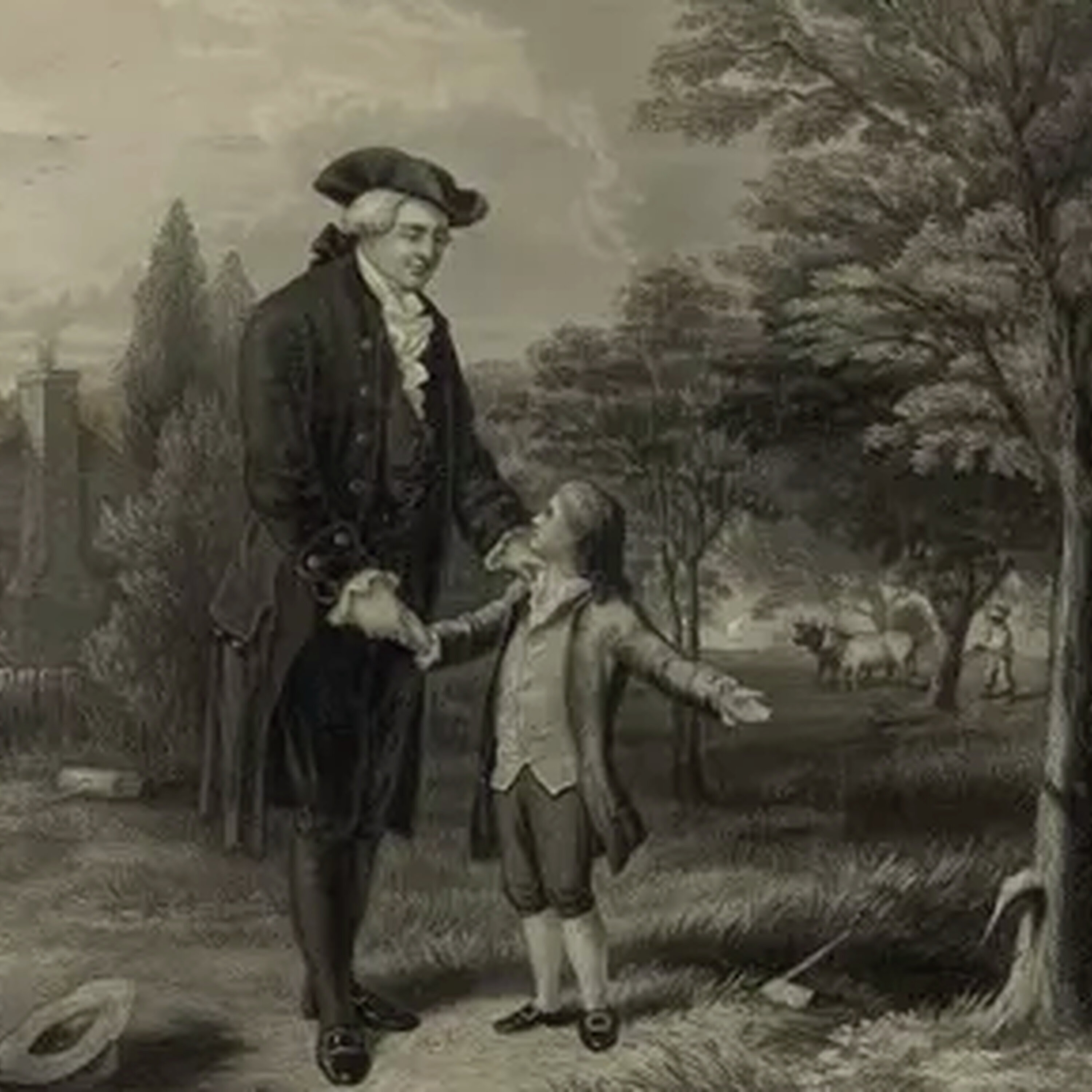
Loading summary
Transcript67 lines
- [00:01]
Washable Sofas Advertiser
There's nothing like sinking into luxury. At washablesofas.com, you'll find the Annabe sofa which combines ultimate comfort and design at an affordable price. And get this, it's the only sofa that's fully machine washable from top to bottom. Starting at only $699, the stain resistant performance fabric slipcovers and cloud like frame duvet can go straight into your wash. Perfect for anyone with kids, pets or anyone who loves an easy to clean spotless sofa. With a modular design and changeable slipcovers, you can customize your sofa to fit any space and style. Whether you need a single chair, loveseat or a luxuriously large sectional, Annabe has you covered. Visit washablesofas.com to upgrade your home. Right now you can shop up to 60% off store wide with a 30 day money back guarantee. Shop now@washablesofas.com Add a little to your life. Offers are subject to change and certain restrictions may apply.
- [01:01]
Oregon Home Care Jobs Announcer
You can make a difference in someone's life, including your own with a job in home care. These jobs offer flexible schedules, health care, retirement options and free training. They also provide paid time off and opportunities for overtime. Visit oregonhomecarejobs.com to learn more and apply. That's oregonhomecarejobs.com.
- [01:30]
Ryan Seacrest
Hey, it's Ryan Seacrest for Albertsons and Safeway. Feel good and look good this summer with savings on your personal care favorites and earn four times points now through September 9th. Shop in store or online for items like Dollar Shave Club razors, hydro Silk Razors and Edge Shave Gel. Plus some favorite brands like Tampax, Pearl, Depend and Poise to earn four times points to use for later discounts on groceries or gas. Hurry in before these deals are gone. Offer end September 9th. Restrictions apply. Offers may vary. Visit albertsons or safeway.com for more details.
- [02:01]
Geico Commercial Auto Insurance Host
I'm here on the job site with Dale, who's a framing contractor.
- [02:04]
Alexis Coe
Hey, good morning.
- [02:05]
Geico Commercial Auto Insurance Host
Dale traded up to Geico Commercial Auto Insurance for all his business vehicles. We're here where he needs us most.
- [02:11]
Bob Crawford
Yep, they sure are.
- [02:12]
Geico Commercial Auto Insurance Host
We make it easy for him to save on all his insurance needs all in one place with coverage that fits his business and bottom line. Oh, I shouldn't have looked down.
- [02:21]
Alexis Coe
It's all right.
- [02:22]
Geico Commercial Auto Insurance Host
We're so far up here.
- [02:23]
Alexis Coe
Look at me.
- [02:24]
Bob Crawford
Take a deep breath.
- [02:24]
Geico Commercial Auto Insurance Host
I'm good. So good.
- [02:26]
Ryan Seacrest
Get a commercial aut insurance quote today@geico.com and see how much you could save. Get more with Geico.
- [02:35]
Bob Crawford
You've reached American History Hotline. You ask the questions, we get the answers. Leave a message. Hey there, American History Hotliners. Your host, Bob Crawford here. Happy to be joining you again for another episode of American History Hotline. You're the ones with the questions. I'm a guy trying to get you some answers and keep those questions coming. The best way to get us a question is to record a video or a voice memo on your phone and email it to americanhistoryhotlinemail.com that's americanhistoryhotline. All1wordmail.com and remember, we're American History Hotline. I love ancient Egypt as much as the next guy, but there's plenty to talk about on this continent. Okay, Today's question is about the man, the myth, the legend, George Washington, father of our country. Here to help me answer this question today is Alexis Koh, a New York Times best selling presidential historian and author of the book you Never forget your A Biography of George Washington. Thank you for joining me today.
- [03:47]
Alexis Coe
I'm happy to be here.
- [03:49]
Bob Crawford
Okay, here's the question we're hoping you can help us answer.
- [03:54]
Alexis Coe
Hi, this is begin from Turkey. I have a question for you. Did George Washington really cut down a cherry tree and then tell the truth or is that a myth? I love this story and I love this question. It is by far the greatest fan fiction ever invented because it was a lie, and I'm sorry to tell you, so were the wooden teeth. But as an aside, the best thing that a reader has ever given me, because readers often they send things, they, they show up to readings or events with presents, which is great. The best thing I've ever received was a reader gave me a printout of a Venn diagram with Sir Mixalot and George Washington and the Venn diagram of he could never tell a lie and I like big butts. It was so good. So here's the thing. He could very much tell a lie. And we know this without even fact checking the story. First of all, if you've ever spoken to a child, the concept of truth is very loose because their concept of the world is very loose and what's possible. So it's surely possible that he lied. But George Washington, to say that he could never tell a lie is denying him one of the great passions of his life, which was spying. He was a spy master during the war and he loved it. I mean, he very, you know, he doesn't come alive. A woman from the Massachusetts Historical Society once said to me, I don't know how you can spend so much time with him. He's so vanilla. But he loved spying, and so I really think that we have to do him the honor of letting him have that. The reason this story exists.
- [05:50]
Bob Crawford
Yes.
- [05:50]
Alexis Coe
Is because of a man with a great name, Parson Weems.
- [05:54]
Bob Crawford
I was going to ask you about Parson Weems. Like, tell us about this man. And because this isn't the only story about George Washington that became legend. That is maybe not true from this man. That came from Parson Wiesley, because I was watching the inauguration of the current president and Cardinal Timothy Dolan, who I have great respect for as a man of God. He had a speech and he talked about George Washington at Valley Forge in the snow. We've all seen the painting praying to God. And isn't that also a Parson Weems invention?
- [06:36]
Alexis Coe
No. Well, okay, so here's the thing. We can blame Parson Weems for so many things, and I want to talk about how these lies happen, because it was sort of like a rollout. It happened over time. My first job out of grad school was being as a research curator at the New York Public Library in Bryant park, which people might remember from Ghostbusters. It has the two lions in the front, and we have every volume of Parson Weems in there. And it's like watching Pinocchio's nose grow. It's fantastic. As far as the art of biography, Parson Weems, amazing name. Right? It. And. And I just want to point out, I. I also. I wrote something about a. I think for msnbc. Now I can't even recall. It's been a whirlwind of a few months. But we know that Washington didn't kneel to pray at Valley Forge the way we know that he told a lie, because one. That painting, we've all seen, it was painted decades after Washington died. And I have to tell you, there were no Polaroids at the time, so we don't have any photographs. We also know that Washington was a deist, and deists do not believe. It's a set it and forget it kind of narrative here as far as the philosophy. So Washington did not believe that there was any God to speak to. He certainly wasn't going to kneel in the cold snow. He was. He. It's an impossibility. And that's a projection of what the man who spoke at Trump's inauguration wants the country to believe about itself. That. That this is a. That we are a Christian nation. And of course, you can be a Christian and you can be a patriot. And not believe that we're a Christian nation. Because the first treaty that America ever made under John Adams, the first line of it is, we are not a Christian nation. So it's pretty convincing to me. But this story is the same in this way. So Parson Weems, an itinerant minister, a bookseller, are kind of like rogue fabulous. Who's. Who's going around the country trying to make, you know, a Washington. He.
- [08:51]
Bob Crawford
So what. What year is this?
- [08:52]
Alexis Coe
This is. So Parson Weems arrives on the scene a year before Washington dies and Washington left office. And he does so with the explicit intent of writing a book about Washington. He doesn't have any connection to Washington. He doesn't have access to his papers, which Washington is busy editing. And when I say editing, I mean getting rid of stuff. But of course, he has no idea what we will like and dislike. So he gets sort of probably the wrong things and definitely keeps the wrong things. And Parson Williams is there. He's already started. And then Washington dies. And he's like, fantastic. Because the nation doesn't know what to do without Washington. He is the great unifier. They didn't know who. The reason the presidency and the powers of the presidency are so vague is because they assumed Washington would be the president and he had given up power, which was considered, you know, sort of unfathomable. It had happened, of course, but it was really easy to understand and conceive of that it would not happen. And so it was this great thing. So. So Parson Weems is like, fantastic. He writes to his publisher and he says, this book. This book is going to sell like flax seeds, because flaxseeds are. I know. I use it all the time. It doesn't really hit, but I love it. And once in a while you have a reaction link you just had. So, you know, you. You, the people who get it, they'll love you for it.
- [10:11]
Bob Crawford
Right? Right.
- [10:12]
Alexis Coe
So Parson Weems first on the scene. And I don't know if history is written by the victors. I'm not sure I believe that. But I do believe it is written by the first responders. And Parson Weems realizes, okay, this country is desperate to know who they are. Now, in his defense, there's no. There's no study of history that's formalized in this way. There are historians, there are people who write history, and of course, but there's no sort of standard. There are no conferences everyone goes to. It is like the. The wild west of. Of scholarship and the study of History, even biography, that is like relatively recent. And so he is going to do whatever he wants here. And boy, does he. The, the cherry tree story is not in the first volume. There are lots of good stories, but the thing is the, the stories that were talked about because not everyone is literate. You also have to remember. So these stories, these books are being read in pubs the same way all the partisan newspapers are. And those stories that everyone keeps repeating are the great myth stories. Because any way that you can paint it that Washington was born pure, the same way the valid forge story tells us that he was a Christian who believed that he could pray to God. Well, that means that we're all good. That means we're all Christian. That means we can all have this relationship that, that a lot of people increasingly want. Right? And, and it's funny because at the time there were not as many churches as you would assume. There had been a great drop after the British left. So we're not necessari, just do not know who we are. And so why not have this founding father who is superhuman in every single way, including his goodness.
- [12:05]
Bob Crawford
We are in between the great Awakenings.
- [12:08]
Alexis Coe
Yes, right.
- [12:08]
Bob Crawford
We're in between the great awakenings. All right, today my guest is Alexis Koh, a New York Times bestselling presidential historian and author of the book you Never Forget yout A Biography of George Washington. We're talking about the real George Washington. Was he cutting down cherry trees or chomping on corn cakes with wooden teeth? Or are those just stories? Speaking of stories, speaking of research, speaking of historians like yourself, before we get back to Washington, I gotta ask you, you are one of the few women to ever write about George Washington. Is that true?
- [12:51]
Alexis Coe
I. In the last hundred years, and I didn't know this until years into writing the project, and indeed, I am somehow the first woman historian to write a biography without a husband as a co author or focusing on, let's say, Martha Washington in over 100 years. And it shows. It shows.
- [13:20]
Bob Crawford
Well, yes, because like, one of the things I remember about your book that I'll probably never forget is you are taught in the book. I think early in the book you're talking about the. What we would. The historiography of Washington. Right. And how all these men have written about Washington and all these men seemed to be. And I think this fits in with the myth, conversation with the size of his thighs. All the men who have written about his. About Washington were fascinated and couldn't get over the size of Washington's thighs. Can you just talk about that, before we get on the teeth.
- [13:58]
Alexis Coe
Yes, here's the thing. I understand it. I have told you before that I have a pretty serious crush on John Andre. It's the most traitorous thing about me. He was the man who recruited Benedict Arnold and he was executed for that sin by Washington. Everyone is begging him not to because John Andre could really. He had appeal even in his own days. Hamilton was just crushed by this. But. But Washington was. His signs were nice. I'm not saying they weren't nice. I've looked at them all now to compare. But the thing is that I noticed when I read these biographies is that there they all start out the same way. As if, like everyone took an oath that we're gonna proceed in the same manner and they say, okay, we're gonna say he's too marble to be real. He's in danger of just becoming a sort of nothing burger of a founder because, and this is true, Jefferson has those beautiful words, Lincoln as well. Everyone seems to have something to ground them except for Washington. You know, you don't really get a sense of his personality, except that he might have been so perfect and maybe too perfect to be that sting. But they, but then they all talk about. They don't really get us any closer to him and in part because they spend a lot of time telling us how like, manly he was. And what is so perplexing to me is I can't point you toward a single thing I've ever read that suggests he's not manly. So when someone goes really far to say something, you wonder, okay, what are they covering up here? Not only do they talk about how he's manly, but they, they talk about how he's virile. And there's no evidence for that except that he wanted. When he was about 18 or 19, he basically wrote to the father of every rich 14, 15, 16 year old girl in any colony, but particularly Virginia, and claimed to be in love because he wanted to move up in the world. He, when he was about 19, probably became sterile from a trip abroad. He got sick. He often got sick. So he probably couldn't have children.
- [16:16]
Bob Crawford
What is that, like the rumor? One of the rumors is that he became infertile after contracting smallpox as a teenager.
- [16:25]
Alexis Coe
Yes, he definitely got smallpox during his only trip abroad with his half brother.
- [16:32]
Bob Crawford
Where did he go on that trip?
- [16:33]
Alexis Coe
He went to Barbados and he. To, you know, to. To. And he was quite taken with it. But he got sick. He often got sick. Carbuncle. He was bled a ton. You name it he got sick. And there are no legitimate heirs that we have ever encountered. Of course, people make claims once in a while, but usually those claims do add up to something or they don't. And these have never added up to anything. Martha had children when they met. Two young children, a 2 year old and a 4 year old from her previous husband. And what was interesting to me is that they would talk about how, well, she probably couldn't have any more because, you know, if you have a hard childbirth, you can't have more children. That is true, but there is nothing to suggest she had a difficult childbirth. If anything, it seemed like they were quite easy and she recovered quickly and she could have more. And in early America, they were not as obsessed with these biological connections, and so it was just not a big deal. But so they go out of their way to kind of blame her. And then they talk about his body in a way that just made me uncomfortable. Like, am I reading him a romance novel? I get it. He's mainly. I'm not arguing with this. It's fine. I don't care if he could have kids or not. He seemed like he was a busy. He was like a helicopter parent. So I never question his feelings of paternity towards these children. And not just these children, but all the other children he raised.
- [18:00]
Bob Crawford
So let's move from the thighs up to the mouth.
- [18:04]
Alexis Coe
Keep your eyes where it matters. Oh, but they talk about his rippling jaw too. So. Okay, but we'll keep it. We'll keep it professional.
- [18:10]
Bob Crawford
Let's go teeth. And then we can talk jaw. Jaw line if we need to.
- [18:14]
Alexis Coe
Yes. So the teeth. This is interesting because when I first encountered this, now I live in the Hudson Valley, but this was pre pandemic, before I owned two saws. And I thought, okay, I don't know a lot about wood, but I do know you're not supposed to get it wet, Right? Because if you get it wet, it expands. Eventually it will start to deteriorate. You know, if you've ever been to anyone's house and put a glass down on. Yeah, but also, those founding fathers were gossipy af. And so they would have talked about it. And they love to cut each other down and not lie about it. But sometimes they did, and they would have talked about this. We would have known. And also, it just is not so it's not a suitable material for dentures in Washington. There's no evidence to suggest he was some sort of like, innovator in early dentistry. But this is a story again, that we Tell ourselves, because we don't want to know the real story. So just like we know that Washington could tell a lie, just like we know that Washington was a deist, so he didn't pray at Valley Forge. We also know that Washington's teeth were not made of wood. And that's the real story here and the story that people still don't want to tell. So St. Francis Tavern in New York in lower Manhattan, where Washington had his final meal after leaving New York after the war, they still have a. They have one of his sets of dentures, and in the id, they say it was made out of ivory. True. Hippopotamus. True. His teeth, maybe. Obviously they were taken out for. You know, they fell out for a reason. By the time he was inaugurated, he had, like, one left. But there's the other thing that was in it, and that is what we don't want to talk about, because it is not the story we want to tell ourselves.
- [20:09]
Bob Crawford
What was it?
- [20:10]
Alexis Coe
The teeth of enslaved people. And this was not a practice he invented. But what was interesting is Washington, who was very cheap, he was land rich, cash poor at first. He went to a dentist to buy teeth because that's what rich people did. And they put them in these, like, very terrible early contraptions they called dentures, but, you know, were just awful. And you can see that in Washington's portrait. He looks pained. His smile changes in each one. That's because he was really uncomfortable. And they changed the entire structure of his jaw. The teeth. At first he purchased. And there are ads that this various dentists would put in the paper. And then Washington realized who was selling their teeth. Who sells things like teeth and organs and people who are desperate or exploited. And Washington enslaved hundreds of people. And so why pay top dollar? Why pay retail when you can go wholesale? And so we know from his ledgers and from his diaries that he paid people who he enslaved for their teeth, and he paid them under market value. We don't know how those teeth came out of the mouth. We don't know if it was by choice. We don't know if they fell out. We don't know if these people who were often described by visitors to Mount Vernon as being in, you know, torn clothing and in. In bad shape. And we know that they were very hungry. We don't. We don't know. But we do know that they ended up in Washington's ledger. He paid some money for them, and then they went into his dentures. And that is a story that there is still, obviously, a lot of resistance to telling.
- [22:04]
Washable Sofas Advertiser
Life'S messy. We're talking spills, stains, pets and kids. But with Annabe, you never have to stress about messes again. @washablesofas.com Discover Annabe sofas, the only fully machine washable sofas inside and out, starting at just $699. Made with liquid and stain resistant fabrics, that means fewer stains and more peace of mind. Designed for real life, our sofas feature changeable fabric covers allowing you to refresh your style anytime. Need flexibility? Our modular design lets you rearrange your sofa effortlessly. Perfect for cozy apartments or spacious homes. Plus, they're earth friendly and built to last. That's why over 200,000 happy customers have made the switch. Upgrade your space today. Visit washablesofas.com now and bring home a sofa made for life. That's washablesofas.com offers are subject to change and certain restrictions may apply.
- [23:04]
Oregon Home Care Jobs Announcer
You can make a difference in someone's life, including your own with a job in home care. These jobs offer flexible schedules, health care, retirement options and free training. They also provide paid time off and opportunities for overtime. Visit oregonhomecarejobs.com to learn more and apply. That's oregonhomecarejobs.com.
- [23:33]
Ryan Seacrest
Hey, it's Ryan Seacrest for Albertsons and Safeway. Feel good and look good this summer with savings on your personal care favorites and earn four times points now through September 9th. Shop in store or online for items like Dollar Shave Club razors, hydro Silk Razors and Edge Shave Gel. Plus favorite brands like Tampax, Pearl, Depend and Poise to earn four times points to use for later discounts on groceries or gas. Hurry in before these deals are gone. Offer end September 9th. Restrictions apply. Offers may vary. Visit albertsons or safeway.com for more details.
- [24:06]
Alexis Coe
December 29, 1975 LaGuardia Airport the holiday.
- [24:13]
Law and Criminal Justice System Narrator
Rush Parents hauling luggage. Luggage. Kids gripping their new Christmas toys. Then at 6:33pm everything changed.
- [24:23]
Eli Lilly & Co. Mounjaro Advertiser
There's been a bombing at the TWA terminal.
- [24:26]
Alexis Coe
Apparently the explosion actually impelled metal glass.
- [24:32]
Eli Lilly & Co. Mounjaro Advertiser
The injured were being loaded into ambulances. Just a chaotic, chaotic scene.
- [24:37]
Law and Criminal Justice System Narrator
In its wake, a new kind of enemy emerged. And it was here to stay. Terrorism, law and criminal justice system is back. In Season two, we're turning our focus to a threat that hides in plain sight that's harder to predict and even harder to stop. Listen to the new season of Law and Criminal justice System on the iHeartRadio app, Apple Podcasts, or wherever you get your podcast.
- [25:15]
Bob Crawford
This is American History Hotline. I'm Your host, Bob Crawford. Today my guest is Alexis Koh, a New York Times best selling presidential historian and the author of the book you, Never Forget yout A Biography of George Washington. Today we're talking about the myth and the facts of George Washington's life as best as we can remember. Send us your burning history questions. Record yourself using the voice memo app on your phone and email it to americanhistoryhotlinemail.com that's American History Hotline. All1WordMail.com now back to the conversation. So while Washington was alive and shortly after his death, there was a huge effort to deify him, do we know how he felt about it while he was still alive? Because he must have known, and I guess there's evidence in his farewell address that he knew the power he held and the fact that he gave up power willingly. He must have known that was going to elevate him in the minds of his fellow countrymen.
- [26:25]
Alexis Coe
Washington, I always say, wanted to be at the center of his nation's story from the earliest age because his father died when he was young. He became the head of his household when he was 10, and he also had to drop out of school at 14. So he really had a bit of a complex. He felt like he was, you know, poorer than his half brothers. He was less educated. This was true throughout his life with the founders. You know, they went to Harvard and William and Mary and all these colleges. So he definitely felt like, I'm, I'm, I'm out here trying to prove something. But there are a couple moments in his life that are really significant. Everyone always argues, oh, this president, that president had an evolution. I don't believe that's true with Washington. But I do believe he has something that is really undervalued. And I could talk about it all the time, and I still don't feel like I get the point across, which is he could be satisfied. And so Washington, when he left and he gave up power, sure, he knew it had an effect, but he just wanted to get home before Christmas. He was super annoyed by that point because he'd been asked, seeing Jefferson, how do you want me to do this? How do you want me to do this? Because we're, we're coming up with all this stuff on the fly, right? We're trying to create traditions and meaningful moments because now we're a country, right? It's one thing to fight the war now you have to, you have to country. And so he leaves and he just wants to get home and then Congress does him dirty they give Americans the right. They basically waive postage to send him letters. So then he has to hire a bunch of people. And he hates. I really can't emphasize enough how much he hates to spend money. And so he. He's annoyed. He builds, like, back stairs to avoid people. The only time I would say that he really enjoyed being famous was the. We're an agrarian society. He is a nerd. He's a farming nerd. And he builds, you know, barns with way too many sides. But he. He's after a mule. He really wants a mule, but you can't get a mule in America. You can't get it. The king has forbidden it. It's illegal. And he puts the word out kind of shamelessly. And then he gets one, he gets two. He gets a. You know, he gets them and one dies. But he has, like, a great time leasing out. So he's charging for this. He's putting ads in the paper like, you know, the Great General's mule. You want it, you gotta pay for it. He. That's the only time he's very excited about this because he believes the mule is the future. And if you've ever hung out with a mule, the mule is the future. Like, I would love a mule. Mules are super friendly. And so. So he. He does not like being famous, but he's aware of it at the same time. Washington is one of those people. And this is. This is also another example of him. So he could be satisfied. He did not want to be president. I don't believe he said, oh, I can't possibly be general, but he had, like, stuffed himself in his old uniform, and he was now, you know, a much older man. So as we all know, bodies change after 40. And he was, like, definitely changed.
- [29:32]
ESPN App Promoter
Right.
- [29:32]
Bob Crawford
And every time there was something came, a crisis in the country, he was called upon to make a comeback. And that's what Adams did during the. The Quasi War.
- [29:45]
Alexis Coe
Yes. He's always called. And he's like. And. And his. It's not just that he's tired. He is. It's not just that he's outlived every man in his family, which he has. He's arthritic again. He has. By this time, if we're talking about his. After he's served two terms and. And left voluntarily, there were no term limits. Because, again, we. We just can trust him and figure, okay, whatever he decides to do, everyone will follow. That was true. Until it wasn't. That was. And I said that with FDR and with Trump. So he Is he's not excited. He calls going to the inauguration, going to my funeral, and he said, I have everything to lose. And he did. And so he's exceptionally sensitive to criticism, and he is not happy about rising partisanship because partisanship is as old as the country. The north and the south were fighting as soon as the war was over. It was over debts, it was over where the capital should be. You name it. They were fighting from the very beginning. And that, of course, partisanship, regionalism. So he's not thrilled about being world famous. I wouldn't say that he. That he was loving it. He left and Jefferson wrote that. I've never met anyone who's more sensitive to criticism. And I would agree with that as far as leaders.
- [31:03]
Bob Crawford
So how much of what we know about Washington is from the biographies written about him? How has his reputation been shaped over time to here we are 250 years later, almost 250 years later. How do we think of him even today?
- [31:28]
Alexis Coe
I think I'm going to die on a lot of hills. I think I could spend the rest of my life explaining how these things never happened and trying to get you to wrap your head around the things that did happen. The fun history, like the spying, and also the difficult history that makes us uncomfortable. Like the own a judge fact that, yes, own a judge, but also Hercules other, you know, they like to say, oh, he never sold someone he enslaved. Yes, he did. And he not only sold them, he sold them to the Caribbean with the life expectancy on a sugar plantation was, you know, just a few years past that point. And he said, this guy's trouble. So he marked him. Right. This is a person who, like all of us, but more extreme, obviously had good and bad. And as a biographer, you know, I see everyone on their best days and their worst days. It's not my job to judge. I'm not judging anyone, but I am doing is presenting you with the facts and trying to let you know that complexity, it's not a liability. But because people. The reason I believe that people are so resistant to this, sure, some people are lazy about learning. We know this. But I think it's also because people are sensitive about their own role and implication in this. And so when I think about this story, I think about. And Washington never wanted to be the reason he didn't want to be president is he. He was worried that we would be dependent on him and after he died, that we would not be able to survive. There was never supposed to be a king. There was never supposed to be A major military leader who was, you know, in charge of everything. And there was never obviously supposed to be any sort of religious person who was in charge. We don't have a pope. So he was very concerned about that. I feel like the story of Washington, I always say, best of luck if you're trying to cancel him, right? Because you. I don't know how you do that. You cancel George Washington, you cancel America. There's no concern for me there. But I do think that we have a hard time holding three things at once when it comes to Washington and when it comes to America, because he is very much tied into our nation's identity. And I talk about it in terms of how I think about America's 250, which is a part of my study at New America. But also I have a new column at the Times, the Book Review for the next year, where I'm just focusing on our 250th and the books we need to read in order to understand ourselves. And there are three things, right? We can hold them all at once. I promise you we can, which is pride in the founding, a reckoning for the ways we've fallen short, and aspiration towards a better future. But in order to do any of that, when it comes to Washington or our nation, we have to be honest. And I really encourage people to realize that they are not necessarily implicated, but perhaps to also think about it the way I think about my own books. Why do you write these books? Why do you. How'd you pick Washington? How'd you pick Kennedy? I didn't really feel like I had a choice. And I was cast in these roles in some ways, because I see something, then I can't unsee it. You are not complicit in any narrative if you don't resist the truth. If you resist the truth. I truly believe this for myself and everyone else, that you are complicit. So the only way you are guilty of anything, slavery, whatever it is, is if you deny it. Everyone contains multitudes. Bob Dylan, yes. Leaves of Grass. Right. Whitman. But we also. And that's okay, because that doesn't. You know, it's okay in the grand narrative, because everyone does. And the sooner we can sit in that discomfort, the better our country will be.
- [35:27]
Bob Crawford
I've been talking with Alexis Koh, a New York Times bestselling presidential historian and the author of the book you, Never Forget yout, First, A Biography of George Washington, and Soon Young, A Biography of John F. Kennedy, 1915-1957. Alexis, thanks for joining us. On American History Hotline.
- [35:51]
Alexis Coe
Thank you for having me.
- [35:56]
Bob Crawford
You've been listening to American History Hotline, a production of iHeart podcasts and Scratch Track Productions. The show's executive producer is James Morrison. Our executive producers from iHeart are Jordan Runtal and Jason English. Original music composed by me, Bob Crawford. Please keep in touch. Our email is americanhistoryhotlinemail.com if you like the show, please tell your friends and leave us a review in Apple Podcasts. I'm your host Bob Crawford. Feel free to hit me up on social media media to ask a history question or to let me know what you think of the show. You can find me at bobcrawford Base. Thanks so much for listening. See you next week.
- [36:49]
Washable Sofas Advertiser
Tired of spills and stains on your sofa? WashablesOfAs.com has your back featuring the Annabe Collection, the only designer sofa sofa that's machine washable inside and out. Where designer quality meets budget friendly prices. That's right, sofas start at just $699. Enjoy a no risk experience with pet friendly stain resistant and changeable slipcovers made with performance fabrics. Experience cloud like comfort with high resilience foam that's hypoallergenic and never needs fluffing. The sturdy steel frame ensures longevity and the modular pieces can be rearranged anytime. Check out washablesofas.com and get up to 60% off your Anna Bay sofa backed by a 30 day satisfaction guarantee. If you're not absolutely in love, send it back for a full refund. No return, shipping or restocking fees. Every penny back. Upgrade now@washablesofas.com Offers are subject to change and certain restrictions may apply.
- [37:49]
Eli Lilly & Co. Mounjaro Advertiser
Our partner Eli Lilly & Co. Just announced duets for type 2 diabetes, a campaign celebrating real patient stories of support. Support because managing type 2 diabetes doesn't have to be a solo act. Share your story@mountjaro.com duets mounjaro tirzepatide is an injectable prescription medicine that is used along with diet and exercise to improve blood sugar glucose in adults with type 2 diabetes mellitus. Mounjaro is not for use in children. Don't take Mounjaro if you're allergic to it or if you or someone in your family had medullary thyroid cancer or multiple endocrine neoplasia syndrome. Type 2. Stop and call your doctor right away if you have an allergic reaction, a lump or swelling in your neck, severe stomach pain or vision changes. Serious side effects may include inflamed pancreas and gallbladder problems. Taking Mounjaro with a sulfonylnorrhea or insulin may cause low blood sugar. Tell your doctor if you're nursing pregnant, plan to be or taking birth control pills and before scheduled procedures with anesthesia. Side effects include nausea, diarrhea and vomiting, which can cause dehydration and may cause kidney problems. Once weekly, Mounjaro is available by prescription only in 2.5, 5, 7.5, 10, 12.5 and 15 milligrams per 0.5 milliliter injection. Call 1-800-LilyRx 800-545-5979 or visit mountjaro.lilly.com for the Mountjaro Indication and safety summary with warnings. Talk to your doctor for more information about Mountjaro. Mountjaro and its delivery device base are registered trademarks owned or licensed by eli Lilly & Company, its subsidiaries or affiliates.
- [39:20]
ESPN App Promoter
Talk about stepping up it's time to level up your game introducing the all new ESPN app. All of ESPN all in one place. Your home for the most live sports and the best championship moments.
- [39:33]
Alexis Coe
The electricity is palpable.
- [39:36]
ESPN App Promoter
Step up your game with no annual contract required. It's the ultimate fan experience. Level up. For more on the ESPN app or extreme.espn.com sign up now.
- [39:49]
Ryan Seacrest
Hey, it's Ryan Seacrest for Albertsons and Safeway. Feel good and look good this summer with savings on your personal care favorites and earn four times points now through September 9th. Shop in store or online for items like Dollar Shave Club razors, hydro Silk Razors and Edge Shave Gel. Plus some favorite brands like Tampax, Pearl, Depend and Poise to earn four times points to use for later discounts on groceries or gas. Hurry in before these deals are gone. Offer end September 9th. Restrictions apply. Offers may vary. Visit albertsons or safeway.com for more details.