← American History Hotline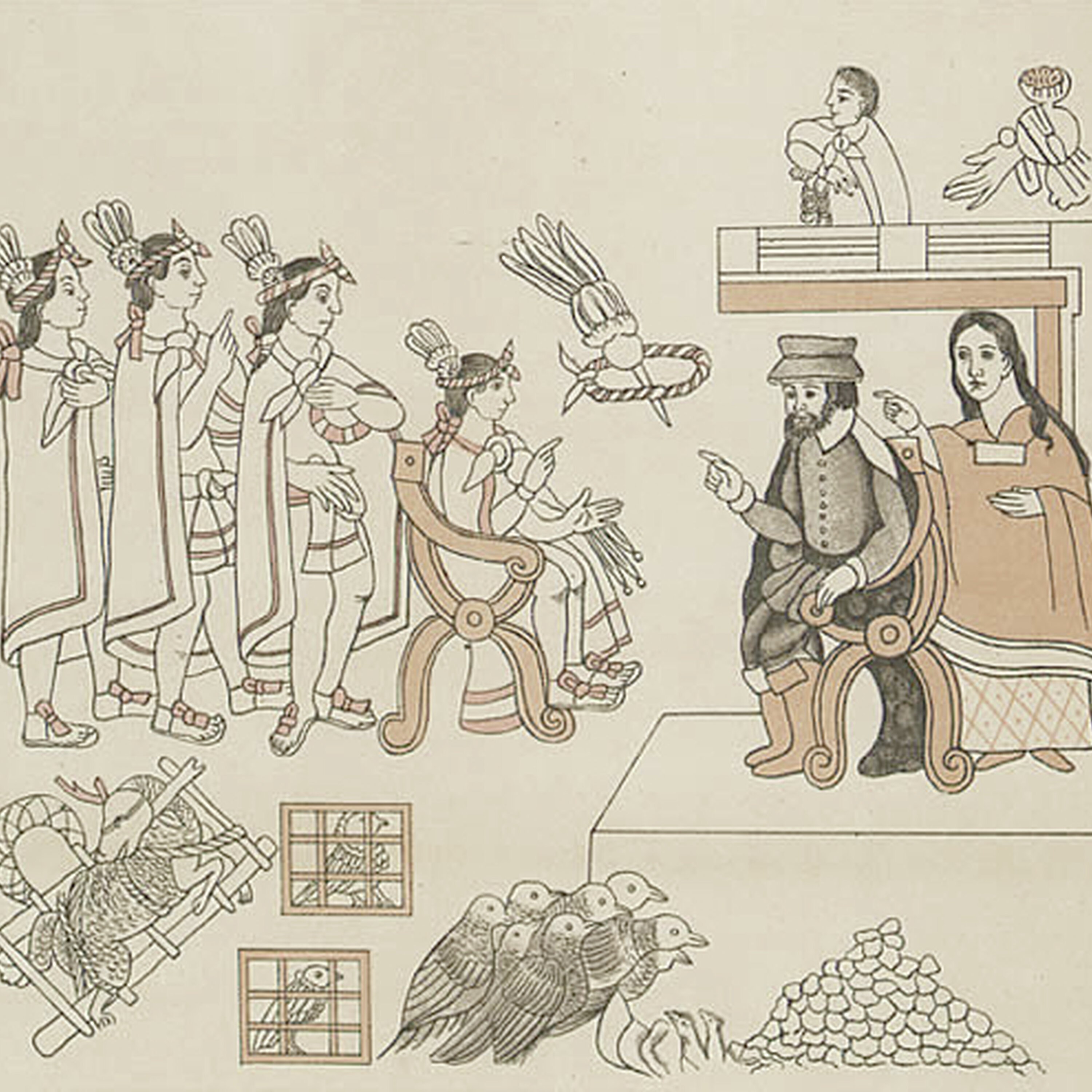
Loading summary
Transcript34 lines
- [00:00]
A
The historical past is not set. It never is set. It's not something that's that it's happened, therefore it can't change. It's actually the opposite. It's constantly changing. And as soon as we deny that, say, no, no, no. But these are the events that happen. It's just a question of finding the truth and then etching it in stone. And you can't change it. That closes off debate.
- [00:25]
B
You've reached American History Hotline. You ask the questions, we get the answers. Leave a.
- [00:34]
A
A decade ago, I was on the trail of one of the country's most elusive serial killers. But it wasn't until 2023 when he was finally caught, the answers were there, hidden in plain sight. So why did it take so long to catch him? I'm Josh Zieman, and this is Monster Hunting the Long Island Serial Killer, the investigation into the most notorious killer in New York since the Son of Sam. Available now listen for free on the iHeartRadio app, Apple Podcasts, or wherever you get your podcasts.
- [01:04]
B
Hey there, American History Hotliners. Your host, Bob Crawford here. Happy to be joining you again for another episode of American History Hotline. You're the ones with the questions. I'm a guy trying to get you some answers. And keep those questions coming, please. The best way to guess a question is to record a video or a voice memo on your phone and email it to AmericanHistoryHotlinEmail.com that's AmericanHistoryHotlinEmail.com and remember, we are American History Hotline. American meaning North American or Latin American. And today our question is about Latin America. Here to help me answer this question is Matthew Restall, Director of Latin American Studies at Penn State. He's the author of many books, including the Nine Lives of Christopher Columbus and When Montezuma Met Cortez. Matthew, thanks for joining me today.
- [02:06]
A
Well, you're welcome. American History Hotline is awesome. I'm thrilled to be on it.
- [02:10]
B
We are excited to have you. Okay, Matthew, here's the question we are hoping you can help us answer. It comes from Eric in Brooklyn. I just returned from Mexico City and visited the place where Hernando Cortez and Montezuma met. The tour guide told me the story of that meeting and then said it's probably all wrong. But he didn't tell us the real story. What is the real story of Cortez and Montezuma meeting? Matt, what is the popular or traditional story of this meeting?
- [02:45]
A
Right. In a nutshell, the traditional story is Montezuma surrendered that's it. I mean, I can go on and on. And when Montezuma Met Cortez, the title of that book, that is 185,000 wor book. So I could go on for days. But in a nutshell, it is Montezuma Surrendered. And my book seeks to persuade you that Montezuma did not surrender. That's it. I'm really curious to Eric from Brooklyn, what, what the tour guide told him. I was just down there myself at that spot filming a documentary with a. With a French crew talking about that exact thing. Look, here we are where they met. And look at the mural behind me. And the mural shows Montezuma surrendering. And Montezuma surrenders to Cortez. Not just right on the spot where they first met, but everywhere, all over the world.
- [03:37]
B
All right, can you set up for those who don't know, who was Montezuma, who was Cortez, what brought them together?
- [03:45]
A
So Montezuma was the emperor of the Aztec empire, and the capital city of that empire was called Tenochtitlan. It is today Mexico City in exactly the same spot. And in fact, the main central plaza of Tenochtitlan is the main central plaza of Mexico City today. So you can go stand in that exact space and imagine that you are at the epicenter of the Aztec empire, which had existed for a couple of hundred years before Europeans showed up in the early 16th century. So certainly as a state, it had been there for 200 years. Sometimes scholars say, really the full blown empire had existed for about 100 years when Spanish conquistadors discovered it. Cortez was the nominal leader of that conquistador company. And he has gone down in history as being this genius general that led a handful of a few hundred Spaniards into an empire of tens of millions and managed to subdue and conquer it. And that's the reputation he's had for hundreds of years. And other scholars, I'm not the only one, have tried to kind of point out it's a little bit more complicated than that. But my book is sort of a recent attempt to go at that legend and say, no, actually, you know, the great question. How do Cortez succeed in conquering a huge empire, millions is a good question. And except he didn't. And it's actually then ultimately becomes a terrible question. Right? And it leads us to that moment of surrender or not surrender. Why was Cortez, Why does it matter to him and to other Spaniards subsequently to believe that Montezuma surrendered? First of all, it helps explain how he was able to conquer the empire. And remember, what I'm arguing is he didn't do it. It's more complicated than that. There was a huge civil war. But if you don't want to challenge Cortez's position, then you have to come up with some kind of answer. And so, well, Montezuma surrendered. Oh, okay, that makes more sense now. I get it right, first of all. And secondly, it legitimizes what they did. This is a brutal invasion. There is no provocation, no moral justification. There's on. In no way whatsoever. Can you kind of spin events to say, well, no, it was okay that the Spaniards had the, had the right to be there. Even if you want to take a very extreme religious position and say, but they were bringing Christianity. And therefore that justifies it, it still doesn't justify the level of destruction.
- [06:36]
B
Was there confusion about Cortez being a God?
- [06:40]
A
That's a legend that I would argue against, and I don't think that's true. It's certainly a story. It's not a story that's circulating in, in Cortez's lifetime. If people were saying in his lifetime that, that, oh, the indigenous peoples, or the Indians as the Spaniards call them, thought Cortez was a God, Cortez would have jumped on that. He would have been all over that one. He would have loved that one. It is around in the 16th century, but it's also around in other European empires as well. So there were French and English explorers from, for hundreds of years to go to come after Cortez, who are firmly convinced that, you know, the natives, as it were. Here's my inverted commas that the natives think that they're gods because, oh, because Europeans are so impressive.
- [07:26]
B
Right. Has, has our understanding almost completely come from the Spanish perspective?
- [07:33]
A
Yes, yes. I mean, this, you know, there's a cliche, there's a history cliche. I'm sure it's come up on the hotline before. You know, the victors write the history.
- [07:41]
B
Of course.
- [07:43]
A
I think I always like to kind of twist that a little bit and say it's the victors, but it's also the, the storytellers. Most, most of the victors aren't really writing good stories. Cortez is kind of is unique in that regard. I don't think he's a brilliant general. He's a mon. He's a monstrous individual. But he's very good at spinning a tail. He's good at self promotion. He's a very kind of wily politician in that sense. I mean, look, there's thousands of Spaniards invade Mexico during the two and a half year war. The initial camp, the initial company, is 400, 450 men. And. And often in the legend, it's like somehow those 450 conquer the empire. There are thousands who. There's no evidence that more than a handful survived the entire war to then sort of die of old age back in Spain. And Cortez is one of them. How does he manage to do that? Because he's cleverer than anybody else? No, because he's wily, he's duplicitous. He's a certain kind of. There's a certain kind of cowardliness to him, right, that he's always able to survive. And part of that personality is telling a story which places him at the center of the story. And because that story works for Spaniards, for the empire, generally to justify and support the empire, it's that story that becomes the one that we know. It works its way into all of the history books in the images that are painted and sculpted, and eventually when the modern era in film and television and so on.
- [09:22]
B
So he literally tells this story when he gets.
- [09:25]
A
When he returns to Spain, he literally does in a series of letters that he writes back to the king. But they're not really letters. And I. And these are. These are documents that are not. Academics argue about them and kind of understand them in the academic context. But, you know, people who don't have PhD, PhDs in history, you know, I think have a right to understand this stuff in a way that isn't kind of filled with jargon, right? So I can use the jargon about what kind of, you know, genre they are. And they cartas de relation and so on. But listen, this is the thing is anyone who is received investment and has to answer to their investors has to submit reports. So Cortez has been writing reports back to the king saying, invest in me, support me, give me positions of authority. I'm in a legal battle with the governor of Cuba, who actually already had the support of the crown. And I'm trying to circumnavigate that, but I'm not doing it to be disloyal to the crown. So stop sending people to arrest me. Instead, support me. And these are my reports. So he sends a series of reports during and after the war. And the most important one is the one that has kind of gone down in history as being the second letter. But it's just a report that he wrote in the middle of the war at the absolute down point. For the Spaniards, it's the point where the Spaniards have been. This so called surrender happened. It didn't. Spaniards have been in Tenochtitlan. They've been ejected violently. Most of them have been killed. They're holed up in a, in a, in an allied town, a town that is, for the time being, friendly, called Tlaxcala. Plays a very important role in the war. And then Cortez writes this report and he's got to spin events to make it seem like they he's not a failure. Because if he's a failure, then the crown won't support him. Why the Crown going to support this failed guy who kind of rebelled against the governor of Cuba? No, no, no, forget him. So that's where the spin of him as a brilliant general forging alliances against this evil empire with a lily livered, superstitious emperor who had surrendered upon meeting Cortez and had given this speech that is essentially sort of composed by the Spaniards saying, yeah, we've been waiting for you all this time. You know, it's all full of kind of Christian imagery that makes no sense. Right. You know, you're returning, doesn't say you're returning God, but we've been waiting for the true ruler to come back and take over and so on.
- [12:00]
B
So paint me a picture of the Aztec empire, okay. At the, during Montezuma's rule, like how big was it?
- [12:08]
A
Right. So the empire, it's an impressive empire, as empires tend to be from our point of view, covers most of central and southern Mexico, kind of peters out when you get into northern Mexico. And then in the south, it comes up against Maya kingdoms. As I, you know, as I said, it had really only been a full fledged empire for a hundred years. So without the arrival of the Spaniards, I would argue the empire would have continued to expand. All empires, they're sort of like sharks. They have to keep moving. They have to keep moving in order to kind of bring in more resources. And the Aztec empire was at that stage of expansion and probably would have gone for another century or two before it would have kind of fallen in on itself. So the next frontier was the Maya kingdoms. Very wealthy kingdoms of the Maya are not unified at all. There's maybe 30 different kingdoms in the Maya area. And so I think the Aztecs would have been able to move in and sort of pick off those kingdoms one by one. So not only is this kind of an impressive, expanding, well, militarized empire, but it's on the verge of, of kind of a whole other level of Expense.
- [13:18]
B
But, Matt, if I could interrupt. What year is this? I realized I did not. I did not set our.
- [13:25]
A
No idea what era we're talking about. So in European history, it's the late medieval moving into the early modern period, meaning 15th and 16th centuries. So Cortez and the Spaniards show up on the Gulf coast of Mexico in 1519. And so the war of invasion, the two and a half year war of invasion, runs more or less from April 1519, when Spaniards first land on the coast, until the fall of Tenochtitlan in August 1521. So, but let. Let. Let me say something important about the Aztec Empire. That's what the. What is the number one association that people have with the. With the Aztecs? Number one is human sacrifice. Right? There was this. There's this idea that this is an empire that is devoted to. Devoted to extreme level to a grisly, gruesome ritual of public sacrifice where people are dragged up the steps of a pyramid and in front of the temple, their hearts are cut out while they're still alive. And those hearts are then offered to the gods. Right. This is the. This is the common perception, and there's more layers and layers to this, that, oh, it's otherwise the sun won't rise and it's propitiating the gods and. And so on and so forth. And you may remember a Mel Gibson movie called Apocalypto from some years back that is supposed to be set in Maya country in Yucatan. Well, it's not. So it is everybody speaking Yucatec, which is amazing, and there's some great things about the movie. But ultimately the movie gets people who study the Mayas and the Aztecs absolutely apoplexic with rage. Right? Because the movie does incredible damage to the reputation of indigenous peoples by making stuff up and depicting them as being incredibly savage and barbarian. And, and therefore we don't have to feel bad at all about any of the European colonization in the Americas because these were savage peoples who are being. Who are saved by civilization. That's. That's the idea. And, and Cortez would have loved Apocalypto, right? That Mel Gibson movie is absolutely in line with kind of the spirit of how you depict indigenous peoples. Whether you, you know, cynically know that's not really true or whether that's what you actually believe or not. And I think with Cortez, he's the kind of guy, it's like, yeah, look, let's just. Let's not say we saw 20 people being ritually executed. Let's Say there were thousands. So these numbers get hugely exaggerated and it becomes kind of the centerpiece of how we see Aztec civilization. Aztec scholars today kind of go a little bit crazy trying to convince people that this isn't true. And the problem is a lot of the time it's Aztec scholarship talking to each other. And so everybody knows that the human sacrifice thing is not really is massively exaggerated. Some people are arguing that it's like completely made up. I'm actually on the pretty kind of extreme end of that debate where I think we should not even be using the phrase human sacrifice anymore. I think these are ritual executions and that our view of the Aztec empire is equivalent to looking at Elizabethan England and forgetting that Shakespeare ever existed and instead saying, what was Elizabethan England all about? Oh, it was burning people alive at the stake. That's all they did. Tens of thousands, they just tied them to wooden stakes and burned them alive. That was all they did. That's how we see the Aztecs. And I think it's unfair to the Aztecs.
- [17:05]
B
This is American History Hotline. I'm your host Bob Crawford. Today my guest is Matthew Restall, author of the new book the Nine Lives of Christopher Columbus. We're talking about the meet cute rom com between Aztec emperor Montezuma and Spanish conquistador Hernando Cortez. Remember to send us your burning questions about American history. Record yourself using the voice memo app on your phone and email it to americanhistoryhotlinemail.com that's American History Hotline gmail.com. now back to our show. Let's talk about Montezuma the man. What do we really know about him?
- [17:47]
A
Yeah, we don't know a lot about him. And that is, it's a problem, right, that we don't really get a good sense of what he was like as a kind of a, as a personality. There's almost nothing has survived in terms of real evidence from his lifetime. The Aztecs, they had a writing system, they kept books. Montezuma had a huge library. It was all destroyed. What was not destroyed in the war was destroyed afterwards. So there's literally just kind of a handful of, of carvings that give us kind of some sense of who he was. So a lot is then written down.
- [18:27]
B
Matt, as a historian, talk about understanding, getting a broad view of what happened when the traditional sources or the most easily interpreted sources, like what somebody wrote and said don't exist. How did you come to understand him in your work, given the resources you did have?
- [18:56]
A
Yeah, I mean, I think when we have. When we have obvious sources, like, you know, someone's autobiography or something, or a lot of interviews, you, you get satisfied after reading or discovering a small number of things. You get a, you get a sense of it. I think with, with the case, somebody like Montezuma, where those things don't exist, you, you, the, you have to round up an enormous quantity of sources because those sources are really kind of circumstantial evidence or they're sources that have a lot of filters in. So there's things written down in the 16th century, after the war, after Montezuma's long dead, about him, about what he was like. And we can't just read those without, you know, understanding all the filters that are in there. And those filters are huge because they're now being written, including by people who are indigenous people, but they're Christian and they, and they have kind of processed the massive change that has happened in their world. Right? Like the Aztec Empire is gone. But the Aztec peoples, however we might kind of classify them, they're not gone. Aztec civilization, I would argue, has not really been destroyed. It's just been transformed. It's kind of evolved. The majority of people who live in Mexico are still indigenous people, still pursuing their culture and so on. So they're, they're, they, they have their own understanding of who Montezuma was. And we have to kind of see, read through that in order to understand who we think he might have been. And what we come up with is so many different images, so many competing conflicting images of him that then it makes it even harder. So then what we have to do is then compare them all and kind of use common sense to work our way through. And I would say for someone trying to kind of figure this out, let's go back to where we began this conversation with the meeting of Cortez of Montezuma. What happens at that meeting and what happens in the six months following that meeting? So in the traditional narrative, Montezuma surrenders. Okay, so there's one clue like that tells us what kind of a guy he was. Is that true or not? And then Cortez and this other Spaniards are welcomed into the city. They are then put up in the palace that was the palace of Asayakatl, who was Montezuma's father and the emperor before him. And that's right on the plaza. In fact, the location of where that palace was is, is right there today. And there's a colonial era palace there with a plaque on and so on. So you can kind of use Your imagination to. To see where the Spaniards were. And they're there for six months. And Cortez claims a year later, oh, we, we, Montezuma surrendered. So just to make sure he really was surrendered, we then clapped him in irons. We held him prisoner. We had him say his surrender again and we notarized it. And then we ruled the empire through him. So apart from Cortez claiming that there's no evidence of that whatsoever, what the evidence is suggests that Montezuma brings in the Spaniards as his guests. And then what does he do? He talks to them. He studies them. Right. So this is a guy who's incredibly curious. And I, and I think that if we take that clue, not, oh, he's somehow, you know, it makes no sense that somehow he's like this incredibly powerful emperor of this huge expanding empire that, oh, by the way, according to popular legend, is devoted to this bloody ritual of human sacrifice almost on a daily basis. And yet along come a few hundred Spaniards. There's only like 2 or 250 or something at the time. At the time of the meeting. And surrenders to them. It makes no sense. Right, but what if instead we say he's actually a smart guy and he's very, very curious and he. What other evidence is there of his curiosity? Oh, it turns out there are zoos and botanical gardens and libraries and things of that kind all over the city. He collects live objects. Live, Live creatures, people and objects from all over his empire of every conceivable kind in order that those objects can then be studied, that they represent the scale of his power of his domain, but also their learning tools. Right. And so for him, I think the Spaniards are incredibly interesting. Like, where have they come from? Why do they.
- [23:26]
B
Why you do.
- [23:26]
A
Why do they look that way? Why do they smell so bad? You know, what is the nature of their culture? What are they after? I think Montezuma is incredibly curious. And that, to my mind, kind of is sort of a little bit mind blowing. Right? Because it opens up this whole other way of seeing the Aztecs. Oh, okay. They've got this smart emperor who's. Who's really curious and. Huh. And you can almost kind of imagine a historical counter narrative in which the Aztecs, driven by curiosity, start building ships and sailing out across the Atlantic and going in the other direction. Right.
- [24:00]
B
So there's this curiosity between the Spaniard. You're saying that Montezuma made the Spaniards curious and so what? And you're saying that the nature of the relationship may have been different than we first understand. So what was that relationship between the Spanish and Montezuma ever like? Like, was there any courtesy between them? Was there any. Was there any friendship?
- [24:29]
A
I, I. The friend Cortez is a difficult kind of character, right? He's not. I think he's kind of an unpleasant character. And I think that would have acted as something of a barrier between that sort of a friendship between. Specifically between Cortez and Montezuma. But I think there are friendships of a kind that developed between Spanish captains, individual Spaniards, and members of the Aztec royal family and the nobility. So I think we want to kind of broaden that out to think about the relationship between, you know, 100 or so Spaniards and a similar kind of number of people in Montezuma's entourage, as well as just Montezuma and Cortez, and how individuals on both sides of that, Aztecs and Spaniards, who are intelligent and curious and intrigued by the other kind of are able to indulge in that curiosity and establish these relationships. And you get kind of little hints of that in some of the stories that were told by the few Spaniards who survived. Most of them, by the way, claim they were Montezuma's God. Because this is. It makes you seem important, and it's. And it's used as kind of a pretext for asking for a big petition, right? Like, look, Montezuma surrendered, and then I was his guard for six months, so you've got to give me titles and money. And so they can't all have been his God. I don't think anyone was his guard. But the point is that they then say, well, yeah, and we, you know, we played games with them. We showed them the games that we play, card games and dice games and board games and so on. And then they showed us their games. And clearly there's a lot of conversing and interaction that is going on. And I think the tragedy of this war is that that six months represents a kind of a rare golden opportunity. Because why does this matter? Why does the meeting of Cortez and Montezuma matter in the larger scale of things? This is one of the great turning points in human history. Like never before in the. Before this and never again will you have the two halves of humanity, if you like, separated for tens of thousands of years and now suddenly brought together in a kind of a dramatic moment. I think, sure, Columbus landing on the shores of an island in the Bahamas and seeing indigenous peoples for the first time is kind of a turning point, but I don't. It doesn't. Have the same kind of impact. I think you might as well go back to the Norsemen in Newfoundland in the year 1000. I think this is the moment where there's kind of no turning back at all. And what is the nature of that encounter going to be? Initially, there's violence, but ultimately there's this diplomatic engagement in which they are then sitting down and talking for six months. And if only that had persisted, if only there had been a sense in which this could be the beginning of kind of a diplomatic relationship, a rapprochement between, you know, Europe and Indigenous America, the law 5, the next 500 years would have been very different. And I think that that six months that is kind of hidden from us by the violence that comes afterwards is a kind of attempting alternative history of how things might have gone.
- [27:50]
B
How do we fix the wrong narratives that have been told for centuries?
- [27:55]
A
You know, we just have to keep talking about it. And sometimes people say to me, look, you just told us that everybody believes one story for 500 years, and now you've come along and said it's wrong. And people very polite, right? But basically what they're saying is, who the heck do you think you are and how. Why are you so arrogant? You think we're going to believe you? And I say, well, look, I'm not the only one, right, that I'm. Thank you for reading my book and nobody else's book. That's great. But there are others out there, and they don't all say the same thing I do. Some of them agree with some of the things, some of them don't. The point is that there's a kind of a loose movement of scholars and writers who are convinced by the evidence, by the discussion, that there's another story here and are very open to debating the details of it. It's not that there's a kind of a new orthodoxy and you have to kind of embrace it or not, right? And I'm, you know, people are like, you say, you're too nice about the Aztecs. This was an empire. People spot kind of contradictions in the things that I say when I kind of simplify. Like, empire is bad. Spaniards are not bad people. Aztecs are not bad people. It's about empire, colonization, empire, invasion. These are bad concepts. And people say, but the Aztecs were an empire too, so they must have been bad. Yes, you're right. Let's talk about that. Let's try and get a realistic understanding of, you know, of the Aztecs. No, I. I think it's about Constantly understanding that the historical past is not set. It never is set. It's not something that's, that's it's happened, therefore it can't change. It's actually the opposite. It's constantly changing. And as soon as we deny that, say no, no, no. But these are the events that happen. It's just a question of finding the truth and then etching it in stone and you can't change it. That closes off debate, it closes off our minds and then makes it impossible for us to think about alternative stories that maybe make more sense to us. It's not even about yet. Sometimes I do say it's about there's a kind of a moral imperative that if we don't understand the Aztecs better, we can never understand indigenous peoples. And that there's a line between this demonic opinion of the Aztec empire and negative racist opinions about indigenous peoples today. I do sometimes say that there's a moral position, but even if someone doesn't like that and doesn't feel like I'm someone they want to listen to, trying to moralize them, it's also just about stories that make sense. The traditional narrative of the conquest of Mexico by the Spaniards is a great story. Particularly if you want to make like a two hour movie and you want to pack everything in. Sure, toss a romance in there. We haven't even talked about that. The traditional story has a absurd romance in that was invented basically in the 19th century. Let's come up with that as well. But if you want a story that actually makes sense and you're willing to invest more than, you know, two hours in a movie in your home movie theater, there's, there's stories, there are better stories that tell us more about humanity. I think if you want to know.
- [31:08]
B
More about Montezuma meeting Cortez, you need to read Matthew Restall's book, When Montezuma Met Cortez. We didn't give it all away for free here today. There's so much more to it. I've been talking with Matthew Restall, director of Latin American Studies at Penn State. He's the author of many books, including the Nine Lives of Christopher Columbus. You can find out more about his books in our show notes. Matthew, thank you for joining us on American History Hotline today.
- [31:40]
A
It's been a pleasure. Bob, thank you for having me. Hope to be back soon.
- [31:46]
B
You've been listening to American History Hotline, a production of Iheart podcasts and Scratch Track Productions. The show's executive producer is James Morrison. Our executive producers from iHeart are Jordan Runtal and Jason English. Original music composed by me, Bob Crawford. Please keep in touch. Our email is americanhistoryhotlinemail.com if you like the show, please tell your friends and leave us a review in Apple Podcasts. I'm your host, Bob Crawford. Feel free to hit me up on social media to ask a history question or to let me know what you think of the show. You can find me at bobcrawford Bass thanks so much for listening. See you next week.