← American History Hotline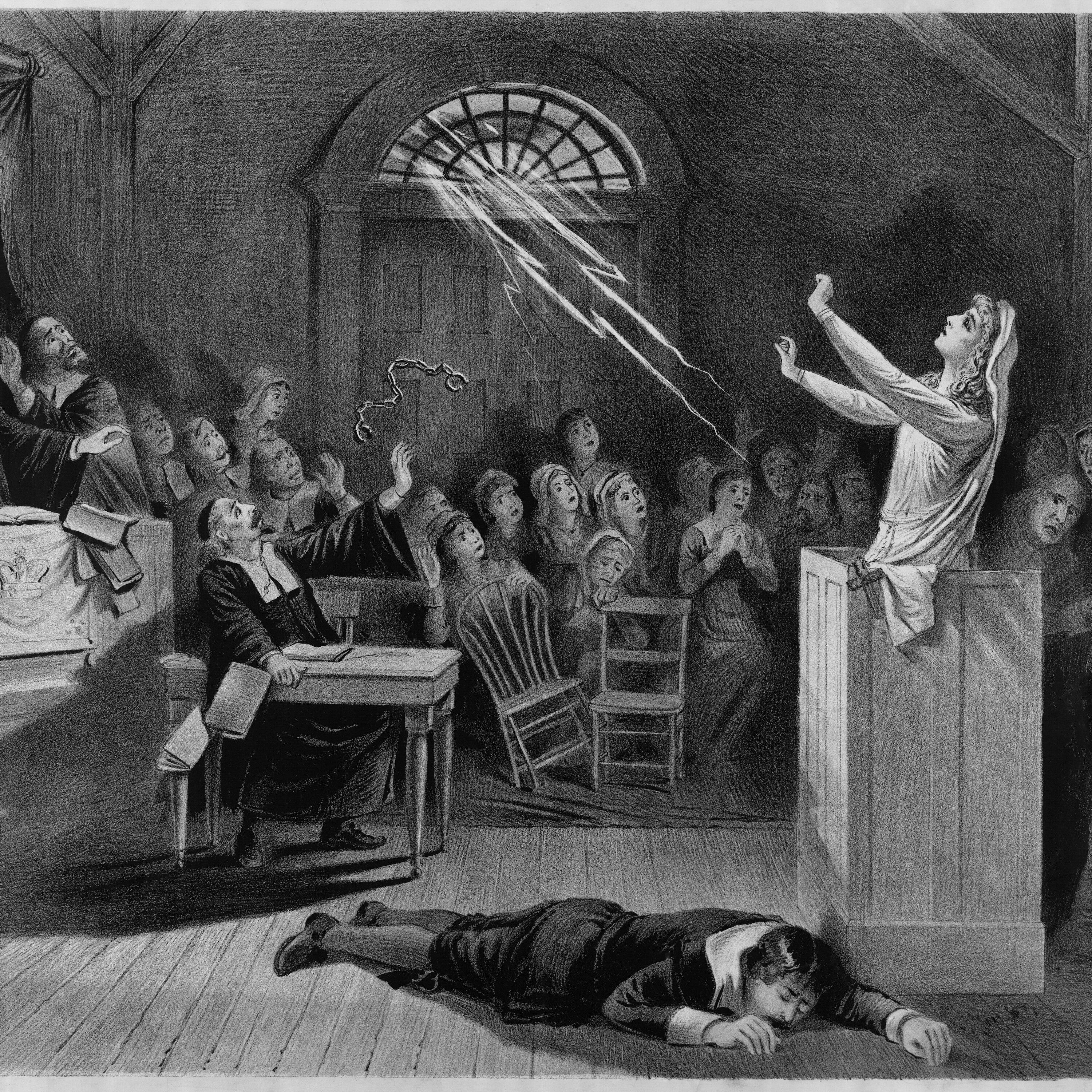
Loading summary
Transcript128 lines
- [00:00]
Emerson Baker
Those people who are standing up and being good Christians and saying, no, not guilty, not a witch. I don't know why they're doing this. Tried, convicted, sentenced, executed. Meanwhile, those people who kind of play ball with the court, over a third of the people accused confess. And they're at least alive for the time being.
- [00:25]
Bob Crawford
You've reached American History Hotline. You ask the questions, we get the answers. Leave a message.
- [00:34]
Kyle McLaughlin
Hey, I'm Kyle McLaughlin. You might know me as that guy from Twin Peaks, Sex and the City, or just the Internet stand. I have a new podcast called what Are We Even Doing? Where I embark on a noble quest to understand the brilliant chaos of youth culture. Each week I invite someone fascinating to join me to talk about navigating this high speed roller coaster we call reality. Join me and my delightful guests every Thursday and let's get weird together in a good way. Listen to what Are We Even doing on the iHeartRadio app, Apple Podcasts, or wherever you get your podcasts.
- [01:11]
Johnny Knoxville
Johnny Knoxville here. Check out Crimeless Hillbilly Heist, my new true crime podcast from Smartless Media, Campside Media and big money players. It's the true story of the almost perfect crime and the nimrods who almost pulled it off.
- [01:25]
Emerson Baker
It was kind of like the perfect.
- [01:27]
Kal Penn
Storm in a sewer.
- [01:28]
Kyle McLaughlin
That was dumb. Do not follow my example.
- [01:32]
Johnny Knoxville
Listen to Crimeless hillbilly on the iHeartRadio app, Apple Podcasts, or wherever you get your podcasts.
- [01:41]
Bloomberg News Host
The Big Take podcast from Bloomberg News keeps you on top of the biggest stories of the day.
- [01:46]
Bob Crawford
My fellow Americans, this is Liberation Day.
- [01:50]
Bloomberg News Host
Stories that move markets.
- [01:51]
Bob Crawford
Chair Powell opened the door to this first interest rate.
- [01:55]
Bloomberg News Host
Cut impact politics, change businesses. This is a really stunning development for the AI world and how you think about your bottom line. Listen to the big Take from Bloomberg News every weekday afternoon on the iHeartRadio app, Apple Podcasts, or wherever you get your podcasts.
- [02:13]
Kal Penn
Hey, I'm Kalpen, and on my new podcast, Here We Go Again, we'll take today's trends and headlines and ask, why does history keep repeating itself? Each week I'm calling up my friends like Bill Nye, Lilly Singh and Pete Buttigieg to talk about everything from the space race to movie remakes to psychedelics.
- [02:32]
Emerson Baker
Put another way, are you high?
- [02:35]
Kal Penn
Look, the world can seem pretty scary right now, but my goal here is for you to listen and feel a little better about the future. Listen and subscribe to Here We Go Again with Cal Penn on the iHeartRadio app, Apple Podcasts or wherever you get your podcasts.
- [02:52]
Bob Crawford
Hey there, American history Hotliners. Bob Crawford here. Thrilled to be joining you again for another episode of American History Hotline, the show where you ask the questions. You know the drill by now. Send your questions to AmericanHistoryHotlinEmail.com that's AmericanHistoryHotlinEmail.com okay, on to today's question. It comes from Eleanor in Flagstaff. She writes, I hear so much about witch hunts and the Salem witch trials, but I actually never learned this history, which why were women accused of being witches and did they actually have trials? How do you defend against being a witch? I love this question, Eleanor, and here to help me answer it is Emerson Baker, author of the book A Storm of the Salem Trials and the American Experience, Pivotal Moments in American History. Emerson, thank you for joining me today.
- [03:54]
Emerson Baker
Happy to be here, Bob. It's a great question.
- [03:58]
Bob Crawford
It is. It is. Emerson, there's so much to get into to start. Can you give us the setting for all of this? Like, when was this and what does America look like at this point?
- [04:11]
Emerson Baker
Sure. 1692 in Salem, Massachusetts. Massachusetts had been settled in 1620 at Plymouth, and Salem was established in 1626. So we're talking a couple generations in from settlement. At the time. We just have a string of settlements, really, from, oh, northern North Carolina on up into Maine, sort of hugging the coastline. So it's the early days. Salem is one of the bigger settlements, which probably has a population of about 2,500 people, and it's a very active maritime port on the coast. But if you go interior a few miles to what was known as Salem Village, then you're there in sort of a rural agrarian farming community of maybe about 500 people. These people are devout Puritans who came to New England in the 1630s for religious freedom to worship as they saw fit in the Puritan fashion, a fairly strict branch of Protestantism. And I ought to point out, too, that I think because of Salem and the Puritans, people associate witch hunts with them. But, you know, witch hunts, unfortunately, is kind of like a universal thing that has taken place throughout time and place. Most societies have some version of a witch hunt. And we know that in Europe, the great age of witch hunts between about 1400 and the American Revolution in Europe and her colonies, about 100,000 people were tried as witches and about half of them executed. So Salem is sort of taking place towards the end of that. But this is, it's a long, sad story of which Salem is just a small part.
- [05:47]
Bob Crawford
So witch trials, they're not, you're right. You have this idea of witch trials being this New England thing, this thing that happened in the 1600s. But you're telling us, like, witch trials. No, they've always been around.
- [06:03]
Emerson Baker
Yeah. And in fact, they're frankly kind of still with us in a sad way. We know that. And they went.
- [06:10]
Bob Crawford
Wait, hold on, Emerson, I gotta stop you there. Right there's. The word witch hunt has been overly used, or it's been used a lot the past 10 years now, probably.
- [06:22]
Emerson Baker
Yes.
- [06:23]
Bob Crawford
In our recent history. So. So let's just. Let's just get this out of the way. Like, what do you mean?
- [06:29]
Emerson Baker
Okay, I'm sorry, I should have clarified. I'm not trying to go political here on your. Bob.
- [06:33]
Bob Crawford
No, it's a. Well, you. You may. You may if you want or you don't have to. Whatever you want to do.
- [06:37]
Emerson Baker
That is. That is to say that. Okay, back to the basics. In large part, a witch hunt is largely scapegoating. Right. It's like someone, if you have a big problem in your village, bad weather, crop failures, unexplained sickness in traditional villages, people are looking for someone to blame. Right. Someone who's the witch. And unfortunately, witch hunts continue today in part of the world, parts of southern parts of Africa and India, where if those sorts of things take place, mobs, you know, not the justice system, because the justice system in those countries would not believe in witches. But in local villages where people aren't particularly well educated, they literally will take the person that they think is causing the harm to the village. A lynch mob will round them up and actually kill them in rather terrible fashion. The way they do it in most places is they actually, it's called tiring people. You take someone and you tie them up and you put a tire over their neck, pour gasoline on them and set them on fire. So when I say witch hunts are real, I don't mean, frankly, the relatively mild stuff of American politicians sort of sniping at each other. I'm talking about life or death matters in part of the world. So. And again, you know, that's sort of the modern version of it. But they've been going on in one time or another. And again, pretty much every society, Bob, around the world has some form of witch hunts. It's. I hate to say this, but I think, you know, as long as we have serious disagreements and, you know, willing to scapegoat other people because they're different in some way, we're going to have it, unfortunately. But we know that in Europe, starting In like the 1400s and 1500s, there were huge outbreaks. And the one in Salem was the largest in American history, but it's pretty small. So give you an example, there was an outbreak in Cologne, Germany, in the 1620s. It lasted a decade, and about 2,000 people were burnt at the stake. And there's so many people that it's like round, fuzzy numbers because we don't have all the names and the statistics. Right. So to some degrees, it's funny to me that people sort of, you know. But Salem is the most famous. Right. And that's the one that.
- [08:55]
Bob Crawford
Well, allow me to.
- [08:57]
Emerson Baker
Oh, I'm sorry.
- [08:57]
Bob Crawford
Yeah, no, no, this is. This is all amazing. And so you're telling me in cologne in the 1620s, now we're talking about the 16, you know, 90s. Like, we're in the same period. Right. Was this part of the Reformation? Is there a connection between the Reformation and witch hunts?
- [09:16]
Emerson Baker
Absolutely. Well, in part, yes. But again, witch hunts, indirectly, witch hunts take place in most religions. Again, whether Christian, non Christian, all parts of the world, Eastern Orthodox, you name it. And I think, again, maybe sort of Puritans get a bad rap because for us, we tend to think like, oh, it was those stern people who dressed in black and white and didn't have fun. Well, no, they weren't like that. But that's another story. Okay, that's another question. But there is. Witch hunts take place when there's tensions in society. And in early modern Europe after the Reformation, Martin Luther and all that, you're talking about a couple hundred years of religious tension and warfare of people arguing over whether what is the proper way to go to heaven and the proper way to worship God in the Christian fashion. And unfortunately, we know in some ways, Christians can be maybe, maybe harsher on fellow Christians sometimes than others because they disagree with how you feel you should worship. So throughout the 1500s and 1600s, particularly in those areas that were torn by division between Catholics and Protestants over the Reformation and the Counter Reformation, you see a lot of religious tensions that result in witch hunts. And that doesn't mean that people are saying, oh, my next door neighbor is a Catholic, they're a witch, they need to be burnt at the stake. I really think most of these are much, much more subtle, Bob. You know, it's like things are going wrong in our village. Who do we blame? Well, there are those people next door, and they worship God a little differently than me, and they speak with an accent and they dress funny. So maybe they're the problem, you see, and that's so it's in those senses. It's those kinds of tensions that result from the Reformation also, too, some people say, some historians point to this is the time when sort of we're looking at the beginning of sort of the global economy and the evolution of what we now know as capitalism. And that you have. So you have a lot of change going on. Breakup of traditional medieval village life and change is tough.
- [11:19]
Bob Crawford
Emerson. Change brings out the crazy in folks. Let's just call it what it is. Okay, so we're talking about salem in the 1690s. Give us details of this particular witch hunt that we're talking about. Witch trials. What were some of the accusations set the scene for us.
- [11:37]
Emerson Baker
First off, again, too, just to point out quickly that there were about 100 people accused of witchcraft in New England before 1692. But usually it's only one or two people. Salem in 1692, in New England, particularly Massachusetts, is in a really precarious situation. There are. Well, I call my book A Storm of Witchcraft to reflect that idea of the perfect storm, that you have a lot of bad things taking place. And when you do that, in the age before science, people are looking to see how they've displeased God. Right. Because everything is a sign of God's pleasure or displeasure to Puritans. So how about people being concerned about declining religious fervor? Not as many people are attending worship as they should, and that attendance is dropping, and not as many people are joining the church. And add to that a war going on with the French and the Wabnocki Native Americans in northern New England. And add to that what we now know was the worst weather in hundreds of years. The extremes of the Little Ice Age, where you have horrible winters, hot, dry summers, crop failures. And if you want to add to that, in the spring of 1692, a new governor is arriving in Massachusetts with a new charter. That is a new form of government. And all of these uncertainties, Right. How is this going to happen? What is going to happen to us? Is the new government going to work out? Are the attacks going to destroy our village, make people start to say, this is clear, that Satan has been set loose in our colony as a test for us of our Christian fervor. And clearly there are witches here, and now we need to start rounding them up.
- [13:21]
Bob Crawford
Okay, so who were the accused?
- [13:24]
Emerson Baker
Ah, so the accusers start off with, you know, in witchcraft, it's like, you know, that famous line in Casablanca, Round up the usual suspects, Bob. Right. That's what it was Witchcraft was normally a crime on the wrong side of the tracks, right? There's the working class people, usually women are start. Someone will. Yeah. Why, why, why women? Why women? Okay, let's go back to. You know, I don't know about you, but I have an amazing wife and two strong, wonderful daughters who've made it successfully into their 30s. So it hurts me to even think such things or to say such things. But people didn't always feel that way about women, right? In the 17th century, in the earlier times they were considered to be. And I'm putting this in quote marks. And you can see this, Bob, my audience can't.
- [14:10]
Bob Crawford
I do. I see these quote marks. I see the air quotes.
- [14:12]
Emerson Baker
The weaker vessel, not as smart, more susceptible to Satan's wiles, you see, because Satan can tempt them with all kinds of things. And men, again, not true, but they perceive men to be sort of smarter. Remember, women are made out of Adam's rib. And so that's powerful stuff. So as it turns out, because of that, people immediately suspect women as witches. But again, it's not just. This is not just a European, early modern thing. Throughout time and space, most pre modern societies, you know, have their concerns about women. And so about three quarters of the people in Salem and pretty much every witch hunt are women. And it's worse than that because they believe that witchcraft was passed throughout families. So you could have husbands or sons of witches who were.
- [15:05]
Bob Crawford
So you're saying it's like genetic?
- [15:07]
Emerson Baker
Well, they didn't understand genetics. You know, we're a long ways from genetics, Bob, but. Exactly. They believed it was handed down from one member of the family to the other. And the other thing too is, well, what about a man who's not related? What about a neighbor? And he has the temerity to accuse a woman of not being a witch, saying, hey, no, you may have accused her, but this woman, I know her. She's a good neighbor, she's a good Christian, she's not a witch. And you know, we know what witch hunts are like. And under those circumstances, people can say, well, that's funny. You seem like a good guy and we see you at church on Sunday. But why on earth would you defend someone that we know is a witch? What, Bob, does that say about you? Are you one too? So you see how it grows?
- [15:55]
Bob Crawford
It's an impossible situation. It becomes like this mob mentality.
- [16:01]
Emerson Baker
So.
- [16:01]
Bob Crawford
So put a face on this. Give me a specific person who was accused.
- [16:06]
Emerson Baker
So the first three who were accused in Salem are the usual suspects. You Have Sarah Good, who's a distempered. They describe again, probably a poor woman who's mentally challenged. She's a pauper, she's homeless, she's going around house to house begging door to door. Okay, so that's one she's accused along with Tituba, who's a Native American woman who's enslaved by Reverend Paris, who's the minister in the village. And there's also Sarah Osborne, who's we might call her as a reasonably well to do middle class woman. But she's been widowed. And after her husband dies, she has this apparently handsome younger indentured servant who's contracted to work for the family for seven years. She decides to free him and marry him. And also too, he's not English, he's Welsh, which again would make him a little bit stand out. So she scandalized the family. So here you have people who sort of scandalized people who might. Or paupers and distempered or enslaved. So it really is those kind of usual suspects who at the easy target low hanging fruit, isn't it? Exactly. Yeah, exactly. And these are the people too, you can see though, who might be really susceptible to Satan's temptations. Oh, you promised me wealth, you promised me a good life, you promised me a rich reward in the afterlife. And so those traditionally are the victims. But in Salem, where it gets insidious is before long even good church members are being accused, even leaders of the colony. In the end, you have almost 170 people arrested and charged with witchcraft. Of those, 19 will be executed. One who refuses to cooperate with the court is literally pressed to death. They pile rocks on top of him and try to press out a plea. And five people die in prison because basically think of the word dungeon. So if you're locked up there for like a year before trial, five people died, but before it's over, Bob. And here's the thing, it basically ends months later when the governor of Massachusetts calls a halt to the proceedings after.
- [18:25]
Bob Crawford
Who was the governor at this time?
- [18:26]
Emerson Baker
Governor Sir William Phips. He was a wealthy man, the first American to be knighted by the king of England. But his wife. He's off trying to fight the war in Maine and lead the army. And when he gets home in October, he finds out that someone has accused his wife of being a witch. At which point he writes the king and queen and says, yeah, there's been some witch hunts here, but I've now brought the proceedings to a halt because there are people that I know for a fact are not witches. So, okay, no jokes about his wife, but seriously, you know, it took something like that for him to say, wow, something's gone off the rails here, I guess, because I know my wife and her best friend are not witches and her best friend is the wife of the leading minister of the colony. So we know these women are above reproach and are not witches. So it's only when things go that far wrong, after 19 people have been executed that do things finally come to an end. And even then, when he stops them, some people are saying, like, the Chief justice is very upset. He's so upset when the trials come to a halt. At one point, he basically storms out of the courtroom and won't come back for a week.
- [19:42]
Kyle McLaughlin
Hey there. I'm Kyle McLaughlin. You might know me as that guy from Twin Peaks, Sex and the City, or just the Internet's dad. I have a new podcast called what Are We Even Doing? Where I embark on a noble quest to understand the brilliant chaos of youth culture. Daddy's looking good. Each week I invite someone from Fascinating to join me. Actors, musicians, creatives, highly evolved digital life forms. And we talk about what they love. Sometimes I'll driz a little honey in.
- [20:12]
Emerson Baker
There too if I'm feeling sexy in the morning.
- [20:14]
Kyle McLaughlin
What keeps them going?
- [20:15]
Emerson Baker
And you're maybe my biggest competition on social media.
- [20:18]
Kal Penn
Like when a kid says bra to.
- [20:19]
Kyle McLaughlin
Me and how they're navigating this high speed roller coaster we call reality.
- [20:24]
Emerson Baker
In Australia, you're looking out for snakes, spiders and boys, right?
- [20:28]
Johnny Knoxville
Hey, he's no Trey McDougal.
- [20:29]
Emerson Baker
Chill. This is like the comments section of my Instagram.
- [20:33]
Kyle McLaughlin
Join me and my delightful guests every Thursday and let's get weird together in a good way. Listen to what are we even doing on the iHeartRadio app, Apple Podcasts, or wherever you get your podcasts.
- [20:48]
Hell in Heaven Podcast Narrator
In the new podcast, Hell in Heaven, two young Americans moved to the Costa Rican jungle to start over. But one will end up dead. The other tried for murder. Not once.
- [21:01]
Emerson Baker
People went wild.
- [21:03]
Hell in Heaven Podcast Narrator
Not twice, stunned, but three times. John and Anne Bender are rich and attractive and they're devoted to each other. They create a nature reserve and build a spectacular circular home high on the the top of a hill. But little by little, their dream starts to crumble and our couple retreat from reality.
- [21:28]
Bob Crawford
They lose it. They actually lose it.
- [21:30]
Emerson Baker
They sort of went nuts.
- [21:33]
Hell in Heaven Podcast Narrator
Until one night, everything spins out of control. Listen to Hell in Heaven on the iHeartRadio app, Apple Podcasts or wherever you get your podcasts.
- [21:46]
Bloomberg News Host
The Big Take podcast from Bloomberg News. Dives deep into one big global business story.
- [21:52]
Nintendo Switch 2 Advertiser
Every weekday, a shutdown means we don't get the data, but it also means for President Trump that there's no chance of bad news on the labor market.
- [22:01]
Bloomberg News Host
What does a bacon, egg and cheese sandwich reveal about the economy? Our breakfast foods are consistent consumer staples, and so they sort of become outsize indicators of inflation. What's behind Elon Musk's trillion dollar payout?
- [22:15]
Emerson Baker
There's a sort of concerted effort to.
- [22:17]
Bob Crawford
Message that Musk is coming back.
- [22:20]
Emerson Baker
He's putting politics aside.
- [22:21]
Bob Crawford
He's left the White House.
- [22:23]
Bloomberg News Host
And what can the PC tell you that the CPI can't?
- [22:26]
Emerson Baker
CPI tries to measure out of pocket costs that consumers are paying for things, whereas the PC index that the Fed targets is a little bit broader of a measure.
- [22:38]
Bloomberg News Host
Listen to the big take from Bloomberg News every weekday afternoon on the iHeartRadio app, Apple Podcasts, or wherever you get your podcasts.
- [22:47]
Emerson Baker
Here we go.
- [22:50]
Kal Penn
Hey, I'm Cal Penn, and on my new podcast, Here We Go Again, we'll take today's trends and headlines and ask, why does history keep repeating itself? You may know me as the second hottest actor from the Harold and Kumar movies, but I'm also an author, a White House staffer, and as of like 15 seconds ago, a podcast host. Along the way, I've made some friends who are experts in science, politics, and pop culture. And each week one of them will be joining me to answer my burning questions, like, are we heading towards another financial crash? Like in 08, is non monogamy back in style? And how come there's never a gate ready for your flight when it lands, like two minutes early? We've got guests like Pete Buttigieg, Stacey Abrams, Lilly Singh, and Bill Nye. When you start weaponizing outer space, things.
- [23:38]
Emerson Baker
Can potentially go really wrong.
- [23:40]
Kal Penn
Look, the world can seem pretty scary right now, because it is. But my goal here is for you to listen and feel a little better about the future. Listen and subscribe to Here we go again with Kal Penn on the iHeartRadio app, Apple Podcasts, or wherever you get your podcasts.
- [24:02]
Bob Crawford
This is American History Hotline. I'm your host, Bob Crawford. Today my guest is Emerson Baker.
- [24:07]
Emerson Baker
Welcome.
- [24:08]
Bob Crawford
Author of the book A Storm of the Salem Trials and the American Pivotal Moments in American History. We're talking about witches in a kangaroo court. That's right, the Salem witch trials. But hey, we can talk about whatever you want. Next week, if you have a question about American history, send it our way. Record yourself using the voice memo app on your Phone and email it to American history hotline@gmail.com. that's americanhistory hotline, gmail.com. now back to the show. Emerson. I want to kind of dig in here a little bit where I want to. Looking at the accusers, right. And how this thing spreads. Okay, so. So it seems like first you're accusing the people on the fringes of society, right? The enslaved woman, the woman who. Who has. Is struggling mentally. The woman who's not traditional, who's been widowed, who maybe has taken on a young, a younger man. Right. He was indentured. She's freedom. Like you said, the low hanging fruit. But this works its way all the way up to the wife of the governor and her friend. And the chief justice wants to keep. Okay, so just talk about how the accusations spread.
- [25:35]
Emerson Baker
So what's really unusual in Salem is the accusers tend to be largely teenage girls. There are a couple of older women there. There's a boy and a man involved too. But the core group of about a dozen are mostly between the ages of about 13 and 20. Okay. They tend, again, they tend to be sort of. Most of them tend to be sort of at the fringes, though some of them are not. Some of them are leaders in the community. The daughter, the first to be afflicted, the daughter and niece of the minister, the most respected, most devout, most Christian.
- [26:11]
Bob Crawford
So how does that happen?
- [26:13]
Emerson Baker
Okay, so again, I go back to the perfect storm analogy because there's so many people making accusations about so many different things that there's no single explanation. You know, this idea of they ate moldy bread and they had a bad LSD trip is the standard one of Salem. It just doesn't fit. But I think there could have been medical raised lots of medical reasons, psychological reasons. But originally, I think the first two, these girls, they were about 10 and 11. And there are hard times in Salem Village. The village has tried to fire their father as a minister. They've stopped paying his salary. They've stopped providing firewood to the house. And he's convinced that Satan is in their midst. And he's storming around the parsonage practicing his sermons. Fire and brimstone sermons. God is angry. He's coming and he's basically taken no prisoners. Right? And Satan is in our midst and we have to drive Satan out. And these poor girls are absolutely terrified. Absolutely. You know, and they don't know why dad's freaking out, but they know Satan's here and they're worried. Long story short, Bob, and again, I'm no clinical psychiatrist, nor do I play one on television. But in their case, it sounds like they're suffering really from what we'd call today called conversion disorder, what they used to call mass hysteria, but where they're basically, they're not faking their symptoms. What they do is they start feeling, saying that they're being attacked by invisible assailants. They feel like a thousand pins are sticking into their bodies. They start wanting to do things like they bark like a dog, they lose their vision temporarily. They want to throw themselves into the roaring fire and don't know why. They've lost control over their bodies and they don't understand why, which makes it all the more scary.
- [27:58]
Bob Crawford
So what you're describing for me sounds like medical anxiety or what we used to call hypochondria, or where the human body can play tricks on the mind and the mind can play tricks on the human body. And these symptoms are real, but the source, the original source of the symptoms is not.
- [28:23]
Emerson Baker
And it's unknown, which makes it worse. You're right, it's driven by anxiety. And today we call it, it's called conversion disorder. And there are cases of it. And what that means is literally our minds are really powerful things that we still don't fully understand. Right. And so your mind is so overwrought from these young girls and anxious about what's going on. Then literally their body takes over, but isn't telling them that. Right. And so their body is causing these symptoms and the symptoms. So essentially what it does is your mind is converting your anxiety into physical symptoms, but again, not telling you, and that makes your anxiety worse. Right. And what's interesting is there are outbreaks today. There was one in upstate New York, a famous case about a dozen years ago in Leroy, New York, which is like a post industrial town, kind of on the decline, at least in the time. Hopefully it's doing better these days. And interesting about this, about three quarters of the victims, high percentage of the victims of conversion disorder, teenagers, predominantly women. And again, I think of the tough lives that our teenage girls have today with issues of body image and all these things. Right. You know, well, it was. Imagine in a patriarchal society that doesn't value women like men. In the 17th century it was worse. And so you have these girls who really start catching these symptoms. But what's interesting about conversion disorder then and now is the power of suggestion. Right? So who are the first in Salem Village? The daughter and niece of the minister, the most important people in town. They're your leaders. Of the community. And then by the power of suggestion, their neighbors, children, start to behave the same way. In Leroy, New York, like about. I think it was in about 2013 or 14. Guess who it hit first? The cheerleaders in the high school. The trendsetters, right? And then once they're having symptoms, all these kids will start barking and screaming in the middle of class and again. And you know what? Then it took them forever to explain it because no one wants to go to the. Well, they have some mental crisis instead. It's like, well, remember we had that train go off the tracks a few miles out of town, and weren't there a few years ago? And weren't there some nasty chemicals on it and stuff? And it's the same way as in Salem. People don't understand this process. So what do you do? You call in a doctor, and pretty soon he makes the diagnosis of bewitchment, because, again, it's real.
- [31:01]
Bob Crawford
How do you prove someone is a witch? And first way, two questions. One, how do you prove someone's a witch? How do you prove someone's not a witch?
- [31:15]
Emerson Baker
Yeah, well, it's a lot easier to prove than to disprove, isn't it? And that's the problem. And that's why witch hunts tend to spread, right? Because particularly. Particularly, too, in Salem. The reason Salem gets out of hand is they use questionable evidence normally. So you mentioned kangaroo courts before. And this. Fortunately, this wasn't Australia, but it's an English justice, similar to what we'd recognize. Okay? Normally, innocent until proven guilty. Normally, there's only two ways to convict someone of witchcraft. Now, this makes sense, Bob, right? If you have someone who confesses. Okay, why would you confess? Well, unfortunately, normally, because they've used some. And again, I'll use those quote marks. Mild judicial torture. All right? Or you have two people giving eyewitness testimony saying that they've seen you commit an act of black magic using Satan's powers, which, frankly, then or now is kind of hard to do. So in Salem, they use this other weird evidence called spectral evidence. Where. And this is people knew that Satan could give his powers to witches. It's in the Bible. It's real. Everyone believes this is not superstition. Right? But one of the ways that Satan could use his powers or give to people was to form specters. He could create spirits or ghosts of people, and those ghosts could harm people. Okay? And the specter is invisible to anybody but the assailant. So I could be standing in a room, and I'd be going like, oh, oh, oh, Bob, stop. And people would look at me and they'd say, well, wait a second, Bob's not even here. What are you saying? Right? No, he's causing that's spectral affliction. Now this, again, we're kind of joking at this because it seems crazy to us. Well, the point is it actually was crazy in the 17th century, but not for the reasons we feel, but because again, remember, some people said, look it, if your specter is being used. And this. Unfortunately the judges believe this. If your specter is being used, you're in league with Satan. But others said, hang on, Satan is the great trickster. What if he's not only trying to harm Emerson, but he's also trying to get Bob in trouble and get him accused of witchcraft? You see, it's a twofer. So, but the point is, people in Salem were so hard pressed that so many things were going wrong that they used this dubious evidence. And everybody in Salem was accused initially on this spectral evidence, which is just crazy stuff. And so in this sense it's easy. Easy, easy to accuse people of being a witch. Right.
- [33:47]
Bob Crawford
We are not far from this being the norm again.
- [33:52]
Emerson Baker
Well, yeah, that's a whole other talk. I mean, but I think as an aside, I think the big problem that we face today in our country is that it's so easy to demonize our enemy. Right. When in fact, you know, if you sit down with them over a meal or a cup of coffee, you'd find out that you really agree about 90, 95% of the things that are really important. But that's it, you know. Yeah, you're the enemy. They're the cause of our problems. So let's let the witch hunt begin. Yeah.
- [34:20]
Bob Crawford
So I think about the presidential pardon today or a governor granting a stay of execution. Could the accused petition someone in a higher power, like a governor or a high court judge for relief?
- [34:39]
Emerson Baker
Yes, and it eventually works. But not throughout the summer of 1692 when several of the accused. There's one Rebecca Nurse, who's this saintly woman, who's about 80, a God fearing Christian. Her family and neighbors, they get almost 50 signatures on a petition saying, look, I don't agree with the nurse's politics, but they're not witches. Right. And that petition goes to the governor. And even when she goes to trial, she's initially found not guilty. But the chief justice says, I don't think jury. And again, there's a jury here of 12 good men. And they came back not guilty. But they said, and I'm sure they said, well, you know, the petitions and all this. And he said, look it. You didn't look at some of this evidence. Let's look at this again, Bob. They came back again guilty. And she was executed, this poor woman. But so eventually, in the fall of 1692, after the last. They have a last session of the court in two weeks, they convict and try execute eight people for witchcraft in these really rushed trials. And people begin to say things are going wrong here. And it's not long after that that the ministers intervene, who sort of like the leading sort of experts on theology and witches in the colony. Right. And the leading minister, this man whose wife had been accused, Increase Mather, very famous Puritan theologians, well known today, as well as his son, Cotton Mather. Right. Increase Mather writes a book, and in it he essentially says, okay, it's getting to the stage where we know innocent lives are being lost. So clearly we can't prove beyond reasonable shadow of doubt that someone's a witch. We're making mistakes here. And he ends up saying in his book, better that 10 witches live than one innocent life be shed. And that's only then does it come to an end. People don't stop believing in witches, Bob. They kept believing in witches. They just said, we don't have a perfect justice system to convict them.
- [36:43]
Bob Crawford
Is this before Blackstone's law book was published?
- [36:50]
Emerson Baker
So there are a number of legal books that they're using. Blackstone's Commentaries is a little bit later, but they do have. But, yeah, you know what? They're still executing some people in Europe for this in England. There was a major witch hunt in England during the English Civil war in the 1640s, where things are kind of, again, religious and military and political tensions. Over 100 people were executed, and the last execution, see, in Scotland is like 1697. So. And there are witch hunts in the 1680s in England, but they're starting to peter out in large part because, yes, you do have English legal officials sort of saying, like, yeah, the spectral evidence isn't too good. And again, you know, maybe. But having said that, you know, the chief justice, the future chief justice of England, sought to the conviction and execution of several women in the 1660s. And sort of. So he felt, even at that point, the legal justices in the land, the leading leaders of it, of your system, are saying, yep, there's still enough evidence to convict people of witchcraft in extreme cases. So, again, what Salem is doing is sort of an extreme. But it's not totally out of line with what's going on?
- [38:05]
Bob Crawford
Okay, so what happened to the poor people who were convicted?
- [38:10]
Emerson Baker
So those originally, there's, again, they hold, like, 30 trials. Talk about a kangaroo court, Bob. Almost all of those people pled not guilty, were tried, convicted, sentenced, and again, 19 of them were executed. They had others they were waiting to execute. They had other people they were waiting to try, some of them who sat for. For months in prison. The good news was, after Increase Mather writes his book, and also other people begin to complain. The governor, and by the way, Increase Mather, the minister, was also the governor's top political advisor. We didn't have any division of church and state here at all. So there's kind of a slippery slope there. I do think that Salem changed that. People began to say, maybe this isn't a great idea. Right. Because they also, too, by the way, one of those people at 19 executed was a Puritan minister. And five ministers were accused, and even other politicians were accused. Members of the legislature were accused. So everybody's getting accused here. But long story short, in the fall, in October, Governor Phips says we have to end this court. And by this point, they still have over 100 people in prison, and many of them have been. Some have been convicted, others awaiting trial. Bob, you won't Believe this, though. 55 people confessed to witchcraft in 1692. Confessed? Guess how.
- [39:42]
Bob Crawford
But, I mean, it's a death sentence to confess, right?
- [39:45]
Emerson Baker
Well, yeah, but guess how many of them died?
- [39:48]
Bob Crawford
How many?
- [39:48]
Emerson Baker
Zero. None. None. Now, having said this, I think they would have eventually, but in the early stages, they noticed, like Tituba, who was one of the first to confess back in the spring, all throughout the summer of 1692, she hasn't even been tried. What they're doing is, you know, I'm sure we all have our favorite crime show where they bring in, like, the little fish, and they sort of start sweating them, like, okay, if you just flip over Mr. And Mrs. Big, we can do some. We can talk, right? And that's what they were doing with people. They'd get people to confess and then say, okay, great. We know this is a huge witch hunt. Tituba even said there were nine witches who had signed Satan's book. So help us find the other people. So talk to us. When you flew into that coven, who was there? I don't know. There was some guy from Boston, but he was wearing his hat down, and it was dark, and I didn't quite catch his name, you know, but eventually. No, no, no. You need to name names. You need to tell us now the joke is again, eventually there's only one punishment for witchcraft. Just like today, you know, you commit a capital crime in Massachusetts, you would be sentenced to death then. But literally people are seeing like, wow, those people who are standing up and being good Christians and saying, no, not guilty, not a witch. I don't know why they're doing this. Tried, convicted, sentenced, executed. Meanwhile, those people who kind of play ball with the court, over a third of the people accused confess and they're at least alive for the time being. And when Phips, some of these people probably would have been convicted if Phips hadn't ultimately issued pardons for them. And it keeps on playing out for like another six months under a new court.
- [41:38]
Bob Crawford
So what is the means of death? What is the means of punishment?
- [41:43]
Emerson Baker
Well, I like to think that, you know, the English folk are reasonably civilized. They aren't burning witches, but people are being hanged. And it's a miserable way to go because not to get too gory here, but essentially back then they didn't have what we now call a short drop where people break their necks, but you had people who were strangulated and it might take eight or 10 minutes. So it's a God awful way to die. And of course people always say in Stalin they were burning witches. That's a misconception. In Europe, on the continent in particular, they tended to burn witches. But that's because it's treated as a religious crime, as committing heresy. And in Europe they burnt heretics. In England and America it's our standard sort of criminal courts where we don't have ecclesiastical courts who are trying people. So they're tried and sentenced and executed like other murdered people who committed murders and other capital crimes. But again, pretty, pretty horrible way to go, unfortunately, unless, except for Giles Corey who of course is, is literally pressed to death to try to get an answer. An 80 year old guy being pressed to death. I think the good news was for him was that he didn't hold up too long, unfortunately, or maybe fortunately for him. Right. Pretty bad. This was not Bob. This was not a kinder, gentler time. Okay. Really wasn't.
- [43:00]
Bob Crawford
So I think about the Red scare and the fear it spread and Joseph McCarthy and thank God he was ultimately called out by people like Edward R. Murrow. But lives were ruined. Lives were ruined. What's the aftermath of the Salem trial?
- [43:19]
Emerson Baker
Well, my short answer is that's the book I'm writing now, so you'll have to wait. But no, no, but you know, I love it because I Think that's the important story about how these people recovered. It did take. They changed the route. They started a new court. They changed the proceedings. They said, you can't use spectral evidence anymore. And guess what, Bob? No one was found guilty. There were three people who confessed because they were still playing, kind of playing under those old rules. But the governor pardons them and no more lives are lost. But it takes until May 1693, before the last people are tried. And even then, it's sort of a tragedy because you won't believe this back then. It's bad enough to be in prison, right? How about if they treated it like a really bad motel where you had to pay for your room and board? And so in 17th century, your family. There was one woman who had been found not guilty in the spring of 1693, and before her, she was from a poor family. And before they could come up with the money and come get her out of prison to pay for her, basically her room and board, she died. So that is to say, families continue to suffer, really what we now recognize as transgenerational trauma, right? Where we know there were people, people immediately, here's the good news. Families, friends, neighbors immediately rallied for those victims who are still alive to try to get them pardoned. Because at this point, they were legally dead before the law. They didn't even have legal standing. Once you're a convicted felon back then, you lose pretty much all rights. You can't even go issue a petition to the court asking for a pardon because they can't recognize you legally. Funny, you're standing right there, but you're legally dead, right? So it took, long story short, it took until 1704, I think it was 1703 actually, to get the first handful of people pardoned. By 1710, they issue a more general pardon where people are pardoned, and also get some financial damages, some minor compensation to help pay those jailers fees, right? But honestly, there were still about eight or nine people not pardoned, and they won't get pardoned. There's a wave of them between the 1950s in Massachusetts and the last one in 2022, where the legislature finally agreed at the urging, that in the last case of a middle school civics class and civics teacher, to ask if the last convicted witch could receive a pardon. So it was a really long time getting justice for these people. But to some degrees, I think that constant push to get justice by the families, which lasted for over 50 years initially, I think that's one of the reasons why Salem is so well known because it was such an injustice. I think it's the first, first mass failure of an American government to protect the innocent lives. And I think no one let the government or the accusers forget that. And I think that's one reason why Salem is so well known.
- [46:24]
Bob Crawford
Were there any. You talk about how there were witch trials before this and witch trials since. Were there any other major ones in the United States?
- [46:36]
Emerson Baker
No. After Salem, Salem was. There was one trial found not guilty in Connecticut five years later. But essentially, Salem is the last real witch trial in America. But having said that, on into the 18th century, people, these cases will show up in court, but guess what? By this time, they're slander cases. The woman who's been accused of a witch, she and her husband are going to court and getting damages for from the people who've accused them. But we know this. But again, we know the belief is still there. And in fact, people use counter magic on their houses to. Here's the problem, Bob. If the courts aren't going to take action against witches, you have to have a home security system. Right. So people put counter magic up on their houses like horseshoes over doors that horseshoes were originally designed to ward off against witches.
- [47:24]
Bob Crawford
Yeah, amazing.
- [47:25]
Emerson Baker
Yeah, amazing. So there are steps. There are no witch trials because people know they can't convict. But that doesn't stop the belief. And it keeps on going. I've seen houses built around here, where I live in Maine in the late 19th century that still are protected with things like horseshoes and stuff like that to sort of. And again, at what point does it pass the threshold from believe in witches to kind of superstitions or traditions? Right. We're never quite sure. But that is to say those, you know, folk beliefs tend to last a real long time. And it took a long time, too, for their stain to be removed from these families, even after the government took action.
- [48:05]
Bob Crawford
So button it up for us, okay? What makes the Salem witch trials a pivotal moment in American history?
- [48:15]
Emerson Baker
Well, again, I think by far it is like that huge first crisis for America. Frankly, we don't pass the test too well. Right. But it also becomes an important lesson, I guess, Bob, what I say is every generation at his Salem moment, almost from, you know, today, we think this use of politicians and its petitions of left, right and center who invoke witch hunts. I remember, you know, it isn't just the president a few years ago is a Hillary Clinton supporter talking about the Benghazi witch hunts. Right. So it says an apolitical. It's an equal opportunity. Witch hunts are right, but it's one of these things that every generation in America made reference back to Salem and had its own witch hunts. And you mentioned, you mentioned McCarthyism, and that's the one, you know, the crucible that we're best known for. But in the American Revolution, loyalists were accusing patriots of, you know, being fervent witches and extremists in their beliefs. If you look, Southerners accused Northern abolitionists in the 1830s and 40s of basically murdering witches and being extreme in their views. Well, as their ancestors were extreme in their views. And they were just as bad with their abolitionist beliefs. Every time the Red Scare after World War I, the Palmer Raids, has those kinds of moments. So to me, the lesson here is, yeah, this is how we have to work together to understand people and to try and not to demonize our enemies and to realize that as Americans, we welcome diverse views on politics and everything else. And the real hard work for us is to work hard to understand folks and, and all have civil discourse and civil disagreements, because otherwise we're going to go back to that example of Salem and keep, at least metaphorically, you know, hanging witches.
- [50:05]
Bob Crawford
Well, with the social media spreading conspiracy theories like wildfire, we're going to get to the point where we believe in witches once again. And who knows where that will lead us? I mean, it's just we're not getting smarter, people. We're not getting smarter. I've been talking with Emerson Baker, author of the book A Storm of the Salem Trials and the American Pivotal Moments in American History. Emerson, when you write that next book, please come back. You're always welcome here on the American History Hotline.
- [50:43]
Emerson Baker
Will do, Bob. Looking forward to it.
- [50:48]
Bob Crawford
You've been listening to American History Hotline, a production of Iheart podcasts and scratch track Productions. The show's executive producer is James Morrison. Our executive producers from Iheart are Jordan Runtal and Jason English. Original music composed by me, Bob Crawford. Please keep in touch. Our email is americanhistoryhotlinemail.com if you like the show, please tell your friends and leave us a review in Apple Podcasts. I'm your host, Bob Crawford. Feel free to hit me up on social media to ask a history question or to let me know what you think of the show. You can find me at bobcrawford Bass. Thanks so much for listening. See you next week.
- [51:42]
Nintendo Switch 2 Advertiser
Get ready to power up your play with Nintendo Switch 2. Power up the visuals with 4K support and a bigger, more vivid screen. Power up the fun with exclusive New games like Mario Kart World and Donkey Kong bonanza, Nintendo Switch 2 all together, anytime, anywhere. Games rated E to E10 plus. Games and systems sold separately. Compatible TV required for 4K display.
- [52:11]
Kyle McLaughlin
Hey, I'm Kyle McLaughlin. You might know me as that guy from Twin Peaks, Sex and the City, or just the Internet Stand. I have a new podcast called what Are We Even Doing? Where I embark on a noble quest to understand the brilliant chaos of youth culture. Each week I invite someone fascinating to join me to talk about navigating this high speed rollercoaster we call reality. Join me and my delightful guests every Thursday and let's get weird together in a good way. Listen to what Are We Even doing on the iHeartRadio app, Apple Podcasts or wherever you get your podcasts.
- [52:48]
Johnny Knoxville
Hello, America's sweetheart. Johnny Knoxville here. I want to tell you about my new true crime podcast, Crimeless Hillbilly Heist from Smartless Media, Campside Media and big money players. It's a wild tale about a gang of high functioning nitwits who somehow pulled off America's third largest cash heist.
- [53:10]
Bob Crawford
Kind of like Robin Hood, except for.
- [53:12]
Kyle McLaughlin
The part where he steals from the.
- [53:14]
Emerson Baker
Rich and gives to the poor.
- [53:16]
Kyle McLaughlin
I'm not that generous.
- [53:18]
Johnny Knoxville
It's a damn near inspiring true story for for anyone out there who's ever shot for the moon, then just totally muffed up the landing. They stole $17 million and had not.
- [53:29]
Emerson Baker
Bought a ticket to help him escape. So we're sitting like, oh God, what do we do?
- [53:33]
Bob Crawford
What do we do?
- [53:34]
Kyle McLaughlin
That was dumb. People do not follow my example.
- [53:39]
Johnny Knoxville
Listen to Crimeless Hillbilly Heist on the iHeartRadio app, Apple Podcasts or wherever you get your podcast.
- [53:48]
Bloomberg News Host
The Big Take Podcast from Bloomberg News keeps you on top of the biggest stories of the day.
- [53:53]
Bob Crawford
My fellow Americans, this is Liberation Day.
- [53:57]
Bloomberg News Host
Stories that move markets.
- [53:58]
Bob Crawford
Chair Powell opened the door to this.
- [54:01]
Bloomberg News Host
First interest rate, cut impact politics, change businesses. This is a really stunning development for the AI world and how you think about your bottom line. Listen to the Big Take from Bloomberg News every weekday afternoon on the iHeartRadio app, Apple Podcasts or wherever you get your podcast.