← American History Hotline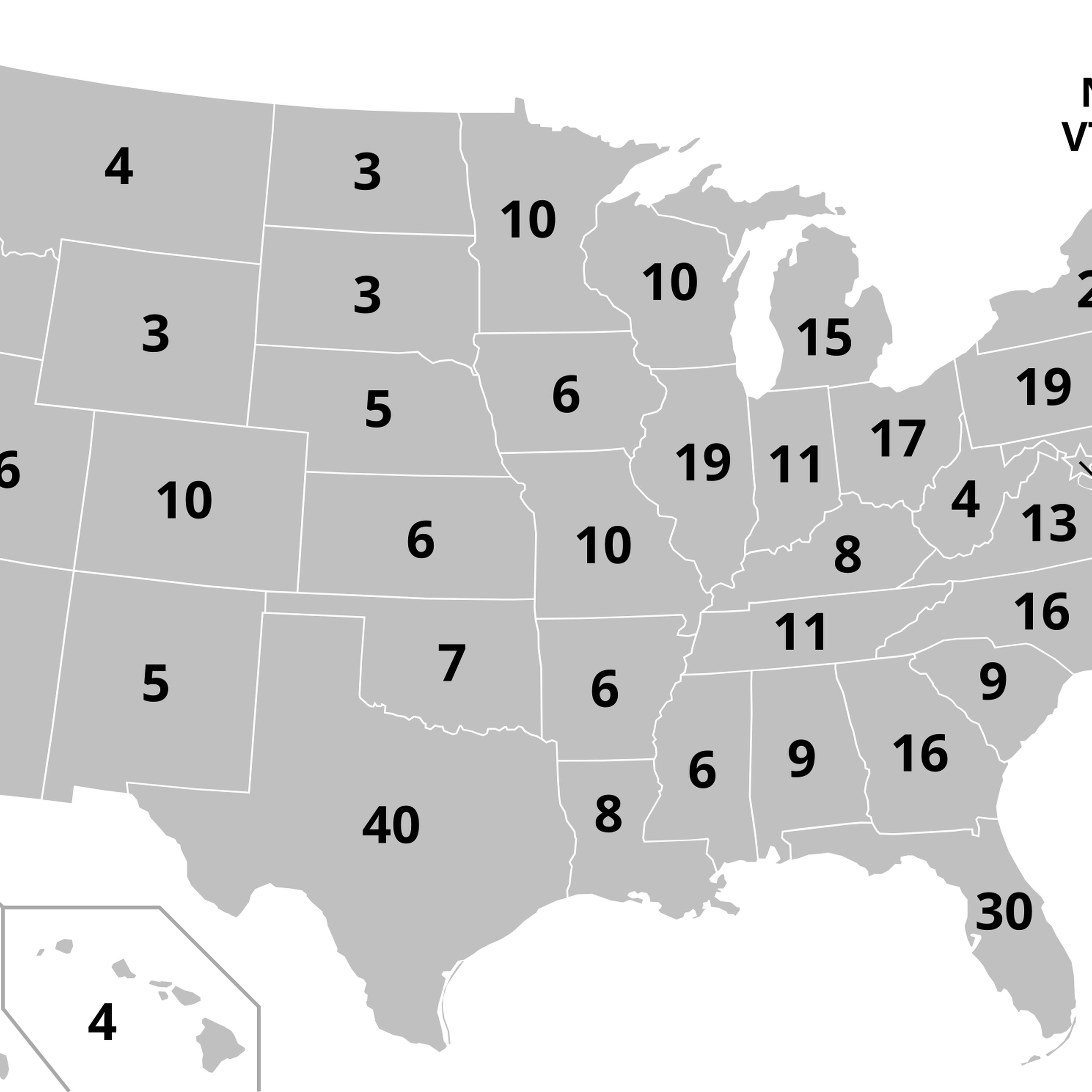
Loading summary
Transcript89 lines
- [00:00]
WashablesOfAs.com Announcer
Tired of spills and stains on your sofa? WashablesOfAs.com has your back featuring the Annabe collection, the only designer sofa that's machine washable inside and out. Where designer quality meets budget friendly prices. That's right, sofas start at just $699. Enjoy a no risk experience with pet friendly stain resistant and changeable slipcovers made with performance fabrics. Experience cloud like comfort with high resilience foam that's hypoallergenic and never needs fluffing. The sturdy steel frame ensures longevity and the modular pieces can be rearranged anytime. Check out washablesofas.com and get up to 60% off your Anna Bay sofa backed by a 30 day satisfaction guarantee. If you're not absolutely in love, send it back for a full refund. No return shipping or restocking fees. Every penny back. Upgrade now@washablesofas.com Offers are subject to change and certain restrictions may apply.
- [01:02]
Bob Crawford
You can make a difference in someone's life, including your own with a job in home care. These jobs offer flexible schedules, health care, retirement options and free training. They also provide paid time off and opportunities for overtime. Visit oregonhomecarejobs.com to learn more and apply. That's oregonhomecarejobs.com.
- [01:30]
Ryan Seacrest
Hey, it's Ryan Seacrest for Albertsons and Safeway. Feel good and look good this summer with savings on your personal care favorites and earn four times points now through September 9th. Shop in store or online for items like Dollar Shave Club razors, hydro Silk Razors and Edge Shave Gel. Plus some favorite brands like Tampax, Pearl, Depend and Poise to earn four times points to use for later discounts on groceries or gas. Hurry in before these deals are gone. Offer end September 9th. Restrictions apply. Offers may vary. Visit Albertsons or Safeway dot for more details.
- [02:03]
Peter Sagal
December 29, 1975 LaGuardia Airport the holiday rush.
- [02:09]
WashablesOfAs.com Announcer
Parents hauling luggage, kids gripping their new Christmas toys. Then everything changed.
- [02:16]
Eli Lilly Company Announcer
There's been a bombing at the TWA terminal. Just a chaotic, chaotic scene.
- [02:22]
WashablesOfAs.com Announcer
In its wake, a new kind of enemy emerged. Terrorism. Listen to the new season of Law and Order Criminal justice System on the iHeartRadio app, Apple Podcasts or wherever you get your podcasts.
- [02:40]
Bob Crawford
You've reached American History Hotline. You ask the questions, we get the answers. Leave a message. Hey there American History Hotliners. Bob Crawford here. Thrilled to be joining you again for another episode of American History Hotline, the show where you ask the questions and I get you the answers. And the best way to get US A question is to record a video or a voice memo on your phone and email it to AmericanHistoryHotlinemail.com that's AmericanHistoryHotlinemail.com all right, enough of a preamble. Let's get to today's question. It's a great one and with a good question, a question this good, we had to bring in the big guns here to help me answer. It is, and I'm going to say this, this man is an institution. Peter Sagal, host of NPR's Wait, Wait, Don't Tell Me and the PBS show.
- [03:38]
Peter Sagal
Constitution usa hey, and I want to say nice little, you know, setup there by using preamble there in your introduction got us in the constitutional mood.
- [03:47]
Bob Crawford
This show has great writers.
- [03:51]
Peter Sagal
We're all dependent on them.
- [03:53]
Bob Crawford
Okay, Peter, let's get to the show. Of course, it's just an honor to have you today. Here's the question we were hoping you could help us answer. Hi, Bob, this is Kathy from West Olive. I'm really enjoying the podcast so far. Thanks for doing it. I'd love to hear you talk about the Electoral College, how it came to be, what the thoughts were behind it's coming to be, and whether or not it still serves us well. There seems to be a lot of debate surrounding the Electoral College and whether we should still be using that or going to a straight popular vote. I'd really love to hear whatever expert you might ask to come on talk about it and break it down for us, too. Thanks again for all you're doing. Really enjoy the show. So I love these questions, Kathy, and I'm glad you're enjoying the show. What is your reaction to those questions? First, Peter, I just gotta, I just gotta get your initial reaction.
- [04:53]
Peter Sagal
They're, they're very good questions. In fact, they're questions that have been asked about the Electoral College and our Constitution pretty much, I was about to say the day it was ratified, but before that, people, even before it was ratified, people are like, what the hell is this? And I'll note that although the U.S. constitution, the longest surviving so far, Constitution written constitution in the Western democratic world, has inspired countless other movements and countries to establish their own democracies. Not one of them have adopted anything like our Electoral College. You know how they say that you may have heard that the national parks were America's best idea, the Electoral College pretty much America's worst idea.
- [05:43]
Bob Crawford
For those who don't know. And I'm going to, you know, we just probably everybody knows, but just for if there's Someone out there who doesn't know what the Electoral College is.
- [05:52]
Peter Sagal
What is it? Okay, The Electoral College is, as I said, a unique system that our framers back in Philadelphia, when they created the Constitution in 1787, decided they would use exclusively to elect the president. In the rest of the document they allowed called for popular election of, say, representatives. The senators in the upper house were supposed to be elected by legislators. That was later changed by constitutional amendment. So they didn't have a problem with popular elections for other offices, but they decided that for the role of the president, they wanted to do something unique and special for a variety of reasons. And the way it works is every state gets a number of electors, officers equal to the number of representatives they have in Congress. That means one for every member of the house, Representatives plus two, one for each senator. So, for example, if a state happens to have five congressmen or representatives, congressmen, back then, only men did it. And two senators, that state would have seven electoral votes. And then, as the system was designed, the way it works is each state can elect however they wanted their electors. They could choose them any way they wanted. They could appoint them by legislature, which I think one state did. But most of them, from the very beginning, did popular elections. They could elect these electors, and then these electors would, in their wisdom, cast the votes for president. And the initial idea was that these electors would be wise men, worldly men, knowledgeable men chosen by the people of a state to represent their interests. Right? So if that hypothetical state had seven electors, those seven electors would stroke their chins, probably their beards, depending on the time, and they would decide which of the candidates for president would was best. Now, very quickly, that's not how it worked at all. Instead, what happened is the system we now have where there's one slate of electors for each presidential candidate, right? So if again, our hypothetical state, the popular vote goes for candidate X as opposed to candidate Y, then the candidate X's electors get to cast their votes. And of course, all of them go for candidate X. They were elected. They said, vote for me, I will vote for candidate X. And that's the way it's pretty much played out. They changed. They fiddled with the system a little bit with the 12th amendment, but basically that's how it's been playing out pretty much since our founding in the very first presidential election.
- [08:40]
Bob Crawford
So getting back to the founders at the time, you got big states and small states, free states and slave states. Who was pushing the most for the Electoral College?
- [08:53]
Peter Sagal
The electoral college was pushed for primarily by Small states and slave states. And the reasons make a little sense if you consider it from their perspective. The first thing you need to do is you need to remember this is something that was impressed upon me by Akhil Reed Amar, a professor at Yale, world renowned expert in the US Constitution, who was our sort of in house expert on our TV show Constitution USA for pbs. It's impossible for us now to comprehend how big America was. Even just the 13 coastal colonies. It was a continent, the Continental Congress. This was a time, of course, when there was no electronic communication. Messages went as fast as a horse or a ship could take them. If you lived in say, Massachusetts, Virginia was an impossible distance away, would take months to get there. You would probably never ever go or even meet somebody from come there. And the states were very, very different. They had different populations, different kinds of industry, different kinds of agriculture. The agriculture in Massachusetts, for example, very different than in Virginia. They had different, I don't know, sort of ethos. For example, everybody knows Massachusetts was founded by Puritans. Well, Rhode island next door was founded by people who couldn't stand the goddamn Puritans and wanted to get away from them. And Philadelphia was founded by rather, excuse me, Pennsylvania was founded by William Penn as a kind of free thinking, you know, utopia where everybody could live in peace. And the southern states, Virginia, Georgia, the Carolinas, were aggregate agrarian and of course slave colonies. So they had very, very different perspectives. So the electoral college had three purposes, one of which was due to that distance, that vastness, that continental scale of our new country. The idea being that there is no way in the world, even a literate man in Massachusetts. And that, remember, was more or less a requirement to vote. You had to be a white man who owned property would have any idea who the principal candidates for president were. They just wouldn't know your average. I think, as they used to say, yeoman on the land wouldn't have any idea who these people were. So you, how could you trust this person to make a wise choice, this elect, these solons, these educated people, these, these statesmen who would know and they'll cast a wiser vote. And there was some legitimacy to that. One thing that the founders completely miffed they did not understand at all was that the system they were creating would instantly call into being political parties. They didn't realize that they didn't want political parties. They got them because the system they created gave all the power of any given office or government to whoever has 50 votes plus one. So all of a sudden people started clumping Together into interest groups to get to 50 plus 1. And instantly we had political parties. We've always had more or less two political parties in this country under different names, standing for different things. But that happened quickly. And so obviously you didn't need to know who the candidate was. If you were a democratic party, a voter Democratic party, or a federalist party, or the Democratic Republicans, as they were called, you just voted for your candidate. So that became, shall we say, irrelevant pretty quickly. The second reason was all the states had their own election rules, right? Some states might, you know, have. Some states had property requirements, and they varied. If you gave the states the popular vote, a big state like, say, Pennsylvania could say, oh, by the way, women can vote, and all of a sudden their voting population would double, and thus they would have an even greater influence over who got to be president. So by telling states, yeah, you can run elections however you want, but what you're going to be doing is electing a certain number of electors. They managed to. To make that irrelevant, right? Any state could do anything it wanted to elect. Those in our example, state, seven electors. Final reason, and this is why it carried the day, and this is why it ended up being such a terrible thing for this country, at least for the first four score and 10 years, is the slave states knew that they would be outnumbered in every way by the free states. One thing people may not know is how broad slavery was in the early years of our republic. For example, Virginia, at the time of the ratification of the constitution, had about 400,000 people living in it, free people and about 300,000 enslaved people. That's a lot. And that raises a lot of questions. But the important thing to know is that they knew that they could not compete in a fair fight electorally with the free states. They just didn't have the numbers of free people that say, Massachusetts, Pennsylvania did. New York state. There is a thing in the constitution called the three fifths clause, sometimes referred to as the three fifths compromise, which makes me crazy, and sometimes you'll hear about it that, oh, it was a compromise, you see, because the slave states wanted all of their enslaved people to be counted for political representation, right? So you count them and then you get representatives in congress based on that population as well. And of course, the free states wanted them not to be counted at all on the basic idea that, well, what do you mean they count? They're not going to count. They don't get to vote. They have no civil rights. Why should they be included in any way in this democracy that we are also completely excluding them from. By denying them any human rights at all. But because the free states knew that if they didn't accommodate the slave states, there would be no Constitution, there would be no United States, they let it go and they quote, unquote, compromised. Meaning that a enslaved person would count as three fifths of a free person in counting up population for representation. Right. So that means my math is bad, but of those 300,000 enslaved people in Virginia, three fifths of them got counted toward representation. Meaning Virginia got extra members of Congress even though they weren't rep. Even though the numbers of people who were voting for them didn't change. Right. Because slaves couldn't vote, and that meant that they got extra electoral votes. Right.
- [15:49]
Bob Crawford
So when you think of. And this was actually in a congressional argument I was reading in the early years of our nation, Georgia Congressman saying that the enslaved population were the machinery of the South.
- [16:03]
Peter Sagal
Right.
- [16:03]
Bob Crawford
So the machinery got the votes.
- [16:05]
Peter Sagal
Machinery got the votes. Yes.
- [16:07]
Bob Crawford
But in the north, people like Gouverneur Morris would argue during the Constitutional Convention that, hey, the furniture doesn't get the vote, essentially.
- [16:17]
Peter Sagal
Yeah. The quote I was just reading as I was refreshing myself, he says something about like, we're not counting our cows for representation. Why do you get to count these people you are treating as cattle? But the Southern argument, why 3 5th?
- [16:30]
Bob Crawford
Peter, I'm sorry to interrupt, but why three fifths?
- [16:33]
Peter Sagal
What was weird. What was weird was I was reading about it, and apparently there wasn't a huge debate about it, at least not as reflected in the records of the Constitutional Convention. Basically, one representative, I think it was George Mason from Virginia, there's a college named for him, said, okay, how about if we just count them as three fifths? Does that work for everybody? Okay, good. Yes. Great. And it just because no one wants to do math. No one wants to do math. And more to the point, nobody wants to really talk about it. There's this amazing evasion in the Constitution of the issue of slavery. Slavery is implicitly endorsed three times in the Constitution. One in rather, it's mentioned and sort of mentioned in a way, like, yeah, we got. We have slavery. One was the three fifths clause, another was the fugitive slave clause, and the third was a clause saying that international slave trade and importation of slaves would end by a certain date, 1805, I think. So the Constitution, in a weird way, endorsed, allowed, accepted the existence of slavery. But it never mentions the word slavery. It does not say enslaved people. It says people held to service. And that really reflects their great I don't know. Contradiction that they knew they were creating a government based explicitly on ideas of inherent human rights. And they were doing it while at the same time condemning hundreds of thousands, if not millions of people at that, even at that time, and God knows how many in terms of their future generations, to a condition of, as we have already said, that's akin to cattle with no human rights. People who could be sold, bought, worked to death, tortured, raped, anything you wanted to do to them. And they created this country which had these astonishing ideals and this astonishing evil and a contradiction to every, every one of those ideals at the same time. And the way they dealt with that contradiction is they simply didn't talk about it.
- [18:37]
Bob Crawford
So, Peter, you know, when I, When I do the math, I think about the. There were consequences to that compromise, if they want to call it a compromise. The South, Juan. Right. They got the better end of the deal because, of course, Washington's Washington, you can almost exclude him. But then you get Adams. Okay, that's Massachusetts.
- [18:59]
Peter Sagal
Right.
- [19:00]
Bob Crawford
Then you get Jefferson, Virginia, Madison, Virginia, Monroe, Virginia, you get Quincy Adams. Then you get Tennessee, you get Van Buren in New York. But he's really, you know, the Northern men that would slave with Southern ideals. Right. So it seems like. And I think William Freeling, the great historian William Freeling, in the Road to Disunion, he talks about what, 36 of the. Of the 32 of the first 36 years of the nation. It's, It's. Were dominated by the South.
- [19:33]
Peter Sagal
Yep.
- [19:33]
Bob Crawford
Not only by presidents, but Supreme Court justices, by. By secretaries of state, by all the positions that matter the most. The south dominated.
- [19:45]
Peter Sagal
Exactly. And it's all because of the elect. Well, not all. They also had a lot of wealth and a lot of power based on slavery, but structurally it was due to the combination of the electoral college, which gave each state votes the same number as their representatives, and the three fifths clause, which gave the slave power more representation, more electoral votes. Basically, every president until Lincoln was either a slave owner themselves or sympathetic to slavery, with two exceptions, both named Adams, who. And neither of them, by the way, did anything to interfere with it, because that would have been the end of their political career. If you read any history of the first, you know, century of the United States, from founding to the Civil War, you realize that slavery was the most important topic, the most important issue. Whether it would be extended, whether it would be banned, whether it would be abolished, whether it would be, Whether it would flourish. It dominated every political debate, and rightfully so, because it was this monstrosity that some people relied on as the basis of their wealth and their entire culture and other people saw as the vast evil that it was. Of course it was going to be the main subject of discussion and debate. And by the way, one other thing that the three fist clause did was it created a really good incentive to acquire more enslaved people, right? More of them you had. You get enough of them, you can get another congressman out of it. And so it just created a situation where slavery became not just the basis of economic power in the south to a degree that we don't really appreciate now that the entire system was based on slave labor, but also created like it also gave them their political power. It was a win, win, win from their evil perspective.
- [21:48]
WashablesOfAs.com Announcer
Life's messy. We're talking spills, stains, pets and kids. But with Anabe, you never have to stress about messes again. At washablesofas.com, discover annabe sofas, the only fully machine washable sofas inside and out, starting at just $699. Made with liquid and stain resistant fabrics, that means fewer stains and more peace of mind. Designed for real life, Our sofas feature changeable fabric covers allowing you to reflect fresher style anytime. Need flexibility? Our modular design lets you rearrange your sofa effortlessly. Perfect for cozy apartments or spacious homes. Plus, they're earth friendly and built to last. That's why over 200,000 happy customers have made the switch. Upgrade your space today. Visit washablesofas.com now and bring home a sofa made for life. That's washablesofas.com offers are subject to change and certain restrictions may apply.
- [22:49]
Bob Crawford
You can make a difference in someone's life, including your own, with a job in home care. These jobs offer flexible schedules, health care, retirement options and free training. They also provide paid time off and opportunities for overtime. Visit oregonhomecarejobs.com to learn more. More and apply. That's oregonhomecarejobs.com.
- [23:17]
Ryan Seacrest
Hey, it's Ryan Seacrest for Albertsons and Safeway. Feel good and look good this summer with savings on your personal care favorites and earn four times points now through September 9th. Shop in store or online for items like Dollar Shave Club razors, hydro Silk Razors and Edge Shave Gel. Plus some favorite brands like Tampax, Pearl, Depend and Poise to earn four times points to use for later discounts on groceries or gas. Hurry in before these deals are gone. Offer end September 9th. Restrictions apply. Offers may vary. Visit albertsons or safeway.com for more details.
- [23:51]
Peter Sagal
December 29th, 1975 Laguardia Airport.
- [23:57]
WashablesOfAs.com Announcer
The holiday rush. Parents hauling luggage. Kids gripping their new Christmas toys. Then at 6:33pm everything changed.
- [24:08]
Eli Lilly Company Announcer
There's been a bombing at the TWA terminal.
- [24:11]
Peter Sagal
Apparently the explosion actually impelled metal glass.
- [24:16]
Eli Lilly Company Announcer
The injured were being loaded into ambulances. Just a chaotic, chaotic scene.
- [24:22]
WashablesOfAs.com Announcer
In its wake, a new kind of enemy emerged. And it was here to stay. Terrorism, law and order, Criminal justice system is in season two. We're turning our focus to a threat that hides in plain sight that's harder to predict and even harder to stop. Listen to the new season of law and criminal justice System on the iHeartRadio app, Apple Podcasts or wherever you get your podcasts.
- [24:59]
Bob Crawford
This is American History Hotline. I'm your host, Bob Crawford. Today my guest is Peter Sagal, host of NPR's Wait, Wait, don't tell me. A fellow historian as well. You might remember his PBS show of a few years back, Constitution USA. We're talking about the 538 votes that actually matter in the in American presidential elections. That's right, the Electoral College. Remember to send us your burning questions about American history. Record yourself using the voice memo app on your phone and email it to American History Hotline.
- [25:33]
Peter Sagal
And.
- [25:36]
Bob Crawford
You can also send us your thoughts on the Electoral College.
- [25:38]
Peter Sagal
Do you love it?
- [25:40]
Bob Crawford
Do you hate it? Do you kind of like it? But you're waiting for it to text you first so you don't seem desperate. All right, James. Peter, I don't read these before. I understand.
- [25:50]
Peter Sagal
Yeah, they just put it in front of you.
- [25:53]
Bob Crawford
Send your musings to American history hotline@gmail.com. now back to the show. All right, Peter. So looking at recent headlines in Texas, they are going to do something to give themselves more political power. Republican Party, I think it's hard to not live in the historical sense of this. Being that what we talked about last block, every time new territory was acquired and brought into the Union, it sparked another debate that was about the Electoral College. Right. Would this land be slave? Would this land be free? Always conflict. There were northern politicians who wanted free land. Not because they were compassionate towards the enslaved and wanted emancipation. No, because they wanted political power. This is all about power. So right now in Texas, they are redrawing or by the time this airs, redrew the districts to give the Republican Party more seats friendly to themselves. So talk about these districts.
- [27:13]
Peter Sagal
Sure.
- [27:14]
Bob Crawford
And how they are allocated and drawn and, and when do we typically draw them?
- [27:19]
Peter Sagal
This is, I should say, by the way, that this is a different issue. This is the issue of gerrymandering which usually applies to congressional districts or state legislature districts. And gerrymandering is a very old phenomenon in America, as evidenced by the fact that it was named for Elbridge Gary, who was actually at the Constitutional Convention before going on to become governor of Massachusetts. He drew a congressional map that had a district that was so weird looking, it was looked like a salamander and it was called the gerrymander or the gerrymander. And thus we have it. Now, what's going on with that is a very different issue. Remember, electoral college votes are given to whoever wins a statewide election. So just like governor or senator, it's a statewide race. And so the issue of districts within a state is irrelevant. But this issue is. It's one of those things, one of the many things we've discovered in the last 10 years where we find out that what we thought were rules were only guidelines, to quote Pirates of the Caribbean. So the guideline, the Practice was every 10 years, as called for in the Constitution, there would be a new census. And after the census, when we knew what the new population was of persons, by the way, not citizens. I should say that the Constitution says persons. You would read all the districts. And over the years, over the decades, as political parties, as I said, first sprang into being and then became more and more powerful, those people realized that they could district to their advantage. And that's gotten much, much worse in recent years, decades, for two reasons. First of all, computers. You could say, for example, that Chicago, where I live, is a Democratic town. We always knew that the vote of Chicago would go to the Democratic candidate. Now with computers, you can find out which blocks went for which houses practically went for Democrats. So if you were to draw, if you wanted to draw a map that you could guarantee would maximize the number of Democratic voters, as we have done, in fact, to a great extent here in Illinois, you can do it. You can do it with these computers and these mapping softwares. And it the Robert Supreme Court has weighed in on this, bless their heart. And what they have said is that you can't draw districts to deprive people of equal weight as a, as, as, as voters because of their race. Racial gerrymanders are illegal, but partisan gerrymanders are fine, according to the Robert Supreme Court. Right. So all a state has to do, and this has happened many times to justify a gerrymander that say, cuts up a significant black population in order to dilute their vote, so they can't vote for the person that population would want to represent their particular interest and say oh no, no, no, no, no, it's not, it's not a racial gerrymander. It's just a, it's a partisan gerrymander. Those black people, they just vote for Democrats. We're not screwing them over because they're black. No, no, no. We're screwing them over because they're Democrats. And according to the Robert Square, that's totally fine. Now state courts have over the last few years intervened because state constitutions have their own provisions about the right to vote. Although that's gotten to be a battlefield as well to take. There's actually an interesting case that's parallel the states of Wisconsin and North Carolina. In the state of Wisconsin, a map passed by the Republican legislature super majority imposed a Republican favorite gerrymander on the state of Wisconsin. However, the people of Wisconsin got together and elected new members of the Supreme Court who unlike the prior supreme Court said oh no, no, no, no, you can't do that. And they threw out those maps. On the instituted fairer maps in the state of North Carolina, the opposite thing happened. The Republican supermajority passed a very Republican favored map. In fact, as evidence showed at a particular trial, it was designed specifically to dilute the votes of the black population of North Carolina. The state supreme court said no, no, no, you can't do it. It's not democracy. One person, one vote. Everybody should be able to vote, you know, for the candidate of their choice. It shouldn't be pred by politicians drawing maps. So then there was a Supreme Court election in North Carolina which, which took two seats away from liberal. It's nonpartisan. Yes, fine. From the Democratic candidates and gave it to the Republicans. And what do you know, the new Republican majority in North Carolina said, you know, actually now that we think about it, it turns out those maps are fine. So generally speaking, both sides do it. There's very little things you can do about it because the Supreme Court won't intervene. And the state supreme courts tend now to be just as partisan as the state legislature. So for example, in Texas, the chances of the state supreme court which is all appointed by Republican governors, the chances of them intervening in this to say oh no, no, no, you can't do it are minimal. Because to go back to my original point, it's not a law that you have to do it just once every 10 years. It's just the way it's always been done. Because that's fair. If you don't care about being fair, you can do what you want.
- [33:04]
Bob Crawford
Thank you for indulging my, my, my Digression. I appreciate that, Kathy. We're going to get back to your question specifically. Does the Electoral College still serve us well today?
- [33:20]
Peter Sagal
No, not at all. Although for different reasons. People have known the Electoral College is messed up for a long, long time. There have been many, many, many attempts to amend the Constitution so as to eliminate it and go to a popular election of the President because as I said, he's the only office holder that is not elected through popular majority. In fact, in the 1960s and late 1960s, Indiana Senator Birch Bay came so incredibly close to getting rid of the Electoral College. He convinced the House of Representatives to pass an amendment. And they did. By the, by the. I think it's the 3/4 majority necessary to pass an amendment. But it was filibustered in the Senate by Southern segregationists even after the. The passage of the Voting Rights act in the mid-60s and 65 Southern senators knew that it was very hard for black people to vote in their states and thus they wanted the power. They would rather have the power of the Electoral College than have to open up the vote to their actual population these days. The problem with the Electoral College is very different. And it's really simple to describe in that it makes the vast majority of voters in America completely irrelevant. Utterly irrelevant. I live in Illinois. Illinois is a blue state, as we say. Now, sure, I can vote for the Democrat if I want. It's not going to make any difference. The Democrat electors are going to win in the state of Illinois. But it's really frustrating for Republicans in Illinois because they don't matter at all. It doesn't care. Nobody cares what they want because they don't have any influence in a presidential election. The same is true with Republicans in California or Democrats in Texas or Democrats in South Carolina, increasingly in Florida, or Republicans in New York state or in Republicans in Vermont. In the classic blue states, none of their votes matter. And what that means is none of their concerns matter unless they're rich. Right? Donors will always have a voice. But for the vast majority of, to use this example, Republican voters in California, whatever they prefer doesn't matter. It's irrelevant. They're essentially disenfranchised. If you are Republican living in California, your vote for president does not matter. If you are a Democrat living in Texas, your vote for president does not matter. And that's bad. But it has a. It has a distorting effect on presidential politics. Obviously it means that the focus of the presidential campaigns is always going to be on those swing states, those very few states where by virtue of a balance of populations, they could go either way, thus swinging your Pennsylvania, Wisconsin, North Carolina, to a certain extent, Nevada, Arizona. Those are the ones that only. So all of the attention is given to those states. And if you talk to anybody who lives in, say, Pennsylvania during a presidential campaign, they will tell you how incredibly annoying it is that they're constantly deluged by everything, by ads and appearances. And that's good for Pennsylvania, I guess. But why shouldn't the people of New York State, which is right next door, get attention? But it also means that I think our politics get really distorted. Assume for a minute that Democrats in Texas, because of their cultural heritage and everything else, are slightly more conservative than Democrats nationally. Assume for the same argument that Republicans in California, for the same reasons they live in California, are more liberal in general than Republicans nationwide because those people are written out of the presidential elections entirely. That potentially moderating influence has no effect. Right? You could have that sort of more mainstream politics that everybody demands that we need. If you simply empowered the people who live in solid blue or solid red states, all of them, to vote, we would have truly national elections for our national office, and everybody would be empowered. And you have no idea what would happen. We've never had an election without the Electoral College. We don't know what it would look like if Republicans in California knew their vote would count, or Democrats in Texas or Democrats in the Deep South. We don't know what they would do if they knew their vote counted. I mean, for example, the conventional wisdom of the 2024 election is that Kamala Harris lost because so many Democrats stayed home. Okay, let's assume that's true. Would they have stayed home? Would they have stayed home if they knew that their vote actually counted? We'll never know. And we should know, I think, that the popular vote for a president and vice president in this country would moderate our politics and would make our choice of president far more reflective of of the nation as a whole than it has been ever.
- [38:42]
Bob Crawford
Are there any pros? So you laid out the cons for the Electoral College. You laid out the pros for popular vote. Are there any pros you can think of right now that the Electoral College still has going in its favor?
- [38:59]
Peter Sagal
Well, the one you'll hear is that it gives the small states disproportionate power, right? I mean, it makes sure that they're not run roughshod over. And that, to a certain extent, is true. It's also true in the representation of Congress, as I'm sure you've Heard Wyoming, which has a smaller population than Los Angeles county, maybe even the city of Los Angeles, I haven't checked recently, has two senators. That seems unfair to me anyway, but there's nothing we can do about that. The Senate is here to stay. But I think that the small state argument falls apart when you realize, again, yeah, Wyoming gets a disproportionate say because of the Electoral College. Their electoral votes are a higher proportion of the total electoral votes than their population is a proportion of the national population. So they get a lift. But at the same time, the entire, you know, all the Democrats in Wyoming or Montana, they're completely irrelevant. So sure, you'd lose that sort of boost of influence you get in Wyoming or Montana, but you'd also get some. You'd all of a sudden, the people of Missoula, for example, which is a pretty liberal place, would be able to have some small influence in a presidential election, at least as much as their neighbors. And that to me, from this, from the perspective of Montana, say, should carry a lot of weight. Unless of course, you are a rock rib Republican and you don't want the Democrats in Montana to have any influence. So I think just in terms of fairness, the idea of empowering every individual vastly outweighs this notion of small states having being run roughshod over.
- [40:53]
Bob Crawford
It's unlikely that we'll go to a popular vote. Right. 17 states have national popular vote legislation that's become law.
- [41:02]
Peter Sagal
Right.
- [41:02]
Bob Crawford
And that reflects 209 electoral votes. So these are. But these are mostly blue states.
- [41:08]
Peter Sagal
Right.
- [41:09]
Bob Crawford
And there's something. Go ahead.
- [41:11]
Peter Sagal
Yeah. And just to explain to your listeners, this is something that once Birch Bay's amendment failed, he, he signed up for the National Popular Vote Compact. And remember I said under the design of the Constitution, any state can assign, can choose electoral votes any way they want. Right. You can have the legislature do it, you can draw lots, whatever you want. Most states do it by whoever, whatever slate wins the popular vote in your state. The National Popular Vote Compact is an idea where states agree that their electoral votes go to the winner of the national popular vote, whatever their state did. So again, to take an example, that's extremely unlikely. If Wyoming were to sign up to this, and in a presidential election, Wyoming goes 80% for the Republican, but the national vote goes to the Democrat, then Wyoming would assign its electors to the Democratic candidate or would technically select the electors who were pledged to the Democratic candidate. That's a good idea. I mean, it's a way to doing an end run around the requirements for a Constitutional amendment. The only other way to do it. There are, there are a lot of unanswered questions. Even if this did work, I mean, all of a sudden the popular vote becomes really important because that's going to decide the president, but we're still going to be dealing with a system of states controlling their own elections. We go back to that first problem that they thought the electoral Electoral college would solve, which is that how do you make sure that Pennsylvania doesn't goose its vote to get more popular votes for the president? Well, you just tell them they can do whatever you want, but they only get however many electoral votes. So all of a sudden we'd have a system where the individual popular votes directly elected the president. Right, Individual states, I mean, but we'd have a state by state system of counting those votes state by state laws. And as we know, sadly to this day, voting is not a constitutional right. It can be diminished. It can be taken away. In the Fifth Amendment, you can take away somebody's right to vote if they commit a felony. I'm sorry, that's not the 5th, the 15th. So the problem is, again, it would raise all these other questions that a constitutional amendment would by its nature have to solve and to be passed. But I would say, probably, if you were to let me put it this way, to institute a national popular vote through the compact would require the kind of national cooperation and willingness to give up immediate advantage for the long term health of the nation that we just haven't seen in this country for a very long time.
- [44:01]
Bob Crawford
So we, yeah, we can't do it in small things, we can't do it in big things.
- [44:06]
Peter Sagal
Yeah. And it's, it's quite terrifying. And, and one of the things that's going on is, as I'm sure you know, is right now, the Republican Party, it wasn't always a Republican Party, it is now used to be the Democratic Party way back when, is using the anti majoritarian aspects of our Constitution, most especially the Senate and the Supreme Court's role, to basically rule as a minority in this country. That is, the things they're doing are not very popular, as polls tell us. Certainly this last election, President Trump did in fact win the popular vote by a small margin. But nonetheless, they're using these mechanisms to impose a vision on the country that in its, in its specifics is not particularly popular. And we, as we've also seen, and here again, we return to the thing in Texas, they're also really intent on using the power they have to cement the power into the future to make sure that their lack of support for their specific policy ideas doesn't prevent them from retaining the power to carry them out.
- [45:23]
Bob Crawford
I asked this final question with the knowledge that, as a historian, historians are terrible at predicting the future.
- [45:32]
Peter Sagal
That's why the historians. Right.
- [45:34]
Bob Crawford
It's history.
- [45:34]
Peter Sagal
It's history. Yeah.
- [45:36]
Bob Crawford
So do you think the Electoral College is here to stay?
- [45:41]
Peter Sagal
The only way it would go away is if in one of two circumstances. One is that the party that at that moment had an advantage through its use, right now, it's the Republican Party. It wasn't always. It was the Democratic Party. Within my lifetime, if that party agrees to give up that advantage, that's unlikely. The other possibility is that both sides decide that it's so bad that it just has to be done away with, which is what almost happened with Birch Bay's amendment, because it came out of the election of 68 in 1968. George Wallace came close to winning enough electoral votes. I can't remember the number exactly, so as to deprive the other two candidates, Nixon or Humphrey, of a majority. And if that had happened, one more state, maybe two, maybe two more, depending on the election, would have gone to the House of Representatives. And that is something that's never happened. Well, sort of never happened. 1876 is a whole other thing.
- [46:45]
Bob Crawford
John Quincy Adams.
- [46:47]
Peter Sagal
Yeah, yeah, it has. You're right. It has happened before, but it hasn't happened in, say, modern America. And that was so horrifying. It was so horrifying to Birch Bay and a lot of other people that this Southern segregationist almost threw the election into the House of Representatives that he was able to generate a tremendous amount of support for doing away with this system that almost led to that disastrous outcome until he was stopped by the other Southern segregationists. And so this was also the plan, Peter.
- [47:17]
Bob Crawford
This was also one of the plans mentioned by the Trump campaign.
- [47:20]
Peter Sagal
How so?
- [47:21]
Bob Crawford
To send it to. Well, because. Oh, yes, by propping up rfk, they could potentially throw it into the House. And of course, the. The Republicans hold the legislatures.
- [47:37]
Peter Sagal
Yes.
- [47:37]
Bob Crawford
Legislature gets a vote.
- [47:40]
Peter Sagal
Right. And the way it works, if I'm not mistaken, is. And this is part of their plan in 2020, what I believe Peter Navarro called the Greek, the Eastman's plan, and what Peter Navarro called the Green Bay sweep, is that if you could just disqualify enough electoral votes from certain swing states, you can create enough confusion that it would be thrown to the House of Representatives. And there, every delegation gets a vote, not every member. So even though Democrats might have had a majority of members, they did not have a majority of delegations, and the majority of delegations would have elected or rather reelected President Trump. Yeah, that's bad, too. I guess that the, the problem is, is it's hard at this point to imagine a potential outcome like as what happened in 68 that would be sufficiently horrifying to a majority bipartisan, a bipartisan majority in this country that they would step in to prevent it from happening. That's the thing I don't see happening. And because of that, I don't know, I just wish that again, and this is an accident of history and has nothing to do with their particular character at this moment, that the Republicans who see, who believe that the Electoral College is to their advantage, and it is right now, I wish they would see that it would be even more to their advantage and their voters to do away with it. Because of what I said before, because of those disenfranchised Republicans, and there are so many of them, there were more voters for Trump in California this last election than there were in West Virginia. In California, where it didn't matter. Imagine if their votes mattered, if all of those people in Orange county or the Inland Empire or the northeastern counties of California, those Republican areas, if their vote counted, imagine how well great that would be for those Republican voters. And the same thing would go for Democrats in other states. And you'd hope in a rational world that the Republican Party would see that they'd respond to the pressure from those people, make sure our votes count, and press for that reform. But like a lot of very smart and useful ideas, I don't see that having a lot of life right now.
- [49:51]
Bob Crawford
Producer James wants to end on a positive note.
- [49:54]
Peter Sagal
Oh, please.
- [49:55]
Bob Crawford
Is there anything hopeful you're seeing now about anything even non politics?
- [50:03]
Peter Sagal
Gosh, geez. It's a tough question. And, you know, everybody returns to small things. My kids are doing great. But in terms of national politics, I do think that, as is often the case in any crisis, people are being awoken, awakened, awakened to the reality that they face in terms of the country that they want, the country that they have and the country that we are rapidly becoming, unless something changes, to quote Barack Obama, we are the change that we're looking for. To quote somebody else, there ain't nobody coming to save us. And I do think that people see that and know it. And I think that the Internet is far less the blessing than we all thought it would be when they first thought of it. But at the same time, it's allowing people to understand what's happening across the country in a way that is inspiring a lot of people and on both sides to take action. People are responding. I mean, one of the things that I have said as I've gone around the country and talked about the Constitution and democracy, which in general I'm a big fan of both, is that as long as you have democracy and it's a vibrant, effective democracy, I. E. It actually works, you vote and the winner of the vote gets to hold power for the limited period of time that they have, and the other side respects that victory, which used to be the norm. As long as you have democracy, there's nothing that you can't fix. There's no other problem that you can't fix. If the government has gone really wrong in a direction, a democracy, if required, will provide the corrective. If the government is doing something that the majority of these people dislike, then the majority of people will fix it. And that's the only hope. And as long as that's possible, hope remains.
- [52:10]
Bob Crawford
I've been talking to Peter Sagal, host of NPR's Wait, Wait, don't tell me. A fellow historian as well. Check out his PBS show from a few years back, Constitution usa. It's got the Constitution and Harley Davidsons. What else do you need? Peter, it's such a treat to have you on American History Hotline today.
- [52:31]
Peter Sagal
Thank you. It's been a pleasure. I always love talking about this stuff. And you know, everybody get out there and vote. Everybody get involved. Everybody make your feelings known. Everybody make your opinion known. That's your obligation as a citizen.
- [52:48]
Bob Crawford
You've been listening to American History Hotline, a production of Iheart Podcasts and Scratch Track Productions. The show's executive producer is Jeff James Morrison. Our executive producers from Iheart are Jordan Runtal and Jason English. Original music composed by me, Bob Crawford. Please keep in touch. Our email is americanhistoryhotlinemail.com if you like the show, please tell your friends and leave us a review in Apple Podcasts. I'm your host, Bob Crawford. Feel free to hit me up on social media to ask a history question or to let me know what you think of the show. You can find me at bobcrawford Base. Thanks so much for listening. See you next week.
- [53:38]
WashablesOfAs.com Announcer
Time for a sofa upgrade. Visit washablesofas.com and discover Annabe. Where designer style meets budget friendly prices. With sofas starting at $699, Anabe brings you the ultimate in furniture innovation with a modular design that allows you to rearrange your space effortlessly perfect for both small and large spaces. Anibe is the only machine washable sofa inside and out. Say goodbye to stains and messes with liquid and stain resistant fabrics that make cleaning easy. Liquid simply slides right off. Designed for custom comfort, our high resilience foam lets you choose between a sink in feel or a supportive memory foam blend. Plus our pet friendly stain resistant fabrics ensure your sofa stays beautiful for years. Don't compromise quality for price. Visit washablesofas.com to upgrade your living space today with no risk returns and a 30 day money back guarantee. Get up to 60% off plus free shipping and free returns. Shop now at washablesofas.com Offers are subject to change and certain restrictions may apply.
- [54:38]
Eli Lilly Company Announcer
Our partner Eli Lilly and company just announced duets for type 2 diabetes, a campaign celebrating real patient stories of support because managing type 2 diabetes doesn't have to be a solo act. Share your story@mounjaro.com duets mounjaro tirzepatide is an injectable prescription medicine that is used along with diet and exercise to improve blood sugar glucose in adults with type 2 diabetes mellitus. Mounjaro is not for use in children. Don't take Mounjaro if you're allergic to it or if you or someone in your family had medullary thyroid cancer or multiple endocrine neoplasia syndrome.
- [55:11]
Peter Sagal
Type 2.
- [55:12]
Eli Lilly Company Announcer
Stop and call your doctor right away if you have an allergic reaction, a lump or swelling in your neck, severe stomach pain or vision changes. Serious side effects may include inflamed pancreas and gallbladder problems. Taking Mounjaro with a sulfonylnorrhea or insulin may cause low blood sugar. Tell your doctor if you're nursing pregnant, plan to be or taking birth control pills and before scheduled procedures with anesthesia. Side effects include nausea, diarrhea and vomiting, which can cause dehydration and may cause kidney problems. Once weekly, Mounjaro is available by prescription only in 2.5, 5, 7.5, 10, 12.5 and 15 milligram per 0.5 milliliter injection. Call 1-800-LilyRx 800-545-5979 or visit mountjaro.lily.com for the Mounjaro Indication and Safety Summary with warnings. Talk to your doctor for more information about Mountjaro. Mountjaro and its delivery device base are registered trademarks owned or licensed by eli Lilly & Company, its subsidiaries or affiliates.
- [56:09]
Peter Sagal
Talk about stepping up. It's time to level up your game. Introducing the all new ESPN app, all of ESPN all in one place. Your home for the most live sports and the best championship moments. The electricity is palpable. Step up your game with no annual contract required. It's the ultimate fan experience level up. For more on the ESPN app or or extreme espn.com Sign up now.
- [56:38]
Ryan Seacrest
Hey, it's Ryan Seacrest for Albertsons and Safeway. Feel good and look good this summer with savings on your personal care favorites and earn four times points now through September 9th. Shop in store or online for items like Dollar Shave Club razors, hydro Silk Razors and Edge Shave Gel. Plus some favorite brands like Tampax, Pearl Depend and Poise to earn four times points to use for later discounts on groceries or gas. Hurry in before these deals are gone. Offer end September 9th. Restrictions apply. Offers may vary. Visit albertsons or safeway.com for more details.