Loading summary
Transcript52 lines
- [00:01]
Washable Sofas Advertiser
Time for a sofa upgrade. Visit washablesofas.com and discover Annabe where designer style meets budget friendly prices. With sofas starting at $699, Annabe brings you the ultimate in furniture innovation with a modular design that allows you to rearrange your space effortlessly. Perfect for both small and large spaces, Annabe is the only machine washable sofa inside and out. Say goodbye to stains and messes with liquid and stain resistant fabrics that make cleaning easy. Liquid simply slides right off to the Designed for custom comfort, our high resilience foam lets you choose between a sink in feel or a supportive memory foam blend. Plus our pet friendly stain resistant fabrics ensure your sofa stays beautiful for years. Don't compromise quality for price. Visit washablesofas.com to upgrade your living space today with no risk returns and a 30 day money back guarantee. Get up to 60% off plus free shipping and free returns. Shop now at washablesofas.com Offers are subject to change and certain restrictions may apply. You can make a difference in someone's life, including your own with a job in home care. These jobs offer flexible schedules, health care, retirement options and free training. They also provide paid time off and opportunities for overtime. Visit oregonhomecarejobs.com to learn more and apply. That's oregonhomecarejobs.com.
- [01:30]
Ryan Seacrest
Hey, it's Ryan Seacrest for Albertsons and Safeway. It is hot out there this summer, right? But don't sweat it. We got tons of ways to save on your family's favorite personal care items to keep yourself feeling cool and smelling good. Now through September 9th, earn four times points when you shop for items from your favorite brands like Right Guard, Raw Sugar, Dove Soft Soap and Olay. Then use your points for discounts on groceries or gas on future purchases. Offer end September 9th. Restrictions apply. Offers may vary. Visit albertsons or safeway.com for more details.
- [02:04]
Narrator / Historian
December 29, 1975 LaGuardia Airport the holiday rush.
- [02:10]
Washable Sofas Advertiser
Parents hauling luggage, kids gripping their new Christmas toys. Then everything changed.
- [02:17]
Narrator / Historian
There's been a bombing at the TWA terminal. Just a chaotic, chaotic scene.
- [02:22]
Washable Sofas Advertiser
In its wake, a new kind of enemy emerged. Terrorism. Listen to the new season of law and criminal justice System on the iHeartRadio app, Apple Podcasts or wherever you get your podcasts.
- [02:41]
Bob Crawford
You've reached American History Hotline. You ask the questions, we get the answers. Leave a message. Hey there American History Hotliners. Your host Bob Crawford here. Happy to be joining you again for another American History Hotline. You're the ones with the questions. I'm the guy trying to get some answers and keep those questions coming. The best way to get us a question is to record a video or a voice memo on your phone and email it to americanhistoryhotlinemail.com that's americanhistoryhotline. All1wordmail.com and remember, we are American history hotline. I love ancient Egypt as much as the next guy, but there's plenty to talk about on this continent. Okay. Today's question is about the Civil War. Here to help me answer the question is Catherine Olivarius. She's an associate professor of history at Stanford university specializing in 19th century US history. Katherine, thanks for being on the show.
- [03:47]
Narrator / Historian
I am delighted to be here. And I love talking about the Civil War.
- [03:51]
Bob Crawford
It is so much fun, isn't it?
- [03:53]
Narrator / Historian
Yeah. For us, a few years later, a few decades after the fact, it's certainly fun.
- [03:59]
Bob Crawford
Yes. A century and a half after the fact. Not too soon.
- [04:05]
Narrator / Historian
Yeah. I wouldn't necessarily want to be at Gettysburg myself. So. Yeah.
- [04:09]
Bob Crawford
No. Or Andersonville.
- [04:11]
Narrator / Historian
Yes. Yes. Big no.
- [04:13]
Bob Crawford
Right. So our question today comes from Cheryl from Santa Fe, New Mexico. She, she says, I heard that more soldiers died from disease during the Civil War than they did in battle. Is that true?
- [04:29]
Narrator / Historian
Yes. Yes. Actually, in the Civil War, approximately 2/3 of all the Civil War dead died from disease, not from bullets, not from battlefield injuries. So that's about 2/3 of approximately 750,000 people who died during the war. And that number itself, that three quarters of a million number, is up for debate. We actually don't have the best records. But if you were a soldier on either side of the war, whether you were with the Union army, the federal army, or the Confederates of America, you had a very high chance of dying from disease, especially diseases like dysentery, crowd diseases, diseases of malnutrition, things like this, far away from any kind of battlefield.
- [05:13]
Bob Crawford
And like you said, it didn't matter which army you were with. But was one army better equipped to prevent disease than another?
- [05:22]
Narrator / Historian
Yes, certainly. So by far, the Union army, this is the Northern army, the United States army, it had a high death rate, but it was a much, much, you had a much better chance sort of proportionally of surviving this war. If you were in the north, the Southern army, the Confederate States of America, they never had the kind of medical service or ambulance cor was required to lodge this total, this total modern war filled with mini balls and shrapnel and things like this. And so if you were in the south, you had a much higher chance of dying from disease. One little twist to this, of course, Is that if you were in the union army, Black soldiers in the union army Had a much higher chance of dying from disease Than did white soldiers generally, because they received worse medical care and because they were often given much deadlier assignments and sort of dirtier assignments, too. So you were more in contact with pathogens and also more in the line of fire. If you were a black soldier, can.
- [06:20]
Bob Crawford
You paint a picture for us of the conditions soldiers were living in during the war and how that contributed to the spread of disease?
- [06:29]
Narrator / Historian
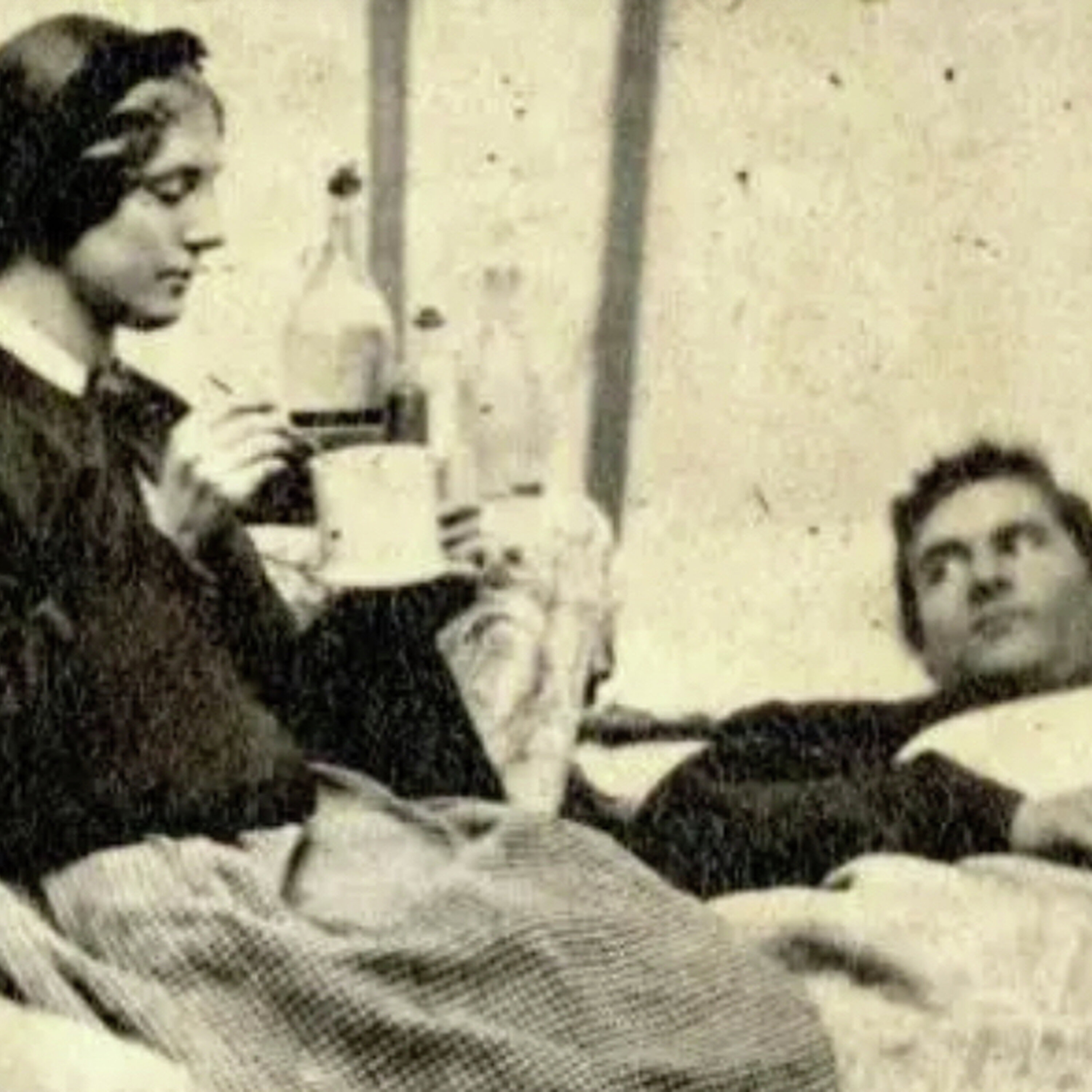
Yeah. So, I mean, think about it. So we have this, you know, Abraham Lincoln calls for 75,000 troops in 1861 from volunteers from across the north. And he gets those volunteers and many, many more, and suddenly you have this sort of massive churn of people. So a lot of historians actually talk about the civil war As a kind of biotic soup and that you're just like, stirring this pot constantly with people moving around the country, Bringing with them diseases, immunities, things like this, pathogens with them to the front. So if you're a soldier, Suddenly you are arriving at a camp. This is a very crowded place. You are often responsible for cooking your own food and procuring it, or you might be given some rations or some kinds of, you know, meat or corn or something like this, but you are generally in charge of cooking it yourself. And these are, for the most part, pretty young boys who have very little experience with food preparation. They're not so good at keeping things clean. This is around the time that germ theory is happening, so that people are understanding that germs can cause diseases. But most people, most soldiers, most conestolds Would have had no idea. This is very much in the sort of early stage of development at this point. So they would have had very little idea about that. If you were in a camp, you're, you know, this is. It rains, it's muddy. Generally speaking, people would, you know, if there was a water source close by, like a stream, you would wash in it. You would drink from it. You would probably defecate into it, too. So it's. We're talking about this just. This is like a germ bonanza suddenly. And we're talking again also about people from all across the country, People who've maybe never been exposed to diseases like whooping cough or. Or diseases like measles before. Suddenly, you're being put into very close contact with people who are maybe bringing these pathogens in. And of course, remember, too, that every single Soldier was screened before coming into the army. So this means that if you're obviously infectious with something, you would be denied entry into the army if you were blind or if you were impaired in some capacity too. But as the war is dragging on, as the draft is being instituted, medical examiners are being sort of leaned on to kind of look the other way about this, you know, about, about pretty obvious diseases because they just need bodies, they need soldiers. And so they're adopting a laxer and laxer attitude towards infectious disease. So therefore, more and more people are entering this army bringing these kinds of infectious ailments again, you know, smallpox, measles, things like this. But then also they're arriving in these camps and when they're, you know, when you're on the front, you are just inundated by these crowd diseases, these diseases of malnutrition and these bacteria that can cause really serious gastro ailments that will eventually kill you. I think that Walt woman said something like 99.99% of war is diarrhea and 1% is glory or something. I think that that's true of all wars before the modern era, but it's certainly true of the Civil War, which is just again, this biotic soup is being churned.
- [09:41]
Bob Crawford
So you talk about the, the untenable conditions that these guys were in. What were the main diseases that were killing people at this time?
- [09:50]
Narrator / Historian
So typhus, the big, this is the big one of soldiers. This basically means that you are, you know, you are ingesting this bacterium and you are essentially becoming dehydrated over time because you develop diarrhea. This is a huge, huge ailment during the war, as is malaria. If you were posted in, and if you were a boy from sort of, let's say, Boston or from Connecticut, you probably had not been exposed to malaria at some point, at any point in your life before this. If you are on a southern campaign, and most of this war, of course, was fought in the south, you are suddenly faced with this mosquito borne ailment which may not kill you, but it could massively reduce your health, your fighting capacity. And of course all of these diseases. We are used to talking about this now with COVID but we have, we're talking about many, many comorbidities, people who have a very high viral or bacterial load, who are vulnerable to other kinds of opportunistic infections. And so by far the sort of, the biggest, most, you know, the, you know, the sort of prototypical disease of wars, of course, you know, typhus, typhoid diphtheria, these kinds of very contagious diseases that can kill you very quickly. And if, you know, and that's again, that's far and away the sort of the most common kinds of ailments that you would get away from front. But also too, if you were a soldier in this war and you were shot by a mini ball or you got a piece of shrapnel in your arm, you were also in big trouble. You could potentially die quite quickly of sepsis, often after having a limb amputated. Things like this gangrene could set in with frightening rapidity in one of these very, very honestly disgusting field hospitals that were, were a sort of mainstay of medical care in this war.
- [11:41]
Bob Crawford
This is American History Hotline. I'm your host, Bob Crawford. Today my guest is Catherine Oliverias. She's an associate professor of history at Stanford University. We're talking about diseases in the Civil War. Let's talk about sexually transmitted diseases. I read that syphilis and gonorrhea weren't really killing a lot of soldiers, but they were spreading like crazy during the war. Is this why we think it would be.
- [12:12]
Narrator / Historian
So? Yes, this is potentially the subject of my next book, or at least a chapter of my next book about the rapid rise of syphilis during and after the Civil War. So when I was researching my last book, this is, there were sort of two data points that came to mind very quickly or that really stood out to me. One is that physicians in and around New York, they estimated that before the war, so 1860, that approximately 10% of American, adult American men at one point would have had gonorrhea or syphilis. This is data that's very shaky for a lot of different reasons. And it certainly has a New York City urban bias which would inflate those numbers. But that's still, you know, That's a sizable percent. But fast forward two generations to 1900. The American public Health association, they're sounding the alarm bells because they're saying now that between 18 and 20% of adult American men over the age of 12 had active syphilis. That this is, you know, this is a serious, this is a serious sexually transmitted infection, probably the most terrifying disease before antibiotics. And so during this war, well, basically you can sort of think about this war as a kind of, again, this biotic soup is being stirred here, but you can think about this as a kind of super spreader event for syphilis where you have a lot of young boys who are, you know, between sort of late teens, early 20s. They come into this war, they are reckless for the future, as many, many boys, of course, are today, as, you know, even still. And I've seen this in many, many letters where, you know, you have soldiers who say, basically, I want to have sex for the first time or maybe for the last time. And so they sleep with prostitutes. And this becomes again, this kind of just recurring and snowballing problem where increasingly officers are sounding the alarms about this, where they're saying, you know, these boys are coming in. You know, they have, they maybe have syphilis. They don't, they don't necessarily have symptoms, or maybe they do have symptoms, but they've made it past the medical examination. And suddenly, you know, they're, they, they're, they're worried that basically this is actually hurting their ability to wage and fight war because so many men, so many young boys were, were in the hospital ward and the BD hospital wards in Tennessee or in Washington, D.C. and this is this recurring problem and then sort of secondary to this, which is the kind of real, I think, tragedy. So syphilis is, you know, many people will not really ever develop major symptoms. For some people, they'll be okay. But for many people, you'll. As you develop into the secondary, so you go from sort of the primary to secondary to the tertiary stage. And the tertiary stage is probably what most people are sort of familiar with. This is where you might lose your nose, you might wear sunglasses due to. Wait a minute, wait a minute, wait.
- [15:00]
Bob Crawford
You might lose your nose.
- [15:02]
Narrator / Historian
Yeah, yeah, yeah. So this, so this can happen also decades after the primary infection. But, you know, the sort of, the, the most famous and horrifying symptoms of syphilis is that you develop these kind of gummas, these kind of like indentations in your head. A lot of people will lose their nose tissue and tissue on their face in general. A lot of people become paralyzed, permanently paralyzed, or they go blind, they go deaf. It's this. And it's up through the secondary stage. This is the tertiary stage we're talking about now when you can lose your mind and you descend into death in this really horrible manner. You can spread this very easily, not just to the people that you sleep with, but also to your children and to your children. This is one of the saddest parts about this so called. At the time it was called the infection of innocence. These are unsuspecting wives and children. And if you had a child who survived to be born, very often they would be. If they were syphilitic, they would be born blind or otherwise deformed and many, many would be stillborn and wouldn't live very long after being born. So it's a really horrible illness. And the sort of biggest tragedy of this, of course, is that it's now extremely curable. Curable by penicillin. In fact, penicillin is so effective in treating syphilis that even if you are allergic to penicillin, doctors will still recommend that you take penicillin. And so this is. Yeah, yeah.
- [16:28]
Bob Crawford
So what were the treatments back then? Were there, were there any treatments back then?
- [16:33]
Narrator / Historian
So doctors recommended a bunch of stuff, none of which, we know this today, that they were not there. These are, these were not cures for syphilis actually. But these were what doctors prescribed essentially to do something. So the major cure would have been mercury or calomel. And so if you were, if you were, let's say, you know, a 25 year old lawyer who goes to your doctor, he would say to you, okay, so here's what we're going to do. We're, first of all, you know, you don't, even if your wife comes in with this disease, I won't tell her first of all that she has syphilis because that would be betraying your confidence. But you have to do a few things. You shouldn't sleep with anybody for four to six years. You should ingest mercury on a daily basis sometimes or bathe in it, depending. If you had a rash, bathe in it, put it all over your body, vapor bath in it. Sometimes they would ask you to do this and basically to kind of kill things within your body. The idea was kind of, it's in a similar way that sort of chemotherapy work today that you're kind of, I think their idea was that you sort of, if you kill off enough healthy tissue, you also, or you know, to kill off the syphilis bacterium, you would also have to kill off, you know, plenty of healthy tissue too. And that was sort of the therapeutic idea behind it. But of course, mercury, this is really toxic stuff. It can easily kill you if you take too much of it. And you have many, many cases of this. So before killing you, you will also probably lose your teeth, you lose your hair. Many people talk about being sort of salivated constantly. You're, you produce tons of saliva. This is a, it's a really, and you feel horrible because again, it's, it's toxic, it's a poison. So this many, many people in fact thought that, you know, they would rather take their chances with the Disease rather than the alleged cure it was, that was how horrible it was.
- [18:32]
Bob Crawford
You know, we mentioned your book a little bit earlier. I just want to let our listeners know that your book was Necropolis Disease, Power and Capitalism in the Cotton Kingdom. That came out in 2022. And we look forward to your next book.
- [18:47]
Narrator / Historian
Me too.
- [18:49]
Bob Crawford
So were there any preventative measures for syphilis other than don't have sex?
- [18:55]
Narrator / Historian
So actually condoms did exist. You know, vulcanized rubber was, had been, had been around. But generally speaking though, they were not used. And often they would be used and reused and reused. So they kind of get rid of their efficacy, of course. But really the cure for syphilis is abstinence. And back in those days at least, which is that you know, at least when you're, when the person's infectious, which varies, you know, widely. But generally you're infectious for the, during the primary and secondary stages. And that can be anywhere from a few weeks to a few years. And it's really hard to know, of course. So that's, that is the only cure at the time. And some, you know, some people, again, they never develop serious symptoms. They were, you know, okay, they were largely asymptomatic. So, you know, it could kind of. But again, you know, asymptomatic while still being contagious. That's sort of the dangerous part here too. So you're spreading this unknowingly or knowingly sometimes too, but quite unknowingly. And this is the thing where you have all these boys who when they muster out in 1865 after Appomattox, they go home and they're at this age where they're going to get married. There's also a marriage boom after this war where suddenly everyone seemed to be wanting to get married real fast to have kids. And so you see this transmission of diseases of syphilis in particular from the battlefront to the home front. And this is a really like, you can see this basically this sort of connection between war and home in a really serious and really devastating way. With syphilis.
- [20:27]
Washable Sofas Advertiser
Let'S be real, life happens, kids spill, pets shed and accidents are inevitable. Find a sofa that can keep up@washablesofas.com Starting at just $699, our sofas are fully machine washable inside and out. So you can say goodbye to stains and hello to worry free living. Made with liquid and stain resistant fabrics, they're kid proof, pet friendly and built for everyday life. Plus changeable fabric covers let you refresh your sofa whenever you want. Neat flexibility. Our modular design lets you rearrange your sofa anytime to fit your space, whether it's a growing family room or a cozy apartment. Plus, they're earth friendly and trusted by over 200,000 happy customers. It's time to upgrade to to a stress free mess proof sofa. Visit washablesofas.com today and save that's washablesofas.com offers are subject to change and certain restrictions may apply. You can make a difference in someone's life, including your own, with a job in home care. These jobs offer flexible schedules, health care, retirement options and free training. They also provide paid time off and opportunities for overtime. Visit oregonhomecarejobs.com to learn more and apply. That's oregonhomecarejobs.com.
- [21:56]
Ryan Seacrest
Hey, it's Ryan Seacrest for Albertsons and Safeway. Feel good and look good this summer with savings on your personal care favorites and earn four times points now through September 9th. Shop in store or online for items like Dollar Shave Club razors, hydro Silk Razors and Edge Shave Gel. Plus some favorite brands like Tampax, Pearl, Dep End and Poise to earn four times points to use for later discounts on groceries or gas. Hurry in before these deals are gone. Offer end September 9th. Restrictions apply. Offers may vary. Visit albertsons or safeway.com for more details.
- [22:29]
Narrator / Historian
December 29, 1975 LaGuardia Airport the holiday rush.
- [22:37]
Washable Sofas Advertiser
Parents hauling luggage, kids gripping their new Christmas. Then at 6:33pm everything changed.
- [22:47]
Narrator / Historian
There's been a bombing at the TWA terminal. Apparently the explosion actually impelled metal glass. The injured were being loaded into ambulances. Just a chaotic, chaotic scene.
- [23:00]
Washable Sofas Advertiser
In its wake, a new kind of enemy emerged and it was here to stay. Terrorism, law and criminal justice system is back in season two. We're turning our focus to a threat that hides in plain sight that's harder to predict and even harder to stop. Listen to the new season of Law and Criminal Justice System on the iHeartRadio app, Apple Podcasts, or wherever you get your podcast.
- [23:39]
Bob Crawford
This is American History Hotline. I'm your host, Bob Crawford. Today my guest is Catherine Oliverias. She's an associate professor of history at Stanford University. We're talking about how rough it was to be a soldier during the Civil War because of disease. Remember to send us your burning questions about American history. Record yourself using the voice memo app on your phone and email it to americanhistoryhotlinemail.com now back to our show. We've been talking about diseases during the Civil War. Let's talk about medical treatment. It's the early 1860s. What's the state of medicine at this time? Was there antibiotics? What about sterilization techniques?
- [24:25]
Narrator / Historian
So the sort of simple answer to this is no and no. No antibiotics and no real concept of sterilization techniques. However, actually the Crimean War had happened in the 1850s, and this is the war that made Florence Nightingale famous and kind of gave birth to modern nursing. And this idea of keeping hospital wards in ward, that basically in controlling disease, you could actually really lessen. You could obviously lessen the death rate of any disease, and you could do that by keeping hospitals and medical fac sanitary. So these ideas were out there, they were percolating around. But again, most people would have had very little concept of germs, certainly no concept of viruses being different from bacteria, none of these things. They would have had various ideas about what kinds of diseases sort of geographically or climatically fit within the United States, most certainly. So a lot of northern boys were very nervous about being posted not just to the south, but to the deep South. This is because of yellow fever and because of malaria. And these are boys with very little exposure to tropical diseases, previous exposure. So they're nervous about this. And sort of what would happen if you became sick is that during your morning roll call, if you were really, really sick, you would announce to your commanding officer that you needed to go to the hospital, you needed to see a doctor, and then you would, you know, if they thought that was appropriate, then you would go to a hospital where you might be for a long time. But actually, fundamentally, soldiers wanted to avoid hospitals as much as possible because these were places that were considered to be disease factories. Right.
- [26:07]
Bob Crawford
I wanted, I wanted to ask you, were there things that doctors were doing that were contributing to soldiers deaths?
- [26:13]
Narrator / Historian
Yes. And, you know, this is a lot. This is sort of one of the, I would say, maybe the grossest elements of this war in many ways. So every single field hospital had what was called a pile outside of the back door. Basically, this is a pile of limbs that had been amputated by the surgeons, by doctors. And remember, there were never enough doctors or surgeons in this war, especially in the South. We're talking like one surgeon for every, I think, thousand soldiers by the end of the war. And, you know, that's not good at all. You know your chances of recovering if you're sick. So what would happen? So if, let's say you're at a big battle like Gettysburg. So a part of the infrastructure of war, of course, is that you have the sort of the front lines who are fighting, but you also have the kind of back matter. You have people who are establishing field hospitals. You have people, you have ambulance drivers who are going onto the battlefield seeking to get people off as quickly as possible. And their job was incredibly important because your chances for survival, if you were taken off of the battlefield, if you were seen by a surgeon and you had an amputation, for example, your chances for survival went way up. If that happened within 24 hours, if you start ticking past that 24 hours, chances that you're going to develop gangrene, sepsis, and then die, often after being sort of hacked apart by a surgeon, are pretty high. So these surgeons also too, remember, this is not really their fault because they don't understand how diseases works. And, you know, they did not disease understand how bacteria worked. But, you know, you have a surgeon who's going down the line after a very chaotic battle, like Gettysburg, for example, or Cold harbor, and they're using the same exact saw on every single person. They're not using gloves, and they're just literally, you know, they're going down the line. This is, you know, cutting off hands, cutting off limbs and things like this. So. And then, you know, those legs are, you know, those amputated body parts are then being put into the pile outside. And so you have not just doctors, but also, you know, you have nurses who are going down between the lines of each person, too. So they're basically kind of acting as vectors between each person, unknowingly, of course, but still you have this. This is why we see this very rapid spread of infection very often after many battles.
- [28:25]
Bob Crawford
How do deaths from disease during the Civil War stack up against other US Wars?
- [28:31]
Narrator / Historian
Well, the Civil War is the deadliest war in American history. This is 3/4 of a million people died during this war. This is per capita. And your chances, again, if you were in the south, the sort of proportionate death rate was much, much, much higher. I think it's something like 1 in 4 confederate men who enlisted died during the war, and many more were made casualties. It's a large, large number, maybe 1 in 3. So this is an extremely deadly event. And you see also, of course, the sort of the. As we move into the 20th century, you see diseases that are, you know, like World War I, for example. And I grew up in the UK and then World War I was kind of the sort of paradigmatic disease that I was taught about that sort of exists in the kind of culture and the way that the Civil War perhaps does here. But in Every town you have in England, you have a little sort of obelisk, a little memorial to the war dead. And many, many, many of those soldiers died from diseases. Syphilis too, in fact. But, you know, it's not, you know, war is not as before, you know, the sort of the modern era, many, many people would have died from what we consider today to be quite curable diseases. And so armies, the sort of brass of every army was really dedicated, of course, towards, you know, increasingly dedicated towards making sure that conditions were sanitary, that hospitals were established and well staffed. This became a sort of imperative of waging a modern war. And so we see deaths from disease decrease as time goes on to, you know, today it's, it's, you know, much, much, much, much, much, much lower than it was during the Civil War, but, but really before the 20th century. This is, this is a kind of fact of life in war, which is that disease is going to really be what gets you for the most part. And disease also, or especially in this Civil War too, where we have mini balls which are designed. This is the bullet that was sort of used. These are designed not to that. They're designed to sort of basically splinter your bones and fragment in your body. So they kind of spread out and therefore it can cause within your body. And that's why infections became so serious. So we have, you know, this is just again, biotic soup and this is the sort of the most condensed, most concentrated version of that biotic soup happening in this during the Civil War.
- [30:52]
Bob Crawford
Catherine, thank you so much for answering our question today. Catherine Oliverius. She's an associate professor of history at Stanford University. Thank you for joining us.
- [31:02]
Narrator / Historian
My pleasure.
- [31:09]
Bob Crawford
You've been listening to American History Hotline, a production of Iheart podcasts and Scratch Track Productions. The show's executive producer is James Morrison. Our executive producers from Iheart are Jordan Runtal and Jason English. Original music composed by me, Bob Crawford. Please keep in touch. Our email is americanhistoryhotlinemail.com if you like the show, please tell your friends and leave us a review in Apple Podcasts, I'm your host, Bob Crawford. Feel free to hit me up on social media to ask a history question or to let me know what you think of the show. You can find me at bobcrawford Bass. Thanks so much for listening. See you next week.
- [32:03]
Washable Sofas Advertiser
There's nothing like sinking into luxury. @washablesofas.com you'll find the Annabe sofa, which combines ultimate comfort and design at an affordable price. And get this, it's the only sofa that's fully machine washable from top to bottom. Starting at only $699. The stain resistant performance fabric slipcovers and cloud like frame duvet can go straight into your wash. Perfect for anyone with kids, pets or anyone who loves an easy to clean spotless sofa. With a modular design and changeable slipcovers, you can customize your sofa to fit any space and style. Whether you need a single chair, loveseat or a luxuriously large sectional, Annabe has you covered. Visit washablesofas.com to upgrade your home. Right now you can shop up to 60% off store wide with a 30 day money back guarantee. Shop now@washablesofas.com Add a little to your life. Offers are subject to change and certain restrictions may apply.
- [33:02]
Eli Lilly & Co. Representative
Our partner Eli Lilly & Co. Just announced duets for type 2 diabetes, a campaign celebrating real patient stories of support because managing type 2 diabetes doesn't have to be a solo act. Share your story@mountjaro.com duets mounjaro tirzepatide is an injectable prescription medicine that is used along with diet and exercise to improve blood sugar glucose in adults with type 2 diabetes mellitus. Mounjaro is not for use in children. Don't take Mounjaro if you're allergic to it or if you or someone in your family had medullary thyroid cancer or multiple endocrine neoplasia syndrome, type 2. Stop and call your doctor right away if you have an allergic reaction, a lump or swelling in your neck, severe stomach pain or vision changes. Serious side effects may include inflamed pancreas and gallbladder problems. Taking Mounjaro with a sulfonylnorrhea or insulin may cause low blood sugar. Tell your doctor if you're nursing, pregnant, plan to be or taking birth control pills and before scheduled procedures with anesthesia. Side effects include nausea, diarrhea and vomiting, which can cause dehydration and may cause kidney problems. Once weekly, Mounjaro is available by prescription only in 2.5, 5, 7.5, 10, 12.5 and 15 milligram per 0.5 milliliter injection. Call 1-800-LilyRx 800-545-5979 or visit mountjaro.lilly.com for the Mounjaro Indication and Safety Summary with warnings. Talk to your doctor for more information about Mountjaro. Mountjaro and its delivery device base are registered trademarks owned or licensed by eli Lilly & Company, its subsidiaries or affiliates.
- [34:33]
Ryan Seacrest
Talk about Stepping up It's time to level up your game. Introducing the all new ESPN app. All of ESPN all in one place. Your home for the most live sports and the best championship moments.
- [34:47]
Washable Sofas Advertiser
The electricity is palpable.
- [34:50]
Ryan Seacrest
Step up your game with no annual contract required. It's the ultimate fan experience. Level up. For more on the ESPN app or or at stream.espn.com sign up now. Hey, it's Ryan Seacrest for Albertsons and Safeway. It is hot out there this summer, right? But don't sweat it. We got tons of ways to save on your family's favorite personal care items to keep yourself feeling cool and smelling good. Now through September 9th, earn four times points when you shop for items from your favorite brands like Right Guard, Raw Sugar, Dove Soft Soap and Olay. Then use your points for discounts on groceries or gas on future purchases. Offer end September 9th. Restrictions apply. Offers may vary. Visit albertsons or safeway.com for more details.