← American History Hotline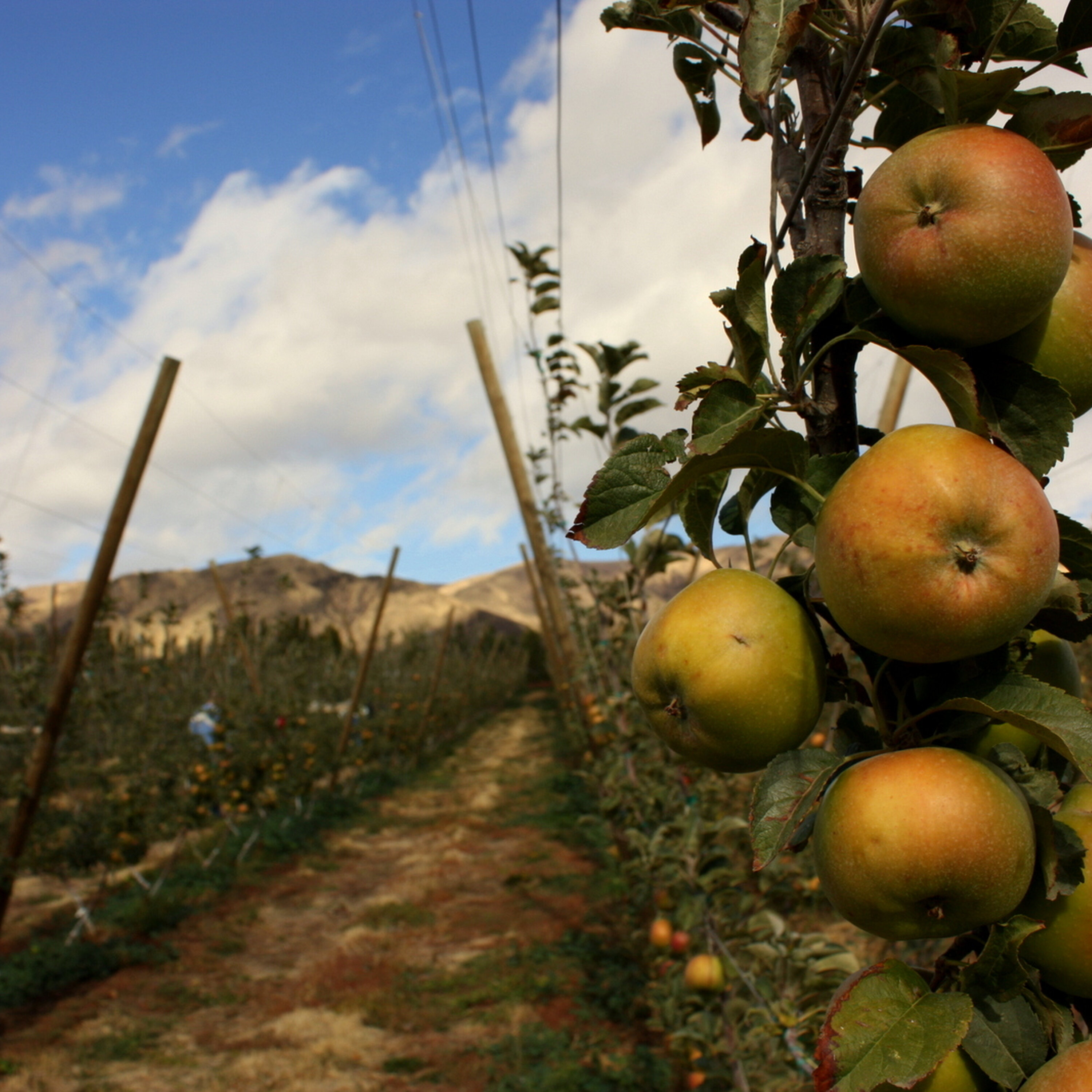
Loading summary
Transcript106 lines
- [00:00]
William Kerrigan
But snapped a couple pictures. I started walking back downtown Longmeadow, and then a police car came up and pulled off the road, right across the tree lawn, across the sidewalk, and jumped out. And he said, what were you doing taking pictures of people's houses? And I tried to explain to the police officer that, well, I'm a historian and I'm researching the life of John Chapman, the real Johnny Appleseed. And the police officer said to me, you trying to tell me that Johnny Appleseed is real? You think I'm that stupid?
- [00:35]
Bob Crawford
You've reached American History Hotline. You ask the questions, we get the answers. Leave a message.
- [00:45]
IBM Advertiser
So let me get this straight. Your company has data here, there, and everywhere, but your AI can't use the data because it's here, there, and everywhere? Seems like something's missing. Every business has unique data. IBM helps your AI access your data wherever it lives to change how you do business. Let's create smarter business. IBM.
- [01:13]
Various Advertisers (e.g., Sophie Cunningham, Sam from Manifest)
This is Sophie Cunningham from Show Me Something. Do you know the symptoms of moderate to severe obstructive sleep apnea, or osa, in adults with obesity? They may be happening to you without you knowing. If anyone has ever said you snored loudly, or if you spend your days fighting off excessive tiredness, irritability, and concentration issues, it may be due to osa. OSA is a serious condition where your airway partially or completely collapses during sleep, which may cause breathing interruptions and oxygen deprivation. Learn more at don'tsleep on OSA.com this information is provided by Lilly, a medicine.
- [01:51]
William Kerrigan
Company.
- [01:54]
And Doug, there's nowhere I wouldn't go to help someone customize and save on car insurance with Liberty Mutual, even if it means playing in a football game. Boom. 42. You're going down, Doug. Oh, yeah. Your price on car insurance when you customize and save is going down. Hey.
- [02:13]
Various Advertisers (e.g., Sophie Cunningham, Sam from Manifest)
Limu, what are you doing on their team?
- [02:16]
Liberty Mutual Advertiser
Only pay for what you need@libertymutual.com Liberty.
- [02:20]
Bob Crawford
Liberty. Liberty. Liberty. What's up, everyone? This is Angel, Diego and Jason, and we're at gusto about podcast.
- [02:30]
Uno que auto chisme. Holiday season's here and the studio is feeling festive. We got the tracks, the exclusives. Yes, it's bright winter spice cranberry bien frio. That refreshing cranberry flavor hits just right. A seasonal favorite, but limited time only, so don't sleep on it. To keep your fiestas festive. Adarle flo frio con sprite winters spice.
- [02:51]
William Kerrigan
Cranberry Obey your thirst.
- [02:54]
Various Advertisers (e.g., Sophie Cunningham, Sam from Manifest)
Making the holidays magical for everyone on your list. It's no small feat, but with TJ Maxx, your magic multiplies with quality finds. Arriving daily through Christmas Eve, you'll save on luxe cashmere, the latest tech toys, and more. So you can check off every name on your list and treat yourself to a holiday look that'll turn heads. Now you know where to go to make all that holiday magic. It's TJ Maxx, of course. It's shaping up to be a very magical holiday.
- [03:23]
Bob Crawford
Hey there, American History Hotliners. Bob Crawford here. Thrilled to be joining you again for another episode of American History Hotline, the show where you ask the questions. And if you got a question about American history, record yourself using the voice memo app on your phone and email it to AmericanHistoryHotlinemail.com that's AmericanHistoryHotlinemail.com okay, let's get to the show today. Our guest is William Kerrigan, author of the book Johnny Appleseed and the American A Cultural History. Hey, Bill. How are you today?
- [04:02]
William Kerrigan
Bob, I'm doing great. I'm thrilled to be talking to you, and I'm thrilled to be talking about Johnny Appleseed.
- [04:08]
Bob Crawford
Well, Bill, we brought you on the show today because we have a question from Mark in Wilmington, Delaware, who wants to know, was Johnny Appleseed a real person? If so, what did he actually do? So, Bill, to set this up, let's get right to the heart of the question. Was Johnny Appleseed a real person?
- [04:30]
William Kerrigan
Okay. Yes. In fact, Johnny Appleseed was a real person. And I have a little personal story about the stakes involved in John Chapman, Johnny Appleseed being a real person. When I was doing the research for this book many, many, many years ago, I traced John Chapman's path from Ohio backwards to Massachusetts. And I stopped in the town of Longmeadow, where he was a child. And I got to town before the town library opened. So I went for a walk. I was looking for a house that some locals believed he lived in. And it was pretty early in the morning. It's a beautiful, historic town. And I found the house, and I had a big, clunky digital camera with me. This is before everyone had a camera on their phone. So I thought, well, I want to take a picture of this house. I don't want to disturb the residents this early in the morning, so I'll just snap a picture and walk back to town. But I snapped a couple pictures. I started walking back to downtown Longmeadow, and then a police car came up and pulled off the road, right across the tree lawn, across the sidewalk and jumped out. And you said, what were you doing taking pictures of people's houses? I felt terrible, of course, because I clearly scared somebody. And I tried to explain to the police officer that, well, I'm a historian and I'm researching the life of John Chapman, the real Johnny Appleseed. And I have some evidence to suggest he lived in that house. And I really feel bad that I didn't just knock on the door and ask for permission, but I didn't want to disturb them. And the police officer said to me, you trying to tell me that Johnny Appleseed is real? You think I'm that stupid?
- [06:09]
So at that moment, I thought, does my freedom depend on convincing him he's real? But instead, I just assured him that I was very sorry, that I was willing to go talk to the residents, and that if they had any questions, I would be in the town library all day. My car was parked out there, an old red Tempo with a. A bike and a kayak attached to the top. Eddie let me go, but. Yeah. So even in a town where Johnny Appleseed spent part of his childhood, not everyone knew he was real.
- [06:40]
Bob Crawford
Well, yeah, Bill, like, it's. Well, it's because we grow up with this idea. He's this name, and there is this mythic quality to him. You know, he is tied in there with Paul Bunyan and.
- [06:56]
William Kerrigan
And.
- [06:56]
Bob Crawford
And then. And Davy Crockett, who hated be caught being called Davey, by the way, David Crockett and. And. And Daniel Boone. You know, these are the. You know, some real. Some fiction. Fiction attached to the real people in many cases. So paint us a picture of John Chapman, Johnny Appleseed. What did he look like? Tell us about him.
- [07:23]
William Kerrigan
Okay, so he was about 5 foot 9, was pretty skinny.
- [07:30]
In his older years. He had fairly long hair. The one sketch that survives of him drawn by an artist who was talking to a woman who'd known him as a child. To me, he looks exactly like Jimmy Dale Gilmore. You know who Jimmy Dale Gilmore is?
- [07:53]
Bob Crawford
The great. For those who don't know, the great Texas troubadour.
- [07:58]
William Kerrigan
A great.
- [07:58]
Bob Crawford
We would call it Americana. Americana music. Yeah.
- [08:03]
William Kerrigan
Yeah. So that's the one image we have, a sketch. And when I first saw that, I almost fell out of my chair because I could have sworn I was looking at a picture of Jimmie Dale Gilmore. But he was real. His real name was John Chapman. One of the reasons that I think that people doubt he's real is he's so. His life is so heavily layered in tall tales and so gilded, and lots of those are obviously not true stories. And even the ones that have a grain of truth are often greatly exaggerated. And the historical records we have of him that prove his existence is a pretty small group of records. So we have church records indicating when he was born.
- [08:47]
Bob Crawford
And when was that? Bill?
- [08:49]
William Kerrigan
He was born. He was born in 1774, September 22, 26, 1774, in Leominster, Massachusetts. His.
- [09:00]
His father was, when a few months later, would be heading off to Lexington in Concord as a minute man.
- [09:09]
His father would not be around for most of the first six years of his life. His mother, during the war, while his father was away, became pregnant when she had tuberculosis. She and the baby both died as a result. And John was raised by relatives in Leominster for about the first six years of his life. In 1780, his father, Nathaniel Chapman, and fought six years in the Revolution, which. Which puts him in a subset of revolutionaries that one historian calls the hardcore. So most people who fought for the Revolution, they fought for a year or two, and then they went back and took care of their businesses and farm farms. Nathaniel Chapman fought for six years, and he finally, when he finally got out, he was stationed at the Springfield Armory, and he had John and possibly his older sister Elizabeth, joined him in Longmeadow, which little tiny town south of Springfield where he had remarried to a woman named Lucy Cooley. And they lived in a small house, and they quickly started having more children, and Lucy would eventually have 10 children. And this is a very small house. So John, who was the oldest stepson in this increasingly crowded house, he probably left home pretty early. In fact, a 1790 census suggests he's no longer in the town. So he's. He's out of the. He's out of the house by 14 or 15. My guess is he was apprenticed locally. His father had been apprenticed as a carpenter when he was 14, and it probably followed that path. He then. We don't know much about him in his teen years, but then he starts to appear in records in northwest Pennsylvania about 1796, and he'll spend six or eight years in northwestern Pennsylvania, the first place that he is recorded as having planted apple seeds. But he also was involved in farming. He was tapping maple trees. He was selling his labor driving cattle for locals. He was trying to start a homestead. But this Northwest Pennsylvania frontier at this time was a really hard place to get a land plan. There were two different ways you could acquire land. You could go into a. A Philadelphia Land Company office and put money down on land you'd never seen, or you could go Try to claim land by improvement, get on the land, clear it, plant an orchard, build a fence, plant some crops and then eventually go back. So all of the land titles there were a mess. There were people who had tried to acquire the land both ways. And he was eventually pushed out of northwestern Pennsylvania, I think, because someone jumped his land claim and he then kind of headed towards Ohio.
- [12:16]
Bob Crawford
Well, so Bill, if I may interrupt, you said earlier that northwestern Pennsylvania, this is where he starts to plant apple seeds.
- [12:28]
So why like, right, this is the big mystery of this legend, like what attracted him to the apple and led him to, to plant these seeds.
- [12:44]
William Kerrigan
Right. So yeah, his years in northwestern Pennsylvania are the most interesting to me because the people who knew him there, he didn't have the nickname Johnny Appleseed yet, that he picked that up later in Ohio. But why plant apple seeds? Well, one of the ways on the frontier that you could make a land improvement claim, it varied from state to state, but one of the ways was you cleared a certain number of acres of land, you built a cabin and you planted, in the case of parts of Ohio, 50 apple or peach trees. And so people needed to get those orchards started soon. And an orchard, it wasn't just for land claims. For a frontier family, for a poor frontier family, an orchard was a way to help sustain you fairly quickly. Especially if you move to a place where somebody like John Chapman had arrived a few years earlier and laid out, planted from seed, a lot of trees. And you're buying two to three year old seedling trees, so you're buying two to three year head start on an orchard. So that was his plan. What he appeared to do was when he was in the east, he would go to cider mills and he would go out behind the cider mill where after the apples have been pressed, the, they threw all the pumice that just a ground up, mashed up, fibrous stuff with the seeds in it. And they, the cider mill owner would give them the seeds for free and he'd fill them full of bags, then carry them west and plant them in little scruffy nurseries, usually along a creek. Try to put a kind of primitive brush fence around them to hopefully keep deer from browsing them. And then as settlers came in a few years later, he would say, hey, I've got these nursery seedling trees, two to three year old trees, I'll sell them to you for $0.01 or $0.02 apiece. And he would give them the directions and these people would just go to the nursery and pick the healthiest Looking seedlings and transplant them into the orchards on their own property. This apple tree had a lot of uses for frontier family. Now, if you plant.
- [15:04]
Do you have a favorite apple, Bob?
- [15:06]
Bob Crawford
Oh, you know, that's a really great question, Bill. I appreciate you asking me that. I used to like the Red Delicious.
- [15:15]
William Kerrigan
Yeah.
- [15:16]
Bob Crawford
But I've gotten away from the waxier.
- [15:20]
William Kerrigan
Yep. Apple.
- [15:21]
Bob Crawford
And I'm find myself enjoying recently the honeycrisp and the cosmic.
- [15:26]
William Kerrigan
Yes, yes, I'm with you on that. There's a lot of today. There's a lot of amazing new varieties out. But the way an apple is propagated is not from seed. A variety is propagated. So the Red Delicious was. Was a seedling apple accident. When you plant apple seeds in the ground and you wait for those trees to grow, most of them are going to end up producing small, gnarled ditter apples. Even if you take your cosmic crisp seed, it's not going to grow a tree. With cosmic grape apples, you have to have to graft to propagate those trees. So Chapman, by planting seedling trees, was planting what Henry David Thoreau called wild apples. And if you were to plant a hundred of these trees, most of them would have apples you would not want to sink your teeth into, but they still had a lot of use for you. By luck of the genetic lottery, one of those hundred trees in your orchard might have a really tasty apple that you could eat fresh and make in the pies. And a standard apple Tree could live 150 years and within 10 years, can produce more apples every year than a family could use on their own. The rest of those trees, you could press them into cider, and you could also convert them to pork. You would let your hogs into the orchard in the fall as the apples dropped, and let them fatten themselves on those apples and then get higher values for them.
- [16:54]
Bob Crawford
So let me ask you this, Bill. It sounds like initially his fascination with apples or his. It was entrepreneurial.
- [17:04]
William Kerrigan
Yes. Right.
- [17:05]
Bob Crawford
He was trying to make money. At some point, it changes.
- [17:10]
William Kerrigan
Well, yeah. Did it change at a certain point, or was it always a little bit of both? There's a little controversy. So in a lot of the early legends, they just talked about him giving away apples. And he was just a. He was just a St. Francis of a CC character just helping everybody. And there was a real part of that. But then a professor at a little college in Ohio named Robert price in the 1950s, he started digging up more documents, and he found not only did he sell apples, but he actually bought land and he had kind of amassed a fair amount of real estate. And this alternative theory emerged that he was this entrepreneurial businessman. And during the Cold War, conservatives started to really push that idea that he wouldn't have given those away. He was a good businessman, he would have always sold them. And there was a spin on him as being almost a real estate tycoon. I sometimes give a talk that's called Johnny Appleseed, St. Francis or Steve Jobs. And the truth is he's a little bit of both. I mean, he's a businessman in the sense that he has this inspired idea. He knows there's going to be a market for these trees, and he knows he anticipates where they're going to be needed a few years in advance. He starts planting them all over the place. But he knows his audience. But the reality was he didn't really care much about money. He spent a lot of the money buying religious tracts. He was a follower of the Swedish theologian Emanuel Swedenborg, the Church of the New Jerusalem. He also was very. He would accept IOUs from people. He would tell them, oh, here's where my nursery is. Your $0.02 apiece, pay me whenever. And a lot of times, he never collected. If he saw a family that was in dire straits, he wouldn't even ask him for money. So people said he often had a lot of money, but he was quick to give it away and he didn't spend it on himself. He continued his whole life to dress in rags and recycled clothing, to sleep outdoors. Most of the time, even when he accepted indoor accommodation, he preferred to sleep on the floor. So, yes, he did have a smart business idea, but he was absolutely not interested in accumulating wealth. And he gave away much of the money he made or spent it proselytizing or just gave it to poor people who needed it more.
- [19:39]
Bob Crawford
So this time period, if I'm not, correct me, if I'm wrong, are we talking about the Second Great Awakening?
- [19:46]
William Kerrigan
Yes. Yes. And so this is a very central part of understanding who Johnny Appleseed was. So Chapman, back in Longmeadow, when he grew up, that town, Longmeadow, in the years after the Revolution, wasn't all that different than one of the original Puritan towns. It had one church, one which was also the political meeting house. The same minister had been in the pulpit for 60 years. Everybody was delivered this one version of what faith was and what truth was. And then John Chapman walks west. He walks into Pennsylvania and Ohio, and he encounters this second Great Awakening world, this world of people professing 20, 30, 40 different faiths. And you could go to camp revivals where it was kind of a spiritual cafeteria.
- [20:41]
Bob Crawford
I'm thinking Bill of Charles Finney.
- [20:45]
William Kerrigan
Yes, yes. And all of those revivals, you know, some of the preachers were very emotional, and they brought people to conversion through these very emotional pleas. A lot of the religions in the second Great Awakening were what I would call heart religions that focused more on touching the listener's heart. But there were some that were head religions, and Swedenborgianism, or new Church, was much more of a head religion. It was a religion that required you to read some pretty dense theological works and spend a lot of time studying them. It was not a typical choice for a guy who's wandering around Ohio barefoot in rags to become a proselytizer of new church doctrine. So he was a distinctive person in that way, but he was determined to try to win converts to the new church wherever he went. And so the new church is one of those many, many, many varieties that are flourishing in the second Great Awakening, but it's not one of them that is as successful. The heart religions see much greater success than the head religions at that time.
- [22:06]
IBM Advertiser
So you're telling me that the AI that's meant to make everyone's job easier to manage just adds more to manage? On top of the thousands of apps the IT department already manages? Funny how that works. Any business can add AI. IBM helps you scale and manage AI to change how you do business. Let's create Smile to Business. IBM.
- [22:34]
Bob Crawford
And Doug.
- [22:36]
Chase Advertiser
What a horrible call.
- [22:37]
William Kerrigan
Hey, ref. Open your eyes, ref. You're really not gonna call that. Come on. Hey, ref, why don't you customize your car insurance with Liberty Mutual and save money?
- [22:46]
Bob Crawford
I don't think you get what.
- [22:50]
William Kerrigan
Sure I do. We're all just giving him advice. You guys on sports, me on saving money.
- [22:55]
Bob Crawford
Nope, that's not it.
- [22:56]
Liberty Mutual Advertiser
Only pay for what you need@libertymutual.com Liberty.
- [23:00]
Bob Crawford
Liberty. Liberty. Liberty.
- [23:02]
Various Advertisers (e.g., Sophie Cunningham, Sam from Manifest)
The Chase Inc. Business Premier card is made for people who make things happen. Like me. I'm Sam, founder and CEO of Manifest, a product design company that makes everyday products design Smarter. I get 2.5% cash back on purchases of $5,000 or more.
- [23:15]
IBM Advertiser
More.
- [23:15]
Various Advertisers (e.g., Sophie Cunningham, Sam from Manifest)
Plus unlimited 2% cash back on all other purchases, which helps us make more smart ideas into a brilliant reality.
- [23:21]
Chase Advertiser
The Inc. Business Premier Card Chase your business make more of what's yours. Real business owner compensated for their participation. Cards issued by JPMorgan Chase bank and a member FDIC subject to credit approval.
- [23:30]
Various Advertisers (e.g., Sophie Cunningham, Sam from Manifest)
Terms apply.
- [23:32]
Stay cozy, stay home and save big online during Lowe's December deal drops. Because honestly, why go anywhere when the deals come to you? Check this out. Lowe's is going to give you two free select tools from dewalt, Craftsman or Cobalt when you buy a select battery or combo kit. Yep, two tools free. It's basically a holiday miracle. Plus rewards members get free standard shipping all month long. Yet another reason not to leave your couch. Kick back, click around, let the savings roll in. Shop new December deal drops on lowe's.com every week this month. Fresh deals, cozy vibes, zero effort. The holidays are back at Starbucks. So share the season with a peppermint mocha, Starbucks signature espresso, velvety mocha and cool peppermint notes topped with whipped cream and dark chocolate curls together is the best place to be at Starbucks.
- [24:28]
Bob Crawford
This is American History Hotline. I'm your host, Bob Crawford. Today my guest is William Kerrigan, all author of the book Johnny Appleseed and the American A Cultural History. We're talking about the man, the myth, the legend, Johnny Appleseed. And hey, do you have questions about American history? If so, send them our way. Record yourself using the voice memo app on your phone and email it to AmericanHistoryHotlinemail.com that's AmericanHistoryHotlinemail.com now back back to the show. Bill, I love what you're like. You are illuminating so much about Johnny Appleseed. John Chapman and the second Great Awakening is a time is very fascinating to me. I've done a lot of reading about it. I never connected.
- [25:23]
Johnny Appleseed with this movement. So you're telling me about a man who is an entrepreneur. He is also.
- [25:32]
Almost like the social gospel, Right? He sounds like he's trying to use his profession to profess his faith and to share his faith. And somewhere out of all of this, a legend is born, a myth, an American myth is born. Tell me about how that came to be.
- [25:56]
William Kerrigan
So, yeah, I think it's a very interesting question. Why did so many stories surround this peculiar individual? And I think part of the answer to that is to look at when the stories really started to spread and.
- [26:15]
The map to map out the places that John Chapman went to when he arrived in northwest Pennsylvania as a young man living in pretty primitive conditions, the only other European people there were a lot like him. They were living in primitive conditions. When he moved into Ohio in the first years of the 19th century, the first places he was at were mostly still in these frontier settlements. So he might have seemed a little strange, but this was A time when you would run into strange people all the time. When he arrived In Ohio about 1801, the first time, there were only 40,000 people in the state. When he died in 1845, there's one and a half million people in the state. He parks himself in Ohio for about four decades and the world around him starts to change a lot. And he doesn't change much. So by the time he's an old man, there are canals and roads and even railroads that are connecting every town in Ohio to national and international markets. People have access to nicer clothes, store bought tea, all sorts of things. They are becoming consumers. And the lifestyle of those who had been around had changed for most people. But John Chapman doesn't change. He, he's committed to frugality. He's committed to living with just the most basic needs. He becomes a symbol of the lost frontier. And Americans have this ambivalence towards modernity. On one side, we embrace change and improvement, but then we also have nostalgia for what was lost in the past. And Chapman becomes an endearing figure because he seems to represent these, these old values of being helpful to your neighbors and not worrying about striving and getting ahead. And so people start talking about them and they start telling stories and then they exaggerate those stories as they're passed along and they come to be tall tales. I think most of the tall tales do reflect certain aspects of his actual character, even if the tale itself is not entirely believable.
- [28:40]
Bob Crawford
Is it true that he was a vegetarian?
- [28:44]
William Kerrigan
Ah, this is a great. So it's, he's very commonly called the vegetarian. Now when I was doing research in northwest Pennsylvania, one of my good, best sources, because he didn't leave a diet or anything, were the dry goods store ledgers from stores where he went in and bought things people didn't have cash. So you wrote down what you took and what you might have given in exchange, and sometime down the road those accounts would be settled. But in one entry from a dry goods store in Franklin, Pennsylvania, the young John Chapman bought gunpowder, pork, whiskey, chocolate and two pairs of moccasins. So in this one entry was he was always barefoot. Well, sometimes you were. He was a vegetarian. He's got pork, he is buying gunpowder, he carries a gun. A lot of the myths of him as never carried a gun completely vegetarian certainly wasn't true in his years in Pennsylvania. However, there is a lot of evidence that he embraced vegetarianism later in life. And he may have gotten that even through his Swedenborgian faith, because there was a splinter group of Swedenborgians who embraced vegetarianism about that time. So late in life you hear stories about he hired a young man to help him do some work clearing land for a nursery. When it came lunch, he was expected to provide lunch for the young man. And he offered the young man a handful of walnuts for lunch. And this young man did quit, walked off at that time. That he wouldn't harm an animal seems to be very true. Sometimes he took in horses that had no value because they were so broken down and just cared for them. I think it is likely that he became a full fledged vegetarian at some point in his life, but he certainly didn't start out that way. I think that's something he embraced along the way.
- [30:48]
Bob Crawford
You did reference St. Francis.
- [30:51]
William Kerrigan
Yes.
- [30:52]
Bob Crawford
Who was very much a naturalist.
- [30:55]
William Kerrigan
Right.
- [30:56]
Bob Crawford
And so are there these power, like, how deep does the parallel go?
- [31:03]
William Kerrigan
I think the parallels are pretty deep. He did seem to have extraordinary empathy for all living things at a time on a frontier where that was very uncommon. And a lot of the tall tales are about.
- [31:18]
How far he would go with this. One of the crazier ones is he was. He was sleeping in the woods on an early fall day when it's cold out, and he starts a fire to keep warm. And he notices that mosquitoes are flying into the flames to their death. And he's so horrified by this, he puts the fire out and shivers for the night. Rather than kill mosquitoes, he claimed to have been expressed deep regret for striking a snake that bit him while he was clearing ground and that he did it sort of as a natural reaction and killed the snake. And then he said, you know, the snake was just doing protecting itself. And I feel terrible about killing the snake story about him crawling into a hollow tree trunk to sleep one night to the scratch that there were some bears in there and then him leaving it for the bears. Many of these stories were probably made up, But I think the point that the tall tale tellers were making was this guy cared about non human life in really, really extreme ways. And they found that curious. And maybe they found it just weird, or maybe they found it endearing.
- [32:29]
Bob Crawford
Before we part, I got two questions for you. First, in your research, when were the earliest mythic stories, like, he dies in 1845?
- [32:40]
William Kerrigan
He said, yes.
- [32:42]
Bob Crawford
And so when did you start to see. When do we start to see the telling of Johnny Appleseed to the school kids? And when does the myth begin to take hold? Was he a living legend?
- [32:57]
William Kerrigan
No. So he was a local living legend for during his life. What's interesting is at the time he dies, one of the only things that's been written about him is in a. In a bulletin produced by the New Church of the New Jerusalem in Manchester, England, in 1817. They already know him because he is. He's sending letters to them, sending money so they'll send him books to distribute. But they describe in detail that he's planting trees and he's living this primitive existence and he's proselytizing. That's one of the very few things that's written about him during his life. Even in his obituary in 1845 in Fort Wayne, in the Fort Wayne newspaper, they describe his life a little bit, but they don't know where he came from. There's very little details. One of the most curious thing that the obituary writer put in there was he was not less than 80 years old at the time of his death, Though no person would have judged him from his appearance that he was 60. He was in fact 71. So he overaged him, probably because of his peculiarity and his frontier qualities. But he also seemed to be acknowledging that he was remarkably fit for somebody that age. But only after that he died do we start to see some things come into print. This young novelist and writer of fiction named Rosello Rice, who had known that Johnny Applesee when she was a little girl, she starts to write stories about him in 1871, a Unitarian minister in Mansfield, Ohio, who turned journalist, publishes an article in Harper's Monthly magazine, which is a national magazine. That's the first time you get this very national story. And then in 1880, Lydia Maria Child, who wrote American Frugal Housewife, among other things, and she wrote a poem that was published in national magazines called Appleseed John. And those early accounts are the national story. But then what also starts happening about the same time is every county in Ohio starts to publish its own county history. And the local stories that people have been telling in their families start to appear in those late 19th century county histories. So they really kind of unfold over a long period of time. What's really remarkable is how little actually makes it the print during his lifetime.
- [35:27]
Bob Crawford
And he.
- [35:28]
William Kerrigan
He.
- [35:28]
Bob Crawford
But he was referred to during his lifetime by some as Johnny Appleseed.
- [35:33]
William Kerrigan
Yes. No one in northwestern Pennsylvania knew him by that name, but he was called Johnny Appleseed or Appleseed John. We do have one document he signed.
- [35:46]
I think it was an iou, and he signed it Appleseed John. So the name had stuck with him. That emerged in his Ohio years, though.
- [35:56]
Bob Crawford
Well, Bill this has been so much fun. I really enjoyed talking with you today. I've learned a lot. My last question for you is what is your favorite apple?
- [36:06]
William Kerrigan
My favorite apple is I like antique apples that are hard to find. One's called a Cox's Orange Pippin and it's an old English apple that if you, if you really haunt places that that have heritage apple orchards, you might find one. It actually tastes similar to your Cosmic Crisp. I would say I appreciate all kinds of apples.
- [36:30]
But the Cox's Orange Pippin, I would have to say is the best tasting apple I've ever had.
- [36:38]
Bob Crawford
William Kerrigan the book is Johnny Appleseed and the American A Cultural History. Bill, thanks for joining us today on American History Hotline.
- [36:50]
William Kerrigan
Thank you, Bob. I really enjoyed speaking with you.
- [36:55]
Bob Crawford
You've been listening to American History Hotline, a production of iHeart podcasts and Scratch Track Productions. The show's executive producer is James Morrison. Our executive producers from iHeart are Jordan Runtal and Jason English. Original music composed by me, Bob Crawford. Please keep in touch. Our email is americanhistoryhotlinemail.com if you like the show, please tell your friends and leave us a review in Apple Podcasts. I'm your host, Bob Crawford. Feel free to hit me up on social media to ask a history question or to let me know what you think of the show. You can find me at bobcrawford Bass thanks so much for listening. See you next week.
- [37:49]
Various Advertisers (e.g., Sophie Cunningham, Sam from Manifest)
Okay, only 10 more presents to wrap. You're almost at the finish line, but.
- [37:55]
William Kerrigan
First.
- [38:08]
Various Advertisers (e.g., Sophie Cunningham, Sam from Manifest)
There the last one.
- [38:12]
Enjoy a Coca Cola for a pause that refreshes.
- [38:23]
Chase Advertiser
With Bali. From Ishares, you get access to both monthly income and growth potential in one simple ETF. It's the best of both worlds. Discover Bali iShares Large Cap Premium Income Active ETF iShares the market is yours. Visit www.ishares.com to view a perspective for investment objectives, risks, fees, expenses and other information that you should read and consider carefully before investing. Risks include principal, loss and the use of derivatives, which could increase risks and volatility. Monthly income is not guaranteed. Prepared by BlackRock Investments, LLC. If you're a maintenance supervisor for a commercial property, you've had to deal with everything from leaky faucets to flickering light bulbs. But nothing's worse than that ancient boiler that's lived in the building since the day it was built 50 years ago. It's enough to make anyone lose their cool. That's where Grainger comes in. With industrial grade products and dependable, fast delivery, Grainger can help with any challenge, from worn out components to everyday necessities. Call click grainger.com or just stop by Granger for the ones who who get it done.
- [39:19]
Various Advertisers (e.g., Sophie Cunningham, Sam from Manifest)
Look Santa, the kids left you.
- [39:21]
William Kerrigan
Pepperidge Farm Cookies. Milano mint chocolate, so rich.
- [39:25]
Bob Crawford
Jessmin butter cookies, so buttery.
- [39:27]
William Kerrigan
And Linza raspberry a holiday classic. These are Fancy Santa.
- [39:33]
Bob Crawford
Fancy Santa, Fancy Santa.
- [39:36]
Various Advertisers (e.g., Sophie Cunningham, Sam from Manifest)
Designer cologne Spritz Me Vintage timepiece, classy oak lock, gold chain with diamonds.
- [39:44]
William Kerrigan
Now that's fancy.
- [39:46]
Bob Crawford
Pepperidge Farm cookies.
- [39:48]
Liberty Mutual Advertiser
Fancy a taste Tis the season for identity theft. This time of year most of us are checking off our holiday gift lists. But guess what? Identity thieves have lists too and your personal information might be on them. Protect your identity with LifeLock. LifeLock monitors hundreds of millions of data points every second and alerts you to threats you could miss by yourself. Even if you keep an eye on your bank and credit card statements. If your identity is stolen, your own US based restoration specialist will fix it, guaranteed or your money back. And all plans are backed by the million dollar protection package. The last thing you want to do this holiday season is face drained accounts, fraudulent loans or other financial losses from identity theft all alone. Make this season a about joy, not Identity theft. With LifeLock, save up to 40% your first year. Call 1-800-LIFELOCK and use promo code iHEART or go to lifelock.com iHEART for 40% off terms apply.