Loading summary
Transcript98 lines
- [00:02]
Washable Sofas Advertiser
Let's be real life happens, kids spill, pets shed and accidents are inevitable. Find a sofa that can keep up@washablesofas.com Starting at just $699, our sofas are fully machine washable inside and out so you can say goodbye to stains and hello to worry free living. Made with liquid and stain resistant fabrics, they're kid proof, pet friendly and built for everyday life. Plus, changeable fabric covers let you refresh your sofa whenever you want. Need flexibility? Our modular design lets you rearrange your sofa anytime to fit your space whether it's a growing family room or a cozy apartment. Plus, they're earth friendly and trusted by over 200,000 happy customers. It's time to upgrade to a stress free mess proof sofa. Visit washablesofas.com today and save that's washablesofas.com offers are subject to change and certain restrictions may apply.
- [01:01]
Oregon Home Care Jobs Announcer
You can make a difference in someone's life, including your own with a job in home care. These jobs offer flexible schedules, health care, retirement options and free training. They also provide paid time off and opportunities for overtime. Visit oregonhomecarejobs.com to learn more and apply. That's oregonhomecarejobs.com.
- [01:30]
Ryan Seacrest
Hey, it's Ryan Seacrest for Albertsons and Safeway. It is hot out there this summer, right? But don't sweat it. We got tons of ways to save on your family's favorite personal care items to keep yourself feeling cool and smelling good. Now through September 9th, earn four times points when you shop for items from your favorite brands like Right Guard Raw Sugar Free, Dove Soft Soap and Olay. Then use your points for discounts on groceries or gas on future purchases. Offer end September 9th. Restrictions apply. Offers may vary. Visit albertsons or safeway.com for more details.
- [02:03]
Michael Cullinan
December 29, 1975 LaGuardia Airport the holiday rush.
- [02:10]
Narrator
Parents hauling luggage, kids gripping their new Christmas toys. Then everything changed.
- [02:17]
Mounjaro Diabetes Campaign Announcer
There's been a bombing at the TWA terminal. Just a chaotic, chaotic scene.
- [02:22]
Narrator
In its wake, a new kind of enemy emerged. Terrorism. Listen to the new season of law and criminal justice System on the iHeartRadio app, Apple Podcasts or wherever you get your podcasts.
- [02:41]
Bob Crawford
You've reached American History Hotline. You ask the questions, we get the answers. Leave a message. Hey there American History Hotliners. Your host Bob Crawford here. Happy to be joining you again for another episode of American History Hotline. You've been sending us some great questions and we want you to keep them coming. The best way to get us A question is to record a video or a voice memo on your phone and email it to American History hotlinemail.com that's American History hotlinemail.com okay, today's question is about parties. And not the kind with cake. We're talking about third parties. Here to help me answer this question today is Michael Cullinan. He's a professor of US History at Dickinson State University in North Dakota. He's also author of the soon to be released book Theodore Roosevelt and the Tennis Cabinet. Michael, thanks for joining me again today.
- [03:40]
Michael Cullinan
Thanks, Bob, for having me. Great to be back. Let's talk about third parties.
- [03:44]
Bob Crawford
Let's do it. Okay, Michael, here's the question we were hoping you could help us answer. It's from Phil in Lincoln, Nebraska. He wants to know why third party presidential bids always fail. Why can't we elect a president outside of the two party system? First, Michael, I want to get to some of the third party movements and major third party standard bearers like Ross Perot, Ralph Nader, even Teddy Roosevelt and the Bull Moose Party. But let's start with some basics about our political structure. Why do we have a two party system in America?
- [04:22]
Michael Cullinan
Well, that's a hard question to answer simply because I guess this just developed over time. I mean, it's not like it's a natural progression or organic maybe, but it's not something that can, it's not something that was structured this way. And in fact, to Phil's question about third parties and them always failing, they don't always fail, actually. They just don't. They don't succeed in the 20th and 21st century. But if you look back to the 19th century, you do see one of the most important presidential victories is really a third party victory. And that's the Republican President, Abraham Lincoln, who if you think about that 1860 election, there's four parties that are running. The Democrats are by far and away the most established party in the political system at that time. And the Republicans, they'd only been around for about six years at that stage. So they were a third party. It's only the second time they contested a presidential election. And Abraham Lincoln won because there were two other parties that were also vying for, for electoral votes. So it has happened in the past. It hasn't happened in what we would call modern presidential history. And I think the reason for that is the vested interests in, in American politics have just moved into two camps and they've set up what is a very rigid first past the post system which every now and then Breaks or bends maybe doesn't break. But the two parties are because they're so much a part of our political culture that when a third party runs, they have a chance to disrupt an election but not win an election. It takes more than in American history anyway. It takes more than just one political run to seize the day. It usually takes entrenched long term political warfare to get across that post and.
- [06:08]
Bob Crawford
First past the post, winner take all. Right, Right. Our system is kind of set up in this winner take all black and white setup.
- [06:19]
Michael Cullinan
Yeah, I mean, that's right. I mean, and that, and that's something that you can really see well in some of the, the names that you mentioned that I said are like disruptors. Right. So there's Ross Perot in 92. Bill Clinton doesn't get elected without Ross perot. Actually in 1980, Ronald Reagan doesn't get elected without third party candidate Anderson running and Jimmy Carter losing votes to him. The same could be said in Teddy Roosevelt's time in 1912. He runs and takes votes away from Taft and we wind up with Woodrow Wilson. So we have these, these presidential leaders who are elected with a plurality of votes, but, but not a majority. Interestingly, Bill Clinton never won a majority of votes in America. He never topped 50%. Woodrow Wilson barely topped 50% back in 1916. So what these, what these third parties do is they disrupt that two party system, but they don't win the day.
- [07:12]
Bob Crawford
Let's go to Europe. They don't have third parties, they have minor parties. How does proportional representation make an opening for, for parties. For more parties?
- [07:22]
Michael Cullinan
Yeah, I mean, that's a really complicated question too, because proportional representation or PR exists in so many different guises across Europe. I'm speaking to you today from Ireland. And in Ireland we have a system whereby you don't just pick one candidate, you pick the first, second, third, fourth, fifth, sixth, seventh and eighth choice sometimes. And then they tally up those votes according to who drops out. So you could vote really radical and really conservative and see neither one of those candidates win. So it's a really complicated system in Europe whereby coalitions of parties wind up governing. And that's because you have a greater chance of, of a, of a smaller party getting into power, but only on a constituency level. So with any election whereby you're electing one person to a single office, first past the post is the more prominent way of an election working out. Even, even in Ireland. Or take France for example. Right. France has presidents just like America does. Macron is the president. Now, he ran against a slate of candidates in a first election and then in the second round, it was a, it was a one on one competition. So in a lot of, a lot of cases, the European elections for a single office for like a president, those do look a lot like the United States. But in a parliamentary system, it's, it's very different.
- [08:43]
Bob Crawford
What you're describing sounds a lot to me like ranked choice voting.
- [08:48]
Michael Cullinan
Yeah. In Ireland it is ranked choice vote voting and it is a proportional representation. So constituencies usually have more than one person running in a constituency. In fact, they always do. It's either three, four or five representatives. And in, in that case, it's so much different from the United States. So you know, where you're living now, you get to vote for one representative and you get to vote for two senators. But in Ireland, if you live in a constituency, you get to vote for five, possibly constituents and then a president and then senators, and there's just a lot more representation and a greater chance of your vote counting towards someone who's from a smaller party.
- [09:28]
Bob Crawford
Well, speaking of me in North Carolina, I'm unaffiliated. That is what our version of independent. So help me define this really quick. I think a lot of people think independent, which means you're not part of a party, but that's a party. Right. Like, what does the independent party stand for?
- [09:51]
Michael Cullinan
That's a, that's a good question. I mean, there, there, there have been so many independents in the past that have run and they've, but they've often, they've often had shades of a party. And one of the things we might want to remember is about the United States is that despite being a Democrat or a Republican, within that definition there are various shades of red and blue, so much so that you might even be purple or, or gray or whatever. You know what I mean? The point is these parties are broad churches and they include a lot of people that have very different opinions about everything from the economy to foreign policy. So being part of a party in, in the United States makes it easier to express yourself. Being an independent and then lacking that party system does make it harder because there's no organization for independence.
- [10:40]
Bob Crawford
I think about Angus King, independent senator from Maine. I think about, well, Joe Manchin before he, he, he became independent and so did Kyrsten Sinema before they left the Senate last term. Bernie Sanders. Right. Is he, he's independent, right?
- [10:57]
Michael Cullinan
Right. Yeah.
- [10:58]
Bob Crawford
Technically, I guess you, Jesse Ventura was the independent governor of Minnesota. These, these guys, the higher you go. Right. In being an independent, the, the Higher the office, the harder it gets.
- [11:16]
Michael Cullinan
I think that's true. And the Senate does seem to be the threshold for where you can be independent and be without a party. Even Bernie Sanders, when he decided to run for president, ran as a Democrat. So you do need that party support. And, and that's, that's no different the world around. I mean, you know, despite there being more parties in Europe or in Asia or Africa, the reality is too, that there are structural organizations that help candidates get their message to the, to, to, to their base. And so being an independent makes that really difficult. But as you point out, there have been some really incredible independents over the time, over the, the past century in.
- [11:50]
Bob Crawford
The U.S. okay, so let's talk about presidential history. You said in the early on that actually Abraham Lincoln was a third party candidate and he won the presidency. So the Republican Party once being an outsider party, right, an insurgent third party. How did the Republican Party evolve from insurgent outsider party to one of the two standard bearers?
- [12:20]
Michael Cullinan
Okay, I love that question for so many reasons because a, it's really easy to answer like, but, but also, but it allows us to see like, what's going on in American politics. So what makes a third party successful is a single issue, right? That's what really galvanizes attention and, and shifts the, the political compass in America. And obviously with the Republican Party, that was abolition, it was slavery, it was the fugitive slave laws, it was, you know, there was a crisis that had grown, gripped America. And arguably when third party candidates have their greatest moments is, is when there's a singular crisis, when there isn't quite an obvious crisis, or when there's one that's maybe construed by a third party candidate, you know, then, then they don't get as much traction. And, and that's because when it comes to voting, if you have, if there's an issue that grips you and you are, you know, all in on that issue, then, then you're gonna, you're gonna be able to pick a candidate quite easily. But if there's a cacophony of interest or there's a, there's a range of different issues that you're grappling with, then your choice for Canada just becomes less clear. And this is where we see in America the cleavages in the party system. So like at the end of the, the, the era of good feelings, you know, when, when John Quincy Adams is leaving the White House and, and Andrew Jackson is coming in, what we see is a cleavage. We see Americans deciding that they want smaller Governments, they want, you know, less, less investment in infrastructure. They want a hands off approach and they want patriotism. Right. That is like the motivating nationalism of the time, the break, then again after that. And the next party system is with Lincoln. And you can see this, you know, whether it's the Depression, the Depression's a major break as well. So that's what really galvanizes a change in the political system, system in America.
- [14:12]
Bob Crawford
Are we there? I mean, right now, 20, 25 are. It feels like we're, it feels like we're past a breaking point and maybe something's happened and we just as historians, we don't recognize it yet. But, but it seems like the grievance is there, right? There's definitely grievance in the electorate on, in both parties. The Democratic Party is its approval ratings are as bad as they were in 1990, which I have to remind people that 1992, Bill Clinton did win the presidency. But, but the Democratic Party is at a low point. The Republican Party has morphed. It's, it's a completely different, it's put on different clothes, I like to say. So are we there? Are we, is the time ripe for a third party? Or, or are the parties ready to, is the, where do the establishment Republicans go? You know what I'm saying? Where do those W. Bush Reagan Republicans go along with these disaffected Democrats? What's going on? Is it time for a third party in America? Could one succeed?
- [15:22]
Michael Cullinan
Yeah, I mean, I think one can succeed. I mean, it hasn't and there's lots of reasons why they haven't in the past. But you're kind of right. I mean, there's an instinctive sense of breakdown in, in, in who a centrist can be affiliated with if they're, if they're unhappy. I mean, what we've seen in the Democratic Party in the last couple of months is a move towards the left with Bernie Sanders and Alexandria Casio Cortez going on tours and that and also just an absence of opposition and to, to Trump policies. But also what we see in the Trump world is, is Jeff Flake saying things like when is the Trump fever going to end? Of course, Jeff Flake is that centrist Republican from Arizona. So there's evidence of that in reality. The two previous major collapses of parties were the Federalists in the early Republic and the Whigs just before the Civil War. And both of those were precipitated by a major shift in Americans sense of themselves. Right. And one of them was the Civil War. And the division between the north and the South. And the other one was this one that I was talking about, this nationalistic patriotism that led to the sort of expansion of the United States and all the trauma that that would have brought as well. So we might be there, too. I'm not sure. Are we at a trauma that's like the Civil War? I mean, I like to remind people that Donald Trump is not our most divisive president. Abraham Lincoln is, you know, states literally left the Union when Abraham Lincoln became president. We're not quite there yet, but it does seem awfully close. And it does seem like we're one economic depression away from a real, a real shift in thinking.
- [17:02]
Bob Crawford
So the major hurdles for a third party candidate today are money and.
- [17:10]
Michael Cullinan
Money. Actually, I'm going to say, I'm going to be contrarian here a little bit. Money, money definitely matters. But money, if it's, if there's only one issue, money doesn't matter that much. And I'll just, you know, remind your listeners that Donald Trump, when he ran in 2016, didn't have all the money and he still managed to pull out a win, which I, you know, I think whether you love Donald Trump or whether you hate him, and there's nowhere in between for most people, I think you have to give credit to the camp, a campaign that came out of nowhere and managed to win an election that no one thought they could win. So money's important. Yes, sure. But having a singular issue that galvanizes public opinion is still the only way to win an election. And Donald Trump, most people didn't believe that he did that, but obviously his message resonated with people enough so that they decided to vote. I do think there are bigger issues, though, than the ones that Donald Trump has raised. I think there are major issues about America's place in the world. There's major issues about inequality that really could come to the fore. And I mean, those could be very violent. We've seen violence, sort of clashes between the haves and the have nots in the past, in our history, but in other histories as well. And so things could boil up and really, you know, leave an opening for a third party to fill that vacuum.
- [18:32]
Washable Sofas Advertiser
There's nothing like sinking into luxury. At washablesofas.com, you'll find the Annabe sofa, which combines ultimate comfort and design at an affordable price. And get this, it's the only sofa that's fully machine washable from top to bottom, starting at only $699. The stain resistant performance fabric slipcovers and cloud like frame duvet can go straight into your wash. Perfect for anyone with kids, pets or anyone who loves an easy to clean spotless sofa. With a modular design and changeable slipcovers, you can customize your sofa to fit any space and style. Whether you need a single chair loveseat or a luxuriously large sectional, Annabe has you covered. Visit washablesofas.com to upgrade your home. Right now you can shop up to 60% off store wide with a 30 day money back guarantee. Shop now@washablesofas.com Add a little to your life. Offers are subject to change and certain restrictions may apply.
- [19:33]
Oregon Home Care Jobs Announcer
You can make a difference in someone's life, including your own with a job in home care. These jobs offer flexible schedules, health care, retirement options and free training. They also provide paid time off and opportunities for overtime. Visit oregonhomecarejobs.com to learn more and apply. That's oregonhomecarejobs.com foreign.
- [20:02]
Ryan Seacrest
Hey, it's Ryan Seacrest for Albertsons and Safeway. Feel good and look good this summer with savings on your personal care favorites and earn four times points now through September 9th. Shop in store or online for items like Dollar Shave Club razors, hydro Silk Razors and Edge Shave Gel. Plus some favorite brands like Tampax, Pearl, Depend and Poise to earn four times points to use for later discounts on groceries or gas. Hurry in before these deals are gone. Offer end September 9th. Restrictions apply. Offers may vary. Visit albertsons or safeway.com for more details.
- [20:36]
Michael Cullinan
December 29, 1975 LaGuardia Airport the holiday rush.
- [20:43]
Narrator
Parents hauling luggage, kids gripping their new Christmas toys. Then at 6:33pm Everything changed.
- [20:51]
Michael Cullinan
Changed.
- [20:53]
Mounjaro Diabetes Campaign Announcer
There's been a bombing at the TWA terminal.
- [20:56]
Michael Cullinan
Apparently the explosion actually impelled metal glass.
- [21:01]
Mounjaro Diabetes Campaign Announcer
The injured were being loaded into ambulances. Just a chaotic, chaotic scene.
- [21:06]
Narrator
In its wake, a new kind of enemy emerged. And it was here to stay. Terrorism, law and order. Criminal justice system is is back in season two, we're turning our focus to a threat that hides in plain sight that's harder to predict and even harder to stop. Listen to the new season of Law and Criminal justice System on the iHeartRadio app, Apple Podcasts or wherever you get your podcast.
- [21:42]
Ryan Seacrest
Foreign.
- [21:46]
Bob Crawford
This is American History Hotline. I'm your host Bob Crawford. Today my guest is Michael Cullinan. He's a professor of US History at Dickinson State University in North Dakota. He's also the author of the soon to be released book Theodore Roosevelt and the Tennis Cabinet, we're talking about third parties. And yes, there are spoilers ahead by that. I mean, third party presidential candidates that change the outcome of an election. Remember, send us your burning questions about American history. Record yourself using your voice memo app on your phone and email it to AmericanHistoryHotlinemail.com that's AmericanHistoryHotlinemail.com now, back to the show. All right, Michael, we're going to talk about a man you are very familiar with. Let's talk about the 1912 election and Teddy Roosevelt's progressive party. First off, why did Teddy Roosevelt start a third party?
- [22:45]
Michael Cullinan
Oh, that's right.
- [22:47]
Bob Crawford
Call it that. It wasn't a third party.
- [22:49]
Michael Cullinan
Absolutely. It was a third party. No doubt about it. I mean, like, the thing is, is TR walks out of one political convention and then starts another one. So, I mean, that is like the, the ultimate definition. He got fed up with the Republican Party. They didn't nominate him for the. So let me just roll back really quick. 1912.
- [23:07]
Bob Crawford
Yeah. Well, first of all, and, and forgive me for interrupting, but I am. I've always been fascinated with the personal relationship between Teddy Roosevelt and William Howard Taft. So this kind of sets up like Roosevelt's the president for eight years, for two terms. His successor, his anointed successor is Taft. Is that correct?
- [23:36]
Michael Cullinan
That's absolutely, yeah. TR picks Taft to be president because.
- [23:40]
Bob Crawford
He'S done being president. TR wants to go travel the world, hunt, explore. Okay. Take it from here.
- [23:49]
Michael Cullinan
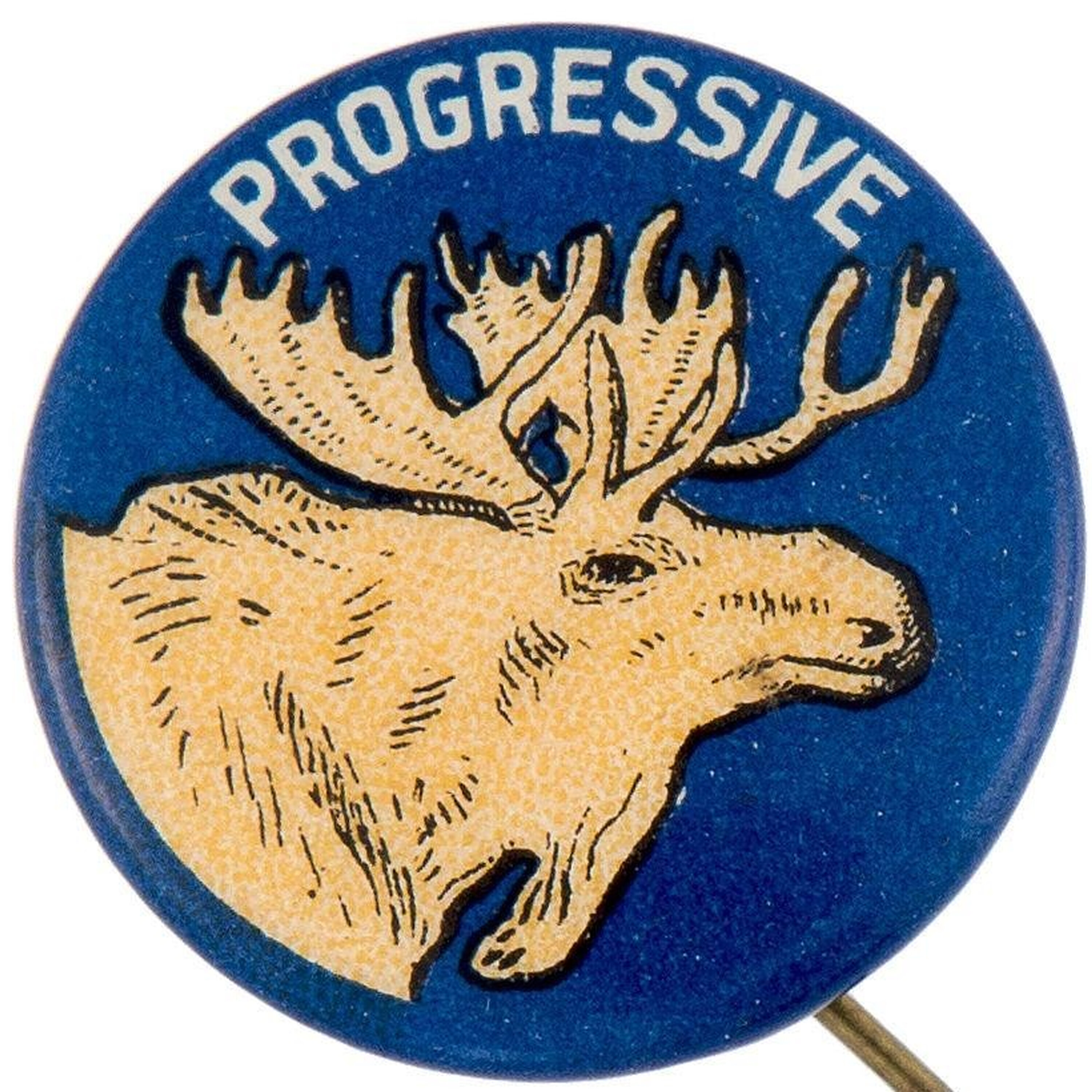
Okay, so this is great because this is actually where the book ends and where I, you know, there's a lot, there's a lot more to say. So Taft is Roosevelt's handpicked successor. He runs in 1908, and, and he doesn't do as well as Roosevelt, which is also interesting because I think TR picked Taft in part because he's not as charismatic or interesting as Roosevelt. I mean, think about it. If you were going to appoint a successor who is. Right, exactly. But you're not gonna, you're not gonna pick the, the, the guy in the room who is like, you know, heads and tails more exciting than you are. Although, as you point out, there's not too many people that are more exciting than tr. But he picked someone that he thought would continue on with his policies in an efficient manner, but not in any way that's going to steal the show. And that's pretty much what happens. Taft does continue with a lot of TR's policies. He doesn't appoint the same staff. And TR is like band of brothers, this tennis cabinet of friends TR sort of expected that Taft would keep a lot of them on, and he doesn't do that. So that already starts to alienate the two men from, from one another. The night that T.R. passes the torch to Taft, the night before the inauguration, they have dinner in the White House and things had gotten pretty frosty between the two men by that point. That's only about five months after the election. And interestingly, it's like a freezing cold night in Washington and the two of them aren't really talking to each other. The two wives, Nellie Taft and Edith Roosevelt, aren't really talking to each other. They had real differences as well. And then T.R. leaves, he goes to Africa, which is probably the best thing that he could have done for Taft because he's not involved in politics. And, but even so, within the, you know, eight months, nine months, his friends, TR's old friends are coming over to Europe to tell him how badly TAPT is running the administration. And the falling out pretty Much starts when TR arrives back from his 10 month holiday in Africa and Europe. And he comes back to Heroes welcome in New York, which again, you have to imagine the ego must have been like, you know, riding a high crest there. And he thought, well, so he makes a famous speech in 1910 called the New Nationalism speech, which really lays out the idea for a more progressive America. And what is so interesting about 1912 is that that is the year when the first primaries, party primaries take place. And the first primary, in fact, is held in North Dakota where TR had spent some time. And he loses, he loses to a more progressive candidate, Bob La Follette, who would run later years. But, but anyway, let me not digress too much here. There's, there's 13 primaries. TR wins nine of the 13 primaries, which means he's got the lion's share of delegates. But as we know from those conventions that happened in like 2008, right. There are these superdelegates as well that are basically party faithful and they swing the nomination to Taft. TR is outraged, all of his friends and acolytes are outraged. And less than a month later, they form a new party called the Bull Moose Party or the Progressive Party. And that is the third party.
- [26:54]
Bob Crawford
So why, like, was it that TR was too progressive? Like had had, Is that what it was?
- [27:03]
Michael Cullinan
Yeah, too progressive. And I think also Taft, Taft had made a lot of friends within the party by 1911, 1912. And so. And he's the sitting president, right? I mean, who, who does that? Who dumps the sitting president? I mean, it didn't happen in 1976 when, when Ted Kennedy ran against Carter. Right. Or, or, you know, so I think it's really uncommon for a sitting president to be ousted by their party. And, and so they, they don't bail on Taft. They keep Taft in and Roosevelt feeling slighted, and I think rightly so in a lot of cases, when you look at the counts of the delegates that are there, he starts his own party and the party is much more progressive, like light years more progressive than anything we have seen in America until really the late 20th century. So we're talking about things like inheritance taxes, direct election of senators, which was actually quite popular at the time, workers compensation, a national health care system. I mean, that is like, that is something that we still are arguing about. But TR was saying this is, this is the right way to go. So it's a, it's a remarkable run. And what it does and what's important to take away like for the history of this time is that it moves Wilson to the left. You know, it makes it. That's what third parties do. They force other parties to take up some of their issues in order to, in order to command their, their voters really. And that's what happens to Wilson. Wilson moves to the left and the whole country kind of moves a little to the left.
- [28:35]
Bob Crawford
And ultimately, how did the Bull Moose Party do?
- [28:38]
Michael Cullinan
So? They do. Well, by third party measures, TR wins, he wins more votes than, than Taft. So he winds up with about, I think it's somewhere in the region of 18% of the vote. And he wins nine. I think it's nine states. I had to check the figures on that, but that's in and around. Wilson winds up with about 41, which is actually, if you look at the numbers in 1908 when Taft runs against Brian the Democrat, the numbers are pretty much the same. If you add TR and Taft together, they're at 52, 53%, something like that. And then you've got Wilson at 41%. The other interesting character that's running in this election is Eugene V. Debs, who is a socialist, of course, and he's famous for, you know, being a union. A union leader and outspoken advocate for communism. And he, he runs and gets 5% of the vote. Almost a million voters vote for Debs. So it's a really diverse four, four way race in 1912.
- [29:44]
Bob Crawford
And was Debs in jail?
- [29:47]
Michael Cullinan
He's in jail for a later election. I want to say it's 1920. But he, yeah, he does run from jail once, which of course there's sort of some, you know, people have asked questions like, has any, has any presidential candidate ever been convicted? And the answer is yes, Debs.
- [30:03]
Bob Crawford
All right, so let's move on to Ross Perot. Although I could talk about TR with you all day. Let's talk about Ross Perot. I love going back to the 90s. I've been thinking about the 90s a lot lately and how the 90s gave us today. Like, I really think that there were cleavages in our society, in our culture, in our politics, in our, in, in, in, in pop culture that gave us the moment that we're living in now. So for those who don't remember the 1990s, who don't remember Hammer time, who have never seen a corded phone, who was Ross Perot and what role did he play in the 1992 presidential election?
- [30:45]
Michael Cullinan
Okay, I love this for so many reasons. I'm just going to say straight up, I was born in 1979, so the 90s are like my decade. I remember it's like a coming of age moment. It's. And the 1992 election is like a real, it's, it's a, it's a watershed. I mean, I remember when dukakis ran in 88 and thinking, well, this guy's got a shot. And then thinking, no, that, that completely collapsed. 92 was exciting because it was just unlike any election in presidential history that, that really, Perot was a sort of squeaky billionaire. Right? He's kind of small, he's diminutive. He's not, he doesn't have the look of a man. He's definitely not a Teddy Roosevelt, like, command the room, but obviously super clever. He makes his name in Texas in, in oil and energy and mergers and acquisitions. But he also makes his name in politics because he was an outspoken critic of Jimmy Carter and the, the, the hostage crisis, the Iranian hostage crisis. In fact, he offers to fund, you know, American paratroop paratroopers to go in and save the hostages. And so he had this, like, muscular demeanor about him, with like a Napoleon complex, it seemed like. And, but he was a businessman and he, that's what people were attracted to in 92, I think. And I'd love to hear your view on that because it's this idea that somehow politicians don't really know how the real world operates and that business people are better suited to making big decisions and doing sort of jobs that involve leadership. And that was a revolution in 92, I think. I don't know. Did you feel the same way Bob?
- [32:25]
Bob Crawford
Well, absolutely. And I remember that election very well as well as I've pondered the 1990s, which I'm a child of the 80s, so I was born in 71, so for the, for me, the 80s are that special time. But my wife was born in 74. She leans, she's right between, she leans more towards the 90s. But there, you know, I've really been thinking about the 90s a lot lately and as now we have Trump and Trump has become who he is and is one of the most consequential presidents in the history that probably the, of the, of the nation. It makes you want to revisit the 90s because you see 92 and 96 differently and Trump kind of grows out of the Perot movement or the inter because that becomes the reform party in 96 with Pat Buchanan. Does, does it, I mean, does it because Perot kind of like leans towards, he's going to do it again and then he doesn't or you know, Pat Buchanan gets in there and Trump and Buchanan are vying for the nomination for the, for the Reform Party. So, so this, this is where we get in the American psyche. And well, it's not there was Wendell Wilkie, who was the Republican candidate, he challenged roosevelt. Was that 36 or 40?
- [33:43]
Michael Cullinan
I don't remember. I think it was 44 and he was 1940, sorry, 1940.
- [33:48]
Bob Crawford
He was a businessman. So, so this is not unfamiliar. Rockefeller in the, in the 70s.
- [33:54]
Michael Cullinan
Yeah.
- [33:55]
Bob Crawford
So this is not an unfamiliar idea in the, in the American psyche, this capitalist nation that of course a businessman would be the perfect leader for this country. It makes perfect sense on paper.
- [34:11]
Michael Cullinan
So yeah, and I think Buchanan is a really interesting character in, in the 90s as well, as you point out. I mean, Pat Buchanan, a lot of the ideas about America first and, and, and about immigration, a lot of those start with, with Buchanan and Buchanan as a Perot and Buchanan are like two forces of two ideologies really that are vying for Amer, the American mind at that, at that time. Perot, you point out, dropped out. He dropped out in 92 as well.
- [34:41]
Bob Crawford
Then he jumps back in.
- [34:42]
Michael Cullinan
He jumped back in, right? And then he jumps out later in 96. And so he was always a bit wishy washy, which I think really doomed him. That was the thing. Like he was, he was on the rise. It was, it was his campaign to lose. Because if you remember Clinton, there was so much scandal around Clinton, Jennifer Flowers, that sex scandal had come out then. There were, there was, there was others that were Just beginning to emerge during that, that campaign. Whitewater. Yeah, White water. Right.
- [35:09]
Bob Crawford
So you talked about single issues. Perot was the deficit. And he. That wasn't a major issue at that time. Am I correct in that? Like, Perot's the one who, when we talk about deficits today, it was Perot who brought that issue to the forefront.
- [35:29]
Michael Cullinan
Yeah, that's true. But there was a big economic issue in 92 that was, that made Perot seem like a really viable candidate to most Americans, and that was the savings and loan scandal. So there was a. I mean, there was an economic recession in 92. The other thing is, is that George Bush had promised, this is famously right. George Bush promised, Read my lips. No new taxes. And when the savings and loan crisis occurs and when the, the deficit is on the rise, the only thing you can do to be fiscally responsible is to raise the taxes. I mean, it's going to be the same problem that America faces in later years. We've cut taxes for so many years, but you can't do that and still spend. And so eventually Bush, George W. H.W. bush, has to raise taxes. And that, that really sinks him.
- [36:14]
Bob Crawford
Two things I remember from H.W. bush, who, when we look back on him, he was all right, he didn't know how a grocery store scanner worked. Right. He went to a grocery store and was like, oh, this is, what is this? And he looked at his watch during the debate.
- [36:33]
Michael Cullinan
I'll add one more to that, Bob. I always, as a child of the 90s, I would say that Dana Carvey is the thing that reminds me most.
- [36:41]
Bob Crawford
Of George W. Bush.
- [36:42]
Michael Cullinan
If there was any political impersonator who sort of nailed it, it was Dana Carvey's impression of Bush. Like when he goes to Japan and throws up on the Prime Minister's shoes. That Saturday Night Live skit was priceless and no doubt had some impact on how Americans thought about the president.
- [36:58]
Bob Crawford
Didn't Carvey also do Perot?
- [37:00]
Michael Cullinan
He did do Perot, too. That's right. Yeah. Yeah.
- [37:04]
Bob Crawford
All right. So earlier we teased the spoiler effect of, of these third party candidates. And I don't think in our recent memory there are, there's no greater spoiler in presidential history maybe than Ralph Nader. At least that's the way we remember him. Tell me about Ralph Nader and his role in the, in the 2000 election.
- [37:27]
Michael Cullinan
Well, Ralph Nader, I mean, to be fair, is like just a really great guy for America. I mean, nobody's done more to protect your consumer rights than Ralph Nader. So he's a lawyer and an activist and he has been for, you know, his entire life effectively. And he runs as a Green party candidate in 2000 with no expectations of winning, but just to make a statement again like most third parties do, to try and tip the needle in the direction of a more progressive, really around Green issues like the environment, but also around consumer protection and, and social welfare. And I don't think that Ralph Nader deserves any of this sort of credit for tipping the election to George W. Bush because we're talking about one state, you know, one state that was really the, the whole focal point of the 2000 election. And yes, Nader got a lot of votes in Florida where people were, you know, undecided about Bush or Gore after, after like the Lewinsky scandal or what. I would say one of Gore's like best things that he did was get Joe Lieberman on the ticket because Lieberman attracted a ton of Jews in Florida who were on the fence. So putting the blame on Nader is like saying that Al Gore didn't, didn't do a good thing like putting Lieberman on the ticket or that George Bush wasn't really effective with a lot of Christians in Florida. I mean one of my favorite things that George Bush did, I was kind of a McCain guy back in 2000. McCain was. Because McCain was a TR guy as well. And there's this moment in Iowa where MC. You know, he's, McCain is asked who's your favorite philosopher? And he says Theodore Roosevelt. Right. And then George Bush is given the chance to answer the same question and he says Jesus. Right. And that won the day for Bush. I mean it was the right answer even though the better answer is, is tr. In my, in my mind. But so Bush and, and Gore were really effective in Florida. Nader pulled a few votes. But when, when it comes down to 536 votes, I mean you could have easily blamed anyone. You could, you could blame the Libertarian candidate in Florida for that matter.
- [39:36]
Bob Crawford
Let's circle back to today's political environment. Elon Musk, the world's richest man. He's pushing for a third party, the American party. We don't know if he's serious or not. It's very possible that this is all just a way of getting more government contracts or, or, or taunting, taunting his, his, his old buddy Donald Trump. Two questions about Musk. One, was he consequential in the 2024 election?
- [40:08]
Michael Cullinan
Yeah, I mean the first, the first thing I would say is Pennsylvania and other, other states so called Rust Belt. You Know, the, or the Blue wall.
- [40:16]
Bob Crawford
As they were called.
- [40:17]
Michael Cullinan
Musk had an influence. I mean, definitely in Pennsylvania where we were talking about paying people to go out and vote for Donald Trump, that, that had an influence. And he did spend hundreds of millions on his campaign. So there's no way that didn't.
- [40:29]
Bob Crawford
$250 million.
- [40:31]
Michael Cullinan
Yeah, it's a huge amount of money. And there's no way that his advertising didn't sway some Americans towards Trump. I mean, you got to look at Joe Biden and think, is he this evil of a, of a president, as we as people have been told? Because the media and the outpouring of vitriol against Joe Biden has been so terrible, regardless of the debate performances. I think Elon Musk deserves a lot of credit for that, as does Donald Trump, for that matter. But what I would say is that money can't buy you everything. And I'd be interested to see if Elon Musk can find an issue that he is so committed to and that galvanizes support. But free speech, isn't it?
- [41:15]
Bob Crawford
Right.
- [41:15]
Michael Cullinan
That's not going to get Americans on board.
- [41:18]
Bob Crawford
Well, I mean, and this is my second question for Elon Musk is, is how serious? Like how. Well, I have more than a second question. How serious is he about the America Party and who was the candidate and who was the voter? Because I guess the issue is the debt and deficits. Right. I mean, that's what he seems to be saying because he, he condemns the bbb, the big beautiful bill that was recently passed as, as, as something that will raise the debts and deficits.
- [41:51]
Michael Cullinan
Yeah. So that becomes an issue when there's a crisis, but not until then. I mean, this is what I was kind of alluding to with Perot in 92. Perot and the deficit are important because there's a savings and loan scandal and an economic reform recession. So that, that makes the economy important. Right, but, but without that, what are we talking about? Like, let's just say for the sake of argument that the big beautiful bill is a, is a fiscal, you know, genius idea that, that manages to keep America's economy humming along in, in some unprecedented way.
- [42:26]
Bob Crawford
Right.
- [42:26]
Michael Cullinan
Well, then the deficit doesn't matter because there's growth and you, you grow your way out of a deficit. But if we, if we see in the next two, three years a real economic decline and we, or, or we see tariffs create a situation where inflation is out of control, then, then there's an opening for a third party candidate to come in and say, I've got the answer to this problem, but until that point, that just doesn't seem feasible. And from what I can see from Musk, he's not even talking about this third party that much anymore. When the crisis happens, you'll see him all, he'll be back again all over Twitter. Big ideas will be coming out, but also he'll be competing with other politicians in the Democratic Party for that attention. So it'll be interesting to see what happens in the context and then what happens in reaction to that context.
- [43:17]
Bob Crawford
All right, Michael. Well, this has been a great time. I always really enjoyed speaking with you. Thank you for doing this. So just, just to close to button this up. You know, 2028's around the corner. How many political parties you think will be on the ballot come 2028? And I say this with the caveat of historians are terrible predictors of the future.
- [43:43]
Michael Cullinan
What do you mean? I think I'm a great predictor. I mean, I said Hillary Clinton was going to win in 2016. And I mean, I, yeah, I don't like making predictions. I, I can tell you the Democratic and Republican parties will have candidates because they have for however many years. So we can pretty much bank on that. There will be third candidates, too. I mean, there are established parties out there that we don't think enough about. The Libertarian Party will nominate someone, the Green Party will nominate someone, and then whether there is another fringe movement that can, that can attract more than just 5%, which would really be a high threshold. That's the one that gets you to federal funding, by the way. So if you, you breach that 5% the next time around, you get federal funding, that would be something to watch out for. And, and I think if we have a crisis in America, which, as we've already said before, it feels like something's brewing. But if there's a crisis between here and there, then you will almost certainly see see a third party run.
- [44:43]
Bob Crawford
I've been talking to Michael Cullinane. He is a professor of US History at Dickinson State University in North Dakota. He's also author of the soon to be released book Theodore Roosevelt and the Tennis Cabinet. Michael, thanks for joining us on the American History Hotline today.
- [45:00]
Michael Cullinan
Thanks, Bob. Thanks for having me.
- [45:05]
Bob Crawford
You've been listening to American History Hotline, a production of iHeart podcasts and Scratch Track Productions. The show's executive producer is James Morrison. Our executive producers from iHeart are Jordan Runtal and Jason English. Original music composed by me, Bob Crawford. Please keep in touch. Our email is americanhistoryhotlinemail.com if you like the show, please tell your friends and leave us a review in Apple Podcasts. I'm your host Bob Crawford. Feel free to hit me up on social media to ask a history question or to let me know what you think of the show. You can find me at bobcrawford Bass thanks so much for listening. See you next week.
- [46:00]
Washable Sofas Advertiser
Tired of spills and stains on your sofa? WashablesOfAs.com has your back featuring the Annabe collection, the only designer sofa that's machine washable inside and out where designer quality meets budget friendly prices. That's right, sofas start at just $699. Enjoy a no risk experience with pet friendly stain resistant and changeable slipcovers made with performance fabrics. Experience cloud like comfort with high resilience foam that's hypoallergenic and never needs fluffing. The sturdy steel frame ensures longevity and the modular pieces can be rearranged anytime. Check out washablesofas.com and get up to 60% off your annabe sofa backed by a 30 day satisfaction guarantee. If you're not absolutely in love, send it back for a full refund. No return shipping or restock stocking fees. Every penny back Upgrade now@washablesofas.com Offers are subject to change and certain restrictions may apply.
- [47:00]
Mounjaro Diabetes Campaign Announcer
Our partner Eli Lilly & Co. Just announced duets for type 2 diabetes, a campaign celebrating real patient stories of support because managing type 2 diabetes doesn't have to be a solo act. Share your story@mountjaro.com duets mounjaro tirzepatide is an injectable prescription medicine that is used along with diet and exercise to improve blood sugar glucose in adults with type 2 diabetes mellitus. Mounjaro is not for use in children. Don't take Mounjaro if you're allergic to it or if you or someone in your family had medullary thyroid cancer or multiple endocrine neoplasia syndrome. Type 2. Stop and call your doctor right away if you have an allergic reaction, a lump or swelling in your neck, severe stomach pain or vision changes. Serious side effects may include inflamed pancreas and gallbladder problems. Taking Mounjaro with a sulfonylnorrhea or insulin may cause low blood sugar. Tell your doctor if you're nursing pregnant, plan to be or taking birth control pills and before scheduled procedures with anesthesia. Side effects include nausea, diarrhea and vomiting, which can cause dehydration and may cause kidney problems. Once weekly. Manjaro is available by prescription only in 2.5, 5, 7.5, 10, 12.5 and 15 milligrams per 0.5 milliliter injection. Call 1-800-LilyRx 800-545-5979 or visit mountjaro.lilly.com for the Mountjaro Indication and Safety Summary with warnings. Talk to your doctor for more information about Mountjaro. Mountjaro and its delivery device base are registered trademarks owned or licensed by eli Lilly & Company, its subsidiaries or affiliates.
- [48:31]
Michael Cullinan
Talk about stepping up.
- [48:34]
ESPN App Announcer
It's time to level up your game. Introducing the all new ESPN app. All of ESPN all in one place. Your home for the most live sports and the best championship moments.
- [48:45]
Michael Cullinan
The electricity is palpable.
- [48:47]
ESPN App Announcer
Step up your game with no annual contract required. It's the ultimate fan experience. Level up. For More on the ESPN app or at stream.espn.com sign up now.
- [49:00]
Ryan Seacrest
Hey, it's Ryan Seacrest for Albertsons and Safeway. It is hot out there this summer, right? But don't sweat it. We got tons of ways to save on your your family's favorite personal care items to keep yourself feeling cool and smelling good. Now through September 9th, earn four times points when you shop for items from your favorite brands like Right Guard Raw Sugar, Dove Soft Soap and Olay. Then use your points for discounts on groceries or gas on future purchases. Offer end September 9th. Restrictions apply. Offers may vary. Visit albertsons or safeway.com for more details.