Loading summary
Transcript66 lines
- [00:00]
WashablesOfAs.com Announcer
Tired of spills and stains on your sofa? WashablesOfAs.com has your back. Featuring the Annabe collection, the only designer sofa that's machine washable inside and out. Where designer quality meets budget friendly prices. That's right, sofas start at just $699. Enjoy a no risk experience with pet friendly stain resistant and changeable slipcovers made with performance fabrics. Experience cloud like comfort with high resilience foam that's hypoallergenic and never needs fluffing. The sturdy steel frame ensures longevity and the modular pieces can be rearranged anytime. Check out washablesofas.com and get up to 60% off your Anna Bay sofa backed by a 30 day satisfaction guarantee. If you're not absolutely in love, send it back for a full refund. No return shipping or restocking fees. Every penny back. Upgrade now@washablesofas.com Offers are subject to change and certain restrictions may apply.
- [01:02]
Bob Crawford
You can make a difference in someone's life, including your own with a job in home care. These jobs offer flexible schedules, health care, retirement options and free training. They also provide paid time off and opportunities for overtime. Visit oregonhomecarejobs.com to learn more and apply. That's oregonhomecarejobs.com.
- [01:30]
Ryan Seacrest
Hey, it's Ryan Seacrest for Albertsons and Safeway. Feel good and look good this summer with savings on your personal care favorites and earn four times points now through September 9th. Shop in store or online for items like Dollar Shave Club razors, hydro Silk Razors and Edge Shave Gel. Plus some favorite brands like Tampax, Pearl, Depend and Poise to earn four times points to use for later discounts on groceries or gas. Hurry in before these deals are gone. Offer end September 9th. Restrictions apply. Offers may vary. Visit Albertsons or Safeway dot for more details.
- [02:03]
Andrew Chaikin
December 29, 1975 LaGuardia Airport the holiday rush.
- [02:09]
WashablesOfAs.com Announcer
Parents hauling luggage, kids gripping their new Christmas toys. Then everything changed.
- [02:16]
Pharmaceutical Advertiser
There's been a bombing at the TWA terminal. Just a chaotic, chaotic scene.
- [02:22]
WashablesOfAs.com Announcer
In its wake, a new kind of enemy emerged. Terrorism. Listen to the new season of Law and Order Criminal justice System on the iHeartRadio app, Apple Podcasts or wherever you get your podcasts.
- [02:40]
Bob Crawford
You've reached American History Hotline. You ask the questions, we get the answers. Leave a message. Hey there American History Hotliners. Your host, Bob Crawford here. Happy to be joining you again for another episode of American History Hotline. You're the ones with the questions. I'm a guy trying to get you Some answers and keep those questions coming. The best way to get us to question is to record a video or a voice memo on your phone and email it to americanhistoryhotlinemail.com that's americanhistoryhotline, all1wordmail.com and remember, we are the American history hotline. Okay, Today's question is about space, the final frontier. It's a great one. And here to help me answer it is Andrew Chaikin. He's an award winning science journalist and space historian, author of numerous books, including A Man on the Moon. James Cameron called him our best historian of the space age. Andrew, so great to have you with me today.
- [03:54]
Andrew Chaikin
Oh, thank you so much for having me.
- [03:57]
Bob Crawford
Okay, Andrew, here's the question that our friend is hoping you can answer. It comes from Evan in Muscle Shoals, Alabama. He wants to know, why did the United States stop going to the moon and do we have any plans to go back? Now, Andrew, before you answer, I think we need to get a little background first. When was the last time a human set foot on the moon?
- [04:26]
Andrew Chaikin
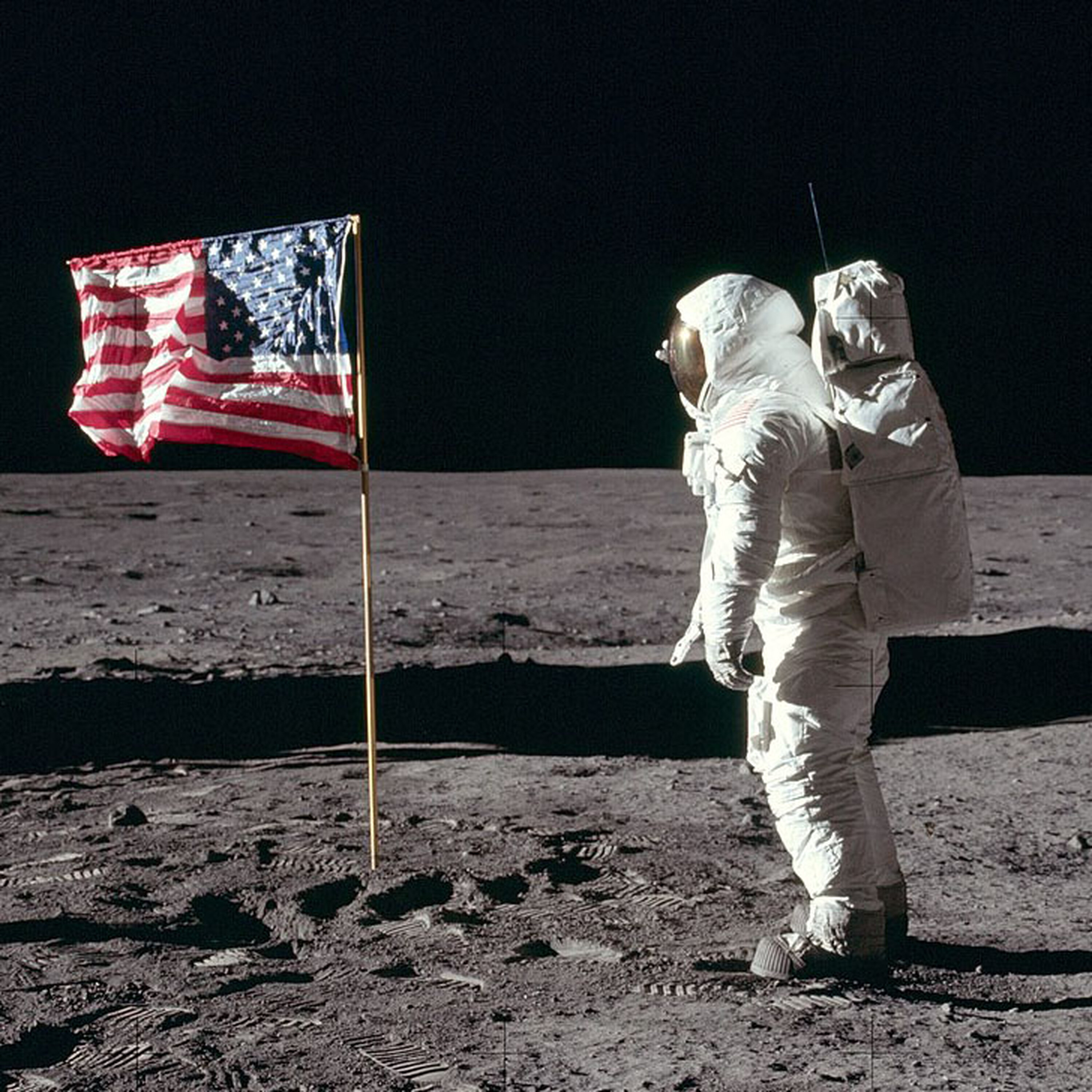
Well, that was a long time ago. It was December of 1972 on the last Apollo lunar landing mission, Apollo 17. And amazingly, those last lunar footsteps happened just less than 12 years after President John Kennedy challenged the nation to send humans to the surface of the moon, return them safely to the Earth. He actually said, land a man on the moon and return him safely to the Earth by the end of the 1960s. And it turned out, I mean, everybody knows that that happened on Apollo 11 in July of 1969. And Kennedy actually said nothing about going back. But we did go back and we tried to land on the moon several more times. And every one of them worked except for Apollo 13. And you all know that story as well. But yeah, after Apollo 17, that was the end of the lunar landing program.
- [05:37]
Bob Crawford
So let's go back even further. Why go to the moon in the first place? What was the reason that Kennedy wanted to put us on the moon?
- [05:48]
Andrew Chaikin
Well, it's really a product of the Cold War. And if you think about what things were like when Kennedy took office in 1961, the Cold War was at its height. The geopolitical competition between the United States and the Soviet Union, kind of a battle for international prestige and public opinion. And Kennedy was very alarmed by the fact that the Soviets in April of 1961 were able to launch the first human into space, Yuri Gagarin, which scooped our effort, which was called Mercury. And we didn't put our first American in space until a few weeks later with Alan Shepard. And Shepard didn't even get into orbit the way Gagarin had. And even before Shepard's flight, Kennedy met with his advisors and said, we have to find something to show the world that we are strong, that we have a strong society. We have nations out there that are developing nations that we do not want them to align with the Soviets. We want them to be with us and in the world balance of power. And so we need to find something spectacular to do in space. And he consulted with people from NASA and they said if we try to land humans on the moon, we would probably succeed if we went all out. And the Soviets probably would not succeed. Even though they had at that moment more powerful rockets. They knew, the NASA people knew that it was going to take a lot more than powerful rockets. Actually their rocket would not have been able to put humans on the moon. And it was going to take a heck of a lot more, you know, microelectronics, complicated systems, very sophisticated spacecraft. And so that kind of leveled the playing field. But Kennedy was thinking as a statesman, he was not a space fan at that time. I think he got much more enthusiastic when he saw what was developing as Apollo got started. But it was really Cold War competition that gave birth to the moon landing program.
- [08:13]
Bob Crawford
Has any other, anyone from any other country set foot on the moon?
- [08:18]
Andrew Chaikin
No, no, nobody has been on the surface of the moon except the 12 astronauts from Apollo on the six lunar landings. Now NASA is trying, working very, very hard to return astronauts to the moon with a program called Artemis. And so far the program has flown one unpiloted mission with the capsule, the Orion capsule, which is kind of the mothership. The lander is still in development. It's being created by SpaceX. And there are plans next year to send four astronauts around the moon. And then after that, perhaps in 2027, will come the first landing on the Artemis 3 mission.
- [09:07]
Bob Crawford
I have to ask, is that proposed to be an all women crew?
- [09:12]
Andrew Chaikin
No, but there is a woman on the. The crew for the landing has not been named yet, but the flight around the moon, one of the astronauts is a woman, Christina Cook, and very, very talented and extremely capable and has been in space and has done. Actually, she and one of her fellow astronauts did the first all women spacewalk a few years ago. So she's already had some milestones that way.
- [09:44]
Bob Crawford
So I want to ask you this. Have you ever encountered a conspiracy theorist like someone who says the moon landing was staged?
- [09:54]
Andrew Chaikin
Oh, my God, yes. And it's just so appalling because you know, it just flies in the face of everything we know about the way NASA worked, about the way we got all those rocks back from the moon. They tell us things that no Earth rock could possibly have told us. The chemistry of those rocks, the details of those rocks, they could not have originated on Earth. We've now had images from orbiting satellites with very high resolution cameras that actually show the footprints, the trail of the astronauts as they walked across the Moon. But my favorite line, refuting the hoax theorists who really, when they go at it, they really just reveal how little they understand about science when they talk about, oh, they would never have survived the radiation. Of course they did, because they went through the Van Allen Belts very quickly. Or they say, there's no stars in the photos. It must have been done in a studio. Well, the reason there's no stars in the photos is because they were exposed for the conditions on the lunar surface with a very bright landscape illuminated by a brilliant sun. And I could go on and on and on, but my favorite line was what Neil Armstrong said. He said it would have been harder to fake it than to do it.
- [11:23]
Bob Crawford
Andrew, now that we've set up this background, let's get to our listeners. Question, why did we stop going to the moon?
- [11:32]
Andrew Chaikin
Well, it goes back to the reason why we started, which, as I say, in Kennedy's mind, was to show the world the strength of our free society by doing something very, very challenging in space. Once we accomplished that with Apollo 11, the impetus to keep funding very ambitious human spaceflight programs, you know, that went away and we had the hardware left over to keep going to the moon several more times. But NASA's efforts at that time, right after Apollo 11, to convince the White House and Congress to support very ambitious things like a base on the moon and space stations in Earth orbit, space stations in lunar orbit, eventually sending humans to Mars, all those things were rejected. The country was a very different place by the time Apollo 11 landed in 1969 than it had been when Kennedy challenged us to go to the moon in 1961. We had the Vietnam War, which was costing incredible amounts of money. I think they spent in a month what the entire Apollo program cost, something like that. And the concerns over the environment, the. The civil rights struggle was very much on people's minds. Priorities had shifted, and, in fact, most people don't even know this. A year after Apollo 11, NASA was fighting for its life. The budget cuts were so strong and the budget was coming down so steeply that the entire human spaceflight program was in danger. Of going extinct. And, and the only thing that saved it was that President Nixon approved and Congress approved the space shuttle program to create a reusable vehicle. But the shuttle never went any further than low earth orbit. So it's taken all of this time after NASA has flown the space shuttle, which did amazing things and had amazing capabilities, built a permanent space station in Earth orbit, where we've studied the medical effects of long term spaceflight, we've looked into all kinds of processes that might take advantage of weightlessness, all of these things. Learned how to keep a vehicle going in space. For years and years and years. We've had astronauts up on the space station as long as a year at a time to teach us how we need to keep astronauts healthy if they go to Mars or all of those things. Now have set the stage for the Artemis program, which finally now more than half a century later, is trying to pick up where Apollo left off.
- [14:19]
Bob Crawford
So it sounds like the shuttle missions really did a lot of the basic science work that will potentially end the International Space Station and the station. Yeah, yeah, yeah, that will.
- [14:33]
Andrew Chaikin
But there's a lot, there's a lot more to do. I mean, I, I, I'll tell you a little story, please. I heard, I heard from NASA's chief spacecraft designer, Max Fager, brilliant engineer, designed the Mercury capsule, figured out the shape it had to be to be able to get back into the atmosphere without burning up, and had a huge role in designing the Apollo capsule and the space shuttle itself. And Max told me that one day a few years after the last moon landing, he and his former boss, Bob Gilruth, also a brilliant engineer, were walking along the beach in Galveston, Texas, and there was a big moon in the sky. And Bob Gilruth, who at this point was an elder statesman of human spaceflight, turned to Faget and he said, you know, Max, someday people are going to try to go back to the moon and they're going to find out how hard it really is. And I have come to really understand the wisdom of that comment because for the last 10, 15 years, I have spent all of my time delving into why Apollo was successful. And it really comes down to it's more than the rocket science. The rocket science is incredibly hard. We know that. But, but the human piece turns out to be the most challenging how we think about the work, the mindset we have to bring to the work in order to succeed. And what I've done is I've gone back to Apollo and I've created a framework to talk about the mindset, the behaviors, the practices we must bring for spaceflight professionals to succeed in a business as demanding and unforgiving as spaceflight, and particularly sending humans to other worlds. And I teach a class at NASA called Principles of Success in Spaceflight and I'm working on My wife and I are working on the companion book, which we plan to have out next year.
- [16:37]
WashablesOfAs.com Announcer
Tired of spills and stains on your sofa? WashablesOfAs.com has your back featuring the Annabe collection, the only designer sofa that's machine washable inside and out, where designer quality meets budget friendly prices. That's right, sofas start at just $699. Enjoy a no risk experience with pet friendly stain resistant and changeable slipcovers made with performance fabrics. Experience cloud like comfort with high resilience foam that's hypoallergenic and never needs fluffing. The sturdy steel frame ensures longevity and the modular pieces can be rearranged anytime. Check out washablesofas.com and get up to 60% off your Anna Bay sofa backed by a 30 day satisfaction guarantee. If you're not absolutely in love, send it back for a full refund. No return shipping or restocking fees. Every penny back Upgrade now@washablesofas.com Offers are subject to change and certain restrictions may apply. You can make a difference in someone's life, including your own with a job in home care. These jobs offer flexible schedules, healthcare, retirement options and free training. They also provide paid time off and opportunities for overtime. Visit oregonhomecarejobs.com to learn more and apply. That's oregonhomecarejobs.com.
- [18:07]
Ryan Seacrest
Hey, it's Ryan Seacrest for Albertsons and Safeway. Feel good and look good this summer with savings on your personal care favorites and earn four times points now through September 9th. Shop in store or online for items like Dollar Shave Club razors, hydro Silk razors and Edge Shave Gel. Plus some favorite brands like Tampax, Pearl, Depend and Poise to earn four times points to use for later discounts on groceries or gas. Hurry in before these deals are gone. Offer end September 9th. Restrictions apply. Offers may vary. Visit albertsons or safeway.com for more details.
- [18:40]
Andrew Chaikin
December 29, 1975 LaGuardia Airport the holiday rush.
- [18:47]
WashablesOfAs.com Announcer
Parents hauling luggage, kids gripping their new Christmas toys. Then at 6:33pm everything changed.
- [18:57]
Pharmaceutical Advertiser
There's been a bombing at the TWA terminal.
- [19:00]
Andrew Chaikin
Apparently the explosion actually impelled metal glass. The injured were being loaded into ambulances.
- [19:09]
Pharmaceutical Advertiser
Just a chaotic, chaotic scene.
- [19:11]
WashablesOfAs.com Announcer
In its wake, a new kind of Enemy emerged, and it was here to stay. Terrorism, Law and Criminal justice system is back. In season two, we're turning our focus to a threat that hides in plain sight that's harder to predict and even harder to stop. Listen to the new season of Law and Criminal justice System on the iHeartRadio app, Apple Podcasts, or wherever you get your podcasts.
- [19:48]
Bob Crawford
This is American History Hotline. I'm Bob Crawford. Today my guest is Andrew Chaikin, space historian and author of the book A Man on the Moon. We're talking about that big rock in the sky, the Moon. Why has it been more than half a century since a human has bounced around on its surface? Remember, if you have any questions about American history, let's have them record yourself using a voice memo on your phone and email it to americanhistoryhotlinemail.com we'll find an amazing expert like Andrew to answer your question. Andrew, what did we learn in science terms from the Moon landing?
- [20:35]
Andrew Chaikin
We learned an incredible amount we had in our hands when Apollo 11 came back. The rocks that Neil Armstrong had picked up on the Sea of Tranquility. In a one, you know, overnight, those rocks changed our understanding of the Moon. We now knew that the Moon was very ancient. We knew that lava flows had erupted on the Moon billions of years ago, but that since then, the Moon has mostly been very quiet and dead, geologically speaking, of course, biologically speaking, the Moon is incredibly hostile. So nobody who understood the environment of the Moon thought that we would find life there. But for the landings that followed and went to different places around the Moon, the highlands of the Moon, where the rocks were even older, they picked up rocks dating back four and a half billion years. That's almost the birth of the solar system. It's almost as old as the Earth. And it told us, the rocks told us that the Moon probably formed early in the solar system's history when a massive body like a planet slammed into the Earth. A planet, maybe the size of Mars slammed into the Earth and ejected material from the Earth. And of course, the body itself that slammed into the Earth was also destroyed. That material went into orbit around the Earth and eventually coalesced into what we call the Moon. So the Moon, scientifically, is really the Rosetta Stone for deciphering the earliest history of the Earth, the earliest history of the solar system, particularly the impact history, which is so critical to understand even how life on the Earth came about, because those asteroids and comets that hit the Earth were the vehicles that delivered water and organic molecules and the building blocks of Life amino acids, certainly to the infant Earth, and the energy that they brought to the Earth may have been critical in helping life get started. So, you know, when we barely scratch the surface of what the Moon has to tell us, I mean, if you think about it, the Moon has as much land area as the entire continent of Africa. And we landed in six places, you know, and walked around or drove around in the case of the later missions. And then there have been a few robotic missions that have brought back samples. But like I say, that's just scratching the surface. But let me just add to that by saying what I think the three great legacies of the Moon landings are so scientifically. That's number one. Number two is the perspective we gained by looking back at the Earth. And, you know, when you go out to the moon, the Earth is so far away, it's 240,000 miles, give or take. And that's so far away that you can literally cover it with an outstretched thumb. And that is a shift in awareness that humans had never experienced until Apollo. And it taught us a lesson that the Earth is a beautiful and in many ways, fragile oasis in space, and we need to take care of it. We need to cherish it and protect it. So that's the second great legacy of Apollo, the leap in awareness. The third is what humans can do when they work together. And as I say in my work on principles of success in spaceflight, that's right at the heart of what I'm trying to get across to people is the ways in which Apollo forced us to work together. And, you know, physics doesn't lie, right? You can go in with any idea you think you know, but the physics is going to be the final arbiter of what works and doesn't work. So that's the way engineering is. And actually, you know, I said Kennedy wanted to do this for Cold War reasons, but he actually said in a speech he gave in the fall of 1962 at Rice University, he said, we go to the Moon and do the other things in this decade, not because they're easy, but because they're hard. Because that challenge will serve to organize and measure the best of our abilities and skills. That's it in a nutshell. And he knew that. He understood that.
- [25:19]
Bob Crawford
Well, it's so interesting you say that, because in a lot of ways, it feels like our country is in a similar place like it was in 1972. You know, people might say housing is too expensive, food costs are outrageous, education, healthcare, childcare, unaffordable. You've seen the Doge cuts, you know, has NASA been spared from that?
- [25:44]
Andrew Chaikin
No.
- [25:45]
Bob Crawford
And is there a sense with the politicians and the federal government in the situation? It is as we speak that, that, hey, can we really afford to go to the Moon?
- [25:55]
Andrew Chaikin
Well, let me say a few things about that. First of all, no, NASA has not been spared and we don't really know the full measure of what will happen at NASA. That's kind of unfolding as we watch. But I think the thing that scares me the most is the rejection of the value of scientific exploration. You know, if we go back to the Moon, it can't just be about flags and footprints, to use an often heard phrase. I think even Buzz Aldrin used that phrase once in a speech. You know, it can't just be about, look at us, you know, we have the ability to put humans on another world. The return on that huge investment comes in the form of new knowledge and new understanding. Not just about how to do hard things, which is very valuable and the technological spinoffs are valuable, but the scientific understanding is immeasurably valuable. It teaches us about who we are, where we came from, where we're going, how life got started. I mean, I can't think of a more compelling question than how life got started. Well, I'll tell you what, the Moon is like walking into the rare book room of the cosmic Library. We can page through the earliest chapters of solar system history, which are recorded very cleanly on the surface of the Moon. So I am really passionately hoping that the scientific exploration of the Moon and the solar system as a wider arena. And there's so many exciting missions that are either underway or being planned to launch in the next decade or several years or within the next decade. Amazing missions to all kinds of places. And I just hope we don't lose sight of how critical that is to us for the health and well being of our society. I also think that one of the great lessons of Apollo is in danger of being lost because we are so subjected to us versus them thinking these days. It's really become rampant. And Apollo showed us that to do great things, we have to work together. We have to be open to information that doesn't necessarily agree with what we thought we knew. We have to be open minded and collaborative. And the greater good the team is, all of us, the astronauts called the Earth, Spaceship Earth. And we're all inhabitants of Spaceship Earth. And so we got to get our minds around that fact that all of this us versus them is leading us away from what will ultimately benefit us as a society and us as a human species.
- [29:10]
Bob Crawford
What about the psychological effect of space travel? I remember a couple years ago, William Shatner was on. I think it was Jeff Bezos. Is it Blue Origin is what they call it?
- [29:23]
Andrew Chaikin
Yes, yes. And it was called the New Shepard vehicle. Jeff names his vehicles after astronauts. So the shepherd, the Alan Shepard Mercury flight, was a suborbital up and down ballistic arc. New Shepard goes up and down, but it does it amazingly in more of a straight line. It goes up under constant rocket power, hovers or goes over the top of its. You know, it goes up to the end of its acceleration and then comes back down under controlled descent. And so you're in space, you're weightless for about five minutes, you're above the atmosphere, you can look around and see this incredible panorama. And I was taken. I know where you're going with this, because I remember when Shatner came back and he said, man, you know, people talk about space as this exciting, uplifting experience. He said, I looked out of those windows and that blackness scared the daylights out of me. He said, that was death, if I'm quoting him correctly, you know, and so that was a really interesting take on. On the space experience. And he wept, gratified.
- [30:36]
Bob Crawford
I remember he wept.
- [30:37]
Andrew Chaikin
Yeah, yeah, yeah. I mean, he was very moved by it as well. I say, bravo. You know, somebody who went up and clearly was thoughtful about the experience. It wasn't just a joyride. It wasn't just a, you know, gee, this would be cool. You know, it's like he really absorbed an experience on a deep level. And then he was really skilled at communicating the impact of that experience. And I think a lot of the astronauts have tried to do that. And I'm very anxious to hear, you know, these younger astronauts. They're younger than me anyway, I'm about to turn 69, but. But I know many of the astronauts, including several of the ones who are going around the moon next year, and they are. I think they're more open to the emotional piece than the Apollo guys were. They came from a different generation. And Ed Mitchell, who you may have heard of, because he was very interested in psychic phenomena and ended up studying ESP and that sort of thing after he came back from the moon. But he said to me, when I interviewed him for my book, he said, people kept asking me, how did it feel to be on the moon? I didn't know the answer to that. How did it feel? That wasn't something I thought about. So I think a Lot of the guys kind of faced that the mission they never trained for was a lot tougher for a lot of those guys than actually flying the lunar mission. But I think these younger astronauts are going to have some very, very interesting and I hope compelling things to say.
- [32:22]
Bob Crawford
What is your opinion of the billionaire space explorer of the Jeff Bezos and Elon Musk and if you've got enough money, you can now build a rocket ship and take your friends up? I mean, I know I'm making it sound simpler than it really is, but.
- [32:41]
Andrew Chaikin
Well, but there is that aspect. I mean, I think it's probably was inevitable. I don't think we could have predicted it would play out in the way that we're seeing it play out. I think it's like anything, it's, there's, it's a double edged sword. I think it's creating technologies and new ways of going into space that I think are fabulous. I mean the engineering work, particularly if you look at a company like SpaceX which has shown that they can, you know, my God, they can take the first stage of their Falcon 9 rocket and land it. They launch the second stage and then that delivers whatever they're launching into orbit. But then the first stage comes down and actually lands so it can be reused. I mean that, that was astounding when they started doing that. And I could probably have rounded up many, many spaceflight veterans who would have predicted it would never work. So bravo to that. Bravo to new ways of thinking about how to do spaceflight. That part of it is just fabulous. I think there have been times when they get a little bit too confident and they, you know the phrase, they don't know what they don't know. They don't have the history that NASA does. But people may come in with a mindset that says, well, how hard could it be if NASA did it 50 years ago? Well, I refer you to that quote from Bob Gilruth. His point was it can be damned hard.
- [34:17]
Bob Crawford
Andrew, what is your vision of the future of space exploration? I mean, where can you see us in 2072?
- [34:25]
Andrew Chaikin
Oh gosh, that's a great question. I think by 2072 we will, whether it's US or China or other countries, we'll have a base on the moon for sure. China is very directed and ambitious in their space program now and they've said that they want to build a lunar base. I think so. I think that that will be a reality and I think will be able to look up at night and see the lights of a lunar Base where people are living and working on another world and learning things that we probably can't even imagine right now. And I think by 2072, we will probably have. We will. I think it's almost a sure thing that we will see human footsteps on Mars. Now that is an incredible challenge. I mean, the Moon really pales in comparison to going to Mars. Because if you think about it, the Moon is a quarter of a million miles away. Mars never comes any closer than 35 million miles away. So the challenges of going to Mars, number one, you've got to keep people healthy, right? You've got to protect them from radiation. You've got to give them systems that can last long enough to go to Mars and come back. That could be two and a half or three years, right? You go to Mars, you're on the surface for a year, you come back, you're racking up a lot of time that those systems have to function. And you can't necessarily bring enough. You definitely can't bring enough spare parts to fix all those things. So we've got to design things with incredible reliability or maintainability. I'll give you one to think about. When you go into deep space, far from the Earth, much farther than the Moon, you get a million miles or so out. By the time you get that far out, your communications take so long to travel between you and the Earth that you literally cannot have a real time conversation with anybody but the people who are on your spaceship with you. By the time you get out to Mars, that could be as much as 22 minutes one way. So, you know, I've always say, when I give talks about this, I say, you say, houston, we've had a problem. You can go watch an episode of Friends before you get the answer.
- [37:00]
Bob Crawford
Oh, my God.
- [37:02]
Andrew Chaikin
So we don't know. That is uncharted territory. We're used to thinking of the crew of the space mission as like a few guys in a vehicle up in space with dozens of people, really hundreds, if you think about the whole team on Earth to help them solve problems. Well, with that radio delay, if a problem comes up that's not in the reference books, it's something we haven't seen and it needs to be solved now or the crew could die. That means that you must have enough people on board so that their collective expertise is sufficient to handle that kind of thing. And people say, oh, well, we'll have AI. AI is not a panacea. We don't really understand AI and research has shown that automation doesn't reduce risk. It actually introduces risks that are unpredictable. So Mars is a tremendous challenge. But if you're going to give me 2072 as the milestone, I will go out on a limb. I don't think it's a big limb and say we'll solve those challenges by then. I just hope that we as a society solve the challenges that threaten us down here on Earth long before then.
- [38:32]
Bob Crawford
Let's hope that you are right and that somehow we can learn to come together here on Earth.
- [38:38]
Andrew Chaikin
Amen.
- [38:40]
Bob Crawford
Well, I have been talking to Andrew Chaikin. Andrew, I have really enjoyed our time together. This has been wonderful. Thank you so much for joining us today.
- [38:48]
Andrew Chaikin
Oh, you are very welcome. Thanks again for having me.
- [38:51]
Bob Crawford
Hey, and check out Andrew's book, A Man on the Moon.
- [38:55]
Andrew Chaikin
And can I give you my website?
- [38:57]
Bob Crawford
Please do.
- [38:58]
Andrew Chaikin
Brand new website for my principles of success in space flight class.
- [39:03]
Bob Crawford
It's called DoSpace Better.com Do Space Better.com it's Andrew Chaikin. Thank you so much.
- [39:12]
Andrew Chaikin
Thank you Bob.
- [39:17]
Bob Crawford
You've been listening to American History Hotline, a production of iHeart podcasts and Scratch Track Productions. The show's executive producer is James Morrison. Our executive producers from iHeart are Jordan Runtal and Jason English. Original music composed by me, Bob Crawford. Please keep in touch. Our email is americanhistoryhotlinemail.com if you like the show, please tell your friends and leave us a review in Apple Podcasts. I'm your host, Bob Crawford. Feel free to hit me up on social media to ask a history question or to let me know what you think of the show. You can find me at bobcrawford Bass, thanks so much for listening. See you next week.
- [40:11]
WashablesOfAs.com Announcer
Life's messy. We're talking spills, stains, pets and kids. But with Anabe, you never have to stress about messes again. At washablesofas.com, discover annabe sofas. The only fully machine washable sofas inside and out. Starting at just $699. Made with liquid and stain resistant fabrics. That means fewer stains and more peace of mind. Designed for real life, Our sofas feature changeable fabric covers allowing you to refresh your style anytime. Need flexibility? Our modular design lets you rearrange your sofa effortlessly. Perfect for cozy apartments or spacious homes. Plus, they're earth friendly and built to last. That's why over 200,000 happy customers have made the switch. Upgrade your space today. Visit washablesofas.com now and bring home a sofa made for life. That's washablesofas.com all offers are subject to change and certain restrictions may apply.
- [41:10]
Pharmaceutical Advertiser
Our partner, Eli Lilly & Co. Just announced duets for type 2 diabetes, a campaign celebrating real patient stories of support because managing type 2 diabetes doesn't have to be a solo act. Share your story@mounjaro.com duets mounjaro tirzepatide is an injectable prescription medicine that is used along with diet and exercise to improve blood sugar glucose in adults with type 2 diabetes mellitus. Mounjaro is not for use in children. Don't take Mounjaro if you're allergic to it or if you or someone in your family had medullary thyroid cancer or multiple endocrine neoplasia syndrome type 2. Stop and call your doctor right away if you have an allergic reaction, a lump or swelling in your neck, severe stomach pain or vision changes. Serious side effects may include inflamed pancreas and gallbladder problems. Taking Mounjaro with a sulfonylnorrhea or insulin may cause low blood sugar. Tell your doctor if you're nursing pregnant, plan to be or taking birth control pills and before scheduled procedures with anesthesia. Side effects include nausea, diarrhea and vomiting, which can cause dehydration and may cause kidney problems. Once weekly, Mounjaro is available by prescription only in 2.5, 5, 7.5, 10, 12.5 and 15 milligram per 0.5 milliliter injection. Call 1-800-LilyRx 800-545-5979 or visit mountjaro.lilly.com for the Mounjaro indication and safety summary with warnings. Talk to your doctor for more information about Mountjaro. Mountjaro and its delivery device base are registered trademarks owned or licensed by eli Lilly & Company, its subsidiaries or affiliates.
- [42:41]
Andrew Chaikin
Talk about stepping up.
- [42:44]
Ryan Seacrest
It's time to level up your game. Introducing the all new ESPN app. All of ESPN all in one place.
- [42:51]
Andrew Chaikin
Your home for the most live sports.
- [42:53]
Ryan Seacrest
And the best championship moments is palpable.
- [42:57]
Andrew Chaikin
Step up your game with no annual contract required. It's the ultimate fan experience.
- [43:02]
Ryan Seacrest
Level up. For More on the ESPN app or at stream.espn.com sign up now. Hey, it's Ryan Seacrest for Albertsons and Safeway. It is hot out there this summer, right? But don't sweat it. We got tons of ways to save on your family's favorite personal care items to keep yourself feeling cool and smelling good. Now through September 9th. Early earn four times points when you shop for items from your favorite brands like Right Guard, Raw Sugar Dove Soft Soap and Olay. Then use your points for discounts on groceries or gas on future purchases. Offer end September 9th. Restrictions apply. Offers may vary. Visit albertsons or safeway.com for more details.