← American Revolution Podcast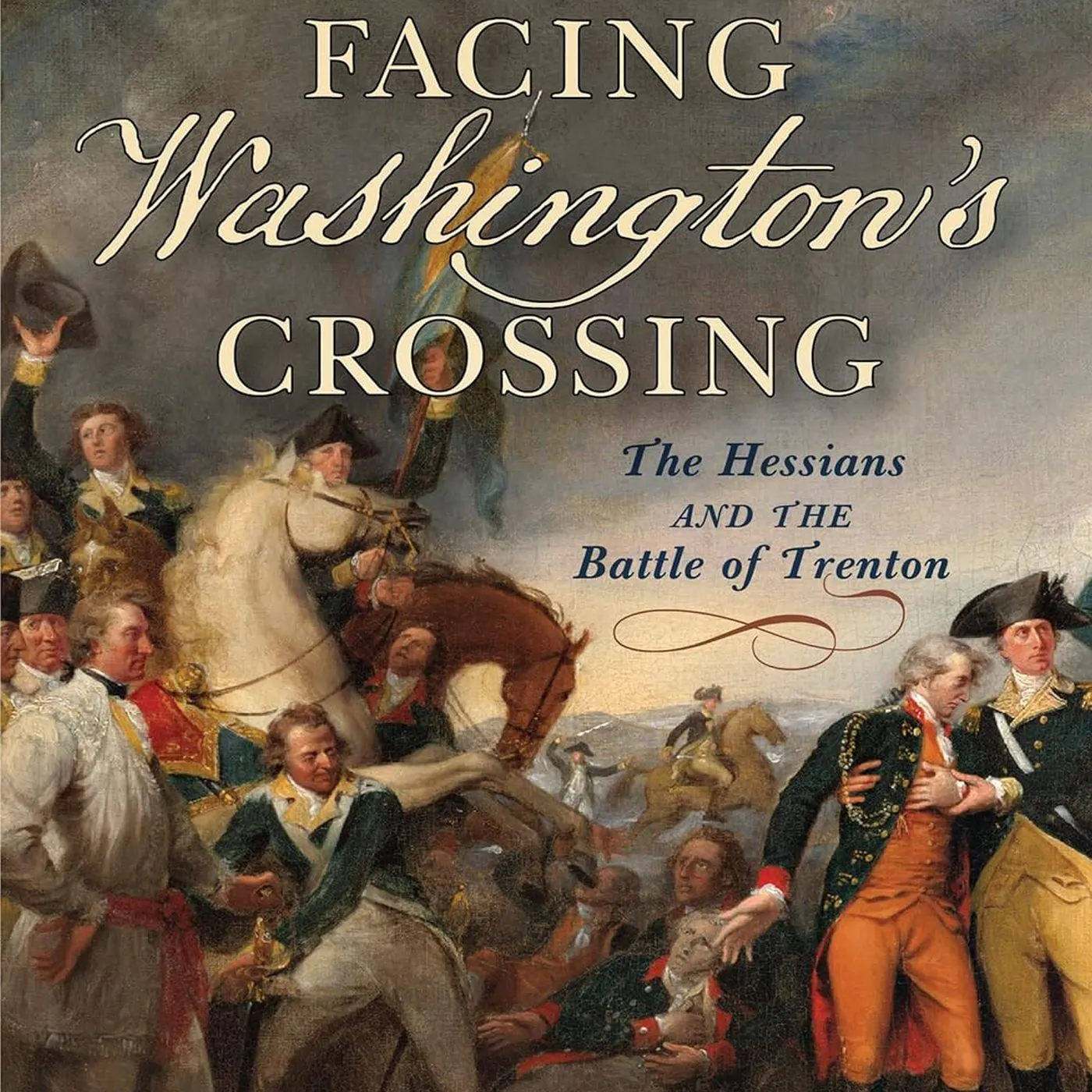
Loading summary
Transcript137 lines
- [00:01]
Mike
You're listening to an Airwave Media podcast.
- [00:05]
Home Depot Announcer
Make every get together chill this Memorial Day. Get up to an extra thousand dollars off select top brand appliances like LG plus, get free delivery at the Home Depot. Tackle pool towels and camp laundry with a large capacity washer and host in style with the fridge serving craft ice, mini craft ice, cubed ice and crushed ice. Shop appliance Savings now through June 3rd at the Home Depot. Offer valid May 14th through June 3rd. US only. Free delivery on appliance purchases of 900 doll or more. See store online for details.
- [00:45]
Podcast Host
Hello and thank you for joining this special edition of the American Revolution. Our American Revolution Roundtable was joined this month by Stephen Beer, the author of Fear Facing Washington's the Hessians and the Battle of Trenton. It's a look at Washington's crossing from the perspective of the Prussians. Beer also takes a deep dive into the Hessian background, letting us know a little bit more about Hesse Castle, the land grave, who ruled it and how the people live there. Our discussion was recorded on Zoom.
- [01:20]
Mike
So welcome everyone to the American Revolution Podcast Roundtable. Our special guest tonight is Stephen Beer, author of the book Facing Washington's the Hessians and the Battle of Trenton. Stephen, welcome to the American Revolution Roundtable.
- [01:36]
Stephen Beer
Thank you. Great to be here.
- [01:38]
Mike
This is an interesting perspective. We don't normally think of the American Revolution from the perspective of the Germans. What inspired you to write this book?
- [01:46]
Stephen Beer
I wish I could take credit. It is a great, a great subject to look at and I can't take any credit. I sat down to do Washington's Crossing and I just couldn't find anything new. Everything was tertiary sources. I see people shaking their heads. There was just no primary stuff out there and had been really beaten to death and for good reasons. You know, Washington's a complex, fascinating man to follow. And the next thing I know, the pen or maybe the computer just took over, you know, I was kicked out of there and the next thing I know, they're all these words flowing about the Hessians and start digging around, starting to find some documents that either underused or never used. And I was like, wow, you know, hey, this is a, this is a really interesting idea. I wish I had thought of it, but I'll write it. So I take no credit.
- [02:40]
Mike
No, definitely. It's a unique perspective and one that, yeah, we haven't really thought a lot about. One of the things that fascinated me about the book was learning about the Landgrave Frederick, who I really didn't know anything about other than he had rented this army to King George. And that was about it.
- [02:59]
Stephen Beer
Look, think about it. Hesse Castle, and everyone has their own different ways of pronouncing it. And I'm giving immunity to whatever you want to pronounce anything in this book in German. In English, we have certain rules. Hesse Castle is about the size of Connecticut at the time. It's about 300,000 subjects. How in the world does this little tiny principality, amongst hundreds of principalities in the Holy Roman Empire, how does he end up in the banks of Delaware river, literally at a focal point in history? He's there with George Washington, he's there with King George's troops, and this little, you know, again, little principality the size of Connecticut ends up there at a focal point in history. And I know there's a lot more to be done in the revolution, and a lot of what the outcome a lot of time was, was based on things that was somewhat mundane, but every now and then it does read like a Hollywood novel. And this was that moment. So that Mike is kind of throwing a question back at you, and then I'll run with it, is how did this guy and principality end up here? So that right where America's future is going to be decided, things go wrong here, it's hard to see us coming out ahead. So this principality had a problem. And the problem was it was tough to make money there. The land was not very fertile, it was hilly. The climate was not good for climate, for growing. Money was hard to come by. Even the rich, the upper class of Hessen Castle would be middle class in the colonies at that time. So his great grandfather, needing money, rented out a thousand of his subjects as soldiers. Interesting. Half of them did not come back. You would think that would have ended it right there, but it didn't. They saw the gold, and over the next hundred years, they did treaties, mostly with. With Great Britain. You know, he had that connection because he was King George II's uncle, with a weird connection. And it becomes the source of income. And they're very good at the fighting, they're very good at the training, they're very serious. And it becomes the commodity of Hessen Castle, becomes the male citizens. And that's really how it came about.
- [05:10]
Mike
Yeah, it makes sense when you think about it, because in the Holy Roman Empire, there were constantly wars going on, little fights between neighbors or joining together to fight other major powers in Europe, and it was very expensive and difficult to maintain an army. You had to for your survival. But in pre industrial era, pretty much everyone had to be farmers. And if you had. So if you had to have a large army, men who were dedicated to fighting and not farming, you didn't have enough food because they had to have this army. That army had to earn somehow. And renting them out seemed to be an interesting way to deal with that conundrum.
- [05:50]
Stephen Beer
Frederick II, what becomes interesting is he's the youngest child. He's 30. His father is 30 years older than him, so he has no real connection with. With his dad. An incredible amount of deaths around him. Aunts, uncles, siblings die away. So he's the only one left. And he's with a tutor from France, this Jean Pierre. I'm not going to attempt to mangle this French name. Let's just go with his first name, Jean Pierre, who is very liberal and starts teaching Frederick at a very young age the ideas of Enlightenment and music and arts. As you can imagine, Hessen Castle is a very dreary place. And young Frederick gets fascinated. And then he gets a wonderful opportunity. His father agrees to send him, in his teenage years with Regene, to Switzerland. And Switzerland, Enlightenment, it is hopping. He's seeing exciting stuff. He's running around with women, he's meeting great philosophers, and it really has an effect on him. And he begins to think, why are we doing it the way we're doing it back home? Why can't we treat our subjects better? Why can't we bring Enlightenment? Why can't we bring liberties back to our principality?
- [07:01]
Mike
Yeah. And that's what really surprised me, that he saw himself as an Enlightenment leader, as somebody who really wanted to reform his country and bring more modern values to it. You think of him as more of a. As a despot, but he had this other side to him.
- [07:15]
Stephen Beer
I guess he did.
- [07:17]
Bill Welsh
He.
- [07:17]
Stephen Beer
He was serious that he really wanted to do that. Now the problem is his father picked up on it and did a very shrewd move. He assigned him to be. He signed Frederick II to be with Frederick the Great in Prussia and work with him, because during the. The Seven Year War. And now he sees the other side. He sees deptism, you know, from extreme. And militarism from extreme, even more so than Hesitassa. And now he starts to get a little torn. And so he comes up with one of the most ironic plans, I think, of the century. He's going to bring enlightenment. He's going to bring liberties to his people. And the way he's going to do it is by selling them off as soldiers, raise money to do this. I mean, again, you can't make this stuff up. And when you read his letters, that is really his plan. And you're sitting there as a reader going, no, Frederick, this is not going to work. But he was very excited about it and he plowed into it, as I show in the book, to really to the lowest level of government. He got his fingers and he reminded me a lot of if anyone read on Winston Churchill. Now we know Churchill for the big events, but Churchill on a day to day basis got involved in every little regulation he could. And that's what Frederick did.
- [08:30]
Mike
Yeah. And that's what really surprised me, is that he wanted to make Hesse Castle a better place for everyone. And you're right, he had to raise money somehow. And this was the traditional way they did it, I guess was renting out.
- [08:43]
Stephen Beer
You know, to me, one of the fun parts of the book, and hopefully guys and gals will see it is all the regulations and changes he came up with. You know, they wanted to have. They had a, a building where out of wed dark women who were pregnant or giving birth could bring the babies and even had like a little daughter to put the baby in. Turned it and went on the inside, you know, run by the church and no one would know and you wouldn't, wouldn't be embarrassed. And well, he needs money for this. So he comes up with taxes. He taxes dogs if you. If butchers. He taxes me to butchers. And he even, even puts in a regulation that when you get married, the day you get married, you must plant X amount of flowers and trees in the land. So he's coming up with all sorts of ways to earn money and you know, page after page of just crazy, fascinating things. At the end of the day, this is not an agrarian, A good place to have an agrarian society. We can only raise so much money and like you said, was expensive. At the end of the day, he was taking a young man and shipping them out.
- [09:46]
Mike
Yeah. And it seems like life at home in Hesse Castle was a pretty miserable place. I mean, as you say, the people were dirt poor, they were mostly illiterate, they had very few rights, they were heavily taxed. It seems like taxing people that have no money is always rough. It seems like the people were not crazy about this, having to go fight foreign wars, but they were used to it. This was something that had happened before.
- [10:14]
Stephen Beer
Right, exactly. They were, they were used to it. I mean, you know, if you think about when we send in our check on April 15, no one wants to do it and my bother us, but you know, it's like it's like gravity, it's there. Gravity is not changing. Taxes aren't changing. And Hesson Castle being shipped off to the army, that's not changing.
- [10:32]
Mike
Right. But the money that, that Britain would pay for these soldiers would bring a substantial sum to the principality Essa Castle.
- [10:40]
Stephen Beer
This is big. This is big money. And there are parts of the book, you know, because deep in the footnotes I show the calculations. There are some interesting guys out there who make the convert the money in 1776 to today's money. These are big numbers that were being thrown about. These are hundreds of millions of today's dollars that was being, that was passing from the British to Frederick.
- [11:03]
Mike
Yeah, we as the Americans, I guess the Continentals referred to the Hessians as mercenaries. Now that's, I guess, kind of a loaded term and perhaps not an entirely accurate one. The Hessians referred to themselves, I guess, as auxiliaries. Is that right?
- [11:22]
Michael Davis
Right.
- [11:23]
Stephen Beer
I get asked this question Every time, 100% of the time, 110% of the time, I get asked this and I duck it a little bit because I think this is a two part answer. I think to Frederick, these are mercenaries. Now, he had the legal stances of the day. He was legit. They were not mercenaries. And if you read carefully and I put it in the book, certain lines in the treaty, they're very specific with the wording that this was a defense pact, this was a sign of friendship. But we know at the end of the day, he's doing it for the money. So to me, to Frederick, he's a mercenary to the people, to the actual mercenaries going out there, they're not making any special money here. They're getting a regular paycheck and they have no idea why they do this. They have no clue what fights they're going into. So I think in fairness to them, and again, the legalities of the 18th century make them legit as artilleries. I think to the common soldier, they really were auxiliaries. To Frederick and those in high command, they were mercenary.
- [12:21]
Mike
Right. Frederick is definitely doing it for the money soldiers are doing. I mean, we think of a mercenary as an individual who chooses to go to war for the money. And that's not what these guys were doing. They were doing it because they were ordered by their country's leader to go fight in this war. And you know, even today, we, as American soldiers, if our leader tells us to go fight in a foreign war, we don't, you know, we're in the army or we're drafted or whatever. We don't have any say in it. We go. And that's what these guys had to do.
- [12:49]
Stephen Beer
Yeah, they. And one thing that comes up in the book a lot is they had no understanding what this was about. They really didn't. Their definition of liberty was that they had no definition. But very interesting. A lot of soldiers saw liberty as the opportunity to be loyal to your. So they get sent to the other side of the world. I mean, you might as well send them to the moon. It'd be no different. They had no idea what this fight is about. They could not understand it.
- [13:17]
Mike
And in fact, they were. I guess it sounded like a lot of them were really shocked when they got here because they saw how good the colonists had it, how much nicer standard of living we had. And yet we were fighting against our leader because he was a horrible tyrant. And they're like, what the heck are you talking about?
- [13:33]
Stephen Beer
They land in Staten island, right? Staten island is walnut trees and chestnut trees and wild berries. Right. And farms that are so big, they have a separate place for a bond. They can't believe this. And the farmers actually have their own carriages. Right. And as they go, each farm is a different name. And the British soldiers were smart. The British wanted to do the reverse propaganda on. And the Bristol said, look, See? See these ingrateful rebels. This isn't King George. That's Smith's land. That's Jones's land. They actually own their own land, these farms. They go and they see wallpaper. Wallpaper inside a farmhouse. So the Hessians are like, why would anyone fight against their prince? This place is incredible. It's paradise.
- [14:15]
Mike
Yeah. And, yeah, I guess we skipped over before we get into America. You do give a chapter on the crossing, which by itself sounds like a pretty horrific experience. Crossing the Atlantic. They were cramped into these tiny ships with dark, miserable. Sounded like a real miserable experience.
- [14:33]
Stephen Beer
You. Yeah, it's. You have a bunch of farming from a principality that's landlocked. Right. A lot of them have never seen. Almost all of them have never seen a body of water greater than maybe a local lake or the rivers that run through the region. They have never seen the la. They are so ignorant. One of the quotes that happened there, one of the soldiers is, well, this is madness. Why do we have to, you know, take these boats over to America? Spain owns New Spain in America. Let's just march to Spain. And right across from Spain will march into America. No concept of what this was about. So these poor guys get put on the boat, and within the first few minutes you see trouble starting because what's happening on the boat, it's moving beneath their feet. And the next thing you know, King George saviors are all vomiting all over the place. They're all seasick, and they will have a miserable crossing. The weather gods are definitely against them. And in many of the boats, they start running out of food. You know, actually, you gave me great compliment because it's actually two chapters on the crossing, so it seemed like one. That's terrific. And they start running out of food because it was not anticipated to take this long. And they start going from one misadventure to another and tensions start running high. They even had cockfights on board to keep themselves occupied. A British officer feels he was insulted by a. A German officer and they have a duel. A tool on the board. You can imagine in your mind, everyone's stepping aside and these two guys lining up for a duel and. And the one who got shot and killed on his deathbed said it was his fault. And so look, imagine now you're on this ship in the middle of the ocean. You just see nothing but blue everywhere. Sky turns dark and a storm starts. What happens? They literally batten down the hatches. Everybody goes below deck. Well, there's no electric light bulbs, and you're certainly not going to be lighting candles while your ship is being tossed around. So you're in the darkness and you have hundreds of soldiers down there, the soldiers who sleep there. And now all the sails have to come down. Everyone. People are vomiting, people just urinating on the floor. Things are flying about. Even things that are tied down, a lot of them break free. And this could go on for 1, 2, 3 days to finally stop me. Opened up the hatches and they just crawled out and just laid on the deck. You know, all. All duty was canceled and everyone laid on deck trying to, you know, get their wits about. And you know, what, maybe three, four days later, maybe a week later, another storm will come and they go through it all over again. So they had the coursing. I had a lot of fun with that. A lot of stuff in there. Crossing was. Yeah, miserable with a capital N. Yeah.
- [17:15]
Mike
I think you said there were what, like six men to a bunk bed or something? Really crammed in there. Sounded miserable. And the part that I found most offensive was probably rather minor to them, but they sailed from Germany to Britain and then they had a few days in Britain and they weren't allowed off the boats. They had to sit there in misery on the boats. Ships waiting to cross the Atlantic they didn't even let the soldiers off and the officers got off. But the men had to sit there in their mystery for a few days.
- [17:48]
Stephen Beer
They weren't gonna take any chance. The soldiers saw how, you know, Portsmouth was, wow, you know, such a high end town. And of course they get to a, into a little adventure with some of the women who they did not understand were prostitutes. Fallen. Fallen Venuses. So, yeah, they kept, they kept the, the privates away from that and they kept them on the boat.
- [18:09]
Mike
So you focused on a few individual characters in the story. One of them, I guess was a private and another was an officer. I'm trying to remember their names now.
- [18:19]
Stephen Beer
Johannes Ruber is a private. The young kid, like 17, Andreas Weiderhall, who left us great writing. He was an officer.
- [18:28]
Mike
Yeah.
- [18:28]
Stephen Beer
And he even had letters that I stumbled upon that were digitized and sitting in this and in the footnotes to tell you how you can get to it. Sitting in this depository that's open to the, to the public that you can jump in. That's in, in Germany. So we had his writings and, and by the way, all that stuff was in German digitized, but in German. But thank Goodness it's the 21st century. I just picked up my iPhone, held it up, put it into translate. It would translate the page. I go click Translate page. Click. Something that would have taken months to do not that long ago. We have to send someone overseas to the documents. So he says, Andreas, we Hall, who left us a lot of good material. And then Jacob Peel, who was in Ralph's brigade and also was an officer. So we have two officers and a private.
- [19:19]
Mike
Yeah, it's really kind of interesting to get their perspective on things because we, you know, we think about Niphausen or Colonel Raw people, you know, the big shots who were there. And to hear what the low level officers and men were going through was a very interesting perspective.
- [19:35]
Stephen Beer
Right. They have not gotten into, you know,
- [19:38]
Mike
okay, this is another one for. How do you, how do you pronounce Niphausen? Or am I pronounced? Because I always think I'm saying it wrong.
- [19:45]
Stephen Beer
Don't go, don't go by me. I just assume I'm mangling it.
- [19:49]
Mike
Okay.
- [19:50]
Stephen Beer
I would buy that way, Niphausen.
- [19:51]
Mike
But I used to say Knifehausen, but that seems to be really off. So I started saying Niphausen. Some people say Kniphausen or I, I
- [19:59]
Stephen Beer
think it is Niphausen.
- [20:01]
Mike
Whatever. Okay. So, yeah, Niphausen. Everybody is the. I guess he's the overall commander of The. Of the Hessian forces. He ends up being second in command in a lot of the. The armies. You know, he's under a British officer, but obviously has a lot of saying what's going on. One of the other things that I found very interesting is you say that the Hessians had to take an oath of loyalty to King George iii. I thought that was interesting.
- [20:31]
Stephen Beer
Yeah. So again, these legalities, they cost every T and dotted every eye. You know, they are, you know, soldiers of the British Army. So. Because you think, call me mercenary. It was. It was simple but brilliant. And also, I think, psychologically important for the Hessians that they're being accepted. Accepted right there on the dock. They did this on the dock before they got in the boats.
- [20:52]
Mike
Yeah.
- [20:52]
Stephen Beer
He took the oath. They all threw the hats in the air, and that's it. There you go. Under British rule.
- [20:59]
Mike
Yeah. No, that's just. It's interesting because we don't usually think a unit that goes and fights with another foreign body, you think would still ultimately maintain its. Or consider its loyalty to their. Their home leader, not to the guy they're temporarily fighting for. I just thought that was an interesting step that they took. You get into the people who came over from Hesse Castle, but there were other Germans from other city states that came and fought for the British during the war as well.
- [21:33]
Stephen Beer
They weren't as much fun.
- [21:35]
Mike
Yeah. And I guess Hesse Castle sent the overwhelmingly large number of soldiers. That soldiers.
- [21:42]
Stephen Beer
They left a lot of documents, a lot of letters, and hopefully I just open the floodgates and that people will start diving into it more. And there have been authors who definitely dove into it, but they've done, you know, kind of a more dry way. You know, the idea here was to use the letters and the diaries and the orders to get into the minds. The minds of the soldiers. You know, I had to do a point where I cut off. So I cut it off at Hesson Castle. I did not look at the primary documents over in Hanover and so forth, but just sort of a general idea. It was a very similar situation.
- [22:11]
Mike
Okay. This is enough to cover one book, believe me. So the first place these guys end up is in New York City. They participate in the battle of Brooklyn and the capture of Manhattan. I guess it's hard for me to understand what they thought about all this. Did they feel like, well, we're doing this because we're supposed to, or did they feel that they get into a sense of any reason behind the war, or was it just, this is our assignment and we have to Fight it to the best of our ability, right?
- [22:41]
Stephen Beer
So they go there. They're there for their principality, to raise money, and that's what they're fighting. Okay? But then they see this incredible wealth. I mean, there were. In Queens and Jamaica, there were tobacco farms. Imagine that. The thing, you know, and there were streets with just gorgeous homes and paved streets and cobblestone streets. So they cannot understand why these people are fighting. The shame is the propagandists, the propagandists on the British side convince them, look, these rebels are ungrateful. We think it's the water that causes them to be ungrateful. You know, look, look. And look what they're doing to the.
- [23:21]
Mike
The.
- [23:21]
Stephen Beer
The blacks that you're seeing, Right? They're making them slaves. So the propaganda, the British are really turning the Hessian heads against the Rebbes. On the American side, the propaganda, starting with the Declaration of Independence and some brilliant writing by Thomas Jefferson, they are turning the Hessians into the cliche that we all know, the barbarians who are probably drinking on Christmas. And I put a bunch of the quotes, one after another from the different newspapers at the time they all fed off. The Declaration of Independence was one nice little paragraph, kind of deep into it, calling the Hessians barbarians. So that's. It's kind of a shame that the poor soldiers got manipulated both ways.
- [24:03]
Mike
Yeah, I always found it unfair. British officers, in their reports, always blame the Hessians for everything that goes wrong, whether it's they're responsible for the looting or they're responsible for other mistakes that are made. It always seems to be the Hessian's fault. And it seems like I always get the impression that it's the British officers trying to cover their ass and protect their own troops from. From blame and things. But did you get a feel for that from reading the. The Hessian records in the year that
- [24:32]
Stephen Beer
I followed them, you know, going through Brooklyn, New York, Westchester, back to New York, down, you know, through the Jerseys. They did not really make mistakes. And when you see them not fighting hard and you start digging deep, they were getting orders from the British. Like, after Fort Lee, the American garrison skedaddled out of there. Some people may know Ewald, an officer, Hessian officer, also left a lot of good material. He went on to be a military historian, and he talks about seeing light off of bayonets just a little bit in the distance and realized that's the American troops running from Fort Lee. They're not that far away. I can get them. And he sends word back to Cornwallis. I Got the American troops inside. I'm going to go get them, send reinforcements. A letter comes back shortly from Cornwallis saying, no, do not attack. Let them go. So the British at times were there to win, to kill, to destroy, but at times they were, at times they were there under the waters because the thinking was, what's the point of winning this war if what we come up back with is a bunch of burnt out villages and towns? So when you see this and you think everything's moving slow, that is absolute positivity to British, not, not the Hessian way of doing things.
- [25:49]
Mike
Yeah, General Howe gets a lot of blame for that from a lot of historians. He's, he's, he's not only holding back the Hessians, he's holding back Cornwallis and everybody else. And he really is moving way too slow and way too timidly for many battlefield commanders preferences.
- [26:04]
Stephen Beer
You really want to have fun? You know, hopefully you read the book. I made a point of putting the days between things. I don't just say, oh, Fort Washington was on this day. So I, for Washington now, Fort Lewes on that day, I specifically put in all the days and a significant amount of the days, you know what the British did like nothing. They would capture for Washington and have Ralph sitting around for a week doing nothing. They chase, they chase Washington out of Newark and they sit down for two days. And it's frustrating because it's not much of a paper trap. You're doing nothing. You're doing nothing. You know, you're not writing letters and orders to pick up on. And I scratch my head. How many days were wasted. The ballot Trenton, you know, should have been fought at like the end of October, at the end of December.
- [26:50]
Mike
Yeah, no, yeah. And again, I, everybody seems to blame Hal for that. He's just wanted to move at a glacial pace for whatever reason we don't quite understand. But. Yeah, but you mentioned Fort Washington, which I guess is something you highlight in the book as well. That was something that the Hessians had showed an impressive capability in taking a fort so quickly.
- [27:11]
Stephen Beer
Yeah, they first of the officers realized that in Fort Washington, the best way to describe it, it's like the Parthenon, you know, think about in Athens. Very similar situation, steep hillside to get to it and hit on top. And the Americans, you know, they had their sharpshooters, the riflemen, you know, the groove rifles that were accurate. They had rifle pits. They had set up, you know, obstacles going up the hill. So this was a tough cookie to crack. So they start early in the Morning. Niphausen troops, Ralph's regiment, they go for two hours pushing their way up. And it is deadly and is bloody. You have rocks coming down. America's even throwing boulders over the edge. You're being fired at by sharpshooters and they gain you in the top. And all of a sudden the word comes, stop, stop. We had a diversionary tactic that the British were going to do on the East River. It got held up because everyone is amazing knowing the navy realized that the east river was an estuary, that it had tides. They thought it was a river which would be the same, same height all day long, day and night. No, it was an estuary. So when they did this diversionary tackles and they stuck in the mud and it took like two hours to get them out. And again, the British hold the wait. Let's get out then. And you can imagine Nith House and ral the men, they go, we're halfway up the mountain. We have the element of surprise. No, they can wait. Do it all over again. Once they got to the top. Is incredible. Scene of the Americans now are on the top of the Parthenon, right? They have the fort behind. What are they going to do? There's no way to pray. Just get inside the fort. So they start running for the fort. Okay. The Hessians realized, you know what, that fort is actually too small to handle all the men rushing to it. Let's just get control of that fort. So run for the doors and get control. The Americans are saying, run for the doors. We got to get the heck out of here. So you have both armies running for the entrance of Fort Washington. No one even bothering to shoot at each other. Just kind of pulling each out of the way to see who can get there first. And of course, within. Within two hours of Fort surrender.
- [29:19]
Mike
Right. I always think the Americans had figured that what they were going to do is make a stand that day and then overnight try to sneak across the river to New Jersey. And of course, the Hessians didn't give them that chance. They took the fort very quickly and overwhelmed. And that was it. That was the. The biggest American loss until Charleston, which was later in the. Much later in the war. I guess the Hessians were what, about a quarter of the entire British force that landed in New York? Does that sound about right to you?
- [29:50]
Stephen Beer
Yeah, a little. A little more, but yeah.
- [29:53]
Mike
Okay.
- [29:53]
Stephen Beer
It really varied. Yeah.
- [29:55]
Mike
The numbers are always. Everybody disagrees on them. What I've heard is about 32, 000 soldiers in total, and there are about 8, 000 Hessians. Does that sound right to you or do you have better numbers?
- [30:05]
Stephen Beer
Let me, I'm going to flip it on you. I tell you what you really can't trust drove me crazy. And that's the British casualty rates. You read reports. It sounds like the worst thing that happened is some officer stubbed his toe going at Fort Washington and there are just ridiculous numbers. Like a White Plains. I don't know exactly, but like double digit numbers. And yet there's cemeteries up there with hundreds of soldiers in them outside of White Plains. So. And that's frustrating as a historian not to be able to know how many real casualties.
- [30:37]
Mike
Yeah, I think they tended to lie because they wanted to sound good in their official reports. Home not so many died. And they could blame the deaths on disease later and you know, yeah, these guys died of disease not because I was an idiot and sent them in at the wrong time.
- [30:52]
Stephen Beer
Yeah.
- [30:53]
Mike
But they tended to also. It seems like they put the Hessians in the forefront of much of the fighting during the New York, New Jersey campaigns.
- [31:00]
Stephen Beer
Yeah, they did that first. They didn't in, in Brooklyn, but the Hessians fought very well there. And then when they get to White Plains, it just worked that way geographically and wow, the Hessians did really well with White Plains and which by the way, I think White Plains is maybe the most underrated, overlooked battle. And what's incredible, I'm doing the research on it, I found two books that was it over the past 250 years, two books on white Plains and they, you know, it's a great story. They fought incredible there and there was even a little battle, Millers Hill, which I made sure to get in, that's not even mentioned anywhere. And so now the Hessians do terrific there same type of thing, rate charges. And then if for Washington, they do a great job, pay charges. So they establish themselves. Hey, these guys, these guys can fight.
- [31:48]
Mike
Yeah. And then they, you know, then they're crossed into New Jersey and as you say, they're the only thing that keeps them from overrunning the American troops is General Howe. It's crazy.
- [32:06]
Podcast Host
This episode is brought to you by scribe. Back in the time of the American Revolution, one of the most powerful forces wasn't just strategy or leadership. It was information. Who had it, how clearly it was shared, and whether it made it to the right people at the right time often made the difference between coordination and complete chaos. And that's a problem that really hasn't gone away. It just looks different today. In modern teams, things don't usually break because people aren't capable. They break because knowledge is scattered, processes aren't clearly documented, and manual documentation never quite gets done when people are busy actually doing the work. That's exactly the problem today's sponsor, Scribe, was built to fix. Scribe is a workflow AI platform that captures any workflow in real time and automatically turns it into step by step documentation. No manual writing, no screenshots, no extra effort. It's trusted by over 80,000 enterprises, including nearly half of the Fortune 500. I've personally lost count of how many times I've had to explain the same process more than once. With Scribe, you just turn on the extension and go through the workflow normally and it builds a complete guide automatically as you work. It even takes care of sensitive data by redacting. It automatically provides real time step by step guidance inside the tool, and suggests improvements to make workflows more efficient over time. So instead of just capturing how work gets done, it actually helps teams improve it. If you want more clarity and consistency across your team, Scribe is a simple place to start. You can book a personalized enterprise demo at Scribe. How Revolution that's S C R I B E H O W Revolution this episode is brought to you by Ethos. Life insurance has always been important to me. I lost my father when I was seven years old. His life insurance made sure that my mother could raise my brother and me, keep our house and stay out of debt. I was sure to get my own policy as soon as I had children. I considered anything else to be irresponsible. Ethos makes getting life insurance fast and easy. You can get up to $3 million in coverage with policies as low as $30 per month. The whole process is online and you can get an answer in minutes. No medical exam, just answer a few health questions. Take 10 minutes to get covered today with life insurance through Ethos. Get your free quote@ethos.com revolution that's ethos.com revolution application times may vary, rates may vary. Life insurance is not something you should put off. Go to ethos.comrevolution today and check out your options.
- [35:06]
Mike
So we get to. I guess we ended up on the banks of the Delaware. Washington famously crosses over and takes all the boats with him. The British Hessians decide to make that the demarcation line for the winter.
- [35:20]
Stephen Beer
Yeah, look, you know someone is trying to say Washington these years had about 12 good days, but that's all he needed. He would lose and nothing would happen. And then he just a day here and a day there. And to me, his great moment amongst A bunch of, we had a bunch of great moments this, that week. But to, as he's retreating through New Jersey to have the wherewithal to get a couple of militia officers who he really trusts and tells them, get your hands on every single boat. And they go up and down that river. Anything they could float, they grabbed. Later on, when the British get there, they, they literally take Cornwallis men and split them up and they do something like a 30 mile search and come up with like two scallywags. It was an incredible job. He just froze the British Empire at that point. Just simplest thing, he had his men collect the boats. First they were on the Jersey side so Washington can get the army, of course. And then once they were, of course, they kept them, they kept them on the Pennsylvania side. They even had to find outlets that were hidden from sort of public view. If you couldn't see from the river, little outlets with names that just lost the history. And they snuck boats in all there. And of course, neither crossing out come the boats that they need, which was basically the famous Durham boats and the ferries.
- [36:43]
Mike
Yeah. Although I always wondered if the British really wanted to get across. They could have. It might have slowed them up for a couple of days or something.
- [36:51]
Stephen Beer
And Joseph Galloway goes ballistic about this and he's a lawyer, so originally he was actually loyal to the Americans and he was returned to the British. He is going to have like 100 houses. They're all made of wood. Rip them down, use the wood make. All you got to make is rowboats and get the damn troops over. If the British Navy could bring stuff down to either Amboy. Right. And then of course the Raritans and New Brunswick and Overland, the way that Knox did it, you could sail down and come up to Delaware with boats. So, yeah, they, they didn't have that killer instinct. They didn't have that oomph.
- [37:28]
Mike
Right. And I think, I think that again, you got to blame General Howe for that. He was not in the mood to take Philadelphia that year. He basically, he wanted to use his forces everywhere, I think, with overwhelming force. And if you let them, you know, your armies run too far too fast. You give the enemy a chance to have a victory, even a small one, which he didn't want. He basically wanted overwhelming force everywhere to prove to the Americans that the British army was invincible and that they should all surrender and, and give up on this silly rebellion. At least that's the way I always paint it.
- [38:02]
Stephen Beer
Yeah, this, you know, this really was, you know, the beginning of what we would today call Guerrilla fighting, irregular fighting, which David Hackett Fisher does a great job showing. And that's what happened to the Hessians. They get into town, they are not happy. It's getting cold, it's miserable. They're wearing the same clothes through the summer. We always think of the Continentals having tattered clothes and broken down shoes. And so did the Hessians to a large degree. And now there's going to be like around 1200 of them put in a town of 100 buildings. This is not going to be fun. Their comrades are head back up to New York where they're going to have parties, they're going to have balls. They're very big for some reason, having plays how love that he plays. And they're going to be in this little stinking thing of 100 villages in the freezing cold. And the Continentals are right on the other side of the river. And in the week before the attack, but we all look the attack. And it's fun to write about, so much fun to read about. But the kind of dreary week before that is where the battle was won and lost for the Americans just keep taking potshots at the Hessians. They grab couriers and, you know, it could be in guerrilla fighting, even though the numbers aren't great, you know that one soldier who's taken can have a great effect on the morale of all the troops. And this goes on for a week. Little attacks over the Delaware. They can. Washington's men come over, they burn a building and then just go back. But psychologically it's wearing them down. Ralph has no one. Everyone has to sleep in their clothes with their arms, even if you're not on duty that night. The duty was. Was quite heavy at the beginning was two out of every three nights. And they cut it down and it's cold and it's lousy. And these guys, these guys were beaten up before the first shot of that battle was fought.
- [39:51]
Mike
Yeah. And again, the Hessians get the most miserable appointments. I guess, as you say, the British all go back to New York and enjoy themselves and leave the Hessians in these frontline areas where they're constantly getting picked on. I think he said something about just. Even the ability to send couriers and mail and stuff is becoming almost impossible because of all the little hits they were taking. To send out like a hundred men just to deliver a letter.
- [40:20]
Stephen Beer
Right, right. And the British, who are a few miles inland, you know, in Princeton and Brunswick, which is safer? They're laughing at Rao. Look. 100 soldiers and two cannons to deliver a letter. You know what? I just saw my. My buddy get ambushed last night and be shot. So, yeah, they have a huge effect on the British and the gentle morale.
- [40:44]
Mike
So, yeah. Colonel Rawl, who is the commander at Trenton, gets a lot of criticism and I guess even in your book for not properly setting up defenses around Trenton and defending his position. Some, some of his own officers are critical of this. Yeah, yeah.
- [41:03]
Stephen Beer
He didn't set up defenses. Right. And my question is this. The other outposts, right. It was a string of outposts from Borden down all the way up into Bergen County. Did they set up defenses? No, they didn't. But everybody points to Rao because we needed someone to take the blame here and he's not around to defend it with defense helped. They. They would have helped, but I don't think it would have turned the time about.
- [41:26]
Mike
Yeah, well, I think they thought the fighting season was over. We're basically just sitting here occupying land until something happens in the spring. And they weren't. They just. They just didn't expect a major attack.
- [41:38]
Stephen Beer
Right.
- [41:38]
Mike
And getting out and digging trenches and in December frost with frozen dirt is not going to be an easy thing to do. The Battle of Trenton, of course, is everybody who studied the American Revolution knows about the Battle of Trenton. Famous American victory there. What did you find from the Hessian perspective about that battle?
- [41:59]
Stephen Beer
Well, first of all, I devote some time if anyone who knows the military history going back to the ancient medieval times. The layout of training was very similar to Agincourt. Right. With the British playing the role of the French. Right. The National Court, kind of the geography goes like this. So everyone in between gets squeezed closer and closer and closer. And you had a similar situation at Trent. We're at the top of the town where King street and Queen street meant same thing, just like that and attacking up or you know, even in the case of the Hessians, counter attacking of beginning. Squeeze, squeeze, squeeze. And I know it's interesting. Could find it any of. But I would bet Dallas the donuts that a lot of the offices had a submission. A lot of these men, you know, study history, studied military history or went to school for it. And so everything is really against the Hessians. Okay? But it's absolutely still possible to get out of this mess. But what happens that really turns the tide and that is the storm. Now look, everyone here, you guys will permit thousands of history books and one of the biggest problems you have is everyone disagreeing. We were on the left. No, we were on the right. You know, we ran that and they ran away. Now that everyone, whether they wrote it in a diary that day where they told their grandkids, 60 years later, everyone says, worst weather I ever saw. Never saw worse weather. I put all the quotes in because I can't even do just how great these quotes these guys were saying. It snowed it. Hails is one of it snowed it, it rained it, fog, it did everything. And that just overwhelmed the technology of the age. Right. It would be the equivalent of jamming radar in the 21st century. Overwhelmed everything. The Hessians were up. They were wide awake, they were sober, they were picking. They were going through the lands. I make a point in the book, two pages, a little boring, but it's to understand that I named every tavern, like the eight taverns that are in a circle around the time and the soldiers in it. So you get a sense of, wow. They had concentric things, centric distance that didn't matter. This storm overwhelmed everything. And Andreas Weider hall, the. The officer that I followed, God gave me a little gift. Don't follow this guy. And he ends up being in the Cooper House, a picket house right at the point of Washington's troops coming out of the woods. Okay, it's technically sunrise, but the storm is so bad, it's pretty dark. We are horses, you know, it's inside this little Cooper house. And he has a bunch of men with him and says, all right, you know what? Just about over. It's eight o'. Clock. He said, let me step outside. Just take one last look and get the men out of here. He steps out and in the distance, in the snow, he thinks he can see movement. And at that moment, Andreas, we evolve. Standing at the most vulnerable point for the British Empire. He doesn't know it. Even the troops come out, don't know it. But the world's about to change in about a minute. He's there looking for something going on out there, that snow. And of course, as they say, the rest is history. Yeah.
- [45:05]
Mike
So one thing I found interesting, Wiederholt and Ruber were both taken prisoner, I guess better time of it as a. As an officer.
- [45:14]
Stephen Beer
That's. That's the whole thing. The three of them were taken again. I got real lucky that the letters I translated, all three of them ended up getting captured. They're still in the Revolutionary War. They're still at the point they haven't figured out, is this a bloody, horrible civil war. You think the last week would have said, show them the guerrilla fighting. Yes, it is. Or is this still a European gentleman's war. So they get captured and where do they end up? Two days later, General Washington invites them to dinner and he's talking to we the hall and saying, you did such a great job at that picket line. And we came out of the woods at the picket line. You guys held your ground for a minute or two and like, hey guys, don't you get it? A lot of people are going to be dying. This is going to turning into a horrible real war. But no, this was the gentleman's way it was done. And Congress had a very shrewd idea. Instead of throwing these prisoners into jails, give them the opportunity. You can go out down to Virginia, down to Maryland, out to the west of Pennsylvania and just work a farm, Just work. And when the war's over, you decide what you want to do. No chains, no cells, nothing. Just work. Because time was figured an X percentage of these soldiers would look around and see this. Wow. This amazing. Let's see the money. And Congress said, we'll give you land if you stay, we'll give you money. So fascinating idea. These guys go through this horrible campaign, bloody dirty, freezing cold, and they end up, you know, claret wine with George Washington. And they and their comrades are given the opportunity to just go enjoy the land and maybe you'll stay.
- [46:50]
Mike
Yeah. One of the very few war experiences where life as a prisoner of war is better than life as a soldier. Yeah. And of course, the Americans had a huge German speaking population in western Pennsylvania, Maryland, Virginia. So these guys could fit right in. They wouldn't have to learn a new language. The Americans got the benefit of having a civilian worker who could work and grow food at a time when they needed soldiers for the Continental Army. So these guys ended up supporting the American war effort effectively.
- [47:19]
Stephen Beer
You know, I wrapped the whole thing up with Andreas Weiderhall, who, when you look at his genealogy chart, there seemed to be some extra kids there that don't match up with the, the wives. So this guy was what they would call a cad in those days. He, he just was not gonna forget what happened. He was really upset what happened. And this is about the only nice thing he says about being in Houston, New York. Right. Not so bad. Was seeing demonstrations of using electricity for erectile dysfunction. So there's nothing like erectile dysfunction to bring a book to a close. And then after that, I did something I always wanted to do and did an epilogue. 1012 pages on the painting itself. How was this masterpiece put together? And I was looking if I found journals, of all places, the Brooklyn Museum of art. I hope you guys read the crazy circumstances that that classic American painting was done. You know, I'll tell you this. They were above a tavern and they had miniature cannons they fired off just for the heck of it. And of course, they end up with this masterpiece.
- [48:24]
Mike
Yeah, no, it was great. Just two last thoughts on things you discussed in the book. One was the fact that Hesse Castle actually had an investigation into Trenton, into why Trenton was such a failure for the Hessians. And of course, they all played raw because he's dead.
- [48:41]
Stephen Beer
It was a kangaroo court. Yeah, you look up the word kangaroo court in dictionary and they have a picture of Hessen caster.
- [48:47]
Mike
Yeah, well, yeah, it always makes sense to blame the dead guy for anything that goes wrong in a war. The other thing I found interesting was that the money that King George had given to Hesse Castle ended up becoming an important beginning step for the Rothschilds in Europe. The Rothschild banking empire was partially built on using this money.
- [49:13]
Bill Welsh
I.
- [49:13]
Stephen Beer
When I stumbled upon the Rothschild connection, I begged the publisher, give me just a few more days.
- [49:20]
Bill Welsh
Let me.
- [49:20]
Mike
This is too good.
- [49:21]
Stephen Beer
You can't make this up. So, yes, Rothschild would get involved. I'll give you one quick story. He meets. This is Frederick that we've been talking about, his son, William. Frederick passes away, William takes over, and Rothschild, he knows that William loves coin collecting. So Rothschild goes with a bunch of coins to sell to him. And William like, wow, this is a great price. And he buys them and he does more deals and more deals, and it ends up, of course, becoming this international banking system. Going back to his original set of coins that William said, wow, it's such a great deal. Rothschild purposely sold it to him at a loss money. But he knew he could hook William with that. That's a great deal. So very smooth. So, yeah, it is kind of interesting to see Hessian Castle blend into the house of the Rothschilds.
- [50:12]
Mike
All right, I know I've been hogging the time here. Does anybody else have any questions?
- [50:17]
Bob Wong
Ed, I know this is a horrible thing to ask you, but numbers. We need numbers. I need numbers. The Hessians who were captured at Trenton and made prisoners of war. I'm not sure. It doesn't matter where they went. I think they went to, like, Lancaster, places like that. So maybe some of them ended up in the Shenandoah Valley. Who would ever want to leave the Shenandoah Valley, for God's sakes? So what percentage of the men who were POWs were exchanged? Or. And if they. What percentage of them ended up back in their hometowns? Any idea?
- [50:58]
Stephen Beer
80% went back to really look, it's a big thing, you know, you have your family back then.
- [51:03]
Bob Wong
Well, yeah, I was thinking that the family of families, if you decided not to return, the Landgrave might impose certain penalties on your family back home to sort of make. Persuade you to come home. I don't know if that was a possibility, but yeah, it's amazing that it was. 80%.
- [51:24]
Stephen Beer
Yeah. Yeah. But I guess it's a big thing to get someone to give up there, the whole world.
- [51:29]
Mike
So I suspect most of the ones that stayed found girlfriends or wives and built their little family pretty quickly before they had to make the decision.
- [51:39]
Bill Welsh
Mike, I have a comment, if I may.
- [51:41]
Mike
Sure, Bill, go ahead.
- [51:42]
Bill Welsh
Stephen. Good evening. I'm Bill Welsh from the American Revolution Roundtable of Richmond, an old New Jersey guy, and I read everything on the Crossing and Battle of Trenton, including the Stinkers, and I saw yours and I said, what's going to be new here? It is excellent. It is really a wonderful book. I learned a lot, particularly about the background, as Mike has mentioned, from Hesse Castle. And just for your information, your book is one of the ones that is being considered for the Harry M. Book Award this year for the 2026. And I'm glad I'm not picking because there's a lot of good books that we're considering. But congratulations. Wonderful book. As an aside, most of the officers who were captured at Trenton ended up in Dumfries, Virginia, separated from their men, which was kind of an interesting location to place them. But again, wonderful book. Thank you. Stephen?
- [52:33]
Stephen Beer
No, thank you. I'm glad you're considering me. And you know, Bill, you've always been one of my favorites. So when you vote, think of me.
- [52:40]
Bill Welsh
I don't vote. I'm the President. I appoint the committee to committee votes unfortunately, out of it.
- [52:48]
Stephen Beer
I don't want to give away too much, but some of those scenes in Dumfries with Andreas Wegelhaugh. Right. In Washington's family. I mean, again, you can't make this stuff up. Thank you, Bill.
- [52:59]
Bill Welsh
You're welcome.
- [53:00]
Michael Davis
Dave, I have a question.
- [53:02]
Mike
Yeah. Mike?
- [53:03]
Michael Davis
Yeah. Michael Davis from Denver. Are you familiar with a letter of a Hessian soldier that's in the back of the The Battles of Trenton and Princeton?
- [53:16]
Stephen Beer
Yeah. There's one or two letters in Stryker that are not real, that are fraudulent. I would left them out.
- [53:23]
Michael Davis
Yeah. The reason I had the one letter. Do you think it had any bearing on the Battle of Trenton of a Prussian soldier who couldn't understand why the American soldiers without Any food or clothing would continue to fight. Let's see if I can find it here.
- [53:40]
Stephen Beer
I'm not sure I follow that one. Well, you're talking Hessian, not Prussian I'm assuming.
- [53:46]
Michael Davis
Yeah, Hessian soldier. He. Let's see. We have not slept one night and this is on 26th December. Let's see. We give ourselves more trouble than is necessary. The men who will not fight without some defense for them, who had neither coat, shoes nor stockings or scarce anything else to cover their bodies and for a long time have not received one farthing of pay.
- [54:18]
Stephen Beer
Who's that by? Who's the letter written by?
- [54:20]
Michael Davis
It's in the Battles of Trenton.
- [54:23]
Bob Wong
Yeah,
- [54:27]
Stephen Beer
no, I know. Stryker. Of course.
- [54:29]
Michael Davis
Yeah. In other words, the Hessians couldn't figure out why are these people fighting? They had nothing.
- [54:37]
Stephen Beer
Yes, yes.
- [54:40]
Michael Davis
And do you think that attitude had anything to do with the Hessians letting their guard down at the Battle of Trenton or affected their morale?
- [54:51]
Stephen Beer
No, I think maybe to a degree that they didn't give the Americans enough credit. So yeah, I would agree with you that there was a degree of that they did not give them credit. But I think at the end of the day it was Washington's crazy scheme combined with. What did Bismarck say? God loves fools, drunks and the United States of America. God coming down and basically using the same weather I suspect they use on Pharaoh as the children of Israel courts part of the Red Sea. So. Yeah, with a bear to it. Yes, thank you.
- [55:26]
Mike
Bob Wong has a question here in the comments about money. Bob, did you want to ask that or. Yes, I can do that.
- [55:33]
Stephen Beer
How much of the money that the frederick received from the British helped the common people in Hesse Castle? What did he do to improve the economic situation there? Tom, I give you two chapters on it. Go get it. He did a lot. He did a lot. And I try to lay it out for you and look, just giving. He did a lot in terms of building and modernizing castle, which of course theoretically should help business and the economy. Right. He tried all sorts of schemes, all sorts of tax write offs and he did things like he built this something that the soldiers had never seen it before. He built. It was called a museum. And they were just blown away that they could go into a museum and see the collections and paintings of the aristocracy. So on one end I say he did a lot and turns castle into a modern European town on one end. On the other end he tried all sorts of economic plans, regulations, tax breaks. Sounds so similar when you read it. You say I could cover the title And I have trouble distinguishing what Frederick did from what FDR did or what JFK did. It's very similar.
- [56:51]
Mike
Thank you. All right. Well, Stephen, I really want to thank you for joining us tonight. I think it's been a great discussion for everybody who hasn't seen it hasn't gotten the book yet, Facing Washington's Crossing. It's a great book. Of course I'll put links in the show notes, but definitely check it out. It gives you a whole new perspective on on the New York, New Jersey campaigns and the Hessians more generally.
- [57:16]
Stephen Beer
Thank you. This is a terrific group that you have.
- [57:21]
Mike
Okay.
- [57:22]
Stephen Beer
All right.
- [57:22]
Mike
Thanks everyone. Good night, all. Thank you.
- [57:26]
Podcast Host
Thanks to everyone who joined us for our American Revolution Roundtable. I'd especially like to thank our special guest, Stephen Beer, author of Facing Washington's Crossing, the Hessians and the Battle of Trenton. If you would like to join one of our future roundtables live on Zoom, please make sure to sign up for my mailing list on mailchimp or join as a member on Patreon. Even free members receive notice of upcoming events. I've included a direct link to the book we discussed today, facing Washington's Crossing, in the show notes. Thanks again for joining the American Revolution podcast.
- [58:16]
Bloomberg Announcer
Some follow the noise. Bloomberg follows the money. Because behind every headline is a bottom line. Whether it's the funds fueling AI or crypto's trillion dollar swings, there's a money side to every story. And when you see the money side, you understand what others miss. Get the money side of the story. Subscribe now@bloomberg.com.