← American Thought Leaders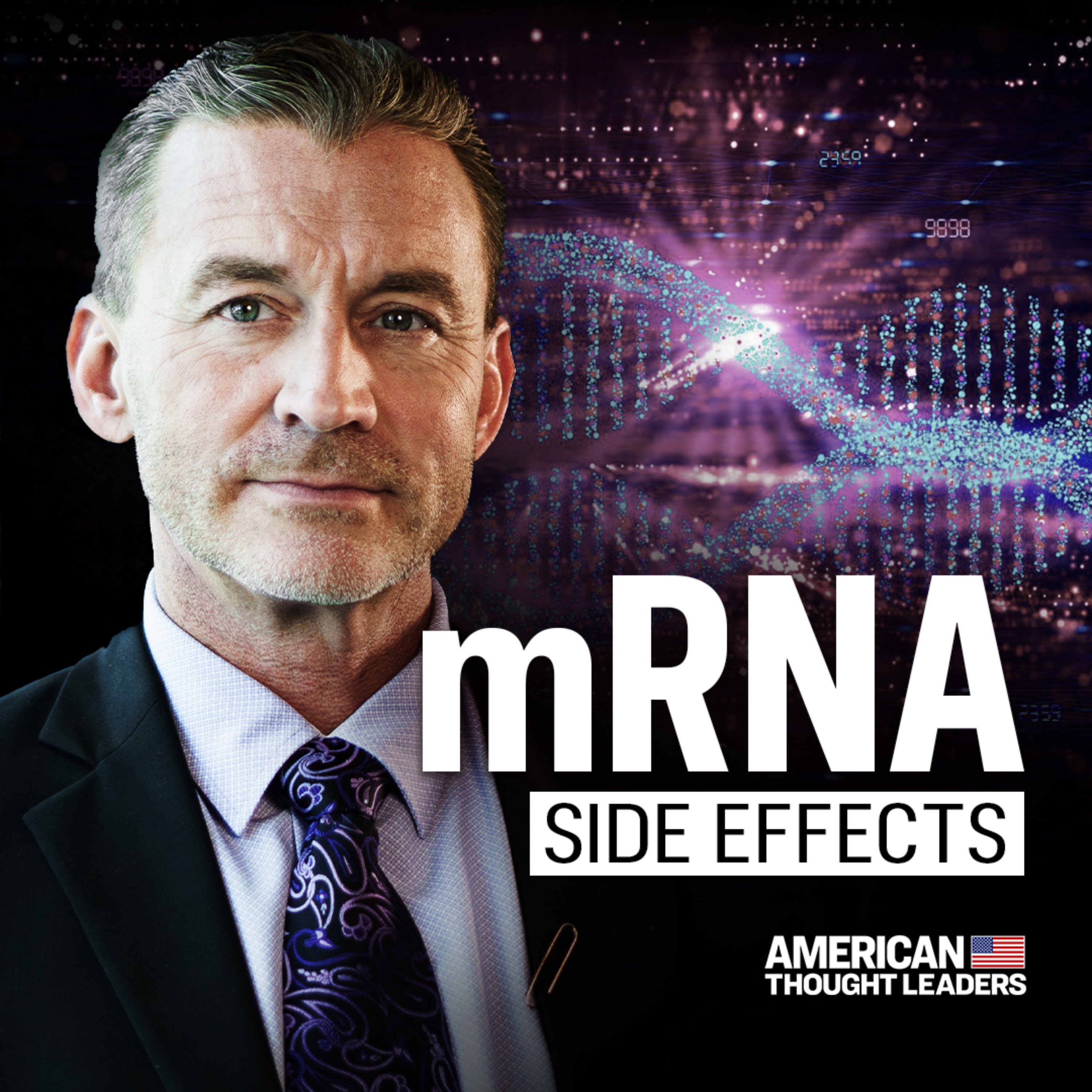
Loading summary
Transcript76 lines
- [00:00]
A
The problem is the delivery system. You can't target these modified MRNA technologies. They go everywhere in the body. Should we allow research into it? Sure. But should we allow self amplifying sequences? I mean, that's another issue. That's a can of worms. No, we shouldn't.
- [00:19]
B
In the last few years, pathologist Dr. Ryan Cole has been at the forefront of looking at an uptick in cancer diagnoses and alerting the public to the side effects of COVID genetic vaccines. In this episode, he explains why he'd like to see a ban on MRNA technology and how he sees things shaking out at the NIH and CDC in the coming months and years.
- [00:41]
A
I think things are going to continue to accelerate in terms of the changes.
- [00:45]
B
This is American Thought Leaders and I'm Jania Kellogg. Dr. Ryan Cole. So good to have you back on American Thought Leaders.
- [00:55]
A
Thank you, Jan. Great to be here.
- [00:57]
B
Let's talk about what you see as the opportunity right now with the current governance at HHS and at the CDC and in these agencies. The last time we spoke it was before a very significant change.
- [01:15]
A
The thing I'm most hopeful about is transparency. Over the last several months, we've seen the Overton window shift on things that we never would have talked about before. It's things that we talked about for the last five years and a lot more people are now questioning, which I really like and they don't have to agree with us. That's fine. But the fact that the conversation has now shifted to things that have been tucked away in databases of the CDC or databases of the fda. Having Kennedy be a force for questioning and change I think is open new opportunity for people to ask questions. And I'm hopeful that a lot of Americans will wake up to the fact that there are things that agencies in the government have done for many decades that are not true or have hidden information that has adversely affected the health of a nation. Not everything's out there yet, don't get me wrong. But people have the opportunity to see that there are things they haven't known that will be known. And I think the changes we've seen thus far within hhs, cdc, fda, are they perfect? No. As much of the Maha Maga movement kind of divided and angry that things aren't happening at a pace they want to see. Yeah, we hear that all the time. But turning government agencies around is like trying to turn a battleship on a dime. It doesn't happen. And there are entrenched patterns and layers of bureaucracy. I grew up in the D.C. area, you live there, you know, we know. But at the same time, what Kennedy has been able to accomplish without having a full cohort of a team and staff that he would like to have and many holdovers and is really actually impressive at this point. And I would encourage people not to give up hope because I think things are going to continue to accelerate in terms of the changes that are coming. Of course, you know, do some of us want to see a ban on MRNA technology? For humans? Yes. And for animals? Yes, we do. Is that going to happen overnight? We wanted it to.
- [03:35]
B
But is why, why, why is, why are you so convinced? I mean there are examples I think, right. Where there's MRNA gene therapy that's being used in for example, a cancer setting that I haven't heard people complain about it actually apparently is functional in certain settings. But why is it, why should there be a ban on this technology? You're suggesting a complete ban?
- [04:01]
A
Well, yeah. Well, to your point, for research purposes, for rare conditions, I think it's reasonable because there's. But potentially reasonable. The problem is the delivery system. You can't target these modified MRNA technologies. They go everywhere in the body. That's the problem. The cells that end up making the protein that one is trying to get coded by the know made the machinery from this little sequence of RNA that can go anywhere. And those cells that make that protein are now a target of your own own immune system to attack that.
- [04:41]
B
That's because of this lipid nanoparticle.
- [04:43]
A
Right. They're shielded in this little fat bubble. Lipid nanoparticle. And you know that technology was originally to designed to carry chemotherapy to the brain. So we know it goes to the brain. Do you need a foreign protein being made in the brain for anything other than an exceedingly rare condition? You don't. So in theory it's a fancy concept. There's too much money behind it. It became the new scientific rage, but by people that are investors and people that have big money in biotech not understanding the consequences pathophysiologically to the human organism. So why does it need to go away? Well, because the risk benefit ratio doesn't exist. And as a vaccine it was a failure for rare conditions. Should we allow research into it? Sure. But should we allow self amplifying sequences? I mean that's another issue. That's a can of worms. No, we shouldn't. Some of the new pet vaccinations are modified RNA technology and self amplifying technology that it gives huge potential for mutation.
- [06:00]
B
Just very briefly, what is the self Amplifying technology. And then why does it create this huge potential for a mutation?
- [06:08]
A
Well, what we've done with self amplifying technology, unfortunately, is we've taken rare viruses like an eastern equine encephalitis virus and used that as a vector to put this little gene sequence, RNA sequence attached to that. The problem with all of these is they don't have an off switch. They can start producing their product. And that gene has the potential to mutate and shed out of the body onto surrounding individuals. So there's, you can't find what you don't look for. I've said this a thousand times the last five years. So if you say it's safe and effective without showing that it doesn't shed onto surrounding individuals and, or animals, or animals to humans and or mutate, then you can't make that claim. And so the transparency of any of these products is to say, okay, if we're going to assess the safety, we need to make sure all those things that I just mentioned don't happen. Then you can make the claim, okay, there's no evidence of these things, but you can't make an ex cathedra, a pronouncement that doesn't happen by not having done the experiment to prove that it doesn't. And so my big concern for self amplifying, and there's still a trial that was allowed to go forward with that with Arcturus and bird flu, is what if you create a stronger strain of it? What if you spread it where it wasn't intended to spread? It could be a biologic disaster.
- [07:41]
B
And what does self amplifying exactly mean in this context? Because technically, okay, just the standard MRNA technology, it enters the cell co ops the cell to produce, well, in the COVID 19 vaccines, a spike protein. Okay, so now we have, and there's obviously these potential problems because it's toxic to the body and it's being produced all across the body. And for some people that's particularly problematic.
- [08:05]
A
It is because we don't know where the off switch is in the human body. Similarly, now they're giving a lower dose of the self amplifying, but it still has the opportunity to go inside of the cell, persist in the cell. And that self amplifying aspect basically means it's making more copies of itself so it can ramp up more protein.
- [08:25]
B
Okay, so not only is it not.
- [08:27]
A
It'S self amplifying, it's making more copies of itself and then producing whatever protein the intended protein is. Where's the off switch? No one knows. And this is the challenge with it.
- [08:43]
B
One final thought on the, on the, on the mRNA, you know, in a situation where someone has some sort of disease that's going to kill them in two years, you know, 95% chance or whatever, you know, you kind of think to yourself, okay, so they're going to produce a lot of a product in the body and all this, but, you know, I'm going to be dead in two years, so maybe I'm going to take the chance. Right. That's where your kind of cost benefit calculation comes in. It's very different if you're giving something to a healthy person. Right, right.
- [09:12]
A
Yeah. And I, I agree with that. I mean, there's. This is where I think having the research opportunity and very limited confined studies for those very unfortunate cases, it may be scientifically reasonable, but in a limited setting and not under mandates for all. But that's, that's kind of that. Right. To try knowing the risks of potentially clotting, hyperinflammatory conditions, autoimmune conditions, if you go into it with that full knowledge up, all of those things can happen. But, you know, you're up against a clock of time in terms of your expiration date, though, then I think that goes to that individual choice. As long as they have fully informed consent, which we lacked during the COVID vaccine period in terms of all the harms, let alone the contamination of the product. And that's an important paper that just came out from Kevin McKernan, David speaker and Jessica Rose, going to the fact that if we have a contaminated product because of how they manufactured it, you know, you go to the store and there's E. Coli in the lettuce. They do a big recall because of contamination. Why haven't they recalled all these contaminated Pfizer products?
- [10:27]
B
So let's.
- [10:27]
A
So Moderna products.
- [10:28]
B
So let's discuss this. This is incredibly important. I was just looking at this paper came out just a few days ago. I had Kevin McKernan on the show talking about his findings a couple of years ago. And we're talk. I mean, we were talking with him about there actually being DNA contamination, which is hugely problematic, and also endotoxin contamination, which is also hugely problematic. And ultimately there was this kind of. I think maybe you even said this in an interview. We did, but there was a switcheroo.
- [10:59]
A
Yes, right.
- [11:00]
B
Where the thing that was licensed was a process that was basically done. Well, maybe you can explain. There are two. The process that was licensed was different from the process that went into production. And foundationally different. But tell me.
- [11:15]
A
Yeah, so for the, the trial, for the 40,000 Pfizer patient trial, they had a very synthetic process for stitching together the sequence of RNA that would go into the little fat bubble and get injected for the mass manufacturing. The switcheroo was the second process where instead they took that sequence and put it inside a little ring of DNA. And then the message is the inverse of that sequence, that's called a plasmid, that little ring of DNA. Well, where is that grown? In vats of E. Coli bacteria. And then when you want to get the RNA that's produced by that process, then you basically break the cells apart, lyse the cells, and then you're supposed to go through very specific filtration processes and then enzymes, things that break proteins down or build proteins. You're supposed to break down that DNA and all you should be left with is RNA and a little fat bubble. They, for whatever reason ended up not having a very clean process and ended up with a bunch of garbage at the end, which included the cell wall and some of the toxins that that bacteria makes, in addition to multiple fold excess regulatory allowed copies of contaminating DNA which are protected by a fat bubble. So that second process, this, we did a trial on 40,000 people and at the end on 250 people, we looked at the second process where you're not going to have any statistical signal for harm. And then they rolled that out to billions of people. And so they said, oh, emergency authorized on these 40,000 patients. And then the process they rolled out wasn't really examined. And that's where going back to see what data inconsistency or fraud actually happened. And it's not just that contamination, it's the fact that they use certain sequences within this little circle of DNA, this plasmid of a contaminating monkey virus sequence, simian virus number 40, the promoter, the promoter region, not the whole virus, but the promoter region of that which is known to bind to certain families of genes that are supposed to suppress cancer and tumors. And instead it binds and shuts those abilities down. That's known from the medical history and research literature. So there's just so much contamination, be it the SV40 sequence, which I would consider an adulteration, and then having the DNA left over in an RNA product, that's contamination. And then having cell wall fragments and toxins from literally a poop bacteria, E. Coli, having those that can cause anaphylactic reactions in the human body, shock reactions.
- [14:13]
B
You know, and this and this Paper, I mean this paper looked at just the DNA contamination aspect. And so just very briefly, if you could tell me what they found. I mean, I, I, it struck me that the Met, they were extremely rigorous in their methodology, presumably expecting to be attacked for this paper and so forth, but, but just tell me what they found.
- [14:34]
A
So basically they used two techniques to detect, to detect DNA and quantify it. So two different techniques to basically compare against each other. And they found, you know, multiple fold, from 36 fold to several hundredfold extra copies of DNA. So the FDA allows 10, 10 nanograms per milliliter, I want to say, of DNA in a product, but that's naked, it's not protected in a bubble. What they found was billions of copies essentially of DNA in each vial. Why, why does that matter? Well, you do run against the can it integrate into our own genome issue. Several papers, laboratory papers, suggest that one case report that hasn't been published yet in a tumor and a cancer has been shown that there's Pfizer integration in the tumor both pre death and post death. So that's a problem with having contaminating DNA persisting within the cell for a long period of time and making atypical proteins. That's a potential causing other autoimmune reactions. That's a potential, the biggest concern for me is the cancer potential of having that contamination. And of course we've seen an uptick from the National Health Service showed overall a 23% increase in cancer above average.
- [16:08]
B
From which time, okay, this is, I.
- [16:10]
A
Mean 2020 to 2023. But the, the uptick was after the rollout. It was after the inflection point of the mandates and the shots in 2021 when you see, and everybody will say, well, correlation's not causation.
- [16:26]
B
And well, it's an important, I mean whatever it is, it's an important data point. 23%. I mean that's a, that's huge. Hold the presses, you know.
- [16:32]
A
Right. And, and what new thing happened societally in 2021? The introd introduction of a gene transfection product that we know is contaminated, given to billions of people. And other people will say well, it was just the virus. The spike protein is made by the virus as well, certainly. But in a normal immune reaction, the body clears a virus within seven to 14 days and an immune competent person. So there's just so many questions and this is where going doing a retrospective look back with actual data, like it or not, not spinning a narrative from any side or another, being a neutral party and just Saying, let the data speak, but let all the data be seen. And then funding those projects that haven't been done, funding the cancer projects that so many of us have tried to do individually and basically cobbled together a few dollars here and a few thousand dollars there to do the scientific, scientific methods and techniques that the universities, unfortunately, very few would do, and say, okay, let's take a couple hundred cancers, let's look for Pfizer or Moderna sequence in those, and if it's there, great. And if it's not, great, but let us at least look at the truth and find the truth. If we're right, we're right. If we're wrong, we're wrong. The data so far indicate that it has been identified on a small scale. Let's prove whether those, you know, crazy people out there that are saying these things are happening. Let's. And I'm saying that facetiously, but let's prove it with the funding from the government that should have been spending this, you know, took a billion dollars on a long Covid project and accomplished zero. Well, let's identify what the body is making.
- [18:16]
B
Which project is that, by the way?
- [18:18]
A
That was under the Biden administration, and a billion dollars was put towards long Covid research of the. Which we have seen nothing of benefit come from that billion dollars. And now that we have a man of integrity at nih, some of those funds that, you know, look, the universities are afraid to do some of this research because they think they'll lose their grants and funding. You should never be afraid of basic research and ask the question, answer the question, put forth a hypothesis, do the research, confirm or deny the hypothesis. That's basic science. The universities are worried about losing their funding from patents on discoveries and then making billions selling it to pharmaceuticals that have intertwined interests. That's not in the interest of science and the health of people. That's in the interest of big corporate entities. And that came into being because of the Bayh Dole act. If we erased that act and actually went back to basic science and no conflicts of interest, we could do the research that the inquiring mind would have inquired about and wanted to do in the first place. Not fearful for their job or for their reputation, but just answering the questions of science, nature, physiology, pathology, the human body and the better health of a nation. We've missed that. We have an opportunity to reset and say, this is how we're going to do science again, and we're going to do it with honesty, integrity and transparency.
- [19:50]
B
So, you know, Presumably ACIP under Dr. Retsef Levy is doing, you know, is looking into all of this, is going to look to make some specific recommendations around a number of these questions. So do you, I mean, where do you see over the, you know, the next few years, are there some specific things? I mean, you mentioned a few pieces of very important research. For example, this. Is there integration of these, of these products into the genome in people? What are. Name a few things that you would expect to see in the, you know, coming three years, because that's how long this. I guess this.
- [20:35]
A
I think the number of products that will come to market under the designation vaccine will be fewer because I think the, the criteria for approval will be more strict. I think that protects people. I think that protects children. I think that's critically important. So that's one thing I think will happen. They'll bring things to that committee, that committee really only recommends for or against. The CDC can still kind of override if they want. I doubt that'll happen now that some of the leadership there has changed. Even on their first meeting together as a new committee, they found out later that they were lied to about certain data points.
- [21:16]
B
Well, Dr. Robert Malone, kind of notably on this show, talked about his regrets about voting for authorizing the rsv.
- [21:28]
A
And I think this is, this is where the committee needs to step forth with their ability and their power to defer an issue, to vote for a deferral instead of a yes or no or defer until there's more data.
- [21:42]
B
So if you're looking, if you're smelling a rat or you're seeing like I met me, I don't feel. Because that's, that's actually Dr. Levy. I had them on the show talking about this, like, why did you vote for? Why did you vote against? He said, I just don't something. And he's a very interesting guy because actually we kind of bonded around this a little bit at one point because he's of this massive acumen. I see patterns in things, and when they look off, I just feel like there's something wrong. And I think that's what he saw there and just said, I'm not ready to really do this, so I'm going to have to vote no. And I know exactly the way of thinking you might have. Even if you don't have all the information, you kind of sense there's something.
- [22:22]
A
Yeah. And I sit on a health board in Idaho, four counties, about a million people. And there's certain issues that come up amongst the board of health commissioners and we talk to each other and certain times we just say, let's table this issue. And I think just because there's a committee meeting doesn't mean you have to make that decision. I think there's industry pressure and there may be agency pressure, but at the same time, I think our greater interest should be for the people that'll be affected by that product. And so live and learn from that first experience as a committee. There are some wonderful people coming onto the committee going forward. One of my favorite people on the planet is Dr. Kirk Milhone, MD, PhD, pediatric cardiologist, phenomenal person, man of integrity, man of decency. He's been attacked mercilessly in the media since the announcement, but he's the kind of guy that will say, let's look at the data, but give me all the data. And, and I think because we have people that don't have conflicting interests with companies and there's nothing to be gained one direction or another for these individuals, they're volunteers. This isn't a, this, it's a high profile position with just about zero remuneration. But they do it out of the goodness of their heart, their oath, their ethics and some, I mean, courage going forward. So I, I think seeing better data going forward is going to be one thing that happens. I think, I think the look back is going to be important, Dr. Levy's project of looking back, because I think people will be surprised, but I think, I think it's going to bring back a demand by the public for people of integrity to be in government going forward. This is a great opportunity to set an example that corporatocracy doesn't get everything it wants. And we as a people want to protect each other. And also the, the mindset now that, okay, let's bring new products forward, that's fine and dandy, but at the same time, let's never mandate anything again. And let's, when we do find something that's unsafe, let's remove it. I mean, that's integrity as well. To say, okay, we thought this worked. It didn't. A committee 10 years ago approved it or five years ago or two years ago, but new data has come forth. Let's protect people now that we've found harms. So there's just so much to be done. Am I saying it's easy? No. Are better people, and that's, you know, somewhat judgmental on my part. Sure. But do people without conflicts now have positions of importance? They do. Is that encouraging? Absolutely. Are they perfect humans? No. Are any of us no, but are they good people trying to do good things? I think so.
- [25:28]
B
I mean, just because I know a number of people that are involved in these things personally, I know that there's a. I mean, I can't speak to whether, you know, in the past, um, I didn't know as many people. I can speak how many people are good people that. It seems like there's quite a number of people that I know to be, and let's say, unusually decent human beings that are in these positions that I find just that in itself. Heartening.
- [25:56]
A
Absolutely.
- [25:57]
B
Yeah. And of course, you know, as it's also a very difficult job, so I kind of feel for them.
- [26:02]
A
Yeah, it is, it is. And. And you know, they get maligned by certain media sources. Those media sources, you have to consider their funding sources. And those funding sources are highly corporately, pharmaceutically driven. And so there's a narrative against these individuals. But if you actually step back and know them like you know them and I know them, you realize, oh, these are just good people trying to do good things. And of course there's always going to be negative verbiage and so many ways from so many angles. Is it true? Is. Is a question I think people ask themselves, oh, he's such a this and that. Are you sure? How do you know that? And as you said, when you know these people personally and you've seen them be consistent time and time and time and time again, you think, okay, there's integrity there. And so that's encouraging. I agree with you. I think. I think again, we're not going to get everything we want all at once, and nobody does. But that's part of being in a civil society is realizing that sometimes the answer is somewhere in the middle and not at the extremes.
- [27:13]
B
Well, and also just that you need to build coalitions. You need to convince people who, you know, fairly or unfairly may be unconvinced about things. I mean, it's just we can't coerce our way. I mean, this is kind of a. Probably a big lesson I've been doing. I'm adding a little bit of my own commentary here, but.
- [27:36]
A
Yeah, yeah, coercion. I may have heard me say earlier a quote I remember from childhood, A man convinced against his will is of the same opinion still. So we have to find this way of allowing people to have civil dialogue, agree to disagree on certain things, but until the dialogue happens without censorship, let one side have their voice, let the other side have their voice. Let's come to reason together and come to a good Decision for all. And sometimes this side doesn't get what they want. And that side, to me, it's not about the side, it's about the person on the other end of what these sides, quote, are trying to do. What's the impact on a fellow human being and what's your degree of curiosity, care, concern, concern and empathy for that individual? That's how we make the best decisions is it's not just a data decision, not a financial decision, but there's humanity on the other side of that decision and that's why these committees are important and not forgetting that humanity.
- [28:43]
B
You know, you just made me think of this. Are you aware of the presidential memorandum on big Pharma advertising recently? And I mean there's a general kind of interest at looking at that. We heard that from Secretary Kennedy. But now there's this presidential memorandum. What is the significance of that?
- [29:03]
A
The significance is the companies have strayed away from what they were allowed to do. And in terms of the glowy lady or grandpa jumping through the meadow and butterflies flying all about and this drug is safe and then you get this little blurb of and here's the risk of death and explosive diarrhea and blah, blah, blah, all at the. It's. If you're going to advertise, I would like to see pharmaceutical advertising personally go away altogether. There's only two nations on earth that allow it, US and New Zealand. But if they are going to advertise, then the transparency has to be there. And the memorandum and the new policy through HHS would basically say you have to show all the harms, all the risks, versus just the glowy picture of what the corporates want to push forward. And I mean there's more detail to it than that. But on the simple nature, it's, you have to be more transparent in your reporting. If you're going to advertise, how's that.
- [30:06]
B
Going to make a difference? Because I, because I, I mean, when I, when I hear some of these things, I watch more TV these days for a whole bunch of reasons and I hear, see some of those ads and there does seem to be like a, you know, kind of a laundry list of things read out, you know, during.
- [30:23]
A
I think here's where it'll make a difference. If you restrict what they can say and how they say it, then what the reporters are allowed to, or not allowed to report on changes and we go back to actual scientific inquiry and journalism within the journalistic field.
- [30:43]
B
Okay, so that's. Okay. Super interesting. So, babe, you're basically Saying, let me see if I get this right. You're basically saying that, you know, the. While the. These companies aren't, you know, explicitly telling anybody what they can or cannot say, your funding comes from a certain source going against it, or, you know, having a different narrator of a narrative which might be harmful to that source is difficult.
- [31:09]
A
Yes.
- [31:09]
B
If I understand you.
- [31:11]
A
Yeah. It becomes a self censorship because you're not going to bite the hand that feeds you.
- [31:15]
B
You.
- [31:16]
A
And so do they implicitly tell them what they can and can't say on the news? Maybe, maybe not. However, once that amount of funding from that advertiser shrinks considerably, say it was only 10%, and you do find that there's some corrupt drug companies out there doing corrupt things or presenting false data, I would want a reporter from any entity to say, well, I think that's newsworthy. Let's report on that. And now that that piece of the pie is smaller by default, I think we'll get a little more honesty or integrity in those reports because they don't feel as conflicted by the financial interest.
- [32:00]
B
But by creating more transparency, you think that will directly lead to less pharma advertising? That's what I'm hearing you say.
- [32:07]
A
I think so.
- [32:08]
B
Okay.
- [32:08]
A
I do.
- [32:09]
B
Okay. Is it just because people will be.
- [32:11]
A
Like, I'm not taking that drug now that they've listed those side effects? Right.
- [32:15]
B
Okay. All right.
- [32:16]
A
So, yeah, I think it will be just a natural devolution of how much pharma puts into that type of advertising over time. So I think the net positive will be that people will be more informed.
- [32:32]
B
We met because you challenged a lot of narrative ideas, let's say, right during the pandemic. And you were also, I mean, you lost your business in the process. How is that all shaken out? I'm curious today. Right?
- [32:53]
A
Yeah.
- [32:53]
B
You lost your very, very significant business.
- [32:56]
A
I did.
- [32:56]
B
In the process.
- [32:57]
A
I did. And it was basically the insurance companies that ended up destroying my business. And in particular, one health system in Idaho, the largest employer in Idaho, St. Luke's Health System. Their CEO attacked me, filed complaints in all the states where I was licensed. And five years later, I was correct on what I was putting forward, data wise and scientifically. But then they used their insurance system to cancel my contracts because of my, quote, unprofessional behavior of speaking freely on my scientific opinion based on what my background is in pathology, immunology, virology. Having been Mayo Clinic trained, I have a breadth of experience and a half million patients of experience. And I look at it and Go. I knew what I knew. I didn't want to be right. Things are trickling that way. So. Affected my family, affected my business, affected 80 employees who I no longer have. And, you know, I saved money for a couple of years. Now I'm transitioning into more of an educational role. I'm grateful to be a senior fellow with the Independent Medical alliance and helping do advocacy work for them and educational work with them. And it's closed a door, but opened others. Am I making what I used to make? No. Maybe a tenth of it. And, you know, when these organizations have the power to destroy lives, these organizations should no longer have power. And that came through the fact that they had a captured, paid for pharmaceutically funded media to destroy lives. Not just me, others have gone through what I've gone through. You can take everything away from me. I don't care. I'm not a materialist. I'm not here on this earth because of things. I'm here to do the good on the earth I can in the time that I have for the people that I can. And they didn't. They took material wealth away from me. I don't care. I would rather know that I made an impact on lives, telling the truth the best I could in the best way I could. And I'll keep doing that. And, you know, am I writing some books right now? Sure. Am I slow at it? Yes, I am. Do I want them to come out sooner than later? Hopefully by the end of October, I'll have my first one out. Do I still travel and teach? Do I still try to inspire people to be involved in their own health and in freedom and in politics, no matter on which side you fall, but to be engaged in the discourse of a phenomenal nation and republic, yes, I do. And so it's forced me into living a life that's different than I planned. But at the same time, sometimes life chooses us. And we don't choose our journeys in life. The journey chooses us. So I look at it as I am where I need to be right now, trying to do what I can. And so I lost something I loved. I've gained other things I love. And just finding the positive in something, that was a rough experience. Your family doing okay? Six daughters. My wife, who's here at this meeting with me. And, you know, the girls have seen us go through it. It affects them emotionally. One daughter at one point said, hey, dad, this was early on in the pandemic. She said, can you keep it down? All my friends know who you are. A couple Months later, she comes back to me and says, hey, dad, keep it up. All my friends know who you are. And so, you know, I've seen. I've seen them go on their own journeys. And, you know, it's been emotional for some of them and others, it's fun because they realize that when you see something in the world that's wrong, you do something, and it gives them an example to stand up for good things in the world, and it gives them the example, too. They don't have to do what dad does, and most of them won't go into medicine, but they'll choose hard things in life and say, okay, this is going to be hard, but I know it can be done. And so they're doing okay. Good girls are a blessing.
- [37:11]
B
Excellent. And so, you know, you mentioned the meeting, of course, we're at. We're here at this Brownstone Institute retreat at Folly Face Farm. This is why we're sitting under a beautiful. I think it's a sugar maple, you know, want to tap it and drink some beautiful SAP, you know, sounds good.
- [37:28]
A
This spring will come. Do that.
- [37:30]
B
But so just as we finish up, you know, just kind of the significance of this meeting in the Brownstone Institute.
- [37:37]
A
Well, first, I think the lesson is there is so much beauty in this world still, especially as you point out our surroundings. The world is a beautiful place. The other thing is, as we sit in a large group of very open minded, critically thinking people. People are beautiful. And this is such an eclectic mix of thinkers that come from all political stripes and come from all sorts of professional backgrounds and come from all over the country and literally the world coming together to hear ideas, to challenge ideas, to laugh together, to mourn together, to get frustrated together, to create together. It's such a wonderful experience to see this beautiful paintbrush of humanity across the canvas of life and say, this is how we should engage. This is how so much of this world that's at each other's throats should have the opportunity to say, step out from behind that keyboard. Meet your fellow human beings in three dimensions. If you can do it in a beautiful place with good company, good laughter, good food, you don't have to agree on everything. And an organization like this is, you know, be it Brownstone or be it some other organization, is a perfect example of how we regain humanity and find hope for a future of people that want the world to be a better place for each other. And it's such a treat to be here with you with all these amazing people and to know that there are these type of thinkers that are actually kind in this world is hopeful.
- [39:28]
B
Well, Dr. Ryan Cole, it's such a pleasure to have you on again.
- [39:31]
A
Thank you so much, Jan. This has been great.
- [39:34]
B
Thank you all for joining Dr. Ryan Cole and me on this episode of American Thought Leaders. I'm your host, Janje Kellick.