
Podcast
American Thought Leaders
Hosted by The Epoch Times · EN
At a time when our nation is portrayed as increasingly polarized, media often ignore viewpoints and stories that are worthy of attention. American Thought Leaders, hosted by The Epoch Times Senior Editor Jan Jekielek, features in-depth discussions with some of America’s most influential thought leaders on pertinent issues facing our nation today.
91episodes
Episodes
Newest firstAll episodes

EXCLUSIVE: Kash Patel: The FBI’s War on Scam Centers Around the World
3d ago00:53:13Summary readyIn this exclusive interview with FBI Director Kash Patel, we dive into the FBI’s campaign to take down scam centers around the world, from Burma to the United Arab Emirates.Last year, the FBI launched Operation Blackout, a 16-month campaign that dismantled four of the world’s largest scam centers.Working with international partners—notably including China’s Ministry of Public Security—the FBI seized over $15 billion, arrested more than 300 individuals, and freed thousands of trafficked victims who had been forced to work at these scam compounds.The amount of money Americans have reported losing to fraud has increased over threefold from 2020 to 2025, according to data from the Federal Trade Commission. And nearly half of that in 2025 went to romance cryptocurrency scams—known as pig-butchering scams.Scammers use texts to build trust before luring victims into fake investments that drain their life savings. Then they move and launder the money through crypto wallets.So what can people do to avoid being scammed? Will the FBI be returning all the seized money? And why has the FBI chosen to work with China on tackling these scam compounds? How can the Chinese regime be trusted to work in good faith?In this wide-ranging interview, we also discuss the FBI’s fight to catch spies, investigate transnational repression, cut bureaucratic red tape, and prevent the next terrorist attack.Views expressed in this video are opinions of the host and guest, and do not necessarily reflect the views of The Epoch Times.
Summary
How One Peace Agreement Gave America a New Route Through Iran and Russia’s Backyard | Ambassador Narek Mkrtchyan
5d ago00:44:55Summary readyAlmost a year after the Washington Declaration, Armenia is trying to turn a hard-won peace with Azerbaijan into something lasting. In this conversation, Armenia’s ambassador to the United States, Narek Mkrtchyan, explains what the agreement means on the ground and why the Trump Route for International Peace and Prosperity could reshape the region and the country’s future.“We sit in a very tough neighborhood. We sit in a very interesting geography. We are at the crossroads of Europe, Middle East, Central Asia, South Caucasus,” Mkrtchyan says.Mkrtchyan describes how Armenia is trying to turn geography into strategy through the development of diplomacy, new trade routes, and international partnerships. He views this as more than a peace process—it’s a chance to redefine Armenia’s place in the region.“In the center is the concept of crossroads of peace,” Mkrtchyan says.Recently, Armenia also got approval for the biggest artificial intelligence factory in the region—a $4 billion project that officials say could help make the country a hub for computing power and advanced technology.Views expressed in this video are opinions of the host and the guest, and do not necessarily reflect the views of The Epoch Times.
Summary
The Multi-Billion Dollar Industry Using Trafficked Slaves to Scam Americans | Timothy Blackwood
1w ago00:39:46Summary readyAmericans are ripped off in the billions annually through romance “pig-butchering” scams—the most dominant type. But who’s really behind them?The shocking reality is the vast majority of these scammers are trafficked victims, enslaved across more than 60 countries and forced to scam or face torture.“You’re working 17-hour days. You’re catatonic. You’re not getting sleep. You start to doze. They‘ll electrocute you, and if you refuse to scam, they’ll torture you,” said Timothy Blackwood, an award-winning Canadian-American film director.His film “Scam Slave: From Hell to Home” follows a Ugandan man promised a high-paying job in Thailand, only to be kidnapped by a Myanmar-based crime syndicate.“There’s all different types of scams going on there. There’s villas, there’s strip clubs, there’s clinics to support the staff that are managing and running these compounds,” Blackwood says.These scam centers in Laos, Cambodia, and Myanmar generate billions that fund even more advanced operations.“It’s not simply in the horrific statistics of how many billions of dollars are being scammed from Americans annually, but the human cost to people’s lives.”In this episode, I dive into how these operations stay hidden and what can actually be done to stop them.Views expressed in this video are opinions of the host and the guest, and do not necessarily reflect the views of The Epoch Times.
Summary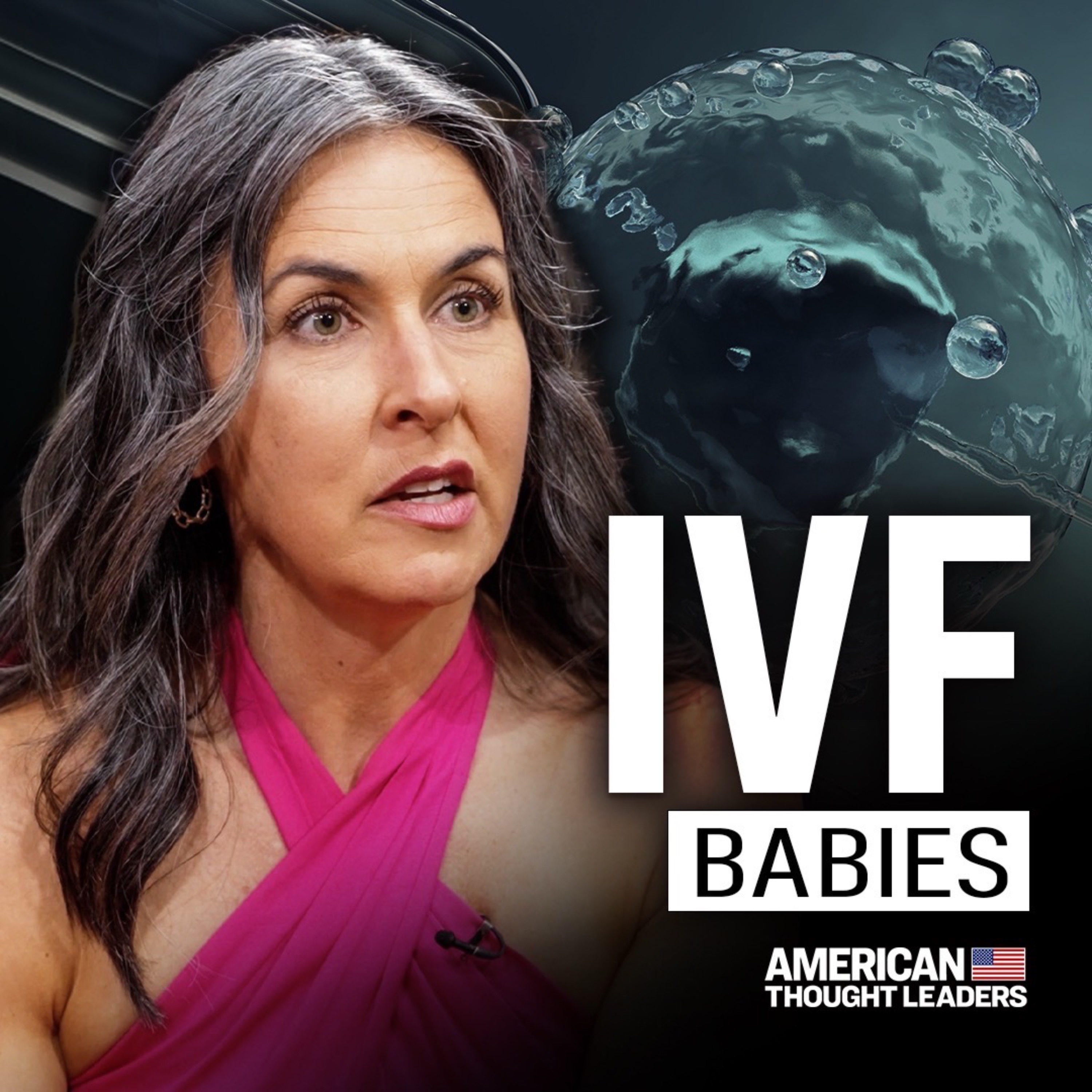
The Hidden Realities of Buying Eggs, Sperm, or a Womb | Katy Faust
1w ago01:16:19Summary ready💰Protect your wealth with precious metals! Call American Hartford Gold today & get up to $20,000 in free silver on your 1st order! Call 855-862-3377 or text AMERICAN to 65532 or click here: https://ept.ms/ATL-AHG Since the sexual revolution and the introduction of no-fault divorce in 1969, the institution of marriage in America has undergone a profound transformation.Katy Faust, founder of children’s rights organization Them Before Us and co-author of a book by the same name, argues that marriage has changed from a permanent, child-centered union to a vehicle for adult fulfillment.And now new reproductive technologies—from IVF to surrogacy—are making parenthood possible in ways never seen before.For many, this is progress. But at what cost?Faust argues that for decades, we have prioritized adult desire over a child’s fundamental right to be known, loved, and raised by their biological mother and father.In this episode, she walks me through many complex questions: What makes something a natural right? What is the true impact of divorce on children? Why isn’t surrogacy just a neutral transaction? And for countries facing shrinking birth rates, why is IVF perhaps not the right solution?Views expressed in this video are opinions of the host and the guest, and do not necessarily reflect the views of The Epoch Times.
Summary
How the CCP Is Turning America Against Itself | Tianliang Zhang
2w ago01:00:53Summary readyThe values Americans hold dear—such as freedom of speech, religious liberty, and democratic elections—are weaponized by the Chinese Communist Party (CCP), says Tianliang Zhang, an author, historian, and popular commentator on China affairs.In this episode, he argues that the CCP devised a master plan called “America against America” to exploit those very freedoms and openness in order to undermine U.S. interests.The concept was developed by Wang Huning in 1989, chairman of China’s top political advisory body, the Chinese People’s Political Consultative Conference (CPPCC).“But how to implement that, that’s the unrestricted war,” Zhang says.Unrestricted warfare is a CCP doctrine of leveraging everything as a tool of war, whether it be fentanyl, the media, or election integrity.How is this war waged in practice? The transnational repression targeting Falun Gong practitioners is one such example.The Falun Gong meditation practice was popular in China during the 1990s. An estimated 70 million to 100 million people took it up, crediting it for health benefits and mental well-being. In 1999, the CCP unleashed a nationwide persecution, subjecting the practitioners to various abuses, including slave labor and forced organ harvesting.“CCP sees it as [the] number one threat in its history … so they use American media, they use the freedom of speech here, they use the justice system here to persecute Falun Gong [practitioners],” Zhang said.The CCP’s goal, Zhang says, is to “eliminate all the independent thoughts” that do not conform to communist ideology.Views expressed in this video are opinions of the host and the guest, and do not necessarily reflect the views of The Epoch Times.
Summary
How Cuba Penetrated America’s Security Elite | John Suarez
2w ago00:44:19Summary ready🔥IMMERSED: Round closes July 30. Invest before the round closes. Learn more about Immersed here: https://ept.ms/44RDBfk “The Cuban regime has been very successful at portraying itself as harmless,” but in reality, Cuba’s intelligence service is “more formidable than the KGB,” says John Suarez, the executive director of the Center for a Free Cuba.A new 100 page State Department report details the full scope of Cuba’s operations, penetrating all levels of the U.S. government, including the CIA and State Department.How did a country like Cuba become what the State Department describes as the “capital of 21st century communism?”Suarez says the regime’s long-term infiltration operations recruit agents early, especially via university exchanges.For instance, Ana Belén Montes spied for Cuba for 17 years as a senior Defense Intelligence Agency analyst, leaking critical information that compromised U.S. intelligence operations.In another case, a high-ranking U.S. diplomat, Victor Manuel Rocha, shaped American foreign policy for 40 years to benefit Havana until his arrest in 2023.The Chinese Communist Party is among Cuba’s top backers, installing infrastructure in Cuba to spy on U.S. communications.In this episode, we trace how this small island built a global intelligence network and how sympathizers in free societies help whitewash the regime.Views expressed in this video are opinions of the host and the guest, and do not necessarily reflect the views of The Epoch Times.
Summary
Why Taiwan is Fighting the World’s Largest Cyber War | Wang Ting-yu
2w ago00:48:10Summary ready🔥Check out Immersed and invest in the future of AI-powered spatial computing. Round closes July 30:https://ept.ms/4fY9c4bTaiwan faces millions of cyberattacks and intrusion attempts every day, as well as a dizzying onslaught of disinformation from Beijing.There are few people who understand what Taiwan is really up against better than Taiwanese legislator Wang Ting-yu, a leader in the Taiwanese Parliament’s Foreign Affairs and National Defense Committee.He’s been sanctioned three times by Beijing and repeatedly threatened for speaking out.In this episode, he reveals Taiwan’s three-step strategy to withstand the Chinese Communist Party’s psychological onslaught.Winning the battle for truth, he believes, is imperative to preserving the life of any democratic nation.And he also breaks down the importance of this tiny island nation. Taiwan produces two-thirds of the world’s semiconductors—and nearly all of the advanced ones—but its importance stretches far beyond this single product. Wang details Taiwan’s strategic position, its role in critical supply chains, and its role as a frontier of human freedom.Views expressed in this video are opinions of the host and the guest, and do not necessarily reflect the views of The Epoch Times.
Summary
How Anti-Semitism Took Hold in America | Batya Ungar-Sargon
3w ago00:40:35Summary readyHistorically, America was always one of the friendliest countries towards Jews compared to many countries in Europe, says Batya Ungar-Sargon.But in recent years, there’s a major shift on the left with anti-Semitism on the rise, she says. In this episode, she breaks down the ideological shifts reshaping American politics and explains why she rejects the modern “victimhood hierarchy.”Ungar-Sargon is the author of "The Jews and the Left" and host of “Batya!” on NewsNation argues.Views expressed in this video are opinions of the host and the guest, and do not necessarily reflect the views of The Epoch Times.
Summary
Britain’s ‘Strictest Headmistress’ Explains Secret to Her School’s Success | Katharine Birbalsingh
3w ago00:33:24Summary readyKatharine Birbalsingh has been deemed “Britain’s Strictest Headmistress”—and she wears the title proudly. Founder of Michaela Community School in London, Birbalsingh has built one of the UK’s top-performing schools by rejecting the educational fads of the last generation and returning to older principles: discipline, personal responsibility, and patriotism.The Michaela Community School is an inner-city, non-selective charter school. Despite three and a half years of opposition from unions and councils, Birbalsingh fought to be able to provide a good schooling alternative for London’s poorer communities. And she’s succeeded. Her school has repeatedly ranked No. 1 in student progress in the entire country, and thousands of visitors from around the world have come to study and learn from her model.In this episode, Birbalsingh reveals how Western institutions have quietly abandoned the moral formation of children. This, she argues, has driven civilizational decline more than any policy failure. Birbalsingh argues that many of today’s schools immerse children in a culture of grievance and victimhood rather than agency and duty.Birbalsingh details the three pillars of Michaela’s educational approach: discipline, teacher-led instruction, and what she calls “small-c conservative values,” such as self-sacrifice, ownership, and accountability.Views expressed in this video are opinions of the host and the guest, and do not necessarily reflect the views of The Epoch Times.
Summary
The Forgotten US Territory Where Chinese Birth Tourism Thrives | Cleo Paskal
3w ago00:56:01Summary ready💰Protect your wealth with precious metals! Call American Hartford Gold today & get up to $20,000 in free silver on your 1st order! Call 855-862-3377 or text AMERICAN to 65532 or click here: https://ept.ms/ATL-AHGThere’s one place in America where Chinese nationals can enter without a visa.It’s called the Commonwealth of the Northern Mariana Islands (CNMI), a U.S. territory in the Pacific, right by Guam. And it has become a major security loophole for Chinese Communist Party (CCP) influence operations as well as Chinese organized crime and birth tourism ventures, said Cleo Paskal, a senior fellow at the Compass Institute.Yet there has been little political will in Washington to close this loophole, Paskal argues.In this episode, Paskal breaks down the CCP’s aggressive influence and gray-zone warfare operations in this region—areas critical to U.S. defense in any Taiwan conflict—and why this matters for U.S. security.Every U.S. president who served in the Pacific theater in World War II understood that the security of the American mainland depends on a secure Pacific perimeter, Paskal said.As such, in addition to two U.S. territories in the region, the United States has maintained Compacts of Free Association with Palau, the Federated States of Micronesia, and the Marshall Islands since the end of World War II.These treaties give the U.S. military exclusive defense and strategic access to these countries in exchange for U.S. security guarantees and economic support.But the Chinese Communist Party has sought to aggressively expand its influence in these islands through pressure, gray zone warfare, and disinformation campaigns. Amid all this, U.S. funding for these compacts nearly lapsed in recent years, because many in Washington apparently have forgotten their importance.In this episode, Paskal walks me through a key question: if the security of America’s mainland has always depended on control of the central Pacific, what consequences will we pay now that so few Americans know these islands—or their citizens—even exist?Views expressed in this video are opinions of the host and the guest, and do not necessarily reflect the views of The Epoch Times.
Summary