← American Thought Leaders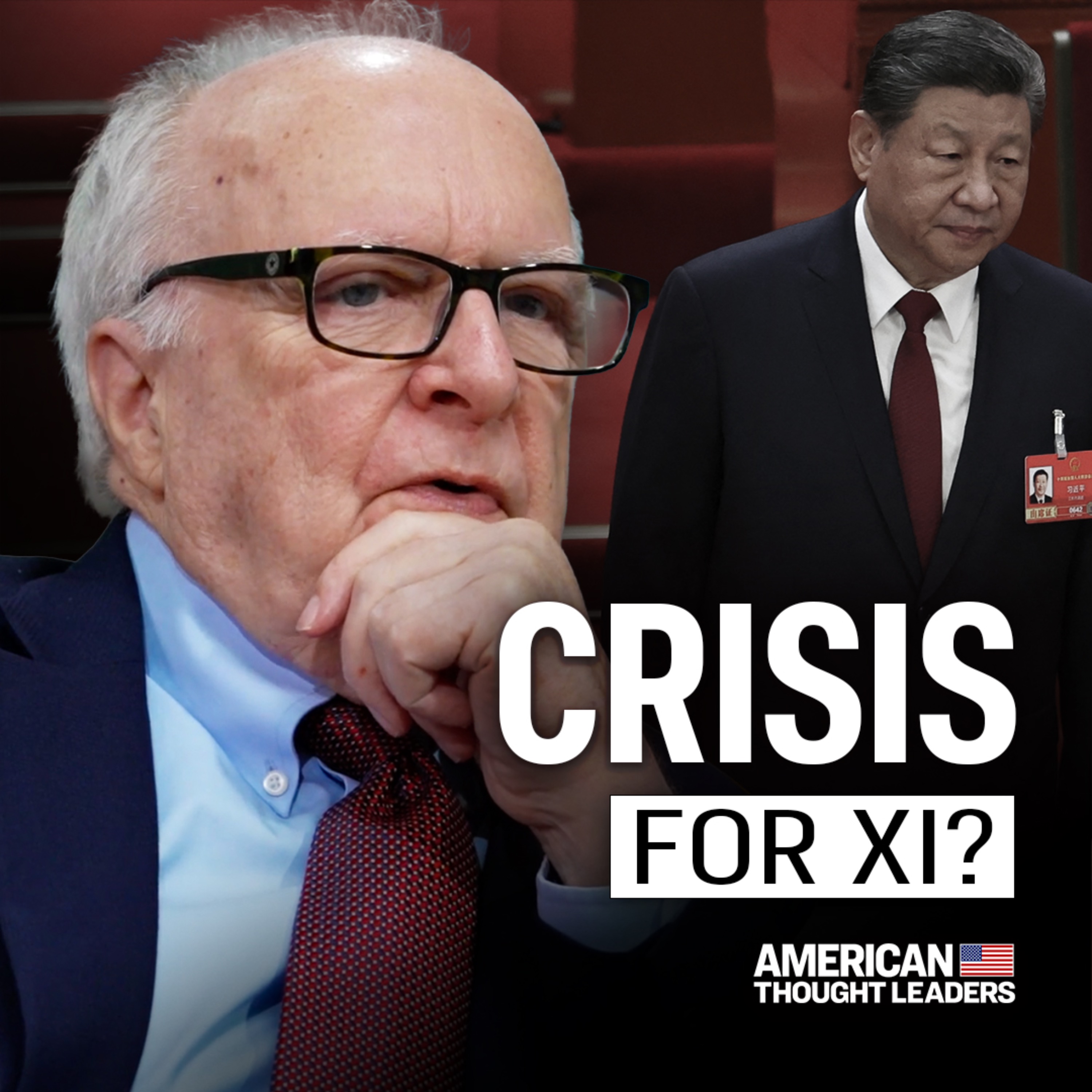
Loading summary
Transcript108 lines
- [00:01]
A
There has been a level of shock that the United States has not only been able to, but willing to engage in these kinds of operational matters against major enemies of ours and friends of theirs.
- [00:16]
B
What do the US Decapitation strikes on Iran mean for Xi Jinping and the future of the Chinese regime?
- [00:22]
A
They are perfectly happy to take advantage of forces in the world that are adamantly opposed to the United States and use them to their advantage. And to keep the eyes off of the problems in East Asia.
- [00:35]
B
Today, I sit down with eminent China scholar Robert Sudinger, a former CIA and State Department intelligence analyst and author of the Conscience of the Hu Yaobang, China's Communist Reformer.
- [00:48]
A
The silence from all those military commands has been deafening. There is a great deal of stress about what is it that Xi Jinping really wants us to do?
- [00:56]
B
Why is Xi Jinping purging his own military leadership? And what does this reveal about the People's Liberation Army?
- [01:05]
A
The system is actually more fragile than it looks. It is brittle, and when it breaks, it tends to break hard.
- [01:13]
B
This is American Thought Leaders, and I'm Jan Kellick. Robert Sudinger, Such a pleasure to have you on American Thought Leaders.
- [01:25]
A
Thank you, Jan. It's a pleasure to be here.
- [01:28]
B
Congratulations on an incredible book. I have to ask you right away, we've had the US Engage in two decapitation strikes against major allies of the Chinese Communist Party, Venezuela, and most recently, Iran. What is the impact of that on the Chinese Communist Party leadership?
- [01:52]
A
I think it's probably a matter of considerable concern and discussion and worry that they maybe have been wrong about Trump all along and that there is more to his policies than they had given him credit for. I think that there has been a level of shock that the United States has not only been able to, but willing to engage in these kinds of operational matters, military on the ground matters, against major enemies of ours and friends of theirs. That has probably provided them with a lot of cause for concern. What they're going to do about it, I think, is very difficult to say, but it is going to be a major topic of conversation in the hallways, at the National People's Congress, in the back rooms of Zhongnanhai, and certainly in the discussions that go on within China.
- [02:59]
B
Very great concern between these two countries. It's about 25 to 30% of China's oil imports. Seems kind of like a potential sea change to their reality, and they need that energy badly.
- [03:15]
A
That's true. I mean, I think they can probably make up a good deal of it from Russia, and I'm certain that The Russians are going to be happy to have the opportunity to be able to provide that oil because it's been decreasing, I think, in terms of their own income. So that will be something that will maybe breathe new life into a relationship that seems to have been fading in the last few months as the war has continued to drag on, as Wang Yi, the foreign Minister of China, has met with Ukrainian officials and talked about improving relations. I think Russia has been quite unhappy or Putin has been quite unhappy. So I think there will be some conversations that will go on. I don't know how much of a hardship the immediate drop off in Iranian on top of Venezuelan oil sales to China will be, but it certainly will be an unwelcome effect on an economy that is already struggling. The Chinese economy is kind of in deep trouble and a shortage of oil is not going to help.
- [04:25]
B
Hey everyone. I'm going to be trying to get some more sponsors for American thought leaders and the reason is I want to try to get it on more of the non, non paywall platforms where we'll use the sponsors to kind of support the show. And one of the sponsors that I really appreciate is American Hartford Gold. You know, these are pretty chaotic times. We're not sure where things are going to go. There has been this, you know, massive liquidity, $6 trillion put into the system. We don't actually know how all that is going to play out. And I like to put my money in a very stable, stable place that also tends to go up and gold is really the perfect place for that. Now, gold has had a correction recently and that's absolutely true. But again, if you look at the long term trend on gold, this is the reason I invest in gold. I'm not like a stock market trader. I like to put my money in a place that's stable and growing. And I actually think this is the exact right time to buy gold because it has gone down a little bit. It's a little bit cheap, cheaper, but the price, in my belief, is only going to continue to go up and that's what I'm actually doing. So American Hartford Gold really is the place to do it. We've worked with them for years. We've had a great experience working with them. They're Better Business Bureau certified and frankly, really easy to work with. Okay, so you can call them at 855-862-3377. You can text American to 6553 or as always, click the link in the description below. Well, I can't help but notice that China hasn't been particularly supportive in really any meaningful way since these strikes to these two ostensibly important allies. I mean, they're still delivering, I think, to Iran some of their weapons of war and things like this. But there hasn't been a sea change. There hasn't been really any meaningful support that I can see or change in that. How do you see that?
- [06:32]
A
It's sort of a matter of, well, what do we do now? They've been expecting, I think probably that the United States was going to be bogged down in these different rearrangements of, of a strategic nature and that therefore they could continue to make money and keep the loose grouping of anti American powers together and in lockstep with each other. Now it's become quite apparent that that isn't going to work anymore, that Iran cannot be expected to provide support to Hamas and Hezbollah and some of these other troublemakers in the Gulf, and that certainly the Venezuelan oil situation is going to be a change in how they go about their policies in South America and Central America. So they've got to do some rethinking. And at this point it's hard to know who's going to be involved in that process. Wang Yi has been there forever. I don't think he's had a new idea in quite a long time. Xi Jinping is distracted by his own problems, probably, and doesn't necessarily have a key in his own ideology. As to what do we do now against an America that suddenly looks stronger and more competent, there are going to be some deep conversations, I'm sure, in Beijing about how to handle this.
- [08:00]
B
One more thing about Iran, I've argued for years that part of the CCP's kind of, I would call it utilitarian usage of Iran, okay, has been to distract America, to keep the American gaze on the Middle east and the instability there and the problems over there, as opposed to casting that gaze towards the Pacific and actually dealing with their biggest adversary. Your thoughts?
- [08:30]
A
I agree with that entirely. I started working in the White House when there were great concerns about the shipment of, of weapons of mass destruction and various kinds of steel, miraging steel or something like that, that was going to Iran at very sensitive times. And so this has been a concern of theirs all along. They've been happy to rearm Iran and there was concern, I think maybe a very strong concern in the United States government about what kinds of missiles are going to be provided to Iran that they could use in local conflicts. We haven't seen any of that stuff that are sort of the things of nightmares. But it's got to be a concern for everybody. So they are perfectly happy to take advantage of forces in the world that are adamantly opposed to the United States and use them to their advantage and to keep the eyes off of the problems in East Asia that are, of course, of more immediate concern to them.
- [09:35]
B
You mentioned Xi Jinping's problems, and this is something that we've written and opined about a lot at the epoch times. Xi has recently purged the top military brass. There's only two out of seven left in the leadership, and one of them is him, which is just kind of a shocking change, I think, unprecedented in the history of the ccp. And you're someone who could actually abide on this, I think, unprecedented history of the CCP change. So what are Xi Jinping's problems, in your view?
- [10:09]
A
Well, his immediate problem, and probably his most serious problem, is really one of how does one from the position of chairman of the Central Military Commission, seize more careful control of the operations and movements of the People's Liberation Army? And they had a system that was in place that did that when they had seven people on the Central Military Commission and they covered all the bases. Now it's down to two, and the one that is the other one. And there's neither of the people that are at the head of the Central Military Commission now. Either Xi Jinping or Zhangshengmin, who is the surviving vice chairman, are really combat commanders. So if they're going to engage in any kind of kinetic military activity, they're going to have to have some people in there who know more about it than those two guys do. So it's a handicap. I don't think it's an impediment to taking action if they see the absolute need to do so. But it's a roadblock. It's a problem. And it's part of Xi Jinping's Persona that is somehow or another now incomplete. The Chinese have a term called shi, which is a sort of a military bearing, military power, military influence, all of them rolled into one word. And when you become locked in these kinds of. Of battles as to who's in charge of whom and who gets to appoint whom, it doesn't add to your overall levels of power. So he is now needing to come back. If he is to regain his former stature within the People's Liberation army, he's going to have to come back and get them to be more obedient and more responsive to his command. And right now there seems to be I mean, they've given out an order. After the purges of the two generals in January, they put out an order, public order, saying all military units must respond by supporting the military commission's action with respect to these two generals and supporting the notion that Xi Jinping is the core and that he is the head of the chairman of the military commission and always should be. And the silence from all those military commands has been deafening and has been noticed by everybody. The military is just sort of sitting back and saying, well, what else you got? You know, how are we doing here? There is a great deal of stress, I think, at the upper levels of the People's Liberation army about what is it that Xi Jinping really wants us to do. Our duty is to support the party, to support the people, to preserve our national security. And we don't know what some of these orders are going to bring about. And we want to wait and see until we're more confident that Xi Jinping is actually fully in control of himself as well as of the military chain of command, before we sort of lean forward and say, oh, yeah, boss, that's a good idea, let's do that. So there's a level of distrust on
- [13:28]
B
both sides that is interesting, but some people describe Xi Jinping as the paramount leader, and you're talking about some kind of crisis of confidence that is. Well, from everything, I guess we even both know about the Chinese Communist Party. That is a very difficult situation for them, I think.
- [13:50]
A
Well, it brings up the question of how is control exercised and how is power exercised within that system? And that's not an easy question to answer, because we simply don't. And certainly from outside. I used to be inside the government, but even then we didn't know when the chairman of the military commission wants an order obeyed, how does he get that done? I mean, I'm certain there's an expectation that he can just turn to one of his vice chairman and say, do this, do that, purge them, or move this unit over there. But somehow or another, that system doesn't seem to be working very well. There are military units that seem to be operating somewhat independently, and there are commands that have been given to the military that have been disobeyed. I mean, the Jafang Junba the. The People's Liberation army daily made very clear it is the response expected of every military unit to say, yes, it was right to arrest those two generals. Hasn't happened. And that comes down to a perception on the part of some people that there's disobedience within the military high command.
- [15:10]
B
And that messaging is so important to how this whole system functions. You know, this is something actually you talk about in your incredible book. Of course, your book is about Hu Yaobang. And I'm gonna get you in a moment to explain to me who he was because I think many people view watching might not even know. Fascinating character. But you describe in there the nature of his purge. Okay. And how the party elders, in the process of purging him, broke a lot of these, let's call them unwritten rules of how things work.
- [15:48]
A
Right.
- [15:48]
B
And this, you've brought some very interesting new material into this, into the whole picture that I wasn't remotely aware of. But it reminded me of, you know, our own analysis of what Xi Jinping has done recently through his purges, breaking all sorts of unwritten rules and in a sense isolating himself basically. No one really knows what he's going to do next. I mean, that's the sense that that's our analysis. Right. Is there some sort of comparison to be made here?
- [16:22]
A
Well, certainly. So, I mean, the regime has always been, since the time of Mao, based upon power, personal power. It has rules and regulations, it has protocols, it has operational methodologies and so forth. But at the end of the proverbial day, it's about who has power and how he exercises it. Mao did it in some ways. Mao used ideology, used his personal charisma, he used skullduggery and plotting, and he used Kangsheng, for example, as his berea. As his, his dark force that he used to get the goods on everybody. All of those are still in play and Xi Jinping is happy to use them.
- [17:15]
B
And just please clarify, what is the dark force exactly?
- [17:17]
A
The dark force is nobody's safe. If I dislike you, and I take it into my mind that you aren't helpful to the cause, you're going to disappear. And Mao, even Mao, he was not as free with using those kinds of mechanisms as Xi Jinping seems to think he can. I mean, he arrested Zhang Yuxia and Liu Zhanli using non military, party run and government run forces.
- [17:48]
B
These are the two generals that were recently as a top military commission. Just again, for the benefit of our viewers, please continue.
- [17:54]
A
Yeah, and both of them were very influential and were, as far as we could tell, fairly popular with the troops. And it had to be Xi Jinping that gave the order, probably through Tsai Chi, who is his Kangsheng in some ways as being the guy that is in charge of the secret police. And it was the secret police in the Ministry of Public Security and in the party's general Office that according to the information that has become available through the rumor mill, shall we say, that did that arrest. It wasn't the military police, it wasn't the Central Discipline Inspection Commission, Central Military's Discipline Inspection Commission, but it was people that Xi Jinping knew he could depend upon to get the job done cleanly and get them off the stage. So they've disappeared and they've been gone for a month. No word has been heard of them. There was a rumor that indicated that a lot of people thought they'd already been killed. The regime has gone to some lengths to dispel that rumor, but it's still out there. So Xi has taken some fairly drastic steps to correct his image problem. Unfortunately for him, those steps have not seemed to work. That he is not. There's not this overwhelming support. Oh, Chairman Xi, you're the wonderful man. We're so happy that you're in charge of us. Everybody's just sort of sitting back and saying, well, what are you going to do next?
- [19:31]
B
I liked how you said the silence was deafening, because that silence is unbelievably important messaging that might be not noticed by someone who's not initiated into how the system works. And this is something, actually, reading your book, it gave me a newfound appreciation for your own understanding of how the mind of the ccp, like how this whole, I'll just say twisted system actually works. Right, Because I think this is lost on a lot of people. Another thing I wanted to mention as you were talking about the rumor mill, right, is the unbelievable value of, let's call it the Chinese diaspora, YouTube, or just basically all sorts of pundits, really, because everything that officially comes out from China is propaganda, whether it's statistics or anything like. I think hopefully most of our viewers are completely aware of that aspect. You can kind of. You have to kind of. You could read the tea leaves, but you have to understand that it has a purpose, right? First and foremost, not it's not actual information for its own sake. But then you have this whole kind of rumor mill slash, you know, people getting, in some cases, like, very fascinating information that's not publicly available and revealing it. And in many cases, you just don't really know. But then there's certain people, certain users, which seem to be right on the money a lot more often, and you tend to follow them. Tell me a bit about this space. Because just like studying, you know, at Epoch, we've been studying, you know, trying to. Trying to explain to America, how this whole thing works, what's really happening. We were. We were able to, for example, predict that Ju Yongkang, one of the most powerful people back in the day, right. Was going to get deposed. And no one saw that, but we saw it precisely through looking through these sorts of networks and reading the tea leaves and so forth. So how do you use this system, right, to try to understand. And how important is it in understanding what's really going on over there?
- [21:28]
A
Well, I have even going back to my days as a government analyst, I found it very useful to kind of keep some feelers out to hear what's called the Shaodao Shaozhi, the small alleyway gossip. And when Hong Kong was flourishing, there were several political magazines. They were sometimes called political literature just because you didn't know whether it was true or not. But they sometimes had some fairly fantastic stories, but other times they had it right. And information circulates within China because it's such a closed system, the rumor mill becomes more important for getting information. And even among some of the things that I discovered as I was doing my research was that even inside the system, the people that were supposedly at the center didn't really know what was going on and were not aware of some of the things that actually turned out happening to them. So it's a system that prizes its secretiveness. It's a system that relies on control of information in order to control people. So when you have these diaspora media, they are able to find sources that are willing to talk and what kinds of controls they exercise over them, what kinds of verification methodologies they use, I don't know. And I evaluate this information on the basis of whether or not it makes sense. From what I know from elsewhere, we can read the People's Daily every day, and we can see that there was a Politburo meeting, and we can get the kind of the on the ground pictures of people sitting there ramrod straight and listening to Xi Jinping mumble on. But. But what actually was happening there might come from somebody who got a report from inside. Is it reliable? Is it. Do you want to go to the, you know, to the president, say, here's what's going on in China, boss, I know what's going on. No, but does it matter? Yes. And one of the reasons that it matters is because it's now widely more widely received inside the PRC than it used to be. The Great Firewall is in some ways a myth and is certainly not without holes or without leaks. And so I think people taking Advantage of that to try and find out, well, what does this really mean for analysts? To ignore that information because it's in Chinese is no longer appropriate. You can get that stuff translated, you can transcribe that guy's commentary, put it through your computer, and five minutes later you've got a transcript.
- [24:33]
B
Incredibly helpful. This is.
- [24:35]
A
AI has been invaluable. I wish I'd had it early on in my research for this book. But the fact of the matter is that language is no longer a complete obstacle to understanding what's being said. And some of these people, some of these commentators are very sophisticated. They have staffs that do research for them. You know, they know who was the commander of this unit and that unit. They know who has been the vice chairman of this or the vice minister of that. And they bring that to bear on their analysis. And it gives it a certain degree of credibility that it might not otherwise have. These are just not rumors that somebody picked up out of the street or made up with an AI program. They are information that needs to be better understood. I wish I could get somebody to do more studies of that stuff. But X.com has now become a gold mine for information about China because many people inside the PRC are using it to post their opinions. And those opinions are of value and we need to pay attention.
- [25:42]
B
Two things I'm going to definitely ask you about the firewall being a myth. I don't believe it's a myth because I know we use firewall busting technology to painstakingly help Chinese read Epoch and frankly, just the general Internet at all. But I'm going to get your comment on that. But just as a little shout out. One of these commentators, as an example that we both discussed before we started today, was lay's Real Talk. This is one that's also. You said you're getting more interested in that channel. I'm also getting more interested in that channel. Does some great analysis.
- [26:14]
A
She does. Right.
- [26:15]
B
And that's just kind of an example of the type of, I guess we'd call it, right? Diaspora. Diaspora.
- [26:22]
A
There are too many people, I think. I mean, the US government analytical community has always been very confident in their judgments. And when somebody doesn't have the access to the classified data that they have, they tend to just sort of dismiss them as being just rumor mongers. Well, some of the rumor mongers have been right in the past and some of them are right now. And we ought not to be so quick to dismiss them because, and I don't know any longer, I no longer have any clearances and don't want them. Some of. I don't know whether the information that they're getting is reliable enough for them to make these kinds of judgments or not, but the fact is they aren't giving them out to the public. And so those in the public who are interested in these kinds of issues, and there are many people that are and should be interested in Chinese politics, have no other alternative than to read this stuff and look at it and be informed by it. And there's a community out there. They quote each other, they argue with each other, they fight with each other, and in the process, they air out the data they're getting. Just about truth.
- [27:38]
B
Absolutely.
- [27:39]
A
There's no question of the fact that Xi Jinping is now less of a dominant leader than he was six, eight months ago. And the process that has been undergone has been one that we don't fully understand, but it's there and visible.
- [27:57]
B
And I can't help but think there's people in the CCP right now, in senior levels that are looking at Venezuela and looking at Iran, and they're saying to Xi, you did this right? And that's not a good position for him to be in.
- [28:13]
A
Well, one of the things that Xi has done, and we talked about this before, was that you have to understand in looking at this very complex party that is not monolithic, that there are variant opinions in different places among different groups, among different, let's call them factions. Although a faction is technically illegal, they still and all exist. So if you divide the leadership into a Xi faction, then there is a princeling faction, a Huangai faction, and then there is an elder faction that doesn't. That may be part of the, of the princelings, but it may not be. There's a Shanghai group, there's a Shandong group, there's a Shanxi group. And they all, they don't all like each other, and they don't all agree that Xi Jinping is the best thing that's ever happened to China. So they conspire and they plot amongst themselves. And when there's an opportunity to stick a knife in somebody's back, oh, did I do that? And the answer is yes. They don't all believe that Marxism Leninism is and always will be what Xi Jinping says it is. So it is a leadership that has historically, and I demonstrate this, I think in the book, it has been. What's the word? Fissiporous. It is prone to fissures and factions and, and breaks and always has been. Mao had problems with this Deng Xiaoping had problems with this Xi Jinping has problems with it. We just haven't been paying attention to them because it looked like he beat them and he hasn't.
- [30:01]
B
Absolutely fascinating. And just two thoughts about this, about your view of the great firewall, because I can tell you it's not a myth.
- [30:09]
A
No, no. If I meant to convey that it is, that was a mistake. It's there and it's powerful, but it's breaking down. Right. And technology is helping to break it down. There are ways to get through it, and I don't know them because I don't have to do. Don't have to do this. But I think that information is getting out, and it is reliable information. It is information we should pay attention to because people are going to great lengths and great risk.
- [30:43]
B
Right.
- [30:43]
A
In some cases to get that information out.
- [30:48]
B
You know, it's something that I think a lot about because, you know, we've been using these various tools to help Chinese basically hop that firewall for decades now, basically, since it was stood up in the first place, essentially. And we started, we were big enough to do that. But we also have traffic that comes from outside the firewall, kind of. To your point, there's some. I would. We interpret this as being, you know, people that are above the firewall, too important to be subject to it in mass quantities. Actually, coming to read the Epoch Times in Chinese, which I find fascinating, of course, it also makes perfect sense given everything we've just been talking about. They can't even trust their own information.
- [31:34]
A
Right.
- [31:34]
B
So they. Sometimes it's extremely helpful to go outside and see what, you know, everybody else is thinking outside what was leaked, you know, to us or to perhaps some diaspora pundit or whatever.
- [31:46]
A
Right?
- [31:46]
B
So that itself is a fascinating issue. And just on the topic of propaganda, and I don't want to belabor it too much, one of the things that really comes through in your book to me is the incredible importance of propaganda as, I guess, a central feature of how this whole system functions. Right? The censorship is one side, the propaganda is the other side, but the information control is, I don't know, paramount.
- [32:15]
A
Right. Well, my wife and I have been preaching about the four pillars of power in the prc, and propaganda is probably the one that's the most important because it not only affects China's domestic policies and controls, but it also affects their foreign policy. They want the foreigners to be more pliable. They want them to be better aware of how powerful they are and how significant their ideas are. So they are constantly Pouring out propaganda of what they want Americans, Russians, Europeans to believe. And they do it in all kinds of languages, and they spend a lot of money on it. And it is important domestically, it's even more important because it's part of the method of control. And it's not only controlling what information they get from the government, but they want to control what information they pass along amongst themselves. So there are this incredibly potent surveillance system, cameras, microphones, all kinds of things that they have imposed. And it has been kind of a hallmark of Xi Jinping's era that that level of technology is now as dominant and powerful as it has become. And it really has been an impediment to the modernization of China as a whole. I mean, people in China simply can't get access to information that they need. And that is a shame. But that's what the PRC government and what the Communist Party wants to have happen. And it's their toy and they want to play with it.
- [34:01]
B
Well, and I can't help but notice that aside from these, as I mentioned at the beginning, decapitation strikes against major ostensibly allies of the ccp, although I don't know if that's what Vladimir Putin is thinking as he's watching how the CCP is not supporting their particular allies, I think that a whole other thing for discussion, but the US Is just in. The State Department is standing up a speech freedom initiative, right?
- [34:31]
A
Yes.
- [34:32]
B
And for that, it obviously incredibly important for Americans First Amendment protections are critical at maintaining them. Americans don't want to be censored from outside. Again, something else incredibly important, I believe I keep becoming more and more of a free speech absolutist as I watch House the How the World Changes. But I mean, given what you just said about the importance of this information control system they have in China, I think they're looking at the fact that the US Is prioritizing this like, I. E. Facilitating the free flow of information internationally. I think they're watching this a lot more closely than a lot of people are aware of.
- [35:11]
A
Oh, absolutely.
- [35:12]
B
Yeah.
- [35:13]
A
And they're. And they're going to be taking steps. What is it, freedom.gov, yeah. Is the. Is the new program. And they are certainly going to be taking any and every step that's available to them, including technological developments, to prevent that from becoming a factor in their own domestic politics. Whether it will work or not, I don't know. Whether it's working now, I don't know. But it is something that was immediately noticed and will continue to be an issue in the US PRC relationship.
- [35:44]
B
Some people have said, and I, I'm not going to give my own opinion on it, some people have said that the great firewall actually collapsing would be the end of the ccp, is that too.
- [36:00]
A
It would certainly, it would certainly be a, a damaging phenomenon, let's put it that way. I mean, you can make the case that for many in China, they just tune out altogether. So they aren't, you know, the loudspeakers can be playing in the fields or on the trains and they just don't hear it. So there is an ability to tune out that kind of information because they know it's lies. But still, in all it is an important matter to be able to say, you know, this is not just what we want you to believe, but this is what you can't say, and we will punish you if you do say it. So that's always going to be an element of that government's policy.
- [36:46]
B
Although in recent years, I've come to kind of, I don't know, realize that propaganda is a lot more effective even in the West. It's fascinating to me that so many people believe this stuff that the CCP publishes in the China Daily or, you know, whatever other channels they push information out. Well, actually, you know what? Here, here's one I have. I, I'd love to know what you think about this. Okay, we've heard it a million times. We, it keeps being repeated in all the major media. Okay, China has lifted millions out of poverty. How do you respond to that?
- [37:24]
A
Yeah, but yes, they have. There's no question that as a result of, of, of the modernization of the Chinese economy, as a result of an enormous amount of foreign direct investment coming into China, they now have money. And that money has been an element in the overall rise. I mean, you go anywhere in China and you can see new buildings, new railroads, new urban development. What you don't see is what Li Keqiang talked about. And I can't remember what year it was a long time ago he said that in the Chinese population of 1.4 billion, and there's even questions about that now, but he said at least 600 million people still live on, below the poverty line. And we don't go see those people. Our newspaper reporters don't go ooh and ah at those people because they're in poverty. They're in minority areas. They're in, they're in, out, out in the west and southwest, in some areas, in, in the south, they're up in, in Heilongjiang, they're out in, in Xinjiang, we don't see that part of China because that's where the real Chinese live now. And in this New Year's, Chinese New Year's, Year of the Horse, many of those people who worked in urban areas have gone back as they are want to do to their home villages to celebrate the Chinese New Year's. Many of them are not going to be able to come back to the urban areas because there's no jobs for them there. And the Chinese government doesn't want you to know that either. So those people may have bought a one way ticket back out to their home villages. So I mean, I'm not trying to say it's a myth. I'm not trying to say those people have not risen, but the numbers are not as impressive as you might want to think.
- [39:22]
B
But there's this other part. Okay. That I just always think the. Yeah, but it's Exactly. Yeah, but right. As you said, right. During the Great Leap Forward, they took them down to cannibalism.
- [39:35]
A
Yes.
- [39:35]
B
You know, so we're talking about a rise from a depth that was created by the CCP that's, you know, beyond the fathoming of many of the poorest people in the world. Okay, so it's that the. Ya. But is the critical part. Right, so that's the context. Yes, yes. The relative wealth has increased. However, where did you start? What did you create to create the depth from which you started that rise?
- [40:06]
A
And the other element of that that's important is the fact that during a period a few years ago, essentially before Xi Jinping came back to power, came to power, there was a flourishing of, and you have to be very careful with this, people call it the private sector. There is no private sector in China. There are what are called minying Qi people, managed enterprises, but they had a certain amount of freedom to invest and to make economic decisions without a party boss being over their heads. And there was a rise in prosperity in China that was palpable. What has not been noticed is how rapidly that has begun to go away. And there has been a recentralization of state owned enterprises of industries that has been probably responsible for the decline of the Chinese economy over the last few years. Their growth rates are down, their tax rates are no longer able to provide the local governments with the money that they need to do the kinds of things they've done before. The real estate market is collapsing, so things are going backward. They're not only not just being lifted out of poverty, they're sort of sliding back into It. And that has got to be a concern for a lot of people.
- [41:31]
B
Finally, before we talk about Hu Yaobang, which I'm going to encourage people to get your incredible book and learn way more about, but just tell me a little bit about your background so people understand where you're coming from.
- [41:43]
A
I'm a small town boy from Two Rivers, Wisconsin, and I went to a university where I had a professor that said you have an unusual grasp of how Asian politics works. He himself was Asian, and so he said you should study an Asian language. So I started at Middlebury College to learn Chinese and I went to Princeton for my senior year, did two years of graduate work, and lived overseas for a couple of years. And then in 1975, I started to work for the Central Intelligence Agency. And I found there as an analyst, I wasn't really an operative. I found a level of intensive and in depth research that was challenging and fun and interesting. And the people that were attracted to it were really high caliber interesting people. And it was fun to work there. I retired in 1999. I went to the Brookings Institution for a couple of years and wrote a book that was based on my four years in the White House, which I served during the Clinton administration from 1990-98, essentially. And that put me into the thick of policy making as it is in reality. So rather than thinking about it as a theoretical exercise, I was actually in the position of having to say, well, now we need to work with the State Department on this issue, Commerce Department on that issue, Defense Department has its own issue, and we need to kind of figure out a policy that will work for all of them. So I was very fortunate to have the opportunity to both do the intelligence and research kinds of work, and also then the nitty gritty of policymaking and how hard that is and how difficult it is to adhere to a strategy. So once I got out of the box, as it were, I wrote a book about US China relations after Tiananmen at Brookings. And then the book that I did for Harvard University about Huiaobang was the prequel to that. Because if you recall, the Tiananmen demonstration, they were caused by huyaobang's death in 1989. On April 15, 1989, he passed away from a heart attack. And a lot of people then brought up the fact that while he was actually purged in 1987, and that wasn't done by a very proper way. And so I sort of got interested in that, didn't go on a deep dive for the 10 on one book. But once I got the resources from the Smith Richardson foundation to do a research on Hui Bang, I did get to do that. And I did a lot of research on the Chinese Internet, bought a bunch of books, and found Hua Bang to be not only an interesting fellow in his own right as a poor boy made good. I mean, Hu ya Bang was 5ft tall and made 110 pounds at top. And much of his life he was less than that. He was very bold. He had a high squeaky voice and a thick accent, but he had a lot of ideas and people were drawn to him. So I wanted to know, well, how did that guy make it to the top and what did he do once he got there? And so I got a book about Hu Yaobang as he rose through the different levels of the bureaucracy, began to be a book about the Chinese Communist Party and its history. So that was kind of is the enduring, in my view, at these values. Hu Yaobang is still admired in China. Chinese people look on him and they smile and they say, he was a good man.
- [45:59]
B
He was the conservative, he was the conscience of the party. Exactly. But he was also an ardent Maoist, which clearly he had some kind of evolution. And that's also very interesting. Listen, speaking of evolutions, let me ask you one more question, because this is actually important. When you worked in the Clinton White House, arguably that White House was responsible for some really bad China policy, your own evolution. Because clearly, when I read your book, you clearly have an understanding of how that this is. I feel like, as you said, this is a book about the ccp, actually in some ways more so even than a biography of Huya, which is an amazing biography, by the way. But you seem to have learned some more things since those years in the Clinton White House. Right. So just tell me a little bit about that evolution before we continue.
- [47:02]
A
Well, I mean, it's. I don't want to get into too much of the details of my personal thought growth, or whatever you wish to call it, but there's no question of the fact that simply by being married to the person that I'm married to, I am much more involved in, in the human rights elements of the US China relationship. And I am also much more involved in how Chinese people, not only people in the dissident community, but just sort of ordinary Chinese people who have left China and now live in the United States because they don't want to live in China, how they think about the situation. They're not uninvolved. I mean, yes, a lot of Chinese Americans don't speak the language anymore and don't pay attention. They're off in their own careers and so forth. But there's certainly, for more recent expatriates, let's call them there, is. They're always drawn to what's going on in the prc, and they know the system, they know how it operates because they felt the lash, they felt the pressure, they felt the hate that is so prevalent within that system. So, yes, I've gotten to know many of them and I'm proud of my friendships and I'm always interested in their views and their interests, even when I don't agree with them. But, so I've become. I don't want to boast about it, but I've become a little bit more the citizen of the world and a little bit more Chinese than perhaps I used to be.
- [48:55]
B
Well, and just another thing comes to mind, which is when the Soviet Union collapsed back in the day, really the only people that saw it coming, I don't know how many American analysts saw it coming. I mean, my mother herself believed because of the propaganda, it would last forever. She escaped in 70, right, from Poland. It was these kinds of people that were the people that realized and were telling others actually this is going to collapse. But the powers that be didn't believe them. Mostly.
- [49:31]
A
Right, right.
- [49:33]
B
Mostly the pundits, the think tanks, all of that. Right. It's fascinating. And so you went, you know, of course, it helped you a lot to be married to Diamond Liu, but you went in and you got to see that whole world, which is, frankly, I think, also way more important in some ways to understanding what's going on over there than a lot of the sort of, you know, official, official information, as we've discussed.
- [50:02]
A
Well, I mean, and one of the other things that's, that, that is driving my interest in the current situation there, maybe more than it should, because I'm, I'm, I'm pushing 80 and I'm, I'm, you know, I'm, I'm out of the loop on many things holding up well, by the way. Yeah, we won't get into that. But one of the things that's important to realize is that the system is actually more fragile than it looks. It is a top dominant system. It is a Marxist, Leninist system. It is brittle, and when it breaks, it tends to break hard and it tends to kind of, I don't want to mix my metaphors here, but it tends to melt in ways that are not predictable. So, I mean, a couple years ago, the slogan that she was large and in charge, was meaningful and was credible. Now people are still sticking to that line without seeing that the cracks and the disagreements and the degree to which Xi Jinping is now sort of unified his opposition and is hated by almost everybody in China. I mean, you know, people who travel to China, you know, get an earful from the cab driver. You know, if they speak Chinese, they get an earful from. You know, as long as they're outside the range of the local microphones. People know that the Chinese people are very unhappy, that their wealth opportunities are disappearing. Graduates coming out of colleges are not able to find good jobs. People who have good jobs are losing them. People who are operating on the gig economy or whatever are losing their jobs. The farmers don't have anything to do when they go back home. There's a lot of dissatisfaction. And I think the cracks in the system are beginning to be more evident. Could it collapse? I don't know. I mean, that gets you into a level of theoretical political physics that I don't. Sure, that I don't appreciate and don't operate at.
- [52:13]
B
But it's just hard to imagine a scenario where Xi Jinping remains the boss for long because things are not going his way at all.
- [52:23]
A
Well, one of the things that I would call on people, if they read this book to focus on is the treatment of Hua Guofeng, who was the chosen successor of Mao Zedong. He took over all of the positions, not only chairman of the party of the military commission, but also premier of the State Council and any other position that he wanted. And everybody looked at him and they said, well, how's he going to do? And after, you know, four years after Mao died, he was essentially hung up to drive Gua Kung, as it's sometimes used in the Chinese. He was allowed to stay on the Standing Committee, but he no longer had any power. Same thing happened to Hua Bang. So these.
- [53:07]
B
They kind of shelved him.
- [53:08]
A
They put him on the shelf, and Hua Kufang refused to cooperate. Huabang tried to be a good soldier and to prove that there was no malice on his part, although I'm sure there was, but he simply had nothing to do. So he wandered around the countryside and did calligraphy and did poetry and stuff like that. But, I mean, people say he died of a broken heart. And I don't disagree with that. His heart was a problem because he smoked several packs of cigarettes every day. But he died at 74, I think, not quite 74.
- [53:48]
B
We're not going to get into the book a ton because We've just, I think, talked for probably an hour already about other things. But what I do want to talk about is this purge, basically, of Hu Yaobang by the party elders, which is, I think, new. Like, you're. You're. This is not something that's been documented before in the ruth rigor that you seem to have. If you can just explain what happened, because I think it's also illustrative of some of the realities of the party.
- [54:17]
A
One of the things that I think it illustrates is that political struggle. And everybody said, oh, struggle for power. That's just a metaphor, and it doesn't really mean anything. Oh, it means a lot. Because at almost every point in his career, even within the youth league, he was subjected to struggle, political struggle, by people who wanted him out of the way.
- [54:42]
B
What does that look like? We hear this term. Right. But what is that?
- [54:46]
A
Well, what it looks like, what it consists of is. Is snide criticism in this meeting or that, or articles in the newspaper that say, well, you know, there's this phenomenon going on, and we don't know why it's happening, but there must be a problem at the top. I mean, there's all kinds of ways, and the details really matter a lot.
- [55:08]
B
But it's just like this criticism, like ardent, hard, sny side, front, back.
- [55:15]
A
Well, one of the things that Huiabang tried to convince people not to do was political struggle in the old mile fashion. And he had a list of 4 nos, and I hope I can remember them. No putting on hats, which means no labeling people. In the 50s, and certainly in the cultural revolution, you could be purged, put in jail, and even killed by having a label put on you. Oh, he's the right opportunist or he's right deviationist or whatever. You know, the current slogan of the day was, all you had to do was to have somebody accuse you that, and you were out. It was all too simple. So that was one of the things. No pulling on pigtails, no. No fastening on somebody's idiosyncrasies. And Hui Bang was. In his early life, he had a stutter, and other people would have things that. That could be taken advantage of. Why he likes to look at the young girls or whatever. So that was. That was number two, no beating with sticks, which basically means no beating. And. And. And Hui Alban, of course, was. Was beaten a lot, right. During the culture.
- [56:30]
B
He was.
- [56:31]
A
I mean, so many times with staves and belts and. And, you know, many of those old guys, including some of the older, the Elders that came back to get him were badly beaten. Pang Dehuai, ridiculous. And the fourth one was, don't bring a satchel full of documents. And what that pertained to was the importance of these investigatory bodies that were under Kangsheng and under the general office of the party said, well, we have a dossier on you. And what we know is that you are really a bad person.
- [57:07]
B
But isn't like, everything you just described exactly what the CCP always does?
- [57:11]
A
Yes. Yes, What? And Hui Yaobang was one of the first to sort of realize and say, maybe this isn't what we should be doing. Huyaobang had a concept of reform that I try to tease out in the book, which is a little bit different from, I think, what most people think about Huiabang's fundamental realization about reform was you need to reform if you've made a mistake. Not that we have a more efficient way to do this, but you need to correct your mistake, and you should own up to it. You should correct it, you should not make it again, and you should not punish the person that pointed it out to you. That was more Huiaobang's idea of reform. The elders didn't much care for that because, you know, the people that attacked them made a mistake. They didn't make make mistakes. Right. And so Chun Yun went back to the same old economic policy that he pursued back in the 50s. Peng Joon went back to the same ideas about law and order that he had practiced in the 50s. So that wasn't what Huyabang thought should be done. He.
- [58:17]
B
And that was the crime.
- [58:19]
A
That was the crime. Right. And the crime was that even though he was responsible for the rehabilitation of thousands of old officials, I mean, the people that sat on his trial board were, for the most part, people he brought back from political, purge from prison in many cases, and arranged for them to be rehabilitated, put back to work, and he tried to develop a system that would enable them to be constructive and involved and have their reputations restored without having them interfere in the political process. But that didn't work. They didn't want to do that. They wanted to be involved. And so they nibbled around the edges and they criticized among themselves, and they'd whisper campaigns. They said to Chunyun, oh, that Hua Bang, he's not doing the right thing. And there was a lot of Western influence that was coming in that these old guys were very uncomfortable with, and they blamed it all on Hua Bang. So when the problems began to arise, ironically, was when Hui Bang was actually beginning to make progress on getting these old guys out of everybody's hair. In 1985, he had two major meetings. Fourth, I can't remember the fourth plenum and fifth plenum, and a meeting in between in which he arranged for the retirement of something like 130 members of the Central Committee. And that was what they had hoped by having the Central Advisory Committee that would enable the old guys to get out of the way. But they didn't want that, and they turned on him.
- [60:02]
B
So, I mean, in a way,
- [60:05]
A
Hu
- [60:05]
B
Yaobang's purge first was, you know, kind of step one in stopping reform. Of course, that resulted in. Well, his death two years later resulted in the Tiananmen, the student movement, which was centered in Tiananmen Square, which was then crushed during the massacre, which was the second, you know, nail in the coffin of reform. Is that accurate?
- [60:32]
A
Yes, it is. And I mean, reform never really recovered. I mean, Zhang Ziyang came in in 1989, and he tried to do some reforms, and he tried to do them piecemeal, and they didn't work. Because the agreement within the party center that this was the right thing to do was broken, not simply by Huiabang is purged, but by the promotion of people like Li Penguin and some of these other guys who really wanted to, you know, do away with all these reforms and go back to the way things used to be. And they were very conservative, both in their political ideas and in their.
- [61:12]
B
Conservative in their communism.
- [61:14]
A
That's right. That's right. I know that's a hard subject to grasp, but it's true.
- [61:18]
B
Yeah.
- [61:19]
A
And they didn't want reform. We liked it the way it used to be. It's just that, you know, some people broke it, and they were mostly kids, and we need to get rid of them. And then, of course, this whole notion that came in of a red aristocracy, I think has been probably responsible for most of the deterioration of the Communist Party. That these guys said, basically, we won this land, now we're going to run it. We're going to be a ruling party, and then we don't need to worry about our graves being disturbed. So the red princelings have been a political factor of major importance.
- [62:02]
B
Well, I can't stress how much I recommend your book to anyone who really. Because it's fascinating. There's this whole biography of Hu Yaobang through. Of course, that's this kind of the thread through the book. But in a way, it's a biography of how communism developed through the years. This really fascinating part is you also have this ardent Maoist who is starting to, but through being put through hell again and again and again and again by his own system. Kind of coming out the other end, as you said. Right. Is this really what we want to be doing? But it's shock, you know, the amount of punishment that he took and I imagine many Chinese, you know, took is just astonishing in, you know, in somehow in, in the service of this horrible ideology.
- [63:01]
A
His son who died last year, Hu Dehua, summarized his father's approach to reform as saying, well, he wanted, Deng Xiaoping, wanted to benefit the party, Huiaobang, wanted to benefit the Lao Baixing, the people of China. And he just wanted China to become a normal country rather than constantly worrying about who to struggle against next and what kind of campaign to follow. Just a normal country.
- [63:30]
B
I've become acutely aware over the years through reading interviews and my own experience how central the survival and supremacy of the Chinese Communist Party is to that system. Right. And how they view things. And so why, in a sense, why his dream of China becoming a normal country was vanquished.
- [63:54]
A
Right.
- [63:55]
B
I've said this before and I'll say it again. Part of the reason why I recommend your book so strongly is because I feel as you go through it, you really get a deep sense of that reality. You get a deep sense of how it works, how that system works. The mentality that has not changed.
- [64:12]
A
No.
- [64:13]
B
And it's really important to understand that. And if we imagine that it's changed or there's been this, it's this, you know, vibrance to say, no, that mentality is still there. And if we don't understand it, it's very hard for us to deal with it.
- [64:25]
A
I couldn't agree more. Yeah, I couldn't agree more. I mean, we look at that system right now and people just sort of, oh, Xi Jinping is a giant. We don't need to worry. We do need to worry because individuals matter, people matter, leadership matters. And they're struggling and fighting for it on a day to day basis. And if we don't pay attention to it, then we can only blame ourselves for the consequences. It's an important system to watch and we need to do better than we do now.
- [64:59]
B
Well, Bob Sudinger, it's such a pleasure to have had you on.
- [65:03]
A
Thank you, Jan. It's been a pleasure to be here and I very much enjoyed our conversation.
- [65:07]
B
Thank you all for joining Bob Sudinger and me on this episode of American Thought Leaders. I'm your host, Janje Kellek.