← American Thought Leaders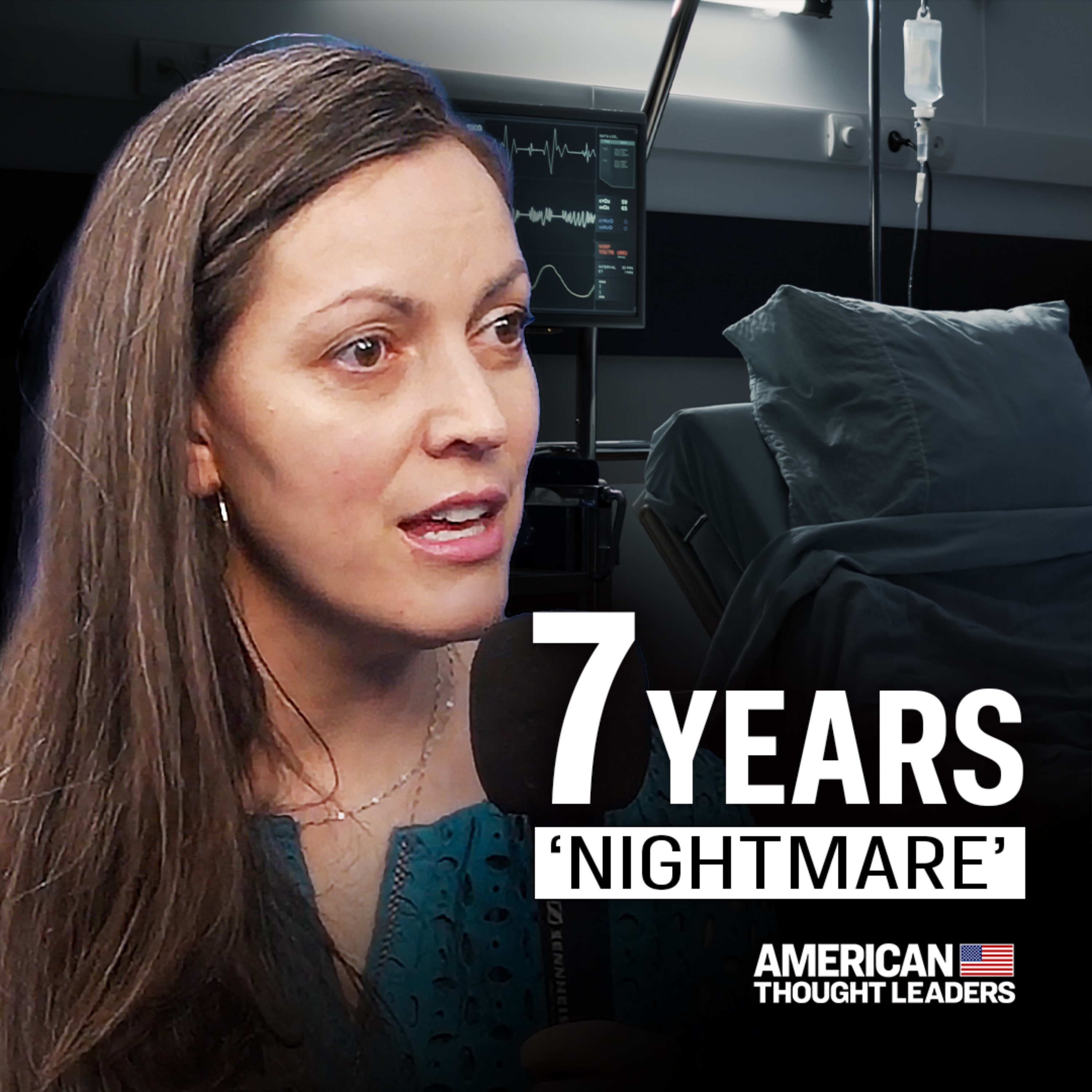
American Thought Leaders
Homeopathy Cured Her Disease, Now She’s Fighting for More Access | Paola Brown
00:33:29
Loading summary
Transcript92 lines
- [00:00]
A
I was diagnosed with an autoimmune disease called interstitial cystitis. And the way I describe that for people is think of your bladder now. Light it on fire, turn it inside out, and put it out with a track shoe. That's what my bladder felt like all day, every day for seven years.
- [00:17]
B
That's how Paola Brown describes the condition that took over her life and set her on a very different path to healing.
- [00:23]
A
I eventually find homeopathic medicines, and within a month, I felt a shift in my bladder, a shift in my symptoms, and by the end of that year, I was 90% better.
- [00:35]
B
Earlier this year, lawmakers introduced the Homeopathic Drug Product Safety, Quality and Transparency Act. Brown is an advocate for homeopathic medicine and president of Americans for Homeopathy Choice. So what exactly is homeopathy, and why do some people turn to it? When conventional treatments fall short, it's almost
- [00:54]
A
like it introduces a false disease to your body. Your immune system goes to fight the false disease. And what does it cure? Almost by accident.
- [01:03]
C
Are there side effects?
- [01:04]
A
No, there's no side effect.
- [01:06]
B
Supporters say the new bill would protect access to homeopathy by creating clearer rules.
- [01:11]
A
The FDA basically blocked all homeopathic eye drops, and as of a little over a year now, you can't buy those anymore.
- [01:19]
C
What's the objection?
- [01:21]
B
This is American Thought Leaders, and I'm Jania Kelik.
- [01:27]
C
Paola Brown, such a pleasure to have you on American Thought Leaders.
- [01:30]
A
Thank you. I'm so excited to be here.
- [01:33]
C
So America is in, unfortunately, and kind of unprecedented crisis when it comes to health. You hear this maxim, okay? On the one hand, the spending is off the charts, and on the other hand, the health outcomes are low, especially when you compare it to the spending on health care. So what's the problem?
- [01:56]
A
So I'm a mom, and we are raising by far the sickest generation of children to ever walk the earth. And as mothers, and even the millennial moms worse off, we are the sickest generation of moms to raise children. And we are so sick. And we are looking for alternatives. And when we find those alternatives, we're finding that those alternatives are harder and harder to get access to.
- [02:22]
C
And so alternatives. You know, I know in my own life, right. I've actually had to seek what we would call it alternative medicine for a number of times because there was nothing in the regular system that was actually helpful, like in the sense that they literally told me, sorry, I can't help you. That's when often you go looking. Right?
- [02:44]
A
Yeah.
- [02:45]
C
For the alternatives. So what is it that happened in your life that caused you to have to go to alternatives?
- [02:51]
A
Yeah. Okay. So my husband had worked for an oil company, had amazing health insurance. If I was on out of Network Doctor, it was covered at 90%. So I had so many options, and none of it was working. So then I started doing alternative medicine, and. And some of that helped a little bit, but it really didn't help. So I was diagnosed with an autoimmune disease called interstitial cystitis. And the way I describe that for people is I say, think of your bladder now. Light it on fire, turn it inside out and put it out with a track shoe. That's what my bladder felt like all day, every day for seven years.
- [03:26]
C
What a nightmare.
- [03:27]
A
It was a nightmare. It even hurt to walk across the room because your body kind of bounces and thumps. And my bladder was just in so, so much pain. So I spent seven years trying the conventional stuff. They offered me some drugs, some treatments that were kind of scary, and I turned those down. And I eventually find homeopathic medicines. And within one month of starting my treatment with the homeopath, they gave me one remedy. It didn't work. So she adjusted it, tried another one, didn't work. Then the third time I tried, it slowly started to work. And within a month, I felt a shift in my bladder, a shift in my symptoms. And by the end of that year, I was 90% better. Still not perfect, but so much better. And then the irony was, about 12 years after I was first offered these treatments by the conventional doctors, I found out that one of the drugs I turned down, the primary drug for my bladder disease, was causing women to go blind who were on it for about 15 years. And so two things kind of came to fruition for me is, number one, I'm better with no side effects. And number two, I avoided medications that at the time, I didn't know were going to cause a lot of problems for me.
- [04:41]
C
Now, why. Why did you avoid those medications that were offered?
- [04:45]
A
Because. Because the side effects of one of them said it was hair loss. And I. I'm vain. I didn't want to lose my hair. So I, I. And I just thought it was not a good thing to take a drug for the rest of my life that causes hair loss. You know, it's one thing to, you know, have cancer temporarily, be on a chemo or something, but that didn't seem right to me.
- [05:03]
C
I see. Fascinating. So homeopathy, you know, you hear about it from time to time. It sounds like Kind of crazy, frankly, because you're diluting something to the point of non existence that I know very little. Okay. But basically that's the sense I get. Okay, and so why don't you, why don't you just kind of start from the beginning? Right, yes. First of all, how did you decide to do the home? Like I wouldn't have chosen to do homeopathy necessarily.
- [05:37]
A
Yeah, I started with all the conventional stuff with my, you know, went to the Mayo Clinic, I flew all over the country to the best of the best doctors and it was like one treatment after another was horrible. So that's kind of how I slowly realized I don't want to do this conventional stuff. Then I tried all the other medicine, natural medicine, that made sense to me, like acupuncture, herbs, chiropractic, like all these things. But none of it really helped a lot of other people. I know it works, but it wasn't working for me. So then what did I do? I said, okay, I'm going to try this homeopathic stuff. And there's this like, you know, there's this joke that my homeopath says is that they're the DLR is the doctor of last resort. And they were, they were my, my practitioner of last resorts. I did know that homeopathy was highly diluted, which made me very skeptical towards it. And so one of the first things I asked my homeopath was like, do I need to believe in this? Because I don't. And I tried so many things at that point that I was very discouraged already. And my homeopath said, no, you don't have to believe in this. I just need to find the right remedy. And sure enough, after the third try is when I started seeing a shift. So what's beautiful about homeopathy, it's very old medicine and there's a lot of research, a lot of literature on it, a lot of clinical experience. Experience. And if the homeopath selects the right remedy, it will act. And essentially it's the law of similars. So whatever symptoms something in its crude form can produce in you will cure you in its homeopathic form. And in the United States you don't make the medicines, you buy them from a pharmacy that's FDA inspected, it is legally a drug in the United States. And so essentially they're trying to match a remedy to your symptoms. And I am, I believe in empirical evidence, meaning if it helps me, who cares? Right. And if it doesn't harm me, great.
- [07:24]
C
Basically the mechanism in some ways is hard to Understand why it would work.
- [07:30]
A
I have an analogy. I actually met with the National Institute of Health, their NCCIH department. They're all researchers and they're all discussing the mechanism of action. I was like, I know how it works. And they all kind of stopped and looked at the one non researcher in the room. And I said, okay. Our body is designed to respond to very tiny things like viruses and bacteria. Those are measured in nanometers, very tiny. And our immune system sees these things as invaders and reacts or sometimes it chooses to ignore. So we have this very sophisticated mechanism. So let's say, Jan, let's say that you have allergies and it presents with watery eyes. You have a runny nose, like clear, like egg whites. And for some odd reason, when you step outside, you feel better. You feel like your nose clears up, you just feel a little bit better. So that mirrors the symptoms of like if you were to chop up an onion, so you would use homeopathic onion to cure your allergies. So this is how I say it works. And this is what I told all the researchers. I said, okay, if your immune system could talk to you, it would say, hey John, I'm so sorry about your allergies. We are working overtime to fix this, this. But actually the last round of antibiotics you took kind of deleted the instruction manual on how to treat these allergies. So your gut health isn't great and we're just kind of lost. We don't know what we're doing, but, you know, suffer until we figure it out. Then you introduce a homeopathic remedy, onion, which mimics your symptoms. It's almost like it introduces a false disease to your body. Your body sees these nano tiny particles of onion and it says, oh, immune system, everybody stop fighting this allergies. We're getting attacked by an onion. Your immune system goes to fight the false disease. And what does it cure? Almost by accident, the actual disease, because the symptoms are similar. So while it couldn't figure out the allergies, it reacted to the onion, the homeopathic onion, and triggered an immune response for you to heal yourself. And the researchers, they were very impressed and they were like, we can research that. And I said, well you should, but I already know and I don't know how to research. So you guys do it.
- [09:36]
C
So does it work? What I'm, what I'm trying to understand is, right, does it, you, it's, it's your, if I understand homeopathy correctly, right, the things are catered to your specific body and your specific Reality symptoms.
- [09:55]
A
Yeah, your, your unique symptoms.
- [09:57]
C
Like it's not going to be, it's not going to be the same thing for each person, even if it's allergies for each person.
- [10:04]
A
Yeah, because everyone's allergies presents differently. You might have watery eyes, egg white, runny nose, and you feel better when you go outside. My eyes itch and burn and my ears itch when the pollen is going crazy, you know, so everyone's different. I've had the family get the flu. Actually. This is kind of a rough Christmas and spring. We all got the flu. Later we all got probably Covid and one person had a very high fever, exhaustion, very thirsty. The other person just had a drippy, drippy runny nose. And so that is a little bit of the challenge of homeopathy is like you don't have just one blanket remedy that you give everyone. Now there are products out there, like at grocery stores, at CVS that will have like cold, calm or you know, a product that is for just. And so what they do in that product is they usually mix together the top remedies, typically for colds or whatever. And so that's an easy way to go. I tend to just learn homeopathy enough to pick the right remedy for each family member and just give them that. And, and you know, the proof is in the pudding. The day that I brought home a homeopathy kit with 100 remedies is the last day my family ever took an over the counter drug or, and I have, I have stories. We live on a homestead. My husband was stung by a bee. I thought it was an allergic reaction, so I was giving him the remedy for an allergic reaction. He was getting worse slowly over a few days. Ended up taking him to the doctor. He developed cellulitis. So his, his entire arm became infected. There's probably some staff on his skin. When the bee poked it in, it spread down. His arm was moving up towards his lymph nodes. The doctor said it was going to be very serious if it got to the lymph nodes because it would import the infection everywhere. And he called in the antibiotics and as we were walking out, he says, by the way, staph infections like this tend to come back. So we're probably going to look at three, three to four rounds of antibiotics before this fully clears. So my husband kind of looks at me, he's like, I think we should try homeopathy. And obviously that's kind of a more serious situation. And so we worked with our homeopath, but once we Kind of shifted from trying to give him an allergic reaction remedy, which he wasn't having, to realizing this is a different thing, this is an infection. These were his symptoms. Within 24 hours, we could see he stopped getting worse. He kind of plateaued. The next 24 hours, it started to recede and the puffiness went down. By the end of the week, the infection was completely gone. And he never, he never got it again. I was working on our homestead. I cut my hand on some farm equipment. And it's those cuts that don't bleed that are sometimes the most dangerous because the blood will wash out the cut. And it didn't bleed. And so I didn't think anything of it. And I. So I rinsed it with water. By the end of the day, I had this red line and streaking going down from the cut down my arm. So we live in a small town. I'm like, do I go to the hospital or just, you know, try a little remedy? So I kind of told myself, if it's, if it's still bad in the morning, then I'll go in and take proper care.
- [13:01]
C
So you're not against using the normal system? No.
- [13:07]
A
If your arm's across the street, you should grab it and go to the hospital? I think so. But I also don't believe in knee jerk panic based reactions. And so I'm looking at my hand, I'm like, okay, this can be serious. This needs to turn around pretty quick. So I selected a remedy. By morning, the streaking was gone. Okay, so here we have so many situations where my family's avoided medications, antibiotic, our gut health is more intact, you know, and so it's almost like you
- [13:34]
C
could think of it for many things as a first line of defense.
- [13:37]
A
Yes.
- [13:38]
C
And just you can kind of see where things go. The thing I really like about what you're talking about is you're really taking responsibility for your health, which is like something I'm very worried about. Our culture is that a lot of people seem to have this idea like the doctor is just going to solve everything.
- [13:59]
A
Okay, so let me tell you a story. When Covid hit, we were living overseas in Budapest, and my kids and I were watching this interview that this nurse had done. She was a traveling nurse. And at the hospital there was all these people coming in, and they were immediately putting them on the, the respiratory machine. And she says once they got on the respiratory machine, they, they're going to die because that respiratory machine blows out your lungs and it ruins your lungs. And. And she says some People are walking in, and she says, they're just coming in, you know, because they're scared. And this. There's all this media hype, and there's all this stress. So the video ends, and I look at my kids, and I said, so what are these people dying of most? You know, the ones that are walking in that are actually doing okay. Not. Not the very sick ones, but the ones that are doing okay.
- [14:45]
C
Yeah.
- [14:46]
A
My kids were like, oh, they died of COVID And I was like, are you sure about that? And then my son says, oh, they died from the mach. The treat, like, the machine that they got put on. And I said, are you sure about that? And then my third son was like, fear, because what put them in that situation in the first place where they. The cascade of treatments that ended up. The nurse said one man survived because he somehow woke up and pulled that machine out and was like, I. I don't want to do this. You know, So I do believe that our. Our culture, our medical system has trained parents to freak out over fevers when they're a very natural thing. Now, there's, you know, you need to be hydrated. A very young baby, fevers should be a concern, but in general, we've learned to freak out and kill a mosquito with a bazooka.
- [15:35]
C
I mean, 100%, you know, and I'll. I'll have to confess here. I only realized what fevers are for, like, why they're. Why they're a solution to problems in the last few years.
- [15:48]
A
Oh, Really?
- [15:48]
C
I spent 10 years studying biology. Oh, no, Right. Well, I just. I understood fever was just something that you try to avoid. Like, body temperature goes up, got to get it down fast. That's what I learned. Right.
- [16:00]
A
That's what doctors say, and they always say to make them more comfortable. And if you're not a good parent and what I believe is, life is hard.
- [16:07]
C
But what are. What, for the record, what are fevers for?
- [16:11]
A
Well, fevers exercise your immune system. They teach your immune system how to fight, how to react, because sooner or later, you're going to have to fight. We saw that with COVID and. And the goal of health is not to avoid sickness, but to overcome sickness without being pumped up with drugs and put on medical crutches that, you know, you limp along in life with. The goal is to get sick, blossom a fever, fight a good fight, and come out of it with antibodies and a more intelligent immune system. High fevers are known to kill cancer cells.
- [16:44]
C
Well, high. And they also, like a lot of bugs, can't handle the high temperature. I mean, that's basically right. So this is, I find it so fascinating. Right.
- [16:55]
A
But it's not just the high temperature because you could get in a sauna. The fever also facilitates the production of antibodies and, and it's, it's raising both arms of the immune system. They're very important, actually. Like, there's so many childhood illnesses where children tend to get high fevers. And after those high fevers, the child can see, speak more words, they have better hand, eye coordination and really, this is documented? Yes, it is fascinating. It is fascinating. And so then we're, we're wondering where's all this ADHD coming from? Where all these learning disabilities coming from? I don't think you can point it to one thing like fevers, but you add up all the things we've done to kids, including suppressing childhood fevers and avoiding normal childhood illnesses, and we get what we get.
- [17:40]
C
Yeah, that's. I mean, the whole thing is astonishing.
- [17:45]
A
It is.
- [17:46]
C
So let's go back to homeopathy.
- [17:48]
A
Right.
- [17:50]
C
If someone needs, if someone is. I'm trying to imagine the scenario, like, how many homeopathic practitioners are there in America?
- [18:01]
A
I have no idea. We do have national accrediting of homeopathy through the Council of Homeopathic Certifications. So that's a good directory to pull up. And, and it is accredited through the, the national certifying agency. So it's an official accreditation. Most homeopaths just need to interview and speak with you. So it's not vital for your homeopath to be local to you, for you to be treated by one. Actually, my homeopath lives in Africa, in Tanzania. They do like, like, you know, healthcare services for the, the people struggling over there. And so that's a good place to go is the Council for Homeopathic Certification to look one up and get a highly qualified one. You know, look for someone that you think is really well trained and make an appointment with them. But it is nice because it is so accessible and you don't need to even leave your house.
- [18:53]
C
And there's so, and there's no down, like, there's no downside. There's no, like, if it doesn't work, it just doesn't work and you can move on to your normal.
- [19:01]
A
Well, and also you can use homeopathy.
- [19:04]
C
Is there a downside that. I don't know, are there side effects?
- [19:07]
A
No, there's no side effect. There's no documented harm ever of using, you know, properly prepared homeopathic medicines, but properly prepared because for any kind of medicine needs to be properly prepared. And, and what's really nice about it is let's say you're in a situation where you do need antibiotics. You can still use the homeopathy alongside that, where as like herbs and supplements sometimes might interact in a negative way with, with a medication. In homeopathy, that's not a concern at all. And you can use them together. So for example, if someone's, you know, God forbid, being treated for something like cancer and they're taking whatever standard of care treatment is for that, they, they actually use homeopathy to support with the nausea and to help them have better results with the medication.
- [19:55]
C
What about, what about dry eyes from being in front of bright lights in a studio?
- [20:01]
A
Well, I have bad things for you, okay. Because in the United States we had amazing products that were homeopathic eye drops. Homeopathy typically comes in a little tube with pellets, but it can come in a cream, it can come in eye drops, it can come in ear drops. But the FDA basically blocked all homeopathic eye drops. And as of a little over a year now, you can't buy those anymore. So there is a product that would help amazingly with your dry eyes. People love it. But it's no longer available thanks to the fda. And I can tell you more about that if you want, but.
- [20:35]
C
Sure, yeah, yeah, no, I mean, that's. So what, what, what's the objection? Why is, you know, I, I can see quickly there isn't a ton of money to be made by large corporations in this industry. I, that I'm getting, I'm getting that sense here.
- [20:51]
A
It is a smaller industry compared to big, big pharma, the pharmaceutical industry.
- [20:55]
C
But is there like, there's, I don't know, is there a mechanism by which pharma could make big money?
- [21:00]
A
Well, if you think about my story, I've been cured of my disease for going on 23ish years. Think about the amount of drugs that I have not taken, you know, the years of weekly monthly medications that have been lost because I was cured. And so I, while I don't think homeopathy takes a big chunk of the market on a monthly basis, necessarily the amount of people that are healed and cured by it. You're losing customers. So, you know, maybe that's something like that.
- [21:32]
C
Are they patentable? Well, so there we go.
- [21:35]
A
Yeah, they're not patentable. So, so. Yeah, exactly. And so. But the fda, I do think that the FDA has a philosophic objection to homeopathy because I, I Haven't seen clear evidence of anything that truly they can object to. They've made excuses. Excuses. They've done some inflammatory campaigns, but we've done FOIA requests, and nobody's ever been harmed by homeopathic medicines. So essentially, what about the eye drops? Okay, so here's what happened there. This is a little maddening. So conventional eye drops were contaminated, not homeopathic ones. Conventional eye drops, the manufacturing broke down somewhere, and they were contaminated. People had serious adverse events. One woman literally had to get her eyeball removed. So in an abundance of caution, FDA said, we're taking all eye drops off the market, which I get. But they said, but homeopathic medicines cannot come back. We're blocking them at the border. So the very culprit that caused this problem in the first place, they had a pathway back. But homeopathic medicines, which are typically made in Europe and France, they were, you know, they get imported here. They were blocked at importation by FDA and not allowed to come in. So we've essentially lost. Lost access to the eye drops. There is a type of homeopathy that is injectable, like. Like injectable. That is done by a physician in a clinical setting. And those are also blocked at the border. Those products had an impeccable track record. Something like, I'm not great with numbers, but 125, you know, thousand uses over. I forget how many. And. And zero serious adverse events, maybe one or two minor ones that were not even a real concern. So it begs the question. It feels like prejudice from the fda. It doesn't seem to be coming from any one administration. It seems to be coming from.
- [23:23]
C
Because it's like, if you could say, if people feel like injecting saline in their eyeball, why shouldn't they be allowed to inject saline?
- [23:31]
A
Maybe don't inject saline in your eyeball. But, yeah, like, you. And you have a right to try things that, you know that this is safe.
- [23:37]
C
What I mean is this. It's so diluted, right? Yes, that. That. It's.
- [23:42]
A
That tends to be the objection. Some of the skeptics will say, well, because homeopathy is so diluted, you're deceiving the public. But my response to that is you don't get to infantile the consumer under the guise of protection. If it works for us, we get to use it. And if. If the skeptics don't want to use it, then don't use it. Keep chewing your tablets and all of your antibiotics and sucking your, you know, your cough syrups that's fine, but let us have access to what we know and think works Statistically, people who use homeopathy tend to be more educated, a little bit more, you know, having gone to college. The families who use homeopathy use less drugs in their home. So it really, it really bears out that the consumer who uses homeopathy is greatly benefited and they know what they're doing and they want to do that instead. So I feel like it's more philosophical. We live in a very materialistic society, and the reality is, is we need to have a system in the United States that allows for all kinds of medicine, chemical, pharmaceutical, drugs, very materialistic, and homeopathic medicines, which are highly diluted. If it works, just let us have it. So.
- [24:51]
C
And so there's actually legislation in that vein that's sort of out there. Tell me about that.
- [24:57]
A
Okay, so homeopathy in the United States has a really cool history, but essentially, I'm president of Americans for Homeopathy Choice. I'm a consumer advocate. We introduce legislation in the House. It essentially modernizes the law because homeopathy is a drug. It's not a supplement. It is legally a drug per the Food, Drug and Cosmetic Act. So we're creating a unique pathway for it to enter the market. Just like medical devices needed their unique pathway, and dietary supplements have dshea, they needed their unique pathway. So we're modernizing the law to create a unique pathway for homeopathic medicines. We have bipartisan legislation, which we're really proud of in the House, and we're working on the Senate side. And our goal is to just stabilize the law so that FDA can ensure that these medicines are manufactured correctly and safe, and so the manufacturers can have that predictability on what exactly they need to do to make the FDA happy.
- [25:55]
C
So fascinating. Well, but what about studies? So how many studies have there been out there that have tried to test the effectiveness of homeopathy?
- [26:07]
A
I'm not the researcher, as I told the National Institute of Health when we met with them, but there have been five meta analyses. Four of the five showed very positive results for homeopathy. The Swiss government did a big analysis on homeopathy and found it valuable. In India, it is so well used that India actually has the ayurvedic homeopathic Ministry of Health specifically for that. They have the allopathic, like the conventional one, and they have the homeopathic one. So it has been adopted into national health Systems in the U.K. you know, Queen, how long did she live? Well, she had a homeopathic physician her Whole life used homeopathy very heavily. Her. Her son King Charles, you know, is a big proponent of it. So there is quite a bit of research out there about homeopathic medicines, and those meta analyses are really great. Some of the coolest research that has been done has been done on animals because one of the things people say is it's so dilute, so it has to be a placebo effect. Well, then you wouldn't get results in petri dishes and in animals if that was true. And they just.
- [27:16]
C
And you do.
- [27:16]
A
You do.
- [27:17]
C
Fascinating.
- [27:18]
A
What really surprised me when we met with the nccih, because sometimes you kind of have to get over the dilution hurdle. But the research around nanomedicine, which is different from homeopathy, but it's very strong, and they're beginning to realize that teeny tiny particles actually do trigger the immune system and do things. And so with that in mind, they were actually. We kind of. They're like, no, that's not a problem for us. The dilution is not a problem. Let's look at the research. Definitely more research is always needed, you know, but like, for example, research today will typically research one thing, like, does this medicine help with headaches, for example? One thing. But what's really beautiful about homeopathy is that the main targeted symptom might improve, but also other symptoms that you weren't expecting might improve. So, like, back to my bladder story. I was given a remedy. My bladder started to improve. And this is kind of embarrassing, but I had a wart on the bottom of my foot for, like, 15 years that I got when I was a high school track person, you know, rocking in the locker room. I named him Fred because I was like, well, he's here to stay, you know. And as my bladder improved, one night I took my sock off and I was like, fred, you're leaving. And he disappeared as my body found balance and health for my bladder. So, like, the beauty about homeopathy is really whole person. So while the targeted symptom, let's say headache, improves, you might find that you're sleeping better at night too, you know, so. And that's something that research typically doesn't target. And the NCCI was talking about how they're wanting to do more research that looks at these kind of more holistic effects that it has on the body.
- [29:00]
C
So, no, I mean, this is absolutely fascinating. Well, I mean, I've just really enjoyed this conversation. This is my first real foray into homeopathy, although I've heard about it from a number of people who really have managed to help themselves and some even became practitioners of it afterwards when they realized how much it had helped them.
- [29:22]
A
Yeah.
- [29:22]
C
So final thought as we finish, you
- [29:26]
A
know, support our legislation, go to homeopathychoice.org and in two seconds you can write your member of Congress. We would love that support and because
- [29:34]
C
if I may, just like, literally no homeopathic. Homeopathic remedy has side effects.
- [29:41]
A
No.
- [29:41]
C
So you could just like, it's like you. Or like, you could just take it.
- [29:46]
A
Like, if you take the wrong one, it won't be a problem. In homeopathy, if you, in any medicine, if you keep taking repeated doses of something that's not helping or not working, it can cause some transient symptoms that wear off. So I teach people, like, once you start a remedy, do like three to four doses throughout the day and look for improvement. If you're not improving, it's probably not helping. So just stop. You know, it's not like vitamins.
- [30:10]
C
Sorry, sorry to jump in. It's just that my point is the risk around this tends to be on the low end.
- [30:16]
A
Well, yeah, it tends to be really minimal and really people what they like. And that's really like, if you're taking it for days and days, multiple times a day, and it's not helping, but like during that first day, take three to four doses, see if it's helping. As you improve, reduce the frequency of how often you're taking it and it works great.
- [30:37]
C
But you're saying you should, you can do it yourself or do you, should you go with the homeopath here, do it yourself.
- [30:42]
A
If it's acute, go to the, you know, sprouts, the natural grocers, and buy a remedy that, that kind of fits what you need. If you have chronic conditions like eczema, chronic headaches, chronic coughs, autoimmune stuff like I did, you're going to want to work with the homeopath. So, yeah, but yeah, it's very safe and you could eat the whole bottle and you're still not going to have any toxic effect. Homeopathy, you have to kind of take it and stimulate that immune system to respond. You know, take several doses, so I like to say four. Throughout the first day, look for some improvements to see if your immune system is going to respond in the way that you want it to. So go to homeopathychoice.org write your members of Congress support this. Even if you're not familiar with homeopathy, but you just want access to a medicine that maybe you're going to need in the future support this. And then, yeah, go to the Council of Homeopathic Certification if you want to find a directory to find a homeopath to help you with your chronic stuff. But it is. It is truly wonderful medicine. It's the first thing we go to. I mean, I could tell you story after story. I mean, I'll tell you one more. We have a dog who one day we just moved into a home and we found little cubes of rat poison all over from the previous owner, which kind of freaked me. I'm like, do we have mice? But we didn't. So we were cleaning out. But around that time, my dog came and was. Was vomiting profusely. And I. I think he got some and ate a little bit of some, but he was vomiting profusely and very, very sick. And I gave him one remedy and he didn't respond to it. And he was starting to shake and trembly and just like, did not look good. And I gave him a new remedy. By now, it was like three in the morning. I was exhausted, the dog was exhausted. I gave him a few doses of that and I decided just go lay down for a couple hours and I'll check on him and hopefully he's alive. When I woke up a couple of hours later, I opened my door, I looked downstairs, and there's Scout looking up at me, wagging tail, just feeling 100% better. Fed him food, fed him water, and he's with us still today. So homeopathy is just so wonderful. It takes a little bit of learning how to do it, you know. And so I actually have a holistic health science curriculum where we teach families and moms how to look at health, teach their kids about health, and learn homeopathy. And on my website, paolabrown.com but really, we're working hard to protect your access through that legislation.
- [33:11]
C
Wonderful. Well, Paola Brown, it's such a pleasure to have had you on.
- [33:15]
A
Thank you so much. I've loved this conversation. Thanks for having me.
- [33:18]
C
Thank you all for joining Paola Brown and me on this episode of American Thought Leaders. I'm your host, Janya Kellick.