← American Thought Leaders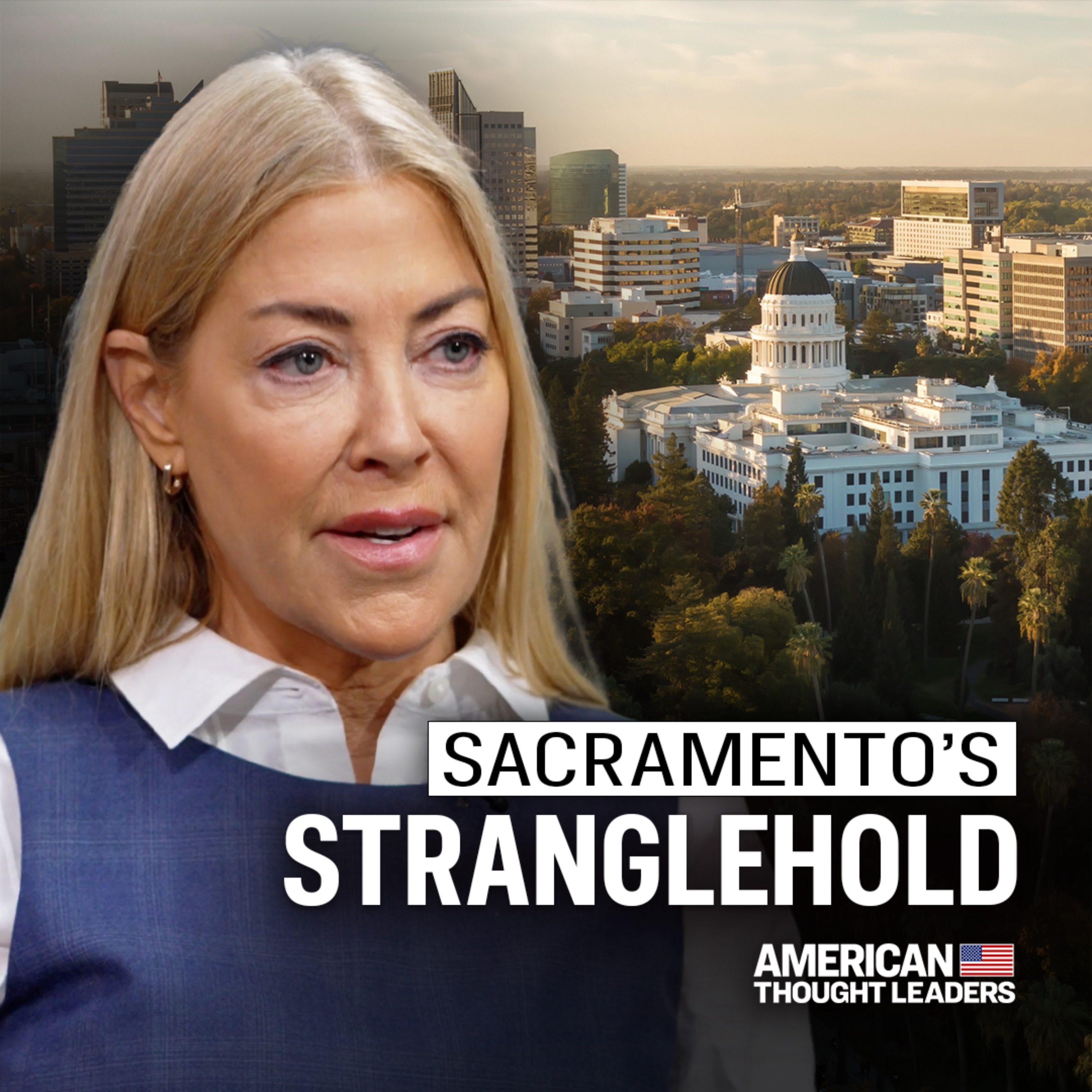
American Thought Leaders
I Talked to 50 California Mayors. What They Told Me Was Surprising | Elaine Culotti
00:52:25
Loading summary
Transcript73 lines
- [00:00]
Elaine Cilotti
Here you've got this massive drop shipping enterprise across America ruining Main street and across California. You have E commerce eating up all these small main streets. Why is this what we're selling in California?
- [00:13]
Janja Kellogg
In today's episode, I sit down with Elaine Cilotti, owner and founder of Mayors Matter, empowering mayors for a stronger California.
- [00:20]
Elaine Cilotti
$18 trillion of new business will come into the United States over the course of the next 10 years because of what Trump has set up. Zero is coming to California.
- [00:31]
Janja Kellogg
What's really driving this problem?
- [00:33]
Elaine Cilotti
The mayors in most cities that I have spoken to are not about the fact that they're Democratic or Republican. They want safe streets and they want economic development. What they want is the pursuit of happiness. Sacramento ruins California. Power hungry politicians ruin California. We've lost the plot.
- [00:50]
Janja Kellogg
What do we do here? This is American Thought Leaders and I'm Jana Kelik. Elaine Cilati, such a pleasure to have you on American Thought Leaders.
- [01:02]
Elaine Cilotti
Jan, thank you. I've been trying to get on your show for quite some time.
- [01:08]
Janja Kellogg
Well, you know, but you do have a really interesting project that you've gotten yourselves involved in, among, among many, this Mayor's Matters project. And you call it a crisis, but let's call it a political disconnect because between California and D.C. and you view that as a problem. As a very committed Californian, tell me what's going on.
- [01:30]
Elaine Cilotti
I think it's not a big secret that California is the farthest left state in the union. And I think it's just like people commonly think, if I say to someone in D.C. i'm from California, they don't shut the door, but they're like, oh gosh, how are you doing? And what's important, I think for people to know is that the majority of California is actually not to the far left. We're a very purple state. I've talked to people from Humboldt county, which is the very top of California, to Chula Vista, all the way into the kind of El Centrocentral Valley and all of that area to Santa Monica and Pacific Palisades, where. So I've covered it all and it does not matter if you have an R or a D in a lot of cases, there's really two priorities in California and we don't focus on them. And what I decided to do was document that because I.
- [02:35]
Janja Kellogg
Wait, wait, wait. What are the two priorities?
- [02:38]
Elaine Cilotti
Well, they should be listed at the end, but only because I think that there's a story that I want people to believe when I tell you that the majority of California is not Blue. Blue or red? Red. And I always say to Republicans in D.C. when they say, how are we going to take back California? I remind people that that's. What are you taking it back from? I mean, California belongs to California. You don't have a right on either side to take back California. We're a very easy going bunch of people. We're not in other people's business. And the group at the top that has the limelight, which would be like the Newsom administration, for example, don't represent all of California. And it's frustrating. And I think Californians want what everybody wants in America. For example, when you're a young mom and you're taking your kids to school, you don't want to worry about getting in your car or taking your child to the bus. And when you put your kid on the bus or you put your child in the car and you get them out of school, you don't want to worry about them crossing the road or, or going into the school or what could happen in the school. We all want safety in our streets and we all want safety in our homes, and we want our kids to be safe, Right? And so if you interrupt the safety of that relationship between a mom and a child, you aren't interrupting something between red, blue and people. You are interrupting your instinct to protect your child. And we've done a really good job at making Los Angeles an unsafe place by letting the rules fall by the wayside if they don't optically fall in line with the representation that California is trying to make at the top. And that is that we support everyone even if they're bad or even if they're dangerous or even if they are not supporting us back, that turn the other cheek to the point that we've lost the plot. And most Californians, and even left, left, left, Democrats, any color, any race, any age group will tell you we need safe streets. And when you have 40 million people, it's a big thing to have safe streets. You can't, you have to spend all your time on it. You can't let your foot off of that gas pedal. So that is our biggest issue, is the safety and crime and homelessness and dirt and filth and everything else. And it all comes under this one bucket.
- [05:38]
Janja Kellogg
You also mentioned, though you said what happens in the schools. And so, for example, what I think of is there's, you know, kind of this historic legal case that just happened in New York where a detransitioner was kind of fooled by gender ideology into having, you know, Mastectomy, basically done as a minor, got a settlement, financial settlement. So there's sort of a shift, significant shift happening around this, this gender stuff. And California seems to be heavily doubling down on this. It strikes me as something that probably is also in that realm that most Californians aren't really into.
- [06:17]
Elaine Cilotti
Well, the paradigm of the California hippie, you know, my body, my choice, I want to eat what I want to eat. The anti vaxxer, the flower children of, you know, San Francisco and the, you know, women's rights, gay rights, minority rights, civil rights, California's paved the way for that. So when you take the goodwill of people that represent, you know, fairness for everybody and you try to manipulate it by creating a dangerous situation under the guise of fairness for everybody, eventually you get caught. And I think that people in California, while maybe slower to the table because we want to be really fair and we want to be well educated and we want to understand they're hip to it. Californians know that they've been gaslit, but they've been gaslit from the top down, not from the bottom up. And that's about power. We just had debates for the gubernatorial race and you know, there were six, I think Democrats and one Republican. Now how does that happen? Like there's a lot more running. Well, they're going to pick it by who has the most, you know, people watching. Well, that doesn't mean anything. It means nothing because you don't want to elevate somebody that has good ideas. That's what it comes down to. And if you don't fund or elevate someone that has good ideas, then they don't get the limelight and then people don't get to hear good ideas. And you can easily manipulate the support that you gather from simply blocking people that have good ideas.
- [08:06]
Janja Kellogg
You're saying the media here is manipulating who. What ideas get to be seen by the popular, by the voters?
- [08:13]
Elaine Cilotti
It is the job of media to manipulate you. That is their single biggest.
- [08:19]
Janja Kellogg
It's not my job, but I understand
- [08:22]
Elaine Cilotti
that there are truth telling shows, but, you know, it's not Entertainment Tonight either. There you go. Right. So a lie can get around the globe one time. By the time the truth gets its pants on, it's just this idea that the spin doctors, you know, and we're spinning California. I do a lot of interviewing. You know, I've been doing this Daily Signal thing. I, I've had like, I've done, I just filmed Undercover Billionaire for Discovery. I've done a lot of, you know, hardcore California research. And what I have found is that the people that I talk to are very different than the faces of California that we put forth as our representation. And that's just. That's not lost on me.
- [09:08]
Janja Kellogg
And that's also leadership you're talking about, because this is indeed the whole project of this mayor's matter.
- [09:13]
Elaine Cilotti
Right, Correct.
- [09:14]
Janja Kellogg
Which is finding leadership, but apparently not the top leadership. But leadership that has this diverse set of views. Well, in a city, or is it not a diverse. Just different from what we're talking about?
- [09:26]
Elaine Cilotti
Well, it's two things. So, you know, the first, as we discussed, is about the safety issues. But the second is really important. And I think this is, like, fundamentally why we're here. And that's that I haven't talked to a single leader whose, if not first, certainly second most important need for their city, municipality, town. Are you ready? You're never gonna believe it. Economic development. How about we make some money? How about we work? How about we create a better environment in our small town of 200,000 people than we. You know, why isn't that our priority?
- [10:06]
Janja Kellogg
So just. If I may jump in. Right. Sort of the stereotype that I have, okay. About California is that a lot of that money that's kind of in the system from taxpayers, goes to overhead. That's the stereotype I have. Is that right?
- [10:20]
Elaine Cilotti
About how expensive we are to operate California?
- [10:23]
Janja Kellogg
Correct.
- [10:23]
Elaine Cilotti
Yeah. It's crazy. So, I mean, people don't. Aren't ready for what? For how bloated California is. The world isn't ready for it. We're starting to get an idea about how government has. Across the United States, has kind of gone off the tracks a little bit in terms of its size, its mass. And I think Republicans. I'm using my right hand. I don't know if this comes backwards sometimes, but Republicans on the right generally prefer a smaller government, and they're more sort of fiscally responsible and worried about how much money we're spending. And then Democrats, I think, prefer a larger government and are socially very concerned about how people that are underserved or certainly less privileged are. Are supported by that government. And these two paradigms were designed and should be working together. They should be. We should be watching a budget, and we should be watching out for the people that are cut out. And instead, what has happened is these two boxers have gone to their corners, and their corners have their posse and their fight coaches saying, you gotta win. You gotta say this, you gotta do that, you gotta do this, you gotta say that, you gotta do this. And the Whole swath in the middle is like, I don't know if I agree with that or I don't know if I agree with that. And I can certainly tell you, as not a political person, just as a hard working taxpayer entrepreneur, my party left me a long time ago. And when we have massive races going across the U.S. the Republican Party and the Democratic Party do not come forward as a group. So as a GOP or dnc and support good ideas in the middle, they would rather support a bad idea on their team than a good idea in the middle. And that's, that's terrible. And in the middle, you have things that are not as interesting. So you don't have transgender ideology and you don't have, you know, ice. Okay, let's just put them in their corners. In the middle, you have safety in your streets, you have better education in schools, you have economic development, you have, you know, parks and recreation, you have the pursuit of happiness, you have, you know, going to the gym, enjoying the beach. In the middle, you have lifestyle.
- [13:05]
Janja Kellogg
I'm not sure, like, I entirely agree with you because we've had tons of surveys. I mean, like, this has been replicated many times that show that this, the illegal immigration is a core issue for voters. I mean, even some Democratic voters. I mean, that makes it a. I don't think it's. I don't know if it's 80, 20, but it's one of the big issues that basically got this majority election for President Trump and his and his agenda through. Right.
- [13:35]
Elaine Cilotti
Well, okay, so I'll make the illegal immigration argument for you in a really realistic, like, what's happening today in the world in my.
- [13:45]
Janja Kellogg
I want to hear the rest. I'm just saying that this is, obviously was a big issue for the United States.
- [13:48]
Elaine Cilotti
It is a huge issue. But there's a very big difference, in my opinion, and I'm not alone. There's a very big difference in slow illegal immigration over three decades in California, four decades, where people come in and seek to become American citizens through the process and then just don't do it. They just stop doing it or they, or they're there for amnesty or they've come in on a child's. There's a lot of reasons that they come to America. There's a very big difference between that and opening the border, which a lot of people have said. And I agree because I've done the math and I've looked right. During the Biden administration, we kind of gave up and opened the border, and we let people flow in Unchecked prior to that, you had maybe a million people a year, not 20 million people. So you have a very big disconnect in who came in over. And all countries have immigration, legal and illegal. And our country is the greatest, biggest hug for people that want to come into our country and start a life. We are a country of immigrants. We cannot now say that we're not. And we also have great programs for immigrants, including visas and work programs in school and college degree anything. But we corrupt them. We corrupt them through media. We corrupt them through actually utilizing them in a way they were not meant to be utilized. What I always say is the road to hell is paved with good intentions. And when you open your border, you corrupt people that have been here working to become American citizens that have not had any luck. And remember that immigration reform is a dirty word on the left and the right. And the main reason for that historically has been managing wages. If you have a certain group of people that they cannot get a fair wage, then that would keep wages lower if they were paid, quote, unquote, under the table, or if they are scabs in a union dispute and they go to work. There's a million reasons why illegal immigration and illegal workers keep wages low. And it doesn't matter if it's the far right, the coke industries of the world, or if it's the far left and the Walmarts of the world, if you have a lot of employees. Solving the immigration problem and putting immigrants to work is something that you look at as maybe it's going to change how much we pay people. So it's never been like people don't come forward and go, can we just have an Ollie, Ollie, I'm comfree for all the people in California that have been living here for 30 years, that have large workforces and employees, and let's get them work permits and let's get them to work and then we'll work on getting them legalized when they can put the oxygen mask on themselves. We don't do that. In fact, there's many cases where we invite someone in and we say, you're here for seven years before you're going to be able to get your citizenship. And you're not allowed to work for seven years. That doesn't work either. And California is kind of the nucleus and granddaddy of that. And when I say that it is not a huge focus, illegal immigration in town by town. If you left it alone and ICE didn't show up and you didn't open the borders, California has gotten along perfectly fine with all of the people that
- [17:15]
Janja Kellogg
live there, except that there was, you know, as I just had Peter Schweitzer on the show where he demonstrates all sorts of ways in which immigration has been actually weaponized as a kind of weapon against America, so to speak, even with a whole lot of well meaning people coming through, through these surges. Right. Especially in the last, in the recent years. So this is just a reality, right? I mean, again, I'm not, I'm not trying to kind of divert from your, these core. I believe you that these two issues are the core issues. Actually the immigration issue fits into that because part of this weaponization was sending people, deliberately sending people who are criminals to this country, right. To kind of clean out your country and you know, cause make them create this instability and lack of safety and so forth in this country.
- [18:00]
Elaine Cilotti
Well, I mean, you know, I've got three kids in California and I have a nine year gap between my two older kids and my youngest. And in nine years in education in California, my youngest is a full, you know, liberal, borderline socialist, you know, student of usc. Okay? Now other kids went to usc. You know, my kids, they're not. In the last seven to eight years, what we've done in universities to students is we've weaponized the university system to create these ideas that young kids would never have gotten from their parents at home. But I have to look back to when I was a child, right? I grew up a military brat and my dad had his ideas about the U.S. air Force and traveling all over the world and we all had our Woodstock. And if you don't want kids to explore things like socialism, then you can't have people preaching socialism in school. But we don't stop that. Universities are free learning. And you saw when they had all of the big top leaders of all the Ivy League schools talking about what was happening in school when they were pushing Jewish people around over the Palestinian thing, people were saying, look, I was injured. And they're all saying, well, what does that mean? And everybody was pretending like nothing to see here. What? When in actuality they were intimidating people. They were creating unsafe environments and they weren't willing to stick up for the fact that they might have gone too far. And I see that with my kids in real time. And I say, don't you dare get involved in that Palestinian fight at the statue at school. It's dangerous and something could happen. Please don't go. And my kids are like, what do you mean? I go to usc, I'm going to go to everything. And then I have to rely on the university to keep my kids safe. Right. When what they're doing isn't anything different than what we did in the 1960s and 70s. And every time we've rebelled and we've been anti war and we've been, you know, anti everything, there's always going to be agitators, there's always going to be paid protesters, there's always going to be a lie being told to keep certain people in power. And the job, I think, of the media, unfortunately, is to tell the truth. And we don't. And I'm accepting of the fact that my child is exploring, but what I'm not accepting of is taking down books, changing history and rewriting history, because then they don't have any way to reference what's true. They can't go back and look, and they can't read about it, and they can't really educate themselves. And then I feel like the onus is on people like you and people like me that go out and say, wait a minute, wait, wait, wait, wait. Okay, that doesn't work. And here's all of the references to historically, why socialism is a very tough, tall reach in California or in America, because we are a capital society and we work and we create a reward system for those who work hard. And if you try to mix that with a social system, you're going to have conflict and you're going to have a lot of failure, and you're also going to have a lot of people that won't agree with you. But you go ahead and you can explore. But don't forget to read the history, and the history can tell the truth. And if you take that down and you rewrite history, you've done an injustice. Because we are a young country. We're the newest country. We're like a beautiful tapestry and a project. And we're a startup. America is a startup. And so we're making a lot of mistakes. And I feel like, you know, can't we be allowed to fumble a little bit? And has our government at top level, on the Republican and on the Democratic side, fumbled a little bit? The Trump administration is not in a conversation with California. There's zero conversation. We're completely left out of it in California. And this does not seem to bother Californians. I watched the comments on the debate, and there were news reporters saying, the person that's going to win the governorship is going to be the person who stands up to Trump. And I said, that does not represent me. Why is this what we're selling in California? $18 trillion of new business will come into the United States over the course of the next 10 years because of what Trump has set up. Zero is coming to California. We're not even in the discussion. In fact, we lost $2 trillion because of billionaires tax and just bad decisions on the left. And the left is in charge. So they have to bear the responsibility of the bad decisions. So if California loses money, if California loses taxpayers and they leave, if California has high crime, if California has terrible immigration laws in sanctuary cities that can't afford. It's California because we have allowed this group of people to run our state. I'm not sticking up for Democrats. I'm sticking up for you. Make your bed. And I saw the debates last night and it's about to repeat itself. And it was really upsetting to me because I've interviewed all these mayors in California and they don't want a repeat of this. And it doesn't matter if they're Democratic or Republican. They want better governance, they want control of their cities. They don't want unfunded mandates, they don't want SB 79. They want, when you vote in a bill, Prop 36, the crime bill, they want it funded. What happens generally with almost all of the mayors is that they have a history in the town, that they either grew up or were born in that town. And they've been through it's all of the changes in California over a long period of time, from being born there to going to high school there, having friends there, maybe going away, going to college and then coming back. But you also have a lot of them that have started businesses in California. Entrepreneurial people that are really smart, that landed in Silicon Valley or you know, landed in a farming industry. And they are invested their political aspirations for the most part with most mayors that I've interviewed are not the governorship or Secretary of State or going to D.C. but truly trying to make the place that they live the best that it can be. And that is a very different political aspiration or job than Sacramento. It's not. Yes, they need their assembly people, which is why I was so passionate about no on Prop 50. Because when Prop 50 was being rattled around and they were remapping in California,
- [25:22]
Janja Kellogg
just very briefly, what is that for those that might not be?
- [25:24]
Elaine Cilotti
Initially, Prop 50 was the redistricting bill in California to redistrict certain districts to a more Democratic assembly legislation and taking away the power of smaller districts that had a fairly good sized Republican stronghold And it didn't matter that they were Republicans. Let's not pay any attention to the fact that there might be some Republicans in California.
- [25:51]
Janja Kellogg
Let's.
- [25:51]
Elaine Cilotti
Let's take the last of their power away. The imbalance of it was frustrating to me. Why do you not want to have Republicans in California? Maybe we should ask that question. What's wrong with that? And that's where the mayors in most cities that I have spoken to, whether they're Democratic or Republican, are not about the fact that they're Democratic or Republican. They're bipartisan people trying to have the best city possible. And they recognize that no matter who is in Sacramento, if Sacramento isn't working for them, they are affected negatively.
- [26:26]
Janja Kellogg
And they're focused on safety and economic development as the core principles.
- [26:30]
Elaine Cilotti
That's right. And yes, immigration matters across the board, basically, but across the board, they want safe streets and they want economic development. What they want is the pursuit of happiness, which is why we're all here. And you lose that when you watch the news. You're like, oh, it's all over. It's doom and gloom and we're not having fun. And I don't. I just can't. I live in California. We have a good time.
- [26:52]
Janja Kellogg
Tell me, you know, so this is a good moment. Tell me just a little bit, you know, quick version. You've done a lot of interesting things. A little bit about your background and, you know, how you came to be, you know, doing this, this year's project.
- [27:08]
Elaine Cilotti
When you're young, you're most impressionable. And my father was in the military. He was an Air Force pilot. He flew F1 hundreds and F111s and we lived in Germany and England. And he met my mom. My mom's English, and raised three kids. And when he retired, he moved to Colorado and went to work for Jepsen, which is a company that's very involved in aviation. Really great company. And, you know, I had a few years of high school there and then eventually moved to Arizona and then California. That being said, when we were young, occasionally when we would come to America, we would go to California. My aunt Joyce lived in San Diego. Her husband was not auto, a ship diesel mechanic, owner of a big, huge company. And they did very well. And they had lots of things. They had like three wheelers and jet skis, and they would go to the desert and they would go out in the water. And when I was young, I thought to myself, when I grow up, I'm going to live in California because California is the place that you have all of these things that I don't have when, you know, I just didn't. And you're impressionable when you're young. And I was in love with California all my life in love. And as soon as I could get to California, I did. And in 1991, I moved. I followed a boy, got married, had three kids and raised my family in California and started all my businesses in California. And I built a life for myself. And I've been all over California and I've watched California. I was there when they had the Rodney King riots. My brother was in law school at the time. I've been through the terrible 9 11. I've been through the beginning of the computer and the fax machine and the iPhone and the telephone. I had a phone with an antenna on it. I would drive around Los Angeles. For anybody from la, you guys are going to appreciate this. We used to have this thing called the Thomas Guide, which was how you would find. You would line up the number with the letter to find where you were going on the lap of your car with a shift and you'd roll your window down to find your way around the maze of la. So before navigation, I lived in California. When you went to the airport to pick someone up, no one had a cell phone. And everyone was driving really slowly looking for the person they were picking up. It's just I would go to the beach and play volleyball and drive with the top down and my dog was off the leash and run in the morning. And it's an amazing place. And if you take politics out of California, if you take Sacramento out of California, it's perfect. It's an amazing place. Sacramento ruins California. Power hungry politicians ruin California. They also spend all the money. You know, you have roughly, what is it, 525 or 550,000 employees that are direct employees. 200, I think 75,000 roughly, are not in Sacramento. Those are the cities and the city councils and the, you know, board of supervisors and fire department and the police department and all these people that require tax dollars to function. And if you pay a mayor of a city $800 a month and they're working 70 hours a week, you've lost the plot. And that is our system. There's no money that goes to these cities. And then you come along with really good ideas for changing laws that might like a tax bill. Okay, there was a tax bill called the Bradley Burns Tax Bill. This is a really good example of how California needs to listen to people that are in the middle. The Bradley Burns tax bill said if you're going to charge 10% tax to Californians, right, that money goes, sales tax goes right to Sacramento, then Sacramento's supposed to divvy it up. So an origin tax would send 1% of that 10% back to, you know, Brea or Fullerton or Cerritos or wherever you want to pick. Wherever that sale happened, that money would go back and that $20 million a year of 1% tax to the origin of that place would go to, you know, their Christmas light program and cleaning up their streets and making retail storefronts look nice and all the things that a city would need for having a retail center. Okay? That's what Bradley Burns was about. And it was a great idea. Amazon comes along in 2019, you have really large online sales happening. In fact, there was a wayfair versus somebody or other lawsuit where you, Jan, want to, you know, mow your lawn tomorrow. And your lawnmower, it's not working right? You're like, ah, shoot. And you get in your car and you drive to Home Depot and you're gonna get a lawn mower and mow your lawn on Saturday. And you see the lawnmower and it's $179 at your local Home Depot, okay? And you go on your phone and Amazon prime has it for 159. Then they'll deliver it in the morning. You know, maybe you buy some, you know, I don't know, a gas can or something else. But you leave Home Depot and in the morning your lawnmower arrives and you put the gas in it and you mow your lawn and you don't think anything more about it. But what really happened is Home Depot didn't get that sale. Bradley Burns did not apply, and that 1% sales tax did not come back to your city of origin. Instead, Amazon sent that sales tax to Sacramento and they kept it, okay? Sacramento kept it and your town.
- [33:04]
Janja Kellogg
So they're incentivized. They're incentivized to support this kind of E commerce or whatever because they're going to collect the, what, that 1% and not the local community. Fascinating.
- [33:18]
Elaine Cilotti
And then it grows over the course of five years during COVID And then you start putting fulfillment centers in towns like, you know, a small town that doesn't have any retail, okay? And that town that doesn't have any retail gets all of the sales from all the towns all over because that's the fulfillment center. So now you got to go and you're in a fight with small towns and that have Made deals with Amazon and made deals with large companies that do drop shipping. And here you've got this massive drop shipping enterprise across America ruining Main street, okay? And there's wear and tear on those roads. There's trucking, there's boxing and trash. There's drivers that are not from the local area and the retail stores lose all the sales and get none of the sales tax back to the city. And I say, why don't we fix that? And everyone says, well, you're going to get a lot of pushback because, you know, you know, these guys are the ones that write the big checks to the big politicians and these guys are the ones that go to smaller towns that don't have any sales and say, let us put a fulfillment center here and guess how much money you're going to make on that fulfillment center. And the whole thing gets out of balance. And again, I say it again, you know, a good intention paves the road directly to hell. And across California you have E commerce eating up all these small main streets. And the heart of California is small business. It is. The most important thing is the SBA and letting people have the American dream by starting a small business and letting them have a Scotch tape store as they used to make fun of on Saturday Night Live. I don't know if you're old enough to remember that, but it was. It doesn't matter what your business idea is. You should have the right to have it and for it to be successful. And in California, with the constraints from Sacramento, homeless people can sleep in the front door of your business and you are not allowed to touch them. Do you know that it is okay for a person to defecate in the middle of the median of your street if they are 200ft away from a bathroom yet if your dog does, you have to pick it up. But a person does not have to pick up behind themselves. We've lost the plot. We have lost the plot. We have to enforce rules
- [35:41]
Janja Kellogg
and also not have them stacked in such a way that, you know, the big business benefits disproportionately. That's kind of what you're saying here, that there's a lot of things that are sort of disincentivizing the small businesses. Sure.
- [35:57]
Elaine Cilotti
I mean, look what it's done to farming, right? I mean, you can point to almost
- [36:01]
Janja Kellogg
something you didn't mention, but you have some experience with that as well.
- [36:04]
Elaine Cilotti
Well, I have a small farm in California and it. Farming is not. Wow, it's a really tough business. Real farming is a very Very hard business. You literally have to work from six to six without batting an eye. And on bad weather days, it's 4 to 7, 4 to 9. And if you're a small farm, which is defined under 200 acres in California, you're composting 25% of what you grow. It's 75% more to move anything. You're completely buried by big business, big ag, and guys like Bobby Kennedy and people like that are really looking at this and really trying to. But farming is kind of, I think, a window into what's happening to Main street as well. And we need small business because we need to be social. You know, humans are social beings. And sitting at home and getting your Amazon packages delivered is not a social
- [37:04]
Janja Kellogg
experience, but it's also where the new ideas will come from. And this is, you know, this. You were talking about kind of the spirit. You said, the pursuit. You alluded to the pursuit of happiness. Right? And life, liberty. And the pursuit of happiness. Because from that, all of that springs innovation, at least in my view and my view of America. And the thing that I love about it, people coming, getting together and coming up with great new ways to do things. But it can't happen at mass scale at the beginning. It has to get tested and honed at a small scale first.
- [37:36]
Elaine Cilotti
I think I just feel as though we can't keep gorging ourselves on chocolate. I mean, the new green deal ideas are. They're so unattainable. When you start to force people and you start to really bend the freedoms of people to make something work that's
- [38:01]
Janja Kellogg
not working well, you create these false economies. Right. Because you over incentivize things, which can't do. You make it on their own. Right? Yeah.
- [38:12]
Elaine Cilotti
Do you know that we haven't cited people for dumping trash in California since 2000 and 2020 or since COVID Okay, so we used to have litter. We have littering laws.
- [38:21]
Janja Kellogg
Right? Right. You see the signs on highways?
- [38:23]
Elaine Cilotti
Yeah. Don't litter. So I was looking for litter citations because I noticed how dirty California is. I'm like, how are we not. I just randomly said something there. I'm like, hey, you guys, have we, like, not been citing for littering? Because how is it so dirty? Right? We haven't been. And yet we're, you know, we're so worried about the air, but we're throwing trash on the ground. It's just, if you just cleaned up California, it would just be like a better place to start. I hate a dirty room. You know, I. I can't Stand leaving dishes in the sink. And we have so many dishes in the sink. We have to go use the neighbor's sink. It's just too big to clean up. And we had the fires and we put all of our toxic debris and local landfill. And with all these lawsuits, we're only half cleaned up. And we're still fighting about whether or not we should have electric cars 100% in California by 2035. It's insane. You're taking away a leaf blowers. Electric or gas leaf blower. I miss the sound of the gas leaf blower. I'm so used to it.
- [39:23]
Janja Kellogg
Right.
- [39:24]
Elaine Cilotti
And they're out there with their little electric trying to plug it in. In California, we have rolling blackouts, which we don't have a power grid to support this. You know, they tell you you buy a Tesla, you get to go in the carpool lane. They're taking that away now. They're going to charge us. Have you heard the latest? They're going to try to. They're going to try to charge you by the mile. Oh, and your Tesla that you bought that you can barely charge and you don't get the free carpooling anymore. You're also going to pay mileage tax because it's for road taxes. It's gaslining. We need a restart. We need somebody that's talking to mayors.
- [40:00]
Janja Kellogg
What do we do here? There seems to be a few steps and starting. What's the small thing and what's the big thing?
- [40:09]
Elaine Cilotti
So I think that overall, if you look at California as a state, you have 40 million people in California, roughly. I think it's closer to 42, but that's just because we can't really count them. 40 million people. Only 17.5 million people pay taxes in California, which is, you know, less than half. You got this weird business plan. Business plan, let's call it a business plan that if you had in a free market, no one would lend you money if they thought that you were 50%, you know, dependent on one customer. Right. It's not a good business plan. It doesn't work. And then we slowly with bad business plans over the years. And this is that Gavin Newsom's responsible. I'm not going against him and saying mean things about Gavin because I know a lot of people like him, but I don't. Because it's a big job to manage California fiscally. And there are plenty of mayors that manage the emotional side and the social side and the pursuit of happiness side of the people that believe in them and their City councils and their neighborhoods. But when you have somebody at the top pushing downstream what's called unfunded mandates onto those people, you create war in those city halls. You create war with those mayors, because they are saying, no, no, no, stop oppressing us with your mandates. We don't want to do it. And then city council is pushed into it, and everybody gets pushed into it, and then the citizens rebel, which is very much what has happened in Los Angeles with Mayor Karen Bass. So you have a bad business plan, and then you say, why don't we do the 2026 billionaires tax reform? And we're going to go through the. The one customer that's paying all the bills. We're going to dig in their underwear drawer and see if we can extract an additional hundred million dollars, and we're going to use that for unfunded Medicare and Medi Cal for illegal aliens. And you expect that not to backfire?
- [42:27]
Janja Kellogg
Well, it did.
- [42:28]
Elaine Cilotti
One trillion just walked about $66 billion of the general fund. The total amount they were trying to get was 100 billion. And they haven't even. Because it's retro. They've already lost half of what they were hoping to gain. The worst part is they've lost it in perpetuity. It cost 5% to move. 5% is what they want. Of the 2 trillion in assets that belong to basically 200 guys. They've already lost the plot. And so I say, as a new governor coming into California, do you really want to inherit that business plan anyway? I don't think so. Like, get rid of all of it and let's start over, and let's create 47% of the general fund in small business, and let's put together, you know, a great American credit union that's funded by billionaires as a loan. Let's raise $500 billion and let's do California SBA, but we won't call it that. And we'll invest in California, because that's the problem. And that's what happened in the Palisades. You think the Palisades virus is repairable? With what money? With what money? And Los Angeles is 4 million people. I've literally visited 50 cities and talked to all of these mayors, and the Sweet spot is 250,000.
- [43:58]
Janja Kellogg
For population size.
- [43:59]
Elaine Cilotti
For population size. When you grow to this massive size and you have one mayor who's responsible for 4 million people, and yes, the Palisades burned, and it is terrible, but you're talking about 25,000 people. She has 4 million people, of which by the way, 22% are on food services. In Los Angeles, she has her hands full and she's a servant of the people. And we call. We have people that walk around that say, karen Bass burned my house down. This is what people wear. This person, karen Bass burned my house down. It's so upsetting to me because we've made people so mad. And you know why we've made people so mad? Because we make such terrible decisions in Sacramento. And then we take all of the money and we don't return it to the cities so that they can advocate for themselves. In Los Angeles, Police, fire, and EMT are responsible for 3,300 people each. Each person in Sunnyvale, they're responsible for 300 people. We've made it unmanageable. And then we say, you're the problem, and Sacramento is the problem, and they have all the money. And then if you don't comply, it becomes an unfunded mandate. And then they send into your town developers and builders and people that have funded them into office, and they repay the favors, and there they are, and you can't do any. And they jump the Rubicon. They don't have to go through the regular process of planning and permitting, and they get away with pushing this on towns, and nobody speaks up for these people. And then last night, you have this, you know, group of people that are going to run California, and we're all saying exactly the same thing, and one Republican, and I'm sure they're all very fine people, but if you don't cut the head off the snake, you know, it's a really huge problem. And I think that we have so many good people and hard workers in California, and they can't, like, look at. I'm telling you right now, I pay so much tax, it's so shocking, and I get so little back, I can't get anything paid for. In the Palisades that burned down, insurance companies are broke, roads are broken, and there's no help. Trump says, I'm going to come in, and everyone's like, oh, gosh, no. Why not? You know, you want us to give another $35 billion to Sacramento? No, give it to the fire victims. Let them create their own deannex, make the city smaller, create a pilot city, allow them to advocate for themselves.
- [46:40]
Janja Kellogg
So as we finish up, I mean, really, what I'm hearing is from your kind of assessment, your solution is to bring cities back to this sort of sweet spot, size of, say, 250,000, and let them govern themselves without these Top down mandates that create the wars within the cities.
- [47:01]
Elaine Cilotti
Thousand percent.
- [47:02]
Janja Kellogg
Okay.
- [47:03]
Elaine Cilotti
That's the first thing you have to do and you have to do an audit. You know, what's happening in Minnesota is truly shocking.
- [47:13]
Janja Kellogg
And you know, I just had Oz on Dr. Oz about hospice fraud in California and just what some massive percentage of the national health care spend is actually right in la, just in the LA region. I think it was like 18% something. We have to verify that, but it's huge. So there's all of that. But this is very interesting, this scale, reduce the scale. That speaks to me. I see a lot of problems when you get into very large scales. That's kind of been a theme in this show actually over the years. The smaller scale is going to be, there's going to be.
- [47:53]
Elaine Cilotti
Well, it's so much easier to steal when it's big.
- [47:55]
Janja Kellogg
Right?
- [47:56]
Elaine Cilotti
And you know, if we don't think that's happening, you know, guys, come on. Minnesota is just the tip of the iceberg. It really is. California's been, you know, the fraud in California is tremendous. And the problem is we've set up these systems that a lot of people don't, most people don't know what like a May talk or say talk is, which is really interesting to me because I'm in construction. So I have like a beginning, a middle and an end. We have a schedule of values. You know, I'm a manager of not just money, but actual, you know, work product. What it, what do you have when you're done? You have to have an end. And so if you have an institution like fema, FEMA has a job to do in an emergency. But they're readiness group, right. So they're like an army. They're ready when the hurricane happens or the earthquake or the fires. They arrive on scene and they're not getting organized, they're already organized. So they have this thing called a maytalk, which is a mandatory award task, outside contract or something like that. But that's how they hire a person to remove the debris or a person to hand out water or whatever. They have a maytak. And the maytak involves companies that do the accounting and the distribution of money. So across the land. And I mean the United States we have a lot of these companies that would fall into this sort of May Talk style thing, which are NGOs, special interest and nonprofit. Okay. These are groups that get the money from the government to perform a task. And yes, it's nonprofit, it's not. No, there are no barriers here. There's a whole, like, thing on. And I don't want to say, you know, like, I'm not going to name names, but let's just say large foundations or large charities that have 94 and 96% administration cost. Now, if you have an administration cost at that high, then you're only spending, you know, 4 to 6% on the band aids if you're in the band aid business. And this is not sustainable because these are taxpayer dollars that pay for these foundations to house people or to get people into drug programs or to, you know, whatever, to build a road, to build a ship, to build an airplane. It does not matter. If your job is to distribute the money and watch the checkbook and you've been given that honor and you spend 95% of that money managing your foundation, we will never get ahead. And that is where we are today. That's where we are. And inside of those good actors that are just operating ineffectively are also criminal actors because they know that no one's watching. And, you know, crime is always in the shadows. It's too big to watch, and you have to stop it.
- [50:57]
Janja Kellogg
And the scale, again, sort of reducing the scale will just sort of naturally create a much better window into all of this, all of this type of functioning. A final quick thought as we finish. Yeah.
- [51:12]
Elaine Cilotti
If you were to take the management of 250,000 people under a city council and a mayor and a group of city advocates, and the money were the federal money and the state money were flipped, where 5 to 7 to 10% remained with the state and the majority of the money went to the city, and those responsible city members could spend that money in their city the way that they had planned to spend it. We would have a successful governing body in California, but it's flipped. They get less than 5%. Sometimes they don't get any, certainly in sales tax. And I think it's upside down. It's upside down world.
- [51:59]
Janja Kellogg
Well, Elaine Culotti, it's such a pleasure to have had you on.
- [52:02]
Elaine Cilotti
Thank you, Jan, for having me. I hope I get invited back on my next Mayor's Matter tour in a different state.
- [52:10]
Janja Kellogg
Thank you all for joining Elaine Koladi and me on this episode of American Thought Leaders. I'm your host, Janja Kellogg.
- [52:19]
Elaine Cilotti
Sam.