← American Thought Leaders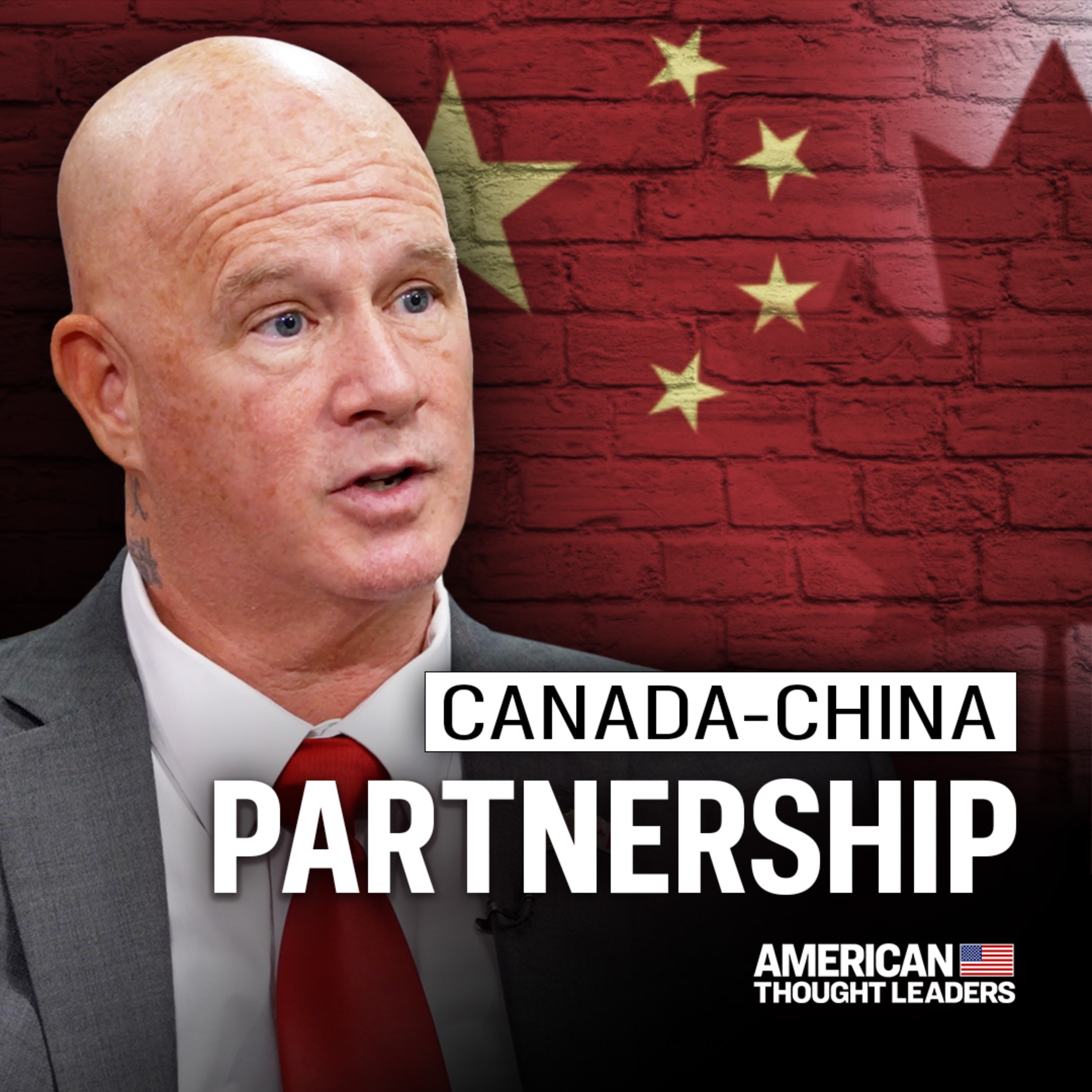
American Thought Leaders
Is Canada Becoming the CCP’s Backdoor into America? | Former Canadian Intel Analyst Scott McGregor
00:28:35
Loading summary
Transcript56 lines
- [00:00]
A
China has a goal, and it's not destruction, it's disruption. And the disruption is working. They've outflanked us.
- [00:07]
B
Today I sit down with Scott McGregor, a former Canadian Armed Forces Intelligence operator and co author of the Mosaic how the Chinese Communist Party Started a Hybrid War in America's Backyard. What is a hybrid war and how does it affect Canada and the United States?
- [00:24]
A
The brakes have been taken off, so the CCP has a free run in Canada. And the people like me that have been speaking out about it, we've lost our voice.
- [00:32]
B
And how does all this affect the relationship between Canada and the United States?
- [00:36]
A
We're fighting amongst ourselves. That's exactly what they want. Canada and the United States are at odds. Why?
- [00:42]
C
This is American Thought Leaders, and I'm janik kelik. Scott McGregor. So good to have you back on American Thought Leaders.
- [00:51]
A
So great to be here.
- [00:53]
C
Canada has a newfound strategic partnership with the Chinese Communist Party, with Communist China. Tell me what you think about that.
- [01:04]
A
I think that it undermines a lot of the work that I've done in the past in the sense that China is attacking Canada using cyber and hybrid warfare. I've discussed this previously when I met you a few years back, and it's highlighted in the book that Mosaic effect that my, my co author and I wrote. There's a concern around this arrangement that, that Canada's entered into, and some of that stems from the fact that Canada is about to allow China to come into Canada and make money, and that money is going to go back to China. And as we know, China is working with the. With the Russians, and the Russians are engaged in a conflict in Ukraine. Well, Canada is also sending money to Ukraine. So we have a little bit of a conflict of interest when it comes to who we're actually supporting, and it undermines some of the confidence within the intelligence and security industry or community. And that's concerning in itself, but the public isn't quite aware of all of the circumstances. And that's where I think there needs to be more dialogue, some sort of understanding about exactly where we came from and how we got there.
- [02:12]
C
Is it surprising to you that there's a strategic partnership, given your work over the last several years that I've been following quite closely? I might add, it came as quite
- [02:21]
A
a shock, having briefed and presented to every intelligence agency in the United States, all of the agencies in Canada for over a decade about the threat from the ccp, that the fact that we've engaged in this strategic alliance undermines a lot of that work. And it cuts the legs out of the people that have been trying to bring awareness to the threat of China to Canada and North America.
- [02:50]
C
If I recall in the previous liberal government in Canada, some progress actually had been made. So this is a significant shift in policy. This is what I'm trying to get at. Maybe you can explain, explain to those of us that don't know the nuances, me having being based here, certainly there
- [03:13]
A
was starting to be a bit of a movement that changed sentiment towards China. So people were beginning to understand just how infiltrated Canada is by the ccp, the United Front Work Department and some of the other actors, such as the mss, which is Chinese Intelligence and the People's Liberation Army. Some of the operations that are conducted in Canada, people were starting to become more aware of just how infiltrated we are and the threats that they pose, from money laundering to foreign interference infiltrating our universities, etc. So yes, there was a change and it came quite suddenly when the new Prime Minister came into power. That's when we saw this shift that sort of people started to identify a little bit more with the United States becoming a threat to Canada. And suddenly China didn't look so bad. I'm not sure exactly where that sentiment comes from, but it's disarming the people that have been trying to raise awareness around the CCP threat.
- [04:17]
C
It seems to me like Canada really needs the United States. Is that the case?
- [04:25]
A
It's 100% the case.
- [04:26]
C
I don't want to try to lead your questions, but that seems like pretty obvious, but it clearly isn't. And so maybe just. Can you extrapolate this?
- [04:34]
A
Certainly we have a symbiotic relationship when it comes to security, I believe. Last time we spoke I had mentioned continentalism, which they're now calling protecting the Western Hemisphere. So that's something that's been around for a while. The movement towards how we go about doing that has always been about the relationship that we share with the United States. Everywhere we go, Canada relies on the United States as a partner in logistics support, especially militarily. When I've deployed, we've had Canadians that were saved because Americans had helicopters that could operate in regions that we just couldn't. We didn't have the capability. The same goes for weaponry. So United States provides Canada with weaponry. So when we deploy, we receive these weapons. We carry them with us, especially in our ships, and then when we come back, we give them back to the United States. Canada can't do that without them replenishment at sea. So when our ships are at sea, we rely on the United States to help us get to where we're going with fuel or goods so that we can feed our troops. So that relationship is extremely important. I'll also mention, you know, we had the Chinese weather balloon is what they were trying to call it, and our Prime Minister actually came forward and said that we had shot it down, Canada had shot it down. But the fact of the matter is that Canada doesn't have a plane that can go to the height that's required to shoot down that weather balloon. So it was actually an F35 from the United States through NORAD, which is an agreement with Canada that had to do the work to bring that down. So, yes, Canada's relationship is extremely important in terms of security and economic security is national security. So that's another aspect that Canadians need to understand a little bit better as well.
- [06:24]
C
So extrapolate a little more on the economic relationship and this unprotected border relationship, which I think you were kind of hinting at.
- [06:31]
A
I was for a moment, and I'm glad you asked that. So the economic piece is really critical. 87%, you know, depending on who you want to listen to, 87% of trade comes from Canada, the United States. Without that money, Canada is in a real spot. And right now you're hearing about Canada looking for other partners where we can sell our goods. The fact of the matter is that logistically getting those goods to market is more expensive than it is to work with the United States, who already is there. I'll give you. For instance, the oil sands in Alberta deliver heavy crude. And the reason that we don't refine it in Canada is we don't have the refineries to do it, Texas does. So moving the oil to the United States is a no brainer. It's the only place that it can go. Trying to get it to market somewhere else, especially somewhere like China, is going to set us back even further. So the issue is who is someone that we've worked with in a trusted relationship, in combat. Economically, we've always had support. Politically, we may not always agree on certain aspects of everyday life, societal things, but when it comes to the Chinese, the threat is so much greater. We're attacked every day by the Chinese in many ways mainly through cyber, but also, you know, through infiltration of our institutions and threatening our diaspora elite capture. All of these things that have been, you know, academics have written about, I've written about and you see in the news lately. So we have to find a way to bring awareness again to the real threat, which is China and not the United States.
- [08:10]
C
There's been a lot that has been made of President Trump and the United States calling Canada the 51st state. How much does this play into this whole picture?
- [08:24]
A
Well, that is a very significant statement that President Trump made. And, and in Canada, there's an emotional response to a lot of that. So I, I tend to use the term US Administration just to alleviate some of the concerns because people shut down when they hear, you know, President Trump and they assume that it means something, even though that's not necessarily what you're talking about. The 51st state comment, I think, drew a line in the sand. So for those of us that have been working towards trying to mitigate a lot of the threats in Canada, because, as I've mentioned, that off Dragonlord identified some of these threats as well as Sidewinder Report, and these are. These are old documents. Canada needs the United States to help it arrest, incarcerate, remove the threats, mainly from the ccp, although the CCP works with Iran and the cartels and others. Because Canada right now is constrained by legislation, by some of its capabilities in terms of human capital. We don't necessarily have enough people to do the job. We don't necessarily have the specialization. So that's something that Canada needs the United States for. But when we're trying to come to this common end state, Canada is struggling, and the United States is sort of pushing their buttons, which cuts the legs out of the people like me that have been raising awareness about what's going on. And without that sort of support, we are kind of left on our own. And when we do speak about it, it almost sounds treasonous because we're saying, hey, we need the United States to come in and help us. Canadians don't want to hear that. They want to hear that we're capable, we can stand on our own. So there's. There's a bit of an ego with Canadians, call it patriotism, if you will. But the fact that Canadians don't see themselves in the world the same way that other countries see Canada, we feel that we're much more important in the world than we actually are.
- [10:41]
C
I've often said, as of course, a Canadian, that a significant part of the Canadian identity, it seems to me, is not being American, which is why that. But those buttons seem to work, or pushing that button has this particular effect. What are your thoughts about that?
- [11:04]
A
Well, I would agree with you, and it depends kind of on your upbringing. So I'll give you an example, Canada being a colonial country and still beholden to the crown. And in the uk, when you're growing up, we grew up with a culture of mainly US entertainment, US products. So when you're at home and you get called in for dinner, is it your mom or your mom? And you know, I'm first generation Canadian. My father was English and my mom always wanted me to say mom, but everything I knew was mom. And so you can see a distinct difference on how close we are with the United States and how we've moved generationally away from the uk. So by saying that we're not American to create some sort of identity, to me almost seems ill informed because just not being American doesn't define you as Canadian, obviously. And the things that define us as Canadians probably are similar, ethics, values, morals. So we're a lot closer. You know, they used to call us cousins, and I would dare say we're even closer than that. So I have a hard time when people get upset with the United States or want to share some rhetoric about the United States, knowing that there's people on both sides that, you know, your relationships are familial.
- [12:40]
C
So let's flip things around a bit. Does America need Canada?
- [12:46]
A
Well, I would, I would say that, yes, absolutely. United States needs Canada. And the main reason is, is that without Canada, Canada. Canada's infiltration by the CCP is not something the United States wants on its border. So absolutely, Canada is essential for the United States in defense of the continent. Without it, the CCP comes in, increases the threat level and becomes an existential threat.
- [13:12]
C
They're not an existential threat.
- [13:13]
A
Now, I believe that that's a growing threat. I think that beyond kinetic, in a hybrid war sense, absolutely, you're a threat. However, should Canada take further steps with the ccp, we don't know where that could go. You know, from Chinese boots on the ground to munitions to that military type support. That's a bigger concern, I think, for the United States than the hybrid warfare pieces at this moment. It's been building for the last 30 years. You know, the United States has recognized that the CCP is infiltrating Canada and that threat level has increased substantially. It's only been recently. The US Administration has taken steps to identify it and call Canada out and say, you need to fix what's going on in your country because we're worried about you. And that's where the concern is.
- [14:03]
C
And now you're worried that it's accelerating. Basically. That's what you're saying, right?
- [14:07]
A
Yes, Absolutely, absolutely. It's definitely accelerating. The brakes have been taken off. The constraints that were once there are no longer limiting. So the CCP has a free run in Canada and the people like me that have been speaking out about it, we've lost our voice. A lot of journalists and media, they've been marginalized, they've been forced to leave mainstream media so the population doesn't get the full view of what's going on and the extent of the infiltration.
- [14:40]
C
And the really crazy thing about this is that as you mentioned, this has been. We've known about this, or at least our governments have known about this for decades. I mean, you revealed in the Mosaic Effect back in, back when it was first published about Operation Dragonlord here in America. And of course we knew about this Sidewinder Report on the Canada side. I mean, maybe just kind of flesh out what we knew. When did we know it? I mean, this Chinese infiltration is not a new thing.
- [15:08]
A
Right.
- [15:08]
C
It's something you've been looking at for a very long time now and that's been around for decades.
- [15:14]
A
Well, when you mentioned the Sidewinder Report, so that came out in 1997, that's when these things were started to be identified. A lot of it was discredited. Some of that is due to the fact that the CCB had already infiltrated establishments and they had leverage over some politicians, et cetera. Operation Dragonlord came just after it. So that's kind of the US version of what was happening. And they do connect. They identify the same types of threats,
- [15:39]
C
tell us just what they were like. What did those reports, what did that operation say?
- [15:44]
A
Oh, certainly. So basically it outlines the fact that Chinese tycoons came over to Canada. Some of it was after the fall of Hong Kong and infiltrated economically and politically into the country and were causing havoc with crime, money laundering, influence operations, as it was identified by both, you know, the RCMP and csis. And then the United States had the same sort of perspective and they were identifying actual individuals within the Canadian government that were being influenced.
- [16:20]
C
And then you also, you know, very astutely, I mentioned this, by the way, often in various interviews that I do about Communist China. Is this sort of the unholy trinity, right, where we're talking about the tycoons are working with the triads, with the mafias. Right. And are working with the Chinese state security.
- [16:38]
A
Yes. So, yeah, the unholy treaty we talked about in the book, those entities are sort of the, the beginning of where this goes. And I would dare say that it's established even in deeper. So the triad groups when they came over weren't exactly sanctioned by the communist government because they were mainly from Hong Kong, so they were not Mandarin speakers. And that changed as China became more influential. We, we moved away from the Hong Kong groups to mainland China groups and that has changed everything. In fact we've actually seen the united front groups that were competing being told by Beijing to start getting along and working together. So now they're even more focused on what they're doing in Canada. I would dare say that that also goes for the United States. The establishment of those groups and that connectivity between state level entities and support. And then you've got the criminal aspect, then you've got the economic aspect. And all three of them work together, not necessarily on every operation. Sometimes cellular, sometimes with other countries. These groups work with the Iranians and the cartels as well. So we're not talking something simply just about the Chinese. The Chinese use them as proxies quite often and it enhances their ability to undermine what Canada and the United States are trying to do in maintaining their sovereignty.
- [18:04]
C
Just tell me a little bit about your background and tell me a bit about why you're here in D.C. today.
- [18:09]
A
Well, I spent 20 years in the Canadian military. I served in the army, the navy and the Air Force. I left the military after working basically a lifetime in above top secret. So I've worked in the classified domain most of my career. I left there and went to the RCMP where I became an intelligence advisor to Federal Service organized crime. At that time I brought in the Five Eyes intelligence community because we started to identify some of the things that were going on here. I had been overseas and uncovered something that is now called transnational narco terrorism. Back then no one believed that terrorists would work with transnational organized crime. So we actually managed to catch bad guys on a DAO in the Middle east that were doing exactly that. So transnational narco terrorism was an operation worked with the dea, the ncis, FBI, some other US agencies and it's still going strong today. When I left the rcmp I moved over to the Attorney General's office with the province of British Columbia and identified transnational organized crime convergences with national security in the gaming industry. That kind of prompted some investigation in and we had part public inquiry into money laundering that stemmed from that. I left there, went to private sector, worked in private security for a little bit and now I've moved into a private consultancy in intelligence and I'm in school, I'm working on A doctorate.
- [19:37]
C
And you're writing books.
- [19:39]
A
And writing books. Exactly.
- [19:41]
C
And what are you doing here in
- [19:42]
A
D.C. in D.C. i'm attending a summit on North American security. And we're looking at how Canada, the United States and Mexico can work together against the threats that we've identified today and sort of bridging some of the issues that have been raised mainly through media and at the political level. While operationally we all work together within law enforcement and the military, those things are still established. We still identify the threats the same way, but sort of lifting the veil, opening the kimono to say, hey, these are the things that we are doing, these are the things that we could be doing better, but also raising awareness about the level of threats, especially stemming from Canada, because in Mexico it seems a little bit obvious. And so they focus on those. But now they're starting to understand that there's deeper connections, higher level connections, state sponsored connections, mainly from the Iranians and the Chinese, that are also in Mexico, not just in Canada and the United States. So how, how we come together and address those things. So there's a number of panels that are trying to, you know, find ways and solutions, both politically and I would, I dare say, you know, through the private sector as well.
- [21:00]
C
Fascinating. Do you feel like people you're speaking with share your concerns about one, kind of the awareness of the very real China threat in Canada, and two, about some of these, you know, let's call it progress that you and others helped, you know, affect being kind of walked back or slowing down.
- [21:26]
A
I think anyone that's worked in the field understands the threat in Canada, been raising awareness. However, when I go out on the street and talk to people, I talk to family members, they have no idea about what's going on. I mean, I've spoken to the people at the Royal Canadian Legion, which is old veterans and people that show up to drink beer and talk about their days because they're generally elderly, they have no idea about the depth of what's.
- [22:00]
C
They have no idea.
- [22:00]
A
They have no idea when they find out. Some of them are incensed. Some of them don't get as worked up over it, because in Canada it's not common for us to get our backs up. And that's why this movement right now with the US where people are so upset is astonishing almost because you would think that they would have done that with what China's been doing, because we were raising awareness and changing sentiment. But that pales in comparison after one tweet from the President of the United States that Canada has an issue that they need to deal with which we've been talking about for a decade, both in the intelligence world, law enforcement, world security world. All of the political elements are aware of what's going on and nothing's been done. One tweet from the US President and suddenly we have a border czar, we have a fentanyl czar. We're leasing a helicopter to patrol the border from the U.S. it's astonishing for us because we've been trying for so long to raise this awareness. So where are we going? We said we want to do something about it. So the proof's in the pudding. I'm not seeing any arrests in Canada. We're seeing lots of arrests in the United States. And the opposite has happened. Canada has buddied up to China. We've got this strategic alliance now. Where did that come from after we had this dialogue about the threat of China. It's very frustrating and yeah, most people don't understand the depth of the threat, the nature of the threat and the likely outcome. China has a goal, an objective and it's not destruction at this point, it's disruption. And the disruption is working. They've outflanked us. We're fighting amongst ourselves. That's exactly what they want. So there's this division. Canada, the United States are at odds. Why is it just kind of the United States that have caused this? And I dare say no, I think it's the people, the adversaries that we've been trying to raise awareness about so we can act on it. And we haven't done a very good job obviously because here we are.
- [24:24]
C
Yeah. And of course that's a very sort of central piece of the Chinese Communist Party's strategy is to show internal division among, you know, among allies within groups. This is sort of an ex, something they've been expert at for decades.
- [24:40]
A
Absolutely. Co opting organizations. The Iranian diaspora actually starts non profit organizations that, that are supposed to be anti regime and then anyone that joins is now identified as a target. The Chinese do the same thing. They do it with friendship organizations. So they, they fool people into believing that this is some sort of corporate or economic advantage to Canada where that's not really the case. What they're trying to do is infiltrate. We buy into it often because we're very trusting. In Canada we, we don't have the same awareness of threats and what the outcomes will be until it's too late. And that's where we're at. I think right now we're at a transition point Canadians are going to find out very quickly who their friends are and who their enemies are.
- [25:33]
C
So very briefly, I, as we finish up, paint for me the best case scenario that you would like to see.
- [25:40]
A
Well, the best case scenario, I think, is again regaining unity with the United States. We rely on the United States for enforcement on a scale of detect, deter, disrupt and interdict or enforce. Canada is unable to finish what they start. We sometimes find bad guys, we identify them, we try to incarcerate them, and then that's where we fail. And if we do incarcerate them, they're let go very early. We've entered into this foreign interference dialogue. Well, foreign interference isn't a crime, so it's nice to be able to identify it. It's a good talking point when it comes to action. We're not putting people away for foreign interference in Canada. We're seeing it in the United States extensively and the infiltration into organizations, corporations. The United States identifies it and says this is an existential threat as well, and they're doing something about it. Canada doesn't. Canada avoids that. We saw the, the COVID era with the Winnipeg labs where we had Chinese scientists involved and we allowed them to return to China and then the head of the lab left the country and went to England. Nothing's done. The RCMP had full investigations into those things. So when Canadian citizens see nothing happening, it's much ado about nothing to them. They don't understand that there's much more going on and people are doing something about it. And I think for me, if we could get Canada to be able to enforce these things with the help of the United States, because we need those assets to be able to prosecute the intelligence collection assets that the United States has. Their understanding of how China operates exceeds Canada's understanding and acceptance of those consequences.
- [27:31]
C
A final thought as we finish.
- [27:33]
A
Canada needs the United States. The United States needs Canada. Together, I think we can do something about the threats that are facing our nations. Canada needs to pull up its socks. Hopefully through interviews like this books, just creating this general awareness, I think people are going to start to understand this is for real. We're at war with China. We're in a hybrid war. It's affecting our economy. And now that it's starting to hurt food prices, the price of fuel, all of these different things, now it's becoming tangible for them. And, you know, as we mentioned, my hope is that we start to work together and do something about it.
- [28:18]
C
Well, Scott McGregor, it's such a pleasure to have had you on.
- [28:21]
A
Thank you. I appreciate your time.
- [28:23]
C
Thank you all for joining Scott McGregor and me on this episode of American Thought Leaders. I'm your host, Janje Kellog.