← American Thought Leaders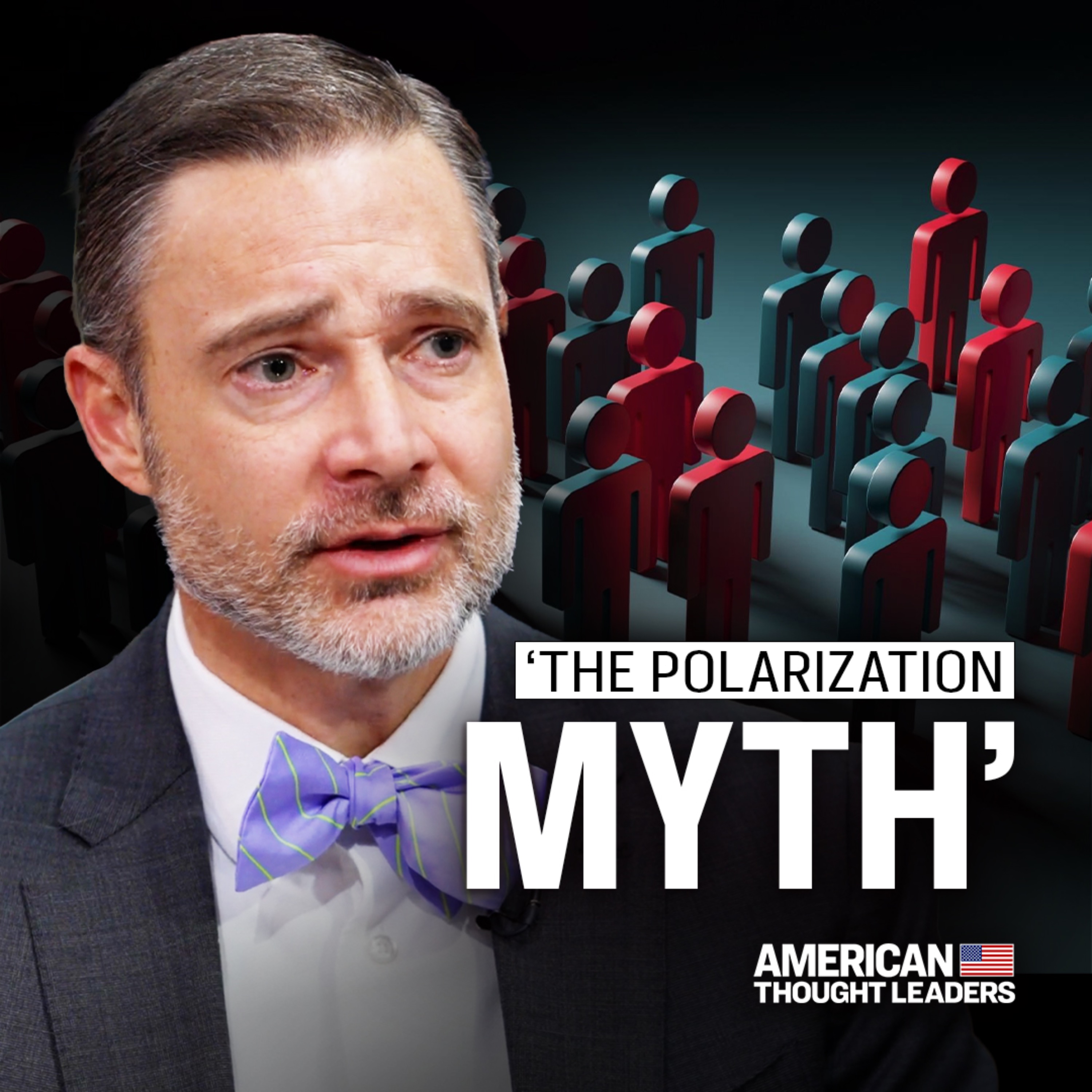
Loading summary
Transcript89 lines
- [00:00]
A
We don't allow young people to diagnose themselves with a sprained ankle or with pneumonia. But when they say they were born in the wrong body, we say they need to be socially affirmed and we should move them along the process of pursuing counseling and then ultimately, physical changes that will last with them forever.
- [00:17]
B
In this episode, I sit down with Jonathan Butcher, acting director of the Heritage foundation center for Education Policy and author of the Polarization Mythology, America's Surprising Consensus on Race, Schools, and Sex. He uncovers what his new survey of more than 2,000Americans tells us about who is really driving the culture war and who quietly disagrees.
- [00:41]
A
There are clear majorities in the survey that I conducted for my book, and the idea that you can change your gender is not popular with the American public. There's a shared sense of national identity on this question, Butcher argues.
- [00:56]
B
It's a loud minority amplified by media narratives, while a quiet majority shares common sense beliefs about merit, family and community.
- [01:05]
A
If you start with the family, then you can build the community, then you build the city, then you build the state, then you build the nation.
- [01:10]
B
Are Americans actually more united than we think? This is American Thought Leaders, and I'm Janje Kelik. John Butcher, Such a pleasure to have you on American Thought Leaders.
- [01:23]
A
Thank you. It's great to be with you.
- [01:25]
B
So there was a landmark court case in New York court recently. Fox varian won a 2 million award for malpractice liability for malpractice of a psychologist and a surgeon who took her breasts when she was 16 years old. What's your reaction to this?
- [01:48]
A
Well, according to the details of the case, the doctors involved pressured both the young lady and her parents, to her mom in particular, to do this procedure without looking at what the underlying issues may be. And actually this is quite common in the research that you find that those who say they were born in the wrong body often have underlying issues of anxiety, depression, perhaps they've been bullied in school. And without dealing with those issues, you're really not helping that young person.
- [02:16]
B
There's this standard line that is often given to parents, often with their children present. I've learned, having covered this issue for some time, that that if you don't go through this process of gender affirming care which leads to these mastectomies and so forth, your child will commit suicide.
- [02:35]
A
Well, and there's research that we've done at the Heritage foundation that shows that it's not true that suicide rates are higher in states that prevent these surgeries from happening to young people. I mean, look, we don't allow young people to diagnose themselves with a sprained ankle or with pneumonia or a strep throat. But when they say they were born in the wrong body for some reason, we say they need to be socially affirmed and we should move them along the process of pursuing counseling and then ultimately, as in this case, physical changes that will last with them forever.
- [03:08]
B
And this is already having an impact. To comment on that a little bit too, I was frankly surprised how quickly.
- [03:14]
A
Well, medical associations are now saying that they opposed these surgeries to young people. They're changing their position from what it once was. And I think that this particular case is going to have a ripple effect across the medical community. And look, we knew before from surveys that across the United States, Americans don't like the idea that men should have access to girls private spaces or that boys should be playing on girls sports teams. There are clear majorities in the survey that I conducted for my book, as well as supporting surveys that show that there is common sense among Americans that there are men and women. And the idea that you can change your gender is not popular with the American public. There's a shared sense of national identity on this question.
- [04:03]
B
So I want to focus on this a little bit. You know, of course, your excellent book, the Polarization Myth, I mean, you basically make the case, and I think quite convincingly, that the culture war isn't between two equal groups of Americans. Would you agree with that?
- [04:22]
A
When we hear the term polarization, it makes us think that, like you said, there's 50% on one side and 50 on the other side. But that's not what's going on on the there are clear positions supporting some pretty common sense ideas. The idea that there are men and women and those are the two sexes. The idea that we shouldn't have books with explicit sex acts on library shelves in public schools or that we shouldn't be teaching young people the idea that gender is something they can simply choose. But it extends even beyond this gender issue, and it goes to race as well.
- [04:58]
B
Tell me about that.
- [05:00]
A
So on the issue of race, my survey and others from Pew Research have found that we don't like the use of racial preferences when it comes to things like admitting students to school. And I think that that goes even further into promotions in the workplace or giving tenure to faculty in academia. This idea that we are judging people based on their country of origin or their ethnicity is not popular. Right. What is we find clear majorities is judging people based on their decisions and their behavior. Right. And that's, of course, at the core of the Civil Rights Act. That's a key piece of American litigation, of American law.
- [05:42]
B
Makes me think of mlk, right, Judging people by their character, not the color of their skin.
- [05:48]
A
Well, absolutely. And it's funny. Radicals will come back and say, don't give me the story of Martin Luther King anymore. Because there's clear evidence in policy that there are certain policies that have different effects on people according to their race. And that's looking at, at the world only through the perspective of racism, when in reality, the American dream belongs to everyone. And the lesson that we need to give to this generation is that they have the same chance to succeed, regardless of their background, regardless of the color of their skin. The role of policymakers is to remove obstacles that keeps them right from pursuing this American dream.
- [06:29]
B
So I want to dig into some of these kind of individual areas where you found this is a very significant of majority of Americans agreeing, whatever political orientation and so forth. But before we go there, something struck me as incredibly interesting. In one of your graphs, it's your should schools teach character and virtue? And that is a 74% agree, which is, I think, the strongest result. Right. Of anything. And that's, I mean, I kind of read it and I said, wow, thank God. Because I kind of. I feel like I've been sort of programmed to believe there's this movement to take kids out of school and put them, and put them into homeschooling. And the reason for that is because the parents feel like their kids are not being taught this in school and they want to make sure it's their character and virtue. So how do you interpret this result?
- [07:28]
A
Well, parents are a child's primary caregiver and they should be in charge of their child's moral and religious upbringing. What we're seeing in schools today is that they don't always reflect the values of the families who send their children there. And when we see survey results such as this that parents want character and virtue taught, what we are seeing is that parents understand these basic ideas. Courage, self control, wisdom. These are the kinds of things that you want young people to embrace so that can become civic members of their communities when they grow up. Right. These are the people we want to work with in our offices. These are the people we want to sit next to in church. These are the kinds of conversations we have at the dinner table with our families, these ideas that young people need to be taught the very basics of honesty so that they can be a part of their communities. What's happening in schools today is we see reports about gender affirming ideas or critical race theory or diversity, equity and inclusion in schools that teach children that it matters more about their skin color or it matters more to be a revolutionary. That's far afield from what the sense of national identity is, according to my survey and others.
- [08:41]
B
Yeah. So tell me a little bit more about the commonalities between surveys and who are the people that have been doing these?
- [08:49]
A
Well, we have Gallup, of course, which runs surveys like these. And Gallup finds that the approval ratings of our K12 education system have been precipitously declining, especially since COVID We also have surveys that the New York Times regularly runs. In fact, there's one from a couple of years ago that finds that Americans don't want children In K through 3, even elementary schools taught the idea of gender. The Wall Street Journal runs surveys like these. So as we see a number of surveys showing agreement on the same issues over a period of time, it transitions from a snapshot of one moment to a sense of commonality, a sense of shared identity among Americans. And that should give us hope. Right. That should make us optimistic about our future.
- [09:36]
B
It really does. Because I feel like I'm constantly being reminded how polarized we are.
- [09:42]
A
And it's true. Right. When you look at elections, sometimes the elections are close, Right. And you look at states that have had consistently left of center leadership places like California and Oregon, people living there may say no, surely we're polarized. But. But just because we have differences doesn't mean that we're polarized on the issue. It just means that elections do matter.
- [10:04]
B
It might be hard for a lot of people watching even because I feel like this idea has been is kind of pretty deeply ingrained. It might be hard for people to accept this idea that we're not in a match to the death culture war between two somewhat equal sides.
- [10:24]
A
Well, I think the important thing to remind Americans is that on the issues, they're not alone if they think that individuals should be judged, promoted, accepted to school based on their merit instead of their skin color. Right. You're not alone if you think that. You're not alone if you think that we should be protecting women from men accessing their bathrooms or locker rooms. Right. The core idea of Title IX, which is, you know, dates back to the 1970s, was to protect women, to give women equal access to the same opportunities. And if that is what you believe, you're not alone in this. And the reality is that the self described experts in the mainstream Media or in academia keep telling us that we're on the fringe if we have these common sense beliefs, but it's simply not true. And the surveys show this over and over again.
- [11:19]
B
And it's not just that it's the kind of 50% that are on the right. It's something much bigger in many of these cases. Right? I mean, this is what you're telling me. I mean, would it be fair to say that it's really like a majority of Americans in one case and then sort of a small minority of activists on the other that just have a very loud voice?
- [11:44]
A
I think on the issues that were in my book, I would completely agree with that. I think we do have a majority of Americans that are taking, again, these very common sense positions. I think that the radicals make it sound like because they can have control of the headlines or they can position themselves as being persecuted, when in fact they're just pushing their ideas on everyone else. They make us feel as though if we have these common sense ideas, that we're on the fringe. But these radicals do have a pretty big platform. I think the Obama administration in particular ushered in a period of disparate impact theory when it comes to public policies. The theory that any public policy that has a different effect on individuals based on skin color is automatically racist. They tried to push this in school discipline, for example, and tell schools that if they had higher rates of discipline for children from ethnic minorities, that they were racist. But the reality is you have schools in high poverty areas where there are high concentrations of children from single parent families, and so there are high concentrations of gangs and drug use, and thereby you have higher rates of discipline in those areas. But that's appropriate, right? We need to be protecting the children who aren't involved in gangs, who aren't involved in being violent in schools.
- [13:04]
B
It's also the policy. So, you know, having covered this a bit over the years now, I mean, just some really bad policies have come out of this because instead of helping, you know, instill some discipline in these kids, which frankly really needed, right, to become, you know, like reasonable members of society, it's sort of, it's like those guardrails are actually taken away so that the statistics look better. I mean, that's kind of how I saw it.
- [13:32]
A
Well, exactly. And we see this in public policy, particularly when it comes to education. Radical racial activists, call them what you will, social justice activists, DEI advocates, they hold racial quotas, they want racial quotas when it comes to discipline. And if the quotas are off, that's opposed to their policy. And we see this even now. The new mayor of New York City is getting rid of gifted and talented screening for young children. And the argument is that because the quotas aren't right, that there must be something wrong with the policy when what you're doing is you're holding children back and you're giving parents fewer options for their children. We should be putting kids first in education.
- [14:14]
B
I was deeply, deeply grateful for these gifted programs when I was younger. I remember because anyway, the classes weren't terribly engaging. And so to be able to spend the way it worked in the suburbs of Toronto, Canada was there would just be these extra classes that you would take that were actually a lot more interesting, a lot more engaging, a lot more with people that were at your academic level, let's say. And it was a blessing, a true blessing. You can get incredibly bored and, you know, I don't know, almost depressed without that for some. And these kids can come from anywhere. And I guess what you're telling me is that if it doesn't fit exactly the right quotas, then it shouldn't exist.
- [15:04]
A
And that's what the social justice advocates will say. And in reality, there is a significant amount of money and programs that are dedicated to children in low income areas, as it should be. Right? Title one is the largest pot of federal spending for children in K12 schools, charter schools, which are public schools.
- [15:24]
B
Explain briefly Title one what that means for those that are uninitiated.
- [15:28]
A
Sure. So Title one is the first chapter of federal education law and it is dedicated to serving children who live in areas of high concentration of low income families. It's commonly used in education parlance as referring to programs for children in high poverty areas. It is, comparatively speaking, much smaller amount of money than what comes from state taxpayers and local taxpayers. But nevertheless, that is the federal commitment to children in low income schools. And there should be a focus on helping these children succeed. But by the same token, we have to remember that there are also children who are succeeding. There are children who may qualify for gifted and talented through screening at young ages. And these are the young people who we should help to succeed because they're going to be our chemists, they're going to be our engineers, they're going to be the ones working for NASA in the future. We should be helping these young people. And for those who are in low income areas who are attending persistently failing schools, who themselves are struggling in school, we also should be providing them assistance. And that's why parent choice in education matters. So much the one size fits all that Mondami and others in New York City are trying to push on schools is going to hurt children across the spectrum. We should be giving parents the ability to choose how and where their children learn.
- [16:49]
B
Would you agree with calling this kind of an approach like a war on merit and a war on talent?
- [16:56]
A
That's exactly what it is. Critical theory, which is the opposite of what we would call traditional theory, right, Teaches about rationalism, the underlying principles of the Western world, representative government, the rule of law. The critical theory behind what is known as DEI is a theory that believes that there is a zero sum game between those who have power and those who don't. And what lies at the heart of this is that we should be removing rights from some people and giving it to others. And that's what's driving Mondami's policies. That's what's driving the teachers unions who say that there shouldn't be choice in education. That's what's driving gender activists. In fact, critical theory inspired critical legal theory, which in the 1970s was an attack on American law. It inspired critical gender theory, which is the attack on biology. Right. It inspired critical race theory, which is an attack on civil rights law. They're all gadflies of what we would consider the traditional Western thought of individual value and that we can create a representative system that can protect rights.
- [18:08]
B
So let's go back to this. Character and virtue. Right? So in this view, the critical viewpoint, where does character and virtue fit in?
- [18:19]
A
It doesn't fit on their platform from the critical viewpoint. And again, we're talking about something that is, at its root Marxist. They believe that young people should be taught that revolution is the necessary response to anything within which they disagree. Right. We see this in higher education. There's no debate anymore on most college campuses. There's simply de platforming or shout downs. So they don't want character and virtue taught. They want children trained to be revolutionaries. When what parents want in my survey and others is they want young people to be taught the basics of how to be a civil human being. And closely connected with that is we found in my survey for this book as well as other surveys, is that we want civics taught more in schools. Civics has been transitioned again mostly since the Obama administration, as something that is about action. Children should be trained to walk out if they don't like ice. They should be trained to host a protest if they disagree with a policy instead of reasoning on the issues, instead of finding out what the full story is. On a particular topic and then becoming well versed in a policy before they begin to take action on it, whatever that action may be. We're sort of skipping the information part, we're skipping the education part when it comes to civics today. And that needs to change, especially in America's 250th. Right. We're going to celebrate the 250th this year. And a understanding of America's founding principles is essential if you're going to be active in public policy.
- [19:55]
B
So I did an interview with Matt Spalding recently about the Making of the American Mind, which is really about the creation of the Declaration of Independence. Like a long meditation on it. Absolutely fascinating. And I got For Christmas from My Family. I think it's the longest sentence ever written. It's like a short book by Isaacson. That's right, exactly. And I've just been. I mean, it's funny inappropriate because I'm kind of a little bit infatuated with this document, and I'm still learning an incredible amount about it and how beautiful it is.
- [20:31]
A
It was very thoughtfully written. So. Dr. Spalding is a former colleague at the Heritage Foundation. And at Heritage, we have a deep appreciation and reverence for our founding documents, particularly the Declaration and the US Constitution. The two documents go together, right? One is the inspiration of the other. The very idea that government's responsibility is to protect rights. They don't give us our rights. They are protecting the rights that we have. And what is happening from the left, and especially these radicals on issues like gender, like race, is they're telling us that those common sense ideas are antiquated, right? They don't fit anymore. We need to disrupt and unseat what is in our government today. And that's not what Americans want. We're not looking to destroy or tear down systems, right? We need to prepare a future so that the young people, the next generation, has the same access to owning a home, to having a family, to having a career that the generation before did.
- [21:28]
B
Do you think that this, all of this, let's call it, let's just group it in the kind of woke kind of approach to politics and life. Do you think it's intentionally trying to undermine, you know, the foundations of the American system?
- [21:46]
A
And what they are trying to get at is this notion of what they call equity. And it's this idea that we would all have the same outcomes, regardless of how hard we work, regardless of our education, regardless of our decisions. They want to rebalance the scales so that no matter what we've done in our life, we still get the same things, although they're really more interested in ethnic minorities receiving more than everyone else. And we're not helping people by rebalancing the scales in that way. And research actually finds one of the best examples of this kind of equity notion is commonly called affirmative action. We're going to call it racial preferences in higher education. And research finds that when students are admitted to college, especially graduate schools using affirmative action, you're not helping them. And when they enter schools for which they are not prepared, where they don't have the academic background, the academic challenge to enter, say, a challenging law school, you're setting them up for failure because they won't be prepared to handle that work. There was actually a US Commission on Civil Rights paper and hearing from about two decades ago that had testimony from students who were admitted to school because of affirmative action. And they said that it was not beneficial to them and it actually helped to ruin their career because they weren't able to finish at a challenging school. They wound up not finishing. They had considerable debt. But that is the story of equity, is you're setting people up for failure.
- [23:23]
B
What do these various ethnic minorities that have a kind of preference, as you said, what do they generally think about these affirmative action type policies?
- [23:35]
A
Well, overall, when it comes to the surveys, again, we find even among ethnic minorities that there is, it's closer when it comes to ethnic minorities on what they feel about these racial preferences. But overall, we find that there is high opposition in the majority for these programs. Look, when it comes to programs that do help to level the playing field, such as school choice, ethnic minorities by a pretty strong majority are in favor of being able to choose how and where their children learn.
- [24:08]
B
Okay, I just want to make sure I understood you correctly. Generally you're saying the ethnic minorities, but just a bit less agree with the kind of the overall trend, which is this majority of people agreeing on Title 9, sort of women's rights, race, civics, teaching civics. I mean, I'm just thinking of the things. They're kind of on board with this, just a little, not quite to the same degree. Is that how I understood it?
- [24:38]
A
That's accurate. But of course it's going to depend on the survey and when it was asked. I think what's crucial is that really over the last 15 years there have been surveys asking parents who are either single parents or ethnic minorities what they think about their child's education. And there is high levels of dissatisfaction with the assigned public school system and high levels of satisfaction or favor for the idea that they would be able to choose a private school or a public charter school for their child. In fact, in some areas that have high populations of ethnic minorities, particularly Americans who are black, the rates of families who are homeschooling are actually going up. And that's a significant change in the homeschool demographic. And that's an exciting thing to see. Right. This is an education solution that can work regardless of your background.
- [25:25]
B
Okay, so let's talk about the current administration. How are they doing with respect to it now? Let's go through, you know, kind of each of these. Let's call it, you know, vertical that you look at. You know, how are they doing?
- [25:42]
A
They have used the platform of the White House to issue executive orders that I think have really supported where the general public is when it comes to gender. They've issued a statement saying that there are only two sexes, male and female, when it comes to school choice. They have been very supportive of school choice from the platform of Washington. When it comes to even school districts.
- [26:05]
B
What'S the platform of Washington?
- [26:07]
A
So remember that education is a state priority and a federal interest. And so that the school choice programs that have really blossomed over the last 30 years have mainly come from the states. Right. So last year, for example, Texas lawmakers adopted an education Savings Account program. And with the passage of that program, more than half of all children in the US now have access to some sort of private school scholarship program. Texas, Arizona, Florida, Ohio. This is really changing the landscape. More than half of all US States now have some sort of private school scholarship option for children. It's really an exciting time. So when the White House comes out in support of that kind of policy, they are demonstrating not only support for parents across the country, but also state lawmakers and the people who elected them.
- [26:55]
B
So what about your other verticals?
- [26:57]
A
Like, so when it comes to DEI in the workforce, a real credit to this administration for taking a strong stance against the use of dei. In my book, the Polarization Myth, I interviewed a chemist in Oklahoma who worked for a company that produced plastics, and he was being forced to undergo DEI training. And he told me, why am I being told that George Washington had false teeth that may have come from slaves or that our founding fathers may have owned slaves? Even if some of them freed the slaves after the Founding Father passed away, what does that matter to the making of plastics or my job? And this idea that these teachings were trying to undermine his allegiance or his sense of community with his nation was the same kind of tactic that interrogators use with criminals. And so he filed a lawsuit against what was being done to him. And he got a person who works with the defense community in interviewing prisoners and found that these techniques that DEI trainers are using are very similar to the same sort of techniques that unseat your allegiance to your country. It's the same kind of idea.
- [28:20]
B
Okay, I want to dig into this a little more. Wow, that is an astonishing thing. Right? I mean, what did you. What were you thinking when you were hearing this?
- [28:31]
A
I was not surprised. I mean, I think what DEI activists are trying to do is to change our understanding of American history. They want to rewrite how we think about our founding fathers and how we think about the Civil War and the Emancipation Proclamation. Look, the institution of slavery was clearly running counter to our founding ideals. But that doesn't mean our founding ideals were wrong. It meant that those who were implementing them were doing it wrong. What this particular individual, his name is Chad Ellis, also did was he said that this DEI training was so deeply psychological that it was more than just professional development. It was actually some sort of attempt at psychology. And so he tried to get a ruling from the Oklahoma Board of Psychologists to say that this was psychological practice being done by an unlicensed psychologist. Remarkably, the Oklahoma board refused to make a ruling on it and wouldn't say so. But I think it's fascinating that even that claim would be made that we are trying to be brainwashed when DEI activists try to tell us that our race is the most important thing about us and that American life is systemically racist.
- [29:40]
B
So, I mean, basically your contention, this is youryour position here, is that these DEI education programs are actually actively trying to subvert Americans sense of loyalty to the nation.
- [29:57]
A
It absolutely is. And when you look at their materials that they use, they are directly going after our founding documents and our founding ideals. What's fascinating about DEI training is that the research on the effectiveness of DEI trainings find that they are highly ineffective. They don't change people's behavior or attitudes. And even in some cases, they can make people resentful of having to undergo these DEI trainings. And it's not just me saying this. The Washington Post has produced reports on this, McKinsey and Company, the corporate consulting behemoth, the New York Times, major mainstream publications in the trade such as Education Week, they've all produced reports saying that DEI is ineffective and asked why we are doing it. Now, of course, they would suggest we just need to change the way that we're doing dei. We're just doing it wrong. But I think it's what's at the root of DEI methodology and philosophy that's the problem. The problem is when you try to change someone's understanding of their country and disaffect them from their allegiance to their nation, you are trying to brainwash them.
- [31:08]
B
So DEI training is brainwashing?
- [31:11]
A
I think it absolutely is. It absolutely is.
- [31:14]
B
I don't think I've ever had DEI training. I probably should have tried at some point just to kind of get a sense of what it's like.
- [31:23]
A
It's remarkably common in businesses around the country.
- [31:26]
B
Have you experienced it yourself?
- [31:28]
A
Maybe something close to it. Not at my employer, fortunately, but maybe something close to it. And I did a report a couple of years ago on Fortune 500 companies. And how many of them had statements about DEI on their websites or said that they engaged in DEI trainings? Nearly all of them did. I think 486 out of the 500 had some sort of commitment to DEI. And what's fascinating is how many of these companies just recently came out saying that DEI was something they were in favor of after the summer of George Floyd in 2020. This is a relatively new concept. Now, they may have been doing anti bias trainings before they called it DEI training. Those actually date back for decades. That's why there's so much research on these training programs, because this sort of anti bias idea has been rooted in critical race theory and critical theories going back for decades. However, these newfound commitments to quote, anti racism, it's remarkable how quickly they sprung up after the summer of George Floyd. And then as the Trump administration and others, including Florida, Texas, Iowa, Tennessee, states around the US began prohibiting the use of taxpayer spending on DEI programs, saying that it was a violation of the Civil Rights Act. In fact, it's amazing how many have walked back their positions. I mean, we've seen companies like John Deere walk back their position, Microsoft walk back their commitments to dei. The University of Michigan just last year closed their on their own, closed their DEI office, which happened to be the largest in the country, for a public university. Once they're told that this will not stand in court, it's amazing how quickly they're appreciation for DEI disappears.
- [33:19]
B
It's incredibly compelling how you set up the incentives for whether it's individuals or companies and people are just going to play along with however that incentive structure is set up. We have to be so careful in doing it, right?
- [33:37]
A
Absolutely. Well, that's where the term virtue signaling comes from. Right? You're Trying to signal some sort of tolerance or virtue for some driving social justice issue without really understanding what's at the heart of it. When you dig down to the heart of it and understand that this is about a, again, zero sum game between those with power and those without, that's the lesson. I think immediately people start to see straight through it.
- [34:01]
B
Looking you've been very kind of positive about the administration's actions around, you know, all of these verticals thus far. How lasting? What about things that will last, that have that ability? I actually think, you know, this court case that going back to Fox Varian, this case, I think that will have a profound lasting effect. And I know of multiple other similar related cases that are likely to end up in the same way. And I think that will create a kind of snowball. I think we've probably hit an inflection point here, like a very significant inflection point. But what about some of these other areas? Legislation, legal action.
- [34:47]
A
Yeah, there's other key litigation on some of the related issues that I talk about in my book. I would note the Students for Fair Admissions decision from the Supreme Court from just a couple of years ago that said that it is unconstitutional to use racial preferences in college admissions. I think that will be something that's lasting as well. And by the same token, the states that have adopted legislation on these issues, whether it has to do with prohibiting men from entering girls private spaces or boys and girls athletics, I think those are going to be lasting. By the same token, the DEI prohibitions that have been enacted across states, again, we're getting close to half of US states that have looked at at one or more of these issues. These are the things that will, that will last. And I think the White House's support for these has helped to give confidence to state lawmakers who may feel like they're in the middle or on the edge when it comes to these. So a credit to the administration for bolstering these key positions.
- [35:47]
B
Something you've talked about recently, I noticed, and I guess is a thing for you is this success sequence and just like remind us or introduce us to the success sequence and how much of an impact it has based on the statistics.
- [36:04]
A
It's a fascinating piece of social science research. So dating back some 20 years now, the idea that if you finish high school, you get a job or pursue a terminal degree, enter college and then get married before you have children, you are far less likely to be in poverty when you reach prime working ages. In fact, research finds that 97% of millennials who did all three of the success sequence were not living in poverty when they reached their prime working age. So late 20s, early 30s. And not only were they not in poverty, many of them were either in middle class or headed to middle class. And this was true across the socioeconomic spectrum.
- [36:42]
B
So wherever you started, you still ended up in a really good place.
- [36:45]
A
That's right. Even those from different races, those Americans who are black, Hispanic, the similar numbers were true. And so what we should be telling kids in K12 schools are these very facts. We should be telling them that if they do these three things, they finish high school, enter the workforce, or go to college, and then get married before you have children, that they are less likely to find themselves in poverty. And now there are states around the US considering changes to their state standards to adopt or integrate the success sequence into their instruction. Indiana is considering this. Now there have been other states as well, Alabama, that have looked at adopting the success sequence.
- [37:24]
B
And again, this is sort of one of the most non partisan kind of non, you know, totally outside of the question of polarization or not, I think.
- [37:34]
A
Right, that's right. In my survey, I found high support for teaching the success sequence at age appropriate levels. And critics may say, well, you're going to embarrass those who come from single parent families. Well, that's not the intent and the idea for trust. If we're going to trust educators to teach children how to read, how to do math, deal with difficult subjects, we got to be able to trust them to handle this at age appropriate levels.
- [37:58]
B
Well, the thing that you're saying, see, it's very interesting what you said. It's just like an issue of focus. It's almost like the educators are like for fear of embarrassing somebody, for fear of saying the wrong thing, they will say, well, that's more important than providing someone with the tools to actually, you know, make a better life for themselves. Like almost like not guaranteed, but like almost guaranteed. Right.
- [38:24]
A
It doesn't help students.
- [38:25]
B
It's crazy, right? Sure, yeah.
- [38:26]
A
It doesn't help students if you avoid the subject. If you avoid a difficult topic, you're not doing anyone any favors. If you keep students from ideas with which they disagree, you are weakening them, you're crippling them for the future. So I think teaching the success sequence not only popular among, as we find from surveys, but now we're finding it being integrated into K12 curriculum. I think that's a great step forward.
- [38:51]
B
So, you know, as we finish up, I want to just talk about media with you a bit Because I mean, I'm pretty convinced by your research and you've shown that this is research that's been replicated by Left, Right. All sorts of institutions. Right. That I believe you that we're not nearly as polarized as we're constantly being told we are. And frankly, not just by, you know, activist media. Right. Or you know, far left activist media or something like that. Seems like it's coming from everywhere that this polarization idea, I think the media.
- [39:27]
A
Helps to drive it because they can instill fear. I mean, look what's been produced even just since the last election. There's been a movie that's come from Hollywood would call Civil War, where Washington is calling in airstrikes on innocent Americans. You have publications like the New York Times, the New York Magazine, producing pieces that say there are those creating bunkers and stocking up on food because they're fearful of what the next civil war may bring. But I think what we need to remind Americans is that on the issues, on the things we talk about at the breakfast table across the hall at work, there are things on which we agree. There is a shared sense of national identity that rejects the idea of that discrimination is okay, that rejects the idea that you could be born in the wrong body. These are things that we share.
- [40:13]
B
Something that I find very concerning is it seems like the business models of many media are validating preconceived notions of people in emotionally charged ways. Does that make sense? That seems to be kind of a common way in which media find financial success, in my observation. And so it just seems to. That seems to lend itself to ending up promoting a vision of the world where you're like, wow, those people are crazy over there. They're so different from me. When it really might be just the radicals, just a small number of radicals that are that way. And indeed, when I look back at, at successful communist revolutions, it's always been a small group of radicals that somehow convince some significant part of the population that they're actually much bigger than they are and they have much more power and they're able to kind of seize the reins of power that way. And of course, horrible things happen subsequently every time. So I'm just, I'm worried about the media world. I want you to kind of comment on this a little bit because this is what keeps, keeps me up at night, perhaps because I'm in media.
- [41:28]
A
Yeah, I think the 24 hour news cycle helps to drive this. I also think that social media and the algorithms that allow people to find what they want all the time to reinforce their own biases is problematic. I don't think that there's any simple solution to these things, although I would pose a couple. And they do have to do with K12 schools because young people are so impressionable. And I would start with the state policies that prevent students from using cell phones during the school day and certainly prohibit them from using social media during the school day and having easy access. If the quietest place in a K12 school is the lunchroom, there's something wrong with that school, right? So I think that we can help young people by governing right judiciously the way that they access this information. I think too, we should look carefully at AI. There are clear benefits for the business community. There are clear benefits for the corporate world. It's going to make us more efficient. Obviously, I don't want fewer people to have jobs. I don't want AI to be replacing people necessarily. But there are great efficiencies that can come from the use of. Of artificial intelligence. But don't miss what else is happening. AI helps to reconfirm our own biases. It can drive people down a path of even taking their own lives in some cases, as some reports have shown. Therefore, since we don't know the. The full effect that AI is going to have on young people, we should be very careful about how both K12 schools and higher education use AI as a tool for learning. The idea that a child could spend an hour and a half learning a lesson in the morning and then moving on to something else without having to interact deeply with the information, that's not education, Right? Education is about shaping the soul. It's about forming the human person. And AI may help you with a particular lesson, but to become someone who understands the material, you have to deeply immerse yourself in the information for a long time. There's no shortcut to becoming an educated person and thereby becoming a civil individual.
- [43:35]
B
I'm thinking to myself right now. Let's think for a moment together. How can we remind ourselves what kind of tool could we have that would remind ourselves of. Of your findings, which are not just for young people. This is for everyone, right? That we're not really nearly as polarized as it seems as the messaging around us seems to tell us every day.
- [44:01]
A
I think there are results, say, from communities that are predominantly black Americans who do want more police in their areas to protect them and keep them safe. That's a bipartisan answer, right? The idea that we want every child to succeed and have the chance at a great Future, that's a bipartisan issue. We all agree that we want those things, even civics. Even as you drill down into some of the issue areas that is on the right and the left, something that we know needs to be done better and taught more, because the results on civic assessments show that there is really a uninspiring level of proficiency when it comes to these topics. So, you know, I applaud places like Louisiana, Florida, South Dakota, where the lawmakers and policymakers have looked hard at these issues and revamped their academic standards so that students will be taught that they have something to aspire to, because that's a key part of the American dream. Right. If you talk to someone on the left and the right, and you said, should we give children and adults something to aspire to, hard to say no to that.
- [45:06]
B
No. I love that. And I wonder if we could have some sort of, you know, graphic representation. I'm just sort of dreaming here. Right. That would remind us of this. Right. Just because you get busy, you're doing your stuff. Right. I mean, I work a lot of hours of every day. Right. And you get distracted and this messaging gets under your skin. Right. That's why I love your book so much, because it's sort of. It's a really kind of a pretty thorough debunking, which, with excellent data, of the fact that we're so separated, but we're really not. And I want a way that I can remind myself of that daily, because it's what I inherently believe. But I feel I'm being pulled in the other direction all the time from all sorts of angles.
- [45:57]
A
Yeah. And I think many Americans do. I think that there are some things that families can do to police themselves. And I think turning off screens is a good start. Dinner table conversations is really key. Having dinner together, actually, social science finds that that has serious positive outcomes for the participants. The same goes with reading to young children. It's beneficial both for the parents and for the child. These are all things that involve, I think, putting our phones down, taking a step away from the constant inundation of bad news that we see on the primetime networks. And I think America should focused on this idea that the family really is what helps to form communities, what helps to hold us together. See, if you start with the family, then you can build the community, then you build the city, then you build the state, then you build the nation. And at the root of it. Right. Is this shared idea that it matters how we treat each other.
- [46:52]
B
Well, John Butcher, it's such a pleasure to have had you on.
- [46:55]
A
Thank you. Thank you.
- [46:57]
B
Thank you all for joining Jon, Butcher and me on this episode of American thought leaders. I'm your host, Jan Yea Keller.
- [47:02]
A
Click.