← American Thought Leaders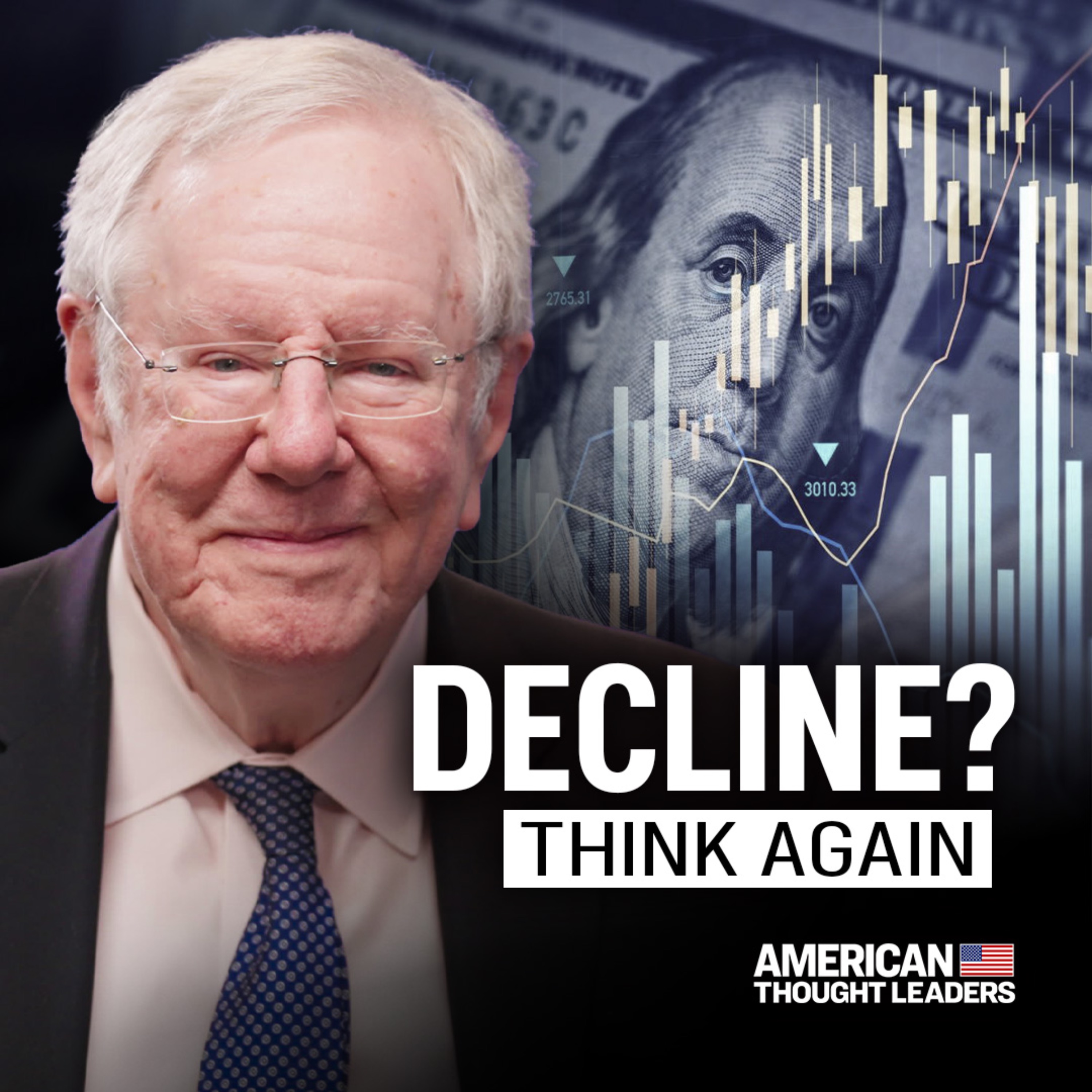
American Thought Leaders
Steve Forbes: A Message to Anyone Feeling the American Dream Is Lost
00:24:00
Loading summary
Transcript41 lines
- [00:00]
A
The role of the Fed should be very simple. Stable value for the dollar. We have 60 minutes in an hour. We don't change that each state. Imagine if the Fed was in charge of the Time Bureau. They had 48 minutes in an hour one day, 96 the next. Imagine baking a cake. That's instructions. Say, bake the batter for 30 minutes. Ask yourself, are those nominal minutes, inflation adjusted minutes, Nevada minutes, Mexican minutes? So you want a stable measure of value.
- [00:26]
B
Steve Forbes is chairman and editor in chief of Forbes Media and co author of what It Is, why It's Bad and How to Fix It. In this interview, I get his take on a wide range of topics, including the rise of DSA candidates, DEI hires, and whether the American Dream is still possible today.
- [00:46]
A
Name one country that has succeeded in socialism. Never has happened. And being able to have the freedom to create. As Lincoln put it, improve your lot in life. Improve is the way to go. Otherwise you're going to stagnate. And you should have the freedom not to stagnate.
- [01:02]
B
This is American Thought Leaders, and I'm Jania Kellick. Steve Forbes, Such a pleasure to have you on American Thought Leaders.
- [01:11]
A
Good to be with you. Thank you, Jan.
- [01:13]
B
So we're here at Freedom fest. We're celebrating 250 years of the Declaration of Independence. A very, very big date. At the same time, a lot of younger people that are speaking to me genuinely feel like this American Dream, which my parents followed to North America, is kind of lost. They don't have access to it anymore. What do you think? What do you say to them?
- [01:40]
A
There have always been periods where people have doubts about the future. If you're interested in history, go back to the 1890s when there's a real feeling with the closing of the frontier in this country, the we're just going to stagnate like any other country. Turns out the frontier is the mind, not the physical land. We had a rough period in the 1930s, the Great Depression, 1970s. People thought America was in decline. We're in one of those periods now. But a free people always finds ways to move ahead, even though times and circumstances change. And the problems we face today are not anything inherent in America, but in mistakes made by government. And the nice thing about that is mistakes can be undone. And if you create an environment where people can be truly creative. And we see that even with the barriers today, extraordinary things are happening in health care and elsewhere that are going to improve our lives. So instead of being pessimistic, look what's out there. Look what the Opportunities are and then start thinking of how you can participate and help move it forward.
- [02:45]
B
Just, you know, some, some examples. It's very hard for a lot of younger people for these days to buy a home, for example, especially in one of the larger cities or just some of these things. You know, private property, of course, is a cornerstone of everything America is about, right? But that it, for some people, they, they're thinking, that's not even something that I'm really looking for because how I, I don't see a path, I don't see a path there or like just sort of private practical things that a young person might be able to benefit from.
- [03:14]
A
Well, in terms of housing, the idea of living with the parents a little longer, that's a very practical thing if the rents are high and the mortgage rates are high. But again, the key thing there is, if you want to buy an affordable home, there are plenty of places in the country to do it. You don't have to stay in New York City, you don't have to stay in crazy Los Angeles or Seattle. There are plenty of other places. And, and then if you've got energy agitate to remove the barriers, regulatory zoning barriers that make it impossible to do housing projects. In Texas, for example, you can get a project going in a matter of months. In California, it's a matter of years. And time is money. So when a government that doesn't keep a stable value for the dollar, that is inflation, that makes interest rates higher than it should be. So you remove these barriers and getting out there in the, in the economy, Calvin Coolidge President, that I think we're starting to remember again, his philosopher teacher at college said, get in the river of life. So don't stay on the sidelines. Get in there. And you may not always know where the river is going to go, but you can be part of it. So don't say the future isn't good. The key thing to remember is for all the chatter about resources, there's no such thing as a natural resource. It's all about human ingenuity, whether it's taking a stone and making a tool out of it. Copper, which in and of itself has no use except for humans finding out, making it a tool for many, many things. You take oil, glop in and of itself. Human ingenuity turned it into a fuel of a modern economy, which we now take for granted. The whole thing in high tech, the microchip based on silicon, which is another word for sand. You go on a beach, who knew you're sitting on A resource. So it's things are there, but human. The mind makes it a resource. And human ingenuity is unlimited. So that's the key thing. Don't look on the physical look. Make sure the mind is free.
- [05:32]
B
You know, one thing I have to confess to you see, I had zero, zero concept. I was a biologist in my previous life, and I had zero concept where prosperity came from. Like zero. I was one of these people who sort of imagined the you can't grow the pie. Not because I had never thought about it, just because that's what I'd been taught. Right. And so, you know, this basic idea that there's, you know, division of labor creates prosperity, or innovation creates prosperity. Right. These are things. I don't even know if we learn these things as young people these days.
- [06:01]
A
Well, that's the thing. And that's where we got to get the message out. Go online. It's there. And Adam Smith may not be the easiest thing to read, but there are other writings out there that are. Take Thomas Sowell, George Gilder, and with Adam Smith, if you can master reading Shakespeare and millions still try, you can read Adam Smith. And the key thing is it's all about the freedom for us to buy and transact with each other. And Smith and others have pointed out it's not zero sum. We. We each get something from it. And sometimes buying things is less fun than buying other things. More fun to buy a fancy new vehicle or bike, e bike or whatever, than paying the rent or paying the electricity bill. But then people who complain about those things don't hesitate to go out and spend three or $400 on a pair of jeans or dungarees, look like they came out of a dumpster or shredded. And so. But it's all about the ability to interact. And when we interact with each other, we raise the standard of living. And it's not just a material thing. It is a moral thing. Everyone should have the opportunity to discover and develop their talents and go out there. You may make mistakes, but you learn from them. But don't be pessimistic. Figure out how you move yourself forward.
- [07:26]
B
So you were on stage not too long ago, and one of the big topics that kept coming up was the rise of the Democratic Socialists of America, the dsa people that seem to have pretty openly socialist, if not even communist policies. Right. Kind of a rising ranks in the Democratic Party. And it seems like looking at these midterm, pardon me, primaries for the midterms and so forth, that there's a lot of interest in this. Right. And we've even, you know, sort of significant portions of the young population saying socialism is something that they prefer to, you know, capitalism and some other systems.
- [08:06]
A
Ignorance is bliss. And if you know nothing about socialism, which is tyranny, it sounds social. What's wrong with being social? And in terms of, again, the markets problems we have today were created by government. And you make those changes, remove those barriers, we move ahead. And so, on a practical level, name one country that has succeeded in socialism. Never has happened. And being able to have the freedom to create to, as Lincoln put it, improve your lot in life is the way to go. Otherwise you're going to stagnate. And you should have the freedom not to stagnate.
- [08:48]
B
Well, you know, and one of the things I've noticed that some of these DSA people talk about, maybe even they have a point, or they at least use it. It's this. Call it corporate welfare cronyism. There seems to be a lot of that in this country.
- [09:01]
A
Well, the thing is, that's an argument against socialism. That's a form of socialism. Free marketeers like Adam Smith, Hayek, Tom Sowell, George Gilbert and others Laffer make it a point those. Those go against what free markets are about. And the thing is, government does bad things and then they blame the free markets for it and say, oh, we've got to come in and cure it. We create a housing shortage. Oh, we got to get the government more involved. They create inflation, the prices go up. Oh, we got to do something about it. And then they resort to scapegoating. You know, you look at the history of inflation. In the Roman times, they blamed the Christians. The lions didn't mind that, but it didn't do anything to stop the inflation. Medieval times, they often blame witches. In the 1920s, the terrible German hyperinflation was blamed on Jewish bankers and merchants. In the 60s, Arabs caused the rise in the price of oil. Today, it's evil corporations, evil landlords and things like that, they always scapegoat. When the basis of trust, sound measurement of money. Money just measures value. You know, you wouldn't think changing the way you do weights so you buy a pound of cheese, you don't know whether you're going to get 14 ounces or 18 ounces or 10 ounces. Very, very inconvenient and inefficient. Same thing about money. Money measures value like a yardstick measures length.
- [10:35]
B
Mm. So since we're talking about this, I'm going to have to talk about the Fed, because this is Something that you talk about all the time. Maybe for the uninitiated, very. I know you're bullish on the Fed, the new Fed chairman. I want to talk about that. But before we go there, just very briefly, for the uninitiated, what is the Fed's role in this magic word that you just mentioned, inflation.
- [10:57]
A
Well, the Federal Reserve is supposed to be the guardian of the dollar and make sure the financial system, if it goes kablooey, you step in and prevent the disaster from spreading. The English taught us that back in the 1860s and so. But the Federal Reserve has taken the. On the crazy idea that prosperity causes inflation. So if you start doing well, the Fed doesn't like that. They think they have to put you out of work, that they have to slow the economy. While slowing the economy does prevent prices from going up because you have fire sales going out of business, sales. It's ridiculous. So the role of the Fed should be very simple. Stable value for the dollar. We have 60 minutes in an hour. We don't change that each day. Don't float that each day. Imagine if you had the Fed was in charge of the Time Bureau and they floated the clock say at 48 minutes, an hour one day, 96 the next. Imagine baking a cake. That's instructions. Say bake the batter for 30 minutes. You have to ask yourself, are those nominal minutes, inflation adjusted minutes, Nevada minutes, Mexican minutes? And so you want a stable measure of value. And when the Federal Reserve starts to try to manipulate what the economy does, tries to manipulate interest rates. Interest is another word for rent. You know, you rent an apartment, you rent the money and you pay interest or rent. They call it interest for money. The Federal Reserve trying to manipulate interest rates is a form of rent control which just messes things up. The only question is how much they mess it up. Leave the economy alone. Will they have excesses from time to time, given human nature, but people will correct things if you allow them to do so. When government gets in there, we all end up paying a price for it.
- [12:58]
B
So I'm looking for this hopeful word, okay, so to speak, because we do, we see a lot of, you know, of course the Fed's been very involved in printing lots of money. There doesn't seem to be a huge interest in paying down the debt from by our government. There is this, you know, sort of significant cronyism that's happening in there and. But you're saying this is just a phase and you're seeing, you see a way out.
- [13:23]
A
It's something we have to fight.
- [13:24]
B
Right.
- [13:25]
A
But don't blame cronyism on capitalism.
- [13:27]
B
Right.
- [13:28]
A
That's.
- [13:29]
B
Do you see a way through this? Right.
- [13:32]
A
You call it out and you fight it.
- [13:34]
B
Yeah.
- [13:34]
A
And by the way, people who are pessimistic about. If you start reading what's happening in terms of breakthroughs in health care AI instead of thinking it's the end of the world, think of how it's going to create cures for ailments and diseases and make for a better life. And so do do some go beneath the surface of all the complaining and move ahead and realize get a little bit of perspective. One, you're living in an era that has never been had more to offer. Look at history, you know, has been pointed out. Over two centuries ago, nine out of ten people lived in dire poverty, which is defined as $2 and 15 cents a day. Imagine living today on a little more than $2 a day. You can imagine the misery that would be 9 out of 10 people in the world did that a couple of centuries ago, two and a half centuries ago. Today it's less than one out of ten. So for all the mistakes we've made, the fact is the standard of living has improved. So get a perspective on that and then look at some of the extraordinary things that are happening instead of just saying oh woe is me. Figure out how do I take advantage of it, how do I move ahead in this environment and recognize it's not going to be given to you on a platter. Anything that's free has a price attached to it from the politicians.
- [14:59]
B
So, so in terms of, you know, when we were on this panel, we were talking about, you know, the messaging for the Republicans, the strict messaging. Can you maybe reprise that for me in your mind? What do you think the key issues are for the Republicans in the midterms since that's, that's your side obviously here.
- [15:18]
A
Yeah, well on the, on the positive thing they should be doing, key thing is reducing the tax burden on people, which is a barrier to getting ahead. And that includes reducing tax rates. The idea that the rich aren't paying their taxes, they pay 40% of the income taxes in New York City and in the country. What the, what these far leftists want is to take your, your other assets, seize your other assets. And, and so in terms of what the Republicans should be doing, more tax cuts. They're helping people have a better life because a tax is a price. If you lower the price of good things like productive work, risk taking success, you get more of them every single time in 4,000 years. Reduce the burden on people. They do more. Just as for example, they put taxes on cigarettes or liquor. Why? Because they don't want you to use. They like the money. But they say, oh, we don't want you to smoke so much. We don't want people to smoke so much. And you put a tax on it. Why do you put a tax on the ability to be employed, to start a business? Why, why do you put a tax on. That restricts it. That hurts it. Why are you doing that? So bottom line, reduce tax rates. Point out that the Democrats what they stand for more, more control over you seizing what you have, this kind of crazy tyranny thing that you don't have freedom anymore. Call them out on it. I think the Republicans will. You know, foreigners are not supposed to participate in terms of money in our elections. Close those loopholes that allow hundreds of millions of dollars overseas corrupting our elections. So take the positive side. It's a free country. People who founded it were willing to stake their lives on moving this wonderful experiment ahead so you can do the same. You don't have to put your life on the line. Just get up and what's out there, what can I do? And if something's making something expensive, why don't scapegoat. Look at the underlying, real underlying causes.
- [17:36]
B
And this tyranny that you mentioned, you're talking about the sort of the deep BSA policies here that, that are being promoted or what exactly do you mean?
- [17:44]
A
Policies that force girls to compete against men in sports, things like that. Forcing the hiring of people who may not be qualified and doing things by quota, not by merit. Imagine if you had these policies in baseball or football or soccer. You have to take on players are no good because we think it's a social good to have no. You want players who know how to play the game when they get to the soccer field or the baseball field. So these. And telling people what they can and cannot say, censoring people because they may say something that makes you uncomfortable. Boo hoo. Debate them. That's what free speech is about.
- [18:33]
B
One thing that I noticed kind of as we rounded out here is that you recently wrote an op ed June 25th on the importance of the US demonstrating a strong commitment to Taiwan. I recently traveled there, interviewed the vice president and I went out into the countryside because I wanted to see if what I believe to be true is really true. It was my first time there. I want to believe that this is a uniquely free people and they are and that that is what I indeed discovered, as I was, as I kind of met people, spoke with them and so forth. But why? And there's a lot of questions in people's minds, even on your Republican side, about whether the US should have this strong commitment to Taiwan. Explain that to me. Why is that important?
- [19:16]
A
Well, we don't want hegemony in the world. And in terms of Taiwan, its relationship to the mainland, the language on that was written decades ago. Change, not the language change, not the ability to sell Taiwan as we've been doing for years, weapons to make sure nobody gets any bad ideas and let things work themselves out. And. And so nobody gets the idea that they can go marching in. I would hope that the example of Ukraine would be a. An example of when you go in that direction, bad things can happen or unanticipated things can happen. So in the meantime, cultivate trade and on the mainland, let people be. Have the opportunity to pursue opportunities and not have to worry about looking over their shoulder.
- [20:12]
B
Why. Why is Taiwan important to. Why should Americans feel Taiwan is important to them?
- [20:20]
A
Because if you allow unauthorized aggression against Taiwan and go against agreements made in the past, that means we're going to have the kind of world we had in the 1930s. We saw where that led. So again, let's keep things as they are. No turning the South China Sea into a Beijing lake. No allowing the Strait of Hormuz to have tolls. Freedom of navigation has been a hallmark of US foreign policy for over 200 years. Keep it that way.
- [20:57]
B
So as we finish up, actually, what about the state of Hormuz? What about Iran? The ceasefire is done, but there seems to be.
- [21:06]
A
The Iranian regime is evil. They're never going to keep an agreement. And so it's like changing a snake in your bed. Poisonous snakes in your bed. They are not there to make you comfortable. And the Iranian regime has been very open for over 47 years. What their goal is. Death to Israel, death to America, death to unbelievers. Weird ideology, but there it is. So take it. Take them at face value. And that means when you start something, finish it. You're not going to negotiate them away. You're not going to turn them from vipers into teddy bears.
- [21:47]
B
A final thought as we finish, Steve.
- [21:49]
A
Have faith in the future. We have problems, but that's the nature of people. But in a free society, you find ways of turning things around. I remember 20 years ago, we were running out of oil and along came fracking. Fracking and horizontal drilling. Now the US is for most formidable oil and natural gas. Producer in the world and go back in time. One of the things I've been involved with is an achievement called series of short biographies of people who made the modern world called Achievement. Steve Forbes on achievement from the Free to Choose Foundation. You can find it on their education website called is it izzit.org One of the examples is John Deere blacksmith from Vermont. Good, but didn't make it very well. There goes to the Midwest, as we call it now. Illinois had some great soil, but the problem with the soil in the Midwest was in Illinois and other contiguous areas was that stuck to the plow so he couldn't grow anything. Every three yards you had to stop, pull the horse back and scrape the dirt off the plow, sticky stuff off the plow. Well, John Deere remembered his mother, a seamstress used a special kind of steel needle to get through the thick fabric. And also he saw a sawmill and was going out of business and got the idea why not make a steel plow? And he invented the plow that made the Midwest from worthless soil for agriculture into the breadbasket of America and much of the world. That takes people looking to the people who are pessimistic today. Looking at something and figuring out how to turn what something doesn't look like anything into something that is absolutely profound and positive. That's the mentality. Learn to look at the world through a fresh set of eyes.
- [23:45]
B
Well, Steve Forbes, it's such a pleasure to have had you on.
- [23:48]
A
Good to be with you. Thank you.