← American Thought Leaders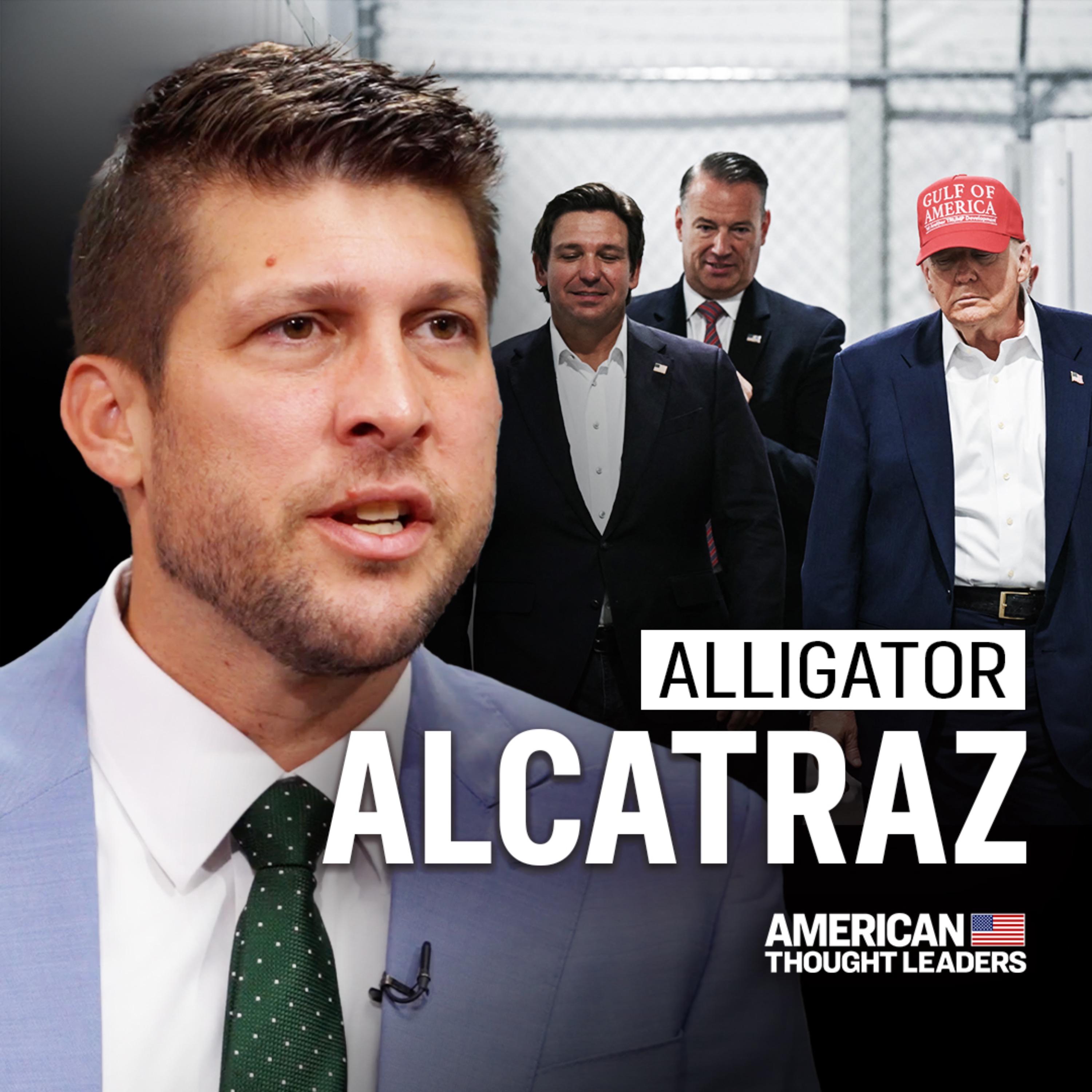
American Thought Leaders
The Battle Over Alligator Alcatraz, the US Census, and CCP Surveillance | Florida AG James Uthmeier
00:33:55
Loading summary
Transcript56 lines
- [00:00]
A
The people in Alligator Alcatraz committed some of the most heinous of crimes. You've got lawsuits that have been brought alleging numerous things.
- [00:08]
B
In this episode, I sit down with Florida Attorney General James Uthmeyer. We take a closer look at the recent Alligator Alcatraz controversy, the battle around the U.S. census, how the CCP may be spying on Americans. In Florida's Comprehensive Plan to Fight Crime.
- [00:24]
A
The ccp, or an entity that's clearly tied to the ccp, is obtaining the data of Americans that capture the imagery of everything people are doing at home, and consumers do not know about it.
- [00:37]
B
We also discussed the expansion of the powers of the judicial branch in America.
- [00:42]
A
I'm not completely trying to throw out judicial review here, but the reality is today the judiciary is far more powerful than our founders ever would have intended. If our enemies can come in and manipulate our government, manipulate our electoral power, then we do not have a sovereign country.
- [00:58]
B
This is American Thought Leaders, and I'm Jania Kellogg. Attorney General James Uthmeyer. Such a pleasure to have you on American Thought Leaders.
- [01:07]
A
Thanks for having me. It's a pleasure to be here.
- [01:10]
B
So you're going to be speaking very soon at these NATCON events happening in D.C. this week, and the topic of the session is border security and American sovereignty, and I think more broadly, just kind of sovereignty. This is an issue that you've been working on in a variety of ways. As I've been watching your work in Florida, I wanted to start with looking at. You're going after some of these surveillance systems that are being basically installed in cameras and other monitoring devices that are being, you know, in hospitals, at homes and security systems, you know, very kind of invasive stuff. Just give me a little bit of a background of how you kind of came into starting to make these investigations in Florida.
- [01:53]
A
Well, we're going to be investigating a lot of companies. What we've come to realize is that the ccp, or, you know, an entity that's clearly tied to the CCP or the Chinese military, is obtaining the data of Americans through many companies out there that they either own or there's a parent company that is sharing that data. So in Florida, the most recent investigation we launched was into a company, Lorex. They make in home or in business cameras, everything from baby cams to nanny cams, doorbell cameras. I mean, they capture the imagery of everything people are doing at home, and consumers do not know about it. That then gets handed over and Lord knows what happens then. So at the least, consumers should be put on notice by these companies that Their data is being handed to one of our, if not our greatest adversary, which is a huge national security risk. But that data probably should not legally be allowed to leave the United States in the first place. So we first came into knowledge that health care tracking data devices that, you know, that measure your vitals, and hospitals were handing over data to the ccp. Now, we've heard about Lorex, there's several other companies we're looking at, and at the end of the day, we want to combat all of it because I think it's dangerous.
- [03:14]
B
A lot of people don't know that in China, they have something called the National Intelligence Law. And the National Intelligence Law basically requires individuals and companies that are under the auspices of the Chinese Communist Party, which is everybody in the country or outside the country that's from the country, they're required to spy, provide data, essentially the gamut of things. And at the same time, it's actually illegal for them to disclose that they're doing so. Right. So there's this bizarre legal dimension I was thinking you would think they might hide because they could do all this with kind of hiding it, but they actually made it the law over there.
- [03:54]
A
Right? Yeah. I think they have every intention in the world to gather as much information as possible. The leaders of our country, I think they're aware of some of it. I don't think they know the full extent, but at the end of the day, China is our greatest adversary. And if we are showing them the playbook for how we think, how we function, how we operate, that our next generation is not going to be prepared to combat our enemy.
- [04:19]
B
And one of the things I appreciate is that you're. Even as you're starting some of these investigations, you're making Floridians, and I suppose other Americans like myself, or actually Canadians living in America, hopefully soon to be Americans, just aware that this is happening. And I think that's. You do mention this, and this is such a critical part of the picture, like, we're still not fully aware of the gravity of the scale of it all.
- [04:46]
A
There's so much evil and danger in the world that I think we lose sight of how dangerous China is. China is our number one enemy. And with trouble in the Middle east, with economic issues, with the open border, it's easy for us to get distracted in other ways. But the reality is China is trying to harm us in every one of those avenues, whether it's subsidizing products so they can sell them below the cost of our manufacturers to make them here. And then ultimately drive up prices and hurt our industry. Whether it's flooding fentanyl into the country through the open border crisis, whether it's stealing data through one of these avenues that we are investigating. China is learning, they're patient and they're willing to do whatever it takes to get the upper hand. So we're going to combat, I mean, the AG's office in Florida, we have our own limited sovereignty and limited jurisdiction, but we still see these very dangerous harms and we're going to fight them.
- [05:44]
B
Well, and this is what I wanted to touch on. I mean, you've been in the thick, you know, you were in the commerce department and Trump 45, you know, wrangling some serious legal issues. And likewise, of course, you're doing this in Florida now. It's this taking advantage of an open society and understanding the loopholes and the laws in some of the. That's some of the way that the Chinese Communist Party has been able to affect all of these basically scenarios.
- [06:11]
A
Right? Yeah. I mean, you can see it. You mentioned the Commerce Department. You know, we work on the census there. A lot of people just view the census as a number crunching exercise. The government does every 10 years to count how many people are here. But it truly is the central function of deciding electoral power in our country because everybody goes in and votes. But the reality is the Electoral College, that is how the electoral votes get awarded for presidential elections. The electoral votes decide how many members of Congress come from each state. The electoral power also decides how federal funding gets allocated and distributed. So the census is a highly politicized operation in government. And unfortunately, I think the bureaucrats and the left have weaponized it to disproportionately hand out more electoral power to states that are sanctuary states that are blue, states that want to, you know, bring in as many illegal aliens, as many foreigners as possible. And I think that runs very counter to our Constitution and way of life here in the United States.
- [07:21]
B
So let's talk about this, because I remember when I first heard about this, I don't know how other countries do this actually. But of course the voters are supposed to be American citizens, right? Or need to be American citizens. Maybe you can even explain to me the legal reality around that. But also, like, for this, for the purposes of the census, everybody is counted.
- [07:47]
A
That's right. I mean, the Constitution says, you know, there needs to be a count of all people. And the Supreme Court has pretty consistently ruled that people doesn't just apply to U.S. citizens. But then you have, you know, pretty Elaborate legislation that gives the Secretary of Commerce the authority to decide what questions go on the census and ultimately how to provide data to Congress for apportionment. And I do not believe the law requires that illegal aliens, though they're counted, you have to know who's here in the country. The law does not require them to be included in the electoral distribution. So we believe, you know, ultimately states like California, Illinois, New York, you know, Florida probably disproportionately has some additional seats based on illegal aliens in the state. But at the end of the day, there would be a 20 to 30 electoral vote swing to Republican states if we're only including US Citizens in the electoral distribution. And it makes sense. Only United States citizens have the right to vote. Our Constitution starts off with we the people of the United States. If you're truly going to allow people illegally in the United States to be included in this electoral power, foreign enemies could take significant advantage of this. They could flood people into certain parts of the United States just during census season in order to try to shift votes. And, you know, you're aware of elections we've had in modern history. I mean, it doesn't take a lot to shift things one way or the other.
- [09:26]
B
Well, and so is there any evidence that this has actually happened? I mean, this is like a foundational sovereignty question. And now, you know, we're hearing more of the, I guess, the realities of how Communist China has, you know, something about printed ballots. I haven't looked into it deeply. I remember looking at it a bit back in 2020. 2021. Right. But is there any evidence of this happening, or is this something that's being looked at?
- [09:54]
A
I know the Trump administration is looking at it now. They started while I was there to look at it. You know, back in the first term there, we proposed adding a question to the census. Are you a US Citizen? Are you here illegally? And you can imagine the reaction we got. Now, that was a question on the Census for over 150 years. And then during the Obama administration, they took it off the census questionnaires. The courts nevertheless said that it wasn't legally permitted for us to add that question, despite it being on the census document for over 150 years. But at the end of the day, you cannot be a sovereign country if you do not know who's here. And with the open border and with the census counting people illegally, we have made some incredible decisions that give out both electoral power and, you know, billions of dollars based on people that do not have a right to be here.
- [10:58]
B
Explain to me, you know, the, your view of the legal reality. Right, because you're telling me that courts are saying you can't add that question. But you know, presumably there's some debate about this in the, in the legal community. Right?
- [11:13]
A
Yeah, I believe, you know, I believe that a country has the obligation to protect itself. And right now the Constitution says yes, count everybody in the census. But I do not believe the founders would have intended for us to give California more voting power than other states because more people are breaking the law and illegal living, illegally living in that state. So the president has, you know, has called for a new census. You know, I commend him for that. We will certainly help him. I don't know exactly how he plans to go about it, you know, in the middle of a 10 year cycle. It is a tremendous undertaking. But I think we have technology today through, you know, the taxation system and other government documents where we can more quickly figure out, you know, who is living in the country and reallocate to give states electoral power based on the population of US citizens, people here legally that have a constitutional right to vote. And we can reallocate, you know, across the country that way.
- [12:15]
B
So you've been, I think we first met when you were chief of staff and Governor DeSantis.
- [12:23]
A
That's right, yeah.
- [12:24]
B
Administration during, at the height of the COVID lockdowns and so forth. One of the things that you did a lot was you basically support in whatever ways you could, you know, having challenging this, you know, mass border crisis that that was happening during those years.
- [12:46]
A
That's right, yeah. We've taken action in Florida over and over again to try to, you know, combat the open border crisis. You know, we've got legal challenges there. Of course, for many years the federal government did not want to take on its responsibility. It abdicated its responsibility to enforce the law. And the courts have always said that immigration is a federal prerogative, that states are field preempted, which means, you know, we can't go in and do this job ourselves. We can only do it if the federal government blesses our activities. So, you know, states that wanted to protect their citizens, protect their families, were kind of sitting ducks. People could come in, you know, they could engage in drug activity, you know, you're going to go after that criminal activity. But there's nothing we could do to prevent illegal aliens from flooding into the state. So we took numerous measures. We prohibited giving drivers licenses and you know, the trucker commercial licenses to illegal aliens. We took away the tuition that had been provided by a previous administration to provide, you know, free higher education for these individuals. We took away all the incentives because at the end of the day, as illegal aliens were flooding into our state, we saw fentanyl trafficking go up, we saw human trafficking go up, we saw crime going up in every regard, always tying directly to the border. But it's been so refreshing under the Trump administration to finally have a federal government that says, you know what, we're going to bless you, authorize you to go out and help us enforce the law. So we are detaining, we are deporting. I believe at this point, we've detained more than three times the number of illegal aliens of any other state, including Texas, because we believe in sovereignty and we want to protect our citizens.
- [14:34]
B
Well, you know, famously, you built Alligator Alcatraz. So. Or infamous. Famously or infamously, depending on who you are. And, you know, you yourself have faced some pretty significant legal issues around this. Unpack that for me a bit.
- [14:52]
A
Well, you know, I think the left opposes what we're doing on immigration enforcement. Again, it ties back, I believe, to the census. I think they had a deep rooted plan to bring in as many illegals as they could, welcome them into sanctuary states, get more electoral power, and that would be their way to continue to, you know, have, you know, direction under control in this, in this country. And we've stopped it. We've ruined their plan. The president shut down the border and we're working to, you know, deport people back to where they came from, which messes up their plan. So as we do this, you see them panic and the anxiety goes up, the hysteria goes up. So they're opposing things like Alligator Alcatraz and trying to turn it into a political topic. But at the end of the day, it is a facility to detain people that have broken the law. We do not have enough room in our state jails and prisons, and the sheriffs are doing their job and they need more places to house these offenders. And the people in Alligator Alcatraz were largely, you know, terrible felons. I mean, they had committed some of the most heinous of crimes. But the left opposes this, the media opposes this, and activist judges oppose it. So you've got lawsuits that have been brought alleging, you know, numerous things. The one that most recently led to the temporary injunction against the facility's operations. It's an environmental complaint. It's people saying that federal NEPA laws, these are environmental regulations that you have to follow at the federal level, that they weren't followed here. Now it's a state facility. It's run by state employees and contractors. Just as our state jails don't have to follow these NEPA requirements, We do not believe that Alligator Alcatraz has to either. So we're on solid legal footing. Nevertheless, a judge has ruled against us. We're going to appeal that decision. We believe we're right on the law. So hopefully that will continue operating. Alligator Alcatraz will continue operating for some time.
- [17:00]
B
How are you dealing with being held in contempt?
- [17:03]
A
I feel about the same as I did before I was held in contempt. So.
- [17:07]
B
But just. So what happened?
- [17:09]
A
Well, so we passed a state law in Florida that you cannot be an illegal alien and come into the state. It very much mirrors the federal laws. And really, this law is designed to protect Florida beyond the Trump administration. If we have a future administration in D.C. that again, wants to open the border and put Americans at risk, we wanted our own state law in Florida to protect citizens. Now, we know because of what I told you about federal preemption, that that law is going to be challenged, and it has been challenged. We hope that up at the Supreme Court they will revisit prior opinions and give states back more authority to protect themselves from the open border crisis should it arise again. Well, this judge, you know, she enjoined the law. She said, you know, she does not believe it's lawful. And she directed me to order all of state law enforcement to stand down on enforcing it. Now, the problem is a lot of state law enforcement do not report to me. Our county sheriffs are independently elected. They have their own authorities. So I do not have the constitutional ability to direct those individuals. And if they want to continue carrying out the law, that is their prerogative. None of those individuals, I should add, are parties to the lawsuit in front of this judge. So on the first day of law school, they teach you about jurisdiction and separation of powers. And this judge does not have the authority to reach out to individuals like you that are not a party to the case. You know, you're not a litigant in this case. You're not being sued. She can't just demand that you do something. She doesn't have the authority to do that. So I took an oath to the Constitution. I'm going to uphold and defend the Constitution and rule of law no matter what. And I do not have the ability to do something outside of my legal authority. So I notify law enforcement. You know, I'm not going to direct you to do anything, because I can't. And this Judge did not like my decision, so she held me in contempt.
- [19:08]
B
There's a saying, and I heard in America, the most powerful person America is a federal judge, more powerful than the president.
- [19:18]
A
It's seemingly become that way.
- [19:20]
B
Right, because of this ability to create a national injunction out of the state level. Right. Can you unpack that a bit for me?
- [19:33]
A
Well, the problem we have as conservatives is that our judges want to restrain themselves. That's what judges should do. If you don't have jurisdiction or authority to hear a case or to make a decision, you should not. And so conservative judges, they hold themselves back. They do not want to be political actors. That's not, you know, they were not elected. They're not legislators. Their obligation is to make decisions on the law. But the left, their judges are activist judges. They want to go out and make decisions. They don't follow the law. They push policy, they push agendas. And then with the national injunctions, they will say, you know, we believe this law is unconstitutional. They won't follow the law in getting there. And then they will push that holding to the entire country. Now, thankfully, the United States Supreme Court appears to be shifting a little bit and, you know, restraining that behavior of trial judges. But it's concerning because they will decide what the law is for every American, not just people in their small jurisdiction. That then allows the left to go forum shop, and they will pick, you know, a district court judge in the middle of California who will make a monumental decision that then restricts the rights of people all the way in Texas, Arkansas and Florida and so forth.
- [20:57]
B
That seems as if just a type of power, like, where does the precedent for this come from? Or why, like, why would that ever be the case that a state judge could create a national injunction?
- [21:10]
A
Well, the precedent in part comes from precedent. I mean, that's some of what we're dealing with. You go back to the first case of Marbury vs Madison, where judicial review was established, that says that the judiciary has the ability to decide that a law is unconstitutional. I believe the initial holding in that case was that the court did not have jurisdiction. So here you've got an original opinion. The court doesn't have jurisdiction, and it's mere dicta saying, but the judiciary has the ability to do that. Now, I'm not going in and completely trying to throw out judicial review here, but the reality is today, the judiciary is far more powerful than our founders ever would have intended. And you look at the number of cases being levied against Donald Trump as opposed to other Presidents, significantly more. 34 or more times more. And you see that the courts are being weaponized by the left to try to interfere with the policy agenda of this president. The policy agenda that the people called for, that the people elected.
- [22:16]
B
The president, is exercising executive power. In a way, it seems to me that hasn't been done in some time or, you know, certainly that's the. That would be one of the narratives, that it's, you know, too much. Right. That it's somehow that it sets. And some. I've even seen some people say that it kind of sets a precedent. Okay. But, you know, imagine what if the shoe were, as Alan Dershowitz likes to say, if the shoe were on the other foot. Is this what you would want? Right. How do you view that whole picture?
- [22:44]
A
I believe it's very healthy. I think the, you know, the people want an energetic executive. If you go back to the Federalist Papers, that's what our founders that succeeded in designing our Constitution and federal structure, that's what they wanted, an energetic executive that is acting for the people on behalf of the people. To the extent people are worried about an executive doing more with authority than has happened in the past, that's why we have the check of separation of powers. We've been talking about the judicial branch potentially exceeding its authority, its power. I think you need the other branches to flex to do more and have that healthy friction. And ultimately, the most powerful branch of government was supposed to be Congress, the branch elected by the people. And if they don't like what the executive is doing, they have many tools at their fingertips to hold back or direct a president in the policy direction that they want to go.
- [23:45]
B
Well, and so this is. You're kind of leading into my next thought, which is I've heard from numerous guests on this show that in a sense, the Congress has sort of, in precedent, kind of reduced its own power or even its desire to exercise some of these powers, you know, and allow. For example, there's been some recent, like, very monumental cases where, like, for example, challenging administrative law as being, you know, effectually being able to make, you know, policy at least as strongly as has been done for a great many years. I mean, there's been multiple examples of this. But so, okay, so Congress does have this power, but it doesn't seem to exercise it very often these days. And is that. Is that a problem?
- [24:34]
A
You know, there's multiple ways to look at that. I think big decisions like immigration policy, I mean, those are things that should come out of the legislative branch, the branch elected by the people. That said, you know, every time people complain Congress doesn't pass enough laws, I'm not really bothered by that. Justice Scalia always said every time Congress passes a law, it chips away a little bit at your liberty over time. So Congress not passing laws unless there's overwhelming support, unless things are very popular, and in many ways is not a bad thing. But I will admit, you know, Congress is not very popular. They don't seem to be getting things done. They're not productive, especially on some of these biggest issues related to national security and American sovereignty.
- [25:22]
B
In your mind, what federal lawmaking at this point would be most advantageous for you to be able to do your work in Florida at the state level?
- [25:32]
A
Federal lawmaking, I mean, we certainly needed. We needed funding, we needed law enforcement personnel. At the end of the day, nothing beats having an actual police officer, you know, doing his or her job on the streets, putting their lives on the line every single day. We got much of that in the President's big, beautiful bill. So I'm excited that we have resources now flooding towards the border, towards border security, and helping states beef up resources to stand in the way of people that want to break our law. That's, number one, being able to delegate authorities to the locals, which we've done with the federal government. They've given all of our state sheriffs and police departments authority to enforce against illegal immigration through a federal 287 program. That's wonderful. I would love to see it made permanent where a federal government can't abdicate this responsibility. You know, in the state of Florida, if a government official, like a state attorney, doesn't want to prosecute crime, the governor has the ability to fire that person. They took an oath to do their job. And if they don't do their job, they can be removed from office. We don't have that at the federal level. So where President Obama said, I am not going to enforce against large categories of illegal immigrants that are going to come in and cost our state significantly. Health care costs, criminal justice costs, education costs, cost to our infrastructure, the deadly cost. You know, we've seen now illegal immigrants engage in dangerous behavior, driving, you know, trucks on the road that ultimately result in the deaths of people that are here lawfully. That, you know, that just shows how dangerous it is when a federal official decides, I'm not going to do the job that I took an oath to do, and there needs to be some federal check, some federal punishment for that kind of abdication of responsibility.
- [27:30]
B
Do you have a thought about what that might. How that might work. What that might look like?
- [27:35]
A
Well, you just put me on this discussion, so I'm going to have to go back now and, you know, work on some, you know, some sort of document to outline it. But I don't know exactly what that would look like. But I think at the end of the day, Congress could take action to put, you know, a heightened responsibility on the executive. I mean, at the end of the day, it's the executives function to enforce the law and executives have prosecutorial discretion. You know, they can't obviously prosecute all laws, but you could condition funding or some sort of benefit on executing the law, especially when it comes to immigration.
- [28:13]
B
Fascinating. I imagine there's a number of people contemplating this question kind of as we speak.
- [28:19]
A
Yeah, I think they have been for some time.
- [28:23]
B
So what's next for you? What's next for your work?
- [28:27]
A
Well, I mean, we're going to continue to support the Trump administration on immigration enforcement. You know, it's hard to make up for, you know, the decades where you had an open border, but we're moving quickly again. We've detained and deported thousands of individuals from the state of Florida. I know. You know, we have now, I think, almost 2 million people that have opted to self deport through the Department of Homeland Security's programs, which is a great sign. I mean, nobody knows how many people are illegally in the United states, whether it's 30, 40, 50 million. This is part of why I think we need a census to better understand who's in our country. I think the country has multiple reasons, you know, to benefit from this information, but we're going to continue to enforce the law there. In Florida, we are taking a leading role in opposing people that want to hurt our kids. So sex predators. We've arrested a record number since I've been in office going back to February. And we've also taken a hard stance against social media companies that want to expose our kids to danger. So we filed a lawsuit against a company, Snapchat. It is the preferred outlet for sex offenders because pictures and comments and things disappear pretty quickly after you send them. So law enforcement has a difficult time tracking the behavior of these bad actors. On this site, we believe this, I mean, this has led to numerous kids being abused and ultimately the private data of citizens are stolen through a lot of these companies. And some of that goes to our enemies, like China. So we've taken a hard stance there. We're combating Fentanyl, we're combating the drug cartels. We are doing everything we can to continue to have record crime lows in Florida. We want it to be the safest state to raise a family.
- [30:21]
B
During the time when there were these record numbers of people coming through the border, there were multiple reports of, let's say, disproportionate amounts of military aged males without families. I was, you know, my awareness was heightened around Chinese nationals of this nature. You know, there's people that have told me that there's, you know, there's likely cells of all kinds of adversaries, whether they're terror organizations. We actually know that Hezbollah has cells. That's kind of, we know that factually. And you know, but really, you know, these people have been doing their best to lay incredibly low. But I imagine that there's some thought being given on how to deal with that reality and not just at the federal level.
- [31:09]
A
Yeah, I mean, look, you've got a lot of these people that are military age men. They are committing crimes in the country beyond just being here illegally. And so people get nervous, you know, are we just going to deport these people, you know, back to a Central or South American country that might change over leadership in a year or two and then they all, you know, get released and they flood back to the United States. And that's a very legitimate worry. But what we're trying to make sure Americans understand is especially in Florida, we are going to arrest people and hold them for the term in our prison system and then deport them. So if they, if they commit a serious crime, if they sexually abuse somebody, they're going to spend the rest of their life in our state jail system. We are not going to let them go to El Salvador where maybe in, you know, seven, eight years they get released and come right back into our country. I think it's also important that people know it's not just Central and South Americans that are illegally coming into our country. We've had numerous busts in Florida where we pull over a large vehicle and we find a dozen people from China that have illegally come into the country or Middle Eastern countries. So the open border problem was broad. The left would like you to believe that it's all a bunch of well intended families that just want a better life. And yes, there are certainly some people that want to come into this country for the right reason and we should love them, we should pray for them, but they need to do it the lawful way, the right way. People that come in the wrong way need to be held accountable and we're going to do that.
- [32:47]
B
Well, a final thought as we finish.
- [32:51]
A
A final thought would be you can't be a country if you do not have a border. And at the end of the day, you know, our founders, they gave us tremendous rights in our Constitution. They wanted a people that would be a free people, free from, you know, the terror and the reign of a monarch, you know, that they fled from. But at the end of the day, if our enemies can come in and manipulate our government, manipulate our electoral power, then we do not have a sovereign country. It's refreshing to see a federal government stepping up in this regard. Again, we need to do more on the front end policy wise to fix our immigration program. But if you don't have rule of law, you do not have a country.
- [33:32]
B
Well, AG James Uthmeyer, such a pleasure to have had you on.
- [33:35]
A
It's great to be here. Thanks for the conversation.
- [33:37]
B
Thank you all for joining Florida Attorney General James Uthmeyer and me on this episode of American Thought Leaders. I'm your host, Janje Kellogg.