← American Thought Leaders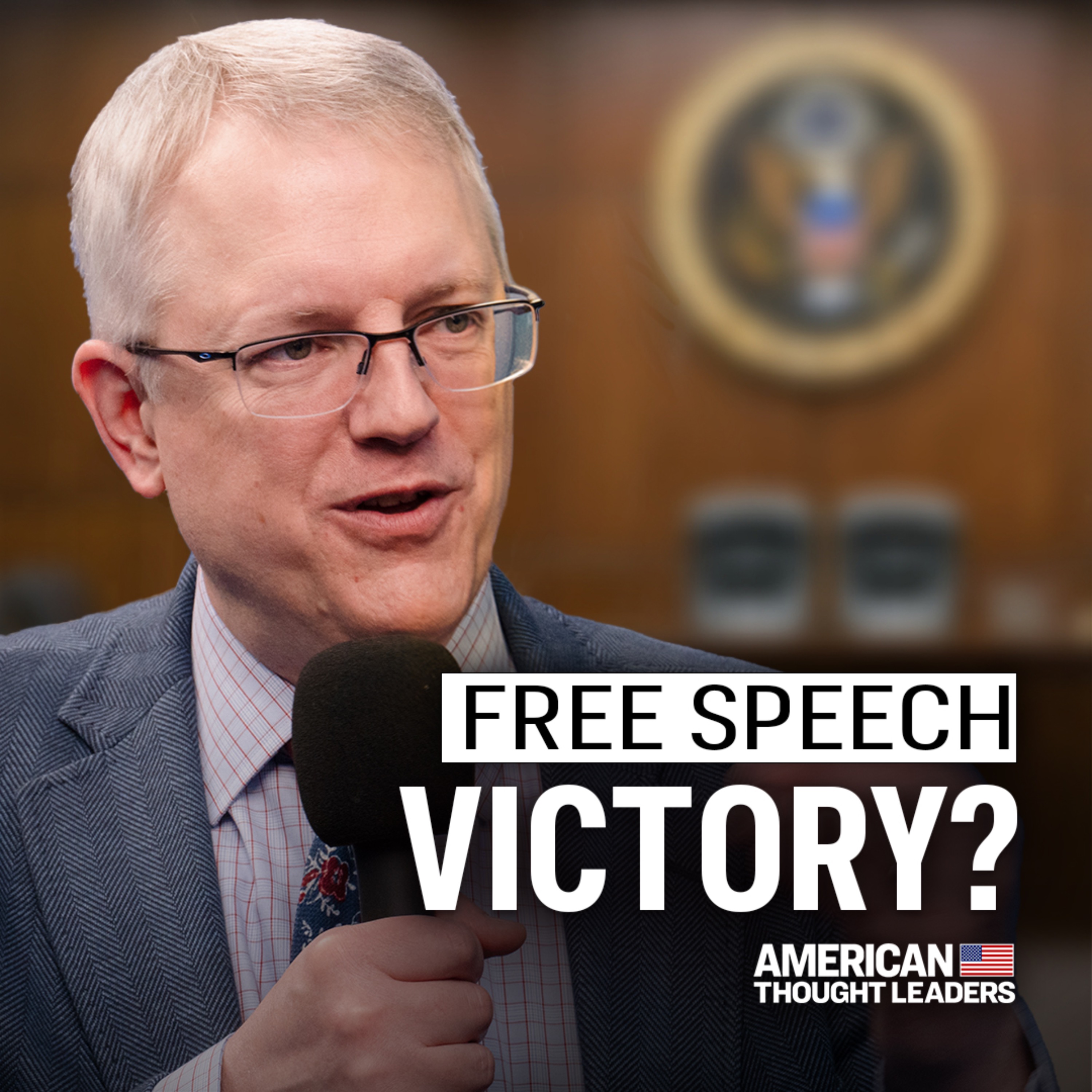
American Thought Leaders
The Missouri v. Biden Censorship Case Just Ended in a Landmark Settlement. Here’s What That Means | Mark Chenoweth
00:40:04
Loading summary
Transcript94 lines
- [00:00]
A
The government has admitted that it was engaged in a censorship enterprise.
- [00:04]
B
What does this admission mean for free speech in America? Today I sit down with Mark Chenoweth, President and Chief Legal Officer of the New Civil Liberties Alliance. We dive into a major development in the landmark censorship case that started as Missouri v. Biden and what this case reveals about the reach of government power.
- [00:25]
A
We've now got a 10 year consent decree with the government that will stop this from happening, at least to our clients, for the next decade. There's a role for the government to police speech, but the government needs to police the line between legal speech and illegal speech.
- [00:40]
B
We also explore Chenoweth's ongoing legal cases around the U.S. securities and Exchange Commission, SEC and Federal Reserve, and why some believe it may be time for Congress to rethink how regulatory power is structured.
- [00:54]
A
If they didn't have the gumption to stand up to the government last time, hopefully this will help them to stand up to the government next time.
- [01:01]
B
This is American Thought Leaders, and I'm Jania Kellogg.
- [01:06]
C
Marc Chenoweth. Such a pleasure to have you on American Thought Leaders.
- [01:09]
A
Great to be with you again, Jan.
- [01:11]
C
Let's talk about social media censorship. So, you know, massive social media censorship change here. Okay, Consent degree settlements. What's the bottom line for all of us here in America?
- [01:27]
A
The bottom line is that the federal government has now admitted that it was engaged in a very systematic operation of social media censorship against COVID 19, against information about the Hunter Biden laptop, against some of the opposition to the lockdowns and so forth. So the government has admitted that it was engaged in a censorship enterprise.
- [01:49]
C
There's been a pretty significant update in this case that you've been going on, the social media censorship case. Now it's called Missouri v. Trump. Is that right? That's the newest name. Technically.
- [02:03]
A
Technically, that's the newest name. That's right.
- [02:05]
C
So explain to me what this actually means, because the language seems pretty strong, right?
- [02:12]
A
Yeah, I think it is. So this is the case that was called Murphy v. Missouri at the Supreme Court. You were there for the oral argument, Jan. I remember. And you know, unfortunately, the court decided that day that our clients didn't have standing for the preliminary injunction. But they didn't. They didn't. Some people thought that the whole case went away, and that's not true. The case just went back down to the district court. And so we've been fighting it ever since then. And the good news is that just this past week, we were able to reach a settlement with the Trump administration, which conceded That a lot of what we had said about the censorship that the Biden administration was engaged in actually happened, that that was true. And that these, the solicitor, or excuse me, the Surgeon General's office and the Cybersecurity and Infrastructure Security Agency and some of the other entities that we.
- [03:01]
C
Cdc, I think.
- [03:02]
A
Cdc, yes, absolutely. The Centers for Disease Control were one of the big offenders that they engaged in this censorship. And so we've now got a 10 year consent decree with the government that will stop this from happening at least to our clients for the next decade. And we could talk about how that matters to other people. But the good news is President Trump had an executive order that he put into effect on day one of his administration, but that could be overturned on the first day of a new president's administration. But this consent decree can't. It's a court order that's in place for 10 years.
- [03:38]
C
You know, you have, there's certain plaintiffs. Actually some of the plaintiffs had to be removed because they went into the government themselves. That's right. But what does it mean for you and me?
- [03:48]
A
Sure. Well, I think the main thing it means is that it's going to be harder for the government to do this kind of thing again. We have a court order that, that says a few different things. It says that this kind of social media is sort of new media, if you will, is still protected by the First Amendment. It also says that just because the government labels something as disinformation, misinformation or mal information, that doesn't mean the government can, can take it down or censor it. That's still protected First Amendment. The First Amendment protects false speech or what the government thinks is false speech. So there's a role for the government to police speech, but the government needs to police the line between legal speech and illegal speech. So child porn, something like that. Yes, the government could go after that. But the government can't police this line between what it thinks is true and what it thinks is false, because that chills robust debate. And the First Amendment wants us to be able to engage in that robust debate.
- [04:44]
C
But as I read this consent degree, though, we're only talking about certain institutions. Right. And this is actually my big question, like, lay out for me what the consent degree actually says. And then I'm gonna ask you, like, does this go far enough? Right.
- [05:00]
A
So what the consent decree says is first of all, that, that this bad behavior occurred and it, it runs against the agencies that, some of the agencies that we explicitly sued and you know, we can't sue every agency we had to sue the ones that we had the most evidence that they had engaged in this improper behavior. So that included the Office of the Surgeon General of the United States, the cdc, the Centers for Disease Control and Prevention, and the Department of Homeland Security, specifically the Cyber Security and Infrastructure Security Agency. Exactly. And so there were, there were some other agencies that were sued initially, including the FBI, but they are not part of the consent decree because the government wasn't willing to settle, basically, if those were part of the consent decree. But we, we were able to go after most of the agencies that did most of the bad things in this lawsuit, I should say, by the way, we have a couple of other lawsuits pending. So, you know, stay tuned. There may be some other relief coming down the road, but because it is a consent decree and it's not a court opinion, it does. It only runs against the defendants who were sued, and it only benefits the particular plaintiffs in this lawsuit. So it's the state of Missouri, the state of Louisiana, and then we represent, as you, as you, I think, mentioned before, we represent, did represent J. Bhattacharya and Martin Koldorff. They're both in the government now, so they had to drop out of the litigation. But we still represent Aaron Cariotti and Jill Heinz, individuals who were censored as part of this, this whole, what I like to call the censorship industrial complex. And you might say, and I think what you're asking, John, is, well, why should anybody else care that they get the benefit of this consent degree?
- [06:48]
C
Do they get the benefit? Right. I mean, that's the big question, right? Because as you said, it's a consent degree and not finding, a court finding, right?
- [06:58]
A
Well, it's sort of a court finding. I mean, Judge Doughty does sign off on all of the stipulations and everything that are in the consent decree, does quote some of his earlier findings in the litigation, for example. So that's part of it as well. But what it really does is it, it makes clear that this behavior was illegal. And so if the government does this behavior again, it can't throw up its hands and say, oh, well, you know, we didn't think the First Amendment covered that because now they've admitted that they know better. And so that makes it easier for the next person to come along and sue if, in fact, they were censored as well.
- [07:32]
C
And then explain to me how this can only last for 10 years.
- [07:36]
A
Well, that's a, that's a negotiate feature as well. So the federal government has a fairly Long standing policy of not wanting to be bound by, by consent decrees that go longer than that. Mind you, if, if the government enters a consent decree with a locality or a state, they're perfectly happy for that to run for longer than 10 years against say like a police department or something like that. But when it runs against the federal government, they, you know, they're, they're very reluctant to have it go longer than that. So that was something, that was a, a negotiated number. The good news is, runs past. So executive order 14149 that President Trump issued on day one of his administration saying no social media censorship. That's a great executive order, but it could be undone on day one of a new Democrat administration. This consent decree cannot be undone.
- [08:27]
C
So it's open season for censorship in 10 years. Is this what you're telling me?
- [08:33]
A
Well, I think it's, I don't think it's open season, but the particular stipulations and so forth don't, you know, don't extend beyond that. But the particular platforms that this runs against too, you have to remember, so it's Twitter, it's Facebook, it's YouTube, it's Instagram, it's LinkedIn. And so my hope would be that the next time, say 10 years from now, that the government starts pushing against these social media entities, asking them to take stuff down, that they'll say, hey, you remember what happened last time that you tried to get us to do this? We ended up in a lawsuit, so let's not do this again. So we're hoping this will give them more of a spine, more of a back bone, as Grover Norquist calls it, an exoskeleton that if they didn't have the gumption to stand up to the government last time, hopefully this will help them to stand up to the government next time.
- [09:25]
C
It's very interesting looking at some of the Twitter files and so forth, because on the one hand there was resistance, right. From the social media companies. That's very clear. On the other hand, you do see a kind of ideological alignment happening as well. So, and that's something that, you know, it's obviously would be very difficult, difficult to deal with. Like if the social media companies choose to censor things which are, you know, which they ideologically don't want to see out there. Right, right. Whether there's pressure or not, you know, that there's kind of, there's no appeal here, is there, other than from just people saying, I don't want to use you. But now these big tech companies have become infrastructure, basically. Right, right.
- [10:15]
A
Some of them certainly have. Well, so, you know, a couple thoughts about that. I mean, I think that it's, it's. I agree with what you say. On the other hand, it's, I think it's a good sign that typically the party out of power is concerned about the First Amendment. And there's a lot of people now complaining about President Trump and saying, oh, you know, you're trying to censor this or censor that or, or you're trying to force the social media companies to carry things they don't want to carry or what have you. If we have both sides when they out of power, focused on the importance of the First Amendment, I think that's probably good for the First Amendment in the long run. I'd like to see a consensus that, where that includes the party in power as well. But, but I do think that it's important to, to recognize that, that the First Amendment comes into play in these, in these disputed areas, and it, and it should continue to allow people to criticize the government. That's what, that's what it's really there for. Right.
- [11:14]
C
And I mean, and clearly this consent decree does suggest that there's, you know, the party in power is on the same side, or at least in part. Right. With stipulations, as you put it. Right?
- [11:27]
A
Yeah, absolutely. I mean, you'd like to think it wouldn't take a year to get here in terms of the negotiated settlement and everything, but look, they've got a lot on their plate. I get that some of this is having the right personnel in place and again, getting their attention and so forth. So, so all the, all the credit to the administration for being willing to do this. Now, I do think there are things that the consent decree doesn't cover. So the government is still allowed to point out to the social media companies things that it thinks are false. The consent decree doesn't stop that. The consent decree doesn't stop them from pointing out things that are inconsistent with what the government thinks is the case. That said, what it does prevent is them punishing the social media companies from taking something down. It prevents them from asking the social media companies from taking something down. So the conduct that it was engaged in before, it can no longer be engaged in, but it can still say, hey, we think that's false. Do with it what you will. And of course, the First Amendment doesn't bind the social media platforms themselves. If they truly are doing censorship on their own, then, then there isn't a First Amendment remedy. There might be a contract remedy as a user of the service or something like that, but there isn't. There isn't a First Amendment remedy.
- [12:45]
C
I'm sort of watching the last five years or longer, actually maybe the last 10 years. I'm becoming a bit of a. Almost a free speech absolutist, which I never thought I would be. I mean, free speech in the First Amendment sense. Absolutist. Not, not, not the stuff which is obviously is illegal and should be illegal. You know, child pornography, whatever, this kind of realm.
- [13:07]
A
Yeah.
- [13:08]
C
I can't help but ask the question, is there a way to build on this consent degree? Is there a legal framework or something? Is there an interest in doing that? Because it strikes me like this is actually quite limited. As exciting as it is for people who do want to see free speech protections maintained, I do think there's a
- [13:29]
A
way to build on it. And I mentioned we still have a couple of cases that are. That are pending. We have one against the State Department that we hope to be able to announce some good news on that one in the near future. We have another one that's against Rob Flaherty and some of the individuals in the Biden administration who were engaged in censorship against our clients on Facebook. So Bree Dressen was an individual who was vaccine injured. And she's not just saying this. She actually volunteered for the vaccine trials. She was injured in the trials, so she's not anti vaxx. She volunteered to be one of the first people to get the vaccine. And. And she was diagnosed as injured by the National Institutes of Health during the trial. So this wasn't, you know, this wasn't somebody who was biased in her favor who diagnosed her. This was part of the trial.
- [14:20]
C
Technically, I'll just mention this for the record. Technically, this was after she was basically the company kind of ignored her for a while. And after great appeals, she actually was. Yeah, she calls it the golden ticket. She got the golden ticket. One of the few people that got to go to the NIH labs, I guess, and get a treatment. Yeah, right.
- [14:42]
A
No, that's fair. I mean, it was. I was probably underselling what it took to get there, but she was wanting to. At first, she didn't want to say anything because she didn't want to discourage anyone from getting the vaccine. She didn't want to participate in something that might lead to vaccine hesitancy. She thought, well, maybe that wasn't her role. And then she realized as more people were being injured by the vaccine, even if it's a tiny percentage she said, well, wait a minute. We need to have support groups for these folks. Just like you might have a diabetes support group or a cancer support group. Why can't you have a Facebook group online for people who have been vaccine injured? And as she tried to set these groups up, Facebook kept shutting them down. Shutting them down. Shutting them down. Well, we have the evidence that they were doing that at the behest of the White House, at the behest of people in the administration, at the behest of an entity at Stanford that was monitoring some of this kind of COVID speech.
- [15:40]
C
Internet observatory.
- [15:42]
A
Yes. Isn't that sort of an Orwellian name?
- [15:44]
C
It's a bizarre name, yes.
- [15:47]
A
And so, you know, that litigation is ongoing as well. And so we're, you know, we're determined to stand up for the First Amendment rights of people like Bree Dressen and the other people who were trying to participate in her Facebook group. One of the other clients in that case lost his son to. Just a few days after his son got the vaccine and was. Was not able to raise funds. He wanted to come to Washington and testify, and he was trying to raise funds on. On one of these websites that. That allows you to, you know, to. To. To raise funds or something like that. Sourcing.
- [16:27]
C
Yeah.
- [16:27]
A
And, you know, and he was. He was shut down. So, you know, there were. There were definitely active efforts on the part of the last administration to prevent people's speech from getting out there on topics that were. That were important to all Americans. And so, like I say, those cases are ongoing, and we're continuing to push, and we may be able to get different terms in those settlement agreements, or in some cases, we may take those all the way to a court judgment. The tricky thing, people say, well, why did you settle? Well, the tricky thing is once the president put out the executive order saying no more censorship, it makes it more difficult to suggest that it's an ongoing problem. And so you run the risk that a court might decide, oh, your case is moot. You know, you're not. There's no relief that we can give you that you haven't already gotten from the administration.
- [17:17]
C
Yeah.
- [17:17]
A
And.
- [17:18]
C
But then that relief is temporary, and that's the problem. I mean, even now, it's temporary. So.
- [17:22]
A
It is. It is. Although, you know, I'll.
- [17:24]
C
But longer, as you point out, 10 years is better than three years or
- [17:28]
A
whatever upscores right now. It took us four years to get here. Yeah, but. But I'll. But I'll take the 10 years of relief.
- [17:34]
C
Yeah.
- [17:34]
A
Our clients are happy to have it.
- [17:37]
C
So I have to ask, okay. You wrote an amicus brief in a case where the president fired the FTC commissioner.
- [17:46]
A
Yes. Trump be slaughtered.
- [17:48]
C
That's right. That's right. So just tell me about is the president allowed according to your legal opinion? I know clearly you have an amicus brief on the president's side. So you have strong opinions on this. Why is the president allowed to do this? And what are the arguments, frankly, against it, for that matter?
- [18:05]
A
Yeah, well, starting with the arguments for it. Now, we think that there's. That the president is going to win this case, that he's on very strong ground, and there's a few reasons for that. But if you look at the text of the Constitution, the president has a duty to ensure that the law is faithfully executed. It's part of the oath that he takes when he is sworn in that he's going to faithfully execute the laws. Well, if he has people who are principal officers in the executive branch who are helping him to execute those laws, and he doesn't have confidence in them, or they're pursuing agendas that are not consistent with what he thinks is the faithful execution of the laws, then he can't maintain his duty to faithfully execute the law. And so that's one of the reasons why he needs to be able to fire those folks. But it's also, if you look at the very first clause, very first sentence of Article 2 of the Constitution, this is the. The article that deals with the executive branch. It gives all of the executive power to a President of the United States. So what does that tell us? It tells us two things. It tells us that there's only one executive power, and it tells us that it's only given to one person. So if somebody like Rebecca Slaughter is ex. Is, you know, exerting executive power, it's not her executive power, it's the president's executive power. And so he needs to be able to control that. And every executive official is just derivative of the president's executive power. And if they're misusing it or using it in a way the president disagrees with, he needs to be able to relieve them of their. Of their duties. So those are the main reasons why, from a kind of constitutional, textual perspective, you know, we think that the president's on solid ground here. But it's also. It's also just. I mean, think of it practically. I like to call it the stubborn subordinate problem. But if you have someone who you can't fire, then how can you control them? Ultimately, the ability to fire an employee is what gives you the leverage over them to make sure that they're doing their job. And if you tell the President, oh, no, no, no, you can't fire this person that Congress has decided gets tenure protection, then the President really has lost his ability to control them. This came up at the oral argument, actually, when I, I think one of the justices, I can't remember who, asked Slaughter's attorney, so, you know, what about the agenda at the ftc? Does, you know, does, do the commissioners control that or does the President get to control the agenda? And the attorney said, oh, the commissioners get to control the agenda. Well, I, I think that gives away the game. No, the President is the one who the American people elected to decide these questions in the executive branch. And you can't have these, these separate entities going off. Can I, can I tell you one story from, from my side? So, so Jan knows this, but other people might. I spent over a year at the Consumer Product Safety Commission as, as legal counsel to one of the commissioners there. So it's, it's sort of where the scales fell from my eyes. And I realized that the administrative state doesn't quite operate the way that I was taught in law school. But one of the things that happened during the first Trump administration in 2017, for the first 10 months of that administration, that agency, the CPSC, was under the control of three Democrat commissioners because historically, the chairman of the commission will resign from office entirely at the beginning of administration so that the President could put his person in. But for whatever reason, the chairman refused to step down. And so you had a majority control of this agency while President Trump was in office. And then the same thing, I'll be damned. Happened in 2025, at the beginning of the year, last year, not for as long, but for several months, there was a majority control of that agency by the Democrat commissioners. Well, the American people go to the polls for a reason to elect a president to be in charge of the executive branch. And you cannot have a situation where these so called independent agencies are being run by the party out of power that is just not consistent with democracy
- [22:07]
C
and with, with having elections and something super interesting, right? It's called the spoil system, right? I mean, this is a feature, not a bug, actually. And this is what I found so fascinating because I, because I always sort of imagined that the idea that the new party in power can come in and put all their people basically get the executive roles and so forth, I felt like that was somehow almost like problematic, right? Because it Feels like what? Like you just get to exert your political interests or something like that, as opposed to, you know, the true normal running of government. But it's actually kind of essential. It's actually the check on corruption and so forth that can form when there is no accountability. Right. And I, and I, you know, this is something Jeffrey Tucker actually told me about that we were talking about. The spoil system is actually a feature that's like, that's like, it's actually a way that we check power because otherwise, like there's places like the UK for example, where these independent nonprofits or whatever exercise unbelievable power because they are not accountable to government anymore. And somehow I don't even fully understand how it works.
- [23:17]
A
Right, right.
- [23:18]
C
But basically they have their own agendas and they're like, sorry, you can't, you know, you can't do anything here.
- [23:23]
A
Well, I think the spoil system is sort of a derogatory term that people gave to the sort of the 19th century system before we had the modern civ service. And I think there are, there are arguments both ways on whether the civil service should continue to operate the way that it does. I think that there are very strong arguments that when you have a Democrat in the, in the White House, the civil service is cooperative and helps them get things done. And when you have a Republican in the White House, the civil service is not nearly as cooperative and in fact, may, may engage in some obstruction to prevent the agenda from, from taking place. So there are arguments that maybe the civil service, the way it is, isn't working, but we're talking about that level above the civil service. So, you know, the sort of the principal officers of the executive branch, these are the people who are presidentially appointed and Senate confirmed people. And you know, there's only, I don't know the exact number, but it's in the, it's in the low thousands, the number of people who are in these, in these roles. And at the bare minimum, the President needs to be able to fire these folks because they're really the ones who are at the top of the agencies making these decisions. And as I said before, you know, exercising his executive power.
- [24:33]
C
What about the Fed?
- [24:35]
A
So, great question. There's another case pending, as you, as you probably know, because Jan's very wise about these things at the Supreme Court, a case called Trump v. Cook. And we filed an amicus brief in that case too. Lisa Cook is a Federal Reserve governor and the President tried to fire her. Unlike Slaughter, who they allowed to stay off of the ftc, the Supreme Court in a, in a, you know, in a preliminary ruling said that Governor Cook needed to stay on the Federal Reserve Board until they made a decision in this case. And that might suggest to people that they're going to decide with the President in the Slaughter case and against the President in the Cook case. And that might be true. We'll see. What we said in our Mikas brief is, look, these are 14 year terms for the Federal Reserve Board of Governors. So not just a five or seven year term like you have on a lot of the other commissions. 14 years is a long term time. The President needs to be able to control these folks too. And if Congress thinks that it wants to separate the interest rate setting power that the Fed has and it's sort of engaged in what I call, well, I didn't make this term out, but it's called a Ulysses contract. You know, if you remember, Ulysses lashed himself to the mast, right, so that he could sail past the Scilla and Charybdis or the sirens. The sirens, yeah. And, and not sort of jump into the sea. And all the other people on the boat had to put wax in their ears, but he left his ears open so he could hear. So this term has been applied to these contracts that you make on the front end that say, look, we're willingly giving something up because we think it's going to be in our long term interest. So that may be something Congress wants to do or the American people want to do with regard to the setting of interest rates because they're concerned that any one president or any one Congress might do something with interest rates that would lead to massive inflation. It would be horrible for every, everyone. And so you're willing to do that. But that's not the only thing the Federal Reserve does. The Federal Reserve is a regulator. It regulates the banks and it has lots of regulatory authority in the financial area. And if, if the President is going to have his agenda and his policies cover that regulation, then he needs to be able to fire those folks. And so Congress needs to jump in here and needs to separate the rate setting authority that the Federal Reserve has from the other authority that the Federal Reserve has and not allow that regulatory power to be unchecked because that's what would happen if the President can't fire people. The other thing that's different about that case, the Cook case, it's a four cause firing. The President said, wait a minute, I'm hearing stories that you lied on a mortgage application about in order to get a better interest rate. I don't want someone setting interest rates who lied in order to get a better interest rate for themselves. I don't think that's something that the American people would be very happy about having in my administration. So I want you gone. And there were a lot of questions at the oral argument about whether there was adequate notice. I think he initially notified her on Truth Social via. Via Truth Social Media post and then whether or not she had sufficient sort of hearing. You know, there wasn't. Chief Justice Roberts, I think was saying, well, so should he have had her over to the White House for a chat? I mean, you know, what sort of, what, you know, what would be adequate sort of hearing in this situation. I don't think the court is going to want to get into second guessing how much notice and hearing that a president has to have before firing someone for cause. I think the, the easy thing for them to do here would be to say this was a firing for cause. We're not second guessing the reasons here and we're going to allow it. But that doesn't mean, if they do that, I think there'll be, we'll see some language. But that doesn't mean the President can just fire everybody on the Federal Reserve Board. There really has to be cause. And that is something that can look at in the future. Maybe they would say, well, so how
- [28:23]
C
close are we to legislation that would do some of this, like, you know, separate out the particular powers and so forth?
- [28:33]
A
Well, as far as I know, we're not close at all. But here's my prediction for you, Yan. If the Supreme Court upholds the firing of Lisa Cook, that legislation will be introduced the next day. If it isn't already pending, it'll get a lot more co sponsors. If it's already pending.
- [28:48]
C
If, if the firing is upheld.
- [28:50]
A
If the firing is upheld.
- [28:51]
C
Right, right. Because there'll be like another way. Why? Why is that? Is it obvious?
- [28:56]
A
Well, maybe not. I mean, the reason I think that would happen is because I think there is a majority constituency in Congress to try to separate the rate setting power from both the Congress, frankly, and the White House. I think there's a, it's worked fairly well for the last, you know, 113 years or whatever, whatever it is, since the Federal Reserve was set up. Now, I hasten to add there are lots of people in the libertarian community who say, well, not every country has an independent central bank. A lot of countries have interest rates that are set in the political process. And so it's not that that's impossible to do, but like I say, I think a majority of people in Congress would be hesitant to go back to a system like that. I think that there's a lot of comfort with the independence of the Fed and, and reluctance to. To go away from that.
- [29:50]
C
But, but why wouldn't they want that legislation if the Supreme Court goes the other way?
- [29:56]
A
Well, I think if the Supreme Court goes the other way, I think they should want it regardless. I think it's a good idea. I just don't know that it'll be quite the, you know, sort of the, the kick in the. In the hind end that they would have the other way.
- [30:11]
C
I see.
- [30:12]
A
But because I think. I think that their fear would be that the President might start firing Powell and whoever else on the board of Governors right away if they don't try to do something to separate that authority.
- [30:26]
C
Right, I see.
- [30:27]
A
Okay.
- [30:28]
C
Very, very interesting. So you have a number of cases, actually, that are in front of the Supreme Court. I mean, you've been successful. Your organization. This is why I like talking to you. You know, guys clearly put together good legal arguments. You've been, I think, three recent cases successful in front of the Supreme Court.
- [30:47]
A
That's right.
- [30:48]
C
Congratulations.
- [30:49]
A
Thank you.
- [30:52]
C
And also, like, what do you. You have some things coming up in front of the Supreme Court? Maybe tell me a little bit about that.
- [30:57]
A
Sure. We actually have three cases pending cert at the Supreme Court right now, which means the court has not agreed to hear them yet, but we're asking the court to hear all three of these. And by the way, the last time we had three cases pending cert at the Supreme Court, all three were granted. So, you know, knock on wood, maybe we'll get that fortunate again. But these are all three very significant cases. I'll just describe them briefly and people can go to our website if they want to learn more about them. But sticking on the First Amendment, initially, we have a lawsuit against the sec, the securities and Exchange Commission. The case is called Powell v. SEC. We represent nine folks, plus the Cape Gazette and Reason, two media entities against the SEC's gag rule. If you settle a case with the SEC, and this has been true since 1972, and by the way, 98% of people who the SEC comes after settle, then you're gagged for life. It's part of the settlement that you
- [31:54]
C
can never talk about what happened.
- [31:56]
A
You can talk about what happened. You can't contradict anything that was in the original complaint against you, even if it was false, Even if the SEC knows that it's false. You can't you can't dispute it. And so it gives the SEC the last word on its description of your behavior, even though it never proved anything in court as to what it says you did. And we think it's a real problem with the First Amendment. And when it, when they do it to 98% of people, it's a real problem for government accountability. Because the very people who know the most about what the SEC is doing wrong or overcharging or what have you, they're all in a position where they can't talk about their own case. Yeah, right. So that's, that's one case. Another case. We represent Pauline Newman, who was Ronald Reagan's first appointee to the Federal Circuit Court appeals.
- [32:43]
C
Right. I've been following this case for a while. Yeah, that's fascinating. Maybe just explain the case, please. Yes, sure.
- [32:50]
A
So. So Judge Newman has been, as of March 24, she has been off the bench for three years. She was administratively removed from hearing new cases by her colleagues. Well, there is something called the Disability Act. When Stephen Breyer was a legislative aide to Ted Kennedy, he helped draft this Disability Act. And what it says is that you can temporarily remove someone from the bench. So you can imagine a situation where someone is an alcoholic and they're going through rehab and you might say, okay, well, no case is for you, and then we'll see where you are in six months or something like that. That's what it's intended for. But Chief Judge Moore of the Federal Circuit and her colleagues have abused this process. And they have now had three consecutive one year suspensions of Judge Newman because they tried to force her to get a mental exam with the doctor of their choosing in order to prove that she was still fit to serve on the bench. Well, the Constitution doesn't require that. That's not life tenure, as we saw with Justice Scalia and Justice Ginsburg. It doesn't require mental fitness test.
- [33:57]
C
And they're using, they're using the excuse basically that she's old. They're being ageist.
- [34:03]
A
They are being ageist. And look, is she as spry as she was when she was 50 or 70? No, she's 98. She's not spry. But boy, is she still mentally sharp. Jan. I mean, when we talk to her about her case, she has very definite ideas about ways of arguing the case and things we should be sure not to forget to say, and don't forget about this fact that happened and so forth. So. So she's been a very active participant in litigating this. And We've been on two different tracks. We've been on an administrative track appealing up through the Judicial Conference. But we're also in this litigation track where the D.C. district Court and the D.C. circuit both have said that they don't have jurisdiction to hear her complaint. In other words, that the only track is the administrative track. And we've said, no, wait a minute, that can't be true. Her constitutional rights are being violated here. Only Congress can impeach someone and remove a life appointed judge. You can't do this administratively. There's a problem with the statute. Furthermore, she needs to be able to sue them to prevent them from doing sort of a fourth year or, you know, other illegal orders. And there is nothing in the statute, Jan, that prevents that kind of future seeking future relief in federal district court. So we think both the, the sort of ultraviruse conduct that the, and that's a fancy lawyer word for meaning that the, that the agency, or in this case the judges acting administratively have gone beyond the confines of the statutory authority that Congress gave them. That, that both that ultraviruse conduct and the future oriented relief that she's seeking are basis for jurisdiction in federal district court. And that's what we're asking the Supreme Court to find, is that she's, is that she should get her day in court to get to the merits of the case. By the way, the D.C. bar association just filed an amicus brief in support of Judge Newman's cert petition. And what they said, John, is interesting. It's a pretty short brief. Everyone can go read it. They said that the Intellectual Property Bar is afraid to come out publicly in support of Judge Newman, that they do support her, but because the Chief Judge Moore and the other judges refused to transfer the case. I should have probably led with that. This is the only time, Jan, in American history that a court has refused to transfer a substantive challenge like this to another court. Typically, if they're going to dismiss it, if they're like, ah, this is just a bogus case, then they'll keep it. But if they're going to actually do something like this, they always transfer it
- [36:28]
C
because there is a potential for conflict.
- [36:31]
A
There's a potential for conflict. Well, and in this particular case, it's not just the, the sort of personality conflicts or, or future conflict that would come from her returning to the bench and having to sit with these people who, you know, behaved like complete jerks to her. Yeah, but there's also the problem that these same judges acted as witnesses and as prosecutors and as judges in her case, well, you can't do that. That's a huge violation of the rule of law and a violation of constitutional due process, we think as well. And yet that's what's happened here as the result of not transferring the case.
- [37:07]
C
And so very briefly, because we have to finish up just the third case.
- [37:11]
A
Sure. The third case is our non delegation doctrine case choice Refrigerants v. The EPA in a nutshell, Congress decided to reduce the use of these refrigerants over about a 15 year period. But they didn't give the EPA any directions on how to do that. And so the Biden EPA decided, hey, let's do some racial set asides. Let's give some of these allowances to Chinese pirates who have stolen American intellectual property. Let's not actually give enough allowances to the people who, who have been good American companies like our client in Georgia. Let's not give them enough allowances to have the same market share that they had before. So if Congress had said reduce, but everybody keeps the same market share, we wouldn't be bringing this lawsuit. But the EPA didn't do that. Nonetheless, the D.C. circuit upheld what the EPA did. And so we're trying to get the Supreme Court to look at that. We think it's a great vehicle for the court to revisit the non delegation doctrine and decide consistent with the very first sentence of Article 1 of the Constitution, all legislative power belongs to Congress. If they're going to delegate that power to an agency, it has to come with instructions. It can't be an open ended delegation like it was here.
- [38:20]
C
Well, no. So the obvious thing I should be asking you about now is how we're doing with the, with the Chevron case from last year. But we're not going to do that today because we have to finish up next time. But no, this has been wonderful. A quick final thought as we finish.
- [38:34]
A
Well, just that, you know, there's been a lot of criticism of the Trump administration for some of the sort of buttons it's been pushing or limits it's been testing, maybe is a better way to say it. And you know, I think that some of that is very good because other presidents have just been willing to accept the administrative state the way it came. And this president isn't willing to accept the administrative state the way it is. He's pushing back. He's saying, wait a minute, I don't have to deal with these agencies that are misbehaving. I don't have to accept these officeholders like Rebecca Slaughter at the FTC who aren't on board with the agenda the American people elected me to implement. And I am going to force the Supreme Court to decide these questions of what we do with executive power. And if people don't like that? The answer isn't to take away the president's constitutionally assigned executive power. The answer is stop giving the legislative power from Congress away to the agencies. You need to carve some of that power back from the agencies that Congress has given away if they don't like the president being in charge of what he's supposed to be in charge of.
- [39:44]
C
Well, Mark Chenoweth, it's such a pleasure to have had you on.
- [39:47]
A
Thank you very much.
- [39:48]
C
Thank you all for joining Mark Chenoweth and me on this episode of American Thought Leaders. I'm your host, Diana Kellick.
- [39:54]
B
It.