← American Thought Leaders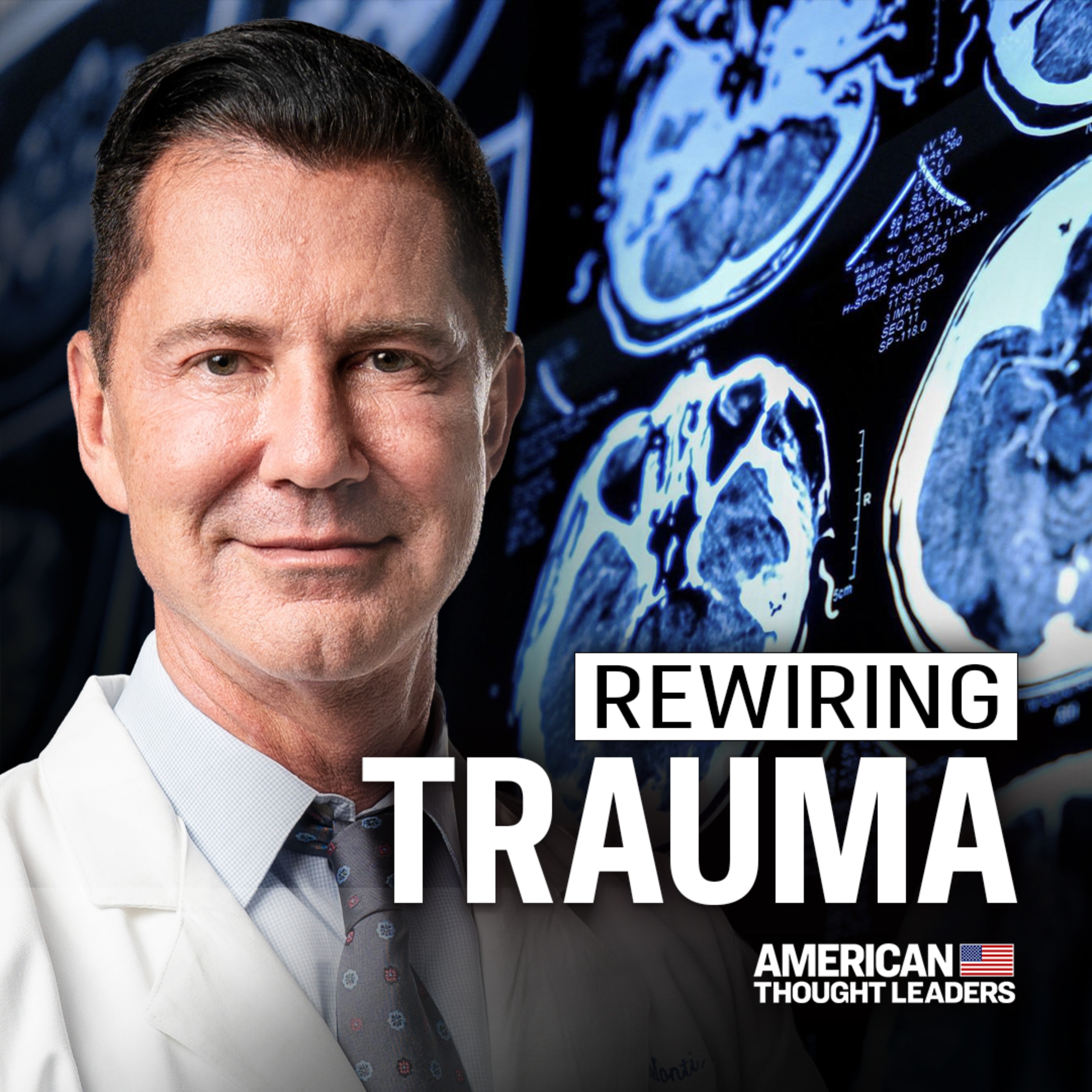
American Thought Leaders
Treating the Root, Not Just the Symptoms: The Power of Integrative Medicine | Dr. Daniel Monti
00:51:54
Loading summary
Transcript200 lines
- [00:00]
Dr. Daniel Monti
When I notice a pattern in somebody or somebody says, I find that with this area of life, I always hit a wall. Then I say, well, let's go explore.
- [00:11]
Jana Kelik
Today I sit down with Dr. Daniel Monti to explore his unique approach to integrative medicine, including a method used to treat psychological trauma known as the neuro emotional technique.
- [00:21]
Dr. Daniel Monti
We have a unique scanner, there's less than three dozen in the country. And this has allowed us to really see in the brain what happens when you get rid of distress.
- [00:31]
Jana Kelik
But this convers doesn't stay theoretical. Dr. Monti demonstrates the method in real time on me. I deserve to sleep six hours a night. How is this happening? Beyond the demonstration, we discussed the deeper science behind reconciling human emotions to heal trauma and improve overall well being.
- [00:50]
Dr. Daniel Monti
We've published three studies on this and what we've seen is that the N acetylcysteine improves the functional connectivity in the brain. I think that more of the scientific community will see it this time.
- [01:03]
Jana Kelik
This is American Thought Leaders and I'm Jana Kelik. Dr. Daniel Monti, such a pleasure to have you on American Thought Leaders.
- [01:13]
Dr. Daniel Monti
So thrilled to be here with you and an honor.
- [01:15]
Jana Kelik
So you have a fascinating new study that is actually, you're demonstrating increased connectivity in the brain for Parkinson's patients through kind of a simple method. I mean, tell me what you found.
- [01:31]
Dr. Daniel Monti
So this is our third study on a molecule called N acetylcysteine, or NAC for short. And this is a powerful antioxidant. It's also used as a medication in the emergency room in the hospital for people who take a Tylenol overdose. It actually protects the liver. So we know that it does a lot of different things, but the important thing for us is that it's a precursor to something called glutathione. Now, why this is important is because glutathione protects the brain when there's oxidative damage or oxidative stress. And we lose it as we age, and when we get sick, we lose it even more. So we want to have a way to efficiently increase glutathione in the brain, particularly when we have a neurodegenerative disorder such as Parkinson's disease. And so we hypothesized early on that giving infused N acetylcysteine along with oral would increase glutathione and actually have a positive impact on Parkinson's disease. We've published three studies on this and we look at brain scans in all of them, and what we've seen is that the N acetylcysteine increases the efficiency of dopamine in the brain, which is the neurotransmitter or chemical that gets lost in Parkinson's disease and causes all of those symptoms. And our most recent study shows that it improves the way the brain connects to itself or talks to itself, the functional connectivity in the brain. And this is really exciting because what we consistently see with all of our brain scan studies is that that correlates with improvements in function and how the person feels. So it's exciting. And in this last study that we got published in a very good journal for Parkinson's disease, I think that more of the scientific community, particularly neurologists who treat Parkinson's disease, will see it this time.
- [03:38]
Jana Kelik
And, you know, this strikes me as something that can also work in conjunction with other treatments.
- [03:44]
Dr. Daniel Monti
Always, you know, that's part of integrative medicine. And we're always trying to push the bounds of what we understand in innovative treatments and integrative medicine. And so we're always thinking about how do we add value to what's out there. So in this study, people who were on Parkinson's medications, which was all of them, stayed on their Parkinson's medications. But to be in the study, you couldn't have changes in your Parkinson's medications for a period of time. And so in both the control group and in the NAC or NAC group, people were on their Parkinson's medications. But if they got the nac, they did better. Their brain came alive in a way that wasn't happening before. And they felt this subjectively. And we even videotaped a couple of the patients in the study. One was a lawyer who basically people said it was a miracle how different she looked and acted and functioned. And while not everybody has that reaction, to even have some people do that well is really encouraging with a disease that doesn't have many options to really improve.
- [04:53]
Jana Kelik
What puts you onto this in the first place?
- [04:56]
Dr. Daniel Monti
Integrative medicine, One of our tools is diet, nutrition, nutrients, natural molecules. And I was aware of oxidative damage being a problem in Parkinson's disease. So the studies that I'm involved with in our department and on our team are always brain related because that's where my training is. And so I wanted to really think about how can we improve that oxidative stress, because in a way, that's part of the mechanism behind the destruction of the dopaminergic cells. It isn't the only mechanism. And we don't fully understand Parkinson's disease. But I thought if we could target this one thing and do it really well, could it have a good impact on patients? And so far it is.
- [05:43]
Jana Kelik
So let's go back now. Okay, so integrative medicine, there's a lot of people that might not even understand what that is. And I might add that you're actually the chair or the dean of an integrative medicine department at a university, which is not a common type of department at university. So just tell me a little bit about what it is and how you got to be doing what you're doing.
- [06:06]
Dr. Daniel Monti
Sure. So the word integrative is the problem because it gets used in lots of ways. Integrative health, integrative approaches. But integrative medicine has become an actual subspecialty of medicine with its own board certification. So to become an integrative medicine doctor, you have to first do your residency in something like internal medicine, neurology, ob, gyn, and then do a fellowship in integrative medicine. We have a fellowship at Jefferson where I work. And that fellowship allows you to sit for the board and become board certified in integrative medicine. So what is it like all new specialties or all specialties that were added to medicine, you're adding value in some way with how you assess and treat problems. For us, we do a lot of innovative testing to look at the functionality of a person that goes beyond what you would normally get in a primary care office, for example. Not that what happens in the primary care office is bad. It's great. My colleagues in primary care are putting on fires all day. But a lot of times people hit a wall with that approach in their health and wellness, either because they want to become more well when they're doing relatively okay, or getting over an illness just isn't happening. They only could get so far. So how we address the problem, assess the problem is one thing. And then what are our tools to add to the medical care that they're getting? And so we're always pushing the bounds of what that is. Diet and nutrition. That's one of the things we're the experts on. So things that people consider lifestyle medicine, longevity medicines such as hormonal balances, hormone replacement therapies even. But when it comes to the brain, targeted nutrients are something that I have a big interest in. And N acetylcysteine is a precursor to a really important one, as I said, glutathione.
- [08:07]
Jana Kelik
So speaking of lifestyle medicine, America now has new dietary guidelines. The so called flipped pyramid of food eat real food has become a slogan. How do you react to that?
- [08:23]
Dr. Daniel Monti
In my field, we've been flipping that pyramid for a while, and eating real food has been an important concept in integrative medicine and integrative health. All of the evidence out there continuously points to a dietary pattern that is going to increase health and prolong life, or one that's going to take things in the opposite direction. All of the ultra processed foods that are so common and easy to obtain really put things in the wrong direction. We need to eat food, and so I'm glad there's an emphasis on doing so.
- [08:59]
Jana Kelik
When I think of integrative medicine, and I know a number of practitioners, very often there's some sort of like vitamin infusions that are a common part of. That's what I've heard as like a common type of treatment. But there's actually kind of a range of things that you do. Right. And as you mentioned, these are additions to some other types of treatment that are happening. But can you give me a picture of kind of the range of possibilities that exist from, I guess, the arsenal of an integrative medicine? Dr.
- [09:30]
Dr. Daniel Monti
Yes, and you're right, we do sometimes use vitamin infusions. Oftentimes when people have had chronic illness or the gut has shut down, they need a recharge and you need to bypass the gut. And so we do different types of micronutrient infusions. It was actually what was behind my idea to use the NAC or N acetylcysteine for Parkinson's because we do infusions of glutathione. It's just that it's not super efficient at crossing the blood brain barrier, which is why we came up with the idea of an acetylcysteine. So that has its role. One of the programs that I'm still clinically involved with is our Executive Health program. We have Fortune 500 companies that send their C suite in, but lots of individuals just sign up for it because they want that snapshot of their health. And so what are we doing differently? One of the things we're doing is we're really taking a deep dive into whole person health and understanding who the person is. But beyond that, we look at things like genomics, how the gut is working, the microbiome. The microbiome is critical and how we make it more efficient if there's dysbiosis and looking at things like VO2 max, which gives an idea of how the person's fitness level is, in a way and a great predictor of longevity. And so all of these different things that are in the scientific literature, we pull together in the assessment along with standard labs, advanced labs, and also looking at the person's hormonal profile. As people age, they lose the hormones and replacing hormones used to be vilified. We did it in integrative medicine. And now the fda, the FDA commissioner recently lifted the black box warning on giving women estrogen because actually it was hurting many women to not have that available. And so as we look at the arsenal, there's the lifestyle arsenal of the diet, nutrition, stress reduction. We have many innovative stress reduction therapies. One we've recently published on that I'll get into in a moment. Also things that fall under what people think of as like longevity, things like the hormone replacement that I mentioned, or hormonal balancing in other ways. And I think that it's important to keep in mind that we're always thinking about how do we integrate that with the rest of the medical plan that the person is on. And so I might have somebody come through our executive health program. They get a total body MRI screen, VO2 max, an exercise stress test, basic labs, history and physical exam, functional neurological exam, sometimes depending upon what the person needs. Then we have all of that information. And as I think of some of the people I just recently had, I'm always balancing their diet and nutrition. Some of them really are depleted and you targeted nutrients and sometimes IV nutrients. Then there's people who their hormones are out of whack. And so we'll do some hormonal balancing. Sometimes people are neurologically recovering, They've had a head injury in the past and they're still feeling a little bit fuzzy in some way. I might use hyperbaric oxygen treatment. So it all really depends upon who the person is. And there's a really wide range of things that we do for them when
- [12:48]
Jana Kelik
it comes to the stress reduction aspect. So something I do regularly, which has been kind of a bit of a godsend for me, is regular meditation and kind of slow motion exercises and tied in with kind of a mental state. Right. Is this part of what you do?
- [13:06]
Dr. Daniel Monti
Yes, because we know those things change the brain. A big thing that we do is not only offer those programs, but study them. So we've studied and published brain scan studies. We have Dr. Newberg on our brain imaging team who's one of the gurus in doing that. And we've shown how the brain changes when you do those things. In fact, one of our videos, I'm in the machine listening to my own meditation, qigong based music and how it changes my brain versus when I'm listening to. They played the financial news of the day when things were going a little bit haywire, and then they put on my music and I went into meditation mode. My brain is completely different. The stress areas of my brain are completely different. And we know that when you do this in a sustained way that you get sustained changes in the brain. And if it's happening in the brain, it's happening in the rest of the body. Because the state of the brain reflects everything in the body, the autonomic nervous system, and then that has tentacles that reach all the way to the immune system. So how we weather life has a lot to do with how we weather stress. And these techniques like you're talking about are critical. One of the things that was important to me to study a little bit more and understand a little bit more is what about the internal stressors that are continually a form of stress because they get re triggered by the environment? And what do we do about those? Because we can always try to shut down the autonomic nervous system response to them by doing, breathing and meditating. But another approach along with that would be to sort of get at the root of some of the ones that are inside of us versus the external stressors. External stressors are going to happen all the time. But life experience that get triggered by the environment and create a stress response inside sometimes when you don't even know it. Those are the ones that it was important for me to study a solution for.
- [15:22]
Jana Kelik
You're talking about dealing with trauma basically, right? Is that, Am I understanding you right here?
- [15:27]
Dr. Daniel Monti
So trauma for sure. Right. But there's like big T trauma. A combat veteran who, you know, watching lives end and under tremendous hardship and whose own life is being threatened all of the time, that could be a big T trauma. But then there's smaller traumas that we call little T traumas that basically are stressors. They're experiences in life that just were not able to get reconciled at the time they were occurring. And so they get laid down in the emotional part of the brain, memory wise. And so when we're reminded of them in some way or we're in a situation that's just similar enough in some way, has enough of a familiarity to it, then the nervous system goes into the same survival mode it was in when we experienced it and didn't quite have a way of reconciling it in a healthier way. And so this happens all the time. A big group of people that we looked at where cancer Survivors, up to a third of cancer survivors can actually tell you that they have some memory of a cancer related experience. Maybe it was the moment of diagnosis, which is very life threatening, obviously, right. Where if they think about it, on a scale of 0 to 10 for distress, with 0 being neutral, 10 being really distressing, they put it at a 7 or greater, usually a 10. And when I would go to cancer survivor meetings, that 1/3 to 40% of the room always raised their hand. If I said, if you think about it, do you have one of those? Now what people don't realize is if they have something that when they think about it, it's that distressing, that means it's wreaking havoc lots of times throughout life because there's going to be reminders that, that you're not even aware of. We're subconsciously, because we're taking in things all the time in our environment, reacting to things that we don't even know we're reacting to. So if there's an unresolved event, that's kind of a big event, and we get cues, reminders, it can affect our behavior and it affects our quality of life sometimes in a really overt way. I think of somebody in my study, for example, who was a breast cancer survivor when she would get that notice in the mail, time for your yearly mammogram, as soon as she saw the hospital logo, put it under the pile, take it back, that made her miss appointments. It actually could have been harmful for her overall, well being that she was in that state. And that's what happens. We unconsciously are avoiding things and we're navigating the world in a way that isn't as good as it could be because there are scripts related to these events going on out of our awareness all the time. And so when I notice a pattern in somebody or somebody says, you know, I find that with this area of life I always hit a wall. Then I say, well, let's go explore with this intervention that we've studied and published on to see if there's a life experience that we can help you to reconcile so that you can have a better quality of life. The intervention that we've studied is called the Neuro Emotional technique. We've published three papers. I mentioned cancer survivors, two in the Journal of Cancer Survivorship, which is a national Cancer Institute journal and the best survivorship journal in the world. And then most recently we published on a very different group of people, women who were struggling with chronic pelvic pain. We hypothesized that if we could help them deal with some of the stressors in their life, big stressors, that it could help them navigate the pain better. And that was the case how the brain navigated pain. And pain perceptions changed for a lot of these women. We published that in the Journal of obstetrics and Gynecology. But I think that the important thing, like all of my studies, because it's just my focus is we show changes in the brain. So we have really amazing equipment. Part of my department is the Marcus Institute of Integrative Health in honor of Bernie Marcus, who actually gave us a tremendous amount of support to develop what we are and who we are. For those who don't know, he was one of the three co founders of Home Depot and a believer in the integrative model of care. And we have a unique scanner, there's maybe there's less than three dozen in the country where we can look at functional activity in the brain in a really unique and comprehensive way. And this has allowed us to really see in the brain what happens when you get rid of distress. And that's what the neuro emotional technique does.
- [20:32]
Jana Kelik
So what exactly do you do for this? I mean I've heard about it, but I don't actually can't visualize it.
- [20:39]
Dr. Daniel Monti
Well, maybe I'll do a demo with you. But basically you're trying to get at what is underneath the issue that's bothering the person. I mean, sometimes it's as overt as I have this memory of my cancer experience and it still bothers me, but most of the time it's not that easy when it comes in the door. Most of the time it's, I'm experiencing a block in my life in some way. And then we have to kind of figure out what the life experiences, life experience or experiences were that are contributing to that present day block that the person is experiencing.
- [21:18]
Jana Kelik
This makes me think of something in my own life. I think I have a pretty charmed blessed life. But I do notice that what you would call sleep hygiene, my sleep hygiene is poor. And no matter what I kind of try to do to fix that, I might fix it for a few days, but it always goes back to normal. Is this the kind of thing you're talking about?
- [21:43]
Dr. Daniel Monti
Absolutely. So I can't know for sure without starting to delve into it a little more if there is previous life experiences. But I'm guessing there is from something like that because you know what you want to be doing, but you end up not doing it. The block is you're not Doing for yourself what you want to be doing. And that's usually an indicator that there's something that the neuro emotional technique can help address.
- [22:11]
Jana Kelik
So what do you do?
- [22:13]
Dr. Daniel Monti
Okay, I'll show you. First of all, in our study, to assess if the person had autonomic nervous system reactivity. So that's, you know, we have two kind of main branches of the automatic or autonomic nervous system, fight or flight, which is sympathetic nervous system, and restoration and recuperation. What happens when we are dealing with distress is fight or flight gets activated. And so you can measure that. And that's actually what the polygraph was all about. When people would say something that they knew to be untrue, the autonomic nervous system would react. Those were the lines that was measuring heart rate and blood pressure and the heat given off of skin and muscle tension and all of those kinds of things. In our study, we would also see that when they thought about the distressing script, say it was the cancer survivors, you would see those same kinds of lines. And then in the functional MRI scanner, we would see the brain light up in characteristic ways that we knew that the person was distressed. So since we don't have all of that fancy equipment, I kind of gauge the muscle tension. I have a way that I like to do it. And it helps me to sort of know if you're having autonomic nervous system reactivity, you have it before you think. Which is why it's a good way of gauging what's going on. The thing that's kind of unusual about the technique and really puts it in the integrative medicine realm is that it's a merging of principles in conventional medicine and even psychology, psychiatry, along with traditional Chinese medicine. Because what we try to line up are the thoughts, emotions and energetic pattern of that life experience. And in doing so, we find that reconciliation is much more efficient than any other technique I know of. And that's why it was important for me to study it and look at brain scans so we can see if there's anything to your sleep hygiene that might have to do with some life experiences that your brain needs to reconcile.
- [24:32]
Jana Kelik
What percentage of your practice would you say is applying this neuro emotional technique?
- [24:38]
Dr. Daniel Monti
If we had the bandwidth, we would get every person we saw to do it. Because I feel like everybody has things and we all would just benefit from reconciling. We get everybody to meditate, we get everybody to look at their diet. We get everybody to do the things that are easy to do on your own. This Intervention requires somebody to do it with you because, you know, your. Your. Your unconscious will whittle away from you otherwise.
- [25:09]
Jana Kelik
Yeah, well, all right, let's. Let's. Let's give it a shot.
- [25:12]
Dr. Daniel Monti
Okay.
- [25:13]
Jana Kelik
I have no idea what to expect here, but let's do it.
- [25:17]
Dr. Daniel Monti
Me neither. Every. Every session is different, so I just sort of follow your physiology, as you'll see. What I'm gonna do is I want to make sure I understand the problem first. And so the problem is you don't go to bed when you want to go to bed. Or would you say it differently?
- [25:31]
Jana Kelik
I mean, no. Roughly, yes. I mean, in my sort of dream world, right, I would have, like, just a standard amount of sleep every night. And of course, I have a kind of a chaotic schedule. I tend to work a lot. Right. And I like that. But the reality is that I almost never. Even though my intention would be to go to sleep at a certain time, so I get my full six hours or something like that. Right. I will instead just always kind of push it to fatigue somehow. Somehow there's always that extra work somehow. There's always some good excuse. But when I look back at it, in all honesty, there's something else. I feel like there's something else going on. It's not like an entirely rational process. Right. I sense that, but you just kind of. I'm always ending up there.
- [26:21]
Dr. Daniel Monti
Right.
- [26:21]
Jana Kelik
And it's not the worst for getting a bunch of work done. But then again, you're not the most effective in that state either, so.
- [26:27]
Dr. Daniel Monti
And so how many. If you could wave a magic wand and you would be doing what you want to be doing, how many hours of sleep a night would you get?
- [26:34]
Jana Kelik
I think like a good solid six hours a night would be. Usually when I get that, I'm good to go.
- [26:40]
Dr. Daniel Monti
Yeah. I want you to get six hours of sleep because I know that it isn't great for you to continually not get the six hours. In fact, you know, most people even need a little more than that. Let's start with six. If we're not getting six.
- [26:53]
Jana Kelik
But as I was preparing, right. I did notice that there's some sort of chronic inflammation for this. Chronic inflammation can come from chronic sleep deprivation, which, as we keep learning repeatedly, especially with this sort of MAHA Oriented Health Administration. Chronic inflammation is a huge problem.
- [27:11]
Dr. Daniel Monti
It's the root of almost every problem. Even Alzheimer's disease has a significant inflammatory component. So you can have a genetic setup for it, but the genes can go one way or another depending upon the rest of the environment. That's acting on those genes and inflammation is a big one. And sleep is important for regulating inflammation, just like diet and stress reduction are. So I hope that's convinced you to be motivated here.
- [27:42]
Jana Kelik
No, no, no. I'm motivated. What do I do?
- [27:44]
Dr. Daniel Monti
So I'll walk you through it. It's very simple. So first of all, I'm going to have you say some statements to see how your nervous system reacts to them. And I'm going to do this. I'm going to test the muscle tension. And so what I'll have you do is lock the elbow like this and hold your arm so that you resist against my pressure.
- [28:09]
Jana Kelik
Okay? Right.
- [28:10]
Dr. Daniel Monti
So yeah, hold. And I'm just going to touch this point here so I can get a feeling of how your arm reacts. Hold. Okay. And by the way, I did a study just on this aspect of it to see if I could do this instead of having all the equipment. So I'm okay sleeping six plus hours a night.
- [28:29]
Jana Kelik
Say that I'm okay sleeping six plus hours a night.
- [28:33]
Dr. Daniel Monti
Okay, say this. I deserve to sleep six plus hours a night.
- [28:41]
Jana Kelik
I deserve to sleep six hours a night.
- [28:43]
Dr. Daniel Monti
Do you notice how you have a hard time keeping it up even in the moment that you're saying it? Do you see that?
- [28:47]
Jana Kelik
Yes, I do.
- [28:47]
Dr. Daniel Monti
And I feel it.
- [28:48]
Jana Kelik
Right. And this is real. It's not a setup. It's weird, actually.
- [28:53]
Dr. Daniel Monti
It's just testing that because your muscle tension changes when there's an autonomic nervous system glitch impulse like that. So keep saying that. I deserve.
- [29:03]
Jana Kelik
I deserve to.
- [29:05]
Dr. Daniel Monti
Keep saying it for.
- [29:06]
Jana Kelik
I deserve to sleep more than six hours a night.
- [29:10]
Dr. Daniel Monti
And you notice how now when I touch this point, you can say that and it stays strong. So I know I have the right traditional Chinese medicine point here.
- [29:19]
Jana Kelik
I'm wondering, like, I'm kind of wondering whether you're not sort of suggesting this to be a little bit right as opposed to really happening. Well, I mean, you have to forgive me. I have this kind of structurally skeptical disposition.
- [29:33]
Dr. Daniel Monti
I'm this pinky finger. Right?
- [29:35]
Jana Kelik
Okay.
- [29:35]
Dr. Daniel Monti
Okay. It's strong now, right? Now say I deserve to sleep six hours a night.
- [29:39]
Jana Kelik
I deserve to sleep six. That's wild. That's.
- [29:43]
Dr. Daniel Monti
Say it now.
- [29:44]
Jana Kelik
Okay.
- [29:44]
Dr. Daniel Monti
I deserve to.
- [29:45]
Jana Kelik
I deserve to sleep six hours a night.
- [29:47]
Dr. Daniel Monti
Right? And so just think about my, my tie or something now and hold strong. Okay? Hold strong
- [29:57]
Jana Kelik
so you're not changing the amount of pressure you're putting.
- [30:00]
Dr. Daniel Monti
I can't put more than this. Right. I'm pushing as hard as I can with my thing all Right.
- [30:05]
Jana Kelik
No, no, this is good.
- [30:07]
Dr. Daniel Monti
You know, I'm okay. I know I deserve sleeping six hours a night.
- [30:11]
Jana Kelik
I deserve to sleep six hours a night. How is this happening?
- [30:15]
Dr. Daniel Monti
It's not perfect, but.
- [30:19]
Jana Kelik
So normally you would measure this using these devices.
- [30:23]
Dr. Daniel Monti
So we have all of these ways to sort of confirm this. This is just a simple thing to make it easy in the office or to make it easy doing a demo. Right. This is just the bodies.
- [30:36]
Jana Kelik
But what is it? Am I. I secretly don't think I deserve to sleep six hours a day.
- [30:41]
Dr. Daniel Monti
I'm so glad you asked. So what there is, is there's an incongruency between the emotional part of the brain and the logical, knowing part of the brain.
- [30:49]
Jana Kelik
Okay.
- [30:50]
Dr. Daniel Monti
So the logical knowing part of the brain says, yeah, of course I should be getting six plus hours of sleep. But the emotional brain reacts and sends an autonomic signal before the thinking part of the brain can really even be affecting your neurology.
- [31:08]
Jana Kelik
And that's what creates the weakness.
- [31:10]
Dr. Daniel Monti
Yes.
- [31:10]
Jana Kelik
Okay, interesting.
- [31:11]
Dr. Daniel Monti
Because the emotional brain sets off that fight or flight part of the nervous system. So as you're saying it, there's a reaction, and that reaction represents an incongruity or incongruence between the knowing part of the brain, your neocortex, then underneath it is where emotional memories are, and the emotional part of the brain is saying no. Right. And so the two are in disagreement. And that's where we get this. And that's why people are like, but I know I deserve it. I'm like, right, you just don't feel like on some deep emotional circuit level that you deserve it. And so now I use the, those pulse points to help me get the emotional quality because all of the meridians in traditional Chinese medicine have an emotional quality to them. And I countered this, countered the muscle test. Right. So I know that this is involved with the neurophysiology.
- [32:13]
Jana Kelik
So now you're bringing in the traditional Chinese medicine aspect.
- [32:16]
Dr. Daniel Monti
That's right.
- [32:16]
Jana Kelik
Fascinating.
- [32:17]
Dr. Daniel Monti
Right. And so let's take it there again. So hold strong for me. And I deserve to get six plus hours of sleep at night.
- [32:26]
Jana Kelik
I deserve to get six plus hours of sleep.
- [32:29]
Dr. Daniel Monti
And so I know that I've got this point here. Right. And so this point has to do with feelings of. And I'm just going to say words to see how your physiology responds. But they're all, they all describe this conception, governing vessel that this point represents. So shame. Feeling less than or not enough in some way. And so the concept of feeling less than or not enough if you let yourself sleep six plus hours and so let's step back and let your arm relax a little bit. How would that make sense for you?
- [33:09]
Jana Kelik
This is a bit like being on the couch with a psychoanalyst or something. It's just that you have some other kind of way to get at the issues. Kind of is this.
- [33:19]
Dr. Daniel Monti
Well, Freud said back in his day, you know, I know there's probably a much more efficient way of getting at issues, but this is the best thing I can come up with for now.
- [33:29]
Jana Kelik
He said that?
- [33:30]
Dr. Daniel Monti
He said that.
- [33:30]
Jana Kelik
Oh, fascinating.
- [33:31]
Dr. Daniel Monti
He knew free association and laying on the couch was inefficient, but that's why he had people come every day for several weeks to try to like get at what's going on.
- [33:42]
Jana Kelik
Yeah, I'm not as such as huge a fan of Freud as I am of Viktor Frankl's approach to doing this.
- [33:47]
Dr. Daniel Monti
Of course, people after Freud then kept trying to make it better and better and better.
- [33:52]
Jana Kelik
No, fascinating. Okay, okay. So what do, what do we do now? So so far you've, you've done a kind of diagnosis. You figured out there's something about being less than.
- [34:00]
Dr. Daniel Monti
So the idea of like, you know, it creates a kind of a little bit of a shame based emotion comes up. You know, that feeling of you're less than or not enough if you don't push yourself and work to the point that you're getting less, getting six plus hours of sleep at night, like there's something about that. How would you make sense of it?
- [34:27]
Jana Kelik
Well, what I think you're getting at. Okay. Because I'm sort of studying you a little bit. Of what? And I think what the message I'm getting from what you've been doing is that somehow I compensate for some sort of feeling of inadequacy by always sort of pushing myself to complete fatigue. Right?
- [34:50]
Dr. Daniel Monti
Yes. But I'm not asking you to theorize about it. Right. I'm asking you how it makes sense for you. Like, you know, for me, maybe that makes sense.
- [34:58]
Jana Kelik
I'm just thinking about it. Right. Like maybe that actually makes sense. I don't know. I don't, I don't feel it acutely. Right, right. But that would, but it sort of
- [35:06]
Dr. Daniel Monti
clicks for you a little.
- [35:07]
Jana Kelik
Yeah.
- [35:07]
Dr. Daniel Monti
Okay, sure. So let's try this.
- [35:09]
Jana Kelik
Yeah. Okay.
- [35:10]
Dr. Daniel Monti
Think about what you just said. Think about how that might give you some sense of inadequacy. Right? Yeah. And so what is the why or because why does it make you inadequate to let yourself sleep the six plus hours and not just power through like, why does. Like what's the why? Or because there?
- [35:30]
Jana Kelik
I don't know. I think it's something where I have to think about this. It's something where I just don't feel like I'm contributing sufficiently. Okay.
- [35:42]
Dr. Daniel Monti
And so thinking about that. Thinking about that hold. Yeah. And so the concept of an original time where there was a feeling of less than or not enough because of not contributing sufficiently in some way. And so let's check the concept of Conception to age 10 holds strong. Conception at age 5 holds strong. Age 6 holds strong. Age 7 holds strong. Age 8 holds strong. So if we go to age 8, relax your arm and think about where you were living, what you were doing, what was going on in your Life at age 8. Right.
- [36:20]
Jana Kelik
So I don't have a good memory of age 8.
- [36:23]
Dr. Daniel Monti
Okay. Do you remember if you were in
- [36:24]
Jana Kelik
school or if you definitely was in school? See, I have a. Memories of. I have memories from age 5 to 6. Very, very distinct memories. And I remember and moving. I think at that time we would have moved. What is that, grade 2, 3, 4, 3 ish. Yeah. Yeah. So we moved to the suburbs at the time. I mean, I remember I didn't like the suburb life.
- [36:53]
Dr. Daniel Monti
Yeah. What do you like about.
- [36:54]
Jana Kelik
Much the requirement of. Seemed to be. There seemed to be a requirement of a certain type of conformity that I was not. That didn't come naturally to me. Okay.
- [37:09]
Dr. Daniel Monti
What was the consequence of that?
- [37:11]
Jana Kelik
Well, just kind of being a little ostracized.
- [37:14]
Dr. Daniel Monti
Yeah. Yeah, yeah. And so I don't know if it's that, but can you think about that being sort of like ostracized?
- [37:21]
Jana Kelik
I think my arm is like on its own going down. What you were saying,
- [37:29]
Dr. Daniel Monti
and you see that less than, not enough feeling. Right. Yeah. And so what I'm wondering is, as we kind of go to that period of time of feeling less than or not enough, do you remember anything you would do to try to compensate for that?
- [37:44]
Jana Kelik
Gosh, I don't know if there was a way.
- [37:46]
Dr. Daniel Monti
Yeah.
- [37:46]
Jana Kelik
Like, I don't. I don't know if I had a way because I just never, like, it was very hard for me to, like, whenever I tried to, you know, kind of be more, it never worked very well to try to be more part of the group, I guess, or whatever. I felt it made me do things that I just didn't feel good about myself doing, which so I kind of had to pull back from that.
- [38:14]
Dr. Daniel Monti
But you tried. So we're in the zone where you were trying and trying, but I wasn't
- [38:17]
Jana Kelik
very proud of myself in a way doing that, if that makes sense.
- [38:20]
Dr. Daniel Monti
It makes sense because we're dealing with shame right now. Right. This is a shame based thing. Right. So you, you're feeling not good about yourself.
- [38:28]
Jana Kelik
You found shame like physically in my body somehow through that pulse point.
- [38:33]
Dr. Daniel Monti
That's kind of weird because the acupuncture meridian, that particular meridian has a shame quality to it. So all of the major meridians, so say wood or liver gallbladder, that has an anger quality to it. And so grief lung, large intestine meridian. And so we're gonna have to do
- [38:56]
Jana Kelik
a whole thing on acupuncture somet.
- [38:59]
Dr. Daniel Monti
So this is integrating concepts of acupuncture and we're using acupressure pulse points to sort of try to get at the meridian quality. And so that's what we're combining here, these different things from western and eastern worlds to get at efficiently what's going on here. And so that shame based less than not enough feeling is what we went to as an original. Right. We started in present day and we're going to this early time in life where you were really feeling that less than not enough feeling, right. What I want you to do and trying to compensate for it and feeling even worse, right?
- [39:38]
Jana Kelik
Yes. Yeah, that makes sense.
- [39:40]
Dr. Daniel Monti
And so really seeing that, right. And really like letting yourself feel it as if you were 8 years old. And I'm going to like and see now when I press down and I got this point, see how your arm doesn't go anywhere. And so you're going to relax this arm for me. And now you're going to bring your index finger and touch the point where I'm on. So you're going to bring it here just like this. It's right here. Right here.
- [40:06]
Jana Kelik
Oh, interesting.
- [40:08]
Dr. Daniel Monti
And now take your hand and bring it to your forehead like this. And I want you to relax. So let your elbows rest on your legs. Mm, great. Now in that position, I want you to let time collapse and I want you to be that 8 year old for a moment and I want you to breathe it in and out, nice deep breaths. Really experiencing that less than not enough feeling you had as an eight year old. And it can go to other times you felt that way or even present day. But try to stay connected to that eight year old boy. Feeling less than not enough feeling, that less than not enough feeling, breathing it in and out for as long as you can. Stay connected to it until it dissipates or lifts in some way. But just don't rush it nice deep breaths.
- [41:20]
Jana Kelik
I find it hard to hold that idea.
- [41:23]
Dr. Daniel Monti
That's okay. When, when you feel like you can't hold it anymore, you can just sit up.
- [41:29]
Jana Kelik
Okay.
- [41:30]
Dr. Daniel Monti
You want to experience it as much as you can. And so let me see how you're doing with it. Hold and think about that time as that 8 year old. And let's check the concept of any other emotions with it. See how it just goes. And so shame less than, not enough humiliation. So we're going to go to another version of it. So what we have is an energetic imprint at that time and a neurophysiologic imprint of that time. It's in the emotional part of your brain. It expresses itself in the rest of your body. And so let's go to that 8 year old who's feeling pretty humiliated. Just close your eyes for a moment and go back to that time at 8 years old. And our emotion is humiliation and feeling humiliated in that scene. Can you see it? Can you see that humiliation?
- [42:16]
Jana Kelik
Kind of. I'm finding it hard to see it.
- [42:18]
Dr. Daniel Monti
Yeah. So one thing you should know is the brain protects against pain and so unpleasant experiences. Some people protect more than others and so this is just a protection because there's an unpleasantness to it. Shame based emotions like humiliation are the most unpleasant and most protected emotions. So as best you can, do your best to connect to that humiliation as an eight year old. All right. And hold and thinking about that humiliation. And so your humiliation that you weren't as good as the other kids, is that, was that the issue?
- [42:58]
Jana Kelik
You know, I think it's something where you kind of just want to be able to be normal with everybody. You do things right, you do things wrong. People just kind of treat you normally and they don't kind of, you know, sort of point you out as being weird and unusual. Yeah, something like that.
- [43:15]
Dr. Daniel Monti
Yeah.
- [43:16]
Jana Kelik
Right.
- [43:16]
Dr. Daniel Monti
So the humiliation of being pointed out of being weird and unusual. Thinking about that. Yeah. The concept that compared to those other kids you were less than in some way. Yeah. The concept that you were just as good as those kids. See, that is not off the thing. The concept that you were less than those kids. So say this. I was less than those kids.
- [43:49]
Jana Kelik
I was less than those kids.
- [43:50]
Dr. Daniel Monti
Hold. See how like solid that feels inside you. The concept that you're less than others. The concept that you have to really overcompensate to be good enough. The concept that you're fine just as you are. The concept that you have to really overcompensate to be as good as others. See how your muscles jumping out as I say it? Do you feel it? I'm just, you know, I'm trying to, like, get you to connect to what's going on. I don't usually care with a patient so much, but. Yeah. The concept that you have to really compensate. Say this. I have to overcompensate to be as good as others.
- [44:31]
Jana Kelik
I have to overcompensate to be as good as others.
- [44:34]
Dr. Daniel Monti
And that feels very solid in your physiology. That's part of the neurophysiological imprint. Say this. I'm fine as I am without compensating.
- [44:43]
Jana Kelik
I'm fine as I am without compensating. Yeah.
- [44:46]
Dr. Daniel Monti
Say this. I have to compensate.
- [44:48]
Jana Kelik
I have to compensate.
- [44:49]
Dr. Daniel Monti
Yeah. See, that really changes. Yeah. The concept that you have to really compensate to be as good as others. The concept that you're worth less than others. Say this. I'm worth less than others.
- [45:01]
Jana Kelik
I'm worth less than others.
- [45:03]
Dr. Daniel Monti
I can't get that down if I want to. Say this. I'm worth as much as anybody else.
- [45:07]
Jana Kelik
I'm worth as much as anybody else. My goodness, yes.
- [45:10]
Dr. Daniel Monti
Say this. I'm worth less. Less than others.
- [45:13]
Jana Kelik
I'm worth less than others.
- [45:14]
Dr. Daniel Monti
Yeah. The concept that you're worth less than others. Okay. And so I want you to really. Do you feel this in your physiology where we are right now? Do you feel it? Good. Index finger. Oh, I'm sorry. We're here. This point there. Again. Okay. This finger. Do you feel.
- [45:29]
Jana Kelik
Do I have to, like, be pushing hard on it?
- [45:31]
Dr. Daniel Monti
No, not that hard.
- [45:32]
Jana Kelik
Just lightly.
- [45:33]
Dr. Daniel Monti
Yeah.
- [45:33]
Jana Kelik
Okay.
- [45:34]
Dr. Daniel Monti
And then hand across the forehead.
- [45:35]
Jana Kelik
Okay.
- [45:37]
Dr. Daniel Monti
Flat across the forehead. Like time. And that feeling in your physiology, that shame, that humiliation, that less than others, seeing it as that little kid and breathing it in and out and seeing how it connects to today until it shifts or dissipates, nice, deep breaths. Was a very real experience. So just do your best to connect to it, knowing that your brain wants to sort of tiptoe away from it. Mm.
- [46:11]
Jana Kelik
So I have, like, a concrete sort of memory of one instance of this.
- [46:18]
Dr. Daniel Monti
Great.
- [46:19]
Jana Kelik
Okay, that's good. Okay, good.
- [46:21]
Dr. Daniel Monti
That's your brain trying to work with yourself.
- [46:26]
Jana Kelik
I mean, I feel kind of. Because it's supposed to kind of leave or.
- [46:32]
Dr. Daniel Monti
Yeah, when it leaves, that's fine. You can just sit up again.
- [46:37]
Jana Kelik
I don't know if it's, you know, as a function of it leaving, as in not wanting to be found, or a function of it leaving as a consequence of, you know, good release or something like that.
- [46:49]
Dr. Daniel Monti
Yeah.
- [46:49]
Jana Kelik
I have a Good sense of that.
- [46:50]
Dr. Daniel Monti
If you didn't feel like you were able to kind of connect with that younger version of yourself, you know, maybe there's a piece of it that left that needs more reconciliation. I can't know really. But hold thinking about that eight year old you hold. And it really might be that your mind body has done enough for this moment because you're not used to doing this kind of work.
- [47:12]
Jana Kelik
No. Right.
- [47:14]
Dr. Daniel Monti
And so in a way the muscle test becomes insignificant. It's just a tool to get us right where we were.
- [47:21]
Jana Kelik
Right.
- [47:22]
Dr. Daniel Monti
So it kind of doesn't. Strong week doesn't matter so much. Right. And so let's go back to our entry. I'm okay sleeping six plus hours a night.
- [47:31]
Jana Kelik
Okay. I'm okay. By the way, I feel unusually rested at the moment.
- [47:34]
Dr. Daniel Monti
Yeah. Great.
- [47:35]
Jana Kelik
So this is one consequence of this. I feel. What is it again?
- [47:42]
Dr. Daniel Monti
So I'm okay sleeping six plus hours.
- [47:44]
Jana Kelik
I'm okay sleeping six plus hours a night. I'm okay.
- [47:48]
Dr. Daniel Monti
And say I deserve to sleep.
- [47:49]
Jana Kelik
I deserve to sleep six hours plus hours a night.
- [47:52]
Dr. Daniel Monti
But even when you said it, did you notice you felt different inside of yourself?
- [47:56]
Jana Kelik
That's true.
- [47:57]
Dr. Daniel Monti
And that's the whole point. So that you become more congruent with what you want to be true. Right. So some of that incongruence has been peeled away. Now you're feeling more congruent with what you want to be true. Now there might be other things contributing to this, but I bet, I bet if I was able to do a couple of sessions with you, and maybe this was enough for this issue. But that's how the intervention works. And what we found is people who had like a big emotional stressor, a big T trauma, three to five sessions, and they were no longer reactive and their brain scans showed it. That's what all those studies show, that their brain scans changed every time.
- [48:43]
Jana Kelik
So this should be something very positive for PTSD and so forth. I mean, you mentioned that the capital T trauma. Right. So this is a common use.
- [48:53]
Dr. Daniel Monti
So what we've tested it in are sort of big T traumas that aren't current over ptsd, because those are the most common ones. People who have true ptsd, we use it. But a little more has to be done for those patients. Right. For the everyday person who is trying to get through life. Everybody has had experiences that sort of get in the way. And that's, that's the majority of the people that I see. But when we're doing a study, we've done people with big T traumas to show how the brain changes when you have them, because that's when you can get the most bang for the buck in a clinical trial.
- [49:38]
Jana Kelik
Sure. You've kind of given me an overview of different elements of integrative medicine. Do all integrative medicine practitioners do this neuro emotional technique, or is it just specific to you or a select group of practitioners?
- [49:52]
Dr. Daniel Monti
Yes, it's relatively new. I mean, it's been around for a couple of decades. But in terms of the science behind it and the validation of it. So it's something that we're trying to make sure people know about, because more and more integrative health practitioners, whether they're doctors or integrative mental health workers or other types of licensed healthcare providers, they can all take the training. And we provide some overview of it in the master's degree that we created in integrative health sciences. But we really encourage people to go to the source where Dr. Walker developed it. He and his wife, Dr. Deb Walker, still oversee it and teach it. So netmindbody.com for people who want to learn more about it.
- [50:41]
Jana Kelik
Okay, wonderful. As we finish up today, a final thought, please.
- [50:45]
Dr. Daniel Monti
You know, this was one tool, the Net. And I think the great thing about integrative medicine is it opens up a world of additional tools to get to a better state of health and wellness, whether it's net, whether it's targeted nutrients or molecules like the NAC or NAC for the Parkinson's patients, whether it's the type of assessments that we do that reveal what's really going on, say, with the gut microbiome or hormonal imbalances. And so it's this optimistic thing that we have a whole set of tools now to help people get to a better state of wellness. And finally, there's this recognition of integrative medicine as a subspecialty.
- [51:32]
Jana Kelik
Well, Dr. Daniel Monti, it's such a pleasure to have had you on.
- [51:35]
Dr. Daniel Monti
It's a pleasure to be with you today.
- [51:38]
Jana Kelik
Thank you all for joining Dr. Daniel Monti and me on this episode of American Thought Leaders. I'm your host, Janje Kellogg. It.