← Anabaptist Perspectives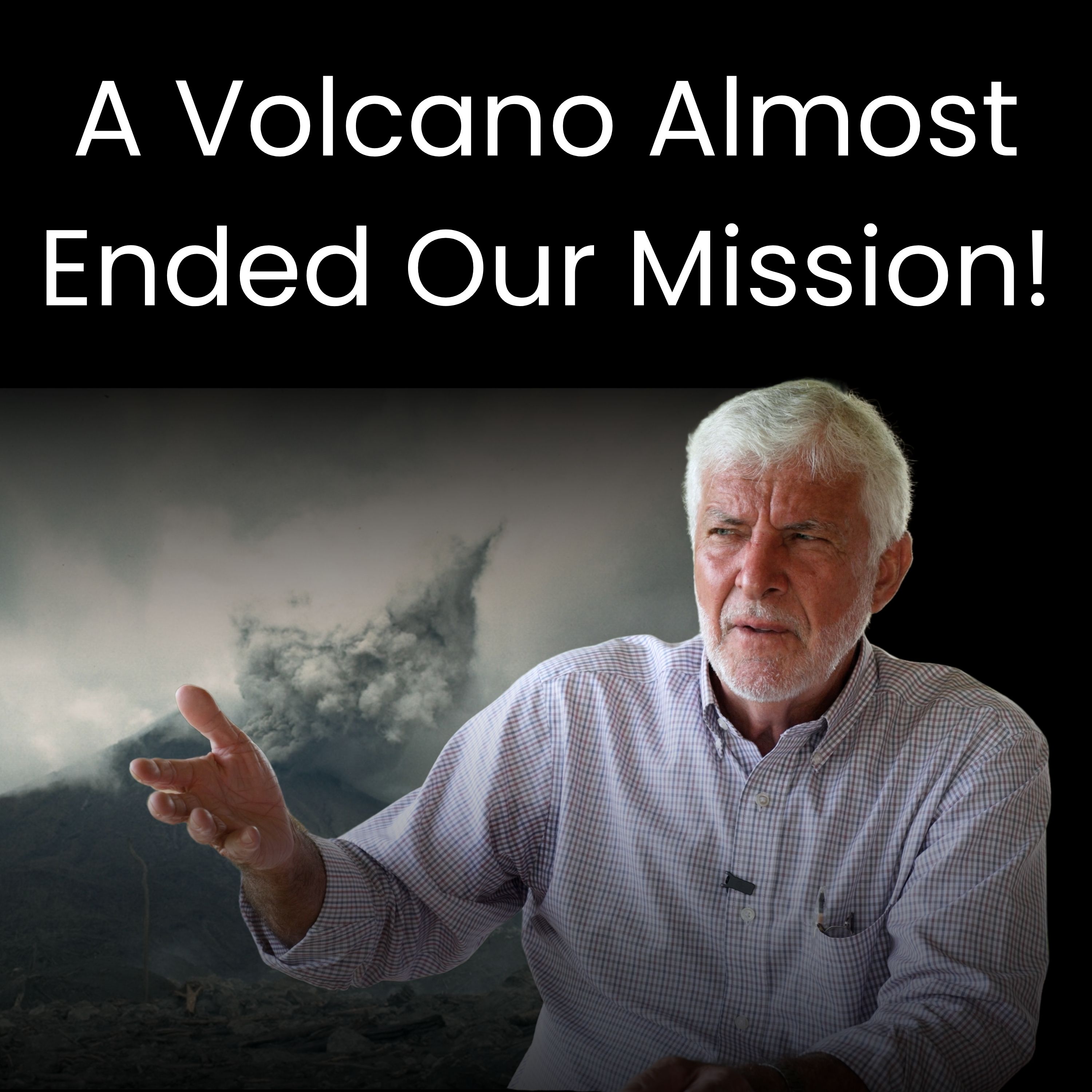
Anabaptist Perspectives
History of the Mennonites in Central America (1968-2026) - Phil Yoder
01:32:02
Loading summary
Transcript256 lines
- [00:01]
Phil
Actually, a group of men came from the States to help us make that decision. And their encouragement was to leave.
- [00:10]
Interviewer
Wow.
- [00:11]
Phil
But my father said no. He said, we feel that God has led us here. We don't know why this is happening. But he said, the rest of you can go. But I'm saying,
- [00:34]
Interviewer
Well, Phil, this is the first time I've ever been in Costa Rica before. And we came down here because we wanted to capture a story. And you're a part of that story from, I believe, from the very start. So first of all, why don't you tell the listeners a little of who you are and when did you move down here and what brought you to this part of the world?
- [00:58]
Phil
I'm not too well acquainted with the beginning of the story. In the United States, there was an awakening among the Bichi Amish churches in the US in foreign missions. But how to go about it was kind of a big question. And so it was under the influence, or a lot of the influence of William McCrath. I don't know if you. He was a well known minister among the Decianist churches. He came up with the idea of what they called evangelization through colonization. The idea was to transplant a church from the US into a foreign country, establish a base church, and from there reach out into the community and evangelize. And so that was the idea that was behind the push. My parents, Sanford Yoder was the minister that moved with the first group families that moved to Costa Rica. And it's kind of interesting. My father was a part of the Beachy Amish group near its beginning, not at the. Not at the complete beginning, but near there. And they, they were trying different things, different ideas. They were the first Amish group that had English, that had English church services. And my, my father was ordained specifically as an evangelist. Something that, I don't know that was ever done before or, or even after. I don't know.
- [02:56]
Interviewer
This is 1960s.
- [02:58]
Phil
This would have been back in 1960. 1960, I think. Okay. Was when he was ordained. My father was always a very much an evangelistic person. He always said that he was never so happy as when he was able to preach the gospel to people that had never heard it. That was where he found his greatest fulfillment. And so we moved to Costa Rica. There were three families at the beginning. And it was interesting how we got settled here. On one of the investigative trips to Costa Rica, they met a man at the airport who was a representative of Eckrich Meat Packing in Fort Wayne, Indiana. And they started talking and he he was asking my parent or my father what. What they were doing in Costa Rica, what their goals were. And so they. They told him what. What they were interested in. And so he said, hey, you know, I got an idea. He said, the Mennonites are known as being good farmers. And they bought. On your map there, there's Lake Arenal here.
- [04:19]
Interviewer
Ah, okay. So that's. We're currently over here. Over here, straight west of.
- [04:24]
Phil
Yeah, this is.
- [04:25]
Interviewer
Okay.
- [04:27]
Phil
At that time, this was a huge swamp. It was known as Lake Arenal, but it was just a big swamp, basically. And the government owns all the wetlands in Costa Rica. But the law said that anyone that owned land around this swamp, this lake, could utilize as much land as he can drain. Although it was not on the title, perhaps, but they could utilize as much land as they could drain. So Eckeridge Meats came down and they bought all the land all the way around this lake, and it was thousands of acres. And the idea was that they were going to drain the swamp and plant rice in the swamp bed. And so this guy talks to my father, and he says, why don't you move to Costa Rica? It's a way to get started and work with us. You teach us how to plant rice, and we will give you. Each one of the families will get one of the farms that we bought around here. You decide where you want to settle. It'll be our land, but we'll give you a farm, and you plant rice on your farm and help us learn to plant rice, and we'll split the profits on what you harvest off of your land. And so the committee of people that were looking into Costa Rica thought this was a godsend, a way to get into Costa Rica, because we knew nothing, you know, I mean, it's a foreign country. And so anyway, they decided that's what we're going to do. They said they would build each family a new house on the property, and then they were going to plant the first crop of rice on some of the land they had until we got there. The houses were supposed to be ready and everything. So on June 5th of 1968, my parents. There was another family, another two families that moved to Costa Rica, sold everything they had in the States. Wow. And moved to Costa Rica. We did not know the language, so it was. It was a big bite. Like, how old were you? I was 13.
- [06:55]
Interviewer
Okay. So that would have been, I'm sure, an interesting adjustment for you.
- [06:59]
Phil
It was interesting. It was a big adventure, for sure.
- [07:03]
Interviewer
Wow.
- [07:04]
Phil
So we come to Costa Rica and we Were met at the airport by the lady that represented the company here in the country. And she said, your houses aren't quite ready yet. I'm. I have a cabin up in the mountains and I'm going to take you up there for a couple days until we get everything settled. So we went up to this cabin. A couple days later she came with a bus and loaded us up. There were. My parents had nine children at that time. And the other family, I think had. I think it was seven. And then the third family they had, we flew down together, we two families. The other family drove down from Ohio. We were from Virginia. The family that came with us was from Georgia. So they loaded us up and took us out to Arenal, which at that time was an eight hour trip. The Pan American highway was not paved at that time. It was just a long, hot, dusty, dusty trip. My mother had, I think my sister was, I don't know, three months old or something like that was very small.
- [08:17]
Interviewer
Anyway,
- [08:19]
Phil
in the afternoon we get into this area and the bus stops beside the road and there was a little gate into a pasture. And the bus turns in there and starts driving through the pasture. And way back in the pasture there was this little. Little shack of a house. It had like a. I think it was a three rooms, very small rooms. And stopped here at this shack and said, this is where we're going to drop you off. Well, you know, what, where are we? What? We didn't know where we were. We didn't know anything. So we get off with a couple suitcases. My parents had only packed a couple suitcases. And the rest of our things were sent down on a ship, but we didn't have it yet. And so we get off of the bus and the bus leaves. And now what? Whoa.
- [09:24]
Interviewer
And this is one structure for both families.
- [09:27]
Phil
For both families. And it was, you know, it was a little bit. A little bigger than this porch. But this porch isn't very big for
- [09:35]
Interviewer
those that can't see.
- [09:36]
Phil
No, it was. No, no. I don't know. Maybe it was as big as from the porch, including the. That living room there. I don't know. It wasn't. It wasn't big at all for two families. Yeah. And so we got off and everybody was kind of in shock, you know. Now what? We don't speak the language. We don't know where we are. We don't know anything.
- [09:58]
Interviewer
There's a story I've been wanting to tell for years. And we finally filmed it for the first hundred years of the Anabaptist movement following Jesus was a death sentence. These were people who refused the sword even when it cost them everything, who were imprisoned, drowned and burned alive for refusing to compromise. I spent weeks traveling across Europe with historian Dean Taylor and church history teacher Stephen Russell to the actual places where the story unfolded. To Zurich, where the first adult baptisms happened in 1525, up to the Netherlands where Menno Simons lived and wrote. The result is Anabaptist Origins, a ten part documentary series on the first hundred years of the Anabaptist movement. It releases July 11th. Subscribe at the link down below. And this isn't like back, you know, I mean, this is 1968. So you don't have, you know, cell phones and Internet and, you know, Google
- [10:50]
Phil
Translate and no electricity.
- [10:52]
Interviewer
Yeah. Did you have running water of some kind?
- [10:55]
Phil
There was running water. Okay, there was running water.
- [10:58]
Interviewer
That's a plus.
- [10:59]
Phil
So it was decided that the other family would take my mother and most of my siblings and go back to the last town we had come through, which was Tilaran. And they would try to look for a hotel there to stay for the night. And the next day we'll see what. We'll see what happens. So my father and three of my brothers and I, four of us were going to stay at the. And watch our things there at the. At the house. So they left and dad finally says, well, boys, he said, I think the only thing we can do here is start walking and see where we. Where we can find something to eat at least. So we walked a couple miles and got to the little town of Arenal. And there, through signs and wonders, and my father bought a loaf of bread and some tomatoes. And we walked back to the house and we had tomato and bread for supper and lay on the floor and slept for the night and had tomatoes and bread for the breakfast. And anyway, we discovered that there were no houses built for anyone. And the rice that had been planted, they had a bumper crop of rice. But just as it was ready to be harvested, the government imported rice from another country. I don't even know where it was from. And the local market, the price dropped. The bottom dropped out of the price. And so it was. It wasn't even worth harvesting the rice. And they let it, they let it rot in the fields. So there were no houses. And then they came to us and said, we're not planning, we're not planting any rice. With a government that does this kind of thing, there's no use planting rice.
- [12:45]
Interviewer
Well, so now you just lost basically your shelter and your Means of income. All. All at once.
- [12:52]
Phil
Exactly. And so they said, but we, we are going to honor our commitment with you. And so we're meat packers. We're just going to go into the beef business. And so we will allow, we will give each of you a farm and instead of doing rice, we'll do beef cattle. And so that's how we got started. The little farm that we got, there was an old house on it and so we moved into that and they did build new houses for some of
- [13:23]
Interviewer
the other families in the meantime. What did you do? Like stay in that hotel, I guess, or.
- [13:28]
Phil
No, we stayed in the little house out on, out on the, out in the pasture.
- [13:32]
Interviewer
And the other family and your mother, they stayed there too. Man, I must have been kind of crammed like to say that.
- [13:39]
Phil
Say the very least.
- [13:40]
Interviewer
But like, for how long were you in that situation before you could get, you know, some kind of better?
- [13:45]
Phil
The other family found, rented a house before. I don't remember. It was, I don't know, a week or so probably. I don't, I don't remember.
- [13:52]
Interviewer
I'm guessing you made some memories the first couple weeks for sure.
- [13:56]
Phil
Wow.
- [13:57]
Interviewer
But you can't speak the language.
- [13:58]
Phil
No, we can't speak the language.
- [13:59]
Interviewer
They rented a house not knowing the language.
- [14:01]
Phil
I guess he found there were ways that you could, you know, make yourself understood. Anyway, that's the way we got started in Costa Rica.
- [14:09]
Interviewer
Yeah, it has come a long ways though, you know, like, because I'm just, I've been here, let's see, we've been here a couple days now and doing some stuff with, you know, some of the ministries here and whatnot. And, and I'm, I'm just, I'm surprised. Like there, there's so many things and churches and things that are happening and people have been here for years and years and years. I mean, obviously yourself, you know, from
- [14:32]
Phil
Costa Rica has become very modern.
- [14:34]
Interviewer
Yeah.
- [14:34]
Phil
In those 58 years.
- [14:36]
Interviewer
But you've lived here that entire time since. I mean, this is home. Yeah, for sure.
- [14:41]
Phil
That's right.
- [14:43]
Interviewer
So let's scale it back a bit and get us a big picture of Central America as a whole. A couple bigger picture questions just for broader context and then we'll continue on some things. You're saying how many Spanish speaking people are there in the world?
- [15:01]
Phil
The latest statistics that I've seen was 487 million native Spanish speaking people. There are over 500 million people in the world that speak Spanish. But native first language, 487 million. I think there's 21 countries whose official language is Spanish. That would be Spain, some of the Caribbean islands, Cuba, Dominican Republic, and then South America and Central America and Mexico.
- [15:32]
Interviewer
So we're talking, like, back in the 60s, you all were essentially the first to do something like this. Fast forward to today. Obviously, a lot has changed, you know, and it wouldn't be unusual for Anabaptists, Mennonites, whatever, to live here, you know, speak Spanish, whatever. Things that didn't exist back then very broadly. Because we could spend a lot of time on this question. What would you say is happening with. Within the Mennonite communities of the world here in Central America? Just kind of give me some nice big picture pieces, and then we'll dial in on some things here.
- [16:06]
Phil
I'm acquainted, of course, with Costa Rica, but the bigger picture, I think there
- [16:13]
Interviewer
are
- [16:15]
Phil
conservative Mennonite churches throughout. I think every country in Central America and Mexico, there are conservative Anabaptists. And in South America, we have Colombia, Peru, Ecuador, Paraguay, Argentina, Uruguay, Chile, Brazil. Most of the countries in South America have Anabaptist churches.
- [16:50]
Interviewer
You've named basically every country in South America? Not quite, but almost. That's phenomenal.
- [16:54]
Phil
Yeah. And that has happened. And here I want to be careful. I'm not really sure, but I think that has mostly happened since the year 2000.
- [17:04]
Interviewer
But that's. That's phenomenal. To go from, wow, like you guys getting dropped off, you know, from a bus at a shack, you know, in 1968, to the. Just the proliferation, I guess you could say, of the churches and missions and etc. Etc.
- [17:20]
Phil
My father and a group of. Well, my family and I didn't go along, but my father took a group of people through on a trip through South America after the print shop was producing the Antorcha de la Verda.
- [17:37]
Interviewer
What is that?
- [17:38]
Phil
That's a little family magazine that's produced bimonthly. It means the Torch of the Truth.
- [17:47]
Interviewer
Okay. Yeah. Okay. They were telling me about this on the way here. Yeah. Okay.
- [17:51]
Phil
And so my father made a trip through Central. Through South America in an attempt to make contacts with the people that were receiving the magazine with the idea of establishing churches where it's possible. But back at that time, there were conservative Mennonite churches in Paraguay. I think that was about the size of it. I'm not real sure.
- [18:20]
Interviewer
What year was that?
- [18:21]
Phil
That would have been back in the late 90s, 1990s.
- [18:25]
Interviewer
So a lot has happened in the
- [18:27]
Phil
last 30 years, and I don't know how much that trip and Dad's report of what he found actually was a promoter of what has happened since that. But dad did have a real burden to move into South America and take the message to the South American people where there was no conservative Anabaptist witness. So today, most of the countries in South America have at least some work going on in their countries.
- [19:08]
Interviewer
Yeah, that's that. That's the piece that I've been really learning as. As we were preparing for this trip. You know, come down here, see what's happening, get some interviews, talk to you. I just didn't realize, like, there, There. There has been so much work that has happened down here for a long time. And I think that's an important piece because you would have multiple generations now. Like, you would start with your parents generation, then yourself next year. What are you at? Three generations in three.
- [19:36]
Phil
Yeah, at least.
- [19:37]
Interviewer
Yeah, maybe almost four. Like, as in it's been here for a while. And I'm. I'm a little surprised that I didn't even know that much about it, you know, until coming here. That's been quite the experience.
- [19:46]
Phil
Yeah.
- [19:47]
Interviewer
Also pretty inspiring, too. Like, it's just the faithfulness, I guess you could say, you know, someone who moved down all those years ago with so little, you know, and not knowing the language. I must have been tough, by the way, learning the language. Like, how did you do that? Did you just make friends and figure it out or.
- [20:03]
Phil
Yeah, kind of After. After we were here a number of years, not everybody, but I took Spanish classes then. But by then it was more a thing of learning why we said what we did rather than how to say what you want to say.
- [20:22]
Interviewer
Okay, yeah.
- [20:23]
Phil
And then I also taught Spanish, Some. Some of the people that would come down. But one of the things that was. That happened, and here we might get into another story. But on the 29th of July, we came the 5th of June, the 29th of July, the volcano Arenal erupted.
- [20:42]
Interviewer
That's like less than two months after you got.
- [20:45]
Phil
A month and a half after we were here and we found ourselves as refugees.
- [20:50]
Interviewer
Okay, so you're living around this lake. And actually, I think the mountains.
- [20:55]
Phil
It is.
- [20:55]
Interviewer
It's literally. It's listed right close there to the lake. Right. Oh, my.
- [20:59]
Phil
That was about 12 miles. Would have been northwest of the mountain.
- [21:05]
Interviewer
Only 12 miles. And so it erupts.
- [21:07]
Phil
It erupts. And we got 4 inches of sand over everything where we live 12 miles away.
- [21:18]
Interviewer
That's a lot.
- [21:18]
Phil
That.
- [21:19]
Interviewer
Okay, it is. Yeah, it's a lot.
- [21:20]
Phil
And the eruptions were very violent eruptions. They destroyed three little towns. I think there were 87 people killed in the eruption. And a lot of people were killed with the rocks that. That fell. When you went to the volcano after the eruption, it looked like a moonscape, pretty much. It was nothing green anywhere. And it was a forest, a jungle. And now the only thing that was left was the stumps of the trees. The branches had been broken off by the rocks falling and all the heat, I'm sure. And then there was the hot gases that killed a lot of the people. And then there were what they call volcanic bombs. Huge rocks that statistics say that rocks that weighed a number of ton were blown out of this thing. And they moved at a speed of about 600 meters a second. And as they were flying through the air, the outer edge cooled, but the inside was still molten lava. And when they hit, it was boom. Whoa.
- [22:36]
Interviewer
That is very fast. 600 meters a second.
- [22:39]
Phil
That's what it. That's statistically. Yeah, yeah. I can't prove it, but.
- [22:43]
Interviewer
So basically, when they hit, they would explode into a bunch of lava. Basically. Well, kind of like molded rock.
- [22:49]
Phil
It just made, like, big craters. And I remember the first time we went back to the little town of Pueblo Nuevo that was destroyed, there were, you know, the houses were all blown apart and. And you'd find these huge craters all over town where these bombs had hit and just blew everything apart.
- [23:08]
Interviewer
And you guys, you're 12 miles away, so you. You weren't in. We weren't major danger. You definitely had to leave.
- [23:14]
Phil
But we didn't know that at the time.
- [23:16]
Interviewer
Yeah.
- [23:17]
Phil
And so the US Embassy sent word out that we were supposed to leave before the eruption. No, that was after it.
- [23:23]
Interviewer
So nobody saw this coming. It wasn't like a Mount St. Helens
- [23:25]
Phil
thing where they predicted it. It was a surprise. Oh, my. And so. Wow. So they. We didn't know what to do. And we could barely speak. We couldn't speak Spanish yet at that point. But there was about 80 km away, there was the town of Canyes. And there the bank had repossessed a large ranch that had a large house on it. And so they asked, told us we could live in that house until we were able to go back to our farms. And so again, the two families that were together in the beginning, we moved into that house and were there for, I think it was three weeks. But the interesting thing that happened, and I don't know. I don't know how people found it out, but on Saturday, the first Saturday that we were there, of course, there were refugees from all over. There were thousands of People, you know, that were escaping this volcano. That first Saturday, somebody came to my father, and again, I don't even know how they communicated, but they asked him if he was a minister. He said he was. And he said, well, tomorrow you're going to preach for us up at the school where a whole bunch of people were. Were lodging and, you know, okay, you don't speak Spanish, but you're going to come preach for us.
- [24:51]
Interviewer
Yeah. How did that work?
- [24:53]
Phil
So dad had a bunch of these little tracts that had. All they had was scripture verses. And so he found a tract that was entitled Salvation. And so he took that little tract on Sunday morning to this big group of people that were gathered, and he read that for his sermon. I would pay money to listen to it because I can just imagine the. The accent or the. You know, I don't know if anybody understands.
- [25:29]
Interviewer
So this isn't like, come speak. We'll have a translator for you. No, this is like.
- [25:33]
Phil
No, this is.
- [25:35]
Interviewer
This is an incredible story. I can't. Your. Your life must have felt pretty chaotic at the time. I mean, you know, like, you get dropped in the middle of this random, you know, swampy region with not really anywhere to live, basically. You don't know the language, all this stuff. A volcano literally erupts a month and a half later, and you have to evacuate.
- [25:55]
Phil
What a start to it. Some people from the States sent word that, you know, we need to get out of there just as fast as we can. One guy said, you get on the first train, the first plane, bus, or ox cart and get out of that place.
- [26:08]
Interviewer
Yeah. Okay. Because I was kind of curious, like, what was the response from, like, your home communities? You know, because they must have been like, you guys are crazy.
- [26:15]
Phil
You should just come home or whatever. Exactly.
- [26:17]
Interviewer
Why didn't you?
- [26:18]
Phil
But then the. We actually. A. A group of men came from the States to help us make that decision, and their encouragement was to. To leave.
- [26:29]
Interviewer
Wow.
- [26:30]
Phil
But my father said no. He said, we feel that God has led us here. We don't know why this is happening. But he said, the rest of you can go.
- [26:47]
Interviewer
But I'm saying, that's incredible.
- [26:53]
Phil
So anyway, wow. My father says that. And then after. After that Sunday service, they said, next Sunday, you're going to come preach for us again. Okay, I'll get another tract. But the interesting thing was dad says he thinks that was a godsend, because he said if that wouldn't have happened, he doesn't know how long he would have waited before he would have had the nerve to get up and speak in Spanish. But this way, I mean.
- [27:23]
Interviewer
Yeah, you know, you've been there six weeks or whatever, you're already doing a sermon.
- [27:27]
Phil
I mean,
- [27:29]
Interviewer
that's courageous is the word that comes to mind. Yeah.
- [27:33]
Phil
Wow. But he just says that he felt like it was a godsend because he was thrown into something that he doesn't know if he would have had the nerve to. To do it and how long it would have taken. So. But from that day on, every Sunday, he's. He preached in Spanish every Sunday.
- [27:48]
Interviewer
Wow. That's amazing, though, because I can imagine. Especially his first couple were probably pretty rough, you know, but I guess the people were. They just wanted to hear, I guess.
- [27:59]
Phil
Did they have. Did they receive the gift of tongues? I. I don't know.
- [28:02]
Interviewer
Yeah.
- [28:03]
Phil
But I can hardly imagine what dad sounded like.
- [28:08]
Interviewer
Oh, I wish there was a recording of that. That would have been amazing.
- [28:13]
Phil
So anyway, that was, I think, to dad, the volcanic eruption being refugees, he always felt like that was the hand of God to put him in that situation and get him started on something, that. How long would it have taken if that wouldn't have happened?
- [28:39]
Interviewer
And also that it reaffirms the commitment too, you know, because here you have these people in your life saying you should leave. And again, the word that comes to mind is courageous or faithfulness, maybe, to the calling that he believed he had, you know, to stick it out, even though. So, like. So you're out and staying in this other place, eventually you go back to your farm and just start rebuilding.
- [29:05]
Phil
I guess we went back to our farm and when we got back, 4 inches of sand on the roof that was not built for any weight. You know, it was only. Rain is the only thing that ever fell on our roofs. But we had four inches of sand on it. And then it rained. Oh. And so the tin buckled. Oh. And we got home and everything was wet in the house. They had. My parents had bought these little cotton mattresses. Those things were soaked and when cotton gets wet, you know, just become little hard balls. And so we had to pitch everything. It was. It was kind of a tough time for my parents.
- [29:44]
Interviewer
Yeah.
- [29:45]
Phil
For me, it was, you know, big adventure.
- [29:50]
Interviewer
Yeah.
- [29:51]
Phil
Yeah. And my. My brothers and sisters, it was kind of a big adventure, but so you
- [29:55]
Interviewer
just, you know, rebuild and keep on going, I guess. Is that.
- [29:59]
Phil
That was it?
- [30:00]
Interviewer
That's pretty much. Well, so. Wow. Like, I'm sure there were so many things that you had to learn for the first time, but especially like learning how to communicate your faith cross culturally, integrating in with the Culture, learning the language. Give me some pieces on that. Like, what was that process like for you? I'm sure it was easier for you than maybe your parents, because you're essentially growing up in it.
- [30:23]
Phil
Yeah.
- [30:23]
Interviewer
Or maybe it wasn't. I don't know.
- [30:27]
Phil
Of course, I was young. Back at that time, I wasn't that interested in promoting the faith. But we've always said that the first eight years in Costa Rica, when we lived in Arenal was a school. We learned the language, we learned the culture. There wasn't a whole lot of success in evangelization. Today, I think there are one, two. There are two or three people, perhaps that would have been a part of our church in Arena.
- [31:14]
Interviewer
But you said that was the first eight years.
- [31:17]
Phil
That was the first eight years that we were in Costa Rica.
- [31:19]
Interviewer
Okay.
- [31:20]
Phil
Then in 1973, then we had an earthquake that shook us quite a bit. That was a 6.3. I think it was something like that. End of the Richter scale.
- [31:33]
Interviewer
Same area where you had been with a. Oh, my. Okay. So you get blasted by a volcano, have to leave, and then five years later, you get hit with an earthquake.
- [31:40]
Phil
Yeah.
- [31:40]
Interviewer
Uhhuh. Okay.
- [31:42]
Phil
And there the roof of our. One of our sheds fell in, and the four corners of our church house was a block building and knocked the four corners of it out. And the building stayed standing. And. But, you know, we made it through that. And then in 1974, this. Eckerich Meat packers, they decided they were going to go ahead and drain the lake, the swamp, although they weren't going to plant rice, but they were just going to put cattle in this thing. And it's. It was a huge thing. It's 20,500 acres, I think, is what the. The lake is today. It would have been less than that at that time.
- [32:33]
Interviewer
Okay.
- [32:33]
Phil
Because. But anyway, right below our house, there was what they called the. The plug that held the water back in and made a swamp out of this big valley. And they had. They had put a drag line in and made a. A canal up through the middle and then went out the sides wherever there was a creek coming in. And they had just come to the plug, and they were just ready to take out the plug plug. And when they did that, of course, all the water was going to leave and leave a dry lake bed. So. But just before they did that, the government steps in and says, no, you're not going to do that. We're going to put in a dam and make a hydroelectric project out of this thing. Oh. Whoa. Oh.
- [33:17]
Interviewer
That's like a 180 degrees of what they were planning.
- [33:20]
Phil
Exactly. So, okay, so that put a stop to that. That was in 1974. In 1979, the lake or the dam was inaugurated and the hydroelectric plant started functioning. But through that, of course, we had to leave because our land was going to be underwater. Oh, wow.
- [33:48]
Interviewer
Yeah, I guess I hadn't thought of that. So this deal you have with this company would have been out the window at that point then, because they're not able to drain the land like they had planned. And so, I mean, their whole idea is.
- [34:00]
Phil
So the government did come in and they paid for. They paid for all the land.
- [34:04]
Interviewer
Okay. Yeah.
- [34:06]
Phil
And. Well, that's a long story too, but I won't go into that. So then because of that, we needed to leave. And by that time, the church. I don't know for sure how many families would have been there, American families. There were some difficulties in the church at that time because people came from different churches in the States with different opinions and ideas of church life, things like that. And so we ended up here in San Carlos in this area. And then some of the people moved up to San Pedro. That would have been. It was a group that took a more. A more conservative approach to church life. And then some people moved down to San Be. To way down here, close to the Panamanian border. Oh, wow. And that. That was also a very, very conservative. A very conservative group.
- [35:13]
Interviewer
That's a long ways from where we are.
- [35:15]
Phil
Yeah, all the way down.
- [35:17]
Interviewer
And I'm assuming these two groups you mentioned, they're still there, Is that correct?
- [35:22]
Phil
The San Pedro group is not there anymore.
- [35:24]
Interviewer
Okay.
- [35:26]
Phil
The church still exists today. There's one in Potasi. No, there's only two Pataste. And down here they are now part of what is known as the Christian Fellowship group. So that's how we got over into this area. And that was in 1976 that we moved over here. Excuse me. That we moved over here to where we are today. And then in 1977, there was a group of Kleinigameinde, Russian Mennonite people from Belize that came down and bought a property over there. Where? No, here. Where we are today.
- [36:12]
Interviewer
Okay.
- [36:12]
Phil
Here in Santa Rita. And they bought a large tract of land and they were going to do what we did, bring a bunch of their families down. And they wanted more evangelization. It was a very spiritually minded group that wanted to start a church here. And so they bought this property. And then in the early 80s there was. It was a fairly good sized church in the 80s. Then a charismatic movement went through their church and kind of blew the thing apart. And a lot of their people moved back to Canada, Mexico, to Belize. And then the people that stayed here asked to join our. Our group of churches. And in 1986, then, at that time, my wife and I were living in Pital, which was an outreach from La Merced. They are the original church. And so they asked us to come over and help with the leadership here. And so since the 86, we've. We've lived here in this. In this area, in this community.
- [37:20]
Interviewer
So tell me about how the churches actually got started. And like, what were those initial challenges? Cross culturally? Like, you kind of hinted at some of those different dynamics, but, like, how do you get that first church up and running? And I mean, now there's, I mean, multiple, you know, ones. But, like, that first endeavor, it must have had its unique set of challenges, I'm sure.
- [37:47]
Phil
Yeah, it did. The Arenal project solved that issue by going different directions. We. We had to leave anyway. I mean, there was. And because of some of the differences of opinion in moving out of Arenal, we kind of went our separate ways.
- [38:17]
Interviewer
And this is because the hydroelectric dam that gets built there,
- [38:22]
Phil
if that wouldn't have happened, I don't know exactly what would have taken place.
- [38:27]
Interviewer
And. And at that point, this is 10 years. You've been there almost 10 years. So this is people moving in from different parts of America, Canada, et cetera.
- [38:36]
Phil
Okay, at that point, not Canada, it would have been United States. But yeah, from different. Different parts.
- [38:42]
Interviewer
And that's when it. You had those different groups kind of going into different parts of Costa Rica. Right.
- [38:50]
Phil
A number of our churches started because of an interest that was expressed in a. Some community and said, why don't you come and start a church here? We'd like to. We'd like to have a church here. The church in Pitada Marseilla. There's a number of them that started that way. Interestingly, the people that invited us to come were probably never became a part of the church, but it didn't get us a group started there. Yeah, some of the challenges that we faced, I can speak to that perhaps. Now, looking back, I think one of the things that missionaries need to remember when we move into a foreign country, and I think it's impossible to avoid it totally, that we bring with us a package, the gospel. With the way we apply the gospel to practical living, I don't know if there's a way to getting around that, but I think one of the things we've learned is that the church should be, I say should be like a chameleon where we adapt to the culture that we live in. If we go to China, we should. The goal should be to establish a Chinese Christian church, not an American church that lives in China, if you understand what I'm saying. Yeah. And that's a little hard sometimes for people who have conservative Anabaptism in their DNA. You know, a lot of our concepts, we often haven't even sat down and analyzed them because it's just the way. That's the way it is. But to come to a different culture and try to think with a different mind. Now, when I say this, I want to be careful, because culture is simply the way a group of people thinks and does things. And so where there are fallen people, all cultures are fallen cultures. And to say that we're going to move into a foreign country and just adapt blindly to the culture, you can't do that either. As people in a different culture accept the gospel, the way they think changes and culture is redeemed. And in the church, we should have a Christian culture, but it can still be Costa Rican or Chinese or US or whatever, if you understand what I'm saying.
- [42:17]
Interviewer
Like contextualized to. I don't know if that's the right word, but that's what comes to mind. It's a Christian. How do you say that? A Christian culture, but yet also in the right context
- [42:30]
Phil
in the culture that we live in.
- [42:32]
Interviewer
Yeah.
- [42:33]
Phil
And that's one of the. One of the weaknesses of many of our conservative Anabaptist missions throughout the world is because we send people for two years. You know, it takes that long to learn the language well. And then after two years, you still don't understand the culture.
- [43:01]
Interviewer
I can imagine you were probably learning pieces of the culture for many, many,
- [43:05]
Phil
many years, even today.
- [43:07]
Interviewer
Yeah.
- [43:07]
Phil
You know, there's things that. Oh, expressions, the way people think. But what happens is that as we. As we become integrated into the culture, we develop attitudes toward that culture. And they say there's three stages of missionaries. First stage is it's the honeymoon stage. You just throw yourself. You immerse yourself into the culture, and you want to be like these people. And that goes about a year. And then the next year, you wish you'd have never seen the place because there are so many things that are different. The inefficiency, you name it. And by the third year, well, it's different. Not necessarily worse, not bad. It's just different. And you accept it. And this is life. And then you can begin to move on. But even then, you know, a lot of people, by the time they return to the United States and have fulfilled their term, they're returned missionaries now, but they really haven't understood where they're living
- [44:35]
Interviewer
and what, you know, there's so much of. In our culture, though, the short term, mission term, you go somewhere for a year or six months or two years even, that's just kind of baked into a lot of how we do things, I'm going to say. And that might be a little over oversimplified and overstated, but I don't know, maybe not. Maybe there's a place for that. But you're suggesting real effectiveness, immersion, whatever you want to say, it's not going to work if you do it that way, is that I don't want to put words in your mouth, but I
- [45:08]
Phil
don't want to be critical of it. Sure, because God uses it. But I don't think it's nearly as effective as it could be. We started a mission here in Nicaragua on the island of Ometepe in Lake Nicaragua. In this lake, right up in here, there's an island. Our daughter lives there. And we started that way. It was very difficult to make a living there. It's very arid. It's two volcanoes and small island, has about 50,000 people on it. But anyway, there's a small church there and our people were going from here. We'd send people for two years. But the local members would tell me, you know, the reason the church here doesn't grow is because by the time we get used to one pastor, he leaves, and then we have to get another one. We have to get used to the way he does things. And then by the time we get used to him, he leaves. And, you know, there's a certain amount of insecurity in the church that makes it difficult. And then there's the thing of economics. While your brothers and sisters are struggling to feed their families, we have a faucet from the United States that's supporting us.
- [46:53]
Interviewer
Oh, yeah, yeah.
- [46:55]
Phil
And it develops a concept of us and them. I could tell you of a case right now where after 60 years of being in a country, churches having been established, and they're still the missionaries, once a month get together to have fellowship day. It's us and them. When are we going to learn to have deep fellowship and relationships with our national brethren and find our fulfillment with our national brethren just the way we would with somebody that has the same background that we do? There are very subtle Things that develop concepts that I think we need to be very conscious of and very careful about.
- [48:04]
Interviewer
So when, when you all moved down in 1968, did you all have that faucet from the state, so to speak, where you're getting support?
- [48:13]
Phil
No, we were never, we were always self supporting.
- [48:16]
Interviewer
Okay, did you, were you under some mission agency or something? Wow. Again, that strikes me as bold or courageous, you know, I mean, that's because you have to make it work then, right?
- [48:28]
Phil
It was hard. It was hard.
- [48:30]
Interviewer
Yeah.
- [48:31]
Phil
The first number of years that was a thing of hand to mouth. I'm not saying we never got any help from the States, but it was never anything organized or, or it was just goodwill of somebody that thought about us.
- [48:44]
Interviewer
And you know, it's not the fairly typical model like you get your missionary support once a month or whatever. You know, that would not be an unusual way that it's done.
- [48:54]
Phil
Right.
- [48:54]
Interviewer
And again, not. Maybe we should be careful that we're not criticizing necessarily.
- [48:58]
Phil
Exactly.
- [48:59]
Interviewer
But maybe pointing out, I want to be careful.
- [49:02]
Phil
I want to be very careful and not be critical. But I do think it is a downside of the modern missionary mission station idea. There's thousands of dollars invested in the mission compounds and vehicles and support.
- [49:21]
Interviewer
And at the same time, if someone's going to be speaking about this from experience, someone like yourself can clearly do that. I mean, you've lived here for this long, you clearly have some experience in this. And I think that there's some wisdom there that I want to make sure we grab. You know what I mean? Like, because I have seen that in some cases where you do have the fancy mission compound and the nice vehicles and maybe there's a place for that. But it does create that us versus them. Because here we are on our nice compound and then here's all these people that we help. But you don't really feels like you're creating these in some cases literal barriers around the mission and then the people. I don't know if this is making sense.
- [50:03]
Phil
Absolutely. And then there's the another very subtle thing. I almost hesitate to talk about it because I don't want to sound critical because God uses different ways.
- [50:11]
Interviewer
Yeah.
- [50:12]
Phil
And look across the mission world and there are churches. But I think there is a downside that is a little hard for us to understand sometimes. And there's another thing that's very subtle because if money comes from the States to the mission, who controls the money?
- [50:31]
Interviewer
Yeah, it's the American church.
- [50:33]
Phil
It's going to be the Americans that are controlling the money. And that if you control the money, you control people.
- [50:42]
Interviewer
Yeah.
- [50:43]
Phil
Wow. I'm going through a struggle. I have a problem. I have a child that's sick, you know, whatever. And I know the mission has money, but the missionaries say no, it's not for that. It's not for you See that's, that's
- [51:02]
Interviewer
interesting though because there's a, be careful how, how I say this. There's a situation with a mission, not here, you know, in a different part of the world where the person, the missionary had been getting their own support, basically like they had started a business and were able to be self support supported. But the mission actually didn't like that because they wanted the support to come from the churches in America. And that surprised me. But then as I thought about it, maybe that's, I mean it would have to be for reasons of control or oversight. Right? Basically. So very similar to what you were basically just saying. But for them that was an intentional choice. No, we have to keep the support flowing through the American mission agencies.
- [51:47]
Phil
And that is another, that's another issue that I think we have been blessed with. Not having a mission board over us that allows us to make decisions on a local level taking into consideration the needs of the local people in their local culture. For somebody in the United States to say how a person in Africa needs to live or you know, to control the way the church operates, we need input. We don't, I don't want to sound like we become totally independent maybe, but for a foreign source to tell us how to, how to do our church, it becomes cumbersome. And sometimes there's a need and on a local level we think we see what should be done, but we can't move because the north won't allow it.
- [52:59]
Interviewer
A board or a committee somewhere in another place. Well, and in this case Costa Rica, the proximity, it's a lot closer to America than, let's imagine you were a mission plant in Indonesia or something. I mean they're literally other side of the world. That's going to be more so. Yeah, the issue is just compound. So these are tough things though because there's lots of mission agencies that this is how they would operate, you know, and, and I. Exactly, yeah, I guess that's what it is.
- [53:30]
Phil
But, but, but try to find missionaries that are going to sell out and go to the farm field and say this is where we'll live the rest of our lives. That's tough too to find people that are willing to do that.
- [53:45]
Interviewer
And that was the piece that immediately stood out. To me when we got here was the people were interacting with. Oh yeah, like I was born here, I've lived here my whole life, you know, or yeah, as we were just noting several generations in now here, three ish generations that people have been living here. This is home, this is that. That level of integration, at least, at least in my experience has been very rare to see. Like, I'm trying to think of another mission that I've went to, that, that was like that. And I'm struggling to think of. I'm sure they're out there, definitely. I know, but, but the point being it's not something that you run into very often where it's like, yeah, we moved here, you know, 50, 60 years ago and just been here ever since. Why do you think it's so rare or unusual? Maybe that's the better word.
- [54:33]
Phil
It's hard.
- [54:35]
Interviewer
Why did you stay?
- [54:38]
Phil
By the time I came along, we were, it was home. For example, for my children when we go back to the States, they say, dad, I feel like a foreigner. The things that the young people talk about after the service and you know, I'm lost. We took a family trip to the States a number of years ago. We drove to the States and back and when we crossed the border from the US into Mexico, I hadn't even thought about it so much. But when we crossed the border, our children just let out a whoop, you know, we're home.
- [55:28]
Interviewer
Wow. Mexico's a long ways from where we are even. But I guess it was. But the culture, isn't that something?
- [55:35]
Phil
You can feel it in the air. I mean, I don't know exactly what it is, but it's a vibe that. But we're talking about challenges in a cross cultural church plant. I think another thing that enters in is the idea of discipleship. And maybe it's more working with non churched people than it is different cultures. Although, you know, even in the US a non church people would probably have a different culture. But anyway, people can intellectually understand a principle, but they do not know how to put it into practical living unless they see it done. Just for an example, we believe that the Bible teaches that parents to train their children spanking is a viable option, even a biblical option in training children. And so we can tell our people that. And they will say, yeah, I understand, but if they have never seen parents applying loving discipline to their children, it's intellectually understood, but in a practical way, how do you do it? He will say, perhaps, well, but the only thing I've ever Seen with a switch is anger, abuse. And so I want to stay away from that. Or he may say, I got angry and I whipped him, but I had the Bible's backing. So how you do it? Not real long ago, got a call from a lady and she said, can I come talk to you? I said, sure. So she came, she sat down and said, look, she had become a Christian. She says, I have years of experience as a cook. If you tell me to prepare a meal for you, I can prepare a good meal for you. If you tell me to clean your house, I have years of experience, I can clean your house. But if you tell me to live like a Christian, she said, I don't know how the world to go about it. To us, it's a little bit hard to assimilate that idea because we grew up knowing how Christians should live. It's part of us. But to live, it means taking time, it means giving yourself. It means living with the people and walking through their messes with them. I mean, just over this weekend we've had a situation here where night before last we had a lady that and her two children that slept here at our house because she was going through something and had made some wrong decisions. And, you know, she was confused. She was, well, I'm busy. I'm getting ready for an interview, you know, or a message or I've got work to do, you know, the other day I had to come take care of my calves after dark because I was spending time with her. Those are things that within our own culture are not as frequent at least because people know more or less what they should do. I don't know if I'm making sense.
- [59:53]
Interviewer
Oh yeah, you're definitely making sense. It's kind of an eye opening thought for me because I haven't. Yeah, I haven't thought of it that way before.
- [60:02]
Phil
And then I think I've seen too often that people that go to the missions, to the mission field, my children say they don't like it when people come and say, are you missionaries? What do you mean by missionaries? Well, that the idea is that we went somewhere to evangelize. They said, we live here, this is home. And what we're supposed to do is be an example to the people who live around us. I think too often people come and in their attempt to acculturate, we are almost apologetic for the way we live, the applications of principle. And I see people rejecting some of biblical applications because we don't distinguish between a Bible principle and the application of that principle to Life. We put the two together more than we should. And then when we see that this application is probably not really working for us, we have a hard time distinguishing between the application and the principle that we're expressing. And so both go out the window. And I think we. Principles never change. Principles are absolute in whatever time, space, climate, you name it. But application of that principle is simply the way that we as a church have agreed to give expression to that principle. And that expression may change depending on the situation, depending on where we are and what our climate is. It's probably different in Alaska than it would be here or Indonesia. You know, I've never been to Indonesia, but I would want to be careful to say that I know how these principles need to be applied in Indonesia, but I think we have to come back to this. Principles need to be applied. If they're not applied, if they're not applicable, they are simply theory. But if they need to be applied, how are they applied in this situation? In a way that the national people understand what we are expressing? I could give you some examples, but maybe not necessary. But I think that we as a congregation need to sit down and discuss some of these things. And are we really applying principle in a way that our national people understand what we're doing? Can I go back and say, the Bible says this. This is the way we express that. Why do I need to apologize? Why do I need to apologize for the way we do it? Is it because I don't understand it? The connection? Is it because there is no connection? The connection has worn out? I don't know. I just think it's important that we are humble enough to realize that our applications perhaps are not as concrete as we would like for them. It's easier.
- [64:00]
Interviewer
Yeah, it seems like it would be so much easier. You come down here, copy paste how we always do things and continue on.
- [64:07]
Phil
Yeah.
- [64:07]
Interviewer
You know, that must have been quite the process to sort through all of that in this new environment based on where your parents would have started. Yeah, I don't know if that makes sense.
- [64:21]
Phil
Yeah, sure.
- [64:21]
Interviewer
Of course.
- [64:22]
Phil
I understand.
- [64:23]
Interviewer
Yeah.
- [64:24]
Phil
So those are some of the challenges of going into a foreign country and. Yeah, because we want to transmit the faith, not the religion.
- [64:39]
Interviewer
Oh, that's a good way of saying it. I hadn't thought of it like that. But see that. That's got to be a lot harder in some ways, but maybe not in other ways.
- [64:53]
Phil
You know, some ways, in some ways, it's easier. Mm. I've discovered that our people don't have as hard A time accepting a different way of doing something if they can understand the principle that it's connected to. But if you can't explain the connection to the principle, and if it's just the way you've always done something, it doesn't make sense.
- [65:24]
Interviewer
You got to go back to the why.
- [65:27]
Phil
Exactly.
- [65:28]
Interviewer
Yeah, that would be.
- [65:29]
Phil
And, you know, I sometimes have a little bit of a problem with the emphasis on Anabaptism, although I appreciate very much our Anabaptist heritage. But I've told our people here that we want to do what the Anabaptists did, not necessarily how they did it. You know, what were the Anabaptists trying to do? They were simply going back to the New Testament and saying, we need to live like the New Testament teaches. And they did it at the cost of their lives in the 16th century. We need to do what they did, but we need to do it in the 21st century. And it may be a little different. I hope we are raising Anabaptist churches in Latin America, but Anabaptism in the true sense of the word.
- [66:28]
Interviewer
And again, as in, what was the core pieces that we need to be going back to? Like, because you definitely see that in the early writings of those first Anabaptists. They're just constantly saying, go back to the Scriptures. And what does the scripture say? Okay, like Conrad Grebel, somewhere in one of his letters, you know, a simple interpretation of scripture, I'm paraphrasing, obviously, but that simple interpretation of scripture, what does the scripture say? And out of that, I'll. That's how I'll speak of that. And I was just like, oh, yeah, that's. Yeah, that makes a lot of sense, you know, and they're just constantly doing that. But that doesn't mean it will always be easy, because then I had to parse through all of that and then figure out, okay, now how are we going to live it? I'm sure you all have had lots of stories and experiences of trying to sort that out. Like, how do we live it here?
- [67:13]
Phil
Yeah, I could give you one example.
- [67:15]
Interviewer
Sure.
- [67:16]
Phil
Yeah. Our church is made up of people from, I think, six different nationalities here in our congregation. We went through a process where we kind of reevaluated our applications and things like that. And it's a very, very minute issue, really. I don't know if it's here or there, but do we use the mustache? Well, why do we wear a beard? You know, God put it there and, you know. But here in Latin America, a lot of God didn't put it there. And a lot of people and so.
- [68:01]
Interviewer
Sure, sure.
- [68:03]
Phil
But in Latin America, the mustache is an important part of the culture in the sense that years ago, before you signed papers with a lawyer, when you made a deal, you made a deal with someone, you yanked out a hair of your mustache and handed it to him and said, you know, that's my signature, or that's the signature of a man. This is a man, a man of honor. One of the brethren in our church said his father's not a Christian, but he said, if my father became a Christian, he would probably wear a beard if you ask him to. But I don't know if I could ever get him to shave off his mustache. So what do we say? And it became a, you know, kind of an issue in our church because our German kleining Minde people wearing just a mustache without a beard is a. No, no, because that's machismo. That's. You understand what I mean by machisma? That's pride in your male domination, you know.
- [69:30]
Interviewer
Okay, interesting. Yeah. Okay, so y' all had a little piece to sort out then? Yeah.
- [69:37]
Phil
Here we have the Costa Rican who sees the mustache as simply a part of the culture that indicates that I am a man of honor. And over here, a mustache is a symbol of pride, of being a big man. You know, whatever. How are we going to bring this together? And we discussed it, and, you know, the Latin said this and the Germans said this, and. But they weren't. Neither of them were going to change their opinion. And so finally I said, look, we're seeing a situation here where both sides have very strong opinions. But I was noticing that our German brethren, You get something into a German's head and try to get it out of it. You know, our German brethren were just pretty settled. So I said, look, I'm going to talk to my Latin brethren. I said, do you see how strong your German brethren feel about this issue? I said, how many of you Latin brethren would be so kind and so understanding that you'll say, because of the way my German brethren feel, I'll support their position and we'll either wear a beard with a mustache, or if we take off our beard, we'll take off the mustache too. Would you be willing, for the sake of peace with the brethren that feel so strongly, how many of you would be willing to do that? And 100%, you know, just an example of. I mean, it's an issue that's a non issue, maybe, but it became one. And so we. We Work with that. I could appreciate our Latin brethren's generosity in giving in for the sake of peace.
- [71:59]
Interviewer
I'm sure people listening to this will be like, okay, what's the big deal? You know, some people be like, whatever, but then other people.
- [72:05]
Phil
It is a big deal.
- [72:06]
Interviewer
Right. And that just comes back to your earlier point of you have the principles of scripture and of Christianity really, you know, but then you have, how do you live it? And if you can keep that clear in our heads, I think that will really help navigate through something like you just described otherwise.
- [72:28]
Phil
Wow.
- [72:28]
Interviewer
That could get very messy.
- [72:30]
Phil
It can. And it's funny how a non issue like this can become. Yeah. You know, a real issue. So, yeah, that's some of the dynamics of cross cultural. Cross cultural church life. Yeah. Wow.
- [72:44]
Interviewer
When that kind of, kind of goes into the next piece I wanted to touch on is like, broadly speaking, what would you say God is doing in Costa Rica today? And I'm specifically thinking like, well, how many Anabaptist, Mennonite, whatever churches would you say are here? You know, you already mentioned a little of how you handle some of these things in the church situation with culture and application and things. Yeah. Talk to me about that.
- [73:11]
Phil
Today there are eight congregations in Costa Rica that are a part of, I say, our group. I say we are a confederation of autonomous congregations. Does that make sense?
- [73:28]
Interviewer
Yeah. So it's not like a conference.
- [73:30]
Phil
No conference. We don't have any central governing board of any kind. We work together. We have the same goals, the same. Yeah. The same doctrines, but we are autonomous in our congregations. So there are eight congregations in our confederation and then there are two congregations that have not become a part of us necessarily, but we are starting to work together over the last five years probably. And so that would make 10, 10 congregations in Costa Rica and then out of the work here, there are about eight congregations in, in Nicaragua.
- [74:18]
Interviewer
You said eight there.
- [74:20]
Phil
I think it's something like that. Eight. So, yeah, it's, it's growing. Our church here in La estrella, we have 104 baptized members. Over 50% of them are native Latins. And then probably another 35% perhaps are results of cross cultural marriages. And so, yeah, to me it's, it's a beautiful picture to see the, the melting pot of cultures. And we have families growing up here who, they're simply Costa Rican, you know. Yeah, yeah. To me that's a, that's a beautiful picture of what heaven's going to be like. I, I think it's very difficult to believe that you can Be a part of a church where you share everything. Your young people are together in their activities and everything. But when it comes to marriage, you say no, you know, that doesn't work. And, and obviously it's a beautiful picture when the barriers, cultural barriers, the racial barriers are no longer there. So yeah, I think things are, the churches are growing. We have started here in La Estrella within the last. Well, just since the first of the year. We've started another work down here in San Ramon de Sarapica. We have two families from here that moved down there. There was a lady from there that became a member here, but they live three quarter of an hour away and she and her daughter are members of the church, but they live down there. And so we decided to start, start a group down there. We'll see how, how things work out. But the two families that have moved have, you know, bought land there and they're starting their own businesses down there. And we had been visiting a place right up on the Nicaraguan border, right on the San Juan river, which is the border. We were up there probably two years, going up there like every two weeks having services, and it just seemed like there was no real interest. One lady became a member of the church, but we decided to close it down because it's so far. It's hard to make that trip every week. And so she has moved here to the congregation.
- [77:28]
Interviewer
So what would you say are some of the needs and challenges that you face in the work here?
- [77:37]
Phil
One of the big challenges that we're facing right now after, let's say 40 some years of living here, the first number of years, everybody, foreigners that came here were living in survival mode, you know, trying to find out something that works to make your own living and da, da, da. But we found that out now, and I'm speaking of our local congregation, we have some very wealthy people in our church that brings with it some real challenges, the materialistic ideas, ways of living that you struggle with in the US
- [78:31]
Interviewer
So
- [78:33]
Phil
we're starting to feel that here we have young people who have good jobs, they're making money. I wonder how good it is for young people to be able to do whatever they want to do as far as money is concerned. And at the same time, it becomes more and more difficult to have to find people who are willing to take time and give it to church work and church activities. Why is that? But they can they find time to do what they want to do. You know, it's, it's, I'd say that's one of Our big challenges here, then there's another one I think you're probably facing with the same thing in the US More and more our churches are confronted with Protestant theology, Protestant way of thinking. They're Christians and they don't do. They don't live the way we do. So why do we have to sacrifice ourselves if we could, if we could live like they do? You know that. And there's a Protestant mentality of me with God. I say an individualistic Christianity, a loss of the body concept. And that's going to destroy us if we can no longer speak into the life of our brother and what we don't take into consideration. We want certain things that we see out there that we would like to be like that. But right along with it comes divorce and remarriage comes, non resistance comes. You know, there's a whole bunch of things that come along with those concepts that are going to take us in a wrong direction. I think. What is the difference? Explain to me the difference between the Anabaptist current of Christianity and the Protestant current of Christianity. If you understand those differences, you go back to the 16th century, those differences were very marked, but in a much more subtle way. We're still facing exactly the same issues today, but we don't see it. So, you know, to, to be able to help our people, to, to become grounded in, in the truth. Is the Bible a book of suggestions or is it really the will of God for his people? So I say those are some of the challenges that we face here today. We might be a few years behind you in the States. I don't know. Sometimes I think we're probably not that far behind.
- [82:21]
Interviewer
I mean, you're kind of touching on an earlier point you had that question of like, why do we do certain things? What are the principles underlying principles? Seems like what you just outlined there go straight to the heart of that. Asking those questions like. Well, like why do we live this way? Especially the, the individualism that seems to come with affluence is something I've been thinking about a lot recently. Actually I was talking to some other leaders up in the States about some, about some of that. I'm not quite sure what to do with it, but it's. Yeah, it's something I think about.
- [82:57]
Phil
Yeah. Look at Acts chapter 2. What happened after the day of Pentecost? How did those brethren live?
- [83:02]
Interviewer
Yeah, but that kind of goes right with one of the other questions I had here is about under the needs and challenges, but like passing the torch on to the next generation. I don't know if you want to say more on that.
- [83:16]
Phil
Obviously, teaching is going to be a big part of it, getting people involved. One of the things that I have discovered is that we dare not lay down our emphasis on evangelizing. One of the things that keeps a church healthy is new people coming in. And as new unchurched people come in, they will ask you every question under the sun, you know.
- [83:52]
Interviewer
Yeah, yeah.
- [83:54]
Phil
And to answer those questions forces people back to scripture. Why do we do what we do? And again, it's maybe the same thing of coming back to principle, but it keeps a church alive to keep going back to Scripture. And I've seen it happen to more than one person that as they try to help someone else, it does something to yourself. But that's one factor. I mean, obviously life in Christ Jesus is something that is a responsibility that each of us has in a personal level to God. And it's a responsibility that we share in the brotherhood to help each other to stay on that solid rock of faith. And I think that's probably a challenge that faces every generation. Sinto says he doesn't like the idea of first, second and third generation Christians or that's. He, he would, he would go that way. You know, I understand what he's saying, but let's be careful. We don't have first. I mean, second and third generation Christians. We're all first generation.
- [85:24]
Interviewer
That's good. Yeah. So you've lived here for 58 years. 58 years, yeah, if I'm getting the numbers right. So based on all that you've learned and your life experience, what is one thing you would leave our listeners about doing? Missions. As in, what's something people can do right now to reach out to the world around them? Based on your experience,
- [85:49]
Phil
I'm sure there'd be different answers depending on different people way of looking at it. But I guess I would say one of the big things that I take away from my little bit of experience is that church equals relationships. I'm not opposed to evangelistic meetings, revival meetings, evangelistic campaigns, that type of thing, literature. That's a good thing. But statistically and in our experience, the large percentage of people that have come to the Lord and are part of the church today and remain a part of the church are people that have strong relationships with people within the church. It may have begun as a working relationship, a friendship, but as that relationship develops and as confidence is gained, people start opening up their lives. And, you know, I'm from a dysfunctional family, you know, dad Came home drunk last night and he beat Mom. And you get into the nitty gritty of life, and as you can, reach out and offer a solution. Those are the things that bring people to Christ. You just, you know, you move to town. We lived in Pictal for three and a half years, and we had two converts in those three, three and a half years. But people look at the Mennonites coming into their community, and they say, who are these strange people? You know, and it's. First, it's a thing of curiosity, just who are they? And then curiosity makes them start asking questions. But it may be years before they start saying, you know, they have a very beautiful life. And I wonder what the difference is that's here. They say, it's in your blood. It's the American blood. Until they see, you know, national people who become Christians and begin to experience that life. And then they start saying, maybe it would work for me. Churches, relationships. You gain the right to speak into another person's life by living with him, by walking with him, by opening up your life to him. People have to realize it's not in the blood. I struggle with the same thing they do. But what's the secret? The secret is Jesus. So I don't know. I guess I would say if there's one thing that I would leave with prospective missionaries is develop relationships. Show Christ in your own life as you walk with another person, let them see how you deal with the situations of life, the problems you face. And we don't do a whole lot of good by pretending we don't have problems, because we do. We're human. We face life like they do, but we have a different source of being able to deal with them. So I don't know. That makes sense.
- [90:14]
Interviewer
Well, Phil, I. Yeah, I really appreciate you sharing some of your story. I feel like there's a lot more to your story that we could cover. 58 years living here. Yeah. Wow. A lot of. Especially those early years describing those trials. There's a lot of difficulties, points where, you know, your family, your parents could have given up and they didn't. And I guess the word that sticks with me is faithfulness and maybe tenacity or, you know, something like that. I think it's an important story for our people to hear. So, anyway, I just. I thank you for coming on the podcast today and sharing your lessons. I think. I think the listeners are going to learn a lot from this.
- [90:58]
Phil
Well, God have the glory if anything good comes from it. But. Yeah, yeah, thank you. And we're still learning. I mean, I hope I don't come across as somebody that has all the ends. I don't. The longer I live and work with the church, the less I know.
- [91:18]
Interviewer
Yeah. Yeah. Well, thank you for sharing with us today. Thanks for listening to this episode with Phil. If you enjoyed this, you might want to listen to the story we captured with Heiko and Sabina, which tells their story of navigating some of the cultural and doctrinal challenges that we discussed in this episode and and you can find that linked in the description down below. Anabaptist Perspectives is a listener supported podcast and we appreciate your support. If you like what we do here, make sure you subscribe so you don't miss future episodes and tell people about this podcast. Thanks so much for listening and we'll catch you in the next episode.