← Ancestral Findings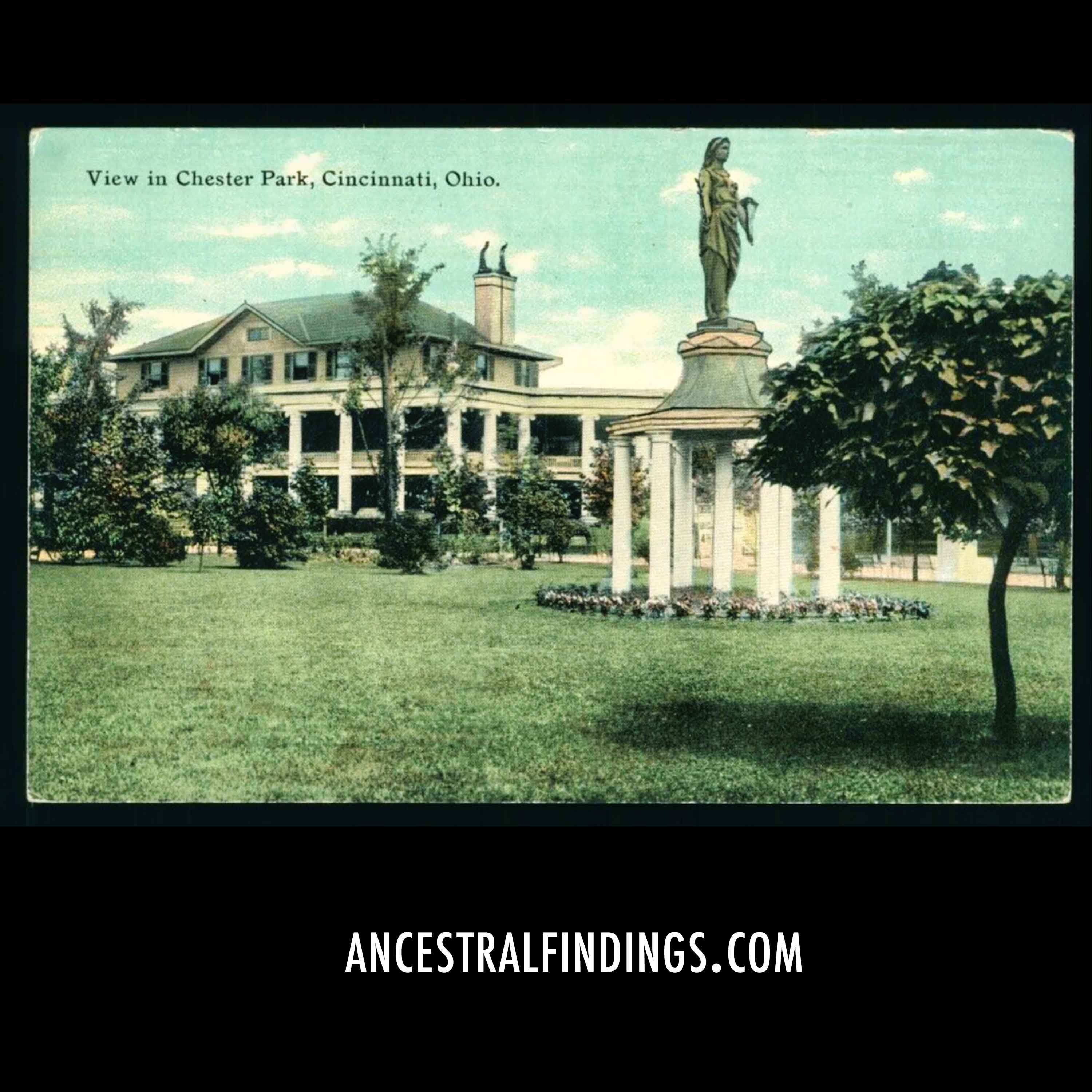
Ancestral Findings
AF-1149: Chester Park Cincinnati History | Postcards from the Past | Ancestral Findings Podcast
00:06:49
Cincinnati has always been a city that valued its public spaces, and one of its most fascinating historic gathering places was Chester Park. While the postcard image gives us only a glimpse of a statue in a pavilion with the clubhouse in the...
Loading summary
Transcript3 lines
- [00:01]
A
Welcome back to the Ancestral Findings podcast. Cincinnati has always been a city that valued its public spaces. And one of its most fascinating lost landmarks was Chester Park. Today, only memories and old postcards remain. But for decades, Chester park was one of the Queen City's favorite gathering places. Families came here for concerts, for fairs, for wedding receptions, or simply to spend a Sunday afternoon outdoors. It was a centerpiece of recreation and civic pride, a place that helped define how the people of Cincinnati lived and played. The postcard in question gives us just a hint of the story. We see a statue in the foreground, a pavilion framing the view, and in the distance, the graceful clubhouse. But behind that image lies the world of late19th century Cincinnati. A world where public parks weren't just scenery. They were stages where community life unfolded. Chester park was established in the 1870s, when Cincinnati was booming as an industrial and commercial hub. The city's factories were roaring, riverboats were busy along the Ohio, and waves of immigrants were arriving to make new lives. Streets were crowded, housing was dense, and the haze of coal smoke often filled the sky. At that time, civic leaders and entrepreneurs recognized the need for open spaces. Places where people could breathe a little easier, step away from the grit of industry and and enjoy something green and orderly. Chester park was one of the answers to that need. It wasn't just an open field. It was carefully landscaped with tree lined paths, fountains and statues. Wide lawns invited families to stroll. Couples could wander shaded walkways together, and civic organizations had a respectable venue for public events. At the heart of it all stood the clubhouse, elegant and commanding, where people gathered for dinners, balls and special occasions. What truly brought the park to life was its music. Chester park became known for its band concerts and orchestral performances, which drew crowds week after week. Imagine it. Summer evenings with hundreds of families sitting on the grass, children chasing each other between benches, while music drifted across the grounds. Without radio or television, this was live entertainment of the highest order, and it was accessible to everyone. The clubhouse wasn't just a backdrop. It became a place where milestones were celebrated. Weddings, anniversaries, civic banquets. The park grounds also hosted fairs and exhibitions, from displays of new inventions to agricultural shows where farmers brought in their best produce and livestock. These events connected urban families to rural life, and they gave the people of Cincinnati pride in what their city could showcase. As the 20th century dawned, people's tastes in recreation began to shift. Leisure was no longer just about quiet strolls and concerts. Audiences wanted thrills, and Chester park adapted. Roller coasters and mechanical rides appeared, and what had once Been a refined garden, park became more of an amusement destination. Families still came to enjoy picnics and concerts, but now they could add a bit of excitement to their visit. The timing was perfect because Cincinnati's growing streetcar network made it easier than ever to reach the park. For just a few cents, you could ride directly there, spend the day enjoying the rides, the music and the atmosphere, and be home in time for supper. This accessibility helped secure Chester Park's reputation as one of the city's favorite places to go. But like so many early amusement and pleasure parks, Chester Park's popularity eventually faded. Larger attractions began to overshadow it. Coney island, on the banks of the Ohio river offered more rides and bigger crowds. And motion pictures were drawing people indoors. Vaudeville and later radio and television provided entertainment without leaving home. By the middle of the 20th century, Chester Park's time had passed. The grounds were repurposed, and the elegant structures that once defined it disappeared. Today, little remains of Chester park beyond a few images like this postcard. But those images are important. They remind us that parks were more than places to rest. They were reflections of a city's values. They were where the people of Cincinnati expressed civic pride, where they came together as neighbors, and where families made memories. For family historians, postcards like this one are are a kind of key. If your ancestors lived in Cincinnati in the late 1800s or early 1900s, there's a good chance they visited Chester Park. They might have listened to a summer concert, strolled through the gardens on a Sunday afternoon, or ridden one of those early roller coasters. Understanding the places they visited helps us understand their lives. Not just where they lived, but how they lived and what they did with their free time. The postcard is more than just paper and ink. It's a surviving record of a vanished landmark, a window into a chapter of Cincinnati's history that deserves to be remembered. Chester park may no longer exist physically, but through these images, its story still breathes. It reminds us of the joy, the gatherings, and the shared moments that once defined a community. And if you've got a postcard of your own, maybe one that shows a long gone amusement park, a neighborhood gathering place, or even a favorite picnic ground, I'd love to see it. Just click on the contact link@ancentralfindings.com and ask for my mailing address. There's always room for more history on the shelf, and I may feature some of your postcards on a future episode of the podcast. If you've got a hard to find ancestor you're stuck on, I'd love to hear about it, just head over to ancestralfindings.com and click on Contact to send me a message. While you're there, take advantage of our free weekly genealogy lookups, explore thousands of articles and enjoy hundreds of podcast episodes. We've been helping family history researchers since 1995, and if you're looking for even more, check out our Genealogy Gold Q and A series over on Patreon. Thanks for listening and as always, happy searching.
- [06:48]
B
This episode is brought to you by Progressive Insurance. You chose to hit play on this podcast today. Smart Choice. Make another smart choice with Auto Quote Explorer to compare rates from multiple car insurance companies all at once. Try it@progressive.com Progressive Casualty Insurance Company and affiliates. Not available in all states or situations. Prices vary based on how you buy.
- [07:08]
C
Marketing is hard, but I'll tell you a little secret. It doesn't have to be. Let me point something out. You're listening to a podcast right now and it's great. You love the host. You seek it out and download it. You listen to it while driving, working out, cooking, even going to the bathroom. Podcasts are a pretty close companion. And this is a podcast ad. Did I get your attention? You can reach great listeners like yourself with podcast advertising from Libsyn Ads. Choose from hundreds of top podcasts offering host endorsements or run a pre produced ad like this one across thousands of shows. To reach your target audience in their favorite podcasts with Libsyn Ads, go to Libsyn ads.com that's L I B S Y N ads.com today.