← Ancestral Findings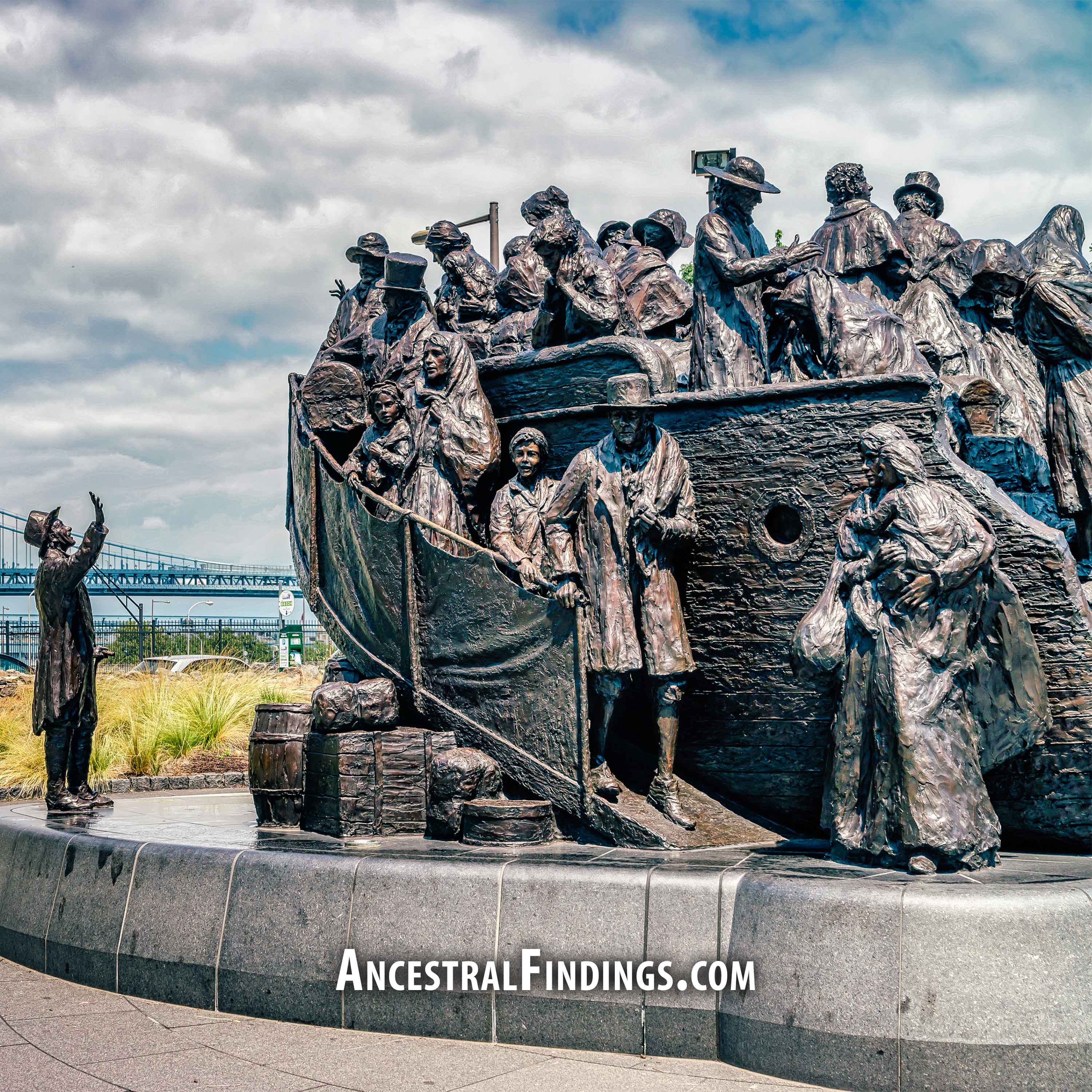
Ancestral Findings
AF-1171: Do You Have Irish Ancestry in Your Family? | Ancestral Findings Podcast
00:10:22
Loading summary
Transcript15 lines
- [00:01]
A
Welcome back to the Ancestral Findings podcast. Do you have Irish ancestry in your family? You might, even if you don't know it yet. About 1 in 10Americans can trace at least part of their lineage back to Ireland. That makes Irish ancestry one of the most common in the United States. The Irish story is a remarkable one. It's about survival, faith, and the courage to start over. To understand it, we have to travel backward through history, across famine, emigration, and the pull of home, and see what it means for your own family story. Ireland's story begins long before written history. The earliest settlers came thousands of years ago, building ancient monuments like Newgrange and Pull Nabrone Dolmen. By the Iron Age, Celtic tribes ruled the island, bound by a shared language and rich mythology. When Christianity arrived, Ireland became a center of learning and faith. Monks copied manuscripts, missionaries traveled abroad, and Ireland earned the nickname the Land of Saints and scholars. Then the Vikings came. They founded cities like Dublin, Waterford and Limerick. The Anglo Normans followed in the 1100s, bringing centuries of conflict and English influence. Over time, Gaelic culture mixed with English rule, creating deep divisions over land, language and religion. These struggles would one day send millions of Irish men and women across the Atlantic in search of something better. People left Ireland for many reasons, but poverty was the constant thread. In the 1600s and 1700s, strict laws kept most Catholics from owning land or getting an education. Families rented tiny plots and lived off potatoes, the only crop that could feed them cheaply. Then disaster struck. Between 1845 and 1855, a blight destroyed the potato harvest year after year. The Great Famine killed over a million people and drove another million to leave the island entirely. Even after the famine, the pattern continued. Wages were low, land was scarce, and letters from America told of jobs and opportunity. Whole villages emptied out. It became common to say goodbye to loved ones, knowing you might never see them again. Crossing the Atlantic was dangerous. Many Irish came on overcrowded sailing ships so deadly they were nicknamed coffin ships. Disease and hunger were common, but people kept coming. Driven by the hope of survival, they landed in Boston, New York, Philadelphia, Baltimore and and New Orleans. From there, they spread inland. Some found work on docks, in factories, or as domestic servants. Others joined the canal and railroad crews that helped build America. By the late 1800s, Irish families were everywhere, from New York tenements to farms in Ohio and Wisconsin. Wherever they went, they built churches, schools and communities. The parish became the heart of Irish American life, and it left behind detailed records that are a treasure for genealogists today. At first, life was hard. Irish immigrants faced discrimination and anti Catholic prejudice. No Irish Need Apply signs were common, but they persevered. They formed fraternal groups like the Ancient Order of Hibernians. They built parochial schools, raised families, and sent their children into public service. Police, fire, teaching, nursing. Over time, I Irish Americans became deeply woven into the fabric of the nation. By the 20th century, they were rising in politics and business. The Kennedy family symbolized how far the Irish had come. If you're tracing your Irish roots, these community ties matter. Local parishes, Irish societies, and neighborhood associations kept records that often reveal the exact county or parish your family came from in Ireland. So how do you know if you have Irish ancestry? Look for the clues your family left behind. Many Irish surnames start with O, meaning descendant of, or Mac, and Mac meaning son of. But not all do. Names like Kelly, Walsh and Murphy are just as Irish. First names can also offer hints. Patrick, Bridget, Mary, Catherine, Sean. These were deeply traditional names. Faith is another clue. Catholic families often have connections to old Irish parishes. Protestant families from Ulster, sometimes called Scots Irish, usually belong to Presbyterian or Anglican congregations. And don't overlook family stories or traditions. A recipe, a song or a saying passed down for generations might carry more history than you realize. You can also look at geography. Irish immigrants first settled in Boston, New York, and Philadelphia, then moved inland to the Great Lakes and Midwest. Even a distant relative in one of those early Irish neighborhoods could point you in the right direction to trace your Irish ancestors. Always start in the United States. The American records will guide you home. Census records from 1850 onward list where each person was born. Later censuses also record immigration and naturalization dates. Passenger lists can confirm an ancestor's arrival port and sometimes name a hometown. Ellis island records after 1892 are especially detailed. Naturalization papers may mention a birthplace or Irish county. They're often filed in local or federal courts. Church records, especially Catholic ones, are gold mines. They often include the name of a sponsor or family friend who might lead you back to the same Irish parish. Newspapers and obituaries can be unexpectedly rich. Many Irish obituaries list the exact county of origin in Ireland. Military records are another source. Irish immigrants fought in the Civil War and later wars, and pension applications often list birthplaces or family details. Once you know the county, parish, or even a town name, you can start searching in Irish archives. Civil Registration began in 1864 for Catholics and 1845 for Protestant marriages. You can find these records for free on Irishgeneology, ie. Catholic parish registers dating back to the 1700s are digitized at the National Library of Ireland. Protestant records are housed in the Representative Church Body Library in Dublin or at Prony in Belfast. Griffith's valuation, taken between 1847 and 1864, is one of the most important Irish record sets. It lists nearly every household and helps fill the gap left by the lost census records earlier still. The tie. The plotment books from the 1820s and 1830s record landholders and tenants, sometimes the only surviving trace of a family. If your ancestors lived on an estate, check the landlord's papers. Rent rolls, leases and correspondence can identify tenant families by name. Even poor law or workhouse records can tell powerful stories about survival during the famine years. Irish geography can test your patience. The island is divided into counties, baronies, civil parishes and thousands of tiny townlands, some barely large enough for a single farm. Many places share the same name. There are over a dozen Ballymores scattered across Ireland. Add changing spellings and you've got a puzzle. Surnames are just as fluid. A family might appear as o', Connor, Connor or Connor in different records. Always search for multiple spellings. When you're unsure, turn to resources like Lewis's Topographical Dictionary of Ireland or the Plastnames database of Ireland Online. They'll help you pinpoint the right place. Religion shaped which records survived. Catholic registers usually stayed in local parishes and survived the 1922 Public Record Office fire in Dublin. Many Protestant and government records did not. If your ancestors were from Northern Ireland, Prony in Belfast holds many surviving records and census fragments. Before you dive into archives, always confirm your ancestors denomination. It determines which sources to use and where they're stored. Even after generations in the United States, Irish families keep their heritage alive. You can see it in storytelling, music, faith and humor. St Patrick's Day parades, Irish dance, folk songs and Catholic schools all trace back to those early immigrants. Understanding that cultural background gives life to the names and dates you uncover. It connects you not just to a place, but to a way of seeing the world, one that valued family memory and resilience. Irish genealogy can feel daunting. Records were lost. Names repeat and geography can be confusing. But patience always pays off. Today, with online databases, digitized church books and DNA testing, it's possible to find connections that were once thought lost forever. When you reach a dead end, study the history of the time. Look at migration patterns, famine routes and chain migration families. Sometimes understanding why your ancestors left will point you to where to look next. Every small discovery matters. Each record you find is a bridge between your life today and the story of those who came before you. Do you have Irish ancestry in your family? I'd love to hear about it. Share your stories, discoveries, or questions in the comments. Every family's journey is unique, and your story might help someone else uncover their own. If you've got a hard to find ancestor you're stuck on, I'd love to hear about it. Just head over to ancestralfindings.com and click on Contact to send me a message. While you're there, take advantage of our free weekly genealogy lookups, explore thousands of articles, and enjoy hundreds of podcast episodes. We've been helping family history researchers since 1995, and if you're looking for even more, check out our Genealogy Gold Q and A series over on Patreon. Thanks for listening and as always, happy searching.
- [10:22]
B
Morning Zoe Got donuts?
- [10:24]
C
Jeff Bridges why are you still living above our garage?
- [10:27]
B
Well, I dig the mattress and I want to be in a T Mobile commercial like you.
- [10:32]
C
Teach me Saldana oh no, I'm not really prepared. I couldn't possibly T Mobile get the new iPhone 17 Pro on them. It's designed to be the most powerful iPhone yet and has the ultimate Pro camera system.
- [10:45]
B
Wow, impressive. Let me try. T Mobile is the best place to get iPhone 17 Pro because they've got the best network.
- [10:53]
A
Nice.
- [10:53]
C
Jeffrey, you heard them.
- [10:55]
B
T Mobile is the best place to.
- [10:56]
A
Get the new iPhone 17 Pro on.
- [10:58]
B
Us with eligible traded in any condition. So what are we having for lunch?
- [11:03]
C
Dude, my work here is done with.
- [11:05]
D
24 month bill credits on Experience beyond for well qualified customers plus tax and $35 device connection charge credit sending balance due if you pay off earlier. Cancel Finance agreement on iPhone 17 Pro 256 gigs $1,099.99 and new line minimum $100 plus a month plan with auto pay plus taxes and fees required. Best mobile network in the US based on analysis by Ooklab Speed Test Intelligence data 1H 2025 visit t mobile.com AI.
- [11:22]
E
Agents are everywhere, automating tasks and making decisions at machine speed. But agents make mistakes. Just one rogue agent can do big damage before you even notice. Rubrik Agent Cloud is the only platform that helps you monitor agents, set guardrails and rewind mistakes so you can unleash agents, not risk. Accelerate your AI transformation@rubrik.com that's R U B R-I K.com marketing is hard, but.
- [11:54]
F
I'll tell you a little secret. It doesn't have to be. Let me point something out. You're listening to a podcast right now and it's great. You love the host, you seek it out and download it. You listen to it while driving, working out, cooking, even going to the bathroom. Podcasts are a pretty close companion. And this is a podcast ad. Did I get your attention? You can reach great listeners like yourself with podcast advertising from Libsyn Ads. Choose from hundreds of top podcasts offering host endorsements, or run a pre produced ad like this one across thousands of shows. To reach your target audience in their favorite podcasts with Libsyn ads, go to Libsynads.com that's L I B S Y N ads.com today.