Loading summary
Transcript3 lines
- [00:00]
A
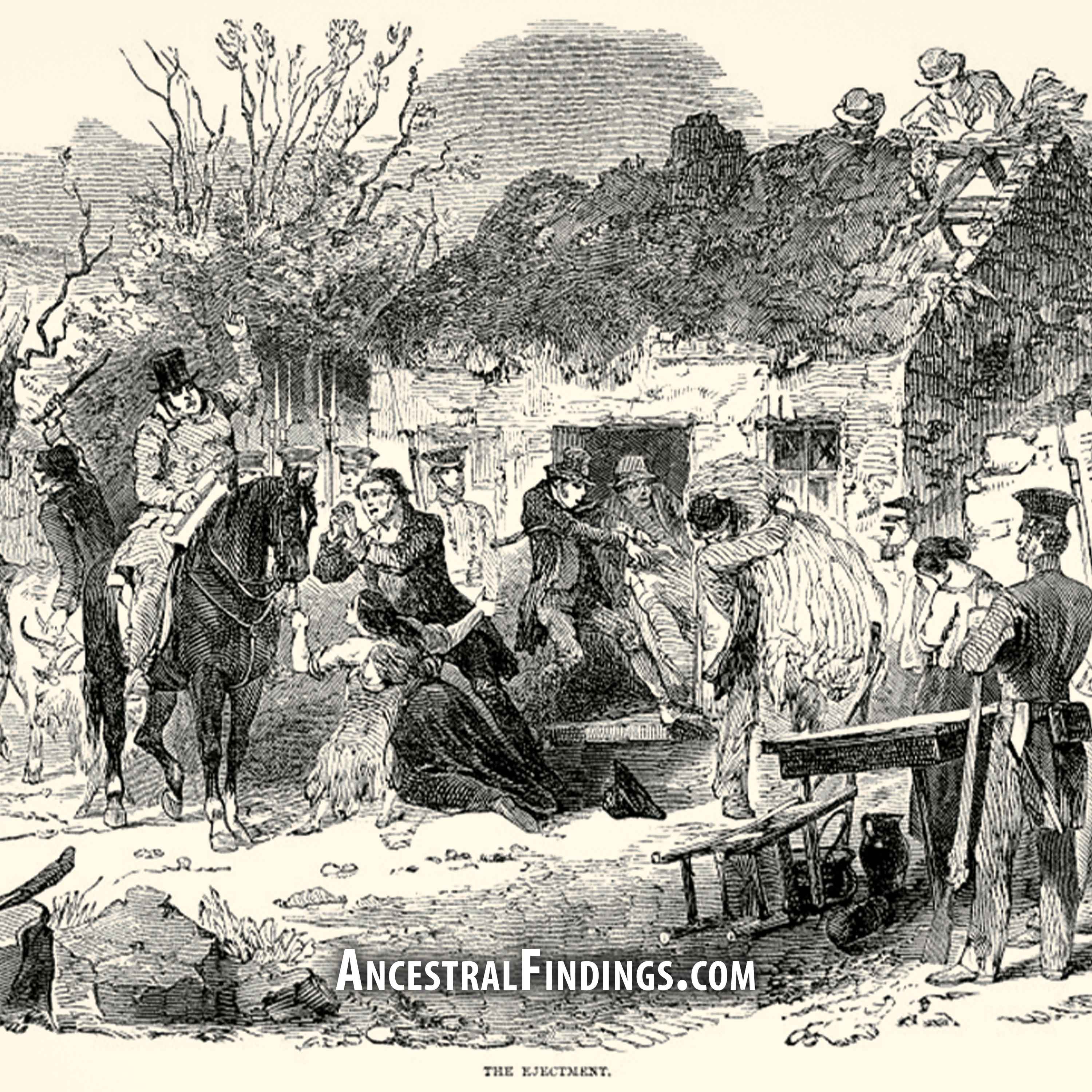
Welcome back to the ancestral Findings podcast. The wind had turned sharp over the fields of County Clare. It carried the sour smell of rot, the smell of potatoes dying in the ground. Every family in Kilfenora knew that scent by now. It had haunted them for two years and it had come back again, crueler than before. Sean o' Callaghan knelt in the furrows, turning one blackened plant after another. The stalks came apart like wet paper. There was no good food left, only the gray mush that told him the blight had found them again. His wife, Brigid, stood at the edge of the field, shawl pulled tight, the wind lifting the edges. She didn't need to ask what he'd found. Behind her, the cottage leaned in the rain. Their children watched from the doorway. Maeve, 17, sharp eyed and restless, and her little brother Declan, who hadn't known a full belly in a year. Shawn said quietly, we'll not live through another winter here. Brigid looked toward the sea. Then we must go where there is bread. They tried to stay. They boiled weeds, gathered nettles, chewed bark. Brigid traded her last linen cloth for a handful of oats. In February of 1847. The landlord's agent came on horseback, ledger in hand. He did not dismount. The rent's six months due, he said. Sean stared at the mud, at the man's boots. The land gave nothing. We'll pay when it does. The agent closed the ledger. The estate can't wait on God. Within a week their cottage roof was pulled down and the family was turned out. They took shelter in a neighbor's barn, but by spring the barns were crowded with others like them. Fever spread. Declan coughed through the nights, his breath rattling thinly. At the relief station, Brigid stood in line for a ladle of soup. The priest spoke softly of ships leaving Limerick, ships bound for America, where the soil was rich and the wages steady. The fare was cruelly high, but the local committee offered assistance for those willing to leave. Shawn resisted. My father's buried here, he said. So will Declan be if we stay, bridget answered. He said nothing after that. They sold what little they had. Bridges, wedding brooch, Sean's tools. A cousin in Ennis had gone before them and sent a letter with half the fare enclosed. Bridget carried it in her bodice, creased and stained, the paper soft as cloth. Maeve tried to imagine America. She had heard of streets lined with lamps and shop windows filled with bread. She had also heard of ships so crowded that people slept standing. At night she whispered prayers for courage. On a cold morning In April, they walked the road to Limerick carrying a single trunk. The hedges were bare, the fields grey with rain. Along the road they passed other families. Gaunt men, women with babies, children with hollow eyes, all walking toward the sea. The port smelled of tar and smoke. The ship waiting at the quay was called the the Caroline, a three masted barque bound for New York. It looked impossibly large to Brigid, but when they boarded, the hold seemed no bigger than a cellar. Rows of bunks stacked like shelves. A doctor inspected them for fever, nodding them through with weary indifference. The first days at sea were calm. The passengers sang at night, their voices thin against the wind. But as they lost sight of land, the the waves grew higher and the air fouler. Seasickness swept the decks. Buckets overflowed. Brigid held Declan as he shivered. Shawn tried to trade his bread ration for water, but there was none to spare. In her bunk, Maeve wrote a few lines in a small notebook she had carried from home. If God means for us to live, he will show us another shore. By the third week, fever broke out. A boy from Cork died one night and was buried at dawn, sewn into his blanket. The sound of the splash swallowed by the sea. Brigid crossed herself and whispered prayers for his mother. Shawn grew weaker. He'd been coughing for days, but he refused to lie down. If I rest, I'll not rise again, he said. The ship's doctor, overwhelmed and half starved himself, did what he could with vinegar and salt water. The smell of sickness filled the hold. Maeve cared for her father as best she could. When his fever eased, he looked at her and said, you'll remember this, girl. You'll tell it one day. I will, she promised. At last, after six long weeks at sea, a shout rose from the land. Land ahead. The passengers surged upward. Through the morning mist they saw it, a low line of green and gray America. They disembarked at Castle Garden in New York, thin as shadows. Officials recorded their names with hurried pen strokes. O' Callaghan became Callahan. Bridget didn't correct them. They followed a crowd of countrymen to Five Points, the Irish quarter near the docks. The streets were narrow and loud, filled with carts, pigs and shouting. The air smelled of smoke and whiskey. Sean found work unloading ships. Bridget took washing. At night, Maeve stared from their tiny room at the brick walls across the alley. The sounds of fiddles and laughter drifted up from below. It wasn't Ireland, but it was Alive. They joined St. Peter's parish, where the priest spoke with their same Clare accent. On Sundays the church was full of families who had come over on ships just like the Caroline. They prayed for those left behind and for the dead buried at sea. Declan's health improved. He played in the street with other boys, his cheeks no longer hollow. Brigid began to keep a small jar for savings, pennies, and nickels toward rent on a better room. One evening, as she scrubbed linen, she found Maeve staring out the window again. What do you see, love? She asked. Nothing. Everything, maeve said softly. I think of Dawsfield. I think of the sea. I think we made it across the world. Years passed. Sean's back stiffened from labor, but he never returned to Ireland. My bones will rest here, he said. We've buried enough across the sea. Maeve became a seamstress. In time, she married a stonemason from Limerick. They moved uptown to a cleaner street. She kept her father's old spade, carried all the way from Clare, as a reminder of what had been lost and what had been built again. In 1870, when the census taker came, she wrote her birthplace as Ireland and her son's as New York. For the first time, the line between old World and new was clear. On quiet nights, she told her children stories of the journey, the hunger, the ship, the first sight of land. We are from Ireland, she would say, but America is where we grew strong. By the time Bridget and Shawn were gone, the o' Callaghan name had spread across the city. Their descendants became teachers, policemen, nurses. Each generation knew the tale of the voyage. Though the details softened with time, what remained was the truth beneath it, the courage to leave, the will to endure, and the faith to begin again. Maeve lived to see electric lamps and paved streets, but she never forgot the smell of wet earth in Claire or the blackened fields that sent them on their way. When she was old, she wrote one last line in that same small notebook she had carried on the Caroline we were hungry once, but hope fed us across the sea. Today, somewhere in America, a descendant of the o' Callaghans may still wonder where the family began. They might open a genealogy record, see the name Callahan, and not know it started in a cottage beside a dead field in County Clare. But the story endures. It lives in faith, in work, in the simple act of remembering that is the journey from Ireland. If you've got a hard to find ancestor you're stuck on, I'd love to hear about it. Just head over to ancestralfindings.com and click on Contact to send me a message. While you're there, take advantage of our free weekly genealogy lookups, explore thousands of articles and enjoy hundreds of podcast episodes. We've been helping family history researchers since 1995, and if you're looking for even more, just check out our Genealogy Gold Q and A series over on Patreon. Thanks for listening and as always, happy searching.
- [08:49]
B
This episode is brought to you by Progressive Insurance. Do you ever think about switching insurance companies to see if you could save some cash? Progressive makes it easy to see if you could save when you bundle your home and auto policies. Try it@progressive.com Progressive Casualty Insurance Company and affiliates. Potential savings will vary. Not available in all states.
- [09:08]
C
Marketing is hard, but I'll tell you a little secret. It doesn't have to be. Let me point something out. You're listening to a podcast right now and it's great. You love the host. You seek it out and download it. You listen to it while driving, working out, cooking, even going to the bathroom. Podcasts are a pretty close companion. And this is a podcast ad. Did I get your attention? You can reach great listeners like yourself with podcast advertising for from Libsyn Ads. Choose from hundreds of top podcasts offering host endorsements or run a pre produced ad like this one across thousands of shows. To reach your target audience in their favorite podcasts with Libsyn Ads, go to libsynads. Com. That's L, I B S Y N Ads. Com. Today.