Loading summary
Transcript19 lines
- [00:01]
A
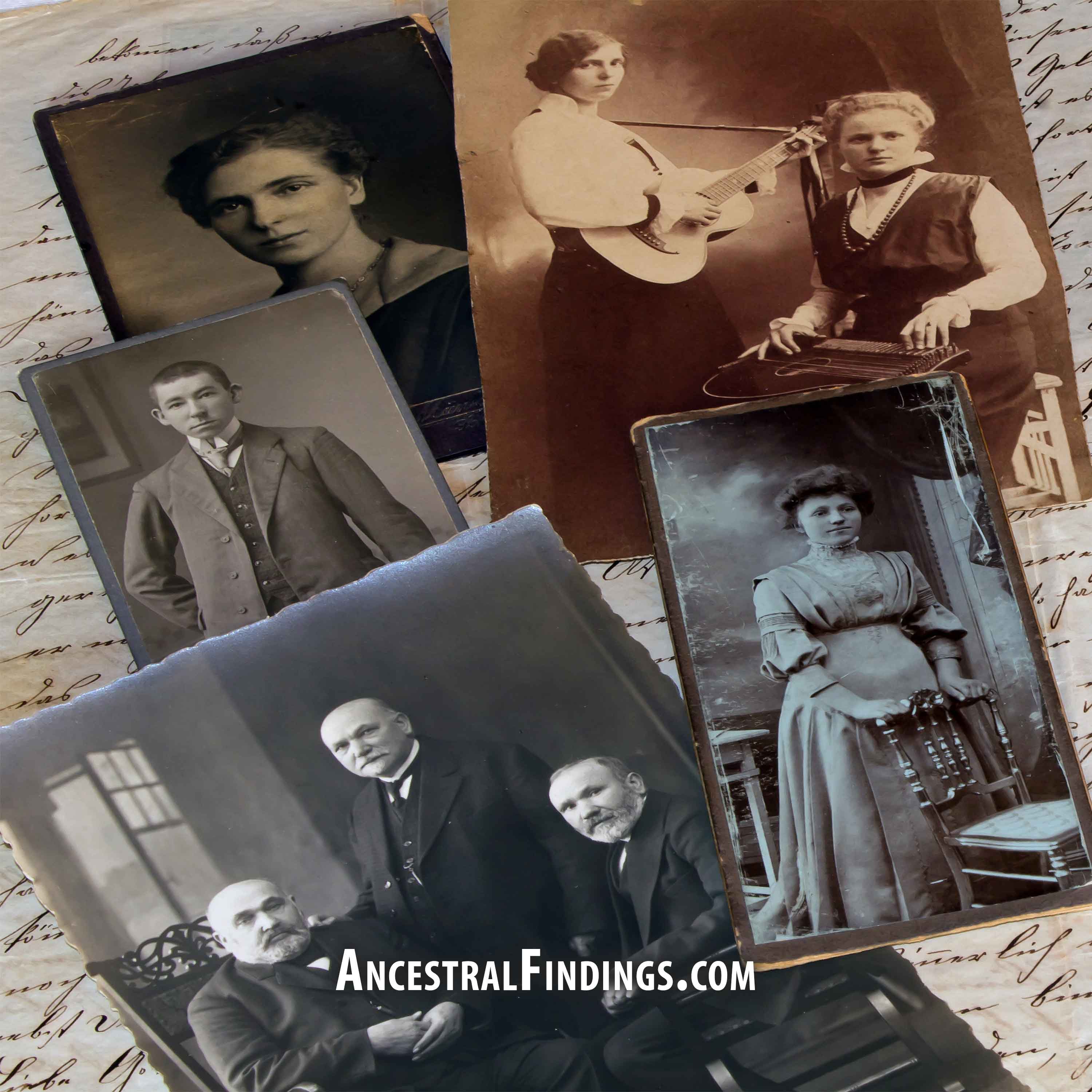
Welcome back to the Ancestral Findings podcast. The story of German immigration to America is one of the great migrations in modern history. Over 5 million people left the German speaking lands between the early 1700s and the early 1900s, crossing oceans in search of freedom, work and land. Many of their descendants live across the United States today, sometimes aware of those roots, sometimes not. If you have ever wondered whether your own family might trace back to Germany, the clues are often closer than you think. German migration began centuries before Germany existed as a unified nation. In the 17th and 18th centuries, the Holy Roman Empire was a patchwork of small kingdoms, duchies and free cities. Religious wars, heavy taxation and poor harvests left thousands struggling. Families from the Palatinate, Baden, Wurtemberg, and Hesse began to look westward toward the promise of Pennsylvania and the lands beyond. Those early settlers were not adventurers. They were survivors, known later as the Pennsylvania Dutch, a corruption of Deutsch, the German word for German. They built tight knit communities of farmers and craftsmen, brought their Bibles and hymnals, and printed the first German language newspapers in North America. Their descendants still farm in Pennsylvania and the Shenandoah Valley today. By the 19th century, a new kind of movement began. The failed revolutions of 1848 sent scholars, teachers and artisans fleeing political repression. They joined waves of farmers, leaving overcrowded villages bound for the Midwest, where land was cheap and opportunity vast. Entire towns of German speakers appeared across Ohio, Wisconsin, Missouri, and Texas. Cincinnati became so thoroughly German that one newspaper declared it a city transplanted from the Rhine. Many Americans with German heritage don't realize it because their ancestors quickly blended into American society. But the clues remain, both in family traditions and in the records they left behind. Surnames are the first key. Mueller became Miller, Schmidt became Smith, and Schneider often turned into Taylor. Given names followed the same pattern. Wilhelm became William. Heinrich became Henry. If your family used both English and older European forms of names, you may be looking at a German branch. Church affiliation offers another window. Lutheran, Catholic, and Reformed congregations were the backbone of German immigrant life. Many churches kept their records in German well into the 20th century. And those registers often contain priceless information, sometimes even the name of the family's original village. In Europe, traditions provide subtler evidence if your family's holidays included a Christmas tree long before it became common in America, or if your grandmother baked, stolen or Lepkuchen every December. Those habits came from across the Atlantic. German families carried their customs quietly, even when their language faded. To trace your German ancestors, begin in the United States. Every journey back across the ocean starts with what was recorded here. Census records from 1850 onward list each person's birthplace and can help identify which generation first arrived. Passenger lists from the ports of Hamburg and Bremen, many now digitized, are often give the traveler's hometown or province. Naturalization papers can confirm both immigration dates and original citizenship, which is essential because before 1871, your ancestor was not German, but Prussian, Bavarian or Hanoverian. Church books in America are especially valuable. German language congregations kept detailed baptism, marriage and burial records that sometimes name relatives still living in Europe. These are often the bridge between the New World and the Old. Once you know the specific town or parish, the search can move to Germany itself. The Kirkenbucher church registers are the foundation of European family research. They record births, marriages and deaths reaching back centuries. After 1876, civil registration began keeping official certificates that include occupations, addresses and parents names. Local archives also preserved tax rolls, guild memberships and emigration files Aus Wandererakten for those who left, sometimes with letters describing their reasons in their own hand. German immigrants helped shape American culture in ways most people never notice. They introduced the concept of kindergarten, founded orchestras and breweries, and influenced architecture and education. The Midwest's reputation for precision and craftsmanship owes much to its German settlers. Even ordinary words kindergarten, delicatessen, lager carry echoes of that influence. Yet assimilation came at a price. During World War I, suspicion toward German Americans led many families to Anglicize their names, stop speaking German in public, and quietly erase their heritage from view. Despite this, the culture endured in food, music and faith. The Sunday church picnic, the Christmas market, the brass band at a town fair all trace their origins to those immigrants. Today, more than 40 million Americans claim some degree of German ancestry. DNA testing and digitized archives have made reconnecting with those roots easier than ever. With a few well placed searches, you might find your ancestor's signature on a ship manifest or discover a cousin still living near the family's original village. But beyond records and documents lies something deeper a story of persistence and adaptation. To trace your German heritage is to understand not just who your ancestors were, but why they came to own their land, to speak freely, to build a better life for their children. Their story became yours. Do you have German ancestry? I'd love to hear what you've discovered. Names, towns, family stories, or photographs that connect your past to theirs. Share your story in the comments so that others might find a piece of their own history reflected in yours. If you've got a hard to find ancestor you're stuck on, I'd love to hear about it. Just head over to ancestralfindings.com and click on Contact to send me a message. While you're there, take advantage of our free weekly genealogy lookups, explore thousands of articles, and enjoy hundreds of podcast episodes. We've been helping family history researchers since 1995. And if you're looking for even more, check out our Genealogy Gold Q and A series over on Patreon. Thanks for listening and as always, happy searching.
- [07:10]
B
Morning, Zoe. Got donuts?
- [07:12]
C
Jeff Bridges, why are you still living above our garage?
- [07:15]
B
Well, I dig the Matt and I want to be in a T mobile commercial like you. Teach me.
- [07:21]
C
So Dana oh no, I'm not really prepared. I couldn't possibly AT T Mobile get the new iPhone 17 Pro on them. It's designed to be the most powerful iPhone yet and has the ultimate pro camera system.
- [07:34]
B
Wow, impressive. Let me try. T Mobile is the best place to get iPhone 17 Pro because they've got the best network.
- [07:41]
A
Nice.
- [07:42]
C
Jeffrey, you heard them.
- [07:43]
B
T Mobile is the best place to get the new iPhone 17 Pro on us with eligible traded in any condition. So what are we having for Lodge?
- [07:52]
C
Dude, my work here is done.
- [07:54]
D
The 24 month credit is on experience beyond for well qualified customers. Plus tax and $35 device connection charge credits ended balance due if you pay off earlier. Cancel Finance agreement. IPhone 17 Pro 256 gigs $1099.99 and new line minimum 100 plus a month plan with auto pay plus taxes and fees required. Best mobile network in the US based on analysis by Ooklab Speed Test Intelligence data 182025 Visit T mobile.com Mint is.
- [08:11]
E
Still $15 a month for premium wireless and if you haven't made the switch yet, here are 15 reasons why you should 1. It's $15 a month. 2. Seriously, it's $15 a month. 3. No big contracts.
- [08:24]
A
4.
- [08:25]
E
I use it.
- [08:26]
A
5.
- [08:26]
E
My mom uses it.
- [08:27]
A
Are you.
- [08:27]
E
Are you playing me off? That's what's happening, right? Okay, give it a try@mintmobile.com Switch upfront.
- [08:33]
C
Payment of $45 per three month plan. $15 per month equivalent required. New customer offer first three months only, then full price plan options available, taxes and fees extra. See mintmobile.com.